

Chinese Taipei

Encyclopedia
Chinese Taipei is the designated name used by the Republic of China (ROC)
, commonly known as Taiwan, to participate in some international
organizations and almost all sporting events, such as the Olympics
, Paralympics
, Asian Games
and Asian Para Games
. The international community
commonly employs the term "Chinese Taipei
" due to political pressure by the People's Republic of China
(PRC), commonly known as China, which prefers the name as it creates ambiguity about the independence and political status of Taiwan
, blocks international visibility of the "Republic of China" as a country, and implies that ROC is part of the same "China" under PRC's control. It is seen as an important tool to influence international perception of cross-strait relations
and Taiwan's political status
as a sovereign state
.
(ROC) lost its United Nations
seat in 1971, more and more countries terminated their diplomatic relations with Taipei and established new ties with Beijing, the People's Republic of China
(PRC). In diplomatic circles, Beijing was on the rise and the ROC found that in order to participate in some international forums it would have to make difficult concessions towards the PRC. One of these concessions was acceptance of the term "Chinese Taipei" as a name. The first instance that this name was used in a major international organisation was in the International Olympic Committee
(IOC). By 1979, the IOC had finally decided that the Beijing Olympic Committee would be the "Chinese Olympic Committee" and another name would need to be found for the Olympic Committee on Taiwan.
In April 1979, in a plenary session of the IOC, He Zhenliang
, a representative of the PRC, stated:
 In November 1979, in Nagoya, Japan
, the International Olympic Committee
, and later all other international sports federations, adopted a resolution under which the National Olympic Committee of the ROC would be recognized as the Chinese Taipei Olympic Committee
, and its athletes would compete under the name Chinese Taipei. The National Olympic Committee of the ROC boycotted the 1980 Olympics (both the winter and summer games) in protest of this resolution.
The Chinese nationalism asserted by the top leadership of the ROC government during the 1970s meant that a name such as "Taiwan" would be unacceptable to them. The ROC leadership insisted that there be some kind of “Chinese-ness” to the name under which the island's team competed.
The ROC government turned down chances to use the name "Taiwan" (for example, at the 1976 Montreal Olympics), although the team had previously marched as "Taiwan" in opening ceremonies (for example, in Tokyo
). One repeated contention recorded in the ministry reports is that both parts of divided China are Chinese territories and the people in one part are no less Chinese than those in the other. Another argument holds that the jurisdiction of the ROC Olympic Committee (ROCOC) includes Penghu, Kinmen
and Matsu
in addition to Taiwan
, and thus the name “Taiwan” does not reflect the “territorial extent” of the ROCOC. Furthermore, although it is true that most products from the ROC are labeled “made in Taiwan,” the trade practices of the ROC are such that the regional area of production is used for labeling. Some wines from Kinmen are labeled “made in Kinmen,” just as some perfume is labeled “made in Paris” and not “made in France.” Finally, it was argued that the people of the ROC were Chinese and not “Taiwanese,” so the word Taiwan was not appropriate.
The ROC government under the Kuomintang (KMT)
rejected designation as "Taiwan, China" on grounds that this would imply subordination to the People's Republic of China
. It also refused the names "Taiwan" and "Formosa
" as a means of reasserting both its claim as the sole legitimate government of all of China, and its uncompromising rejection of Taiwan independence
. Instead, deriving from the name of its capital city
, the ROC government finally formulated the name “Chinese Taipei,” instead of accepting the offer of “Taiwan,” because “Chinese Taipei” signified an uncertain boundary that could exceed the ROC’s actual territory of control of Taiwan, Penghu, Kinmen and Matsu, whenever the ROC government wished to assert it. It regarded the term Chinese Taipei as both acceptably neutral and hopeful of assent from other interested parties. Its proposal found agreement. Beijing accepted the compromise position that the ROC Olympic Committee could be named the "Chinese Taipei Olympic Committee".
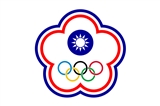
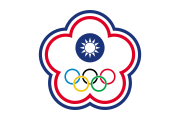
The name "Chinese Taipei" was formally accepted by the Taipei government in 1981. A flag bearing the emblem of its Olympic Committee against a white background as the Chinese Taipei Olympic flag was confirmed in January 1981. The agreement was signed on March 23 in Lausanne
by Shen Chia-ming, the President of Chinese Taipei Olympic Committee, and Juan Antonio Samaranch
, the President of the IOC
. In 1983, National Flag Anthem was chosen as the anthem of the Chinese Taipei delegation. The Republic of China has competed under this flag and name exclusively at each Games
since the 1984 Winter Olympics
, as well as at the Paralympics and at other international events.
passed a resolution in Nagoya, Japan, restoring the rights of the Chinese Olympic Committee within the IOC, meanwhile renaming the Taipei-based Olympic Committee "Chinese Taipei Olympic Committee". Since then, and until 1989 the PRC
translated "Chinese Taipei" as "Zhongguo Taipei" (simplified chinese: 中国台北, traditional chinese: 中國臺北, hanyu pinyin: Zhōngguó Táiběi), connoting that Taipei is a part of the Chinese state. By contrast, the Republic of China
government translated it as "Zhonghua
Taipei" (traditional chinese: 中華台北 or 中華臺北, Hanyu Pinyin: Zhōnghuá Táiběi) in Chinese, which references the term "China
" as the cultural or ethnic entity, rather than the state
. In 1981 the former Republic of China Olympic Committee confirmed its acceptance of the Nagoya resolution, but translated "Chinese Taipei" to "Zhonghua Taipei". In 1989, the two Olympic committees signed a pact in Hong Kong
, clearly defining the use of "Zhonghua Taipei". The PRC had been observing the Hong Kong
pact and using "Zhonghua Taipei" in stipulated areas ever since, but on other occasions, the version of "Zhongguo Taipei" was still in use following past practice, especially in official media references. In the Olympic Games opening ceremony, when each country's team normally proceeds in alphabetical order in English, the Chinese Taipei (TPE) team does not follow China (CHN), but instead takes a place in the procession as if its name were "Taipei," following countries such as Switzerland and Syria instead. In Beijing 2008 it followed Japan
and preceded the Central African Republic
. This ordering was based on the stroke number and order of each team's name in simplified Chinese, the official script in the PRC.
has successfully pressured some religious organizations and civic organizations to refer to the ROC as "Chinese Taipei". The Lions Club used to refer to the Republic of China
as "Chinese Taipei", but it now uses the name "Taiwan MD 300" Both the International Monetary Fund
. and the World Bank
refer to the Republic of China
as "Chinese Taipei", and "Taiwan" does not appear on the member countries list of both organizations. The ICSU also refers to the Republic of China
as "China Taipei", right below "China CAST". The Republic of China
is a member economy of APEC, and its official name in the organization is "Chinese Taipei". It is also an observer in the World Health Organization
(WHO) under the name Chinese Taipei. It is the only agency of the United Nations
that the ROC is able to participate in since 1971.
In the Miss World 1998
, the government of the People's Republic of China
pressured the Miss World Organization to rename Miss Republic of China 1998 to "Miss Chinese Taipei", it has been competing ever since under that designation. The same happened in 2000, but with the Miss Universe Organization
. Three years later at the Miss Universe pageant in Panama
, the first official Miss China and Miss Taiwan competed alongside each other for the first time in history, prompting the Chinese government to again demand that Miss Taiwan assume the title "Miss Chinese Taipei". The contestant in question, Chen Szu-yu, was famously photographed tearfully holding her two sashes . Today, neither Miss Universe
nor Miss World
, the two largest pageant contests in the world, allow Taiwan's entrants to compete under the Taiwan label. In 2005, the third largest pageant contest, Miss Earth
, initially allowed beauty contestant Li Fan Lin to compete as "Miss Taiwan"; after a week into the pageant, however, her sash was updated to "Taiwan ROC". However, in of 2008, the official name for the ROC
, change to for "Chinese Taipei".
 The title "Chinese Taipei" leads some people to believe that "Taipei" is a country. During the 2004 Summer Olympics
in Athens, NBC
television clarified each time the name was used that "Chinese Taipei" referred to Taiwan. Japanese and South Korean televisions were more impatient and simply dropped "Chinese Taipei" altogether in its reports, using "Taiwan" instead. For sporting events, the ROC team is abbreviated in Taiwan as the Zhonghua Team (中華隊; Zhonghua being a more cultural rather than political variation of the term China), which, in effect, labels it the "Chinese Team".
Starting around the time of the 2004 Summer Olympics
, there has been a movement in Taiwan to change all media references to the team to the "Taiwanese Team", and the mainstream Taiwan Television
(TTV) is one of the first Taiwanese media outlets to do so. Such usage remains relatively rare, however, and other cable TV channels currently refer to the ROC as the Zhonghua Team and the PRC as the Zhongguo Team, the China team or the mainland China team.
In the 2005 International Children's Games
in Coventry
, United Kingdom
as well as the National Geographic World Championship
, the name Chinese Taipei was too used. Chinese Taipei was also the term used by Major League Baseball
for the ROC teams that participated in the 2006
and 2009 World Baseball Classic
competitions, competing under the Chinese Taipei Olympic flag. The Little League World Series
also refers to the Taiwanese teams as Chinese Taipei (although the uniforms states Asia-Pacific).
officially uses "Separate Customs Territory of Taiwan
, Penghu, Kinmen
, and Matsu
" for the Republic of China
, but "Chinese Taipei" is used very often since the official designation is too unwieldy. It is a politically neutral name; there is not any reference to what it is separated from (presumably, the People's Republic of China
). Even official documents within WTO refer to the "separated customs territory..." as "Chinese Taipei".
International organizations that only admit sovereign states generally do not recognise the Republic of China or allow its membership. Presently, the ROC is recognized by 23 states. Thus, for example, whenever the United Nations
makes reference to Taiwan, which does not appear on its member countries list it uses the designation "Taiwan, Province of China", and organizations that follow UN standards does the same, such as International Organization for Standardization
in its listing of ISO 3166-1
country codes. Certain web-based postal address programs also label the country designation name for Taiwan as "Taiwan, Province of China". Inter-governmental organizations use a variety of terms to designate ROC. Some non-governmental organizations which the PRC does not participate in continue to use "China" or the "Republic of China". The World Organization of the Scout Movement
is one of few international organizations that continue to refer to the Republic of China as "China", and the ROC affiliate as the Scouts of China
. This is because such Scouting
organizations do not exist
in the People's Republic of China
.
Countries that maintain diplomatic relations with the Republic of China
, especially the ROC's older diplomatic affiliates, also refer to the ROC as "China" on occasion; for example, during the funeral of Pope John Paul II
, the President of the Republic of China
Chen Shui-bian
was seated as part of the French alphabetical seating arrangement between Marisa Letícia
, the first lady
of Brazil
, and the president of Cameroon as the head of state of "Chine".
Republic of China
The Republic of China , commonly known as Taiwan , is a unitary sovereign state located in East Asia. Originally based in mainland China, the Republic of China currently governs the island of Taiwan , which forms over 99% of its current territory, as well as Penghu, Kinmen, Matsu and other minor...
, commonly known as Taiwan, to participate in some international
International
----International mostly means something that involves more than one country. The term international as a word means involvement of, interaction between or encompassing more than one nation, or generally beyond national boundaries...
organizations and almost all sporting events, such as the Olympics
Olympic Games
The Olympic Games is a major international event featuring summer and winter sports, in which thousands of athletes participate in a variety of competitions. The Olympic Games have come to be regarded as the world’s foremost sports competition where more than 200 nations participate...
, Paralympics
Paralympic Games
The Paralympic Games are a major international multi-sport event where athletes with a physical disability compete; this includes athletes with mobility disabilities, amputations, blindness, and Cerebral Palsy. There are Winter and Summer Paralympic Games, which are held immediately following their...
, Asian Games
Asian Games
The Asian Games, officially known as Asiad, is a multi-sport event held every four years among athletes from all over Asia. The Games were regulated by the Asian Games Federation from the first Games in New Delhi, India, until the 1978 Games. Since the 1982 Games they have been organised by the...
and Asian Para Games
Asian Para Games
The Asian Para Games is a multi-sport event held every four years after every Asian Games for athletes with physical disabilities. The first Games was held in 2010 in Guangzhou, China after the 16th Asian Games...
. The international community
International community
The international community is a term used in international relations to refer to all peoples, cultures and governments of the world or to a group of them. The term is used to imply the existence of common duties and obligations between them...
commonly employs the term "Chinese Taipei
Taipei
Taipei City is the capital of the Republic of China and the central city of the largest metropolitan area of Taiwan. Situated at the northern tip of the island, Taipei is located on the Tamsui River, and is about 25 km southwest of Keelung, its port on the Pacific Ocean...
" due to political pressure by the People's Republic of China
People's Republic of China
China , officially the People's Republic of China , is the most populous country in the world, with over 1.3 billion citizens. Located in East Asia, the country covers approximately 9.6 million square kilometres...
(PRC), commonly known as China, which prefers the name as it creates ambiguity about the independence and political status of Taiwan
Political status of Taiwan
The controversy regarding the political status of Taiwan hinges on whether Taiwan, Penghu, Kinmen, and Matsu should remain effectively independent as territory of the Republic of China , become unified with the territories now governed by the People's Republic of China , or formally declare...
, blocks international visibility of the "Republic of China" as a country, and implies that ROC is part of the same "China" under PRC's control. It is seen as an important tool to influence international perception of cross-strait relations
Cross-Strait relations
Cross-Strait relations refers to the relations between People's Republic of China and the Republic of China , which lie to the west and east, repectively, of the Taiwan Strait in the west Pacific Ocean....
and Taiwan's political status
Political status of Taiwan
The controversy regarding the political status of Taiwan hinges on whether Taiwan, Penghu, Kinmen, and Matsu should remain effectively independent as territory of the Republic of China , become unified with the territories now governed by the People's Republic of China , or formally declare...
as a sovereign state
Sovereign state
A sovereign state, or simply, state, is a state with a defined territory on which it exercises internal and external sovereignty, a permanent population, a government, and the capacity to enter into relations with other sovereign states. It is also normally understood to be a state which is neither...
.
Origins
After the Republic of ChinaRepublic of China
The Republic of China , commonly known as Taiwan , is a unitary sovereign state located in East Asia. Originally based in mainland China, the Republic of China currently governs the island of Taiwan , which forms over 99% of its current territory, as well as Penghu, Kinmen, Matsu and other minor...
(ROC) lost its United Nations
United Nations
The United Nations is an international organization whose stated aims are facilitating cooperation in international law, international security, economic development, social progress, human rights, and achievement of world peace...
seat in 1971, more and more countries terminated their diplomatic relations with Taipei and established new ties with Beijing, the People's Republic of China
People's Republic of China
China , officially the People's Republic of China , is the most populous country in the world, with over 1.3 billion citizens. Located in East Asia, the country covers approximately 9.6 million square kilometres...
(PRC). In diplomatic circles, Beijing was on the rise and the ROC found that in order to participate in some international forums it would have to make difficult concessions towards the PRC. One of these concessions was acceptance of the term "Chinese Taipei" as a name. The first instance that this name was used in a major international organisation was in the International Olympic Committee
International Olympic Committee
The International Olympic Committee is an international corporation based in Lausanne, Switzerland, created by Pierre de Coubertin on 23 June 1894 with Demetrios Vikelas as its first president...
(IOC). By 1979, the IOC had finally decided that the Beijing Olympic Committee would be the "Chinese Olympic Committee" and another name would need to be found for the Olympic Committee on Taiwan.
In April 1979, in a plenary session of the IOC, He Zhenliang
He Zhenliang
He Zhenliang is a Chinese politician, currently the honorary president of the Chinese Olympic Committee, the chairman of the International Olympic Committee's Culture and Olympic Education Commission and an execute of the Beijing Organizing Committee for the 2008 Summer Olympics.He graduated from...
, a representative of the PRC, stated:
According to the Olympic Charter, only one Chinese Olympic Committee should be recognized. In consideration of the athletes in Taiwan having an opportunity to compete in the Olympic Games, the sports constitution in Taiwan could function as a local organization of China and still remain in the Olympic Movement in the name of the Chinese Taipei Olympic Committee. However, its anthem, flag and constitutions should be changed correspondingly.
Japan
Japan is an island nation in East Asia. Located in the Pacific Ocean, it lies to the east of the Sea of Japan, China, North Korea, South Korea and Russia, stretching from the Sea of Okhotsk in the north to the East China Sea and Taiwan in the south...
, the International Olympic Committee
International Olympic Committee
The International Olympic Committee is an international corporation based in Lausanne, Switzerland, created by Pierre de Coubertin on 23 June 1894 with Demetrios Vikelas as its first president...
, and later all other international sports federations, adopted a resolution under which the National Olympic Committee of the ROC would be recognized as the Chinese Taipei Olympic Committee
Chinese Taipei Olympic Committee
Chinese Taipei Olympic Committee is the National Olympic Committee representing the Republic of China...
, and its athletes would compete under the name Chinese Taipei. The National Olympic Committee of the ROC boycotted the 1980 Olympics (both the winter and summer games) in protest of this resolution.
The Chinese nationalism asserted by the top leadership of the ROC government during the 1970s meant that a name such as "Taiwan" would be unacceptable to them. The ROC leadership insisted that there be some kind of “Chinese-ness” to the name under which the island's team competed.
The ROC government turned down chances to use the name "Taiwan" (for example, at the 1976 Montreal Olympics), although the team had previously marched as "Taiwan" in opening ceremonies (for example, in Tokyo
1964 Summer Olympics
The 1964 Summer Olympics, officially known as the Games of the XVIII Olympiad, was an international multi-sport event held in Tokyo, Japan in 1964. Tokyo had been awarded with the organization of the 1940 Summer Olympics, but this honor was subsequently passed to Helsinki because of Japan's...
). One repeated contention recorded in the ministry reports is that both parts of divided China are Chinese territories and the people in one part are no less Chinese than those in the other. Another argument holds that the jurisdiction of the ROC Olympic Committee (ROCOC) includes Penghu, Kinmen
Kinmen
Kinmen , also known as Quemoy , is a small archipelago of several islands administered by the Republic of China : Greater Kinmen, Lesser Kinmen, and some islets. Administratively, it is Kinmen County of Fujian Province, ROC. The county is claimed by the People's Republic of China as part of its...
and Matsu
Matsu Islands
The Matsu Islands are a minor archipelago of 19 islands and islets in the Taiwan Strait administered as Lienchiang County , Fujian Province of the Republic of China . Only a small area of what is historically Lienchiang County is under the control of the ROC...
in addition to Taiwan
Taiwan
Taiwan , also known, especially in the past, as Formosa , is the largest island of the same-named island group of East Asia in the western Pacific Ocean and located off the southeastern coast of mainland China. The island forms over 99% of the current territory of the Republic of China following...
, and thus the name “Taiwan” does not reflect the “territorial extent” of the ROCOC. Furthermore, although it is true that most products from the ROC are labeled “made in Taiwan,” the trade practices of the ROC are such that the regional area of production is used for labeling. Some wines from Kinmen are labeled “made in Kinmen,” just as some perfume is labeled “made in Paris” and not “made in France.” Finally, it was argued that the people of the ROC were Chinese and not “Taiwanese,” so the word Taiwan was not appropriate.
The ROC government under the Kuomintang (KMT)
Kuomintang
The Kuomintang of China , sometimes romanized as Guomindang via the Pinyin transcription system or GMD for short, and translated as the Chinese Nationalist Party is a founding and ruling political party of the Republic of China . Its guiding ideology is the Three Principles of the People, espoused...
rejected designation as "Taiwan, China" on grounds that this would imply subordination to the People's Republic of China
People's Republic of China
China , officially the People's Republic of China , is the most populous country in the world, with over 1.3 billion citizens. Located in East Asia, the country covers approximately 9.6 million square kilometres...
. It also refused the names "Taiwan" and "Formosa
Formosa
Formosa or Ilha Formosa is a Portuguese historical name for Taiwan , literally meaning, "Beautiful Island". The term may also refer to:-Places:* Formosa Strait, another name for the Taiwan Strait...
" as a means of reasserting both its claim as the sole legitimate government of all of China, and its uncompromising rejection of Taiwan independence
Taiwan independence
Taiwan independence is a political movement whose goals are primarily to formally establish the Republic of Taiwan by renaming or replacing the Republic of China , form a Taiwanese national identity, reject unification and One country, two systems with the People's Republic of China and a Chinese...
. Instead, deriving from the name of its capital city
Taipei
Taipei City is the capital of the Republic of China and the central city of the largest metropolitan area of Taiwan. Situated at the northern tip of the island, Taipei is located on the Tamsui River, and is about 25 km southwest of Keelung, its port on the Pacific Ocean...
, the ROC government finally formulated the name “Chinese Taipei,” instead of accepting the offer of “Taiwan,” because “Chinese Taipei” signified an uncertain boundary that could exceed the ROC’s actual territory of control of Taiwan, Penghu, Kinmen and Matsu, whenever the ROC government wished to assert it. It regarded the term Chinese Taipei as both acceptably neutral and hopeful of assent from other interested parties. Its proposal found agreement. Beijing accepted the compromise position that the ROC Olympic Committee could be named the "Chinese Taipei Olympic Committee".
The name "Chinese Taipei" was formally accepted by the Taipei government in 1981. A flag bearing the emblem of its Olympic Committee against a white background as the Chinese Taipei Olympic flag was confirmed in January 1981. The agreement was signed on March 23 in Lausanne
Lausanne
Lausanne is a city in Romandy, the French-speaking part of Switzerland, and is the capital of the canton of Vaud. The seat of the district of Lausanne, the city is situated on the shores of Lake Geneva . It faces the French town of Évian-les-Bains, with the Jura mountains to its north-west...
by Shen Chia-ming, the President of Chinese Taipei Olympic Committee, and Juan Antonio Samaranch
Juan Antonio Samaranch
Don Juan Antonio Samaranch y Torelló, 1st Marquis of Samaranch, Grandee of Spain , known in Catalan as Joan Antoni Samaranch i Torelló , was a Catalan Spanish sports administrator who served as the seventh President of the International Olympic Committee from 1980 to 2001...
, the President of the IOC
Presidents of the International Olympic Committee
The International Olympic Committee is a corporation based in Lausanne, Switzerland, created by Pierre de Coubertin and Demetrios Vikelas on 23 June 1894. Its membership consists of the 205 National Olympic Committees...
. In 1983, National Flag Anthem was chosen as the anthem of the Chinese Taipei delegation. The Republic of China has competed under this flag and name exclusively at each Games
Olympic Games
The Olympic Games is a major international event featuring summer and winter sports, in which thousands of athletes participate in a variety of competitions. The Olympic Games have come to be regarded as the world’s foremost sports competition where more than 200 nations participate...
since the 1984 Winter Olympics
1984 Winter Olympics
The 1984 Winter Olympics, officially known as the XIV Olympic Winter Games, was a winter multi-sport event which was celebrated from 8–19 February 1984 in Sarajevo, Yugoslavia. Other candidate cities were Sapporo, Japan; and Gothenburg, Sweden...
, as well as at the Paralympics and at other international events.
Translation compromise
Both sides agree to use the English name "Chinese Taipei". This is possible because of the ambiguity of the English word "Chinese", which may mean either the state or the culture. In 1979, the International Olympic CommitteeInternational Olympic Committee
The International Olympic Committee is an international corporation based in Lausanne, Switzerland, created by Pierre de Coubertin on 23 June 1894 with Demetrios Vikelas as its first president...
passed a resolution in Nagoya, Japan, restoring the rights of the Chinese Olympic Committee within the IOC, meanwhile renaming the Taipei-based Olympic Committee "Chinese Taipei Olympic Committee". Since then, and until 1989 the PRC
People's Republic of China
China , officially the People's Republic of China , is the most populous country in the world, with over 1.3 billion citizens. Located in East Asia, the country covers approximately 9.6 million square kilometres...
translated "Chinese Taipei" as "Zhongguo Taipei" (simplified chinese: 中国台北, traditional chinese: 中國臺北, hanyu pinyin: Zhōngguó Táiběi), connoting that Taipei is a part of the Chinese state. By contrast, the Republic of China
Republic of China
The Republic of China , commonly known as Taiwan , is a unitary sovereign state located in East Asia. Originally based in mainland China, the Republic of China currently governs the island of Taiwan , which forms over 99% of its current territory, as well as Penghu, Kinmen, Matsu and other minor...
government translated it as "Zhonghua
Zhonghua minzu
Zhonghua minzu , usually translated as Chinese ethnic groups or Chinese nationality, refers to the modern notion of a Chinese nationality transcending ethnic divisions, with a central identity for China as a whole...
Taipei" (traditional chinese: 中華台北 or 中華臺北, Hanyu Pinyin: Zhōnghuá Táiběi) in Chinese, which references the term "China
China
Chinese civilization may refer to:* China for more general discussion of the country.* Chinese culture* Greater China, the transnational community of ethnic Chinese.* History of China* Sinosphere, the area historically affected by Chinese culture...
" as the cultural or ethnic entity, rather than the state
Sovereign state
A sovereign state, or simply, state, is a state with a defined territory on which it exercises internal and external sovereignty, a permanent population, a government, and the capacity to enter into relations with other sovereign states. It is also normally understood to be a state which is neither...
. In 1981 the former Republic of China Olympic Committee confirmed its acceptance of the Nagoya resolution, but translated "Chinese Taipei" to "Zhonghua Taipei". In 1989, the two Olympic committees signed a pact in Hong Kong
Hong Kong
Hong Kong is one of two Special Administrative Regions of the People's Republic of China , the other being Macau. A city-state situated on China's south coast and enclosed by the Pearl River Delta and South China Sea, it is renowned for its expansive skyline and deep natural harbour...
, clearly defining the use of "Zhonghua Taipei". The PRC had been observing the Hong Kong
Hong Kong
Hong Kong is one of two Special Administrative Regions of the People's Republic of China , the other being Macau. A city-state situated on China's south coast and enclosed by the Pearl River Delta and South China Sea, it is renowned for its expansive skyline and deep natural harbour...
pact and using "Zhonghua Taipei" in stipulated areas ever since, but on other occasions, the version of "Zhongguo Taipei" was still in use following past practice, especially in official media references. In the Olympic Games opening ceremony, when each country's team normally proceeds in alphabetical order in English, the Chinese Taipei (TPE) team does not follow China (CHN), but instead takes a place in the procession as if its name were "Taipei," following countries such as Switzerland and Syria instead. In Beijing 2008 it followed Japan
Japan
Japan is an island nation in East Asia. Located in the Pacific Ocean, it lies to the east of the Sea of Japan, China, North Korea, South Korea and Russia, stretching from the Sea of Okhotsk in the north to the East China Sea and Taiwan in the south...
and preceded the Central African Republic
Central African Republic
The Central African Republic , is a landlocked country in Central Africa. It borders Chad in the north, Sudan in the north east, South Sudan in the east, the Democratic Republic of the Congo and the Republic of the Congo in the south, and Cameroon in the west. The CAR covers a land area of about ,...
. This ordering was based on the stroke number and order of each team's name in simplified Chinese, the official script in the PRC.
Use of the name
The name "Chinese Taipei" has spilled into apolitical arenas. The PRCPeople's Republic of China
China , officially the People's Republic of China , is the most populous country in the world, with over 1.3 billion citizens. Located in East Asia, the country covers approximately 9.6 million square kilometres...
has successfully pressured some religious organizations and civic organizations to refer to the ROC as "Chinese Taipei". The Lions Club used to refer to the Republic of China
Republic of China
The Republic of China , commonly known as Taiwan , is a unitary sovereign state located in East Asia. Originally based in mainland China, the Republic of China currently governs the island of Taiwan , which forms over 99% of its current territory, as well as Penghu, Kinmen, Matsu and other minor...
as "Chinese Taipei", but it now uses the name "Taiwan MD 300" Both the International Monetary Fund
International Monetary Fund
The International Monetary Fund is an organization of 187 countries, working to foster global monetary cooperation, secure financial stability, facilitate international trade, promote high employment and sustainable economic growth, and reduce poverty around the world...
. and the World Bank
World Bank
The World Bank is an international financial institution that provides loans to developing countries for capital programmes.The World Bank's official goal is the reduction of poverty...
refer to the Republic of China
Republic of China
The Republic of China , commonly known as Taiwan , is a unitary sovereign state located in East Asia. Originally based in mainland China, the Republic of China currently governs the island of Taiwan , which forms over 99% of its current territory, as well as Penghu, Kinmen, Matsu and other minor...
as "Chinese Taipei", and "Taiwan" does not appear on the member countries list of both organizations. The ICSU also refers to the Republic of China
Republic of China
The Republic of China , commonly known as Taiwan , is a unitary sovereign state located in East Asia. Originally based in mainland China, the Republic of China currently governs the island of Taiwan , which forms over 99% of its current territory, as well as Penghu, Kinmen, Matsu and other minor...
as "China Taipei", right below "China CAST". The Republic of China
Republic of China
The Republic of China , commonly known as Taiwan , is a unitary sovereign state located in East Asia. Originally based in mainland China, the Republic of China currently governs the island of Taiwan , which forms over 99% of its current territory, as well as Penghu, Kinmen, Matsu and other minor...
is a member economy of APEC, and its official name in the organization is "Chinese Taipei". It is also an observer in the World Health Organization
World Health Organization
The World Health Organization is a specialized agency of the United Nations that acts as a coordinating authority on international public health. Established on 7 April 1948, with headquarters in Geneva, Switzerland, the agency inherited the mandate and resources of its predecessor, the Health...
(WHO) under the name Chinese Taipei. It is the only agency of the United Nations
United Nations
The United Nations is an international organization whose stated aims are facilitating cooperation in international law, international security, economic development, social progress, human rights, and achievement of world peace...
that the ROC is able to participate in since 1971.
In the Miss World 1998
Miss World 1998
The 48th Miss World pageant was held at the Lake Berjaya Mahé Resort in Mahé Island, Seychelles. 86 delegates from around the world competed for the crown. Ronan Keating then lead singer of Boyzone and MTV's Eden Harel hosted the event...
, the government of the People's Republic of China
People's Republic of China
China , officially the People's Republic of China , is the most populous country in the world, with over 1.3 billion citizens. Located in East Asia, the country covers approximately 9.6 million square kilometres...
pressured the Miss World Organization to rename Miss Republic of China 1998 to "Miss Chinese Taipei", it has been competing ever since under that designation. The same happened in 2000, but with the Miss Universe Organization
Miss Universe Organization
The Miss Universe Organization is the organization that currently owns and runs the Miss Universe, Miss USA and Miss Teen USA beauty contests. Based in New York, it is owned jointly by NBC Universal and Donald Trump. The current president is Paula Shugart...
. Three years later at the Miss Universe pageant in Panama
Panama
Panama , officially the Republic of Panama , is the southernmost country of Central America. Situated on the isthmus connecting North and South America, it is bordered by Costa Rica to the northwest, Colombia to the southeast, the Caribbean Sea to the north and the Pacific Ocean to the south. The...
, the first official Miss China and Miss Taiwan competed alongside each other for the first time in history, prompting the Chinese government to again demand that Miss Taiwan assume the title "Miss Chinese Taipei". The contestant in question, Chen Szu-yu, was famously photographed tearfully holding her two sashes . Today, neither Miss Universe
Miss Universe
Miss Universe is an annual international beauty contest that is run by the Miss Universe Organization. The pageant is the most publicized beauty contest in the world with 600 million viewers....
nor Miss World
Miss World
The Miss World pageant is the oldest surviving major international beauty pageant. It was created in the United Kingdom by Eric Morley in 1951...
, the two largest pageant contests in the world, allow Taiwan's entrants to compete under the Taiwan label. In 2005, the third largest pageant contest, Miss Earth
Miss Earth
Miss Earth is an annual international beauty pageant promoting environmental awareness. Miss Earth is also one of the most publicized beauty contests in the world....
, initially allowed beauty contestant Li Fan Lin to compete as "Miss Taiwan"; after a week into the pageant, however, her sash was updated to "Taiwan ROC". However, in of 2008, the official name for the ROC
Republic of China
The Republic of China , commonly known as Taiwan , is a unitary sovereign state located in East Asia. Originally based in mainland China, the Republic of China currently governs the island of Taiwan , which forms over 99% of its current territory, as well as Penghu, Kinmen, Matsu and other minor...
, change to for "Chinese Taipei".
2004 Summer Olympics
The 2004 Summer Olympic Games, officially known as the Games of the XXVIII Olympiad, was a premier international multi-sport event held in Athens, Greece from August 13 to August 29, 2004 with the motto Welcome Home. 10,625 athletes competed, some 600 more than expected, accompanied by 5,501 team...
in Athens, NBC
NBC
The National Broadcasting Company is an American commercial broadcasting television network and former radio network headquartered in the GE Building in New York City's Rockefeller Center with additional major offices near Los Angeles and in Chicago...
television clarified each time the name was used that "Chinese Taipei" referred to Taiwan. Japanese and South Korean televisions were more impatient and simply dropped "Chinese Taipei" altogether in its reports, using "Taiwan" instead. For sporting events, the ROC team is abbreviated in Taiwan as the Zhonghua Team (中華隊; Zhonghua being a more cultural rather than political variation of the term China), which, in effect, labels it the "Chinese Team".
Starting around the time of the 2004 Summer Olympics
2004 Summer Olympics
The 2004 Summer Olympic Games, officially known as the Games of the XXVIII Olympiad, was a premier international multi-sport event held in Athens, Greece from August 13 to August 29, 2004 with the motto Welcome Home. 10,625 athletes competed, some 600 more than expected, accompanied by 5,501 team...
, there has been a movement in Taiwan to change all media references to the team to the "Taiwanese Team", and the mainstream Taiwan Television
Taiwan Television
Taiwan Television Enterprise, Ltd. , commonly known as TTV is launched), is the first television broadcast station in Taiwan...
(TTV) is one of the first Taiwanese media outlets to do so. Such usage remains relatively rare, however, and other cable TV channels currently refer to the ROC as the Zhonghua Team and the PRC as the Zhongguo Team, the China team or the mainland China team.
In the 2005 International Children's Games
International Children's Games
The International Children's Games is an International Olympic Committee-sanctioned event held every year where children from cities around the world and between the ages of 12 and 15 participate in a variety of sports.-History:...
in Coventry
Coventry
Coventry is a city and metropolitan borough in the county of West Midlands in England. Coventry is the 9th largest city in England and the 11th largest in the United Kingdom. It is also the second largest city in the English Midlands, after Birmingham, with a population of 300,848, although...
, United Kingdom
United Kingdom
The United Kingdom of Great Britain and Northern IrelandIn the United Kingdom and Dependencies, other languages have been officially recognised as legitimate autochthonous languages under the European Charter for Regional or Minority Languages...
as well as the National Geographic World Championship
National Geographic World Championship
The National Geographic World Championship is a biennial, two-day long international geography competition typically held in late July or early August. The Championship was first held in 1993, and is sponsored by the National Geographic Society...
, the name Chinese Taipei was too used. Chinese Taipei was also the term used by Major League Baseball
Major League Baseball
Major League Baseball is the highest level of professional baseball in the United States and Canada, consisting of teams that play in the National League and the American League...
for the ROC teams that participated in the 2006
2006 World Baseball Classic
---------Pool B:-------------Pool C:-------------Pool D:-------------Pool 1:-----------------Pool 2:-------------Finals:-Semifinals:-Final:-Final standings:...
and 2009 World Baseball Classic
2009 World Baseball Classic
The 2009 World Baseball Classic was an international baseball competition. It is the only international baseball tournament to feature a large number of players from the major leagues of North America and Asia. It began on March 5, 2009, and finished March 23, 2009.Japan emerged victorious for the...
competitions, competing under the Chinese Taipei Olympic flag. The Little League World Series
Little League World Series
The Little League Baseball World Series is a baseball tournament for children aged 11 to 13 years old. It was originally called the National Little League Tournament and was later renamed for the World Series in Major League Baseball. It was first held in 1947 and is held every August in South...
also refers to the Taiwanese teams as Chinese Taipei (although the uniforms states Asia-Pacific).
Separate Customs Territory of Taiwan, Penghu, Kinmen, and Matsu
The World Trade OrganizationWorld Trade Organization
The World Trade Organization is an organization that intends to supervise and liberalize international trade. The organization officially commenced on January 1, 1995 under the Marrakech Agreement, replacing the General Agreement on Tariffs and Trade , which commenced in 1948...
officially uses "Separate Customs Territory of Taiwan
Taiwan
Taiwan , also known, especially in the past, as Formosa , is the largest island of the same-named island group of East Asia in the western Pacific Ocean and located off the southeastern coast of mainland China. The island forms over 99% of the current territory of the Republic of China following...
, Penghu, Kinmen
Kinmen
Kinmen , also known as Quemoy , is a small archipelago of several islands administered by the Republic of China : Greater Kinmen, Lesser Kinmen, and some islets. Administratively, it is Kinmen County of Fujian Province, ROC. The county is claimed by the People's Republic of China as part of its...
, and Matsu
Matsu Islands
The Matsu Islands are a minor archipelago of 19 islands and islets in the Taiwan Strait administered as Lienchiang County , Fujian Province of the Republic of China . Only a small area of what is historically Lienchiang County is under the control of the ROC...
" for the Republic of China
Republic of China
The Republic of China , commonly known as Taiwan , is a unitary sovereign state located in East Asia. Originally based in mainland China, the Republic of China currently governs the island of Taiwan , which forms over 99% of its current territory, as well as Penghu, Kinmen, Matsu and other minor...
, but "Chinese Taipei" is used very often since the official designation is too unwieldy. It is a politically neutral name; there is not any reference to what it is separated from (presumably, the People's Republic of China
People's Republic of China
China , officially the People's Republic of China , is the most populous country in the world, with over 1.3 billion citizens. Located in East Asia, the country covers approximately 9.6 million square kilometres...
). Even official documents within WTO refer to the "separated customs territory..." as "Chinese Taipei".
Other references to the Republic of China
References used in the international context to refer to the Republic of China or Taiwan differ according to the type of the organization.International organizations that only admit sovereign states generally do not recognise the Republic of China or allow its membership. Presently, the ROC is recognized by 23 states. Thus, for example, whenever the United Nations
United Nations
The United Nations is an international organization whose stated aims are facilitating cooperation in international law, international security, economic development, social progress, human rights, and achievement of world peace...
makes reference to Taiwan, which does not appear on its member countries list it uses the designation "Taiwan, Province of China", and organizations that follow UN standards does the same, such as International Organization for Standardization
International Organization for Standardization
The International Organization for Standardization , widely known as ISO, is an international standard-setting body composed of representatives from various national standards organizations. Founded on February 23, 1947, the organization promulgates worldwide proprietary, industrial and commercial...
in its listing of ISO 3166-1
ISO 3166-1
ISO 3166-1 is part of the ISO 3166 standard published by the International Organization for Standardization , and defines codes for the names of countries, dependent territories, and special areas of geographical interest. The official name of the standard is Codes for the representation of names...
country codes. Certain web-based postal address programs also label the country designation name for Taiwan as "Taiwan, Province of China". Inter-governmental organizations use a variety of terms to designate ROC. Some non-governmental organizations which the PRC does not participate in continue to use "China" or the "Republic of China". The World Organization of the Scout Movement
World Organization of the Scout Movement
The World Organization of the Scout Movement is the Non-governmental international organization which governs most national Scout Organizations, with 31 million members. WOSM was established in 1920, and has its headquarters at Geneva, Switzerland...
is one of few international organizations that continue to refer to the Republic of China as "China", and the ROC affiliate as the Scouts of China
Scouts of China
The Scouts of China is the national Scouting association of the Republic of China, and is a member of the World Organization of the Scout Movement...
. This is because such Scouting
Scouting
Scouting, also known as the Scout Movement, is a worldwide youth movement with the stated aim of supporting young people in their physical, mental and spiritual development, that they may play constructive roles in society....
organizations do not exist
Scouting in Mainland China
Since the founding of the People's Republic of China by the Communist Party in 1949, Scouting has officially been banned, while the Young Pioneers of China and the Communist Youth League have become the dominant youth organization in mainland China for younger and older youth, respectively...
in the People's Republic of China
People's Republic of China
China , officially the People's Republic of China , is the most populous country in the world, with over 1.3 billion citizens. Located in East Asia, the country covers approximately 9.6 million square kilometres...
.
Countries that maintain diplomatic relations with the Republic of China
Republic of China
The Republic of China , commonly known as Taiwan , is a unitary sovereign state located in East Asia. Originally based in mainland China, the Republic of China currently governs the island of Taiwan , which forms over 99% of its current territory, as well as Penghu, Kinmen, Matsu and other minor...
, especially the ROC's older diplomatic affiliates, also refer to the ROC as "China" on occasion; for example, during the funeral of Pope John Paul II
Funeral of Pope John Paul II
The funeral of Pope John Paul II was held on 8 April 2005, six days after his death on 2 April. The funeral was followed by the novemdiales devotional in which the Roman Catholic Church and the Eastern Catholic Churches observe nine days of mourning....
, the President of the Republic of China
President of the Republic of China
The President of the Republic of China is the head of state and commander-in-chief of the Republic of China . The Republic of China was founded on January 1, 1912, to govern all of China...
Chen Shui-bian
Chen Shui-bian
Chen Shui-bian is a former Taiwanese politician who was the 10th and 11th-term President of the Republic of China from 2000 to 2008. Chen, whose Democratic Progressive Party has traditionally been supportive of Taiwan independence, ended more than fifty years of Kuomintang rule in Taiwan...
was seated as part of the French alphabetical seating arrangement between Marisa Letícia
Marisa Letícia
Marisa Letícia Lula da Silva, , is the second wife of former President of Brazil Luiz Inácio "Lula" da Silva, and thus she was the First Lady of Brazil from 2003 to 2010...
, the first lady
First Lady
First Lady or First Gentlemanis the unofficial title used in some countries for the spouse of an elected head of state.It is not normally used to refer to the spouse or partner of a prime minister; the husband or wife of the British Prime Minister is usually informally referred to as prime...
of Brazil
Brazil
Brazil , officially the Federative Republic of Brazil , is the largest country in South America. It is the world's fifth largest country, both by geographical area and by population with over 192 million people...
, and the president of Cameroon as the head of state of "Chine".
See also
- History of the Republic of ChinaHistory of the Republic of ChinaThe History of the Republic of China begins after the Qing Dynasty in 1912, when the formation of the Republic of China put an end to over two thousand years of Imperial rule. The Qing Dynasty, also known as the Manchu Dynasty, ruled from 1644 to 1912...
- Flag of the Republic of ChinaFlag of the Republic of ChinaThe Flag of the Republic of China is red with a navy blue canton bearing a white sun with 12 triangular rays. In Chinese, the flag is commonly described as Blue Sky, White Sun, and a Wholly Red Earth to reflect its attributes....
- Chinese Taipei Olympic flag
- National Banner SongNational Banner SongThe "National Flag Anthem" of the Republic of China is played during the raising and lowering of the Flag of the Republic of China...
- Sport in TaiwanSport in TaiwanSports are a popular recreation activity in Taiwan, officially known as the Republic of China. Some of the most common sports include basketball, baseball, soccer and softball. Martial arts such as t'ai chi ch'uan and taekwondo is also practiced by many people. The most popular spectator sport is...
- Political status of TaiwanPolitical status of TaiwanThe controversy regarding the political status of Taiwan hinges on whether Taiwan, Penghu, Kinmen, and Matsu should remain effectively independent as territory of the Republic of China , become unified with the territories now governed by the People's Republic of China , or formally declare...
- Foreign relations of the Republic of ChinaForeign relations of the Republic of ChinaThe Republic of China , commonly known as Taiwan, is recognized by sovereign states. The course of the foreign relations of the ROC is dominated by maintaining diplomatic relations with these countries, as well as unofficial relations with other countries via its de facto embassies and...