

1978 Atlantic hurricane season

Encyclopedia
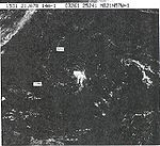
The 1978 Atlantic hurricane season officially began on June 1, 1978, and lasted until November 30, 1978. These dates conventionally delimit the period of each year when most tropical cyclone
s form in the Atlantic basin
. However, the season
had the earliest actual start on record due to an unusual subtropical storm in January.
Tropical Storm Amelia
, which killed 30 when it flooded the Guadalupe River
in Texas
, was the most notable storm of the season. Hurricane Greta
caused moderate damage in Central America
, avoiding fears that it would be a repeat of the devastating Hurricane Fifi
. A very unusual subtropical storm formed in mid-January, the only storm (tropical or subtropical) to do so in the Atlantic basin.
The 1978 season was the last hurricane season when only female names were used for hurricanes and the last season before the modern hurricane naming system was developed.
(ACE) rating of 63. ACE is, broadly speaking, a measure of the power of the hurricane multiplied by the length of time it existed, so storms that last a long time, as well as particularly strong hurricanes, have high ACEs. ACE is only calculated for full advisories on tropical systems at or exceeding 34 knots (39 mph, 63 km/h) or tropical storm strength. Subtropical storms are not included in the ACE value.
. It moved westward, intensifying to a 45 mph (75 km/h) subtropical storm over the central Atlantic Ocean. The storm dissipated on January 23, 230 miles (370 km) northeast of Puerto Rico due to significant vertical wind shear. Subtropical Storm One is the only known tropical or subtropical storm to form in the Atlantic basin during January. Note that two storms on record, Hurricane Alice
from the 1954 season
and Tropical Storm Zeta from the 2005 season
have formed during December and lasted into January.
near Brownsville, Texas
on July 30. The storm moved over land, but continued to intensify to a 50 mph (85 km/h) tropical storm. Land then took its toll, and the storm dissipated over Texas
on August 1. Flooding rains due to torrential rains were reported to have reached 48 inches (1,219.2 mm) led to the deaths of 30 people in Texas.
on August 5. Due to a strong high pressure system over Texas
, the storm moved southwestward, strengthening to a 50 mph (85 km/h) storm. The storm hit Nautla, Veracruz on early August 8, and dissipated later that day.
. The storm continued to weaken, and dissipated on August 12 near the island of Aruba
.
that formed over southeast Florida
and an area of convection near the Yucatan Peninsula
, possibly related to a tropical wave. A tropical depression formed on August 26 in the Gulf of Mexico, tracking west-northwestward around a high pressure ridge. Gradual intensification began, and it was upgraded to Tropical Storm Debra on August 28. The storm turned to the north, and it reached its peak intensity of 60 mph (95 km/h) on August 29, shortly before making landfall in southwestern Louisiana. It was a disorganized storm, with most of the convection located to the east of the center. It weakened rapidly and dissipated over Arkansas, though its remnants continued into the Ohio Valley.
far to the south, and intensified to a major hurricane. After a brief stall on September 2, Ella accelerated to the northeast, rapidly strengthening to a 140 mph (220 km/h) Category 4 hurricane south of Nova Scotia
. Ella is the northernmost known category 4 Atlantic hurricane, keeping this intensity as far as 42°5 North. It brushed the coast of Newfoundland and dissipated out at sea.
and the Lesser Antilles
. The system moved to the west-northwest, reaching 45 mph (75 km/h) winds before upper level shear ripped apart the system. After two days of moving to the northeast, the storm re-strengthened to a tropical storm, and became a hurricane on September 12, located about halfway between Bermuda
and the Azores Islands. Cool waters eventually led the system to its extratropical transition on September 16. The strong extratropical cyclone
brought winds as high as 104 miles per hour (167.4 km/h) to Fair Isle, Great Britain
.
on September 13. The storm moved through the Central Caribbean, steadily strengthening. When it neared the coast of Honduras
it rapidly intensified to a Category 4 hurricane, bringing winds to the country. It stayed offshore, but came to shore at Stann Creek District
, Belize
on September 19 as a Category 2 hurricane. The storm dissipated the next day, but later redeveloped in the Eastern Pacific as Hurricane Olivia. Luckily, death and damage was much lower than Hurricane Fifi
, a similar hurricane that devastated the same area in 1974. This was likely due to the lack of flooding, as well as using proper warnings from the affected countries. In all, Greta caused 5 deaths and over $75 million (2005 USD) in damage.
on September 12. It remained a tropical depression for three days as it moved generally eastward. It ultimately attained 65 mph (100 km/h) winds over the open Atlantic, but passed cooler waters before it could reach hurricane strength. Still, the storm retained tropical characteristics to nearly 60ºN, not far from Iceland
.
on October 2. During the next two days, thunderstorm activity gradually increased around the circulation center as the storm drifted northward. On October 2, the storm had taken the appearance of a tropical storm on satellite photographs, and upper-level anticyclonic
flow over the center of the storm was evident on satellite time-lapse movies. By the afternoon of October 4, the system had acquired the characteristics of a tropical storm and was named Irma; the gale-force winds extended 150 mi (240 km) from the center of circulation.
Six hours after being named, Irma reached its peak intensity of 50 mph (80 km/h). On October 5, Tropical Storm Irma turned towards the north-northeast and passed about midway between the central and western Azores
. Shortly thereafter, Irma became less organized, and that evening was absorbed into an approaching cold front
, about 450 mi (725 km) northeast of the Azores. Although Irma passed near parts of the western and central Azores with gale-force winds in some areas, no reports of damage or casualties caused by Irma were received. Several nearby ships reported winds around 46 mph (74 km/h). It was noted that heavy rains may have occurred on some of the mountainous islands as Irma passed.
. The storm passed north of the island, attained a wind speed of 50 mph (85 km/h), and headed into the open Atlantic before dissipating on October 11 southwest of Bermuda
. The highest rainfall report from Puerto Rico was 4.51 inches (114.6 mm) from Toro Negro Plant.
s of 80 mph (130 km/h), and weakened to a tropical depression on November 1, before dissipating on November 3.
. It tracked westward without significantly intensifying, and passed through the Windward Islands
over Bequia
on the following day. The depression continued its westward motion, and passed near Aruba
on August 9. It eventually traversed the Caribbean Sea, and made landfall to the south of Bluefields
, Nicaragua
on August 11. The depression dissipated shortly thereafter.
Tropical cyclone
A tropical cyclone is a storm system characterized by a large low-pressure center and numerous thunderstorms that produce strong winds and heavy rain. Tropical cyclones strengthen when water evaporated from the ocean is released as the saturated air rises, resulting in condensation of water vapor...
s form in the Atlantic basin
Atlantic Basin
The Atlantic Basin is the Atlantic Ocean.Atlantic Basin may also refer to:* Atlantic Basin Iron Works, an ironworks that operated in Brooklyn, New York, in the early to mid-20th century...
. However, the season
Atlantic hurricane season
The Atlantic hurricane season is the period in a year when hurricanes usually form in the Atlantic Ocean. Tropical cyclones in the North Atlantic are called hurricanes, tropical storms, or tropical depressions. In addition, there have been several storms over the years that have not been fully...
had the earliest actual start on record due to an unusual subtropical storm in January.
Tropical Storm Amelia
Tropical Storm Amelia (1978)
Tropical Storm Amelia was a weak, poorly-organized tropical storm that caused a severe flooding disaster in Texas during the 1978 Atlantic hurricane season. Amelia developed from a tropical wave on July 30 that entered an area of the Gulf of Mexico that was conductive for tropical cyclogenesis...
, which killed 30 when it flooded the Guadalupe River
Guadalupe River (Texas)
The Guadalupe River runs from Kerr County, Texas to San Antonio Bay on the Gulf of Mexico. The river is a popular destination for rafters and canoers. Larger cities along the river include New Braunfels, Kerrville, Seguin, Gonzales, Cuero, and Victoria...
in Texas
Texas
Texas is the second largest U.S. state by both area and population, and the largest state by area in the contiguous United States.The name, based on the Caddo word "Tejas" meaning "friends" or "allies", was applied by the Spanish to the Caddo themselves and to the region of their settlement in...
, was the most notable storm of the season. Hurricane Greta
Hurricane Greta-Olivia
Hurricane Greta–Olivia was a Category 4 hurricane that crossed over Central America, changing names upon reaching the Eastern Pacific during the 1978 Atlantic hurricane season and 1978 Pacific hurricane season. Striking Honduras on the fourth anniversary of Hurricane Fifi, the Greta threatened to...
caused moderate damage in Central America
Central America
Central America is the central geographic region of the Americas. It is the southernmost, isthmian portion of the North American continent, which connects with South America on the southeast. When considered part of the unified continental model, it is considered a subcontinent...
, avoiding fears that it would be a repeat of the devastating Hurricane Fifi
Hurricane Fifi
Hurricane Fifi was a catastrophic tropical cyclone that killed between 3,000 and 10,000 people in Honduras in September 1974, ranking it as the fourth deadliest Atlantic hurricane on record. Originating from a strong tropical wave on September 14, the system steadily tracked...
. A very unusual subtropical storm formed in mid-January, the only storm (tropical or subtropical) to do so in the Atlantic basin.
The 1978 season was the last hurricane season when only female names were used for hurricanes and the last season before the modern hurricane naming system was developed.
Season summary
The season's activity was reflected with a cumulative accumulated cyclone energyAccumulated cyclone energy
Accumulated cyclone energy is a measure used by the National Oceanic and Atmospheric Administration to express the activity of individual tropical cyclones and entire tropical cyclone seasons, particularly the North Atlantic hurricane season. It uses an approximation of the energy used by a...
(ACE) rating of 63. ACE is, broadly speaking, a measure of the power of the hurricane multiplied by the length of time it existed, so storms that last a long time, as well as particularly strong hurricanes, have high ACEs. ACE is only calculated for full advisories on tropical systems at or exceeding 34 knots (39 mph, 63 km/h) or tropical storm strength. Subtropical storms are not included in the ACE value.
Subtropical Storm One
The first storm of the season developed from an upper level trough on January 18 while 1,725 miles (2,800 km) east-northeast of Puerto RicoPuerto Rico
Puerto Rico , officially the Commonwealth of Puerto Rico , is an unincorporated territory of the United States, located in the northeastern Caribbean, east of the Dominican Republic and west of both the United States Virgin Islands and the British Virgin Islands.Puerto Rico comprises an...
. It moved westward, intensifying to a 45 mph (75 km/h) subtropical storm over the central Atlantic Ocean. The storm dissipated on January 23, 230 miles (370 km) northeast of Puerto Rico due to significant vertical wind shear. Subtropical Storm One is the only known tropical or subtropical storm to form in the Atlantic basin during January. Note that two storms on record, Hurricane Alice
Hurricane Alice (June 1954)
Hurricane Alice was a Category 1 hurricane that struck extreme northern Mexico and southern Texas in June 1954, causing at least 55 deaths. It formed in the Bay of Campeche on June 24, and maintained its intensity as it progressed inland between Texas and Mexico...
from the 1954 season
1954 Atlantic hurricane season
The 1954 Atlantic hurricane season caused over $750 million in damage, the most of any season at the time. The season officially began on June 15, and nine days later the first named storm developed. Hurricane Alice developed in the Gulf of Mexico and moved inland along the Rio Grande,...
and Tropical Storm Zeta from the 2005 season
2005 Atlantic hurricane season
The 2005 Atlantic hurricane season was the most active Atlantic hurricane season in recorded history, repeatedly shattering numerous records. The impact of the season was widespread and ruinous with an estimated 3,913 deaths and record damage of about $159.2 billion...
have formed during December and lasted into January.
Tropical Storm Amelia
Tropical Storm Amelia formed in the western Gulf of MexicoGulf of Mexico
The Gulf of Mexico is a partially landlocked ocean basin largely surrounded by the North American continent and the island of Cuba. It is bounded on the northeast, north and northwest by the Gulf Coast of the United States, on the southwest and south by Mexico, and on the southeast by Cuba. In...
near Brownsville, Texas
Brownsville, Texas
Brownsville is a city in the southernmost tip of the state of Texas, in the United States. It is located on the northern bank of the Rio Grande, directly north and across the border from Matamoros, Tamaulipas, Mexico. Brownsville is the 16th largest city in the state of Texas with a population of...
on July 30. The storm moved over land, but continued to intensify to a 50 mph (85 km/h) tropical storm. Land then took its toll, and the storm dissipated over Texas
Texas
Texas is the second largest U.S. state by both area and population, and the largest state by area in the contiguous United States.The name, based on the Caddo word "Tejas" meaning "friends" or "allies", was applied by the Spanish to the Caddo themselves and to the region of their settlement in...
on August 1. Flooding rains due to torrential rains were reported to have reached 48 inches (1,219.2 mm) led to the deaths of 30 people in Texas.
Tropical Storm Bess
Tropical Storm Bess formed in the central Gulf of MexicoGulf of Mexico
The Gulf of Mexico is a partially landlocked ocean basin largely surrounded by the North American continent and the island of Cuba. It is bounded on the northeast, north and northwest by the Gulf Coast of the United States, on the southwest and south by Mexico, and on the southeast by Cuba. In...
on August 5. Due to a strong high pressure system over Texas
Texas
Texas is the second largest U.S. state by both area and population, and the largest state by area in the contiguous United States.The name, based on the Caddo word "Tejas" meaning "friends" or "allies", was applied by the Spanish to the Caddo themselves and to the region of their settlement in...
, the storm moved southwestward, strengthening to a 50 mph (85 km/h) storm. The storm hit Nautla, Veracruz on early August 8, and dissipated later that day.
Hurricane Cora
The tropical depression that became Hurricane Cora formed on August 7 in the tropical Atlantic. It gradually strengthened to a 90 mph Category 1 hurricane, but weakened to a tropical storm as it moved through the Windward IslandsWindward Islands
The Windward Islands are the southern islands of the Lesser Antilles, within the West Indies.-Name and geography:The Windward Islands are called such because they were more windward to sailing ships arriving in the New World than the Leeward Islands, given that the prevailing trade winds in the...
. The storm continued to weaken, and dissipated on August 12 near the island of Aruba
Aruba
Aruba is a 33 km-long island of the Lesser Antilles in the southern Caribbean Sea, located 27 km north of the coast of Venezuela and 130 km east of Guajira Peninsula...
.
Tropical Storm Debra
The origins of Debra were from the combination of a lowLow pressure area
A low-pressure area, or "low", is a region where the atmospheric pressure at sea level is below that of surrounding locations. Low-pressure systems form under areas of wind divergence which occur in upper levels of the troposphere. The formation process of a low-pressure area is known as...
that formed over southeast Florida
Florida
Florida is a state in the southeastern United States, located on the nation's Atlantic and Gulf coasts. It is bordered to the west by the Gulf of Mexico, to the north by Alabama and Georgia and to the east by the Atlantic Ocean. With a population of 18,801,310 as measured by the 2010 census, it...
and an area of convection near the Yucatan Peninsula
Yucatán Peninsula
The Yucatán Peninsula, in southeastern Mexico, separates the Caribbean Sea from the Gulf of Mexico, with the northern coastline on the Yucatán Channel...
, possibly related to a tropical wave. A tropical depression formed on August 26 in the Gulf of Mexico, tracking west-northwestward around a high pressure ridge. Gradual intensification began, and it was upgraded to Tropical Storm Debra on August 28. The storm turned to the north, and it reached its peak intensity of 60 mph (95 km/h) on August 29, shortly before making landfall in southwestern Louisiana. It was a disorganized storm, with most of the convection located to the east of the center. It weakened rapidly and dissipated over Arkansas, though its remnants continued into the Ohio Valley.
Hurricane Ella
Hurricane Ella formed from a stationary frontal zone in late August over the central Atlantic. It moved west-northwestward, passing BermudaBermuda
Bermuda is a British overseas territory in the North Atlantic Ocean. Located off the east coast of the United States, its nearest landmass is Cape Hatteras, North Carolina, about to the west-northwest. It is about south of Halifax, Nova Scotia, Canada, and northeast of Miami, Florida...
far to the south, and intensified to a major hurricane. After a brief stall on September 2, Ella accelerated to the northeast, rapidly strengthening to a 140 mph (220 km/h) Category 4 hurricane south of Nova Scotia
Nova Scotia
Nova Scotia is one of Canada's three Maritime provinces and is the most populous province in Atlantic Canada. The name of the province is Latin for "New Scotland," but "Nova Scotia" is the recognized, English-language name of the province. The provincial capital is Halifax. Nova Scotia is the...
. Ella is the northernmost known category 4 Atlantic hurricane, keeping this intensity as far as 42°5 North. It brushed the coast of Newfoundland and dissipated out at sea.
Hurricane Flossie
Hurricane Flossie formed in the tropical Atlantic on September 4, midway between Cape VerdeCape Verde
The Republic of Cape Verde is an island country, spanning an archipelago of 10 islands located in the central Atlantic Ocean, 570 kilometres off the coast of Western Africa...
and the Lesser Antilles
Lesser Antilles
The Lesser Antilles are a long, partly volcanic island arc in the Western Hemisphere. Most of its islands form the eastern boundary of the Caribbean Sea with the Atlantic Ocean, with the remainder located in the southern Caribbean just north of South America...
. The system moved to the west-northwest, reaching 45 mph (75 km/h) winds before upper level shear ripped apart the system. After two days of moving to the northeast, the storm re-strengthened to a tropical storm, and became a hurricane on September 12, located about halfway between Bermuda
Bermuda
Bermuda is a British overseas territory in the North Atlantic Ocean. Located off the east coast of the United States, its nearest landmass is Cape Hatteras, North Carolina, about to the west-northwest. It is about south of Halifax, Nova Scotia, Canada, and northeast of Miami, Florida...
and the Azores Islands. Cool waters eventually led the system to its extratropical transition on September 16. The strong extratropical cyclone
Extratropical cyclone
Extratropical cyclones, sometimes called mid-latitude cyclones or wave cyclones, are a group of cyclones defined as synoptic scale low pressure weather systems that occur in the middle latitudes of the Earth having neither tropical nor polar characteristics, and are connected with fronts and...
brought winds as high as 104 miles per hour (167.4 km/h) to Fair Isle, Great Britain
Great Britain
Great Britain or Britain is an island situated to the northwest of Continental Europe. It is the ninth largest island in the world, and the largest European island, as well as the largest of the British Isles...
.
Hurricane Greta
The tropical depression that became Hurricane Greta formed 75 miles west-northwest of TrinidadTrinidad
Trinidad is the larger and more populous of the two major islands and numerous landforms which make up the island nation of Trinidad and Tobago. It is the southernmost island in the Caribbean and lies just off the northeastern coast of Venezuela. With an area of it is also the fifth largest in...
on September 13. The storm moved through the Central Caribbean, steadily strengthening. When it neared the coast of Honduras
Honduras
Honduras is a republic in Central America. It was previously known as Spanish Honduras to differentiate it from British Honduras, which became the modern-day state of Belize...
it rapidly intensified to a Category 4 hurricane, bringing winds to the country. It stayed offshore, but came to shore at Stann Creek District
Stann Creek District
Stann Creek District is a district in the south east region of Belize. According to the 2010 census, the district had a population of 32,166 people...
, Belize
Belize
Belize is a constitutional monarchy and the northernmost country in Central America. Belize has a diverse society, comprising many cultures and languages. Even though Kriol and Spanish are spoken among the population, Belize is the only country in Central America where English is the official...
on September 19 as a Category 2 hurricane. The storm dissipated the next day, but later redeveloped in the Eastern Pacific as Hurricane Olivia. Luckily, death and damage was much lower than Hurricane Fifi
Hurricane Fifi
Hurricane Fifi was a catastrophic tropical cyclone that killed between 3,000 and 10,000 people in Honduras in September 1974, ranking it as the fourth deadliest Atlantic hurricane on record. Originating from a strong tropical wave on September 14, the system steadily tracked...
, a similar hurricane that devastated the same area in 1974. This was likely due to the lack of flooding, as well as using proper warnings from the affected countries. In all, Greta caused 5 deaths and over $75 million (2005 USD) in damage.
Tropical Storm Hope
Tropical Storm Hope formed just off the northeast coast of FloridaFlorida
Florida is a state in the southeastern United States, located on the nation's Atlantic and Gulf coasts. It is bordered to the west by the Gulf of Mexico, to the north by Alabama and Georgia and to the east by the Atlantic Ocean. With a population of 18,801,310 as measured by the 2010 census, it...
on September 12. It remained a tropical depression for three days as it moved generally eastward. It ultimately attained 65 mph (100 km/h) winds over the open Atlantic, but passed cooler waters before it could reach hurricane strength. Still, the storm retained tropical characteristics to nearly 60ºN, not far from Iceland
Iceland
Iceland , described as the Republic of Iceland, is a Nordic and European island country in the North Atlantic Ocean, on the Mid-Atlantic Ridge. Iceland also refers to the main island of the country, which contains almost all the population and almost all the land area. The country has a population...
.
Tropical Storm Irma
The origins of Tropical Storm Irma were from a tropical depression that formed about 500 mi (805 km) south of the AzoresAzores
The Archipelago of the Azores is composed of nine volcanic islands situated in the middle of the North Atlantic Ocean, and is located about west from Lisbon and about east from the east coast of North America. The islands, and their economic exclusion zone, form the Autonomous Region of the...
on October 2. During the next two days, thunderstorm activity gradually increased around the circulation center as the storm drifted northward. On October 2, the storm had taken the appearance of a tropical storm on satellite photographs, and upper-level anticyclonic
Anticyclone
An anticyclone is a weather phenomenon defined by the United States' National Weather Service's glossary as "[a] large-scale circulation of winds around a central region of high atmospheric pressure, clockwise in the Northern Hemisphere, counterclockwise in the Southern Hemisphere"...
flow over the center of the storm was evident on satellite time-lapse movies. By the afternoon of October 4, the system had acquired the characteristics of a tropical storm and was named Irma; the gale-force winds extended 150 mi (240 km) from the center of circulation.
Six hours after being named, Irma reached its peak intensity of 50 mph (80 km/h). On October 5, Tropical Storm Irma turned towards the north-northeast and passed about midway between the central and western Azores
Azores
The Archipelago of the Azores is composed of nine volcanic islands situated in the middle of the North Atlantic Ocean, and is located about west from Lisbon and about east from the east coast of North America. The islands, and their economic exclusion zone, form the Autonomous Region of the...
. Shortly thereafter, Irma became less organized, and that evening was absorbed into an approaching cold front
Cold front
A cold front is defined as the leading edge of a cooler mass of air, replacing a warmer mass of air.-Development of cold front:The cooler and denser air wedges under the less-dense warmer air, lifting it...
, about 450 mi (725 km) northeast of the Azores. Although Irma passed near parts of the western and central Azores with gale-force winds in some areas, no reports of damage or casualties caused by Irma were received. Several nearby ships reported winds around 46 mph (74 km/h). It was noted that heavy rains may have occurred on some of the mountainous islands as Irma passed.
Tropical Storm Juliet
Juliet formed from a tropical wave on October 7 about 600 miles (965.6 km) east of Puerto RicoPuerto Rico
Puerto Rico , officially the Commonwealth of Puerto Rico , is an unincorporated territory of the United States, located in the northeastern Caribbean, east of the Dominican Republic and west of both the United States Virgin Islands and the British Virgin Islands.Puerto Rico comprises an...
. The storm passed north of the island, attained a wind speed of 50 mph (85 km/h), and headed into the open Atlantic before dissipating on October 11 southwest of Bermuda
Bermuda
Bermuda is a British overseas territory in the North Atlantic Ocean. Located off the east coast of the United States, its nearest landmass is Cape Hatteras, North Carolina, about to the west-northwest. It is about south of Halifax, Nova Scotia, Canada, and northeast of Miami, Florida...
. The highest rainfall report from Puerto Rico was 4.51 inches (114.6 mm) from Toro Negro Plant.
Hurricane Kendra
The final storm of the season formed east of the Bahamas on October 28. The storm strengthened to a Category 1 hurricane with maximum sustained windMaximum sustained wind
The maximum sustained winds associated with a tropical cyclone are a common indicator of the intensity of the storm. Within a mature tropical cyclone, they are found within the eyewall at a distance defined as the radius of maximum wind, or RMW. Unlike gusts, the value of these winds are...
s of 80 mph (130 km/h), and weakened to a tropical depression on November 1, before dissipating on November 3.
Other storms
In addition to the 12 other tropical cyclones, there were several tropical depressions that developed during the season. On August 7, a tropical depression formed about 465 miles (748.3 km) east of BarbadosBarbados
Barbados is an island country in the Lesser Antilles. It is in length and as much as in width, amounting to . It is situated in the western area of the North Atlantic and 100 kilometres east of the Windward Islands and the Caribbean Sea; therein, it is about east of the islands of Saint...
. It tracked westward without significantly intensifying, and passed through the Windward Islands
Windward Islands
The Windward Islands are the southern islands of the Lesser Antilles, within the West Indies.-Name and geography:The Windward Islands are called such because they were more windward to sailing ships arriving in the New World than the Leeward Islands, given that the prevailing trade winds in the...
over Bequia
Bequia
Bequia is the largest island in the Grenadines. It is part of the country of Saint Vincent and the Grenadines, and is approximately 15 km from the nation's capital, Kingstown.-Geography:The island capital is Port Elizabeth...
on the following day. The depression continued its westward motion, and passed near Aruba
Aruba
Aruba is a 33 km-long island of the Lesser Antilles in the southern Caribbean Sea, located 27 km north of the coast of Venezuela and 130 km east of Guajira Peninsula...
on August 9. It eventually traversed the Caribbean Sea, and made landfall to the south of Bluefields
Bluefields
Bluefields is the capital of the municipality of the same name, and of Región Autónoma del Atlántico Sur in Nicaragua. It was also capital of the former Zelaya Department, which was divided into North and South Atlantic Autonomous Regions...
, Nicaragua
Nicaragua
Nicaragua is the largest country in the Central American American isthmus, bordered by Honduras to the north and Costa Rica to the south. The country is situated between 11 and 14 degrees north of the Equator in the Northern Hemisphere, which places it entirely within the tropics. The Pacific Ocean...
on August 11. The depression dissipated shortly thereafter.
Storm names
The following names were used for named storms that formed in the north Atlantic basin in 1978. Storms were named Amelia, Bess, Cora, Flossie, Hope, Irma and Juliet for the first time in 1978. This was the last year that only female names were used. Names that were not assigned are marked in .
|
|
Retirement
No names were retired after the 1978 season.Season effects
This is a table of the storms in 1978 and their landfall(s), if any. Deaths in parentheses are additional and indirect (an example of an indirect death would be a traffic accident), but are still storm-related. Damage and deaths include totals while the storm was extratropical or a wave or low.See also
- List of Atlantic hurricanes
- List of Atlantic hurricane seasons
- 1978 Pacific hurricane season1978 Pacific hurricane seasonThe 1978 Pacific hurricane season officially began May 15, 1978, in the eastern Pacific, June 1, 1978 in the central Pacific, and officially ended 30 November 1978. These dates conventionally delimit the period of time when tropical cyclones form in the eastern north Pacific Ocean.Activity this...
- 1978 Pacific typhoon season1978 Pacific typhoon seasonThe 1978 Pacific typhoon season has no official bounds; it ran year-round in 1978, but most tropical cyclones tend to form in the northwestern Pacific Ocean between June and December...
- 1978 North Indian Ocean cyclone season
- Southern Hemisphere tropical cyclone seasons: 1977–78, 1978–79