

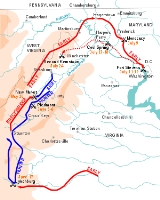
Valley Campaigns of 1864

Encyclopedia
The Valley Campaigns of 1864 were American Civil War
operations and battles that took place in the Shenandoah Valley
of Virginia
from May to October 1864. Military historians divide this period into three separate campaigns, but it is useful to consider the three together and how they interacted.
was promoted to lieutenant general
and given command of all Union
armies. He chose to make his headquarters with the Army of the Potomac
, although Maj. Gen.
George G. Meade remained the actual commander of that army. He left Maj. Gen. William Tecumseh Sherman
in command of most of the western armies. Grant understood the concept of total war
and believed, along with Sherman and President
Abraham Lincoln
, that only the utter defeat of Confederate
forces and their economic base would bring an end to the war. Therefore, scorched earth
tactics would be required in some important theaters. He devised a coordinated strategy that would strike at the heart of the Confederacy from multiple directions: Grant, Meade, and Maj. Gen. Benjamin Butler
against Robert E. Lee
's Army of Northern Virginia
near Richmond
; Maj. Gen. Franz Sigel
to invade the Shenandoah Valley and destroy Lee's supply lines; Sherman to invade Georgia
and capture Atlanta; Maj. Gen. Nathaniel Banks to capture Mobile, Alabama
.
 The first campaign started with Grant's planned invasion by Sigel. Sigel was in command of the Department of West Virginia
, and his orders from Grant were to move "up the Valley" (i.e., southwest to the higher elevations) with 10,000 men to destroy the railroad center at Lynchburg, Virginia
.
under Confederate Maj. Gen. John C. Breckenridge and defeated. He retreated to Strasburg, Virginia
, and was replaced by Maj. Gen. David Hunter
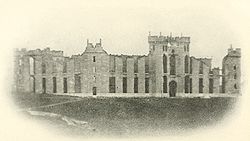
, who later burned VMI in retaliation for the actions of the VMI cadets.
, who was killed in the battle. Hunter occupied Staunton, Virginia
.
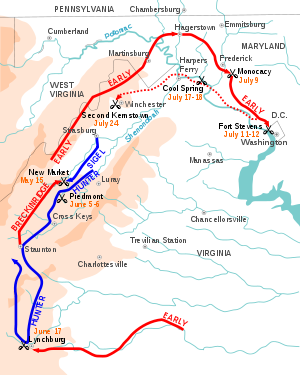 Robert E. Lee was concerned about Hunter's advances in the Valley, which threatened critical railroad lines and provisions for the Virginia-based Confederate forces. He sent Jubal Early's corps to sweep Union forces from the Valley and, if possible, to menace Washington, D.C.
, hoping to compel Grant to dilute his forces against Lee around Petersburg, Virginia
. Early was operating in the shadow of Thomas J. "Stonewall" Jackson, whose 1862 Valley Campaign
against superior forces was fabled in Confederate history. Early got off to a good start. He drove down the Valley without opposition, bypassed Harpers Ferry
, crossed the Potomac River
, and advanced into Maryland
. Grant dispatched a corps under Horatio G. Wright and other troops under George Crook
to reinforce Washington and pursue Early.
near Frederick, Maryland
, but this battle delayed his progress enough to allow time for reinforcing the defenses of Washington.
towards the Blue Ridge Mountains
. Several small cavalry skirmishes occurred throughout the day as the Federals continued to try and harass Early's column.
and routed it. Early withdrew his army south to Fisher's Hill, near Strasburg, Virginia
.
, along the way in retaliation for Hunter's previous destruction in the Valley.
battle in Maryland.
 Grant finally lost patience with Early, particularly his burning of Chambersburg, and knew that Washington remained vulnerable if Early was still on the loose. He found a new commander aggressive enough to defeat Early: Philip Sheridan
, the cavalry commander of the Army of the Potomac, who was given command of all forces in the area, calling them the Army of the Shenandoah
. Sheridan initially started slowly, primarily because the impending presidential election of 1864 demanded a cautious approach, avoiding any disaster that might lead to the defeat of Abraham Lincoln.
were sent from Petersburg to reinforce Early. Brig. Gen. Wesley Merritt
's Union cavalry division surprised the Confederate columns while they were crossing the Shenandoah River
, capturing about 300. The Confederates rallied and advanced, gradually pushing back Merritt's men to Cedarville. The battle was inconclusive.
. Sheridan conducted a fighting withdrawal.
. Sustaining ruinous casualties, Early retreated from the largest battle in all three of the campaigns, taking up defensive positions at Fisher's Hill.
, routing the Confederates with moderate losses. Early retreated to Waynesboro, Virginia
.
With Early damaged and pinned down, the Valley lay open to the Union. And because of Sherman's capture of Atlanta
, Lincoln's re-election now seemed assured. Sheridan pulled back slowly down the Valley and conducted a scorched earth
campaign that would presage Sherman's March to the Sea
in November. The goal was to deny the Confederacy the means of feeding its armies in Virginia, and Sheridan's army did so ruthlessly, burning crops, barns, mills, and factories.
. Most of the men of Early's corps rejoined Lee at Petersburg in December, while Early remained to command a skeleton force. His final action was defeat at the Battle of Waynesboro
on March 2, 1865, after which Lee removed him from his command because the Confederate government and people had lost confidence in him.
American Civil War
The American Civil War was a civil war fought in the United States of America. In response to the election of Abraham Lincoln as President of the United States, 11 southern slave states declared their secession from the United States and formed the Confederate States of America ; the other 25...
operations and battles that took place in the Shenandoah Valley
Shenandoah Valley
The Shenandoah Valley is both a geographic valley and cultural region of western Virginia and West Virginia in the United States. The valley is bounded to the east by the Blue Ridge Mountains, to the west by the eastern front of the Ridge-and-Valley Appalachians , to the north by the Potomac River...
of Virginia
Virginia
The Commonwealth of Virginia , is a U.S. state on the Atlantic Coast of the Southern United States. Virginia is nicknamed the "Old Dominion" and sometimes the "Mother of Presidents" after the eight U.S. presidents born there...
from May to October 1864. Military historians divide this period into three separate campaigns, but it is useful to consider the three together and how they interacted.
Background
At the beginning of 1864, Ulysses S. GrantUlysses S. Grant
Ulysses S. Grant was the 18th President of the United States as well as military commander during the Civil War and post-war Reconstruction periods. Under Grant's command, the Union Army defeated the Confederate military and ended the Confederate States of America...
was promoted to lieutenant general
Lieutenant General (United States)
In the United States Army, the United States Air Force and the United States Marine Corps, lieutenant general is a three-star general officer rank, with the pay grade of O-9. Lieutenant general ranks above major general and below general...
and given command of all Union
Union Army
The Union Army was the land force that fought for the Union during the American Civil War. It was also known as the Federal Army, the U.S. Army, the Northern Army and the National Army...
armies. He chose to make his headquarters with the Army of the Potomac
Army of the Potomac
The Army of the Potomac was the major Union Army in the Eastern Theater of the American Civil War.-History:The Army of the Potomac was created in 1861, but was then only the size of a corps . Its nucleus was called the Army of Northeastern Virginia, under Brig. Gen...
, although Maj. Gen.
Major general (United States)
In the United States Army, United States Marine Corps, and United States Air Force, major general is a two-star general-officer rank, with the pay grade of O-8. Major general ranks above brigadier general and below lieutenant general...
George G. Meade remained the actual commander of that army. He left Maj. Gen. William Tecumseh Sherman
William Tecumseh Sherman
William Tecumseh Sherman was an American soldier, businessman, educator and author. He served as a General in the Union Army during the American Civil War , for which he received recognition for his outstanding command of military strategy as well as criticism for the harshness of the "scorched...
in command of most of the western armies. Grant understood the concept of total war
Total war
Total war is a war in which a belligerent engages in the complete mobilization of fully available resources and population.In the mid-19th century, "total war" was identified by scholars as a separate class of warfare...
and believed, along with Sherman and President
President of the United States
The President of the United States of America is the head of state and head of government of the United States. The president leads the executive branch of the federal government and is the commander-in-chief of the United States Armed Forces....
Abraham Lincoln
Abraham Lincoln
Abraham Lincoln was the 16th President of the United States, serving from March 1861 until his assassination in April 1865. He successfully led his country through a great constitutional, military and moral crisis – the American Civil War – preserving the Union, while ending slavery, and...
, that only the utter defeat of Confederate
Confederate States Army
The Confederate States Army was the army of the Confederate States of America while the Confederacy existed during the American Civil War. On February 8, 1861, delegates from the seven Deep South states which had already declared their secession from the United States of America adopted the...
forces and their economic base would bring an end to the war. Therefore, scorched earth
Scorched earth
A scorched earth policy is a military strategy or operational method which involves destroying anything that might be useful to the enemy while advancing through or withdrawing from an area...
tactics would be required in some important theaters. He devised a coordinated strategy that would strike at the heart of the Confederacy from multiple directions: Grant, Meade, and Maj. Gen. Benjamin Butler
Benjamin Franklin Butler (politician)
Benjamin Franklin Butler was an American lawyer and politician who represented Massachusetts in the United States House of Representatives and later served as the 33rd Governor of Massachusetts....
against Robert E. Lee
Robert E. Lee
Robert Edward Lee was a career military officer who is best known for having commanded the Confederate Army of Northern Virginia in the American Civil War....
's Army of Northern Virginia
Army of Northern Virginia
The Army of Northern Virginia was the primary military force of the Confederate States of America in the Eastern Theater of the American Civil War, as well as the primary command structure of the Department of Northern Virginia. It was most often arrayed against the Union Army of the Potomac...
near Richmond
Richmond, Virginia
Richmond is the capital of the Commonwealth of Virginia, in the United States. It is an independent city and not part of any county. Richmond is the center of the Richmond Metropolitan Statistical Area and the Greater Richmond area...
; Maj. Gen. Franz Sigel
Franz Sigel
Franz Sigel was a German military officer, revolutionist and immigrant to the United States who was a teacher, newspaperman, politician, and served as a Union major general in the American Civil War.-Early life:...
to invade the Shenandoah Valley and destroy Lee's supply lines; Sherman to invade Georgia
Georgia (U.S. state)
Georgia is a state located in the southeastern United States. It was established in 1732, the last of the original Thirteen Colonies. The state is named after King George II of Great Britain. Georgia was the fourth state to ratify the United States Constitution, on January 2, 1788...
and capture Atlanta; Maj. Gen. Nathaniel Banks to capture Mobile, Alabama
Mobile, Alabama
Mobile is the third most populous city in the Southern US state of Alabama and is the county seat of Mobile County. It is located on the Mobile River and the central Gulf Coast of the United States. The population within the city limits was 195,111 during the 2010 census. It is the largest...
.
Lynchburg Campaign (May–June 1864)
West Virginia
West Virginia is a state in the Appalachian and Southeastern regions of the United States, bordered by Virginia to the southeast, Kentucky to the southwest, Ohio to the northwest, Pennsylvania to the northeast and Maryland to the east...
, and his orders from Grant were to move "up the Valley" (i.e., southwest to the higher elevations) with 10,000 men to destroy the railroad center at Lynchburg, Virginia
Lynchburg, Virginia
Lynchburg is an independent city in the Commonwealth of Virginia. The population was 75,568 as of 2010. Located in the foothills of the Blue Ridge Mountains along the banks of the James River, Lynchburg is known as the "City of Seven Hills" or "The Hill City." Lynchburg was the only major city in...
.
New Market (May 15)
Sigel was intercepted by 4,000 troops and cadets from the Virginia Military InstituteVirginia Military Institute
The Virginia Military Institute , located in Lexington, Virginia, is the oldest state-supported military college and one of six senior military colleges in the United States. Unlike any other military college in the United States—and in keeping with its founding principles—all VMI students are...
under Confederate Maj. Gen. John C. Breckenridge and defeated. He retreated to Strasburg, Virginia
Strasburg, Virginia
Strasburg is a town in Shenandoah County, Virginia, United States, which was founded in 1761 by Peter Stover. It is the largest town, population-wise, in the county and is known for its pottery, antiques, and Civil War history...
, and was replaced by Maj. Gen. David Hunter
David Hunter
David Hunter was a Union general in the American Civil War. He achieved fame by his unauthorized 1862 order emancipating slaves in three Southern states and as the president of the military commission trying the conspirators involved with the assassination of President Abraham Lincoln.-Early...
, who later burned VMI in retaliation for the actions of the VMI cadets.
Piedmont (June 5–6)
Hunter resumed the Union offensive and defeated William E. "Grumble" JonesWilliam E. Jones
William Edmondson Jones, known as Grumble Jones, was a planter, a career United States Army officer, and a Confederate cavalry general, killed in the Battle of Piedmont in the American Civil War.-Early life:...
, who was killed in the battle. Hunter occupied Staunton, Virginia
Staunton, Virginia
Staunton is an independent city within the confines of Augusta County in the commonwealth of Virginia. The population was 23,746 as of 2010. It is the county seat of Augusta County....
.
Lynchburg (June 17–18)
Hunter was foiled in his plan to destroy railroads, canals, and hospitals in Lynchburg when initial units under Jubal A. Early arrived. Hunter, short on supplies, retreated back through West Virginia.Early's Washington Raid and operations against the B&O Railroad (June–August 1864)
Washington, D.C.
Washington, D.C., formally the District of Columbia and commonly referred to as Washington, "the District", or simply D.C., is the capital of the United States. On July 16, 1790, the United States Congress approved the creation of a permanent national capital as permitted by the U.S. Constitution....
, hoping to compel Grant to dilute his forces against Lee around Petersburg, Virginia
Petersburg, Virginia
Petersburg is an independent city in Virginia, United States located on the Appomattox River and south of the state capital city of Richmond. The city's population was 32,420 as of 2010, predominantly of African-American ethnicity...
. Early was operating in the shadow of Thomas J. "Stonewall" Jackson, whose 1862 Valley Campaign
Valley Campaign
Jackson's Valley Campaign was Confederate Maj. Gen. Thomas J. "Stonewall" Jackson's famous spring 1862 campaign through the Shenandoah Valley in Virginia during the American Civil War...
against superior forces was fabled in Confederate history. Early got off to a good start. He drove down the Valley without opposition, bypassed Harpers Ferry
Harpers Ferry, West Virginia
Harpers Ferry is a historic town in Jefferson County, West Virginia, United States. In many books the town is called "Harper's Ferry" with an apostrophe....
, crossed the Potomac River
Potomac River
The Potomac River flows into the Chesapeake Bay, located along the mid-Atlantic coast of the United States. The river is approximately long, with a drainage area of about 14,700 square miles...
, and advanced into Maryland
Maryland
Maryland is a U.S. state located in the Mid Atlantic region of the United States, bordering Virginia, West Virginia, and the District of Columbia to its south and west; Pennsylvania to its north; and Delaware to its east...
. Grant dispatched a corps under Horatio G. Wright and other troops under George Crook
George Crook
George R. Crook was a career United States Army officer, most noted for his distinguished service during the American Civil War and the Indian Wars.-Early life:...
to reinforce Washington and pursue Early.
Monocacy (July 9)
Early defeated a smaller force under Lew WallaceLew Wallace
Lewis "Lew" Wallace was an American lawyer, Union general in the American Civil War, territorial governor and statesman, politician and author...
near Frederick, Maryland
Frederick, Maryland
Frederick is a city in north-central Maryland. It is the county seat of Frederick County, the largest county by area in the state of Maryland. Frederick is an outlying community of the Washington-Arlington-Alexandria, DC-VA-MD-WV Metropolitan Statistical Area, which is part of a greater...
, but this battle delayed his progress enough to allow time for reinforcing the defenses of Washington.
Fort Stevens (July 11–12)
Early attacked a fort on the northwest defensive perimeter of Washington without success and withdrew back to Virginia.Heaton's Crossroads (July 16)
Union cavalry attacked Early's supply trains as the Confederates withdrew across the Loudoun ValleyLoudoun Valley
The Loudoun Valley is a small, but historically significant valley in the Blue Ridge Mountains located in Loudoun County in northwestern Virginia in the United States.-Geography:...
towards the Blue Ridge Mountains
Blue Ridge Mountains
The Blue Ridge Mountains are a physiographic province of the larger Appalachian Mountains range. This province consists of northern and southern physiographic regions, which divide near the Roanoke River gap. The mountain range is located in the eastern United States, starting at its southern-most...
. Several small cavalry skirmishes occurred throughout the day as the Federals continued to try and harass Early's column.
Cool Spring (July 17–18)
Also known as Snicker's Ferry. Early attacked and repulsed pursuing Union forces under Wright.Rutherford's Farm (July 20)
A Union division attacked a Confederate division under Stephen Dodson RamseurStephen Dodson Ramseur
Stephen Dodson Ramseur was one of the youngest Confederate generals in the American Civil War. He was mortally wounded in battle at the Battle of Cedar Creek in the Shenandoah Valley.-Early life:...
and routed it. Early withdrew his army south to Fisher's Hill, near Strasburg, Virginia
Strasburg, Virginia
Strasburg is a town in Shenandoah County, Virginia, United States, which was founded in 1761 by Peter Stover. It is the largest town, population-wise, in the county and is known for its pottery, antiques, and Civil War history...
.
Second Kernstown (July 24)
Wright withdrew, thinking Early was no longer a threat. Early attacked him to prevent or delay his return to Grant's forces besieging Petersburg. Union troops were routed, streaming through the streets of Winchester. Early pursued and burned Chambersburg, PennsylvaniaChambersburg, Pennsylvania
Chambersburg is a borough in the South Central region of Pennsylvania, United States. It is miles north of Maryland and the Mason-Dixon line and southwest of Harrisburg in the Cumberland Valley, which is part of the Great Appalachian Valley. Chambersburg is the county seat of Franklin County...
, along the way in retaliation for Hunter's previous destruction in the Valley.
Folck's Mill (August 1)
Also known as the Battle of Cumberland. An inconclusive small cavalryCavalry
Cavalry or horsemen were soldiers or warriors who fought mounted on horseback. Cavalry were historically the third oldest and the most mobile of the combat arms...
battle in Maryland.
Moorefield (August 7)
Also known as the Battle of Oldfields. Confederate cavalry returning from the Chambersburg burning were ambushed and defeated by Union cavalry.Sheridan's Valley Campaign (August–October 1864)
Philip Sheridan
Philip Henry Sheridan was a career United States Army officer and a Union general in the American Civil War. His career was noted for his rapid rise to major general and his close association with Lt. Gen. Ulysses S...
, the cavalry commander of the Army of the Potomac, who was given command of all forces in the area, calling them the Army of the Shenandoah
Army of the Shenandoah (Union)
The Army of the Shenandoah was a Union army during the American Civil War. First organized in 1861 and then disbanded, it is best known for its recreation in 1864 under Philip Sheridan...
. Sheridan initially started slowly, primarily because the impending presidential election of 1864 demanded a cautious approach, avoiding any disaster that might lead to the defeat of Abraham Lincoln.
Guard Hill (August 16)
Also known as Front Royal or Cedarville. Confederate forces under Richard H. AndersonRichard H. Anderson
Richard Heron Anderson was a career U.S. Army officer, fighting with distinction in the Mexican-American War. He also served as a Confederate general during the American Civil War, fighting in the Eastern Theater of the conflict and most notably during the 1864 Battle of Spotsylvania Court House...
were sent from Petersburg to reinforce Early. Brig. Gen. Wesley Merritt
Wesley Merritt
Wesley Merritt was a general in the United States Army during the American Civil War and the Spanish-American War. He is noted for distinguished service in the cavalry.-Early life:...
's Union cavalry division surprised the Confederate columns while they were crossing the Shenandoah River
Shenandoah River
The Shenandoah River is a tributary of the Potomac River, long with two forks approximately long each, in the U.S. states of Virginia and West Virginia...
, capturing about 300. The Confederates rallied and advanced, gradually pushing back Merritt's men to Cedarville. The battle was inconclusive.
Summit Point (August 21)
Also known as Flowing Springs or Cameron's Depot. Early and Anderson struck Sheridan near Charles Town, West VirginiaCharles Town, West Virginia
Charles Town is a city in and the county seat of Jefferson County, West Virginia, United States. The population was 2,907 at the 2000 census. Due to its similar name, travelers have sometimes confused this city with the state's capital, Charleston.-History:...
. Sheridan conducted a fighting withdrawal.
Smithfield Crossing (August 25–29)
Two Confederate divisions crossed Opequon Creek and forced a Union cavalry division back to Charles Town.Berryville (September 3–4)
A minor engagement in which Early attempted to stop Sheridan's march up the Valley. Early withdrew back to Opequon Creek when he realized he was in a poor position for attacking Sheridan's full force.Third Winchester (September 19)
Also known as the Battle of Opequon. While Early had his forces dispersed, raiding the B&O Railroad, Sheridan struck near Winchester, VirginiaWinchester, Virginia
Winchester is an independent city located in the northwestern portion of the Commonwealth of Virginia in the USA. The city's population was 26,203 according to the 2010 Census...
. Sustaining ruinous casualties, Early retreated from the largest battle in all three of the campaigns, taking up defensive positions at Fisher's Hill.
Fisher's Hill (September 21–22)
Sheridan hit Early in an early-morning flanking attackFlanking maneuver
In military tactics, a flanking maneuver, also called a flank attack, is an attack on the sides of an opposing force. If a flanking maneuver succeeds, the opposing force would be surrounded from two or more directions, which significantly reduces the maneuverability of the outflanked force and its...
, routing the Confederates with moderate losses. Early retreated to Waynesboro, Virginia
Waynesboro, Virginia
Waynesboro, deriving its name from General Anthony Wayne, is an independent city surrounded by Augusta County in the U.S. state of Virginia. The population was 21,006 in 2010.....
.
With Early damaged and pinned down, the Valley lay open to the Union. And because of Sherman's capture of Atlanta
Atlanta Campaign
The Atlanta Campaign was a series of battles fought in the Western Theater of the American Civil War throughout northwest Georgia and the area around Atlanta during the summer of 1864. Union Maj. Gen. William T. Sherman invaded Georgia from the vicinity of Chattanooga, Tennessee, beginning in May...
, Lincoln's re-election now seemed assured. Sheridan pulled back slowly down the Valley and conducted a scorched earth
Scorched earth
A scorched earth policy is a military strategy or operational method which involves destroying anything that might be useful to the enemy while advancing through or withdrawing from an area...
campaign that would presage Sherman's March to the Sea
Sherman's March to the Sea
Sherman's March to the Sea is the name commonly given to the Savannah Campaign conducted around Georgia from November 15, 1864 to December 21, 1864 by Maj. Gen. William Tecumseh Sherman of the Union Army in the American Civil War...
in November. The goal was to deny the Confederacy the means of feeding its armies in Virginia, and Sheridan's army did so ruthlessly, burning crops, barns, mills, and factories.
Tom's Brook (October 9)
As Early began a pursuit of Sheridan, Union cavalry routed two divisions of Confederate cavalry.Cedar Creek (October 19)
In a brilliant surprise attack, Early routed two thirds of the Union army, but his troops were hungry and exhausted and fell out of their ranks to pillage the Union camp; Sheridan managed to rally his troops and defeat Early decisively.Aftermath
Having completing his missions of neutralizing Early and suppressing the Valley's military-related economy, Sheridan returned to assist Grant at PetersburgSiege of Petersburg
The Richmond–Petersburg Campaign was a series of battles around Petersburg, Virginia, fought from June 9, 1864, to March 25, 1865, during the American Civil War...
. Most of the men of Early's corps rejoined Lee at Petersburg in December, while Early remained to command a skeleton force. His final action was defeat at the Battle of Waynesboro
Battle of Waynesboro
The Battle of Waynesboro was fought on March 2, 1865, in Augusta County, Virginia, during the American Civil War. It was the final battle for Confederate Lt. Gen. Jubal Early, whose force was destroyed.-Background:...
on March 2, 1865, after which Lee removed him from his command because the Confederate government and people had lost confidence in him.
Further reading
- Cooling, Benjamin Franklin. Jubal Early's Raid on Washington, 1864. Baltimore: Nautical & Aviation Publishing Company of America, 1989. ISBN 0-933852-86-X.
- Early, Jubal A., "General Jubal A. Early tells his story of his advance upon Washington, D.C.". Washington National Republican, 1864.
- Early, Jubal A. A Memoir of the Last Year of the War for Independence in the Confederate States of America. Edited by Gary W. Gallagher. Columbia: University of South Carolina Press, 2001. ISBN 1-57003-450-8.
- Gallagher, Gary W., ed. The Shenandoah Valley Campaign of 1864. Military Campaigns of the Civil War. Chapel Hill: University of North Carolina Press, 2006. ISBN 978-0-8078-3005-5.
- Lewis, Thomas A., and the Editors of Time-Life Books. The Shenandoah in Flames: The Valley Campaign of 1864. Alexandria, VA: Time-Life Books, 1987. ISBN 0-8094-4784-3.