


Saturday Night Live

Encyclopedia
Saturday Night Live is a live
American late-night television
sketch comedy
and variety show
developed by Lorne Michaels
and Dick Ebersol
. The show premiered on NBC
on October 11, 1975, under the original title of NBC's Saturday Night.
The show's sketches
often parody contemporary American culture
and politics
. Saturday Night Live features a two-tiered cast consisting of repertory members, also called the "Not Ready For Prime Time Players" (the name used by the show's original cast), and newer cast members who are known as "Featured Players."
Each week, the show features a host who delivers an opening monologue
and performs in sketches with the cast. A musical guest also performs. With the exception of season 7
, the show has begun with a cold open
sketch (usually based around politically
-themed current events) that ends with someone breaking character
and proclaiming, "Live from New York, it's Saturday Night!
"
For all but five seasons (six
through ten
), the show has been overseen by its creator and current executive producer, Lorne Michaels. Broadway Video
, SNL Studios, and NBC
jointly manage production. Saturday Night Live is one of the longest-running network television programs in the United States with over 700 episodes broadcast over the span of 37 seasons as of 2011. A number of the show's sketches have been developed into feature film
s, while many of the show's cast have gone on to independent film and TV stardom, both in front of and behind the camera.
Throughout its three decades on air, Saturday Night Live has received a number of awards, including 21 Primetime Emmy Award
s, a Peabody Award
, and three Writers Guild of America Award
s. In 2000, it was inducted into the National Association of Broadcasters Hall of Fame
. It was ranked tenth on TV Guide
"50 Greatest TV Shows of All Time
" list, and in 2007 it was listed as one of Time
magazine's "100 Best TV Shows of All-TIME." In 2009, it received 13 Emmy nominations bringing the show to a total of 126, giving it the most Emmy nominations in television history.
From 1965 until September 1975, NBC ran The Best of Carson
reruns of The Tonight Show, airing them on either Saturday or Sunday night, at local affiliates' discretion, (originally known as The Saturday/Sunday Tonight Show Starring Johnny Carson). In 1974, Johnny Carson
announced that he wanted the weekend shows pulled and saved so that they could be aired during weekdays, allowing him to take time off.
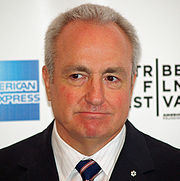 NBC president Herbert Schlosser approached his vice president of late night programming Dick Ebersol
in 1974 and asked him to create a show to fill the Saturday night timeslot. Schlosser and Ebersol then approached Lorne Michaels
, wanting to create a variety show that would push the boundaries with its edgy style of humor. Ebersol knew Michaels was capable of creating a show since he had worked on Rowan & Martin's Laugh-In
. The show was set, and Michaels searched for people to join the staff. He hired Dan Aykroyd
, John Belushi
, Chevy Chase
, George Coe
, Jane Curtin
, Garrett Morris
, Laraine Newman
, Michael O'Donoghue
, and Gilda Radner
to the cast. Originally, the show was called NBC's Saturday Night, as the current title was in use
by rival network ABC
. NBC purchased the rights to the name in 1976 and officially adopted the new title on March 26, 1977.
The show was an instant hit following its debut, and as a result, the cast members became suddenly famous. Chase left the show during the second season and was replaced by a new and upcoming comic named Bill Murray
. Aykroyd and Belushi left the show after season four. The following season, Michaels chose to leave the show and explore other avenues. Michaels' departure led most of the cast and writing staff to leave the show as well.
Although SNL was still popular, Michaels thought NBC would cancel the show upon his departure. However, NBC had already planned to replace him with Jean Doumanian
, an associate producer during the first five seasons. NBC wanted to build up a new cast and continue on with the show, leaving Doumanian with full creative control. After disastrous reviews and behind-the-scenes turmoil, Doumanian was fired after one season. She was replaced by Dick Ebersol, who had originally hired Michaels to create the show.
Ebersol fired most of the people Doumanian hired except for a few people including unknown comics Eddie Murphy
and Joe Piscopo
. Ebersol remained with the show until 1985. In the fall of 1984, Ebersol departed from tradition by adding several cast members with established comedic careers, including Billy Crystal
, Martin Short
, and Harry Shearer
. After that season, Ebersol wanted a more significant revamp, including departing from the show's established "live" format. After Ebersol's departure, Michaels returned at the helm.
Michaels returned to the show for the 1985–86 season. The entire cast from the previous season did not return, causing Michaels to rebuild the show. He hired then unknowns Joan Cusack
, Robert Downey, Jr. and many others. The season was disastrous, and the show was almost cancelled. However, Michaels was given one more chance to save the show. He fired most of the staff and brought in a new set of people he hoped would save the show including Dana Carvey
, Nora Dunn
, Phil Hartman
, Jan Hooks
, Victoria Jackson
, Jon Lovitz
, Dennis Miller
and Kevin Nealon
. Dunn, Lovitz and Miller were the only three cast members retained from the disastrous 85–86 season.
After a slow start, the show was saved as a result of high ratings and improved critical reception. Michaels' return restored an association with NBC that has lasted nearly 30 years. As head of Broadway Video
and SNL Studios, Michaels has profited from the talent he's helped introduce, producing the TV series Late Night
(during the eras of Conan O'Brien
and Jimmy Fallon
- both SNL alumni), 30 Rock
(a comedy created by former SNL head writer Tina Fey
, and loosely based on her experiences in that role), and Up All Night
, starring fomer SNL cast member Maya Rudolph
. Michaels also produced the TV film All You Need Is Cash
, and a lengthy list of feature films based on SNL sketches; the most commercially and critically successful of these was Wayne's World
.
The cast is currently divided into two tiers: the more established group of repertory players; and newer, unproven cast members known as featured players, who may eventually "graduate" to the regular cast laminate. The show's current cast is listed below:
Repertory players
Featured players
bold denotes Weekend Update
anchor
served as the announcer for the series when it first began, and has performed as the show's announcer for all seasons except for season 7, when Mel Brandt
and Bill Hanrahan
filled that role. Pardo, who was 57 when the show debuted, and after retiring from NBC in 2004 at age 86, continued until 2010 to fly in from his home in Tucson, Arizona
to introduce the show.
Pardo announced in 2010 that for the 36th season, at age 92, he would pre-record his parts from his home in Arizona rather than performing live in New York City.
for SNL. Academy Award-winning composer Howard Shore
served as the first musical director, from 1975 to 1980, appearing in many musical sketches, including Howard Shore and His All-Nurse Band and (backing a U. S. Coast Guard chorus) Howard Shore and the Shore Patrol. Over the years, the band has featured several New York studio musicians including Paul Shaffer
(1975–1980), Lou Marini
(1975–1983), David Sanborn
(1975), Michael Brecker
(early 1980s), Ray Chew
(1980–1983), Alan Rubin
(1975–1983), Georg Wadenius
(1979–1985), Steve Ferrone
(1985), David Johansen
(performing as Buster Poindexter), Tom Malone
(who took over as musical director from 1981 to 1985), and G. E. Smith
(musical director from 1985 to 1995). The band is currently under the leadership of Tower of Power
alumnus Lenny Pickett and keyboardists Leon Pendarvis and Katreese Barnes. The number of musicians has varied over the years, but the basic instrumentation has been three saxophones, one trombone, one trumpet, and a rhythm section featuring two keyboards, a guitar, bass, drums, and an extra percussionist, not a permanent part of the band until Valerie Naranjo's arrival in 1995. The 1983–1984 and 1984–1985 seasons featured the smallest band, a six-piece combo. The band plays instrumentals leading in and out of station breaks; affiliates who run no advertising during these interludes hear the band play complete songs behind a Saturday Night Live bumper graphic until the program resumes.
was first to host the show; Candice Bergen
was the first female to host the show a few weeks later and again hosted only six weeks after that. Guests that have hosted five or more times are sometimes referred to as belonging to the Five-Timers Club
, a term that originated on a sketch performed on Tom Hanks
' fifth episode. Alec Baldwin
holds the record for most times as an SNL host at 16.
(30 Rockefeller Plaza, or "30 Rock"). Due to the studio originally being a radio soundstage for Arturo Toscanini
and his NBC Symphony Orchestra
, the layout of the studio floor and the audience positioning causes some audience members to have an obstructed view of many of the sketches. According to NBC, the 8H studio has almost perfect acoustics. The offices of SNL writers, producers, and other staff can be found on the 17th floor of "30 Rock."
During the summer 2005 shooting hiatus, crews began renovations on Studio 8H. With its thirty-first season premiere in October 2005, the show began broadcasting in high-definition television
, appearing letterbox
ed on conventional television screens.
Three of the first four shows of the 1976–77 season were shot at the former NBC Studios
in Brooklyn, due to NBC News
using Studio 8H for Presidential election coverage.
Mary Ellen Matthews
—the photographer responsible for the celebrity portraits used as commercial bumpers on the show—usually takes photographs of the SNL guest host in the studio while the musical guest practices their set.
to digital
in 1998, with live shows typically requiring 1.5 Terabytes of storage, consisting of audio elements and 5 cameras worth of visual elements.
Elements of Saturday Night Live that are pre-recorded, such as certain commercial parodies, SNL Digital Shorts
, and show graphics are processed off-site in the post-production facilities of Broadway Video
.
pedestals. A GVG 4000-3 digital component production switcher, and GVG 7000 digital component routing switcher are used to route visual feeds to the control room, with multiple digital and analogue video recorders used to store footage. Graphics are provided by a Chyron character generator and a Quantel PictureBox. Audio facilities consist of a Calrec T Series digitally controlled analogue mixing console, and a Yamaha digital mixing console
used for tape playback support and utility audio work.
As of the 35th season, the opening title sequence and opening montage of Saturday Night Live is shot using Canon EOS 5D Mark II and Canon EOS 7D digital SLR cameras. Typical elements are recorded at 30 fps
, with slow-motion sequences shot at 60 fps, both in full 1080p high definition.
in 2000 and 2004.
Monday:
Tuesday:
Wednesday:
Thursday:
Friday:
Saturday:
The status of the show during the week is maintained on a bulletin board. Sketches and other segments are given labels which are put on index cards and put on the board in order of their performances. The order is based on content as well as production limitations such as camera placement and performer availability. Segments which have been cut are kept to the side of the board. As the broadcast approaches, often the writer or producer discovers the fate of his or her segment only by consulting the bulletin board.
A 60 Minutes
report taped in October 2004 depicted the intense writing frenzy that goes on during the week leading up to a show, with crowded meetings and long hours. The report particularly noted the involvement of the guest host(s) in developing and selecting the sketches in which they will appear. Similarly, there has been an A&E
episode of Biography
which covered the production process, as well as an episode of TV Tales in 2002 on E!
.
and KSNK
because even though they are counties in Kansas in the Mountain time zone, they are in the Wichita Market, they air at 9:29:30 p.m. Mountain Time) and Pacific time zones, NBC airs the prerecorded live show usually unedited, mistakes notwithstanding. After the intro skit, the show always starts with the words: "Live from New York, it's Saturday Night!
"
episode aired in March 2006 to promote V for Vendetta
was repeated August 5, 2006, before the film's DVD
release August 8. Similarly, Jeff Gordon
's episode reran following NBC's coverage of the Pepsi 400
.
NBC and Broadway Video
both hold the underlying rights, while the copyright to every episode of the show made thus far lies solely with NBC. From 1990 until 2004, Comedy Central
and its predecessor Ha! re-aired reruns of the series, after which E! Entertainment Television
signed a deal to reruns. Abbreviated thirty and sixty minute versions of the first five seasons aired as The Best of Saturday Night Live in syndication beginning in the 1980s and later on Nick at Nite
in 1988. In September 2010, reruns of most episodes post-1998 began to air on VH1
.
, Christmas
). Political sketches are typically culled for a special in presidential election
years; the 2000 special was notable for having self-deprecating (though separate) appearances by candidates George W. Bush
and Al Gore
. During the 2008 presidential race, Hillary Rodham Clinton
, Mike Huckabee
, John McCain
, Barack Obama
, Rudy Giuliani
, and Sarah Palin
all made appearances on the show.
Successful sketches aired later in the show during the original broadcast may be reedited to appear earlier. In the earlier years of the show's history, reruns occasionally replaced weaker sketches with segments from other episodes, usually from episodes that did not have an encore showing at all.
Controversial acts by a host or musical guest can be altered or removed.
Occasionally, sketches originally performed in the dress rehearsal (which is recorded as a backup) have replaced the live version in reruns because of errors (either technical or by the actors) in the live broadcast. Examples include:
and Lions Gate Entertainment
hold video rights to the series. Universal has issued complete season DVD sets to the first few seasons, while Lionsgate's share of the rights are a result of prior contracts with NBC struck before the NBC Universal
merger. A majority of Lionsgate's SNL DVDs are "Best Of..." compilations.
Other notable books about SNL include: Saturday Night: A Backstage History of Saturday Night Live (ISBN 0-688-05099-9) a behind-the-scenes book about the first ten seasons, Gasping for Airtime: Two Years In the Trenches of Saturday Night Live (ISBN 1-401-30801-5) which detailed Jay Mohr
's struggles during his two seasons on the show
and Metacritic
. The gross is from Box Office Mojo
. A Rotten Tomatoes score of 60% or higher indicates the film is "fresh" (well-received); Metacritic scores from 81–100, 61–80, 40–60, 20–39, and 0–19 indicate near-universal acclaim, generally favorable reviews, mixed reviews, poor reviews, and overwhelming dislike, respectively.
The early days of SNL spawned several films, including the successful The Blues Brothers
(1980). However, it was the success of Wayne's World
(1992) that encouraged Lorne Michaels to produce more film spin-offs
, based on several popular sketch characters. Michaels revived 1970s characters for Coneheads
(1993), followed by It's Pat
(1994); Stuart Saves His Family
(1995, with the Stuart Smalley
character); A Night at the Roxbury
(1998, with the Butabi Brothers characters); Superstar
(1999, with the Mary Katherine Gallagher
character); and The Ladies Man
(2000). Some did moderately well, though others did not—notably, It's Pat, which did so badly at the box office that the studio which made the film, Touchstone Pictures
(owned by The Walt Disney Company
, which also owns NBC's rival ABC
), pulled it only one week after releasing it, and Stuart Saves His Family, with the latter losing US$15 million. Many of these films were produced by Paramount Pictures
. The films based on The Blues Brothers were produced by Universal Studios
, which merged with NBC in 2004 to form NBC Universal
(Universal also has a joint venture
with Paramount for international distribution of the two studios' films).
In addition, Office Space
(1999) originated from a series of Mike Judge
animated short films that aired on SNL after appearing on several other programs.
The character Bob Roberts from the Tim Robbins film of the same name
, first appeared on SNL in a short film about the conservative folk singer.
The group The Folksmen
first appeared on SNL, performing the song "Old Joe's Place" before later appearing in the film A Mighty Wind
. The three members of the Folksmen were the same three comedians: Harry Shearer
, Michael McKean
, and Christopher Guest
, who also appeared on the same episode as the rock group Spinal Tap
. At the time of the appearance (the 1984–85 season), Shearer and Guest were cast members.
Actor James Franco
made a documentary entitled Saturday Night, detailing the intensive day-to-day process of creating an episode.
s, 2 Peabody Award
s, and 3 Writers Guild of America Award
s.
Because SNL has been a huge success in America, other countries have created their own versions of the show, including Spain
, Italy
and Japan
.
Spain's version of show was short lived, only lasting a few episodes which aired on Thursdays and not Saturdays as the title suggested. This version copied heavily from the American version, in that they did their own versions of sketches that were already done on the original series.
Unlike Spain's version, Italy's was a success. Saturday Night Live From Milan, as it is called, is currently airing its fourth season. SNLFM follows the original format, but uses new material not done already on the American version.
In June 2011, Japan's version debuted. Saturday Night Live: Japan was created in part with Lorne Michaels' production company, Broadway Video and broadcast on Fuji TV networks. The show follows the same format with a few minor differences. SNLJ is only 45 minutes long and (for now) is hosted by a permanent host. The cast is made up of seasoned comedians who take center stage and newcomers who play the background roles.
In November 2011, South Korea's Saturday Night Live KOREA will broadcast on TVN.
, while in 2007 it was honored with inclusion on Time
magazine's list of "100 Best TV Shows of All-TIME."
was the beneficiary of the political content, with 59 percent saying they did in fact cast a vote for the then-Democratic nominee.
However in the Democratic presidential primary campaign, Hillary Clinton received more favorable treatment than Barack Obama. During the campaign Tina Fey famously quipped about the then-Senator that "bitches get stuff done" and that "bitch is the new black."
was scheduled to be the musical guest on the May 12, 1990 show. Andrew Dice Clay
was the host, and O'Connor boycotted the show in protest of his misogynistic humor, forcing the producers to find musical replacements. Nora Dunn
also boycotted that week's show, and was not included in the next year's cast. Reportedly, Andrew Dice Clay was heckled during the opening monologue, and the dress rehearsal monologue is shown in reruns.
On October 3, 1992, Sinéad O'Connor
appeared on SNL as the musical guest. She was singing an a cappella
version of Bob Marley
's "War
", which she intended as a protest over the sexual abuse in the Roman Catholic Church, by changing the lyric "fight racial injustice" to "fight child abuse". She then presented a photo of Pope John Paul II
to the camera while singing the word "evil
", after which she tore the photo into pieces, said "Fight the real enemy," and threw the pieces towards the camera.
Saturday Night Live had no foreknowledge of O'Connor's plan. As of 2011, NBC still declines to rebroadcast the sequence with the exception of an interview with O'Connor on MSNBC's The Rachel Maddow Show
, which aired on 24 April 2010 when MSNBC aired the full clip during the interview. NBC replaced the incident with footage from the dress rehearsal where O'Connor holds a photo of a Balkan child
before bowing and leaving the stage. The dress rehearsal version is also used for 60-minute syndicated rebroadcasts (seen on Comedy Central
and E! Entertainment Television). However, the original episode is available on volume four of the SNL DVD special Saturday Night Live - 25 Years of Music, with an introduction by show creator/executive producer Lorne Michaels about the incident. Though on February 20, 2011, the clip was reaired on the SNL special "Backstage" showing footage of the dress rehearsal and live performance side by side. In the two performances, two different photos are held up; one where O'Connor is holding the picture of a starving child and the other of her holding a picture of the Pope — but with a cut to interviewees during the moment the photo was ripped.
The incident is referenced in 30 Rock
, a comedy show loosely based on the production process of SNL, in the episode "Season 4
".
were the musical guests, and were scheduled to perform two songs. The show was hosted that night by ex-Republican presidential candidate and billionaire Steve Forbes
. According to RATM guitarist Tom Morello
, "RATM wanted to stand in sharp juxtaposition to a billionaire telling jokes and promoting his flat tax
by making our own statement."
To this end, the band hung two upside-down American flags
from their amplifiers. Seconds before they took the stage to perform "Bulls on Parade
", SNL and NBC sent stagehands in to pull the flags down. Following the removal of the flags during the first performance, the band was approached by SNL and NBC officials and ordered to immediately leave the building. Upon hearing this, bassist Tim Commerford
reportedly stormed Forbes' dressing room, throwing shreds from one of the torn down flags.
Morello noted that members of the Saturday Night Live cast and crew, whom he declined to name, "expressed solidarity with our actions, and a sense of shame that their show had censored the performance."
, younger sister of pop-icon Jessica Simpson
, appeared as a musical guest on October 23, 2004, and, as is customary for the show's format, she was scheduled to perform two songs. Her first song, "Pieces of Me," was performed without problems. However, when she began her second song, "Autobiography," the vocals for the song "Pieces of Me" were heard again—before she had even raised the microphone to her mouth. Simpson began to do an impromptu jig when she realized the embarrassing error, but then left the stage. During the closing of the show Simpson appeared with the guest host Jude Law
and said, "I'm so sorry. My band started playing the wrong song, and I didn't know what to do, so I thought I'd do a hoedown
."
On October 25, Simpson called in to the music video
show Total Request Live
and explained that due to complications arising from severe acid reflux
disease, which had previously been seen bothering her in The Ashlee Simpson Show
, she had completely lost her voice and her doctor had advised her not to sing. She said that because of the acid reflux, her father wanted her to use a vocal guide track
for the performance. Simpson stated of the incident, "I made a complete fool of myself." According to Simpson, the drummer hit the wrong button, which caused the wrong track to be played.
Live television
Live television refers to a television production broadcast in real-time, as events happen, in the present. From the early days of television until about 1958, live television was used heavily, except for filmed shows such as I Love Lucy and Gunsmoke. Video tape did not exist until 1957...
American late-night television
Television
Television is a telecommunication medium for transmitting and receiving moving images that can be monochrome or colored, with accompanying sound...
sketch comedy
Sketch comedy
A sketch comedy consists of a series of short comedy scenes or vignettes, called "sketches," commonly between one and ten minutes long. Such sketches are performed by a group of comic actors or comedians, either on stage or through an audio and/or visual medium such as broadcasting...
and variety show
Variety show
A variety show, also known as variety arts or variety entertainment, is an entertainment made up of a variety of acts, especially musical performances and sketch comedy, and normally introduced by a compère or host. Other types of acts include magic, animal and circus acts, acrobatics, juggling...
developed by Lorne Michaels
Lorne Michaels
Lorne Michaels, CM is a Canadian-American television producer, writer, and comedian best known for creating and producing Saturday Night Live and producing the various film and TV projects that spun off from it.-Early life:...
and Dick Ebersol
Dick Ebersol
Duncan "Dick" Ebersol is an American television executive and a senior adviser for . He had previously been the chairman of NBC Sports, producing large scale television events such as the Olympic Games and National Football League broadcasts....
. The show premiered on NBC
NBC
The National Broadcasting Company is an American commercial broadcasting television network and former radio network headquartered in the GE Building in New York City's Rockefeller Center with additional major offices near Los Angeles and in Chicago...
on October 11, 1975, under the original title of NBC's Saturday Night.
The show's sketches
Recurring Saturday Night Live characters and sketches (listed chronologically)
* See also Listed Alphabetically, Listed by cast member, Saturday Night Live TV show sketches of the 2000sListed dates indicate the first appearance of the character or sketch.-1975–1976:...
often parody contemporary American culture
Culture of the United States
The Culture of the United States is a Western culture originally influenced by European cultures. It has been developing since long before the United States became a country with its own unique social and cultural characteristics such as dialect, music, arts, social habits, cuisine, and folklore...
and politics
American politics
American politics is an area of study within the academic discipline of political science. It is primarily, but not exclusively, studied by researchers in the United States...
. Saturday Night Live features a two-tiered cast consisting of repertory members, also called the "Not Ready For Prime Time Players" (the name used by the show's original cast), and newer cast members who are known as "Featured Players."
Each week, the show features a host who delivers an opening monologue
Monologue
In theatre, a monologue is a speech presented by a single character, most often to express their thoughts aloud, though sometimes also to directly address another character or the audience. Monologues are common across the range of dramatic media...
and performs in sketches with the cast. A musical guest also performs. With the exception of season 7
Saturday Night Live (Season 7)
Saturday Night Live aired its seventh season during the 1981–1982 television season on NBC. The seventh season started on October 3, 1981 and ended on May 22, 1982...
, the show has begun with a cold open
Cold open
A cold open in a television program or movie is the technique of jumping directly into a story at the beginning or opening of the show, before the title sequence or opening credits are shown...
sketch (usually based around politically
Politics
Politics is a process by which groups of people make collective decisions. The term is generally applied to the art or science of running governmental or state affairs, including behavior within civil governments, but also applies to institutions, fields, and special interest groups such as the...
-themed current events) that ends with someone breaking character
Breaking character
Breaking character, "to break character", is a theatrical term used to describe when an actor, while actively performing in character, slips out of character and behaves as his or her actual self...
and proclaiming, "Live from New York, it's Saturday Night!
Live from New York, It's Saturday Night!
"Live from New York, it's Saturday Night!" is the famous line featured on the American comedy sketch show Saturday Night Live which runs on the NBC broadcast network...
"
For all but five seasons (six
Saturday Night Live (Season 6)
Saturday Night Live aired its sixth season during the 1980–1981 television season on NBC. Season six started on November 15, 1980 and ended on April 11, 1981, with only 13 episodes...
through ten
Saturday Night Live (Season 10)
Saturday Night Live aired its tenth season during the 1984-1985 television season on NBC. The season contained 17 episodes and was cut short due to a writer's strike and budget constraints....
), the show has been overseen by its creator and current executive producer, Lorne Michaels. Broadway Video
Broadway Video
Broadway Video is a media production and distribution company located within the Brill Building on Broadway, New York, United States. Founded in 1979 as a production house tasked with post-production work on Saturday Night Live, Broadway Video has since become one of the largest independent...
, SNL Studios, and NBC
NBC
The National Broadcasting Company is an American commercial broadcasting television network and former radio network headquartered in the GE Building in New York City's Rockefeller Center with additional major offices near Los Angeles and in Chicago...
jointly manage production. Saturday Night Live is one of the longest-running network television programs in the United States with over 700 episodes broadcast over the span of 37 seasons as of 2011. A number of the show's sketches have been developed into feature film
Feature film
In the film industry, a feature film is a film production made for initial distribution in theaters and being the main attraction of the screening, rather than a short film screened before it; a full length movie...
s, while many of the show's cast have gone on to independent film and TV stardom, both in front of and behind the camera.
Throughout its three decades on air, Saturday Night Live has received a number of awards, including 21 Primetime Emmy Award
Primetime Emmy Award
The Primetime Emmy Awards are awards presented by the Academy of Television Arts & Sciences in recognition of excellence in American primetime television programming...
s, a Peabody Award
Peabody Award
The George Foster Peabody Awards recognize distinguished and meritorious public service by radio and television stations, networks, producing organizations and individuals. In 1939, the National Association of Broadcasters formed a committee to recognize outstanding achievement in radio broadcasting...
, and three Writers Guild of America Award
Writers Guild of America Award
The Writers Guild of America Award for outstanding achievements in film, television, and radio has been presented annually by the Writers Guild of America, East and Writers Guild of America, West since 1949...
s. In 2000, it was inducted into the National Association of Broadcasters Hall of Fame
National Association of Broadcasters Hall of Fame
The NAB Broadcasting Hall of Fame is a yearly honor from the National Association of Broadcasters. One inductee from radio and one from television are named at the yearly NAB conference.-Radio:*2011 * 2010 Ron Chapman* 2009 Vin Scully* 2008 Larry Lujack...
. It was ranked tenth on TV Guide
TV Guide
TV Guide is a weekly American magazine with listings of TV shows.In addition to TV listings, the publication features television-related news, celebrity interviews, gossip and film reviews and crossword puzzles...
"50 Greatest TV Shows of All Time
TV Guide's 50 Greatest TV Shows of All Time
TV Guides 50 Greatest TV Shows of All Time is TV Guides list of the 50 most entertaining and influential television series in American pop culture...
" list, and in 2007 it was listed as one of Time
Time (magazine)
Time is an American news magazine. A European edition is published from London. Time Europe covers the Middle East, Africa and, since 2003, Latin America. An Asian edition is based in Hong Kong...
magazine's "100 Best TV Shows of All-TIME." In 2009, it received 13 Emmy nominations bringing the show to a total of 126, giving it the most Emmy nominations in television history.
History
- See also: history of SNL by season: 1Saturday Night Live (Season 1)The first season of Saturday Night Live, the weekly late-night 90-minute American sketch comedy/variety show on NBC, aired during the 1975–1976 television season...
, 2Saturday Night Live (Season 2)Saturday Night Live aired its second season during the 1976–1977 television season on NBC. The second season started on September 18, 1976, and ended on May 21, 1977....
, 3Saturday Night Live (Season 3)Saturday Night Live aired its third season during the 1977–1978 television season on NBC. The season began on September 24, 1977 and ended on May 20, 1978. The DVD for the entire season was released on May 13, 2008....
, 4Saturday Night Live (Season 4)Saturday Night Live aired its fourth season during the 1978–1979 television season on NBC. The fourth season started on October 7, 1978 and ended on May 26, 1979. The season four DVD was released on December 2, 2008....
, 5Saturday Night Live (Season 5)Saturday Night Live aired its fifth season during the 1979–1980 television season on NBC. The fifth season started on October 13, 1979 and ended on May 24, 1980...
, 6Saturday Night Live (Season 6)Saturday Night Live aired its sixth season during the 1980–1981 television season on NBC. Season six started on November 15, 1980 and ended on April 11, 1981, with only 13 episodes...
, 7Saturday Night Live (Season 7)Saturday Night Live aired its seventh season during the 1981–1982 television season on NBC. The seventh season started on October 3, 1981 and ended on May 22, 1982...
, 8Saturday Night Live (Season 8)Saturday Night Live aired its eighth season during the 1982–1983 season on NBC. The 8th season started on September 25, 1982 and ended on May 14, 1983. This was the third season to air since Lorne Michaels had left his first tenure as executive producer.Many changes happened before the start of the...
, 9Saturday Night Live (Season 9)Saturday Night Live aired its ninth season during the 1983–1984 television season on NBC. The ninth season started on October 8, 1983 and ended on May 12, 1984.Before the start of the season the entire cast returned for another season...
, 10Saturday Night Live (Season 10)Saturday Night Live aired its tenth season during the 1984-1985 television season on NBC. The season contained 17 episodes and was cut short due to a writer's strike and budget constraints....
, 11Saturday Night Live (Season 11)Saturday Night Live aired its 11th season during the 1985-1986 television season on NBC. The season started on November 9, 1985 and ended on May 24, 1986, 18 episodes were produced....
, 12Saturday Night Live (Season 12)Saturday Night Live aired its twelfth season during the 1986-1987 television season on NBC. The 12th season started on October 11, 1986, the 11th anniversary of the show's first episode, and ended on May 23, 1987....
, 13Saturday Night Live (Season 13)Saturday Night Live aired its thirteenth season during the 1987-1988 television season on NBC. Season 13 started on October 17, 1987 and ended on February 27, 1988.Before the start of the season few changes happened...
, 14Saturday Night Live (Season 14)Saturday Night Live aired its fourteenth season during the 1988 - 1989 television season on NBC. The season began on October 8, 1988, and ended on May 20, 1989. 20 episodes were produced....
, 15Saturday Night Live (Season 15)Saturday Night Live aired its fifteenth season during the 1989 - 1990 television season on NBC. The fifteenth season started off with a 15th anniversary special on September 24, 1989 and ended on May 19, 1990. 20 episodes were produced....
, 16Saturday Night Live (Season 16)Saturday Night Live aired its sixteenth season during the 1990-1991 television season on NBC. 20 episodes were produced. The sixteenth season began on September 29, 1990, and ended on May 18, 1991....
, 17Saturday Night Live (Season 17)Saturday Night Live aired its seventeenth season during the 1991-1992 television season on NBC. The seventeenth season started on September 28, 1991, and ended on May 16, 1992. 20 episodes were produced....
, 18Saturday Night Live (Season 18)Saturday Night Live aired its eighteenth season during the 1992-1993 television season on NBC. The eighteenth season began on September 26, 1992, and ended on May 15, 1993....
, 19Saturday Night Live (Season 19)Saturday Night Live aired its nineteenth season during the 1993-1994 television season on NBC. The season began on September 25, 1993 and ended on May 14, 1994....
, 20Saturday Night Live (Season 20)Saturday Night Live aired its twentieth season during the 1994–95 television season on NBC. The twentieth season began on September 24, 1994 and ended on May 13, 1995....
, 21Saturday Night Live (Season 21)Saturday Night Live aired its twenty-first season during the 1995-1996 television season on NBC. The twenty-first season began September 30, 1995 and ended on May 18, 1996. 20 episodes were produced....
, 22Saturday Night Live (Season 22)Saturday Night Live aired its twenty-second season during the 1996-1997 television season on NBC. The twenty-second season began on September 28, 1996 and ended on May 17, 1997 with 20 episodes in all....
, 23Saturday Night Live (Season 23)Saturday Night Live aired its twenty-third season during the 1997–98 television season on NBC. The twenty-third season started September 27, 1997 and ended on May 9, 1998, with 20 episodes being produced. A few changes happened before the start of the season, Mark McKinney left the show while...
, 24Saturday Night Live (Season 24)Saturday Night Live aired its twenty-fourth season during the 1998-1999 television season on NBC. The twenty-fourth season started on September 26, 1998 and ended on May 15, 1999 with 19 episodes in all .Before the start of the season Jim Breuer was fired from the show...
, 25Saturday Night Live (Season 25)Saturday Night Live aired its twenty-fifth season during the 1999-2000 television season on NBC. The 25th season started on September 25, 1999 and ended on May 20, 2000 with 20 regular episodes plus a 25th Anniversary Special. The special looked back at the series' highlights during its first...
, 26Saturday Night Live (Season 26)Saturday Night Live aired its twenty-sixth season during the 2000–2001 television season on NBC. 20 episodes were produced. The season began on October 7, 2000 and ended on May 19, 2001....
, 27Saturday Night Live (Season 27)Saturday Night Live aired its twenty-seventh season during the 2001-2002 television season on NBC. The season started on September 29, 2001 and ended on May 18, 2002, 20 episodes were produced....
, 28Saturday Night Live (Season 28)Saturday Night Live aired its twenty-eighth season during the 2002-2003 television season on NBC. Season 28 started on October 5, 2002 and ended on May 17, 2003 having 20 episodes through the season....
, 29Saturday Night Live (Season 29)Saturday Night Live aired its twenty-ninth season during the 2003–04 television season on NBC. The twenty-ninth season began on October 4, 2003 and ended on May 15, 2004 with 20 episodes in all....
, 30Saturday Night Live (Season 30)Saturday Night Live had its thirtieth season on the 2004-2005 television season on NBC. The thirtieth season began on October 2, 2004 and ended on May 21, 2005 with 20 episodes in all.Before the start of this season, Jimmy Fallon left the show...
, 31Saturday Night Live (Season 31)Saturday Night Live aired its thirty-first season in the 2005-06 television season on NBC. The season began on October 1, 2005, and ended on May 20, 2006 with 19 episodes in all. The season was cut one episode short due to the 2006 Winter Olympic Games...
, 32Saturday Night Live (Season 32)Saturday Night Live aired its thirty-second season during the 2006-2007 television season. This season began on September 30, 2006 and ended on May 19, 2007 with 20 episodes produced....
, 33Saturday Night Live (Season 33)Saturday Night Live aired its thirty-third season, during the 2007–2008 television season on NBC.Because of the 2007–2008 WGA strike, there are 12 episodes this season instead of the usual 20 , making this the shortest season in the series run and beating out both the sixth season...
, 34Saturday Night Live (Season 34)The thirty-fourth season of the variety series Saturday Night Live began airing in 2008 and concluded in 2009 on NBC. This season of Saturday Night Live consisted of 22 episodes, in an attempt to compensate for episodes lost during the 2007–2008 Writers Guild of America strike...
, 35Saturday Night Live (season 35)Saturday Night Live aired its thirty-fifth season during the 2009-2010 television season on NBC. This season began on September 26, 2009 and ended on May 15, 2010....
, 36Saturday Night Live (season 36)Saturday Night Live aired its thirty-sixth season during the 2010–2011 television season on NBC. This season began on September 25, 2010 with former cast member Amy Poehler serving as host and Katy Perry as the musical guest, and ended on May 21, 2011 with Justin Timberlake serving as host and Lady...
, 37Saturday Night Live (season 37)Saturday Night Live is airing its thirty-seventh season during the 2011–2012 television season on NBC. The season officially began on September 24, 2011 with host Alec Baldwin, who returned to host for a record sixteenth time and with musical guest Radiohead...
From 1965 until September 1975, NBC ran The Best of Carson
The Tonight Show Starring Johnny Carson
The Tonight Show Starring Johnny Carson is a talk show hosted by Johnny Carson under the Tonight Show franchise from 1962 to 1992. It originally aired during late-night....
reruns of The Tonight Show, airing them on either Saturday or Sunday night, at local affiliates' discretion, (originally known as The Saturday/Sunday Tonight Show Starring Johnny Carson). In 1974, Johnny Carson
Johnny Carson
John William "Johnny" Carson was an American television host and comedian, known as host of The Tonight Show Starring Johnny Carson for 30 years . Carson received six Emmy Awards including the Governor Award and a 1985 Peabody Award; he was inducted into the Television Academy Hall of Fame in 1987...
announced that he wanted the weekend shows pulled and saved so that they could be aired during weekdays, allowing him to take time off.
Dick Ebersol
Duncan "Dick" Ebersol is an American television executive and a senior adviser for . He had previously been the chairman of NBC Sports, producing large scale television events such as the Olympic Games and National Football League broadcasts....
in 1974 and asked him to create a show to fill the Saturday night timeslot. Schlosser and Ebersol then approached Lorne Michaels
Lorne Michaels
Lorne Michaels, CM is a Canadian-American television producer, writer, and comedian best known for creating and producing Saturday Night Live and producing the various film and TV projects that spun off from it.-Early life:...
, wanting to create a variety show that would push the boundaries with its edgy style of humor. Ebersol knew Michaels was capable of creating a show since he had worked on Rowan & Martin's Laugh-In
Rowan & Martin's Laugh-In
Rowan & Martin's Laugh-In is an American sketch comedy television program which ran for 140 episodes from January 22, 1968, to May 14, 1973. It was hosted by comedians Dan Rowan and Dick Martin and was broadcast over NBC...
. The show was set, and Michaels searched for people to join the staff. He hired Dan Aykroyd
Dan Aykroyd
Daniel Edward "Dan" Aykroyd, CM is a Canadian comedian, actor, screenwriter, musician, winemaker and ufologist. He was an original cast member of Saturday Night Live, an originator of The Blues Brothers and Ghostbusters and has had a long career as a film actor and screenwriter.-Early...
, John Belushi
John Belushi
John Adam Belushi was an American comedian, actor, and musician, best known as one of the original cast members of the NBC sketch comedy show Saturday Night Live, The Star of the Films National Lampoon's Animal House and the The Blues Brothers and for fronting the American blues and soul...
, Chevy Chase
Chevy Chase
Cornelius Crane "Chevy" Chase is an American comedian, writer, and television and film actor, born into a prominent entertainment industry family. Chase worked a plethora of odd jobs before moving into comedy acting with National Lampoon...
, George Coe
George Coe
George Coe is an American film, stage, and television actor. He is best known for having been a cast member on the first three episodes of Saturday Night Live, as well as for his work on various television shows.-Career:...
, Jane Curtin
Jane Curtin
Jane Therese Curtin is an American actress and comedienne. She is commonly referred to as Queen of the Deadpan.First coming to prominence as an original cast member on Saturday Night Live in 1975, she went on to win back-to-back Emmy Awards for Best Lead Actress in a Comedy Series on the 1980s...
, Garrett Morris
Garrett Morris
Garrett Gonzalez Morris is an American comedian and actor from New Orleans. He was part of the original cast of the sketch comedy program Saturday Night Live, appearing from 1975 to 1980.-Early life and career:...
, Laraine Newman
Laraine Newman
Laraine Newman is an American comedienne, actress, and writer, and was part of the original Saturday Night Live cast.-Personal life:...
, Michael O'Donoghue
Michael O'Donoghue
Michael O'Donoghue was a writer and performer. He was known for his dark and destructive style of comedy and humor, was a major contributor to National Lampoon magazine, and was the first head writer of Saturday Night Live.-Childhood:O'Donoghue was born Michael Henry Donohue in Sauquoit, New York...
, and Gilda Radner
Gilda Radner
Gilda Susan Radner was an American comedian and actress, best known as one of the original cast members of the NBC sketch comedy show Saturday Night Live, for which she won an Emmy Award in 1978.-Early life:...
to the cast. Originally, the show was called NBC's Saturday Night, as the current title was in use
Saturday Night Live with Howard Cosell
Saturday Night Live with Howard Cosell was a program that ran on ABC from September 1975 to January 1976, hosted by Howard Cosell and executively produced by Roone Arledge. The series ran for 18 episodes before being cancelled...
by rival network ABC
American Broadcasting Company
The American Broadcasting Company is an American commercial broadcasting television network. Created in 1943 from the former NBC Blue radio network, ABC is owned by The Walt Disney Company and is part of Disney-ABC Television Group. Its first broadcast on television was in 1948...
. NBC purchased the rights to the name in 1976 and officially adopted the new title on March 26, 1977.
The show was an instant hit following its debut, and as a result, the cast members became suddenly famous. Chase left the show during the second season and was replaced by a new and upcoming comic named Bill Murray
Bill Murray
William James "Bill" Murray is an American actor and comedian. He first gained national exposure on Saturday Night Live in which he earned an Emmy Award and later went on to star in a number of critically and commercially successful comedic films, including Caddyshack , Ghostbusters , and...
. Aykroyd and Belushi left the show after season four. The following season, Michaels chose to leave the show and explore other avenues. Michaels' departure led most of the cast and writing staff to leave the show as well.
Although SNL was still popular, Michaels thought NBC would cancel the show upon his departure. However, NBC had already planned to replace him with Jean Doumanian
Jean Doumanian
Jean Doumanian is an American producer.Doumanian is probably most well known for her short reign as producer of Saturday Night Live between November 1980 and March 1981...
, an associate producer during the first five seasons. NBC wanted to build up a new cast and continue on with the show, leaving Doumanian with full creative control. After disastrous reviews and behind-the-scenes turmoil, Doumanian was fired after one season. She was replaced by Dick Ebersol, who had originally hired Michaels to create the show.
| "He [Lorne Michaels] put me on TV, and no one else would have done that. Lorne created a show that's impacted culture for over 35 years. No one has ever really successfully been able to replicate it." |
| -- Tina Fey Tina Fey Elizabeth Stamatina "Tina" Fey is an American actress, comedian, writer and producer, known for her work on the NBC sketch comedy series Saturday Night Live , the NBC comedy series 30 Rock, and films such as Mean Girls and Baby Mama .Fey first broke into comedy as a featured player in the... on how Michaels' has been influential in comedy. |
Ebersol fired most of the people Doumanian hired except for a few people including unknown comics Eddie Murphy
Eddie Murphy
Edward Regan "Eddie" Murphy is an American stand-up comedian, actor, writer, singer, director, and musician....
and Joe Piscopo
Joe Piscopo
Joseph Charles John "Joe" Piscopo is an American comedian and actor best known for his work on Saturday Night Live.-Early life:...
. Ebersol remained with the show until 1985. In the fall of 1984, Ebersol departed from tradition by adding several cast members with established comedic careers, including Billy Crystal
Billy Crystal
William Edward "Billy" Crystal is an American actor, writer, producer, comedian and film director. He gained prominence in the 1970s for playing Jodie Dallas on the ABC sitcom Soap and became a Hollywood film star during the late 1980s and 1990s, appearing in the critical and box office successes...
, Martin Short
Martin Short
Martin Hayter Short, CM is a Canadian actor, comedian, writer, singer and producer. He is best-known for his comedy work, particularly on the TV programs SCTV and Saturday Night Live...
, and Harry Shearer
Harry Shearer
Harry Julius Shearer is an American actor, comedian, writer, voice artist, musician, author, radio host and director. He is known for his long-running role on The Simpsons, his work on Saturday Night Live, the comedy band Spinal Tap and his radio program Le Show...
. After that season, Ebersol wanted a more significant revamp, including departing from the show's established "live" format. After Ebersol's departure, Michaels returned at the helm.
Michaels returned to the show for the 1985–86 season. The entire cast from the previous season did not return, causing Michaels to rebuild the show. He hired then unknowns Joan Cusack
Joan Cusack
Joan Mary Cusack is an American film, stage and television actress. Throughout her career, Cusack has appeared in many films as well as appearing in stage productions....
, Robert Downey, Jr. and many others. The season was disastrous, and the show was almost cancelled. However, Michaels was given one more chance to save the show. He fired most of the staff and brought in a new set of people he hoped would save the show including Dana Carvey
Dana Carvey
Dana Thomas Carvey is an American actor and stand-up comedian, best known for his work as a cast member on Saturday Night Live and for playing the role of Garth in the Wayne's World movies.-Early life:...
, Nora Dunn
Nora Dunn
Nora Eloise Dunn is an American actress and comedian, perhaps best known for her work on NBC's Saturday Night Live.-Early life:...
, Phil Hartman
Phil Hartman
Philip Edward "Phil" Hartman was a Canadian-American actor, comedian, screenwriter, and graphic artist. Born in Brantford, Ontario, Hartman and his family moved to the United States when he was 10...
, Jan Hooks
Jan Hooks
Janet V. "Jan" Hooks is an American actress and comedienne best known for her work on NBC's Saturday Night Live , on which she appeared from 1986 to 1991...
, Victoria Jackson
Victoria Jackson
Victoria Jackson is an American comedian, actress, satirist and singer best known as a cast member of the NBC television sketch comedy series Saturday Night Live from 1986 to 1992....
, Jon Lovitz
Jon Lovitz
Jonathan "Jon" Lovitz is an American comedian, actor, and singer. He is best known as a cast member of the NBC sketch comedy show Saturday Night Live from 1985 to 1990.-Early life:...
, Dennis Miller
Dennis Miller
Dennis Miller is an American stand-up comedian, political commentator, actor, sports commentator, and television and radio personality. He is known for his critical assessments laced with pop culture references...
and Kevin Nealon
Kevin Nealon
Kevin Nealon is an American actor and comedian, best known as a cast member on Saturday Night Live from 1986 to 1995, acting in several of the Happy Madison films, for playing Doug Wilson on the Showtime series Weeds, and providing the voice of the title character, Glenn Martin on Glenn Martin,...
. Dunn, Lovitz and Miller were the only three cast members retained from the disastrous 85–86 season.
| "Lorne has had a seismic impact on comedy, but in my opinion his legacy, very simply, is that he has good taste. All producers want success, but it's rare to find one who wants success on his own terms. He's a very well-read, good-mannered man who doesn't want his work to embarrass him." |
| -- Conan O'Brien Conan O'Brien Conan Christopher O'Brien is an American television host, comedian, writer, producer and performer. Since November 2010 he has hosted Conan, a late-night talk show that airs on the American cable television station TBS.... on how Michaels' has been influential in comedy. |
After a slow start, the show was saved as a result of high ratings and improved critical reception. Michaels' return restored an association with NBC that has lasted nearly 30 years. As head of Broadway Video
Broadway Video
Broadway Video is a media production and distribution company located within the Brill Building on Broadway, New York, United States. Founded in 1979 as a production house tasked with post-production work on Saturday Night Live, Broadway Video has since become one of the largest independent...
and SNL Studios, Michaels has profited from the talent he's helped introduce, producing the TV series Late Night
Late Night (NBC)
Late Night is an American late-night talk and variety show airing on NBC since 1982. Late Night has been hosted by David Letterman , Conan O'Brien , and Jimmy Fallon...
(during the eras of Conan O'Brien
Conan O'Brien
Conan Christopher O'Brien is an American television host, comedian, writer, producer and performer. Since November 2010 he has hosted Conan, a late-night talk show that airs on the American cable television station TBS....
and Jimmy Fallon
Jimmy Fallon
James Thomas "Jimmy" Fallon, Jr. is an American actor, comedian, singer, musician and television host. He currently hosts Late Night with Jimmy Fallon, a late-night talk show that airs Monday through Friday on NBC...
- both SNL alumni), 30 Rock
30 Rock
30 Rock is an American television comedy series created by Tina Fey that airs on NBC. The series is loosely based on Fey's experiences as head writer for Saturday Night Live...
(a comedy created by former SNL head writer Tina Fey
Tina Fey
Elizabeth Stamatina "Tina" Fey is an American actress, comedian, writer and producer, known for her work on the NBC sketch comedy series Saturday Night Live , the NBC comedy series 30 Rock, and films such as Mean Girls and Baby Mama .Fey first broke into comedy as a featured player in the...
, and loosely based on her experiences in that role), and Up All Night
Up All Night (TV series)
Up All Night is an American television comedy series created by Emily Spivey that premiered on NBC on September 14, 2011, at 10 p.m. , before assuming its regular time slot on Wednesday, September 21, 2011, at 8 p.m....
, starring fomer SNL cast member Maya Rudolph
Maya Rudolph
Maya Khabira Rudolph is an American actress, comedienne and singer known for her comedic roles as a cast member on Saturday Night Live from 2000 to 2007, and for appearing in films such as Away We Go, Bridesmaids, Grown Ups, A Prairie Home Companion and MacGruber...
. Michaels also produced the TV film All You Need Is Cash
All You Need Is Cash
All You Need Is Cash is a 1978 television film that traces the career of a fictitious British rock group called The Rutles...
, and a lengthy list of feature films based on SNL sketches; the most commercially and critically successful of these was Wayne's World
Wayne's World (film)
Wayne's World is a 1992 American comedy film directed by Penelope Spheeris and starring Mike Myers in his film debut as Wayne Campbell and Dana Carvey as Garth Algar, hosts of the Aurora, Illinois-based Public-access television cable TV show Wayne's World...
.
Cast
The original 1975 cast was officially known on-air as "The Not Ready For Prime-Time Players" at the show's beginning (a term originally devised as a takeoff of the "Prime Time Players" moniker for the cast of the ABC show). This term has since been often used unofficially.The cast is currently divided into two tiers: the more established group of repertory players; and newer, unproven cast members known as featured players, who may eventually "graduate" to the regular cast laminate. The show's current cast is listed below:
Repertory players
- Fred ArmisenFred ArmisenFred Armisen is an American actor, comedian and musician best known for his work as a cast member on Saturday Night Live, and portraying off-color foreigners in various comedy films such as EuroTrip, Anchorman and Cop Out...
(2002–present) - Abby ElliottAbby ElliottAbigail "Abby" Elliott is an American actress and comedian currently appearing as a cast member on Saturday Night Live.-Life and career:...
(2008–present) - Bill HaderBill HaderWilliam "Bill" Hader is an American actor, comedian, producer and writer. He is best known for his work as a creative consultant on the hit show South Park and as a cast member on Saturday Night Live and for his supporting roles in comedy films such as Superbad, Hot Rod, Tropic Thunder,...
(2005–present) - Seth MeyersSeth MeyersSeth Adam Meyers is an American actor and comedian. He currently serves as head writer for Saturday Night Live and hosts its news parody segment Weekend Update.-Early life:...
(2001–present) - Bobby MoynihanBobby MoynihanRobert M. "Bobby" Moynihan, Jr. is an American actor and comedian who is currently a cast member on Saturday Night Live.-Early life:...
(2008–present) - Nasim PedradNasim PedradNasim Pedrad is an Iranian-American comic actress currently appearing as a cast member on Saturday Night Live.-Early life:...
(2009–present) - Andy SambergAndy SambergDavid Andrew "Andy" Samberg is an American actor, comedian, rapper and writer best known as a member of the comedy group The Lonely Island and as a cast member on Saturday Night Live...
(2005–present) - Jason SudeikisJason SudeikisDaniel Jason Sudeikis is an American actor and comedian currently starring as a cast member on Saturday Night Live.-Early life:Sudeikis was born Daniel Jason Sudeikis in Fairfax, Virginia, the son of Kathryn , a travel agent who was president of the American Society of Travel Agents, and Dan...
(2005–present) - Kenan ThompsonKenan ThompsonKenan Thompson is an American actor and comedian. He is best known for his work as a cast member of NBC's long-running sketch comedy series Saturday Night Live...
(2003–present) - Kristen WiigKristen WiigKristen Carroll Wiig is an American film and television actress who currently appears as a cast member on Saturday Night Live. Wiig was a member of improvisational comedy troupe The Groundlings, and has appeared in several films and television series, including Bridesmaids, MacGruber, Flight of...
(2005–present)
Featured players
- Vanessa BayerVanessa BayerVanessa Bayer is an American actress and comedienne who currently appears as a cast member on Saturday Night Live.-Early life and career:...
(2010–present) - Paul Brittain (2010–present)
- Taran KillamTaran KillamTaran Hourie Killam is an American actor and comedian best known for his television work on shows such as The Amanda Show, Scrubs, Wild 'N Out, MADtv and currently on Saturday Night Live.-Early life:...
(2010–present) - Jay Pharoah (2010–present)
bold denotes Weekend Update
Weekend Update
Weekend Update is a Saturday Night Live sketch that comments on and parodies current events. It is the show's longest running recurring sketch, having been on since the show's first broadcast, and is typically presented in the middle of the show immediately after the first musical performance...
anchor
Announcer
Don PardoDon Pardo
Dominick George "Don" Pardo is an American radio and television announcer. He is best known as the voice of the long-running late night sketch comedy show Saturday Night Live....
served as the announcer for the series when it first began, and has performed as the show's announcer for all seasons except for season 7, when Mel Brandt
Mel Brandt
Melville Brandt was an actor and NBC staff announcer. He was born in Brooklyn, New York.Brandt joined the network around 1948. His radio announcing credits included The Adventures of Frank Merriwell, Author Meets the Critics, and The Eternal Light...
and Bill Hanrahan
Bill Hanrahan
William A. "Bill" Hanrahan , was an American radio and television announcer, perhaps best known as the "Voice of NBC News."...
filled that role. Pardo, who was 57 when the show debuted, and after retiring from NBC in 2004 at age 86, continued until 2010 to fly in from his home in Tucson, Arizona
Tucson, Arizona
Tucson is a city in and the county seat of Pima County, Arizona, United States. The city is located 118 miles southeast of Phoenix and 60 miles north of the U.S.-Mexico border. The 2010 United States Census puts the city's population at 520,116 with a metropolitan area population at 1,020,200...
to introduce the show.
Pardo announced in 2010 that for the 36th season, at age 92, he would pre-record his parts from his home in Arizona rather than performing live in New York City.
The SNL Band
The Saturday Night Live Band (also known as "The Live Band") is the house bandHouse band
For the British band that existed from 1984-2001, see The House BandA house band is a group of musicians, often centrally organized by a band leader, who regularly play an establishment. It is widely used to refer both to the bands who work on entertainment programs on television or radio, and to...
for SNL. Academy Award-winning composer Howard Shore
Howard Shore
Howard Leslie Shore is a Canadian composer, notable for his film scores. He has composed the scores for over 80 films, most notably the scores for The Lord of the Rings film trilogy, for which he won three Academy Awards. He is also a consistent collaborator with director David Cronenberg,...
served as the first musical director, from 1975 to 1980, appearing in many musical sketches, including Howard Shore and His All-Nurse Band and (backing a U. S. Coast Guard chorus) Howard Shore and the Shore Patrol. Over the years, the band has featured several New York studio musicians including Paul Shaffer
Paul Shaffer
Paul Allen Wood Shaffer, CM is a Canadian musician, actor, voice actor, author, comedian, and composer who has been David Letterman's sidekick since 1982.-Early years:...
(1975–1980), Lou Marini
Lou Marini
Lou Marini, Jr. is an American saxophonist, arranger and composer. He is noted for his work in the jazz, rock, blues and soul music traditions.-Early life and range of musical experience:...
(1975–1983), David Sanborn
David Sanborn
David Sanborn is an American alto saxophonist. Though Sanborn has worked in many genres, his solo recordings typically blend jazz with instrumental pop and R&B. He released his first solo album Taking Off in 1975, but has been playing the saxophone since before he was in high school...
(1975), Michael Brecker
Michael Brecker
Michael Leonard Brecker was an American jazz saxophonist and composer. Acknowledged as "a quiet, gentle musician widely regarded as the most influential tenor saxophonist since John Coltrane," he has been awarded 15 Grammy Awards as both performer and composer and was inducted into Down Beat Jazz...
(early 1980s), Ray Chew
Ray Chew
Ray Chew is an American musician who specializes in keyboards and contemporary and orchestral arranging.Chew was a member of the Saturday Night Live Band from 1980 to 1983...
(1980–1983), Alan Rubin
Alan Rubin
Alan Rubin , also known as Mr. Fabulous, was an American musician. He played trumpet, flugelhorn, and piccolo trumpet....
(1975–1983), Georg Wadenius
Georg Wadenius
Georg "Jojje" Wadenius, born May 4, 1945, in Stockholm, Sweden, is a guitarist, bassist, singer and composer who made a name for himself during the 1970s and 80s as a studio and session guitarist/bassist, as well as releasing a popular series of albums of children's songs in Sweden.After appearing...
(1979–1985), Steve Ferrone
Steve Ferrone
Steven "Steve" Ferrone is a British drummer.He was a member of the Average White Band, and has recorded and performed with numerous other high-profile acts, including Slash, Chaka Khan, Eric Clapton, Tom Petty and the Heartbreakers and Scritti Politti...
(1985), David Johansen
David Johansen
David Roger Johansen is an American rock, protopunk, blues, and pop singer, as well as a songwriter and actor. He is best known as a member of the seminal protopunk band The New York Dolls and also achieved commercial success under the pseudonym Buster Poindexter.-Early life:Johansen was born in...
(performing as Buster Poindexter), Tom Malone
Tom Malone (musician)
Tom "Bones" Malone is an American jazz musician. As his nickname implies, he specializes on the trombone, but also plays trumpet, tuba, tenor sax, baritone sax, flutes, piccolo, and other instruments....
(who took over as musical director from 1981 to 1985), and G. E. Smith
G. E. Smith
George Edward "G. E." Smith is an American guitarist. He was the lead guitarist in the band Hall & Oates and the musical director of Saturday Night Live. Smith was lead guitarist of Bob Dylan's touring band from June 7, 1988 to October 19, 1990...
(musical director from 1985 to 1995). The band is currently under the leadership of Tower of Power
Tower of Power
Tower of Power is an American R&B-based horn section and band, originating in Oakland, California, that has been performing for over 43 years. They are best known for their funky soul sound highlighted by a powerful horn section...
alumnus Lenny Pickett and keyboardists Leon Pendarvis and Katreese Barnes. The number of musicians has varied over the years, but the basic instrumentation has been three saxophones, one trombone, one trumpet, and a rhythm section featuring two keyboards, a guitar, bass, drums, and an extra percussionist, not a permanent part of the band until Valerie Naranjo's arrival in 1995. The 1983–1984 and 1984–1985 seasons featured the smallest band, a six-piece combo. The band plays instrumentals leading in and out of station breaks; affiliates who run no advertising during these interludes hear the band play complete songs behind a Saturday Night Live bumper graphic until the program resumes.
Hosts/musical guests
A typical episode of SNL will feature a single host, who delivers the opening monologue and performs in sketches with the cast, and a single musical guest, who will perform two or occasionally three musical numbers. In some cases, the musical guest will also be the host and fill both duties. It has become custom that the host of the show ends the opening monologue by introducing the musical guest for the night. George CarlinGeorge Carlin
George Denis Patrick Carlin was an American stand-up comedian, social critic, actor and author, who won five Grammy Awards for his comedy albums....
was first to host the show; Candice Bergen
Candice Bergen
Candice Patricia Bergen is an American actress and former fashion model.She is known for starring in two TV series, as the title character on the situation comedy Murphy Brown , for which she won five Emmy Awards and two Golden Globe Awards; and as Shirley Schmidt on the comedy-drama Boston Legal...
was the first female to host the show a few weeks later and again hosted only six weeks after that. Guests that have hosted five or more times are sometimes referred to as belonging to the Five-Timers Club
Five-Timers Club
Saturday Night Lives Five Timer's Club is the group of performers who has either hosted or appeared as a musical guest on Saturday Night Live at least five times.-Origins:...
, a term that originated on a sketch performed on Tom Hanks
Tom Hanks
Thomas Jeffrey "Tom" Hanks is an American actor, producer, writer, and director. Hanks worked in television and family-friendly comedies, gaining wide notice in 1988's Big, before achieving success as a dramatic actor in several notable roles, including Andrew Beckett in Philadelphia, the title...
' fifth episode. Alec Baldwin
Alec Baldwin
Alexander Rae "Alec" Baldwin III is an American actor who has appeared on film, stage, and television.Baldwin first gained recognition through television for his work in the soap opera Knots Landing in the role of Joshua Rush. He was a cast member for two seasons before his character was killed off...
holds the record for most times as an SNL host at 16.
Production facilities
Studio
Since the show's inception, SNL has aired from Studio 8H, located on floors 8 and 9 of the GE BuildingGE Building
The GE Building is an Art Deco skyscraper that forms the centerpiece of Rockefeller Center in the midtown Manhattan section of New York City. Known as the RCA Building until 1988, it is most famous for housing the headquarters of the television network NBC...
(30 Rockefeller Plaza, or "30 Rock"). Due to the studio originally being a radio soundstage for Arturo Toscanini
Arturo Toscanini
Arturo Toscanini was an Italian conductor. One of the most acclaimed musicians of the late 19th and 20th century, he was renowned for his intensity, his perfectionism, his ear for orchestral detail and sonority, and his photographic memory...
and his NBC Symphony Orchestra
NBC Symphony Orchestra
The NBC Symphony Orchestra was a radio orchestra established by David Sarnoff of the National Broadcasting Company especially for conductor Arturo Toscanini...
, the layout of the studio floor and the audience positioning causes some audience members to have an obstructed view of many of the sketches. According to NBC, the 8H studio has almost perfect acoustics. The offices of SNL writers, producers, and other staff can be found on the 17th floor of "30 Rock."
During the summer 2005 shooting hiatus, crews began renovations on Studio 8H. With its thirty-first season premiere in October 2005, the show began broadcasting in high-definition television
High-definition television
High-definition television is video that has resolution substantially higher than that of traditional television systems . HDTV has one or two million pixels per frame, roughly five times that of SD...
, appearing letterbox
Letterbox
Letterboxing is the practice of transferring film shot in a widescreen aspect ratio to standard-width video formats while preserving the film's original aspect ratio. The resulting videographic image has mattes above and below it; these mattes are part of the image...
ed on conventional television screens.
Three of the first four shows of the 1976–77 season were shot at the former NBC Studios
NBC Studios
The NBC Studios in New York, New York is located at 30 Rockefeller Plaza in Manhattan, the historic GE Building houses the headquarters of the NBC television network, its parent General Electric, and NBC's flagship station WNBC , as well as cable news channel MSNBC.When NBC Universal relocated,...
in Brooklyn, due to NBC News
NBC News
NBC News is the news division of American television network NBC. It first started broadcasting in February 21, 1940. NBC Nightly News has aired from Studio 3B, located on floors 3 of the NBC Studios is the headquarters of the GE Building forms the centerpiece of 30th Rockefeller Center it is...
using Studio 8H for Presidential election coverage.
Mary Ellen Matthews
Mary Ellen Matthews
Mary Ellen Matthews is a photographer based in New York City and East Hampton, New York. She is best known for her photographs featured on the television sketch comedy and variety show Saturday Night Live ; her portraits of the celebrities who appear as guest-hosts and musical guests of SNL are...
—the photographer responsible for the celebrity portraits used as commercial bumpers on the show—usually takes photographs of the SNL guest host in the studio while the musical guest practices their set.
Post-production
With onsite facilities housed on floors 8 and 17 of Rockefeller Plaza, post-production duties on live broadcasts of Saturday Night Live include the mixing of audio and video elements by the Senior Audio Mixer, coupled with additional audio feeds consisting of music, sound effects, music scoring and pre-recorded voiceovers. All sources are stored digitally, with shows captured and segregated into individual elements to reorganise for future repeats and syndication. The production tracking system was migrated from primarily analogueAnalog recording
Analog recording is a technique used for the recording of analog signals which among many possibilities include audio frequency, analog audio and analog video information for later playback.Analog recording methods store signals as a continual wave in or on the media...
to digital
Digital
A digital system is a data technology that uses discrete values. By contrast, non-digital systems use a continuous range of values to represent information...
in 1998, with live shows typically requiring 1.5 Terabytes of storage, consisting of audio elements and 5 cameras worth of visual elements.
Elements of Saturday Night Live that are pre-recorded, such as certain commercial parodies, SNL Digital Shorts
SNL Digital Shorts
An SNL Digital Short is one in a series of comedic and often musical video shorts created for airing on NBC's Saturday Night Live, generally produced and written by The Lonely Island , though originated by Adam McKay, in collaboration with SNL hosts, writers, and cast members...
, and show graphics are processed off-site in the post-production facilities of Broadway Video
Broadway Video
Broadway Video is a media production and distribution company located within the Brill Building on Broadway, New York, United States. Founded in 1979 as a production house tasked with post-production work on Saturday Night Live, Broadway Video has since become one of the largest independent...
.
Filming and photography
Studio 8H production facilities are maintained by NBC Production Services. Video camera equipment includes four Sony BVP-700 CCD cameras, and two Sony BVP-750 CCD handheld cameras, both using VintenVinten
Vinten is a manufacturer of camera supports founded in 1910 and based in Bury St Edmunds, Suffolk.-History:Vinten, then trading as 'W. Vinten Cinematograph Engineers', was formally founded by William Vinten in 1910 and was originally based at 89-91 Wardour Street, London...
pedestals. A GVG 4000-3 digital component production switcher, and GVG 7000 digital component routing switcher are used to route visual feeds to the control room, with multiple digital and analogue video recorders used to store footage. Graphics are provided by a Chyron character generator and a Quantel PictureBox. Audio facilities consist of a Calrec T Series digitally controlled analogue mixing console, and a Yamaha digital mixing console
Digital mixing console
In professional audio, a Digital Mixing Console , is an electronic device for combining, routing, and changing the dynamics of digital audio samples. The digital audio samples are summed to produce a combined output. A professional digital mixing console is a dedicated desk or control surface...
used for tape playback support and utility audio work.
As of the 35th season, the opening title sequence and opening montage of Saturday Night Live is shot using Canon EOS 5D Mark II and Canon EOS 7D digital SLR cameras. Typical elements are recorded at 30 fps
Frame rate
Frame rate is the frequency at which an imaging device produces unique consecutive images called frames. The term applies equally well to computer graphics, video cameras, film cameras, and motion capture systems...
, with slow-motion sequences shot at 60 fps, both in full 1080p high definition.
Production process
The following is a summary of the process used to produce the show. It is based in part on interviews with former SNL head writer and performer Tina FeyTina Fey
Elizabeth Stamatina "Tina" Fey is an American actress, comedian, writer and producer, known for her work on the NBC sketch comedy series Saturday Night Live , the NBC comedy series 30 Rock, and films such as Mean Girls and Baby Mama .Fey first broke into comedy as a featured player in the...
in 2000 and 2004.
Monday:
- The day begins with a topical meeting, identifying the biggest story for the show's opening.
- This is followed by a free-form pitch meeting with Lorne MichaelsLorne MichaelsLorne Michaels, CM is a Canadian-American television producer, writer, and comedian best known for creating and producing Saturday Night Live and producing the various film and TV projects that spun off from it.-Early life:...
and the show's host(s) for the week. The official name is "The Host Meeting" but all the writers and cast members call it "The Pitch Meeting". - Throughout the week the host(s) has much influence on which sketches get aired.
Tuesday:
- Between 9:00 p.m. Tuesday night and 7:00 a.m. Wednesday morning, anywhere from 40 to 50 scripts are written, most of which will not be broadcast.
- Once a writer's scripts are complete, he or she will often help other writers on their scripts.
- Meanwhile, Lorne Michaels has another "Pitch Meeting" with the musical guest(s) and discusses which of their current songs, two to three, they should play in the show for their music act.
Wednesday:
- All scripts get a read-through from the cast, writers, producers, Lorne Michaels and the week's host(s). Read-through is usually held in the afternoon and lasts about two and a half to three hours.
- After the read-through, the head writer(s) and the producers meet with the host(s) to decide which sketches to work on for the rest of the week, with Lorne Michaels and the host(s) having the final say.
Thursday:
- The surviving sketches are reviewed, word-by-word, by the writing staff as a whole or in two groups in the case of co-head writers.
- Some sketches which survived the cut because of their premise, but are in need of work, are rewritten completely. Others are changed in smaller ways.
- The Weekend UpdateWeekend UpdateWeekend Update is a Saturday Night Live sketch that comments on and parodies current events. It is the show's longest running recurring sketch, having been on since the show's first broadcast, and is typically presented in the middle of the show immediately after the first musical performance...
crew starts coming together, starting with the news items written by writers dedicated all week to the segment. - The crew comes in for rehearsal, and the music act is rehearsed as well as some of the larger, more important sketches.
- The host(s) and musical guest(s) and usually some cast members shoot two to four promos to play for NBC.
Friday:
- The show is blockedBlocking (stage)Blocking is a theatre term which refers to the precise movement and positioning of actors on a stage in order to facilitate the performance of a play, ballet, film or opera. The term derives from the practice of 19th century theatre directors such as Sir W. S...
. - The writer of each sketch acts as producerTelevision producerThe primary role of a television Producer is to allow all aspects of video production, ranging from show idea development and cast hiring to shoot supervision and fact-checking...
, working with the show's set designers and costumers. - Special music is recorded for the show.
Saturday:
- The Saturday Night Live Band does a mid-morning rehearsal.
- At 1 p.m., with the show still far from completed, the day begins with a run-through, with props, in front of Lorne Michaels.
- This is followed by a dress rehearsal performed in front of the studio audience, which lasts from 8 p.m. - 10 p.m. (or sometimes later) and contains approximately twenty minutes of material which will be deleted from the final broadcast.
- Lorne Michaels uses firsthand observation of the audience reaction during the dress rehearsal and input from the host(s) and head writer to determine the final round of changes, re-ordering sketches as necessary.
- Following dress rehearsal, Lorne has a meeting with the writers to discuss the final changes and gives notes about changes that could be made for the live show. The cast is updated about sketches cut after dress rehearsal and final rundown of sketches for live show on a bulletin board outside of Lorne Michaels' office.
- The show then begins at 11:29:30 p.m. Eastern Time ZoneEastern Time ZoneThe Eastern Time Zone of the United States and Canada is a time zone that falls mostly along the east coast of North America. Its UTC time offset is −5 hrs during standard time and −4 hrs during daylight saving time...
- After the show comes the after-party which is located at various "hot-spots" in New York. Everyone involved in the show, including the host and musical guest(s), is invited with exception of some background performers and interns.
The status of the show during the week is maintained on a bulletin board. Sketches and other segments are given labels which are put on index cards and put on the board in order of their performances. The order is based on content as well as production limitations such as camera placement and performer availability. Segments which have been cut are kept to the side of the board. As the broadcast approaches, often the writer or producer discovers the fate of his or her segment only by consulting the bulletin board.
A 60 Minutes
60 Minutes
60 Minutes is an American television news magazine, which has run on CBS since 1968. The program was created by producer Don Hewitt who set it apart by using a unique style of reporter-centered investigation....
report taped in October 2004 depicted the intense writing frenzy that goes on during the week leading up to a show, with crowded meetings and long hours. The report particularly noted the involvement of the guest host(s) in developing and selecting the sketches in which they will appear. Similarly, there has been an A&E
A&E Network
The A&E Network is a United States-based cable and satellite television network with headquarters in New York City and offices in Atlanta, Chicago, Detroit, London, Los Angeles and Stamford. A&E also airs in Canada and Latin America. Initially named the Arts & Entertainment Network, A&E launched...
episode of Biography
Biography (TV series)
Biography is a documentary television series. It was originally a half-hour filmed series produced for CBS by David Wolper from 1961 to 1964 and hosted by Mike Wallace. The A&E Network later re-ran it and has produced new episodes since 1987...
which covered the production process, as well as an episode of TV Tales in 2002 on E!
E!
E! Entertainment Television is an American basic cable and satellite television network, owned by NBCUniversal. It features entertainment-related programming, reality television, feature films and occasionally series and specials unrelated to the entertainment industry.E! has an audience reach of...
.
Live
The show usually begins at 11:29:30 p.m. Eastern Time (10:29:30 p.m. Central Time), unless a delay occurs. The show broadcasts for one and a half hours, ending at 1 a.m. For the Mountain (except for KSNGKSNG
KSNG channel 11 is an NBC affiliate based in Garden City, Kansas. It is owned by New Vision Television, Inc.KSNG is part of the Kansas State Network network of NBC affiliates, repeating the signal of KSNW in Wichita, Kansas, with local advertising and news inserts.-History:It signed on the air on...
and KSNK
KSNK
KSNK digital channel 12 is an NBC affiliate licensed to McCook, Nebraska with its studio and transmitter located just west of Oberlin, Kansas. It is owned by New Vision Television, Inc....
because even though they are counties in Kansas in the Mountain time zone, they are in the Wichita Market, they air at 9:29:30 p.m. Mountain Time) and Pacific time zones, NBC airs the prerecorded live show usually unedited, mistakes notwithstanding. After the intro skit, the show always starts with the words: "Live from New York, it's Saturday Night!
Live from New York, It's Saturday Night!
"Live from New York, it's Saturday Night!" is the famous line featured on the American comedy sketch show Saturday Night Live which runs on the NBC broadcast network...
"
Delays
- The show was forced by the network to run on a five-second delay on three separate occasions when Richard PryorRichard PryorRichard Franklin Lennox Thomas Pryor was an American stand-up comedian, actor, social critic, writer and MC. Pryor was known for uncompromising examinations of racism and topical contemporary issues, which employed colorful vulgarities, and profanity, as well as racial epithets...
, Sam KinisonSam KinisonSamuel Burl "Sam" Kinison was an American stand-up comedian and actor. Kinison was known for his intense, harsh and politically incorrect genre humor...
, and Andrew Dice ClayAndrew Dice ClayAndrew Dice Clay is an American comedian and actor who played the lead role in the film The Adventures of Ford Fairlane.Clay has been in several movies and has released a number of stand-up albums...
each hosted. - The episode scheduled for October 25, 1986, hosted by Rosanna ArquetteRosanna ArquetteRosanna Lauren Arquette is an American actress, film director, and producer.-Early life:Arquette was born in New York City, the daughter of Brenda Olivia "Mardi" , an actress, poet, theater operator, activist, acting teacher, and therapist, and Lewis Arquette, an actor and director. Her paternal...
, was not aired until November 8 due to NBC broadcasting Game 6 of the 1986 World Series1986 World SeriesThe 1986 World Series pitted the New York Mets against the Boston Red Sox. It was cited in the legend of the "Curse of the Bambino" to explain the error by Bill Buckner in Game 6 that allowed the Mets to extend the series to a seventh game...
; the game entered extra innings, causing that night's broadcast of SNL to be canceled. The show was recorded for the studio audience starting at 1:30 a.m. Eastern Time, and broadcast two weeks later with an "apology" by New York MetsNew York MetsThe New York Mets are a professional baseball team based in the borough of Queens in New York City, New York. They belong to Major League Baseball's National League East Division. One of baseball's first expansion teams, the Mets were founded in 1962 to replace New York's departed National League...
pitcher Ron DarlingRon DarlingRonald Maurice Darling, Jr. is an American former right-handed starting pitcher in Major League Baseball who played for the New York Mets, Oakland Athletics and Montreal Expos...
. (He explained that the Mets players had all been happy and excited to win the World Series game, but of course they all had become upset and glum when, in the locker room afterwards, they found out that they had caused the first-ever cancellation of SNL. Footage showed the depressed players sadly staring at the locker room floor in shame.) - The episode scheduled for February 10, 2001, hosted by Jennifer LopezJennifer LopezJennifer Lynn Lopez is an American actress, singer, record producer, dancer, television personality, and fashion designer. Lopez began her career as a dancer on the television comedy program In Living Color. Subsequently venturing into acting, she gained recognition in the 1995 action-thriller...
, aired 45 minutes late due to an XFLXFLThe XFL was a professional American football league that played for one season in 2001. The league was founded by Vince McMahon, the Chairman of the Board of Directors of WWE...
game. Lopez and the cast were not told they were airing on a delay. - During Eddie MurphyEddie MurphyEdward Regan "Eddie" Murphy is an American stand-up comedian, actor, writer, singer, director, and musician....
's last season, he negotiated to record a number of extra sketches in September 1983 that featured him and were broadcast in episodes for which he was not available. His last live show was with host Edwin NewmanEdwin NewmanEdwin Harold Newman was an American newscaster, journalist and author.-Early life and education:Newman was born on January 25, 1919 in New York City to Myron and Rose Newman. His older brother was M. W. Newman, a longtime reporter for the Chicago Daily News. Newman married Rigel Grell on August...
on February 25, 1984. - The January 9, 2010 show hosted by Charles BarkleyCharles BarkleyCharles Wade Barkley is a former American professional basketball player. Nicknamed "Sir Charles" and "The Round Mound of Rebound", Barkley established himself as one of the National Basketball Association's most dominating power forwards...
was delayed for 36 minutes when NBC's coverage of an NFL Wild Card playoff game between the Philadelphia EaglesPhiladelphia EaglesThe Philadelphia Eagles are a professional American football team based in Philadelphia, Pennsylvania. They are members of the East Division of the National Football Conference in the National Football League...
and the Dallas CowboysDallas CowboysThe Dallas Cowboys are a professional American football franchise which plays in the Eastern Division of the National Football Conference of the National Football League . They are headquartered in Valley Ranch in Irving, Texas, a suburb of Dallas...
ran late. - The January 8, 2011 show hosted by Jim CarreyJim CarreyJames Eugene "Jim" Carrey is a Canadian-American actor and comedian. He has received two Golden Globe Awards and has also been nominated on four occasions. Carrey began comedy in 1979, performing at Yuk Yuk's in Toronto, Ontario...
was delayed for 16 minutes when NBC's live broadcast of the NFL's AFC Wild Card playoff game between the New York JetsNew York JetsThe New York Jets are a professional football team headquartered in Florham Park, New Jersey, representing the New York metropolitan area. The team is a member of the Eastern Division of the American Football Conference in the National Football League...
and the Indianapolis ColtsIndianapolis ColtsThe Indianapolis Colts are a professional American football team based in Indianapolis. They are currently members of the South Division of the American Football Conference in the National Football League ....
ran late.
Reruns
SNL reruns are aired out of their original broadcast sequence, usually determined by which episodes have not yet been repeated, but had high ratings or acclaim for their live broadcast. Shows usually air twice during a particular season, but often the highest-rated shows of the season have a second encore show toward the end of the off-season, or episodes will be repeated a second or third time to coincide with a new event connected with the person who hosted. For example, the Natalie PortmanNatalie Portman
Natalie Hershlag , better known by her stage name Natalie Portman, is an actress with dual American and Israeli citizenship. Her first role was as an orphan taken in by a hitman in the 1994 French action film Léon, but major success came when she was cast as Padmé Amidala in the Star Wars prequel...
episode aired in March 2006 to promote V for Vendetta
V for Vendetta
V for Vendetta is a ten-issue comic book series written by Alan Moore and illustrated mostly by David Lloyd, set in a dystopian future United Kingdom imagined from the 1980s to about the 1990s. A mysterious masked revolutionary who calls himself "V" works to destroy the totalitarian government,...
was repeated August 5, 2006, before the film's DVD
DVD
A DVD is an optical disc storage media format, invented and developed by Philips, Sony, Toshiba, and Panasonic in 1995. DVDs offer higher storage capacity than Compact Discs while having the same dimensions....
release August 8. Similarly, Jeff Gordon
Jeff Gordon
Jeffery Michael "Jeff" Gordon is a professional NASCAR driver. He is the driver of the #24 Drive to End Hunger/DuPont/Pepsi Chevrolet Impala. He is a four-time Sprint Cup Series champion and a three-time Daytona 500 winner. He is third on the all-time wins list, with 85 career wins, and has the...
's episode reran following NBC's coverage of the Pepsi 400
Coke Zero 400
The Coke Zero 400 powered by Coca-Cola at Daytona is a 160 lap, NASCAR Sprint Cup Series stock car race held annually, beginning in 1959, at Daytona International Speedway in Daytona Beach, Florida; the second major stock car event held at Daytona on the Sprint Cup circuit...
.
NBC and Broadway Video
Broadway Video
Broadway Video is a media production and distribution company located within the Brill Building on Broadway, New York, United States. Founded in 1979 as a production house tasked with post-production work on Saturday Night Live, Broadway Video has since become one of the largest independent...
both hold the underlying rights, while the copyright to every episode of the show made thus far lies solely with NBC. From 1990 until 2004, Comedy Central
Comedy Central
Comedy Central is an American cable television and satellite television channel that carries comedy programming, both original and syndicated....
and its predecessor Ha! re-aired reruns of the series, after which E! Entertainment Television
E!
E! Entertainment Television is an American basic cable and satellite television network, owned by NBCUniversal. It features entertainment-related programming, reality television, feature films and occasionally series and specials unrelated to the entertainment industry.E! has an audience reach of...
signed a deal to reruns. Abbreviated thirty and sixty minute versions of the first five seasons aired as The Best of Saturday Night Live in syndication beginning in the 1980s and later on Nick at Nite
Nick at Nite
Nick at Nite is the nighttime Cable network that broadcasts over the channel space of Nickelodeon on Sundays from 8.p.m.-7.am., Monday through Fridays from 9 p.m.-7 a.m. and Saturdays from 10 p.m.-6 a.m. . Though it shares channel space with Nickelodeon, A.C. Nielsen Co...
in 1988. In September 2010, reruns of most episodes post-1998 began to air on VH1
VH1
VH1 or Vh1 is an American cable television network based in New York City. Launched on January 1, 1985 in the old space of Turner Broadcasting's short-lived Cable Music Channel, the original purpose of the channel was to build on the success of MTV by playing music videos, but targeting a slightly...
.
Compilations
From time-to-time, SNL airs compilation shows. Such shows will feature selected sketches from the previous season; of a particular cast member or multiple-time host; or centered on a particular theme (e.g., HalloweenHalloween
Hallowe'en , also known as Halloween or All Hallows' Eve, is a yearly holiday observed around the world on October 31, the night before All Saints' Day...
, Christmas
Christmas
Christmas or Christmas Day is an annual holiday generally celebrated on December 25 by billions of people around the world. It is a Christian feast that commemorates the birth of Jesus Christ, liturgically closing the Advent season and initiating the season of Christmastide, which lasts twelve days...
). Political sketches are typically culled for a special in presidential election
Presidential election
A presidential election is the election of any head of state whose official title is president.- United States :The United States has elections on the state and local levels...
years; the 2000 special was notable for having self-deprecating (though separate) appearances by candidates George W. Bush
George W. Bush
George Walker Bush is an American politician who served as the 43rd President of the United States, from 2001 to 2009. Before that, he was the 46th Governor of Texas, having served from 1995 to 2000....
and Al Gore
Al Gore
Albert Arnold "Al" Gore, Jr. served as the 45th Vice President of the United States , under President Bill Clinton. He was the Democratic Party's nominee for President in the 2000 U.S. presidential election....
. During the 2008 presidential race, Hillary Rodham Clinton
Hillary Rodham Clinton
Hillary Diane Rodham Clinton is the 67th United States Secretary of State, serving in the administration of President Barack Obama. She was a United States Senator for New York from 2001 to 2009. As the wife of the 42nd President of the United States, Bill Clinton, she was the First Lady of the...
, Mike Huckabee
Mike Huckabee
Michael "Mike" Dale Huckabee is an American politician who served as the 44th Governor of Arkansas from 1996 to 2007. He was a candidate in the 2008 United States Republican presidential primaries, finishing second in delegate count and third in both popular vote and number of states won . He won...
, John McCain
John McCain
John Sidney McCain III is the senior United States Senator from Arizona. He was the Republican nominee for president in the 2008 United States election....
, Barack Obama
Barack Obama
Barack Hussein Obama II is the 44th and current President of the United States. He is the first African American to hold the office. Obama previously served as a United States Senator from Illinois, from January 2005 until he resigned following his victory in the 2008 presidential election.Born in...
, Rudy Giuliani
Rudy Giuliani
Rudolph William Louis "Rudy" Giuliani KBE is an American lawyer, businessman, and politician from New York. He served as Mayor of New York City from 1994 to 2001....
, and Sarah Palin
Sarah Palin
Sarah Louise Palin is an American politician, commentator and author. As the Republican Party nominee for Vice President in the 2008 presidential election, she was the first Alaskan on the national ticket of a major party and first Republican woman nominated for the vice-presidency.She was...
all made appearances on the show.
Replaced/altered sketches
Encore showings are not always identical to the original broadcast.Successful sketches aired later in the show during the original broadcast may be reedited to appear earlier. In the earlier years of the show's history, reruns occasionally replaced weaker sketches with segments from other episodes, usually from episodes that did not have an encore showing at all.
Controversial acts by a host or musical guest can be altered or removed.
- A portion of Martin LawrenceMartin LawrenceMartin Fitzgerald Lawrence is an American actor, film director, film producer, screenwriter, and stand up comedian. He came to fame during the 1990s, establishing a Hollywood career as a leading actor, most notably the films Bad Boys, Blue Streak, and Big Momma's House...
's February 19, 1994 monologue concerning feminine hygiene has been removed from all repeats, replaced with a voice-overVoice-overVoice-over is a production technique where a voice which is not part of the narrative is used in a radio, television production, filmmaking, theatre, or other presentations...
and intertitleIntertitleIn motion pictures, an intertitle is a piece of filmed, printed text edited into the midst of the photographed action, at various points, generally to convey character dialogue, or descriptive narrative material related to, but not necessarily covered by, the material photographed.Intertitles...
s stating that the excised portion "...was a frank and lively presentation, and nearly cost us all our jobs." - Sinéad O'ConnorSinéad O'ConnorSinéad Marie Bernadette O'Connor is an Irish singer-songwriter. She rose to fame in the late 1980s with her debut album The Lion and the Cobra and achieved worldwide success in 1990 with a cover of the song "Nothing Compares 2 U"....
's October 3, 1992 live performance, during which she tore up a photograph of Pope John Paul IIPope John Paul IIBlessed Pope John Paul II , born Karol Józef Wojtyła , reigned as Pope of the Catholic Church and Sovereign of Vatican City from 16 October 1978 until his death on 2 April 2005, at of age. His was the second-longest documented pontificate, which lasted ; only Pope Pius IX ...
, was replaced with the dress rehearsal performance from earlier that evening where she holds up a picture of a starving Balkan child. - When Sam KinisonSam KinisonSamuel Burl "Sam" Kinison was an American stand-up comedian and actor. Kinison was known for his intense, harsh and politically incorrect genre humor...
delivered a comic monologue in 1986, NBC removed his plea for the legalization of marijuanaCannabis (drug)Cannabis, also known as marijuana among many other names, refers to any number of preparations of the Cannabis plant intended for use as a psychoactive drug or for medicinal purposes. The English term marijuana comes from the Mexican Spanish word marihuana...
from the West Coast broadcast and all subsequent airings. - The song "Bulls on Parade" was performed by Rage Against The Machine in April 1996. Their planned two-song performance was cut to one song when the band attempted to hang inverted US flags from their amplifiers ("a sign of distress or great danger"), a protest against having Republican presidential candidate Steve ForbesSteve ForbesMalcolm Stevenson "Steve" Forbes, Jr. is an American editor, publisher, and businessman. He is the editor-in-chief of business magazine Forbes as well as president and chief executive officer of its publisher, Forbes Inc. He was a Republican candidate in the U.S. Presidential primaries in 1996...
as guest host on the program that night.
Occasionally, sketches originally performed in the dress rehearsal (which is recorded as a backup) have replaced the live version in reruns because of errors (either technical or by the actors) in the live broadcast. Examples include:
- In 2009, during the season premiere, Jenny SlateJenny SlateJenny Slate is an American actor and comedian best known as a cast member on Saturday Night Live from 2009–2010 and for her recurring role as Stella on the HBO comedy series Bored to Death.-Early life:...
was in a "Biker Babe" sketch where she, co-star Kristen WiigKristen WiigKristen Carroll Wiig is an American film and television actress who currently appears as a cast member on Saturday Night Live. Wiig was a member of improvisational comedy troupe The Groundlings, and has appeared in several films and television series, including Bridesmaids, MacGruber, Flight of...
and host Megan FoxMegan FoxMegan Denise Fox is an American actress and model. She began her acting career in 2001 with several minor television and film roles, and played a regular role on Hope & Faith. In 2004, she launched her film career with a role in Confessions of a Teenage Drama Queen...
used the word "frickin'" repeatedly. Slate accidentally slipped and said "fuckin'" instead, which was later overdubbed with "frickin'" for subsequent repeats. Slate actually looks shocked upon realizing what she has just said. - A Peter SarsgaardPeter SarsgaardJohn Peter Sarsgaard is an American film and stage actor. He landed his first feature role in the movie Dead Man Walking in 1995. He then appeared in the 1998 independent films Another Day in Paradise and Desert Blue. That same year, Sarsgaard received a substantial role in The Man in the Iron...
sketch from his January 21, 2006 appearance, involving Rachel DratchRachel DratchRachel Susan Dratch is an American comic actress best known for her roles as a cast member of Saturday Night Live from 1999 to 2006.-Early life:...
's fake newscast, met with technical difficulties during the live broadcast when the in-sketch TV stopped working and a stagehandStagehandA stagehand is a person who works backstage or behind the scenes in theatres, film, television, or location performance. Their duties include setting up the scenery, lights, sound, props, rigging, and special effects for a production.-Types of stagehand:...
was seen fixing it. - A sketch involving "butt pregnancy" during the first broadcast of the November 12, 2005 Jason LeeJason Lee (actor)Jason Michael Lee is an American actor and skateboarder known for his role as the title character on the NBC television series My Name is Earl, his portrayal of Syndrome in the film The Incredibles, his role as Dave Seville in the Alvin and the Chipmunks films, and his work with director Kevin...
episode was replaced with a musical sketch about cafeteria food during the repeat. - A Debbie DownerDebbie DownerDebbie Downer is a name of a fictional Saturday Night Live character which debuted in 2004, and who was portrayed by Rachel Dratch. In Debbie's first appearance, she is given the last name Matousek....
sketch featuring Ben AffleckBen AffleckBenjamin Géza Affleck-Boldt , better known as Ben Affleck, is an American actor, film director, writer, and producer. He became known with his performances in Kevin Smith's films such as Mallrats and Chasing Amy...
was pulled from later rebroadcasts and replaced with the dress rehearsal version. In this case, the replacement is referenced by a title card, explaining that the dress version "worked better". - In 1980, Paul ShafferPaul ShafferPaul Allen Wood Shaffer, CM is a Canadian musician, actor, voice actor, author, comedian, and composer who has been David Letterman's sidekick since 1982.-Early years:...
became the first person to say "fucking" on the show. SNL parodied The TroggsThe TroggsThe Troggs are an English rock band from the 1960s that had a number of hits in UK and the US. Their most famous songs include, "Wild Thing", "With a Girl Like You", and "Love Is All Around"...
tapes with a medieval musical sketch featuring Shaffer, Bill MurrayBill MurrayWilliam James "Bill" Murray is an American actor and comedian. He first gained national exposure on Saturday Night Live in which he earned an Emmy Award and later went on to star in a number of critically and commercially successful comedic films, including Caddyshack , Ghostbusters , and...
, Harry Shearer, and a "special guest appearance" by John Belushi. In the middle of a long tirade using numerous repetitions of the word "flogging", Shaffer inadvertently uttered "fucking" instead. This was not removed by the censors in the live broadcast and the West Coast taped airing, and reappeared in the summer rerun and the syndicated versions of the show for several years.
DVD
Currently, Universal Studios Home EntertainmentUniversal Studios Home Entertainment
Universal Studios Home Entertainment is the home video division of Universal Pictures...
and Lions Gate Entertainment
Lions Gate Entertainment
Lions Gate Entertainment Corporation is a North American entertainment company. The company was formed in Vancouver, British Columbia in 1997, and is headquartered in Santa Monica, California...
hold video rights to the series. Universal has issued complete season DVD sets to the first few seasons, while Lionsgate's share of the rights are a result of prior contracts with NBC struck before the NBC Universal
NBC Universal
NBCUniversal Media, LLC is a media and entertainment company engaged in the production and marketing of entertainment, news, and information products and services to a global customer base...
merger. A majority of Lionsgate's SNL DVDs are "Best Of..." compilations.
Books
- The first authorized book for the series was published by Avon BooksAvon (publishers)Avon Publications was an American paperback book and comic book publisher. As of 2010, it is an imprint of HarperCollins, publishing primarily romance novels.-History:...
in 1977. Saturday Night Live (ISBN 0-380-01801-2) was edited by Anne BeattsAnne Beatts- Early life:Born to parents Beatts describes as "beatniks", Beatts grew to have what has been called an "aggressive, dark sensibility" which she later put to use in the world of comedy. Growing up in Somers, New York she later attended McGill University....
and John HeadJohn HeadJohn Head is an English musician from Kensington, Liverpool. He is the younger brother of Mick Head and has performed with in Shack and The Strands as lead guitarist. He has also performed with Love.-External links:* and from BBC Liverpool08...
, with photography by Edie Baskin; all three worked for Saturday Night Live at the time the book was published. The oversized illustrated paperback included the scripts for several sketches by the Not Ready for Prime Time Players, as the repertory cast was known at first.
- In 1994 the second book about SNL was released, it is called: Saturday Night Live: The First Twenty Years (ISBN 0-395-75284-1). The book was written by Michael Cader. The First Twenty Years provides info on the cast, characters and other notable moments seen on the show up until 1994.
- Another book about the show was published in 2002. It is called Live From New York: An Uncensored History of Saturday Night Live, as Told By Its Stars, Writers and Guests (ISBN 0-316-73565-5). The book was written by Tom ShalesTom ShalesThomas William "Tom" Shales is an American critic of television programming and operations. He is best known as TV critic for The Washington Post; in 1988, Shales received the Pulitzer Prize...
and James Andrew Miller. The book consists of interviews (done by the authors) from people who have worked on the show. The interviews reveal personal experiences from what happened back stage and the difficulty of getting the show on air each week.
Other notable books about SNL include: Saturday Night: A Backstage History of Saturday Night Live (ISBN 0-688-05099-9) a behind-the-scenes book about the first ten seasons, Gasping for Airtime: Two Years In the Trenches of Saturday Night Live (ISBN 1-401-30801-5) which detailed Jay Mohr
Jay Mohr
Jay Mohr is an American actor and stand up comedian. He is known for his role as Professor Rick Payne in the TV series Ghost Whisperer, the title role in the CBS sitcom Gary Unmarried, which ran from 2008 to 2010, and the back-stabbing sports agent Bob Sugar in Jerry Maguire.-Early life:Mohr was...
's struggles during his two seasons on the show
Films
Films based on SNL sketches are listed below with their release, budget, gross, and ratings from Rotten TomatoesRotten Tomatoes
Rotten Tomatoes is a website devoted to reviews, information, and news of films—widely known as a film review aggregator. Its name derives from the cliché of audiences throwing tomatoes and other vegetables at a poor stage performance...
and Metacritic
Metacritic
Metacritic.com is a website that collates reviews of music albums, games, movies, TV shows and DVDs. For each product, a numerical score from each review is obtained and the total is averaged. An excerpt of each review is provided along with a hyperlink to the source. Three colour codes of Green,...
. The gross is from Box Office Mojo
Box Office Mojo
Box Office Mojo is a website that tracks box office revenue in a systematic, algorithmic way. Brandon Gray started the site in 1999. In 2002, Gray partnered with Sean Saulsbury and they grew the site to nearly two million readers when, in July 2008, the company was purchased by Amazon.com through...
. A Rotten Tomatoes score of 60% or higher indicates the film is "fresh" (well-received); Metacritic scores from 81–100, 61–80, 40–60, 20–39, and 0–19 indicate near-universal acclaim, generally favorable reviews, mixed reviews, poor reviews, and overwhelming dislike, respectively.
| Film | Release date |
Budget | Worldwide gross | Rotten Tomatoes Rotten Tomatoes Rotten Tomatoes is a website devoted to reviews, information, and news of films—widely known as a film review aggregator. Its name derives from the cliché of audiences throwing tomatoes and other vegetables at a poor stage performance... rating |
Metacritic Metacritic Metacritic.com is a website that collates reviews of music albums, games, movies, TV shows and DVDs. For each product, a numerical score from each review is obtained and the total is averaged. An excerpt of each review is provided along with a hyperlink to the source. Three colour codes of Green,... rating |
Distributor |
| The Blues Brothers The Blues Brothers (film) The Blues Brothers is a 1980 musical comedy film directed by John Landis and starring John Belushi and Dan Aykroyd as "Joliet" Jake and Elwood Blues, characters developed from a musical sketch on the NBC variety series Saturday Night Live. It features musical numbers by R&B and soul singers James... |
$27 million | 85% | - | Universal Universal Studios Universal Pictures , a subsidiary of NBCUniversal, is one of the six major movie studios.... |
||
| Wayne's World Wayne's World (film) Wayne's World is a 1992 American comedy film directed by Penelope Spheeris and starring Mike Myers in his film debut as Wayne Campbell and Dana Carvey as Garth Algar, hosts of the Aurora, Illinois-based Public-access television cable TV show Wayne's World... |
$20 million | 85% | 53 | Paramount Paramount Pictures Paramount Pictures Corporation is an American film production and distribution company, located at 5555 Melrose Avenue in Hollywood. Founded in 1912 and currently owned by media conglomerate Viacom, it is America's oldest existing film studio; it is also the last major film studio still... |
||
| Wayne's World 2 Wayne's World 2 Wayne's World 2 is a 1993 comedy film starring Mike Myers and Dana Carvey as hosts of a Public-access television cable TV show from Aurora, Illinois. The film was adapted from a sketch on NBC's Saturday Night Live and is the sequel to Wayne's World.... |
$40 million | 60% | - | Paramount | ||
| Coneheads Coneheads (film) Coneheads is a 1993 film based on the Saturday Night Live sketches about the Coneheads. The film was directed by Steve Barron and produced by Lorne Michaels... |
36% | - | Paramount | |||
| It's Pat It's Pat It's Pat, also known as It's Pat: The Movie, is a 1994 comedy film directed by Adam Bernstein and starring Julia Sweeney, Dave Foley, Charles Rocket, and Kathy Griffin... |
0% | - | Touchstone Touchstone Pictures Touchstone Pictures is an American film production label and is one of several film labels of the Walt Disney Motion Pictures Group. Established in 1984, its releases typically feature more mature themes and darker tones than those that are released under the Walt Disney Pictures banner.Touchstone... |
|||
| Stuart Saves His Family Stuart Saves His Family Stuart Saves His Family is a 1995 comedy film directed by Harold Ramis, and based on a series of Saturday Night Live sketches from the early-to-mid 1990s. The movie tracks the adventures of would-be self-help guru Stuart Smalley, a creation of comedian Al Franken, as he attempts to save both his... |
$15 million | 27% | - | Paramount | ||
| A Night at the Roxbury A Night at the Roxbury A Night at the Roxbury is a 1998 comedy film based on a recurring skit on television's long-running Saturday Night Live called "The Roxbury Guys." Saturday Night Live regulars Will Ferrell, Chris Kattan, Molly Shannon, and Colin Quinn star.... |
$17 million | 11% | 26 | Paramount | ||
| Blues Brothers 2000 Blues Brothers 2000 Blues Brothers 2000 is a 1998 American musical comedy film that is a sequel to the 1980 film The Blues Brothers. Directed by John Landis, the film featured Dan Aykroyd and John Goodman, with cameos by many musicians.-Plot:... |
$28 million | 44% | - | Universal | ||
| Superstar Superstar (film) Superstar is a 1999 comedy film and Saturday Night Live spin-off about a quirky, socially inept girl named Mary Katherine Gallagher. The character was created by SNL star Molly Shannon and appeared as a recurring character on SNL in numerous skits. The story follows Mary Katherine trying to find... |
$14 million | 32% | 42 | Paramount | ||
| The Ladies Man The Ladies Man (2000 film) The Ladies Man is a 2000 American comedy film that stars actor, comedian and former Saturday Night Live cast member Tim Meadows. It was directed by Reginald Hudlin. The movie focuses on the exploits of radio host and sex therapy expert Leon Phelps.... |
$24 million | 11% | 22 | Paramount | ||
| MacGruber MacGruber (film) MacGruber is a 2010 American action comedy film based on the Saturday Night Live sketch of the same name, itself a parody of action-adventure television series MacGyver. The film stars Will Forte in the title role; Kristen Wiig as his love interest/partner, Vicki St... |
$10 million | 47% | 43 | Universal |
The early days of SNL spawned several films, including the successful The Blues Brothers
The Blues Brothers (film)
The Blues Brothers is a 1980 musical comedy film directed by John Landis and starring John Belushi and Dan Aykroyd as "Joliet" Jake and Elwood Blues, characters developed from a musical sketch on the NBC variety series Saturday Night Live. It features musical numbers by R&B and soul singers James...
(1980). However, it was the success of Wayne's World
Wayne's World (film)
Wayne's World is a 1992 American comedy film directed by Penelope Spheeris and starring Mike Myers in his film debut as Wayne Campbell and Dana Carvey as Garth Algar, hosts of the Aurora, Illinois-based Public-access television cable TV show Wayne's World...
(1992) that encouraged Lorne Michaels to produce more film spin-offs
Spin-off (media)
In media, a spin-off is a radio program, television program, video game, or any narrative work, derived from one or more already existing works, that focuses, in particular, in more detail on one aspect of that original work...
, based on several popular sketch characters. Michaels revived 1970s characters for Coneheads
Coneheads (film)
Coneheads is a 1993 film based on the Saturday Night Live sketches about the Coneheads. The film was directed by Steve Barron and produced by Lorne Michaels...
(1993), followed by It's Pat
It's Pat
It's Pat, also known as It's Pat: The Movie, is a 1994 comedy film directed by Adam Bernstein and starring Julia Sweeney, Dave Foley, Charles Rocket, and Kathy Griffin...
(1994); Stuart Saves His Family
Stuart Saves His Family
Stuart Saves His Family is a 1995 comedy film directed by Harold Ramis, and based on a series of Saturday Night Live sketches from the early-to-mid 1990s. The movie tracks the adventures of would-be self-help guru Stuart Smalley, a creation of comedian Al Franken, as he attempts to save both his...
(1995, with the Stuart Smalley
Stuart Smalley
Stuart Smalley is a fictional character invented and performed by satirist Al Franken. The character originated on the television show Saturday Night Live, in a mock self-help show called "Daily Affirmation With Stuart Smalley." It first aired on SNL's February 9, 1991 episode hosted by Kevin Bacon...
character); A Night at the Roxbury
A Night at the Roxbury
A Night at the Roxbury is a 1998 comedy film based on a recurring skit on television's long-running Saturday Night Live called "The Roxbury Guys." Saturday Night Live regulars Will Ferrell, Chris Kattan, Molly Shannon, and Colin Quinn star....
(1998, with the Butabi Brothers characters); Superstar
Superstar (film)
Superstar is a 1999 comedy film and Saturday Night Live spin-off about a quirky, socially inept girl named Mary Katherine Gallagher. The character was created by SNL star Molly Shannon and appeared as a recurring character on SNL in numerous skits. The story follows Mary Katherine trying to find...
(1999, with the Mary Katherine Gallagher
Mary Katherine Gallagher
Mary Katherine Gallagher is a fictional character invented and portrayed by Saturday Night Live cast member Molly Shannon from 1994 to 2001, and when Shannon reprised her role when she hosted in 2007.-Character:...
character); and The Ladies Man
The Ladies Man (2000 film)
The Ladies Man is a 2000 American comedy film that stars actor, comedian and former Saturday Night Live cast member Tim Meadows. It was directed by Reginald Hudlin. The movie focuses on the exploits of radio host and sex therapy expert Leon Phelps....
(2000). Some did moderately well, though others did not—notably, It's Pat, which did so badly at the box office that the studio which made the film, Touchstone Pictures
Touchstone Pictures
Touchstone Pictures is an American film production label and is one of several film labels of the Walt Disney Motion Pictures Group. Established in 1984, its releases typically feature more mature themes and darker tones than those that are released under the Walt Disney Pictures banner.Touchstone...
(owned by The Walt Disney Company
The Walt Disney Company
The Walt Disney Company is the largest media conglomerate in the world in terms of revenue. Founded on October 16, 1923, by Walt and Roy Disney as the Disney Brothers Cartoon Studio, Walt Disney Productions established itself as a leader in the American animation industry before diversifying into...
, which also owns NBC's rival ABC
American Broadcasting Company
The American Broadcasting Company is an American commercial broadcasting television network. Created in 1943 from the former NBC Blue radio network, ABC is owned by The Walt Disney Company and is part of Disney-ABC Television Group. Its first broadcast on television was in 1948...
), pulled it only one week after releasing it, and Stuart Saves His Family, with the latter losing US$15 million. Many of these films were produced by Paramount Pictures
Paramount Pictures
Paramount Pictures Corporation is an American film production and distribution company, located at 5555 Melrose Avenue in Hollywood. Founded in 1912 and currently owned by media conglomerate Viacom, it is America's oldest existing film studio; it is also the last major film studio still...
. The films based on The Blues Brothers were produced by Universal Studios
Universal Studios
Universal Pictures , a subsidiary of NBCUniversal, is one of the six major movie studios....
, which merged with NBC in 2004 to form NBC Universal
NBC Universal
NBCUniversal Media, LLC is a media and entertainment company engaged in the production and marketing of entertainment, news, and information products and services to a global customer base...
(Universal also has a joint venture
United International Pictures
United International Pictures is a joint venture of Paramount Pictures and Universal Studios , to distribute some of the two studios' films theatrically outside the United States , Canada, and the Anglophone...
with Paramount for international distribution of the two studios' films).
In addition, Office Space
Office Space
Office Space is a 1999 American comedy film satirizing work life in a typical 1990s software company. Written and directed by Mike Judge, it focuses on a handful of individuals fed up with their jobs portrayed by Ron Livingston, Jennifer Aniston, Gary Cole, David Herman, Ajay Naidu, and Diedrich...
(1999) originated from a series of Mike Judge
Mike Judge
Michael Craig Judge is an American animator, film director, writer and voice actor, best known as the creator and star of the animated television series Beavis and Butt-head , King of the Hill , and The Goode Family .He also wrote, directed and in some instances produced the films Beavis and...
animated short films that aired on SNL after appearing on several other programs.
The character Bob Roberts from the Tim Robbins film of the same name
Bob Roberts
Bob Roberts is a 1992 film written and directed by Tim Robbins. It is a satirical mockumentary, chronicling the rise of Bob Roberts, a conservative politician who is a candidate for an upcoming United States Senate election...
, first appeared on SNL in a short film about the conservative folk singer.
The group The Folksmen
The Folksmen
The Folksmen are a fictitious American folk music trio, conceived and performed by actors/comedians/musicians Christopher Guest, Michael McKean and Harry Shearer. Originally created in 1984 for a TV comedy sketch, the Folksmen have subsequently maintained an intermittent public presence for more...
first appeared on SNL, performing the song "Old Joe's Place" before later appearing in the film A Mighty Wind
A Mighty Wind
A Mighty Wind is a 2003 mockumentary about a folk music reunion concert in which three folk bands must reunite for a television performance for the first time in decades. It was directed by Christopher Guest...
. The three members of the Folksmen were the same three comedians: Harry Shearer
Harry Shearer
Harry Julius Shearer is an American actor, comedian, writer, voice artist, musician, author, radio host and director. He is known for his long-running role on The Simpsons, his work on Saturday Night Live, the comedy band Spinal Tap and his radio program Le Show...
, Michael McKean
Michael McKean
Michael John McKean is an American actor, comedian, writer, composer and musician, perhaps best known for his portrayal of Squiggy's friend, Leonard 'Lenny' Kosnowski, on the sitcom Laverne and Shirley; and for his work in the Christopher Guest ensemble films, particularly as David St...
, and Christopher Guest
Christopher Guest
Christopher Haden-Guest, 5th Baron Haden-Guest , better known as Christopher Guest, is an American screenwriter, composer, musician, director, actor and comedian. He is most widely known in Hollywood for having written, directed and starred in several improvisational "mockumentary" films that...
, who also appeared on the same episode as the rock group Spinal Tap
Spinal Tap (band)
Spinal Tap is a parody heavy metal band that first appeared on a failed 1979 ABC TV sketch comedy pilot called "The T.V. Show", starring Rob Reiner...
. At the time of the appearance (the 1984–85 season), Shearer and Guest were cast members.
Actor James Franco
James Franco
James Edward Franco is an American actor, film director, producer, screenwriter, author, painter, performance artist and instructor at New York University. He left college in order to pursue acting and started off his career by making guest appearances on television series in the 1990s...
made a documentary entitled Saturday Night, detailing the intensive day-to-day process of creating an episode.
Awards
Saturday Night Live has won numerous awards since its debut, including 21 Primetime Emmy AwardPrimetime Emmy Award
The Primetime Emmy Awards are awards presented by the Academy of Television Arts & Sciences in recognition of excellence in American primetime television programming...
s, 2 Peabody Award
Peabody Award
The George Foster Peabody Awards recognize distinguished and meritorious public service by radio and television stations, networks, producing organizations and individuals. In 1939, the National Association of Broadcasters formed a committee to recognize outstanding achievement in radio broadcasting...
s, and 3 Writers Guild of America Award
Writers Guild of America Award
The Writers Guild of America Award for outstanding achievements in film, television, and radio has been presented annually by the Writers Guild of America, East and Writers Guild of America, West since 1949...
s.
International
SNL is aired in The Middle East and North Africa on OSNComedy every Saturday night, one week after it airs in the U.S.Because SNL has been a huge success in America, other countries have created their own versions of the show, including Spain
Spain
Spain , officially the Kingdom of Spain languages]] under the European Charter for Regional or Minority Languages. In each of these, Spain's official name is as follows:;;;;;;), is a country and member state of the European Union located in southwestern Europe on the Iberian Peninsula...
, Italy
Italy
Italy , officially the Italian Republic languages]] under the European Charter for Regional or Minority Languages. In each of these, Italy's official name is as follows:;;;;;;;;), is a unitary parliamentary republic in South-Central Europe. To the north it borders France, Switzerland, Austria and...
and Japan
Japan
Japan is an island nation in East Asia. Located in the Pacific Ocean, it lies to the east of the Sea of Japan, China, North Korea, South Korea and Russia, stretching from the Sea of Okhotsk in the north to the East China Sea and Taiwan in the south...
.
Spain's version of show was short lived, only lasting a few episodes which aired on Thursdays and not Saturdays as the title suggested. This version copied heavily from the American version, in that they did their own versions of sketches that were already done on the original series.
Unlike Spain's version, Italy's was a success. Saturday Night Live From Milan, as it is called, is currently airing its fourth season. SNLFM follows the original format, but uses new material not done already on the American version.
In June 2011, Japan's version debuted. Saturday Night Live: Japan was created in part with Lorne Michaels' production company, Broadway Video and broadcast on Fuji TV networks. The show follows the same format with a few minor differences. SNLJ is only 45 minutes long and (for now) is hosted by a permanent host. The cast is made up of seasoned comedians who take center stage and newcomers who play the background roles.
In November 2011, South Korea's Saturday Night Live KOREA will broadcast on TVN.
Praise and criticism
In 2002, the show was ranked tenth on TV Guide's 50 Greatest TV Shows of All TimeTV Guide's 50 Greatest TV Shows of All Time
TV Guides 50 Greatest TV Shows of All Time is TV Guides list of the 50 most entertaining and influential television series in American pop culture...
, while in 2007 it was honored with inclusion on Time
Time (magazine)
Time is an American news magazine. A European edition is published from London. Time Europe covers the Middle East, Africa and, since 2003, Latin America. An Asian edition is based in Hong Kong...
magazine's list of "100 Best TV Shows of All-TIME."
Electoral impact
SNL has also had an effect on elections. Voters had reported that political sketches that were shown on the show, had influenced them in the voting booth. The media dubbed this as the The SNL Effect. The so-called SNL Effect was observed during the 2008 presidential campaign according to Mike Dabadie. Two-thirds of voters who responded to a poll said they had seen a broadcast of politically charged content on SNL, with ten percent saying that it had made a difference in their decision. Barack ObamaBarack Obama
Barack Hussein Obama II is the 44th and current President of the United States. He is the first African American to hold the office. Obama previously served as a United States Senator from Illinois, from January 2005 until he resigned following his victory in the 2008 presidential election.Born in...
was the beneficiary of the political content, with 59 percent saying they did in fact cast a vote for the then-Democratic nominee.
However in the Democratic presidential primary campaign, Hillary Clinton received more favorable treatment than Barack Obama. During the campaign Tina Fey famously quipped about the then-Senator that "bitches get stuff done" and that "bitch is the new black."
Censorship
In some cases, a sketch was censored in repeat broadcasts.- In a November 21, 1992, "Wayne's WorldWayne's WorldWayne's World was originally a recurring sketch from the NBC television series Saturday Night Live. It evolved from a segment titled "Wayne's Power Minute" on the CBC Television series It's Only Rock & Roll, as the main character first appeared in that show...
" sketch, the characters Wayne and Garth (portrayed by Mike MyersMike Myers (actor)Michael John "Mike" Myers is a Canadian actor, comedian, screenwriter, and film producer of British parentage...
and Dana CarveyDana CarveyDana Thomas Carvey is an American actor and stand-up comedian, best known for his work as a cast member on Saturday Night Live and for playing the role of Garth in the Wayne's World movies.-Early life:...
, respectively) made fun of Chelsea ClintonChelsea ClintonChelsea Victoria Clinton is a television journalist, currently serving as Special Correspondent for NBC News, and philanthropist, working through the Clinton Global Initiative. She is the only child of former U.S...
(the then 12-year-old daughter of the then President-elect Bill ClintonBill ClintonWilliam Jefferson "Bill" Clinton is an American politician who served as the 42nd President of the United States from 1993 to 2001. Inaugurated at age 46, he was the third-youngest president. He took office at the end of the Cold War, and was the first president of the baby boomer generation...
), implying that Chelsea was incapable of causing males to "Schwing!ErectionPenile erection is a physiological phenomenon where the penis becomes enlarged and firm. Penile erection is the result of a complex interaction of psychological, neural, vascular and endocrine factors, and is usually, though not exclusively, associated with sexual arousal...
". This joke was subsequently edited out of all repeats and syndication rebroadcasts of this sketch. - The 1998 Robert SmigelRobert SmigelRobert Smigel is an American actor, humorist, comedian and writer known for his Saturday Night Live "TV Funhouse" cartoon shorts and as the puppeteer and voice behind Triumph, the Insult Comic Dog.-Early life:...
animated short film "Conspiracy Theory Rock", part of a March 1998 "TV Funhouse" segment, has been removed from all subsequent airings of the SNL episode where it originally appeared. Michaels claimed the edit was done because it "wasn't funny". The film is a scathing critique of corporate media ownership, including NBC's ownership by General ElectricGeneral ElectricGeneral Electric Company , or GE, is an American multinational conglomerate corporation incorporated in Schenectady, New York and headquartered in Fairfield, Connecticut, United States...
/WestinghouseBritish WestinghouseBritish Westinghouse Electrical and Manufacturing Company was a subsidiary of the American Westinghouse Electric and Manufacturing Company. British Westinghouse would become a subsidiary of Metropolitan-Vickers in 1919; and after Metropolitan Vickers merged with British Thomson-Houston in 1929, it...
.
Sinéad O'Connor incidents
Sinéad O'ConnorSinéad O'Connor
Sinéad Marie Bernadette O'Connor is an Irish singer-songwriter. She rose to fame in the late 1980s with her debut album The Lion and the Cobra and achieved worldwide success in 1990 with a cover of the song "Nothing Compares 2 U"....
was scheduled to be the musical guest on the May 12, 1990 show. Andrew Dice Clay
Andrew Dice Clay
Andrew Dice Clay is an American comedian and actor who played the lead role in the film The Adventures of Ford Fairlane.Clay has been in several movies and has released a number of stand-up albums...
was the host, and O'Connor boycotted the show in protest of his misogynistic humor, forcing the producers to find musical replacements. Nora Dunn
Nora Dunn
Nora Eloise Dunn is an American actress and comedian, perhaps best known for her work on NBC's Saturday Night Live.-Early life:...
also boycotted that week's show, and was not included in the next year's cast. Reportedly, Andrew Dice Clay was heckled during the opening monologue, and the dress rehearsal monologue is shown in reruns.
On October 3, 1992, Sinéad O'Connor
Sinéad O'Connor
Sinéad Marie Bernadette O'Connor is an Irish singer-songwriter. She rose to fame in the late 1980s with her debut album The Lion and the Cobra and achieved worldwide success in 1990 with a cover of the song "Nothing Compares 2 U"....
appeared on SNL as the musical guest. She was singing an a cappella
A cappella
A cappella music is specifically solo or group singing without instrumental sound, or a piece intended to be performed in this way. It is the opposite of cantata, which is accompanied singing. A cappella was originally intended to differentiate between Renaissance polyphony and Baroque concertato...
version of Bob Marley
Bob Marley
Robert Nesta "Bob" Marley, OM was a Jamaican singer-songwriter and musician. He was the rhythm guitarist and lead singer for the ska, rocksteady and reggae band Bob Marley & The Wailers...
's "War
War (Bob Marley song)
"War" is a song recorded and made popular by Bob Marley. It first appeared on Bob Marley and the Wailers' 1976 Island Records album, Rastaman Vibration, Marley's only top 10 album in the USA...
", which she intended as a protest over the sexual abuse in the Roman Catholic Church, by changing the lyric "fight racial injustice" to "fight child abuse". She then presented a photo of Pope John Paul II
Pope John Paul II
Blessed Pope John Paul II , born Karol Józef Wojtyła , reigned as Pope of the Catholic Church and Sovereign of Vatican City from 16 October 1978 until his death on 2 April 2005, at of age. His was the second-longest documented pontificate, which lasted ; only Pope Pius IX ...
to the camera while singing the word "evil
Evil
Evil is the violation of, or intent to violate, some moral code. Evil is usually seen as the dualistic opposite of good. Definitions of evil vary along with analysis of its root motive causes, however general actions commonly considered evil include: conscious and deliberate wrongdoing,...
", after which she tore the photo into pieces, said "Fight the real enemy," and threw the pieces towards the camera.
Saturday Night Live had no foreknowledge of O'Connor's plan. As of 2011, NBC still declines to rebroadcast the sequence with the exception of an interview with O'Connor on MSNBC's The Rachel Maddow Show
The Rachel Maddow Show (TV series)
The Rachel Maddow Show is a news and opinion television program that airs weeknights on MSNBC at 9:00 p.m. ET. It is hosted by Rachel Maddow, who gained popularity with her frequent appearances as a liberal pundit on various MSNBC programs. It is based on her former radio show of the same name...
, which aired on 24 April 2010 when MSNBC aired the full clip during the interview. NBC replaced the incident with footage from the dress rehearsal where O'Connor holds a photo of a Balkan child
Yugoslav wars
The Yugoslav Wars were a series of wars, fought throughout the former Yugoslavia between 1991 and 1995. The wars were complex: characterized by bitter ethnic conflicts among the peoples of the former Yugoslavia, mostly between Serbs on the one side and Croats and Bosniaks on the other; but also...
before bowing and leaving the stage. The dress rehearsal version is also used for 60-minute syndicated rebroadcasts (seen on Comedy Central
Comedy Central
Comedy Central is an American cable television and satellite television channel that carries comedy programming, both original and syndicated....
and E! Entertainment Television). However, the original episode is available on volume four of the SNL DVD special Saturday Night Live - 25 Years of Music, with an introduction by show creator/executive producer Lorne Michaels about the incident. Though on February 20, 2011, the clip was reaired on the SNL special "Backstage" showing footage of the dress rehearsal and live performance side by side. In the two performances, two different photos are held up; one where O'Connor is holding the picture of a starving child and the other of her holding a picture of the Pope — but with a cut to interviewees during the moment the photo was ripped.
The incident is referenced in 30 Rock
30 Rock
30 Rock is an American television comedy series created by Tina Fey that airs on NBC. The series is loosely based on Fey's experiences as head writer for Saturday Night Live...
, a comedy show loosely based on the production process of SNL, in the episode "Season 4
Season 4 (30 Rock)
"Season 4" is the first episode of the fourth season of the American television comedy series 30 Rock, and the 59th episode overall. It was written by the series creator, executive producer and lead actress, Tina Fey and directed by series producer Don Scardino. The episode originally aired on the...
".
Rage Against the Machine incident
On April 13, 1996, the band Rage Against the MachineRage Against the Machine
Rage Against the Machine is an American rock band from Los Angeles, California. Formed in 1991, the group's line-up consists of vocalist Zack de la Rocha, bassist and backing vocalist Tim Commerford, guitarist Tom Morello and drummer Brad Wilk...
were the musical guests, and were scheduled to perform two songs. The show was hosted that night by ex-Republican presidential candidate and billionaire Steve Forbes
Steve Forbes
Malcolm Stevenson "Steve" Forbes, Jr. is an American editor, publisher, and businessman. He is the editor-in-chief of business magazine Forbes as well as president and chief executive officer of its publisher, Forbes Inc. He was a Republican candidate in the U.S. Presidential primaries in 1996...
. According to RATM guitarist Tom Morello
Tom Morello
Thomas Baptiste "Tom" Morello is a Grammy Award-winning American guitarist best known for his tenure with the bands Rage Against the Machine, Audioslave, his acoustic solo act The Nightwatchman, and his newest group, Street Sweeper Social Club...
, "RATM wanted to stand in sharp juxtaposition to a billionaire telling jokes and promoting his flat tax
Flat tax
A flat tax is a tax system with a constant marginal tax rate. Typically the term flat tax is applied in the context of an individual or corporate income that will be taxed at one marginal rate...
by making our own statement."
To this end, the band hung two upside-down American flags
Flag of the United States
The national flag of the United States of America consists of thirteen equal horizontal stripes of red alternating with white, with a blue rectangle in the canton bearing fifty small, white, five-pointed stars arranged in nine offset horizontal rows of six stars alternating with rows...
from their amplifiers. Seconds before they took the stage to perform "Bulls on Parade
Bulls on Parade
"Bulls on Parade" is a song released by Rage Against the Machine in 1996, and can be found on their second album Evil Empire.-Context:"Bulls on Parade" addresses the American military-industrial complex, a situation in which industry urges government to take military action, with the intent of...
", SNL and NBC sent stagehands in to pull the flags down. Following the removal of the flags during the first performance, the band was approached by SNL and NBC officials and ordered to immediately leave the building. Upon hearing this, bassist Tim Commerford
Tim Commerford
Timothy Robert Commerford , also known by his various monikers/stage names is the bassist/backing vocalist for American alternative metal band Rage Against The Machine and the now-defunct supergroup Audioslave.-Biography:Tim Commerford was born on February...
reportedly stormed Forbes' dressing room, throwing shreds from one of the torn down flags.
Morello noted that members of the Saturday Night Live cast and crew, whom he declined to name, "expressed solidarity with our actions, and a sense of shame that their show had censored the performance."
Ashlee Simpson incident
Ashlee SimpsonAshlee Simpson
Ashlee Nicole Simpson is an American singer and actress. In 2004, she rose to prominence with the success of her number-one debut album Autobiography and the reality series, The Ashlee Simpson Show. In October 2005, following a North American concert tour and a film appearance, Simpson released...
, younger sister of pop-icon Jessica Simpson
Jessica Simpson
Jessica Ann Simpson is an American recording artist, actress, television personality, and fashion designer whose rise to fame began in 1999. Since that time, Simpson has achieved many recording milestones, starred in several television shows, movies, and commercials, launched a line of hair and...
, appeared as a musical guest on October 23, 2004, and, as is customary for the show's format, she was scheduled to perform two songs. Her first song, "Pieces of Me," was performed without problems. However, when she began her second song, "Autobiography," the vocals for the song "Pieces of Me" were heard again—before she had even raised the microphone to her mouth. Simpson began to do an impromptu jig when she realized the embarrassing error, but then left the stage. During the closing of the show Simpson appeared with the guest host Jude Law
Jude Law
David Jude Heyworth Law , known professionally as Jude Law, is an English actor, film producer and director.He began acting with the National Youth Music Theatre in 1987, and had his first television role in 1989...
and said, "I'm so sorry. My band started playing the wrong song, and I didn't know what to do, so I thought I'd do a hoedown
Hoedown
A Hoedown is a type of American folk dance or square dance in duple meter, and also the musical form associated with it.-Overview:The most popular sense of the term is associated with Americans in rural or southeastern parts of the country, particularly Appalachia. It is a dance in quick movement...
."
On October 25, Simpson called in to the music video
Music video
A music video or song video is a short film integrating a song and imagery, produced for promotional or artistic purposes. Modern music videos are primarily made and used as a marketing device intended to promote the sale of music recordings...
show Total Request Live
Total Request Live
Total Request Live is a television series on MTV that featured popular music videos. TRL was MTV's prime outlet for music videos as the network continues to concentrate on reality-based programming. In addition to music videos, TRL featured daily guests...
and explained that due to complications arising from severe acid reflux
Gastroesophageal reflux disease
Gastroesophageal reflux disease , gastro-oesophageal reflux disease , gastric reflux disease, or acid reflux disease is chronic symptoms or mucosal damage caused by stomach acid coming up from the stomach into the esophagus...
disease, which had previously been seen bothering her in The Ashlee Simpson Show
The Ashlee Simpson Show
The Ashlee Simpson Show is a television reality show about the life of Ashlee Simpson. The first season, taped from 2003 to mid-2004, focused on the beginnings of her career as a singer and the recording of her debut album, Autobiography...
, she had completely lost her voice and her doctor had advised her not to sing. She said that because of the acid reflux, her father wanted her to use a vocal guide track
Guide track
A guide track or ghost track is a recorded selection of music or song used as an aid in sound recording, filmmaking and performance. It is closely related to the click track, and the two are typically used in conjunction....
for the performance. Simpson stated of the incident, "I made a complete fool of myself." According to Simpson, the drummer hit the wrong button, which caused the wrong track to be played.
Further reading
- Cader, Michael (1994). Saturday Night Live: The First Twenty Years. Boston: Houghton Mifflin. ISBN 0-395-70895-8.
- Hill, Doug, and Jeff Weingrad (1986). Saturday Night: A Backstage History of Saturday Night Live. New York: Beech Tree Books. ISBN 0-688-05099-9.
- Mohr, Jay (2004). Gasping for Airtime: Two Years in the Trenches of Saturday Night Live. New York: Hyperion. ISBN 1-4013-0006-5.
- Shales, Tom, and James Andrew Miller (2002). Live from New York: An Uncensored History of Saturday Night Live. Boston: Little, Brown. ISBN 0-316-78146-0.
- Streeter, Michael (2005). Nothing Lost Forever: The Films of Tom Schiller. New York: BearManor Media. ISBN 1-59393-032-1.
External links
- Official NBC website
- Official website for Broadway VideoBroadway VideoBroadway Video is a media production and distribution company located within the Brill Building on Broadway, New York, United States. Founded in 1979 as a production house tasked with post-production work on Saturday Night Live, Broadway Video has since become one of the largest independent...
- Saturday Night Live: Early Years - slideshow by Life (magazine)Life (magazine)Life generally refers to three American magazines:*A humor and general interest magazine published from 1883 to 1936. Time founder Henry Luce bought the magazine in 1936 solely so that he could acquire the rights to its name....
- SNL Archives from snl.jt.org
- SNL Transcripts from snltranscripts.jt.org
- Saturday Night Live Cast and Musical guest database from snlmusic.parshaparts.com