


Priesthood of all believers

Encyclopedia
The universal priesthood or the priesthood of all believers, as it would come to be known in the present day, is a Christian
doctrine believed to be derived from several passages of the New Testament
. The exact meaning varies from denomination to denomination, but generally entails a doctrinal responsibility or right to preach and expound the Christian faith, and this is appointed to every member of the church.
. While Martin Luther
did not use the exact phrase "priesthood of all believers," he adduces a general priesthood in Christendom in his 1520 To the Christian Nobility of the German Nation
in order to dismiss the medieval view that Christians in the present life were to be divided into two classes: "spiritual" and "temporal." He put forward the doctrine that all baptized Christians are "priests" and "spiritual" in the sight of God
:
Two months later Luther would write in his On the Babylonian Captivity of the Church
(1520):
The Bible passage considered to be the basis of this belief is the First Epistle of Peter
, 2:9:
(This New Living Translation
version reflects the Protestant view, as the universal "royal priesthood" from the Bible Luther cites above has been changed to individual "royal priests".)
Other relevant Scripture passages include Exodus 19:5–6, First Peter 2:4–8, Revelation 1:4–6, 5:6–10, and many passages in the Epistle to the Hebrews
.
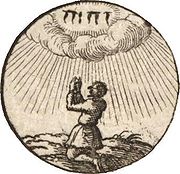 In ancient Israel, priests acted as mediators between God and people. They ministered according to God's instruction and they offered sacrifices to God on behalf of the people. Once a year, the high priest would enter the holiest part of the temple and offer a sacrifice for the sins of all the people, including all the priests.
Although many religions use priests, most Protestant faiths reject the idea of a priesthood as a group that is spiritually distinct from lay people. They typically employ professional clergy who perform many of the same functions as priests such as clarifying doctrine, administering communion, performing baptisms, marriages, etc. In many instances, Protestants see professional clergy as servants acting on behalf of the local believers. This is in contrast to the priest, whom some Protestants see as having a distinct authority and spiritual role different from that of ordinary believers.
Most Protestants today recognize only one mediator between them and God the Father, and that is God the Son, Jesus Christ (1 Timothy 2:5). The Epistle to the Hebrews calls Jesus the supreme "high priest," who offered himself as a perfect sacrifice (Hebrews 7:23–28). Protestants believe that through Christ they have been given direct access to God, just like a priest; thus the doctrine is called the priesthood of all believers. God is equally accessible to all the faithful, and every Christian has equal potential to minister for God. This doctrine stands in opposition to the concept of a spiritual aristocracy or hierarchy within Christianity.
The belief in the priesthood of all believers does not preclude order, authority or discipline within congregations or denominational organizations. For example, Lutheranism
maintains the biblical doctrine of "the preaching office" or the "office of the holy ministry" established by God in the Christian Church. The Augsburg Confession
states:
The origins of the doctrine within Protestantism are somewhat obscure. The idea was found in a radical form in Lollard thought
. Martin Luther
adduced it in his writings for the purpose of reforming the Christian Church, and it became a central tenet of Protestantism
.
The doctrine is strongly asserted within Methodism
and the Plymouth Brethren
movement. Within Methodism
it can plausibly be linked to the strong emphasis on social action and political involvement within that denomination
. Within the Plymouth Brethren
, the concept is most usually evidenced in the lack of distinction between "clergy" and "laity," the refusal to adopt formal titles such as Reverend or Bishop, the denial of formal ordination, and in some cases the refusal to hire any "professional staff" or paid Christian workers at all. Baptist
movements, which generally operate on a form of congregational polity
, also lean heavily on this concept.
Growing numbers of Baptists lament the individualism
that seems inherent within contemporary notions of the doctrine, pointing out that the 'priesthood of all believers' is not the same as 'the individual priesthood of each individual believer'. It is rather, the gathered community as a whole that constitutes a priesthood, and as such represents God to the people (mission) and the people to God (intercession
).
The vast majority of Protestants nonetheless draw some distinction between their own ordained ministers and lay people, but regard it as a matter of church order and discipline rather than spiritual hierarchy.
Some groups during the Reformation believed that priesthood authority was still needed, but was lost from the earth. Roger Williams
believed, "There is no regularly constituted church of Christ on earth, nor any person qualified to administer any church ordinances; nor can there be until new apostles are sent by the Great Head of the Church for whose coming I am seeking." Another group, the Seekers
, believed that the Roman Catholic Church had lost its authority through corruption and waited for Christ to restore his true church and authority.
and traditional Anglican
Christians traditionally believe that 1 Peter 2:9 gives responsibility to all believers for the preservation and propagation of the Gospel
and the Church, as distinct from the liturgical and sacrament
al roles of the ordained
priest
hood and consecrated
episcopate
(see Apostolic Succession
). They and other Christians also see the ministerial priesthood as being necessary in accordance with the words of the eucharist
ic liturgy: "Do this in memory (anamnesis) of me" (Gospel of Luke
22:19–20; First Corinthians 11:23–25).
The dogmatic constitution Lumen Gentium
of the Second Vatican Council
specifically highlights the priesthood of all believers. It teaches that the Church's relationship with God is independent of whatever ordination
people have received, as evidenced by the guidelines and rubrics for personal prayer when no priest is present. Such Churches have always taught implicitly that a Christian's personal relationship with God is independent of whatever ordination
they have received.
Thus, the Catholic Church accepts the 'priesthood of all believers' doctrine – it is not the exclusive domain of Protestantism. This is exemplified in 'chaplet of divine mercy
' prayer, in which the individual Christian declares: "Eternal Father, I offer you the Body and Blood, Soul and Divinity, of your dearly beloved Son, our Lord Jesus Christ, in atonement for our sins..." The primary difference between the teachings of the Catholic Church and those of the (non-Anglican) Protestant churches that reject the ordained priesthood is that the Catholic Church believes in three different types of priests:
words ἱερεύς (hiereus meaning "sacred one") and πρεσβύτερος
(presbyteros meaning "one with elderhood"), which are usually both translated in English with the word "priest". The former term refers to the sacrificial ritual leaders of Judaism, the kohanim
, and to those holding the office of conducting sacrifices in ancient pagan temples, whereas the latter term refers to an acknowledged elder of a community.
The earliest Christianity
is not recorded as ever having created an office of hiereus, except to acknowledge Jesus
in that role, and as in the Greek of 1 Peter 2:9, to recognize the Church as having it in a collective sense. The New Testament records the role of presbyter
and/or bishop
(or episkopos which literally means "overseer
") in the earliest Christian churches
as the role ordained by the Apostles to the earliest acknowledged leaders of the Church. So, to say that a Christian is a "sacred
one" (i.e. hiereus) is not to say that each Christian is "one with elderhood" (i.e. presbyteros).
Christian
A Christian is a person who adheres to Christianity, an Abrahamic, monotheistic religion based on the life and teachings of Jesus of Nazareth as recorded in the Canonical gospels and the letters of the New Testament...
doctrine believed to be derived from several passages of the New Testament
New Testament
The New Testament is the second major division of the Christian biblical canon, the first such division being the much longer Old Testament....
. The exact meaning varies from denomination to denomination, but generally entails a doctrinal responsibility or right to preach and expound the Christian faith, and this is appointed to every member of the church.
History within Protestantism
It is a foundational concept of ProtestantismProtestantism
Protestantism is one of the three major groupings within Christianity. It is a movement that began in Germany in the early 16th century as a reaction against medieval Roman Catholic doctrines and practices, especially in regards to salvation, justification, and ecclesiology.The doctrines of the...
. While Martin Luther
Martin Luther
Martin Luther was a German priest, professor of theology and iconic figure of the Protestant Reformation. He strongly disputed the claim that freedom from God's punishment for sin could be purchased with money. He confronted indulgence salesman Johann Tetzel with his Ninety-Five Theses in 1517...
did not use the exact phrase "priesthood of all believers," he adduces a general priesthood in Christendom in his 1520 To the Christian Nobility of the German Nation
To the Christian Nobility of the German Nation
To the Christian Nobility of the German Nation is the first of three tracts written by Martin Luther in 1520. In this work, he defined for the first time the signature doctrines of the Priesthood of all believers and the two kingdoms.-History:...
in order to dismiss the medieval view that Christians in the present life were to be divided into two classes: "spiritual" and "temporal." He put forward the doctrine that all baptized Christians are "priests" and "spiritual" in the sight of God
God
God is the English name given to a singular being in theistic and deistic religions who is either the sole deity in monotheism, or a single deity in polytheism....
:
That the pope or bishop anoints, makes tonsures, ordains, consecrates, or dresses differently from the laity, may make a hypocrite or an idolatrous oil-painted icon, but it in no way makes a Christian or spiritual human being. In fact, we are all consecrated priests through Baptism, as St. Peter in 1 Peter 2[:9] says, "You are a royal priesthood and a priestly kingdom," and Revelation [5:10], "Through your blood you have made us into priests and kings."
Two months later Luther would write in his On the Babylonian Captivity of the Church
On the Babylonian Captivity of the Church
thumb||FrontspiecePrelude on the Babylonian Captivity of the Church was the second of the three major treatises published by Martin Luther in 1520, coming after the Address to the Christian Nobility of the German Nation and before On the Freedom of a Christian...
(1520):
How then if they are forced to admit that we are all equally priests, as many of us as are baptized, and by this way we truly are; while to them is committed only the Ministry (ministerium Predigtamt) and consented to by us (nostro consensu)? If they recognize this they would know that they have no right to exercise power over us (ius imperii, in what has not been committed to them) except insofar as we may have granted it to them, for thus it says in 1 Peter 2, "You are a chosen race, a royal priesthood, a priestly kingdom." In this way we are all priests, as many of us as are Christians. There are indeed priests whom we call ministers. They are chosen from among us, and who do everything in our name. That is a priesthood which is nothing else than the Ministry. Thus 1 Corinthians 4:1: "No one should regard us as anything else than ministers of Christ and dispensers of the mysteries of God."
The Bible passage considered to be the basis of this belief is the First Epistle of Peter
First Epistle of Peter
The First Epistle of Peter, usually referred to simply as First Peter and often written 1 Peter, is a book of the New Testament. The author claims to be Saint Peter the apostle, and the epistle was traditionally held to have been written during his time as bishop of Rome or Bishop of Antioch,...
, 2:9:
- But you are not like that, for you are a chosen people. You are royal priests, a holy nation, God’s very own possession. As a result, you can show others the goodness of God, for he called you out of the darkness into his wonderful light.
(This New Living Translation
New Living Translation
The New Living Translation is a translation of the Bible into modern English. Originally starting out as an effort to revise The Living Bible, the project evolved into a new English translation from Hebrew and Greek texts...
version reflects the Protestant view, as the universal "royal priesthood" from the Bible Luther cites above has been changed to individual "royal priests".)
Other relevant Scripture passages include Exodus 19:5–6, First Peter 2:4–8, Revelation 1:4–6, 5:6–10, and many passages in the Epistle to the Hebrews
Epistle to the Hebrews
The Epistle to the Hebrews is one of the books in the New Testament. Its author is not known.The primary purpose of the Letter to the Hebrews is to exhort Christians to persevere in the face of persecution. The central thought of the entire Epistle is the doctrine of the Person of Christ and his...
.
Although many religions use priests, most Protestant faiths reject the idea of a priesthood as a group that is spiritually distinct from lay people. They typically employ professional clergy who perform many of the same functions as priests such as clarifying doctrine, administering communion, performing baptisms, marriages, etc. In many instances, Protestants see professional clergy as servants acting on behalf of the local believers. This is in contrast to the priest, whom some Protestants see as having a distinct authority and spiritual role different from that of ordinary believers.
Most Protestants today recognize only one mediator between them and God the Father, and that is God the Son, Jesus Christ (1 Timothy 2:5). The Epistle to the Hebrews calls Jesus the supreme "high priest," who offered himself as a perfect sacrifice (Hebrews 7:23–28). Protestants believe that through Christ they have been given direct access to God, just like a priest; thus the doctrine is called the priesthood of all believers. God is equally accessible to all the faithful, and every Christian has equal potential to minister for God. This doctrine stands in opposition to the concept of a spiritual aristocracy or hierarchy within Christianity.
The belief in the priesthood of all believers does not preclude order, authority or discipline within congregations or denominational organizations. For example, Lutheranism
Lutheranism
Lutheranism is a major branch of Western Christianity that identifies with the theology of Martin Luther, a German reformer. Luther's efforts to reform the theology and practice of the church launched the Protestant Reformation...
maintains the biblical doctrine of "the preaching office" or the "office of the holy ministry" established by God in the Christian Church. The Augsburg Confession
Augsburg Confession
The Augsburg Confession, also known as the "Augustana" from its Latin name, Confessio Augustana, is the primary confession of faith of the Lutheran Church and one of the most important documents of the Lutheran reformation...
states:
[From Article 4:] Furthermore, it is taught that we cannot obtain forgiveness of sin and righteousness before God through our merit, work, or satisfactions, but that we receive forgiveness of sin and become righteous before God out of grace for Christ’s sake through faith when we believe that Christ has suffered for us and that for his sake our sin is forgiven and righteousness and eternal life are given to us ... [From Article 5:] To obtain such faith God instituted the office of preaching, giving the gospel and the sacraments. Through these, as through means, he gives the Holy Spirit who produces faith, where and when he wills, in those who hear the gospel ... [Article 14:] Concerning church government it is taught that no one should publicly teach, preach, or administer the sacraments without a proper [public] call.
The origins of the doctrine within Protestantism are somewhat obscure. The idea was found in a radical form in Lollard thought
Lollardy
Lollardy was a political and religious movement that existed from the mid-14th century to the English Reformation. The term "Lollard" refers to the followers of John Wycliffe, a prominent theologian who was dismissed from the University of Oxford in 1381 for criticism of the Church, especially his...
. Martin Luther
Martin Luther
Martin Luther was a German priest, professor of theology and iconic figure of the Protestant Reformation. He strongly disputed the claim that freedom from God's punishment for sin could be purchased with money. He confronted indulgence salesman Johann Tetzel with his Ninety-Five Theses in 1517...
adduced it in his writings for the purpose of reforming the Christian Church, and it became a central tenet of Protestantism
Protestantism
Protestantism is one of the three major groupings within Christianity. It is a movement that began in Germany in the early 16th century as a reaction against medieval Roman Catholic doctrines and practices, especially in regards to salvation, justification, and ecclesiology.The doctrines of the...
.
The doctrine is strongly asserted within Methodism
Methodism
Methodism is a movement of Protestant Christianity represented by a number of denominations and organizations, claiming a total of approximately seventy million adherents worldwide. The movement traces its roots to John Wesley's evangelistic revival movement within Anglicanism. His younger brother...
and the Plymouth Brethren
Plymouth Brethren
The Plymouth Brethren is a conservative, Evangelical Christian movement, whose history can be traced to Dublin, Ireland, in the late 1820s. Although the group is notable for not taking any official "church name" to itself, and not having an official clergy or liturgy, the title "The Brethren," is...
movement. Within Methodism
Methodism
Methodism is a movement of Protestant Christianity represented by a number of denominations and organizations, claiming a total of approximately seventy million adherents worldwide. The movement traces its roots to John Wesley's evangelistic revival movement within Anglicanism. His younger brother...
it can plausibly be linked to the strong emphasis on social action and political involvement within that denomination
Religious denomination
A religious denomination is a subgroup within a religion that operates under a common name, tradition, and identity.The term describes various Christian denominations...
. Within the Plymouth Brethren
Plymouth Brethren
The Plymouth Brethren is a conservative, Evangelical Christian movement, whose history can be traced to Dublin, Ireland, in the late 1820s. Although the group is notable for not taking any official "church name" to itself, and not having an official clergy or liturgy, the title "The Brethren," is...
, the concept is most usually evidenced in the lack of distinction between "clergy" and "laity," the refusal to adopt formal titles such as Reverend or Bishop, the denial of formal ordination, and in some cases the refusal to hire any "professional staff" or paid Christian workers at all. Baptist
Baptist
Baptists comprise a group of Christian denominations and churches that subscribe to a doctrine that baptism should be performed only for professing believers , and that it must be done by immersion...
movements, which generally operate on a form of congregational polity
Congregationalist polity
Congregationalist polity, often known as congregationalism, is a system of church governance in which every local church congregation is independent, ecclesiastically sovereign, or "autonomous"...
, also lean heavily on this concept.
Growing numbers of Baptists lament the individualism
Individualism
Individualism is the moral stance, political philosophy, ideology, or social outlook that stresses "the moral worth of the individual". Individualists promote the exercise of one's goals and desires and so value independence and self-reliance while opposing most external interference upon one's own...
that seems inherent within contemporary notions of the doctrine, pointing out that the 'priesthood of all believers' is not the same as 'the individual priesthood of each individual believer'. It is rather, the gathered community as a whole that constitutes a priesthood, and as such represents God to the people (mission) and the people to God (intercession
Intercession
Intercession is the act of interceding between two parties. In both Christian and Islamic religious usage, it is a prayer to God on behalf of others....
).
The vast majority of Protestants nonetheless draw some distinction between their own ordained ministers and lay people, but regard it as a matter of church order and discipline rather than spiritual hierarchy.
Some groups during the Reformation believed that priesthood authority was still needed, but was lost from the earth. Roger Williams
Roger Williams (theologian)
Roger Williams was an English Protestant theologian who was an early proponent of religious freedom and the separation of church and state. In 1636, he began the colony of Providence Plantation, which provided a refuge for religious minorities. Williams started the first Baptist church in America,...
believed, "There is no regularly constituted church of Christ on earth, nor any person qualified to administer any church ordinances; nor can there be until new apostles are sent by the Great Head of the Church for whose coming I am seeking." Another group, the Seekers
Seekers
The Seekers, or Legatine-Arians as they were sometimes known, were a Protestant dissenting group that emerged around the 1620s, probably inspired by the preaching of three brothers – Walter, Thomas, and Bartholomew Legate. Arguably, they are best thought of as forerunners of the Quakers, with whom...
, believed that the Roman Catholic Church had lost its authority through corruption and waited for Christ to restore his true church and authority.
Priesthood in non-Protestant traditions
Roman Catholic, Eastern OrthodoxEastern Orthodox Church
The Orthodox Church, officially called the Orthodox Catholic Church and commonly referred to as the Eastern Orthodox Church, is the second largest Christian denomination in the world, with an estimated 300 million adherents mainly in the countries of Belarus, Bulgaria, Cyprus, Georgia, Greece,...
and traditional Anglican
Anglican Communion
The Anglican Communion is an international association of national and regional Anglican churches in full communion with the Church of England and specifically with its principal primate, the Archbishop of Canterbury...
Christians traditionally believe that 1 Peter 2:9 gives responsibility to all believers for the preservation and propagation of the Gospel
Gospel
A gospel is an account, often written, that describes the life of Jesus of Nazareth. In a more general sense the term "gospel" may refer to the good news message of the New Testament. It is primarily used in reference to the four canonical gospels of Matthew, Mark, Luke, and John...
and the Church, as distinct from the liturgical and sacrament
Sacrament
A sacrament is a sacred rite recognized as of particular importance and significance. There are various views on the existence and meaning of such rites.-General definitions and terms:...
al roles of the ordained
Holy Orders
The term Holy Orders is used by many Christian churches to refer to ordination or to those individuals ordained for a special role or ministry....
priest
Priest
A priest is a person authorized to perform the sacred rites of a religion, especially as a mediatory agent between humans and deities. They also have the authority or power to administer religious rites; in particular, rites of sacrifice to, and propitiation of, a deity or deities...
hood and consecrated
Consecration
Consecration is the solemn dedication to a special purpose or service, usually religious. The word "consecration" literally means "to associate with the sacred". Persons, places, or things can be consecrated, and the term is used in various ways by different groups...
episcopate
Bishop
A bishop is an ordained or consecrated member of the Christian clergy who is generally entrusted with a position of authority and oversight. Within the Catholic Church, Eastern Orthodox, Oriental Orthodox Churches, in the Assyrian Church of the East, in the Independent Catholic Churches, and in the...
(see Apostolic Succession
Apostolic Succession
Apostolic succession is a doctrine, held by some Christian denominations, which asserts that the chosen successors of the Twelve Apostles, from the first century to the present day, have inherited the spiritual, ecclesiastical and sacramental authority, power, and responsibility that were...
). They and other Christians also see the ministerial priesthood as being necessary in accordance with the words of the eucharist
Eucharist
The Eucharist , also called Holy Communion, the Sacrament of the Altar, the Blessed Sacrament, the Lord's Supper, and other names, is a Christian sacrament or ordinance...
ic liturgy: "Do this in memory (anamnesis) of me" (Gospel of Luke
Gospel of Luke
The Gospel According to Luke , commonly shortened to the Gospel of Luke or simply Luke, is the third and longest of the four canonical Gospels. This synoptic gospel is an account of the life and ministry of Jesus of Nazareth. It details his story from the events of his birth to his Ascension.The...
22:19–20; First Corinthians 11:23–25).
The dogmatic constitution Lumen Gentium
Lumen Gentium
Lumen Gentium, the Dogmatic Constitution on the Church, is one of the principal documents of the Second Vatican Council. This dogmatic constitution was promulgated by Pope Paul VI on November 21, 1964, following approval by the assembled bishops by a vote of 2,151 to 5...
of the Second Vatican Council
Second Vatican Council
The Second Vatican Council addressed relations between the Roman Catholic Church and the modern world. It was the twenty-first Ecumenical Council of the Catholic Church and the second to be held at St. Peter's Basilica in the Vatican. It opened under Pope John XXIII on 11 October 1962 and closed...
specifically highlights the priesthood of all believers. It teaches that the Church's relationship with God is independent of whatever ordination
Holy Orders
The term Holy Orders is used by many Christian churches to refer to ordination or to those individuals ordained for a special role or ministry....
people have received, as evidenced by the guidelines and rubrics for personal prayer when no priest is present. Such Churches have always taught implicitly that a Christian's personal relationship with God is independent of whatever ordination
Holy Orders
The term Holy Orders is used by many Christian churches to refer to ordination or to those individuals ordained for a special role or ministry....
they have received.
Thus, the Catholic Church accepts the 'priesthood of all believers' doctrine – it is not the exclusive domain of Protestantism. This is exemplified in 'chaplet of divine mercy
Divine Mercy
The Divine Mercy is a Roman Catholic devotion to the merciful love of God and the desire to let that love and mercy flow through one's own heart towards those in need of it...
' prayer, in which the individual Christian declares: "Eternal Father, I offer you the Body and Blood, Soul and Divinity, of your dearly beloved Son, our Lord Jesus Christ, in atonement for our sins..." The primary difference between the teachings of the Catholic Church and those of the (non-Anglican) Protestant churches that reject the ordained priesthood is that the Catholic Church believes in three different types of priests:
- first, the priesthood of all believers (1 Peter 2:5–9);
- second, the ordained priesthood (Acts 14:23, Romans 15:16, Titus 1:5); and
- third, the high priesthood of Jesus (Hebrews 3:1).
Problems with translations
Much of the doctrinal confusion on this matter is caused by the difference between the GreekAncient Greek
Ancient Greek is the stage of the Greek language in the periods spanning the times c. 9th–6th centuries BC, , c. 5th–4th centuries BC , and the c. 3rd century BC – 6th century AD of ancient Greece and the ancient world; being predated in the 2nd millennium BC by Mycenaean Greek...
words ἱερεύς (hiereus meaning "sacred one") and πρεσβύτερος
Presbyter
Presbyter in the New Testament refers to a leader in local Christian congregations, then a synonym of episkopos...
(presbyteros meaning "one with elderhood"), which are usually both translated in English with the word "priest". The former term refers to the sacrificial ritual leaders of Judaism, the kohanim
Kohen
A Kohen is the Hebrew word for priest. Jewish Kohens are traditionally believed and halachically required to be of direct patrilineal descent from the Biblical Aaron....
, and to those holding the office of conducting sacrifices in ancient pagan temples, whereas the latter term refers to an acknowledged elder of a community.
The earliest Christianity
Apostolic Age
The Apostolic Age of the history of Christianity is traditionally the period of the Twelve Apostles, dating from the Crucifixion of Jesus and the Great Commission in Jerusalem until the death of John the Apostle in Anatolia...
is not recorded as ever having created an office of hiereus, except to acknowledge Jesus
Jesus
Jesus of Nazareth , commonly referred to as Jesus Christ or simply as Jesus or Christ, is the central figure of Christianity...
in that role, and as in the Greek of 1 Peter 2:9, to recognize the Church as having it in a collective sense. The New Testament records the role of presbyter
Presbyter
Presbyter in the New Testament refers to a leader in local Christian congregations, then a synonym of episkopos...
and/or bishop
Bishop
A bishop is an ordained or consecrated member of the Christian clergy who is generally entrusted with a position of authority and oversight. Within the Catholic Church, Eastern Orthodox, Oriental Orthodox Churches, in the Assyrian Church of the East, in the Independent Catholic Churches, and in the...
(or episkopos which literally means "overseer
Overseer
Rob Overseer is an English DJ/producer, born in Leeds whose works have been included in soundtracks for Animatrix, Snatch, Any Given Sunday and The Girl Next Door, as well as video games like Need for Speed: Underground, NFL Gameday 2004, several Matchstick Productions ski films, and Stuntman,...
") in the earliest Christian churches
Early centers of Christianity
Early Christianity spread from Western Asia, throughout the Roman Empire, and beyond into East Africa and South Asia, reaching as far as India. At first, this development was closely connected to centers of Hebrew faith, in the Holy Land and the Jewish diaspora...
as the role ordained by the Apostles to the earliest acknowledged leaders of the Church. So, to say that a Christian is a "sacred
Sacred
Holiness, or sanctity, is in general the state of being holy or sacred...
one" (i.e. hiereus) is not to say that each Christian is "one with elderhood" (i.e. presbyteros).