


Plagiarism

Encyclopedia
Plagiarism is defined in dictionaries as the "wrongful appropriation," "close imitation," or "purloining and publication" of another author
's "language, thoughts, ideas, or expressions," and the representation of them as one's own original work, but the notion remains problematic with nebulous boundaries. The modern concept of plagiarism as immoral and originality
as an ideal
emerged in Europe only in the 18th century, particularly with the Romantic movement, while in the previous centuries authors and artists were encouraged to "copy the masters as closely as possible" and avoid "unnecessary invention."
The 18th century new morals have been institutionalized and enforced prominently in the sectors of academia
and journalism
, where plagiarism is now considered academic dishonesty
and a breach of journalistic ethics, subject to sanctions like expulsion
and other severe career damage. Not so in the arts
, which not only have resisted in their long-established tradition of copying as a fundamental practice of the creative process, but with the boom of the modernist and postmodern movements in the 20th century, this practice has been heightened as the central and representative artistic device. Plagiarism remains tolerated by 21st century artists.
Plagiarism is not a crime
per se but is disapproved more on the grounds of moral
offence, and cases of plagiarism can involve liability for copyright infringement
.
's "language, thoughts, ideas, or expressions," and the representation of them as one's own original work, but the notion remains problematic with nebulous boundaries. There is no rigorous and precise distinction between imitation
, stylistic plagiarism, copy
, replica
and forgery
.
In the 1st century, the use of the Latin word plagiarius (literally kidnapper), to denote someone stealing someone else's work, was pioneered by Roman poet Martial
, who complained that another poet had "kidnapped his verses." This use of the word was introduced into English in 1601 by dramatist Ben Jonson
, to describe as a plagiary someone guilty of literary theft.
The derived form plagiarism was introduced into English around 1620. The Latin
plagiārius, "kidnapper", and plagium, "kidnapping", has the root plaga ("snare", "net"), based on the Indo-European root
*-plak, "to weave" (seen for instance in Greek
plekein, Bulgarian "плета" pleta, Latin plectere, all meaning "to weave").
The modern concept of plagiarism as immoral and originality as an ideal
, emerged in Europe only in the 18th century, particularly with the Romantic movement. For centuries before, not only literature was considered "publica materies," a common property from which anybody could borrow at will, but the encouragement for authors and artists was actually to "copy the masters as closely as possible," for which the closer the copy the finer was considered the work. This was the same in literature, music, painting and sculpture. In some cases, for a writer to invent their own plots was reproached as presumptuous. This stood at the time of Shakespeare too, when it was common to appreciate more the similarity with an admired classical work, and the ideal was to avoid "unnecessary invention."
The modern ideals for originality and against plagiarism appeared in the 18th century, in the context of the economic and political history of the book trade, which will be exemplary and influential for the subsequent broader introduction of capitalism
. Originality, that traditionally had been deemed as impossible, was turned into an obligation by the emerging ideology of individualism
. In 1755 the word made it into Johnson's influential A Dictionary of the English Language
, where he was cited in the entry for copier ("One that imitates; a plagiary; an imitator. Without invention a painter is but a copier, and a poet but a plagiary of others."), and in its own entry denoting both A thief in literature ("one who steals the thoughts or writings of another") and The crime of literary theft.
Later in the 18th century, the Romantic movement completed the transformation of the previous ideas about literature, developing the Romantic myth of artistic inspiration, which believes in the "individualised, inimitable act of literary creation", in the ideology of the "creation from nothingness" of a text which is an "autonomous object produced by an individual genious."
Despite the 18th century new morals, and their current enforcement in the ethical codes of academia and journalism, the arts, by contrast, not only have resisted in their long-established tradition of copying as a fundamental practice of the creative process, but with the boom of the modernist and postmodern movements, this practice has been accelerated, spread, increased, dramatically amplifyied to an unprecedented degree, to the point that has been heightened as the central and representative artistic device of these movements. Plagiarism remains tolerated by 21st century artists.
or civil
. Some cases may be treated as unfair competition
or a violation of the doctrine of moral rights. The increased availability of intellectual property
due to a rise in technology has furthered the debate as to whether copyright offences are criminal. In short, people are asked to use the guideline, "...if you did not write it yourself, you must give credit."
Plagiarism is not the same as copyright infringement
. While both terms may apply to a particular act, they are different concepts. Copyright infringement is a violation of the rights of a copyright holder, when material restricted by copyright is used without consent. On the other hand, the moral concept of plagiarism is concerned with the unearned increment to the plagiarizing author's reputation
that is achieved through false claims of authorship.
, plagiarism by students, professors, or researchers is considered academic dishonesty
or academic fraud, and offenders are subject to academic censure, up to and including expulsion
. In journalism
, plagiarism is considered a breach of journalistic ethics, and reporters caught plagiarizing typically face disciplinary measures ranging from suspension to termination of employment. Some individuals caught plagiarizing in academic or journalistic contexts claim that they plagiarized unintentionally, by failing to include quotation
s or give the appropriate citation
. While plagiarism in scholarship and journalism has a centuries-old history, the development of the Internet
, where articles appear as electronic text, has made the physical act of copying the work of others much easier.
For professors and researchers, plagiarism is punished by sanctions ranging from suspension to termination, along with the loss of credibility and integrity. Charges of plagiarism against students and professors are typically heard by internal disciplinary committees, which students and professors have agreed to be bound by.
The ease with which electronic text can be reproduced from online sources has lured a number of reporters into acts of plagiarism: Journalists have been caught "copying-and-pasting" articles and text from a number of websites.
Students may feel pressured to complete papers well and quickly, and with the accessibility of new technology (the Internet) students can plagiarize by copying and pasting information from other sources. This is often easily detected by teachers for several reasons. First, students' choices of sources are frequently unoriginal; instructors may receive the same passage copied from a popular source from several students. Second, it is often easy to tell whether a student used his or her own "voice". Third, students may choose sources which are inappropriate, inaccurate, or off-topic. Fourth, lecturers may insist that submitted work is first submitted to an online plagiarism detector.
There has been increasing recognition that some plagiarism occurs because students are unaware of acceptable writing practices or may even have developed writing practices considered unacceptable in higher education as part of their prior education. This has led to a call for a greater emphasis on helping students learn about plagiarism as part of a holistic
approach suggested by MacDonald and Carroll (2006). As a consequence, consideration has now been given to the best ways to help students learn about plagiarism with suggestions by Carroll (2006) that students should be allowed to experiment and the Joint Information Systems Committee (a body advising higher education in the UK) that students should be able to develop their understanding of plagiarism through making mistakes, which means that they may need to produce some unacceptable writing and receive feedback on it before understanding that it is unacceptable. When considering how best to help students learn about plagiarism, "recognition of individual learner differences" is important. A large amount of the research which has taken place into plagiarism and learner differences has taken place in the context of students studying overseas. However, while it might be useful to understand the range of reasons suggested in this research, Carroll (2008), writing in a UK context, suggests that the variety of understandings of plagiarism are likely as varied amongst domestic students.
There is little academic research into the frequency of plagiarism in high schools. Much of the research investigated plagiarism at the post-secondary level. Of the forms of cheating, (including plagiarism, inventing data, and cheating during an exam) students admit to plagiarism more than any other. A Duke University in 2005 found that 58% of high school students have plagiarized at least once as found in a study size of 18,000 participants. However, this figure decreases considerably when students are asked about the frequency of "serious" plagiarism (such as copying most of an assignment or purchasing a complete paper from a website). Recent use of plagiarism detection software (see below) gives a more accurate picture of this activity's prevalence.
. In addition to the ethical issue, this can be illegal if copyright of the prior work has been transferred to another entity. Typically, self-plagiarism is only considered to be a serious ethical issue in settings where a publication is asserted to consist of new material, such as in academic publishing or educational assignments. It does not apply (except in the legal sense) to public-interest texts, such as social, professional, and cultural opinions usually published in newspapers and magazines.
In academic fields, self-plagiarism is when an author reuses portions of their own published and copyrighted work in subsequent publications, but without attributing the previous publication. Identifying self-plagiarism is often difficult because limited reuse of material is both legally accepted (as fair use
) and ethically accepted.
It is common for university researchers to rephrase and republish their own work, tailoring it for different academic journals and newspaper articles, to disseminate their work to the widest possible interested public. However, it must be borne in mind that these researchers also obey limits: If half an article is the same as a previous one, it will usually be rejected. One of the functions of the process of peer review
in academic writing is to prevent this type of "recycling".
.
For example, Stephanie J. Bird argues that self-plagiarism is a misnomer, since by definition plagiarism concerns the use of others' material.
However, the phrase is used to refer to specific forms of potentially unethical publication.
Bird identifies the ethical issues sometimes called "self-plagiarism" as those of "dual or redundant publication." She also notes that in an educational context, "self-plagiarism" may refer to the case of a student who resubmits "the same essay for credit in two different courses." As David B. Resnik clarifies, "Self-plagiarism involves dishonesty but not intellectual theft."
According to Patrick M. Scanlon
Some professional organizations like the Association for Computing Machinery
(ACM) have created policies that deal specifically with self-plagiarism.
Other organisations do not make specific reference to self-plagiarism:
The American Political Science Association (APSA) has published a code of ethics which describes plagiarism as "deliberate appropriation of the works of others represented as one's own." It does not make any reference to self-plagiarism. It does say that when a thesis or dissertation is published "in whole or in part", the author is "not ordinarily under an ethical obligation to acknowledge its origins."
The American Society for Public Administration (ASPA) has published a code of ethics which says its members are committed to: "Ensure that others receive credit for their work and contributions," but it does not make any reference to self-plagiarism.
in 1994 identified several factors which excuse reuse of one's previously published work without the culpability of self-plagiarism. She relates each of these factors specifically to the ethical issue of self-plagiarism, as distinct from the legal issue of fair use of copyright, which she deals with separately. Among other factors which may excuse reuse of previously published material Samuelson lists the following:
Samuelson states she has relied on the "different audience" rationale when attempting to bridge interdisciplinary communities. She refers to writing for different legal and technical communities, saying: "there are often paragraphs or sequences of paragraphs that can be bodily lifted from one article to the other. And, in truth, I lift them." She refers to her own practice of converting "a technical article into a law review article with relatively few changes—adding footnotes and one substantive section" for a different audience.
Samuelson describes misrepresentation as the basis of self-plagiarism. She seems less concerned about reuse of descriptive materials than ideas and analytical content. She also states "Although it seems not to have been raised in any of the self-plagiarism cases, copyrights law's fair use defense would likely provide a shield against many potential publisher claims of copyright infringement against authors who reused portions of their previous works."
's "Statement on Standards of Professional Conduct" (2005) regarding textbooks and reference books states that, since textbooks and encyclopedias are summaries of other scholars' work, they are not bound by the same exacting standards of attribution as original research and may be allowed a greater "extent of dependence" on other works. However, even such a book does not make use of words, phrases, or paragraphs from another text or follow too closely the other text's arrangement and organization, and the authors of such texts are also expected to "acknowledge the sources of recent or distinctive findings and interpretations, those not yet a part of the common understanding of the profession."
Within an organization, in its own working documents, standards are looser but not non-existent. If someone helped with a report, they may expect to be credited. If a paragraph comes from a law report, a citation is expected to be written down. Technical manuals routinely copy facts from other manuals without attribution, because they assume a common spirit of scientific endeavor (as evidenced, for example, in free
and open source software projects) in which scientists freely share their work.
The Microsoft Manual of Style for Technical Publications Third Edition (2003) by Microsoft does not even mention plagiarism, nor does Science and Technical Writing: A Manual of Style, Second Edition (2000) by Philip Rubens. The line between permissible literary and impermissible source code plagiarism, though, is apparently quite fine. As with any technical field, computer programming makes use of what others have contributed to the general knowledge.
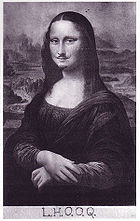
and of the arts
in general, works of art are for a large part repetitions of the tradition
; to the entire history of artistic creativity belong plagiarism, literary theft, appropriation
, incorporation, retelling, rewriting, recapitulation, revision, reprise, thematic variation, ironic retake, parody
, imitation, stylistic theft, pastiche
s, collage
s, and deliberate assemblage
s. There is no rigorous and precise distinction between practices like imitation, stylistic plagiarism, copy
, replica
and forgery
. These appropriation procedures are the main axis of a literate culture, in which the tradition of the canonic past is being constantly rewritten.
(p.459) We could, in some measure, at least, come closer to a verifiable gradation of the sequence of techniques and aims which leads from literal translation through paraphrases, mimesis, and pastiche to thematic variation. I have suggested that this sequence is the main axis of a literate culture, that a culture advances, spiralwise, via translations of its own canonic past.}}
These appropriation procedures, vital to the whole history of art, have gained more and more importance since the beginning of the 20th century, with the boom of the modernist and postmodern movements; in modernist and postmodernist art, appropriation has been heightened as the central and representative device.
's 1767 Tristram Shandy, condemns plagiarism by resorting to plagiarism. Oliver Goldsmith
commented:
On December 6, 2006, Thomas Pynchon
joined a campaign by many other major authors to clear Ian McEwan
of plagiarism charges by sending a typed letter to his British publisher, which was published in the Daily Telegraph
Playwright Wilson Mizner
said "If you copy from one author, it's plagiarism. If you copy from two, it's research."
American author Jonathan Lethem
delivered a passionate defense of the use of plagiarism in art in his 2007 essay "The ecstasy of influence: A plagiarism" in Harper's Magazine
. He wrote: "The kernel, the soul—let us go further and say the substance, the bulk, the actual and valuable material of all human utterances—is plagiarism" and "Don't pirate my editions; do plunder my visions. The name of the game is Give All. You, reader, are welcome to my stories. They were never mine in the first place, but I gave them to you."
Free online tools are becoming available to help identify plagiarism, and there is a range of approaches that attempt to limit online copying, such as disabling right clicking and placing warning banners regarding copyrights on web pages. Instances of plagiarism that involve copyright violation may be addressed by the rightful content owners sending a DMCA removal notice to the offending site-owner, or to the ISP that is hosting the offending site.
Detecting plagiarism even by detection tools can still be difficult, as plagiarism is often held to not only be the mere copying of text, but also the presentation of another's ideas as one's own, regardless of the specific words or constructs used to express that idea. However, many so-called plagiarism detection services can only detect blatant word-for-word copies of text.
Author
An author is broadly defined as "the person who originates or gives existence to anything" and that authorship determines responsibility for what is created. Narrowly defined, an author is the originator of any written work.-Legal significance:...
's "language, thoughts, ideas, or expressions," and the representation of them as one's own original work, but the notion remains problematic with nebulous boundaries. The modern concept of plagiarism as immoral and originality
Originality
Originality is the aspect of created or invented works by as being new or novel, and thus can be distinguished from reproductions, clones, forgeries, or derivative works....
as an ideal
Ideal (ethics)
An ideal is a principle or value that one actively pursues as a goal. Ideals are particularly important in ethics, as the order in which one places them tends to determine the degree to which one reveals them as real and sincere. It is the application, in ethics, of a universal...
emerged in Europe only in the 18th century, particularly with the Romantic movement, while in the previous centuries authors and artists were encouraged to "copy the masters as closely as possible" and avoid "unnecessary invention."
The 18th century new morals have been institutionalized and enforced prominently in the sectors of academia
Academia
Academia is the community of students and scholars engaged in higher education and research.-Etymology:The word comes from the akademeia in ancient Greece. Outside the city walls of Athens, the gymnasium was made famous by Plato as a center of learning...
and journalism
Journalism
Journalism is the practice of investigation and reporting of events, issues and trends to a broad audience in a timely fashion. Though there are many variations of journalism, the ideal is to inform the intended audience. Along with covering organizations and institutions such as government and...
, where plagiarism is now considered academic dishonesty
Academic dishonesty
Academic dishonesty or academic misconduct is any type of cheating that occurs in relation to a formal academic exercise. It can include* Plagiarism: The adoption or reproduction of original creations of another author without due acknowledgment.* Fabrication: The...
and a breach of journalistic ethics, subject to sanctions like expulsion
Expulsion (academia)
Expulsion or exclusion refers to the permanent removal of a student from a school system or university for violating that institution's rules. Laws and procedures regarding expulsion vary between countries and states.-State sector:...
and other severe career damage. Not so in the arts
The arts
The arts are a vast subdivision of culture, composed of many creative endeavors and disciplines. It is a broader term than "art", which as a description of a field usually means only the visual arts. The arts encompass visual arts, literary arts and the performing arts – music, theatre, dance and...
, which not only have resisted in their long-established tradition of copying as a fundamental practice of the creative process, but with the boom of the modernist and postmodern movements in the 20th century, this practice has been heightened as the central and representative artistic device. Plagiarism remains tolerated by 21st century artists.
Plagiarism is not a crime
Crime
Crime is the breach of rules or laws for which some governing authority can ultimately prescribe a conviction...
per se but is disapproved more on the grounds of moral
Morality
Morality is the differentiation among intentions, decisions, and actions between those that are good and bad . A moral code is a system of morality and a moral is any one practice or teaching within a moral code...
offence, and cases of plagiarism can involve liability for copyright infringement
Copyright infringement
Copyright infringement is the unauthorized or prohibited use of works under copyright, infringing the copyright holder's exclusive rights, such as the right to reproduce or perform the copyrighted work, or to make derivative works.- "Piracy" :...
.
Etymology and history
Twentieth-century dictionaries define plagiarism as "wrongful appropriation," "close imitation," or "purloining and publication," of another authorAuthor
An author is broadly defined as "the person who originates or gives existence to anything" and that authorship determines responsibility for what is created. Narrowly defined, an author is the originator of any written work.-Legal significance:...
's "language, thoughts, ideas, or expressions," and the representation of them as one's own original work, but the notion remains problematic with nebulous boundaries. There is no rigorous and precise distinction between imitation
Imitation
Imitation is an advanced behavior whereby an individual observes and replicates another's. The word can be applied in many contexts, ranging from animal training to international politics.-Anthropology and social sciences:...
, stylistic plagiarism, copy
Copying
Copying is the duplication of information or an artifact based only on an instance of that information or artifact, and not using the process that originally generated it. With analog forms of information, copying is only possible to a limited degree of accuracy, which depends on the quality of the...
, replica
Replica
A replica is a copy closely resembling the original concerning its shape and appearance. An inverted replica complements the original by filling its gaps. It can be a copy used for historical purposes, such as being placed in a museum. Sometimes the original never existed. For example, Difference...
and forgery
Forgery
Forgery is the process of making, adapting, or imitating objects, statistics, or documents with the intent to deceive. Copies, studio replicas, and reproductions are not considered forgeries, though they may later become forgeries through knowing and willful misrepresentations. Forging money or...
.
In the 1st century, the use of the Latin word plagiarius (literally kidnapper), to denote someone stealing someone else's work, was pioneered by Roman poet Martial
Martial
Marcus Valerius Martialis , was a Latin poet from Hispania best known for his twelve books of Epigrams, published in Rome between AD 86 and 103, during the reigns of the emperors Domitian, Nerva and Trajan...
, who complained that another poet had "kidnapped his verses." This use of the word was introduced into English in 1601 by dramatist Ben Jonson
Ben Jonson
Benjamin Jonson was an English Renaissance dramatist, poet and actor. A contemporary of William Shakespeare, he is best known for his satirical plays, particularly Volpone, The Alchemist, and Bartholomew Fair, which are considered his best, and his lyric poems...
, to describe as a plagiary someone guilty of literary theft.
The derived form plagiarism was introduced into English around 1620. The Latin
Latin
Latin is an Italic language originally spoken in Latium and Ancient Rome. It, along with most European languages, is a descendant of the ancient Proto-Indo-European language. Although it is considered a dead language, a number of scholars and members of the Christian clergy speak it fluently, and...
plagiārius, "kidnapper", and plagium, "kidnapping", has the root plaga ("snare", "net"), based on the Indo-European root
Proto-Indo-European root
The roots of the reconstructed Proto-Indo-European language are basic parts of words that carry a lexical meaning, so-called morphemes. PIE roots always have verbal meaning like "to eat" or "to run", as opposed to nouns , adjectives , or other parts of speech. Roots never occur alone in the language...
*-plak, "to weave" (seen for instance in Greek
Greek language
Greek is an independent branch of the Indo-European family of languages. Native to the southern Balkans, it has the longest documented history of any Indo-European language, spanning 34 centuries of written records. Its writing system has been the Greek alphabet for the majority of its history;...
plekein, Bulgarian "плета" pleta, Latin plectere, all meaning "to weave").
The modern concept of plagiarism as immoral and originality as an ideal
Ideal (ethics)
An ideal is a principle or value that one actively pursues as a goal. Ideals are particularly important in ethics, as the order in which one places them tends to determine the degree to which one reveals them as real and sincere. It is the application, in ethics, of a universal...
, emerged in Europe only in the 18th century, particularly with the Romantic movement. For centuries before, not only literature was considered "publica materies," a common property from which anybody could borrow at will, but the encouragement for authors and artists was actually to "copy the masters as closely as possible," for which the closer the copy the finer was considered the work. This was the same in literature, music, painting and sculpture. In some cases, for a writer to invent their own plots was reproached as presumptuous. This stood at the time of Shakespeare too, when it was common to appreciate more the similarity with an admired classical work, and the ideal was to avoid "unnecessary invention."
The modern ideals for originality and against plagiarism appeared in the 18th century, in the context of the economic and political history of the book trade, which will be exemplary and influential for the subsequent broader introduction of capitalism
Capitalism
Capitalism is an economic system that became dominant in the Western world following the demise of feudalism. There is no consensus on the precise definition nor on how the term should be used as a historical category...
. Originality, that traditionally had been deemed as impossible, was turned into an obligation by the emerging ideology of individualism
Individualism
Individualism is the moral stance, political philosophy, ideology, or social outlook that stresses "the moral worth of the individual". Individualists promote the exercise of one's goals and desires and so value independence and self-reliance while opposing most external interference upon one's own...
. In 1755 the word made it into Johnson's influential A Dictionary of the English Language
A Dictionary of the English Language
Published on 15 April 1755 and written by Samuel Johnson, A Dictionary of the English Language, sometimes published as Johnson's Dictionary, is among the most influential dictionaries in the history of the English language....
, where he was cited in the entry for copier ("One that imitates; a plagiary; an imitator. Without invention a painter is but a copier, and a poet but a plagiary of others."), and in its own entry denoting both A thief in literature ("one who steals the thoughts or writings of another") and The crime of literary theft.
Later in the 18th century, the Romantic movement completed the transformation of the previous ideas about literature, developing the Romantic myth of artistic inspiration, which believes in the "individualised, inimitable act of literary creation", in the ideology of the "creation from nothingness" of a text which is an "autonomous object produced by an individual genious."
Despite the 18th century new morals, and their current enforcement in the ethical codes of academia and journalism, the arts, by contrast, not only have resisted in their long-established tradition of copying as a fundamental practice of the creative process, but with the boom of the modernist and postmodern movements, this practice has been accelerated, spread, increased, dramatically amplifyied to an unprecedented degree, to the point that has been heightened as the central and representative artistic device of these movements. Plagiarism remains tolerated by 21st century artists.
Legal aspects
Though plagiarism in some contexts is considered theft or stealing, it does not exist in a legal sense. "Plagiarism" is not mentioned in any current statute, either criminalCriminal law
Criminal law, is the body of law that relates to crime. It might be defined as the body of rules that defines conduct that is not allowed because it is held to threaten, harm or endanger the safety and welfare of people, and that sets out the punishment to be imposed on people who do not obey...
or civil
Civil law (common law)
Civil law, as opposed to criminal law, is the branch of law dealing with disputes between individuals or organizations, in which compensation may be awarded to the victim...
. Some cases may be treated as unfair competition
Unfair competition
Unfair competition in a sense means that the competitors compete on unequal terms, because favourable or disadvantageous conditions are applied to some competitors but not to others; or that the actions of some competitors actively harm the position of others with respect to their ability to...
or a violation of the doctrine of moral rights. The increased availability of intellectual property
Intellectual property
Intellectual property is a term referring to a number of distinct types of creations of the mind for which a set of exclusive rights are recognized—and the corresponding fields of law...
due to a rise in technology has furthered the debate as to whether copyright offences are criminal. In short, people are asked to use the guideline, "...if you did not write it yourself, you must give credit."
Plagiarism is not the same as copyright infringement
Copyright infringement
Copyright infringement is the unauthorized or prohibited use of works under copyright, infringing the copyright holder's exclusive rights, such as the right to reproduce or perform the copyrighted work, or to make derivative works.- "Piracy" :...
. While both terms may apply to a particular act, they are different concepts. Copyright infringement is a violation of the rights of a copyright holder, when material restricted by copyright is used without consent. On the other hand, the moral concept of plagiarism is concerned with the unearned increment to the plagiarizing author's reputation
Reputation
Reputation of a social entity is an opinion about that entity, typically a result of social evaluation on a set of criteria...
that is achieved through false claims of authorship.
In academia and journalism
Within academiaAcademia
Academia is the community of students and scholars engaged in higher education and research.-Etymology:The word comes from the akademeia in ancient Greece. Outside the city walls of Athens, the gymnasium was made famous by Plato as a center of learning...
, plagiarism by students, professors, or researchers is considered academic dishonesty
Academic dishonesty
Academic dishonesty or academic misconduct is any type of cheating that occurs in relation to a formal academic exercise. It can include* Plagiarism: The adoption or reproduction of original creations of another author without due acknowledgment.* Fabrication: The...
or academic fraud, and offenders are subject to academic censure, up to and including expulsion
Expulsion (academia)
Expulsion or exclusion refers to the permanent removal of a student from a school system or university for violating that institution's rules. Laws and procedures regarding expulsion vary between countries and states.-State sector:...
. In journalism
Journalism
Journalism is the practice of investigation and reporting of events, issues and trends to a broad audience in a timely fashion. Though there are many variations of journalism, the ideal is to inform the intended audience. Along with covering organizations and institutions such as government and...
, plagiarism is considered a breach of journalistic ethics, and reporters caught plagiarizing typically face disciplinary measures ranging from suspension to termination of employment. Some individuals caught plagiarizing in academic or journalistic contexts claim that they plagiarized unintentionally, by failing to include quotation
Quotation
A quotation or quote is the repetition of one expression as part of another one, particularly when the quoted expression is well-known or explicitly attributed by citation to its original source, and it is indicated by quotation marks.A quotation can also refer to the repeated use of units of any...
s or give the appropriate citation
Citation
Broadly, a citation is a reference to a published or unpublished source . More precisely, a citation is an abbreviated alphanumeric expression Broadly, a citation is a reference to a published or unpublished source (not always the original source). More precisely, a citation is an abbreviated...
. While plagiarism in scholarship and journalism has a centuries-old history, the development of the Internet
Internet
The Internet is a global system of interconnected computer networks that use the standard Internet protocol suite to serve billions of users worldwide...
, where articles appear as electronic text, has made the physical act of copying the work of others much easier.
For professors and researchers, plagiarism is punished by sanctions ranging from suspension to termination, along with the loss of credibility and integrity. Charges of plagiarism against students and professors are typically heard by internal disciplinary committees, which students and professors have agreed to be bound by.
Journalism
Since journalism's main currency is public trust, a reporter's failure to honestly acknowledge their sources undercuts a newspaper or television news show's integrity and undermines its credibility. Journalists accused of plagiarism are often suspended from their reporting tasks while the charges are being investigated by the news organization.The ease with which electronic text can be reproduced from online sources has lured a number of reporters into acts of plagiarism: Journalists have been caught "copying-and-pasting" articles and text from a number of websites.
Sanctions for student plagiarism
In the academic world, plagiarism by students is a very serious offense that can result in punishments such as a failing grade on the particular assignment (typically at the high school level) or for the course (typically at the college or university level). For cases of repeated plagiarism, or for cases in which a student commits severe plagiarism (e.g., submitting a copied piece of writing as original work), a student may be suspended or expelled. In many universities, academic degrees or awards may be revoked as a penalty for plagiarism. A plagiarism tariff has been devised for UK higher education institutions in an attempt to encourage some standardization across the sector.Students may feel pressured to complete papers well and quickly, and with the accessibility of new technology (the Internet) students can plagiarize by copying and pasting information from other sources. This is often easily detected by teachers for several reasons. First, students' choices of sources are frequently unoriginal; instructors may receive the same passage copied from a popular source from several students. Second, it is often easy to tell whether a student used his or her own "voice". Third, students may choose sources which are inappropriate, inaccurate, or off-topic. Fourth, lecturers may insist that submitted work is first submitted to an online plagiarism detector.
There has been increasing recognition that some plagiarism occurs because students are unaware of acceptable writing practices or may even have developed writing practices considered unacceptable in higher education as part of their prior education. This has led to a call for a greater emphasis on helping students learn about plagiarism as part of a holistic
Holism
Holism is the idea that all the properties of a given system cannot be determined or explained by its component parts alone...
approach suggested by MacDonald and Carroll (2006). As a consequence, consideration has now been given to the best ways to help students learn about plagiarism with suggestions by Carroll (2006) that students should be allowed to experiment and the Joint Information Systems Committee (a body advising higher education in the UK) that students should be able to develop their understanding of plagiarism through making mistakes, which means that they may need to produce some unacceptable writing and receive feedback on it before understanding that it is unacceptable. When considering how best to help students learn about plagiarism, "recognition of individual learner differences" is important. A large amount of the research which has taken place into plagiarism and learner differences has taken place in the context of students studying overseas. However, while it might be useful to understand the range of reasons suggested in this research, Carroll (2008), writing in a UK context, suggests that the variety of understandings of plagiarism are likely as varied amongst domestic students.
There is little academic research into the frequency of plagiarism in high schools. Much of the research investigated plagiarism at the post-secondary level. Of the forms of cheating, (including plagiarism, inventing data, and cheating during an exam) students admit to plagiarism more than any other. A Duke University in 2005 found that 58% of high school students have plagiarized at least once as found in a study size of 18,000 participants. However, this figure decreases considerably when students are asked about the frequency of "serious" plagiarism (such as copying most of an assignment or purchasing a complete paper from a website). Recent use of plagiarism detection software (see below) gives a more accurate picture of this activity's prevalence.
Self-plagiarism
Self-plagiarism (also known as "recycling fraud") is the reuse of significant, identical, or nearly identical portions of one's own work without acknowledging that one is doing so or without citing the original work. Articles of this nature are often referred to as duplicate or multiple publicationMultiple publication
Duplicate publication, multiple publication, or redundant publication refers to publishing the same intellectual material more than once, by the author or publisher...
. In addition to the ethical issue, this can be illegal if copyright of the prior work has been transferred to another entity. Typically, self-plagiarism is only considered to be a serious ethical issue in settings where a publication is asserted to consist of new material, such as in academic publishing or educational assignments. It does not apply (except in the legal sense) to public-interest texts, such as social, professional, and cultural opinions usually published in newspapers and magazines.
In academic fields, self-plagiarism is when an author reuses portions of their own published and copyrighted work in subsequent publications, but without attributing the previous publication. Identifying self-plagiarism is often difficult because limited reuse of material is both legally accepted (as fair use
Fair use
Fair use is a limitation and exception to the exclusive right granted by copyright law to the author of a creative work. In United States copyright law, fair use is a doctrine that permits limited use of copyrighted material without acquiring permission from the rights holders...
) and ethically accepted.
It is common for university researchers to rephrase and republish their own work, tailoring it for different academic journals and newspaper articles, to disseminate their work to the widest possible interested public. However, it must be borne in mind that these researchers also obey limits: If half an article is the same as a previous one, it will usually be rejected. One of the functions of the process of peer review
Peer review
Peer review is a process of self-regulation by a profession or a process of evaluation involving qualified individuals within the relevant field. Peer review methods are employed to maintain standards, improve performance and provide credibility...
in academic writing is to prevent this type of "recycling".
The concept of self-plagiarism
The concept of "self-plagiarism" has been challenged as self-contradictory or an oxymoronOxymoron
An oxymoron is a figure of speech that combines contradictory terms...
.
For example, Stephanie J. Bird argues that self-plagiarism is a misnomer, since by definition plagiarism concerns the use of others' material.
However, the phrase is used to refer to specific forms of potentially unethical publication.
Bird identifies the ethical issues sometimes called "self-plagiarism" as those of "dual or redundant publication." She also notes that in an educational context, "self-plagiarism" may refer to the case of a student who resubmits "the same essay for credit in two different courses." As David B. Resnik clarifies, "Self-plagiarism involves dishonesty but not intellectual theft."
According to Patrick M. Scanlon
"Self-plagiarism" is a term with some specialized currency. Most prominently, it is used in discussions of research and publishing integrity in biomedicine, where heavy publish-or-perish demands have led to a rash of duplicate and "salami-slicing" publication, the reporting of a single study's results in "least publishable unitLeast publishable unitIn academic publishing, the least publishable unit , also smallest publishable unit or minimum publishable unit , colloquially "publon" - the smallest measurable quantum of publication, is the minimum amount of information that can generate a publication in a peer-reviewed journal...
s" within multiple articles (Blancett, Flanagin, & Young, 1995; Jefferson, 1998; Kassirer & Angell, 1995; Lowe, 2003; McCarthy, 1993; Schein & Paladugu, 2001; Wheeler, 1989). Roig (2002) offers a useful classification system including four types of self-plagiarism: duplicate publication of an article in more than one journal; partitioning of one study into multiple publications, often called salami-slicing; text recycling; and copyright infringement.
Self-plagiarism and codes of ethics
Some academic journals have codes of ethics which specifically refer to self-plagiarism. For example, the Journal of International Business Studies.Some professional organizations like the Association for Computing Machinery
Association for Computing Machinery
The Association for Computing Machinery is a learned society for computing. It was founded in 1947 as the world's first scientific and educational computing society. Its membership is more than 92,000 as of 2009...
(ACM) have created policies that deal specifically with self-plagiarism.
Other organisations do not make specific reference to self-plagiarism:
The American Political Science Association (APSA) has published a code of ethics which describes plagiarism as "deliberate appropriation of the works of others represented as one's own." It does not make any reference to self-plagiarism. It does say that when a thesis or dissertation is published "in whole or in part", the author is "not ordinarily under an ethical obligation to acknowledge its origins."
The American Society for Public Administration (ASPA) has published a code of ethics which says its members are committed to: "Ensure that others receive credit for their work and contributions," but it does not make any reference to self-plagiarism.
Factors that justify reuse
Pamela SamuelsonPamela Samuelson
Pamela Samuelson is the Richard M. Sherman '74 Distinguished Professor of Law and Information Management at the University of California, Berkeley with a joint appointment in the UC Berkeley School of Information and Boalt Hall, the School of Law. She was appointed Visiting Professor of Law at...
in 1994 identified several factors which excuse reuse of one's previously published work without the culpability of self-plagiarism. She relates each of these factors specifically to the ethical issue of self-plagiarism, as distinct from the legal issue of fair use of copyright, which she deals with separately. Among other factors which may excuse reuse of previously published material Samuelson lists the following:
- The previous work needs to be restated in order to lay the groundwork for a new contribution in the second work.
- Portions of the previous work must be repeated in order to deal with new evidence or arguments.
- The audience for each work is so different that publishing the same work in different places was necessary to get the message out.
- The author thinks they said it so well the first time that it makes no sense to say it differently a second time.
Samuelson states she has relied on the "different audience" rationale when attempting to bridge interdisciplinary communities. She refers to writing for different legal and technical communities, saying: "there are often paragraphs or sequences of paragraphs that can be bodily lifted from one article to the other. And, in truth, I lift them." She refers to her own practice of converting "a technical article into a law review article with relatively few changes—adding footnotes and one substantive section" for a different audience.
Samuelson describes misrepresentation as the basis of self-plagiarism. She seems less concerned about reuse of descriptive materials than ideas and analytical content. She also states "Although it seems not to have been raised in any of the self-plagiarism cases, copyrights law's fair use defense would likely provide a shield against many potential publisher claims of copyright infringement against authors who reused portions of their previous works."
Organizational publications
Plagiarism is presumably not an issue when organizations issue collective unsigned works since they do not assign credit for originality to particular people. For example, the American Historical AssociationAmerican Historical Association
The American Historical Association is the oldest and largest society of historians and professors of history in the United States. Founded in 1884, the association promotes historical studies, the teaching of history, and the preservation of and access to historical materials...
's "Statement on Standards of Professional Conduct" (2005) regarding textbooks and reference books states that, since textbooks and encyclopedias are summaries of other scholars' work, they are not bound by the same exacting standards of attribution as original research and may be allowed a greater "extent of dependence" on other works. However, even such a book does not make use of words, phrases, or paragraphs from another text or follow too closely the other text's arrangement and organization, and the authors of such texts are also expected to "acknowledge the sources of recent or distinctive findings and interpretations, those not yet a part of the common understanding of the profession."
Within an organization, in its own working documents, standards are looser but not non-existent. If someone helped with a report, they may expect to be credited. If a paragraph comes from a law report, a citation is expected to be written down. Technical manuals routinely copy facts from other manuals without attribution, because they assume a common spirit of scientific endeavor (as evidenced, for example, in free
Free software
Free software, software libre or libre software is software that can be used, studied, and modified without restriction, and which can be copied and redistributed in modified or unmodified form either without restriction, or with restrictions that only ensure that further recipients can also do...
and open source software projects) in which scientists freely share their work.
The Microsoft Manual of Style for Technical Publications Third Edition (2003) by Microsoft does not even mention plagiarism, nor does Science and Technical Writing: A Manual of Style, Second Edition (2000) by Philip Rubens. The line between permissible literary and impermissible source code plagiarism, though, is apparently quite fine. As with any technical field, computer programming makes use of what others have contributed to the general knowledge.
In the arts
Plagiarism and the history of art
Through all of the history of literatureHistory of literature
The history of literature is the historical development of writings in prose or poetry which attempts to provide entertainment, enlightenment, or instruction to the reader/hearer/observer, as well as the development of the literary techniques used in the communication of these pieces. Not all...
and of the arts
History of art
The History of art refers to visual art which may be defined as any activity or product made by humans in a visual form for aesthetical or communicative purposes, expressing ideas, emotions or, in general, a worldview...
in general, works of art are for a large part repetitions of the tradition
Poetic tradition
Poetic tradition is a concept similar to that of the poetic or literary canon...
; to the entire history of artistic creativity belong plagiarism, literary theft, appropriation
Appropriation (art)
Appropriation is a fundamental aspect in the history of the arts . Appropriation can be understood as "the use of borrowed elements in the creation of a new work."...
, incorporation, retelling, rewriting, recapitulation, revision, reprise, thematic variation, ironic retake, parody
Parody
A parody , in current usage, is an imitative work created to mock, comment on, or trivialise an original work, its subject, author, style, or some other target, by means of humorous, satiric or ironic imitation...
, imitation, stylistic theft, pastiche
Pastiche
A pastiche is a literary or other artistic genre or technique that is a "hodge-podge" or imitation. The word is also a linguistic term used to describe an early stage in the development of a pidgin language.-Hodge-podge:...
s, collage
Collage
A collage is a work of formal art, primarily in the visual arts, made from an assemblage of different forms, thus creating a new whole....
s, and deliberate assemblage
Assemblage (art)
Assemblage is an artistic process. In the visual arts, it consists of making three-dimensional or two-dimensional artistic compositions by putting together found objects...
s. There is no rigorous and precise distinction between practices like imitation, stylistic plagiarism, copy
Copying
Copying is the duplication of information or an artifact based only on an instance of that information or artifact, and not using the process that originally generated it. With analog forms of information, copying is only possible to a limited degree of accuracy, which depends on the quality of the...
, replica
Replica
A replica is a copy closely resembling the original concerning its shape and appearance. An inverted replica complements the original by filling its gaps. It can be a copy used for historical purposes, such as being placed in a museum. Sometimes the original never existed. For example, Difference...
and forgery
Forgery
Forgery is the process of making, adapting, or imitating objects, statistics, or documents with the intent to deceive. Copies, studio replicas, and reproductions are not considered forgeries, though they may later become forgeries through knowing and willful misrepresentations. Forging money or...
. These appropriation procedures are the main axis of a literate culture, in which the tradition of the canonic past is being constantly rewritten.
(p.459) We could, in some measure, at least, come closer to a verifiable gradation of the sequence of techniques and aims which leads from literal translation through paraphrases, mimesis, and pastiche to thematic variation. I have suggested that this sequence is the main axis of a literate culture, that a culture advances, spiralwise, via translations of its own canonic past.}}
These appropriation procedures, vital to the whole history of art, have gained more and more importance since the beginning of the 20th century, with the boom of the modernist and postmodern movements; in modernist and postmodernist art, appropriation has been heightened as the central and representative device.
Praisings of artistic plagiarism
A famous passage of Laurence SterneLaurence Sterne
Laurence Sterne was an Irish novelist and an Anglican clergyman. He is best known for his novels The Life and Opinions of Tristram Shandy, Gentleman, and A Sentimental Journey Through France and Italy; but he also published many sermons, wrote memoirs, and was involved in local politics...
's 1767 Tristram Shandy, condemns plagiarism by resorting to plagiarism. Oliver Goldsmith
Oliver Goldsmith
Oliver Goldsmith was an Irish writer, poet and physician known for his novel The Vicar of Wakefield , his pastoral poem The Deserted Village , and his plays The Good-Natur'd Man and She Stoops to Conquer...
commented:
Sterne's Writings, in which it is clearly shewn, that he, whose manner and style were so long thought original, was, in fact, the most unhesitating plagiarist who ever cribbed from his predecessors in order to garnish his own pages. It must be owned, at the same time, that Sterne selects the materials/ of his mosaic work with so much art, places them so well, and polishes them so highly, that in most cases we are disposed to pardon the want of originality, in consideration of the exquisite talent with which the borrowed materials are wrought up into the new form.
On December 6, 2006, Thomas Pynchon
Thomas Pynchon
Thomas Ruggles Pynchon, Jr. is an American novelist. For his most praised novel, Gravity's Rainbow, Pynchon received the National Book Award, and is regularly cited as a contender for the Nobel Prize in Literature...
joined a campaign by many other major authors to clear Ian McEwan
Ian McEwan
Ian Russell McEwan CBE, FRSA, FRSL is a British novelist and screenwriter, and one of Britain's most highly regarded writers. In 2008, The Times named him among their list of "The 50 greatest British writers since 1945"....
of plagiarism charges by sending a typed letter to his British publisher, which was published in the Daily Telegraph
Playwright Wilson Mizner
Wilson Mizner
Wilson Mizner was an American playwright, raconteur, and entrepreneur. His best-known plays are The Deep Purple, produced in 1910, and The Greyhound, produced in 1912...
said "If you copy from one author, it's plagiarism. If you copy from two, it's research."
American author Jonathan Lethem
Jonathan Lethem
Jonathan Allen Lethem is an American novelist, essayist and short story writer. His first novel, Gun, with Occasional Music, a genre work that mixed elements of science fiction and detective fiction, was published in 1994. It was followed by three more science fiction novels...
delivered a passionate defense of the use of plagiarism in art in his 2007 essay "The ecstasy of influence: A plagiarism" in Harper's Magazine
Harper's Magazine
Harper's Magazine is a monthly magazine of literature, politics, culture, finance, and the arts, with a generally left-wing perspective. It is the second-oldest continuously published monthly magazine in the U.S. . The current editor is Ellen Rosenbush, who replaced Roger Hodge in January 2010...
. He wrote: "The kernel, the soul—let us go further and say the substance, the bulk, the actual and valuable material of all human utterances—is plagiarism" and "Don't pirate my editions; do plunder my visions. The name of the game is Give All. You, reader, are welcome to my stories. They were never mine in the first place, but I gave them to you."
Plagiarism on the Internet
Content scraping is copying and pasting from websites and blogs.Free online tools are becoming available to help identify plagiarism, and there is a range of approaches that attempt to limit online copying, such as disabling right clicking and placing warning banners regarding copyrights on web pages. Instances of plagiarism that involve copyright violation may be addressed by the rightful content owners sending a DMCA removal notice to the offending site-owner, or to the ISP that is hosting the offending site.
Detecting plagiarism even by detection tools can still be difficult, as plagiarism is often held to not only be the mere copying of text, but also the presentation of another's ideas as one's own, regardless of the specific words or constructs used to express that idea. However, many so-called plagiarism detection services can only detect blatant word-for-word copies of text.
As a practical issue
In addition to legal and ethical concerns, plagiarism is frequently also a practical issue, in that it is frequently useful to consult the sources used by an author, and plagiarism makes this more difficult. There are a number of reasons why this is useful:- An author may commit an error in how they interpret or use a source, and consulting the original source allows these errors to be detected.
- Authors generally only supply the portions of prior works that are directly relevant to the work at hand. Other portions of their sources are likely to be relevant to later extensions and generalizations of their work.
- As modern automated indexing methods become prevalent, references between works provide valuable information about their authoritativeness and how closely works are related; this helps to locate relevant works.
See also
- Abuse of information
- Academic dishonestyAcademic dishonestyAcademic dishonesty or academic misconduct is any type of cheating that occurs in relation to a formal academic exercise. It can include* Plagiarism: The adoption or reproduction of original creations of another author without due acknowledgment.* Fabrication: The...
- The Anxiety of InfluenceThe Anxiety of InfluenceThe Anxiety of Influence: A Theory of Poetry is a book by Harold Bloom, published in 1973. It was the first in a series of books that advanced a new "revisionary" or antithetical approach to literary criticism....
- Appropriation (art)Appropriation (art)Appropriation is a fundamental aspect in the history of the arts . Appropriation can be understood as "the use of borrowed elements in the creation of a new work."...
- Article spinningArticle spinningArticle spinning is a search engine optimization technique by which blog or website owners post a unique version of relevant content on their sites. It works by rewriting existing articles, or parts of articles, and replacing elements to provide a slightly different perspective on the topic...
- AssemblageAssemblage (composition)Assemblage refers to a text "built primarily and explicitly from existing texts in order to solve a writing or communication problem in a new context". The concept was first proposed by Johndan Johnson-Eilola and Stuart Selber in the journal, Computers & Composition, in 2007...
- Contract cheatingContract cheatingContract cheating is a form of academic dishonesty in which students get others to complete their coursework for them by putting it out to tender....
- CopyrightCopyrightCopyright is a legal concept, enacted by most governments, giving the creator of an original work exclusive rights to it, usually for a limited time...
- Copyright infringementCopyright infringementCopyright infringement is the unauthorized or prohibited use of works under copyright, infringing the copyright holder's exclusive rights, such as the right to reproduce or perform the copyrighted work, or to make derivative works.- "Piracy" :...
- Credit (creative arts)Credit (creative arts)In general, the term credit in the artistic or intellectual sense refers to an acknowledgement of those who contributed to a work, whether through ideas or in a more direct sense.-Credit in the arts:...
- CryptomnesiaCryptomnesiaCryptomnesia occurs when a forgotten memory returns without it being recognised as such by the subject, who believes it is something new and original...
- DétournementDetournementA détournement is a technique developed in the 1950s by the Letterist International, and consist in "turning expressions of the capitalist system against itself." Détournement was prominently used to set up subversive political pranks, an influential tactic called situationist prank that was...
- Essay millEssay millAn essay mill is a ghostwriting service that sells essays and other homework writing to university and college students. Since plagiarism is a form of academic dishonesty or academic fraud, universities and colleges may investigate papers suspected to be from an essay mill by using Internet...
- Fair useFair useFair use is a limitation and exception to the exclusive right granted by copyright law to the author of a creative work. In United States copyright law, fair use is a doctrine that permits limited use of copyrighted material without acquiring permission from the rights holders...
- Joke thieveryJoke thieveryJoke thievery is the act of performing and taking credit for comic material written by another person without their consent. This is a form of plagiarism and sometimes can be copyright infringement....
- Journalism scandalsJournalism scandalsJournalism scandals are high-profile incidents or acts, whether intentional or accidental, that run contrary to the generally accepted ethics and standards of journalism, or otherwise violate the 'ideal' mission of journalism: to report news events and issues accurately and fairly.-Journalistic...
(plagiarism, fabrication, omission) - GhostwriterGhostwriterA ghostwriter is a professional writer who is paid to write books, articles, stories, reports, or other texts that are officially credited to another person. Celebrities, executives, and political leaders often hire ghostwriters to draft or edit autobiographies, magazine articles, or other written...
- HomageHomageHomage is a show or demonstration of respect or dedication to someone or something, sometimes by simple declaration but often by some more oblique reference, artistic or poetic....
- List of plagiarism controversies
- Multiple publicationMultiple publicationDuplicate publication, multiple publication, or redundant publication refers to publishing the same intellectual material more than once, by the author or publisher...
- Musical plagiarismMusical plagiarismMusic plagiarism is the use or close imitation of another author's music while representing it as one's own original work. Plagiarism in music now occurs in two contexts – with a musical idea or sampling...
- ParodyParodyA parody , in current usage, is an imitative work created to mock, comment on, or trivialise an original work, its subject, author, style, or some other target, by means of humorous, satiric or ironic imitation...
- PastichePasticheA pastiche is a literary or other artistic genre or technique that is a "hodge-podge" or imitation. The word is also a linguistic term used to describe an early stage in the development of a pidgin language.-Hodge-podge:...
- Personal boundariesPersonal boundariesPersonal boundaries are guidelines, rules or limits that a person creates to identify for him- or herself what are reasonable, safe and permissible ways for other people to behave around him or her and how he or she will respond when someone steps outside those limits.'Personal boundaries define...
- Plagiarism detectionPlagiarism detectionPlagiarism detection is the process of locating instances of plagiarism within a work or document. The widespread use of computers and the advent of the Internet has made it easier to plagiarize the work of others. Most cases of plagiarism are found in academia, where documents are typically essays...
- Scientific misconductScientific misconductScientific misconduct is the violation of the standard codes of scholarly conduct and ethical behavior in professional scientific research. A Lancet review on Handling of Scientific Misconduct in Scandinavian countries provides the following sample definitions: *Danish definition: "Intention or...
- Source criticismSource criticismA source criticism is a published source evaluation . An information source may be a document, a person, a speech, a fingerprint, a photo, an observation or anything used in order to obtain knowledge. In relation to a given purpose, a given information source may be more or less valid, reliable or...
- Swipe (comics)Swipe (comics)Swipe is a comics term that refers to the intentional copying of a cover, panel, or page from an earlier comic book or graphic novel without crediting the original artist....
External links
- American Historical Association, "Statement on Standards of Professional Conduct" (2005)
- What is the price of plagiarism? A The Christian Science MonitorThe Christian Science MonitorThe Christian Science Monitor is an international newspaper published daily online, Monday to Friday, and weekly in print. It was started in 1908 by Mary Baker Eddy, the founder of the Church of Christ, Scientist. As of 2009, the print circulation was 67,703.The CSM is a newspaper that covers...
- The Assessment in Higher Education web site's plagiarism page contains links to a variety of resources (articles, books, cheat sites, etc.).
- "Plagiary: Cross-disciplinary Studies in Plagiarism, Fabrication, and Falsification." journal: Journal website and online archive
- The Plagiarism Advisory Service Provides advice and guidance to UK and International learning institutions.
- Copyright Infringement archive at UCLA School of LawUCLA School of LawThe UCLA School of Law is the law school of the University of California, Los Angeles. It has been approved by the American Bar Association since 1950. It joined the Association of American Law Schools in 1952.- History :...
- Citation Plagiarism
- Deja Vu: A Database of Duplicate Citations in the Scientific Literature
- Public radio host reading from Wikipedia Examples of transmedia content scraping.