


Pipe Rolls

Encyclopedia
The Pipe rolls, sometimes called the Great rolls, are a collection of financial records maintained by the English Exchequer
, or Treasury. The earliest date from the 12th century, and the series extends, mostly complete, from then until 1833. They form the oldest continuous series of records kept by the English government, covering a span of about 700 years. The early medieval ones are especially useful for historical study, as they are some of the earliest financial records available from the Middle Ages. A similar set of records was developed for Normandy, which was ruled by the English kings from 1066 to 1205, but the Norman Pipe rolls have not survived in a continuous series like the English.
They were the records of the yearly audits performed by the Exchequer of the accounts and payments presented to the Treasury by the sheriffs and other royal officials; and owed their name to the shape they took, as the various sheets were affixed to each other and then rolled into a tight roll, resembling a pipe, for storage. They record not only payments made to the government, but debts owed to the crown and disbursements made by royal officials. Although they recorded much of the royal income, they did not record all types of income, nor did they record all expenditures, so they are not strictly speaking a budget. The Pipe Roll Society, formed in 1883, has published the Pipe rolls up until 1223.
s on which the records were originally written. There is no evidence to support the theory that they were named pipes for the fact that they "piped" the money into the Treasury, nor for the claim that they got their name from resembling a wine cask, or pipe of wine. They were occasionally referred to as the roll of the treasury, or the great roll of accounts, and the great roll of the pipe.
The Pipe rolls are the records of the audits of the sheriffs
' accounts, usually conducted at Michaelmas
by the Exchequer
, or English treasury. Until the chancery records
began in the reign of King John of England
, they were the only continuous set of records kept by the English government. They are not a complete record of government and royal finances, however, as they do not record all sources of income, only the accounts of the sheriffs and a few other sources of income. Some of the payments that did not regularly fall under the Exchequer were occasionally recorded in a Pipe roll. Neither do the Pipe rolls record all payments made by the exchequer. They were not created as a budget, nor were they strictly speaking records of receipts, but rather they are records of the audit of the accounts rendered. Although the rolls use an accounting system
, it is not one that would be familiar to modern accountants; for instance until the end of the 12th century, no record was made of the total amount taken in by the sheriff of each shire
. In their early form, they record all debts owed to the Crown
, whether from feudal
dues or from other sources. Because many debts to the king were allowed to be paid off in installments, it is necessary to search more than one set of rolls for a complete history of a debt. If a debt was not paid off completely in one year, the remainder of the amount owed was transferred to the next year. They did not record the full amount of debts incurred in previous years, only what was paid that year and what was still owed. Besides the sheriffs, others who submitted accounts for the audit included some bailiffs of various honours, town officials, and the custodians of ecclesiastical and feudal estates.
The earliest surviving Pipe roll, already in a mature form, dates from 1129-30, and the continuous series begins in 1155–56, and continued for almost seven hundred years.
Combined with the Domesday Survey
, the Pipe rolls contributed to the centralization of financial records by the Norman kings
(reigned 1066–1154) of England that was ahead of contemporary Western European monarchies; the French, for instance, did not have an equivalent system of accounting until the 1190s. The exact form of the records, kept in a roll instead of a book, was also unique to England, although why England kept some of its administrative records in this form is unclear. A set of Norman rolls, drafted differently, are extant in a few years for the reigns of Kings Henry II
(reigned 1154–1189) and Richard I
(reigned 1189–1199), who also ruled the Duchy of Normandy
in France. It is believed that the Norman rolls were started about the same time as the English, but due to lack of survival of the earlier Norman rolls, it is unclear exactly when they did start. An Irish Exchequer produced Irish Pipe rolls, and much like the English Pipe rolls, the earliest surviving Irish Pipe roll, that of 1212, does not appear to be the first produced.
The Dialogus de Scaccario or Dialogue concerning the Exchequer
, written in about 1178, details the workings of the Exchequer and gives an early account of how the Pipe rolls were created. The Dialogue was written by Richard FitzNeal
, the son of Nigel of Ely, who was Treasurer
for both Henry I
and Henry II of England. According to the Dialogue, the Pipe rolls were the responsibility of the clerk of the Treasurer, who was called the clerk of the pipe and later the clerk of the pells. FitzNeal wrote his work to explain the inner workings of the Exchequer, and in it he lists a number of different types of rolls used by the Treasury. He also describes the creation of the Pipe rolls and how they are used. The Dialogue also states that the Pipe rolls, along with Domesday Book
and other records, were kept in the treasury, because they were required for daily use by the Exchequer clerks.
The main source of income recorded on the Pipe rolls was the county farm, or income derived from lands held by the king. Occasional sources of revenue, such as from vacant bishoprics or abbeys or other sources, were also recorded. The payments were made both in coin, or in objects, such as spurs, lands, spices, or livestock. The only surviving roll from Henry I's reign also records payments of geld
, a form of land tax dating from Anglo-Saxon times
, although after 1161 the Pipe rolls no longer record any payments of geld. By 1166, the fines and other monetary income of the Assizes, or royal courts, began to be recorded in the Pipe rolls. Scutage
payments, made by knights in lieu of military service, were also recorded in the Pipe rolls from the reign of Henry II on.
Although they recorded all income that came through the Exchequer, not all sources of income went through that office, so the Pipe rolls are not a complete record of royal income. They did include both regular income from the royal lands and judicial profits, as well as more occasional income derived from feudal levies, wardships
, and ecclesiastical vacancies. Another source of income recorded in the rolls was from feudal reliefs, the payment made by an heir when inheriting an estate. A major source of income in the roll of 1130 is from the forests, under the Forest Law, which was the royal law covering the restrictions imposed on non-royals hunting in areas of the country declared royal forest
. However, royal income from taxation that was not annually assessed was not usually recorded in the Pipe rolls, nor were his receipts from lands outside England. Some payments went directly to the king's household, and because they did not pass through the Exchequer, they were not recorded in the Pipe rolls.
Expenditures were also subject to documentation in the Pipe rolls. Among the recorded expenditures are payments for carts and cart horses, wages for royal servants, payments for improvements to royal manors and houses, royal gifts to persons, hunting expenses, payments to acquire a governmental office, payments to mercenaries, and the costs of bags and casks to transport silver pennies about the kingdom.
Information about other subjects besides revenues also is contained in the rolls, including the movement of prisoners, which helps to identify which medieval castles were used as prisons. The Pipe rolls also allow the identification of the custodians of royal lands and castles. The clerks writing the rolls also used them as places to deride officials of the government, such as William Longchamp
, who was the object of derision in the 1194 Pipe roll.
Certain areas did not report their income to the Exchequer, so they do not usually appear in the Pipe rolls, unless the lands were in the king's custody through a vacancy. These included the palatinate
s of Durham
and Chester
. The county of Cornwall
also did not usually appear in the Pipe rolls, but it was not a palatinate. Another problem with using the Pipe rolls for historical study is the fact that the chronological limits for the financial year varied from roll to roll. In theory, they only recorded revenues from the previous Easter
to Michaelmas of that financial year. However, the Pipe rolls often record payments made past Michaelmas, often up until the date the roll was actually compiled. Also, a few debts were not audited annually, but would instead have a number of consecutive years be investigated in one sitting and thus several years of payments would be recorded in one Pipe roll.
 Although the earliest Pipe roll dates from 1130, the 31st year of King Henry I's reign, it is clear that they were being produced by the Exchequer before then, as the 1130 roll is not an experiment. It shows no hesitancy in its use of accounts, or lack of continuity from previous years. An extract from an earlier Pipe roll, from the 25th regnal year of Henry I or 1124, has been found in a 14th century manuscript now in the Cotton Library
at the British Museum
. Exactly when the Pipe rolls began to be produced is debated amongst historians. Some hold that they date from Henry I's reign, whether early or late in the reign, but others feel that they were introduced by King William I
(reigned 1066–1087). The precursors of the records probably date to the Anglo-Saxon period, as the historian Pauline Stafford
argues that financial records must have been kept in some form during the reigns of Cnut (reigned 1016–1035), Æthelred II
(reigned 978–1016), and Edgar the Peaceable (reigned 959–975). There is a reference to the king's "rolls" in a writ
from 1110, which purports to be a grant from Henry I to the abbot of Westminster
of ten shillings, but the writ may be a forgery, or parts of it may be genuine with some interpolations. As the writ only exists in a copy in a later cartulary, and the Abbey of Westminster is also known to have forged a number of other writs or charters, the writ is not a solid source for royal rolls being kept as early as 1110.
After the one surviving roll from Henry I's reign, no further Pipe rolls survived from his reign, nor are any preserved from the reign of his successor, King Stephen
(reigned 1135–1154). But by the second year of King Henry II's reign, or 1155, they once more survive. It is unclear if Pipe rolls were actually created during Stephen's reign and they did not survive, or if the conditions during Stephen's reign precluded the creation of Pipe rolls. Continuously from the early years of King Henry II's reign, most Pipe rolls survive, with only a break in the last years of King John's reign (reigned 1199–1216).
The surviving Pipe roll from 1130 records an income of £24,500. This figure is dwarfed by the amount recorded on the Pipe roll that was actually owed to the king, which totals ₤68,850. The income that they record in the early years of Henry II is much smaller than that of the one surviving year for Henry I. Those early Pipe rolls of Henry I record an income about £10,000 to £15,000. By the end of Henry II's reign, royal income recorded in the Pipe rolls had risen to £20,000. The end of John's reign saw a recorded income of about ₤30,000, but Henry III's reign recorded only £8,000 in the early years, rising to £16,500 by 1225. Not only do the rolls from the early years of Henry II's reign show less income reaching the Exchequer than during Henry I's reign, those early rolls were haphazard and not as accurate and detailed as rolls dating from the later part of the reign. Nor are they as carefully produced as either the later rolls or the roll of 1130.
By the time of King John, the Pipe rolls were growing unwieldy, as too many fines and fees were being recorded, making the finding of information in the rolls difficult. Eventually, after some experimentation, by 1206 a system whereby the actual detailed receipts were recorded in a set of receipt rolls and only aggregates were entered in the Pipe rolls was settled on. A further reform in 1236 resulted in debts being recorded in separate Estreat rolls, and only the totals entered into the Pipe rolls. In 1284 the Statutes of Rhuddlan
were issued, which further reformed the accounting systems, and further reduced the detail contained on the Pipe rolls. At this time, a large number of unrecoverable debts were also removed from the rolls, a process that had also been attempted in 1270. The attempt in 1270 had marked old debts with a "d" and stipulated that they were not to be re-entered into future Pipe rolls unless they were paid off. But this had not worked, and so in 1284 old debts were to be recorded on a separate roll. The statutes in 1284 also laid out a procedure where debtors whose documentation of payment of debt that hadn't been accepted in the past would have that documentation accepted, thus helping to clear out some of the backlogged debts on the books.
Yet more extraneous details were removed from the Pipe rolls under the Cowick Ordinance of June 1323, along with further ordinances in 1324 and 1326, all of which were done during the time that Walter de Stapledon
held the office of Treasurer. Prior to this reform the rolls had become clogged with debts, and clauses 2 through 8 of the Cowick Ordinance attempted to return the rolls to an exposition of accounts. Another attempted reform at this time was the removal of customs
receipts, as well as military accounts, from the rolls. New offices in the Exchequer were also created, in an attempt to speed up the auditing process and lessen the time it took to prepare the Pipe rolls and other financial records. The attempt to remove non-Exchequer accounts did completely remove those types of records from the Pipe rolls, and further reforms in 1368 created a set of foreign rolls, and all extraneous records in the Pipe rolls were transferred to those rolls.
In 1462, the exchequer was told to no longer summon for audit any farms or feefarms worth over 40 shillings per year, as these would be supervised by a newly appointed board of receivers or approvers.
The Pipe rolls series ended in 1834 when the office that was in charge of their creation, the Pipe Office, was abolished.
were, however. The sheets for each county have a heading at the top giving the name of the county the account is for, in Latin. If more than one sheet was required for a county, the county name would be amended on secondary sheets to indicate the order the sheets were in.
Sometimes they are referred to, in Latin
, as magnus rotulus pipae. Several sources for the actual idea of making the rolls as rolls have been suggested, including Jews, Adelard of Bath
, who was a royal clerk and was familiar with Arabic practices of using rolls, or the royal clerk Thurkil, who studied under a mathematician who may have been from Sicily.
The rolls were written in Latin until 1733, except for a short time around 1650. During the reign of Henry II, a duplicate copy of the year's Pipe roll was made for the Chancellor
, and was called the Chancellor's roll. This was created at the same time as the regular Pipe roll, and was written by a clerk of the Chancellor. The Chancellor rolls survive from 1163 to 1832, but are basically duplicates of the corresponding Pipe rolls, except for the occasional addition of a private charter or other material.
, which are extant from 1208, and form a continuous series from that date. They started under Peter des Roches
, who was also a royal clerk and administrator. They record monies coming in as well as expenses and payments made, in detail, but like the royal records, they do not show profits or losses as a sum total. Most private rolls resembling the Pipe rolls are from monasteries. The household rolls, which closely resemble the Pipe rolls, for Eleanor of England, wife of Simon de Montfort
, survive for part of the year 1265.
on the reigns of Richard and John have updated the earlier research. Historian David Carpenter has carried out further studies on the early years of King Henry III's reign. The Pipe rolls have also been used to identify royal officials, especially those that were involved in local government and were not high ranking. Because they recorded judicial fines, the Pipe rolls also can be used to shed light on how the judicial system in medieval England worked, as well as identifying royal judges. Although they don't provide exact revenue figures, most historians believe they represent a close approximation of revenue, and can be used to gain a general understanding of how much financial resources the English kings had available in the Middle Ages.
The lone surviving Pipe roll from Henry I's reign, that of 1130, has been a popular subject of study. Recent investigations include Judith Green
's search for evidence of Henry's financial system. Another historian, Stephanie Mooers Christelow, has studied the roll along with those from the reign of Henry II, looking for the exemptions and grants made by both kings to various royal favourites. Christelow has also studied the 1130 roll to see what light it can shine on Henry I's judicial system, as well as on the growth of royal courts during Henry's reign. The historian C. Warren Hollister
used the 1130 Pipe roll to study the rewards of royal service during Henry's reign.
The Pipe rolls from the 13th century onwards are less important for historical study because there are other surviving financial records. Some, such as the receipt rolls, were also kept by the exchequer, and were used by the treasury clerks to prepare the Pipe rolls. Other surviving records were kept by the sheriffs for their own use in submitting accounts to the Pipe rolls.
in 1883, has published the Pipe rolls up to the year 1223. The Pipe Roll Society publications started in 1884 and have continued to the present day. Besides the continuous series to 1223, they have also published the roll for 1230. The Chancellor's roll for 1196 has also been published by the Pipe Roll Society, along with other related works.
The Pipe rolls have also been published by the Public Records Commission, which published in four volumes in 1833 and 1844, that covered the earliest Pipe rolls until the first year of Richard I's reign. The Pipe rolls for 1241 were published in 1918 by the Yale University Press
. Various county record societies have published parts of the Pipe rolls for various years that relate to the particular county. Rolls for the Irish Exchequer and the Norman Exchequer have also been published.
Exchequer
The Exchequer is a government department of the United Kingdom responsible for the management and collection of taxation and other government revenues. The historical Exchequer developed judicial roles...
, or Treasury. The earliest date from the 12th century, and the series extends, mostly complete, from then until 1833. They form the oldest continuous series of records kept by the English government, covering a span of about 700 years. The early medieval ones are especially useful for historical study, as they are some of the earliest financial records available from the Middle Ages. A similar set of records was developed for Normandy, which was ruled by the English kings from 1066 to 1205, but the Norman Pipe rolls have not survived in a continuous series like the English.
They were the records of the yearly audits performed by the Exchequer of the accounts and payments presented to the Treasury by the sheriffs and other royal officials; and owed their name to the shape they took, as the various sheets were affixed to each other and then rolled into a tight roll, resembling a pipe, for storage. They record not only payments made to the government, but debts owed to the crown and disbursements made by royal officials. Although they recorded much of the royal income, they did not record all types of income, nor did they record all expenditures, so they are not strictly speaking a budget. The Pipe Roll Society, formed in 1883, has published the Pipe rolls up until 1223.
Composition
The Pipe rolls are named after the "pipe" shape formed by the rolled up parchmentParchment
Parchment is a thin material made from calfskin, sheepskin or goatskin, often split. Its most common use was as a material for writing on, for documents, notes, or the pages of a book, codex or manuscript. It is distinct from leather in that parchment is limed but not tanned; therefore, it is very...
s on which the records were originally written. There is no evidence to support the theory that they were named pipes for the fact that they "piped" the money into the Treasury, nor for the claim that they got their name from resembling a wine cask, or pipe of wine. They were occasionally referred to as the roll of the treasury, or the great roll of accounts, and the great roll of the pipe.
The Pipe rolls are the records of the audits of the sheriffs
High Sheriff
A high sheriff is, or was, a law enforcement officer in the United Kingdom, Canada and the United States.In England and Wales, the office is unpaid and partly ceremonial, appointed by the Crown through a warrant from the Privy Council. In Cornwall, the High Sheriff is appointed by the Duke of...
' accounts, usually conducted at Michaelmas
Michaelmas
Michaelmas, the feast of Saint Michael the Archangel is a day in the Western Christian calendar which occurs on 29 September...
by the Exchequer
Exchequer
The Exchequer is a government department of the United Kingdom responsible for the management and collection of taxation and other government revenues. The historical Exchequer developed judicial roles...
, or English treasury. Until the chancery records
Charter Roll
The Charter Roll is the administrative record created by the medieval office of the chancery that recorded all the charters issued by that office. In the medieval Kingdom of England, the first Charter Roll was started in 1199 under the Chancellorship of Hubert Walter...
began in the reign of King John of England
John of England
John , also known as John Lackland , was King of England from 6 April 1199 until his death...
, they were the only continuous set of records kept by the English government. They are not a complete record of government and royal finances, however, as they do not record all sources of income, only the accounts of the sheriffs and a few other sources of income. Some of the payments that did not regularly fall under the Exchequer were occasionally recorded in a Pipe roll. Neither do the Pipe rolls record all payments made by the exchequer. They were not created as a budget, nor were they strictly speaking records of receipts, but rather they are records of the audit of the accounts rendered. Although the rolls use an accounting system
Accountancy
Accountancy is the process of communicating financial information about a business entity to users such as shareholders and managers. The communication is generally in the form of financial statements that show in money terms the economic resources under the control of management; the art lies in...
, it is not one that would be familiar to modern accountants; for instance until the end of the 12th century, no record was made of the total amount taken in by the sheriff of each shire
Shire
A shire is a traditional term for a division of land, found in the United Kingdom and in Australia. In parts of Australia, a shire is an administrative unit, but it is not synonymous with "county" there, which is a land registration unit. Individually, or as a suffix in Scotland and in the far...
. In their early form, they record all debts owed to the Crown
The Crown
The Crown is a corporation sole that in the Commonwealth realms and any provincial or state sub-divisions thereof represents the legal embodiment of governance, whether executive, legislative, or judicial...
, whether from feudal
Feudalism
Feudalism was a set of legal and military customs in medieval Europe that flourished between the 9th and 15th centuries, which, broadly defined, was a system for ordering society around relationships derived from the holding of land in exchange for service or labour.Although derived from the...
dues or from other sources. Because many debts to the king were allowed to be paid off in installments, it is necessary to search more than one set of rolls for a complete history of a debt. If a debt was not paid off completely in one year, the remainder of the amount owed was transferred to the next year. They did not record the full amount of debts incurred in previous years, only what was paid that year and what was still owed. Besides the sheriffs, others who submitted accounts for the audit included some bailiffs of various honours, town officials, and the custodians of ecclesiastical and feudal estates.
The earliest surviving Pipe roll, already in a mature form, dates from 1129-30, and the continuous series begins in 1155–56, and continued for almost seven hundred years.
Combined with the Domesday Survey
Domesday Book
Domesday Book , now held at The National Archives, Kew, Richmond upon Thames in South West London, is the record of the great survey of much of England and parts of Wales completed in 1086...
, the Pipe rolls contributed to the centralization of financial records by the Norman kings
Norman dynasty
Norman dynasty is the usual designation for the family that were the Dukes of Normandy and the English monarchs which immediately followed the Norman conquest and lasted until the Plantagenet dynasty came to power in 1154. It included Rollo and his descendants, and from William the Conqueror and...
(reigned 1066–1154) of England that was ahead of contemporary Western European monarchies; the French, for instance, did not have an equivalent system of accounting until the 1190s. The exact form of the records, kept in a roll instead of a book, was also unique to England, although why England kept some of its administrative records in this form is unclear. A set of Norman rolls, drafted differently, are extant in a few years for the reigns of Kings Henry II
Henry II of England
Henry II ruled as King of England , Count of Anjou, Count of Maine, Duke of Normandy, Duke of Aquitaine, Duke of Gascony, Count of Nantes, Lord of Ireland and, at various times, controlled parts of Wales, Scotland and western France. Henry, the great-grandson of William the Conqueror, was the...
(reigned 1154–1189) and Richard I
Richard I of England
Richard I was King of England from 6 July 1189 until his death. He also ruled as Duke of Normandy, Duke of Aquitaine, Duke of Gascony, Lord of Cyprus, Count of Anjou, Count of Maine, Count of Nantes, and Overlord of Brittany at various times during the same period...
(reigned 1189–1199), who also ruled the Duchy of Normandy
Duchy of Normandy
The Duchy of Normandy stems from various Danish, Norwegian, Hiberno-Norse, Orkney Viking and Anglo-Danish invasions of France in the 9th century...
in France. It is believed that the Norman rolls were started about the same time as the English, but due to lack of survival of the earlier Norman rolls, it is unclear exactly when they did start. An Irish Exchequer produced Irish Pipe rolls, and much like the English Pipe rolls, the earliest surviving Irish Pipe roll, that of 1212, does not appear to be the first produced.
The Dialogus de Scaccario or Dialogue concerning the Exchequer
Dialogue concerning the Exchequer
The Dialogus de Scaccario, or Dialogue concerning the Exchequer, is a mediaeval treatise on the practice of the English Exchequer written in the late 12th century by Richard FitzNeal...
, written in about 1178, details the workings of the Exchequer and gives an early account of how the Pipe rolls were created. The Dialogue was written by Richard FitzNeal
Richard FitzNeal
Richard FitzNeal Richard FitzNeal Richard FitzNeal (or FitzNigel; circa (c. 1130 – 10 September 1198), sometimes called Richard of Ely, was a churchman and bureaucrat in the service of Henry II of England.-Life:...
, the son of Nigel of Ely, who was Treasurer
Lord High Treasurer
The post of Lord High Treasurer or Lord Treasurer was an English government position and has been a British government position since the Act of Union of 1707. A holder of the post would be the third highest ranked Great Officer of State, below the Lord High Chancellor and above the Lord President...
for both Henry I
Henry I of England
Henry I was the fourth son of William I of England. He succeeded his elder brother William II as King of England in 1100 and defeated his eldest brother, Robert Curthose, to become Duke of Normandy in 1106...
and Henry II of England. According to the Dialogue, the Pipe rolls were the responsibility of the clerk of the Treasurer, who was called the clerk of the pipe and later the clerk of the pells. FitzNeal wrote his work to explain the inner workings of the Exchequer, and in it he lists a number of different types of rolls used by the Treasury. He also describes the creation of the Pipe rolls and how they are used. The Dialogue also states that the Pipe rolls, along with Domesday Book
Domesday Book
Domesday Book , now held at The National Archives, Kew, Richmond upon Thames in South West London, is the record of the great survey of much of England and parts of Wales completed in 1086...
and other records, were kept in the treasury, because they were required for daily use by the Exchequer clerks.
The main source of income recorded on the Pipe rolls was the county farm, or income derived from lands held by the king. Occasional sources of revenue, such as from vacant bishoprics or abbeys or other sources, were also recorded. The payments were made both in coin, or in objects, such as spurs, lands, spices, or livestock. The only surviving roll from Henry I's reign also records payments of geld
Danegeld
The Danegeld was a tax raised to pay tribute to the Viking raiders to save a land from being ravaged. It was called the geld or gafol in eleventh-century sources; the term Danegeld did not appear until the early twelfth century...
, a form of land tax dating from Anglo-Saxon times
History of Anglo-Saxon England
Anglo-Saxon England refers to the period of the history of that part of Britain, that became known as England, lasting from the end of Roman occupation and establishment of Anglo-Saxon kingdoms in the 5th century until the Norman conquest of England in 1066 by William the Conqueror...
, although after 1161 the Pipe rolls no longer record any payments of geld. By 1166, the fines and other monetary income of the Assizes, or royal courts, began to be recorded in the Pipe rolls. Scutage
Scutage
The form of taxation known as scutage, in the law of England under the feudal system, allowed a knight to "buy out" of the military service due to the Crown as a holder of a knight's fee held under the feudal land tenure of knight-service. Its name derived from shield...
payments, made by knights in lieu of military service, were also recorded in the Pipe rolls from the reign of Henry II on.
Although they recorded all income that came through the Exchequer, not all sources of income went through that office, so the Pipe rolls are not a complete record of royal income. They did include both regular income from the royal lands and judicial profits, as well as more occasional income derived from feudal levies, wardships
Ward (law)
In law, a ward is someone placed under the protection of a legal guardian. A court may take responsibility for the legal protection of an individual, usually either a child or incapacitated person, in which case the ward is known as a ward of the court, or a ward of the state, in the United States,...
, and ecclesiastical vacancies. Another source of income recorded in the rolls was from feudal reliefs, the payment made by an heir when inheriting an estate. A major source of income in the roll of 1130 is from the forests, under the Forest Law, which was the royal law covering the restrictions imposed on non-royals hunting in areas of the country declared royal forest
Royal forest
A royal forest is an area of land with different meanings in England, Wales and Scotland; the term forest does not mean forest as it is understood today, as an area of densely wooded land...
. However, royal income from taxation that was not annually assessed was not usually recorded in the Pipe rolls, nor were his receipts from lands outside England. Some payments went directly to the king's household, and because they did not pass through the Exchequer, they were not recorded in the Pipe rolls.
Expenditures were also subject to documentation in the Pipe rolls. Among the recorded expenditures are payments for carts and cart horses, wages for royal servants, payments for improvements to royal manors and houses, royal gifts to persons, hunting expenses, payments to acquire a governmental office, payments to mercenaries, and the costs of bags and casks to transport silver pennies about the kingdom.
Information about other subjects besides revenues also is contained in the rolls, including the movement of prisoners, which helps to identify which medieval castles were used as prisons. The Pipe rolls also allow the identification of the custodians of royal lands and castles. The clerks writing the rolls also used them as places to deride officials of the government, such as William Longchamp
William Longchamp
William Longchamp , sometimes known as William de Longchamp or William de Longchamps, was a medieval Lord Chancellor, Chief Justiciar, and Bishop of Ely in England. Born to a humble family in Normandy, he owed his advancement to royal favour. Although contemporary writers accused Longchamp's father...
, who was the object of derision in the 1194 Pipe roll.
Certain areas did not report their income to the Exchequer, so they do not usually appear in the Pipe rolls, unless the lands were in the king's custody through a vacancy. These included the palatinate
County palatine
A county palatine or palatinate is an area ruled by an hereditary nobleman possessing special authority and autonomy from the rest of a kingdom or empire. The name derives from the Latin adjective palatinus, "relating to the palace", from the noun palatium, "palace"...
s of Durham
County Durham
County Durham is a ceremonial county and unitary district in north east England. The county town is Durham. The largest settlement in the ceremonial county is the town of Darlington...
and Chester
Cheshire
Cheshire is a ceremonial county in North West England. Cheshire's county town is the city of Chester, although its largest town is Warrington. Other major towns include Widnes, Congleton, Crewe, Ellesmere Port, Runcorn, Macclesfield, Winsford, Northwich, and Wilmslow...
. The county of Cornwall
Cornwall
Cornwall is a unitary authority and ceremonial county of England, within the United Kingdom. It is bordered to the north and west by the Celtic Sea, to the south by the English Channel, and to the east by the county of Devon, over the River Tamar. Cornwall has a population of , and covers an area of...
also did not usually appear in the Pipe rolls, but it was not a palatinate. Another problem with using the Pipe rolls for historical study is the fact that the chronological limits for the financial year varied from roll to roll. In theory, they only recorded revenues from the previous Easter
Easter
Easter is the central feast in the Christian liturgical year. According to the Canonical gospels, Jesus rose from the dead on the third day after his crucifixion. His resurrection is celebrated on Easter Day or Easter Sunday...
to Michaelmas of that financial year. However, the Pipe rolls often record payments made past Michaelmas, often up until the date the roll was actually compiled. Also, a few debts were not audited annually, but would instead have a number of consecutive years be investigated in one sitting and thus several years of payments would be recorded in one Pipe roll.
History
Cotton library
The Cotton or Cottonian library was collected privately by Sir Robert Bruce Cotton M.P. , an antiquarian and bibliophile, and was the basis of the British Library...
at the British Museum
British Museum
The British Museum is a museum of human history and culture in London. Its collections, which number more than seven million objects, are amongst the largest and most comprehensive in the world and originate from all continents, illustrating and documenting the story of human culture from its...
. Exactly when the Pipe rolls began to be produced is debated amongst historians. Some hold that they date from Henry I's reign, whether early or late in the reign, but others feel that they were introduced by King William I
William I of England
William I , also known as William the Conqueror , was the first Norman King of England from Christmas 1066 until his death. He was also Duke of Normandy from 3 July 1035 until his death, under the name William II...
(reigned 1066–1087). The precursors of the records probably date to the Anglo-Saxon period, as the historian Pauline Stafford
Pauline Stafford
Pauline Stafford is Professor Emerita of Early Medieval History at Liverpool University in England. Her work focuses on the history of women and gender in England from the eighth to the early twelfth centuries, and on the same topics in Frankish history during the eighth and ninth centuries...
argues that financial records must have been kept in some form during the reigns of Cnut (reigned 1016–1035), Æthelred II
Ethelred the Unready
Æthelred the Unready, or Æthelred II , was king of England . He was son of King Edgar and Queen Ælfthryth. Æthelred was only about 10 when his half-brother Edward was murdered...
(reigned 978–1016), and Edgar the Peaceable (reigned 959–975). There is a reference to the king's "rolls" in a writ
Writ
In common law, a writ is a formal written order issued by a body with administrative or judicial jurisdiction; in modern usage, this body is generally a court...
from 1110, which purports to be a grant from Henry I to the abbot of Westminster
Westminster Abbey
The Collegiate Church of St Peter at Westminster, popularly known as Westminster Abbey, is a large, mainly Gothic church, in the City of Westminster, London, United Kingdom, located just to the west of the Palace of Westminster. It is the traditional place of coronation and burial site for English,...
of ten shillings, but the writ may be a forgery, or parts of it may be genuine with some interpolations. As the writ only exists in a copy in a later cartulary, and the Abbey of Westminster is also known to have forged a number of other writs or charters, the writ is not a solid source for royal rolls being kept as early as 1110.
After the one surviving roll from Henry I's reign, no further Pipe rolls survived from his reign, nor are any preserved from the reign of his successor, King Stephen
Stephen of England
Stephen , often referred to as Stephen of Blois , was a grandson of William the Conqueror. He was King of England from 1135 to his death, and also the Count of Boulogne by right of his wife. Stephen's reign was marked by the Anarchy, a civil war with his cousin and rival, the Empress Matilda...
(reigned 1135–1154). But by the second year of King Henry II's reign, or 1155, they once more survive. It is unclear if Pipe rolls were actually created during Stephen's reign and they did not survive, or if the conditions during Stephen's reign precluded the creation of Pipe rolls. Continuously from the early years of King Henry II's reign, most Pipe rolls survive, with only a break in the last years of King John's reign (reigned 1199–1216).
The surviving Pipe roll from 1130 records an income of £24,500. This figure is dwarfed by the amount recorded on the Pipe roll that was actually owed to the king, which totals ₤68,850. The income that they record in the early years of Henry II is much smaller than that of the one surviving year for Henry I. Those early Pipe rolls of Henry I record an income about £10,000 to £15,000. By the end of Henry II's reign, royal income recorded in the Pipe rolls had risen to £20,000. The end of John's reign saw a recorded income of about ₤30,000, but Henry III's reign recorded only £8,000 in the early years, rising to £16,500 by 1225. Not only do the rolls from the early years of Henry II's reign show less income reaching the Exchequer than during Henry I's reign, those early rolls were haphazard and not as accurate and detailed as rolls dating from the later part of the reign. Nor are they as carefully produced as either the later rolls or the roll of 1130.
By the time of King John, the Pipe rolls were growing unwieldy, as too many fines and fees were being recorded, making the finding of information in the rolls difficult. Eventually, after some experimentation, by 1206 a system whereby the actual detailed receipts were recorded in a set of receipt rolls and only aggregates were entered in the Pipe rolls was settled on. A further reform in 1236 resulted in debts being recorded in separate Estreat rolls, and only the totals entered into the Pipe rolls. In 1284 the Statutes of Rhuddlan
Statute of Rhuddlan
The Statute of Rhuddlan , also known as the Statutes of Wales or as the Statute of Wales provided the constitutional basis for the government of the Principality of North Wales from 1284 until 1536...
were issued, which further reformed the accounting systems, and further reduced the detail contained on the Pipe rolls. At this time, a large number of unrecoverable debts were also removed from the rolls, a process that had also been attempted in 1270. The attempt in 1270 had marked old debts with a "d" and stipulated that they were not to be re-entered into future Pipe rolls unless they were paid off. But this had not worked, and so in 1284 old debts were to be recorded on a separate roll. The statutes in 1284 also laid out a procedure where debtors whose documentation of payment of debt that hadn't been accepted in the past would have that documentation accepted, thus helping to clear out some of the backlogged debts on the books.
Yet more extraneous details were removed from the Pipe rolls under the Cowick Ordinance of June 1323, along with further ordinances in 1324 and 1326, all of which were done during the time that Walter de Stapledon
Walter de Stapledon
Walter de Stapledon , English bishop, was born at Annery in North Devon.On 13 March 1307 Stapledon was chosen Bishop of Exeter, and was consecrated on 13 October 1308. He went on errands to France for both Edward I and Edward II, and attended the councils and parliaments of his time...
held the office of Treasurer. Prior to this reform the rolls had become clogged with debts, and clauses 2 through 8 of the Cowick Ordinance attempted to return the rolls to an exposition of accounts. Another attempted reform at this time was the removal of customs
Customs
Customs is an authority or agency in a country responsible for collecting and safeguarding customs duties and for controlling the flow of goods including animals, transports, personal effects and hazardous items in and out of a country...
receipts, as well as military accounts, from the rolls. New offices in the Exchequer were also created, in an attempt to speed up the auditing process and lessen the time it took to prepare the Pipe rolls and other financial records. The attempt to remove non-Exchequer accounts did completely remove those types of records from the Pipe rolls, and further reforms in 1368 created a set of foreign rolls, and all extraneous records in the Pipe rolls were transferred to those rolls.
In 1462, the exchequer was told to no longer summon for audit any farms or feefarms worth over 40 shillings per year, as these would be supervised by a newly appointed board of receivers or approvers.
The Pipe rolls series ended in 1834 when the office that was in charge of their creation, the Pipe Office, was abolished.
Creation
They were created by taking the shire, or other governmental districts, accounts and writing them on two strips of parchment, usually about 14 inches (35.6 cm) wide. The two pieces were then attached end to end to form one long sheet. Then, the various sheets from all the shires were piled together and affixed together at the top, and the resulting document would be rolled into a tight roll resembling a pipe. They were not formed into one long continuous roll, as the Patent rollsPatent Rolls
The Patent Rolls are primary sources for English history, a record of the King of England's correspondence, starting in 1202....
were, however. The sheets for each county have a heading at the top giving the name of the county the account is for, in Latin. If more than one sheet was required for a county, the county name would be amended on secondary sheets to indicate the order the sheets were in.
Sometimes they are referred to, in Latin
Latin
Latin is an Italic language originally spoken in Latium and Ancient Rome. It, along with most European languages, is a descendant of the ancient Proto-Indo-European language. Although it is considered a dead language, a number of scholars and members of the Christian clergy speak it fluently, and...
, as magnus rotulus pipae. Several sources for the actual idea of making the rolls as rolls have been suggested, including Jews, Adelard of Bath
Adelard of Bath
Adelard of Bath was a 12th century English scholar. He is known both for his original works and for translating many important Greek and Arabic scientific works of astrology, astronomy, philosophy and mathematics into Latin from Arabic versions, which were then introduced to Western Europe...
, who was a royal clerk and was familiar with Arabic practices of using rolls, or the royal clerk Thurkil, who studied under a mathematician who may have been from Sicily.
The rolls were written in Latin until 1733, except for a short time around 1650. During the reign of Henry II, a duplicate copy of the year's Pipe roll was made for the Chancellor
Lord Chancellor
The Lord High Chancellor of Great Britain, or Lord Chancellor, is a senior and important functionary in the government of the United Kingdom. He is the second highest ranking of the Great Officers of State, ranking only after the Lord High Steward. The Lord Chancellor is appointed by the Sovereign...
, and was called the Chancellor's roll. This was created at the same time as the regular Pipe roll, and was written by a clerk of the Chancellor. The Chancellor rolls survive from 1163 to 1832, but are basically duplicates of the corresponding Pipe rolls, except for the occasional addition of a private charter or other material.
Influence on other records
The example of the royal exchequer's records eventually influenced others to keep similar records. The earliest surviving non-royal Pipe rolls are those of the Bishop of WinchesterBishop of Winchester
The Bishop of Winchester is the head of the Church of England diocese of Winchester, with his cathedra at Winchester Cathedral in Hampshire.The bishop is one of five Church of England bishops to be among the Lords Spiritual regardless of their length of service. His diocese is one of the oldest and...
, which are extant from 1208, and form a continuous series from that date. They started under Peter des Roches
Peter des Roches
Peter des Roches was bishop of Winchester in the reigns of King John of England and his son Henry III. Roches was not an Englishman, but a Poitevin.-Life:...
, who was also a royal clerk and administrator. They record monies coming in as well as expenses and payments made, in detail, but like the royal records, they do not show profits or losses as a sum total. Most private rolls resembling the Pipe rolls are from monasteries. The household rolls, which closely resemble the Pipe rolls, for Eleanor of England, wife of Simon de Montfort
Simon de Montfort, 6th Earl of Leicester
Simon de Montfort, 6th Earl of Leicester, 1st Earl of Chester , sometimes referred to as Simon V de Montfort to distinguish him from other Simon de Montforts, was an Anglo-Norman nobleman. He led the barons' rebellion against King Henry III of England during the Second Barons' War of 1263-4, and...
, survive for part of the year 1265.
Studies by historians
A number of historians have studied the surviving Pipe rolls, using them as the basis for study of financial and governmental history, especially of the medieval era. A study from 1925 compiled the royal income that passed through the Exchequer for each year of Henry II and Richard I, as well as a sample of some years from John's reign, attempting to compare how the royal revenues compared in the various reigns. Recent work by Nick BarrattNick Barratt
Nicholas David Barratt is an English genealogist. He is best known as genealogical consultant for series 1 to 4 of the BBC show Who Do You Think You Are?. Barratt is also the CEO of Sticks Research Agency and personal heritage site Nations Memory Bank, and executive director of FreeBMD...
on the reigns of Richard and John have updated the earlier research. Historian David Carpenter has carried out further studies on the early years of King Henry III's reign. The Pipe rolls have also been used to identify royal officials, especially those that were involved in local government and were not high ranking. Because they recorded judicial fines, the Pipe rolls also can be used to shed light on how the judicial system in medieval England worked, as well as identifying royal judges. Although they don't provide exact revenue figures, most historians believe they represent a close approximation of revenue, and can be used to gain a general understanding of how much financial resources the English kings had available in the Middle Ages.
The lone surviving Pipe roll from Henry I's reign, that of 1130, has been a popular subject of study. Recent investigations include Judith Green
Judith Green (historian)
Judith Green is an English medieval historian, who is Emeritus Professor of Medieval History at the University of Edinburgh. A graduate of King's College, London and Somerville College, Oxford, she held a research fellowship and then a lectureship at the University of St Andrews before transferring...
's search for evidence of Henry's financial system. Another historian, Stephanie Mooers Christelow, has studied the roll along with those from the reign of Henry II, looking for the exemptions and grants made by both kings to various royal favourites. Christelow has also studied the 1130 roll to see what light it can shine on Henry I's judicial system, as well as on the growth of royal courts during Henry's reign. The historian C. Warren Hollister
C. Warren Hollister
Charles Warren Hollister was an American author and historian, "one of the best medieval generalists in the world" A professor emeritus, he was one of the founding members of the University of California Santa Barbara history department...
used the 1130 Pipe roll to study the rewards of royal service during Henry's reign.
The Pipe rolls from the 13th century onwards are less important for historical study because there are other surviving financial records. Some, such as the receipt rolls, were also kept by the exchequer, and were used by the treasury clerks to prepare the Pipe rolls. Other surviving records were kept by the sheriffs for their own use in submitting accounts to the Pipe rolls.
Publication
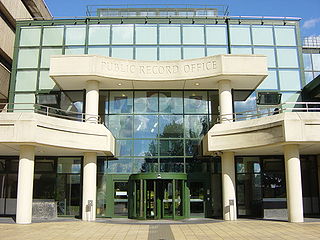
The Pipe Roll Society, founded by the Public Record OfficePublic Record Office
The Public Record Office of the United Kingdom is one of the three organisations that make up the National Archives...
in 1883, has published the Pipe rolls up to the year 1223. The Pipe Roll Society publications started in 1884 and have continued to the present day. Besides the continuous series to 1223, they have also published the roll for 1230. The Chancellor's roll for 1196 has also been published by the Pipe Roll Society, along with other related works.
The Pipe rolls have also been published by the Public Records Commission, which published in four volumes in 1833 and 1844, that covered the earliest Pipe rolls until the first year of Richard I's reign. The Pipe rolls for 1241 were published in 1918 by the Yale University Press
Yale University Press
Yale University Press is a book publisher founded in 1908 by George Parmly Day. It became an official department of Yale University in 1961, but remains financially and operationally autonomous....
. Various county record societies have published parts of the Pipe rolls for various years that relate to the particular county. Rolls for the Irish Exchequer and the Norman Exchequer have also been published.
External links
- The Anglo-American Legal Tradition hosts a large portion of the original Pipe rolls (1224 through 1642), see the E372 series under the various Monarchs.