

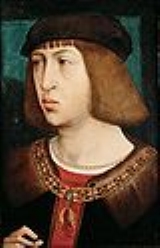
Philip I of Castile

Encyclopedia
Philip I known as Philip the Handsome or the Fair, was the first Habsburg King of Castile. The son of Maximilian I, Holy Roman Emperor
, Philip inherited the greater part of the Duchy of Burgundy
and the Burgundian Netherlands
(as Philip IV) from his mother, Mary of Burgundy
, and briefly succeeded to the Crown of Castile
as the husband of Queen Joanna of Castile
, who was also heiress to the Crown of Aragon
. He was the first Habsburg
monarch in Spain
. He never inherited his father's territories, nor became Holy Roman Emperor
, because he predeceased his father, but his son Emperor Charles V
eventually united the Habsburg, Burgundian, Castilian, and Aragonese inheritances.
The future King Henry VIII of England
met Philip the Handsome on a visit Philip made to Henry's father's court in London, and regarded him as providing a model of leadership towards which he aspired.
 Philip was born in Bruges
, in the County of Flanders (today in Belgium
) and was named after his great-grandfather, Philip the Good. In 1482, upon the death of his mother Mary of Burgundy
, he succeeded to her Burgundian
possessions under the guardianship of his father. A period of turmoil ensued which witnessed sporadic hostilities between, principally, the large towns of Flanders (especially Ghent
and Bruges
) and the supporters of Maximilian.
During this interregnum, Philip became caught up in events and was even briefly sequestered in Bruges
as part of the larger Flemish campaign to support their claims of greater autonomy, which they had wrested from Mary of Burgundy in an agreement known as the Blijde Inkomst or Joyous Entry
of 1477. By the early 1490s, the turmoil of the interregnum gave way to an uneasy stand-off, with neither French support for the cities of the Franc (Flanders), nor Imperial support from Maximilian's father Frederick III
proving decisive. Both sides came to terms in the Peace of Senlis in 1493, which smoothed over the internal power struggle by agreeing to make the 15-year old Philip prince in the following year.
and Philip, aged 16, took over the rule of the Burgundian lands himself, although in practice authority was derived from a council of Burgundian notables. On 20 October 1496, he married Infanta Joanna
, daughter of King Ferdinand II of Aragon
and Queen Isabella I of Castile
, in Lier, Belgium
.
The marriage was one of a set of family alliances between the Habsburgs and the Trastámara
, designed to strengthen against growing French power, which had increased significantly thanks to the policies of Louis XI and the successful assertion of regal power after war with the League of the Public Weal
. The matter became more urgent after Charles VIII
's invasion of Italy
(known as the First Peninsular War
).
Philip's sister Margaret married John, Prince of Asturias, only son of Ferdinand and Isabella and successor to the unified crowns of Castile
and Aragon
. The double alliance was never intended to let the Spanish kingdoms fall under Habsburg control. At the time of her marriage to Philip, Joanna was third in line to the throne, with John and his sister Isabella
married and hopeful of progeny.
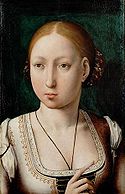 In 1500, shortly after the birth in Flanders of Joanna and Philip's second child (the future Emperor Charles V
), the succession to the Castilian and Aragonese crowns was thrown into turmoil. The heir apparent
, John, had died in 1497 very shortly after his marriage to Margaret of Austria. The succession thereby passed to Queen Isabella
and King Manuel I of Portugal
. She died in 1498, while giving birth to a son, the Infante Miguel, to whom succession to the united crowns of Castile, Aragon and Portugal now fell; however, the infant was sickly and died during the summer of 1500. The succession to the Castilian and Aragonese crowns now fell to Joanna. Because Ferdinand could produce another heir, the Cortes of Aragon refused to recognise Joanna as heir presumptive to the Kingdom of Aragon. In the Kingdom of Castile, however, the succession was clear. Moreover, there was no Salic
tradition which the Castilian Cortes could use to thwart the succession passing to Joanna. At this point, the issue of Joanna's mental incompetence moved from courtly annoyance to the centre of the political stage, since it was clear that Philip and his Burgundian entourage would be the real power-holders in Castile.
In 1502, Philip, Joanna and a large part of the Burgundian court travelled to Spain to receive fealty from the Cortes
of Castile
as king, a journey chronicled in intense detail by Antoon I van Lalaing , the future Stadtholder
of Holland and Zeeland. Philip and the majority of the court returned to the Low Countries in the following year, leaving a pregnant Joanna behind in Madrid, where she gave birth to Ferdinand
, later Holy Roman Emperor. Philip's life with Joanna was rendered extremely unhappy by his infidelity and political insecurity, during which he consistently attempted to usurp her legal birthrights of power. This led in great part to the rumors of her insanity due to reports of depressive or neurotic acts committed while she was being imprisoned or coerced by her husband; most historians now agree she was merely clinically depressed at the time, not insane as commonly believed. Before her mother's death, in 1504, husband and wife were already living apart.
to Joanna. Isabella I's widower and former co-monarch, King Ferdinand II, endeavoured to lay hands on the regency of Castile, but the nobles, who disliked and feared him, forced him to withdraw. Philip was summoned to Spain, where he was recognized as king. He landed, with his wife, at La Coruña on 28 April 1506, accompanied by a body of German mercenaries. Father- and son-in-law mediated under Cardinal Cisneros at Remesal, near Puebla de Sanabria
, and at Renedo, the only result of which was an indecent family quarrel, in which Ferdinand professed to defend the interests of his daughter, who he said was imprisoned by her husband. On 27 June 1506, the Treaty of Villafáfila
was signed between Ferdinand and Philip, with Philip being proclaimed King of Castile by the Cortes of Valladolid.
However, Philip died suddenly at Burgos
, apparently of typhoid fever, on 25 September 1506. His wife supposedly refused to allow his body to be buried or to part from it for awhile. Philip I is entombed at the Royal Chapel of Granada
(Capilla Real de Granada), alongside his wife, and her parents Isabella I and Ferdinand II.
had six children:
|-
Maximilian I, Holy Roman Emperor
Maximilian I , the son of Frederick III, Holy Roman Emperor and Eleanor of Portugal, was King of the Romans from 1486 and Holy Roman Emperor from 1493 until his death, though he was never in fact crowned by the Pope, the journey to Rome always being too risky...
, Philip inherited the greater part of the Duchy of Burgundy
Duchy of Burgundy
The Duchy of Burgundy , was heir to an ancient and prestigious reputation and a large division of the lands of the Second Kingdom of Burgundy and in its own right was one of the geographically larger ducal territories in the emergence of Early Modern Europe from Medieval Europe.Even in that...
and the Burgundian Netherlands
Burgundian Netherlands
In the history of the Low Countries, the Burgundian Netherlands refers to a number of Imperial and French fiefs ruled in personal union by the House of Valois-Burgundy and their Habsburg heirs in the period from 1384 to 1482...
(as Philip IV) from his mother, Mary of Burgundy
Mary of Burgundy
Mary of Burgundy ruled the Burgundian territories in Low Countries and was suo jure Duchess of Burgundy from 1477 until her death...
, and briefly succeeded to the Crown of Castile
Crown of Castile
The Crown of Castile was a medieval and modern state in the Iberian Peninsula that formed in 1230 as a result of the third and definitive union of the crowns and parliaments of the kingdoms of Castile and León upon the accession of the then King Ferdinand III of Castile to the vacant Leonese throne...
as the husband of Queen Joanna of Castile
Joanna of Castile
Joanna , nicknamed Joanna the Mad , was the first queen regnant to reign over both the Crown of Castile and the Crown of Aragon , a union which evolved into modern Spain...
, who was also heiress to the Crown of Aragon
Crown of Aragon
The Crown of Aragon Corona d'Aragón Corona d'Aragó Corona Aragonum controlling a large portion of the present-day eastern Spain and southeastern France, as well as some of the major islands and mainland possessions stretching across the Mediterranean as far as Greece...
. He was the first Habsburg
Habsburg
The House of Habsburg , also found as Hapsburg, and also known as House of Austria is one of the most important royal houses of Europe and is best known for being an origin of all of the formally elected Holy Roman Emperors between 1438 and 1740, as well as rulers of the Austrian Empire and...
monarch in Spain
Spain
Spain , officially the Kingdom of Spain languages]] under the European Charter for Regional or Minority Languages. In each of these, Spain's official name is as follows:;;;;;;), is a country and member state of the European Union located in southwestern Europe on the Iberian Peninsula...
. He never inherited his father's territories, nor became Holy Roman Emperor
Holy Roman Emperor
The Holy Roman Emperor is a term used by historians to denote a medieval ruler who, as German King, had also received the title of "Emperor of the Romans" from the Pope...
, because he predeceased his father, but his son Emperor Charles V
Charles V, Holy Roman Emperor
Charles V was ruler of the Holy Roman Empire from 1519 and, as Charles I, of the Spanish Empire from 1516 until his voluntary retirement and abdication in favor of his younger brother Ferdinand I and his son Philip II in 1556.As...
eventually united the Habsburg, Burgundian, Castilian, and Aragonese inheritances.
The future King Henry VIII of England
Henry VIII of England
Henry VIII was King of England from 21 April 1509 until his death. He was Lord, and later King, of Ireland, as well as continuing the nominal claim by the English monarchs to the Kingdom of France...
met Philip the Handsome on a visit Philip made to Henry's father's court in London, and regarded him as providing a model of leadership towards which he aspired.
Early life
Bruges
Bruges is the capital and largest city of the province of West Flanders in the Flemish Region of Belgium. It is located in the northwest of the country....
, in the County of Flanders (today in Belgium
Belgium
Belgium , officially the Kingdom of Belgium, is a federal state in Western Europe. It is a founding member of the European Union and hosts the EU's headquarters, and those of several other major international organisations such as NATO.Belgium is also a member of, or affiliated to, many...
) and was named after his great-grandfather, Philip the Good. In 1482, upon the death of his mother Mary of Burgundy
Mary of Burgundy
Mary of Burgundy ruled the Burgundian territories in Low Countries and was suo jure Duchess of Burgundy from 1477 until her death...
, he succeeded to her Burgundian
Duchy of Burgundy
The Duchy of Burgundy , was heir to an ancient and prestigious reputation and a large division of the lands of the Second Kingdom of Burgundy and in its own right was one of the geographically larger ducal territories in the emergence of Early Modern Europe from Medieval Europe.Even in that...
possessions under the guardianship of his father. A period of turmoil ensued which witnessed sporadic hostilities between, principally, the large towns of Flanders (especially Ghent
Ghent
Ghent is a city and a municipality located in the Flemish region of Belgium. It is the capital and biggest city of the East Flanders province. The city started as a settlement at the confluence of the Rivers Scheldt and Lys and in the Middle Ages became one of the largest and richest cities of...
and Bruges
Bruges
Bruges is the capital and largest city of the province of West Flanders in the Flemish Region of Belgium. It is located in the northwest of the country....
) and the supporters of Maximilian.
During this interregnum, Philip became caught up in events and was even briefly sequestered in Bruges
Bruges
Bruges is the capital and largest city of the province of West Flanders in the Flemish Region of Belgium. It is located in the northwest of the country....
as part of the larger Flemish campaign to support their claims of greater autonomy, which they had wrested from Mary of Burgundy in an agreement known as the Blijde Inkomst or Joyous Entry
Joyous Entry
A Joyous Entry was a local name used for the royal entry - the first official peaceable visit of a reigning monarch, prince, duke or governor into a city - mainly in the Duchy of Brabant or the County of Flanders and occasionally in France, Luxembourg or Hungary, often coinciding with...
of 1477. By the early 1490s, the turmoil of the interregnum gave way to an uneasy stand-off, with neither French support for the cities of the Franc (Flanders), nor Imperial support from Maximilian's father Frederick III
Frederick III, Holy Roman Emperor
Frederick the Peaceful KG was Duke of Austria as Frederick V from 1424, the successor of Albert II as German King as Frederick IV from 1440, and Holy Roman Emperor as Frederick III from 1452...
proving decisive. Both sides came to terms in the Peace of Senlis in 1493, which smoothed over the internal power struggle by agreeing to make the 15-year old Philip prince in the following year.
The Burgundian inheritance and the Spanish alliance
In 1494, Maximilian relinquished his regency under the terms of the Treaty of SenlisTreaty of Senlis
The Treaty of Senlis concerning the Burgundian succession was signed at Senlis, Oise in May of 1493 between Maximilian I, Holy Roman Emperor and King Charles VIII of France....
and Philip, aged 16, took over the rule of the Burgundian lands himself, although in practice authority was derived from a council of Burgundian notables. On 20 October 1496, he married Infanta Joanna
Joanna of Castile
Joanna , nicknamed Joanna the Mad , was the first queen regnant to reign over both the Crown of Castile and the Crown of Aragon , a union which evolved into modern Spain...
, daughter of King Ferdinand II of Aragon
Ferdinand II of Aragon
Ferdinand the Catholic was King of Aragon , Sicily , Naples , Valencia, Sardinia, and Navarre, Count of Barcelona, jure uxoris King of Castile and then regent of that country also from 1508 to his death, in the name of...
and Queen Isabella I of Castile
Isabella I of Castile
Isabella I was Queen of Castile and León. She and her husband Ferdinand II of Aragon brought stability to both kingdoms that became the basis for the unification of Spain. Later the two laid the foundations for the political unification of Spain under their grandson, Charles V, Holy Roman Emperor...
, in Lier, Belgium
Lier, Belgium
Lier is a municipality located in the Belgian province of Antwerp. The municipality comprises the city of Lier proper and the village of Koningshooikt. On January 1, 2010 Lier had a total population of 33,930. The total area is 49.70 km² which gives a population density of 669 inhabitants per...
.
The marriage was one of a set of family alliances between the Habsburgs and the Trastámara
Trastámara
The House of Trastámara was a dynasty of kings in the Iberian Peninsula, which first governed in Castile beginning in 1369 before expanding its rule into Aragón, Navarre and Naples.They were a cadet illegitimate line of the House of Burgundy....
, designed to strengthen against growing French power, which had increased significantly thanks to the policies of Louis XI and the successful assertion of regal power after war with the League of the Public Weal
League of the Public Weal
The League of the Public Weal was an alliance of feudal nobles organized in 1465 in defiance of the centralized authority of King Louis XI of France...
. The matter became more urgent after Charles VIII
Charles VIII of France
Charles VIII, called the Affable, , was King of France from 1483 to his death in 1498. Charles was a member of the House of Valois...
's invasion of Italy
Italy
Italy , officially the Italian Republic languages]] under the European Charter for Regional or Minority Languages. In each of these, Italy's official name is as follows:;;;;;;;;), is a unitary parliamentary republic in South-Central Europe. To the north it borders France, Switzerland, Austria and...
(known as the First Peninsular War
Italian Wars
The Italian Wars, often referred to as the Great Italian Wars or the Great Wars of Italy and sometimes as the Habsburg–Valois Wars, were a series of conflicts from 1494 to 1559 that involved, at various times, most of the city-states of Italy, the Papal States, most of the major states of Western...
).
Philip's sister Margaret married John, Prince of Asturias, only son of Ferdinand and Isabella and successor to the unified crowns of Castile
Crown of Castile
The Crown of Castile was a medieval and modern state in the Iberian Peninsula that formed in 1230 as a result of the third and definitive union of the crowns and parliaments of the kingdoms of Castile and León upon the accession of the then King Ferdinand III of Castile to the vacant Leonese throne...
and Aragon
Aragon
Aragon is a modern autonomous community in Spain, coextensive with the medieval Kingdom of Aragon. Located in northeastern Spain, the Aragonese autonomous community comprises three provinces : Huesca, Zaragoza, and Teruel. Its capital is Zaragoza...
. The double alliance was never intended to let the Spanish kingdoms fall under Habsburg control. At the time of her marriage to Philip, Joanna was third in line to the throne, with John and his sister Isabella
Isabella of Asturias
Isabella, Princess of Asturias was a Queen consort of Portugal and heiress presumptive of King Ferdinand II of Aragon and Queen Isabella I of Castile as their eldest daughter...
married and hopeful of progeny.
The Castilian inheritance
Charles V, Holy Roman Emperor
Charles V was ruler of the Holy Roman Empire from 1519 and, as Charles I, of the Spanish Empire from 1516 until his voluntary retirement and abdication in favor of his younger brother Ferdinand I and his son Philip II in 1556.As...
), the succession to the Castilian and Aragonese crowns was thrown into turmoil. The heir apparent
Heir apparent
An heir apparent or heiress apparent is a person who is first in line of succession and cannot be displaced from inheriting, except by a change in the rules of succession....
, John, had died in 1497 very shortly after his marriage to Margaret of Austria. The succession thereby passed to Queen Isabella
Isabella of Asturias
Isabella, Princess of Asturias was a Queen consort of Portugal and heiress presumptive of King Ferdinand II of Aragon and Queen Isabella I of Castile as their eldest daughter...
and King Manuel I of Portugal
Manuel I of Portugal
Manuel I , the Fortunate , 14th king of Portugal and the Algarves was the son of Infante Ferdinand, Duke of Viseu, , by his wife, Infanta Beatrice of Portugal...
. She died in 1498, while giving birth to a son, the Infante Miguel, to whom succession to the united crowns of Castile, Aragon and Portugal now fell; however, the infant was sickly and died during the summer of 1500. The succession to the Castilian and Aragonese crowns now fell to Joanna. Because Ferdinand could produce another heir, the Cortes of Aragon refused to recognise Joanna as heir presumptive to the Kingdom of Aragon. In the Kingdom of Castile, however, the succession was clear. Moreover, there was no Salic
Salic law
Salic law was a body of traditional law codified for governing the Salian Franks in the early Middle Ages during the reign of King Clovis I in the 6th century...
tradition which the Castilian Cortes could use to thwart the succession passing to Joanna. At this point, the issue of Joanna's mental incompetence moved from courtly annoyance to the centre of the political stage, since it was clear that Philip and his Burgundian entourage would be the real power-holders in Castile.
In 1502, Philip, Joanna and a large part of the Burgundian court travelled to Spain to receive fealty from the Cortes
Cortes Generales
The Cortes Generales is the legislature of Spain. It is a bicameral parliament, composed of the Congress of Deputies and the Senate . The Cortes has power to enact any law and to amend the constitution...
of Castile
Crown of Castile
The Crown of Castile was a medieval and modern state in the Iberian Peninsula that formed in 1230 as a result of the third and definitive union of the crowns and parliaments of the kingdoms of Castile and León upon the accession of the then King Ferdinand III of Castile to the vacant Leonese throne...
as king, a journey chronicled in intense detail by Antoon I van Lalaing , the future Stadtholder
Stadtholder
A Stadtholder A Stadtholder A Stadtholder (Dutch: stadhouder [], "steward" or "lieutenant", literally place holder, holding someones place, possibly a calque of German Statthalter, French lieutenant, or Middle Latin locum tenens...
of Holland and Zeeland. Philip and the majority of the court returned to the Low Countries in the following year, leaving a pregnant Joanna behind in Madrid, where she gave birth to Ferdinand
Ferdinand I, Holy Roman Emperor
Ferdinand I was Holy Roman Emperor from 1558 and king of Bohemia and Hungary from 1526 until his death. Before his accession, he ruled the Austrian hereditary lands of the Habsburgs in the name of his elder brother, Charles V, Holy Roman Emperor.The key events during his reign were the contest...
, later Holy Roman Emperor. Philip's life with Joanna was rendered extremely unhappy by his infidelity and political insecurity, during which he consistently attempted to usurp her legal birthrights of power. This led in great part to the rumors of her insanity due to reports of depressive or neurotic acts committed while she was being imprisoned or coerced by her husband; most historians now agree she was merely clinically depressed at the time, not insane as commonly believed. Before her mother's death, in 1504, husband and wife were already living apart.
Struggle for power in Spain
In 1504, Philip's mother-in-law died, leaving the Crown of CastileCrown of Castile
The Crown of Castile was a medieval and modern state in the Iberian Peninsula that formed in 1230 as a result of the third and definitive union of the crowns and parliaments of the kingdoms of Castile and León upon the accession of the then King Ferdinand III of Castile to the vacant Leonese throne...
to Joanna. Isabella I's widower and former co-monarch, King Ferdinand II, endeavoured to lay hands on the regency of Castile, but the nobles, who disliked and feared him, forced him to withdraw. Philip was summoned to Spain, where he was recognized as king. He landed, with his wife, at La Coruña on 28 April 1506, accompanied by a body of German mercenaries. Father- and son-in-law mediated under Cardinal Cisneros at Remesal, near Puebla de Sanabria
Puebla de Sanabria
Puebla de Sanabria is a small town located in the north-eastern part of the province of Zamora in Spain, between the rivers Tera and Castro.It is the economic and political centre of the comarca of Sanabria.-History:...
, and at Renedo, the only result of which was an indecent family quarrel, in which Ferdinand professed to defend the interests of his daughter, who he said was imprisoned by her husband. On 27 June 1506, the Treaty of Villafáfila
Treaty of Villafáfila
The Treaty of Villafáfila is a treaty signed by Ferdinand the Catholic in Villafáfila on 27 June 1506 and by Philip the Handsome in Benavente, Zamora, on 28 June....
was signed between Ferdinand and Philip, with Philip being proclaimed King of Castile by the Cortes of Valladolid.
However, Philip died suddenly at Burgos
Burgos
Burgos is a city of northern Spain, historic capital of Castile. It is situated at the edge of the central plateau, with about 178,966 inhabitants in the city proper and another 20,000 in its suburbs. It is the capital of the province of Burgos, in the autonomous community of Castile and León...
, apparently of typhoid fever, on 25 September 1506. His wife supposedly refused to allow his body to be buried or to part from it for awhile. Philip I is entombed at the Royal Chapel of Granada
Royal Chapel of Granada
The Royal Chapel of Granada is a mausoleum located in the city of Granada in Andalusia, southern Spain.-Mausoleum:The mausoleum houses the remains of the Catholic Monarchs :...
(Capilla Real de Granada), alongside his wife, and her parents Isabella I and Ferdinand II.
Family
Philip and Joanna of CastileJoanna of Castile
Joanna , nicknamed Joanna the Mad , was the first queen regnant to reign over both the Crown of Castile and the Crown of Aragon , a union which evolved into modern Spain...
had six children:
- Eleanor (1498–1558), Queen consortQueen consortA queen consort is the wife of a reigning king. A queen consort usually shares her husband's rank and holds the feminine equivalent of the king's monarchical titles. Historically, queens consort do not share the king regnant's political and military powers. Most queens in history were queens consort...
first to Manuel I of PortugalManuel I of PortugalManuel I , the Fortunate , 14th king of Portugal and the Algarves was the son of Infante Ferdinand, Duke of Viseu, , by his wife, Infanta Beatrice of Portugal...
and secondly to Francis I of FranceFrancis I of FranceFrancis I was King of France from 1515 until his death. During his reign, huge cultural changes took place in France and he has been called France's original Renaissance monarch...
. - CharlesCharles V, Holy Roman EmperorCharles V was ruler of the Holy Roman Empire from 1519 and, as Charles I, of the Spanish Empire from 1516 until his voluntary retirement and abdication in favor of his younger brother Ferdinand I and his son Philip II in 1556.As...
(1500–1558), King of Spain, Holy Roman Emperor. - Isabella (1501–1526), Queen consort of Christian II of DenmarkChristian II of DenmarkChristian II was King of Denmark, Norway and Sweden , during the Kalmar Union.-Background:...
. - Ferdinand IFerdinand I, Holy Roman EmperorFerdinand I was Holy Roman Emperor from 1558 and king of Bohemia and Hungary from 1526 until his death. Before his accession, he ruled the Austrian hereditary lands of the Habsburgs in the name of his elder brother, Charles V, Holy Roman Emperor.The key events during his reign were the contest...
(1503–1564), King of Bohemia and Hungary, Holy Roman Emperor. - Mary (1505–1558), Queen consort of Louis II of Hungary and BohemiaLouis II of Hungary and BohemiaLouis II was King of Hungary, Bohemia and Croatia from 1516 to 1526.- Early life :Louis was the son of Ladislaus II Jagiellon and his third wife, Anne de Foix....
. - Catherine (1507–1578), Queen consort of John III of PortugalJohn III of PortugalJohn III , nicknamed o Piedoso , was the fifteenth King of Portugal and the Algarves. He was the son of King Manuel I and Maria of Aragon, the third daughter of King Ferdinand II of Aragon and Queen Isabella I of Castile...
.
Ancestry
Titles
-
 27 March 1482–25 September 1506: Titular Duke of BurgundyDuke of BurgundyDuke of Burgundy was a title borne by the rulers of the Duchy of Burgundy, a small portion of traditional lands of Burgundians west of river Saône which in 843 was allotted to Charles the Bald's kingdom of West Franks...
as Philip IV -
 27 March 1482–25 September 1506: Duke of Brabant as Philip III
 -
 27 March 1482–25 September 1506: Duke of Limburg as Philip III
 -
 27 March 1482–25 September 1506: Duke of Lothier as Philip III
 -
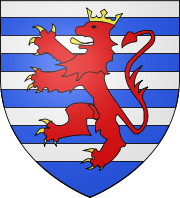 27 March 1482–25 September 1506: Duke of Luxemburg as Philip II
 -
 27 March 1482–25 September 1506: Margrave of NamurMarquis of NamurNamur was a county of the Carolingian and later Holy Roman Empire in the Low Countries. Its territories largely correspond with the present-day Belgian arrondissement Namur plus the northwestern part of the arrondissement Dinant....
as Philip V -
 27 March 1482–25 September 1506: Count Palatine of Burgundy as Philip VI
 -
 27 March 1482–25 September 1506: Count of ArtoisCounts of ArtoisThe counts of Artois were the rulers over the County of Artois from the 9th century until the abolition of the countship by the French revolutionaries in 1790.-List of Counts of Artois:*Odalric...
as Philip VI -
 27 March 1482–25 September 1506: Count of Charolais as Philip III
 -
 27 March 1482–25 September 1506: Count of Flanders as Philip IV
 -
 27 March 1482–25 September 1506: Count of HainaultCounts of HainautThe counts of Hainaut were the rulers of the county of Hainaut, a historical region in the Low Countries .-House of Reginar:...
as Philip II -
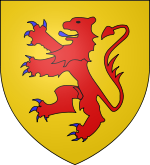 27 March 1482–25 September 1506: Count of HollandCount of HollandThe Counts of Holland ruled over the County of Holland in the Low Countries between the 10th and the 16th century.-House of Holland:The first count of Holland, Dirk I, was the son or foster-son of Gerolf, Count in Frisia...
as Philip II -
 27 March 1482–25 September 1506: Count of Zeeland as Philip II
 -
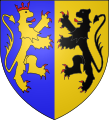 27 March 1482–1492: Duke of GueldersDukes of Guelders-House of Wassenberg:The first count of Guelders was Gerard IV, Lord of Wassenberg.During Reginald II's reign, the county of Guelders became a duchy.* before 1096–about 1129 : Gerard I* about 1129–about 1131 : Gerard II the tall, son of...
as Philip I - 27 March 1482–1492: Count of ZutphenCount of ZutphenThe title of Count of Zutphen historically belonged to the ruler of the Dutch province of Gelderland ....
as Philip I -
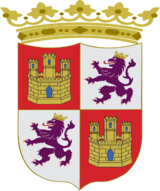 26 November 1504–25 September 1506: jure uxoris King of Castile as Philip I
External links
|-|-