

Microbial mat

Encyclopedia
A microbial mat is a multi-layered sheet of micro-organisms, mainly bacteria
and archaea
. Microbial mats grow at interface
s between different types of material, mostly on submerged or moist surfaces but a few survive in deserts. They colonize environments ranging in temperature from –40°C to +120°C. A few are found as endosymbionts of animal
s.
Although only a few centimetres thick at most, microbial mats create a wide range of internal chemical environments, and hence generally consist of layers of micro-organisms that can feed on or at least tolerate the dominant chemicals at their level and which are usually of closely related species. In moist conditions mats are usually held together by slimy substances
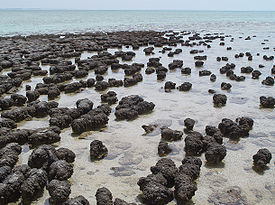
secreted by the micro-organisms, and in many cases some of the micro-organisms form tangled webs of filaments which make the mat tougher. The best known physical forms are flat mats and stubby pillars called stromatolite
s, but there are also spherical forms.
Microbial mats are the earliest form of life on Earth for which there is good fossil
evidence, from , and have been the most important members and maintainers of the planet's ecosystem
s. Originally they depended on hydrothermal vent
s for energy and chemical "food", but the development of photosynthesis
gradually liberated them from the "hydrothermal ghetto" by proving a more widely available energy source, sunlight, although initially the photosynthesizing mats still depended on the diffusion of chemicals emitted by hydrothermal vents. The final and most significant stage of this liberation was the development of oxygen-producing photosynthesis, since the main chemical inputs for this are carbon dioxide
and water.
As a result microbial mats began to produce the atmosphere we know today, in which free oxygen
is a vital component. At around the same time they may also have been the birthplace of the more complex eukaryote
type of cell
, of which all multicellular organisms are composed. Microbial mats were abundant on the shallow seabed until the Cambrian substrate revolution
, when animals living in shallow seas increased their burrowing capabilities and thus broke up the surfaces of mats and let oxygenated water into the deeper layers, poisoning the oxygen-intolerant micro-organisms that lived there. Although this revolution drove mats off soft floors of shallow seas, they still flourish in many environments where burrowing is limited or impossible, including rocky seabeds and shores, hyper-saline and brackish lagoons, and are found on the floors of the deep oceans.
Because of microbial mats' ability to use almost anything as "food", there is considerable interest in industrial uses of mats, especially for water treatment and for cleaning up pollution.
 Microbial mats have also been referred to as "algal
mats" and "bacteria
l mats" in older scientific literature. They are a type of biofilm
that is large enough to see with the naked eye and robust enough to survive moderate physical stresses. These colonies of bacteria
form on surfaces at many types of interface
, for example between water and the sediment
or rock at the bottom, between air and rock or sediment, between soil and bed-rock, etc. Such interfaces form vertical chemical gradient
s, i.e. vertical variations in chemical composition, which make different levels suitable for different types of bacteria and thus divide microbial mats into layers, which may be sharply defined or may merge more gradually into each other. A variety of microbes are able to transcend the limits of diffusion by using "nanowires" to shuttle electrons from their metabolic reactions up to two centimetres deep in the sediment - for example, electrons can be transferred from reactions involving hydrogen sulfide deeper within the sediment to oxygen in the water, which acts as an electron acceptor.
The best-known types of microbial mat may be flat laminated mats, which form on approximately horizontal surfaces, and stromatolites, stubby pillars built as the microbes slowly move upwards to avoid being smothered by sediment deposited on them by water. However there are also spherical mats, some on the outside of pellets of rock or other firm material and others inside spheres of sediment.
. Although the composition of individual mats varies depending on the environment, as a general rule the by-products of each group of micro-organisms serve as "food" for other groups. In effect each mat forms its own food chain
, with one or a few groups at the top of the food chain as their by-products are not consumed by other groups. Different types of micro-organism dominate different layers based on their comparative advantage
for living in that layer, in other words they live in positions where they can out-perform other groups rather than where they would absolutely be most comfortable — ecological relationships between different groups are a combination of competition and co-operation. Since the metabolic
capabilities of bacteria (what they can "eat" and what conditions they can tolerate) generally depend on their phylogeny (i.e. the most closely related groups have the most similar metabolisms), the different layers of a mat are divided both by their different metabolic contributions to the community and by their phylogenetic relationships.
In a wet environment where sunlight is the main source of energy, the uppermost layers are generally dominated by aerobic
photosynthesizing
cyanobacteria (blue-green bacteria whose color is caused by their having chlorophyll
), while the lowest layers are generally dominated by anaerobic
sulfate-reducing bacteria
. Sometimes there are intermediate (oxygenated only in the daytime) layers inhabited by facultative anaerobic bacteria. For example, in hypersaline ponds near Guerrero Negro (Mexico) various kind of mats were explored. There are some mats with a middle purple layer inhabited by photosynthesizing purple bacteria. Some other mats have a white layer inhabited by chemotrophic sulfide-oxidizing bacteria and beneath them an olive layer inhabited by photosynthesizing green sulfur bacteria
and heterotrophic bacteria. However, this layer structure is not changeless during a day: some species of cyanobacteria migrate to deeper layers at morning, and go back at evening, to avoid intensive solar light and UV radiation at mid-day.
Microbial mats are generally held together and bound to their substrates
by slimy extracellular polymeric substance
s which they secrete. In many cases some of the bacteria form filaments (threads), which tangle and thus increase the colonies' structural strength, especially if the filaments have sheaths (tough outer coverings).
This combination of slime and tangled threads attracts other micro-organisms which become part of the mat community, for example protozoa
, some of which feed on the mat-forming bacteria, and diatom
s, which often seal the surfaces of submerged microbial mats with thin, parchment
-like coverings.
Marine mats may grow to a few centimeters in thickness, of which only the top few millimeters are oxygenated.
s, i.e. variations in the chemical composition. Thinner, less complex biofilms live in many sub-aerial environments (permanently exposed to air), for example on rocks, on mineral particles such as sand, and within soil
. They have to survive for long periods without liquid water, often in a dormant state. Microbial mats that live in tidal zones often contain a large proportion of similar micro-organisms that can survive for several hours without water.
Microbial mats and less complex types of biofilm are found at temperature ranges from –40°C to +120°C, because variations in pressure affect the temperatures at which water remains liquid.
They even appear as endosymbiont
s in some animals, for example in the hindguts of some echinoids.
 Microbial mats use all of the types of metabolism and feeding strategy that have evolved on Earth — anoxygenic and oxygenic photosynthesis
; anaerobic and aerobic chemotroph
y (using chemicals rather than sunshine as a source of energy); organic and inorganic respiration
and fermentation
(i..e converting food into energy with and without using oxygen in the process); autotrophy
(producing food from inorganic compounds) and heterotrophy (producing food only from organic compounds, by some combination of predation
and detritivory).
Most sedimentary rocks and ore deposits have grown by a reef
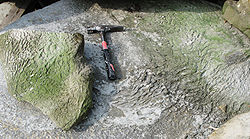
-like build-up rather than by "falling" out of the water, and this build-up has been at least influenced and perhaps sometimes caused by the actions of microbes. Stromatolites, bioherms (domes or columns similar internally to stromatolites) and biostromes (distinct sheets of sediment) are among such microbe-influenced build-ups. Other types of microbial mat have created wrinkled "elephant skin" textures in marine sediments, although it was many years before these textures were recognized as trace fossil
s of mats. Microbial mats have increased the concentration of metal in many ore deposits, and without this it would not be feasible to mine them — examples include iron (both sulfide and oxide ores), uranium, copper, silver and gold deposits.
bacteria. It is even possible that non-photosynthesizing mats were present as early as . If so, their energy source would have been hydrothermal vent
s, high-pressure hot springs
around submerged volcano
es; and the evolutionary split between bacteria
and archea may also have occurred around this time.
The earliest mats were probably small, single-species biofilm
s of chemotroph
s that relied on hydrothermal vents to supply both energy and chemical "food". Within a short time (by geological standards) the build-up of dead micro-organisms would have created an ecological niche
for scavenging heterotroph
s, possibly methane-emitting
and sulfate-reducing
organisms that would have formed new layers in the mats and enriched their supply of biologically useful chemicals.
, the biological generation of energy from light, evolved shortly after . However an isotope analysis
suggests that oxygenic photosynthesis may have been widespread as early as . The eminent researcher into Earth's earliest life, William Schopf, argues that, if one did not know their age, one would classify some of the fossil organisms in Australian stromatolites from as cyanobacteria, which are oxygen-producing photosynthesizers. There are several different types of photosynthetic reaction, and analysis of bacterial DNA
indicates that photosynthesis first arose in anoxygenic purple bacteria
, while the oxygenic photosynthesis seen in cyanobacteria and much later in plant
s was the last to evolve.
The earliest photosynthesis may have been powered by infra-red light, using modified versions of pigments whose original function was to detect infra-red heat emissions from hydrothermal vents. The development of photosynthetic energy generation enabled the micro-organisms first to colonize wider areas around vents and then to use sunlight as an energy source. The role of the hydrothermal vents was now limited to supplying reduced metals into the oceans as a whole rather than being the main supporters of life in specific locations. Heterotrophic scavengers would have accompanied the photosynthesizers in their migration out of the "hydrothermal ghetto".
The evolution of purple bacteria, which do not produce or use oxygen but can tolerate it, enabled mats to colonize areas that locally had relatively high concentrations of oxygen, which is toxic to organisms that are not adapted to it. Microbial mats would have been separated into oxidized and reduced layers, and this specialization would have increased their productivity. It may be possible to confirm this model by analyzing the isotope ratios of both carbon and sulfur in sediments laid down in shallow water.
The last major stage in the evolution of microbial mats was the appearance of cyanobacteria, photsynthesizers which both produce and use oxygen. This gave undersea mats their typical modern structure: an oxygen-rich top layer of cyanobacteria; a layer of photsynthesizing purple bacteria that could tolerate oxygen; and oxygen-free, H2S
-dominated lower layers of heterotrophic scavengers, mainly methane-emitting and sulfate-reducing organisms.
It is estimated that the appearance of oxygenic photosynthesis increased biological productivity by a factor of between 100 and 1,000. All photosynthetic reactions
require a reducing agent
, but the significance of oxygenic photosynthesis is that it uses water
as a reducing agent, and water is much more plentiful than the geologically produced reducing agents on which photosynthesis previously depended. The resulting increases in the populations of photosynthesizing bacteria in the top layers of microbial mats would have caused corresponding population increases among the chemotrophic and heterotrophic micro-organisms that inhabited the lower layers and which fed respectively on the by-products of the photosynthesizers and on the corpses and / or living bodies of the other mat organisms. These increases would have made microbial mats the planet's dominant ecosystems. From this point onwards life itself produced significantly more of the resources it needed than did geochemical processes.
Oxygenic photosynthesis in microbial mats would also have increased the free oxygen content of the Earth's atmosphere, both directly by emitting oxygen and because the mats emitted molecular hydrogen (H2), some of which would have escaped from the Earth's atmosphere before it could re-combine with free oxygen to form more water. Microbial mats thus played a major role in the evolution of organisms which could first tolerate free oxygen and then use it as an energy source. Oxygen is toxic to organisms that are not adapted to it, but greatly increases the metabolic efficiency of oxygen-adapted organisms — for example anaerobic fermentation
produces a net yield of two molecule
s of adenosine triphosphate
, cells' internal "fuel", per molecule of glucose
, while aerobic respiration produces a net yield of 36. The oxygenation of the atmosphere was a prerequisite for the evolution of the more complex eukaryote
type of cell, from which all multicellular organisms are built.
Cyanobacteria have the most complete biochemical "toolkits" of all the mat-forming organisms: the photosynthesis mechanisms of both green bacteria
and purple bacteria; oxygen production; and the Calvin cycle
, which converts carbon dioxide
and water into carbohydrate
s and sugar
s. It is likely that they acquired many of these sub-systems from existing mat organisms, by some combination of horizontal gene transfer
and endosymbiosis followed by fusion. Whatever the causes, cyanobacteria are the most self-sufficient of the mat organisms and were well-adapted to strike out on their own both as floating mats and as the first of the phytoplankton
, which forms the basis of most marine food chain
s.
s first appeared is still uncertain: there is reasonable evidence that fossils dated between and represent eukaryotes, but the presence of sterane
s in Australia
n shale
s may indicate that eukaryotes were present years ago. There is still debate about the origins of eukaryotes, and many of the theories focus on the idea that a bacterium first became an endosymbiont of an anaerobic archean and then fused with it to become one organism. If such endosymbiosis was an important factor, microbial mats would have encouraged it. There are two possible variations of this scenario:
are the earliest widely accepted evidence of multicellular "animals". Most Ediacaran
strata with the "elephant skin" texture characteristic of microbial mats contain fossils, and Ediacaran fossils are hardly ever found in beds that do not contain these microbial mats.
Adolf Seilacher
categorized the "animals" as: "mat encrusters", which were permanently attached to the mat;
"mat scratchers", which grazed the surface of the mat without destroying it; "mat stickers", suspension feeders that were partially embedded in the mat; and "undermat miners", which burrowed underneath the mat and fed on decomposing mat material.
, marine microbial mats are confined to environments in which burrowing is non-existent or negligible: very harsh environments, such as hyper-saline lagoons or brackish estuaries, which are uninhabitable for the burrowing organisms that broke up the mats; rocky "floors" which the burrowers cannot penetrate; the depths of the oceans, where burrowing activity today is at a similar level to that in the shallow coastal seas before the revolution.
, and studies of their potential for cleaning up oil spill
s. As a result of the growing commercial potential, there have been applications for and grants of patent
s relating to the growing, installation and use of microbial mats, mainly for cleaning up pollutants and waste products.
Bacteria
Bacteria are a large domain of prokaryotic microorganisms. Typically a few micrometres in length, bacteria have a wide range of shapes, ranging from spheres to rods and spirals...
and archaea
Archaea
The Archaea are a group of single-celled microorganisms. A single individual or species from this domain is called an archaeon...
. Microbial mats grow at interface
Interface (chemistry)
An interface is a surface forming a common boundary among two different phases, such as an insoluble solid and a liquid, two immiscible liquids or a liquid and an insoluble gas. The importance of the interface depends on which type of system is being treated: the bigger the quotient area/volume,...
s between different types of material, mostly on submerged or moist surfaces but a few survive in deserts. They colonize environments ranging in temperature from –40°C to +120°C. A few are found as endosymbionts of animal
Animal
Animals are a major group of multicellular, eukaryotic organisms of the kingdom Animalia or Metazoa. Their body plan eventually becomes fixed as they develop, although some undergo a process of metamorphosis later on in their life. Most animals are motile, meaning they can move spontaneously and...
s.
Although only a few centimetres thick at most, microbial mats create a wide range of internal chemical environments, and hence generally consist of layers of micro-organisms that can feed on or at least tolerate the dominant chemicals at their level and which are usually of closely related species. In moist conditions mats are usually held together by slimy substances
Extracellular polymeric substance
Extracellular polymeric substances, also known as exopolysaccharide, or EPS, are high-molecular weight compounds secreted by microorganisms into their environment. These are mostly composed of polysaccharides and can either remain attached to the cell's outer surface, or be secreted into its growth...
secreted by the micro-organisms, and in many cases some of the micro-organisms form tangled webs of filaments which make the mat tougher. The best known physical forms are flat mats and stubby pillars called stromatolite
Stromatolite
Stromatolites or stromatoliths are layered accretionary structures formed in shallow water by the trapping, binding and cementation of sedimentary grains by biofilms of microorganisms, especially cyanobacteria ....
s, but there are also spherical forms.
Microbial mats are the earliest form of life on Earth for which there is good fossil
Fossil
Fossils are the preserved remains or traces of animals , plants, and other organisms from the remote past...
evidence, from , and have been the most important members and maintainers of the planet's ecosystem
Ecosystem
An ecosystem is a biological environment consisting of all the organisms living in a particular area, as well as all the nonliving , physical components of the environment with which the organisms interact, such as air, soil, water and sunlight....
s. Originally they depended on hydrothermal vent
Hydrothermal vent
A hydrothermal vent is a fissure in a planet's surface from which geothermally heated water issues. Hydrothermal vents are commonly found near volcanically active places, areas where tectonic plates are moving apart, ocean basins, and hotspots. Hydrothermal vents exist because the earth is both...
s for energy and chemical "food", but the development of photosynthesis
Photosynthesis
Photosynthesis is a chemical process that converts carbon dioxide into organic compounds, especially sugars, using the energy from sunlight. Photosynthesis occurs in plants, algae, and many species of bacteria, but not in archaea. Photosynthetic organisms are called photoautotrophs, since they can...
gradually liberated them from the "hydrothermal ghetto" by proving a more widely available energy source, sunlight, although initially the photosynthesizing mats still depended on the diffusion of chemicals emitted by hydrothermal vents. The final and most significant stage of this liberation was the development of oxygen-producing photosynthesis, since the main chemical inputs for this are carbon dioxide
Carbon dioxide
Carbon dioxide is a naturally occurring chemical compound composed of two oxygen atoms covalently bonded to a single carbon atom...
and water.
As a result microbial mats began to produce the atmosphere we know today, in which free oxygen
Oxygen
Oxygen is the element with atomic number 8 and represented by the symbol O. Its name derives from the Greek roots ὀξύς and -γενής , because at the time of naming, it was mistakenly thought that all acids required oxygen in their composition...
is a vital component. At around the same time they may also have been the birthplace of the more complex eukaryote
Eukaryote
A eukaryote is an organism whose cells contain complex structures enclosed within membranes. Eukaryotes may more formally be referred to as the taxon Eukarya or Eukaryota. The defining membrane-bound structure that sets eukaryotic cells apart from prokaryotic cells is the nucleus, or nuclear...
type of cell
Cell (biology)
The cell is the basic structural and functional unit of all known living organisms. It is the smallest unit of life that is classified as a living thing, and is often called the building block of life. The Alberts text discusses how the "cellular building blocks" move to shape developing embryos....
, of which all multicellular organisms are composed. Microbial mats were abundant on the shallow seabed until the Cambrian substrate revolution
Cambrian substrate revolution
The "Cambrian substrate revolution" or "Agronomic revolution", evidenced in trace fossils, is the diversification of animal burrowing during the early Cambrian period....
, when animals living in shallow seas increased their burrowing capabilities and thus broke up the surfaces of mats and let oxygenated water into the deeper layers, poisoning the oxygen-intolerant micro-organisms that lived there. Although this revolution drove mats off soft floors of shallow seas, they still flourish in many environments where burrowing is limited or impossible, including rocky seabeds and shores, hyper-saline and brackish lagoons, and are found on the floors of the deep oceans.
Because of microbial mats' ability to use almost anything as "food", there is considerable interest in industrial uses of mats, especially for water treatment and for cleaning up pollution.
Description
Algae
Algae are a large and diverse group of simple, typically autotrophic organisms, ranging from unicellular to multicellular forms, such as the giant kelps that grow to 65 meters in length. They are photosynthetic like plants, and "simple" because their tissues are not organized into the many...
mats" and "bacteria
Bacteria
Bacteria are a large domain of prokaryotic microorganisms. Typically a few micrometres in length, bacteria have a wide range of shapes, ranging from spheres to rods and spirals...
l mats" in older scientific literature. They are a type of biofilm
Biofilm
A biofilm is an aggregate of microorganisms in which cells adhere to each other on a surface. These adherent cells are frequently embedded within a self-produced matrix of extracellular polymeric substance...
that is large enough to see with the naked eye and robust enough to survive moderate physical stresses. These colonies of bacteria
Bacteria
Bacteria are a large domain of prokaryotic microorganisms. Typically a few micrometres in length, bacteria have a wide range of shapes, ranging from spheres to rods and spirals...
form on surfaces at many types of interface
Interface (chemistry)
An interface is a surface forming a common boundary among two different phases, such as an insoluble solid and a liquid, two immiscible liquids or a liquid and an insoluble gas. The importance of the interface depends on which type of system is being treated: the bigger the quotient area/volume,...
, for example between water and the sediment
Sediment
Sediment is naturally occurring material that is broken down by processes of weathering and erosion, and is subsequently transported by the action of fluids such as wind, water, or ice, and/or by the force of gravity acting on the particle itself....
or rock at the bottom, between air and rock or sediment, between soil and bed-rock, etc. Such interfaces form vertical chemical gradient
Diffusion
Molecular diffusion, often called simply diffusion, is the thermal motion of all particles at temperatures above absolute zero. The rate of this movement is a function of temperature, viscosity of the fluid and the size of the particles...
s, i.e. vertical variations in chemical composition, which make different levels suitable for different types of bacteria and thus divide microbial mats into layers, which may be sharply defined or may merge more gradually into each other. A variety of microbes are able to transcend the limits of diffusion by using "nanowires" to shuttle electrons from their metabolic reactions up to two centimetres deep in the sediment - for example, electrons can be transferred from reactions involving hydrogen sulfide deeper within the sediment to oxygen in the water, which acts as an electron acceptor.
The best-known types of microbial mat may be flat laminated mats, which form on approximately horizontal surfaces, and stromatolites, stubby pillars built as the microbes slowly move upwards to avoid being smothered by sediment deposited on them by water. However there are also spherical mats, some on the outside of pellets of rock or other firm material and others inside spheres of sediment.
Structure
A microbial mat consists of several layers, each of which is dominated by specific types of micro-organism, mainly bacteriaBacteria
Bacteria are a large domain of prokaryotic microorganisms. Typically a few micrometres in length, bacteria have a wide range of shapes, ranging from spheres to rods and spirals...
. Although the composition of individual mats varies depending on the environment, as a general rule the by-products of each group of micro-organisms serve as "food" for other groups. In effect each mat forms its own food chain
Food chain
A food web depicts feeding connections in an ecological community. Ecologists can broadly lump all life forms into one of two categories called trophic levels: 1) the autotrophs, and 2) the heterotrophs...
, with one or a few groups at the top of the food chain as their by-products are not consumed by other groups. Different types of micro-organism dominate different layers based on their comparative advantage
Comparative advantage
In economics, the law of comparative advantage says that two countries will both gain from trade if, in the absence of trade, they have different relative costs for producing the same goods...
for living in that layer, in other words they live in positions where they can out-perform other groups rather than where they would absolutely be most comfortable — ecological relationships between different groups are a combination of competition and co-operation. Since the metabolic
Metabolism
Metabolism is the set of chemical reactions that happen in the cells of living organisms to sustain life. These processes allow organisms to grow and reproduce, maintain their structures, and respond to their environments. Metabolism is usually divided into two categories...
capabilities of bacteria (what they can "eat" and what conditions they can tolerate) generally depend on their phylogeny (i.e. the most closely related groups have the most similar metabolisms), the different layers of a mat are divided both by their different metabolic contributions to the community and by their phylogenetic relationships.
In a wet environment where sunlight is the main source of energy, the uppermost layers are generally dominated by aerobic
Aerobic organism
An aerobic organism or aerobe is an organism that can survive and grow in an oxygenated environment.Faculitative anaerobes grow and survive in an oxygenated environment and so do aerotolerant anaerobes.-Glucose:...
photosynthesizing
Photosynthesis
Photosynthesis is a chemical process that converts carbon dioxide into organic compounds, especially sugars, using the energy from sunlight. Photosynthesis occurs in plants, algae, and many species of bacteria, but not in archaea. Photosynthetic organisms are called photoautotrophs, since they can...
cyanobacteria (blue-green bacteria whose color is caused by their having chlorophyll
Chlorophyll
Chlorophyll is a green pigment found in almost all plants, algae, and cyanobacteria. Its name is derived from the Greek words χλωρος, chloros and φύλλον, phyllon . Chlorophyll is an extremely important biomolecule, critical in photosynthesis, which allows plants to obtain energy from light...
), while the lowest layers are generally dominated by anaerobic
Anaerobic organism
An anaerobic organism or anaerobe is any organism that does not require oxygen for growth. It could possibly react negatively and may even die if oxygen is present...
sulfate-reducing bacteria
Sulfate-reducing bacteria
Sulfate-reducing bacteria are those bacteria and archaea that can obtain energy by oxidizing organic compounds or molecular hydrogen while reducing sulfate to hydrogen sulfide...
. Sometimes there are intermediate (oxygenated only in the daytime) layers inhabited by facultative anaerobic bacteria. For example, in hypersaline ponds near Guerrero Negro (Mexico) various kind of mats were explored. There are some mats with a middle purple layer inhabited by photosynthesizing purple bacteria. Some other mats have a white layer inhabited by chemotrophic sulfide-oxidizing bacteria and beneath them an olive layer inhabited by photosynthesizing green sulfur bacteria
Green sulfur bacteria
The green sulfur bacteria are a family of obligately anaerobic photoautotrophic bacteria. Most closely related to the distant Bacteroidetes, they are accordingly assigned their own phylum....
and heterotrophic bacteria. However, this layer structure is not changeless during a day: some species of cyanobacteria migrate to deeper layers at morning, and go back at evening, to avoid intensive solar light and UV radiation at mid-day.
Microbial mats are generally held together and bound to their substrates
Substrate (biology)
In biology a substrate is the surface a plant or animal lives upon and grows on. A substrate can include biotic or abiotic materials and animals. For example, encrusting algae that lives on a rock can be substrate for another animal that lives on top of the algae. See also substrate .-External...
by slimy extracellular polymeric substance
Extracellular polymeric substance
Extracellular polymeric substances, also known as exopolysaccharide, or EPS, are high-molecular weight compounds secreted by microorganisms into their environment. These are mostly composed of polysaccharides and can either remain attached to the cell's outer surface, or be secreted into its growth...
s which they secrete. In many cases some of the bacteria form filaments (threads), which tangle and thus increase the colonies' structural strength, especially if the filaments have sheaths (tough outer coverings).
This combination of slime and tangled threads attracts other micro-organisms which become part of the mat community, for example protozoa
Protozoa
Protozoa are a diverse group of single-cells eukaryotic organisms, many of which are motile. Throughout history, protozoa have been defined as single-cell protists with animal-like behavior, e.g., movement...
, some of which feed on the mat-forming bacteria, and diatom
Diatom
Diatoms are a major group of algae, and are one of the most common types of phytoplankton. Most diatoms are unicellular, although they can exist as colonies in the shape of filaments or ribbons , fans , zigzags , or stellate colonies . Diatoms are producers within the food chain...
s, which often seal the surfaces of submerged microbial mats with thin, parchment
Parchment
Parchment is a thin material made from calfskin, sheepskin or goatskin, often split. Its most common use was as a material for writing on, for documents, notes, or the pages of a book, codex or manuscript. It is distinct from leather in that parchment is limed but not tanned; therefore, it is very...
-like coverings.
Marine mats may grow to a few centimeters in thickness, of which only the top few millimeters are oxygenated.
Types of environment colonized
Underwater microbial mats have been described as layers that live by exploiting and to some extent modifying local chemical gradientDiffusion
Molecular diffusion, often called simply diffusion, is the thermal motion of all particles at temperatures above absolute zero. The rate of this movement is a function of temperature, viscosity of the fluid and the size of the particles...
s, i.e. variations in the chemical composition. Thinner, less complex biofilms live in many sub-aerial environments (permanently exposed to air), for example on rocks, on mineral particles such as sand, and within soil
Soil
Soil is a natural body consisting of layers of mineral constituents of variable thicknesses, which differ from the parent materials in their morphological, physical, chemical, and mineralogical characteristics...
. They have to survive for long periods without liquid water, often in a dormant state. Microbial mats that live in tidal zones often contain a large proportion of similar micro-organisms that can survive for several hours without water.
Microbial mats and less complex types of biofilm are found at temperature ranges from –40°C to +120°C, because variations in pressure affect the temperatures at which water remains liquid.
They even appear as endosymbiont
Endosymbiont
An endosymbiont is any organism that lives within the body or cells of another organism, i.e. forming an endosymbiosis...
s in some animals, for example in the hindguts of some echinoids.
Ecological and geological importance
Photosynthesis
Photosynthesis is a chemical process that converts carbon dioxide into organic compounds, especially sugars, using the energy from sunlight. Photosynthesis occurs in plants, algae, and many species of bacteria, but not in archaea. Photosynthetic organisms are called photoautotrophs, since they can...
; anaerobic and aerobic chemotroph
Chemotroph
Chemotrophs are organisms that obtain energy by the oxidation of electron donors in their environments. These molecules can be organic or inorganic . The chemotroph designation is in contrast to phototrophs, which utilize solar energy...
y (using chemicals rather than sunshine as a source of energy); organic and inorganic respiration
Cellular respiration
Cellular respiration is the set of the metabolic reactions and processes that take place in the cells of organisms to convert biochemical energy from nutrients into adenosine triphosphate , and then release waste products. The reactions involved in respiration are catabolic reactions that involve...
and fermentation
Fermentation (biochemistry)
Fermentation is the process of extracting energy from the oxidation of organic compounds, such as carbohydrates, using an endogenous electron acceptor, which is usually an organic compound. In contrast, respiration is where electrons are donated to an exogenous electron acceptor, such as oxygen,...
(i..e converting food into energy with and without using oxygen in the process); autotrophy
Autotrophy
Autotrophy is the ability to be self-sustained by producing food from inorganic compounds. Some bacteria and some archaea have this ability. Inorganic compounds are oxidized directly without sunlight to yield energy. This metabolic mode also requires energy for CO2 reduction, like photosynthesis,...
(producing food from inorganic compounds) and heterotrophy (producing food only from organic compounds, by some combination of predation
Predation
In ecology, predation describes a biological interaction where a predator feeds on its prey . Predators may or may not kill their prey prior to feeding on them, but the act of predation always results in the death of its prey and the eventual absorption of the prey's tissue through consumption...
and detritivory).
Most sedimentary rocks and ore deposits have grown by a reef
Reef
In nautical terminology, a reef is a rock, sandbar, or other feature lying beneath the surface of the water ....
-like build-up rather than by "falling" out of the water, and this build-up has been at least influenced and perhaps sometimes caused by the actions of microbes. Stromatolites, bioherms (domes or columns similar internally to stromatolites) and biostromes (distinct sheets of sediment) are among such microbe-influenced build-ups. Other types of microbial mat have created wrinkled "elephant skin" textures in marine sediments, although it was many years before these textures were recognized as trace fossil
Trace fossil
Trace fossils, also called ichnofossils , are geological records of biological activity. Trace fossils may be impressions made on the substrate by an organism: for example, burrows, borings , urolites , footprints and feeding marks, and root cavities...
s of mats. Microbial mats have increased the concentration of metal in many ore deposits, and without this it would not be feasible to mine them — examples include iron (both sulfide and oxide ores), uranium, copper, silver and gold deposits.
Role in the history of life
The earliest mats
Microbial mats are among the oldest clear signs of life, as stromatolites have been found in sediments from in Australia. At that early stage the mats' structure may already have been similar to that of modern mats that do not include photosynthesizingPhotosynthesis
Photosynthesis is a chemical process that converts carbon dioxide into organic compounds, especially sugars, using the energy from sunlight. Photosynthesis occurs in plants, algae, and many species of bacteria, but not in archaea. Photosynthetic organisms are called photoautotrophs, since they can...
bacteria. It is even possible that non-photosynthesizing mats were present as early as . If so, their energy source would have been hydrothermal vent
Hydrothermal vent
A hydrothermal vent is a fissure in a planet's surface from which geothermally heated water issues. Hydrothermal vents are commonly found near volcanically active places, areas where tectonic plates are moving apart, ocean basins, and hotspots. Hydrothermal vents exist because the earth is both...
s, high-pressure hot springs
Hot Springs
Hot Springs may refer to:* Hot Springs, Arkansas** Hot Springs National Park, Arkansas*Hot Springs, California**Hot Springs, Lassen County, California**Hot Springs, Modoc County, California**Hot Springs, Placer County, California...
around submerged volcano
Volcano
2. Bedrock3. Conduit 4. Base5. Sill6. Dike7. Layers of ash emitted by the volcano8. Flank| 9. Layers of lava emitted by the volcano10. Throat11. Parasitic cone12. Lava flow13. Vent14. Crater15...
es; and the evolutionary split between bacteria
Bacteria
Bacteria are a large domain of prokaryotic microorganisms. Typically a few micrometres in length, bacteria have a wide range of shapes, ranging from spheres to rods and spirals...
and archea may also have occurred around this time.
The earliest mats were probably small, single-species biofilm
Biofilm
A biofilm is an aggregate of microorganisms in which cells adhere to each other on a surface. These adherent cells are frequently embedded within a self-produced matrix of extracellular polymeric substance...
s of chemotroph
Chemotroph
Chemotrophs are organisms that obtain energy by the oxidation of electron donors in their environments. These molecules can be organic or inorganic . The chemotroph designation is in contrast to phototrophs, which utilize solar energy...
s that relied on hydrothermal vents to supply both energy and chemical "food". Within a short time (by geological standards) the build-up of dead micro-organisms would have created an ecological niche
Ecological niche
In ecology, a niche is a term describing the relational position of a species or population in its ecosystem to each other; e.g. a dolphin could potentially be in another ecological niche from one that travels in a different pod if the members of these pods utilize significantly different food...
for scavenging heterotroph
Heterotroph
A heterotroph is an organism that cannot fix carbon and uses organic carbon for growth. This contrasts with autotrophs, such as plants and algae, which can use energy from sunlight or inorganic compounds to produce organic compounds such as carbohydrates, fats, and proteins from inorganic carbon...
s, possibly methane-emitting
Methanogen
Methanogens are microorganisms that produce methane as a metabolic byproduct in anoxic conditions. They are classified as archaea, a group quite distinct from bacteria...
and sulfate-reducing
Sulfate-reducing bacteria
Sulfate-reducing bacteria are those bacteria and archaea that can obtain energy by oxidizing organic compounds or molecular hydrogen while reducing sulfate to hydrogen sulfide...
organisms that would have formed new layers in the mats and enriched their supply of biologically useful chemicals.
Photosynthesis
It is generally thought that photosynthesisPhotosynthesis
Photosynthesis is a chemical process that converts carbon dioxide into organic compounds, especially sugars, using the energy from sunlight. Photosynthesis occurs in plants, algae, and many species of bacteria, but not in archaea. Photosynthetic organisms are called photoautotrophs, since they can...
, the biological generation of energy from light, evolved shortly after . However an isotope analysis
Isotope analysis
Isotope analysis is the identification of isotopic signature, the distribution of certain stable isotopes and chemical elements within chemical compounds. This can be applied to a food web to make it possible to draw direct inferences regarding diet, trophic level, and subsistence...
suggests that oxygenic photosynthesis may have been widespread as early as . The eminent researcher into Earth's earliest life, William Schopf, argues that, if one did not know their age, one would classify some of the fossil organisms in Australian stromatolites from as cyanobacteria, which are oxygen-producing photosynthesizers. There are several different types of photosynthetic reaction, and analysis of bacterial DNA
Molecular phylogeny
Molecular phylogenetics is the analysis of hereditary molecular differences, mainly in DNA sequences, to gain information on an organism's evolutionary relationships. The result of a molecular phylogenetic analysis is expressed in a phylogenetic tree...
indicates that photosynthesis first arose in anoxygenic purple bacteria
Purple bacteria
Purple bacteria or purple photosynthetic bacteria are proteobacteria that are phototrophic, that is capable of producing energy through photosynthesis...
, while the oxygenic photosynthesis seen in cyanobacteria and much later in plant
Plant
Plants are living organisms belonging to the kingdom Plantae. Precise definitions of the kingdom vary, but as the term is used here, plants include familiar organisms such as trees, flowers, herbs, bushes, grasses, vines, ferns, mosses, and green algae. The group is also called green plants or...
s was the last to evolve.
The earliest photosynthesis may have been powered by infra-red light, using modified versions of pigments whose original function was to detect infra-red heat emissions from hydrothermal vents. The development of photosynthetic energy generation enabled the micro-organisms first to colonize wider areas around vents and then to use sunlight as an energy source. The role of the hydrothermal vents was now limited to supplying reduced metals into the oceans as a whole rather than being the main supporters of life in specific locations. Heterotrophic scavengers would have accompanied the photosynthesizers in their migration out of the "hydrothermal ghetto".
The evolution of purple bacteria, which do not produce or use oxygen but can tolerate it, enabled mats to colonize areas that locally had relatively high concentrations of oxygen, which is toxic to organisms that are not adapted to it. Microbial mats would have been separated into oxidized and reduced layers, and this specialization would have increased their productivity. It may be possible to confirm this model by analyzing the isotope ratios of both carbon and sulfur in sediments laid down in shallow water.
The last major stage in the evolution of microbial mats was the appearance of cyanobacteria, photsynthesizers which both produce and use oxygen. This gave undersea mats their typical modern structure: an oxygen-rich top layer of cyanobacteria; a layer of photsynthesizing purple bacteria that could tolerate oxygen; and oxygen-free, H2S
Hydrogen sulfide
Hydrogen sulfide is the chemical compound with the formula . It is a colorless, very poisonous, flammable gas with the characteristic foul odor of expired eggs perceptible at concentrations as low as 0.00047 parts per million...
-dominated lower layers of heterotrophic scavengers, mainly methane-emitting and sulfate-reducing organisms.
It is estimated that the appearance of oxygenic photosynthesis increased biological productivity by a factor of between 100 and 1,000. All photosynthetic reactions
Chemical reaction
A chemical reaction is a process that leads to the transformation of one set of chemical substances to another. Chemical reactions can be either spontaneous, requiring no input of energy, or non-spontaneous, typically following the input of some type of energy, such as heat, light or electricity...
require a reducing agent
Reducing agent
A reducing agent is the element or compound in a reduction-oxidation reaction that donates an electron to another species; however, since the reducer loses an electron we say it is "oxidized"...
, but the significance of oxygenic photosynthesis is that it uses water
Water
Water is a chemical substance with the chemical formula H2O. A water molecule contains one oxygen and two hydrogen atoms connected by covalent bonds. Water is a liquid at ambient conditions, but it often co-exists on Earth with its solid state, ice, and gaseous state . Water also exists in a...
as a reducing agent, and water is much more plentiful than the geologically produced reducing agents on which photosynthesis previously depended. The resulting increases in the populations of photosynthesizing bacteria in the top layers of microbial mats would have caused corresponding population increases among the chemotrophic and heterotrophic micro-organisms that inhabited the lower layers and which fed respectively on the by-products of the photosynthesizers and on the corpses and / or living bodies of the other mat organisms. These increases would have made microbial mats the planet's dominant ecosystems. From this point onwards life itself produced significantly more of the resources it needed than did geochemical processes.
Oxygenic photosynthesis in microbial mats would also have increased the free oxygen content of the Earth's atmosphere, both directly by emitting oxygen and because the mats emitted molecular hydrogen (H2), some of which would have escaped from the Earth's atmosphere before it could re-combine with free oxygen to form more water. Microbial mats thus played a major role in the evolution of organisms which could first tolerate free oxygen and then use it as an energy source. Oxygen is toxic to organisms that are not adapted to it, but greatly increases the metabolic efficiency of oxygen-adapted organisms — for example anaerobic fermentation
Fermentation (biochemistry)
Fermentation is the process of extracting energy from the oxidation of organic compounds, such as carbohydrates, using an endogenous electron acceptor, which is usually an organic compound. In contrast, respiration is where electrons are donated to an exogenous electron acceptor, such as oxygen,...
produces a net yield of two molecule
Molecule
A molecule is an electrically neutral group of at least two atoms held together by covalent chemical bonds. Molecules are distinguished from ions by their electrical charge...
s of adenosine triphosphate
Adenosine triphosphate
Adenosine-5'-triphosphate is a multifunctional nucleoside triphosphate used in cells as a coenzyme. It is often called the "molecular unit of currency" of intracellular energy transfer. ATP transports chemical energy within cells for metabolism...
, cells' internal "fuel", per molecule of glucose
Glucose
Glucose is a simple sugar and an important carbohydrate in biology. Cells use it as the primary source of energy and a metabolic intermediate...
, while aerobic respiration produces a net yield of 36. The oxygenation of the atmosphere was a prerequisite for the evolution of the more complex eukaryote
Eukaryote
A eukaryote is an organism whose cells contain complex structures enclosed within membranes. Eukaryotes may more formally be referred to as the taxon Eukarya or Eukaryota. The defining membrane-bound structure that sets eukaryotic cells apart from prokaryotic cells is the nucleus, or nuclear...
type of cell, from which all multicellular organisms are built.
Cyanobacteria have the most complete biochemical "toolkits" of all the mat-forming organisms: the photosynthesis mechanisms of both green bacteria
Green sulfur bacteria
The green sulfur bacteria are a family of obligately anaerobic photoautotrophic bacteria. Most closely related to the distant Bacteroidetes, they are accordingly assigned their own phylum....
and purple bacteria; oxygen production; and the Calvin cycle
Calvin cycle
The Calvin cycle or Calvin–Benson-Bassham cycle or reductive pentose phosphate cycle or C3 cycle or CBB cycle is a series of biochemical redox reactions that take place in the stroma of chloroplasts in photosynthetic organisms...
, which converts carbon dioxide
Carbon dioxide
Carbon dioxide is a naturally occurring chemical compound composed of two oxygen atoms covalently bonded to a single carbon atom...
and water into carbohydrate
Carbohydrate
A carbohydrate is an organic compound with the empirical formula ; that is, consists only of carbon, hydrogen, and oxygen, with a hydrogen:oxygen atom ratio of 2:1 . However, there are exceptions to this. One common example would be deoxyribose, a component of DNA, which has the empirical...
s and sugar
Sugar
Sugar is a class of edible crystalline carbohydrates, mainly sucrose, lactose, and fructose, characterized by a sweet flavor.Sucrose in its refined form primarily comes from sugar cane and sugar beet...
s. It is likely that they acquired many of these sub-systems from existing mat organisms, by some combination of horizontal gene transfer
Horizontal gene transfer
Horizontal gene transfer , also lateral gene transfer , is any process in which an organism incorporates genetic material from another organism without being the offspring of that organism...
and endosymbiosis followed by fusion. Whatever the causes, cyanobacteria are the most self-sufficient of the mat organisms and were well-adapted to strike out on their own both as floating mats and as the first of the phytoplankton
Phytoplankton
Phytoplankton are the autotrophic component of the plankton community. The name comes from the Greek words φυτόν , meaning "plant", and πλαγκτός , meaning "wanderer" or "drifter". Most phytoplankton are too small to be individually seen with the unaided eye...
, which forms the basis of most marine food chain
Food chain
A food web depicts feeding connections in an ecological community. Ecologists can broadly lump all life forms into one of two categories called trophic levels: 1) the autotrophs, and 2) the heterotrophs...
s.
Origin of eukaryotes
The time at which eukaryoteEukaryote
A eukaryote is an organism whose cells contain complex structures enclosed within membranes. Eukaryotes may more formally be referred to as the taxon Eukarya or Eukaryota. The defining membrane-bound structure that sets eukaryotic cells apart from prokaryotic cells is the nucleus, or nuclear...
s first appeared is still uncertain: there is reasonable evidence that fossils dated between and represent eukaryotes, but the presence of sterane
Sterane
Steranes are a class of 4-cyclic compounds derived from steroids or sterols via diagenetic and catagenetic degradation and saturation. Steranes have an androstane skeleton with a side chain at carbon C-17. The sterane structure constitutes the core of all sterols. Steranes are sometimes used as...
s in Australia
Australia
Australia , officially the Commonwealth of Australia, is a country in the Southern Hemisphere comprising the mainland of the Australian continent, the island of Tasmania, and numerous smaller islands in the Indian and Pacific Oceans. It is the world's sixth-largest country by total area...
n shale
Shale
Shale is a fine-grained, clastic sedimentary rock composed of mud that is a mix of flakes of clay minerals and tiny fragments of other minerals, especially quartz and calcite. The ratio of clay to other minerals is variable. Shale is characterized by breaks along thin laminae or parallel layering...
s may indicate that eukaryotes were present years ago. There is still debate about the origins of eukaryotes, and many of the theories focus on the idea that a bacterium first became an endosymbiont of an anaerobic archean and then fused with it to become one organism. If such endosymbiosis was an important factor, microbial mats would have encouraged it. There are two possible variations of this scenario:
- The boundary between the oxygenated and oxygen-free zones of a mat would have moved up when photosynthesis shut down at night and back down when photosynthesis resumed after the next sunrise. Symbiosis between independent aerobic and anaerobic organisms would have enabled both to live comfortably in the zone that was subject to oxygen "tides", and subsequent endosymbiosis would have made such partnerships more mobile.
- The initial partnership may have been between anaerobic archea that required molecular hydrogenHydrogen hypothesisThe hydrogen hypothesis is a model proposed by William F. Martin and Miklós Müller in 1998 that describes a possible way in which the mitochondrion arose as an endosymbiont within a prokaryote , giving rise to a symbiotic association of two cells from which the first eukaryotic cell could have...
(H2) and heterotrophic bacteria that produced it and could live both with and without oxygen.
Life on land
Microbial mats from ~ provide the first evidence of life in the terrestrial realm.The earliest multicellular "animals"
The Ediacara biotaEdiacara biota
The Ediacara biota consisted of enigmatic tubular and frond-shaped, mostly sessile organisms which lived during the Ediacaran Period . Trace fossils of these organisms have been found worldwide, and represent the earliest known complex multicellular organisms.Simple multicellular organisms such as...
are the earliest widely accepted evidence of multicellular "animals". Most Ediacaran
Ediacaran
The Ediacaran Period , named after the Ediacara Hills of South Australia, is the last geological period of the Neoproterozoic Era and of the Proterozoic Eon, immediately preceding the Cambrian Period, the first period of the Paleozoic Era and of the Phanerozoic Eon...
strata with the "elephant skin" texture characteristic of microbial mats contain fossils, and Ediacaran fossils are hardly ever found in beds that do not contain these microbial mats.
Adolf Seilacher
Adolf Seilacher
Adolf "Dolf" Seilacher is a German palaeontologist who has made major contributions to evolutionary and ecological palaeobiology in a career stretching over 60 years. He won the Crafoord Prize in 1992, the Paleontological Society Medal in 1994 and the Palaeontological Association's Lapworth Medal...
categorized the "animals" as: "mat encrusters", which were permanently attached to the mat;
"mat scratchers", which grazed the surface of the mat without destroying it; "mat stickers", suspension feeders that were partially embedded in the mat; and "undermat miners", which burrowed underneath the mat and fed on decomposing mat material.
The Cambrian substrate revolution
In the Early Cambrian, however, organisms began to burrow vertically for protection or food, breaking down the microbial mats, and thus allowing water and oxygen to penetrate a considerable distance below the surface and kill the oxygen-intolerant micro-organisms in the lower layers. As a result of this Cambrian substrate revolutionCambrian substrate revolution
The "Cambrian substrate revolution" or "Agronomic revolution", evidenced in trace fossils, is the diversification of animal burrowing during the early Cambrian period....
, marine microbial mats are confined to environments in which burrowing is non-existent or negligible: very harsh environments, such as hyper-saline lagoons or brackish estuaries, which are uninhabitable for the burrowing organisms that broke up the mats; rocky "floors" which the burrowers cannot penetrate; the depths of the oceans, where burrowing activity today is at a similar level to that in the shallow coastal seas before the revolution.
Current status
Although the Cambrian substrate revolution opened up new niches for animals, it was not catastrophic for microbial mats, but it did greatly reduce their extent.How microbial mats help paleontologists
Most fossils preserve only the hard parts of organisms, e.g. shells. The rare cases where soft-bodied fossils are preserved (the remains of soft-bodied organisms and also of the soft parts of organisms for which only hard parts such as shells are usually found) are extremely valuable because they provide information about organisms that are hardly ever fossilized and much more information than is usually available about those for which only the hard parts are usually preserved. Microbial mats help to preserve soft-bodied fossils by:- Capturing corpses on the sticky surfaces of mats and thus preventing them from floating or drifting away.
- Physically protecting them from being eaten by scavengers and broken up by burrowing animals, and protecting fossil-bearing sediments from erosion. For example the speed of water current required to erode sediment bound by a mat is 30 - 20 times greater than the speed required to erode a bare sediment.
- Preventing or reducing decay both by physically screening the remains from decay-causing bacteria and by creating chemical conditions that are hostile to decay-causing bacteria.
- Preserving tracks and burrows by protecting them from erosion. Many trace fossils date from significantly earlier than the body fossils of animals that are thought to have been capable of making them and thus improve paleontologists' estimates of when animals with these capabilities first appeared.
Industrial uses
The ability of microbial mat communities to use a vast range of "foods" has recently led to interest in industrial uses. There have been trials of microbial mats for purifying water, both for human use and in fish farmingFish farming
Fish farming is the principal form of aquaculture, while other methods may fall under mariculture. Fish farming involves raising fish commercially in tanks or enclosures, usually for food. A facility that releases young fish into the wild for recreational fishing or to supplement a species'...
, and studies of their potential for cleaning up oil spill
Oil spill
An oil spill is the release of a liquid petroleum hydrocarbon into the environment, especially marine areas, due to human activity, and is a form of pollution. The term is mostly used to describe marine oil spills, where oil is released into the ocean or coastal waters...
s. As a result of the growing commercial potential, there have been applications for and grants of patent
Patent
A patent is a form of intellectual property. It consists of a set of exclusive rights granted by a sovereign state to an inventor or their assignee for a limited period of time in exchange for the public disclosure of an invention....
s relating to the growing, installation and use of microbial mats, mainly for cleaning up pollutants and waste products.