


List of sunken battleships

Encyclopedia
The battleship
was the key strategic weapon of the late 19th and early 20th centuries. Large numbers of battleships were built by the major military powers, in particular Britain, France, Germany, Russia, Italy, Spain, Japan, and the United States. Due to the high cost of building and maintenance, most were eventually decommissioned. Only a handful of true battleships have been retained as historical objects today. However, many battleships still exist as sunken wrecks in various stages of decay in the oceans. While most of these ships have long been considered "lost," modern technology and historical interest has drawn more attention to them while they remain relatively intact.
By tradition and maritime law, sunken warships remain the property of the government of the nation that owned them.
on May 28, 1905.
on May 28, 1905.
Oslyabya
Sunk at the Battle of Tsushima
on May 28, 1905.
Borodino
Sunk at the Battle of Tsushima
on May 28, 1905.
Imperator Aleksandr III
Sunk at the Battle of Tsushima
on May 28, 1905.
Knyaz Suvorov
Sunk at the Battle of Tsushima on May 28, 1905.
Admiral Ushakov
Sunk at the Battle of Tsushima
on May 29, 1905.
HMS Irresistible
 Struck a mine on March 18, 1915, while participating in the final attempt to force the Dardanelles straits.
HMS Ocean
Struck a mine and also hit by shore batteries March 18, 1915, while participating in the final attempt to force the Dardanelles straits.
Bouvet
Struck a mine and also hit by shore batteries March 18, 1915, while participating in the final attempt to force the Dardanelles straits.
HMS Goliath
Torpedoed by Turkish torpedo boat Muavenet-i Milliye
on May 13, 1915, while supporting the Battle of Gallipoli
.
SMS Pommern
Torpedoed by destroyer HMS Faulknor during Battle of Jutland
on June 1, 1916. The torpedo hit was followed by a massive explosion in one of her magazines, and the ship broke apart and sank quickly.
Bismarck
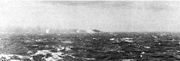 Sunk on May 27, 1941 following an extensive naval battle against British battleships, aircraft, cruisers, destroyers, and aircraft carriers. Heavily shelled by battleships and cruisers, and also torpedoed by aircraft and destroyers. The German survivors reported that the heavily damaged ship was finally scuttled to prevent capture.
USS Arizona
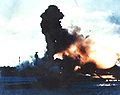 Destroyed by Japanese aerial bombing on December 7, 1941 during the Attack on Pearl Harbor
.
USS Utah
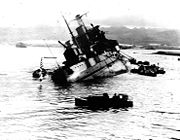 Destroyed by Japanese aerial torpedo
es on December 7, 1941 during the Attack on Pearl Harbor
. The Utah had been downgraded from a battleship and converted to a combined gunnery training ship and radio-controlled target ship. It has been speculated that Japanese planners had assigned the Utah a low priority as a target, but that the extensive wooden planking covering the Utah’s decks had misled Japanese pilots into believing that the ship was a high-priority aircraft carrier.
on December 10, 1941, while deployed in defense of Singapore. The battlecruiser
HMS Repulse
was sunk in the same engagement
.
The Prince of Wales was the first battleship to be sunk by aircraft while at sea and under fire.
Roma
The first capital ship to be sunk by guided missiles. Destroyed by German bomber-launched 'Fritz-X' missiles on September 9, 1943, while en route to surrender to the Allies.
Scharnhorst
Though classified by the Germans as a battleship, some argue the Scharnhorst and her sister ship represent the ultimate example of the German theory of battlecruiser design. On a platform with high-speed machinery and battleship-class armor, the Germans installed guns that were smaller than contemporary battleships. However, this was not due to a desire to reduce weight to increase speed, it was due to the Versailles Treaty, which limited German production of 15" guns to one per year.
Destroyed by gunfire and torpedoes from an Allied task force off the coast of Norway on December 26, 1943 during the Battle of North Cape
.
Musashi
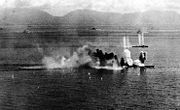 Destroyed by US naval aircraft on October 24, 1944, at the Battle of the Sibuyan Sea.
Fusō
Destroyed along with her sister ship Yamashiro on October 25, 1944, at the Battle of Surigao Strait. Split in half after being torpedoed by US destroyers. The bow section was sunk by gunfire from the USS Louisville.
Yamashiro
Destroyed along with her sister ship Fusō on October 25, 1944, at the Battle of Surigao Strait. Wrecked first by gunfire from US battleships, her hulk was sunk after being torpedoed by US destroyers.
There is some discussion among historians about the small possibility that the positions and roles of the sister ships Fusō and Yamashiro were reversed during their last battle. The Battle of Surigao Strait was fought at night and at some distance between the battleship combatants. There were very few Japanese survivors. To date, there has been no scientific survey of the wrecks that would resolve the debate.
Tirpitz
.jpg) Sunk on November 12, 1944 by the Royal Air Force using special 5-ton bombs. Near the wreck-site there are artificial lakes along the shore formed from bomb craters from the giant Tallboy bombs that missed their target.
Sunk on November 12, 1944 by the Royal Air Force using special 5-ton bombs. Near the wreck-site there are artificial lakes along the shore formed from bomb craters from the giant Tallboy bombs that missed their target.
Yamato
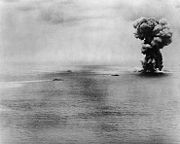 Destroyed while on a one-way mission to interdict American landings on Okinawa. Torpedoed and bombed by US naval aircraft on April 7, 1945.
Petropavlovsk
Sunk after striking a mine on April 13, 1904, early in the Russo-Japanese war.
Yashima
Struck a Russian mine on May 15, 1904 during the Russo-Japanese War.
Hatsuse
Struck two Russian mines on May 15, 1904 during the Russo-Japanese War.
HMS Audacious
Struck a mine on October 27, 1914, becoming the first British battleship sunk in World War I.
HMS Formidable
Torpedoed by U-boat on January 1, 1915, while participating in gunnery exercises in the English Channel.
HMS Triumph
Torpedoed by U-21 on May 25, 1915, while supporting the Battle of Gallipoli.
HMS Majestic
 Torpedoed by U-21 on May 27, 1915, while supporting the Battle of Gallipoli.
Heireddin Barbarossa - Previously SMS Kurfürst Friedrich Wilhelm
Torpedoed by British submarine HMS E11
on August 8, 1915.
HMS King Edward VII
Struck a mine on January 6, 1916.
HMS Russell
Struck a mine on April 27, 1916.
Suffren
Destroyed by U-52 with a dramatic torpedo hit in a magazine on November 26, 1916.
Peresvet - Later Sagami – Later Cruiser Peresvet
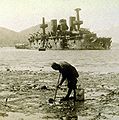 Sunk twice by two different enemies. First sunk at her moorings by Japanese Army artillery during the Siege of Port Arthur
. Raised and repaired by the Japanese and incorporated into the Imperial Japanese Navy as the Sagami. Purchased by Russia in April 1916 and renamed Peresvet. She was due to be the ship of the Russian Arctic Sea Flotilla
but was sunk a second time while en route by mines laid by the U-73 outside Port Said, Egypt on 4 January 1917.
HMS Cornwallis
Torpedoed by U-32
on January 9, 1917.
SMS Viribus Unitis
Sunk by limpet mines attached by Italian frogmen riding manned torpedoes on November 1, 1918.
SMS Szent István
Sunk by two torpedoes launched from the Italian
MAS-15 Motor Torpedo Boat
on June 10, 1918 while on sortie in the Adriatic Sea.
HMS Britannia
Torpedoed by U-50 on November 9, 1918. The last Royal Navy vessel to be sunk during World War I.
Alfonso XIII
Causing confusion among historians, Alfonso XIII was renamed España after her sistership España ran aground and sank off Morocco.
Alfonso XIII struck a mine and sank near Santander in 1937 during the Spanish Civil War.
 Torpedoed by U-331
on November 25, 1941, while steaming to cover an attack on Italian convoys.
Asahi
Torpedoed by USS Salmon on May 25, 1942. This early British-built pre-Dreadnaught had been repeatedly converted into other ship types, and was serving as a transport.
Kongō
Torpedoed by USS Sealion
on November 21, 1944. The first super-dreadnought type battlecruiser of the Imperial Japanese Navy, and upgraded to a battleship rating in the 1930s. Kongō was the only battleship sunk by a submarine in the Pacific War, and the last battleship ever sunk by a submarine.
The Japanese Yamato-class battleship Shinano was converted to and completed as a super-carrier. While en-route from her builder's yard at Yokosuka to Kure for outfitting, she was torpedoed and sunk by USS Archer-Fish.
HMS Victoria
Rammed and sunk by HMS Camperdown in one of the most famous warship collisions in history on June 22, 1893.
Gangut
Sank on June 12, 1897 after hitting an uncharted pinnacle rock.
HMS Montagu
Ran aground and amongst rocks in fog due to poor navigation on May 30, 1906. The ship could not be pulled off the rocks, so was stripped and abandoned in place.
HMS Bulwark
Destroyed by an ammunition and magazine explosion on November 26, 1914.
HMS Vanguard
Destroyed by a magazine explosion on July 9, 1917.
HMS Prince George
Ran aground while in tow on the way to be broken up on December 28, 1921. Stripped and left in place as a breakwater.
France
Capsized and sank on August 26, 1922, after being sliced open by an uncharted rock in a well-travelled bay. Heavily salvaged and then abandoned.
Mutsu
Destroyed by an unexplained magazine explosion on June 8, 1943.
USS Oklahoma
Destroyed by Japanese aerial torpedoes on December 7, 1941 during the infamous surprise air raid on Pearl Harbor. The Oklahoma remained as a capsized wreck in Pearl Harbor for over a year. Following a herculean engineering effort, the hull of the Oklahoma was righted and refloated to help clear the harbor. The decision was made to scrap the ship, and the hulk was being towed to San Francisco in 1947 when it sank at sea.
São Paulo
While being towed across the Atlantic to be scrapped in Britain in 1951, the tow lines snapped in a gale, and the ship was never seen again.
Novorossiysk - Previously Giulio Cesare
After World War II, the Italian battleship Giulio Cesare was ceded to the Soviet Union as compensation for war damages.
Destroyed in an external explosion on October 29, 1955, while moored in Sevastopol Bay. The reason remains unclear. Official investigation pointed at two possible reasons: 1) that the ship was destroyed by a magnetic naval mine, laid by the Germans several years earlier during World War II (most accepted explanation); 2) or it was diversion by combat divers.
Sevastopol
Scuttled in 1904 during the Siege of Port Arthur
, to prevent the ship falling into Japanese hands.
USS Maine
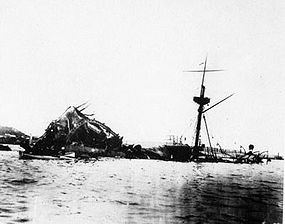 The first US battleship, the Maine was destroyed in Havana harbor on February 15, 1898 by a mysterious explosion. At the time, this was believed at the time to have been caused by a Spanish attack using a mobile mine, which precipitated the Spanish-American war. Subsequent work by Rickover (How the Battleship Maine Was Destroyed) suggests an ordnance explosion caused by fire in the coal on board may have been responsible. After years as a wreck and navigational hazard, the wreck was refloated, investigated, towed out to sea, and sunk with ceremony in 1912.
HMS Hood
Scuttled in Portland Harbour, England on November 4, 1914 to block the Southern Ship Channel from penetration by U-boats or torpedoes.
SMS König
Scuttled by her crew at Scapa Flow on June 21, 1919 while interned at the end of World War I.
SMS Kronprinz Wilhelm
Scuttled by her crew at Scapa Flow on June 21, 1919 while interned at the end of World War I.
SMS Markgraf
Scuttled by her crew at Scapa Flow on June 21, 1919 while interned at the end of World War I.
to block the Kerch Strait. The wreckage was later raised and scrapped.
HMS Centurion
Scuttled of the coast of Normandy on June 7, 1944 as a blockship to protect one of the artificial harbors installed as part of the D-Day invasion.
Gneisenau
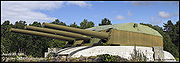 The target of frequent and massive Allied bombing raids, Gneisenau was eventually decommissioned and scuttled as a blockship in Gotenhafen. Later raised and scrapped.
SMS Schlesien
Scuttled at Swinemünde on May 4, 1945, to prevent capture by the Soviets. Used as a stationary target by the Soviet military. Later partially salvaged.
SMS Schleswig-Holstein
Sunk twice near the end of World War II. Bombed and sunk in shallow water in Gdynia on December 19, 1944. Raised and moved by the Soviets, she was eventually scuttled again and served as a stationary target for the Soviet military.
USS Texas
HMS Empress of India
Sunk as a gunnery target in 1913.
USS Massachusetts
SMS Ostfriesland
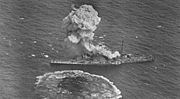
SMS Baden
Her crew attempted to scuttle her at Scapa Flow on June 21, 1919, but she was beached and saved by the British. Converted by the British into a target, she was subjected to a carefully studied series of bombardment tests, and finally sunk by British battleships.
SMS Prinz Eugen
Transferred to France at the end of World War I as a war prize. Used by the French as an aircraft target and for destructive underwater testing. Finally sunk as a gunnery target on June 28, 1922 by the French battleships France, Jean Bart, and Paris.
USS Iowa
Converted to the first radio-controlled target ship, she was sunk by the USS Mississippi in 1923.
USS Virginia
Converted to a target for aerial bombing tests, she was sunk as part of Army Air Corps bombing exercises in 1923.
USS New Jersey
Converted to a target for aerial bombing tests, she was sunk as part of Army Air Corps bombing exercises in 1923.
Hizen - Previously Retvizan
Sunk at least twice while serving in two different navies. Originally built in U.S.A. for the Russian Imperial Navy as the Retvizan. She was present at the Battle of Port Arthur
where she was torpedoed by Japanese destroyers, ran aground and later repaired. After suffering moderate damage during the Battle of the Yellow Sea, she became trapped in Port Arthur
and sunk at her moorings by Japanese army artillery on 6 December 1904, during the Siege of Port Arthur
.
Retvizan was raised by the Japanese, repaired, and renamed Hizen. She served in the Imperial Japanese Navy during World War I, was retired in 1923 and sunk as a target in 1924.
Iwami - Previously Oryol
Originally built by the Russian Imperial Navy as the Oryol. She was present at the Battle of Tsushima where she was lightly damaged by gunfire. Oryol was captured by the Japanese, repaired, improved, and renamed Iwami. She served in the Imperial Japanese Navy during World War I, was retired in 1923 and sunk as a target on July 10, 1924. Oryol was the last battleship to surrender on the high seas.
Aki
Expended in compliance with the Washington Naval Treaty on September 7, 1924. Sunk by gunfire from the Nagato and Mutsu in the presence of Crown Prince and all the Japanese military heads.
Satsuma
Expended in compliance with the Washington Naval Treaty on September 7, 1924. Sunk by gunfire from the Kongō and Hyūga.
HMS Monarch
Converted to a target ship and sunk as a gunnery target by HMS Revenge on January 20, 1925.
USS Arkansas
Converted to a target for atomic bombing tests in Bikini Atoll, she survived an aerial atomic bomb test but was sunk following a submerged atomic bomb test on July 25, 1946.
Nagato
Converted to a target for atomic bombing tests in Bikini Atoll, she survived an aerial atomic bomb test but was sunk following a submerged atomic bomb test on July 25, 1946.
USS Pennsylvania
Converted to a target for atomic bombing tests in Bikini Atoll, she survived both the aerial atomic bomb test and the submerged atomic bomb test in 1946. She was towed to Kwajalein Lagoon for studies, and sunk off Kwajalein Atoll in 1948.
USS New York
Converted to a target for atomic bombing tests in Bikini Atoll, she survived both the aerial atomic bomb test and the submerged atomic bomb test in 1946. She was towed back to Pearl Harbor, and sunk following a massive assault by ships and planes in 1948.
USS Nevada
Heavily bombed during the Attack on Pearl Harbor, she was beached by her crew. Had long war-time service history after being repaired.
Converted to a target for atomic bombing tests in Bikini Atoll, she survived both the aerial atomic bomb test and the submerged atomic bomb test in 1946. She was towed back to Pearl Harbor, and sunk by gunfire and aerial torpedoes in 1948.
Poltava
Built as the Russian pre-dreadnought Poltava, she fought in the Battle of the Yellow Sea, but failed to escape and was scuttled during the Siege of Port Arthur
. Salvaged after the war in October 1905, she was refloated, repaired, and taken into service in the Imperial Japanese Navy as the Tango. Purchased by the Russians during World War I and renamed Chesma. She was later captured by the British during the Allied invasion of northern Russia during the Russian Civil War. Scrapped in 1923.
, she was sunk on December 7, 1904 by Japanese army artillery during the Siege of Port Arthur
. Salvaged after the war in October 1905, she was refloated, repaired, and taken into service in the Imperial Japanese Navy as the Suwo. Scrapped in 1946.
Leonardo da Vinci
Destroyed in Taranto harbor by Austrian saboteurs on August 2, 1916. Later raised and partially repaired, then scrapped.
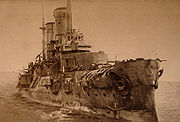 Scuttled by her crew on October 17, 1917 after sustaining heavy damage during the Battle of Moon Sound in the Baltic. The Slava had taken too many hits below the waterline and was drawing too much water to navigate the dredged channel in the strait at Moon Sound. The Slava was scuttled in the strait in an attempt to block passage by German warships pursuing the Russian fleet. The wreckage was later raised and scrapped.
near Novorossiysk to prevent capture by the Germans. Later raised and scrapped. Her turrets and guns were salvaged and used in coastal defense batteries near Sevastopol.
Kawachi
Destroyed by an internal explosion from unstable cordite on September 12, 1918 in Tokuyama Bay. Later raised and scrapped.
SMS Kaiser
Scuttled by her crew at Scapa Flow on June 21, 1919 while interned at the end of World War I. Later raised and scrapped.
SMS Kaiserin
Scuttled by her crew at Scapa Flow on June 21, 1919 while interned at the end of World War I. Later raised and scrapped.
Refloated by the Italians, she was sunk again by US aerial attack on August 27, 1944. Raised again in 1944, she was scrapped in 1955.
Impero
Launched but never completed. Sunk by Allied bombers on February 20, 1945. Raised in 1947 and scrapped by 1950.
Settsu
Destroyed by US aircraft on July 24, 1945. This early semi-Dreadnaught had been converted to a radio-controlled target ship.
Ise
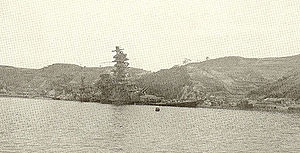 Destroyed by US aircraft on July 28, 1945. Sunk at her moorings in Kure harbor. Later scrapped in place.
Hyūga
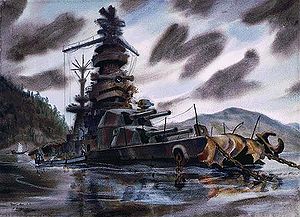 Destroyed by US aircraft on July 24, 1945. Sunk at her moorings in Kure harbor. Later raised and scrapped.
Haruna
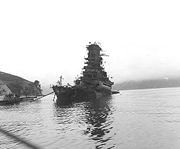 Destroyed by US aircraft on July 28, 1945. Sunk at her moorings in Kure harbor. Later raised and scrapped
Battleship
A battleship is a large armored warship with a main battery consisting of heavy caliber guns. Battleships were larger, better armed and armored than cruisers and destroyers. As the largest armed ships in a fleet, battleships were used to attain command of the sea and represented the apex of a...
was the key strategic weapon of the late 19th and early 20th centuries. Large numbers of battleships were built by the major military powers, in particular Britain, France, Germany, Russia, Italy, Spain, Japan, and the United States. Due to the high cost of building and maintenance, most were eventually decommissioned. Only a handful of true battleships have been retained as historical objects today. However, many battleships still exist as sunken wrecks in various stages of decay in the oceans. While most of these ships have long been considered "lost," modern technology and historical interest has drawn more attention to them while they remain relatively intact.
By tradition and maritime law, sunken warships remain the property of the government of the nation that owned them.
Location of sunken battleships
| Nearby Modern Landmark | Nautical Location | Ocean | Ship Name(s) | |
|---|---|---|---|---|
| Avranches, Normandy, France | English Channel | Atlantic Ocean | HMS Centurion HMS Centurion (1911) HMS Centurion was the second battleship of the King George V class, built at HM Dockyard, Devonport.The Battleships of the King George V class had been designed as Dreadnought Battleship.... |
|
| Azores | Atlantic Ocean | São Paulo Brazilian battleship Sao Paulo São Paulo was a dreadnought battleship designed for the Brazilian Navy by the British company Armstrong Whitworth. She was the second of two ships in the Minas Geraes class, and was named after the state and city of São Paulo.... |
||
| Bikini Atoll | Pacific Ocean | USS Arkansas USS Arkansas (BB-33) USS Arkansas , a was the third ship of the United States Navy named in honor of the 25th state.A dreadnought battleship, Arkansas was laid down on 25 January 1910 at Camden, New Jersey, by the New York Shipbuilding Corporation. She was launched on 14 January 1911 sponsored by Miss Nancy Louise... , Nagato Japanese battleship Nagato Nagato was a battleship of the Imperial Japanese Navy; the lead ship of her class. She was the first battleship in the world to mount 16 inch guns, her armour protection and speed made her one of the most powerful capital ships at the time of her commissioning.She was the flagship of Admiral... |
||
| Camperdown, Netherlands | North Sea | Atlantic Ocean | HMS Prince George HMS Prince George (1895) HMS Prince George was a Majestic-class predreadnought battleship launched in 1895. She was named after the future George V of the United Kingdom and was the fourth and final ship to bear that name.-Technical description:... |
|
| Cape Hatteras, United States | Atlantic Ocean | USS Virginia USS Virginia (BB-13) USS Virginia was a United States Navy battleship, the lead ship of her class of five. She was the fifth ship to carry her name.Virginia was laid down on 21 May 1902 Newport News Shipbuilding and Dry Dock Company, Newport News, Virginia; launched on 6 April 1904; sponsored by Miss Gay Montague,... , USS New Jersey USS New Jersey (BB-16) USS New Jersey was a Virginia-class battleship of the United States Navy. She was the first ship to carry her name. New Jersey was launched on 10 November 1904 by Fore River Shipbuilding Company, Quincy, Massachusetts; sponsored by Mrs. William B. Kenney, daughter of Governor Franklin Murphy of... |
||
| Cape Helles, Gallipoli Peninsula, Turkey | Aegean Sea | HMS Goliath HMS Goliath (1898) HMS Goliath was one of the six Canopus-class pre-dreadnought battleships built by the Royal Navy in the late 19th century. In the First World War Goliath took part in the blockade of the German light cruiser in the Rufiji River but unsuccessful to bombard the cruiser in the delta.On 13 May 1915... , HMS Majestic HMS Majestic (1895) HMS Majestic was a Majestic-class predreadnought battleship of the Royal Navy.-Technical characteristics:HMS Majestic was laid down at Portsmouth Dockyard on 5 February 1894 and launched on 31 January 1895... , Masséna |
||
| Cape Paderan, Vietnam | Pacific Ocean | Asahi Japanese battleship Asahi |-External links:***... |
||
| Cape Trafalgar, Spain | Atlantic Ocean | HMS Britannia HMS Britannia (1904) The sixth HMS Britannia of the British Royal Navy was a pre-dreadnought battleship of the King Edward VII class. She was named after Britannia, the Latin name of Great Britain under Roman rule.-Technical characteristics:... |
||
| Cape Tres Forcas, Morocco | Mediterranean Sea | España | ||
| Chesapeake Bay (Tangier Sound) | Atlantic Ocean | USS Texas USS Texas (1892) USS Texas was a second-class pre-dreadnought battleship built by the United States in the early 1890s. She was the first American battleship and the first ship named in honor of the state of Texas to be built by the United States... |
||
| Dardanelles | HMS Irresistible HMS Irresistible (1898) HMS Irresistible—the fourth British Royal Navy ship of the name—was a pre-dreadnought battleship.-Technical characteristics:HMS Irresistible was laid down at Chatham Dockyard on 11 April 1898 and launched on 15 December 1898 in a very incomplete state to clear the building ways for the... , HMS Ocean HMS Ocean (1898) The fourth HMS Ocean was a Canopus-class battleship of the British Royal Navy.-Technical Description:HMS Ocean was laid down at Devonport Dockyard on 15 December 1897, launched on 5 July 1898, and completed in February 1900... , Bouvet French battleship Bouvet The Bouvet was a French pre-dreadnought battleship, launched in 1896 and sunk by a mine in 1915 during World War I.Bouvet, named for the maritime family of Bouvet de Lozier, the most famous being French Admiral François Joseph Bouvet, belonged to the Jauréguiberry quasi-class which comprised... , Heireddin Barbarossa SMS Kurfürst Friedrich Wilhelm SMS Kurfürst Friedrich Wilhelm"SMS" stands for "Seiner Majestät Schiff", or "His Majesty's Ship" in German. was one of the first ocean-going battleshipsAt the time she was laid down, the German navy referred to the ship as an "armored ship" , instead of "battleship" , see Gröner, p13. of the German... |
|||
| Donegal, Ireland | Atlantic Ocean | HMS Audacious HMS Audacious (1912) HMS Audacious was a King George V-class battleship of the Royal Navy. The vessel did not see any combat in the First World War, being sunk by a German naval mine off the northern coast of Donegal, Ireland in 1914.- Design :... |
||
| Gaba Tepe, Gallipoli Peninsula, Turkey | Aegean Sea | Mediterranean Sea | HMS Triumph HMS Triumph (1903) HMS Triumph was a Swiftsure class pre-dreadnought battleship of the Royal Navy.-Technical characteristics:HMS Triumph was ordered by Chile as Libertad, laid down by Vickers at Barrow-in-Furness on 26 February 1902, and launched on 12 January 1903... |
|
| Gulf of Mexico | Atlantic Ocean | USS Maine USS Maine (ACR-1) USS Maine was the United States Navy's second commissioned pre-dreadnought battleship, although she was originally classified as an armored cruiser. She is best known for her catastrophic loss in Havana harbor. Maine had been sent to Havana, Cuba to protect U.S. interests during the Cuban revolt... |
||
| Håkøy Island, near Tromsø, Norway | Atlantic Ocean | Tirpitz German battleship Tirpitz Tirpitz was the second of two s built for the German Kriegsmarine during World War II. Named after Grand Admiral Alfred von Tirpitz, the architect of the Imperial Navy, the ship was laid down at the Kriegsmarinewerft in Wilhelmshaven in November 1936 and launched two and a half years later in April... |
||
| Jutland | North Sea | Atlantic Ocean | SMS Pommern SMS Pommern SMS Pommern was one of five Deutschland class of pre-dreadnought battleships built for the Kaiserliche Marine between 1904 and 1906. Named after the Prussian province of Pomerania, she was built at the AG Vulcan yard at Stettin, where she was laid down on 22 March 1904 and launched on 2 December... |
|
| Kwajalein Atoll | Pacific Ocean | USS Pennsylvania USS Pennsylvania (BB-38) USS Pennsylvania was a United States Navy super-dreadnought battleship. She was the third Navy ship named for the state of Pennsylvania.... |
||
| Kuantan, Malaysia | South China Sea | Pacific Ocean | HMS Prince of Wales | |
| Lisbon, Portugal | Atlantic Ocean | Suffren French battleship Suffren Suffren was a pre-dreadnought battleship of the French Navy, launched in July 1899. She was named after French Vice Admiral Pierre André de Suffren de Saint Tropez. The ship was originally intended to be a modified version of the design with more firepower and better armour... |
||
| Lundy Island, Britain | Bristol Channel | Atlantic Ocean | HMS Montagu HMS Montagu (1901) HMS Montagu was a Pre-dreadnought battleship of the British Royal Navy.In May 1906 in thick fog, she was wrecked on Lundy Island, fortunately without loss of life.... |
|
| Lüshunkou, China | Yellow Sea | Pacific Ocean | Petropavlovsk Russian battleship Petropavlovsk (1897) The Petropavlovsk was the lead ship of the Petropavlovsk class of battleships built for the Imperial Russian Navy. During the Russo-Japanese War, Petropavlovsk was a flagship of the First Pacific Squadron, taking part in battles against the Imperial Japanese Navy. On March 31, 1904, the battleship... , Yashima Japanese battleship Yashima |-External links:** The New York Times, June 2, 1905.... , Hatsuse Japanese battleship Hatsuse |-External links:**... , Sevastopol` Russian battleship Sevastopol (1895) Sevastopol was the last of three ships in the Petropavlovsk class of pre-dreadnought battleships built for the Imperial Russian Navy in the 1890s... |
|
| Malta | Mediterranean Sea | HMS Cornwallis HMS Cornwallis (1901) HMS Cornwallis was a Duncan-class predreadnought battleship of the Royal Navy.-Technical Description:HMS Cornwallis was laid down by Thames Ironworks and Shipbuilding Company at Leamouth, London on 19 July 1899 and launched on 13 July 1901... |
||
| Sheerness in Medway River Estuary, Britain | North Sea | Atlantic Ocean | HMS Bulwark HMS Bulwark (1899) HMS Bulwark belonged to a sub-class of the Formidable-class of pre-dreadnought battleships of the Royal Navy known as the London-class.-Technical description:... |
|
| Milos, Greece | Aegean Sea | Mediterranean Sea | Gaulois | |
| Miyakejima, Japan | Pacific Ocean | Satsuma Japanese battleship Satsuma |-External links:**... |
||
| Nojimasaki, Japan | Pacific Ocean | Aki Japanese battleship Aki |-External links:*... |
||
| North Atlantic | Atlantic Ocean | Bismarck German battleship Bismarck Bismarck was the first of two s built for the German Kriegsmarine during World War II. Named after Chancellor Otto von Bismarck, the primary force behind the German unification in 1871, the ship was laid down at the Blohm & Voss shipyard in Hamburg in July 1936 and launched nearly three years later... |
||
| Okinawa | East China Sea | Pacific Ocean | Yamato Japanese battleship Yamato , named after the ancient Japanese Yamato Province, was the lead ship of the Yamato class of battleships that served with the Imperial Japanese Navy during World War II. She and her sister ship, Musashi, were the heaviest and most powerfully armed battleships ever constructed, displacing... |
|
| Oshima, Japan | Pacific Ocean | Mutsu Japanese battleship Mutsu thumb|right|300px|Mutsu shortly after commissioning in c. 1922Mutsu , named after Mutsu Province, as per Japanese ship naming conventions, was the Imperial Japanese Navy's second Nagato class battleship... |
||
| Osmussaar Island | Baltic Sea | Atlantic Ocean | SMS Schleswig-Holstein German battleship Schleswig-Holstein SMS Schleswig-Holstein, one of the five s, was the last pre-dreadnought battleship built by the German Kaiserliche Marine. The ship was laid down in the Germaniawerft dockyard in Kiel in August 1905 and commissioned into the fleet nearly three years later in July 1908... |
|
| Ouistreham, France | English Channel | Atlantic Ocean | Courbet | |
| Pacific Ocean | USS Oklahoma USS Oklahoma (BB-37) USS Oklahoma , the only ship of the United States Navy to ever be named for the 46th state, was a World War I-era battleship and the second of two ships in her class; her sister ship was . She, along with her sister, were the first two U.S... |
|||
| Panama Bay, Panama | Pacific Ocean | USS Iowa USS Iowa (BB-4) | The second half of the 19th century saw radical changes in shipbuilding design. Wood-built sailing ships with cannons were replaced by steam-powered warships armored with steel... |
||
| Pearl Harbor, Oahu, Hawaii | Pacific Ocean | The wrecks of USS Arizona USS Arizona (BB-39) USS Arizona, a , was built for the United States Navy in the mid-1910s. Named in honor of the 48th state's recent admission into the union, the ship was the second and last of the Pennsylvania class of "super-dreadnought" battleships. Although commissioned in 1916, the ship remained stateside... and USS Utah USS Utah (BB-31) USS Utah was a battleship that was attacked and sunk in Pearl Harbor on 7 December 1941. A Florida-class battleship, she was the only ship of the United States Navy to be named for the U.S. state of Utah... are located in Pearl Harbor. The wrecks of USS New York USS New York (BB-34) USS New York was a United States Navy battleship, the lead ship of her class of two . She was the fifth ship to carry her name.... and USS Nevada USS Nevada (BB-36) USS Nevada , the second United States Navy ship to be named after the 36th state, was the lead ship of the two Nevada-class battleships; her sister ship was... are located off Pearl Harbor. |
||
| Pensacola Bay, Gulf of Mexico | Atlantic Ocean | USS Massachusetts USS Massachusetts (BB-2) USS Massachusetts was an and the second United States Navy ship comparable to foreign battleships of the time. Authorized in 1890 and commissioned six years later, she was a small battleship, though with heavy armor and ordnance. The ship class also pioneered the use of an intermediate battery... |
||
| Pentland Firth, North Sea | Atlantic Ocean | HMS King Edward VII HMS King Edward VII HMS King Edward VII, named after King Edward VII, was the lead ship of her class of Royal Navy pre-dreadnought battleships.-Technical characteristics:HMS King Edward VII was laid down at Devonport Dockyard on 8 March 1902... |
||
| Portland, Britain | English Channel | Atlantic Ocean | HMS Formidable HMS Formidable (1898) HMS Formidable —the third of four ships of that name to serve in the Royal Navy—was the lead ship of her class of pre-dreadnought battleships. She was the second British battleship to be sunk by enemy action during the First World War... , HMS Hood HMS Hood (1891) The second warship to be named HMS Hood was a modified Royal Sovereign-class battleship of the Royal Navy, and the last of the eight built. She differed from the Royal Sovereign class in that she had cylindrical gun turrets instead of barbettes, a lower freeboard and a higher metacentric height... , HMS Empress of India HMS Empress of India (1891) HMS Empress of India was a pre-dreadnought battleship of the Royal Navy and part of the eight-ship Royal Sovereign class. She was laid down at Pembroke Dockyard on 9 July 1889 and launched by the Duchess of Connaught on 7 May 1891. Initially known as HMS Renown, her name was changed before... |
|
| Port Said, Egypt | Mediterranean Sea | Peresvet Japanese battleship Sagami was one of eight Russian pre-dreadnought battleships captured by the Imperial Japanese Navy during the Russo-Japanese War of 1904–1905. It was built as the lead ship of the of battleships, with a design inspired by the British battleship... |
||
| Portsmouth, Britain | Atlantic Ocean | SMS Baden SMS Baden (1915) SMS Baden "SMS" stands for "Seiner Majestät Schiff", or "His Majesty's Ship" was a dreadnought battleship of the German Imperial Navy built during World War I... |
||
| Premuda | Adriatic Sea | Mediterranean Sea | SMS Szent István SMS Szent István SMS Szent István was a dreadnought , the only one built in the Hungarian part of Austria-Hungary. The Ganz & Company's Danubius yard in Hungarian-owned Fiume was awarded the contract to build the battleship in return for the Hungarian government agreeing to the 1910 and 1911 naval budgets... |
|
| Pula | Adriatic Sea | Mediterranean Sea | SMS Viribus Unitis SMS Viribus Unitis SMS Viribus Unitis was the first Austro-Hungarian dreadnought battleship of the . Its name, meaning "With United Forces", was the personal motto of Emperor Franz Joseph I.Viribus Unitis was ordered by the Austro-Hungarian navy in 1908... |
|
| Quiberon Bay, France | Atlantic Ocean | France French battleship France France was the last ship of the s, the first dreadnoughts built for the French Navy. She was completed just before World War I as part of the 1911 naval building programme. She spent the war in the Mediterranean, covering the Otranto Barrage in the Adriatic... |
||
| Santander, Spain | Atlantic Ocean | Alfonso XIII | ||
| Sardinia | Gulf of Asinara Gulf of Asinara The Gulf of Asinara is a sea sector included between the Asinara Island, Cape Falcone and the town of Castelsardo, in northern Sardinia, Italy... |
Mediterranean Sea | Roma Italian battleship Roma (1940) Roma, named after two previous ships and the city of Rome, was the fourth Vittorio Veneto-class battleship of Italy's Regia Marina... , Danton (South of Sardinia) |
|
| Scapa Flow | North Sea | Atlantic Ocean | HMS Royal Oak, HMS Vanguard HMS Vanguard (1909) The eighth HMS Vanguard of the British Royal Navy was a St Vincent-class battleship, an enhancement of the "" design built by Vickers at Barrow-in-Furness... , SMS König SMS König SMS König"SMS" stands for "Seiner Majestät Schiff" was the first of four König class dreadnought battleships of the German Imperial Navy during World War I. König was named in honor of Kaiser Wilhelm II of Germany, who was the king of Prussia as well as the German Emperor... , SMS Kronprinz Wilhelm SMS Kronprinz Wilhelm SMS Kronprinz"SMS" stands for "Seiner Majestät Schiff" was the last battleship of the four-ship of the German Imperial Navy. The battleship was laid down in November 1911 and launched on 21 February 1914. She was formally commissioned into the Imperial Navy on 8 November 1914, just over 4... , SMS Markgraf SMS Markgraf SMS Markgraf"SMS" stands for "Seiner Majestät Schiff", or "His Majesty's Ship" was the third battleship of the four-ship . She served in the German Imperial Navy during World War I. The battleship was laid down in November 1911 and launched on 4 June 1913... |
|
| Sedd-al Bahr, Gallipoli Peninsula, Turkey | Aegean Sea | Mediterranean Sea | Masséna | |
| Sevastopol | Sevastopol Bay | Black Sea | Novorossiysk - Previously Giulio esare Italian battleship Giulio Cesare Giulio Cesare , motto Caesar Adest was a Conte di Cavour-class battleship that served in the Regia Marina in both World Wars before joining the Soviet Navy as the Novorossiysk. Her keel was laid down on 24 June 1910 at Cantieri Ansaldo, Genoa... |
|
| Sibuyan Sea | Pacific Ocean | Musashi Japanese battleship Musashi , named after the ancient Japanese Musashi Province, was a battleship of the Imperial Japanese Navy during World War II and flagship of the Japanese Combined Fleet. She was the second ship of the... |
||
| Sidi Barrani near Libyan Border | Mediterranean Sea | HMS Barham | ||
| Surigao Strait, Leyte Gulf | Pacific Ocean | Fusō Japanese battleship Fuso The Japanese battleship Fusō , was a part of the Imperial Japanese Navy, the lead ship of the Fusō-class. She was laid down by the Kure Kaigun Koshō on 11 March 1912, launched on 28 March 1914 and completed on 18 November 1915... , Yamashiro Japanese battleship Yamashiro Yamashiro was the Imperial Japanese Navy's second Fusō-class battleship, and was laid down at the Yokosuka Naval Arsenal on November 20, 1913, launched on November 3, 1915, and commissioned on March 31, 1917. She was the first Japanese vessel equipped with aircraft catapults... |
||
| Świnoujście, Poland | Baltic Sea | Atlantic Ocean | SMS Schlesien German battleship Schlesien SMS Schlesien was one of the five Deutschland class of pre-dreadnought battleships built for the Kaiserliche Marine between 1904 and 1906. Named after the German province of Schlesien, she was built at the Schichau-Werke shipyard in Danzig, where she was launched on 28 May 1906. She was... |
|
| Toulon, France | Mediterranean Sea | SMS Prinz Eugen SMS Prinz Eugen SMS Prinz Eugen was an Austro-Hungarian dreadnought battleship of the . Prinz Eugen was built at the Stabilimento Tecnico Triestino yard, Trieste... |
||
| Tripoli, Lebanon | Mediterranean Sea | HMS Victoria HMS Victoria (1887) HMS Victoria was the lead ship in her class of two battleships of the Royal Navy. On 22 June 1893, she collided with near Tripoli, Lebanon during manoeuvres and quickly sank, taking 358 crew with her, including the commander of the British Mediterranean Fleet, Vice-Admiral Sir George Tryon... |
||
| Tsushima Island | Tsushima Strait, Korea Strait, Sea of Japan | Pacific Ocean | Navarin, Sisoi Veliky, Borodino Borodino class battleship The five Borodino-class battleships were pre-dreadnoughts built between 1899 and 1905 for the Imperial Russian Navy... , Oslyabya Russian battleship Oslyabya The Oslyabya was a battleship of the Russian Imperial Navy, belonging to the . She was named for Rodion Oslyabya, a 14th century monk of the Troitse-Sergiyeva Lavra and a hero of the Battle of Kulikovo.... , Imperator Aleksandr III Russian battleship Imperator Aleksander III (1901) The Imperator Alexandr III was a of the Russian Imperial Navy, the first ship of its class to be completed. It was named after Tsar Alexander III. Some naval architects regard the Borodino-class as being among the worst battleships ever built... , Knyaz Suvorov Russian battleship Knyaz Suvorov The Knyaz Suvorov was a pre-dreadnought battleship of the Russian Imperial Navy, built by Baltic Works, St Petersburg. Laid down in July 1901, she was launched in September 1902 and completed in September 1904. This ship was named after the 18th-century Russian general Alexander Suvorov. Her... , Admiral Ushakov Russian battleship Admiral Ushakov The Admiral Ushakov was the lead ship in her class of armoured warships of the Imperial Russian Navy, and named after Admiral Fyodor Fyodorovich Ushakov the Russian naval commander of the 18th century.- Service Life :... |
|
| Valletta, Malta | Mediterranean Sea | HMS Russell HMS Russell (1901) HMS Russell was a Duncan-class predreadnought battleship of the Royal Navy.-Technical Description:HMS Russell was laid down by Palmers Shipbuilding and Iron Company at Jarrow on 11 March 1899 and launched on 19 February 1902... |
||
| Viborg | Gulf of Finland | Gangut Russian battleship Gangut (1888) Gangut was an Imperial Russian coast defense ship named after the Battle of Gangut. This ship was a scaled down version of the Imperator Aleksandr II class battleships-Design and construction:... |
||
| Virginia Capes | Atlantic Ocean | SMS Ostfriesland SMS Ostfriesland SMS Ostfriesland "SMS" stands for "Seiner Majestät Schiff" was the second vessel of the of battleships of the German Imperial Navy. Named for the region of East Frisia, Ostfrieslands keel was laid in October 1908 at the Kaiserliche Werft dockyard in Wilhelmshaven... |
||
| Bungo Channel | Pacific Ocean | Hizen - Previously Retvizan Russian battleship Retvizan Retvizan was a Russian pre-dreadnought battleship built before the Russo-Japanese War of 1904–05 for the Imperial Russian Navy in the United States. She was built by the William Cramp and Sons Ship & Engine Building Company of Philadelphia, although the armament was made at the Obukhov works in... |
||
| ? | Pacific Ocean | Iki - Previously Imperator Nikolai I | ||
| ? | Pacific Ocean | Iwami - Previously Oryol Japanese battleship Iwami Japanese battleship Iwami was one of eight Russian pre-dreadnought battleships captured by the Imperial Japanese Navy during the Russo-Japanese War of 1904–1905. It was built as the Russian battleship Oryol , and was commissioned into the Imperial Russian Navy's Baltic Fleet... |
||
| ? | HMS Monarch HMS Monarch (1911) HMS Monarch was an Orion-class battleship of the Royal Navy. She served in the 2nd Battle Squadron of the Grand Fleet in World War I, and fought at the Battle of Jutland, 31 May 1916, suffering no damage.... |
List of sunken battleships
The battleships listed are grouped according to how they came to be sunk in their final resting place. In each category, they are listed in chronological order by date sunk.Sunk in combat
The following battleships were destroyed in full combat. These ships are considered war graves.Navarin
Sunk after striking either one or two mines, or being torpedoed during the Battle of TsushimaBattle of Tsushima
The Battle of Tsushima , commonly known as the “Sea of Japan Naval Battle” in Japan and the “Battle of Tsushima Strait”, was the major naval battle fought between Russia and Japan during the Russo-Japanese War...
on May 28, 1905.
- Navy:
- Casualties: 619 officers and men lost. Only three sailors were rescued after 4 days in the water.
- Location: Tsushima StraitTsushima Straitis the eastern channel of the Korea Strait, which lies between Korea and Japan, connecting the Sea of Japan and the East China Sea.The Tsushima Strait is the broader eastern channel to the east and southeast of Tsushima Island, with the Japanese islands of Honshū to the east and northeast, and...
, Sea of Japan
Sisoi Velikiy
Scuttled by her crew after sustaining heavy damage during the Battle of TsushimaBattle of Tsushima
The Battle of Tsushima , commonly known as the “Sea of Japan Naval Battle” in Japan and the “Battle of Tsushima Strait”, was the major naval battle fought between Russia and Japan during the Russo-Japanese War...
on May 28, 1905.
- Navy:
- Casualties: 619 men lost.
- Location: Tsushima Strait, Sea of Japan
OslyabyaRussian battleship OslyabyaThe Oslyabya was a battleship of the Russian Imperial Navy, belonging to the . She was named for Rodion Oslyabya, a 14th century monk of the Troitse-Sergiyeva Lavra and a hero of the Battle of Kulikovo....
Sunk at the Battle of TsushimaBattle of Tsushima
The Battle of Tsushima , commonly known as the “Sea of Japan Naval Battle” in Japan and the “Battle of Tsushima Strait”, was the major naval battle fought between Russia and Japan during the Russo-Japanese War...
on May 28, 1905.
- Navy:
- Casualties: 515 men lost, with 250 survivors rescued
- Location: Tsushima Strait, Sea of Japan
BorodinoBorodino class battleshipThe five Borodino-class battleships were pre-dreadnoughts built between 1899 and 1905 for the Imperial Russian Navy...
Sunk at the Battle of TsushimaBattle of Tsushima
The Battle of Tsushima , commonly known as the “Sea of Japan Naval Battle” in Japan and the “Battle of Tsushima Strait”, was the major naval battle fought between Russia and Japan during the Russo-Japanese War...
on May 28, 1905.
- Navy:
- Casualties: 865 officers and men lost, only one sailor survived
- Location: Tsushima Strait, Sea of Japan
Imperator Aleksandr IIIRussian battleship Imperator Aleksander III (1901)The Imperator Alexandr III was a of the Russian Imperial Navy, the first ship of its class to be completed. It was named after Tsar Alexander III. Some naval architects regard the Borodino-class as being among the worst battleships ever built...
Sunk at the Battle of TsushimaBattle of Tsushima
The Battle of Tsushima , commonly known as the “Sea of Japan Naval Battle” in Japan and the “Battle of Tsushima Strait”, was the major naval battle fought between Russia and Japan during the Russo-Japanese War...
on May 28, 1905.
- Navy:
- Casualties: 867 officers and men lost; no survivors
- Location: Tsushima Strait, Sea of Japan
Knyaz SuvorovRussian battleship Knyaz SuvorovThe Knyaz Suvorov was a pre-dreadnought battleship of the Russian Imperial Navy, built by Baltic Works, St Petersburg. Laid down in July 1901, she was launched in September 1902 and completed in September 1904. This ship was named after the 18th-century Russian general Alexander Suvorov. Her...
Sunk at the Battle of Tsushima on May 28, 1905.- Navy:
- Casualties: 935 officers and men lost
- Location: Tsushima Strait, Sea of Japan
Admiral UshakovRussian battleship Admiral UshakovThe Admiral Ushakov was the lead ship in her class of armoured warships of the Imperial Russian Navy, and named after Admiral Fyodor Fyodorovich Ushakov the Russian naval commander of the 18th century.- Service Life :...
Sunk at the Battle of TsushimaBattle of Tsushima
The Battle of Tsushima , commonly known as the “Sea of Japan Naval Battle” in Japan and the “Battle of Tsushima Strait”, was the major naval battle fought between Russia and Japan during the Russo-Japanese War...
on May 29, 1905.
- Navy:
- Casualties: 94 men lost, with 328 survivors rescued
- Location: Tsushima Strait, Sea of Japan
HMS IrresistibleHMS Irresistible (1898)HMS Irresistible—the fourth British Royal Navy ship of the name—was a pre-dreadnought battleship.-Technical characteristics:HMS Irresistible was laid down at Chatham Dockyard on 11 April 1898 and launched on 15 December 1898 in a very incomplete state to clear the building ways for the...
- Navy:
- Casualties: Very few
- Location: In the Dardanelles straits, Turkey
- Condition: Reported to have been heavily salvaged and scavenged, with ship remains scattered.
HMS OceanHMS Ocean (1898)The fourth HMS Ocean was a Canopus-class battleship of the British Royal Navy.-Technical Description:HMS Ocean was laid down at Devonport Dockyard on 15 December 1897, launched on 5 July 1898, and completed in February 1900...
Struck a mine and also hit by shore batteries March 18, 1915, while participating in the final attempt to force the Dardanelles straits.
- Navy:
- Location: In the Dardanelles straits, Turkey
- Condition: Reported to have been heavily salvaged and scavenged, with ship remains scattered.
BouvetFrench battleship BouvetThe Bouvet was a French pre-dreadnought battleship, launched in 1896 and sunk by a mine in 1915 during World War I.Bouvet, named for the maritime family of Bouvet de Lozier, the most famous being French Admiral François Joseph Bouvet, belonged to the Jauréguiberry quasi-class which comprised...
Struck a mine and also hit by shore batteries March 18, 1915, while participating in the final attempt to force the Dardanelles straits.
- Navy:
- Casualties: Over 600 men
- Location: In the Dardanelles straits, Turkey
- Condition: Rests at 70 meters, only her propellers were salvaged.
HMS GoliathHMS Goliath (1898)HMS Goliath was one of the six Canopus-class pre-dreadnought battleships built by the Royal Navy in the late 19th century. In the First World War Goliath took part in the blockade of the German light cruiser in the Rufiji River but unsuccessful to bombard the cruiser in the delta.On 13 May 1915...
Torpedoed by Turkish torpedo boat Muavenet-i MilliyeMuavenet-i Milliye
Muavenet-i Milliye or Muâvenet-i Millîye was a destroyer built for the Ottoman Navy prior to World War I. The ship is most notable for sinking the British pre-dreadnought battleship during the Dardanelles Campaign in World War I.- Naming :...
on May 13, 1915, while supporting the Battle of Gallipoli
Battle of Gallipoli
The Gallipoli Campaign, also known as the Dardanelles Campaign or the Battle of Gallipoli, took place at the peninsula of Gallipoli in the Ottoman Empire between 25 April 1915 and 9 January 1916, during the First World War...
.
- Navy:
- Casualties: 570 men out of a crew of 700
- Location: Near Cape Helles, Gallipoli Peninsula, Turkey
- Condition: Reported to have been heavily salvaged and scavenged, with ship remains scattered.
SMS PommernSMS PommernSMS Pommern was one of five Deutschland class of pre-dreadnought battleships built for the Kaiserliche Marine between 1904 and 1906. Named after the Prussian province of Pomerania, she was built at the AG Vulcan yard at Stettin, where she was laid down on 22 March 1904 and launched on 2 December...
Torpedoed by destroyer HMS Faulknor during Battle of JutlandBattle of Jutland
The Battle of Jutland was a naval battle between the British Royal Navy's Grand Fleet and the Imperial German Navy's High Seas Fleet during the First World War. The battle was fought on 31 May and 1 June 1916 in the North Sea near Jutland, Denmark. It was the largest naval battle and the only...
on June 1, 1916. The torpedo hit was followed by a massive explosion in one of her magazines, and the ship broke apart and sank quickly.
- Navy:
- Casualties: All hands, 839 men.
- Location: North Sea
- Condition: Reported to have been heavily salvaged.
- Relics: The bow ornament is now in the Laboe Naval MemorialLaboe Naval MemorialThe Laboe Naval Memorial is a memorial located in Laboe, near Kiel, in Schleswig-Holstein, Germany. Started in 1927 and completed in 1936, the monument originally memorialized the World War I war dead of the Kaiserliche Marine, with the Kriegsmarine dead of World War II being added after 1945...
.
BismarckGerman battleship BismarckBismarck was the first of two s built for the German Kriegsmarine during World War II. Named after Chancellor Otto von Bismarck, the primary force behind the German unification in 1871, the ship was laid down at the Blohm & Voss shipyard in Hamburg in July 1936 and launched nearly three years later...
- Navy:
- Casualties: Almost 2100 men lost, with 115 survivors
- Location: North Atlantic
- Condition: Upright in 15500 feet (4,724.4 m) of water and in surprisingly good condition.
- Official War Grave
USS ArizonaUSS Arizona (BB-39)USS Arizona, a , was built for the United States Navy in the mid-1910s. Named in honor of the 48th state's recent admission into the union, the ship was the second and last of the Pennsylvania class of "super-dreadnought" battleships. Although commissioned in 1916, the ship remained stateside...
Attack on Pearl Harbor
The attack on Pearl Harbor was a surprise military strike conducted by the Imperial Japanese Navy against the United States naval base at Pearl Harbor, Hawaii, on the morning of December 7, 1941...
.
- Navy:
- Location: Pearl Harbor, Oahu, Hawaii
- Casualties: 1,177 dead out of 1,400 crewmen
- Status: Official war grave site with the premier Pearl Harbor memorial built over the sunken hull. Still an active grave site, eligible Pearl Harbor veterans continue to be interred within the hull.
- Condition: The Arizona was partially salvaged, with removal of almost all the superstructure, turrets, and guns. Following salvage and removal, the remaining hull is completely submerged, with the exception of one barbette, part of a mast, and the cutaway sides of one turret. Since the hull contains thousands of gallons of fuel oil, the hull corrosion rate is being actively studied.
- Relics: A section of the boat deck has been placed at Waipio Point, Oahu, Hawaii. This amidships section had served as a ceremonial platform on the wreck but was cut away to make room for the overlying memorial. One of the ship's bells is at the University of Arizona, and its anchor sits on the grounds of the Arizona State Capitol.
USS UtahUSS Utah (BB-31)USS Utah was a battleship that was attacked and sunk in Pearl Harbor on 7 December 1941. A Florida-class battleship, she was the only ship of the United States Navy to be named for the U.S. state of Utah...
Aerial torpedo
The aerial torpedo, airborne torpedo or air-dropped torpedo is a naval weapon, the torpedo, designed to be dropped into water from an aircraft after which it propels itself to the target. First used in World War I, air-dropped torpedoes were used extensively in World War II, and remain in limited...
es on December 7, 1941 during the Attack on Pearl Harbor
Attack on Pearl Harbor
The attack on Pearl Harbor was a surprise military strike conducted by the Imperial Japanese Navy against the United States naval base at Pearl Harbor, Hawaii, on the morning of December 7, 1941...
. The Utah had been downgraded from a battleship and converted to a combined gunnery training ship and radio-controlled target ship. It has been speculated that Japanese planners had assigned the Utah a low priority as a target, but that the extensive wooden planking covering the Utah’s decks had misled Japanese pilots into believing that the ship was a high-priority aircraft carrier.
- Navy:
- Casualties: 58 dead and 461 survivors
- Location: Pearl Harbor, Oahu, Hawaii
- Status: Official war grave site with small memorial nearby on Ford Island.
- Condition: The Utah was capsized during the attack, and was partially salvaged but not recovered. The wreck was later partially righted and pulled closer to shore and away from the channel. The wreck is almost completely submerged, with a small amount of highly-corroded superstructure visible above the surface.
HMS Prince of Wales
HMS Prince of Wales was attacked and sunk by aerial torpedoes from Japanese aircraft off the coast of MalayaBritish Malaya
British Malaya loosely described a set of states on the Malay Peninsula and the Island of Singapore that were brought under British control between the 18th and the 20th centuries...
on December 10, 1941, while deployed in defense of Singapore. The battlecruiser
Battlecruiser
Battlecruisers were large capital ships built in the first half of the 20th century. They were developed in the first decade of the century as the successor to the armoured cruiser, but their evolution was more closely linked to that of the dreadnought battleship...
HMS Repulse
HMS Repulse (1916)
HMS Repulse was a Renown-class battlecruiser of the Royal Navy built during the First World War. She was originally laid down as an improved version of the s. Her construction was suspended on the outbreak of war on the grounds she would not be ready in a timely manner...
was sunk in the same engagement
Sinking of Prince of Wales and Repulse
The sinking of Prince of Wales and Repulse was a Second World War naval engagement that took place north of Singapore, off the east coast of Malaya, near Kuantan, Pahang where the British Royal Navy battleship HMS Prince of Wales and battlecruiser HMS Repulse were sunk by land-based bombers and...
.
The Prince of Wales was the first battleship to be sunk by aircraft while at sea and under fire.
- Navy:
- Casualties: 327 dead out of 1,612 crewmen
- Location: Near Kuantan in Malaysia
- Status: Official war grave site.
- Condition: Upside down in 150 feet (45.7 m) of water.
- Relics: The ship's bell was recovered, restored, and is now displayed in the Merseyside Maritime Museum in Liverpool.
RomaItalian battleship Roma (1940)Roma, named after two previous ships and the city of Rome, was the fourth Vittorio Veneto-class battleship of Italy's Regia Marina...
The first capital ship to be sunk by guided missiles. Destroyed by German bomber-launched 'Fritz-X' missiles on September 9, 1943, while en route to surrender to the Allies.
- Navy:
- Loss: 1350 killed and 596 survivors
- Location: Near Sardinia in Mediterranean Sea
ScharnhorstGerman battleship ScharnhorstScharnhorst was a German capital ship, alternatively described as a battleship and battlecruiser, of the German Kriegsmarine. She was the lead ship of her class, which included one other ship, Gneisenau. The ship was built at the Kriegsmarinewerft dockyard in Wilhelmshaven; she was laid down on 15...
Though classified by the Germans as a battleship, some argue the Scharnhorst and her sister ship represent the ultimate example of the German theory of battlecruiser design. On a platform with high-speed machinery and battleship-class armor, the Germans installed guns that were smaller than contemporary battleships. However, this was not due to a desire to reduce weight to increase speed, it was due to the Versailles Treaty, which limited German production of 15" guns to one per year.Destroyed by gunfire and torpedoes from an Allied task force off the coast of Norway on December 26, 1943 during the Battle of North Cape
Battle of North Cape
The Battle of the North Cape was a Second World War naval battle which occurred on 26 December 1943, as part of the Arctic Campaign. The German battlecruiser , on an operation to attack Arctic Convoys of war materiel from the Western Allies to the USSR, was brought to battle and sunk by superior...
.
- Navy:
- Casualties: Only 36 survivors out of 1,968 men
- Location: Arctic Ocean, approximately 66 miles (106.2 km) off the North Cape of Norway.
- Status: Official war grave site.
- Condition: The Scharnhorst lies upside down in 900 feet (274.3 m) of water.
MusashiJapanese battleship Musashi, named after the ancient Japanese Musashi Province, was a battleship of the Imperial Japanese Navy during World War II and flagship of the Japanese Combined Fleet. She was the second ship of the...
- Navy:
- Casualties: 1,376 survivors out of 2,399 men
- Location: Sibuyan Sea, Pacific Ocean
FusōJapanese battleship FusoThe Japanese battleship Fusō , was a part of the Imperial Japanese Navy, the lead ship of the Fusō-class. She was laid down by the Kure Kaigun Koshō on 11 March 1912, launched on 28 March 1914 and completed on 18 November 1915...
Destroyed along with her sister ship Yamashiro on October 25, 1944, at the Battle of Surigao Strait. Split in half after being torpedoed by US destroyers. The bow section was sunk by gunfire from the USS Louisville.
- Navy:
- Casualties: No known survivors out a crew of approximately 1,400 officers and men. After the sinking, survivors refused rescue by US warships. Some were rumored to have been rescued by Asagumo, and all rescued were killed when the destroyer sank. Any survivors who successfully swam to the nearby island were likely killed by Philippine inhabitants resisting Japanese occupation. Some believe that Fusō became the largest warship of all nations to be sunk with all hands.
- Location: Near Kanihaan Island, Surigao Strait, Pacific Ocean
YamashiroJapanese battleship YamashiroYamashiro was the Imperial Japanese Navy's second Fusō-class battleship, and was laid down at the Yokosuka Naval Arsenal on November 20, 1913, launched on November 3, 1915, and commissioned on March 31, 1917. She was the first Japanese vessel equipped with aircraft catapults...
Destroyed along with her sister ship Fusō on October 25, 1944, at the Battle of Surigao Strait. Wrecked first by gunfire from US battleships, her hulk was sunk after being torpedoed by US destroyers.There is some discussion among historians about the small possibility that the positions and roles of the sister ships Fusō and Yamashiro were reversed during their last battle. The Battle of Surigao Strait was fought at night and at some distance between the battleship combatants. There were very few Japanese survivors. To date, there has been no scientific survey of the wrecks that would resolve the debate.
- Navy:
- Loss: 10 survivors out of approximately 1,400 men.
- Location: Surigao Strait, Pacific Ocean
TirpitzGerman battleship TirpitzTirpitz was the second of two s built for the German Kriegsmarine during World War II. Named after Grand Admiral Alfred von Tirpitz, the architect of the Imperial Navy, the ship was laid down at the Kriegsmarinewerft in Wilhelmshaven in November 1936 and launched two and a half years later in April...
- Navy:
- Casualties: Approximately 1000 men lost, with approximately 700 survivors
- Location: Håkøybotn Bay, Norway
- Condition: Only the bow remains after most of the ship was raised and scrapped after the war.
- Relics: Sections of armor plates are still used by the Norwegian Road Authority as temporary road surface material during roadwork. Additionally, a large chunk of the armor plating is held at the Royal Naval museum in Gosport, Hampshire.
YamatoJapanese battleship Yamato, named after the ancient Japanese Yamato Province, was the lead ship of the Yamato class of battleships that served with the Imperial Japanese Navy during World War II. She and her sister ship, Musashi, were the heaviest and most powerfully armed battleships ever constructed, displacing...
- Navy:
- Casualties: 280 survivors out of approximately 2,778 men
- Location: East China Sea
- Condition: Broken in two and resting in 1400 feet (426.7 m) of water. The bow section is upright and the main section upside down.
- Relics: 18-inch ammunition is displayed at the Yasukuni Shrine. Some small relics have been collected from the wreck by remote-control submarines.
Sunk by torpedoes or mines
The following battleships were destroyed in wartime, but struck below the waterline with torpedoes fired by submarines or mines. These ships are considered war graves. PetropavlovskRussian battleship Petropavlovsk (1897)The Petropavlovsk was the lead ship of the Petropavlovsk class of battleships built for the Imperial Russian Navy. During the Russo-Japanese War, Petropavlovsk was a flagship of the First Pacific Squadron, taking part in battles against the Imperial Japanese Navy. On March 31, 1904, the battleship...
Sunk after striking a mine on April 13, 1904, early in the Russo-Japanese war.- Navy:
- Casualties: 650 officers and men lost. 80 survivors. Ship sank in 2 minutes.
- Location: Off Port Arthur (modern LüshunkouLüshunkouLüshunkou is a district in the municipality of Dalian, Liaoning province, China. Also called Lüshun City or Lüshun Port, it was formerly known as both Port Arthur and Ryojun....
), Yellow Sea
YashimaJapanese battleship Yashima|-External links:** The New York Times, June 2, 1905....
Struck a Russian mine on May 15, 1904 during the Russo-Japanese War.
- Navy:
- Location: Off Port ArthurLüshunkouLüshunkou is a district in the municipality of Dalian, Liaoning province, China. Also called Lüshun City or Lüshun Port, it was formerly known as both Port Arthur and Ryojun....
, China - Relics: A highly detailed builder's model still survives and is currently on display at the Royal Hospital School Holbrook in Suffolk, England.
HatsuseJapanese battleship Hatsuse|-External links:**...
Struck two Russian mines on May 15, 1904 during the Russo-Japanese War.
- Navy:
- Casualties: 38 officers and 458 men lost, with 23 officers and 313 men surviving
- Location: Off Port ArthurLüshunkouLüshunkou is a district in the municipality of Dalian, Liaoning province, China. Also called Lüshun City or Lüshun Port, it was formerly known as both Port Arthur and Ryojun....
, China
HMS AudaciousHMS Audacious (1912)HMS Audacious was a King George V-class battleship of the Royal Navy. The vessel did not see any combat in the First World War, being sunk by a German naval mine off the northern coast of Donegal, Ireland in 1914.- Design :...
Struck a mine on October 27, 1914, becoming the first British battleship sunk in World War I.
- Navy:
- Casualties: None from the HMS Audacious, though a crewman of the HMS Liverpool was struck and killed by debris from an explosion on Audacious.
- Location: Off Donegal, Ireland
- Condition: Upside down in 210 feet (64 m) of water. Large openings blown in the hull from magazine explosions and the mine.
HMS FormidableHMS Formidable (1898)HMS Formidable —the third of four ships of that name to serve in the Royal Navy—was the lead ship of her class of pre-dreadnought battleships. She was the second British battleship to be sunk by enemy action during the First World War...
Torpedoed by U-boat on January 1, 1915, while participating in gunnery exercises in the English Channel.
- Navy:
- Casualties: 547 dead out of 780 men
- Location: Near Portland in the English Channel
- Status: Official war grave site.
HMS TriumphHMS Triumph (1903)HMS Triumph was a Swiftsure class pre-dreadnought battleship of the Royal Navy.-Technical characteristics:HMS Triumph was ordered by Chile as Libertad, laid down by Vickers at Barrow-in-Furness on 26 February 1902, and launched on 12 January 1903...
Torpedoed by U-21 on May 25, 1915, while supporting the Battle of Gallipoli.
- Navy:
- Casualties: 73 dead out of 700 men
- Location: Near Gaba Tepe, Gallipoli Peninsula, Turkey
- Condition: Reported to have been heavily salvaged and scavenged, with ship remains scattered.
HMS MajesticHMS Majestic (1895)HMS Majestic was a Majestic-class predreadnought battleship of the Royal Navy.-Technical characteristics:HMS Majestic was laid down at Portsmouth Dockyard on 5 February 1894 and launched on 31 January 1895...
- Navy:
- Casualties: 49 men
- Location: Near Cape Helles, Gallipoli Peninsula, Turkey
- Condition: Reported to have been heavily salvaged and scavenged, with ship remains scattered.
Heireddin Barbarossa - Previously SMS Kurfürst Friedrich WilhelmSMS Kurfürst Friedrich WilhelmSMS Kurfürst Friedrich Wilhelm"SMS" stands for "Seiner Majestät Schiff", or "His Majesty's Ship" in German. was one of the first ocean-going battleshipsAt the time she was laid down, the German navy referred to the ship as an "armored ship" , instead of "battleship" , see Gröner, p13. of the German...
Torpedoed by British submarine HMS E11HMS E11
HMS E11 was an E-class submarine of the Royal Navy launched on 23 April 1914. E11 was one of the most successful submarines in action during the 1915 naval operations in the Dardanelles Campaign, sinking over 80 vessels of all sizes in three tours of the Sea of Marmara.-European operations:In...
on August 8, 1915.
- Navy:
- Casualties: 253 men
- Location: Dardanelles, Turkey
HMS King Edward VIIHMS King Edward VIIHMS King Edward VII, named after King Edward VII, was the lead ship of her class of Royal Navy pre-dreadnought battleships.-Technical characteristics:HMS King Edward VII was laid down at Devonport Dockyard on 8 March 1902...
Struck a mine on January 6, 1916.
- Navy:
- Location: In Pentland FirthPentland FirthThe Pentland Firth , which is actually more of a strait than a firth, separates the Orkney Islands from Caithness in the north of Scotland.-Etymology:...
on the northern coast of Scotland - Condition: Upside down in 350 feet (106.7 m) of water. In generally good condition.
HMS RussellHMS Russell (1901)HMS Russell was a Duncan-class predreadnought battleship of the Royal Navy.-Technical Description:HMS Russell was laid down by Palmers Shipbuilding and Iron Company at Jarrow on 11 March 1899 and launched on 19 February 1902...
Struck a mine on April 27, 1916.
- Navy:
- Casualties: 120 men
- Location: Off Grand Harbour of Valletta, Malta in Mediterranean Sea.
- Condition: Upside down in 350 feet (106.7 m) of water. In generally good condition.
SuffrenFrench battleship SuffrenSuffren was a pre-dreadnought battleship of the French Navy, launched in July 1899. She was named after French Vice Admiral Pierre André de Suffren de Saint Tropez. The ship was originally intended to be a modified version of the design with more firepower and better armour...
Destroyed by U-52 with a dramatic torpedo hit in a magazine on November 26, 1916.
- Navy:
- Loss: All hands, 648 men
- Location: Off Lisbon in the Atlantic Ocean.
Gaulois
Torpedoed by U-47 on December 27, 1916.- Navy:
- Location: Between the islands of Milos and Kythira in the Aegean Sea.
Peresvet - Later Sagami – Later Cruiser PeresvetJapanese battleship Sagamiwas one of eight Russian pre-dreadnought battleships captured by the Imperial Japanese Navy during the Russo-Japanese War of 1904–1905. It was built as the lead ship of the of battleships, with a design inspired by the British battleship...
Siege of Port Arthur
The Siege of Port Arthur , 1 August 1904 – 2 January 1905, the deep-water port and Russian naval base at the tip of the Liaotung Peninsula in Manchuria, was the longest and most violent land battle of the Russo-Japanese War....
. Raised and repaired by the Japanese and incorporated into the Imperial Japanese Navy as the Sagami. Purchased by Russia in April 1916 and renamed Peresvet. She was due to be the ship of the Russian Arctic Sea Flotilla
Arctic Sea Flotilla
The Arctic Sea Flotilla , was a Russian military flotilla stationed in Murmansk and Iokanga.In September 1916, the Russians began to form ASF from ships transferred from Vladivostok, or acquired abroad. It included 1 battleship, 2 cruisers, 6 destroyers, 2 submarines and other ships...
but was sunk a second time while en route by mines laid by the U-73 outside Port Said, Egypt on 4 January 1917.
- Navy:
- Casualties (1917): 261 officers and men lost.
- Location: Off Port Said, Egypt, in Mediterranean Sea.
HMS CornwallisHMS Cornwallis (1901)HMS Cornwallis was a Duncan-class predreadnought battleship of the Royal Navy.-Technical Description:HMS Cornwallis was laid down by Thames Ironworks and Shipbuilding Company at Leamouth, London on 19 July 1899 and launched on 13 July 1901...
Torpedoed by U-32Unterseeboot 32 (1914)
-External links:* Great photo quality, comments in German.* A German propaganda film without dead or wounded; many details about submarine warfare in World War I.* More detailed information about U-32....
on January 9, 1917.
- Navy:
- Casualties: 15 men
- Location: Off Malta in Mediterranean Sea.
Danton
Torpedoed by U-64 on March 19, 1917.- Navy:
- Loss: Some reports indicate 396 crew lost and with 806 survivors. Other reports reverse the figures.
- Location: 30 miles (48.3 km) south of Sardinia in Mediterranean Sea.
SMS Viribus UnitisSMS Viribus UnitisSMS Viribus Unitis was the first Austro-Hungarian dreadnought battleship of the . Its name, meaning "With United Forces", was the personal motto of Emperor Franz Joseph I.Viribus Unitis was ordered by the Austro-Hungarian navy in 1908...
Sunk by limpet mines attached by Italian frogmen riding manned torpedoes on November 1, 1918.
- Navy:
- Casualties: Approximately 300 men
- Location: PulaPulaPula is the largest city in Istria County, Croatia, situated at the southern tip of the Istria peninsula, with a population of 62,080 .Like the rest of the region, it is known for its mild climate, smooth sea, and unspoiled nature. The city has a long tradition of winemaking, fishing,...
, Adriatic Sea - Condition: Partially salvaged, some parts remain on the bottom.
SMS Szent IstvánSMS Szent IstvánSMS Szent István was a dreadnought , the only one built in the Hungarian part of Austria-Hungary. The Ganz & Company's Danubius yard in Hungarian-owned Fiume was awarded the contract to build the battleship in return for the Hungarian government agreeing to the 1910 and 1911 naval budgets...
Sunk by two torpedoes launched from the ItalianRegia Marina
The Regia Marina dates from the proclamation of the Kingdom of Italy in 1861 after Italian unification...
MAS-15 Motor Torpedo Boat
Motor Torpedo Boat
Motor Torpedo Boat was the name given to fast torpedo boats by the Royal Navy, and the Royal Canadian Navy.The capitalised term is generally used for the Royal Navy boats and abbreviated to "MTB"...
on June 10, 1918 while on sortie in the Adriatic Sea.
- Navy:
- Casualties: 89 men
- Location: Near the island of PremudaPremudaPremuda is a little island in Croatia, off the northern Adriatic coast. It belongs to the north Dalmatian islands which are situated north-west from the county center Zadar. Premuda is approximately 10 km long, up to 1 km wide, and has an area of 9.2 square kilometers...
, Adriatic Sea - Condition: Upside down in 200 feet (61 m) of water
- Relics: Brass name plate and other relics on display in a museum in Pula.
HMS BritanniaHMS Britannia (1904)The sixth HMS Britannia of the British Royal Navy was a pre-dreadnought battleship of the King Edward VII class. She was named after Britannia, the Latin name of Great Britain under Roman rule.-Technical characteristics:...
Torpedoed by U-50 on November 9, 1918. The last Royal Navy vessel to be sunk during World War I.
- Navy:
- Casualties: 51 men
- Location: Off Cape Trafalgar
Alfonso XIIISpanish battleship Alfonso XIIIAlfonso XIII was an España-class dreadnought battleship of the Spanish Navy which served in the Spanish fleet from 1915 to 1937. She was renamed España in 1931 for her sister ship, an earlier battleship España that served in the Spanish fleet from 1913 to 1923.-Technical...
Causing confusion among historians, Alfonso XIII was renamed España after her sistership España ran aground and sank off Morocco.Alfonso XIII struck a mine and sank near Santander in 1937 during the Spanish Civil War.
- Navy:
HMS Royal Oak
Torpedoed by U-47 on October 14, 1939, with loss of 833 men.- Navy:
- Casualties: Over 800 men
- Location: Scapa FlowScapa Flowright|thumb|Scapa Flow viewed from its eastern endScapa Flow is a body of water in the Orkney Islands, Scotland, United Kingdom, sheltered by the islands of Mainland, Graemsay, Burray, South Ronaldsay and Hoy. It is about...
- Status: Official war grave site.
- Condition: Upside down in 100 feet (30.5 m) of water. In relatively good condition. The presence of hundreds of thousands of gallons of fuel oil led to a special recovery effort to remove the leaking oil to prevent a major environmental problem. The presence of a large amount of deteriorated high explosive has been of concern.
- Relics: The ship's bell is the centerpiece to a memorial at St Magnus' Cathedral in Kirkwall.
HMS Barham
Unterseeboot 331
German submarine U-331 was a Type VIIC U-boat of the German Kriegsmarine during World War II.The submarine was laid down on 26 January 1940 at the Nordseewerke yard at Emden, launched on 20 December 1940, and commissioned on 31 March 1941 under the command of Oberleutnant zur See Freiherr...
on November 25, 1941, while steaming to cover an attack on Italian convoys.
- Navy:
- Casualties: 862 dead and 296 survivors
- Location: Off Egyptian coast in Mediterranean Sea
AsahiJapanese battleship Asahi|-External links:***...
Torpedoed by USS Salmon on May 25, 1942. This early British-built pre-Dreadnaught had been repeatedly converted into other ship types, and was serving as a transport.
- Navy:
- Casualties: 16 men lost and 583 survivors
- Location: Off Cape Paderan, Vietnam
KongōJapanese battleship KongoKongō was a warship of the Imperial Japanese Navy during World War I and World War II. She was the first battlecruiser of the Kongō class, among the most heavily armed ships in any navy when built. Her designer was the British naval engineer George Thurston, and she was laid down in 1911 at...
Torpedoed by USS SealionUSS Sealion (SS-315)
USS Sealion , a Balao-class submarine, was the second ship of the United States Navy to be named for the sea lion, any of several large, eared seals native to the Pacific....
on November 21, 1944. The first super-dreadnought type battlecruiser of the Imperial Japanese Navy, and upgraded to a battleship rating in the 1930s. Kongō was the only battleship sunk by a submarine in the Pacific War, and the last battleship ever sunk by a submarine.
- Navy:
- Casualties: About 1250 men lost and 237 survivors
- Location: Taiwan Strait
Other ships
The Chilean battleship Almirante Cochrane, under construction, was purchased by the British, completed as an aircraft carrier, and christened HMS Eagle. She was torpedoed by U-73 and sunk near Majorca.The Japanese Yamato-class battleship Shinano was converted to and completed as a super-carrier. While en-route from her builder's yard at Yokosuka to Kure for outfitting, she was torpedoed and sunk by USS Archer-Fish.
HMS VictoriaHMS Victoria (1887)HMS Victoria was the lead ship in her class of two battleships of the Royal Navy. On 22 June 1893, she collided with near Tripoli, Lebanon during manoeuvres and quickly sank, taking 358 crew with her, including the commander of the British Mediterranean Fleet, Vice-Admiral Sir George Tryon...
Rammed and sunk by HMS Camperdown in one of the most famous warship collisions in history on June 22, 1893.
- Navy:
- Casualties: 358 dead and 357 survivors
- Location: Mediterranean Sea off Tripoli, Lebanon
- Condition: Most unusually, HMS Victoria stands vertically with her bow and three quarters of her length buried in the mud and her stern pointing directly upwards towards the surface. The unusual attitude of this wreck is thought to have been due to the heavy ram in the bow, the heavy single turret forward, and the still-turning propellers driving the wreck downwards in the mud.
GangutRussian battleship Gangut (1888)Gangut was an Imperial Russian coast defense ship named after the Battle of Gangut. This ship was a scaled down version of the Imperator Aleksandr II class battleships-Design and construction:...
Sank on June 12, 1897 after hitting an uncharted pinnacle rock.
- Navy:
- Casualties: None
- Location: Near BjörköPrimorsk, Leningrad OblastPrimorsk is a coastal town in Vyborgsky District of Leningrad Oblast, Russia, and the largest Russian port on the Baltic. It is located on the Karelian Isthmus, west of St. Petersburg, at the northern coast of the Gulf of Finland, near Birch Islands, protected as a sea bird sanctuary...
in the Gulf of Finland.
HMS MontaguHMS Montagu (1901)HMS Montagu was a Pre-dreadnought battleship of the British Royal Navy.In May 1906 in thick fog, she was wrecked on Lundy Island, fortunately without loss of life....
Ran aground and amongst rocks in fog due to poor navigation on May 30, 1906. The ship could not be pulled off the rocks, so was stripped and abandoned in place.
- Navy:
- Location: Off the island of Lundy, England
- Condition: Time and tide have broken up the ship. The waters offshore are reported to be full of armor plate sections and 12 inches (304.8 mm) ammunition.
HMS BulwarkHMS Bulwark (1899)HMS Bulwark belonged to a sub-class of the Formidable-class of pre-dreadnought battleships of the Royal Navy known as the London-class.-Technical description:...
Destroyed by an ammunition and magazine explosion on November 26, 1914.
- Navy:
- Casualties: 14 survivors out of 750 crewmen
- Location: Estuary of River Medway in Kent, England
- Status: Official war grave site.
- Condition: Ship was heavily destroyed at the time of the explosion.
HMS VanguardHMS Vanguard (1909)The eighth HMS Vanguard of the British Royal Navy was a St Vincent-class battleship, an enhancement of the "" design built by Vickers at Barrow-in-Furness...
Destroyed by a magazine explosion on July 9, 1917.
- Navy:
- Casualties: 2 survivors and 843 dead
- Location: Scapa Flow
- Status: Official war grave site.
- Relics: A porthole is displayed in the Scapa Flow Visitor Centre and Museum at Lyness.
HMS Prince GeorgeHMS Prince George (1895)HMS Prince George was a Majestic-class predreadnought battleship launched in 1895. She was named after the future George V of the United Kingdom and was the fourth and final ship to bear that name.-Technical description:...
Ran aground while in tow on the way to be broken up on December 28, 1921. Stripped and left in place as a breakwater.
- Navy:
- Location: Just off the beach at Camperdown, Netherlands
- Condition: Awash in the surf and clearly visible from shore.
FranceFrench battleship FranceFrance was the last ship of the s, the first dreadnoughts built for the French Navy. She was completed just before World War I as part of the 1911 naval building programme. She spent the war in the Mediterranean, covering the Otranto Barrage in the Adriatic...
Capsized and sank on August 26, 1922, after being sliced open by an uncharted rock in a well-travelled bay. Heavily salvaged and then abandoned.
- Navy:
- Location: In Quiberon Bay
- Condition: Heavily salvaged, only some leftover materials remain.
España
Ran aground in fog off the coast of Morocco on August 28, 1923. Stripped and abandoned in place.- Navy:
- Location: Cape Tres Forcas, Morocco
MutsuJapanese battleship Mutsuthumb|right|300px|Mutsu shortly after commissioning in c. 1922Mutsu , named after Mutsu Province, as per Japanese ship naming conventions, was the Imperial Japanese Navy's second Nagato class battleship...
Destroyed by an unexplained magazine explosion on June 8, 1943.
- Navy:
- Casualties: Approximately 1,100 men lost and 350 survivors
- Location: Off Oshima, Japan
- Condition: Upside down in 135 feet (41.1 m) of water. Wreck was extensively salvaged in the 1970s.
- Relics: Many artifacts are displayed at the Mutsu Memorial Museum in Tôwa Chô on Oshima Island. A main gun, anchor, propellor, and rudder are displayed in a Brick Park at Kure. The complete number 4 turret is on display at the former naval academy at Etajima, while one of the 140 mm secondary guns is displayed at the Yasukuni ShrineYasukuni Shrineis a Shinto shrine located in Chiyoda, Tokyo, Japan. It is dedicated to the soldiers and others who died fighting on behalf of the Emperor of Japan. Currently, its Symbolic Registry of Divinities lists the names of over 2,466,000 enshrined men and women whose lives were dedicated to the service of...
in Tokyo. One 16 inches (406.4 mm) gun is on display at the Museum of Maritime Science, Shinigawa, Tokyo.
USS OklahomaUSS Oklahoma (BB-37)USS Oklahoma , the only ship of the United States Navy to ever be named for the 46th state, was a World War I-era battleship and the second of two ships in her class; her sister ship was . She, along with her sister, were the first two U.S...
Destroyed by Japanese aerial torpedoes on December 7, 1941 during the infamous surprise air raid on Pearl Harbor. The Oklahoma remained as a capsized wreck in Pearl Harbor for over a year. Following a herculean engineering effort, the hull of the Oklahoma was righted and refloated to help clear the harbor. The decision was made to scrap the ship, and the hulk was being towed to San Francisco in 1947 when it sank at sea.
- Navy:
- Location: Pacific Ocean, approximately 500 miles (804.7 km) from San Francisco Bay. Exact location unknown.
- Relics: An anchor is displayed in downtown Oklahoma City, only a few blocks from the memorial park at the site of the Alfred P. Murrah Federal building.
São PauloBrazilian battleship Sao PauloSão Paulo was a dreadnought battleship designed for the Brazilian Navy by the British company Armstrong Whitworth. She was the second of two ships in the Minas Geraes class, and was named after the state and city of São Paulo....
While being towed across the Atlantic to be scrapped in Britain in 1951, the tow lines snapped in a gale, and the ship was never seen again.
- Navy:
- Location: Atlantic Ocean, approximately 150 miles (241.4 km) from the Azores. Exact location unknown.
Novorossiysk - Previously Giulio CesareItalian battleship Giulio CesareGiulio Cesare , motto Caesar Adest was a Conte di Cavour-class battleship that served in the Regia Marina in both World Wars before joining the Soviet Navy as the Novorossiysk. Her keel was laid down on 24 June 1910 at Cantieri Ansaldo, Genoa...
After World War II, the Italian battleship Giulio Cesare was ceded to the Soviet Union as compensation for war damages.Destroyed in an external explosion on October 29, 1955, while moored in Sevastopol Bay. The reason remains unclear. Official investigation pointed at two possible reasons: 1) that the ship was destroyed by a magnetic naval mine, laid by the Germans several years earlier during World War II (most accepted explanation); 2) or it was diversion by combat divers.
- Navy:
- Loss: 608 men
- Location: Sevastopol Bay in Black Sea
Scuttled in shallow water
The following battleships were intentionally sunk while not engaged in battle. SevastopolRussian battleship Sevastopol (1895)Sevastopol was the last of three ships in the Petropavlovsk class of pre-dreadnought battleships built for the Imperial Russian Navy in the 1890s...
Scuttled in 1904 during the Siege of Port ArthurSiege of Port Arthur
The Siege of Port Arthur , 1 August 1904 – 2 January 1905, the deep-water port and Russian naval base at the tip of the Liaotung Peninsula in Manchuria, was the longest and most violent land battle of the Russo-Japanese War....
, to prevent the ship falling into Japanese hands.
- Navy:
- Location: White Wolf Bay, near Lüshun, China
USS MaineUSS Maine (ACR-1)USS Maine was the United States Navy's second commissioned pre-dreadnought battleship, although she was originally classified as an armored cruiser. She is best known for her catastrophic loss in Havana harbor. Maine had been sent to Havana, Cuba to protect U.S. interests during the Cuban revolt...
- Navy:
- Location: Gulf of Mexico
- Relics: The foremast serves as a memorial at the US Naval Academy in Annapolis, Maryland. The mainmast and an anchor serve as a memorial in Arlington National Cemetery. The bow shield and scroll decorations serve as part of a memorial in Bangor, Maine. One gun overlooks the harbor in Portland, Maine. One anchor was moved to City Park in Reading, Pennsylvania. A memorial cast from remnants of the Maine, together with a mortar shell, commemorates a former University of Notre Dame student, John Henry Shillington, who died in the explosion. The midship 6 inches (152.4 mm) guns are on outdoor display at the Washington Navy Yard and Naval Station Anacostia.
HMS HoodHMS Hood (1891)The second warship to be named HMS Hood was a modified Royal Sovereign-class battleship of the Royal Navy, and the last of the eight built. She differed from the Royal Sovereign class in that she had cylindrical gun turrets instead of barbettes, a lower freeboard and a higher metacentric height...
Scuttled in Portland Harbour, England on November 4, 1914 to block the Southern Ship Channel from penetration by U-boats or torpedoes.
- Navy:
- Location: Portland Harbour
- Condition: Upside down in 60 feet (18.3 m), forming part of a breakwater.
Masséna
Scuttled off the Gallipoli Peninsula on November 10, 1915 to form a breakwater.- Navy:
- Location: Off Sedd-al Bahr, near Cape Helles at the end of the Gallipoli Peninsular
SMS KönigSMS KönigSMS König"SMS" stands for "Seiner Majestät Schiff" was the first of four König class dreadnought battleships of the German Imperial Navy during World War I. König was named in honor of Kaiser Wilhelm II of Germany, who was the king of Prussia as well as the German Emperor...
Scuttled by her crew at Scapa Flow on June 21, 1919 while interned at the end of World War I.
- Navy:
- Location: Scapa Flow, Orkney Islands, North Sea
- Condition: Upside down in 120 feet (36.6 m) of water. The hull has been blasted open to enable past salvage operations.
SMS Kronprinz WilhelmSMS Kronprinz WilhelmSMS Kronprinz"SMS" stands for "Seiner Majestät Schiff" was the last battleship of the four-ship of the German Imperial Navy. The battleship was laid down in November 1911 and launched on 21 February 1914. She was formally commissioned into the Imperial Navy on 8 November 1914, just over 4...
Scuttled by her crew at Scapa Flow on June 21, 1919 while interned at the end of World War I.
- Navy:
- Location: Scapa Flow, Orkney Islands, North Sea
- Condition: Upside down in 120 feet (36.6 m) of water. The hull has been blasted open to enable past salvage operations.
SMS MarkgrafSMS MarkgrafSMS Markgraf"SMS" stands for "Seiner Majestät Schiff", or "His Majesty's Ship" was the third battleship of the four-ship . She served in the German Imperial Navy during World War I. The battleship was laid down in November 1911 and launched on 4 June 1913...
Scuttled by her crew at Scapa Flow on June 21, 1919 while interned at the end of World War I.
- Navy:
- Location: Scapa Flow, Orkney Islands, North Sea
- Condition: Upside down in 130 feet (39.6 m) of water. The hull has been blasted open to enable past salvage operations.
Rostislav
Scuttled on November 16, 1920 by the White Forces during the Russian Civil WarRussian Civil War
The Russian Civil War was a multi-party war that occurred within the former Russian Empire after the Russian provisional government collapsed to the Soviets, under the domination of the Bolshevik party. Soviet forces first assumed power in Petrograd The Russian Civil War (1917–1923) was a...
to block the Kerch Strait. The wreckage was later raised and scrapped.
- Navy:
- Location: Black Sea, Kerch Strait
HMS CenturionHMS Centurion (1911)HMS Centurion was the second battleship of the King George V class, built at HM Dockyard, Devonport.The Battleships of the King George V class had been designed as Dreadnought Battleship....
Scuttled of the coast of Normandy on June 7, 1944 as a blockship to protect one of the artificial harbors installed as part of the D-Day invasion.
- Navy:
- Location: Off Avranches, Normandy, France
Courbet
Scuttled of the coast of Normandy on June 9, 1944 as a blockship to protect one of the artificial harbors installed as part of the D-Day invasion.- Navy:
- Location: Off Ouistreham, Normandy, France
GneisenauGerman battleship GneisenauGneisenau was a German capital ship, alternatively described as a battleship and battlecruiser, of the German Kriegsmarine. She was the second vessel of her class, which included one other ship, Scharnhorst. The ship was built at the Deutsche Werke dockyard in Kiel; she was laid down on 6 May 1935...
- Navy:
- Relics: One main turret was converted to a coastal artillery placement in Ørland, Norway, where it still exists as a museum. Parts of the guns from another main turret are on display in the Netherlands. Two twin 15 cm turrets from her secondary armament still exist in Denmark near Rødvig.
SMS SchlesienGerman battleship SchlesienSMS Schlesien was one of the five Deutschland class of pre-dreadnought battleships built for the Kaiserliche Marine between 1904 and 1906. Named after the German province of Schlesien, she was built at the Schichau-Werke shipyard in Danzig, where she was launched on 28 May 1906. She was...
Scuttled at Swinemünde on May 4, 1945, to prevent capture by the Soviets. Used as a stationary target by the Soviet military. Later partially salvaged.
- Navy:
- Location: Baltic Sea at Świnoujście, Poland
- Condition: Portions of the wreck were reported to still be visible as late as the 1980s.
SMS Schleswig-HolsteinGerman battleship Schleswig-HolsteinSMS Schleswig-Holstein, one of the five s, was the last pre-dreadnought battleship built by the German Kaiserliche Marine. The ship was laid down in the Germaniawerft dockyard in Kiel in August 1905 and commissioned into the fleet nearly three years later in July 1908...
Sunk twice near the end of World War II. Bombed and sunk in shallow water in Gdynia on December 19, 1944. Raised and moved by the Soviets, she was eventually scuttled again and served as a stationary target for the Soviet military.
- Navy:
- Location: Near Osmussaar Island in the Baltic Sea
- Condition: Portions of the wreck are reported to still exist.
- Relics: Ship's bell reported to be displayed at the German Army Museum in Dresden.
Expended as targets
The following battleships were intentionally sunk as targets. While cheaper disposable targets were conventionally used to maintain crew proficiencies, destructive testing was commonly used to validate theories about armor, ammunition, or tactics in real circumstances. USS TexasUSS Texas (1892)USS Texas was a second-class pre-dreadnought battleship built by the United States in the early 1890s. She was the first American battleship and the first ship named in honor of the state of Texas to be built by the United States...
- The second US battleship, the Texas was a victorious veteran of the Spanish-American war. Converted to a bombardment target and renamed the San Marcos, she was sunk in 1911 by other US battleships, including the USS Kansas.
- Navy:
- Location: Tangier Sound, Chesapeake Bay
HMS Empress of IndiaHMS Empress of India (1891)HMS Empress of India was a pre-dreadnought battleship of the Royal Navy and part of the eight-ship Royal Sovereign class. She was laid down at Pembroke Dockyard on 9 July 1889 and launched by the Duchess of Connaught on 7 May 1891. Initially known as HMS Renown, her name was changed before...
Sunk as a gunnery target in 1913.
- Navy:
- Location: Lyme Bay near Portland Bill
- Condition: Upside down in 150 feet (45.7 m). Generally in good condition, though a large opening in the hull was made to salvage engine room equipment.
Hoche
Sunk as a target on November 25, 1913.- Navy:
Iki - Previously Imperator Nikolai I
Built as the Russian Imperator Nikolai I, but captured by the Japanese. Expended as a gunnery target and sunk by the battleships Kongō and Hiei on October 3, 1915.- Navy:
- Location: ?
USS MassachusettsUSS Massachusetts (BB-2)USS Massachusetts was an and the second United States Navy ship comparable to foreign battleships of the time. Authorized in 1890 and commissioned six years later, she was a small battleship, though with heavy armor and ordnance. The ship class also pioneered the use of an intermediate battery...
- Converted to a static target, she was scuttled in 1921 off Fort Pickens, from which she was bombarded for years. Designated an artificial reef in 1993.
- Navy:
- Location: Fort Pickens State Aquatic Preserve, Pensacola Bay, Florida
- Condition: Right side up on bottom in shallow water. Surprisingly intact considering location and history. Tops of gun turrets awash in swells.
SMS OstfrieslandSMS OstfrieslandSMS Ostfriesland "SMS" stands for "Seiner Majestät Schiff" was the second vessel of the of battleships of the German Imperial Navy. Named for the region of East Frisia, Ostfrieslands keel was laid in October 1908 at the Kaiserliche Werft dockyard in Wilhelmshaven...
- Sunk by aerial bombing on July 21, 1921 as part of Billy Mitchell's demonstration of airpower against seapower.
- Navy:
- Location: Atlantic Ocean about 60 miles (96.6 km) off the Virginia Capes
SMS Baden SMS Baden (1915)SMS Baden "SMS" stands for "Seiner Majestät Schiff", or "His Majesty's Ship" was a dreadnought battleship of the German Imperial Navy built during World War I...
Her crew attempted to scuttle her at Scapa Flow on June 21, 1919, but she was beached and saved by the British. Converted by the British into a target, she was subjected to a carefully studied series of bombardment tests, and finally sunk by British battleships.
- Navy:
- Location: Off Portsmouth in 600 feet (182.9 m) of water
SMS Prinz EugenSMS Prinz EugenSMS Prinz Eugen was an Austro-Hungarian dreadnought battleship of the . Prinz Eugen was built at the Stabilimento Tecnico Triestino yard, Trieste...
Transferred to France at the end of World War I as a war prize. Used by the French as an aircraft target and for destructive underwater testing. Finally sunk as a gunnery target on June 28, 1922 by the French battleships France, Jean Bart, and Paris.
- Navy:
- Location: Near Toulon
USS IowaUSS Iowa (BB-4)| The second half of the 19th century saw radical changes in shipbuilding design. Wood-built sailing ships with cannons were replaced by steam-powered warships armored with steel...
Converted to the first radio-controlled target ship, she was sunk by the USS Mississippi in 1923.
- Navy:
- Location: Panama Bay, Panama
USS VirginiaUSS Virginia (BB-13)USS Virginia was a United States Navy battleship, the lead ship of her class of five. She was the fifth ship to carry her name.Virginia was laid down on 21 May 1902 Newport News Shipbuilding and Dry Dock Company, Newport News, Virginia; launched on 6 April 1904; sponsored by Miss Gay Montague,...
Converted to a target for aerial bombing tests, she was sunk as part of Army Air Corps bombing exercises in 1923.
- Navy:
- Location: Off Cape Hatteras, North Carolina
USS New JerseyUSS New Jersey (BB-16)USS New Jersey was a Virginia-class battleship of the United States Navy. She was the first ship to carry her name. New Jersey was launched on 10 November 1904 by Fore River Shipbuilding Company, Quincy, Massachusetts; sponsored by Mrs. William B. Kenney, daughter of Governor Franklin Murphy of...
Converted to a target for aerial bombing tests, she was sunk as part of Army Air Corps bombing exercises in 1923.
- Navy:
- Location: Off Cape Hatteras, North Carolina
Hizen - Previously RetvizanRussian battleship RetvizanRetvizan was a Russian pre-dreadnought battleship built before the Russo-Japanese War of 1904–05 for the Imperial Russian Navy in the United States. She was built by the William Cramp and Sons Ship & Engine Building Company of Philadelphia, although the armament was made at the Obukhov works in...
Sunk at least twice while serving in two different navies. Originally built in U.S.A. for the Russian Imperial Navy as the Retvizan. She was present at the Battle of Port ArthurBattle of Port Arthur
The Battle of Port Arthur was the starting battle of the Russo-Japanese War...
where she was torpedoed by Japanese destroyers, ran aground and later repaired. After suffering moderate damage during the Battle of the Yellow Sea, she became trapped in Port Arthur
Lüshunkou
Lüshunkou is a district in the municipality of Dalian, Liaoning province, China. Also called Lüshun City or Lüshun Port, it was formerly known as both Port Arthur and Ryojun....
and sunk at her moorings by Japanese army artillery on 6 December 1904, during the Siege of Port Arthur
Siege of Port Arthur
The Siege of Port Arthur , 1 August 1904 – 2 January 1905, the deep-water port and Russian naval base at the tip of the Liaotung Peninsula in Manchuria, was the longest and most violent land battle of the Russo-Japanese War....
.
Retvizan was raised by the Japanese, repaired, and renamed Hizen. She served in the Imperial Japanese Navy during World War I, was retired in 1923 and sunk as a target in 1924.
- Navy:
- Location: Bungo Channel, Japan
Iwami - Previously OryolJapanese battleship IwamiJapanese battleship Iwami was one of eight Russian pre-dreadnought battleships captured by the Imperial Japanese Navy during the Russo-Japanese War of 1904–1905. It was built as the Russian battleship Oryol , and was commissioned into the Imperial Russian Navy's Baltic Fleet...
Originally built by the Russian Imperial Navy as the Oryol. She was present at the Battle of Tsushima where she was lightly damaged by gunfire. Oryol was captured by the Japanese, repaired, improved, and renamed Iwami. She served in the Imperial Japanese Navy during World War I, was retired in 1923 and sunk as a target on July 10, 1924. Oryol was the last battleship to surrender on the high seas.
- Navy:
- Location: ?
AkiJapanese battleship Aki|-External links:*...
Expended in compliance with the Washington Naval Treaty on September 7, 1924. Sunk by gunfire from the Nagato and Mutsu in the presence of Crown Prince and all the Japanese military heads.
- Navy:
- Location: Off Nojimasaki, southern Boso Peninsula, Chiba
SatsumaJapanese battleship Satsuma|-External links:**...
Expended in compliance with the Washington Naval Treaty on September 7, 1924. Sunk by gunfire from the Kongō and Hyūga.
- Navy:
- Location: Northeast of Miyakejima
HMS MonarchHMS Monarch (1911)HMS Monarch was an Orion-class battleship of the Royal Navy. She served in the 2nd Battle Squadron of the Grand Fleet in World War I, and fought at the Battle of Jutland, 31 May 1916, suffering no damage....
Converted to a target ship and sunk as a gunnery target by HMS Revenge on January 20, 1925.
- Navy:
- Location: ?
USS ArkansasUSS Arkansas (BB-33)USS Arkansas , a was the third ship of the United States Navy named in honor of the 25th state.A dreadnought battleship, Arkansas was laid down on 25 January 1910 at Camden, New Jersey, by the New York Shipbuilding Corporation. She was launched on 14 January 1911 sponsored by Miss Nancy Louise...
Converted to a target for atomic bombing tests in Bikini Atoll, she survived an aerial atomic bomb test but was sunk following a submerged atomic bomb test on July 25, 1946.
- Navy:
- Location: Bikini Atoll
NagatoJapanese battleship NagatoNagato was a battleship of the Imperial Japanese Navy; the lead ship of her class. She was the first battleship in the world to mount 16 inch guns, her armour protection and speed made her one of the most powerful capital ships at the time of her commissioning.She was the flagship of Admiral...
Converted to a target for atomic bombing tests in Bikini Atoll, she survived an aerial atomic bomb test but was sunk following a submerged atomic bomb test on July 25, 1946.
- Navy:
- Location: Bikini Atoll
USS PennsylvaniaUSS Pennsylvania (BB-38)USS Pennsylvania was a United States Navy super-dreadnought battleship. She was the third Navy ship named for the state of Pennsylvania....
Converted to a target for atomic bombing tests in Bikini Atoll, she survived both the aerial atomic bomb test and the submerged atomic bomb test in 1946. She was towed to Kwajalein Lagoon for studies, and sunk off Kwajalein Atoll in 1948.
- Navy:
- Location: Off Kwajalein Atoll, Marshall Islands
USS New YorkUSS New York (BB-34)USS New York was a United States Navy battleship, the lead ship of her class of two . She was the fifth ship to carry her name....
Converted to a target for atomic bombing tests in Bikini Atoll, she survived both the aerial atomic bomb test and the submerged atomic bomb test in 1946. She was towed back to Pearl Harbor, and sunk following a massive assault by ships and planes in 1948.
- Navy:
- Location: Off Pearl Harbor, Oahu, Hawaii
- Relics: One of the propellors is on display beside the museum ship USS Texas, which is preserved in a memorial park near Houston, Texas.
USS NevadaUSS Nevada (BB-36)USS Nevada , the second United States Navy ship to be named after the 36th state, was the lead ship of the two Nevada-class battleships; her sister ship was...
Heavily bombed during the Attack on Pearl Harbor, she was beached by her crew. Had long war-time service history after being repaired.Converted to a target for atomic bombing tests in Bikini Atoll, she survived both the aerial atomic bomb test and the submerged atomic bomb test in 1946. She was towed back to Pearl Harbor, and sunk by gunfire and aerial torpedoes in 1948.
- Navy:
- Location: Off Pearl Harbor, Oahu, Hawaii
Scuttled And Later Salvaged
The following battleships were sunk, but were later salvaged and scrapped. PoltavaJapanese battleship TangoThe Russian battleship Poltava was a Petropavlovsk-class battleship of the Imperial Russian Navy. She was one of eight Russian pre-dreadnought battleships captured by the Imperial Japanese Navy during the Russo-Japanese War of 1904–1905. Poltava was built at the Galernii Island shipyard, one of a...
- Later Tango and Chesma
Built as the Russian pre-dreadnought Poltava, she fought in the Battle of the Yellow Sea, but failed to escape and was scuttled during the Siege of Port ArthurSiege of Port Arthur
The Siege of Port Arthur , 1 August 1904 – 2 January 1905, the deep-water port and Russian naval base at the tip of the Liaotung Peninsula in Manchuria, was the longest and most violent land battle of the Russo-Japanese War....
. Salvaged after the war in October 1905, she was refloated, repaired, and taken into service in the Imperial Japanese Navy as the Tango. Purchased by the Russians during World War I and renamed Chesma. She was later captured by the British during the Allied invasion of northern Russia during the Russian Civil War. Scrapped in 1923.
- Navy:
Pobeda - Later Suwo
Built as the Russian pre-dreadnought Pobeda, she fought in the Battle of the Yellow Sea. While moored at Port ArthurLüshunkou
Lüshunkou is a district in the municipality of Dalian, Liaoning province, China. Also called Lüshun City or Lüshun Port, it was formerly known as both Port Arthur and Ryojun....
, she was sunk on December 7, 1904 by Japanese army artillery during the Siege of Port Arthur
Siege of Port Arthur
The Siege of Port Arthur , 1 August 1904 – 2 January 1905, the deep-water port and Russian naval base at the tip of the Liaotung Peninsula in Manchuria, was the longest and most violent land battle of the Russo-Japanese War....
. Salvaged after the war in October 1905, she was refloated, repaired, and taken into service in the Imperial Japanese Navy as the Suwo. Scrapped in 1946.
- Navy:
Liberté
Caught fire and exploded in Toulon harbor on September 25, 1911. The explosion severely damaged nearby warships, including the battleship République.- Navy:
Leonardo da VinciItalian battleship Leonardo da VinciLeonardo da Vinci was a Conte di Cavour class battleship of the Regia Marina . She was 170 metres long, small for a battleship. Her twenty boilers and four shafts generated 24MW and gave a top speed of 11 m/s . She was crewed by about 1,000 men.Leonardo da Vinci was built between 18 July 1910...
Destroyed in Taranto harbor by Austrian saboteurs on August 2, 1916. Later raised and partially repaired, then scrapped.
- Navy:
- Loss: 249 men
Imperatritsa Mariya
Destroyed in Sevastopol harbor on October 20, 1916 by an internal explosion. The reason remained unclear: tragic chance or diversion. Raised in 1918 and scrapped in 1927. Her turrets and guns were salvaged and used in coastal defense batteries near Sevastopol.- Navy:
- Casualties: 217 officers and men lost.
Slava
- Navy:
Imperatritsa Ekaterina Velikaya - Later Svobodnaya Rossiya
Scuttled on June 18, 1918 in Tsemes BayTsemes Bay
The Tsemes Bay is an ice-free bay located on the northern coast of the Black Sea, in Krasnodar Krai of Russia. It takes its name from the Tsemes River which flows into the bay. The depth of the sea varies from 21 to 27 meters...
near Novorossiysk to prevent capture by the Germans. Later raised and scrapped. Her turrets and guns were salvaged and used in coastal defense batteries near Sevastopol.
- Navy:
KawachiJapanese battleship KawachiThe was the lead ship of the two-ship Kawachi-class of semi-dreadnought battleships of the Imperial Japanese Navy. She was built at Yokosuka Naval Arsenal and launched in 1910...
Destroyed by an internal explosion from unstable cordite on September 12, 1918 in Tokuyama Bay. Later raised and scrapped.
- Navy:
- Casualties: 621 men out of a crew of 1059
Potemkin - Later Panteleimon
Legend of the silver screen, the Potemkin and her crew had one of the most curious and famous histories of any battleship. Destroyed at Sevastopol in April 1919 by Interventionists in the Russian Civil War. The wreckage was later raised and scrapped.- Navy:
SMS KaiserSMS KaiserSMS Kaiser has been the name of two ships of the German Imperial Navy:* SMS Kaiser , a Kaiser class armored frigate* SMS Kaiser , a Kaiser-class battleship which served through World War I...
Scuttled by her crew at Scapa Flow on June 21, 1919 while interned at the end of World War I. Later raised and scrapped.
- Navy:
SMS Friedrich der Große
Scuttled by her crew at Scapa Flow on June 21, 1919 while interned at the end of World War I. Later raised and scrapped.- Navy:
SMS KaiserinSMS KaiserinSMS Kaiserin "SMS" stands for "Seiner Majestät Schiff" was the third vessel of the of battleships of the German Imperial Navy. Kaiserins keel was laid in November 1910 at the Howaldtswerke dockyard in Kiel. She was launched on 11 November 1911 and was commissioned into the fleet on 15 May 1913...
Scuttled by her crew at Scapa Flow on June 21, 1919 while interned at the end of World War I. Later raised and scrapped.
- Navy:
SMS Prinzregent Luitpold
Scuttled by her crew at Scapa Flow on June 21, 1919 while interned at the end of World War I. Later raised and scrapped.- Navy:
SMS König Albert
Scuttled by her crew at Scapa Flow on June 21, 1919 while interned at the end of World War I. Later raised and scrapped.- Navy:
SMS Großer Kurfürst
Scuttled by her crew at Scapa Flow on June 21, 1919 while interned at the end of World War I. Later raised and scrapped.- Navy:
- Relics: The ship's mast remains on the bottom of Scapa Flow.
SMS Bayern
Scuttled by her crew at Scapa Flow on June 21, 1919 while interned at the end of World War I. Later raised and scrapped.- Navy:
- Relics: The ship's four main turrets detached during salvage operations, and remain at the bottom of Scapa Flow.
USS Indiana
Converted to a target for ordnance and aerial bombing tests, she was sunk in 1920. The hulk was later scrapped.- Navy:
USS Alabama
Converted to a target for early aerial bombing tests, she was sunk as part of the Army Air Corps bombing exercises arranged by Billy Mitchell in 1921. The hulk was later scrapped.- Navy:
HMS Emperor of India
Converted to a target ship, and sunk as a gunnery target in 1931. Later raised and scrapped.- Navy:
Bretagne
Destroyed by gunfire from the British battleships HMS Hood, HMS Barham, and HMS Resolution at Mers-el-Kebir on July 3, 1940, with the loss of 977 French sailors. Later raised and scrapped.- Navy:
Conte di Cavour
Torpedoed by British aircraft on November 12, 1940 during the Battle of Taranto. Raised, partially repaired, then scrapped after the war.- Navy:
Kilkis - Previously USS Mississippi
Destroyed by German aerial bombing on April 23, 1941, during the German invasion of Greece.- Navy:
Limnos - Previously USS Idaho
Destroyed by German aerial bombing on April 23, 1941, during the German invasion of Greece.- Navy:
Petropavlovsk - Later Marat
Russian dreadnought. After the Revolution of 1917 renamed Marat after the French revolutionary leader Jean-Paul Marat, the ship served in the Soviet Baltic during the World War II Siege of Leningrad. She was heavily damaged at her moorings by German Stuka pilot Hans-Ulrich Rudel on September 23, 1941 and laid on ground. Three of four turrets continued in action as a floating 12-inch battery for the remainder of the siege under the restored name Petropavlovsk. She was raised in 1950 and served as the training ship Volkhov until being scrapped in 1952.- Navy:
HMS Queen Elizabeth
Mined and sunk by Italian frogmen in Alexandria, Egypt in on December 18, 1941 with the loss of nine men. Since she was sunk in very shallow water, she was sunk without submerging, and was able to maintain the illusion of being afloat and battle-ready. Raised and repaired, she served in the Pacific war. Was scrapped after the war.- Navy:
HMS Valiant
Mined and sunk by Italian frogmen in Alexandria, Egypt in on December 18, 1941. Since she was sunk in very shallow water, she was sunk without submerging, and was able to maintain the illusion of being afloat and battle-ready. Raised and repaired, she served in the Mediterranean and in the Pacific war. Was scrapped after the war.- Navy:
Dunkerque
Sunk twice, then scrapped after World War II. First sunk (in shallow water) by the British at the port of Mers-el-Kébir in French Algeria on July 3, 1940. Refloated, she was sunk again on November 27, 1942 during the Scuttling of the French fleet in Toulon.- Navy:
Strasbourg
Sunk twice, then scrapped after World War II. First sunk on November 27, 1942 during the Scuttling of the French fleet in Toulon.Refloated by the Italians, she was sunk again by US aerial attack on August 27, 1944. Raised again in 1944, she was scrapped in 1955.
- Navy:
Jean Bart
Captured by the Germans and sunk in explosives tests on March 15, 1944. Was scrapped after the war.- Navy:
Provence
Scuttled twice, then scrapped in 1949. First sunk on November 27, 1942 during the Scuttling of the French fleet in Toulon. Raised by the Germans and recaptured by the Allies, she was sunk again as a blockship after D-Day.- Navy:
SMS Zähringen
Scuttled twice, then scrapped in 1949. Originally a battleship in the Kaiserliche Marine , she had been converted to serve as a target ship in the Reichsmarine and Kriegsmarine. First sunk in an air raid on Gotenhafen (today Gdynia) on December 18, 1944 and sank in shallow water. Sunk a second time after being refloated and towed to the harbor entrance, where she was scuttled as a blockade ship on March 26, 1945. The wreck was raised and scrapped in 1949-1950.- Navy:
ImperoItalian battleship ImperoThe Impero was an Italian battleship built for Italy's Regia Marina during the Second World War. She was the fourth ship of her class and was named after the Italian word for "empire," in this case referring to the newly conquered Italian Empire in East Africa as a result of the Second...
Launched but never completed. Sunk by Allied bombers on February 20, 1945. Raised in 1947 and scrapped by 1950.
- Navy:
SettsuJapanese battleship SettsuThe was the second of the two-ship Kawachi-class of dreadnought battleships of the Imperial Japanese Navy. She was built at Kure Naval Arsenal and launched in 1910...
Destroyed by US aircraft on July 24, 1945. This early semi-Dreadnaught had been converted to a radio-controlled target ship.
- Navy:
IseJapanese battleship Ise, was the lead ship of the two-vessel Ise-class battleship of the Imperial Japanese Navy, which saw combat service during the Pacific War. Ise was named after Ise Province, one of the traditional provinces of Japan, now part of Mie Prefecture....
- Navy:
HyūgaJapanese battleship HyugaHyūga , named for Hyūga Province in Kyūshū, was an of the Imperial Japanese Navy laid down by Mitsubishi on 6 May 1915, launched on 27 January 1917 and completed on 30 April 1918. She was initially designed as the fourth ship of the , but was heavily redesigned to fix shortcomings...
- Navy:
HarunaJapanese battleship Haruna, named after Mount Haruna, was a warship of the Imperial Japanese Navy during :World War I and :World War II. Designed by the British naval engineer George Thurston, she was the fourth and last battlecruiser of the , among the most heavily armed ships in any navy when built...
- Navy:
External links
- USS Maine (Navy Historical Center)
- USS Maine Memorial at Arlington National Cemetery
- http://www.naval-history.net/WW1NavyFrench.htm
- http://www.naval-history.net/index.htm