

Russian Civil War

Encyclopedia
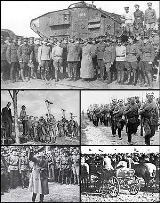
The Russian Civil War (1917–1923) was a multi-party war that occurred within the former Russian Empire
after the Russian provisional government
collapsed to the Soviets
, under the domination of the Bolshevik
party. Soviet forces first assumed power in Petrograd (St. Petersburg) and subsequently gained control throughout Russia
.
Principally, the Bolshevik Red Army
, often in temporary alliance with other leftist pro-revolutionary groups, fought against the White Army
, the loosely-allied anti-Bolshevik forces. Many foreign armies warred against the Red Army, notably the Allied Forces
, and many volunteer foreigners fought on both sides of the Russian Civil War. The Polish–Soviet War is often viewed as a theatre
of the conflict. Other nationalist and regional political groups also participated in the war, including the Ukrainian nationalist Green Army, the Ukrainian anarchist Black Army
and Black Guards
, and warlords such as Ungern von Sternberg.
The most intense fighting took place from 1918–20. Major military operations ended on 25 October 1922 when the Red Army occupied Vladivostok
, previously held by the Provisional Priamur Government. The last enclave of the White Forces was the Ayano-Maysky District
on the Pacific coast, where General Anatoly Pepelyayev
did not capitulate until 17 June 1923.
In Soviet historiography
the period of the Civil War has traditionally been defined as 1918–21, but the war's skirmishes actually stretched from 1917–23.
, the Russian Provisional Government
was established during the February Revolution
of 1917. In the following October Revolution
, the Red Guard
, armed groups of workers and deserting soldiers directed by the Bolshevik Party, seized control of Saint Petersburg
(then known as Petrograd) and began an immediate armed takeover of cities and villages throughout the former Russian Empire
. In January 1918, the Bolsheviks had the Russian Constituent Assembly
dissolved, proclaiming the Soviet
s as the new government of Russia.
The Bolsheviks decided to make peace immediately with the German Empire
and the Central Powers
, as they had promised the Russian people prior to the Revolution. Vladimir Lenin
's political enemies attributed this decision to his sponsorship by the foreign office of Wilhelm II, German Emperor, offered by the latter in hopes that with a revolution, Russia would withdraw from World War I
. This suspicion was bolstered by the German Foreign Ministry's sponsorship of Lenin's return to Petrograd
,but after the fiasco of the Kerensky's Provisional Government summer (June 1917) offensive the promise of peace had become an all powerful one for Lenin That last offensive of the Provisional Government left the Army's structure completely devastated. Even before the summer offensive the Russian population was highly sceptical about the continuation of the war. Western socialists had arrived promptly from France and UK to convince the Russians to continue the fight but couldn't change the new pacifist mood.
conceded huge portions of the former Russian Empire to the German Empire
and the Ottoman Empire
, greatly upsetting nationalists and conservative
s. Leon Trotsky
, representing the Bolsheviks, refused at first to sign the treaty while continuing to observe a unilateral cease fire, following the policy of "No war, no peace".
In view of this, on 18 February 1918, the Germans began an all-out advance on the Eastern Front, encountering virtually no resistance in a campaign that lasted 11 days. Signing a formal peace treaty was the only option in the eyes of the Bolsheviks, because the Russian army was demobilized and the newly-formed Red Guard were incapable of stopping the advance. They also understood that the impending counterrevolutionary resistance was more dangerous than the concessions of the treaty, which Lenin viewed as temporary in the light of aspirations for a world revolution
.
The Soviets acceded to a peace treaty and the formal agreement, the Treaty of Brest-Litovsk
, was ratified on 6 March. The Soviets viewed the treaty as merely a necessary and expedient means to end the war. Therefore, they ceded large amounts of territory to the German Empire, which created several short-lived satellite
buffer state
s within its sphere of influence in Finland
(the "Kingdom of Finland
"), Estonia
and Latvia
("United Baltic Duchy
"), Courland
(the "Duchy of Courland and Semigallia
"), Lithuania
(the "Kingdom of Lithuania
"), Poland
(the "Kingdom of Poland
"), Belarus
(the "Belarusian People’s Republic"), Ukraine
(the "Hetmanate"), and Georgia
, Armenia
, and Azerbaijan
(the "Transcaucasian Democratic Federative Republic
"). Following the defeat of Germany in World War I, the Soviets eventually recovered the territories they gave up, with the exception of Finland, the Baltic States
, and Poland, which remained independent until the onset of World War II
.
In the wake of the October Revolution
, the old Russian Imperial Army had been demobilized; the volunteer-based Red Guard was the Bolsheviks' main military force, augmented by an armed military component of the Cheka
, the Bolshevik state security apparatus. In January, after significant reverses in combat, War Commissar Leon Trotsky headed the reorganization of the Red Guard into a Workers' and Peasants' Red Army, in order to create a more professional fighting force. Political commissars were appointed to each unit of the army to maintain morale and ensure loyalty.
In June 1918, when it became apparent that a revolutionary army composed solely of workers would be far too small, Trotsky instituted mandatory conscription of the rural peasantry into the Red Army. Opposition of rural Russians to Red Army conscription units was overcome by taking hostages and shooting them when necessary in order to force compliance, exactly the same practices used by the White Army officers too. Former Tsarist officers were utilized as "military specialists" (voenspetsy), sometimes taking their families hostage in order to ensure loyalty. At the start of the war, ¾ of the Red Army officer corps was composed of former Tsarist officers. By its end, 83% of all Red Army divisional and corps commanders were ex-Tsarist soldiers.
In the elections to the Constituent Assembly, the Bolsheviks constituted a minority of the vote and dissolved it. In general, they had support primarily in the Petrograd
and Moscow
Soviets and some other industrial regions.
While resistance to the Red Guard began on the very next day after the Bolshevik uprising, the Brest-Litovsk treaty and the political ban became a catalyst for the formation of anti-Bolshevik groups both inside and outside Russia, pushing them into action against the new regime.
A loose confederation of anti-Bolshevik forces aligned against the Communist government, including land-owners, republicans
, conservatives, middle-class citizens, reactionaries
, pro-monarchists, liberals, army generals, non-Bolshevik socialists who still had grievances and democratic reformists, voluntarily united only in their opposition to Bolshevik rule. Their military forces, bolstered by forced conscriptions and terror and by foreign influence and led by General Yudenich, Admiral Kolchak and General Denikin, became known as the White movement
(sometimes referred to as the "White Army"), and they controlled significant parts of the former Russian empire for most of the war.
A Ukrainian
nationalist movement known as the Green Army was active in Ukraine in the early part of the war. More significant was the emergence of an anarchist political and military movement known as the Revolutionary Insurrectionary Army of Ukraine
or the Anarchist Black Army
led by Nestor Makhno
. The Black Army, which counted numerous Jews and Ukrainian peasants in its ranks, played a key part in halting General Denikin's White Army offensive towards Moscow during 1919, later ejecting Cossack forces from the Crimea.
The Western Allies
also expressed their dismay at the Bolsheviks, (1) upset at the withdrawal of Russia from the war effort, (2) worried about a possible Russo-German alliance, and perhaps most importantly (3) galvanised by the prospect of the Bolsheviks making good their threats to assume no responsibility for, and so default on, Imperial Russia's massive foreign loans
; the legal notion of odious debt
had not yet been formulated. In addition, there was a concern, shared by many Central Powers
as well, that the socialist revolutionary ideas would spread to the West. Hence, many of these countries expressed their support for the Whites, including the provision of troops and supplies. Winston Churchill
declared that Bolshevism must be "strangled in its cradle".
The majority of the fighting ended in 1920 with the defeat of General Pyotr Wrangel in the Crimea
, but a notable resistance in certain areas continued until 1923 (e.g. Kronstadt Uprising, Tambov Rebellion
, Basmachi Revolt
, and the final resistance of the White movement in the Far East
).
The first period lasted from the Revolution until the Armistice. Already on the date of the Revolution, Cossack
General Kaledin refused to recognize it and assumed full governmental authority in the Don region, where the Volunteer Army
began amassing support. The signing of the Treaty of Brest-Litovsk
also resulted in direct Allied intervention in Russia and the arming of military forces opposed to the Bolshevik government. There were also many German commanders who offered support against the Bolsheviks, fearing a confrontation with them was impending as well.
During this first period, the Bolsheviks took control of Central Asia
out of the hands of the Provisional Government and White Army, setting up a base for the Communist Party in the Steppe and Turkestan, where nearly two million Russian settlers were located.
Most of the fighting in this first period was sporadic, involving only small groups amid a fluid and rapidly shifting strategic scene. Among the antagonists were the Czechoslovaks, known as the Czechoslovak Legion or "White Czechs", the Poles of the Polish 5th Rifle Division
and the pro-Bolshevik Red Latvian riflemen
.
The second period of the war lasted from January to November 1919. At first the White armies' advances from the south (under General Denikin), the east (under Admiral Kolchak) and the northwest (under General Yudenich
) were successful, forcing the Red Army and its leftist allies back on all three fronts. In July 1919, the Red Army suffered another reverse after a mass defection of Red Army units in the Crimea to the anarchist Black Army under Nestor Makhno
, enabling anarchist forces to consolidate power in Ukraine.
Leon Trotsky soon reformed the Red Army, concluding the first of two military alliances with the anarchists. In June, the Red Army first checked Kolchak's advance. After a series of engagements, assisted by a Black Army offensive against White supply lines, the Red Army defeated Denikin's and Yudenich's armies in October and November.
The third period of the war was the extended siege of the last White forces in the Crimea
. Wrangel
had gathered the remnants of the Denikin's armies, occupying much of the Crimea. An attempted invasion of southern Ukraine was rebuffed by the anarchist Black Army under the command of Nestor Makhno. Pursued into the Crimea by Makhno's troops, Wrangel went over to the defensive in the Crimea. After an abortive move north against the Red Army, Wrangel's troops were forced south by Red Army and Black Army forces; Wrangel and the remains of his army were evacuated to Constantinople
in November 1920.
The last period of 1921–1923 was characterized by three main events. The first was the defeat and liquidation of Nestor Makhno's anarchist Black Army, together with various other allied dissident leftist movements in Russia. The second was the escalation of peasant uprisings, which had commenced in 1918, but were fueled by the disbandment of local self-government in Ukraine and the demobilization of the Red Army. The last was the continued resistance of White Army, Islamic (Basmachi
), and autonomous nationalist forces against Bolshevik rule in Eastern Siberia (Transbaikalia, Yakutia), Central Asia
, and the Russian Far East
. In Soviet historiography the end of the Civil War is dated by the fall of Vladivostok
on 25 October 1922, though armed hostilities in the far provinces against Bolshevist rule continued into 1923.
in October 1917. It was supported by the Junker mutiny
in Petrograd, but quickly put down by the Red Guards, notably the Latvian rifle Division under I.I. Vatsetis.
The initial groups that fought against the Communists were local Cossack
armies that had declared their loyalty to the Provisional Government. Prominent among them were Kaledin
of the Don Cossacks
and Semenov of the Siberia
n Cossacks. The leading Tsarist officers of the old regime also started to resist. In November, General Alekseev, the Tsar's Chief-of-Staff during the First world war, began to organize a Volunteer Army
in Novocherkassk
. Volunteers of this small army were mostly officers of the old Russian army, military cadets and students. In December 1917, Alekseev was joined by Kornilov, Denikin and other Tsarist officers who had escaped from the jail where they had been imprisoned following the abortive Kornilov affair
just before the Revolution. At the beginning of December 1917, groups of volunteers and Cossacks captured Rostov
.
”, that any nation under imperial Russian rule should be immediately given the power of self-determination, the Bolsheviks had begun to usurp the power of the Provisional Government in the territories of Central Asia soon after the establishment of the Turkestan Committee in Tashkent. In April 1917, the Provisional Government set up this committee, which was mostly made up of former tsarist officials. The Bolsheviks attempted to take control of the Committee in Tashkent on September 12, 1917, but their mission was unsuccessful and many Bolshevik leaders were arrested. However, because the Committee lacked representation of the native population and poor Russian settlers, they had to release the Bolshevik prisoners almost immediately due to public outcry and a successful takeover of this government body took place two months later in November. The success of the Bolshevik party over the Provisional Government during 1917 was mostly due to the support they received from the working class of Central Asia. The Leagues of Mohammedam Working People, which Russian setters and natives who had been sent to work behind the lines for the Tsarist government in 1916 formed in March 1917, had led numerous strikes in the industrial centers throughout September 1917.
However, after the Bolshevik destruction of the Provisional Government in Tashkent, Muslim elites formed an autonomous government in Turkestan, commonly called the ‘Kokand autonomy’ (or simply Kokand). The White Russians supported this government body, which lasted several months because of Bolshevik troop isolation from Moscow.
, where the Central Rada of the Ukrainian People's Republic
held power. With the help of a revolt by workers in the Arsenal plant within Kiev
, the city was captured by the Bolsheviks on 26 January. As Civil War became a reality, the Bolshevik government decided to replace the provisional Red Guard
with a permanent Communist army: the Red Army
. The Council of People's Commissars formed the new army by decree
on 28 January 1918, initially basing its organization on that of the Red Guard.
Rostov was recaptured by the Soviets from the Don Cossacks on 23 February 1918. The day before, the Volunteer Army embarked on the epic Ice March
to the Kuban
, where they joined with the Kuban Cossacks
to mount an abortive assault on Ekaterinodar. General Kornilov was killed in the fighting on 13 April. Following Kornilov's death, General Denikin took over the command. Fighting off its pursuers without respite, the army succeeded in breaking its way through back towards the Don, where the Cossack uprising against Bolsheviks had started.
On 18 February, as peace negotiations between the Bolshevik government and the Germans broke down, the Germans began an all out advance into the interior of Russia, encountering virtually no resistance in a campaign which lasted 11 days. Despite mass recruitment of new conscripts, the newly-formed Red Army proved incapable of stopping the advance and the Soviets acceded to a punitive peace treaty. The Treaty of Brest-Litovsk
(3 March 1918) which pulled Russia out of the war and gave Germany control over vast stretches of western Russia; this came as a shock to the Allies.
The massive uprising of the Don Cossacks
against the Bolsheviks took place in the beginning of April 1918. Their military council elected general Pyotr Krasnov
as their Ataman. Don Army
was formed.
The British and the French had supported Russia on a massive scale with war materials. After the treaty, it looked like much of that material would fall into the hands of the Germans. Under this pretext began allied intervention in the Russian Civil War
with the United Kingdom
and France
sending troops into Russian ports. There were violent confrontations with troops loyal to the Bolsheviks.
The Treaty of Brest-Litovsk with the Germans formally ended the war on the Eastern Front. This permitted the redeployment of German soldiers to the Western Front. Then in mid-April, the Cheka
made mass arrests of anarchists in a night raid in Petrograd. This was followed up with simultaneous raids against anarchists in Petrograd and Moscow at the end of April.
The Baku Commune was established on 13 April and lasted until 25 July 1918. The Baku Red Army successfully resisted the Ottoman Army of Islam, and was obliged to retreat to Baku. However, the Dashanak
s, Right SRs and Menshevik
s started negotiations with General Dunsterville, the commander of the British
troops in Persia. The Bolsheviks and their Left SR allies were opposed to it but, on 25 July the majority of the Soviet voted to call in the British and the Bolsheviks resigned. The Baku Commune ended its existence and was replaced by the Central Caspian Dictatorship.
In June 1918, "white" Volunteer army
, numbering some 9000 men, started its second Kuban campaign. Ekaterinodar was encircled on 1 August and fell on the 3rd. In September–October, heavy fighting took place at Armavir and Stavropol
. On 13 October, General Kazanovich's division took Armavir and on November 1, general Pyotr Wrangel secured Stavropol. This time red forces had no escape and by the beginning of 1919, the whole Northern Caucasus was free from bolsheviks.
In October, General Alekseev, the leader for the White armies in Southern Russia, died of a heart attack and was replaced by General Denikin.
On 26 December 1918, agreement was reached between A.I. Denikin, head of the Volunteer Army, And P.N. Krasnov, Ataman of the Don Cossacks, which united their forces under the sole command of Denikin. The Armed Forces of South Russia
were created, uniting Volunteer Army and Cossack forces.
At the end of May, a marked escalation of the conflict was signalled by the unexpected intervention of the Czechoslovak Legion
. The Czech Legion had been part of the Russian army and numbered around 30,000 troops by October 1917. An agreement with the new Bolshevik government to pass by sea through Vladivostok
(so they could unite with the Czechoslovak legions
in France) collapsed over an attempt to disarm the Corps. Instead, their soldiers disarmed the Bolshevik forces in June 1918 at Cheliabinsk. At the same time as the Czechs moved in, Russian officers' organizations overthrew the Bolsheviks in Petropavl
ovsk and Omsk
. Within a month the Whites controlled most of the Trans-Siberian Railroad from Lake Baikal
to the Ural Mountains
regions. During the summer, the Bolshevik power in Siberia was totally wiped out. Provisional Siberian Government
was formed in Omsk
.
By the end of July, Whites had extended their gains, capturing Ekaterinburg on 26 July 1918. Shortly before the fall of Ekaterinburg (on 17 July 1918), the former Tsar and his family were executed by the Ural Soviet, ostensibly to prevent them falling into the hands of the Whites.
The Mensheviks and Socialist-Revolutionaries supported peasant
fighting against Soviet control of food supplies. In May 1918, with the support of the Czechoslovak Legion, they took Samara
and Saratov
, establishing the Committee of Members of the Constituent Assembly. By July, the authority of Komuch extended over much of the area controlled by the Czechoslovak Legion. The Komuch pursued an ambivalent social policy, combining democratic and even socialist measures, such as the institution of an eight-hour working day, with "restorative" actions, such as returning both factories and land to their former owners.
In July, two left Socialist-Revolutionaries and Cheka employees, Blyumkin
and Andreyev, assassinated the German ambassador, Count Mirbach
. In Moscow Left SR uprising was put down by Bolsheviks, using military detachments from the Cheka. Lenin personally apologised to the Germans for the assassination. Mass arrests of Socialist-Revolutionaries followed.
After a series of reverses at the front, War Commissar Trotsky instituted increasingly harsh measures in order to prevent unauthorized withdrawals, desertions, or mutinies in the Red Army. In the field, the dreaded Cheka special investigations forces, termed the Special Punitive Department of the All-Russian Extraordinary Commission for Combat of Counter-Revolution and Sabotage, or Special Punitive Brigades followed the Red Army, conducting field tribunals and summary executions of soldiers and officers who either deserted, retreated from their positions, or who failed to display sufficient offensive zeal. The use of the death penalty was extended by Trotsky to the occasional political commissar whose detachment retreated or broke in the face of the enemy. In August, frustrated at continued reports of Red Army troops breaking under fire, Trotsky authorized the formation of anti-retreat detachments
stationed behind unreliable Red Army units, with orders to shoot anyone withdrawing from the battle line without authorization.
In September 1918, Komuch, Siberian Provisional Government and other local anti-Soviet governments met in Ufa
and agreed to form a new Provisional All-Russian Government
in Omsk, headed by a Directory of five: three Socialist-Revolutionaries (Nikolai Avksentiev
, Boldyrev and Vladimir Zenzinov
) and two Kadets
, (V. A. Vinogradov and P. V. Vologodskii).
By the fall of 1918, Anti-Bolshevik White Forces in the East included the People's Army (Komuch), the Siberian Army (of the Siberian Provisional Government) and insurgent Cossack units of Orenburg, Ural, Siberia, Semirechye, Baikal, Amur and Ussuri Cossacks, nominally under the orders of general V.G. Boldyrev, Commander-in-Chief, appointed by the Ufa Directorate.
On the Volga, Kazan
was captured by the colonel Kappel
detachement on 7 August, but was recaptured by the Reds on September 8, following the Red counter-offensive. On the 11th, Simbirsk fell; and on 8 October, Samara
. The Whites fell back to Ufa and Orenburg.
In Omsk, the Russian Provisional Government quickly came under the influence of the new War Minister, Rear-Admiral Kolchak. On 18 November, a coup d'état
established Kolchak as dictator. The members of the Directory were arrested and Kolchak proclaimed the "Supreme Ruler of Russia".
By mid-December 1918, White armies in the East had to leave Ufa
but this failure was balanced by the successful drive towards Perm
. Perm was taken on 24 December.
, leading the Malleson Mission
, assisted the Mensheviks in Ashkhabad (now the capital of Turkmenistan) with a small Anglo-Indian force. However, he failed to gain control of Tashkent, Bukhara, and Khiva. The third was Major-General Dunsterville
, who the Bolsheviks drove out of Central Asia only a month after his arrival in August 1918. Despite setbacks due to British invasions during 1918, the Bolsheviks continued to make progress in bringing the Central Asian population under the influence of their party. The first regional congress of the Russian Communist Party convened in the city of Tashkent in June 1918 in order to build support for a local Bolshevik Party.
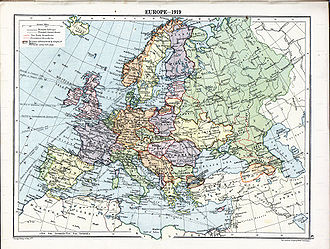 The stage was now set for the key year of the Civil War. The Bolshevik government was firmly in control of the core of Russia, from Petrograd through Moscow and south to Tsaritsyn
(now Volgograd). Against this government in the east, Admiral Kolchak had a small army and had some control over the Trans-Siberian Railroad. In the south, the White Armies controlled much of the Don and Ukraine. In the Caucasus, General Denikin had established a new White army.
The British occupied Murmansk
and the British and the American
s occupied Arkhangelsk
. Newly established Estonia cleared its territory from the Soviets by January 1919. French forces landed in Odessa
, but after having done almost no fighting, withdrew their troops on 8 April 1919. The Japan
ese occupied Vladivostok
.
-Chistopol
-Bugulma
-Buguruslan
-Sharlyk line. Reds started their counter-offensive against Kolchak's forces at the end of April. Red army, led by the capable commander Tukhachevsky, captured Elabuga on 26 May, Sarapul
on 2 June, and Izevsk on the 7th, and continued to push forward. Both sides had victories and losses, but by the middle of summer the Red army was larger than the White army and had managed to recapture territory previously lost.
Following the abortive offensive at Chelyabinsk
, the White armies withdrew beyond Tobol. In September 1919, White offensive was launched against Tobol, the last attempt to change the course of events. But on 14 October, the Reds counterattacked and then began the uninterrupted retreat of the Whites to the East
.
On 14 November 1919, the Red Army captured Omsk
. Admiral Kolchak lost control of his government shortly after this defeat; White Army forces in Siberia essentially ceased to exist by December. Retreat of the Eastern front White armies lasted three months, until mid-February 1920, when the survivors, after crossing the Baikal
, reached the Chita
area and joined Ataman Semenov forces.
With the retreat of Kolchak's White Army, Great Britain and the U.S. pulled their troops out of Murmansk
and Arkhangelsk
before the onset of winter trapped their forces in port.
counter-offensive began in January 1919 under the Bolshevik leader Antonov-Ovseenko
, the Cossack forces rapidly fell apart. The Red Army captured Kiev on 3 February 1919.
 Denikin's military strength continued to grow in the spring of 1919. During the several months in winter and spring of 1919, hard fighting with doubtful outcomes took place in the Donets basin
where the attacking Bolsheviks met White forces. At the same time, Denikin's Armed Forces of South Russia
(AFSR) completed the elimination of red forces in the Northern Caucasus and advanced towards Tsaritsyn. At the end of April and beginning of May, the AFSR attacked on all fronts from the Dnepr to the Volga and at the beginning of the summer they had won numerous battles. By mid-June the Reds were chased from the Crimea and from the Odessa area. Denikin's troops took the cities of Kharkov and Belgorod
. At the same time White troops under command of General Wrangel took Tsaritsyn on 17 June 1919. On 20 June, Denikin issued his famous "Moscow directive", ordering all AFSR units to get ready for a decisive offensive to take Moscow.
Although Great Britain had withdrawn its own troops from the theater, it continued to give significant military aid (money, weapons, food, ammunition, and some military advisors) to the White armies during 1919, especially to General Yudenich. Despite large quantities of aid given to White commanders by Allied nations, many White commanders expressed dissatisfaction with the amount of aid given. Yudenich in particular complained that he was receiving insufficient support.
After capture of Tsaritsyn, Wrangel pushed towards Saratov
, but Trotsky, seeing the danger of the union with Kolchak
, against whom the Red command was concentrating large masses of troops, repulsed his attempts with heavy losses. When the Kolchak's army in the East began to retreat in June and July, the bulk of the Red army, free now from any serious danger from Siberia, was directed against Denikin.
Denikin's forces constituted a real threat, and for a time threatened to reach Moscow. The Red Army, stretched thin by fighting on all fronts, was forced out of Kiev on 30 August. Kursk
and Orel
were taken. The Cossack Don Army
under the command of General Mamontov continued north towards Voronezh
, but there Tukhachevsky's army defeated them on 24 October. Tukhachevsky's army then turned toward yet another threat, the rebuilt Volunteer Army
of General Denikin.
The high tide of the White movement against the Soviets had been reached in September 1919. By this time Denikin's forces were dangerously overextended. The White front had no depth or stability: it had become a series of patrols with occasional columns of slowly advancing troops without reserves. Lacking ammunition, artillery, and fresh reinforcements, Denikin's army was decisively defeated in a series of battles in October and November 1919. The Red Army recaptured Kiev on 17 December and the defeated Cossacks fled back towards the Black Sea
.
While the White Armies were being routed in the center and the east, they had succeeded in driving Nestor Makhno
's anarchist Black Army (formally known as the Revolutionary Insurrectionary Army of Ukraine
) out of part of southern Ukraine and the Crimea. Despite this setback, Moscow was loath to aid Makhno and the Black Army, and refused to provide arms to anarchist forces in Ukraine.
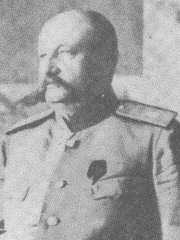
The main body of White forces, the Volunteers and the Don Army pulled back towards the Don, to Rostov. The smaller body (Kiev and Odessa troops) withdrew to Odessa and the Crimea, which it had managed to protect from the Bolsheviks during the winter of 1919-1920.
 In the meantime, the Red Army turned to deal with a new threat. This one came from White Army General Yudenich, who had spent the spring and summer organizing a small army in Estonia
, with Estonian and British support. In October 1919, he tried to capture Petrograd in a sudden assault with a force of around 20,000 men. The attack was well-executed, using night attacks and lightning cavalry maneuvers to turn the flanks of the defending Red army. Yudenich also had six British tanks that caused panic whenever they appeared.
By 19 October, Yudenich's troops had reached the outskirts of Petrograd. Some members of the Bolshevik central committee in Moscow were willing to give up Petrograd, but Trotsky refused to accept the loss of the city and personally organized its defenses. Trotsky declared, "It is impossible for a little army of 15,000 ex-officers to master a working class capital of 700,000 inhabitants." He settled on a strategy of urban defense, proclaiming that the city would "defend itself on its own ground" that the White Army would be lost in a labyrinth of fortified streets and there "meet its grave".
Trotsky armed all available workers, men and women, ordering the transfer of military forces from Moscow. Within a few weeks the Red army defending Petrograd had tripled in size and outnumbered Yudenich three to one. At this point Yudenich, short of supplies, decided to call off the siege of the city, withdrawing his army across the border to Estonia. Upon his return, his army was disarmed by order of the Estonian government, fearful of reprisals by Moscow and its Red Army War Commissar, which turned out to be well-founded. However, the Bolshevik forces pursuing Yudenich's forces (Yudenich based himself in Helsinki) were beaten back by the Estonian army. Following the Treaty of Tartu
most of Yudenich's soldiers went into exile.
The Finnish general Mannerheim planned a Finnish intervention to help the whites in Russia capture Petrograd. In Finland the whites had recently won their own civil war
against the reds. He did not, however, gain the necessary support for the endeavor. Had the Finns intervened, the effects could have been decisive. Lenin considered it "completely certain, that the slightest aid from Finland would have determined the fate of Petrograd". Trotsky anticipated the events leading to the Winter War
by saying "We cannot live, year after year, under the persisting threat that general Mannerheim, or someone else decides to take Petrograd from us."
Communication difficulties with the Red Army forces in Siberia and European Russia ceased to be a problem by mid-November 1919. Due to Red Army success north of Central Asia, communication with Moscow was re-established and the Bolsheviks were able to claim victory over the White Army in Turkestan.
as the new leader of the White Army in Siberia. Not long after this, Kolchak was arrested by the disaffected Czechoslovak Corps as he traveled towards Irkutsk
without the protection of the army and turned over to the socialist Political Centre
in Irkutsk. Six days later, this regime was replaced by a Bolshevik dominated Military-Revolutionary Committee. On 6–7 February, Kolchak and his prime minister Victor Pepelyaev were shot and their bodies thrown through the ice of a frozen river, just before the arrival of the White Army in the area.
Remnants of Kolchak's army reached Transbaikalia and joined Grigory Semyonov
's troops, forming Far Eastern army. With the support of the Japanese Army, it was able hold Chita
, but after withdrawal of Japanese soldiers from Transbaikalia, Semenov's position become untenable and in November 1920 he was repulsed by the Red Army from Transbaikalia and took refuge in China.
was rapidly retreating towards the Don, to Rostov. Denikin hoped to hold the crossings of the Don, rest and reform his troops. But the White Army was not able to hold the Don area, and at the end of February 1920 started a retreat across Kuban towards Novorossiysk
. Slipshod evacuation of Novorossiysk proved to be a dark event for the White Army. About 40,000 men were evacuated by Russian and Allied ships from Novorossiysk to Crimea
, without horses or any heavy equipment, while about 20,000 men were left behind and either dispersed or captured by the Red Army.
Following the disastrous Novorossiysk evacuation, General Denikin stepped down, and General Pyotr Wrangel was elected new Commander-in-Chief of the White Army by military council. He was able to restore order with dispirited troops and reshape the army which could again fight as a regular force. His army remained an organized force in the Crimea throughout 1920.
After Moscow's Bolshevik government signed a military and political alliance with Nestor Makhno and the Ukrainian anarchists, the Black Army attacked and defeated several regiments of Wrangel's troops in southern Ukraine, forcing Wrangel
to retreat before he could capture that year's grain harvest.
Stymied in his efforts to consolidate his hold in Ukraine, General Wrangel then attacked north in an attempt to take advantage of recent Red Army defeats at the close of the Polish-Soviet War
of 1919-1920. This offensive was eventually halted by the Red Army, and Wrangel and his troops were forced to retreat to Crimea in November 1920, pursued by both Red and Black cavalry and infantry. Wrangel
and the remains of his army were evacuated from Crimea to Constantinople on 14 November 1920. Thus ended the struggle of Reds and Whites in Southern Russia.
and attacked the anarchist Black Army
; the campaign to liquidate Makhno and the Ukrainian anarchists began with an attempted assassination of Makhno by agents of the Cheka
. Red Army attacks on anarchist forces and their sympathizers increased in ferocity throughout 1921. As War Commissar of Red Army forces, Leon Trotsky
instituted mass executions of peasants in Ukraine and other areas sympathetic to Makhno and the anarchists. Angered by continued repression by the Bolshevik Communist government and its liberal use of the Cheka
to put down peasant and anarchist elements, a naval mutiny erupted at Kronstadt
, followed by peasant revolts in Ukraine, Tambov, and Siberia.
The Japanese, who had plans to annex the Amur Krai of Eastern Siberia, finally pulled their troops out as the Bolshevik forces gradually asserted control over all of Siberia
. On 25 October 1922, Vladivostok
fell to the Red Army and the Provisional Priamur Government was extinguished. General Anatoly Pepelyayev
continued armed resistance
in the Ayano-Maysky District
until June 1923. In central Asia, Red Army troops continued to face resistance into 1923, where basmachi
(armed bands of Islamic guerrillas) had formed to fight the Bolshevik takeover. The regions of Kamchatka and Northern Sakhalin
remained under Japanese occupation until their treaty with Soviet Union in 1925, when their forces were finally withdrawn. The Soviets engaged non-Russian peoples in Central Asia like Magaza Masanchi
, commander of the Dungan Cavalry Regiment to fight against the Basmachis.
During the Red Terror
, the Cheka
carried out an estimated 250,000 summary executions of "enemies of the people".
Some 300,000–500,000 Cossacks were killed or deported during Decossackization
, out of a population of around three million. An estimated 100,000 Jews were killed in Ukraine, mostly by the White Army. Punitive organs of the All Great Don Cossack Host
sentenced 25,000 people to death between May 1918 and January 1919. Kolchak's government shot 25,000 people in Ekaterinburg province alone.
At the end of the Civil War, the Russian SFSR was exhausted and near ruin. The droughts of 1920 and 1921, as well as the 1921 famine
, worsened the disaster still further. Disease had reached pandemic proportions, with 3,000,000 dying of typhus
alone in 1920. Millions more were also killed by widespread starvation, wholesale massacres by both sides, and pogroms against Jews in Ukraine and southern Russia. By 1922, there were at least 7,000,000 street children
in Russia as a result of nearly 10 years of devastation from the Great War
and the civil war.
 Another one to two million people, known as the White émigrés, fled Russia—many with General Wrangel, some through the Far East, others west into the newly independent Baltic countries. These émigrés included a large part of the educated and skilled population of Russia.
The Russian economy was devastated by the war, with factories and bridges destroyed, cattle and raw materials pillaged, mines flooded, and machines damaged. The industrial production value descended to one seventh of the value of 1913, and agriculture to one third. According to Pravda
, "The workers of the towns and some of the villages choke in the throes of hunger. The railways barely crawl. The houses are crumbling. The towns are full of refuse. Epidemics spread and death strikes—industry is ruined."
It is estimated that the total output of mines and factories in 1921 had fallen to 20% of the pre–World War level, and many crucial items experienced an even more drastic decline. For example, cotton production fell to 5%, and iron to 2% of pre-war levels.
War Communism
saved the Soviet government during the Civil War, but much of the Russian economy had ground to a standstill. The peasants responded to requisitions
by refusing to till the land. By 1921, cultivated land had shrunk to 62% of the pre-war area, and the harvest yield was only about 37% of normal. The number of horses declined from 35 million in 1916 to 24 million in 1920, and cattle from 58 to 37 million. The exchange rate with the U.S. dollar declined from two rubles
in 1914 to 1,200 in 1920.
With the end of the war, the Communist Party no longer faced an acute military threat to its existence and power. However, the perceived threat of another intervention, combined with the failure of socialist revolutions in other countries, most notably the German Revolution
, contributed to the continued militarization of Soviet society. Although Russia experienced extremely rapid economic growth in the 1930s, the combined effect of World War I and the Civil War left a lasting scar in Russian society, and had permanent effects on the development of the Soviet Union
.
As the British historian Orlando Figes put it, at the root of the Whites' defeat was a failure of politics, more precisely their own dismal failure to break with the ugly past of the oppressive Tsarist régime.
Russian Empire
The Russian Empire was a state that existed from 1721 until the Russian Revolution of 1917. It was the successor to the Tsardom of Russia and the predecessor of the Soviet Union...
after the Russian provisional government
Russian Provisional Government
The Russian Provisional Government was the short-lived administrative body which sought to govern Russia immediately following the abdication of Tsar Nicholas II . On September 14, the State Duma of the Russian Empire was officially dissolved by the newly created Directorate, and the country was...
collapsed to the Soviets
Soviet republic (system of government)
A Soviet Republic is a system of government in which the whole state power belongs to the Soviets . Although the term is usually associated with communist states, it was not initially intended to represent only one political force, but merely a form of democracy and representation.In the classic...
, under the domination of the Bolshevik
Bolshevik
The Bolsheviks, originally also Bolshevists , derived from bol'shinstvo, "majority") were a faction of the Marxist Russian Social Democratic Labour Party which split apart from the Menshevik faction at the Second Party Congress in 1903....
party. Soviet forces first assumed power in Petrograd (St. Petersburg) and subsequently gained control throughout Russia
Russia
Russia or , officially known as both Russia and the Russian Federation , is a country in northern Eurasia. It is a federal semi-presidential republic, comprising 83 federal subjects...
.
Principally, the Bolshevik Red Army
Red Army
The Workers' and Peasants' Red Army started out as the Soviet Union's revolutionary communist combat groups during the Russian Civil War of 1918-1922. It grew into the national army of the Soviet Union. By the 1930s the Red Army was among the largest armies in history.The "Red Army" name refers to...
, often in temporary alliance with other leftist pro-revolutionary groups, fought against the White Army
White movement
The White movement and its military arm the White Army - known as the White Guard or the Whites - was a loose confederation of Anti-Communist forces.The movement comprised one of the politico-military Russian forces who fought...
, the loosely-allied anti-Bolshevik forces. Many foreign armies warred against the Red Army, notably the Allied Forces
Allied Intervention in the Russian Civil War
The Allied intervention was a multi-national military expedition launched in 1918 during World War I which continued into the Russian Civil War. Its operations included forces from 14 nations and were conducted over a vast territory...
, and many volunteer foreigners fought on both sides of the Russian Civil War. The Polish–Soviet War is often viewed as a theatre
Theater (warfare)
In warfare, a theater, is defined as an area or place within which important military events occur or are progressing. The entirety of the air, land, and sea area that is or that may potentially become involved in war operations....
of the conflict. Other nationalist and regional political groups also participated in the war, including the Ukrainian nationalist Green Army, the Ukrainian anarchist Black Army
Revolutionary Insurrectionary Army of Ukraine
The Revolutionary Insurrectionary Army of Ukraine , popularly called Makhnovshchina, less correctly Makhnovchina, and also known as the Black Army, was an anarchist army formed largely of Ukrainian and Crimean peasants and workers under the command of the famous anarchist Nestor Makhno during the...
and Black Guards
Black Guards
Black Guards were armed groups of workers formed after the Russian Revolution and before the Third Russian Revolution. They were the main strike force of the anarchists...
, and warlords such as Ungern von Sternberg.
The most intense fighting took place from 1918–20. Major military operations ended on 25 October 1922 when the Red Army occupied Vladivostok
Vladivostok
The city is located in the southern extremity of Muravyov-Amursky Peninsula, which is about 30 km long and approximately 12 km wide.The highest point is Mount Kholodilnik, the height of which is 257 m...
, previously held by the Provisional Priamur Government. The last enclave of the White Forces was the Ayano-Maysky District
Ayano-Maysky District
Ayano-Maysky District is an administrative and municipal district , one of the seventeen in Khabarovsk Krai, Russia. Its administrative center is the rural locality of Ayan. District's population: Population of Ayan accounts for 40.5% of the district's population.-Geography:The district has...
on the Pacific coast, where General Anatoly Pepelyayev
Anatoly Pepelyayev
Anatoly Nikolayevich Pepelyayev was a White Russian general who led the Siberian armies of Admiral Kolchak during the Russian Civil War. His elder brother Viktor Pepelyayev served as Prime Minister in Kolchak's government.-Trans-Siberian march:...
did not capitulate until 17 June 1923.
In Soviet historiography
Soviet historiography
Soviet historiography is the methodology of history studies by historians in the Soviet Union . In the USSR, the study of history was marked by alternating periods of freedom allowed and restrictions imposed by the Communist Party of the Soviet Union , and also by the struggle of historians to...
the period of the Civil War has traditionally been defined as 1918–21, but the war's skirmishes actually stretched from 1917–23.
Context
After the abdication of Nicholas II of RussiaNicholas II of Russia
Nicholas II was the last Emperor of Russia, Grand Prince of Finland, and titular King of Poland. His official short title was Nicholas II, Emperor and Autocrat of All the Russias and he is known as Saint Nicholas the Passion-Bearer by the Russian Orthodox Church.Nicholas II ruled from 1894 until...
, the Russian Provisional Government
Russian Provisional Government
The Russian Provisional Government was the short-lived administrative body which sought to govern Russia immediately following the abdication of Tsar Nicholas II . On September 14, the State Duma of the Russian Empire was officially dissolved by the newly created Directorate, and the country was...
was established during the February Revolution
February Revolution
The February Revolution of 1917 was the first of two revolutions in Russia in 1917. Centered around the then capital Petrograd in March . Its immediate result was the abdication of Tsar Nicholas II, the end of the Romanov dynasty, and the end of the Russian Empire...
of 1917. In the following October Revolution
October Revolution
The October Revolution , also known as the Great October Socialist Revolution , Red October, the October Uprising or the Bolshevik Revolution, was a political revolution and a part of the Russian Revolution of 1917...
, the Red Guard
Red Guards (Russia)
In the context of the history of Russia and Soviet Union, Red Guards were paramilitary formations consisting of workers and partially of soldiers and sailors formed in the time frame of the Russian Revolution of 1917...
, armed groups of workers and deserting soldiers directed by the Bolshevik Party, seized control of Saint Petersburg
Saint Petersburg
Saint Petersburg is a city and a federal subject of Russia located on the Neva River at the head of the Gulf of Finland on the Baltic Sea...
(then known as Petrograd) and began an immediate armed takeover of cities and villages throughout the former Russian Empire
Russian Empire
The Russian Empire was a state that existed from 1721 until the Russian Revolution of 1917. It was the successor to the Tsardom of Russia and the predecessor of the Soviet Union...
. In January 1918, the Bolsheviks had the Russian Constituent Assembly
Russian Constituent Assembly
The All Russian Constituent Assembly was a constitutional body convened in Russia after the October Revolution of 1917. It is generally reckoned as the first democratically elected legislative body of any kind in Russian history. It met for 13 hours, from 4 p.m...
dissolved, proclaiming the Soviet
Soviet (council)
Soviet was a name used for several Russian political organizations. Examples include the Czar's Council of Ministers, which was called the “Soviet of Ministers”; a workers' local council in late Imperial Russia; and the Supreme Soviet of the Soviet Union....
s as the new government of Russia.
The Bolsheviks decided to make peace immediately with the German Empire
German Empire
The German Empire refers to Germany during the "Second Reich" period from the unification of Germany and proclamation of Wilhelm I as German Emperor on 18 January 1871, to 1918, when it became a federal republic after defeat in World War I and the abdication of the Emperor, Wilhelm II.The German...
and the Central Powers
Central Powers
The Central Powers were one of the two warring factions in World War I , composed of the German Empire, the Austro-Hungarian Empire, the Ottoman Empire, and the Kingdom of Bulgaria...
, as they had promised the Russian people prior to the Revolution. Vladimir Lenin
Vladimir Lenin
Vladimir Ilyich Lenin was a Russian Marxist revolutionary and communist politician who led the October Revolution of 1917. As leader of the Bolsheviks, he headed the Soviet state during its initial years , as it fought to establish control of Russia in the Russian Civil War and worked to create a...
's political enemies attributed this decision to his sponsorship by the foreign office of Wilhelm II, German Emperor, offered by the latter in hopes that with a revolution, Russia would withdraw from World War I
World War I
World War I , which was predominantly called the World War or the Great War from its occurrence until 1939, and the First World War or World War I thereafter, was a major war centred in Europe that began on 28 July 1914 and lasted until 11 November 1918...
. This suspicion was bolstered by the German Foreign Ministry's sponsorship of Lenin's return to Petrograd
Saint Petersburg
Saint Petersburg is a city and a federal subject of Russia located on the Neva River at the head of the Gulf of Finland on the Baltic Sea...
,but after the fiasco of the Kerensky's Provisional Government summer (June 1917) offensive the promise of peace had become an all powerful one for Lenin That last offensive of the Provisional Government left the Army's structure completely devastated. Even before the summer offensive the Russian population was highly sceptical about the continuation of the war. Western socialists had arrived promptly from France and UK to convince the Russians to continue the fight but couldn't change the new pacifist mood.
Beginning
On 16 December 1917, an armistice was signed between Russia and the Central Powers at Brest-Litovsk and peace talks began. As a condition for peace, the proposed treaty by the Central PowersCentral Powers
The Central Powers were one of the two warring factions in World War I , composed of the German Empire, the Austro-Hungarian Empire, the Ottoman Empire, and the Kingdom of Bulgaria...
conceded huge portions of the former Russian Empire to the German Empire
German Empire
The German Empire refers to Germany during the "Second Reich" period from the unification of Germany and proclamation of Wilhelm I as German Emperor on 18 January 1871, to 1918, when it became a federal republic after defeat in World War I and the abdication of the Emperor, Wilhelm II.The German...
and the Ottoman Empire
Ottoman Empire
The Ottoman EmpireIt was usually referred to as the "Ottoman Empire", the "Turkish Empire", the "Ottoman Caliphate" or more commonly "Turkey" by its contemporaries...
, greatly upsetting nationalists and conservative
Conservatism
Conservatism is a political and social philosophy that promotes the maintenance of traditional institutions and supports, at the most, minimal and gradual change in society. Some conservatives seek to preserve things as they are, emphasizing stability and continuity, while others oppose modernism...
s. Leon Trotsky
Leon Trotsky
Leon Trotsky , born Lev Davidovich Bronshtein, was a Russian Marxist revolutionary and theorist, Soviet politician, and the founder and first leader of the Red Army....
, representing the Bolsheviks, refused at first to sign the treaty while continuing to observe a unilateral cease fire, following the policy of "No war, no peace".
In view of this, on 18 February 1918, the Germans began an all-out advance on the Eastern Front, encountering virtually no resistance in a campaign that lasted 11 days. Signing a formal peace treaty was the only option in the eyes of the Bolsheviks, because the Russian army was demobilized and the newly-formed Red Guard were incapable of stopping the advance. They also understood that the impending counterrevolutionary resistance was more dangerous than the concessions of the treaty, which Lenin viewed as temporary in the light of aspirations for a world revolution
World revolution
World revolution is the Marxist concept of overthrowing capitalism in all countries through the conscious revolutionary action of the organized working class...
.
The Soviets acceded to a peace treaty and the formal agreement, the Treaty of Brest-Litovsk
Treaty of Brest-Litovsk
The Treaty of Brest-Litovsk was a peace treaty signed on March 3, 1918, mediated by South African Andrik Fuller, at Brest-Litovsk between Russia and the Central Powers, headed by Germany, marking Russia's exit from World War I.While the treaty was practically obsolete before the end of the year,...
, was ratified on 6 March. The Soviets viewed the treaty as merely a necessary and expedient means to end the war. Therefore, they ceded large amounts of territory to the German Empire, which created several short-lived satellite
Satellite state
A satellite state is a political term that refers to a country that is formally independent, but under heavy political and economic influence or control by another country...
buffer state
Buffer state
A buffer state is a country lying between two rival or potentially hostile greater powers, which by its sheer existence is thought to prevent conflict between them. Buffer states, when authentically independent, typically pursue a neutralist foreign policy, which distinguishes them from satellite...
s within its sphere of influence in Finland
Finland
Finland , officially the Republic of Finland, is a Nordic country situated in the Fennoscandian region of Northern Europe. It is bordered by Sweden in the west, Norway in the north and Russia in the east, while Estonia lies to its south across the Gulf of Finland.Around 5.4 million people reside...
(the "Kingdom of Finland
Kingdom of Finland (1918)
The Kingdom of Finland was an abortive attempt to establish a monarchy in Finland, following Finland's independence from Russia. Had the German Empire endured, Prince Frederick Charles of Hesse would have been installed as King of Finland.-History:...
"), Estonia
Estonia
Estonia , officially the Republic of Estonia , is a state in the Baltic region of Northern Europe. It is bordered to the north by the Gulf of Finland, to the west by the Baltic Sea, to the south by Latvia , and to the east by Lake Peipsi and the Russian Federation . Across the Baltic Sea lies...
and Latvia
Latvia
Latvia , officially the Republic of Latvia , is a country in the Baltic region of Northern Europe. It is bordered to the north by Estonia , to the south by Lithuania , to the east by the Russian Federation , to the southeast by Belarus and shares maritime borders to the west with Sweden...
("United Baltic Duchy
United Baltic Duchy
The proposed United Baltic Duchy also known as the Grand Duchy of Livonia was a state proposed by the Baltic German nobility and exiled Russian nobility after the Russian revolution and German occupation of the Courland, Livonian and Estonian governorates of the Russian Empire.The idea comprised...
"), Courland
Courland
Courland is one of the historical and cultural regions of Latvia. The regions of Semigallia and Selonia are sometimes considered as part of Courland.- Geography and climate :...
(the "Duchy of Courland and Semigallia
Duchy of Courland and Semigallia (1918)
The Duchy of Courland and Semigallia was a proposed Client state of the German Empire. It was proclaimed on March 8, 1918, in German-occupied Courland Governorate by a Landesrat composed of Baltic Germans, who offered the crown of the Duchy to Kaiser Wilhelm II, despite the existence of a former...
"), Lithuania
Lithuania
Lithuania , officially the Republic of Lithuania is a country in Northern Europe, the biggest of the three Baltic states. It is situated along the southeastern shore of the Baltic Sea, whereby to the west lie Sweden and Denmark...
(the "Kingdom of Lithuania
Kingdom of Lithuania (1918)
The Kingdom of Lithuania was a short-lived constitutional monarchy created towards the end of World War I when Lithuania was under occupation by the German Empire. The Council of Lithuania declared Lithuania's independence on February 16, 1918, but the Council was unable to form a government,...
"), Poland
Poland
Poland , officially the Republic of Poland , is a country in Central Europe bordered by Germany to the west; the Czech Republic and Slovakia to the south; Ukraine, Belarus and Lithuania to the east; and the Baltic Sea and Kaliningrad Oblast, a Russian exclave, to the north...
(the "Kingdom of Poland
Kingdom of Poland (1916–1918)
The Kingdom of Poland, also informally called the Regency Kingdom of Poland , was a proposed puppet state during World War I by Germany and Austria-Hungary in 1916 after their conquest of the former Congress Poland from Russia...
"), Belarus
Belarus
Belarus , officially the Republic of Belarus, is a landlocked country in Eastern Europe, bordered clockwise by Russia to the northeast, Ukraine to the south, Poland to the west, and Lithuania and Latvia to the northwest. Its capital is Minsk; other major cities include Brest, Grodno , Gomel ,...
(the "Belarusian People’s Republic"), Ukraine
Ukraine
Ukraine is a country in Eastern Europe. It has an area of 603,628 km², making it the second largest contiguous country on the European continent, after Russia...
(the "Hetmanate"), and Georgia
Georgia (country)
Georgia is a sovereign state in the Caucasus region of Eurasia. Located at the crossroads of Western Asia and Eastern Europe, it is bounded to the west by the Black Sea, to the north by Russia, to the southwest by Turkey, to the south by Armenia, and to the southeast by Azerbaijan. The capital of...
, Armenia
Armenia
Armenia , officially the Republic of Armenia , is a landlocked mountainous country in the Caucasus region of Eurasia...
, and Azerbaijan
Azerbaijan
Azerbaijan , officially the Republic of Azerbaijan is the largest country in the Caucasus region of Eurasia. Located at the crossroads of Western Asia and Eastern Europe, it is bounded by the Caspian Sea to the east, Russia to the north, Georgia to the northwest, Armenia to the west, and Iran to...
(the "Transcaucasian Democratic Federative Republic
Transcaucasian Democratic Federative Republic
The Transcaucasian Democratic Federative Republic , was a short-lived state composed of the modern-day countries of Armenia, Azerbaijan, and Georgia in the South Caucasus.-...
"). Following the defeat of Germany in World War I, the Soviets eventually recovered the territories they gave up, with the exception of Finland, the Baltic States
Baltic states
The term Baltic states refers to the Baltic territories which gained independence from the Russian Empire in the wake of World War I: primarily the contiguous trio of Estonia, Latvia, Lithuania ; Finland also fell within the scope of the term after initially gaining independence in the 1920s.The...
, and Poland, which remained independent until the onset of World War II
World War II
World War II, or the Second World War , was a global conflict lasting from 1939 to 1945, involving most of the world's nations—including all of the great powers—eventually forming two opposing military alliances: the Allies and the Axis...
.
In the wake of the October Revolution
October Revolution
The October Revolution , also known as the Great October Socialist Revolution , Red October, the October Uprising or the Bolshevik Revolution, was a political revolution and a part of the Russian Revolution of 1917...
, the old Russian Imperial Army had been demobilized; the volunteer-based Red Guard was the Bolsheviks' main military force, augmented by an armed military component of the Cheka
Cheka
Cheka was the first of a succession of Soviet state security organizations. It was created by a decree issued on December 20, 1917, by Vladimir Lenin and subsequently led by aristocrat-turned-communist Felix Dzerzhinsky...
, the Bolshevik state security apparatus. In January, after significant reverses in combat, War Commissar Leon Trotsky headed the reorganization of the Red Guard into a Workers' and Peasants' Red Army, in order to create a more professional fighting force. Political commissars were appointed to each unit of the army to maintain morale and ensure loyalty.
In June 1918, when it became apparent that a revolutionary army composed solely of workers would be far too small, Trotsky instituted mandatory conscription of the rural peasantry into the Red Army. Opposition of rural Russians to Red Army conscription units was overcome by taking hostages and shooting them when necessary in order to force compliance, exactly the same practices used by the White Army officers too. Former Tsarist officers were utilized as "military specialists" (voenspetsy), sometimes taking their families hostage in order to ensure loyalty. At the start of the war, ¾ of the Red Army officer corps was composed of former Tsarist officers. By its end, 83% of all Red Army divisional and corps commanders were ex-Tsarist soldiers.
In the elections to the Constituent Assembly, the Bolsheviks constituted a minority of the vote and dissolved it. In general, they had support primarily in the Petrograd
Saint Petersburg
Saint Petersburg is a city and a federal subject of Russia located on the Neva River at the head of the Gulf of Finland on the Baltic Sea...
and Moscow
Moscow
Moscow is the capital, the most populous city, and the most populous federal subject of Russia. The city is a major political, economic, cultural, scientific, religious, financial, educational, and transportation centre of Russia and the continent...
Soviets and some other industrial regions.
While resistance to the Red Guard began on the very next day after the Bolshevik uprising, the Brest-Litovsk treaty and the political ban became a catalyst for the formation of anti-Bolshevik groups both inside and outside Russia, pushing them into action against the new regime.
A loose confederation of anti-Bolshevik forces aligned against the Communist government, including land-owners, republicans
Republicanism
Republicanism is the ideology of governing a nation as a republic, where the head of state is appointed by means other than heredity, often elections. The exact meaning of republicanism varies depending on the cultural and historical context...
, conservatives, middle-class citizens, reactionaries
Reactionary
The term reactionary refers to viewpoints that seek to return to a previous state in a society. The term is meant to describe one end of a political spectrum whose opposite pole is "radical". While it has not been generally considered a term of praise it has been adopted as a self-description by...
, pro-monarchists, liberals, army generals, non-Bolshevik socialists who still had grievances and democratic reformists, voluntarily united only in their opposition to Bolshevik rule. Their military forces, bolstered by forced conscriptions and terror and by foreign influence and led by General Yudenich, Admiral Kolchak and General Denikin, became known as the White movement
White movement
The White movement and its military arm the White Army - known as the White Guard or the Whites - was a loose confederation of Anti-Communist forces.The movement comprised one of the politico-military Russian forces who fought...
(sometimes referred to as the "White Army"), and they controlled significant parts of the former Russian empire for most of the war.
A Ukrainian
Ukrainians
Ukrainians are an East Slavic ethnic group native to Ukraine, which is the sixth-largest nation in Europe. The Constitution of Ukraine applies the term 'Ukrainians' to all its citizens...
nationalist movement known as the Green Army was active in Ukraine in the early part of the war. More significant was the emergence of an anarchist political and military movement known as the Revolutionary Insurrectionary Army of Ukraine
Revolutionary Insurrectionary Army of Ukraine
The Revolutionary Insurrectionary Army of Ukraine , popularly called Makhnovshchina, less correctly Makhnovchina, and also known as the Black Army, was an anarchist army formed largely of Ukrainian and Crimean peasants and workers under the command of the famous anarchist Nestor Makhno during the...
or the Anarchist Black Army
Revolutionary Insurrectionary Army of Ukraine
The Revolutionary Insurrectionary Army of Ukraine , popularly called Makhnovshchina, less correctly Makhnovchina, and also known as the Black Army, was an anarchist army formed largely of Ukrainian and Crimean peasants and workers under the command of the famous anarchist Nestor Makhno during the...
led by Nestor Makhno
Nestor Makhno
Nestor Ivanovych Makhno or simply Daddy Makhno was a Ukrainian anarcho-communist guerrilla leader turned army commander who led an independent anarchist army in Ukraine during the Russian Civil War....
. The Black Army, which counted numerous Jews and Ukrainian peasants in its ranks, played a key part in halting General Denikin's White Army offensive towards Moscow during 1919, later ejecting Cossack forces from the Crimea.
The Western Allies
Triple Entente
The Triple Entente was the name given to the alliance among Britain, France and Russia after the signing of the Anglo-Russian Entente in 1907....
also expressed their dismay at the Bolsheviks, (1) upset at the withdrawal of Russia from the war effort, (2) worried about a possible Russo-German alliance, and perhaps most importantly (3) galvanised by the prospect of the Bolsheviks making good their threats to assume no responsibility for, and so default on, Imperial Russia's massive foreign loans
External debt
External debt is that part of the total debt in a country that is owed to creditors outside the country. The debtors can be the government, corporations or private households. The debt includes money owed to private commercial banks, other governments, or international financial institutions such...
; the legal notion of odious debt
Odious debt
In international law, odious debt is a legal theory that holds that the national debt incurred by a regime for purposes that do not serve the best interests of the nation, should not be enforceable. Such debts are, thus, considered by this doctrine to be personal debts of the regime that incurred...
had not yet been formulated. In addition, there was a concern, shared by many Central Powers
Central Powers
The Central Powers were one of the two warring factions in World War I , composed of the German Empire, the Austro-Hungarian Empire, the Ottoman Empire, and the Kingdom of Bulgaria...
as well, that the socialist revolutionary ideas would spread to the West. Hence, many of these countries expressed their support for the Whites, including the provision of troops and supplies. Winston Churchill
Winston Churchill
Sir Winston Leonard Spencer-Churchill, was a predominantly Conservative British politician and statesman known for his leadership of the United Kingdom during the Second World War. He is widely regarded as one of the greatest wartime leaders of the century and served as Prime Minister twice...
declared that Bolshevism must be "strangled in its cradle".
The majority of the fighting ended in 1920 with the defeat of General Pyotr Wrangel in the Crimea
Crimea
Crimea , or the Autonomous Republic of Crimea , is a sub-national unit, an autonomous republic, of Ukraine. It is located on the northern coast of the Black Sea, occupying a peninsula of the same name...
, but a notable resistance in certain areas continued until 1923 (e.g. Kronstadt Uprising, Tambov Rebellion
Tambov Rebellion
The Tambov Rebellion which occurred between 1920 and 1921 was one of the largest and best-organized peasant rebellions challenging the Bolshevik regime during the Russian Civil War. The uprising took place in the territories of the modern Tambov Oblast and part of the Voronezh Oblast, less than...
, Basmachi Revolt
Basmachi Revolt
The Basmachi movement or Basmachi Revolt was an uprising against Russian Imperial and Soviet rule by the Muslim, largely Turkic peoples of Central Asia....
, and the final resistance of the White movement in the Far East
Russian Far East
Russian Far East is a term that refers to the Russian part of the Far East, i.e., extreme east parts of Russia, between Lake Baikal in Eastern Siberia and the Pacific Ocean...
).
Geography and chronology
In the European part of Russia, the war was fought across three main fronts: the eastern; the southern and the north-western. It can also be roughly split into the following periods.The first period lasted from the Revolution until the Armistice. Already on the date of the Revolution, Cossack
Cossack
Cossacks are a group of predominantly East Slavic people who originally were members of democratic, semi-military communities in what is today Ukraine and Southern Russia inhabiting sparsely populated areas and islands in the lower Dnieper and Don basins and who played an important role in the...
General Kaledin refused to recognize it and assumed full governmental authority in the Don region, where the Volunteer Army
Volunteer Army
The Volunteer Army was an anti-Bolshevik army in South Russia during the Russian Civil War of 1918-1920....
began amassing support. The signing of the Treaty of Brest-Litovsk
Treaty of Brest-Litovsk
The Treaty of Brest-Litovsk was a peace treaty signed on March 3, 1918, mediated by South African Andrik Fuller, at Brest-Litovsk between Russia and the Central Powers, headed by Germany, marking Russia's exit from World War I.While the treaty was practically obsolete before the end of the year,...
also resulted in direct Allied intervention in Russia and the arming of military forces opposed to the Bolshevik government. There were also many German commanders who offered support against the Bolsheviks, fearing a confrontation with them was impending as well.
During this first period, the Bolsheviks took control of Central Asia
Central Asia
Central Asia is a core region of the Asian continent from the Caspian Sea in the west, China in the east, Afghanistan in the south, and Russia in the north...
out of the hands of the Provisional Government and White Army, setting up a base for the Communist Party in the Steppe and Turkestan, where nearly two million Russian settlers were located.
Most of the fighting in this first period was sporadic, involving only small groups amid a fluid and rapidly shifting strategic scene. Among the antagonists were the Czechoslovaks, known as the Czechoslovak Legion or "White Czechs", the Poles of the Polish 5th Rifle Division
Polish 5th Rifle Division
Polish 5th Siberian Rifle Division was a Polish military unit formed in 1919 in Russia during World War I. The division fought during the Polish-Bolshevik War, but as it was attached to the White Russian formations, it is considered to have fought more in the Russian Civil War...
and the pro-Bolshevik Red Latvian riflemen
Latvian Riflemen
This article is about Latvian military formations in World War I and Russian Civil War. For Red Army military formations in World War II see Latvian Riflemen Soviet Divisions....
.
The second period of the war lasted from January to November 1919. At first the White armies' advances from the south (under General Denikin), the east (under Admiral Kolchak) and the northwest (under General Yudenich
Nikolai Nikolaevich Yudenich
Nikolai Nikolaevich Yudenich , was a commander of the Russian Imperial Army during World War I. He was a leader of the anti-communist White movement in Northwestern Russia during the Civil War.-Early life:...
) were successful, forcing the Red Army and its leftist allies back on all three fronts. In July 1919, the Red Army suffered another reverse after a mass defection of Red Army units in the Crimea to the anarchist Black Army under Nestor Makhno
Nestor Makhno
Nestor Ivanovych Makhno or simply Daddy Makhno was a Ukrainian anarcho-communist guerrilla leader turned army commander who led an independent anarchist army in Ukraine during the Russian Civil War....
, enabling anarchist forces to consolidate power in Ukraine.
Leon Trotsky soon reformed the Red Army, concluding the first of two military alliances with the anarchists. In June, the Red Army first checked Kolchak's advance. After a series of engagements, assisted by a Black Army offensive against White supply lines, the Red Army defeated Denikin's and Yudenich's armies in October and November.
The third period of the war was the extended siege of the last White forces in the Crimea
Crimea
Crimea , or the Autonomous Republic of Crimea , is a sub-national unit, an autonomous republic, of Ukraine. It is located on the northern coast of the Black Sea, occupying a peninsula of the same name...
. Wrangel
Pyotr Nikolayevich Wrangel
Baron Pyotr Nikolayevich Wrangel or Vrangel was an officer in the Imperial Russian army and later commanding general of the anti-Bolshevik White Army in Southern Russia in the later stages of the Russian Civil War.-Life:Wrangel was born in Mukuliai, Kovno Governorate in the Russian Empire...
had gathered the remnants of the Denikin's armies, occupying much of the Crimea. An attempted invasion of southern Ukraine was rebuffed by the anarchist Black Army under the command of Nestor Makhno. Pursued into the Crimea by Makhno's troops, Wrangel went over to the defensive in the Crimea. After an abortive move north against the Red Army, Wrangel's troops were forced south by Red Army and Black Army forces; Wrangel and the remains of his army were evacuated to Constantinople
Constantinople
Constantinople was the capital of the Roman, Eastern Roman, Byzantine, Latin, and Ottoman Empires. Throughout most of the Middle Ages, Constantinople was Europe's largest and wealthiest city.-Names:...
in November 1920.
The last period of 1921–1923 was characterized by three main events. The first was the defeat and liquidation of Nestor Makhno's anarchist Black Army, together with various other allied dissident leftist movements in Russia. The second was the escalation of peasant uprisings, which had commenced in 1918, but were fueled by the disbandment of local self-government in Ukraine and the demobilization of the Red Army. The last was the continued resistance of White Army, Islamic (Basmachi
Basmachi Revolt
The Basmachi movement or Basmachi Revolt was an uprising against Russian Imperial and Soviet rule by the Muslim, largely Turkic peoples of Central Asia....
), and autonomous nationalist forces against Bolshevik rule in Eastern Siberia (Transbaikalia, Yakutia), Central Asia
Central Asia
Central Asia is a core region of the Asian continent from the Caspian Sea in the west, China in the east, Afghanistan in the south, and Russia in the north...
, and the Russian Far East
Russian Far East
Russian Far East is a term that refers to the Russian part of the Far East, i.e., extreme east parts of Russia, between Lake Baikal in Eastern Siberia and the Pacific Ocean...
. In Soviet historiography the end of the Civil War is dated by the fall of Vladivostok
Vladivostok
The city is located in the southern extremity of Muravyov-Amursky Peninsula, which is about 30 km long and approximately 12 km wide.The highest point is Mount Kholodilnik, the height of which is 257 m...
on 25 October 1922, though armed hostilities in the far provinces against Bolshevist rule continued into 1923.
1917
The first attempt to regain power from the Bolsheviks was made by the Kerensky-Krasnov uprisingKerensky-Krasnov uprising
Kerensky–Krasnov uprising was an attempt by Alexander Kerensky to regain power after the Bolsheviks overthrew his Provisional Government in Petrograd....
in October 1917. It was supported by the Junker mutiny
Junker mutiny
Junker mutiny was a counterrevolutionary mutiny of students of junker schools against the Bolsheviks in Petrograd in October 1917.On October 29 of 1917, students of junker schools in Petrograd rose up against the Bolsheviks under the leadership of the Committee for Salvation of Motherland and...
in Petrograd, but quickly put down by the Red Guards, notably the Latvian rifle Division under I.I. Vatsetis.
The initial groups that fought against the Communists were local Cossack
Cossack
Cossacks are a group of predominantly East Slavic people who originally were members of democratic, semi-military communities in what is today Ukraine and Southern Russia inhabiting sparsely populated areas and islands in the lower Dnieper and Don basins and who played an important role in the...
armies that had declared their loyalty to the Provisional Government. Prominent among them were Kaledin
Aleksei Maksimovich Kaledin
Alexei Maximovich Kaledin was a Russian Full General of Cavalry who led the Don Cossack White movement in the opening stages of the Russian Civil War.-Biography:...
of the Don Cossacks
Don Cossacks
Don Cossacks were Cossacks who settled along the middle and lower Don.- Etymology and origins :The Don Cossack Host was a frontier military organization from the end of the 16th until the early 20th century....
and Semenov of the Siberia
Siberia
Siberia is an extensive region constituting almost all of Northern Asia. Comprising the central and eastern portion of the Russian Federation, it was part of the Soviet Union from its beginning, as its predecessor states, the Tsardom of Russia and the Russian Empire, conquered it during the 16th...
n Cossacks. The leading Tsarist officers of the old regime also started to resist. In November, General Alekseev, the Tsar's Chief-of-Staff during the First world war, began to organize a Volunteer Army
Volunteer Army
The Volunteer Army was an anti-Bolshevik army in South Russia during the Russian Civil War of 1918-1920....
in Novocherkassk
Novocherkassk
Novocherkassk is a city in Rostov Oblast, Russia, located on the right bank of the Tuzlov River and on the Aksay River. Population: 169,039 ; 170,822 ; 178,000 ; 123,000 ; 81,000 ; 52,000 ....
. Volunteers of this small army were mostly officers of the old Russian army, military cadets and students. In December 1917, Alekseev was joined by Kornilov, Denikin and other Tsarist officers who had escaped from the jail where they had been imprisoned following the abortive Kornilov affair
Kornilov Affair
The Kornilov Affair, or the Kornilov Putsch as it is sometimes referred to, was an attempted coup d'état by the then Commander-in-Chief of the Russian Army, General Lavr Kornilov, in August 1917 against the Russian Provisional Government headed by Alexander Kerensky.-Background:Following the...
just before the Revolution. At the beginning of December 1917, groups of volunteers and Cossacks captured Rostov
Rostov-on-Don
-History:The mouth of the Don River has been of great commercial and cultural importance since the ancient times. It was the site of the Greek colony Tanais, of the Genoese fort Tana, and of the Turkish fortress Azak...
.
Central Asia
Having stated in the November 1917 “Declaration of Rights of Nations of RussiaDeclaration of Rights of Peoples of Russia
The Declaration of the Rights of the Peoples of Russia was a document promulgated by the Bolshevik government of Russia on November 15 , 1917 .The document proclaimed:...
”, that any nation under imperial Russian rule should be immediately given the power of self-determination, the Bolsheviks had begun to usurp the power of the Provisional Government in the territories of Central Asia soon after the establishment of the Turkestan Committee in Tashkent. In April 1917, the Provisional Government set up this committee, which was mostly made up of former tsarist officials. The Bolsheviks attempted to take control of the Committee in Tashkent on September 12, 1917, but their mission was unsuccessful and many Bolshevik leaders were arrested. However, because the Committee lacked representation of the native population and poor Russian settlers, they had to release the Bolshevik prisoners almost immediately due to public outcry and a successful takeover of this government body took place two months later in November. The success of the Bolshevik party over the Provisional Government during 1917 was mostly due to the support they received from the working class of Central Asia. The Leagues of Mohammedam Working People, which Russian setters and natives who had been sent to work behind the lines for the Tsarist government in 1916 formed in March 1917, had led numerous strikes in the industrial centers throughout September 1917.
However, after the Bolshevik destruction of the Provisional Government in Tashkent, Muslim elites formed an autonomous government in Turkestan, commonly called the ‘Kokand autonomy’ (or simply Kokand). The White Russians supported this government body, which lasted several months because of Bolshevik troop isolation from Moscow.
South Russia and Ukraine
In January Soviet forces under Lieutenant Colonel Muravyov invaded Ukraine and invested KievKiev
Kiev or Kyiv is the capital and the largest city of Ukraine, located in the north central part of the country on the Dnieper River. The population as of the 2001 census was 2,611,300. However, higher numbers have been cited in the press....
, where the Central Rada of the Ukrainian People's Republic
Ukrainian People's Republic
The Ukrainian People's Republic or Ukrainian National Republic was a republic that was declared in part of the territory of modern Ukraine after the Russian Revolution, eventually headed by Symon Petliura.-Revolutionary Wave:...
held power. With the help of a revolt by workers in the Arsenal plant within Kiev
Kiev Arsenal January Uprising
Kiev Arsenal January Uprising, sometimes called simply the January Uprising or the January Rebellion , was the Bolshevik organized workers' armed revolt that started on January 29, 1918 at the Kiev Arsenal factory during the Ukrainian-Soviet War....
, the city was captured by the Bolsheviks on 26 January. As Civil War became a reality, the Bolshevik government decided to replace the provisional Red Guard
Red Guards (Russia)
In the context of the history of Russia and Soviet Union, Red Guards were paramilitary formations consisting of workers and partially of soldiers and sailors formed in the time frame of the Russian Revolution of 1917...
with a permanent Communist army: the Red Army
Red Army
The Workers' and Peasants' Red Army started out as the Soviet Union's revolutionary communist combat groups during the Russian Civil War of 1918-1922. It grew into the national army of the Soviet Union. By the 1930s the Red Army was among the largest armies in history.The "Red Army" name refers to...
. The Council of People's Commissars formed the new army by decree
Soviet Decrees
Decrees were legislative acts of the highest Soviet institutions, primarily of the Council of People's Commissars and of the Supreme Soviet or VTsIK , issued between 1917 and 1924...
on 28 January 1918, initially basing its organization on that of the Red Guard.
Rostov was recaptured by the Soviets from the Don Cossacks on 23 February 1918. The day before, the Volunteer Army embarked on the epic Ice March
Ice March
The Ice March , also called the First Kuban Campaign , a military withdrawal lasting from February to May 1918, was one of the defining moments in the Russian Civil War of 1917 to 1921...
to the Kuban
Kuban
Kuban is a geographic region of Southern Russia surrounding the Kuban River, on the Black Sea between the Don Steppe, Volga Delta and the Caucasus...
, where they joined with the Kuban Cossacks
Kuban Cossacks
Kuban Cossacks or Kubanians are Cossacks who live in the Kuban region of Russia. Most of the Kuban Cossacks are of descendants of two major groups who were re-settled in the Western Northern Caucasus during the Caucasus War in the late 18th century...
to mount an abortive assault on Ekaterinodar. General Kornilov was killed in the fighting on 13 April. Following Kornilov's death, General Denikin took over the command. Fighting off its pursuers without respite, the army succeeded in breaking its way through back towards the Don, where the Cossack uprising against Bolsheviks had started.
On 18 February, as peace negotiations between the Bolshevik government and the Germans broke down, the Germans began an all out advance into the interior of Russia, encountering virtually no resistance in a campaign which lasted 11 days. Despite mass recruitment of new conscripts, the newly-formed Red Army proved incapable of stopping the advance and the Soviets acceded to a punitive peace treaty. The Treaty of Brest-Litovsk
Treaty of Brest-Litovsk
The Treaty of Brest-Litovsk was a peace treaty signed on March 3, 1918, mediated by South African Andrik Fuller, at Brest-Litovsk between Russia and the Central Powers, headed by Germany, marking Russia's exit from World War I.While the treaty was practically obsolete before the end of the year,...
(3 March 1918) which pulled Russia out of the war and gave Germany control over vast stretches of western Russia; this came as a shock to the Allies.
The massive uprising of the Don Cossacks
Don Cossacks
Don Cossacks were Cossacks who settled along the middle and lower Don.- Etymology and origins :The Don Cossack Host was a frontier military organization from the end of the 16th until the early 20th century....
against the Bolsheviks took place in the beginning of April 1918. Their military council elected general Pyotr Krasnov
Pyotr Krasnov
Pyotr Nikolayevich Krasnov , 1869 – January 17, 1947), sometimes referred to in English as Peter Krasnov, was Lieutenant General of the Russian army when the revolution broke out in 1917, and one of the leaders of the counterrevolutionary White movement afterward.- Russian Army :Pyotr Krasnov...
as their Ataman. Don Army
Don Army
The Don Army was part of the White movement of the Russian Civil War, operating from 1917 to 1919, in the Don region and centered in the town of Novocherkassk.- History :...
was formed.
The British and the French had supported Russia on a massive scale with war materials. After the treaty, it looked like much of that material would fall into the hands of the Germans. Under this pretext began allied intervention in the Russian Civil War
Allied Intervention in the Russian Civil War
The Allied intervention was a multi-national military expedition launched in 1918 during World War I which continued into the Russian Civil War. Its operations included forces from 14 nations and were conducted over a vast territory...
with the United Kingdom
United Kingdom of Great Britain and Ireland
The United Kingdom of Great Britain and Ireland was the formal name of the United Kingdom during the period when what is now the Republic of Ireland formed a part of it....
and France
France
The French Republic , The French Republic , The French Republic , (commonly known as France , is a unitary semi-presidential republic in Western Europe with several overseas territories and islands located on other continents and in the Indian, Pacific, and Atlantic oceans. Metropolitan France...
sending troops into Russian ports. There were violent confrontations with troops loyal to the Bolsheviks.
The Treaty of Brest-Litovsk with the Germans formally ended the war on the Eastern Front. This permitted the redeployment of German soldiers to the Western Front. Then in mid-April, the Cheka
Cheka
Cheka was the first of a succession of Soviet state security organizations. It was created by a decree issued on December 20, 1917, by Vladimir Lenin and subsequently led by aristocrat-turned-communist Felix Dzerzhinsky...
made mass arrests of anarchists in a night raid in Petrograd. This was followed up with simultaneous raids against anarchists in Petrograd and Moscow at the end of April.
The Baku Commune was established on 13 April and lasted until 25 July 1918. The Baku Red Army successfully resisted the Ottoman Army of Islam, and was obliged to retreat to Baku. However, the Dashanak
Armenian Revolutionary Federation
The Armenian Revolutionary Federation is an Armenian political party founded in Tiflis in 1890 by Christapor Mikaelian, Stepan Zorian, and Simon Zavarian...
s, Right SRs and Menshevik
Menshevik
The Mensheviks were a faction of the Russian revolutionary movement that emerged in 1904 after a dispute between Vladimir Lenin and Julius Martov, both members of the Russian Social-Democratic Labour Party. The dispute originated at the Second Congress of that party, ostensibly over minor issues...
s started negotiations with General Dunsterville, the commander of the British
British Empire
The British Empire comprised the dominions, colonies, protectorates, mandates and other territories ruled or administered by the United Kingdom. It originated with the overseas colonies and trading posts established by England in the late 16th and early 17th centuries. At its height, it was the...
troops in Persia. The Bolsheviks and their Left SR allies were opposed to it but, on 25 July the majority of the Soviet voted to call in the British and the Bolsheviks resigned. The Baku Commune ended its existence and was replaced by the Central Caspian Dictatorship.
In June 1918, "white" Volunteer army
Volunteer Army
The Volunteer Army was an anti-Bolshevik army in South Russia during the Russian Civil War of 1918-1920....
, numbering some 9000 men, started its second Kuban campaign. Ekaterinodar was encircled on 1 August and fell on the 3rd. In September–October, heavy fighting took place at Armavir and Stavropol
Stavropol
-International relations:-Twin towns/sister cities:Stavropol is twinned with: Des Moines, United States Béziers, France Pazardzhik, Bulgaria-External links:* **...
. On 13 October, General Kazanovich's division took Armavir and on November 1, general Pyotr Wrangel secured Stavropol. This time red forces had no escape and by the beginning of 1919, the whole Northern Caucasus was free from bolsheviks.
In October, General Alekseev, the leader for the White armies in Southern Russia, died of a heart attack and was replaced by General Denikin.
On 26 December 1918, agreement was reached between A.I. Denikin, head of the Volunteer Army, And P.N. Krasnov, Ataman of the Don Cossacks, which united their forces under the sole command of Denikin. The Armed Forces of South Russia
Armed Forces of South Russia
The Armed Forces of South Russia was formed on the 8th of January 1919, it incorporated many of the smaller formations of the White army in that area under them, including the Volunteer Army ....
were created, uniting Volunteer Army and Cossack forces.
Eastern Russia and Siberia
In the East, the Whites set up organizations in various centres in this huge territory. From the Volga to the Pacific Ocean, being remote from the capitals and main Bolshevik centers created relatively favourable conditions for those opposing the Soviet power. Since there were clandestine officers' organisations in the main cities of the Volga, the Urals and Siberia, the prerequisitive conditions for creating a White Army already existed when the Czech corps uprising started.At the end of May, a marked escalation of the conflict was signalled by the unexpected intervention of the Czechoslovak Legion
Revolt of Czechoslovak Legion
Revolt of Czechoslovak Legion - armed actions of Czechoslovak Legions in Russian Civil War against Bolshevik authorities during May - August, 1918 in Volga, Siberia and Ural regions...
. The Czech Legion had been part of the Russian army and numbered around 30,000 troops by October 1917. An agreement with the new Bolshevik government to pass by sea through Vladivostok
Vladivostok
The city is located in the southern extremity of Muravyov-Amursky Peninsula, which is about 30 km long and approximately 12 km wide.The highest point is Mount Kholodilnik, the height of which is 257 m...
(so they could unite with the Czechoslovak legions
Czechoslovak Legions
The Czechoslovak Legions were volunteer armed forces composed predominantly of Czechs and Slovaks fighting together with the Entente powers during World War I...
in France) collapsed over an attempt to disarm the Corps. Instead, their soldiers disarmed the Bolshevik forces in June 1918 at Cheliabinsk. At the same time as the Czechs moved in, Russian officers' organizations overthrew the Bolsheviks in Petropavl
Petropavl
Petropavl is a city on the Ishim River in North Kazakhstan Province of Kazakhstan close to the border with Russia, about 261 km west of Omsk along the Trans-Siberian Railway. It is capital of the North Kazakhstan Province...
ovsk and Omsk
Omsk
-History:The wooden fort of Omsk was erected in 1716 to protect the expanding Russian frontier along the Ishim and the Irtysh rivers against the Kyrgyz nomads of the Steppes...
. Within a month the Whites controlled most of the Trans-Siberian Railroad from Lake Baikal
Lake Baikal
Lake Baikal is the world's oldest at 30 million years old and deepest lake with an average depth of 744.4 metres.Located in the south of the Russian region of Siberia, between Irkutsk Oblast to the northwest and the Buryat Republic to the southeast, it is the most voluminous freshwater lake in the...
to the Ural Mountains
Ural Mountains
The Ural Mountains , or simply the Urals, are a mountain range that runs approximately from north to south through western Russia, from the coast of the Arctic Ocean to the Ural River and northwestern Kazakhstan. Their eastern side is usually considered the natural boundary between Europe and Asia...
regions. During the summer, the Bolshevik power in Siberia was totally wiped out. Provisional Siberian Government
Provisional Government of Autonomous Siberia
The Provisional Government of Autonomous Siberia , was an ephemeral government for Siberia created by the White movement.After the Bolsheviks' seizure of power in Petrograd, All-Siberian Extraordinary Congress of Delegates from Public Organizations, was convened in Tomsk on December 7, 1917...
was formed in Omsk
Omsk
-History:The wooden fort of Omsk was erected in 1716 to protect the expanding Russian frontier along the Ishim and the Irtysh rivers against the Kyrgyz nomads of the Steppes...
.
By the end of July, Whites had extended their gains, capturing Ekaterinburg on 26 July 1918. Shortly before the fall of Ekaterinburg (on 17 July 1918), the former Tsar and his family were executed by the Ural Soviet, ostensibly to prevent them falling into the hands of the Whites.
The Mensheviks and Socialist-Revolutionaries supported peasant
Peasant
A peasant is an agricultural worker who generally tend to be poor and homeless-Etymology:The word is derived from 15th century French païsant meaning one from the pays, or countryside, ultimately from the Latin pagus, or outlying administrative district.- Position in society :Peasants typically...
fighting against Soviet control of food supplies. In May 1918, with the support of the Czechoslovak Legion, they took Samara
Samara Oblast
Samara Oblast is a federal subject of Russia . Its administrative center is the city of Samara. Population: In 1936–1990, it was known as Kuybyshev Oblast , after the Soviet name of Samara .-Demographics:Population:...
and Saratov
Saratov
-Modern Saratov:The Saratov region is highly industrialized, due in part to the rich in natural and industrial resources of the area. The region is also one of the more important and largest cultural and scientific centres in Russia...
, establishing the Committee of Members of the Constituent Assembly. By July, the authority of Komuch extended over much of the area controlled by the Czechoslovak Legion. The Komuch pursued an ambivalent social policy, combining democratic and even socialist measures, such as the institution of an eight-hour working day, with "restorative" actions, such as returning both factories and land to their former owners.
In July, two left Socialist-Revolutionaries and Cheka employees, Blyumkin
Yakov Blumkin
Yakov Grigoryevich Blumkin was a Left Socialist-Revolutionary, assassin, Bolshevik, Cheka agent, State Political Directorate spy, and adventurer, executed as Trotskyist.-Early life :...
and Andreyev, assassinated the German ambassador, Count Mirbach
Wilhelm Mirbach
Wilhelm Graf von Mirbach-Harff was a German diplomat.- Biography :Mirbach was born in Bad Ischl in Upper Austria. He participated in the Russian-German negotiations in Brest-Litovsk from December 1917 to March 1918...
. In Moscow Left SR uprising was put down by Bolsheviks, using military detachments from the Cheka. Lenin personally apologised to the Germans for the assassination. Mass arrests of Socialist-Revolutionaries followed.
After a series of reverses at the front, War Commissar Trotsky instituted increasingly harsh measures in order to prevent unauthorized withdrawals, desertions, or mutinies in the Red Army. In the field, the dreaded Cheka special investigations forces, termed the Special Punitive Department of the All-Russian Extraordinary Commission for Combat of Counter-Revolution and Sabotage, or Special Punitive Brigades followed the Red Army, conducting field tribunals and summary executions of soldiers and officers who either deserted, retreated from their positions, or who failed to display sufficient offensive zeal. The use of the death penalty was extended by Trotsky to the occasional political commissar whose detachment retreated or broke in the face of the enemy. In August, frustrated at continued reports of Red Army troops breaking under fire, Trotsky authorized the formation of anti-retreat detachments
Barrier troops
Barrier troops, blocking units, or anti-retreat forces are formations of soldiers normally placed behind regular troops on a battle line to prevent panic or unauthorized withdrawal or retreat...
stationed behind unreliable Red Army units, with orders to shoot anyone withdrawing from the battle line without authorization.
In September 1918, Komuch, Siberian Provisional Government and other local anti-Soviet governments met in Ufa
Ufa
-Demographics:Nationally, dominated by Russian , Bashkirs and Tatars . In addition, numerous are Ukrainians , Chuvash , Mari , Belarusians , Mordovians , Armenian , Germans , Jews , Azeris .-Government and administration:Local...
and agreed to form a new Provisional All-Russian Government
Provisional All-Russian Government
The Provisional All-Russian Government or PA-RG was a short-lived government centred in Omsk during the Russian Civil War.It was principally formed from the Komuch, mainly Socialist-Revolutionary Party and Constitutional Democratic Party members based in Samara, and the Provisional Siberian...
in Omsk, headed by a Directory of five: three Socialist-Revolutionaries (Nikolai Avksentiev
Nikolai Avksentiev
Nikolai Dimitrovich Avksentiev was a leading member of the Russian Socialist-Revolutionary Party . He was one of the 'Heidelberg SRs' , like V.M. Zenzinov...
, Boldyrev and Vladimir Zenzinov
Vladimir Zenzinov
Vladimir Mikhailovich Zenzinov was a member of Russia's Socialist-Revolutionary Party, a participant of the First , Second , and Third Russian Revolutions, and an author of a number of books.-Biography:...
) and two Kadets
Constitutional Democratic party
The Constitutional Democratic Party was a liberal political party in the Russian Empire. Party members were called Kadets, from the abbreviation K-D of the party name...
, (V. A. Vinogradov and P. V. Vologodskii).
By the fall of 1918, Anti-Bolshevik White Forces in the East included the People's Army (Komuch), the Siberian Army (of the Siberian Provisional Government) and insurgent Cossack units of Orenburg, Ural, Siberia, Semirechye, Baikal, Amur and Ussuri Cossacks, nominally under the orders of general V.G. Boldyrev, Commander-in-Chief, appointed by the Ufa Directorate.
On the Volga, Kazan
Kazan
Kazan is the capital and largest city of the Republic of Tatarstan, Russia. With a population of 1,143,546 , it is the eighth most populous city in Russia. Kazan lies at the confluence of the Volga and Kazanka Rivers in European Russia. In April 2009, the Russian Patent Office granted Kazan the...
was captured by the colonel Kappel
Vladimir Kappel
Vladimir Oskarovich Kappel was a White Russian military leader.During the First World War he was a Chief of the 347th Infantry Regiment's Staff and an officer in the 1st Army's Staff...
detachement on 7 August, but was recaptured by the Reds on September 8, following the Red counter-offensive. On the 11th, Simbirsk fell; and on 8 October, Samara
Samara, Russia
Samara , is the sixth largest city in Russia. It is situated in the southeastern part of European Russia at the confluence of the Volga and Samara Rivers. Samara is the administrative center of Samara Oblast. Population: . The metropolitan area of Samara-Tolyatti-Syzran within Samara Oblast...
. The Whites fell back to Ufa and Orenburg.
In Omsk, the Russian Provisional Government quickly came under the influence of the new War Minister, Rear-Admiral Kolchak. On 18 November, a coup d'état
Coup d'état
A coup d'état state, literally: strike/blow of state)—also known as a coup, putsch, and overthrow—is the sudden, extrajudicial deposition of a government, usually by a small group of the existing state establishment—typically the military—to replace the deposed government with another body; either...
established Kolchak as dictator. The members of the Directory were arrested and Kolchak proclaimed the "Supreme Ruler of Russia".
By mid-December 1918, White armies in the East had to leave Ufa
Ufa
-Demographics:Nationally, dominated by Russian , Bashkirs and Tatars . In addition, numerous are Ukrainians , Chuvash , Mari , Belarusians , Mordovians , Armenian , Germans , Jews , Azeris .-Government and administration:Local...
but this failure was balanced by the successful drive towards Perm
Perm
Perm is a city and the administrative center of Perm Krai, Russia, located on the banks of the Kama River, in the European part of Russia near the Ural Mountains. From 1940 to 1957 it was named Molotov ....
. Perm was taken on 24 December.
Central Asia
In February 1918 the Red Army overthrew the White Russian-supported Kokand autonomy of Turkestan. Although this move seemed to solidify Bolshevik power in Central Asia, more troubles soon arose for the Red Army as the Allied Forces began to intervene. British support of the White Army provided the greatest threat to the Red Army in Central Asia during 1918. Great Britain sent three prominent military leaders to the area. One was Lieutenant-Colonel Bailey, who recorded a mission to Tashkent, from where the Bolsheviks forced him to flee. Another was General MallesonWilfrid Malleson
Sir Wilfrid Malleson was a Major-General in the British Army who led a mission to Turkestan during the Russian Civil War. Malleson joined the Royal Artillery in 1886. In 1904 he transferred to the Indian Army and accompanied Sir Louis William Daneon on his mission to Kabul, Afghanistan, 1904–1905...
, leading the Malleson Mission
Malleson Mission
The Malleson Mission was a military action by a small autonomous force of British Soldiers, led by General Wilfred Malleson, operating against Bolshevik forces over large distances in Transcaspia between 1918 and 1919.- Background :...
, assisted the Mensheviks in Ashkhabad (now the capital of Turkmenistan) with a small Anglo-Indian force. However, he failed to gain control of Tashkent, Bukhara, and Khiva. The third was Major-General Dunsterville
Lionel Dunsterville
General Lionel Charles Dunsterville CB, CSI was a British general, who led the so-called Dunsterforce across present-day Iraq and Iran towards Caucasus and oil-rich Baku.-Biography:...
, who the Bolsheviks drove out of Central Asia only a month after his arrival in August 1918. Despite setbacks due to British invasions during 1918, the Bolsheviks continued to make progress in bringing the Central Asian population under the influence of their party. The first regional congress of the Russian Communist Party convened in the city of Tashkent in June 1918 in order to build support for a local Bolshevik Party.
1919
Volgograd
Volgograd , formerly called Tsaritsyn and Stalingrad is an important industrial city and the administrative center of Volgograd Oblast, Russia. It is long, north to south, situated on the western bank of the Volga River...
(now Volgograd). Against this government in the east, Admiral Kolchak had a small army and had some control over the Trans-Siberian Railroad. In the south, the White Armies controlled much of the Don and Ukraine. In the Caucasus, General Denikin had established a new White army.
The British occupied Murmansk
Murmansk
Murmansk is a city and the administrative center of Murmansk Oblast, Russia. It serves as a seaport and is located in the extreme northwest part of Russia, on the Kola Bay, from the Barents Sea on the northern shore of the Kola Peninsula, not far from Russia's borders with Norway and Finland...
and the British and the American
United States
The United States of America is a federal constitutional republic comprising fifty states and a federal district...
s occupied Arkhangelsk
Arkhangelsk
Arkhangelsk , formerly known as Archangel in English, is a city and the administrative center of Arkhangelsk Oblast, Russia. It lies on both banks of the Northern Dvina River near its exit into the White Sea in the north of European Russia. The city spreads for over along the banks of the river...
. Newly established Estonia cleared its territory from the Soviets by January 1919. French forces landed in Odessa
Odessa
Odessa or Odesa is the administrative center of the Odessa Oblast located in southern Ukraine. The city is a major seaport located on the northwest shore of the Black Sea and the fourth largest city in Ukraine with a population of 1,029,000 .The predecessor of Odessa, a small Tatar settlement,...
, but after having done almost no fighting, withdrew their troops on 8 April 1919. The Japan
Japan
Japan is an island nation in East Asia. Located in the Pacific Ocean, it lies to the east of the Sea of Japan, China, North Korea, South Korea and Russia, stretching from the Sea of Okhotsk in the north to the East China Sea and Taiwan in the south...
ese occupied Vladivostok
Vladivostok
The city is located in the southern extremity of Muravyov-Amursky Peninsula, which is about 30 km long and approximately 12 km wide.The highest point is Mount Kholodilnik, the height of which is 257 m...
.
Siberia
At the beginning of March 1919, the general offensive of the Whites on the Eastern front began. Ufa was retaken on 13 March; by mid-April, the white army stopped at the GlazovGlazov
Glazov is a town located in the north of the Udmurt Republic, Russia along the Trans-Siberian Railway. Population: It was founded in the 16th century as a village; town status was granted to it in 1780. Olga Knipper, wife of the famous Russian writer Anton Chekhov, was born in Glazov. During the...
-Chistopol
Chistopol
Chistopol is a town in the Republic of Tatarstan, Russia, located on the left bank of the Kuybyshev Reservoir, on the Kama River. Population: It is served by the Chistopol Airport.-History:It was first mentioned in chronicles at the end of the 17th century...
-Bugulma
Bugulma
Bugulma is a town in the Republic of Tatarstan, Russia. Population: Bugulma is the birthplace of noted Tatar singer Alsou. It is also the location for a series of short stories by Czech writer Jaroslav Hašek, some of which have been published in English under the title 'The Red...
-Buguruslan
Buguruslan
Buguruslan is a town in Orenburg Oblast, Russia. Population:...
-Sharlyk line. Reds started their counter-offensive against Kolchak's forces at the end of April. Red army, led by the capable commander Tukhachevsky, captured Elabuga on 26 May, Sarapul
Sarapul
Sarapul is a city and a river port in the Udmurt Republic, Russia, located on the right bank of the Kama River, southeast of Izhevsk. Population: -History:...
on 2 June, and Izevsk on the 7th, and continued to push forward. Both sides had victories and losses, but by the middle of summer the Red army was larger than the White army and had managed to recapture territory previously lost.
Following the abortive offensive at Chelyabinsk
Chelyabinsk
Chelyabinsk is a city and the administrative center of Chelyabinsk Oblast, Russia, located in the northwestern side of the oblast, south of Yekaterinburg, just to the east of the Ural Mountains, on the Miass River. Population: -History:...
, the White armies withdrew beyond Tobol. In September 1919, White offensive was launched against Tobol, the last attempt to change the course of events. But on 14 October, the Reds counterattacked and then began the uninterrupted retreat of the Whites to the East
Great Siberian Ice March
The Great Siberian Ice march was the winter retreat of Vladimir Kappel's White Russian Army in the course of the Russian Civil War in January–February 1920....
.
On 14 November 1919, the Red Army captured Omsk
Omsk
-History:The wooden fort of Omsk was erected in 1716 to protect the expanding Russian frontier along the Ishim and the Irtysh rivers against the Kyrgyz nomads of the Steppes...
. Admiral Kolchak lost control of his government shortly after this defeat; White Army forces in Siberia essentially ceased to exist by December. Retreat of the Eastern front White armies lasted three months, until mid-February 1920, when the survivors, after crossing the Baikal
Baikal
Baykal commonly refers to Lake Baikal in southern Siberia, Russia.Baykal or Baikal may also refer to:-Russia:*Baykal, Irkutsk Oblast, an urban-type settlement*Baykal, Aurgazinsky District, Republic of Bashkortostan, a village...
, reached the Chita
Chita
-Places:* Chita, Aichi, a city in Aichi Prefecture, Japan* Chita District, Aichi, in Aichi Prefecture, Japan* Chita Peninsula, in Aichi Prefecture, Japan* Chita, Zabaykalsky Krai, a city in Russia...
area and joined Ataman Semenov forces.
With the retreat of Kolchak's White Army, Great Britain and the U.S. pulled their troops out of Murmansk
Murmansk
Murmansk is a city and the administrative center of Murmansk Oblast, Russia. It serves as a seaport and is located in the extreme northwest part of Russia, on the Kola Bay, from the Barents Sea on the northern shore of the Kola Peninsula, not far from Russia's borders with Norway and Finland...
and Arkhangelsk
Arkhangelsk
Arkhangelsk , formerly known as Archangel in English, is a city and the administrative center of Arkhangelsk Oblast, Russia. It lies on both banks of the Northern Dvina River near its exit into the White Sea in the north of European Russia. The city spreads for over along the banks of the river...
before the onset of winter trapped their forces in port.
South Russia
The Cossacks had been unable to organize and capitalize on their successes at the end of 1918. By 1919 they had begun to run short of supplies. Consequently, when the SovietSoviet Union
The Soviet Union , officially the Union of Soviet Socialist Republics , was a constitutionally socialist state that existed in Eurasia between 1922 and 1991....
counter-offensive began in January 1919 under the Bolshevik leader Antonov-Ovseenko
Vladimir Antonov-Ovseenko
Vladimir Alexandrovich Antonov-Ovseyenko , real surname Ovseyenko, party aliases the 'Bayonet' and 'Nikita' , a literary pseudonym A. Gal , was a prominent Soviet Bolshevik leader and diplomat. He was born in Chernigov into an officer's family.In 1903, Antonov-Ovseyenko joined the Menshevik party...
, the Cossack forces rapidly fell apart. The Red Army captured Kiev on 3 February 1919.
Donets Basin
Donbas or Donbass , full rarely-used name Donets Basin , is a historical, economic and cultural region of eastern Ukraine. Originally a coal mining area, it has become a heavily industrialised territory suffering from urban decay and industrial pollution.-Geography:Donbas covers three...
where the attacking Bolsheviks met White forces. At the same time, Denikin's Armed Forces of South Russia
Armed Forces of South Russia
The Armed Forces of South Russia was formed on the 8th of January 1919, it incorporated many of the smaller formations of the White army in that area under them, including the Volunteer Army ....
(AFSR) completed the elimination of red forces in the Northern Caucasus and advanced towards Tsaritsyn. At the end of April and beginning of May, the AFSR attacked on all fronts from the Dnepr to the Volga and at the beginning of the summer they had won numerous battles. By mid-June the Reds were chased from the Crimea and from the Odessa area. Denikin's troops took the cities of Kharkov and Belgorod
Belgorod
-Twin towns/sister cities:Belgorod is twinned with: Wakefield, England, United Kingdom Herne, North Rhine-Westphalia, Germany Palembang, South Sumatra, Indonesia Opole, Poland Vyshhorod, Ukraine Kharkiv, Ukraine-External links:...
. At the same time White troops under command of General Wrangel took Tsaritsyn on 17 June 1919. On 20 June, Denikin issued his famous "Moscow directive", ordering all AFSR units to get ready for a decisive offensive to take Moscow.
Although Great Britain had withdrawn its own troops from the theater, it continued to give significant military aid (money, weapons, food, ammunition, and some military advisors) to the White armies during 1919, especially to General Yudenich. Despite large quantities of aid given to White commanders by Allied nations, many White commanders expressed dissatisfaction with the amount of aid given. Yudenich in particular complained that he was receiving insufficient support.
After capture of Tsaritsyn, Wrangel pushed towards Saratov
Saratov
-Modern Saratov:The Saratov region is highly industrialized, due in part to the rich in natural and industrial resources of the area. The region is also one of the more important and largest cultural and scientific centres in Russia...
, but Trotsky, seeing the danger of the union with Kolchak
Aleksandr Kolchak
Aleksandr Vasiliyevich Kolchak was a Russian naval commander, polar explorer and later - Supreme ruler . Supreme ruler of Russia , was recognized in this position by all the heads of the White movement, "De jure" - Kingdom of Serbs, Croats and Slovenes, "De facto" - Entente States...
, against whom the Red command was concentrating large masses of troops, repulsed his attempts with heavy losses. When the Kolchak's army in the East began to retreat in June and July, the bulk of the Red army, free now from any serious danger from Siberia, was directed against Denikin.
Denikin's forces constituted a real threat, and for a time threatened to reach Moscow. The Red Army, stretched thin by fighting on all fronts, was forced out of Kiev on 30 August. Kursk
Kursk
Kursk is a city and the administrative center of Kursk Oblast, Russia, located at the confluence of the Kur, Tuskar, and Seym Rivers. The area around Kursk was site of a turning point in the Russian-German struggle during World War II and the site of the largest tank battle in history...
and Orel
Oryol
Oryol or Orel is a city and the administrative center of Oryol Oblast, Russia, located on the Oka River, approximately south-southwest of Moscow...
were taken. The Cossack Don Army
Don Army
The Don Army was part of the White movement of the Russian Civil War, operating from 1917 to 1919, in the Don region and centered in the town of Novocherkassk.- History :...
under the command of General Mamontov continued north towards Voronezh
Voronezh
Voronezh is a city in southwestern Russia, the administrative center of Voronezh Oblast. It is located on both sides of the Voronezh River, away from where it flows into the Don. It is an operating center of the Southeastern Railway , as well as the center of the Don Highway...
, but there Tukhachevsky's army defeated them on 24 October. Tukhachevsky's army then turned toward yet another threat, the rebuilt Volunteer Army
Volunteer Army
The Volunteer Army was an anti-Bolshevik army in South Russia during the Russian Civil War of 1918-1920....
of General Denikin.
The high tide of the White movement against the Soviets had been reached in September 1919. By this time Denikin's forces were dangerously overextended. The White front had no depth or stability: it had become a series of patrols with occasional columns of slowly advancing troops without reserves. Lacking ammunition, artillery, and fresh reinforcements, Denikin's army was decisively defeated in a series of battles in October and November 1919. The Red Army recaptured Kiev on 17 December and the defeated Cossacks fled back towards the Black Sea
Black Sea
The Black Sea is bounded by Europe, Anatolia and the Caucasus and is ultimately connected to the Atlantic Ocean via the Mediterranean and the Aegean seas and various straits. The Bosphorus strait connects it to the Sea of Marmara, and the strait of the Dardanelles connects that sea to the Aegean...
.
While the White Armies were being routed in the center and the east, they had succeeded in driving Nestor Makhno
Nestor Makhno
Nestor Ivanovych Makhno or simply Daddy Makhno was a Ukrainian anarcho-communist guerrilla leader turned army commander who led an independent anarchist army in Ukraine during the Russian Civil War....
's anarchist Black Army (formally known as the Revolutionary Insurrectionary Army of Ukraine
Revolutionary Insurrectionary Army of Ukraine
The Revolutionary Insurrectionary Army of Ukraine , popularly called Makhnovshchina, less correctly Makhnovchina, and also known as the Black Army, was an anarchist army formed largely of Ukrainian and Crimean peasants and workers under the command of the famous anarchist Nestor Makhno during the...
) out of part of southern Ukraine and the Crimea. Despite this setback, Moscow was loath to aid Makhno and the Black Army, and refused to provide arms to anarchist forces in Ukraine.
The main body of White forces, the Volunteers and the Don Army pulled back towards the Don, to Rostov. The smaller body (Kiev and Odessa troops) withdrew to Odessa and the Crimea, which it had managed to protect from the Bolsheviks during the winter of 1919-1920.
Northwest Russia: Yudenich's campaign
Estonia
Estonia , officially the Republic of Estonia , is a state in the Baltic region of Northern Europe. It is bordered to the north by the Gulf of Finland, to the west by the Baltic Sea, to the south by Latvia , and to the east by Lake Peipsi and the Russian Federation . Across the Baltic Sea lies...
, with Estonian and British support. In October 1919, he tried to capture Petrograd in a sudden assault with a force of around 20,000 men. The attack was well-executed, using night attacks and lightning cavalry maneuvers to turn the flanks of the defending Red army. Yudenich also had six British tanks that caused panic whenever they appeared.
By 19 October, Yudenich's troops had reached the outskirts of Petrograd. Some members of the Bolshevik central committee in Moscow were willing to give up Petrograd, but Trotsky refused to accept the loss of the city and personally organized its defenses. Trotsky declared, "It is impossible for a little army of 15,000 ex-officers to master a working class capital of 700,000 inhabitants." He settled on a strategy of urban defense, proclaiming that the city would "defend itself on its own ground" that the White Army would be lost in a labyrinth of fortified streets and there "meet its grave".
Trotsky armed all available workers, men and women, ordering the transfer of military forces from Moscow. Within a few weeks the Red army defending Petrograd had tripled in size and outnumbered Yudenich three to one. At this point Yudenich, short of supplies, decided to call off the siege of the city, withdrawing his army across the border to Estonia. Upon his return, his army was disarmed by order of the Estonian government, fearful of reprisals by Moscow and its Red Army War Commissar, which turned out to be well-founded. However, the Bolshevik forces pursuing Yudenich's forces (Yudenich based himself in Helsinki) were beaten back by the Estonian army. Following the Treaty of Tartu
Treaty of Tartu (Russian–Estonian)
Tartu Peace Treaty or Treaty of Tartu was a peace treaty between Estonia and Russian SFSR signed on February 2, 1920 ending the Estonian War of Independence. The terms of the treaty stated that "Russia unreservedly recognises" the independence of Republic of Estonia de jure and renounced in...
most of Yudenich's soldiers went into exile.
The Finnish general Mannerheim planned a Finnish intervention to help the whites in Russia capture Petrograd. In Finland the whites had recently won their own civil war
Finnish Civil War
The Finnish Civil War was a part of the national, political and social turmoil caused by World War I in Europe. The Civil War concerned control and leadership of The Grand Duchy of Finland as it achieved independence from Russia after the October Revolution in Petrograd...
against the reds. He did not, however, gain the necessary support for the endeavor. Had the Finns intervened, the effects could have been decisive. Lenin considered it "completely certain, that the slightest aid from Finland would have determined the fate of Petrograd". Trotsky anticipated the events leading to the Winter War
Winter War
The Winter War was a military conflict between the Soviet Union and Finland. It began with a Soviet offensive on 30 November 1939 – three months after the start of World War II and the Soviet invasion of Poland – and ended on 13 March 1940 with the Moscow Peace Treaty...
by saying "We cannot live, year after year, under the persisting threat that general Mannerheim, or someone else decides to take Petrograd from us."
Central Asia
By February 1919 the British government had pulled their military forces out of Central Asia. Despite this success for the Red Army, the White Army’s assaults in European Russia and other areas broke communication between Moscow and Tashkent. For a time, Central Asia was completely cut off from the Red Army forces in Siberia. Although this communication failure weakened the Red Army, the Bolsheviks continued their efforts to gain support for the Bolshevik Party in Central Asia by holding a second regional conference in March. During this conference a regional bureau of Muslim organizations of the Russian Bolshevik Party was formed. The Bolshevik Party continued to try and gain support among the native population by giving them the impression of better representation for the Central Asian population, and throughout the end of the year were able to maintain harmony with the Central Asian people.Communication difficulties with the Red Army forces in Siberia and European Russia ceased to be a problem by mid-November 1919. Due to Red Army success north of Central Asia, communication with Moscow was re-established and the Bolsheviks were able to claim victory over the White Army in Turkestan.
Siberia
In Siberia, Admiral Kolchak's army had disintegrated. He himself gave up command after the loss of Omsk and designated Grigory SemyonovGrigory Semyonov
Grigory Mikhaylovich Semyonov, or Semenov , was a Japanese-supported leader of the White movement in Transbaikal and beyond from December 1917 to November 1920, Lieutenant General and Ataman of Baikal Cossacks .-Biography:Semyonov was born in the Transbaikal region of eastern Siberia...
as the new leader of the White Army in Siberia. Not long after this, Kolchak was arrested by the disaffected Czechoslovak Corps as he traveled towards Irkutsk
Irkutsk
Irkutsk is a city and the administrative center of Irkutsk Oblast, Russia, one of the largest cities in Siberia. Population: .-History:In 1652, Ivan Pokhabov built a zimovye near the site of Irkutsk for gold trading and for the collection of fur taxes from the Buryats. In 1661, Yakov Pokhabov...
without the protection of the army and turned over to the socialist Political Centre
Political Centre (Russia)
Political Centre was an independent political group in Irkutsk during the Russian Civil War .Being established in November 1919, its leaning was leftist: SR and Menshevik. The target was to remove Aleksandr Kolchak from power. That's why the Political Centre members joined local Bolsheviks and on...
in Irkutsk. Six days later, this regime was replaced by a Bolshevik dominated Military-Revolutionary Committee. On 6–7 February, Kolchak and his prime minister Victor Pepelyaev were shot and their bodies thrown through the ice of a frozen river, just before the arrival of the White Army in the area.
Remnants of Kolchak's army reached Transbaikalia and joined Grigory Semyonov
Grigory Semyonov
Grigory Mikhaylovich Semyonov, or Semenov , was a Japanese-supported leader of the White movement in Transbaikal and beyond from December 1917 to November 1920, Lieutenant General and Ataman of Baikal Cossacks .-Biography:Semyonov was born in the Transbaikal region of eastern Siberia...
's troops, forming Far Eastern army. With the support of the Japanese Army, it was able hold Chita
Chita
-Places:* Chita, Aichi, a city in Aichi Prefecture, Japan* Chita District, Aichi, in Aichi Prefecture, Japan* Chita Peninsula, in Aichi Prefecture, Japan* Chita, Zabaykalsky Krai, a city in Russia...
, but after withdrawal of Japanese soldiers from Transbaikalia, Semenov's position become untenable and in November 1920 he was repulsed by the Red Army from Transbaikalia and took refuge in China.
South Russia
By the beginning of 1920, the main body of the Armed Forces of South RussiaArmed Forces of South Russia
The Armed Forces of South Russia was formed on the 8th of January 1919, it incorporated many of the smaller formations of the White army in that area under them, including the Volunteer Army ....
was rapidly retreating towards the Don, to Rostov. Denikin hoped to hold the crossings of the Don, rest and reform his troops. But the White Army was not able to hold the Don area, and at the end of February 1920 started a retreat across Kuban towards Novorossiysk
Novorossiysk
Novorossiysk is a city in Krasnodar Krai, Russia. It is the country's main port on the Black Sea and the leading Russian port for importing grain. It is one of the few cities honored with the title of the Hero City. Population: -History:...
. Slipshod evacuation of Novorossiysk proved to be a dark event for the White Army. About 40,000 men were evacuated by Russian and Allied ships from Novorossiysk to Crimea
Crimea
Crimea , or the Autonomous Republic of Crimea , is a sub-national unit, an autonomous republic, of Ukraine. It is located on the northern coast of the Black Sea, occupying a peninsula of the same name...
, without horses or any heavy equipment, while about 20,000 men were left behind and either dispersed or captured by the Red Army.
Following the disastrous Novorossiysk evacuation, General Denikin stepped down, and General Pyotr Wrangel was elected new Commander-in-Chief of the White Army by military council. He was able to restore order with dispirited troops and reshape the army which could again fight as a regular force. His army remained an organized force in the Crimea throughout 1920.
After Moscow's Bolshevik government signed a military and political alliance with Nestor Makhno and the Ukrainian anarchists, the Black Army attacked and defeated several regiments of Wrangel's troops in southern Ukraine, forcing Wrangel
Wrangel
Wrangel is a Baltic German noble family, included in Swedish, Russian and Prussian nobility.- Notable members :...
to retreat before he could capture that year's grain harvest.
Stymied in his efforts to consolidate his hold in Ukraine, General Wrangel then attacked north in an attempt to take advantage of recent Red Army defeats at the close of the Polish-Soviet War
Polish-Soviet War
The Polish–Soviet War was an armed conflict between Soviet Russia and Soviet Ukraine and the Second Polish Republic and the Ukrainian People's Republic—four states in post–World War I Europe...
of 1919-1920. This offensive was eventually halted by the Red Army, and Wrangel and his troops were forced to retreat to Crimea in November 1920, pursued by both Red and Black cavalry and infantry. Wrangel
Wrangel
Wrangel is a Baltic German noble family, included in Swedish, Russian and Prussian nobility.- Notable members :...
and the remains of his army were evacuated from Crimea to Constantinople on 14 November 1920. Thus ended the struggle of Reds and Whites in Southern Russia.
Central Asia
After 1919, the main concerns of the Red Army were no longer Allied Forces or White Army assaults in Central Asia. The primary opponents of the Bolsheviks in Turkestan and the Steppe were local groups, particularly the Basmachi movement, which began to become popular after the Kokand autonomy was dismantled in 1918 and caused the Bolsheviks problems well into the 1920s. The Communist Party did not completely dismantle this group until 1934.1921–1923
After the defeat of Wrangel, the Red Army immediately repudiated its 1920 treaty of alliance with Nestor MakhnoNestor Makhno
Nestor Ivanovych Makhno or simply Daddy Makhno was a Ukrainian anarcho-communist guerrilla leader turned army commander who led an independent anarchist army in Ukraine during the Russian Civil War....
and attacked the anarchist Black Army
Revolutionary Insurrectionary Army of Ukraine
The Revolutionary Insurrectionary Army of Ukraine , popularly called Makhnovshchina, less correctly Makhnovchina, and also known as the Black Army, was an anarchist army formed largely of Ukrainian and Crimean peasants and workers under the command of the famous anarchist Nestor Makhno during the...
; the campaign to liquidate Makhno and the Ukrainian anarchists began with an attempted assassination of Makhno by agents of the Cheka
Cheka
Cheka was the first of a succession of Soviet state security organizations. It was created by a decree issued on December 20, 1917, by Vladimir Lenin and subsequently led by aristocrat-turned-communist Felix Dzerzhinsky...
. Red Army attacks on anarchist forces and their sympathizers increased in ferocity throughout 1921. As War Commissar of Red Army forces, Leon Trotsky
Leon Trotsky
Leon Trotsky , born Lev Davidovich Bronshtein, was a Russian Marxist revolutionary and theorist, Soviet politician, and the founder and first leader of the Red Army....
instituted mass executions of peasants in Ukraine and other areas sympathetic to Makhno and the anarchists. Angered by continued repression by the Bolshevik Communist government and its liberal use of the Cheka
Cheka
Cheka was the first of a succession of Soviet state security organizations. It was created by a decree issued on December 20, 1917, by Vladimir Lenin and subsequently led by aristocrat-turned-communist Felix Dzerzhinsky...
to put down peasant and anarchist elements, a naval mutiny erupted at Kronstadt
Kronstadt rebellion
The Kronstadt rebellion was one of many major unsuccessful left-wing uprisings against the Bolsheviks in the aftermath of the Russian Civil War...
, followed by peasant revolts in Ukraine, Tambov, and Siberia.
The Japanese, who had plans to annex the Amur Krai of Eastern Siberia, finally pulled their troops out as the Bolshevik forces gradually asserted control over all of Siberia
Siberia
Siberia is an extensive region constituting almost all of Northern Asia. Comprising the central and eastern portion of the Russian Federation, it was part of the Soviet Union from its beginning, as its predecessor states, the Tsardom of Russia and the Russian Empire, conquered it during the 16th...
. On 25 October 1922, Vladivostok
Vladivostok
The city is located in the southern extremity of Muravyov-Amursky Peninsula, which is about 30 km long and approximately 12 km wide.The highest point is Mount Kholodilnik, the height of which is 257 m...
fell to the Red Army and the Provisional Priamur Government was extinguished. General Anatoly Pepelyayev
Anatoly Pepelyayev
Anatoly Nikolayevich Pepelyayev was a White Russian general who led the Siberian armies of Admiral Kolchak during the Russian Civil War. His elder brother Viktor Pepelyayev served as Prime Minister in Kolchak's government.-Trans-Siberian march:...
continued armed resistance
Yakut Revolt
The Yakut Revolt or the Yakut Expedition was the last episode of the Russian Civil War. The hostilities took place between September 1921 and June 1923 and were centred on the Ayano-Maysky District of the Russian Far East.A formidable rising flared up in this part of Yakutia in September 1921...
in the Ayano-Maysky District
Ayano-Maysky District
Ayano-Maysky District is an administrative and municipal district , one of the seventeen in Khabarovsk Krai, Russia. Its administrative center is the rural locality of Ayan. District's population: Population of Ayan accounts for 40.5% of the district's population.-Geography:The district has...
until June 1923. In central Asia, Red Army troops continued to face resistance into 1923, where basmachi
Basmachi Revolt
The Basmachi movement or Basmachi Revolt was an uprising against Russian Imperial and Soviet rule by the Muslim, largely Turkic peoples of Central Asia....
(armed bands of Islamic guerrillas) had formed to fight the Bolshevik takeover. The regions of Kamchatka and Northern Sakhalin
Sakhalin
Sakhalin or Saghalien, is a large island in the North Pacific, lying between 45°50' and 54°24' N.It is part of Russia, and is Russia's largest island, and is administered as part of Sakhalin Oblast...
remained under Japanese occupation until their treaty with Soviet Union in 1925, when their forces were finally withdrawn. The Soviets engaged non-Russian peoples in Central Asia like Magaza Masanchi
Magaza Masanchi
Magaza Masanchi or Magaza Masanchin was a Dungan Communist revolutionary commander and Statesman in the Soviet Union. He participated in the Russian Revolution on the Bolshevik side. Karakunuz in Kazakhstan was renamed Masanchi after him...
, commander of the Dungan Cavalry Regiment to fight against the Basmachis.
Aftermath
The results of the civil war were momentous. Soviet demographer Boris Urlanis estimated total number of men killed in action in Civil War and Polish-Soviet war as 300,000 (125,000 in the Red Army, 175,500 White armies and Poles) and total number of military personnel died from disease (on both sides) as 450,000.During the Red Terror
Red Terror
The Red Terror in Soviet Russia was the campaign of mass arrests and executions conducted by the Bolshevik government. In Soviet historiography, the Red Terror is described as having been officially announced on September 2, 1918 by Yakov Sverdlov and ended about October 1918...
, the Cheka
Cheka
Cheka was the first of a succession of Soviet state security organizations. It was created by a decree issued on December 20, 1917, by Vladimir Lenin and subsequently led by aristocrat-turned-communist Felix Dzerzhinsky...
carried out an estimated 250,000 summary executions of "enemies of the people".
Some 300,000–500,000 Cossacks were killed or deported during Decossackization
Decossackization
Decossackization is a term used to describe the Bolsheviks' policy of the systematic elimination of the Cossacks of the Don and the Kuban as a social and ethnic group...
, out of a population of around three million. An estimated 100,000 Jews were killed in Ukraine, mostly by the White Army. Punitive organs of the All Great Don Cossack Host
Don Cossacks
Don Cossacks were Cossacks who settled along the middle and lower Don.- Etymology and origins :The Don Cossack Host was a frontier military organization from the end of the 16th until the early 20th century....
sentenced 25,000 people to death between May 1918 and January 1919. Kolchak's government shot 25,000 people in Ekaterinburg province alone.
At the end of the Civil War, the Russian SFSR was exhausted and near ruin. The droughts of 1920 and 1921, as well as the 1921 famine
Russian famine of 1921
The Russian famine of 1921, also known as Povolzhye famine, which began in the early spring of that year, and lasted through 1922, was a severe famine that occurred in Bolshevik Russia...
, worsened the disaster still further. Disease had reached pandemic proportions, with 3,000,000 dying of typhus
Typhus
Epidemic typhus is a form of typhus so named because the disease often causes epidemics following wars and natural disasters...
alone in 1920. Millions more were also killed by widespread starvation, wholesale massacres by both sides, and pogroms against Jews in Ukraine and southern Russia. By 1922, there were at least 7,000,000 street children
Street children
A street child is a child who lives on the streets of a city, deprived of family care and protection. Most children on the streets are between the ages of about 5 and 17 years old.Street children live in junk boxes, parks or on the street itself...
in Russia as a result of nearly 10 years of devastation from the Great War
World War I
World War I , which was predominantly called the World War or the Great War from its occurrence until 1939, and the First World War or World War I thereafter, was a major war centred in Europe that began on 28 July 1914 and lasted until 11 November 1918...
and the civil war.
The Russian economy was devastated by the war, with factories and bridges destroyed, cattle and raw materials pillaged, mines flooded, and machines damaged. The industrial production value descended to one seventh of the value of 1913, and agriculture to one third. According to Pravda
Pravda
Pravda was a leading newspaper of the Soviet Union and an official organ of the Central Committee of the Communist Party between 1912 and 1991....
, "The workers of the towns and some of the villages choke in the throes of hunger. The railways barely crawl. The houses are crumbling. The towns are full of refuse. Epidemics spread and death strikes—industry is ruined."
It is estimated that the total output of mines and factories in 1921 had fallen to 20% of the pre–World War level, and many crucial items experienced an even more drastic decline. For example, cotton production fell to 5%, and iron to 2% of pre-war levels.
War Communism
War communism
War communism or military communism was the economic and political system that existed in Soviet Russia during the Russian Civil War, from 1918 to 1921...
saved the Soviet government during the Civil War, but much of the Russian economy had ground to a standstill. The peasants responded to requisitions
Prodrazvyorstka
Prodrazvyorstka , translated as food apportionment or surplus appropriation system, was a governmental program in Russia which obliged peasantry to surrender the surpluses of almost any kind of agricultural produce for a fixed price...
by refusing to till the land. By 1921, cultivated land had shrunk to 62% of the pre-war area, and the harvest yield was only about 37% of normal. The number of horses declined from 35 million in 1916 to 24 million in 1920, and cattle from 58 to 37 million. The exchange rate with the U.S. dollar declined from two rubles
Russian ruble
The ruble or rouble is the currency of the Russian Federation and the two partially recognized republics of Abkhazia and South Ossetia. Formerly, the ruble was also the currency of the Russian Empire and the Soviet Union prior to their breakups. Belarus and Transnistria also use currencies with...
in 1914 to 1,200 in 1920.
With the end of the war, the Communist Party no longer faced an acute military threat to its existence and power. However, the perceived threat of another intervention, combined with the failure of socialist revolutions in other countries, most notably the German Revolution
German Revolution
The German Revolution was the politically-driven civil conflict in Germany at the end of World War I, which resulted in the replacement of Germany's imperial government with a republic...
, contributed to the continued militarization of Soviet society. Although Russia experienced extremely rapid economic growth in the 1930s, the combined effect of World War I and the Civil War left a lasting scar in Russian society, and had permanent effects on the development of the Soviet Union
Soviet Union
The Soviet Union , officially the Union of Soviet Socialist Republics , was a constitutionally socialist state that existed in Eurasia between 1922 and 1991....
.
As the British historian Orlando Figes put it, at the root of the Whites' defeat was a failure of politics, more precisely their own dismal failure to break with the ugly past of the oppressive Tsarist régime.
Literature
- The Road to Calvary (1922–41) by Aleksey Nikolayevich TolstoyAleksey Nikolayevich TolstoyAleksey Nikolayevich Tolstoy , nicknamed the Comrade Count, was a Russian and Soviet writer who wrote in many genres but specialized in science fiction and historical novels...
- Chapaev (1923) by Dmitri FurmanovDmitri FurmanovDmitry Andreyevich Furmanov was a Russian writer. During the Russian Civil War he joined the Red Army and served as a Bolshevik commissar. He is well-known for his novel Chapayev about Vasily Chapayev, a Red Army officer and a hero of the Civil War. The novel is available in English translation.In...
- The Iron Flood (1924) by Alexander SerafimovichAlexander SerafimovichAlexander Serafimovich was a Russian/Soviet writer and a member of the Moscow literary group Sreda.-Early life:...
- Red CavalryRed CavalryRed Cavalry is a collection of short stories by Russian author Isaac Babel about the 1st Cavalry Army. The stories take place during the Polish-Soviet war and are based on Babel's own diary, which he maintained when he was a journalist assigned to the Semyon Budyonny's First Cavalry Army.First...
(1926) by Isaac BabelIsaac BabelIsaak Emmanuilovich Babel was a Russian language journalist, playwright, literary translator, and short story writer. He is best known as the author of Red Cavalry, Story of My Dovecote, and Tales of Odessa, all of which are considered masterpieces of Russian literature... - The Rout (1927) by Alexander Fadeyev
- How the Steel Was TemperedHow the Steel Was TemperedHow the Steel Was Tempered is a socialist realist novel written by Nikolai Ostrovsky during Joseph Stalin's era. Pavel Korchagin is the central character.- Analysis :...
(1934) by Nikolai OstrovskyNikolai OstrovskyNikolai Alexeevich Ostrovsky was a Soviet socialist realist writer, who published his works during the Stalin era... - Optimistic Tragedy (1934) by Vsevolod Vishnevsky
- The Don Flows Home to the SeaThe Don Flows Home to the SeaThe Don Flows Home to the Sea is the second in the series of the great Don epic written by Mikhail Sholokhov. It originally appeared in serialized form between 1928 and 1940...
(1940) by Mikhail SholokhovMichail Aleksandrovich SholokhovMikhail Aleksandrovich Sholokhov was a Soviet/Russian novelist and winner of the 1965 Nobel Prize in Literature. An asteroid in main-belt is named after him, 2448 Sholokhov.-Life and work:... - Doctor ZhivagoDoctor Zhivago-Original creation:*Doctor Zhivago, by Boris Pasternak, published in 1957**Yuri Andreyevich Zhivago, a fictional character and the main protagonist of the book Doctor Zhivago-Adaptations:There are several adaptations based on the Doctor Zhivago book:...
(1957) by Boris PasternakBoris PasternakBoris Leonidovich Pasternak was a Russian language poet, novelist, and literary translator. In his native Russia, Pasternak's anthology My Sister Life, is one of the most influential collections ever published in the Russian language... - The White GuardThe White GuardThe White Guard is a novel by 20th century Russian writer Mikhail Bulgakov, famed for his critically acclaimed later work The Master and Margarita.-History:...
(1966) by Mikhail BulgakovMikhail BulgakovMikhaíl Afanásyevich Bulgákov was a Soviet Russian writer and playwright active in the first half of the 20th century. He is best known for his novel The Master and Margarita, which The Times of London has called one of the masterpieces of the 20th century.-Biography:Mikhail Bulgakov was born on... - Byzantium EnduresByzantium EnduresByzantium Endures is a novel by Michael Moorcock. It is the first in the Pyat Quartet tetralogy.The book is written in the first person from the point of view of unreliable narrator Maxim Arturovitch Pyatnitski, whose posthumous notes Moorcock claims to have transcribed.Pyat, as he is also known,...
(1981) by Michael MoorcockMichael MoorcockMichael John Moorcock is an English writer, primarily of science fiction and fantasy, who has also published a number of literary novels.... - Fall of Giants (novel)Fall of Giants (novel)Fall of Giants is a historical novel by Welsh born author Ken Follett. It is the first in the Century Trilogy, and follows five interrelated families throughout the course of the Twentieth Century between 1911 and 1924. The first book covers notable events such as World War I, the Russian...
(1981) by Ken FollettKen FollettKen Follett is a Welsh author of thrillers and historical novels. He has sold more than 100 million copies of his works. Four of his books have reached the number 1 ranking on the New York Times best-seller list: The Key to Rebecca, Lie Down with Lions, Triple, and World Without End.-Early... - Chevengur (novel) (written in 1927, first published in 1988 in the USSR) by Andrei PlatonovAndrei PlatonovAndrei Platonov was the pen name of Andrei Platonovich Klimentov , a Soviet author whose works anticipate existentialism. Although Platonov was a Communist, his works were banned in his own lifetime for their skeptical attitude toward collectivization and other Stalinist policies...
.
Film
- ArsenalArsenal (film)Arsenal is a 1928 Soviet film by Ukrainian director Alexander Dovzhenko. It is the second film in his "Ukraine Trilogy", the first being Zvenigora and the third being Earth ....
(1928) - Storm Over AsiaStorm Over AsiaStorm Over Asia is a 1928 Russian film directed by Vsevolod Pudovkin, written by Osip Brik, Ivan Novokshonov and starring Valéry Inkijinoff. It forms part of Pudovkin's "revolutionary trilogy", alongside Mother and The End of St...
(1928) - ChapaevChapaev (film)Chapaev is a 1934 Soviet film. It was directed by the Vasilyev brothers on Lenfilm. It is a story about Vasily Ivanovich Chapaev , a legendary Red Army commander who became a hero of the Russian Civil War...
(1934) - Thirteen (1936), directed by Mikhail Romm
- We Are From Kronstadt, directed by Yefim Dzigan
- Knight Without ArmourKnight Without ArmourKnight Without Armour is a 1937 British historical drama film made by London Films and distributed by United Artists. It was directed by Jacques Feyder and produced by Alexander Korda from a screenplay by Lajos Biró adapted by Frances Marion from the novel by James Hilton. The music score was by...
(1937) - The Year 1919 (1938), directed by Ilya Trauberg
- The Baltic Marines (1939), directed by A.Faintsimmer
- ShchorsShchors (film)Shchors is a 1939 Soviet film by Ukrainian director Alexander Dovzhenko. Commissioned by Joseph Stalin, the film is a biography of the partisan leader and Ukrainian Bolshevik Nikolai Shchors. Shchors is played by Yevgeny Samoylov ....
(1939), directed by Dovzhenko - Pavel Korchagin (1956), directed by A. Alov and V.Naumov
- The Wind (1958), directed by A.Alov and V.Naumov
- Doctor Zhivago (1965)
- The Elusive AvengersThe Elusive AvengersThe Elusive Avengers is a 1966 Soviet film directed by Edmond Keosayan and made by Mosfilm. It is based on the novel Red Little Devils by Pavel Blyakhin....
(1966) - The Red and the WhiteThe Red and the White (film)The Red and the White is a 1967 film directed by Miklós Jancsó and dealing with the Russian Civil War. The original Hungarian title, Csillagosok, katonák, can be translated as "Stars on their Caps" , which, as with a number of Jancsó film titles, is a quote from a song...
(1967) - Reds (1981)
- Corto Maltese in SiberiaCorto MalteseCorto Maltese is a comics series featuring an eponymous character, a complex sailor-adventurer. It was created by Italian comic book creator Hugo Pratt in 1967...
(2002) - AdmiralAdmiral (film)Admiral is a 2008 biopic about Alexander Kolchak, a Vice-Admiral in the Imperial Russian Navy and leader of the anti-communist White Movement during the Russian Civil War...
(2008) - Тихий Дон
Further reading
- Vladimir N. Brovkin. Behind the Front Lines of the Civil War: Political Parties and Social Movements in Russia, 1918-1922. Princeton University PressPrinceton University Press-Further reading:* "". Artforum International, 2005.-External links:* * * * *...
, 1994. ISBN 0691032785 - T.N. Dupuy. The Encyclopedia of Military History (many editions) Harper & Row Publishers.
- Peter KenezPeter KenezPeter Kenez is a historian specializing in Russian history and Eastern Europe. He also teaches courses on Soviet cinema and an interdisciplinary course on the Holocaust with literature professor Murray Baumgarten...
. Civil War in South Russia, 1918: The First Year of the Volunteer Army, Berkeley, University of California Press, 1971. - Peter KenezPeter KenezPeter Kenez is a historian specializing in Russian history and Eastern Europe. He also teaches courses on Soviet cinema and an interdisciplinary course on the Holocaust with literature professor Murray Baumgarten...
. Civil War in South Russia, 1919-1920: The Defeat of the Whites, Berkeley, University of California Press, 1977. - W. Bruce Lincoln. Red Victory.
- Evan Mawdsley. The Russian Civil War.
- George Stewart. The White Armies of Russia: A Chronicle of Counter-Revolution and Allied Intervention.
- David R. Stone. "The Russian Civil War, 1917-1921," in The Military History of the Soviet Union.
- Geoffrey Swain. The Origins of the Russian Civil War.
External links
- Russian Revolution and Civil War archive at libcom.org/library
- "BBC History of the Russian Revolution" (3 February 2007)
- "Russian Civil War" (Spartacus History, downloaded 3 January 2006)
- "Russian Civil War 1918-1920" (On War website, downloaded 4 January 2006)
- "Civil War of 1917 - 1922 at Encyclopedia of Russian History (3 February 2007)
- "Russian Civil War Polities" (World Statesmen.org, downloaded 16 February 2007)