

Laugh track

Encyclopedia
A laugh track is a separate soundtrack
invented by Charles "Charley" Douglass
, with the artificial sound
of audience
laughter
, made to be inserted into television program
ming of comedy
shows and sitcoms.
The term "laugh track" does not apply to the genuine audience laughter on shows that shoot in front of audiences.
s attempted to recreate this atmosphere by introducing the sound of laughter or other crowd reactions into the soundtrack.
In 1946, Jack Mullin
had brought back a Magnetophon
magnetic tape recorder from Radio Frankfurt, along with 50 reels of tape. It was one of the magnetic tape recorders that BASF and AEG had built in Germany starting in 1935. The 6.5mm ferric-oxide-coated tape could record 20 minutes per reel of high-quality analog audio sound, and Alexander M. Poniatoff
then ordered his Ampex
company, which he founded in 1944, to manufacture an improved version of the Magnetophon for use in radio production. With the introduction of this method of recording, it became possible to add sounds to a show in post-production
and Bing Crosby
adopted the technology to pre-record his radio show to both avoid having to do it live as well as performing it again for West Coast audiences.
Longtime engineer and recording pioneer Jack Mullin
explains from an interview recorded in the late `70's how the laugh track was invented on Crosby's show with these Ampex recorders:
"The hillbilly comic Bob Burns was on the show one time, and threw a few of his then-extremely racy and off-color folksy farm stories into the show. We recorded it live, and they all got enormous laughs, which just went on and on, but we couldn't use the jokes. Today those stories would seem tame by comparison, but things were different in radio then, so scriptwriter Bill Morrow
asked us to save the laughs. A couple of weeks later he had a show that wasn't very funny, and he insisted that we put in the salvaged laughs. Thus the laugh-track was born."
used the single-camera
filmmaking
technique familiar from movies, where a show was created by filming each scene several times from different camera angle
s. Since it was not possible for an audience to be present during single-camera filming, there could be none of the live audience laughter that audiences had come to expect from radio comedy, and which was still offered in the many shows broadcast live with audiences laughing in the studio. In addition, live audiences could not be relied upon to laugh at the correct moment. Other times, the audiences would laugh too long or too loud, sounding unnatural and forced or throwing off the performers' rhythms.
CBS
sound engineer Charles Douglass
noticed these inconsistencies, and took it upon himself to remedy the situation. If a joke did not get the desired chuckle, Douglass inserted additional laughter and if the live audience chuckled for too long, Douglass gradually muted the guffaws. This editing technique became known as 'sweetening
', in which pre-recorded laughter is used to augment the response of the real studio audience if they did not react as strongly as desired. Conversely, the process could be used to "desweeten" audience reactions, toning down unwanted loud laughter or removing inappropriate applause, thus making the laughter more in line with the producer's preferred method of telling the story.
Douglass spent countless hours extracting laughter, applause, and other reactions (including people moving around in their seats) from live soundtracks he had recorded (mainly from the dialogue-less pantomime
segments of The Red Skelton Show
) and then placed the recorded sounds into a huge tape machine, dubbed the "laff box", the basic concept of which would later be reworked as the Chamberlin
Music Master and succeeded by the more widely-known Mellotron
.
These recorded laughs could be added to single-camera filmed shows, making them seem as though there was a live audience. The first American television show to incorporate a laugh track was the sitcom The Hank McCune Show
in 1950. Other single-camera filmed shows soon followed suit.
and Desi Arnaz
invented a method of filming with an audience utilizing a multi-camera setup. This process was originally used for their show I Love Lucy
, which used a live television studio
audience and no laugh track.
Multi-camera shows with live audiences sometimes used recorded laughs to supplement the response of the audience. While witnessing an early post-production
editing session, comedian Milton Berle
once pointed out a particular joke and said, "as long as we're here doing this, that joke didn't get the response we wanted". After Douglass inserted a guffaw after the failed joke, Berle reportedly commented, "See? I told you it was funny".
Soon after the invention of the multi-camera filmed show, sketch comedy and variety shows began to move from live broadcasting to videotape
, which allowed for greater ease in editing during post-production. Editing a prerecorded live show with quadruplex videotape caused bumps and gaps on the soundtrack, Douglass was then called upon to "bridge" or "fill" these gaps; eventually, both performers and producers began to realize the power behind these prerecorded chuckles.
After a live show was filmed, however, producers were then faced with the onerous task of not only adding in laughter where it was needed, but also removing all excessive or annoying live audience reaction as well. This was known as "desweetening", which would result in the episode in question having a tighter performance for broadcast. The end result would also be more in line with the producer's preferred method of telling the story.
did, had its limitations as well, as half the audience could hardly see or hear the show from where they were sitting. The consensus at the time was that live audiences were tense, nervous and rarely laughed on cue anyway, Douglass was then brought in to simulate the reactions from an entire live studio audience from scratch for the duration of the entire show.
As a result, producers began to realize how much simpler it was to just film a show, even variety or sketch shows that could not be done in single-camera, without any live audience at all and then create and tailor the whole audience reaction themselves in post-production. But originally, writers, producers and directors failed to allow space for the laugh track, making sweetening difficult. Because there was not enough space in which to insert enough laughter in order for the show to retain its live feel, audience response cards repeatedly came back saying that the audience reactions on the shows seemed "forced" or "contrived".
After a few years of this, writers became more conscious of the space required for the laugh track and began writing and timing their scripts around it. As a result, on-set directors then began leaving room for as-yet-unheard audience reactions and producers began allocating more budget money for post-production so that Douglass could later edit with greater ease.
to test audiences in two versions: one with the laugh track, the other without. Partly due to the somewhat cerebral nature of the show's humor, the version without the laugh track failed miserably with test audiences, while the version with canned laughter got an excellent reaction. The show went on the air with the laugh track, and CBS abandoned the idea of doing single-camera comedies without at least a touch-up from Charley Douglass’s laff box.
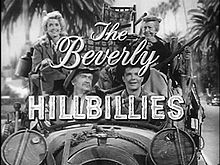 Shows had different types of laugh track, depending on style. Outlandish or fantastic shows, like Bewitched
, The Munsters
and The Beverly Hillbillies
are virtual showcases of Douglass’ editing skill. The more outlandish the show, the more invasive the laugh track. Conversely, low-key shows, like The Andy Griffith Show
, The Brady Bunch
, and My Three Sons
, had quieter or more modulated tracks. Certain shows, like Get Smart
, featured a laugh track that became more invasive as the series progressed, while shows like M*A*S*H toned down the chuckles as the series became more dramatic.
By the mid-1960s, nearly every sitcom was single-camera and had canned laughter dubbed onto the soundtrack. Only a few sitcoms, such as The Dick Van Dyke Show
and The Lucy Show
used studio audiences and turned to Douglass only to edit or augment the real laughter via sweetening. Even prime-time animated series like The Flintstones
and The Jetsons
used laugh tracks to make it clear that they were comedies.
Production studios became accustomed to seeing Douglass shuttling from studio to studio to mix in his manufactured laughs during post-production. When it came time to "lay in the laughs", the producer would direct Douglass where and when to insert the type of laugh requested. Inevitably, arguments arose between Douglass and the producer, but in the end, the producer always won.
produced The Mothers-in-Law
(NBC, 1967-69), which was recorded in front of a live audience at Desilu Studios, with a sweetening performed in post-production. A year later, another series The Good Guys (CBS, 1968–70) (starring Bob Denver from Gilligan's Island
) followed the same format. Production changes in location, however, caused the remainder of the first season to transition back to single-camera entirely, using only a laugh track. This continued through season two until low ratings led to cancellation in 1970.
The following season, the The Mary Tyler Moore Show
(CBS, 1970-77) also attempted to record their pilot episode, "Love is All Around", using only one camera. The results turned out awful. Moore, the producers, and the rest of the cast and crew then agreed to shift to multiple cameras. Since the first line of episodes were usually taped in the mid-late summer, the pilot's first taping did not receive good reception due to bad insulation and poor audio. After the second taping, however, critical reception improved, and the show used the multi-camera format thereafter, (again with sweetened laughs in post-production), and became a major success for seven more years. During that same season another show called All in the Family
(CBS, 1971-1979), followed Moore's pursuit, stepped into the studio's limelight, and live television made a huge comeback afterward. As proclaimed over the closing credits each week ("All in the Family was recorded on tape before a live audience" or "All in the Family was played to a studio audience for live responses.") the sitcom relied upon live, unprompted audience responses.
The resurgence of live audiences began to take hold with the success of All in the Family and The Odd Couple. Other sitcoms to use the live format with sweetening performed during post-production were The Bob Newhart Show
(CBS, 1972–78) Maude
(CBS, 1972–78), Laverne and Shirley (ABC, 1976-83), Soap
(ABC, 1977-81), Taxi
(ABC, 1978-82; NBC, 1982-83), and Cheers
(NBC, 1982-93).
Jack Klugman
and Tony Randall
expressed displeasure during the first season of The Odd Couple
(ABC, 1970–75), which used a laugh track without a live audience. Theatre
veteran Randall, in particular, resented the use of the laugh track, and wanted to perform in front of a live audience. ABC
relented and by the second season, The Odd Couple was filmed with three cameras (vs. a single camera the previous season) and performed like a stage play in front of a studio audience. Douglass’ "laff box", however, was used in post-production to sweeten and smooth out the live reactions.
The sitcom Happy Days
(ABC, 1974–84) mirrored The Odd Couple scenario. Its first two seasons used only a laugh track, and by third season, shifted over to a live audience with sweetening done in post-production.
Several hour-long comedy-dramas, however, retained the use of a laugh track only, such as The Love Boat
and Eight is Enough
.
In the intervening years beginning with live film, progressing through videotape and onto studio-filmed productions with no live audience back to live-on-tape, Douglass had gone from merely enhancing or tweaking a soundtrack, to literally customizing entire audience reactions to each performance and back again to enhancing and tweaking performances recorded with live audiences.
and The Larry Sanders Show
to run without laugh tracks, and won critical praise for doing so. Single-camera shows with no laugh track have become increasingly common on broadcast networks as well, with critical and popular hits such as Malcolm in the Middle
and Modern Family
, alongside multi-camera hits such as Two and a Half Men
and The Big Bang Theory
, which employ live audiences.
Today's producers of multi-camera shows have usually denied that they use sweetening to add laughs to failed jokes, but sweetening is still required to transition between different takes of a scene without a noticeable difference in the sound of the audience. Multi-camera sitcoms may also add laugh tracks when they reshoot scenes after the audience has gone home.
One of the last single-camera broadcast network shows to employ a laugh track was Sports Night
(ABC, 1998–2000), which shot its early with an audience present. While it abandoned the audience and moved toward a single-camera method of production, the network insisted that the show use a laugh track to create continuity with the style of those early scenes. Due to the objections of creator Aaron Sorkin
, the laugh track became more subtle as the season progressed and was completely removed at the start of the second season.
Laugh tracks are still sometimes used for multi-camera sitcoms that shoot without live audiences. How I Met Your Mother
, which uses the multi-camera format but no audience, uses a laugh track assembled from the sounds of audiences watching completed episodes early in the show's run. The game show Merv Griffin's Crosswords
, which ran from 2007 to 2008 and, unlike most game shows, did not tape in front of a studio audience, used a laugh track as well.
Sweetening with a laugh track is also a common practice in live awards shows such as the Emmy Awards, the Academy Awards
, and the MTV Video Music Awards
as the microphones on-stage often do not fully pick up the audience's laughter and reaction to the monologues. In addition, unlike in a sitcom, audiences are not recorded in live awards shows due to the amount of conversation that takes place during production. Laughter and applause are often sweetened and edited prior to public viewing, or if aired live, are done on the spot via a 7-second delay. (The same sweetening crew is also used to mute curse words and controversial statements from award winners). The Kids Choice Awards heavily uses laugh tracks that feature adults despite the fact that the audience is composed of mostly pre-teens.
and The Jetsons
incorporated laugh tracks.
Afternoon cartoon shows employed the laugh track on occasion as well. The first episodes of Rocky and His Friends utilized one, as did The Banana Splits Adventure Hour. Eventually, the laugh track entered the world of Saturday morning cartoon
s, beginning with the Filmation
-produced The Archie Show
in 1968. Many other Filmation shows employed a laugh track, including Fat Albert and the Cosby Kids
, The Brady Kids
, Groovy Goolies, and The New Adventures of Gilligan
. The studio ceased using the chuckles by 1983.
By 1969, nearly all cartoon shows produced—both for the Saturday morning fare as well as prime time—followed Filmation's lead and included Douglass’s laugh track, including The Pink Panther Show
, Scooby-Doo, Where Are You?, Harlem Globetrotters
and Josie and the Pussycats
.
opted not to pay for Charley Douglass’s services. Pre-1971 hits like Scooby-Doo, Where Are You!, Harlem Globetrotters, and Josie and the Pussycats employed a laugh track, but Hanna-Barbera looked for any chance to cut costs. As a result, instead of utilizing a full laugh track, a sound engineer at the Hanna-Barbera studios isolated approximately half a dozen canned chuckles from Douglass’ vast library. Mixed with a tinny, metallic sound to it, there were approximately five mild laughs, plus one or two uncontrollable belly-laughs (one contains an audible woman laughing at the tail end). This limited laugh track did not contain any looping tapes with 10 assorted laughs per tape, no endless variety of chuckles and no titter track. When audience reaction was needed, the limited laughs were dubbed repeatedly. On occasion, two or three of the chuckles were combined to give the effect that there was more diversity to the already limited laugh track. This laugh track—containing less than 10 snippets of laughter—would be used incessantly for exactly a decade.
Critics took note of the inferior sounding laugh track permeating Hanna-Barbera's Saturday morning fare. The same prerecorded laugh can be heard after nearly every punchline. The fact that the treble was mixed far too high for the soundtrack it accompanies only drew attention to the falsity of the practice. Several shows that use the abridged laugh track are listed as follows:
The laugh track affected several TV specials as well, most notably Casper's First Christmas
.
On occasion, the studio would slow down the laugh track for a greater effect; this was done in Season 2 of The New Scooby-Doo Movies
.
Hanna-Barbera also used the limited laugh track when they produced Wait Till Your Father Gets Home
in 1972, their first prime time animated television show since the demise of The Flintstones in 1966. This laugh track was also slowed down during production, plus the studio added a third belly laugh to add a little more "variety" to the track (This was the only TV series made by Hanna-Barbera to have this added belly laugh).
The laugh track was discontinued after the 1979-80 television season for the TV series. The final shows to receive the chuckles were Captain Caveman
, Scooby-Doo and Scrappy-Doo, and Super Globetrotters
. The last special to feature the laugh track was The Flintstones: Jogging Fever
, which aired on October 11, 1981.
 Animation studio Rankin/Bass
also experimented with creating their own laugh track for The Jackson 5ive
Saturday morning cartoon show. Like Hanna-Barbera, Rankin/Bass isolated several snippets of canned chuckles from Douglass’ library, and inserted them onto the soundtrack. Unlike Hanna-Barbera, though, the chuckles were nothing but loud eruptions of laughter; mild jokes received unnatural bouts of laughter, while other times, the laughter would erupt mid-sentence. Because this laugh track was far too invasive, it only emphasized the artificial nature of canned laughter more than Hanna-Barbera's version; as a result, Rankin/Bass ceased using laugh tracks after The Jackson 5ive mishap.
Rankin/Bass' laugh track, however, did provide a better variety of laughs when compared to the extremely limited Hanna-Barbera laugh track. The laugh track also was more up-to-date; most of the chuckles used on the Rankin/Bass laugh track were used on a regular basis during the 1971-1972 and 1972-1973 television seasons.
series incorporated its own laugh track onto the show, but in a completely different manner; because the variety program was modeled after vaudeville
, oftentimes the viewers would be treated to glimpse of the theater audience and their reactions to The Muppets' antics on stage (though the audience was composed of Muppet characters as well).
As the show was produced overseas at the ATV studios in Elstree
, England
, Jim Henson
and his Muppet production team were able to bypass Douglass’ easily recognizable laughs. New laughs, chuckles, and even applauses were recorded for the first few episodes so they would sound fresh and new. Some of these guffaws were provided by the actual cast and crew members reacting to the playbacks and dailies of the episodes they were taping; Eventually, The Muppet Show recycled these same chuckles repeatedly over its five-year run, establishing its own one-of-a-kind laugh track. A by-product of this convincing laugh track was the belief by viewers that The Muppet Show was indeed taped in front of a live audience, some even asking for tickets to attend tapings.
From time to time, various Muppet characters or guest stars would break the fourth wall
and acknowledge the use of the laugh track. In the fourth episode of the series, Kermit the Frog
is asked by guest Ruth Buzzi
if he felt a gag or routine would be funny enough for the show, to which he turns to the camera and replies, "That's up to the laugh track." A Season Two episode featuring guest Steve Martin
eschewed a laugh track altogether to support the concept that the show had been canceled that night in favor of auditioning new acts; the only audible laughs are those of the Muppet performers themselves.
For Muppets Tonight
, the laugh track is used during the show, but was skipped at the beginning and end.
incorporated a full laugh track onto all of their Saturday morning children's shows (save for Land of the Lost
, which was more dramatic in nature); by 1976, however, the Kroffts transitioned from high concept
children's fare to variety programs. While shows like Donny & Marie
, The Brady Bunch Hour
, Pink Lady and Jeff
, and even their 1987 syndicated sitcom D.C. Follies
were taped before live audiences, the studios were relatively small, resulting in a small audience. In addition to the small audiences, some elements of these shows were shot on-location and outdoors (i.e. Wonderbug and Magic Mongo); because of this, the Kroffts too isolated several chuckles from Douglass's library to incorporate into the soundtrack of these shows, for both sweetening, and to maintain continuity. The laughs the Kroffts isolated were of a better variety, ranging from loud belly laughs, to soft titters, and even the sounds of children's laughter: some of these laughs were older (from the laugh track of the mid-to-late 60s), while others were of the current 1976-1977 television season, just before the real television laugh track was overhauled by the 1977-1978 television season.
, whose game shows were designed mainly to entertain the audience, as well as play for prizes. Many of his productions, including The Gong Show
and 3's a Crowd
, had used the isolated chuckles for sweetening. Game shows produced at NBC's Burbank facilities in particular in the 1970's and 1980's used a unique library of oohs, aahs.
Laugh tracks were also used on Merv Griffin's Crosswords
, which ran from 2007 to 2008 and, unlike most game shows, did not tape in front of a studio audience.
original sitcoms mostly shoot in front of studio audiences/laugh tracks Disney's top competitor, Nickelodeon, mostly shoots such hits as iCarly
and Victorious
without audiences (due to their decision to do away with their now-defunct original studios) and use laugh tracks as a substitute.
Glenn Martin, DDS
, a claymation show produced by Nickelodeon
, utilized a laugh track for the first seven episodes only, then ceased its usage. Series creator Eric Fogel
commented, "It took too much internal thinking".
and The Office, which are presented in the mode of cinéma vérité
rather than in the format of a traditional sitcom, do not feature any audience laughter.
The League of Gentlemen
was originally broadcast with a laughter track, but after the first two series this was dropped. The pilot episode of the satirical series Spitting Image
was also broadcast with a laugh track, apparently at the insistence of Central Television. This idea was quickly dropped as it was felt by the show's producers that the show worked better without one. Some later editions, in 1992 (Election Special) and 1993 (two episodes) did use a laughter track, as these editions were performed live in front of a studio audience and included a spoof Question Time
.
(1990–1993) and the children's program The Hilarious House of Frightenstein
(1971) were broadcast in Canada without a laugh track, though one was added for American airings.
, the first multi-camera sitcom in mainland China
, used a live studio audience, which is a practice slowly used to today's standards. the Shanghai
-based sitcom iPartment
uses a laugh track despite being filmed in a single-camera format.
, The Bugaloos
, and Sigmund and the Sea Monsters
.
Rose stated, "The laugh track was a big debate, they (the Kroffts) said they didn't want to do it, but with my experience with night-timers, night-time started using laugh tracks, and it becomes a staple, because the viewer watches the program and there's a big laugh every time because of the laugh track, and then when you see a show that's funny and there's no laugh because of no laugh track, it becomes a handicap, so I convinced them of that. Good or bad.". Marty Krofft confirmed that he and Sid were initially reluctant to use a laugh track on their shows, but agreed that it was a necessity.
In a 2007 DVD interview, Filmation
producer/founder Lou Scheimer
praised the laugh track for its usage on The Archie Show
. "Why a laugh track?" Scheimer asked. "Because you feel that you are watching the program with a group of people instead of being alone." Scheimer confirmed that The Archie Show was the first Saturday morning cartoon
to utilize a laugh track.
Television historian Ben Glenn II once commented that the laugh tracks used today are radically different than the "carefree" quality of the laughter of past:
In 2011, critic James Parker bemoaned the absence of laugh tracks in many popular sitcoms of the time, feeling that that, too, had become an overused gimmick.
He conceded that Modern Family was one of the few shows which benefited from not having one.
The "laff box" was discussed in detail, and appraised on the June 20, 2010 episode of Antiques Roadshow
. The device was thought to be worth $10,000.
Soundtrack
A soundtrack can be recorded music accompanying and synchronized to the images of a motion picture, book, television program or video game; a commercially released soundtrack album of music as featured in the soundtrack of a film or TV show; or the physical area of a film that contains the...
invented by Charles "Charley" Douglass
Charles Douglass
Charles "Charley" Douglass , born Charles Rolland Douglass, was an American sound engineer, credited as the inventor of the laugh track.-Early years:...
, with the artificial sound
Sound
Sound is a mechanical wave that is an oscillation of pressure transmitted through a solid, liquid, or gas, composed of frequencies within the range of hearing and of a level sufficiently strong to be heard, or the sensation stimulated in organs of hearing by such vibrations.-Propagation of...
of audience
Audience
An audience is a group of people who participate in a show or encounter a work of art, literature , theatre, music or academics in any medium...
laughter
Laughter
Laughing is a reaction to certain stimuli, fundamentally stress, which serves as an emotional balancing mechanism. Traditionally, it is considered a visual expression of happiness, or an inward feeling of joy. It may ensue from hearing a joke, being tickled, or other stimuli...
, made to be inserted into television program
Television program
A television program , also called television show, is a segment of content which is intended to be broadcast on television. It may be a one-time production or part of a periodically recurring series...
ming of comedy
Comedy
Comedy , as a popular meaning, is any humorous discourse or work generally intended to amuse by creating laughter, especially in television, film, and stand-up comedy. This must be carefully distinguished from its academic definition, namely the comic theatre, whose Western origins are found in...
shows and sitcoms.
The term "laugh track" does not apply to the genuine audience laughter on shows that shoot in front of audiences.
Radio
Before television, audiences often experienced comedy, whether performed live on stage, on radio, or in a movie, in the presence of other audience members. Later radio and early television producerTelevision producer
The primary role of a television Producer is to allow all aspects of video production, ranging from show idea development and cast hiring to shoot supervision and fact-checking...
s attempted to recreate this atmosphere by introducing the sound of laughter or other crowd reactions into the soundtrack.
In 1946, Jack Mullin
Jack Mullin
John T. "Jack" Mullin was an American pioneer in the field of magnetic tape sound recording and made significant contributions to many other related fields. From his days at Santa Clara University to his death, he displayed a deep appreciation for classical music and an aptitude for electronics...
had brought back a Magnetophon
Magnetophon
Magnetophon was the brand or model name of the pioneering reel-to-reel tape recorder developed by engineers of the German electronics company AEG in the 1930s, based on the magnetic tape invention by Fritz Pfleumer...
magnetic tape recorder from Radio Frankfurt, along with 50 reels of tape. It was one of the magnetic tape recorders that BASF and AEG had built in Germany starting in 1935. The 6.5mm ferric-oxide-coated tape could record 20 minutes per reel of high-quality analog audio sound, and Alexander M. Poniatoff
Alexander M. Poniatoff
Alexander Matveevich Poniatoff was a Russian-American electrical engineer.Poniatoff was born 25 March 1892 in Aisha, Zelenodolsky District, Tatarstan, Russian Empire. He emigrated from Russia to China, where he worked for the Shanghai Power Company until he emigrated to the United States in 1927...
then ordered his Ampex
Ampex
Ampex is an American electronics company founded in 1944 by Alexander M. Poniatoff. The name AMPEX is an acronym, created by its founder, which stands for Alexander M. Poniatoff Excellence...
company, which he founded in 1944, to manufacture an improved version of the Magnetophon for use in radio production. With the introduction of this method of recording, it became possible to add sounds to a show in post-production
Post-production
Post-production is part of filmmaking and the video production process. It occurs in the making of motion pictures, television programs, radio programs, advertising, audio recordings, photography, and digital art...
and Bing Crosby
Bing Crosby
Harry Lillis "Bing" Crosby was an American singer and actor. Crosby's trademark bass-baritone voice made him one of the best-selling recording artists of the 20th century, with over half a billion records in circulation....
adopted the technology to pre-record his radio show to both avoid having to do it live as well as performing it again for West Coast audiences.
Longtime engineer and recording pioneer Jack Mullin
Jack Mullin
John T. "Jack" Mullin was an American pioneer in the field of magnetic tape sound recording and made significant contributions to many other related fields. From his days at Santa Clara University to his death, he displayed a deep appreciation for classical music and an aptitude for electronics...
explains from an interview recorded in the late `70's how the laugh track was invented on Crosby's show with these Ampex recorders:
"The hillbilly comic Bob Burns was on the show one time, and threw a few of his then-extremely racy and off-color folksy farm stories into the show. We recorded it live, and they all got enormous laughs, which just went on and on, but we couldn't use the jokes. Today those stories would seem tame by comparison, but things were different in radio then, so scriptwriter Bill Morrow
Bill Morrow
William Phillip Morrow is a U.S. Republican politician from the state of California, who used to be in the California State Senate representing the 38th district which includes northern San Diego County and the cities of San Clemente and San Juan Capistrano in southern Orange County.-Early...
asked us to save the laughs. A couple of weeks later he had a show that wasn't very funny, and he insisted that we put in the salvaged laughs. Thus the laugh-track was born."
Early live television, film and the birth of "sweetening"
In early television, most shows that were not live televisionLive television
Live television refers to a television production broadcast in real-time, as events happen, in the present. From the early days of television until about 1958, live television was used heavily, except for filmed shows such as I Love Lucy and Gunsmoke. Video tape did not exist until 1957...
used the single-camera
Single-camera setup
The single-camera setup, or single-camera mode of production, is a method of filmmaking and video production. A single camera—either motion picture camera or professional video camera—is employed on the set and each shot to make up a scene is taken individually...
filmmaking
Filmmaking
Filmmaking is the process of making a film, from an initial story, idea, or commission, through scriptwriting, casting, shooting, directing, editing, and screening the finished product before an audience that may result in a theatrical release or television program...
technique familiar from movies, where a show was created by filming each scene several times from different camera angle
Camera angle
The camera angle marks the specific location at which a camera is placed to take a shot. A scene may be shot from several camera angles. This will give different experience and sometimes emotion. the different camera angles will have different effects on the viewer and how they perceive the scene...
s. Since it was not possible for an audience to be present during single-camera filming, there could be none of the live audience laughter that audiences had come to expect from radio comedy, and which was still offered in the many shows broadcast live with audiences laughing in the studio. In addition, live audiences could not be relied upon to laugh at the correct moment. Other times, the audiences would laugh too long or too loud, sounding unnatural and forced or throwing off the performers' rhythms.
CBS
CBS
CBS Broadcasting Inc. is a major US commercial broadcasting television network, which started as a radio network. The name is derived from the initials of the network's former name, Columbia Broadcasting System. The network is sometimes referred to as the "Eye Network" in reference to the shape of...
sound engineer Charles Douglass
Charles Douglass
Charles "Charley" Douglass , born Charles Rolland Douglass, was an American sound engineer, credited as the inventor of the laugh track.-Early years:...
noticed these inconsistencies, and took it upon himself to remedy the situation. If a joke did not get the desired chuckle, Douglass inserted additional laughter and if the live audience chuckled for too long, Douglass gradually muted the guffaws. This editing technique became known as 'sweetening
Sweetening
In sound design sweetening refers to "juicing up" the video portion of a film, play, computer game software or any other multimedia project...
', in which pre-recorded laughter is used to augment the response of the real studio audience if they did not react as strongly as desired. Conversely, the process could be used to "desweeten" audience reactions, toning down unwanted loud laughter or removing inappropriate applause, thus making the laughter more in line with the producer's preferred method of telling the story.
Douglass spent countless hours extracting laughter, applause, and other reactions (including people moving around in their seats) from live soundtracks he had recorded (mainly from the dialogue-less pantomime
Pantomime
Pantomime — not to be confused with a mime artist, a theatrical performer of mime—is a musical-comedy theatrical production traditionally found in the United Kingdom, Australia, New Zealand, Canada, Jamaica, South Africa, India, Ireland, Gibraltar and Malta, and is mostly performed during the...
segments of The Red Skelton Show
The Red Skelton Show
The Red Skelton Show is an American variety show that was a television staple for two decades, from 1951 to 1971. It was second to Gunsmoke and third to The Ed Sullivan Show in the ratings during that time. Skelton, who had previously been a radio star, had appeared in several motion pictures as...
) and then placed the recorded sounds into a huge tape machine, dubbed the "laff box", the basic concept of which would later be reworked as the Chamberlin
Chamberlin
The Chamberlin is an electro-mechanical keyboard instrument that was a precursor to the Mellotron. It was developed and patented by Iowa, Wisconsin inventor Harry Chamberlin from 1949 to 1956, when the first model was introduced. Various models and versions of these Chamberlin music instruments...
Music Master and succeeded by the more widely-known Mellotron
Mellotron
The Mellotron is an electro-mechanical, polyphonic tape replay keyboard originally developed and built in Birmingham, England in the early 1960s. It superseded the Chamberlin Music Master, which was the world's first sample-playback keyboard intended for music...
.
These recorded laughs could be added to single-camera filmed shows, making them seem as though there was a live audience. The first American television show to incorporate a laugh track was the sitcom The Hank McCune Show
The Hank McCune Show
The Hank McCune Show was an American television situation comedy. Filmed without a studio audience, it was notable for being the first program to incorporate a laugh track....
in 1950. Other single-camera filmed shows soon followed suit.
Multi-camera shows and videotape
Soon after the advent of the laugh track, Lucille BallLucille Ball
Lucille Désirée Ball was an American comedian, film, television, stage and radio actress, model, film and television executive, and star of the sitcoms I Love Lucy, The Lucy–Desi Comedy Hour, The Lucy Show, Here's Lucy and Life With Lucy...
and Desi Arnaz
Desi Arnaz
Desi Arnaz was a Cuban-born American musician, actor and television producer. While he gained international renown for leading a Latin music band, the Desi Arnaz Orchestra, he is probably best known for his role as Ricky Ricardo on the American TV series I Love Lucy, starring with Lucille Ball, to...
invented a method of filming with an audience utilizing a multi-camera setup. This process was originally used for their show I Love Lucy
I Love Lucy
I Love Lucy is an American television sitcom starring Lucille Ball, Desi Arnaz, Vivian Vance, and William Frawley. The black-and-white series originally ran from October 15, 1951, to May 6, 1957, on the Columbia Broadcasting System...
, which used a live television studio
Television studio
A television studio is an installation in which a video productions take place, either for the recording of live television to video tape, or for the acquisition of raw footage for post-production. The design of a studio is similar to, and derived from, movie studios, with a few amendments for the...
audience and no laugh track.
Multi-camera shows with live audiences sometimes used recorded laughs to supplement the response of the audience. While witnessing an early post-production
Post-production
Post-production is part of filmmaking and the video production process. It occurs in the making of motion pictures, television programs, radio programs, advertising, audio recordings, photography, and digital art...
editing session, comedian Milton Berle
Milton Berle
Milton Berlinger , better known as Milton Berle, was an American comedian and actor. As the manic host of NBC's Texaco Star Theater , in 1948 he was the first major star of U.S. television and as such became known as Uncle Miltie and Mr...
once pointed out a particular joke and said, "as long as we're here doing this, that joke didn't get the response we wanted". After Douglass inserted a guffaw after the failed joke, Berle reportedly commented, "See? I told you it was funny".
Soon after the invention of the multi-camera filmed show, sketch comedy and variety shows began to move from live broadcasting to videotape
Videotape
A videotape is a recording of images and sounds on to magnetic tape as opposed to film stock or random access digital media. Videotapes are also used for storing scientific or medical data, such as the data produced by an electrocardiogram...
, which allowed for greater ease in editing during post-production. Editing a prerecorded live show with quadruplex videotape caused bumps and gaps on the soundtrack, Douglass was then called upon to "bridge" or "fill" these gaps; eventually, both performers and producers began to realize the power behind these prerecorded chuckles.
After a live show was filmed, however, producers were then faced with the onerous task of not only adding in laughter where it was needed, but also removing all excessive or annoying live audience reaction as well. This was known as "desweetening", which would result in the episode in question having a tighter performance for broadcast. The end result would also be more in line with the producer's preferred method of telling the story.
Filming without an audience
By the early 1960s, live television became too cost prohibitive to use on a daily or weekly basis. Filming in a studio with an audience, as I Love Lucy or The Ed Sullivan ShowThe Ed Sullivan Show
The Ed Sullivan Show is an American TV variety show that originally ran on CBS from Sunday June 20, 1948 to Sunday June 6, 1971, and was hosted by New York entertainment columnist Ed Sullivan....
did, had its limitations as well, as half the audience could hardly see or hear the show from where they were sitting. The consensus at the time was that live audiences were tense, nervous and rarely laughed on cue anyway, Douglass was then brought in to simulate the reactions from an entire live studio audience from scratch for the duration of the entire show.
As a result, producers began to realize how much simpler it was to just film a show, even variety or sketch shows that could not be done in single-camera, without any live audience at all and then create and tailor the whole audience reaction themselves in post-production. But originally, writers, producers and directors failed to allow space for the laugh track, making sweetening difficult. Because there was not enough space in which to insert enough laughter in order for the show to retain its live feel, audience response cards repeatedly came back saying that the audience reactions on the shows seemed "forced" or "contrived".
After a few years of this, writers became more conscious of the space required for the laugh track and began writing and timing their scripts around it. As a result, on-set directors then began leaving room for as-yet-unheard audience reactions and producers began allocating more budget money for post-production so that Douglass could later edit with greater ease.
1960s
Despite the success of I Love Lucy, most television comedies in the '50s and '60s used the single-camera technique, with a laugh track simulating the absent audience. Producers became disenchanted with the multi-camera audience format, as the consensus at the time was that live audiences were tense, nervous and rarely laughed on cue anyway. As a result, single-camera filming with a laugh track became the dominant mode of sitcom production in the '60s.Hogan's Heroes
Network research suggested that the laugh track was required in order to brand a single-camera show as a comedy. In 1965 CBS showed its new single-camera sitcom Hogan's HeroesHogan's Heroes
Hogan's Heroes is an American television sitcom that ran for 168 episodes from September 17, 1965, to March 28, 1971, on the CBS network. The show was set in a German prisoner of war camp during the Second World War. Bob Crane had the starring role as Colonel Robert E...
to test audiences in two versions: one with the laugh track, the other without. Partly due to the somewhat cerebral nature of the show's humor, the version without the laugh track failed miserably with test audiences, while the version with canned laughter got an excellent reaction. The show went on the air with the laugh track, and CBS abandoned the idea of doing single-camera comedies without at least a touch-up from Charley Douglass’s laff box.
Bewitched
Bewitched is an American situation comedy originally broadcast for eight seasons on ABC from 1964 to 1972, starring Elizabeth Montgomery, Dick York and Dick Sargent , Agnes Moorehead, and David White. The show is about a witch who marries a mortal and tries to lead the life of a typical suburban...
, The Munsters
The Munsters
The Munsters is a 1960s American family television sitcom depicting the home life of a family of monsters. It starred Fred Gwynne as Herman Munster and Yvonne De Carlo as his wife, Lily Munster. The series was a satire of both traditional monster movies and popular family entertainment of the era,...
and The Beverly Hillbillies
The Beverly Hillbillies
The Beverly Hillbillies is an American situation comedy originally broadcast for nine seasons on CBS from 1962 to 1971, starring Buddy Ebsen, Irene Ryan, Donna Douglas, and Max Baer, Jr....
are virtual showcases of Douglass’ editing skill. The more outlandish the show, the more invasive the laugh track. Conversely, low-key shows, like The Andy Griffith Show
The Andy Griffith Show
The Andy Griffith Show is an American sitcom first televised by CBS between October 3, 1960, and April 1, 1968. Andy Griffith portrays a widowed sheriff in the fictional small community of Mayberry, North Carolina...
, The Brady Bunch
The Brady Bunch
The Brady Bunch is an American sitcom created by Sherwood Schwartz and starring Robert Reed, Florence Henderson, and Ann B. Davis. The series revolved around a large blended family...
, and My Three Sons
My Three Sons
My Three Sons is an American situation comedy. The series ran from 1960 to 1965 on ABC, and moved to CBS until its end on August 24, 1972. My Three Sons chronicles the life of a widower and aeronautical engineer named Steven Douglas , raising his three sons.The series was a cornerstone of the CBS...
, had quieter or more modulated tracks. Certain shows, like Get Smart
Get Smart
Get Smart is an American comedy television series that satirizes the secret agent genre. Created by Mel Brooks with Buck Henry, the show starred Don Adams , Barbara Feldon , and Edward Platt...
, featured a laugh track that became more invasive as the series progressed, while shows like M*A*S*H toned down the chuckles as the series became more dramatic.
By the mid-1960s, nearly every sitcom was single-camera and had canned laughter dubbed onto the soundtrack. Only a few sitcoms, such as The Dick Van Dyke Show
The Dick Van Dyke Show
The Dick Van Dyke Show is an American television sitcom that initially aired on the Columbia Broadcasting System from October 3, 1961, until June 1, 1966. The show was created by Carl Reiner and starred Dick Van Dyke and Mary Tyler Moore. It was produced by Reiner with Bill Persky and Sam Denoff....
and The Lucy Show
The Lucy Show
The Lucy Show is an American situation comedy that aired on CBS from 1962 until 1968. It was Lucille Ball's follow-up to I Love Lucy. A significant change in cast and premise for the 1965-66 season divides the program into two distinct eras; aside from Ball, only Gale Gordon, who joined the program...
used studio audiences and turned to Douglass only to edit or augment the real laughter via sweetening. Even prime-time animated series like The Flintstones
The Flintstones
The Flintstones is an animated, prime-time American television sitcom that screened from September 30, 1960 to April 1, 1966, on ABC. Produced by Hanna-Barbera Productions, The Flintstones was about a working class Stone Age man's life with his family and his next-door neighbor and best friend. It...
and The Jetsons
The Jetsons
The Jetsons is a animated American sitcom that was produced by Hanna-Barbera, originally airing in prime-time from 1962–1963 and again from 1985–1987...
used laugh tracks to make it clear that they were comedies.
Production studios became accustomed to seeing Douglass shuttling from studio to studio to mix in his manufactured laughs during post-production. When it came time to "lay in the laughs", the producer would direct Douglass where and when to insert the type of laugh requested. Inevitably, arguments arose between Douglass and the producer, but in the end, the producer always won.
Controversy and bucking the trend in the United States
The practice of simulating an audience reaction was controversial from the very beginning. A silent minority of producers despised the idea of a prerecorded audience reaction. Inventor Douglass was aware that his "laff box" was maligned by critics and actors, but also knew that the utilization of a laugh track became standard practice and as a result, a necessity in the industry. Leading industry experts reasoned that laugh tracks were a necessary evil in prime time television: without the canned laughter, a show was doomed to fail. It was believed that the absence of guffaws meant American viewers could not tell if the particular show was indeed a comedy. That did not stop several from forgoing the laugh track entirely:- Former child star Jackie CooperJackie CooperJackie Cooper was an American actor, television director, producer and executive. He was a child actor who managed to make the transition to an adult career. Cooper was the first child actor to receive an Academy Award nomination...
believed that the laugh track was false. Cooper's comedy/drama HenneseyHenneseyHennesey is an American military sitcom that aired on CBS from 1959 to 1962. The series, which aired for three seasons, stars Jackie Cooper in the title role.-Synopsis:...
(CBS, 1959–62) was cancelled in 1962 after a three-season run. For its first two seasons, the show used only a mild laugh track (known as a "titter" track); by the third and final season, the chuckles were eliminated completely and, soon thereafter, so was Hennesey. Cooper later commented that "we're manufacturing a reaction to our own creation, yet we'll never know if people out there are really laughing." Cooper concluded by saying, "It's a put-on all the time." - In September 1964, the comedy/drama Kentucky JonesKentucky JonesKentucky Jones is a half-hour comedy/drama starring Dennis Weaver as Kenneth Yarborough "K.Y. or Kentucky" Jones, D.V.M., a recently widowed former horse trainer and active rancher, who becomes the guardian of Dwight Eisenhower "Ike" "Wong, a 10-year-old Chinese orphan, played by Ricky Der...
(NBC, 1964–65), starring Dennis WeaverDennis WeaverWilliam Dennis Weaver was an American actor, best known for his work in television, including roles on Gunsmoke, as Marshal Sam McCloud on the NBC police drama McCloud, and the 1971 TV movie Duel....
, tried to eliminate laughs, simulated or live. After only five episodes and slumping ratings, Douglass was recruited to add the laugh track, but the damage had been done. Kentucky Jones was cancelled the following April. - Ross Bagdasarian, Sr., creator of the Alvin and the ChipmunksThe ChipmunksAlvin and the Chipmunks is an American animated music group created by Ross Bagdasarian, Sr. in 1958. The group consists of three singing animated anthropomorphic chipmunks: Alvin, the mischievous troublemaker, who quickly became the star of the group; Simon, the tall, bespectacled intellectual;...
franchise, outright refused to utilize a laugh track when production began on The Alvin ShowThe Alvin ShowThe Alvin Show is an American animated television series. It was the first to feature the singing characters Alvin and the Chipmunks, although a series with a similar concept The Nutty Squirrels Present had aired a year earlier...
(CBS, 1961–62) in 1961. Bagdasarian's reasoning was if the show was funny, the viewers would laugh without being prompted. The Alvin Show was cancelled after a single season. - PeanutsPeanutsPeanuts is a syndicated daily and Sunday American comic strip written and illustrated by Charles M. Schulz, which ran from October 2, 1950, to February 13, 2000, continuing in reruns afterward...
creator Charles M. SchulzCharles M. SchulzCharles Monroe "Sparky" Schulz was an American cartoonist, whose comic strip Peanuts proved one of the most popular and influential in the history of the medium, and is still widely reprinted on a daily basis.-Early life and education:Born in Minneapolis, Minnesota, Schulz grew up in Saint Paul...
refused to employ a laugh track during the production of the holiday favorite A Charlie Brown ChristmasA Charlie Brown ChristmasA Charlie Brown Christmas is the first prime-time animated TV special based upon the comic strip Peanuts, by Charles M. Schulz. It was produced and directed by former Warner Bros. and UPA animator Bill Melendez, who also supplied the voice for the character of Snoopy...
(CBS, 1965). Like Bagdasarian, Schulz maintained that the audience should be able to enjoy the show at their own pace, without being cued when to laugh. When CBS executives saw the final product, they were horrified and believed the special would be a flop (CBS did create a version of the show with the laugh track added, just in case Schulz changed his mind. This version remains unavailable). When the show first aired on December 9, 1965, it was a surprise critical and commercial hit. - The musical sitcom The MonkeesThe MonkeesThe Monkees are an American pop rock group. Assembled in Los Angeles in 1966 by Robert "Bob" Rafelson and Bert Schneider for the American television series The Monkees, which aired from 1966 to 1968, the musical acting quartet was composed of Americans Micky Dolenz, Michael Nesmith and Peter Tork,...
(NBC, 1966–68) featured a laugh track throughout its first season and several episodes of the second. Midway through Season 2, the Monkees themselves insisted the show eliminate the laugh track, believing their viewers were intelligent enough to know where the jokes were. NBCNBCThe National Broadcasting Company is an American commercial broadcasting television network and former radio network headquartered in the GE Building in New York City's Rockefeller Center with additional major offices near Los Angeles and in Chicago...
, already annoyed by the manufactured rock group wanting too much control over their show, cancelled The Monkees after Season 2 concluded, citing the non-existent laugh track as a major factor. - Bill CosbyBill CosbyWilliam Henry "Bill" Cosby, Jr. is an American comedian, actor, author, television producer, educator, musician and activist. A veteran stand-up performer, he got his start at various clubs, then landed a starring role in the 1960s action show, I Spy. He later starred in his own series, the...
's first sitcom, The Bill Cosby ShowThe Bill Cosby ShowThe Bill Cosby Show is an American situation comedy that aired for two seasons on NBC's Sunday night schedule from 1969 until 1971, under the sponsorship of Procter & Gamble. There were 52 episodes made in the series. It marked Cosby's first solo foray in television, after his co-starring role with...
(NBC, 1969–71) was also produced without a laugh track at the insistence of Cosby. He stated that his opposition to NBC's desire to add a laugh track led to the show's cancellation after only two seasons. - The series Sledge Hammer!Sledge Hammer!Sledge Hammer! is an American satirical police sitcom produced by New World Television that ran for two seasons on ABC from 1986 to 1988. The series was created by Alan Spencer and stars David Rasche as Inspector Sledge Hammer, a preposterous caricature of the standard "cop on the edge" character,...
(ABC, 1986–88) began with laugh tracks in the soundtrack, much to creator Alan SpencerAlan SpencerAlan Spencer is an American television writer and producer, known for creating the 1980s satirical police series Sledge Hammer!. He was one of the youngest people ever to join the Writers Guild of America, writing for television at the age of fifteen...
's disapproval. After months of fighting with ABCAmerican Broadcasting CompanyThe American Broadcasting Company is an American commercial broadcasting television network. Created in 1943 from the former NBC Blue radio network, ABC is owned by The Walt Disney Company and is part of Disney-ABC Television Group. Its first broadcast on television was in 1948...
, Spencer had his wish granted when the laugh tracks were removed from the series starting with episode 14, "State of SledgeState of Sledge"State of Sledge" is the 14th episode of the television series Sledge Hammer!. It originally aired on ABC in the United States on January 10, 1987...
". - Larry GelbartLarry GelbartLarry Simon Gelbart was an American television writer, playwright, screenwriter and author.-Early life:...
, creator of M*A*S*H (CBS, 1972–83), initially wanted the show to air entirely without a laugh track ("Just like the actual Korean WarKorean WarThe Korean War was a conventional war between South Korea, supported by the United Nations, and North Korea, supported by the People's Republic of China , with military material aid from the Soviet Union...
", he remarked dryly). However, CBSCBSCBS Broadcasting Inc. is a major US commercial broadcasting television network, which started as a radio network. The name is derived from the initials of the network's former name, Columbia Broadcasting System. The network is sometimes referred to as the "Eye Network" in reference to the shape of...
rejected the idea. Eventually a compromise was reached, and the producers of the series were allowed to omit the laugh track during operating room scenes if they wished. As a result, few scenes in the operating room contain canned laughter. Seasons 1-5 utilized a more invasive laugh track; however, as the series progressed, and shifted from a sitcom with dramatic undertones to a drama with comedic undertones, Douglass began to utilize a more subtle laugh track containing quieter chuckles. Several episodes ("O.R.", "The Bus", ""Quo Vadis, Captain Chandler?", "The Interview", "Point of View", "Dreams") omitted the laugh track altogether. The series' 135-minute finale—"Goodbye, Farewell and Amen"—also did not include a laugh track. The laugh track is also omitted from some international and syndicated airings of the show; on one occasion during an airing in the UK, the laugh track was accidentally left on, and viewers expressed their displeasure, an apology from the network for the "technical difficulty" was later released. The DVDDVDA DVD is an optical disc storage media format, invented and developed by Philips, Sony, Toshiba, and Panasonic in 1995. DVDs offer higher storage capacity than Compact Discs while having the same dimensions....
releases, meanwhile, give the viewer a choice of laughing or non-laughing soundtracks. - Sports NightSports NightSports Night is an American television series about a fictional sports news show also called Sports Night. It focuses on the friendships, pitfalls, and ethical issues the creative talent of the program face while trying to produce a good show under constant network pressure...
(ABC, 1998–2000) premiered with a laugh track, against the wishes of show creator Aaron SorkinAaron SorkinAaron Benjamin Sorkin is an Academy and Emmy award winning American screenwriter, producer, and playwright, whose works include A Few Good Men, The American President, The West Wing, Sports Night, Studio 60 on the Sunset Strip, The Social Network, and Moneyball.After graduating from Syracuse...
, but the laugh track became more subtle as the season progressed and was completely removed at the start of the second season. In some cases, a laugh track was needed to maintain continuity, as portions of each episode were filmed in front of a live audience, while the remainder were filmed without an audience present.
Live TV makes a comeback
Though the use of canned laughter reached its peak in the 1960s, a few shows still retained the multi-camera tradition. In 1967, Desi ArnazDesi Arnaz
Desi Arnaz was a Cuban-born American musician, actor and television producer. While he gained international renown for leading a Latin music band, the Desi Arnaz Orchestra, he is probably best known for his role as Ricky Ricardo on the American TV series I Love Lucy, starring with Lucille Ball, to...
produced The Mothers-in-Law
The Mothers-in-Law
The Mothers-in-Law is an American sitcom starring Eve Arden and Kaye Ballard as two matriarchs who were friends and next-door neighbors whose children's elopement rendered them in-laws. The show aired on NBC from September 1967 to April 1969; it was produced by Desi Arnaz after the dissolutions...
(NBC, 1967-69), which was recorded in front of a live audience at Desilu Studios, with a sweetening performed in post-production. A year later, another series The Good Guys (CBS, 1968–70) (starring Bob Denver from Gilligan's Island
Gilligan's Island
Gilligan's Island is an American television series created and produced by Sherwood Schwartz and originally produced by United Artists Television. The situation comedy series featured Bob Denver; Alan Hale, Jr.; Jim Backus; Natalie Schafer; Tina Louise; Russell Johnson; and Dawn Wells. It aired for...
) followed the same format. Production changes in location, however, caused the remainder of the first season to transition back to single-camera entirely, using only a laugh track. This continued through season two until low ratings led to cancellation in 1970.
The following season, the The Mary Tyler Moore Show
The Mary Tyler Moore Show
The Mary Tyler Moore Show is an American television sitcom created by James L. Brooks and Allan Burns that aired on CBS from 1970 to 1977...
(CBS, 1970-77) also attempted to record their pilot episode, "Love is All Around", using only one camera. The results turned out awful. Moore, the producers, and the rest of the cast and crew then agreed to shift to multiple cameras. Since the first line of episodes were usually taped in the mid-late summer, the pilot's first taping did not receive good reception due to bad insulation and poor audio. After the second taping, however, critical reception improved, and the show used the multi-camera format thereafter, (again with sweetened laughs in post-production), and became a major success for seven more years. During that same season another show called All in the Family
All in the Family
All in the Family is an American sitcom that was originally broadcast on the CBS television network from January 12, 1971, to April 8, 1979. In September 1979, a new show, Archie Bunker's Place, picked up where All in the Family had ended...
(CBS, 1971-1979), followed Moore's pursuit, stepped into the studio's limelight, and live television made a huge comeback afterward. As proclaimed over the closing credits each week ("All in the Family was recorded on tape before a live audience" or "All in the Family was played to a studio audience for live responses.") the sitcom relied upon live, unprompted audience responses.
The resurgence of live audiences began to take hold with the success of All in the Family and The Odd Couple. Other sitcoms to use the live format with sweetening performed during post-production were The Bob Newhart Show
The Bob Newhart Show
The Bob Newhart Show is an American situation comedy produced by MTM Enterprises, which aired 142 original episodes on CBS from September 16, , to April 1, . Comedian Bob Newhart portrayed a psychologist having to deal with his patients and fellow office workers...
(CBS, 1972–78) Maude
Maude (TV series)
Maude was an American television sitcom that was originally broadcast on the CBS network from September 12, 1972 until April 22, 1978.Maude starred Beatrice Arthur as Maude Findlay, an outspoken, middle-aged, politically liberal woman living in suburban Tuckahoe, Westchester County, New York with...
(CBS, 1972–78), Laverne and Shirley (ABC, 1976-83), Soap
Soap (TV series)
Soap is an American sitcom that originally ran on ABC from 1977 to 1981.The show was created as a parody of daytime soap operas, presented as a weekly half-hour prime time comedy. Similar to a soap opera, the show's story was presented in a serial format and included melodramatic plot elements such...
(ABC, 1977-81), Taxi
Taxi (TV series)
Taxi was an American sitcom that originally aired from 1978 to 1982 on ABC and from 1982 to 1983 on NBC. The series, which won 18 Emmy Awards, including three for "Outstanding Comedy Series", focuses on the everyday lives of a handful of New York City taxi drivers and their abusive dispatcher...
(ABC, 1978-82; NBC, 1982-83), and Cheers
Cheers
Cheers is an American situation comedy television series that ran for 11 seasons from 1982 to 1993. It was produced by Charles/Burrows/Charles Productions, in association with Paramount Network Television for NBC, and was created by the team of James Burrows, Glen Charles, and Les Charles...
(NBC, 1982-93).
Jack Klugman
Jack Klugman
Jacob Joachim "Jack" Klugman is an American stage, film and television actor known for his roles in sitcoms, movies, and television and on Broadway...
and Tony Randall
Tony Randall
Tony Randall was a U.S. actor, comic, producer and director.-Early years:Randall was born Arthur Leonard Rosenberg to a Jewish family in Tulsa, Oklahoma, the son of Julia and Mogscha Rosenberg, an art and antiques dealer...
expressed displeasure during the first season of The Odd Couple
The Odd Couple (TV series)
The Odd Couple is a television situation comedy broadcast from September 24, 1970 to July 4, 1975 on ABC. It starred Tony Randall as Felix Unger and Jack Klugman as Oscar Madison. It was based upon the play of the same name, which was written by Neil Simon.Felix and Oscar are two divorced men....
(ABC, 1970–75), which used a laugh track without a live audience. Theatre
Theatre
Theatre is a collaborative form of fine art that uses live performers to present the experience of a real or imagined event before a live audience in a specific place. The performers may communicate this experience to the audience through combinations of gesture, speech, song, music or dance...
veteran Randall, in particular, resented the use of the laugh track, and wanted to perform in front of a live audience. ABC
American Broadcasting Company
The American Broadcasting Company is an American commercial broadcasting television network. Created in 1943 from the former NBC Blue radio network, ABC is owned by The Walt Disney Company and is part of Disney-ABC Television Group. Its first broadcast on television was in 1948...
relented and by the second season, The Odd Couple was filmed with three cameras (vs. a single camera the previous season) and performed like a stage play in front of a studio audience. Douglass’ "laff box", however, was used in post-production to sweeten and smooth out the live reactions.
The sitcom Happy Days
Happy Days
Happy Days is an American television sitcom that originally aired from January 15, 1974, to September 24, 1984, on ABC. Created by Garry Marshall, the series presents an idealized vision of life in mid-1950s to mid-1960s America....
(ABC, 1974–84) mirrored The Odd Couple scenario. Its first two seasons used only a laugh track, and by third season, shifted over to a live audience with sweetening done in post-production.
Several hour-long comedy-dramas, however, retained the use of a laugh track only, such as The Love Boat
The Love Boat
The Love Boat is an American television series set on a cruise ship, which aired on the ABC Television Network from September 24,1977, until May 24,1986.The show starred Gavin MacLeod as the ship's captain...
and Eight is Enough
Eight Is Enough
Eight Is Enough is an American television comedy-drama series which ran on ABC from March 15, 1977 until August 29, 1981. The show was modeled after syndicated newspaper columnist Thomas Braden, a real-life parent with eight children, who wrote a book with the same name...
.
In the intervening years beginning with live film, progressing through videotape and onto studio-filmed productions with no live audience back to live-on-tape, Douglass had gone from merely enhancing or tweaking a soundtrack, to literally customizing entire audience reactions to each performance and back again to enhancing and tweaking performances recorded with live audiences.
Usage in America, post-1990
Single-camera comedy has made a comeback in the U.S. since the early 1990s, but networks have mostly abandoned the old tradition of laugh tracks for single-camera shows. A key player in this revolution was HBO, which allowed its single-camera comedies such as Dream OnDream On (TV series)
Dream On is an American adult-themed situation comedy about single New Yorker, Martin Tupper. The show used a gimmick where old black and white clips were used to punctuate the main character's feelings or thoughts...
and The Larry Sanders Show
The Larry Sanders Show
The Larry Sanders Show is a satirical television sitcom that aired from August 1992 to May 1998 on the HBO cable television network in the United States. It starred stand-up comedian Garry Shandling as vain, neurotic talk show host Larry Sanders, and centered on the running of his TV show, and the...
to run without laugh tracks, and won critical praise for doing so. Single-camera shows with no laugh track have become increasingly common on broadcast networks as well, with critical and popular hits such as Malcolm in the Middle
Malcolm in the Middle
Malcolm in the Middle is an American television sitcom created by Linwood Boomer for the Fox Network. The series was first broadcast on January 9, 2000, and ended its six-and-a-half-year run on May 14, 2006, after seven seasons and 151 episodes...
and Modern Family
Modern Family
Modern Family is an American television comedy series created by Christopher Lloyd and Steven Levitan, which debuted on ABC on September 23, 2009. Lloyd and Levitan serve as showrunner and executive producers, under their Levitan-Lloyd Productions label...
, alongside multi-camera hits such as Two and a Half Men
Two and a Half Men
Two and a Half Men is an American television sitcom that premiered on CBS on September 22, 2003. Starring Charlie Sheen, Jon Cryer, and Angus T. Jones, the show was originally about a hedonistic jingle writer, Charlie Harper; his uptight brother, Alan; and Alan's growing son, Jake...
and The Big Bang Theory
The Big Bang Theory
The Big Bang Theory is an American sitcom created by Chuck Lorre and Bill Prady, both of whom serve as executive producers on the show, along with Steven Molaro. All three also serve as head writers...
, which employ live audiences.
Today's producers of multi-camera shows have usually denied that they use sweetening to add laughs to failed jokes, but sweetening is still required to transition between different takes of a scene without a noticeable difference in the sound of the audience. Multi-camera sitcoms may also add laugh tracks when they reshoot scenes after the audience has gone home.
One of the last single-camera broadcast network shows to employ a laugh track was Sports Night
Sports Night
Sports Night is an American television series about a fictional sports news show also called Sports Night. It focuses on the friendships, pitfalls, and ethical issues the creative talent of the program face while trying to produce a good show under constant network pressure...
(ABC, 1998–2000), which shot its early with an audience present. While it abandoned the audience and moved toward a single-camera method of production, the network insisted that the show use a laugh track to create continuity with the style of those early scenes. Due to the objections of creator Aaron Sorkin
Aaron Sorkin
Aaron Benjamin Sorkin is an Academy and Emmy award winning American screenwriter, producer, and playwright, whose works include A Few Good Men, The American President, The West Wing, Sports Night, Studio 60 on the Sunset Strip, The Social Network, and Moneyball.After graduating from Syracuse...
, the laugh track became more subtle as the season progressed and was completely removed at the start of the second season.
Laugh tracks are still sometimes used for multi-camera sitcoms that shoot without live audiences. How I Met Your Mother
How I Met Your Mother
How I Met Your Mother is an American sitcom that premiered on CBS on September 19, 2005, created by Craig Thomas and Carter Bays.As a framing device, the main character, Ted Mosby with narration by Bob Saget, in the year 2030 recounts to his son and daughter the events that led to his meeting...
, which uses the multi-camera format but no audience, uses a laugh track assembled from the sounds of audiences watching completed episodes early in the show's run. The game show Merv Griffin's Crosswords
Merv Griffin's Crosswords
Merv Griffin's Crosswords is an American game show based on crossword puzzles. The show was created by its namesake, Merv Griffin, who died shortly after beginning production on the series...
, which ran from 2007 to 2008 and, unlike most game shows, did not tape in front of a studio audience, used a laugh track as well.
Sweetening with a laugh track is also a common practice in live awards shows such as the Emmy Awards, the Academy Awards
Academy Awards
An Academy Award, also known as an Oscar, is an accolade bestowed by the American Academy of Motion Picture Arts and Sciences to recognize excellence of professionals in the film industry, including directors, actors, and writers...
, and the MTV Video Music Awards
MTV Video Music Awards
An MTV Video Music Award , is an award presented by the cable channel MTV to honor the best in music videos...
as the microphones on-stage often do not fully pick up the audience's laughter and reaction to the monologues. In addition, unlike in a sitcom, audiences are not recorded in live awards shows due to the amount of conversation that takes place during production. Laughter and applause are often sweetened and edited prior to public viewing, or if aired live, are done on the spot via a 7-second delay. (The same sweetening crew is also used to mute curse words and controversial statements from award winners). The Kids Choice Awards heavily uses laugh tracks that feature adults despite the fact that the audience is composed of mostly pre-teens.
Cartoons and children's shows
Prime time live-action shows were not the only genre to employ a laugh track, as the canned chuckles were eventually used in some prime time animated television series that would not employ a live audience. The FlintstonesThe Flintstones
The Flintstones is an animated, prime-time American television sitcom that screened from September 30, 1960 to April 1, 1966, on ABC. Produced by Hanna-Barbera Productions, The Flintstones was about a working class Stone Age man's life with his family and his next-door neighbor and best friend. It...
and The Jetsons
The Jetsons
The Jetsons is a animated American sitcom that was produced by Hanna-Barbera, originally airing in prime-time from 1962–1963 and again from 1985–1987...
incorporated laugh tracks.
Afternoon cartoon shows employed the laugh track on occasion as well. The first episodes of Rocky and His Friends utilized one, as did The Banana Splits Adventure Hour. Eventually, the laugh track entered the world of Saturday morning cartoon
Saturday morning cartoon
A Saturday morning cartoon is the colloquial term for the animated television programming that has typically been scheduled on Saturday mornings on the major American television networks from the 1960s to the present; the genre's peak in popularity mostly ended in the 1990s while the popularity of...
s, beginning with the Filmation
Filmation
Filmation Associates was an American production company that produced animation and live action programming for television during the latter half of the 20th century. Located in Reseda, California, the animation studio was founded in 1963...
-produced The Archie Show
The Archie Show
The Archie Show is a Saturday morning cartoon animated series produced by Filmation. Based on the Archie comic books, created by Bob Montana in 1941, The Archie Show debuted on CBS in September 1968 and lasted for one season. A total of 17 half-hour shows, each containing two 11 minute segments,...
in 1968. Many other Filmation shows employed a laugh track, including Fat Albert and the Cosby Kids
Fat Albert and the Cosby Kids
Fat Albert and the Cosby Kids is an animated series created, produced, and hosted by comedian Bill Cosby, who also lent his voice to a number of characters, including Fat Albert himself. Filmation was the production company for the series. The show premiered in 1972 and ran until 1985...
, The Brady Kids
The Brady Kids
The Brady Kids was an animated television series, produced by Filmation in association with Paramount Television and seen on ABC from 1972 to 1974...
, Groovy Goolies, and The New Adventures of Gilligan
The New Adventures Of Gilligan
The New Adventures of Gilligan is an animated series produced by Filmation and was aired on ABC during the 1974-1975 season. It was based on the 1964-1967 CBS television series Gilligan's Island and featured almost all the actors from the show, except for Tina Louise, who was determined to distance...
. The studio ceased using the chuckles by 1983.
By 1969, nearly all cartoon shows produced—both for the Saturday morning fare as well as prime time—followed Filmation's lead and included Douglass’s laugh track, including The Pink Panther Show
The Pink Panther Show
The Pink Panther Show is a showcase of cartoon shorts produced by David H. DePatie and Friz Freleng between 1969 and 1979. The television series was produced by Mirisch Films and DePatie-Freleng Enterprises, and was broadcast on two American TV networks:...
, Scooby-Doo, Where Are You?, Harlem Globetrotters
Harlem Globetrotters (TV series)
Harlem Globetrotters was a Saturday morning cartoon produced by Hanna-Barbera and CBS Productions, featuring animated versions of players from the basketball team, Harlem Globetrotters....
and Josie and the Pussycats
Josie and the Pussycats (TV series)
Josie and the Pussycats is an American animated television series, based upon the Archie Comics comic book series of the same name created by Dan DeCarlo....
.
Hanna-Barbera
Early in 1971, Hanna-BarberaHanna-Barbera
Hanna-Barbera Productions, Inc. was an American animation studio that dominated North American television animation during the second half of the 20th century...
opted not to pay for Charley Douglass’s services. Pre-1971 hits like Scooby-Doo, Where Are You!, Harlem Globetrotters, and Josie and the Pussycats employed a laugh track, but Hanna-Barbera looked for any chance to cut costs. As a result, instead of utilizing a full laugh track, a sound engineer at the Hanna-Barbera studios isolated approximately half a dozen canned chuckles from Douglass’ vast library. Mixed with a tinny, metallic sound to it, there were approximately five mild laughs, plus one or two uncontrollable belly-laughs (one contains an audible woman laughing at the tail end). This limited laugh track did not contain any looping tapes with 10 assorted laughs per tape, no endless variety of chuckles and no titter track. When audience reaction was needed, the limited laughs were dubbed repeatedly. On occasion, two or three of the chuckles were combined to give the effect that there was more diversity to the already limited laugh track. This laugh track—containing less than 10 snippets of laughter—would be used incessantly for exactly a decade.
Critics took note of the inferior sounding laugh track permeating Hanna-Barbera's Saturday morning fare. The same prerecorded laugh can be heard after nearly every punchline. The fact that the treble was mixed far too high for the soundtrack it accompanies only drew attention to the falsity of the practice. Several shows that use the abridged laugh track are listed as follows:
- Help!... It's the Hair Bear Bunch! (CBS, 1971–1972)
- The Pebbles and Bamm-Bamm ShowThe Pebbles and Bamm-Bamm ShowThe Pebbles and Bamm-Bamm Show is a 30-minute Saturday morning animated series spin-off of The Flintstones produced by Hanna-Barbera Productions, which ran for 16 half-hour episodes from September 11, 1971, to September 2, 1972, and four 8-minute episodes from September 9, 1972, to September 1,...
(CBS, 1971–1972) - The Flintstone Comedy HourThe Flintstone Comedy HourThe Flintstone Comedy Hour is a one-hour Saturday morning cartoon anthology series produced by Hanna-Barbera Productions. The program originally aired on CBS as an hour-long show from September 9, 1972 to September 1, 1973 on CBS...
(CBS, 1972–1973) - Josie and the Pussycats in Outer Space (CBS, 1972–1974)
- The New Scooby-Doo MoviesThe New Scooby-Doo MoviesThe New Scooby-Doo Movies is the second incarnation of the Hanna-Barbera Saturday morning cartoon Scooby-Doo, Where Are You!. It premiered on September 9, 1972 and ran for two seasons on CBS as the only hour-long Scooby-Doo series...
(CBS, 1972–1974) - Jeannie (CBS, 1973–1975)
- Partridge Family 2200 A.D.Partridge Family 2200 A.D.Partridge Family 2200 A.D. is an animated television series based on The Partridge Family created by Hanna-Barbera.-Production:This version started out as Hanna-Barbera's updated version of The Jetsons, where Elroy was now a teenager, and Judy now had a steady job as an ace reporter...
(CBS, 1974–1975) - JabberjawJabberjawJabberjaw is a 30-minute Saturday morning animated series created by Joe Ruby and Ken Spears and produced by Hanna-Barbera and aired from September 11, 1976 to September 3, 1978 on ABC.-Premise:...
(ABC, 1976–1978) - The Scooby-Doo Show (ABC, 1976–1978)
- Dynomutt, Dog WonderDynomutt, Dog WonderDynomutt, Dog Wonder is an American animated television series produced for Saturday mornings by Hanna-Barbera about a Batman-esque super hero, the Blue Falcon and his assistant, a bumbling yet generally effective robot dog Dynomutt, who could produce a seemingly infinite number of mechanical...
(ABC, 1976–1977) - Captain Caveman and the Teen AngelsCaptain Caveman and the Teen AngelsCaptain Caveman and the Teen Angels is an animated series created by Joe Ruby and Ken Spears and produced by Hanna-Barbera Productions from September 10, 1977 to June 21, 1980 on ABC....
(ABC, 1977–1980) - The Super GlobetrottersThe Super GlobetrottersThe Super Globetrotters is an American Saturday morning cartoon produced by Hanna-Barbera Productions for NBC. It premiered on September 22, 1979 and ran for 13 episodes.It was a spin-off series from Hanna-Barbera's Harlem Globetrotters....
(NBC, 1979–1980) - Scooby-Doo and Scrappy-Doo (ABC, 1979-1980; first installment)
The laugh track affected several TV specials as well, most notably Casper's First Christmas
Casper's First Christmas
Casper's First Christmas is a 30-minute Christmas Television special and crossover produced by Hanna-Barbera Productions that featured Casper the Friendly Ghost and his friend Hairy Scary from the show Casper and the Angels with guest stars Yogi Bear, Boo Boo, Huckleberry Hound, Snagglepuss, Quick...
.
On occasion, the studio would slow down the laugh track for a greater effect; this was done in Season 2 of The New Scooby-Doo Movies
The New Scooby-Doo Movies
The New Scooby-Doo Movies is the second incarnation of the Hanna-Barbera Saturday morning cartoon Scooby-Doo, Where Are You!. It premiered on September 9, 1972 and ran for two seasons on CBS as the only hour-long Scooby-Doo series...
.
Hanna-Barbera also used the limited laugh track when they produced Wait Till Your Father Gets Home
Wait Till Your Father Gets Home
Wait Till Your Father Gets Home was an animated sitcom produced by Hanna-Barbera that aired in first-run syndication in the United States from 1972 to 1974...
in 1972, their first prime time animated television show since the demise of The Flintstones in 1966. This laugh track was also slowed down during production, plus the studio added a third belly laugh to add a little more "variety" to the track (This was the only TV series made by Hanna-Barbera to have this added belly laugh).
The laugh track was discontinued after the 1979-80 television season for the TV series. The final shows to receive the chuckles were Captain Caveman
Captain Caveman and the Teen Angels
Captain Caveman and the Teen Angels is an animated series created by Joe Ruby and Ken Spears and produced by Hanna-Barbera Productions from September 10, 1977 to June 21, 1980 on ABC....
, Scooby-Doo and Scrappy-Doo, and Super Globetrotters
The Super Globetrotters
The Super Globetrotters is an American Saturday morning cartoon produced by Hanna-Barbera Productions for NBC. It premiered on September 22, 1979 and ran for 13 episodes.It was a spin-off series from Hanna-Barbera's Harlem Globetrotters....
. The last special to feature the laugh track was The Flintstones: Jogging Fever
The Flintstones: Jogging Fever
Jogging Fever was a 30-minute episode that was part of "The Flintstone Special" limited-run prime time television revival of The Flintstones produced by Hanna-Barbera Productions which aired on NBC on October 11, 1981...
, which aired on October 11, 1981.
Rankin/Bass
Rankin/Bass
Rankin/Bass Productions, Inc. , also known as Rankin/Bass Animated Entertainment, was an American production company, known for its seasonal television specials, particularly its work in stop-motion animation. The pre-1974 library is currently owned by Classic Media,while the post-1974 library is...
also experimented with creating their own laugh track for The Jackson 5ive
The Jackson 5ive (TV series)
The Jackson 5ive was a Saturday morning cartoon series produced by Rankin/Bass and Motown Productions on ABC from September 11, 1971 until 14 October 1972; a fictionalized portrayal of the careers of Motown recording group The Jackson 5...
Saturday morning cartoon show. Like Hanna-Barbera, Rankin/Bass isolated several snippets of canned chuckles from Douglass’ library, and inserted them onto the soundtrack. Unlike Hanna-Barbera, though, the chuckles were nothing but loud eruptions of laughter; mild jokes received unnatural bouts of laughter, while other times, the laughter would erupt mid-sentence. Because this laugh track was far too invasive, it only emphasized the artificial nature of canned laughter more than Hanna-Barbera's version; as a result, Rankin/Bass ceased using laugh tracks after The Jackson 5ive mishap.
Rankin/Bass' laugh track, however, did provide a better variety of laughs when compared to the extremely limited Hanna-Barbera laugh track. The laugh track also was more up-to-date; most of the chuckles used on the Rankin/Bass laugh track were used on a regular basis during the 1971-1972 and 1972-1973 television seasons.
The Muppet Show
Unlike the two "silent" pilots before it, The Muppet ShowThe Muppet Show
The Muppet Show is a British television programme produced by American puppeteer Jim Henson and featuring Muppets. After two pilot episodes were produced in 1974 and 1975, the show premiered on 5 September 1976 and five series were produced until 15 March 1981, lasting 120 episodes...
series incorporated its own laugh track onto the show, but in a completely different manner; because the variety program was modeled after vaudeville
Vaudeville
Vaudeville was a theatrical genre of variety entertainment in the United States and Canada from the early 1880s until the early 1930s. Each performance was made up of a series of separate, unrelated acts grouped together on a common bill...
, oftentimes the viewers would be treated to glimpse of the theater audience and their reactions to The Muppets' antics on stage (though the audience was composed of Muppet characters as well).
As the show was produced overseas at the ATV studios in Elstree
Elstree Studios
"Elstree Studios" refers to any of several film studios that were based in the towns of Borehamwood and Elstree in Hertfordshire, England, since film production begun in 1927.-Name:...
, England
England
England is a country that is part of the United Kingdom. It shares land borders with Scotland to the north and Wales to the west; the Irish Sea is to the north west, the Celtic Sea to the south west, with the North Sea to the east and the English Channel to the south separating it from continental...
, Jim Henson
Jim Henson
James Maury "Jim" Henson was an American puppeteer best known as the creator of The Muppets. As a puppeteer, Henson performed in various television programs, such as Sesame Street and The Muppet Show, films such as The Muppet Movie and The Great Muppet Caper, and created advanced puppets for...
and his Muppet production team were able to bypass Douglass’ easily recognizable laughs. New laughs, chuckles, and even applauses were recorded for the first few episodes so they would sound fresh and new. Some of these guffaws were provided by the actual cast and crew members reacting to the playbacks and dailies of the episodes they were taping; Eventually, The Muppet Show recycled these same chuckles repeatedly over its five-year run, establishing its own one-of-a-kind laugh track. A by-product of this convincing laugh track was the belief by viewers that The Muppet Show was indeed taped in front of a live audience, some even asking for tickets to attend tapings.
From time to time, various Muppet characters or guest stars would break the fourth wall
Fourth wall
The fourth wall is the imaginary "wall" at the front of the stage in a traditional three-walled box set in a proscenium theatre, through which the audience sees the action in the world of the play...
and acknowledge the use of the laugh track. In the fourth episode of the series, Kermit the Frog
Kermit the Frog
Kermit the Frog is puppeteer Jim Henson's most famous Muppet creation, first introduced in 1955. He is the protagonist of many Muppet projects, most notably as the host of The Muppet Show, and has appeared in various sketches on Sesame Street, in commercials and in public service announcements over...
is asked by guest Ruth Buzzi
Ruth Buzzi
Ruth Ann Buzzi is an American comedienne and actress of theatre, film, and television. She is especially known for her performances on the comedy-variety show Rowan & Martin's Laugh-In from 1968 to 1973.-Early life:...
if he felt a gag or routine would be funny enough for the show, to which he turns to the camera and replies, "That's up to the laugh track." A Season Two episode featuring guest Steve Martin
Steve Martin
Stephen Glenn "Steve" Martin is an American actor, comedian, writer, playwright, producer, musician and composer....
eschewed a laugh track altogether to support the concept that the show had been canceled that night in favor of auditioning new acts; the only audible laughs are those of the Muppet performers themselves.
For Muppets Tonight
Muppets Tonight
Muppets Tonight is a live-action/puppet television series created by Jim Henson Productions and featuring The Muppets. Much like the "MuppeTelevision" segment of The Jim Henson Hour, Muppets Tonight was a continuation of The Muppet Show, set in a television studio, rather than a theater.-Format:The...
, the laugh track is used during the show, but was skipped at the beginning and end.
The Kroffts
From 1969 to 1975, Sid and Marty KrofftSid and Marty Krofft
Sid Krofft and Marty Krofft , are a sibling team of television producers who were influential in children's television and variety show programs in the USA, particularly throughout the 1970s and early 1980s....
incorporated a full laugh track onto all of their Saturday morning children's shows (save for Land of the Lost
Land of the Lost (1974 TV series)
Land of the Lost is a children's television series co-created and produced by Sid and Marty Krofft. During its original run, it was broadcast on the NBC television network....
, which was more dramatic in nature); by 1976, however, the Kroffts transitioned from high concept
High concept
High concept is a term used to refer to an artistic work that can be easily described by a succinctly stated premise.-Terminology:High concept narratives are typically characterised by an over-arching "what if?" scenario that acts as a catalyst for the following events...
children's fare to variety programs. While shows like Donny & Marie
Donny & Marie (1976 TV series)
Donny & Marie was an American variety show which aired on ABC from January 1976 to January 1979. The show stars brother and sister pop duo Donny Osmond and Marie Osmond...
, The Brady Bunch Hour
The Brady Bunch Hour
The Brady Bunch Hour is an American variety television series produced by Sid and Marty Krofft in association with CBS Television Distribution, which aired on ABC between 1976 to 1977....
, Pink Lady and Jeff
Pink Lady and Jeff
Pink Lady is an American variety show that aired for five weeks on NBC in 1980, starring the musical duo of the same name. The show is most commonly referred to by the title Pink Lady and Jeff, which refers to co-star Jeff Altman...
, and even their 1987 syndicated sitcom D.C. Follies
D.C. Follies
D.C. Follies is a syndicated sitcom which aired from 1987–1989 and was set in a Washington, D.C. bar, where bartender Fred Willard would welcome puppet caricatures of that day's politicians and celebrities. The humor tended to be on the satirical side, often taking potshots at politicians and the...
were taped before live audiences, the studios were relatively small, resulting in a small audience. In addition to the small audiences, some elements of these shows were shot on-location and outdoors (i.e. Wonderbug and Magic Mongo); because of this, the Kroffts too isolated several chuckles from Douglass's library to incorporate into the soundtrack of these shows, for both sweetening, and to maintain continuity. The laughs the Kroffts isolated were of a better variety, ranging from loud belly laughs, to soft titters, and even the sounds of children's laughter: some of these laughs were older (from the laugh track of the mid-to-late 60s), while others were of the current 1976-1977 television season, just before the real television laugh track was overhauled by the 1977-1978 television season.
Game Shows
During the 1970s through the early 1980s, some TV corporations even managed to isolate several of Douglass' guffaws and add them for sweetening on game shows (often played when a contestant or the host says something funny and only a small reaction comes from the live audience). One of the leading producers to do this was Chuck BarrisChuck Barris
Charles Hirsch "Chuck" Barris is an American game show producer, film director and presenter best known for hosting The Gong Show and creating The Dating Game. Barris, a survivor of lung cancer, is also an author and claims to have worked for the CIA.-Early career:Barris was born in Oakland, New...
, whose game shows were designed mainly to entertain the audience, as well as play for prizes. Many of his productions, including The Gong Show
The Gong Show
The Gong Show is an amateur talent contest franchised by Sony Pictures Television to many countries. It was broadcast on NBC's daytime schedule from June 14, 1976 through July 21, 1978, and in first-run syndication from 1976–1980 and 1988–1989. The show was produced by Chuck Barris, who also served...
and 3's a Crowd
Three's a Crowd (game show)
Three's a Crowd was an American game show originally packaged by Chuck Barris Productions. The first version aired in syndication from September 17, 1979 to February 1, 1980...
, had used the isolated chuckles for sweetening. Game shows produced at NBC's Burbank facilities in particular in the 1970's and 1980's used a unique library of oohs, aahs.
Laugh tracks were also used on Merv Griffin's Crosswords
Merv Griffin's Crosswords
Merv Griffin's Crosswords is an American game show based on crossword puzzles. The show was created by its namesake, Merv Griffin, who died shortly after beginning production on the series...
, which ran from 2007 to 2008 and, unlike most game shows, did not tape in front of a studio audience.
Children's Shows: 2000s
While Disney ChannelDisney Channel
Disney Channel is an American basic cable and satellite television network, owned by the Disney-ABC Television Group division of The Walt Disney Company. It is under the direction of Disney-ABC Television Group President Anne Sweeney. The channel's headquarters is located on West Alameda Ave. in...
original sitcoms mostly shoot in front of studio audiences/laugh tracks Disney's top competitor, Nickelodeon, mostly shoots such hits as iCarly
ICarly
iCarly is an American sitcom that focuses on a girl named Carly Shay who creates her own web show called iCarly with her best friends Sam and Freddie. The series was created by Dan Schneider, who also serves as executive producer. It stars Miranda Cosgrove as Carly, Jennette McCurdy as Sam, Nathan...
and Victorious
Victorious
Victorious is an American sitcom created by Dan Schneider for Nickelodeon. The series revolves around aspiring singer Tori Vega , a teenager who attends a performing arts high school called Hollywood Arts High School, after taking her older sister Trina's place in a showcase while getting into...
without audiences (due to their decision to do away with their now-defunct original studios) and use laugh tracks as a substitute.
Glenn Martin, DDS
Glenn Martin, DDS
Glenn Martin, DDS is an American stop-motion-animated television series that premiered on Nick at Nite on August 17, 2009. The series is produced by Tornante Animation in association with Cuppa Coffee Studio...
, a claymation show produced by Nickelodeon
Nickelodeon (TV channel)
Nickelodeon, often simply called Nick and originally named Pinwheel, is an American children's channel owned by MTV Networks, a subsidiary of Viacom International. The channel is primarily aimed at children ages 7–17, with the exception of their weekday morning program block aimed at preschoolers...
, utilized a laugh track for the first seven episodes only, then ceased its usage. Series creator Eric Fogel
Eric Fogel
Eric Fogel is an American director, writer, producer and voice actor who is best known as the creator of the TV series Celebrity Deathmatch. He also created the cult series The Head and Starveillance and also directed several episodes of Daria....
commented, "It took too much internal thinking".
UK
In the 20th century, most UK sitcoms were taped before live audiences to provide natural laughter. Scenes recorded out of doors, traditionally recorded in advance of studio work, are played back to the studio audience and their laughter recorded for the broadcast show. Other comedies, such as The Royle FamilyThe Royle Family
The Royle Family is a popular, BAFTA award-winning television comedy drama produced by Granada Television for the BBC, which ran for three series between 1998 and 2000, and specials from 2006 onwards...
and The Office, which are presented in the mode of cinéma vérité
Cinéma vérité
Cinéma vérité is a style of documentary filmmaking, combining naturalistic techniques with stylized cinematic devices of editing and camerawork, staged set-ups, and the use of the camera to provoke subjects. It is also known for taking a provocative stance toward its topics.There are subtle yet...
rather than in the format of a traditional sitcom, do not feature any audience laughter.
The League of Gentlemen
The League of Gentlemen
The League of Gentlemen are a group of British comedians formed in 1995, best known for their radio and television series.The League of Gentlemen may also refer to:* The League of Gentlemen ,...
was originally broadcast with a laughter track, but after the first two series this was dropped. The pilot episode of the satirical series Spitting Image
Spitting Image
Spitting Image is a British satirical puppet show that aired on the ITV network from 1984 to 1996. It was produced by Spitting Image Productions for Central Television. The series was nominated for 10 BAFTA Awards, winning one for editing in 1989....
was also broadcast with a laugh track, apparently at the insistence of Central Television. This idea was quickly dropped as it was felt by the show's producers that the show worked better without one. Some later editions, in 1992 (Election Special) and 1993 (two episodes) did use a laughter track, as these editions were performed live in front of a studio audience and included a spoof Question Time
Question Time
Question time in a parliament occurs when members of the parliament ask questions of government ministers , which they are obliged to answer. It usually occurs daily while parliament is sitting, though it can be cancelled in exceptional circumstances...
.
Canada
Most contemporary Canadian television comedies are laugh track-free, but some programs, such as the sitcom Maniac MansionManiac Mansion (TV Series)
Maniac Mansion is a Canadian science fiction/family sitcom very loosely based on the LucasArts video game of the same name.The series, filmed entirely in Toronto, Ontario, was produced by Atlantis Films for The Family Channel in the United States and YTV in Canada, and aired for three complete...
(1990–1993) and the children's program The Hilarious House of Frightenstein
The Hilarious House of Frightenstein
The Hilarious House of Frightenstein was a Canadian children's television series produced by Hamilton, Ontario's independent station CHCH-TV in 1971. It was syndicated to television stations across Canada and the United States and occasionally still appears today in some television markets...
(1971) were broadcast in Canada without a laugh track, though one was added for American airings.
Asia
I Love My FamilyI Love My Family
I Love My Family is a Chinese sitcom. It was China's first multi-camera sitcom and it originally aired from 1993 to 1994 with 120 episodes. It is also the first Mandarin-language sitcom. It was directed by Yīng Dá 英达 and Lin Cong and written primarily by Liáng Zuǒ 梁左 and Wáng Shuò 王朔...
, the first multi-camera sitcom in mainland China
Mainland China
Mainland China, the Chinese mainland or simply the mainland, is a geopolitical term that refers to the area under the jurisdiction of the People's Republic of China . According to the Taipei-based Mainland Affairs Council, the term excludes the PRC Special Administrative Regions of Hong Kong and...
, used a live studio audience, which is a practice slowly used to today's standards. the Shanghai
Shanghai
Shanghai is the largest city by population in China and the largest city proper in the world. It is one of the four province-level municipalities in the People's Republic of China, with a total population of over 23 million as of 2010...
-based sitcom iPartment
IPartment
iPartment , is a sitcom from Mainland China. It was first produced and aired by Jiangxi TV in August 2009, with 20, hour-long episodes.The second season moved into a different style approach and with episodes aired online, due to its online fan base and polls for upcoming episodes...
uses a laugh track despite being filmed in a single-camera format.
Support and legacy
Si Rose, executive producer for Sid and Marty Krofft, convinced the Kroffts to use laugh tracks on their puppet shows, such as H.R. PufnstufH.R. Pufnstuf
H.R. Pufnstuf was a children's television series produced by Sid and Marty Krofft in the United States. It was the first Krofft live-action, life-size puppet program. The seventeen episodes were originally broadcast September 6, 1969 to September 4, 1971...
, The Bugaloos
The Bugaloos
The Bugaloos is an American children's television series produced by brothers Sid and Marty Krofft, airing on NBC on Saturday mornings from 1970 to 1972. The show featured a musical group composed of four British-accented teenagers, who lived in fictional Tranquility Forest...
, and Sigmund and the Sea Monsters
Sigmund and the Sea Monsters
Sigmund and the Sea Monsters was an American children's television series that ran from 1973 to 1975, produced by Sid and Marty Krofft and aired on Saturday mornings...
.
Rose stated, "The laugh track was a big debate, they (the Kroffts) said they didn't want to do it, but with my experience with night-timers, night-time started using laugh tracks, and it becomes a staple, because the viewer watches the program and there's a big laugh every time because of the laugh track, and then when you see a show that's funny and there's no laugh because of no laugh track, it becomes a handicap, so I convinced them of that. Good or bad.". Marty Krofft confirmed that he and Sid were initially reluctant to use a laugh track on their shows, but agreed that it was a necessity.
In a 2007 DVD interview, Filmation
Filmation
Filmation Associates was an American production company that produced animation and live action programming for television during the latter half of the 20th century. Located in Reseda, California, the animation studio was founded in 1963...
producer/founder Lou Scheimer
Lou Scheimer
Louis Scheimer is an Emmy and Grammy Award–winning American producer, one of the original founders of Filmation, an animation company, and also an executive producer of many of its cartoons .-Career:Early in Filmation's history, Scheimer also contributed...
praised the laugh track for its usage on The Archie Show
The Archie Show
The Archie Show is a Saturday morning cartoon animated series produced by Filmation. Based on the Archie comic books, created by Bob Montana in 1941, The Archie Show debuted on CBS in September 1968 and lasted for one season. A total of 17 half-hour shows, each containing two 11 minute segments,...
. "Why a laugh track?" Scheimer asked. "Because you feel that you are watching the program with a group of people instead of being alone." Scheimer confirmed that The Archie Show was the first Saturday morning cartoon
Saturday morning cartoon
A Saturday morning cartoon is the colloquial term for the animated television programming that has typically been scheduled on Saturday mornings on the major American television networks from the 1960s to the present; the genre's peak in popularity mostly ended in the 1990s while the popularity of...
to utilize a laugh track.
Television historian Ben Glenn II once commented that the laugh tracks used today are radically different than the "carefree" quality of the laughter of past:
In 2011, critic James Parker bemoaned the absence of laugh tracks in many popular sitcoms of the time, feeling that that, too, had become an overused gimmick.
He conceded that Modern Family was one of the few shows which benefited from not having one.
The "laff box" was discussed in detail, and appraised on the June 20, 2010 episode of Antiques Roadshow
Antiques Roadshow
Antiques Roadshow is a British television show in which antiques appraisers travel to various regions of the United Kingdom to appraise antiques brought in by local people. It has been running since 1979...
. The device was thought to be worth $10,000.
External links
- TVParty.com - The Laugh Track
- Newyorktimes.com - Charles Douglass
- Canned Laughter: A History Reconstructed - An Interview with Ben Glenn II, Television Historian