

Kammback

Encyclopedia
A Kammback is a car body style
that derives from the research of the German aerodynamicist
Wunibald Kamm
in the 1930s. The design calls for a body with smooth contours that continues to a tail that is abruptly cut off. This shape reduces the drag of the vehicle.
"Kammback" is an American term. In Europe the design is generally known as a Kamm tail or K-tail.
experimented and developed streamlined car body work in the 1920s. His innovative body design featuring a low-profile teardrop shape with a long tail minimized the air resistance of passenger cars. Better highway systems being built in the 1930s called for higher automobile cruising and top speeds, thus, automobile designers focused on the aerodynamic characteristics of cars. Wind tunnel
tests showed that a true tear-drop shaped body offered only a slight improvement in efficiency to the Chrysler Airflow
design. In 1935, Hans Georg Madelung, a German engineer, professor, and aircraft designer, showed that a vehicle does not need a long tapered tail at high speeds.
Freiherr Reinhard Koenig-Fachsenfeld "developed a body style whose tail was cut off to form a flat rear surface" to reduce the air turbulence caused by the apparently streamlined, but steeply raked roofs of cars that used Paul Jaray
's principles. He worked on an aerodynamic design for a bus, and Koenig-Fachsenfeld patented the idea.
In 1936, "further research by the FKFS--Forschungsinstitut für Kraftfahrwesen und Fahrzeugmotoren Stuttgart (Stuttgart
Research Institute for Automotive and Automobile Engine Technology), under the direction of Wunibald Kamm, proved that vehicles with the so-called K- or Kamm tail, following Koenig-Faschsenfeld's lead, offered a good compromise between everyday utility (e.g. vehicle length and interior dimensions) and an attractive drag coefficient." In addition to aerodynamic efficiency, Wunibald Kamm also emphasized vehicle stability in his design. He proved mathematically and empirically the effectiveness of the design. The Kamm-back, or K-form, was a body with a smoothly contoured front that continues to an abrupt vertical flat surface in the rear. However, "the shape was so ugly nobody then adopted it".
The earliest use of "Kamm" to describe an automobile body incorporating this design was the prototype 1940 'Kamm' Coupe based on a BMW 328 chassis. The earliest mass-produced cars that used Kammback principles were the 1949-1951 Nash
Airflyte in the U.S. and the 1952-1955 Borgward Hansa 2400
in Europe.
 While the realities of fluid dynamics dictate that a teardrop shape is the ideal aerodynamic form, Kamm found that by cutting off / flattening the streamlined end of the tear at an intermediate point, and bringing that edge down towards the ground, he could gain most of the benefit of the teardrop shape without incurring such a large material, structural, and size problem. The airflow, once given the suggestion of the beginning of a turbulence-eliminating streamlined teardrop tail, tended to flow in an approximation of that manner regardless of the fact that the entire tail wasn't there. This is called the Kamm effect.
There is controversy about the proportions of a true Kamm tail. According to the classic definition the tail should be cut off where it has tapered to approximately 50% of the car's maximum cross section
, which Kamm found represented a good compromise - by that point the turbulence typical of flat-back vehicles had been mostly eliminated at typical speeds. Thus a minivan
is not a Kammback, and neither are numerous cars that have truncated tails.
Automakers’ use of the term "Kammback" has diminished as Kamm's principles have become more generally assimilated into modern car design.
.jpg) The Kamm tail was used on many high-performance and competition cars, such as:
The Kamm tail was used on many high-performance and competition cars, such as:
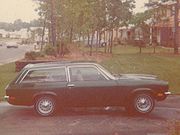
 The 1971-1977 Chevrolet Vega
Kammback wagon featured a Kamm tail in its liftgate. The 1981-1982 compact two-door hatchback version of the AMC Eagle
was also named a Kammback.
Kamm (and Kamm-like) tails can be seen on numerous mass-production cars, such as:
Several automakers including American Motors
(AMC) and General Motors
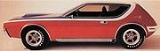
(GM) have publicized certain models with truncated tails as "Kammbacks" even though they do not meet the classic "50% cross-section" definition, i.e. the AMC AMX-GT
and Pontiac Firebird
-based "Type K" concept cars.

 As the Kamm tail's low drag helps improve fuel consumption, it features on hybrid
cars designed for maximum economy, for example:
Car body style
Automobiles' body styles are highly variable. Some body styles remain in production, while others become less common or obsolete. They may or may not correlate to a car's price, size or intended market classification. The same car model might be available in multiple body styles comprising a...
that derives from the research of the German aerodynamicist
Aerodynamics
Aerodynamics is a branch of dynamics concerned with studying the motion of air, particularly when it interacts with a moving object. Aerodynamics is a subfield of fluid dynamics and gas dynamics, with much theory shared between them. Aerodynamics is often used synonymously with gas dynamics, with...
Wunibald Kamm
Wunibald Kamm
Wunibald Kamm was an automobile designer, engineer, and aerodynamicist. He is best known for his breakthrough in reducing car turbulence at high speeds; the style of car bodywork based on his research has come to be known as a Kammback or a Kamm-tail.-Design:One goal of automotive aerodynamics is...
in the 1930s. The design calls for a body with smooth contours that continues to a tail that is abruptly cut off. This shape reduces the drag of the vehicle.
"Kammback" is an American term. In Europe the design is generally known as a Kamm tail or K-tail.
History
Paul JarayPaul Jaray
Paul Jaray , 11 March 1889 Vienna–22 September 1974 St. Gallen, was an engineer and a pioneer of automotive streamlining.-Life:Jaray, of Hungarian-Jewish descent, was born in Vienna...
experimented and developed streamlined car body work in the 1920s. His innovative body design featuring a low-profile teardrop shape with a long tail minimized the air resistance of passenger cars. Better highway systems being built in the 1930s called for higher automobile cruising and top speeds, thus, automobile designers focused on the aerodynamic characteristics of cars. Wind tunnel
Wind tunnel
A wind tunnel is a research tool used in aerodynamic research to study the effects of air moving past solid objects.-Theory of operation:Wind tunnels were first proposed as a means of studying vehicles in free flight...
tests showed that a true tear-drop shaped body offered only a slight improvement in efficiency to the Chrysler Airflow
Chrysler Airflow
The Chrysler Airflow is an automobile produced by the Chrysler Corporation from 1934-1937. The Airflow was the first full-size American production car to use streamlining as a basis for building a sleeker automobile, one less susceptible to air resistance...
design. In 1935, Hans Georg Madelung, a German engineer, professor, and aircraft designer, showed that a vehicle does not need a long tapered tail at high speeds.
Freiherr Reinhard Koenig-Fachsenfeld "developed a body style whose tail was cut off to form a flat rear surface" to reduce the air turbulence caused by the apparently streamlined, but steeply raked roofs of cars that used Paul Jaray
Paul Jaray
Paul Jaray , 11 March 1889 Vienna–22 September 1974 St. Gallen, was an engineer and a pioneer of automotive streamlining.-Life:Jaray, of Hungarian-Jewish descent, was born in Vienna...
's principles. He worked on an aerodynamic design for a bus, and Koenig-Fachsenfeld patented the idea.
In 1936, "further research by the FKFS--Forschungsinstitut für Kraftfahrwesen und Fahrzeugmotoren Stuttgart (Stuttgart
Stuttgart
Stuttgart is the capital of the state of Baden-Württemberg in southern Germany. The sixth-largest city in Germany, Stuttgart has a population of 600,038 while the metropolitan area has a population of 5.3 million ....
Research Institute for Automotive and Automobile Engine Technology), under the direction of Wunibald Kamm, proved that vehicles with the so-called K- or Kamm tail, following Koenig-Faschsenfeld's lead, offered a good compromise between everyday utility (e.g. vehicle length and interior dimensions) and an attractive drag coefficient." In addition to aerodynamic efficiency, Wunibald Kamm also emphasized vehicle stability in his design. He proved mathematically and empirically the effectiveness of the design. The Kamm-back, or K-form, was a body with a smoothly contoured front that continues to an abrupt vertical flat surface in the rear. However, "the shape was so ugly nobody then adopted it".
The earliest use of "Kamm" to describe an automobile body incorporating this design was the prototype 1940 'Kamm' Coupe based on a BMW 328 chassis. The earliest mass-produced cars that used Kammback principles were the 1949-1951 Nash
Nash Motors
Also see: Kelvinator and American Motors CorporationNash Motors was an automobile manufacturer based in Kenosha, Wisconsin, in the United States from 1916 to 1938. From 1938 to 1954, Nash was the automotive division of the Nash-Kelvinator Corporation...
Airflyte in the U.S. and the 1952-1955 Borgward Hansa 2400
Borgward Hansa 2400
The Borgward Hansa 2400 is a large six-cylinder saloon first presented in 1952 and manufactured by the Bremen based auto-manufacturer Carl F. W. Borgward GmbH from 1953 to 1959. The car was launched as a fast back sedan: a longer-wheelbase notchback version appeared a year later...
in Europe.
Aerodynamics
There is controversy about the proportions of a true Kamm tail. According to the classic definition the tail should be cut off where it has tapered to approximately 50% of the car's maximum cross section
Cross section (geometry)
In geometry, a cross-section is the intersection of a figure in 2-dimensional space with a line, or of a body in 3-dimensional space with a plane, etc...
, which Kamm found represented a good compromise - by that point the turbulence typical of flat-back vehicles had been mostly eliminated at typical speeds. Thus a minivan
Minivan
Minivan is a type of van designed for personal use. Minivans are typically either two-box or one box designs for maximum interior volume – and are taller than a sedan, hatchback, or a station wagon....
is not a Kammback, and neither are numerous cars that have truncated tails.
Automakers’ use of the term "Kammback" has diminished as Kamm's principles have become more generally assimilated into modern car design.
High-performance cars
- 1940 BMW 328BMW 328The BMW 328 is a sports car made by BMW between 1936 and 1940, with the body design credited to Peter Szymanowski, who became BMW chief of design after World War II ....
"Mille MigliaMille MigliaThe Mille Miglia was an open-road endurance race which took place in Italy twenty-four times from 1927 to 1957 ....
" Kamm coupé - 1962–1964 Ferrari 250 GTOFerrari 250 GTOThe Ferrari 250 GTO is a GT car which was produced by Ferrari from 1962 to 1964 for homologation into the FIA's Group 3 Grand Touring Car category....
- 1963 Aston Martin DP215Aston Martin DP215The Aston Martin DP215 was a prototype sports car built by Aston Martin for grand touring-style racing in 1963. It was built alongside the similar DP214, both of which replaced the previous DP212...
- 1963-1974 Bizzarrini Iso GrifoBizzarriniBizzarrini S.p.A. was an automotive manufacturer in the 1960s. Founded by former Alfa Romeo, Ferrari and ISO engineer, Giotto Bizzarrini, the company built a small number of highly developed and advanced sport and racing automobiles before failing in 1969....
- 1965-1968 Ford GT40Ford GT40The Ford GT40 was a high performance sports car and winner of the 24 hours of Le Mans four times in a row, from 1966 to 1969...
- 1965-1970 Aston Martin DB6Aston Martin DB6The Aston Martin DB6 is a grand tourer made by British car manufacturer Aston Martin. Produced from September 1965 to January 1971, the DB6 had the longest production run up to that date of any Aston Martin model...
- 1968-1973 Ferrari 365 GTB/4Ferrari DaytonaThe Ferrari 365 GTB/4, better known by the unofficial name Ferrari Daytona, is a Gran Turismo automobile produced from 1968 to 1973. It was first introduced to the public at the Paris Auto Salon in 1968 and replaced the 275 GTB/4...
("Daytona") - 1968-1976 Ferrari DinoDino (car)Not to be confused with Fiat DinoDino was a brand for mid-engined, rear-drive sports cars produced by Ferrari from 1968 to 1976. The Dino brand was meant to be used for cars with engines that had fewer than 12 cylinders, reserving the Ferrari name for the V-12 and flat 12 models. The Dino name was...
- 1970-1975 Citroën SMCitroën SMThe Citroën SM is a high-performance coupé produced by the French manufacturer Citroën from 1970 to 1975. The SM placed third in the 1971 European Car of the Year contest, trailing its stablemate Citroën GS, and won the 1972 Motor Trend Car of the Year award in the U.S. in 1972.-History:In 1961,...
- 1970-1977 Alfa Romeo MontrealAlfa Romeo MontrealThe Alfa Romeo Montreal is a 2+2 coupé automobile produced by the Italian manufacturer Alfa Romeo from 1970 to 1977.-Concept car:The Alfa Romeo Montreal was introduced as a concept car in 1967 at Expo 67, held in Montreal, Canada. Originally, the concept cars were displayed without any model name,...
- 1972-1982 Maserati KhamsinMaserati KhamsinThe Maserati Khamsin was a sports car introduced as a Bertone prototype in 1972 at the Turin Auto Show. In 1973 it was put on display at the Paris Motor Show, where it was badged as a Maserati...
- 1968-1973 Chevrolet CorvetteChevrolet CorvetteThe Chevrolet Corvette is a sports car by the Chevrolet division of General Motors that has been produced in six generations. The first model, a convertible, was designed by Harley Earl and introduced at the GM Motorama in 1953 as a concept show car. Myron Scott is credited for naming the car after...
Mass-production cars
Chevrolet Vega
The Chevrolet Vega is a subcompact, two-door automobile that was produced by the Chevrolet division of General Motors for the 1971-1977 model years. Named after the star Vega, the car was powered by a lightweight aluminum-block inline four-cylinder engine...
Kammback wagon featured a Kamm tail in its liftgate. The 1981-1982 compact two-door hatchback version of the AMC Eagle
AMC Eagle
The AMC Eagle is a compact-sized four-wheel drive passenger vehicle that was produced by American Motors Corporation . The AMC Eagle line of vehicles inaugurated a new product category of "sport-utility" or crossover SUV....
was also named a Kammback.
Kamm (and Kamm-like) tails can be seen on numerous mass-production cars, such as:
- 1962-1978 Alfa Romeo GiuliaAlfa Romeo GiuliaThe Alfa Romeo Giulia is an Alfa Romeo automobile. Alfa was one of the first manufacturers to put a powerful engine in a light-weight car for mainstream production. The Giulia weighed about . The car was equipped with a light alloy twin overhead camshaft four-cylinder engine, similar to that of...
- 1969-1976 Triumph TR6Triumph TR6The Triumph TR6 is a British six-cylinder sports car and the best-seller of the TR range built by Triumph when production ended in July 1976. This record was then surpassed by the TR7...
- 1970-1978 AMC GremlinAMC GremlinThe AMC Gremlin is a two-door subcompact car produced in the United States and Canada by the American Motors Corporation between 1970 and 1978. AMC reduced its development and manufacturing costs by adapting a shortened Hornet platform with a Kammback-type tail...
- 1970-1986 Citroën GSCitroën GSThe Citroën GS and Citroën GSA are small family cars produced by the French automaker Citroën. The GS was voted European Car of the Year for 1971, and was probably the most technologically advanced car in its class when launched, with class leading comfort, safety and aerodynamics.-Market...
- 1971-1989 Alfa Romeo AlfasudAlfa Romeo AlfasudThe Alfa Romeo Alfasud is a compact car made by Alfa Romeo of Italy from 1971 to 1989. It was considered one of Alfa Romeo's most successful models, sold 893,719 examples from 1972 to 1983 plus 121,434 Sprint versions from 1976 to 1989. A common nickname for the car is ’Sud...
- 1970-1993 Alfa Romeo SpiderAlfa Romeo SpiderThe Alfa Romeo Spider is a roadster produced by the Italian manufacturer Alfa Romeo from 1966 to 1993 . Widely regarded as a design classic, it remained in production for almost three decades with only minor aesthetic and mechanical changes...
- 1971-1977 Chevrolet Vega Kammback WagonChevrolet VegaThe Chevrolet Vega is a subcompact, two-door automobile that was produced by the Chevrolet division of General Motors for the 1971-1977 model years. Named after the star Vega, the car was powered by a lightweight aluminum-block inline four-cylinder engine...
- 1971-1973 Ford MustangFord MustangThe Ford Mustang is an automobile manufactured by the Ford Motor Company. It was initially based on the second generation North American Ford Falcon, a compact car. Introduced early on April 17, 1964, as a "1964½" model, the 1965 Mustang was the automaker's most successful launch since the Model A...
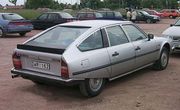
- 1974-1991 Citroen CXCitroën CXThe Citroën CX is an automobile produced by the French automaker Citroën from 1974 to 1991. Citroën sold nearly 1.2 million CXs during its 16 years of production. The CX was voted European Car of the Year in 1975....
- 1984-1991 Honda CR-XHonda CR-XThis article is about the first and second generations of the CR-X. For the third generation, see Honda CR-X del Sol.The Honda CR-X, originally launched as the Honda Ballade Sports CR-X in Japan, was a front-wheel-drive sports compact car manufactured by Honda. The first generation CR-X was sold in...
- 1985-1996 Autobianchi/Lancia Y10Autobianchi Y10The Autobianchi Y10 is a city car manufactured by the Italian automaker Fiat from 1985 to 1996 and marketed under the Autobianchi brand in Italy and under the Lancia brand in most export markets . The car was manufactured at the Autobianchi plant in Desio, Milan until 1992 and after that in Arese,...
- 1992-1998 Mazda MX-3Mazda MX-3The Mazda MX-3 is a four-seat hatchback coupé first introduced at the Geneva Motor Show in March 1991. The MX-3 was marketed as the Mazda MX-3 Precidia in Canada, the Eunos 30X in Australia, and as the Eunos Presso, Autozam AZ-3 and Mazda AZ-3 in Japan.The MX-3 is quite popular for modification...
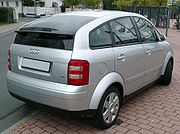
- 1991-2005 Audi A2Audi A2The Audi A2 is a Compact MPV styled five-door four- or five-seat hatchback designed supermini, produced by the German automaker Audi AG from November 1999 to 2005...
- 2001-2008 Volvo S60Volvo S60The Volvo S60 is a compact executive sedan produced by the Swedish automaker Volvo from 2000. Two generations of the sedan have been produced to date.-First generation :...
- 2004-2009 Citroën C4 Coupé
Several automakers including American Motors
American Motors
American Motors Corporation was an American automobile company formed by the 1954 merger of Nash-Kelvinator Corporation and Hudson Motor Car Company. At the time, it was the largest corporate merger in U.S. history.George W...
(AMC) and General Motors
General Motors
General Motors Company , commonly known as GM, formerly incorporated as General Motors Corporation, is an American multinational automotive corporation headquartered in Detroit, Michigan and the world's second-largest automaker in 2010...
(GM) have publicized certain models with truncated tails as "Kammbacks" even though they do not meet the classic "50% cross-section" definition, i.e. the AMC AMX-GT
AMC AMX-GT
The AMC AMX-GT is a 1968 concept car developed by American Motors Corporation . A rear-wheel drive pillarless coupe of monocoque construction with two doors and a truncated rear end treatment, its design was influenced by AMC stylist Richard A...
and Pontiac Firebird
Pontiac Firebird
The Pontiac Firebird was built by the Pontiac division of General Motors between 1967 and 2002. The Firebird was introduced the same year as the automaker's platform-sharing model, the Chevrolet Camaro...
-based "Type K" concept cars.
Hybrid mass-production cars
Hybrid vehicle
A hybrid vehicle is a vehicle that uses two or more distinct power sources to move the vehicle. The term most commonly refers to hybrid electric vehicles , which combine an internal combustion engine and one or more electric motors.-Power:...
cars designed for maximum economy, for example:
- 2000-2006 Honda InsightHonda InsightThe Honda Insight is a hybrid electric vehicle manufactured by Honda and the first production vehicle to feature Honda's Integrated Motor Assist system. The first-generation Insight was produced from 1999 to 2006 as a three-door hatchback...
- 2004- Toyota PriusToyota PriusThe Toyota Prius is a full hybrid electric mid-size hatchback, formerly a compact sedan developed and manufactured by the Toyota Motor Corporation...
- 2010- Honda InsightHonda InsightThe Honda Insight is a hybrid electric vehicle manufactured by Honda and the first production vehicle to feature Honda's Integrated Motor Assist system. The first-generation Insight was produced from 1999 to 2006 as a three-door hatchback...
(2nd generation) - 2011- Honda CR-ZHonda CR-ZThe Honda CR-Z is a compact hybrid electric automobile manufactured by Honda and marketed as a "sport hybrid coupe." The CR-Z combines a hybrid gasoline-electric powertrain with traditional sports car elements...
External links
- Article on the origins of Kammback design
- The Pininfarina 1800 - an explicitly Kamm-influenced design which informed the Citroën CXCitroën CXThe Citroën CX is an automobile produced by the French automaker Citroën from 1974 to 1991. Citroën sold nearly 1.2 million CXs during its 16 years of production. The CX was voted European Car of the Year in 1975....
and Rover SD1Rover SD1Rover SD1 is both the code name and eventual production name given to a series of large executive cars made by British Leyland or BL through its Specialist, Rover Triumph and Austin Rover divisions from 1976 until 1986....