
Home      Discussion      Topics      Dictionary      Almanac
Signup       Login
Chevrolet Corvette

Chevrolet Corvette

Overview
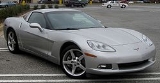
The Chevrolet Corvette is a sports car
Sports car
A sports car is a small, usually two seat, two door automobile designed for high speed driving and maneuverability....

 by the Chevrolet
Chevrolet
Chevrolet , also known as Chevy , is a brand of vehicle produced by General Motors Company . Founded by Louis Chevrolet and ousted GM founder William C. Durant on November 3, 1911, General Motors acquired Chevrolet in 1918...

 division of General Motors
General Motors
General Motors Company , commonly known as GM, formerly incorporated as General Motors Corporation, is an American multinational automotive corporation headquartered in Detroit, Michigan and the world's second-largest automaker in 2010...

 that has been produced in six generations. The first model, a convertible
Convertible
A convertible is a type of automobile in which the roof can retract and fold away having windows which wind-down inside the doors, converting it from an enclosed to an open-air vehicle...

, was designed by Harley Earl
Harley Earl
Harley J. Earl was first Vice President of Design at General Motors. He was an industrial designer and a pioneer of modern transportation design. A coachbuilder by trade, Earl pioneered the use of freeform sketching and hand sculpted clay models as design techniques...

 and introduced at the GM Motorama in 1953 as a concept show car. Myron Scott is credited for naming the car after the type of small, maneuverable warship called corvette
Corvette
A corvette is a small, maneuverable, lightly armed warship, originally smaller than a frigate and larger than a coastal patrol craft or fast attack craft , although many recent designs resemble frigates in size and role...

. Originally built in Flint, Michigan and St. Louis, Missouri, the Corvette is currently built in Bowling Green, Kentucky and is the official sports car of the Commonwealth of Kentucky. The National Corvette Museum
National Corvette Museum
The National Corvette Museum showcases the Chevrolet Corvette, an American sports car that has been in production since 1953. It is located in Bowling Green, Kentucky, off Interstate 65's Exit 28...

 documents the car's worldwide history and hosts the annual event.
Discussion
Ask a question about 'Chevrolet Corvette'
Start a new discussion about 'Chevrolet Corvette'
Answer questions from other users
Full Discussion Forum
 
Unanswered Questions
Encyclopedia
The Chevrolet Corvette is a sports car
Sports car
A sports car is a small, usually two seat, two door automobile designed for high speed driving and maneuverability....

 by the Chevrolet
Chevrolet
Chevrolet , also known as Chevy , is a brand of vehicle produced by General Motors Company . Founded by Louis Chevrolet and ousted GM founder William C. Durant on November 3, 1911, General Motors acquired Chevrolet in 1918...

 division of General Motors
General Motors
General Motors Company , commonly known as GM, formerly incorporated as General Motors Corporation, is an American multinational automotive corporation headquartered in Detroit, Michigan and the world's second-largest automaker in 2010...

 that has been produced in six generations. The first model, a convertible
Convertible
A convertible is a type of automobile in which the roof can retract and fold away having windows which wind-down inside the doors, converting it from an enclosed to an open-air vehicle...

, was designed by Harley Earl
Harley Earl
Harley J. Earl was first Vice President of Design at General Motors. He was an industrial designer and a pioneer of modern transportation design. A coachbuilder by trade, Earl pioneered the use of freeform sketching and hand sculpted clay models as design techniques...

 and introduced at the GM Motorama in 1953 as a concept show car. Myron Scott is credited for naming the car after the type of small, maneuverable warship called corvette
Corvette
A corvette is a small, maneuverable, lightly armed warship, originally smaller than a frigate and larger than a coastal patrol craft or fast attack craft , although many recent designs resemble frigates in size and role...

. Originally built in Flint, Michigan and St. Louis, Missouri, the Corvette is currently built in Bowling Green, Kentucky and is the official sports car of the Commonwealth of Kentucky. The National Corvette Museum
National Corvette Museum
The National Corvette Museum showcases the Chevrolet Corvette, an American sports car that has been in production since 1953. It is located in Bowling Green, Kentucky, off Interstate 65's Exit 28...

 documents the car's worldwide history and hosts the annual event.

First generation-C1 (1953–1962)


The first generation Corvette was introduced late in the 1953 model year and ended in 1962. Often referred to as the "solid-axle" models because the independent rear suspension did not debut until the 1963 Sting Ray. 300 hand-built polo white Corvette convertible
Convertible
A convertible is a type of automobile in which the roof can retract and fold away having windows which wind-down inside the doors, converting it from an enclosed to an open-air vehicle...

s were produced for the 1953 model year. The 1955 model offered the 265 cu in (4.3 l) V8 engine
V8 engine
A V8 engine is a V engine with eight cylinders mounted on the crankcase in two banks of four cylinders, in most cases set at a right angle to each other but sometimes at a narrower angle, with all eight pistons driving a common crankshaft....

 as an option; however, the first seven off the production line featured the standard "Blue Flame" Inline-6. The origin of the Chevrolet Nomad
Chevrolet Nomad
The Chevrolet Nomad was a station wagon model made off and on from 1955 to 1972, and a Chevy Van trim package in the late 1970s and early 1980s, produced by the Chevrolet Division of General Motors...

 was a two-door wagon concept car
Concept car
A concept vehicle or show vehicle is a car made to showcase new styling and or new technology. They are often shown at motor shows to gauge customer reaction to new and radical designs which may or may not have a chance of being produced....

 built off a 1954 Corvette.

A new body was introduced for the 1956 model featuring a new "face" and side coves; the taillamp fins were gone. An optional fuel injection
Fuel injection
Fuel injection is a system for admitting fuel into an internal combustion engine. It has become the primary fuel delivery system used in automotive petrol engines, having almost completely replaced carburetors in the late 1980s....

 system was made available in the middle of the 1957 model year. It was one of the first mass-produced engines in history to reach 1 bhp per cubic inch (16.4 Cubic cm) and Chevrolet's advertising agency used a "one hp per cubic inch" slogan for advertising the 283 bhp 283 cu in (4.6 l) Small-Block engine. Other options included power windows (1956), hydraulically operated power convertible
Convertible
A convertible is a type of automobile in which the roof can retract and fold away having windows which wind-down inside the doors, converting it from an enclosed to an open-air vehicle...

 top (1956), four speed manual transmission
Transmission (mechanics)
A machine consists of a power source and a power transmission system, which provides controlled application of the power. Merriam-Webster defines transmission as: an assembly of parts including the speed-changing gears and the propeller shaft by which the power is transmitted from an engine to a...

 (late 1957), and heavy duty brakes and suspension (1957).
The 1958 Corvette received a body and interior freshening including a longer front end with quad headlamps, bumper exiting exhaust tips, a new steering wheel and dashboard with all gauges mounted directly in front of the driver. Exclusive to the 1958 model were hood louvers and twin trunk spars. The 1959–60 model years had few changes except a decreased amount of body chrome and more powerful engine offerings.

For 1961, a complete redesign was made to the rear of the car; a "duck tail" with four round lights. The light treatment would continue for all following model year Corvettes. In 1962, the Chevrolet 283 cu in (4.6 l) Small-Block
Chevrolet Small-Block engine
The Chevrolet small-block engine is a series of automobile V8 engines built by the Chevrolet Division of General Motors using the same basic small engine block...

 was enlarged to 327 cu in (5.4 l) and produced a maximum of 340 bhp making it the fastest of the C1 generation. 1962 was the last year for the wrap around windshield, solid rear axle, and convertible-only body style. The trunk lid and exposed headlamps did not reappear for many decades.

Second generation-C2 (1963–1967)


The second generation smaller Corvette with I.R.S. was called a Sting Ray & later referred to as mid-years. Designed by Larry Shinoda
Larry Shinoda
Lawrence Kiyoshi Shinoda was a noted automotive designer who was best known for his work on the Chevrolet Corvette and Ford Mustang....

 with major inspiration from a previous concept design called the "Q Corvette" by Peter Brock and Chuck Pohlmann under the styling direction of Bill Mitchell. The design had several inspirations. Mitchell sponsored a car known as the "Mitchell Sting Ray" in 1959 because Chevrolet no longer participated in factory racing. This vehicle had the largest impact on the styling of this generation, although it had no top and did not give away what the coupe would look like. The third inspiration was a Mako Shark Mitchell had caught while deep-sea fishing.

Production started for the 1963 model year and ended in 1967. Introducing a new name, "Sting Ray", the 1963 model was the first year for a Corvette coupe
Coupé
A coupé or coupe is a closed car body style , the precise definition of which varies from manufacturer to manufacturer, and over time...

 and it featured a distinctive tapering rear deck (a feature that reappeared on the 1971 "Boattail" Buick Riviera
Buick Riviera
The Riviera by Buick is an automobile produced by Buick in the United States from the 1963 to 1999 model years, with 1,127,261 produced.A full-size coupé or personal luxury car, the early models of the Riviera in particular have been highly praised by automotive journalists and writers.A common...

) with, for 1963 only, a split rear window. The Sting Ray featured hidden headlamps, non-functional hood vents, and an independent rear suspension. Duntov never liked the split rear window because it blocked rear vision, but Mitchell thought it to be a key part of the entire design. Maximum power for 1963 was 360 bhp and was raised to 375 bhp in 1964. Options included electronic ignition, the breakerless magnetic pulse-triggered Delcotronic first offered on some 1963 Pontiac
Pontiac
Pontiac was an automobile brand that was established in 1926 as a companion make for General Motors' Oakland. Quickly overtaking its parent in popularity, it supplanted the Oakland brand entirely by 1933 and, for most of its life, became a companion make for Chevrolet. Pontiac was sold in the...

 models. On 1964 models the decorative hood vents were eliminated and Duntov got his way with the split rear window changed to a full width window.
Four-wheel disc brake
Disc brake
The disc brake or disk brake is a device for slowing or stopping the rotation of a wheel while it is in motion.A brake disc is usually made of cast iron, but may in some cases be made of composites such as reinforced carbon–carbon or ceramic matrix composites. This is connected to the wheel and/or...

s were introduced in 1965, as was a "big block" engine option, the 396 cu in (6.5 l) V8. Side exhaust pipes were also optional in 1965 and continued through 1967. The introduction of the 425 bhp 396 cu in (6.5 l) big block in 1965 spelled the beginning of the end for the Rochester
Rochester Products Division
Rochester Products Division was a division of General Motors that manufactured carburetors, and related components including emissions control devices and cruise control systems in Rochester, New York...

 fuel injection system. The 396 cu in (6.5 l) option cost while the fuel injected 327 cu in (5.4 l) engine cost . Few people could justify spending more for 50 bhp less, even if the FI cars offered optional bigger brakes not available on carbureted models. With only 771 fuel-injected cars built in 1965, Chevrolet discontinued the option the following year. For 1966, Chevrolet introduced an even larger 427 cu in (7 l) Big Block version. Other options available on the C2 included the Wonderbar auto-tuning AM radio, AM-FM radio (mid-1963), air conditioning (late-1963), a telescopic steering wheel (1965), and headrests (1966).
1967 was the final year for the C2 generation. It featured restyled fender vents, less ornamentation and the first use of all four taillights in red; back-up lamps were now rectangular, centrally located. (The all-four red taillight treatment continued on the first C3 in 1968 only and returned on the first C4 in 1984, continuing on all Corvettes since). 1967 had the first L88 engine option which was rated at 430 bhp, but unofficial estimates place the actual output at 560 bhp or more. Only twenty such engines were installed at the factory. From 1967 (to 1969), the Holley triple two-barrel carburetor, or Tri-Power, was available on the 427 L89 (a $368 option, on top of the cost for the high-performance 427). Despite these changes, sales slipped over 15%, to 22,940 (8,504 coupes, off close to 15%, and 14,436 convertibles, down nearly 19%).

Corvette chief engineer Zora Arkus-Duntov
Zora Arkus-Duntov
Zora Arkus-Duntov was a Belgian-born American engineer. His work on the Chevrolet Corvette earned him the nickname "Father of the Corvette."- Early life :Zora was born Zachary Arkus in Belgium on Christmas Day, 1909...

 came up with a lightweight version of the C2 in 1962. Concerned about Ford and what they were doing with the Shelby Cobra, GM planned 100 Grand Sport Corvettes but only five were built. They were driven by historic drivers such as Roger Penske
Roger Penske
Roger S. Penske is the owner of the automobile racing team Penske Racing, the Penske Corporation, and other automotive related businesses. A winning racer in the late 1950s, Penske was named 1961's Sports Car Club of America Driver of the Year by Sports Illustrated...

, A. J. Foyt
A. J. Foyt
Anthony Joseph Foyt, Jr., or as he is universally known as in motorsports circles, A. J. Foyt , is a retired American automobile racing driver. He raced in numerous genres of motorsports. His open wheel racing includes USAC Champ cars and midget cars. He raced stock cars in NASCAR and USAC. He won...

, Jim Hall
Jim Hall (race car driver)
Jim Hall is a former racecar driver and constructor from the United States. He competed in Formula One from to , participating in 12 World Championship Grands Prix and numerous non-Championship races....

, and Dick Guldstrand among others. Today the cars 001-005 are all held by private owners, and are among the most coveted and valuable Corvettes ever built.

The C3 was originally intended to be introduced for the 1967 model year; however, quality issues delayed its introduction until the following year.

Third generation-C3 (1968–1982)


The third generation Corvette, patterned after the Mako Shark II concept car, was introduced for the 1968 model year and lasted until 1982. C3 coupes featured the first use of T-top
T-top
An automotive T-top is an automobile roof with removable panels on either side of a rigid bar running from the center of one structural bar between pillars to the center of the next structural bar, the panels of a traditional T-top are usually made of auto grade safety glass.The T-top was patented...

 removable roof panels. It introduced monikers that were later revived, such as LT-1, ZR-1, and Collector Edition. The Corvette's 25th anniversary was celebrated in 1978 with a two-tone Silver Anniversary Edition and an Indy Pace Car replica edition. It was the first time that a Corvette was used as a Pace Car for the Indianapolis 500
Indianapolis 500
The Indianapolis 500-Mile Race, also known as the Indianapolis 500, the 500 Miles at Indianapolis, the Indy 500 or The 500, is an American automobile race, held annually, typically on the last weekend in May at the Indianapolis Motor Speedway in Speedway, Indiana...

.

Engines and chassis components were mostly carried over from the C2, but the body and interior were new. The 350 cu in (5.7 l) engine replaced the 327 cu in (5.4 l) as the base engine in 1969, but power remained at 300 bhp. 1969 was the only year for a C3 to optionally offer either a factory installed side exhaust, or normal rear exit with chrome tips. The all-aluminum ZL1 engine was new for 1969.The special big-block engine was listed at 430-hp (320 kW), but was reported to produce 560 hp and propelled a ZL1 through the 1/4 mile in 10.89 seconds.

An extended production run for the 1969 model year
Model year
The model year of a product is a number used worldwide, but with a high level of prominence in North America, to describe approximately when a product was produced, and indicates the coinciding base specification of that product....

 because a lengthy labor strike meant sales were down on the 1970 models to 17,316. 1970 small-block power peaked with the optional high compression, high-revving LT-1 that produced 370 bhp. The 427 big-block was enlarged to 454 cu in (7.4 l) with a 390 bhp rating. The ZR-1 special package was an option available on the 1970 through 1972 model years, and included the LT-1 engine combined with special racing equipment. Only 53 ZR-1's were built.
In 1971, to accommodate regular low-lead fuel with lower anti-knock properties, the engine compression ratios were lowered which resulted in reduced power ratings. The power rating for the 350 cu in (5.7 l) L48 base engine decreased from 300 to 270 horsepower and the optional special high performance LT1 engine decreased from 370 to 330 horsepower. The big-block LS6 454 was reduced from 450 to 425 bhp, though it was not used in Corvettes for 1970, it was used in the Chevelle SS. For the 1972 model year, GM moved to the SAE Net measurement which resulted in further reduced, but more realistic power ratings than the previous SAE Gross standard. Although the 1972 model's 350 cu in (5.7 l) horsepower was actually the same as that for the 1971 model year, the lower net horsepower numbers were used instead of gross horsepower. The L48 base engine was now rated at 200 bhp and the optional LT1 engine was now rated at 270 bhp. 1974 models had the last true dual exhaust system that was dropped on the 1975 models with the introduction of catalytic converter
Catalytic converter
A catalytic converter is a device used to convert toxic exhaust emissions from an internal combustion engine into non-toxic substances. Inside a catalytic converter, a catalyst stimulates a chemical reaction in which noxious byproducts of combustion are converted to less toxic substances by dint...

s requiring the use of no-lead fuel. Engine power decreased with the base ZQ3 engine producing 165 bhp, the optional L82's output 205 bhp, while the 454 big-block engine was discontinued. Gradual power increases after 1975 peaked with the 1980 model's optional L82 producing 230 bhp.

Styling changed subtly over the generation until 1978 for the car's 25th anniversary. The Sting Ray nameplate was not used on the 1968 model, but Chevrolet still referred to the Corvette as a Sting Ray, and 1969 (through 1976) models used the "Stingray
Stingray
The stingrays are a group of rays, which are cartilaginous fishes related to sharks. They are classified in the suborder Myliobatoidei of the order Myliobatiformes, and consist of eight families: Hexatrygonidae , Plesiobatidae , Urolophidae , Urotrygonidae , Dasyatidae , Potamotrygonidae The...

" name as one word, without the space. In 1970 the body design was updated including fender flares, and interiors were refined including redesigned seats. Due to the government regulation, the 1973 Corvette's chrome front bumper was changed to a 5 miles per hour (2 m/s) system with a urethane
Polyurethane
A polyurethane is any polymer composed of a chain of organic units joined by carbamate links. Polyurethane polymers are formed through step-growth polymerization, by reacting a monomer with another monomer in the presence of a catalyst.Polyurethanes are...

 bumper cover. The optional wire-spoked wheel covers (left) were offered for the last time in 1973.
In 1974 a 5 miles per hour (2 m/s) rear bumper system with a two-piece, tapering urethane bumper cover replaced the Kamm-tail
Kammback
A Kammback is a car body style that derives from the research of the German aerodynamicist Wunibald Kamm in the 1930s. The design calls for a body with smooth contours that continues to a tail that is abruptly cut off. This shape reduces the drag of the vehicle."Kammback" is an American term...

 and chrome bumper blades, and matched the new front design from the previous year. 1975 was the last year for the convertible, (which did not return for 11 years) and Dave McLellan
Dave McLellan
Dave McLellan was an automotive engineer for General Motors, most notably the chief engineer for the Corvette from 1975 until his retirement in 1992....

 succeeded Zora Arkus-Duntov
Zora Arkus-Duntov
Zora Arkus-Duntov was a Belgian-born American engineer. His work on the Chevrolet Corvette earned him the nickname "Father of the Corvette."- Early life :Zora was born Zachary Arkus in Belgium on Christmas Day, 1909...

 as the Corvette's Chief Engineer. For the 1976 models the fiberglass floor was replaced with steel panels to provide protection from the catalytic converter
Catalytic converter
A catalytic converter is a device used to convert toxic exhaust emissions from an internal combustion engine into non-toxic substances. Inside a catalytic converter, a catalyst stimulates a chemical reaction in which noxious byproducts of combustion are converted to less toxic substances by dint...

's high operating temperature
Operating temperature
An operating temperature is the temperature at which an electrical or mechanical device operates. The device will operate effectively within a specified temperature range which varies based on the device function and application context, and ranges from the minimum operating temperature to the...

. Stingray 15 model years where the names Corvette, Sting Ray, and Stingray were synonymous. 1977 was last year the tunneled roof treatment with vertical back window was used, in addition leather seats were available at no additional cost for the first time. The black exterior color returned after a six-year absence.

The 1978 25th Anniversary introduced the fastback
Fastback
A fastback is a car body style whose roofline slopes continuously down at the back. The word can also designate the car itself. The style is seen on two-door coupés as well as four-door sedans.-History:...

 glass rear window and featured a new interior and dashboard. Corvette's 25th anniversary was celebrated with the Indy 500 Pace Car limited edition and a Silver Anniversary model featuring silver over gray lower body paint. All 1979 models featured the previous year's pace car seats and offered the front and rear spoilers
Spoiler (automotive)
A spoiler is an automotive aerodynamic device whose intended design function is to 'spoil' unfavorable air movement across a body of a vehicle in motion. Spoilers on the front of a vehicle are often called air dams, because in addition to directing air flow they also reduce the amount of air...

 as optional equipment. In 1980, the Corvette received an integrated aerodynamic
Aerodynamics
Aerodynamics is a branch of dynamics concerned with studying the motion of air, particularly when it interacts with a moving object. Aerodynamics is a subfield of fluid dynamics and gas dynamics, with much theory shared between them. Aerodynamics is often used synonymously with gas dynamics, with...

 redesign that resulted in a significant reduction in drag
Drag (physics)
In fluid dynamics, drag refers to forces which act on a solid object in the direction of the relative fluid flow velocity...

. After several years of weight increases, 1980 Corvettes were lighter as engineers trimmed both body and chassis weight. In mid-1981, production shifted from St. Louis, Missouri
St. Louis, Missouri
St. Louis is an independent city on the eastern border of Missouri, United States. With a population of 319,294, it was the 58th-largest U.S. city at the 2010 U.S. Census. The Greater St...

 to Bowling Green, Kentucky
Bowling Green, Kentucky
Bowling Green is the third-most populous city in the state of Kentucky after Louisville and Lexington, with a population of 58,067 as of the 2010 Census. It is the county seat of Warren County and the principal city of the Bowling Green, Kentucky Metropolitan Statistical Area with an estimated 2009...

, and several two-tone paint options were offered. The 1981 models were the last available with a manual transmission until well into the 1984 production run. In 1982, a fuel-injected engine returned, and a final C3 tribute Collectors Edition featured an exclusive, opening rear window hatch.

Fourth generation-C4 (1984–1996)


The fourth generation Corvette was the first all-new Corvette since 1963. Production was to begin for the 1983 model year but quality issues and part delays resulted in only 44 1983 model prototypes being produced that were never sold. All of the 1983 prototypes were destroyed except one with a white exterior, medium blue interior, L83 350ci, 205HP V8, and 4-speed automatic transmission. After extensive testing and modifications were completed, it was initially retired as a display sitting in an external wall over the Bowling Green Assembly Plant's employee entrance. Later this only surviving 1983 prototype was removed, restored and is now on public display at the National Corvette Museum in Bowling Green, Kentucky. It is still owned by GM.

Regular fourth generation production began on January 3, 1983 as the 1984 model year and delivery to customers began in March 1983. The 1984 model carried over the 350 cu in (5.7 l) L83 "Crossfire" V8 engine from the final 1982 third generation model. New chassis features were aluminum brake calipers and an all-aluminum suspension for weight savings and rigidity. The new one piece targa top had no center reinforcement. A new electronic dashboard with digital liquid crystal displays for the speedometer and tachometer was standard. Beginning in 1985, the 230 bhp L98 engine with tuned port fuel injection was the standard engine.
September 1984 through 1988 Corvettes offered a Doug Nash designed "4+3" transmission – a 4-speed manual coupled to an automatic overdrive on the top three gears. It was designed to help the Corvette meet U.S. fuel economy standards. Since 1981 when it was last offered, a manual transmission returned to the Corvette starting with production in late-1984. The transmission proved to be problematic and was replaced by a modern ZF
ZF Friedrichshafen
ZF Friedrichshafen AG, also known as ZF Group, and commonly abbreviated to ZF, is a German public company headquartered in Friedrichshafen, in the south-west German region of Baden-Württemberg....

 6-speed manual gearbox in 1989.

In 1986 the second Corvette Indy Pace Car was released. It was the first convertible Corvette since 1975. A Center High Mounted Signal Light (CHMSL; a third center brake light) was added in 1986 to comply with safety regulations. All 1986 convertibles had an Indy 500 emblem mounted on the console making any color a pace car edition. The color of the pace car used in the race was yellow.

In 1987, the B2K twin-turbo option became available from the factory. The Callaway
Callaway Cars Incorporated
Callaway Cars Inc. is an engine design company who is notable for their modification of Chevrolet cars, the Corvette sport cars in particular, especially their twin-turbo kit that became a dealer option and their record breaking Corvette Sledgehammer car....

 Corvette was a Regular Production Option
Regular Production Option
A Regular Production Option is a General Motors standard coding for vehicle configuration options. These codes are a combination of 3 alphanumeric characters and refer to a specific option or modification to the vehicle...

 (RPO B2K). The B2K option coexisted from 1990 to 1991 with the ZR-1 option, which then replaced it.

Early B2Ks produced 345 bhp and 450 lbft; later versions boasted 450 bhp and 613 lbft.

1988 saw the 35th Anniversary Edition. Each of these featured a special badge with an identification number mounted next to the gear selector, and were finished with a white exterior, wheels, and interior.

In 1991, all Corvettes received updates to the body, interior, and wheels. The convex rear fascia that set the 1990 ZR-1 apart from the base model was now included on L98 Corvettes, making the styling of the expensive ZR-1 even closer to that of the base cars. The most obvious difference remaining between the base and ZR-1 models besides the wider rear wheels was the location of the CHMSL, which was integrated into the new rear fascia used on the base model, but remained at the top of the rear-hatch on the ZR-1's.
For the 1992 model year, the 300 bhp LT1 engine was introduced, an increase of 50 bhp over 1991's L98 engine. Also new for 1992 was Acceleration Slip Regulation (ASR), a form of traction control which utilized the Corvette's brakes, spark retard and throttle close-down to prevent excessive rear wheel spin and possible loss of control. The traction control device could be switched off if desired.

1993 saw a special 40th Anniversary Edition featuring a commemorative Ruby Red color, 40th anniversary badges and embroidered seat backs. The 1993 Corvette also marked the introduction of the Passive Keyless Entry System, the first GM car to feature it. Production of the ZR-1 ended in 1995, after 6,939 cars had been built.

1996 was the final year of C4 production, and featured special models and options, including the Grand Sport and Collector Edition, OBD II (On-Board Diagnostics), run flat tires, and the LT4 engine. The 330 bhp LT4 V8 was available only with a manual transmission, while all 300 bhp LT1 Corvettes used automatic transmissions.

Chevrolet released the Grand Sport (GS) version in 1996 to mark the end of production of the C4 Corvette. The Grand Sport moniker was a nod to the original Grand Sport model produced in 1963. A total of 1,000 GS Corvettes were produced, 810 as coupes and 190 as convertibles. The 1996 GS came with the high-performance LT4 V8 engine
V8 engine
A V8 engine is a V engine with eight cylinders mounted on the crankcase in two banks of four cylinders, in most cases set at a right angle to each other but sometimes at a narrower angle, with all eight pistons driving a common crankshaft....

, producing 330 bhp and 340 lbft. The Grand Sport came only in Admiral Blue with a white stripe down the middle, and black wheels and two red stripes on the front left wheel arch.

Fifth generation-C5 (1997–2004)


Production of the C5 Corvette began in 1997 and ended with the 2004 model year. Chevrolet
Chevrolet
Chevrolet , also known as Chevy , is a brand of vehicle produced by General Motors Company . Founded by Louis Chevrolet and ousted GM founder William C. Durant on November 3, 1911, General Motors acquired Chevrolet in 1918...

 used cars like the Nissan 300ZX
Nissan 300ZX
The Z31 chassis designation was first introduced in 1983 as a 1984 Nissan/Datsun 300ZX in the US only. The 300ZX, as its predecessors, was known as a Nissan in other parts of the world. This continued in the US until 1985 model year when Nissan standardized their brand name worldwide and dropped...

 and Mazda RX-7
Mazda RX-7
Series 1 is commonly referred to as the "SA22C" from the first alphanumerics of the vehicle identification number. This series of RX-7 had exposed steel bumpers and a high-mounted indentation-located license plate, called by Werner Buhrer of Road & Track magazine a "Baroque depression."In 1980...

 as benchmarks for quality and styling due to criticisms the C4 Corvette received when compared to Japanese rivals. The C5 had a top speed of 181 mph (291.3 km/h) and was judged by the automotive press as improved in nearly every area over the previous Corvette design thanks to its much improved structural rigidity and much more curvaceous design.


Also introduced with the C5 was GM's new LS1
GM LS engine
The GM LS engine family is an engine design intended as the only V-8 engine used in General Motors' line of rear-wheel-drive cars and trucks. The LS series was a "clean sheet" design with little in common with the classic Chevrolet small block V8...

 small block. This third-generation small block V8 was completely redesigned. Now all-aluminum, it features a distributor-less ignition and a new cylinder firing order. It was initially rated at 345 bhp and 350 lbft, but was increased to 350 bhp in 2001. The new engine, combined with the new body and its low 0.29 drag coefficient, was able to achieve up to 28 mpg on the highway.

For its first year, the C5 was available only as a coupe, although the new platform was designed from the ground up to be a convertible, which returned in 1998, followed by the fixed-roof coupe (FRC) in 1999. One concept for the FRC was for it to be a stripped-down model with a possible V6 engine (nicknamed in-house as the "Billy Bob"). By 2000 FRC plans laid the groundwork for the return in 2001 of the Z06, an RPO option not seen since Zora's 1963 race-ready Corvette.

The Z06 model replaced the FRC model as the highest performance C5 Corvette. Instead of a heavier double-overhead cam engine like the ZR-1 of the C4 generation, the Z06 used an LS6, a 385 bhp derivative of the standard LS1 engine. Using the much more rigid fixed roof design allowed the Z06 unprecedented handling thanks to upgraded brakes and less body flex. Those characteristics, along with the use of materials such as a titanium exhaust system and a carbon fiber hood in the 2004 model year, led to further weight savings and performance gains for the C5 Z06. The LS6 was later upgraded to 405 bhp for 2002–2004. Although the Z06's rated power output equal to that of the C4 ZR-1, the improved rigidity, suspension, brakes, and reduced weight of the C5 produced a car quicker than C4 ZR-1.

Sixth generation-C6 (2005–present)


The C6 Corvette retained the front engine – rear transmission design of the C5, but was all new, including new bodywork with exposed headlamps (for the first time since 1962), a larger passenger compartment, a new 6.0 liter engine and a reworked suspension geometry. It has a longer wheelbase than the C5, but overall vehicle length and width are less to gain wider appeal to the European market. The 6.0L (364 cu in) LS2 V8 produced 400 bhp at 6000 rpm and 424 lbft at 4400 rpm, giving the vehicle a 0–60 time of under 4.2 seconds.

The C6 generation comes close to retaining the relative good fuel economy
Fuel economy in automobiles
Fuel usage in automobiles refers to the fuel efficiency relationship between distance traveled by an automobile and the amount of fuel consumed....

 of the C5, due in part to its relatively low .28 drag coefficient
Drag coefficient
In fluid dynamics, the drag coefficient is a dimensionless quantity that is used to quantify the drag or resistance of an object in a fluid environment such as air or water. It is used in the drag equation, where a lower drag coefficient indicates the object will have less aerodynamic or...

 and low curb weight, achieving 16/26 mpg (city/highway) equipped with automatic or manual transmissions; like all manual transmission Corvettes since 1989, it is fitted with Computer Aided Gear Selection (CAGS) to improve fuel economy by requiring drivers to shift from 1st gear directly to 4th in low-speed/low-throttle conditions. This feature helps the C6 avoid the Gas Guzzler Tax
Gas Guzzler Tax
The National Energy Act: Energy Tax Act of 1978 , or the Gas Guzzler Tax, imposed set tax penalties on car manufacturers who fail to meet the minimum fuel economy level of in the United States. This does not include minivans, sport utility vehicles or pick-up trucks. It is intended to discourage...

 while achieving better fuel economy.

The new Z06 arrived as a 2006 model in the third quarter of 2005. It has a 7.0 L version of the small block engine codenamed LS7. At 427.6 cubic inches, the Z06 was the largest small block ever offered from General Motors. Because of the Corvette's former use of 427 cubic-inch big blocks in the late-1960s and early 1970s, the LS7's size was rounded down to 427 cubic inches. Official output is 505 bhp and has a 0-60 mph (96.6 km/h) time of 3.8 seconds and a top speed of 198 mph (318.7 km/h).

For 2008, the Corvette received a mild freshening: a new LS3
GM LS engine
The GM LS engine family is an engine design intended as the only V-8 engine used in General Motors' line of rear-wheel-drive cars and trucks. The LS series was a "clean sheet" design with little in common with the classic Chevrolet small block V8...

 engine with displacement increased to 6.2 l (378 cu in), resulting in 430 bhp and 424 lbft (436 bhp and 428 lbft if ordered with the optional performance exhaust). The 6-speed manual transmission also has improved shift linkage and a 0–60 time of 4.0 seconds, while the automatic is set up for quicker shifts giving the C6 automatic a 0–60 time of 4.3 seconds, faster than any other production automatic Corvette. The interior was slightly updated and a new 4LT leather-wrap interior package was added. The wheels were also updated to a new five-spoke design.
ZR1, formally announced in a December 2007 press statement by General Motors, where it was revealed that their target of 100 bhp per 1 l (61 cu in) has been reached by a new "LS9" engine with an Eaton-supercharged 6.2-liter engine producing 638 bhp and 604 lbft. It would have a sticker price of about with the standard interior or with the leather-wrapped interior. The LS9 engine was the most powerful to be put into a GM production sports car. Top speed was 205 mi/h.

Grand Sport, the historical name returned to the Corvette lineup in 2010 as an entirely new model series that replaced the Z51 option. The new model is basically an LS3 equipped Z06 with a steel frame instead of aluminum. It retains many of the features of the Z06 including: wide body with 18x9.5 & 19x12 inch wheels, dry sump oiling (hard top only), 6-piston 14" front brakes & 4-piston rear, improved suspension, and front carbon fiber fenders. Manual power train equipped G/S models receive a tweaked LS3 with a forged crank and are built in Z06 fashion by hand. A new launch control system was introduced for all models that allows for sub 4 second 0-60. EPA estimated 26 MPG highway, 1.0 G on skid pad. 2012 pricing starts at 55,925.

Started in the 2011 model year, buyers of the Corvette Z06 and ZR1 are offered the opportunity to assist in the build of their engine. Titled the "Corvette Engine Build Experience," buyers can pay an extra $5,800 to be flown to the Wixom, Michigan Performance Build Center. Participants will help the assembly line workers build the V8 engine, then can accept delivery of the car at the National Corvette Museum in Bowling Green, KY, near the Corvette final assembly point.

Next generation development


According to Motor Trend
Motor Trend
Motor Trend is an American automobile magazine. It first appeared in September 1949, issued by Petersen Publishing Company in Los Angeles, and bearing the tag line "The Magazine for a Motoring World". Petersen Publishing was sold to British publisher EMAP in 1998, who sold the former Petersen...

,
GM executives have been planning the next-generation (C7) Corvette since 2007. The car was originally planned for the 2011 model year (to coincide with the 100th anniversary of Chevrolet). Mid-engine and rear-engine
Rear-engine design
In automobile design, a rear-engine design layout places the engine at the rear of the vehicle. The center of gravity of the engine itself is past the rear axle...

 layouts had been considered, but the front-engine, rear-wheel drive (RWD) platform will continue to keep costs lower and the engine compact. The seventh generation Corvette is still in development, but is widely believed to be publicly unveiled by 2012, but may be delayed further depending on the scope of upcoming Corporate Average Fuel Economy
Corporate Average Fuel Economy
The Corporate Average Fuel Economy are regulations in the United States, first enacted by the U.S. Congress in 1975, and intended to improve the average fuel economy of cars and light trucks sold in the US in the wake of the 1973 Arab Oil Embargo...

 (CAFE) regulations.
The Corvette C7 will come equipped with Chevrolet's upcoming 5.5 L small block V8 that features a number of technical advancements including an aluminum block and heads and a revised combustion system. The engine will retain the pushrod, overhead valve design configuration. The new 5.5 L V8 made its world debut in the C6.R racecar. Power will likely total 440 hp, an improvement over the 436 horsepower available currently in the Corvette C6, but with improved fuel economy due to the new engine's smaller size and advanced features. The engine is part of a new $890 million program committed for vehicles across the GM lineup.

Car and Driver
Car and Driver
Car and Driver is an American automotive enthusiast magazine. Its total circulation is 1.31 million. It is owned by Hearst Magazines, who purchased prior owner Hachette Filipacchi Media U.S. in 2011...

said in April 2011, "We anticipate change in the C7 will be apparent at a glance, even to casual observers." "It seems certain the coupe will feature a split rear window – a la the one-year Sting Ray coupe of 1963. In this case it will be an optional feature." An Interior makeover is expected with upgraded materials with seats comparing favorably with the buckets found in Porsches and BMWs. The front-engine Y platform will be essentially unchanged from the C6 with an improvement expected in steering linearity and feel.
The Z06 and ZR1 will continue, while the Grand Sport may become the base model. The C7 should hit dealerships in fall of 2012.

Awards


Over the years the Corvette has won awards from automobile publications as well as organizations such as the Society of Automotive Engineers.

Automobile Magazine
Automobile Magazine
Automobile magazine is an automobile magazine in the United States and is owned by Source Interlink. It was founded by a group of former employees of Car and Driver magazine, led by that publications’s former editor, David E. Davis, and originally published by News Corporation...

ranked the 1963–1967 Sting Ray first on their "100 Coolest Cars" list, above the Dodge Viper
Dodge Viper
The first prototype was tested in January 1989. It debuted in 1991 with two pre-production models as the pace car for the Indianapolis 500 when Dodge was forced to substitute it in place of the Japanese-built Stealth because of complaints from the United Auto Workers, and went on sale in January...

 GTS, the Porsche 911
Porsche 911
The Porsche 911 is a luxury 2-door sports coupe made by Porsche AG of Stuttgart, Germany. It has a distinctive design, rear-engined and with independent rear suspension, an evolution of the swing axle on the Porsche 356. The engine was also air-cooled until the introduction of the Type 996 in 1998...

, and others.

Sports Car International
Sports Car International was an automobile magazine in the United States published by Ross Periodicals Inc. that was focused on sports cars. The magazine was published from 1986 to 2008. Its business offices were located in Novato, California....

placed the Corvette at number 5 on their list of the "Top Sports Cars of the 1960s".

Hot Rod
Hot rod
Hot rods are typically American cars with large engines modified for linear speed. The origin of the term "hot rod" is unclear. One explanation is that the term is a contraction of "hot roadster," meaning a roadster that was modified for speed. Another possible origin includes modifications to or...

magazine in its March 1986 issue selected the 1973–74 Corvette LS6 454 as one of the "10 most collectable muscle cars" in the company of the 1968–70 Chevelle
Chevrolet Chevelle
The Chevrolet Chevelle is a mid-sized automobile produced by the Chevrolet division of General Motors in three generations for the 1964 through 1977 model years. Part of the GM A-Body platform, the Chevelle was one of Chevrolet's most successful nameplates. Body styles include coupes, sedans,...

, 1970 'Cuda
Plymouth Barracuda
The Plymouth Barracuda is a 2-door car that was manufactured by the Plymouth division of the Chrysler Corporation from 1964-1974.The first-generation Barracuda, a fastback A-body coupe based on the Plymouth Valiant, had a distinctive wraparound back glass and was available from 1964-1966.The...

, 1970 Challenger
Dodge Challenger
The Dodge Challenger is the name of three different generations of automobiles marketed by the Dodge division of Chrysler.The first generation Dodge Challenger was a pony car built from 1970 to 1974, using the Chrysler E platform and sharing major components with the Plymouth Barracuda. The second...

, 1966–67 Fairlane, 1968–70 AMX
AMC AMX
The AMC AMX is a two-seat GT in style and approach sports car that was produced by American Motors Corporation for the 1968 through 1970 model years. The AMX was also classified as a muscle car, but "unique among other American cars at the time due its short wheelbase"...

, 1970 Camaro Z28
Chevrolet Camaro
The Chevrolet Camaro is an automobile manufactured by General Motors under the Chevrolet brand, classified as a pony car and some versions also as a muscle car. It went on sale on September 29, 1966, for the 1967 model year and was designed as a competing model to the Ford Mustang...

, 1968–70 GTO
Pontiac GTO
The Pontiac GTO is an automobile built by Pontiac Division of General Motors in the United States from 1964 to 1974, and by GM subsidiary Holden in Australia from 2004 to 2006. It is considered an innovative, and now classic muscle car of the 1960s and 1970s...

, 1968–69 Charger
Dodge Charger
The Dodge Charger is an American automobile manufactured by the Dodge division of Chrysler. There have been several different Dodge vehicles, built on three different platforms and sizes, all bearing the Charger nameplate...

, and 1967–68 Mustang
Ford Mustang
The Ford Mustang is an automobile manufactured by the Ford Motor Company. It was initially based on the second generation North American Ford Falcon, a compact car. Introduced early on April 17, 1964, as a "1964½" model, the 1965 Mustang was the automaker's most successful launch since the Model A...

.

Car and Driver
Car and Driver
Car and Driver is an American automotive enthusiast magazine. Its total circulation is 1.31 million. It is owned by Hearst Magazines, who purchased prior owner Hachette Filipacchi Media U.S. in 2011...

readers selected the Corvette "Best all around car" nine of 11 years in Car and Driver's Reader's Choice Polls including 1971, 1972, 1973, 1974, and 1975.

Car and Driver magazine selected the Corvette for its annual Ten Best
Car and Driver Ten Best
Car and Driver magazine annually nominates a list of what it considers the Ten Best cars and Five Best trucks.All production vehicles for sale in that calendar year are considered with these restrictions:# The vehicle must be on sale by January...

 list fifteen times: the C4 from 1985 through 1989, the C5 in 1998, 1999, and 2002 through 2004, and the C6 from 2005 through 2009.

Motor Trend
Motor Trend
Motor Trend is an American automobile magazine. It first appeared in September 1949, issued by Petersen Publishing Company in Los Angeles, and bearing the tag line "The Magazine for a Motoring World". Petersen Publishing was sold to British publisher EMAP in 1998, who sold the former Petersen...

magazine named the Corvette Car of the Year
Car of the Year
Car of the Year is a phrase usually considered to have been invented by Motor Trend magazine in the 1950s for their annual award for best American automobile...

 in 1984 and 1998.

Society of Automotive Engineers publication Automotive Engineering International. selected the 1999 Corvette Convertible, (along with the Mercedes-Benz S500) "Best Engineered Car of the 20th century".

The 2005 Corvette was nominated for the North American Car of the Year
North American Car of the Year
The North American Car of the Year is an automobile award voted annually in January at the North American International Auto Show in Detroit. The jury consists of no more than 50 automotive journalists.-Example:-Pre-1994:-1994-1999:-2000-2009:...

 award and was named "Most Coveted Vehicle" in the 2006 Canadian Car of the Year
Canadian Car of the Year
Canadian Car of the Year winners, as chosen by the Automobile Journalists Association of Canada:-Canadian Car of the Year:-2011:Canadian Car of the Year winners, as chosen by the Automobile Journalists Association of Canada:...

 contest.

U.S. News & World Report
U.S. News & World Report is an American news magazine published from Washington, D.C. Along with Time and Newsweek it was for many years a leading news weekly, focusing more than its counterparts on political, economic, health and education stories...

selected the 2010 Corvette the "Best Luxury Sports Car for the Money".

NASA


Astronaut Alan Shepard
Alan Shepard
Alan Bartlett Shepard, Jr. was an American naval aviator, test pilot, flag officer, and NASA astronaut who in 1961 became the second person, and the first American, in space. This Mercury flight was designed to enter space, but not to achieve orbit...

, a long time Corvette owner, was invited by then GM Chief Engineer Zora Arkus-Duntov
Zora Arkus-Duntov
Zora Arkus-Duntov was a Belgian-born American engineer. His work on the Chevrolet Corvette earned him the nickname "Father of the Corvette."- Early life :Zora was born Zachary Arkus in Belgium on Christmas Day, 1909...

 to drive pre-production Corvette models. General Motors executives later gave Shepard a 1972 model with a Bill Mitchell interior. Jim Rathmann
Jim Rathmann
Jim Rathmann was an American race car driver who won the Indianapolis 500 in 1960....

, a Melbourne, Florida
Melbourne, Florida
Melbourne is a city in Brevard County, Florida, United States. As of 2009, the population estimated by the U.S. Census Bureau is 78,323. The municipal area is the second largest by size and by population in the county. Melbourne is a principal city of the Palm Bay – Melbourne – Titusville, Florida...

 Chevrolet dealer and winner of the 1960 Indy 500, befriended astronauts Shepard, Gus Grissom
Gus Grissom
Virgil Ivan Grissom , , better known as Gus Grissom, was one of the original NASA Project Mercury astronauts and a United States Air Force pilot...

, and Gordon Cooper
Gordon Cooper
Leroy Gordon Cooper, Jr. , also known as Gordon Cooper, was an American aeronautical engineer, test pilot and NASA astronaut. Cooper was one of the seven original astronauts in Project Mercury, the first manned space effort by the United States...

. Rathman convinced GM President Ed Cole
Ed Cole
Edward Nicholas Cole was an American automotive executive for General Motors.- Career :Cole was the son of a dairy farmer. In his youth, he designed, built, and sold homemade radio sets, and as a teenager became a field representative for a tractor manufacturer...

 to setup a program which supplied each astronaut with a pair of new cars each year. Most chose a family car for their wives and a Corvette for themselves. In his memoir Last Man On The Moon, Gene Cernan describes how this worked. The astronauts received brand-new Corvettes which they were given the option to purchase at a 'used' price after they'd been driven 3000 miles. Alan Bean
Alan Bean
Alan LaVern Bean is a former NASA astronaut, engineer, and painter. Bean was selected to become an astronaut by NASA in 1963 as part of Astronaut Group 3. He made his first flight into space aboard Apollo 12, the second manned mission to land on the Moon, at the age of thirty-seven years in...

 recalls Corvettes lined up in the parking lot outside the astronaut offices at the Johnson Space Center in Houston, and friendly races between Shepard and Grissom along the Florida beach roads and beaches themselves as local police turned a blind eye.
Shepard, Grissom and Cooper even pulled each other on skis in the shallow water. The Mercury and later astronauts were unofficially tied to the Corvette and appeared in official photographs with their cars and with mock-ups of space vehicles such as the Lunar Module or Lunar Rover
Lunar rover
The Lunar Roving Vehicle or lunar rover was a battery-powered four-wheeled rover used on the Moon in the last three missions of the American Apollo program during 1971 and 1972...

. Cooper talked of the races along Cocoa Beach in his eulogy of Shepard at the Johnson Space Center in 1998.

Concept cars


Corvette concept cars have inspired the designs of several generations of Corvettes. The first Corvette, Harley Earl
Harley Earl
Harley J. Earl was first Vice President of Design at General Motors. He was an industrial designer and a pioneer of modern transportation design. A coachbuilder by trade, Earl pioneered the use of freeform sketching and hand sculpted clay models as design techniques...

's 1953 EX-122 Corvette prototype was itself, a concept show car, first shown to the public at the 1953 GM Motorama
Motorama
The General Motors Motorama was an auto show staged by GM from 1949 to 1961. These automobile extravaganzas were designed to whet public appetite and boost automobile sales with displays of fancy prototypes, concept vehicles and other special or halo models. Motorama grew out of Alfred P. Sloan's...

 at the Waldorf-Astoria Hotel
Waldorf-Astoria Hotel
The Waldorf-Astoria is a luxury hotel in New York. It has been housed in two historic landmark buildings in New York City. The first, designed by architect Henry J. Hardenbergh, was on the Fifth Avenue site of the Empire State Building. The present building at 301 Park Avenue in Manhattan is a...

 in New York City on January 17, 1953. It was brought to production in six months with only minor changes.

Harley Earl's successor, Bill Mitchell was the man behind most of the Corvette concepts of the 1960s and 1970s. The second-generation (C2) of 1963 was his, and its design first appeared on the Sting Ray racer
Corvette Stingray (Concept car)
The Corvette Stingray was a privately funded concept car that formed a basis for the second generation Corvette Sting Ray. The Stingray racer-concept car was designed by Pete Brock the youngest designer to work at GM at that time, Bill Mitchell, GM Vice President of styling, and Larry Shinoda in...

 of 1959. It made its public debut at Maryland's Marlborough Raceway on April 18, 1959, powered by a 283 cu in (4.6 l) V8 with experimental 11:1 compression aluminum cylinder heads and took fourth place. It raced through 1960 wearing only "Sting Ray" badges before retiring to tour the auto-show circuit in 1961.

In 1961 the XP-755 Mako Shark show car was designed by Larry Shinoda as a concept for future Corvettes. In keeping with the name, the streamlining, pointed snout, and other detailing was partly inspired by the look of that very fast fish. The 1961 Corvette tail was given two additional tail lights (six total) for the concept car. The body inspired the 1963 production Sting Ray.

In 1965 Mitchell removed the original concept body and redesigned it as the Mako Shark II. Chevrolet actually created two of them, only one of which was fully functional. The original Mako Shark was then retroactively called the Mako Shark I. The Mako Shark II debuted in 1965 as a show car and this concept influenced Mitchell's redesigned Corvette of 1968.

The Aerovette
Chevrolet Aerovette
The Chevrolet Aerovette is a concept car created by the Chevrolet division of General Motors, beginning life as Experimental Project 882 . It has a mid-engine configuration using a transverse mounting of its V-8 engine...

 has a mid-engine configuration using a transverse
Transverse engine
A transverse engine is an engine mounted in a vehicle so that the engine's crankshaft axis is perpendicular to the long axis of the vehicle. Many modern front wheel drive vehicles use this engine mounting configuration...

 mounting of its V-8 engine. Zora Arkus-Duntov
Zora Arkus-Duntov
Zora Arkus-Duntov was a Belgian-born American engineer. His work on the Chevrolet Corvette earned him the nickname "Father of the Corvette."- Early life :Zora was born Zachary Arkus in Belgium on Christmas Day, 1909...

's engineers originally built two XP-882s during 1969. John DeLorean, Chevy general manager, ordered one for display at the 1970 New York Auto Show. In 1972, DeLorean authorized further work on the XP-882. A near-identical body in aluminum alloy was constructed and became the XP-895 "Reynolds Aluminum Car." Duntov and Mitchell responded with two Chevrolet Vega
Chevrolet Vega
The Chevrolet Vega is a subcompact, two-door automobile that was produced by the Chevrolet division of General Motors for the 1971-1977 model years. Named after the star Vega, the car was powered by a lightweight aluminum-block inline four-cylinder engine...

 (stillborn) Wankel 2-rotor engines joined together as a 4-rotor 420 hp engine which was used to power the XP-895. It was first shown in late 1973. The 4-rotor show car was outfitted with a 400 cu in (6.6 l) small-block V8 in 1977 and rechristened Aerovette. GM chairman Thomas Murphy
Thomas Murphy (chairman)
Thomas Aquinas Murphy was former CEO of General Motors during the 1970s.Murphy began with GM as a clerk in the controller's office after graduating in 1938 from the University of Illinois with a B.S. in accountancy. During World War II, Murphy served in the Navy for three years before returning to...

 approved the Aerovette for 1980 production, but Mitchell's retirement that year, combined with then Corvette chief engineer Dave McLellan
Dave McLellan
Dave McLellan was an automotive engineer for General Motors, most notably the chief engineer for the Corvette from 1975 until his retirement in 1992....

's lack of enthusiasm for the mid-engine design and slow-selling data on mid-engined cars killed the last hope for a mid-engine Vette.

A Corvette Stingray Anniversary concept car was unveiled at the 2009 Detroit Auto Show, fifty years after the Sting Ray racer-concept of 1959. The vehicle was based on a combination of the 1963 Sting Ray and the 1968 Stingray. The new Stingray concept appears in the movie Transformers: Revenge of the Fallen
Transformers: Revenge of the Fallen
Transformers: Revenge of the Fallen is a 2009 American science fiction-action film directed by Michael Bay and produced by Steven Spielberg. It is the sequel to the 2007 film Transformers and the second installment in the live-action Transformers series...

, as the vehicle mode of the character Sideswipe.

Production

YearProductionNotes
1953   300 First generation (C1) begins; production starts on June 30; polo white with red interior and black top is only color combination; Options were interior door handles; "clip in" side curtains were a substitute for roll-up windows.
1954  3,640 Production moves to St. Louis
St. Louis, Missouri
St. Louis is an independent city on the eastern border of Missouri, United States. With a population of 319,294, it was the 58th-largest U.S. city at the 2010 U.S. Census. The Greater St...

; exterior colors-blue, red, and black are added; top color-beige is added, longer tail pipes.
1955   700 Both inline-6 and 265 cu in (4.3 l) V8 engine
V8 engine
A V8 engine is a V engine with eight cylinders mounted on the crankcase in two banks of four cylinders, in most cases set at a right angle to each other but sometimes at a narrower angle, with all eight pistons driving a common crankshaft....

s produced; 3-speed manual transmission added late in the model year.
1956  3,467 New body with roll-up windows; V8-only; 3-speed manual transmission becomes standard equipment and Powerglide moved to option list.
1957  6,339 283 cu in (4.6 l) V8; Optional 4-speed manual and fuel injected
Fuel injection
Fuel injection is a system for admitting fuel into an internal combustion engine. It has become the primary fuel delivery system used in automotive petrol engines, having almost completely replaced carburetors in the late 1980s....

 engine option added.
1958  9,168 Quad-headlights and longer, face-lifted body; new interior and dash, fake louvers on hood and chrome strips on trunk lid; number of teeth in grille reduced from 13 to 9.
1959  9,670 First black interior and dash storage bin; only year with a turquoise top; louvers and chrome strips from '58 removed.
1960  10,261 Minor changes to the interior: red and blue bars on the dash logo, vertical stitching on seats.
1961 10,939 New rear styling, bumpers, and round taillights. New fine-mesh grill.
1962 14,531 327 cu in (5.4 l) V8 engine; last year with a trunk until 1997. New black grill with chrome surround, chrome rocker panel moldings.
1963  21,513 Second generation (C2) begins;new coupe body style introduced (only year for split rear window); coupe more expensive than convertible.
1964  22,229 rear backlite windows of coupe changed to single pane window; hood louvers deleted.
1965  23,562 396 cu in (6.5 l) Big-Block
Chevrolet Big-Block engine
The Chevrolet big block is a series of large displacement V8 engines that were developed in the USA during the 1950s and 1960s. As American automobiles grew in size and weight following the Second World War the engines powering them had to keep pace...

 V8 added; last year of fuel injected
Fuel injection
Fuel injection is a system for admitting fuel into an internal combustion engine. It has become the primary fuel delivery system used in automotive petrol engines, having almost completely replaced carburetors in the late 1980s....

 engine option (until 1982-std.); side-discharge exhaust introduced.
1966  27,720 427 cu in (7 l) Big-Block V8 with unique bulging hood; 327 cu in (5.4 l) 300 hp small block V8 standard.
1967  22,940 five-louver fenders are unique; Big-Block hood bulge redesigned as a scoop; parking brake changed from pull-out under dash handle to lever mounted in center console; Tri-power 427 would become a sought-after Corvette.
1968 28,566 Third generation (C3) begins; New body and T-top
T-top
An automotive T-top is an automobile roof with removable panels on either side of a rigid bar running from the center of one structural bar between pillars to the center of the next structural bar, the panels of a traditional T-top are usually made of auto grade safety glass.The T-top was patented...

 removable roof panels, new interior, engines carried over, three-speed Turbo Hydra-matic replaces two-speed Powerglide as automatic transmission option.
1969 38,462 First year of the 350 cu in (5.7 l) Small-Block; longer model year extended to December, 1969 due to delay in introduction of 1970 model; "Stingray" front fender nameplates added, new interior door panels and inserts, 17-inch black-vinyl steering wheel (replaced 18-inch wood-rim wheel).
1970 17,316 First year for the LT-1 Small-Block and 454 cu in (7.4 l) Big-Block; three-speed manual transmission dropped and four-speed manual became standard with Turbo Hydra-matic available as no-cost option with all engines except LT-1 350; posi-traction made standard equipment; introduced along with the second-generation Chevrolet Camaro
Chevrolet Camaro
The Chevrolet Camaro is an automobile manufactured by General Motors under the Chevrolet brand, classified as a pony car and some versions also as a muscle car. It went on sale on September 29, 1966, for the 1967 model year and was designed as a competing model to the Ford Mustang...

 on Feb. 26, 1970, new egg-grate metal front grills and fender grills, lower molded fender flares, new hi-back seats and interior trim, new custom interior option includes: leather seat trim, cut-pile carpeting, lower-carpeted door panels and wood-grain accents.
1971 21,801 Significant power drops due to reduced compression ratios to meet GM corporate edict requiring all engines to run low-octane unleaded gasoline; power ratings based on both "gross" and "net" figures with the former based on engine hooked to dynometer while "net" ratings based on power as installed in vehicle with accessories and emission controls installed.
1972 27,004 Power ratings now advertised in SAE net figures, last year for LT-1 engine, front and rear chrome bumpers, removable rear window, and windshield wiper door.
1973 30,464 5 mph (8 km/h) front bumper system with urethane cover, pot-metal front grills (black with silver edges), chrome rear bumpers unchanged, new design front fender ducts, first year for radial tires (standard equipment), rubber body mounts, new hood with rear air induction and under-hood insulation, new front-end (round) emblem. cross-flag gas-lid emblem deleted towards the end of the model year.
1974 37,502 5 mph (8 km/h) rear bumper system with urethane cover to match previous year's front bumper, new recessed taillamps and down-turned tail-pipes. 1974 is the only year with two piece rear bumper cover with center-split. No gas lid emblem was used. Aluminum front grills (all-black), dual exhaust resonators added, revised radiator cooling and interior a/c ducts, integrated seat /shoulder belts in coupe. Last year for true dual exhaust system, last year for the 454 big-block engine in a Corvette.
1975 38,645 First year of Catalytic converter
Catalytic converter
A catalytic converter is a device used to convert toxic exhaust emissions from an internal combustion engine into non-toxic substances. Inside a catalytic converter, a catalyst stimulates a chemical reaction in which noxious byproducts of combustion are converted to less toxic substances by dint...

 and single-exhaust, black (painted) bumper pads front and rear, redesigned inner-bumper systems and one-piece rear bumper cover, plastic front grills (all-black), amber parking lamp lenses (replaced the clear lenses on 1973–1974) new emblems, last year of C3 convertible.
1976 46,558 First-year for steel floor-panels, cold-air induction dropped, new aluminum alloy wheels option, new one-piece rear "Corvette" nameplate (replaces letters).
1977 49,213 Last year of 1968 flat rear glass design, Black exterior available (last year-1969), new design ""Corvette flags" front end and fender emblems. New interior console and gauges, universal GM radios.
1978 46,776 25th Anniversary, New fastback rear window, Silver Anniversary and Indy 500 Pace Car special editions; Pace-car included sport seats and spoilers-front and rear, limited option-glass t-tops; redesigned interior, dash, instruments.
1979 53,807 Sport seats (from the previous year's pace-car); front and rear spoilers optional, glass t-tops optional; New interior comfort features; highest Corvette sales year to date.
1980 40,614 Lightened materials, new hood, front end with molded spoilers, rear bumper cover with molded spoiler and new tail lamps, Federal government required 85 mi/h speedometer; California cars powered by 305 V8 and automatic transmission for this year only, last year for L-82 engine- (n/a with manual transmission)
1981 40,606 Production is switched from St. Louis to new Bowling Green plant; 350 cu in (5.7 l) V8 returns in California cars, last year for manual transmission.
1982 25,407 New cross-fire fuel-injected L83, New automatic overdrive transmission; Collectors Edition features exclusive hatch rear window – is one fourth of production.
1984 51,547 Fourth generation (C4) begins; hatchback
Hatchback
A Hatchback is a car body style incorporating a shared passenger and cargo volume, with rearmost accessibility via a rear third or fifth door, typically a top-hinged liftgate—and features such as fold-down rear seats to enable flexibility within the shared passenger/cargo volume. As a two-box...

 body; digital instrumentation L83 engine continued from 1982.
1985 39,729 More powerful and fuel efficient L98 engine introduced.
1986 35,109 First convertible since 1975. Third brake light, antilock brakes, and key-code anti-theft system are new.
1987 36,632 Callaway
Callaway Cars Incorporated
Callaway Cars Inc. is an engine design company who is notable for their modification of Chevrolet cars, the Corvette sport cars in particular, especially their twin-turbo kit that became a dealer option and their record breaking Corvette Sledgehammer car....

 twin-turbo offered through dealers with GM warranty.
1988 22,789 New wheel design; all white 35th Anniversary special edition coupe.
1989 26,412 ZF 6-speed manual replaces Doug Nash 4+3.
1990 23,646 ZR-1 is introduced with DOHC LT5 engine. Interior redesigned to incorporate drivers-side air bag.
1991 20,639 Restyled exterior; last year for the Callaway B2K twin turbo.
1992 20,479 New LT1 engine replaces the L98; Traction control
Traction control system
A traction control system , also known as anti-slip regulation , is typically a secondary function of the anti-lock braking system on production motor vehicles, designed to prevent loss of traction of driven road wheels...

 is standard.
1993 21,590 Passive keyless entry is standard; 40th Anniversary special edition in Ruby Red.
1994 23,330 New interior including passenger airbag.
1995 20,742 Last year of the ZR-1; minor exterior restyling; Indy Pace Car special edition.
1996 21,536 Optional LT4 engine with 330 bhp. Collectors Edition and Grand Sport special editions. First year with OBD II diagnostics.
1997 9,752 Fifth generation (C5) begins; LS1 engine is new; the hatchback
Hatchback
A Hatchback is a car body style incorporating a shared passenger and cargo volume, with rearmost accessibility via a rear third or fifth door, typically a top-hinged liftgate—and features such as fold-down rear seats to enable flexibility within the shared passenger/cargo volume. As a two-box...

 coupé
Coupé
A coupé or coupe is a closed car body style , the precise definition of which varies from manufacturer to manufacturer, and over time...

 is the only body style offered.
1998 31,084 Convertible C5 debuts with the first trunk in a Corvette convertible since 1962; Indianapolis 500 Pace Car replica offered; Active Handling System introduced as optional equipment.
1999 33,270 Less-expensive hardtop
Hardtop
A hardtop is a term for a rigid, rather than canvas, automobile roof. It has been used in several contexts: detachable hardtops, retractable hardtop roofs, and the so-called pillarless hardtop body style....

 coupé is offered.
2000 33,682 Newly styled alloy wheels debut.
2001 35,627 Hardtop coupé body style becomes top-performance Z06, utilizing the new LS6 engine and suspension improvements; Second-Generation Active Handling System becomes standard equipment on all models; slight (5 bhp) increase in base model engine power.
2002 35,767 20 bhp increase for the Z06.
2003 35,469 50th Anniversary Edition package offered for Coupe and Convertible base models; F55 Magnetic Selective Ride Control Suspension supersedes F45 Selective Ride Control Suspension as base-model option.
2004 34,064 24 Hours of Le Mans Commemorative Edition package offered for all models.
2005 37,372 Sixth generation (C6) begins; New body is first with fixed headlamps since 1962; no Z06 model and a late convertible introduction.
2006 34,021 Z06 debuts; 6-speed automatic with paddle shift available on non-Z06 models.
2007 40,561 6-speed automatic paddle shift delays are reduced drastically compared to 2006.
2008 35,310 Mild freshening, LS3 introduced, All leather interior added (4LT, LZ3).
2009 16,956 ZR1 model added, new "Spyder" wheels for Z06.
2010 12,194 Grand Sport Coupe and Convertible added; replaces the Z51 performance package, launch control standard on MN6 models.

Owner demographics


According to research by Specialty Equipment Market Association and Experian Automotive, as of 2009, there were approximately 750,000 Corvettes of all model years registered in the United States. Corvette owners were fairly equally distributed throughout the country, with the highest density in Michigan (3.47 per 1000 residents) and the lowest density in Utah, Mississippi, and Hawaii (1.66, 1.63, and 1.53 registrations per 1000 residents). 47% of them hold college degrees (significantly above the nationwide average of 27%), and 82% are between ages of 40 and 69 (median age being 53).

Racing


C5-R


The Chevrolet Corvette C5-R is a grand touring racing car built by Pratt & Miller and General Motors for competition in endurance racing. The car is based on the C5 generation of the Chevrolet Corvette sports car, yet is designed purely for motorsports use. It became one of the most dominant cars in GT categories, with wins at the 24 Hours of Daytona, 12 Hours of Sebring, and 24 Hours of Le Mans, as well as championships in the American Le Mans Series. The Corvette C5-Rs debuted in 1999 and continues to be raced to this day, although the C5-R has effectively been replaced by the Corvette C6.R.

C6.R


C6.R GT1 (Z06)
In 2005, the factory Corvette Team began racing the C6.R to coincide with the new sixth generation (C6) Corvette being released to the public. Private teams, primarily in Europe, continued to race the C5-R for a couple of years before switching to C6.R. Corvette C6.R went on to win its class at every race it entered in the 2005 ALMS
Alms
Alms or almsgiving is a religious rite which, in general, involves giving materially to another as an act of religious virtue.It exists in a number of religions. In Philippine Regions, alms are given as charity to benefit the poor. In Buddhism, alms are given by lay people to monks and nuns to...

 season. By the end of 2009, Corvette had clinched four consecutive ALMS GT1 team and manufacturers titles (2005–2008) and three Le Mans 24 Hour class victories in the LMGT1 category (2005, 2006, 2009). 2007 and 2008 races were won by the factory Aston Martin
Aston Martin
Aston Martin Lagonda Limited is a British manufacturer of luxury sports cars, based in Gaydon, Warwickshire. The company name is derived from the name of one of the company's founders, Lionel Martin, and from the Aston Hill speed hillclimb near Aston Clinton in Buckinghamshire...

 squad's DBR9. The last official race for factory GT1 Corvettes was the 2009 24 Hours of Le Mans
2009 24 Hours of Le Mans
The 2009 24 Hours of Le Mans was the 77th Grand Prix of Endurance, an endurance auto race run over 24 hours. It took place at the Circuit de la Sarthe, Le Mans, France, and was organised by the Automobile Club de l'Ouest over June 13–14, 2009 and was started by Fiat and Ferrari chairman Luca...

.

C6.R GT2 (ZR1)
While some privateers continued to use GT1 version of the C6.R in Europe, the official factory team Corvette Racing switched from slowly dying GT1 category to much more competitive and popular GT2 class in mid-2009. The new GT2 C6.R used a modified version of the ZR1 model body, but does not have the ZR1 supercharged engine. GT2 rules are based more on production vehicles, therefore the GT2 C6.R naturally aspirated engine was considerably more restricted and less powerful than its predecessor. The car debuted at Mid-Ohio's ALMS round. They achieved one ALMS race victory in the remaining 2009 ALMS season, and one victory at the final round of 2010 ALMS season, Petit Le Mans
Petit Le Mans
The Petit Le Mans is a sports car endurance race held annually at Road Atlanta in Braselton, Georgia, USA. It uses the rules established for the 24 hours of Le Mans by the Automobile Club de l'Ouest , which are slightly modified if necessary, mainly to allow additional cars to compete.The race was...

. Corvette Racing's two GT2 C6.Rs also led most of the 2010 24 Hours of Le Mans
2010 24 Hours of Le Mans
The 2010 24 Hours of Le Mans was the 78th running of the 24 Hours of Le Mans, also known as the Grand Prix of Endurance. The race took place on 12–13 June 2010 at the Circuit de la Sarthe, Le Mans, France, and was organised by the Automobile Club de l'Ouest . Fifty-six cars participated in the...

, but both cars were forced to retire. Racing in the new GTE Pro class, the C6.R raced in the 2011 24 Hours of Le Mans
2011 24 Hours of Le Mans
The 2011 24 Hours of Le Mans was the 79th Grand Prix of Endurance, and took place on 11–12 June 2011 at the Circuit de la Sarthe, Le Mans, France, and organised by the Automobile Club de l'Ouest...

 with the No. 73 car taking the class victory. The No. 74 car led the class for most of the race but crashed in the morning hours. The C6.R raced by Larbre Competition also took the GTE Am class victory.

Indianapolis 500 pace cars


A Corvette has been selected as the pace car at the Indianapolis 500
Indianapolis 500
The Indianapolis 500-Mile Race, also known as the Indianapolis 500, the 500 Miles at Indianapolis, the Indy 500 or The 500, is an American automobile race, held annually, typically on the last weekend in May at the Indianapolis Motor Speedway in Speedway, Indiana...

 ten times. The 2008 edition of the Indy 500 represents a record fifth-consecutive year to lead the field. The Corvette's pace car years and details include:
  • 1978 – Driven by 1960 race winner Jim Rathmann; Chevrolet produced 6,502 production replicas
  • 1986 – Driven by famed pilot Chuck Yeager; all 7,315 production convertibles were considered pace car convertibles and included official graphics (to be installed at the owner's discretion)
  • 1995 – Driven by then Chevrolet General Manager Jim Perkins; 527 production replicas produced
  • 1998 – Driven by 1963 race winner Parnelli Jones when an injury prevented golfer Greg Norman from performing the duty; 1,158 production replicas produced
  • 2002 – Driven by actor Jim Caviezel; no production replicas produced but graphics were available through SPO – approximately 300 sets sold
  • 2004 – Driven by actor Morgan Freeman; no production replicas produced
  • 2005 – Driven by General Colin Powell; no production replicas produced
  • 2006 – Driven by cycling champion Lance Armstrong; first Corvette Z06 pace car; no production replicas produced
  • 2007 – Driven by actor Patrick Dempsey; 500 production replicas – all convertibles
  • 2008 – Driven by Emerson Fittipaldi; 500 production replicas – coupes and convertibles

External links