
All Topics  
Rover SD1

 
Rover SD1

   Email Print
   Bookmark   Link


Rover SD1


Rover SD1 is the code name given to a series of large executive car
Executive car

Executive car is a British English term that refers to a car's size and is used to describe an automobile larger than a large family car. In official use, the term is adopted by EuroNCAP, a European organization founded to test car safety....
s made by British Leyland and its successor Austin Rover from 1976 until 1986.

In "SD1", the "SD" refers to "Specialist Division" and "1" is the first car to come from the in-house design team.


Discussion
Ask a question about 'Rover SD1'
Start a new discussion about 'Rover SD1'
Answer questions from other users
Full Discussion Forum


Encyclopedia


Roversd1estateprototype
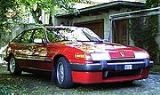
Rover Vitesse 19850706
Rover SD1 is the code name given to a series of large executive car
Executive car

Executive car is a British English term that refers to a car's size and is used to describe an automobile larger than a large family car. In official use, the term is adopted by EuroNCAP, a European organization founded to test car safety....
s made by British Leyland and its successor Austin Rover from 1976 until 1986.

In "SD1", the "SD" refers to "Specialist Division" and "1" is the first car to come from the in-house design team. The range is sometimes wrongly referred to as "SDi" ("i" is commonly used in car nomenclature to identify fuel injection).

History


Background

In 1971, Rover
Rover (car)

The Rover Company was a British automobile manufacturing company originally founded as Starley & Sutton Co. of Coventry in 1878. After developing the template for the modern bicycle with its Rover Safety Bicycle of 1885, the company moved into the automotive industry....
, at that time a part of the British Leyland (BL) group, began developing a new car to replace the P6
Rover P6

The Rover P6 series is a group of sedan cars produced from 1963 to 1977 Solihull, West Midlands , England. It was replaced by the Rover SD1. It was voted European Car of the Year in 1964....
 and the Triumph
Triumph Motor Company

The Triumph Motor Company had its origins in 1885 when Siegfried Bettmann and Moritz Schulte from Germany founded Bettmann & Co and started selling Triumph bicycles, from premises in London and from 1889 started making his own machines in Coventry, England....
 2000/2500
Triumph 2000

The Triumph 2000 was a mid-sized automobile produced in Coventry by the Triumph Motor Company between 1963 and 1977.Using the six cylinder engine first seen in the Standard Vanguard in 1961 and 4 speed manual gearbox , the monocoque body had independent suspension all round using coil springs....
. The designers of both Triumph and Rover submitted plans for the new car, of which the latter was chosen. David Bache
David Bache

David Ernest Bache was a United Kingdom Automobile design. For much of his career he worked with Rover.Bache was born in Worcestershire, the son of Aston Villa and England footballer Joe Bache....
 was to head the design team, inspired by exotic machinery such as the Ferrari Daytona
Ferrari Daytona

The Ferrari 365 GTB/4, better known by the unofficial name Ferrari Daytona, is a Gran Turismo automobile produced from 1968 to 1973. It was first introduced to the public at the Mondial de l'Automobile in 1968 and replaced the Ferrari 275 but, although it was also a Pininfarina design , the Daytona was radically different....
 and the late 1960s design study by Pininfarina
Pininfarina

Pininfarina S.p.A. is an Italian automobile design firm and coachbuilder in Cambiano, Italy, founded as Societ? anonima Carrozzeria Pinin Farina in 1930 by automobile designer and builder Battista Farina ....
 for the BMC
British Motor Corporation

The British Motor Corporation was a United Kingdom vehicle company, formed by the merger of the Austin Motor Company and the Nuffield Organisation in 1952....
 1800, which study also guided the design of the Citroën CX
Citroën CX

The Citro?n CX is an automobile produced by the France automaker Citro?n from 1974 to 1991. Citro?n sold nearly 1.2 million CXs during its 16 years of production....
. Spen King
Charles Spencer King

Charles Spencer ?Spen? King was born in 1925 and was a significant figure in the Rover car company and, after their takeover by Leyland, in the British Leyland Motor Corporation....
 was responsible for the engineering. The two had previously collaborated on the Range Rover. The project was first code-named RT1 (for Rover Triumph Number 1) but then soon changed to SD1 (for Specialist Division Number 1) as Rover and Triumph were "put" in the new "Specialist Division" of BL.

Design

The new car's design was done with simplicity of manufacture in mind, in contrast to the P6, whose design was rather complicated in areas such as the De Dion-type rear suspension. The SD1 used a well known live rear axle
Live axle

A live axle, sometimes called a solid axle, is a type of beam axle suspension that uses the driveshafts that transmit power to the wheels to connect the wheels laterally so that they move together as a unit....
 instead. This different approach was chosen because surveys showed that while the automotive press was impressed by sophisticated and revolutionary designs the general buying public was not, unless the results were good. However, with the live rear axle came another retrograde step — the car only used drum brakes at the rear.

Rover's plans to use its then fairly new 2.2 L four-cylinder engine was soon abandoned because BL management ruled that substantially redesigned versions of Triumph's six-cylinder engine were to power the car instead. Rover's legendary V8
Rover V8 engine

The Rover V8 engine is a compact V8 internal combustion engine with aluminium cylinder heads and cylinder block, originally designed by General Motors Corporation and later re-designed and produced by Rover in the United Kingdom....
 was fitted in the engine bay. The automatic gearbox was the Borg Warner 65 model.

The dashboard of the SD1 features an air vent, unusually, directly facing the passenger. The display binnacle sits on top of the dashboard in front of the driver. This was to aid production in left hand drive markets, the air vent doubled as a passage for the steering wheel column and the display binnacle easily sat on top of the dashboard on the left or right hand side of the car.

While an estate body had been envisaged, it did not get past prototype stage. Two similar spec estates survive to this day and are exhibited at the Heritage Motor Centre
Heritage Motor Centre

The Heritage Motor Centre is a British motor museum and research centre, located at Gaydon in Warwickshire, England. The centre is open to the public, and houses a collection of important vehicles, celebrating Britain's motoring heritage....
 and the Haynes International Motor Museum
Haynes International Motor Museum

Haynes International Motor Museum at Sparkford near Yeovil in Somerset, England, contains over 350 cars and motorcycles and a collection of other automobilia....
 respectively. One of these prototypes was used by BL chairman Sir Michael Edwardes
Sir Michael Edwardes

Michael Edwardes is a business executive....
 as personal transport in the late 1970s.

The SD1 was intended to be produced in a state-of-the-art extension to Rover's historic Solihull
Solihull

Solihull is a large town in the West Midlands of England, with a population of 94,753. It is a part of the West Midlands conurbation and is located 9 miles southeast of Birmingham city centre....
 factory alongside the TR7. This was largely funded by the Government, who had bailed BL out from bankruptcy
Bankruptcy

Bankruptcy is a legally declared inability or impairment of ability of an individual or organization to pay its creditors. Creditors may file a bankruptcy petition against a debtor in an effort to recoup a portion of what they are owed or initiate a restructuring....
 in 1975. Unfortunately this did not do anything to improve the patchy build quality that plagued all of British Leyland of the time. That, along with quick-wearing interior materials and poor detailing ensured that initial enthusiasm soon turned to disappointment.

Initial model and first additions to range

This car was launched in June 1976 in liftback form only, as the V8 engined Rover 3500: SOHC 2.3 L and 2.6 L sixes followed a year later. The car was warmly received by the press and even received the European Car of the Year
European Car of the Year

The European Car of the Year award was established in 1964 by a collective of Magazines from different countries in Europe. The current organisers of the award are Auto , Autocar , Autopista , Autovisie , L'Automobile Magazine , Stern and Vi Bil?gare ....
 award for 1977. It was only offered as a Rover, as the TR7
Triumph TR7

The Triumph TR7 was a sports car manufactured from September 1974 to October 1981 by the Triumph Motor Company, part of British Leyland, in the United Kingdom....
 was to continue the Triumph line.

Cosmetic tweaks and range expansion

Between 1976 and 1981 there were some very minor updates to the car including new badging (front and rear) and chrome door mirrors. 1979 saw the introduction of the well-equipped V8-S model with no mechanical alterations, available in metallic green with gold-coloured alloy wheels.

United States

In 1980, Rover obtained the very expensive US type approval for the SD1 and re-entered the US market, after a ten year absence, but only 800 units were sold. Under US legislation
Headlamp

A headlamp is a lamp , usually attached to the front of a vehicle such as a automobile, with the purpose of illuminating the road ahead during periods of low visibility, such as darkness or precipitation ....
 (that first applied to the Citroen DS
Citroën DS

The Citro?n DS is an executive car that was produced by the France manufacturer Citro?n between 1955 and 1975. Citro?n sold nearly 1.5 million D-series during its 20 years of production....
), the headlamp
Headlamp

A headlamp is a lamp , usually attached to the front of a vehicle such as a automobile, with the purpose of illuminating the road ahead during periods of low visibility, such as darkness or precipitation ....
s could not be enclosed in glass .

Production shift

Major restructuring of BL following the infamous Ryder Report saw the SD1 production line being moved to the former Morris
Morris Motor Company

The Morris Motor Company was a United Kingdom automobile manufacturing company. After the incorporation of the company into larger corporations, the Morris name remained in use as a marque until 1984 when British Leyland's Austin Rover Group decided to concentrate on the more popular Austin Motor Company marque....
 plant in Cowley
Cowley, Oxford

Cowley in Oxford, England, is a residential and industrial area that forms a small conurbation within greater Oxford. It has a population of about 16,500 people....
 in 1981. The Solihull plant was turned over to produce Land Rover
Land Rover

Land Rover is an all-terrain vehicle and Multi Purpose Vehicle manufacturer, based in Solihull, West Midlands , England, now operated as part of the Jaguar Land Rover business owned by Tata Motors of India....
 models, following on from that marque's separation from Rover in 1978. The hugely expensive extension to Solihull – that had been built specifically for the SD1 and Triumph TR7 – was closed.

Major mid-life facelift

Early in 1982, Rover unveiled the Cowley-built, facelifted line to the public. These cars benefited mostly from small cosmetic changes on the exterior as well as a quite extensively redesigned interior. Beginning car-spotters can distinguish the two series by the headlights, which were chrome-rimmed and flush fitting on the later, recessed on the earlier series, the deeper rear window, and by the C-posts, which were flat on later, ribbed on earlier cars. Other details, which are not as easy to assign include the rear wiper, the trim strip under the tail lights, engine size badges on front wings, amended Viking badges, etc. The automatic gearbox was now a GM180 model, still offering three speeds but better ratios. The electric window switch pack moved from the centre console to the drivers door (and is well remembered for lacking edge finishing trim around the recesses), and thankfully a fully automatic choke appeared - eliminating the manual choke lever which was prone to failing.

Further range expansion

It was also the year when SD1 buyers could finally opt for a four-cylinder engine, since the two-litre BL O-Series engine of the Morris Ital
Morris Ital

The Morris Ital was a medium-sized car built by British Leyland from 1980 until 1984....
 was offered. It was definitely not a "shoehorn" job: the engine looked almost as if it could get lost in the huge engine bay designed to accept the V8. The engine was particularly aimed at company-car fleets where its size enabled it to beat a taxation threshold.

Another four-cylinder engine became available in the 2400 SD Turbo. This was the only diesel-engined
Diesel engine

A diesel engine is an internal combustion engine which operates using the diesel cycle . Diesel engines have the highest thermal efficiency compared to any internal combustion or external combustion engine....
 SD1, utilising a motor from Italian
Italy

Italy , officially the Italian Republic , is a country located on the Italian Peninsula in Southern Europe and on the two largest islands in the Mediterranean Sea, Sicily and Sardinia....
 VM Motori
VM Motori

VM Motori S.p.A. is a diesel engine manufacturing company in Cento, Italy, which is the heart of Emilia-Romagna and also home to Ferrari, Lamborghini, Maserati and Ducati....
 chosen for its petrol-like smoothness, and similar to that used in the Range Rover
Range Rover

The Range Rover is a four-wheel drive luxury sport utility vehicle produced by Land Rover in the United Kingdom, owned by the India-based Tata Motors....
 Turbo D model.

The crown of the SD1 model line-up was created when Rover introduced a fuel injected version of its V8. At first it was only offered in the Vitesse model (which was effectively the successor to the previous sports model, the V8-S), however it featured in standard American and Australian SD1 vehicles, to meet stricter emission control legislation. The injected V8 was later also offered in the luxury Vanden Plas, making it the Vanden Plas EFi. To meet the demands of the luxury executive car market, where automatic transmission tended to be preferred, Rover first offered an auto box as an option in the Vitesse, but later withdrew that check-box on the order form and lured the customers to the Vanden Plas EFi instead. This car had all the standard comforts of the Vitesse, such as electric mirrors, windows and locks, a trip computer
Trip computer

A trip computer is an onboard computer device fitted to cars which can generally record distance travelled, average speed, average fuel consumption, and display real time fuel consumption information....
, an adjustable steering column and a four-speaker stereo (something special at that time). Additionally it added leather seats, an electrically operated sunroof (available on all models) and cruise control (optional extra, not standard fit). Very rare indeed are the "Twin Plenum" Vitesses (210bhp); These had two throttle bodies mounted on the plenum chamber instead of one, and were produced in very small numbers as homologation for the twin plenum racers. Today they command quite a premium over the standard Vitesse.

List of model names

This list may be incomplete.


The car was never marketed as the "SD1". The models produced (throughout the life of the range, not all at once) included:
  • Rover 2000
  • Rover 2300
  • Rover 2300 S
  • Rover 2300 SE
  • Rover 2400 SD Turbo
  • Rover 2600
  • Rover 2600 S
  • Rover 2600 SE
  • Rover 2600 Vanden Plas
  • Rover 3500
  • Rover 3500 SE
  • Rover 3500 Vanden Plas
  • Rover 3500 Vanden Plas EFi
  • Rover V8-S
  • Rover Vitesse


The initial May 1976 launch was for the 3500 only. A little over a year later the 2300 and 2600 were added; the V8-S was a short-lived model introduced later (remembered for its headlamp wipers, gold alloys and the option of metallic bottle green paint), and dropped before the first mild face-lift, after which the range was 2300, 2300 S, 2600 S, 3500 SE and 3500 Vanden Plas. The 2000 appeared at the time of the major facelift, with 2400 SD Turbo, 2600 SE, 2600 Vanden Plas, Vitesse and 3500 Vanden Plas EFi appearing at various times afterwards. At the very end of the life of the car the range was briefly reduced to 2300, 2600 Vanden Plas, and Vitesse (now with a flush chin spoiler, deleted front fog lights, and deleted side graphics)

Foreign production: the Standard 2000

After its cancellation in the UK, the SD1 emerged very briefly in India as the Standard 2000. It was assembled at the now-defunct Standard (Indian automobile)
Standard (Indian automobile)

The Standard is an Indian brand of automobile which began production in Madras in 1957 making variations of vehicles made in the U.K. by Standard Motor Company-Triumph Motor Company....
 factory at Chennai
Chennai

Chennai , formerly Indian renaming controversy , is the fourth largest metropolitan area of India and the capital city of the Indian states and territories of India of Tamil Nadu....
 in the mid-80s. However, the Indian version of the SD1 – powered by an elderly 2.0 L engine, and with raised suspension – was a failure and Standard ceased car manufacture soon after.

British police use

The SD1 was popular with the British police, particularly in V8 form. When SD1 production was ceasing, the police stockpiled a number of the cars for later use in national police fleet, to be introduced to the force over the late 1980s.

External links