


Histamine

Encyclopedia
Histamine is an organic nitrogen compound involved in local immune responses
as well as regulating physiological function in the gut and acting as a neurotransmitter
. Histamine triggers the inflammatory response. As part of an immune response to foreign pathogens, histamine is produced by basophils and by mast cell
s found in nearby connective tissues. Histamine increases the permeability of the capillaries to white blood cells and some proteins, to allow them to engage pathogens in the infected tissues.
s that melt at 84°C, and are easily dissolved in water
or ethanol
, but not in ether
. In aqueous solution
histamine exists in two tautomer
ic forms, Nπ-H-histamine and Nτ-H-histamine.
 >
>
Histamine has two basic
centres, namely the aliphatic amino group and whichever nitrogen
atom of the imidazole
ring does not already have a proton
. Under physiological conditions, the aliphatic amino group (having a pK
a around 9.4) will be protonated, whereas the second nitrogen of the imidazole ring (pKa ≈ 5.8) will not be protonated.
Thus, histamine is normally protonated to a singly charged cation.
of the amino acid
histidine
, a reaction catalyzed by the enzyme
L-histidine decarboxylase. It is a hydrophilic vasoactive
amine
.
 Once formed, histamine is either stored or rapidly inactivated by its primary degradative enzymes, histamine-N-methyltransferase or diamine oxidase. In the central nervous system, histamine released into the synapse
s is primarily broken down by histamine-N-methyltransferase, while in other tissues both enzymes may play a role. Several other enzymes, including MAO-B and ALDH2
, further process the immediate metabolites of histamine for excretion or recycling.
Bacteria also are capable of producing histamine using histidine decarboxylase enzymes unrelated to those found in animals. A non-infectious form of foodborne disease, scombroid poisoning, is due to histamine production by bacteria in spoiled food, particularly fish. Fermented foods and beverages naturally contain small quantities of histamine due to a similar conversion performed by fermenting bacteria or yeasts. Sake contains histamine in the 20–40 mg/L range; wines contain it in the 2–10 mg/L range.
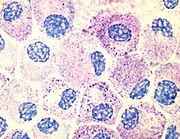 Most histamine in the body is generated in granules in mast cells or in white blood cells called basophils. Mast cells are especially numerous at sites of potential injury - the nose, mouth, and feet, internal body surfaces, and blood vessels. Non-mast cell histamine is found in several tissues, including the brain
, where it functions as a neurotransmitter. Another important site of histamine storage and release is the enterochromaffin-like (ECL) cell
of the stomach
.
The most important pathophysiologic mechanism of mast cell and basophil histamine release is immunologic
. These cells, if sensitized by IgE
antibodies
attached to their membranes
, degranulate
when exposed to the appropriate antigen
. Certain amine
s and alkaloid
s, including such drugs as morphine
, and curare alkaloids, can displace histamine in granules and cause its release. Antibiotic
s like polymyxin
are also found to stimulate histamine release.
Histamine release occurs when allergens bind to mast-cell-bound IgE antibodies. Reduction of IgE overproduction may lower the likelihood of allergens finding sufficient free IgE to trigger a mast-cell-release of histamine.
s (GPCR).
Histamine receptors in insects, like Drosophila melanogaster
, are histamine-gated chloride channel
s that function in inhibition of neurons. Histamine-gated chloride channels are implicated in neurotransmission of peripheral sensory information in insects, especially in photoreception/vision. Two receptors subtypes have been identified in Drosophila, HClA and HClB. There are no known GPCRs for histamine in insects.
-loaded mast cell
s in the nasal cavity
's mucous membrane
s. This can lead to three clinical responses:
, in various tuberomammillary nuclei
. From here, these neurons project throughout the brain, to the cortex
through the medial forebrain bundle
. Histaminergic action is known to modulate sleep
. Classically, antihistamines
(H1 histamine receptor antagonists) produce sleep. Likewise, destruction of histamine releasing neurons, or inhibition of histamine synthesis leads to an inability to maintain vigilance
. Finally, H3 receptor antagonists increase wakefulness.
It has been shown that histaminergic cells have the most wakefulness-related firing pattern of any neuronal type thus far recorded. They fire rapidly during waking, fire more slowly during periods of relaxation/tiredness and completely stop firing during REM and NREM
(non-REM) sleep. Histaminergic cells can be recorded firing just before an animal shows signs of waking.
and ranitidine
. The injection of histamine into the corpus cavernosum
in men with psychogenic impotence produces full or partial erections in 74% of them. It has been suggested that H2 antagonists may cause sexual difficulties by reducing the uptake of testosterone.
, while the efficiency of H(1) receptor binding sites is decreased. Many atypical antipsychotic
medications have the effect of increasing histamine turnover.
and P.P. Laidlaw
.
"H substance" or "substance H" are occasionally used in medical literature for histamine or a hypothetical histamine-like diffusible substance released in allergic reactions of skin and in the responses of tissue to inflammation.
Immune system
An immune system is a system of biological structures and processes within an organism that protects against disease by identifying and killing pathogens and tumor cells. It detects a wide variety of agents, from viruses to parasitic worms, and needs to distinguish them from the organism's own...
as well as regulating physiological function in the gut and acting as a neurotransmitter
Neurotransmitter
Neurotransmitters are endogenous chemicals that transmit signals from a neuron to a target cell across a synapse. Neurotransmitters are packaged into synaptic vesicles clustered beneath the membrane on the presynaptic side of a synapse, and are released into the synaptic cleft, where they bind to...
. Histamine triggers the inflammatory response. As part of an immune response to foreign pathogens, histamine is produced by basophils and by mast cell
Mast cell
A mast cell is a resident cell of several types of tissues and contains many granules rich in histamine and heparin...
s found in nearby connective tissues. Histamine increases the permeability of the capillaries to white blood cells and some proteins, to allow them to engage pathogens in the infected tissues.
Properties
Histamine forms colorless hygroscopic crystalCrystal
A crystal or crystalline solid is a solid material whose constituent atoms, molecules, or ions are arranged in an orderly repeating pattern extending in all three spatial dimensions. The scientific study of crystals and crystal formation is known as crystallography...
s that melt at 84°C, and are easily dissolved in water
Water
Water is a chemical substance with the chemical formula H2O. A water molecule contains one oxygen and two hydrogen atoms connected by covalent bonds. Water is a liquid at ambient conditions, but it often co-exists on Earth with its solid state, ice, and gaseous state . Water also exists in a...
or ethanol
Ethanol
Ethanol, also called ethyl alcohol, pure alcohol, grain alcohol, or drinking alcohol, is a volatile, flammable, colorless liquid. It is a psychoactive drug and one of the oldest recreational drugs. Best known as the type of alcohol found in alcoholic beverages, it is also used in thermometers, as a...
, but not in ether
Diethyl ether
Diethyl ether, also known as ethyl ether, simply ether, or ethoxyethane, is an organic compound in the ether class with the formula . It is a colorless, highly volatile flammable liquid with a characteristic odor...
. In aqueous solution
Aqueous solution
An aqueous solution is a solution in which the solvent is water. It is usually shown in chemical equations by appending aq to the relevant formula, such as NaCl. The word aqueous means pertaining to, related to, similar to, or dissolved in water...
histamine exists in two tautomer
Tautomer
Tautomers are isomers of organic compounds that readily interconvert by a chemical reaction called tautomerization. This reaction commonly results in the formal migration of a hydrogen atom or proton, accompanied by a switch of a single bond and adjacent double bond...
ic forms, Nπ-H-histamine and Nτ-H-histamine.
Histamine has two basic
Base (chemistry)
For the term in genetics, see base A base in chemistry is a substance that can accept hydrogen ions or more generally, donate electron pairs. A soluble base is referred to as an alkali if it contains and releases hydroxide ions quantitatively...
centres, namely the aliphatic amino group and whichever nitrogen
Nitrogen
Nitrogen is a chemical element that has the symbol N, atomic number of 7 and atomic mass 14.00674 u. Elemental nitrogen is a colorless, odorless, tasteless, and mostly inert diatomic gas at standard conditions, constituting 78.08% by volume of Earth's atmosphere...
atom of the imidazole
Imidazole
Imidazole is an organic compound with the formula C3H4N2. This aromatic heterocyclic is a diazole and is classified as an alkaloid. Imidazole refers to the parent compound, whereas imidazoles are a class of heterocycles with similar ring structure, but varying substituents...
ring does not already have a proton
Hydrogen
Hydrogen is the chemical element with atomic number 1. It is represented by the symbol H. With an average atomic weight of , hydrogen is the lightest and most abundant chemical element, constituting roughly 75% of the Universe's chemical elemental mass. Stars in the main sequence are mainly...
. Under physiological conditions, the aliphatic amino group (having a pK
Dissociation constant
In chemistry, biochemistry, and pharmacology, a dissociation constant is a specific type of equilibrium constant that measures the propensity of a larger object to separate reversibly into smaller components, as when a complex falls apart into its component molecules, or when a salt splits up into...
a around 9.4) will be protonated, whereas the second nitrogen of the imidazole ring (pKa ≈ 5.8) will not be protonated.
Thus, histamine is normally protonated to a singly charged cation.
Synthesis and metabolism
Histamine is derived from the decarboxylationDecarboxylation
Decarboxylation is a chemical reaction that releases carbon dioxide . Usually, decarboxylation refers to a reaction of carboxylic acids, removing a carbon atom from a carbon chain. The reverse process, which is the first chemical step in photosynthesis, is called carbonation, the addition of CO2 to...
of the amino acid
Amino acid
Amino acids are molecules containing an amine group, a carboxylic acid group and a side-chain that varies between different amino acids. The key elements of an amino acid are carbon, hydrogen, oxygen, and nitrogen...
histidine
Histidine
Histidine Histidine, an essential amino acid, has a positively charged imidazole functional group. It is one of the 22 proteinogenic amino acids. Its codons are CAU and CAC. Histidine was first isolated by German physician Albrecht Kossel in 1896. Histidine is an essential amino acid in humans...
, a reaction catalyzed by the enzyme
Enzyme
Enzymes are proteins that catalyze chemical reactions. In enzymatic reactions, the molecules at the beginning of the process, called substrates, are converted into different molecules, called products. Almost all chemical reactions in a biological cell need enzymes in order to occur at rates...
L-histidine decarboxylase. It is a hydrophilic vasoactive
Vasoactive
A vasoactive is a pharmaceutical agent that has the effect of either increasing or decreasing blood pressure and/or heart rate. Typically used in a setting where a patient has the blood pressure and heart rate monitored constantly, vasoactive drug therapy is typically "titrated" to achieve a...
amine
Amine
Amines are organic compounds and functional groups that contain a basic nitrogen atom with a lone pair. Amines are derivatives of ammonia, wherein one or more hydrogen atoms have been replaced by a substituent such as an alkyl or aryl group. Important amines include amino acids, biogenic amines,...
.
Synapse
In the nervous system, a synapse is a structure that permits a neuron to pass an electrical or chemical signal to another cell...
s is primarily broken down by histamine-N-methyltransferase, while in other tissues both enzymes may play a role. Several other enzymes, including MAO-B and ALDH2
ALDH2
Aldehyde dehydrogenase 2 family , also known as ALDH2, is a human gene found on chromosome 12.-Function:The enzyme encoded by this gene belongs to the aldehyde dehydrogenase family of enzymes that catalyze the chemical transformation from acetaldehyde to acetic acid...
, further process the immediate metabolites of histamine for excretion or recycling.
Bacteria also are capable of producing histamine using histidine decarboxylase enzymes unrelated to those found in animals. A non-infectious form of foodborne disease, scombroid poisoning, is due to histamine production by bacteria in spoiled food, particularly fish. Fermented foods and beverages naturally contain small quantities of histamine due to a similar conversion performed by fermenting bacteria or yeasts. Sake contains histamine in the 20–40 mg/L range; wines contain it in the 2–10 mg/L range.
Storage and release
Brain
The brain is the center of the nervous system in all vertebrate and most invertebrate animals—only a few primitive invertebrates such as sponges, jellyfish, sea squirts and starfishes do not have one. It is located in the head, usually close to primary sensory apparatus such as vision, hearing,...
, where it functions as a neurotransmitter. Another important site of histamine storage and release is the enterochromaffin-like (ECL) cell
Enterochromaffin-like cell
Enterochromaffin-like cells or ECL cells are a type of neuroendocrine cells found in the gastric glands of the gastric mucosa beneath the epithelium, in particular in the vicinity of parietal cells. They are also considered a type of enteroendocrine cell....
of the stomach
Stomach
The stomach is a muscular, hollow, dilated part of the alimentary canal which functions as an important organ of the digestive tract in some animals, including vertebrates, echinoderms, insects , and molluscs. It is involved in the second phase of digestion, following mastication .The stomach is...
.
The most important pathophysiologic mechanism of mast cell and basophil histamine release is immunologic
Immune system
An immune system is a system of biological structures and processes within an organism that protects against disease by identifying and killing pathogens and tumor cells. It detects a wide variety of agents, from viruses to parasitic worms, and needs to distinguish them from the organism's own...
. These cells, if sensitized by IgE
IGE
IGE was one of the largest services company buying and selling virtual currencies and accounts for MMORPG. During its peak time, it had offices in Los Angeles, China , and headquarters & customer service centre in Hong Kong. IGE was one of the main monopoly in virtual economy services, also known...
antibodies
Antibody
An antibody, also known as an immunoglobulin, is a large Y-shaped protein used by the immune system to identify and neutralize foreign objects such as bacteria and viruses. The antibody recognizes a unique part of the foreign target, termed an antigen...
attached to their membranes
Cell membrane
The cell membrane or plasma membrane is a biological membrane that separates the interior of all cells from the outside environment. The cell membrane is selectively permeable to ions and organic molecules and controls the movement of substances in and out of cells. It basically protects the cell...
, degranulate
Degranulation
Degranulation is a cellular process that releases antimicrobial cytotoxic molecules from secretory vesicles called granules found inside some cells...
when exposed to the appropriate antigen
Antigen
An antigen is a foreign molecule that, when introduced into the body, triggers the production of an antibody by the immune system. The immune system will then kill or neutralize the antigen that is recognized as a foreign and potentially harmful invader. These invaders can be molecules such as...
. Certain amine
Amine
Amines are organic compounds and functional groups that contain a basic nitrogen atom with a lone pair. Amines are derivatives of ammonia, wherein one or more hydrogen atoms have been replaced by a substituent such as an alkyl or aryl group. Important amines include amino acids, biogenic amines,...
s and alkaloid
Alkaloid
Alkaloids are a group of naturally occurring chemical compounds that contain mostly basic nitrogen atoms. This group also includes some related compounds with neutral and even weakly acidic properties. Also some synthetic compounds of similar structure are attributed to alkaloids...
s, including such drugs as morphine
Morphine
Morphine is a potent opiate analgesic medication and is considered to be the prototypical opioid. It was first isolated in 1804 by Friedrich Sertürner, first distributed by same in 1817, and first commercially sold by Merck in 1827, which at the time was a single small chemists' shop. It was more...
, and curare alkaloids, can displace histamine in granules and cause its release. Antibiotic
Antibiotic
An antibacterial is a compound or substance that kills or slows down the growth of bacteria.The term is often used synonymously with the term antibiotic; today, however, with increased knowledge of the causative agents of various infectious diseases, antibiotic has come to denote a broader range of...
s like polymyxin
Polymyxin
Polymyxins are antibiotics, with a general structure consisting of a cyclicpeptide with a long hydrophobic tail. They disrupt the structure of thebacterial cell membrane by interacting with its phospholipids...
are also found to stimulate histamine release.
Histamine release occurs when allergens bind to mast-cell-bound IgE antibodies. Reduction of IgE overproduction may lower the likelihood of allergens finding sufficient free IgE to trigger a mast-cell-release of histamine.
Mechanism of action
Histamine exerts its actions by combining with specific cellular histamine receptors. The four histamine receptors that have been discovered in humans are designated H1 through H4, and are all G protein-coupled receptorG protein-coupled receptor
G protein-coupled receptors , also known as seven-transmembrane domain receptors, 7TM receptors, heptahelical receptors, serpentine receptor, and G protein-linked receptors , comprise a large protein family of transmembrane receptors that sense molecules outside the cell and activate inside signal...
s (GPCR).
Histamine receptors in insects, like Drosophila melanogaster
Drosophila melanogaster
Drosophila melanogaster is a species of Diptera, or the order of flies, in the family Drosophilidae. The species is known generally as the common fruit fly or vinegar fly. Starting from Charles W...
, are histamine-gated chloride channel
Chloride channel
Chloride channels are a superfamily of poorly understood ion channels consisting of approximately 13 members.Chloride channels display a variety of important physiological and cellular roles that include regulation of pH, volume homeostasis, organic solute transport, cell migration, cell...
s that function in inhibition of neurons. Histamine-gated chloride channels are implicated in neurotransmission of peripheral sensory information in insects, especially in photoreception/vision. Two receptors subtypes have been identified in Drosophila, HClA and HClB. There are no known GPCRs for histamine in insects.
| Type | Location | Function >- | H1 histamine receptor |
Found on smooth muscle Smooth muscle Smooth muscle is an involuntary non-striated muscle. It is divided into two sub-groups; the single-unit and multiunit smooth muscle. Within single-unit smooth muscle tissues, the autonomic nervous system innervates a single cell within a sheet or bundle and the action potential is propagated by... , endothelium Endothelium The endothelium is the thin layer of cells that lines the interior surface of blood vessels, forming an interface between circulating blood in the lumen and the rest of the vessel wall. These cells are called endothelial cells. Endothelial cells line the entire circulatory system, from the heart... , and central nervous system Central nervous system The central nervous system is the part of the nervous system that integrates the information that it receives from, and coordinates the activity of, all parts of the bodies of bilaterian animals—that is, all multicellular animals except sponges and radially symmetric animals such as jellyfish... tissue |
bronchoconstriction Bronchoconstriction Bronchoconstriction is the constriction of the airways in the lungs due to the tightening of surrounding smooth muscle, with consequent coughing, wheezing, and shortness of breath. Bronchoconstriction can also be due to an accumulation of thick mucus.... , bronchial smooth muscle Smooth muscle Smooth muscle is an involuntary non-striated muscle. It is divided into two sub-groups; the single-unit and multiunit smooth muscle. Within single-unit smooth muscle tissues, the autonomic nervous system innervates a single cell within a sheet or bundle and the action potential is propagated by... contraction, vasodilation Vasodilation Vasodilation refers to the widening of blood vessels resulting from relaxation of smooth muscle cells within the vessel walls, particularly in the large arteries, smaller arterioles and large veins. The process is essentially the opposite of vasoconstriction, or the narrowing of blood vessels. When... , separation of endothelial cells (responsible for hives), and pain Pain Pain is an unpleasant sensation often caused by intense or damaging stimuli such as stubbing a toe, burning a finger, putting iodine on a cut, and bumping the "funny bone."... and itching due to insect stings; the primary receptors involved in allergic rhinitis Hay Fever Hay Fever is a comic play written by Noël Coward in 1924 and first produced in 1925 with Marie Tempest as the first Judith Bliss. Laura Hope Crews played the role in New York... symptoms and motion sickness Motion sickness Motion sickness or kinetosis, also known as travel sickness, is a condition in which a disagreement exists between visually perceived movement and the vestibular system's sense of movement... ; sleep regulation. >- | H2 histamine receptor |
Located on parietal cells and vascular smooth muscle cells | gastric acid Gastric acid Gastric acid is a digestive fluid, formed in the stomach. It has a pH of 1 to 2 and is composed of hydrochloric acid , and large quantities of potassium chloride and sodium chloride... secretion >- | H3 histamine receptor |
Found on central nervous system Central nervous system The central nervous system is the part of the nervous system that integrates the information that it receives from, and coordinates the activity of, all parts of the bodies of bilaterian animals—that is, all multicellular animals except sponges and radially symmetric animals such as jellyfish... and to a lesser extent peripheral nervous system Peripheral nervous system The peripheral nervous system consists of the nerves and ganglia outside of the brain and spinal cord. The main function of the PNS is to connect the central nervous system to the limbs and organs. Unlike the CNS, the PNS is not protected by the bone of spine and skull, or by the blood–brain... tissue |
neurotransmitter Neurotransmitter Neurotransmitters are endogenous chemicals that transmit signals from a neuron to a target cell across a synapse. Neurotransmitters are packaged into synaptic vesicles clustered beneath the membrane on the presynaptic side of a synapse, and are released into the synaptic cleft, where they bind to... release: histamine, acetylcholine Acetylcholine The chemical compound acetylcholine is a neurotransmitter in both the peripheral nervous system and central nervous system in many organisms including humans... , norepinephrine Norepinephrine Norepinephrine is the US name for noradrenaline , a catecholamine with multiple roles including as a hormone and a neurotransmitter... , serotonin Serotonin Serotonin or 5-hydroxytryptamine is a monoamine neurotransmitter. Biochemically derived from tryptophan, serotonin is primarily found in the gastrointestinal tract, platelets, and in the central nervous system of animals including humans... >- | H4 histamine receptor |
Found primarily in the basophils and in the bone marrow Bone marrow Bone marrow is the flexible tissue found in the interior of bones. In humans, bone marrow in large bones produces new blood cells. On average, bone marrow constitutes 4% of the total body mass of humans; in adults weighing 65 kg , bone marrow accounts for approximately 2.6 kg... . It is also found on thymus Thymus The thymus is a specialized organ of the immune system. The thymus produces and "educates" T-lymphocytes , which are critical cells of the adaptive immune system.... , small intestine Small intestine The small intestine is the part of the gastrointestinal tract following the stomach and followed by the large intestine, and is where much of the digestion and absorption of food takes place. In invertebrates such as worms, the terms "gastrointestinal tract" and "large intestine" are often used to... , spleen Spleen The spleen is an organ found in virtually all vertebrate animals with important roles in regard to red blood cells and the immune system. In humans, it is located in the left upper quadrant of the abdomen. It removes old red blood cells and holds a reserve of blood in case of hemorrhagic shock... , and colon Colon (anatomy) The colon is the last part of the digestive system in most vertebrates; it extracts water and salt from solid wastes before they are eliminated from the body, and is the site in which flora-aided fermentation of unabsorbed material occurs. Unlike the small intestine, the colon does not play a... . |
Plays a role in chemotaxis Chemotaxis Chemotaxis is the phenomenon in which somatic cells, bacteria, and other single-cell or multicellular organisms direct their movements according to certain chemicals in their environment. This is important for bacteria to find food by swimming towards the highest concentration of food molecules,... . |
Effects on nasal mucous membrane
Increased vascular permeability causes fluid to escape from capillaries into the tissues, which leads to the classic symptoms of an allergic reaction: a runny nose and watery eyes. Allergens can bind to IgEIGE
IGE was one of the largest services company buying and selling virtual currencies and accounts for MMORPG. During its peak time, it had offices in Los Angeles, China , and headquarters & customer service centre in Hong Kong. IGE was one of the main monopoly in virtual economy services, also known...
-loaded mast cell
Mast cell
A mast cell is a resident cell of several types of tissues and contains many granules rich in histamine and heparin...
s in the nasal cavity
Nasal cavity
The nasal cavity is a large air filled space above and behind the nose in the middle of the face.- Function :The nasal cavity conditions the air to be received by the other areas of the respiratory tract...
's mucous membrane
Mucous membrane
The mucous membranes are linings of mostly endodermal origin, covered in epithelium, which are involved in absorption and secretion. They line cavities that are exposed to the external environment and internal organs...
s. This can lead to three clinical responses:
- sneezing due to histamine-associated sensory neural stimulation;
- hyper-secretionSecretionSecretion is the process of elaborating, releasing, and oozing chemicals, or a secreted chemical substance from a cell or gland. In contrast to excretion, the substance may have a certain function, rather than being a waste product...
from glandular tissue; and
- nasal congestion due to vascular engorgement associated with vasodilationVasodilationVasodilation refers to the widening of blood vessels resulting from relaxation of smooth muscle cells within the vessel walls, particularly in the large arteries, smaller arterioles and large veins. The process is essentially the opposite of vasoconstriction, or the narrowing of blood vessels. When...
and increased capillaryCapillaryCapillaries are the smallest of a body's blood vessels and are parts of the microcirculation. They are only 1 cell thick. These microvessels, measuring 5-10 μm in diameter, connect arterioles and venules, and enable the exchange of water, oxygen, carbon dioxide, and many other nutrient and waste...
permeabilityPermeationPermeation, in physics and engineering, is the penetration of a permeate through a solid, and is related to a material's intrinsic permeability...
.
Sleep regulation
Histamine is released as a neurotransmitter. The cell bodies of histaminergics, the neurons which release histamine, are found in the posterior hypothalamusHypothalamus
The Hypothalamus is a portion of the brain that contains a number of small nuclei with a variety of functions...
, in various tuberomammillary nuclei
Tuberomammillary nucleus
The tuberomammillary nucleus is a subnucleus of the posterior third of the hypothalamus. It consists of, largely, histaminergic neurons and is involved with the control of arousal, sleep and circadian rhythm....
. From here, these neurons project throughout the brain, to the cortex
Brain
The brain is the center of the nervous system in all vertebrate and most invertebrate animals—only a few primitive invertebrates such as sponges, jellyfish, sea squirts and starfishes do not have one. It is located in the head, usually close to primary sensory apparatus such as vision, hearing,...
through the medial forebrain bundle
Medial forebrain bundle
The Medial forebrain bundle , is a complex bundle of axons coming from the basal olfactory regions, the periamygdaloid region, and the septal nuclei.-Anatomy:...
. Histaminergic action is known to modulate sleep
Sleep
Sleep is a naturally recurring state characterized by reduced or absent consciousness, relatively suspended sensory activity, and inactivity of nearly all voluntary muscles. It is distinguished from quiet wakefulness by a decreased ability to react to stimuli, and is more easily reversible than...
. Classically, antihistamines
Histamine antagonist
A histamine antagonist, commonly referred to as antihistamine, is a pharmaceutical drug that inhibits action of histamine by blocking it from attaching to histamine receptors.- Clinical effects :...
(H1 histamine receptor antagonists) produce sleep. Likewise, destruction of histamine releasing neurons, or inhibition of histamine synthesis leads to an inability to maintain vigilance
Alertness
Alertness is the state of paying close and continuous attention, being watchful and prompt to meet danger or emergency, or being quick to perceive and act. It is related to psychology as well as to physiology...
. Finally, H3 receptor antagonists increase wakefulness.
It has been shown that histaminergic cells have the most wakefulness-related firing pattern of any neuronal type thus far recorded. They fire rapidly during waking, fire more slowly during periods of relaxation/tiredness and completely stop firing during REM and NREM
NREM
Non-rapid eye movement, or NREM is, collectively, sleep stages 1 – 3, previously known as stages 1 – 4. Rapid eye movement sleep is not included. There are distinct electroencephalographic and other characteristics seen in each stage. Unlike REM sleep, there is usually little or no eye movement...
(non-REM) sleep. Histaminergic cells can be recorded firing just before an animal shows signs of waking.
Suppressive effects
While histamine has stimulatory effects upon neurons, it also has suppressive ones that protect against the susceptibility to convulsion, drug sensitization, denervation supersensitivity, ischemic lesions and stress. It has also been suggested that histamine controls the mechanisms by which memories and learning are forgotten.Erection and sexual function
Libido loss and erectile failure can occur following histamine (H2) antagonists such as cimetidineCimetidine
Cimetidine INN is a histamine H2-receptor antagonist that inhibits the production of acid in the stomach. It is largely used in the treatment of heartburn and peptic ulcers. It is marketed by GlaxoSmithKline under the trade name Tagamet...
and ranitidine
Ranitidine
Ranitidine is a histamine H2-receptor antagonist that inhibits stomach acid production. It is commonly used in treatment of peptic ulcer disease and gastroesophageal reflux disease . Ranitidine is also used alongside fexofenadine and other antihistamines for the treatment of skin conditions...
. The injection of histamine into the corpus cavernosum
Corpus cavernosum penis
The corpus cavernosum penis is one of a pair of sponge-like regions of erectile tissue which contain most of the blood in the penis during penile erection...
in men with psychogenic impotence produces full or partial erections in 74% of them. It has been suggested that H2 antagonists may cause sexual difficulties by reducing the uptake of testosterone.
Schizophrenia
Metabolites of histamine are increased in the cerebrospinal fluid of people with schizophreniaSchizophrenia
Schizophrenia is a mental disorder characterized by a disintegration of thought processes and of emotional responsiveness. It most commonly manifests itself as auditory hallucinations, paranoid or bizarre delusions, or disorganized speech and thinking, and it is accompanied by significant social...
, while the efficiency of H(1) receptor binding sites is decreased. Many atypical antipsychotic
Antipsychotic
An antipsychotic is a tranquilizing psychiatric medication primarily used to manage psychosis , particularly in schizophrenia and bipolar disorder. A first generation of antipsychotics, known as typical antipsychotics, was discovered in the 1950s...
medications have the effect of increasing histamine turnover.
Disorders
As an integral part of the immune system, histamine may be involved in immune system disorders and allergies.History
The properties of histamine, then called β-iminazolylethylamine, were first described in 1910 by the British scientists Henry H. DaleHenry Hallett Dale
Sir Henry Hallett Dale, OM, GBE, PRS was an English pharmacologist and physiologist. For his study of acetylcholine as agent in the chemical transmission of nerve impulses he shared the 1936 Nobel Prize in Physiology or Medicine with Otto Loewi.-Biography:Henry Hallett Dale was born in Islington,...
and P.P. Laidlaw
Patrick Laidlaw
Patrick Playfair Laidlaw was a British virologist.He was one of the scientists working at the Medical Research Council at Mill Hill who first isolated influenza virus from humans. This happened when ferrets they were working on to develop a distemper vaccine caught influenza from one of the...
.
"H substance" or "substance H" are occasionally used in medical literature for histamine or a hypothetical histamine-like diffusible substance released in allergic reactions of skin and in the responses of tissue to inflammation.