


Civil service

Encyclopedia
The term civil service has two distinct meanings:
A civil servant or public servant is a person in the public sector employed for a government department or agency. The term explicitly excludes the armed services, although civilian officials will work at "Defence Ministry" headquarters. The term always includes the (sovereign) state's employees; whether regional, or sub-state, or even municipal employees are called "civil servants" varies from country to country. In the United Kingdom, for instance, only Crown
employees are referred to as civil servants, county or city employees are not.
Many consider the study of civil service to be a part of the field of public administration
. Workers in "non-departmental public bodies" (sometimes called "QUANGO
s") may also be classed as civil servants for the purpose of statistics and possibly for their terms and conditions. Collectively a state's civil servants form its Civil Service or Public Service.
An international civil servant or international staff member is a civilian employee that is nominated by an international organisation. These international civil servants do not resort under any national legislation (from which they have immunity of jurisdiction) but are governed by an internal staff regulation. All disputes related to international civil service are brought before special tribunals created by these international organisations such as, for instance, the Administrative Tribunal of the ILO.
Specific referral can be made to the International Civil Service Commission (ICSC) of the United Nations
, an independent expert body established by the United Nations General Assembly
. Its mandate is to regulate and coordinate the conditions of service of staff in the United Nations common system, while promoting and maintaining high standards in the international civil service.
 Administrative institutions usually grow out of the personal servants of high officials, as in the Roman Empire. This developed a complex administrative structure, which is outlined in the Notitia Dignitatum
and the work of John Lydus, but as far as we know appointments to it were made entirely by inheritance or patronage and not on merit, and it was also possible for officers to employ other people to carry out their official tasks but continue to draw their salary themselves. There are obvious parallels here with the early bureaucratic structures in modern states, such as the Office of Works
or the Navy
in 18th century England, where again appointments depended on patronage and were often bought and sold.
 The origin of the civil service can be traced back to Imperial examination
founded in Imperial China. The Imperial exam based on merit was designed to select the best administrative officials for the state's bureaucracy. This system had a huge influence on both society and culture in Imperial China and was directly responsible for the creation of a class of scholar-bureaucrats
irrespective of their family pedigree.
From the time of the Han Dynasty
(206 BC to AD 220) until the implementation of the imperial examination system, most appointments in the imperial bureaucracy were based on recommendations from prominent aristocrat
s and local officials whilst recommended individuals were predominantly of aristocratic rank. Emperor Wu of Han
started an early form of the imperial examinations, transitioning from inheritance and patronage to merit, in which local officials would select candidates to take part in an examination of the Confucian classics. The system reached its apogee during the Song dynasty.
The modern examination system for selecting civil service staff also indirectly evolved from the imperial one. This system was admired and then borrowed by European countries from the 16th century onward, and is now the model for most countries around the world.
, are those working in the executive
, legislative and judicial branches of the federal government, state government, municipal government and the Government of Brasilia
, including congressmen, senators
, mayors, ministers
, the president
of the republic
, and workers in Government-owned corporation
.
Career civil servants (not temporary workers or politicians) are hired only externally on the basis of entrance examinations known as Concurso Público in Portuguese, usually consisting of a white test, also some posts may require physical tests (like policemen) or oral tests (like judges, prosecutors and attorneys). The position according to the examination score is used for filling the vacancies.
The entrance examination are conducted by several companies with a government mandade; the best known are CESPE (which belongs to the University of Brasilia
), the FGV (Getulio Vargas Foundation), ESAF, and the Cesgranrio Foundation (which is part of the Federal University of Rio de Janeiro).
The labour laws and social insurance for civil servants are different from private workers, even between government branches (like different states or cities) the law and insurance differ between them.
The posts usually are ranked by titles, the most common are technician for high school literates and analyst for graduate literates. There's also high post ranks like auditor, fiscal, chief of police, prosecutor, judge, attorney, etc. Those titles may require master's degree or doctorate.
The law doesn't allow servants to upgrade or downgrade posts internally, if they wanto to do that they need to pass in another external entrance examination.
and 450,000 members, including commissions, councils, crown corporations, the Office of the Queen's Privy Council for Canada
, and the Royal Canadian Mounted Police
. Each provincial government also has its own public service. In 2010, all provincial governments' public service were employing a total of more than 350 000 persons. When taking into account the three levels of governance in Canada (federal; provincial and territorial; local) for the same year, the Canadian public service in general employs more than 3.6 million individuals, which represents 21.2 % of all jobs in the country.
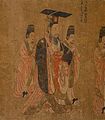 One of the oldest examples of a civil service based on meritocracy
is the Imperial bureaucracy of China
, which can be traced as far back as the Qin Dynasty
(221–207 BC). During the Han Dynasty
(202 BC–220 AD) the xiaolian
system of recommendation by superiors for appointments to office was established. In the areas of administration, especially the military, appointments were based solely on merit.
After the fall of the Han Dynasty, the Chinese bureaucracy regressed into a semi-merit system known as the Nine-rank system
; in this system noble birthright became the most significant prerequisite for gaining access to more authoritative posts.
This system was reversed during the short-lived Sui Dynasty
(581–618), which initiated a civil service bureaucracy recruited through written examinations and recommendation. The following Tang Dynasty
(618–907) adopted the same measures for drafting officials, and decreasingly relied on aristocratic recommendations and more and more on promotion based on the results of written examinations.
However, the civil service examinations were practiced on a much smaller scale in comparison to the stronger, centralized bureaucracy of the Song Dynasty
(960–1279). In response to the regional military rule of jiedushi
and the loss of civil authority during the late Tang period and Five Dynasties (907–960), the Song emperors were eager to implement a system where civil officials would owe their social prestige to the central court and gain their salaries strictly from the central government. This ideal was not fully achieved since many scholar officials were affluent landowners and were engaged in many anonymous business affairs in an age of economic revolution in China
. Nonetheless, gaining a degree through three levels of examination — prefectural exams, provincial exams, and the prestigious palace exams — was a far more desirable goal in society than becoming a merchant. This was because the mercantile class was traditionally regarded with some disdain by the scholar official class
. This class of state bureaucrats in the Song period were far less aristocratic than their Tang predecessors. The examinations were carefully structured in order to ensure that people of lesser means than what was available to candidates born into wealthy, landowning families were given a greater chance to pass the exams and obtain an official degree. This included the employment of a bureau of copyist
s who would rewrite all of the candidates' exams in order to mask their handwriting and thus prevent favoritism by graders of the exams who might otherwise recognize a candidate's handwriting. The advent of widespread printing
in the Song period allowed many more examination candidates access to the Confucian texts
whose mastery was required for passing the exams.
(fonction publique) is often considered to include government employees, as well as employees of public corporations.
is conducted by Union Public Service Commission
. Union Public Service Commission conducts Civil Service Examinations every year to select officers for the All India Civil Services and the Central Civil Services (Grade A and Grade B). The examination is a three stage process which consists of Civil Services Aptitude Test CSAT (Earlier Civil Services Preliminary Examination) , Main Examination and the Interview.
The entry to All India Civil Services and the Central Civil Services (Grade A and Grade B) is through the All India Combined Competitive Examination for the Civil Services conducted by the Union Public Service Commission (UPSC) in different centers spread all over the country. However, recruitment to the Indian Forest Service is through a different procedure. Entry into the State Civil Services is through a competitive examination conducted by every state public service commission. Close to 3.5 lakhs of candidates apply every year for the 400 to 500 vacancies that may arise.
includes the employees of the Department of State
(excluded are government ministers
and a small number of paid political advisors) as well as a small number of core state agencies such as the Office of the Revenue Commissioners
, the Office of Public Works
, and the Public Appointments Service. The organisation of the Irish Civil Service is very similar to the traditional organization of the British Home Civil Service, and indeed the grading system in the Irish Civil Service is nearly identical to the traditional grading system of its British
counterpart. In Ireland, public sector employees such as teachers or members of the country's police force
, An Garda Síochána
are not considered to be civil servants, but are rather described as "public servants" (and form the Public service of the Republic of Ireland
).
(funcionariado) is often considered to include government employees, "Comunidades Autónomas" employees, as well as municipal employees. There are three main categories of Spanish civil services; political posts ("puestos de libre designación, level 28-30") requiring simple or no examinations, posts called "funcionarios de carrera" requiring an examination, and "personal laboral" posts, also with an exam similar to that for the "funcionarios de carrera". Examinations differ among the states, the 17 autonomic communities and the city councils, and the "funcionarios" and "personal laboral" exams vary in difficulty from one location to another.
only includes Crown employees; not those who are parliamentary employees. Public sector
employees such as those in education and the NHS
are not considered to be civil servants. Note that civil servants in the devolved government in Northern Ireland
are not part of the Home Civil Service, but constitute the separate Northern Ireland Civil Service
nor are employees of the Foreign and Commonwealth Office
.
, the civil service was established in 1872. The Federal Civil Service is defined as "all appointive positions in the executive, judicial, and legislative branches of the Government of the United States, except positions in the uniformed services." . In the early 19th century, government jobs were held at the pleasure of the president — a person could be fired at any time. The spoils system
meant that jobs were used to support the political parties. This was changed in slow stages by the Pendleton Civil Service Reform Act
of 1883 and subsequent laws. By 1909, almost 2/3 of the U.S. federal work force was appointed based on merit, that is, qualifications measured by tests. Certain senior civil service positions, including some heads of diplomatic missions and executive agencies are filled by political appointees. Under the Hatch Act of 1939
, civil servants are not allowed to engage in political activities while performing their duties.
The U.S. civil service includes the Competitive service
and the Excepted service
. The majority of civil service appointments in the U.S. are made under the Competitive Service, but certain categories in the Diplomatic Service
, the FBI
, and other National Security positions are made under the Excepted Service
. (U.S. Code Title V)
U.S. state and local government entities often have competitive civil service systems that are modeled on the national system, in varying degrees.
As of January 2007, the Federal Government, excluding the Postal Service, employed about 1.8 million civilian workers. The Federal Government is the Nation's single largest employer. Although most federal agencies are based in the Washington D.C. region, only about 16% (or about 288,000) of the federal government workforce is employed in this region.
There are currently 15 federal executive branch agencies and hundreds of subagencies.
. More accurately, in this scope civil service is work performed in the public interest as a replacement for a military obligation to which one objects. The Finnish "siviilipalvelus", French "service civil", German "Zivildienst", Italian "servizio civile" and Swedish "civiltjänst" all can be translated as "civil service" in this sense.
- A branch of governmental service in which individuals are employed on the basis of professional merit as proven by competitive examinations.
- The body of employees in any government agency other than the military.
A civil servant or public servant is a person in the public sector employed for a government department or agency. The term explicitly excludes the armed services, although civilian officials will work at "Defence Ministry" headquarters. The term always includes the (sovereign) state's employees; whether regional, or sub-state, or even municipal employees are called "civil servants" varies from country to country. In the United Kingdom, for instance, only Crown
The Crown
The Crown is a corporation sole that in the Commonwealth realms and any provincial or state sub-divisions thereof represents the legal embodiment of governance, whether executive, legislative, or judicial...
employees are referred to as civil servants, county or city employees are not.
Many consider the study of civil service to be a part of the field of public administration
Public administration
Public Administration houses the implementation of government policy and an academic discipline that studies this implementation and that prepares civil servants for this work. As a "field of inquiry with a diverse scope" its "fundamental goal.....
. Workers in "non-departmental public bodies" (sometimes called "QUANGO
Quango
Quango or qango is an acronym used notably in the United Kingdom, Ireland and elsewhere to label an organisation to which government has devolved power...
s") may also be classed as civil servants for the purpose of statistics and possibly for their terms and conditions. Collectively a state's civil servants form its Civil Service or Public Service.
An international civil servant or international staff member is a civilian employee that is nominated by an international organisation. These international civil servants do not resort under any national legislation (from which they have immunity of jurisdiction) but are governed by an internal staff regulation. All disputes related to international civil service are brought before special tribunals created by these international organisations such as, for instance, the Administrative Tribunal of the ILO.
Specific referral can be made to the International Civil Service Commission (ICSC) of the United Nations
United Nations
The United Nations is an international organization whose stated aims are facilitating cooperation in international law, international security, economic development, social progress, human rights, and achievement of world peace...
, an independent expert body established by the United Nations General Assembly
United Nations General Assembly
For two articles dealing with membership in the General Assembly, see:* General Assembly members* General Assembly observersThe United Nations General Assembly is one of the five principal organs of the United Nations and the only one in which all member nations have equal representation...
. Its mandate is to regulate and coordinate the conditions of service of staff in the United Nations common system, while promoting and maintaining high standards in the international civil service.
Early History
Notitia Dignitatum
The Notitia Dignitatum is a unique document of the Roman imperial chanceries. One of the very few surviving documents of Roman government, it details the administrative organisation of the eastern and western empires, listing several thousand offices from the imperial court down to the provincial...
and the work of John Lydus, but as far as we know appointments to it were made entirely by inheritance or patronage and not on merit, and it was also possible for officers to employ other people to carry out their official tasks but continue to draw their salary themselves. There are obvious parallels here with the early bureaucratic structures in modern states, such as the Office of Works
Office of Works
The Office of Works was established in the English Royal household in 1378 to oversee the building of the royal castles and residences. In 1832 it became the Works Department within the Office of Woods, Forests, Land Revenues, Works and Buildings...
or the Navy
Royal Navy
The Royal Navy is the naval warfare service branch of the British Armed Forces. Founded in the 16th century, it is the oldest service branch and is known as the Senior Service...
in 18th century England, where again appointments depended on patronage and were often bought and sold.
Making of Civil Service through merit
Imperial examination
The Imperial examination was an examination system in Imperial China designed to select the best administrative officials for the state's bureaucracy. This system had a huge influence on both society and culture in Imperial China and was directly responsible for the creation of a class of...
founded in Imperial China. The Imperial exam based on merit was designed to select the best administrative officials for the state's bureaucracy. This system had a huge influence on both society and culture in Imperial China and was directly responsible for the creation of a class of scholar-bureaucrats
Scholar-bureaucrats
Scholar-officials or Scholar-bureaucrats were civil servants appointed by the emperor of China to perform day-to-day governance from the Sui Dynasty to the end of the Qing Dynasty in 1912, China's last imperial dynasty. These officials mostly came from the well-educated men known as the...
irrespective of their family pedigree.
From the time of the Han Dynasty
Han Dynasty
The Han Dynasty was the second imperial dynasty of China, preceded by the Qin Dynasty and succeeded by the Three Kingdoms . It was founded by the rebel leader Liu Bang, known posthumously as Emperor Gaozu of Han. It was briefly interrupted by the Xin Dynasty of the former regent Wang Mang...
(206 BC to AD 220) until the implementation of the imperial examination system, most appointments in the imperial bureaucracy were based on recommendations from prominent aristocrat
Aristocracy (class)
The aristocracy are people considered to be in the highest social class in a society which has or once had a political system of Aristocracy. Aristocrats possess hereditary titles granted by a monarch, which once granted them feudal or legal privileges, or deriving, as in Ancient Greece and India,...
s and local officials whilst recommended individuals were predominantly of aristocratic rank. Emperor Wu of Han
Emperor Wu of Han
Emperor Wu of Han , , personal name Liu Che , was the seventh emperor of the Han Dynasty of China, ruling from 141 BC to 87 BC. Emperor Wu is best remembered for the vast territorial expansion that occurred under his reign, as well as the strong and centralized Confucian state he organized...
started an early form of the imperial examinations, transitioning from inheritance and patronage to merit, in which local officials would select candidates to take part in an examination of the Confucian classics. The system reached its apogee during the Song dynasty.
The modern examination system for selecting civil service staff also indirectly evolved from the imperial one. This system was admired and then borrowed by European countries from the 16th century onward, and is now the model for most countries around the world.
Brazil
Civil servants in Brazil, Servidores públicos in PortuguesePortuguese language
Portuguese is a Romance language that arose in the medieval Kingdom of Galicia, nowadays Galicia and Northern Portugal. The southern part of the Kingdom of Galicia became independent as the County of Portugal in 1095...
, are those working in the executive
Executive (government)
Executive branch of Government is the part of government that has sole authority and responsibility for the daily administration of the state bureaucracy. The division of power into separate branches of government is central to the idea of the separation of powers.In many countries, the term...
, legislative and judicial branches of the federal government, state government, municipal government and the Government of Brasilia
Brasília
Brasília is the capital city of Brazil. The name is commonly spelled Brasilia in English. The city and its District are located in the Central-West region of the country, along a plateau known as Planalto Central. It has a population of about 2,557,000 as of the 2008 IBGE estimate, making it the...
, including congressmen, senators
Senate of Brazil
The Federal Senate of Brazil is the upper house of the National Congress of Brazil. Created by the first Constitution of the Brazilian Empire in 1824, it was inspired by the United Kingdom's House of Lords, but with the Proclamation of the Republic in 1889 it became closer to the United States...
, mayors, ministers
Minister (government)
A minister is a politician who holds significant public office in a national or regional government. Senior ministers are members of the cabinet....
, the president
President
A president is a leader of an organization, company, trade union, university, or country.Etymologically, a president is one who presides, who sits in leadership...
of the republic
Republic
A republic is a form of government in which the people, or some significant portion of them, have supreme control over the government and where offices of state are elected or chosen by elected people. In modern times, a common simplified definition of a republic is a government where the head of...
, and workers in Government-owned corporation
Government-owned corporation
A government-owned corporation, state-owned company, state-owned entity, state enterprise, publicly owned corporation, government business enterprise, or parastatal is a legal entity created by a government to undertake commercial activities on behalf of an owner government...
.
Career civil servants (not temporary workers or politicians) are hired only externally on the basis of entrance examinations known as Concurso Público in Portuguese, usually consisting of a white test, also some posts may require physical tests (like policemen) or oral tests (like judges, prosecutors and attorneys). The position according to the examination score is used for filling the vacancies.
The entrance examination are conducted by several companies with a government mandade; the best known are CESPE (which belongs to the University of Brasilia
University of Brasília
The University of Brasília , is one of the largest and most prestigious Brazilian public universities funded by the Brazilian federal government...
), the FGV (Getulio Vargas Foundation), ESAF, and the Cesgranrio Foundation (which is part of the Federal University of Rio de Janeiro).
The labour laws and social insurance for civil servants are different from private workers, even between government branches (like different states or cities) the law and insurance differ between them.
The posts usually are ranked by titles, the most common are technician for high school literates and analyst for graduate literates. There's also high post ranks like auditor, fiscal, chief of police, prosecutor, judge, attorney, etc. Those titles may require master's degree or doctorate.
The law doesn't allow servants to upgrade or downgrade posts internally, if they wanto to do that they need to pass in another external entrance examination.
Canada
Canada's public service is a body with less than 10 departmentsStructure of the Canadian federal government
The following list outlines the Structure of the Canadian federal government.Cabinet-level Departments, Agencies, Secretariats and Offices are denoted in bold with the corresponding Minister listed alongside.-Crown:* Monarchy of Canada...
and 450,000 members, including commissions, councils, crown corporations, the Office of the Queen's Privy Council for Canada
Queen's Privy Council for Canada
The Queen's Privy Council for Canada ), sometimes called Her Majesty's Privy Council for Canada or simply the Privy Council, is the full group of personal consultants to the monarch of Canada on state and constitutional affairs, though responsible government requires the sovereign or her viceroy,...
, and the Royal Canadian Mounted Police
Royal Canadian Mounted Police
The Royal Canadian Mounted Police , literally ‘Royal Gendarmerie of Canada’; colloquially known as The Mounties, and internally as ‘The Force’) is the national police force of Canada, and one of the most recognized of its kind in the world. It is unique in the world as a national, federal,...
. Each provincial government also has its own public service. In 2010, all provincial governments' public service were employing a total of more than 350 000 persons. When taking into account the three levels of governance in Canada (federal; provincial and territorial; local) for the same year, the Canadian public service in general employs more than 3.6 million individuals, which represents 21.2 % of all jobs in the country.
China
Meritocracy
Meritocracy, in the first, most administrative sense, is a system of government or other administration wherein appointments and responsibilities are objectively assigned to individuals based upon their "merits", namely intelligence, credentials, and education, determined through evaluations or...
is the Imperial bureaucracy of China
China
Chinese civilization may refer to:* China for more general discussion of the country.* Chinese culture* Greater China, the transnational community of ethnic Chinese.* History of China* Sinosphere, the area historically affected by Chinese culture...
, which can be traced as far back as the Qin Dynasty
Qin Dynasty
The Qin Dynasty was the first imperial dynasty of China, lasting from 221 to 207 BC. The Qin state derived its name from its heartland of Qin, in modern-day Shaanxi. The strength of the Qin state was greatly increased by the legalist reforms of Shang Yang in the 4th century BC, during the Warring...
(221–207 BC). During the Han Dynasty
Han Dynasty
The Han Dynasty was the second imperial dynasty of China, preceded by the Qin Dynasty and succeeded by the Three Kingdoms . It was founded by the rebel leader Liu Bang, known posthumously as Emperor Gaozu of Han. It was briefly interrupted by the Xin Dynasty of the former regent Wang Mang...
(202 BC–220 AD) the xiaolian
Xiaolian
Xiaolian , was the standard of nominating civil officers started by Emperor Wu of Han in 134 BC. It lasted until its replacement by the imperial examination system during the Sui Dynasty....
system of recommendation by superiors for appointments to office was established. In the areas of administration, especially the military, appointments were based solely on merit.
After the fall of the Han Dynasty, the Chinese bureaucracy regressed into a semi-merit system known as the Nine-rank system
Nine-rank system
The nine rank system , or much less commonly nine grade controller system, was a civil service nomination system during the Three Kingdoms and the Southern and Northern Dynasties in China...
; in this system noble birthright became the most significant prerequisite for gaining access to more authoritative posts.
This system was reversed during the short-lived Sui Dynasty
Sui Dynasty
The Sui Dynasty was a powerful, but short-lived Imperial Chinese dynasty. Preceded by the Southern and Northern Dynasties, it ended nearly four centuries of division between rival regimes. It was followed by the Tang Dynasty....
(581–618), which initiated a civil service bureaucracy recruited through written examinations and recommendation. The following Tang Dynasty
Tang Dynasty
The Tang Dynasty was an imperial dynasty of China preceded by the Sui Dynasty and followed by the Five Dynasties and Ten Kingdoms Period. It was founded by the Li family, who seized power during the decline and collapse of the Sui Empire...
(618–907) adopted the same measures for drafting officials, and decreasingly relied on aristocratic recommendations and more and more on promotion based on the results of written examinations.
However, the civil service examinations were practiced on a much smaller scale in comparison to the stronger, centralized bureaucracy of the Song Dynasty
Song Dynasty
The Song Dynasty was a ruling dynasty in China between 960 and 1279; it succeeded the Five Dynasties and Ten Kingdoms Period, and was followed by the Yuan Dynasty. It was the first government in world history to issue banknotes or paper money, and the first Chinese government to establish a...
(960–1279). In response to the regional military rule of jiedushi
Jiedushi
The Jiedushi were regional military governors in China during the Tang Dynasty and the Five Dynasties and Ten Kingdoms Period. Originally set up to counter external threats, the jiedushi were given enormous power, including the ability to maintain their own armies, collect taxes, and pass their...
and the loss of civil authority during the late Tang period and Five Dynasties (907–960), the Song emperors were eager to implement a system where civil officials would owe their social prestige to the central court and gain their salaries strictly from the central government. This ideal was not fully achieved since many scholar officials were affluent landowners and were engaged in many anonymous business affairs in an age of economic revolution in China
Economy of the Song Dynasty
The economy of China under the Song Dynasty of China was marked by commercial expansion, financial prosperity, increased international trade-contacts, and a revolution in agricultural productivity. Private finance grew, stimulating the development of a country-wide market network which linked the...
. Nonetheless, gaining a degree through three levels of examination — prefectural exams, provincial exams, and the prestigious palace exams — was a far more desirable goal in society than becoming a merchant. This was because the mercantile class was traditionally regarded with some disdain by the scholar official class
Scholar-bureaucrats
Scholar-officials or Scholar-bureaucrats were civil servants appointed by the emperor of China to perform day-to-day governance from the Sui Dynasty to the end of the Qing Dynasty in 1912, China's last imperial dynasty. These officials mostly came from the well-educated men known as the...
. This class of state bureaucrats in the Song period were far less aristocratic than their Tang predecessors. The examinations were carefully structured in order to ensure that people of lesser means than what was available to candidates born into wealthy, landowning families were given a greater chance to pass the exams and obtain an official degree. This included the employment of a bureau of copyist
Copyist
A copyist is a person who makes written copies. In ancient times, a scrivener was also called a calligraphus . The term's modern use is almost entirely confined to music copyists, who are employed by the music industry to produce neat copies from a composer or arranger's manuscript.-Music...
s who would rewrite all of the candidates' exams in order to mask their handwriting and thus prevent favoritism by graders of the exams who might otherwise recognize a candidate's handwriting. The advent of widespread printing
Printing
Printing is a process for reproducing text and image, typically with ink on paper using a printing press. It is often carried out as a large-scale industrial process, and is an essential part of publishing and transaction printing....
in the Song period allowed many more examination candidates access to the Confucian texts
Chinese classic texts
Chinese classic texts, or Chinese canonical texts, today often refer to the pre-Qin Chinese texts, especially the Neo-Confucian titles of Four Books and Five Classics , a selection of short books and chapters from the voluminous collection called the Thirteen Classics. All of these pre-Qin texts...
whose mastery was required for passing the exams.
France
The civil service in FranceFrance
The French Republic , The French Republic , The French Republic , (commonly known as France , is a unitary semi-presidential republic in Western Europe with several overseas territories and islands located on other continents and in the Indian, Pacific, and Atlantic oceans. Metropolitan France...
(fonction publique) is often considered to include government employees, as well as employees of public corporations.
India
The Civil Service exams in IndiaIndia
India , officially the Republic of India , is a country in South Asia. It is the seventh-largest country by geographical area, the second-most populous country with over 1.2 billion people, and the most populous democracy in the world...
is conducted by Union Public Service Commission
Union Public Service Commission
The Union Public Service Commission is the central agency authorized to conduct the Civil Services Examination for entry-level appointments to the various Civil Services of India. The agency's charter is granted by the Constitution of India...
. Union Public Service Commission conducts Civil Service Examinations every year to select officers for the All India Civil Services and the Central Civil Services (Grade A and Grade B). The examination is a three stage process which consists of Civil Services Aptitude Test CSAT (Earlier Civil Services Preliminary Examination) , Main Examination and the Interview.
The entry to All India Civil Services and the Central Civil Services (Grade A and Grade B) is through the All India Combined Competitive Examination for the Civil Services conducted by the Union Public Service Commission (UPSC) in different centers spread all over the country. However, recruitment to the Indian Forest Service is through a different procedure. Entry into the State Civil Services is through a competitive examination conducted by every state public service commission. Close to 3.5 lakhs of candidates apply every year for the 400 to 500 vacancies that may arise.
Ireland
The civil service of IrelandRepublic of Ireland
Ireland , described as the Republic of Ireland , is a sovereign state in Europe occupying approximately five-sixths of the island of the same name. Its capital is Dublin. Ireland, which had a population of 4.58 million in 2011, is a constitutional republic governed as a parliamentary democracy,...
includes the employees of the Department of State
Department of State (Ireland)
A Department of State of Ireland, is a department or ministry of the Government of Ireland. The head of such a department is a Minister of the Government , often called a 'cabinet minister' or 'government minister' which should not be confused with Minister of State which is a junior non-cabinet...
(excluded are government ministers
Minister (government)
A minister is a politician who holds significant public office in a national or regional government. Senior ministers are members of the cabinet....
and a small number of paid political advisors) as well as a small number of core state agencies such as the Office of the Revenue Commissioners
Office of the Revenue Commissioners
The Office of the Revenue Commissioners , - now called simply Revenue - is the Irish Government agency responsible for customs, excise, taxation and related matters...
, the Office of Public Works
Office of Public Works
The Office of Public Works is a State Agency of the Department of Finance in the Republic of Ireland...
, and the Public Appointments Service. The organisation of the Irish Civil Service is very similar to the traditional organization of the British Home Civil Service, and indeed the grading system in the Irish Civil Service is nearly identical to the traditional grading system of its British
United Kingdom
The United Kingdom of Great Britain and Northern IrelandIn the United Kingdom and Dependencies, other languages have been officially recognised as legitimate autochthonous languages under the European Charter for Regional or Minority Languages...
counterpart. In Ireland, public sector employees such as teachers or members of the country's police force
Police
The police is a personification of the state designated to put in practice the enforced law, protect property and reduce civil disorder in civilian matters. Their powers include the legitimized use of force...
, An Garda Síochána
Garda Síochána
, more commonly referred to as the Gardaí , is the police force of Ireland. The service is headed by the Commissioner who is appointed by the Irish Government. Its headquarters are located in the Phoenix Park in Dublin.- Terminology :...
are not considered to be civil servants, but are rather described as "public servants" (and form the Public service of the Republic of Ireland
Public service of the Republic of Ireland
The public service of Ireland consists of agencies which, while not formally part of a Department of State, provide services on behalf of the government...
).
Spain
The civil service in SpainSpain
Spain , officially the Kingdom of Spain languages]] under the European Charter for Regional or Minority Languages. In each of these, Spain's official name is as follows:;;;;;;), is a country and member state of the European Union located in southwestern Europe on the Iberian Peninsula...
(funcionariado) is often considered to include government employees, "Comunidades Autónomas" employees, as well as municipal employees. There are three main categories of Spanish civil services; political posts ("puestos de libre designación, level 28-30") requiring simple or no examinations, posts called "funcionarios de carrera" requiring an examination, and "personal laboral" posts, also with an exam similar to that for the "funcionarios de carrera". Examinations differ among the states, the 17 autonomic communities and the city councils, and the "funcionarios" and "personal laboral" exams vary in difficulty from one location to another.
United Kingdom
The civil service in the United KingdomUnited Kingdom
The United Kingdom of Great Britain and Northern IrelandIn the United Kingdom and Dependencies, other languages have been officially recognised as legitimate autochthonous languages under the European Charter for Regional or Minority Languages...
only includes Crown employees; not those who are parliamentary employees. Public sector
Public sector
The public sector, sometimes referred to as the state sector, is a part of the state that deals with either the production, delivery and allocation of goods and services by and for the government or its citizens, whether national, regional or local/municipal.Examples of public sector activity range...
employees such as those in education and the NHS
National Health Service
The National Health Service is the shared name of three of the four publicly funded healthcare systems in the United Kingdom. They provide a comprehensive range of health services, the vast majority of which are free at the point of use to residents of the United Kingdom...
are not considered to be civil servants. Note that civil servants in the devolved government in Northern Ireland
Northern Ireland
Northern Ireland is one of the four countries of the United Kingdom. Situated in the north-east of the island of Ireland, it shares a border with the Republic of Ireland to the south and west...
are not part of the Home Civil Service, but constitute the separate Northern Ireland Civil Service
Northern Ireland Civil Service
The Northern Ireland Civil Service is the permanent bureaucracy of Crown employees that supports the Northern Ireland Executive, the devolved government of Northern Ireland....
nor are employees of the Foreign and Commonwealth Office
Foreign and Commonwealth Office
The Foreign and Commonwealth Office, commonly called the Foreign Office or the FCO is a British government department responsible for promoting the interests of the United Kingdom overseas, created in 1968 by merging the Foreign Office and the Commonwealth Office.The head of the FCO is the...
.
United States
In the United StatesUnited States
The United States of America is a federal constitutional republic comprising fifty states and a federal district...
, the civil service was established in 1872. The Federal Civil Service is defined as "all appointive positions in the executive, judicial, and legislative branches of the Government of the United States, except positions in the uniformed services." . In the early 19th century, government jobs were held at the pleasure of the president — a person could be fired at any time. The spoils system
Spoils system
In the politics of the United States, a spoil system is a practice where a political party, after winning an election, gives government jobs to its voters as a reward for working toward victory, and as an incentive to keep working for the party—as opposed to a system of awarding offices on the...
meant that jobs were used to support the political parties. This was changed in slow stages by the Pendleton Civil Service Reform Act
Pendleton Civil Service Reform Act
The Pendleton Civil Service Reform Act of United States is a federal law established in 1883 that stipulated that government jobs should be awarded on the basis of merit. The act provided selection of government employees competitive exams, rather than ties to politicians or political affiliation...
of 1883 and subsequent laws. By 1909, almost 2/3 of the U.S. federal work force was appointed based on merit, that is, qualifications measured by tests. Certain senior civil service positions, including some heads of diplomatic missions and executive agencies are filled by political appointees. Under the Hatch Act of 1939
Hatch Act of 1939
The Hatch Act of 1939 is a United States federal law whose main provision is to prohibit federal employees in the executive branch of the federal government, except the President and the Vice President, from engaging in partisan political activity...
, civil servants are not allowed to engage in political activities while performing their duties.
The U.S. civil service includes the Competitive service
Competitive service
The competitive service is a part of the United States federal government civil service. Applicants for jobs in the competitive civil service must compete with other applicants in open competition under the merit system administered by the Office of Personnel Management.According to U.S...
and the Excepted service
Excepted service
Most civilian positions in the federal government of the United States are part of the competitive service, where applicants must compete with other applicants in open competition under the merit system administered by the Office of Personnel Management. However, some agencies are excluded from...
. The majority of civil service appointments in the U.S. are made under the Competitive Service, but certain categories in the Diplomatic Service
Diplomacy
Diplomacy is the art and practice of conducting negotiations between representatives of groups or states...
, the FBI
Federal Bureau of Investigation
The Federal Bureau of Investigation is an agency of the United States Department of Justice that serves as both a federal criminal investigative body and an internal intelligence agency . The FBI has investigative jurisdiction over violations of more than 200 categories of federal crime...
, and other National Security positions are made under the Excepted Service
Excepted service
Most civilian positions in the federal government of the United States are part of the competitive service, where applicants must compete with other applicants in open competition under the merit system administered by the Office of Personnel Management. However, some agencies are excluded from...
. (U.S. Code Title V)
U.S. state and local government entities often have competitive civil service systems that are modeled on the national system, in varying degrees.
As of January 2007, the Federal Government, excluding the Postal Service, employed about 1.8 million civilian workers. The Federal Government is the Nation's single largest employer. Although most federal agencies are based in the Washington D.C. region, only about 16% (or about 288,000) of the federal government workforce is employed in this region.
There are currently 15 federal executive branch agencies and hundreds of subagencies.
Other meanings
Civil service also means a form of legal conscientious objection, for example the Swiss Civilian ServiceSwiss Civilian Service
Civilian service is a Swiss institution, created in 1996 as an alternative to military service.Any man who is unable to do compulsory military service for reasons of conscience can submit an application to be allowed to do substitute civilian service instead. The applicant is then forced to attend...
. More accurately, in this scope civil service is work performed in the public interest as a replacement for a military obligation to which one objects. The Finnish "siviilipalvelus", French "service civil", German "Zivildienst", Italian "servizio civile" and Swedish "civiltjänst" all can be translated as "civil service" in this sense.
Further reading
- Ari Hoogenboom. Outlawing the Spoils: A History of the Civil Service Reform Movement, 1865-1883. (1961)
- Bodde, D. Chinese Ideas in the West
- Brownlow, Louis, Charles E. Merriam, and Luther Gulick, Report of the President's Committee on Administrative Management. (1937) U.S. Government Printing Office.
- Kevin Theakston. The Civil Service Since 1945 (Institute of Contemporary British History, 1995)
- Leonard D. White, Charles H. Bland, Walter R. Sharp, and Fritz Morstein Marx; Civil Service Abroad, Great Britain, Canada, France, Germany (1935) online
- P. N. Mathur. The Civil Service of India, 1731-1894: a study of the history, evolution and demand for reform (1977)
- Schiesl, Martin. The Politics of Efficiency: Municipal Administration and Reform in America, 1880-1920. (1977)
- Van Riper, Paul. History of the United States Civil Service (1958).
- White, Leonard D., Introduction to the Study of Public Administration. (1955)
See also
- Australian Public ServiceAustralian Public ServiceThe Australian Public Service is the Australian federal civil service, the group of people employed by federal departments, agencies and courts under the Government of Australia, to administer the working of the public administration of the Commonwealth of Australia...
- Bangladesh Civil ServiceBangladesh Civil ServiceBangladesh Civil Service, more popularly known by its acronym BCS, is the elite civil service of the Government of Bangladesh. It originated from the Central Superior Services of Pakistan. Since independence it has been known by Act as Bangladesh Civil Service. The Bangladesh Public Service...
- Brazilian civil ServiceBrazilian civil ServiceAccording to the Brazilian Penal Code, defines as the official or civil servant: "Article 327 - It is official or civil servant, for criminal purposes, who, although temporarily or without pay, holds a position, employment or public usefulness...
- British Home Civil Service
- BureaucratBureaucratA bureaucrat is a member of a bureaucracy and can comprise the administration of any organization of any size, though the term usually connotes someone within an institution of a government or corporation...
- Canadian civil serviceCanadian civil serviceThe Public Service of Canada is the staff, or bureaucracy, of the federal government of Canada. Its function is to support the Canadian monarch, and to handle the hiring of employees for the federal government ministries...
- Central Superior Services of PakistanCentral Superior Services of PakistanCentral Superior Services of Pakistan is the civil service of the country. It was established in 1973 under Article 240 of the newly framed Constitution. The CSS Examinations are held in the start of every year to recruit the civil servants for the Civil Services of Pakistan.-Structure:The...
- Civil Service in MalaysiaCivil Service in MalaysiaThe civil service in Malaysia is pivotal around Article 132 of the Constitution of Malaysia which stipulates that the public service shall consists of:* the General Public Service of the Federation* the State Public Services* the Joint Public Services...
- Civil service of the People's Republic of ChinaCivil service of the People's Republic of ChinaThe People's Republic of China consists of civil servants of all levels who run the day-to-day affairs in mainland China.- Levels :Civil servants are found in a well-defined system of ranks...
- Civil service of the Republic of IrelandCivil service of the Republic of IrelandThe Civil Service of Ireland is the collective term for the permanent staff of the Departments of State and certain State Agencies who advise and work for the Government of Ireland. It consists of two broad components, the Civil Service of the Government and the Civil Service of the State...
- European Civil ServiceEuropean Civil ServiceThe European Civil Service is the civil service serving the institutions of the European Union, of which the largest employer is the European Commission, the executive branch of the European Union...
- French Civil ServiceFrench Civil ServiceThe French Civil Service is the set of civil servants working for the French government.Not all employees of the state and public institutions or corporations are civil servants; however, the media often incorrectly equate "government employee" or "employee of a public corporation" with...
- German civil servant ("Beamter")BeamterThe German word Beamter means civil servant, and is pronounced , with a glottal stop between the 'e' and the 'a'...
- Hong Kong Civil ServiceHong Kong Civil ServiceThe Hong Kong Civil Service is managed by 12 policy bureaux in the Government Secretariat, and 67 departments and agencies, mostly staffed by civil servants. The Secretary for the Civil Service is one of the Principal Officials appointed under the Accountability System and a Member of the...
- Indian Civil Service
- Italian Senior Civil ServiceItalian Senior Civil ServiceIn Italy the Senior Civil Service or "la dirigenza" is the set of high ranking executives who are in charge of the top and middle management of national or local governmental offices.-Structure:Senior executives come in two echelons:...
- List of military officers who have led divisions of a civil service
- New Zealand public service
- New Zealand public service departmentsState sector organisations in New ZealandPublic sector organisations in New Zealand include the State sector plus the organisations of local government.Within the State sector lies the State services, and within this, lies the core Public service....
- Singapore Civil ServiceSingapore Civil ServiceThe Singapore Civil Service is the set of civil servants working for the Government of Singapore. Many of its principles were inherited from the administrative system left by the British Civil Service, as Singapore was once a British colony....
- United States civil serviceUnited States civil serviceIn the United States, the civil service was established in 1872. The Federal Civil Service is defined as "all appointive positions in the executive, judicial, and legislative branches of the Government of the United States, except positions in the uniformed services." . In the early 19th century,...