

Dulwich Picture Gallery

Encyclopedia
Dulwich Picture Gallery is an art gallery
in Dulwich
, South London
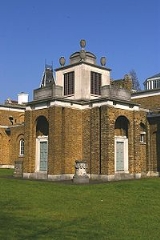
. England's first purpose-built public art gallery, it was designed by Regency architect Sir John Soane
and opened to the public in 1817. Soane arranged the exhibition spaces as a series of interlinked rooms illuminated naturally through skylights – a concept that had an enduring influence on art gallery design. The gallery houses one of the country’s finest collections of Old Masters, especially rich in French, Italian and Spanish Baroque paintings and in British portraits from Tudor times to the 19th century. The Gallery is a registered charity.
(1753–1811), originally from Switzerland
, and his business partner, Frenchman Noël Desenfans. The two ran a successful art dealership in London and in 1790 were commissioned by the King of Poland
, Stanislaus Augustus, to put together a "royal collection", which the monarch lacked and thought would encourage fine arts in Poland. Touring around Europe
buying fine art
, Bourgeois and Desenfans took five years to put the collection together, but by 1795 Poland had been partitioned
— divided up by its stronger neighbours — and no longer existed.
Bourgeois and Desenfans attempted to sell the collection to other nations but were unsuccessful and instead sold small pieces to fund the purchase of further important works, keeping the collection in London. After the death of Desenfans in 1807, Bourgeois contacted the British Museum
about bequeathing the collection on his own death, but was put off by the attitude of the Museum's trustees. Upon Sir Francis Bourgeois's death in 1811, he bequeathed the collection to Dulwich College
(then part of a larger charity, Alleyn's College of God's Gift
) and Dulwich Picture Gallery was founded by the terms of his will.
A major addition to the collection came in 1835, when William Linley
— last of a musical and theatrical family — bequeathed his collection of family portraits to the gallery on his death.
On 31 December 1966 eight paintings were stolen; three by Rembrandt, three by Rubens
and one each by Gerrit Dou and Adam Elsheimer
. They were worth at the time about £4.5 million in total but a reward of just £1,000 was offered for their return. Nevertheless within a few days the paintings were recovered as the result of an investigation led by Detective Superintendent Charles Hewett, who had previously investigated suspected serial killer
Dr John Bodkin Adams
.
Michael Hall, an unemployed ambulance
driver, was the only one of the thieves caught and was sentenced to five years in prison.
Rembrandt's small early Portrait of Jacob de Gheyn III has been stolen and recovered four times, most recently in 1983, and is listed in the Guinness Book of Records as the most frequently stolen artwork in the world. It has variously been recovered from a left-luggage office in West Germany in 1986; returned anonymously; found on the back of a bicycle; and discovered under a bench in a graveyard in nearby Streatham. The painting is now closely guarded by an upgraded security system.
In 1995 a major reorganisation of the historic Alleyn's College charity resulted in the reconstitution of Dulwich Picture Gallery as an independent registered charity
.
In 2011 the Gallery celebrated its Bicentenary year.
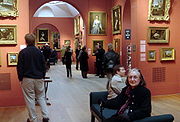 When Bourgeois died in 1811 bequeathing his collection, the terms of his will stated that a new museum was to be built by his friend, the architect Sir John Soane
, which would house the collection and would be open to the public. It also left £2,000 for construction costs.
Soane's clear design and basic architecture
of a series of interlinked rooms lit by natural light through overhead skylights has been the primary influence on art gallery design ever since. The Dulwich College Picture Gallery (as it was named at the time) opened its doors in 1817. Soane designed the sky lights to illuminate the paintings indirectly, and gave us one the great small galleries in which to look at oil paintings. Indeed, the influential C20th architect Philip Johnson
said of the space: "Soane has taught us how to display paintings.".
Bourgeois and Desenfans, along with Desenfans' wife, who funded part of their work, are buried in a mausoleum
at the centre of the west wing of the museum. Alms houses constructed by Soane along the west side of the gallery were converted into exhibition space by Charles Barry, Jr.
in 1880 and an eastward extension was built to designs by E S Hall between 1908 and 1938.
The mausoleum and west wing galleries were badly damaged by a German
V1 flying bomb on 12 July 1944, during World War II
; apparently, the bones were scattered across the lawn in front of the gallery. The three sarcophagi
in the mausoleum now once again contain approximately a skeleton
each, but nobody was quite sure which bones were whose. The buildings were refurbished by Austin Vernon and Partners, and re-opened by HM The Queen Mother on 27 April 1953.
A modern extension designed by Rick Mather
was built in 1999, adding a café
, educational facilities, a lecture theatre, a new entrance and glazed walkway, and joining the building to the chapel and offices of Alleyn's College. Parts of Soane's original design were also restored, having been changed during previous extensions. This latest refurbishment was opened by HM The Queen on 25 May 2000.
paintings mostly of the 17th and 18th centuries, many of the highest quality. It also hosts significant temporary exhibitions. Recent examples include Canaletto
in England, Paul Nash
: The Elements, Norman Rockwell
's America and Twombly
-Poussin: Arcadian Painters.
 Dutch School
English School
Flemish School
French School
Italian School
Spanish School
Image:Dulwich Picture Gallery TQ3373 142.jpg|Dulwich Picture Gallery exterior looking north.
Image:Dulwich Picture Gallery exterior.jpg|Exterior — east frontage.
File:Walking the dog in front of Dulwich Picture Gallery.jpg|Walking the Dog sculpture.
File:Dulwich Picture Gallery mausoleum.jpg|Inside the mausoleum.
, now Surveyor of the Queen's Pictures
, was the Director.
Art gallery
An art gallery or art museum is a building or space for the exhibition of art, usually visual art.Museums can be public or private, but what distinguishes a museum is the ownership of a collection...
in Dulwich
Dulwich
Dulwich is an area of South London, England. The settlement is mostly in the London Borough of Southwark with parts in the London Borough of Lambeth...
, South London
London
London is the capital city of :England and the :United Kingdom, the largest metropolitan area in the United Kingdom, and the largest urban zone in the European Union by most measures. Located on the River Thames, London has been a major settlement for two millennia, its history going back to its...
. England's first purpose-built public art gallery, it was designed by Regency architect Sir John Soane
John Soane
Sir John Soane, RA was an English architect who specialised in the Neo-Classical style. His architectural works are distinguished by their clean lines, massing of simple form, decisive detailing, careful proportions and skilful use of light sources...
and opened to the public in 1817. Soane arranged the exhibition spaces as a series of interlinked rooms illuminated naturally through skylights – a concept that had an enduring influence on art gallery design. The gallery houses one of the country’s finest collections of Old Masters, especially rich in French, Italian and Spanish Baroque paintings and in British portraits from Tudor times to the 19th century. The Gallery is a registered charity.
History of the collection
The Dulwich collection was first put together by Sir Francis BourgeoisFrancis Bourgeois
Sir Peter Francis Bourgeois was an English-Swiss landscape painter and court painter to George III. He lived with his French partner Noel Desenfans and Desenfans's Welsh wife Margaret Morris. The three lived together in a house in Charlotte Street, London...
(1753–1811), originally from Switzerland
Switzerland
Switzerland name of one of the Swiss cantons. ; ; ; or ), in its full name the Swiss Confederation , is a federal republic consisting of 26 cantons, with Bern as the seat of the federal authorities. The country is situated in Western Europe,Or Central Europe depending on the definition....
, and his business partner, Frenchman Noël Desenfans. The two ran a successful art dealership in London and in 1790 were commissioned by the King of Poland
Poland
Poland , officially the Republic of Poland , is a country in Central Europe bordered by Germany to the west; the Czech Republic and Slovakia to the south; Ukraine, Belarus and Lithuania to the east; and the Baltic Sea and Kaliningrad Oblast, a Russian exclave, to the north...
, Stanislaus Augustus, to put together a "royal collection", which the monarch lacked and thought would encourage fine arts in Poland. Touring around Europe
Europe
Europe is, by convention, one of the world's seven continents. Comprising the westernmost peninsula of Eurasia, Europe is generally 'divided' from Asia to its east by the watershed divides of the Ural and Caucasus Mountains, the Ural River, the Caspian and Black Seas, and the waterways connecting...
buying fine art
Fine art
Fine art or the fine arts encompass art forms developed primarily for aesthetics and/or concept rather than practical application. Art is often a synonym for fine art, as employed in the term "art gallery"....
, Bourgeois and Desenfans took five years to put the collection together, but by 1795 Poland had been partitioned
History of Poland (1795–1918)
In 1795, the Third and the last of three partitions of Poland ended the existence of the Polish-Lithuanian Commonwealth. Nevertheless, hopes for restoration of Polish independence were kept alive throughout the 19th century by events within and outside the Polish lands...
— divided up by its stronger neighbours — and no longer existed.
Bourgeois and Desenfans attempted to sell the collection to other nations but were unsuccessful and instead sold small pieces to fund the purchase of further important works, keeping the collection in London. After the death of Desenfans in 1807, Bourgeois contacted the British Museum
British Museum
The British Museum is a museum of human history and culture in London. Its collections, which number more than seven million objects, are amongst the largest and most comprehensive in the world and originate from all continents, illustrating and documenting the story of human culture from its...
about bequeathing the collection on his own death, but was put off by the attitude of the Museum's trustees. Upon Sir Francis Bourgeois's death in 1811, he bequeathed the collection to Dulwich College
Dulwich College
Dulwich College is an independent school for boys in Dulwich, southeast London, England. The college was founded in 1619 by Edward Alleyn, a successful Elizabethan actor, with the original purpose of educating 12 poor scholars as the foundation of "God's Gift". It currently has about 1,600 boys,...
(then part of a larger charity, Alleyn's College of God's Gift
Alleyn's College
Alleyn's College of God's Gift is a historic charity in England, founded in 1619 by the Elizabethan actor and businessman Edward Alleyn who endowed it with the ancient Manor of Dulwich in south London....
) and Dulwich Picture Gallery was founded by the terms of his will.
A major addition to the collection came in 1835, when William Linley
William Linley
William Linley was one of 7 musical siblings born to Thomas Linley the elder and his wife Mary Johnson.He joined the British East India Company and was in India 1790-5 and 1800-5, holding a writership at their College in Madras. He retired from the company in 1810 and devoted himself to singing,...
— last of a musical and theatrical family — bequeathed his collection of family portraits to the gallery on his death.
On 31 December 1966 eight paintings were stolen; three by Rembrandt, three by Rubens
Rubens
Rubens is often used to refer to Peter Paul Rubens , the Flemish artist.Rubens may also refer to:- People :Family name* Paul Rubens Rubens is often used to refer to Peter Paul Rubens (1577-1640), the Flemish artist.Rubens may also refer to:- People :Family name* Paul Rubens (composer) Rubens is...
and one each by Gerrit Dou and Adam Elsheimer
Adam Elsheimer
Adam Elsheimer was a German artist working in Rome who died at only thirty-two, but was very influential in the early 17th century. His relatively few paintings were small scale, nearly all painted on copper plates, of the type often known as cabinet paintings. They include a variety of light...
. They were worth at the time about £4.5 million in total but a reward of just £1,000 was offered for their return. Nevertheless within a few days the paintings were recovered as the result of an investigation led by Detective Superintendent Charles Hewett, who had previously investigated suspected serial killer
Serial killer
A serial killer, as typically defined, is an individual who has murdered three or more people over a period of more than a month, with down time between the murders, and whose motivation for killing is usually based on psychological gratification...
Dr John Bodkin Adams
John Bodkin Adams
John Bodkin Adams was an Irish-born British general practitioner, convicted fraudster and suspected serial killer. Between the years 1946 and 1956, more than 160 of his patients died in suspicious circumstances. Of these, 132 left him money or items in their will. He was tried and acquitted for...
.
Michael Hall, an unemployed ambulance
Ambulance
An ambulance is a vehicle for transportation of sick or injured people to, from or between places of treatment for an illness or injury, and in some instances will also provide out of hospital medical care to the patient...
driver, was the only one of the thieves caught and was sentenced to five years in prison.
Rembrandt's small early Portrait of Jacob de Gheyn III has been stolen and recovered four times, most recently in 1983, and is listed in the Guinness Book of Records as the most frequently stolen artwork in the world. It has variously been recovered from a left-luggage office in West Germany in 1986; returned anonymously; found on the back of a bicycle; and discovered under a bench in a graveyard in nearby Streatham. The painting is now closely guarded by an upgraded security system.
In 1995 a major reorganisation of the historic Alleyn's College charity resulted in the reconstitution of Dulwich Picture Gallery as an independent registered charity
Charitable organization
A charitable organization is a type of non-profit organization . It differs from other types of NPOs in that it centers on philanthropic goals A charitable organization is a type of non-profit organization (NPO). It differs from other types of NPOs in that it centers on philanthropic goals A...
.
In 2011 the Gallery celebrated its Bicentenary year.
History of the building
John Soane
Sir John Soane, RA was an English architect who specialised in the Neo-Classical style. His architectural works are distinguished by their clean lines, massing of simple form, decisive detailing, careful proportions and skilful use of light sources...
, which would house the collection and would be open to the public. It also left £2,000 for construction costs.
Soane's clear design and basic architecture
Architecture
Architecture is both the process and product of planning, designing and construction. Architectural works, in the material form of buildings, are often perceived as cultural and political symbols and as works of art...
of a series of interlinked rooms lit by natural light through overhead skylights has been the primary influence on art gallery design ever since. The Dulwich College Picture Gallery (as it was named at the time) opened its doors in 1817. Soane designed the sky lights to illuminate the paintings indirectly, and gave us one the great small galleries in which to look at oil paintings. Indeed, the influential C20th architect Philip Johnson
Philip Johnson
Philip Cortelyou Johnson was an influential American architect.In 1930, he founded the Department of Architecture and Design at the Museum of Modern Art in New York City, and later , as a trustee, he was awarded an American Institute of Architects Gold Medal and the first Pritzker Architecture...
said of the space: "Soane has taught us how to display paintings.".
Bourgeois and Desenfans, along with Desenfans' wife, who funded part of their work, are buried in a mausoleum
Mausoleum
A mausoleum is an external free-standing building constructed as a monument enclosing the interment space or burial chamber of a deceased person or persons. A monument without the interment is a cenotaph. A mausoleum may be considered a type of tomb or the tomb may be considered to be within the...
at the centre of the west wing of the museum. Alms houses constructed by Soane along the west side of the gallery were converted into exhibition space by Charles Barry, Jr.
Charles Barry, Jr.
Charles Barry, Jr. was an English architect of the mid-late 19th century, and eldest son of Sir Charles Barry. Like his younger brother and fellow architect Edward Middleton Barry, Charles Jr. designed numerous buildings in London. He is particularly associated with works in the south London...
in 1880 and an eastward extension was built to designs by E S Hall between 1908 and 1938.
The mausoleum and west wing galleries were badly damaged by a German
Germany
Germany , officially the Federal Republic of Germany , is a federal parliamentary republic in Europe. The country consists of 16 states while the capital and largest city is Berlin. Germany covers an area of 357,021 km2 and has a largely temperate seasonal climate...
V1 flying bomb on 12 July 1944, during World War II
World War II
World War II, or the Second World War , was a global conflict lasting from 1939 to 1945, involving most of the world's nations—including all of the great powers—eventually forming two opposing military alliances: the Allies and the Axis...
; apparently, the bones were scattered across the lawn in front of the gallery. The three sarcophagi
Sarcophagus
A sarcophagus is a funeral receptacle for a corpse, most commonly carved or cut from stone. The word "sarcophagus" comes from the Greek σαρξ sarx meaning "flesh", and φαγειν phagein meaning "to eat", hence sarkophagus means "flesh-eating"; from the phrase lithos sarkophagos...
in the mausoleum now once again contain approximately a skeleton
Skeleton
The skeleton is the body part that forms the supporting structure of an organism. There are two different skeletal types: the exoskeleton, which is the stable outer shell of an organism, and the endoskeleton, which forms the support structure inside the body.In a figurative sense, skeleton can...
each, but nobody was quite sure which bones were whose. The buildings were refurbished by Austin Vernon and Partners, and re-opened by HM The Queen Mother on 27 April 1953.
A modern extension designed by Rick Mather
Rick Mather
Rick Mather is an American-born architect working in England. Born in Portland, Oregon and awarded a B.arch. at the University of Oregon in 1961, he came to London in 1963 where he founded his own practice, Rick Mather Architects, a decade later....
was built in 1999, adding a café
Café
A café , also spelled cafe, in most countries refers to an establishment which focuses on serving coffee, like an American coffeehouse. In the United States, it may refer to an informal restaurant, offering a range of hot meals and made-to-order sandwiches...
, educational facilities, a lecture theatre, a new entrance and glazed walkway, and joining the building to the chapel and offices of Alleyn's College. Parts of Soane's original design were also restored, having been changed during previous extensions. This latest refurbishment was opened by HM The Queen on 25 May 2000.
The permanent collection and exhibitions
Dulwich Picture Gallery houses a collection of European old masterOld Master
"Old Master" is a term for a European painter of skill who worked before about 1800, or a painting by such an artist. An "old master print" is an original print made by an artist in the same period...
paintings mostly of the 17th and 18th centuries, many of the highest quality. It also hosts significant temporary exhibitions. Recent examples include Canaletto
Canaletto
Giovanni Antonio Canal better known as Canaletto , was a Venetian painter famous for his landscapes, or vedute, of Venice. He was also an important printmaker in etching.- Early career :...
in England, Paul Nash
Paul Nash
Paul Nash is the name of:* Paul Nash , British artist* Paul Nash , South African sprinter* Paul Nash , Jamaican Sportsperson of the Year 1969, Father of Brendan Nash...
: The Elements, Norman Rockwell
Norman Rockwell
Norman Percevel Rockwell was a 20th-century American painter and illustrator. His works enjoy a broad popular appeal in the United States for their reflection of American culture. Rockwell is most famous for the cover illustrations of everyday life scenarios he created for The Saturday Evening...
's America and Twombly
Cy Twombly
Edwin Parker "Cy" Twombly, Jr. was an American artist well known for his large-scale, freely scribbled, calligraphic-style graffiti paintings, on solid fields of mostly gray, tan, or off-white colors...
-Poussin: Arcadian Painters.
The education programme
Dulwich Picture Gallery is famous for its innovative Education programme, particularly for its Community Outreach programmes including Urban Youth and Good Times: Art for Older People. The Education Department also runs an expansive programme of art courses and lectures.Paintings
- Cuyp, AelbertAelbert CuypAelbert Jacobsz Cuyp was one of the leading Dutch landscape painters of the Dutch Golden Age in the 17th century. The most famous of a family of painters, the pupil of his father Jacob Gerritsz...
- 11 paintings; - Dou, Gerrit - 1 painting;
- Hobbema, Meyndert - 1 painting;
- Hooch, Pieter dePieter de HoochPieter de Hooch was a genre painter during the Dutch Golden Age. He was a contemporary of Dutch Master Jan Vermeer, with whom his work shared themes and style.-Biography:...
- 2 paintings; - Neer, Aernout van derAernout van der NeerAert van der Neer, or Aernout or Artus , was a landscape painter of the Dutch Golden Age, specializing in small night scenes lit only by moonlight and fires, and snowy winter landscapes, both often looking down a canal or river...
- 1 painting; - Ostade, Adriaen vanAdriaen van OstadeAdriaen van Ostade was a Dutch Golden Age painter of genre works.-Life:...
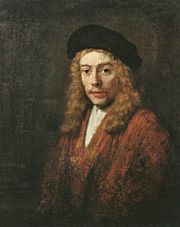
- 5 paintings; - Rembrandt van Rijn - 3 paintings;
- Ruisdael, Jacob vanJacob Isaakszoon van RuysdaelJacob Isaackszoon van Ruisdael was a Dutch landscape painter.-Life:A native of Haarlem, he appears to have studied under his father Isaak van Ruysdael, a landscape painter, though other authorities place him as the pupil of Berghem and of Allart van Everdingen...
- 4 paintings; - Velde, Adriaen van de - 2 paintings;
- Velde, Willem van de...the YoungerWillem van de Velde the YoungerWillem van de Velde the Younger was a Dutch marine painter.-Biography:Willem van de Velde was baptised on 18 December 1633 in Leiden, Holland, Dutch Republic....
- 3 paintings; - Weenix, JanJan WeenixJan Weenix or Joannis Wenix was a Dutch painter. He was trained by his father, Jan Baptist Weenix, together with his cousin Melchior d'Hondecoeter. Like his father, he devoted himself to a variety of subjects, but his fame is chiefly due to his paintings of dead game and of hunting scenes...
- 1 painting; - Wouwerman, PhilipPhilip WouwermanPhilips Wouwerman was a Dutch painter of hunting, landscape and battle scenes.-Life and Work:Philips Wouwerman was one of the most versatile and prolific artists of the Dutch Golden Age...
- 12 paintings;
English School
- Dobson, WilliamWilliam DobsonWilliam Dobson was a portraitist and one of the first notable English painters, praised by his contemporary John Aubrey as "the most excellent painter that England has yet bred"....
- 1 painting; - Gainsborough, ThomasThomas GainsboroughThomas Gainsborough was an English portrait and landscape painter.-Suffolk:Thomas Gainsborough was born in Sudbury, Suffolk. He was the youngest son of John Gainsborough, a weaver and maker of woolen goods. At the age of thirteen he impressed his father with his penciling skills so that he let...
- 7 paintings; - Hogarth, WilliamWilliam HogarthWilliam Hogarth was an English painter, printmaker, pictorial satirist, social critic and editorial cartoonist who has been credited with pioneering western sequential art. His work ranged from realistic portraiture to comic strip-like series of pictures called "modern moral subjects"...
- 2 paintings; - Landseer, Sir EdwinEdwin Henry LandseerSir Edwin Henry Landseer, RA was an English painter, well known for his paintings of animals—particularly horses, dogs and stags...
- 1 painting; - Lawrence, ThomasThomas Lawrence (painter)Sir Thomas Lawrence RA FRS was a leading English portrait painter and president of the Royal Academy.Lawrence was a child prodigy. He was born in Bristol and began drawing in Devizes, where his father was an innkeeper. At the age of ten, having moved to Bath, he was supporting his family with his...
- 3 paintings; - Reynolds, JoshuaJoshua ReynoldsSir Joshua Reynolds RA FRS FRSA was an influential 18th-century English painter, specialising in portraits and promoting the "Grand Style" in painting which depended on idealization of the imperfect. He was one of the founders and first President of the Royal Academy...
- 9 paintings; - Constable, JohnJohn ConstableJohn Constable was an English Romantic painter. Born in Suffolk, he is known principally for his landscape paintings of Dedham Vale, the area surrounding his home—now known as "Constable Country"—which he invested with an intensity of affection...
- 1 painting;
Flemish School
- Marcus Gheeraerts the YoungerMarcus Gheeraerts the YoungerMarcus Gheeraerts was an artist of the Tudor court, described as "the most important artist of quality to work in England in large-scale between Eworth and Van Dyck" He was brought to England as a child by his father Marcus Gheeraerts the Elder, also a painter...
- 1 painting; - Rubens, Peter Paul - 10 paintings;
- Teniers, DavidDavid Teniers the YoungerDavid Teniers the Younger was a Flemish artist born in Antwerp, the son of David Teniers the Elder. His son David Teniers III and his grandson David Teniers IV were also painters...
- 19 paintings; - Van Dyck, AnthonyAnthony van DyckSir Anthony van Dyck was a Flemish Baroque artist who became the leading court painter in England. He is most famous for his portraits of Charles I of England and his family and court, painted with a relaxed elegance that was to be the dominant influence on English portrait-painting for the next...
- 5 paintings;
French School
- Dughet, GaspardGaspard DughetGaspard Dughet , also known as Gaspard Poussin, was a French painter born in Rome.A pupil of Nicolas Poussin, Gaspard Dughet was the brother of Poussin's wife...
- 4 paintings; - Fragonard, Jean-HonoréJean-Honoré FragonardJean-Honoré Fragonard was a French painter and printmaker whose late Rococo manner was distinguished by remarkable facility, exuberance, and hedonism. One of the most prolific artists active in the last decades of the Ancien Régime, Fragonard produced more than 550 paintings , of which only five...
- 1 painting; - Gellée, ClaudeClaude LorrainClaude Lorrain, , traditionally just Claude in English Claude Lorrain, , traditionally just Claude in English (also Claude Gellée, his real name, or in French Claude Gellée, , dit le Lorrain) Claude Lorrain, , traditionally just Claude in English (also Claude Gellée, his real name, or in French...
- 4 paintings; - Poussin, NicolasNicolas PoussinNicolas Poussin was a French painter in the classical style. His work predominantly features clarity, logic, and order, and favors line over color. His work serves as an alternative to the dominant Baroque style of the 17th century...
- 6 paintings; - Vernet, Claude-Joseph - 6 paintings;
- Watteau, Jean-Antoine - 2 paintings;
Italian School
- CanalettoCanalettoGiovanni Antonio Canal better known as Canaletto , was a Venetian painter famous for his landscapes, or vedute, of Venice. He was also an important printmaker in etching.- Early career :...
, (Giovanni Antonio Canal) - 2 paintings; - Carracci, AnnibaleAnnibale CarracciAnnibale Carracci was an Italian Baroque painter.-Early career:Annibale Carracci was born in Bologna, and in all likelihood first apprenticed within his family...
- 4 paintings; - Guercino, (Giovanni Francesco Barbieri) - 2 paintings;
- Raphael, (Raffaello Sanzio)RaphaelRaffaello Sanzio da Urbino , better known simply as Raphael, was an Italian painter and architect of the High Renaissance. His work is admired for its clarity of form and ease of composition and for its visual achievement of the Neoplatonic ideal of human grandeur...
- 2 Paintings; - Reni, GuidoGuido ReniGuido Reni was an Italian painter of high-Baroque style.-Biography:Born in Bologna into a family of musicians, Guido Reni was the son of Daniele Reni and Ginevra de’ Pozzi. As a child of nine, he was apprenticed under the Bolognese studio of Denis Calvaert. Soon after, he was joined in that...
- 2 paintings; - Ricci, SebastianoSebastiano RicciSebastiano Ricci was an Italian painter of the late Baroque school of Venice. About the same age as Piazzetta, and an elder contemporary of Tiepolo, he represents a late version of the vigorous and luminous Cortonesque style of grand manner fresco painting.-Early years:He was born in Belluno, son...
- 2 paintings; - Tiepolo, Giovanni BattistaGiovanni Battista TiepoloGiovanni Battista Tiepolo , also known as Gianbattista or Giambattista Tiepolo, was an Italian painter and printmaker from the Republic of Venice...
- 3 paintings; - Vasari, GiorgioGiorgio VasariGiorgio Vasari was an Italian painter, writer, historian, and architect, who is famous today for his biographies of Italian artists, considered the ideological foundation of art-historical writing.-Biography:...
- 1 painting; - Veronese, PaoloPaolo VeronesePaolo Veronese was an Italian painter of the Renaissance in Venice, famous for paintings such as The Wedding at Cana and The Feast in the House of Levi...
- 1 painting; - Zuccarelli, FrancescoFrancesco ZuccarelliFrancesco Zuccarelli was an Italian Rococo painter.He was born at Pitigliano, in southern Tuscany, where he initially apprenticed with Paolo Anesi...
- 3 paintings;
Spanish School
- Murillo, Bartolomé-EstebanBartolomé Estéban MurilloBartolomé Esteban Murillo was a Spanish Baroque painter. Although he is best known for his religious works, Murillo also produced a considerable number of paintings of contemporary women and children...
- 4 paintings;
Gallery
Image:Dulwich Picture Gallery TQ3373 142.jpg|Dulwich Picture Gallery exterior looking north.
Image:Dulwich Picture Gallery exterior.jpg|Exterior — east frontage.
File:Walking the dog in front of Dulwich Picture Gallery.jpg|Walking the Dog sculpture.
File:Dulwich Picture Gallery mausoleum.jpg|Inside the mausoleum.
Directors
Ian A.C. Dejardin is the current Director of the gallery; he has been in the post since 2005. From 1996 to 2005, Desmond Shawe-TaylorDesmond Shawe-Taylor
Desmond Philip Shawe-Taylor LVO became Surveyor of the Queen's Pictures in 2005. He succeeded Christopher Lloyd on Lloyd's retirement.Shawe-Taylor is the son of Brian Newton Shawe-Taylor and Jocelyn Cecilia Shawe-Taylor...
, now Surveyor of the Queen's Pictures
Surveyor of the Queen's Pictures
The office of the Surveyor of the King's/Queen's Pictures, in the Royal Collection Department of the Royal Household of the Sovereign of the United Kingdom, is responsible for the care and maintenance of the royal collection of pictures owned by the Sovereign in an official capacity – as...
, was the Director.
See also
- Dulwich OnViewDulwich OnViewDulwich OnView is a museum-based virtual community associated with the Dulwich Picture Gallery for the local community, based in the suburb of Dulwich, southeast London, England. It runs a blog-based online magazine concerned with people and culture in Dulwich and the surrounding area.The group...
, a blog-based magazine associated with the gallery - Gallery RoadGallery RoadGallery Road is in West Dulwich, Southwark, southeast London, England.- Location :At the southern end is a junction with Dulwich Common , close to West Dulwich railway station. To the east is Dulwich Picture Gallery, hence the name. Dulwich Park lies to the east beyond that. Also on the east side...
, to the west of the gallery
External links
- DPG website
- Russell Vernon obituary, Daily Telegraph
- Dulwich Picture Gallery Virtual Tour