

Caenorhabditis elegans

Encyclopedia
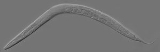
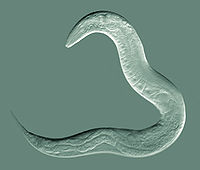
Caenorhabditis elegans (icon) is a free-living, transparent nematode
(roundworm), about 1 mm in length, which lives in temperate soil environments. Research into the molecular
and developmental biology
of C. elegans was begun in 1974 by Sydney Brenner
and it has since been used extensively as a model organism
.
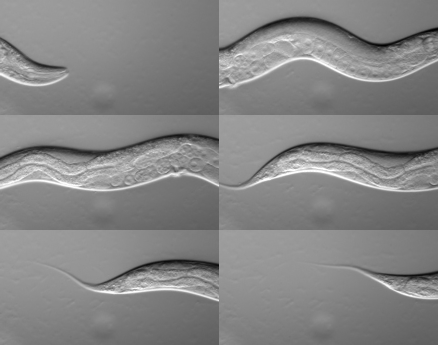 C. elegans is unsegmented
, vermiform, and bilaterally symmetrical, with a cuticle
integument, four main epidermal cords and a fluid-filled pseudocoelomate cavity. Members of the species have many of the same organ systems as other animals. In the wild, they feed on bacteria that develop on decaying vegetable matter. C. elegans has two sexes: hermaphrodite
s and males. Individuals are almost all hermaphrodite, with males comprising just 0.05% of the total population on average. The basic anatomy of C. elegans includes a mouth, pharynx
, intestine, gonad
, and collagen
ous cuticle. Males have a single-lobed gonad, vas deferens
, and a tail specialized for mating. Hermaphrodites have two ovaries, oviducts, spermatheca
, and a single uterus.
C. elegans eggs are laid by the hermaphrodite. After hatching, they pass through four juvenile stages (L1–L4). When crowded or in the absence of food, C. elegans can enter an alternative third larval stage called the dauer
state. Dauer larvae are stress-resistant and do not age. Hermaphrodites produce all their sperm in the L4 stage (150 sperm per gonadal arm) and then switch over to producing oocyte
s. The sperm are stored in the same area of the gonad as the oocytes until the first oocyte pushes the sperm into the spermatheca (a chamber where the oocytes become fertilized by the sperm). The male can inseminate the hermaphrodite, which will use male sperm preferentially (both types of sperm are stored in the spermatheca). When self-inseminated, the wild-type worm will lay approximately 300 eggs. When inseminated by a male, the number of progeny can exceed 1,000. At 20 °C, the laboratory strain of C. elegans has an average life span of approximately 2–3 weeks and a generation time of approximately 4 days.
C. elegans has five pairs of autosome
s and one pair of sex chromosomes. Sex in C. elegans is based on an X0 sex-determination system
. Hermaphrodite C. elegans have a matched pair of sex chromosomes (XX); the rare males have only one sex chromosome (X0). The sperm of C. elegans is ameboid, lacking flagella and acrosomes.
C. elegans is notable in animal sleep studies as the most primitive organism in which sleep-like states have been observed. In C. elgans, a lethargus phase occurs in short periods preceding each moult
.

species occupy various nutrient- and bacteria-rich environments. They do not form self-sustaining populations in soil, as it lacks enough organic matter. C. elegans can survive on a diet of a variety of kinds of bacteria (not all bacteria, though), but its wild ecology is largely unknown. Most laboratory strains were found in human-made environments such as gardens and compost piles. Recently, however, C. elegans has been found to be abundant in rotting organic matter, particularly rotting fruit. Dauer larvae can be transported by invertebrates including millipede
s, insect
s, isopods, and gastropods. When they reach a desirable location they then get off, and at least in the lab they will also feed on the host if it dies.
Nematodes are capable of surviving desiccation
, and in C. elegans the mechanism for this capability has been demonstrated to be Late Embryogenesis Abundant (LEA) proteins
.
proposed using Caenorhabditis elegans as a model organism for the investigation of animal development including neural development. Brenner chose it mainly because it is simple, easy to grow in bulk populations, and convenient for genetic analysis.
C. elegans is studied as a model organism
for a variety of reasons. It is a multicellular eukaryotic
organism that is simple enough to be studied in great detail. Strains
are cheap to breed and can be frozen. When subsequently thawed, they remain viable, allowing long-term storage.
In addition, C. elegans is transparent, facilitating the study of cellular differentiation
and other developmental processes in the intact organism. The developmental fate of every single somatic cell
(959 in the adult hermaphrodite; 1031 in the adult male) has been mapped out. These patterns of cell lineage are largely invariant between individuals, in contrast to mammals, where cell development from the embryo is more largely dependent on cellular cues. In both sexes, a large number of additional cells (131 in the hermaphrodite, most of which would otherwise become neuron
s), are eliminated by programmed cell death (apoptosis
). This aspect has been thoroughly studied in this organism, specifically because of this "apoptotic predictability", which has contributed to the elucidation of some apoptotic genes
, mainly through observation of abnormal, apoptosis-surviving nematodes.
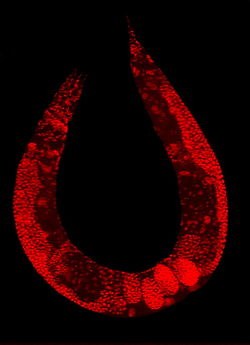 In addition, C. elegans is one of the simplest organisms with a nervous system
. In the hermaphrodite, this comprises 302 neuron
s whose pattern of connectivity, or "connectome
", has been completely mapped and shown to be a small-world network
. Research has explored the neural mechanisms responsible for several of the more interesting behaviors shown by C. elegans, including chemotaxis
, thermotaxis
, mechanotransduction
, and male mating behavior.
A useful feature of C. elegans is that it is relatively straightforward to disrupt the function of specific genes by RNA interference
(RNAi). Silencing
the function of a gene in this way can sometimes allow a researcher to infer what the function of that gene may be. The nematode can either be soaked in or injected with a solution of double stranded RNA
, the sequence of which is complementary to the sequence of the gene that the researcher wishes to disable. Alternatively, worms can be fed on genetically transformed
bacteria which express
the double stranded RNA of interest.
C. elegans has also been useful in the study of meiosis
. As sperm and egg nuclei move down the length of the gonad, they undergo a temporal progression through meiotic events. This progression means that every nucleus at a given position in the gonad will be at roughly the same step in meiosis, eliminating the difficulties of heterogeneous populations of cells.
The organism has also been identified as a model for nicotine
dependence as it has been found to exhibit behavioral responses to nicotine that parallel those observed in mammals, including acute response, tolerance, withdrawal, and sensitization.
As for most model organisms, there is a dedicated online database for the species that is actively curated by scientists working in this field. The WormBase
database attempts to collate all published information on C. elegans and other related nematodes. A reward of $4000 has been advertised on their website, for the finder of a new species of closely related nematode. Such a discovery would broaden research opportunities with the worm.
completely sequenced
. The sequence was published in 1998, although a number of small gaps were present; the last gap was finished by October 2002. The adult hermaphrodite has 959 somatic nuclei. Its gene density is about 1 gene/5kb. Intron
s are 26% of the genome. There are some large intergenic regions containing repetitive DNA sequences
. Many genes are arranged in operon
s: polycistronic series that are transcribed together. C. elegans and other nematodes are among the few eukaryotes currently known to have operons. The C. elegans genome sequence is approximately 100 million base pair
s long. The genome consists of 6 chromosomes (named I, II, II, IV, V and X) and a mitochondrion.
The genome contains approximately 20,470 protein
-coding gene
s. The number of known RNA genes in the genome has increased greatly due to the 2006 discovery of a new class of 21U-RNA gene, and the genome is now believed to contain more than 16,000 RNA genes, up from as few as 1,300 in 2005. Scientific curators continue to appraise the set of known genes, such that new gene predictions continue to be added and incorrect ones modified or removed.
In 2003, the genome sequence of the related nematode C. briggsae
was also determined, allowing researchers to study the comparative genomics of these two organisms. Work is now ongoing to determine the genome sequences of more nematodes from the same genus
such as C. remanei, C. japonica and C. brenneri. These newer genome sequences are being determined using the whole genome shotgun technique which means they are likely to be less complete and less accurate than that of C. elegans, which was sequenced using the "hierarchical" or clone-by-clone approach.
The official version of the C. elegans genome sequence continues to change as new evidence reveals errors in the original sequencing; DNA sequencing
is not an error-free process. Most changes are minor, adding or removing only a few base pair
s (bp) of DNA. For example, the WS202 release of WormBase (April 2009) added 2 base pair
s to the genome sequence. Occasionally, more extensive changes are made, as in the WS197 release of December 2008, which added a region of over 4,600 bp to the sequence.
sequences from sponges
are more similar to humans than to C. elegans. This suggests that there has been an accelerated rate of evolution in the C. elegans lineage
. The same study found that several phylogenetically ancient genes are not present in C. elegans.
(RNAi) has been used extensively in C. elegans because it can be done by simply feeding the worms transgenic bacteria expressing RNA complementary to the gene of interest. Their relative simplicity of makes gene loss-of-function
experiments in C. elegans the easiest of all animal models, and thus, scientists have been able to knock down 86% of the ~20,000 genes in the worm, establishing a functional role for 9% of the genome.
Incidentally, RNAi does not work nearly as well in other species of worm in the Caenorhabditis genus. Although injecting RNA into the body cavity of the animal induces silencing in most species, only C. elegans and a few other distantly-related nematodes can uptake RNA from the bacteria they eat for RNAi. This ability has been mapped down to a single gene, sid-2, which when inserted as a transgene
in other species, allows them to uptake RNA for RNAi the way C. elegans does.
 In 2002, the Nobel Prize in Physiology or Medicine
was awarded to Sydney Brenner
, H. Robert Horvitz
and John Sulston for their work on the genetics of organ development and programmed cell death
in C. elegans. The 2006 Nobel Prize in Physiology or Medicine
was awarded to Andrew Fire
and Craig C. Mello for their discovery of RNA interference
in C. elegans. In 2008, Martin Chalfie
shared a Nobel Prize in Chemistry
for his work on green fluorescent protein
in C. elegans.
Because all research into C. elegans essentially started with Sydney Brenner
in the 1970s, many scientists working in this field share a close connection to Brenner, having either worked as a post-doctoral or post-graduate researcher in Brenner's lab or in the lab of someone who previously worked with Brenner. Because most people who worked in his lab went on to establish their own worm research labs, there is now a fairly well documented "lineage" of C. elegans scientists. This lineage was recorded in some detail at the 2003 International Worm Meeting and the results were stored in the WormBase
database.
solution is used for the freezing of C. elegans. Samples are cooled at 1°C per minute. Freshly-starved young larvae survive freezing best. About 35% to 45% of the worms stored in liquid nitrogen
survive. The worms can also be stored at −80°C for over ten years, but survival is not as great as for worms stored at −196°C, the temperature of liquid nitrogen.
in February 2003. Later, in January 2009, it was announced that live samples of C. elegans from the University of Nottingham
will spend two weeks on the International Space Station
as part of a project to explore the effects of zero gravity on muscle development and its physiology. The emphasis of the research will be on the genetic basis of muscle atrophy
. This has relevance to space travel, but also to individuals who are bed-ridden, geriatric or diabetic. Descendants of the worms that were aboard Columbia in 2003 were launched into space on Endeavour
for the STS-134
mission.
Nematode
The nematodes or roundworms are the most diverse phylum of pseudocoelomates, and one of the most diverse of all animals. Nematode species are very difficult to distinguish; over 28,000 have been described, of which over 16,000 are parasitic. It has been estimated that the total number of nematode...
(roundworm), about 1 mm in length, which lives in temperate soil environments. Research into the molecular
Molecular biology
Molecular biology is the branch of biology that deals with the molecular basis of biological activity. This field overlaps with other areas of biology and chemistry, particularly genetics and biochemistry...
and developmental biology
Developmental biology
Developmental biology is the study of the process by which organisms grow and develop. Modern developmental biology studies the genetic control of cell growth, differentiation and "morphogenesis", which is the process that gives rise to tissues, organs and anatomy.- Related fields of study...
of C. elegans was begun in 1974 by Sydney Brenner
Sydney Brenner
Sydney Brenner, CH FRS is a South African biologist and a 2002 Nobel prize in Physiology or Medicine laureate, shared with H...
and it has since been used extensively as a model organism
Model organism
A model organism is a non-human species that is extensively studied to understand particular biological phenomena, with the expectation that discoveries made in the organism model will provide insight into the workings of other organisms. Model organisms are in vivo models and are widely used to...
.
Biology
Segmentation (biology)
Segmentation in biology refers to either a type of gastrointestinal motility or the division of some animal and plant body plans into a series of repetitive segments. This article will focus on the segmentation of animal body plans, specifically using the examples of the phyla Arthropoda,...
, vermiform, and bilaterally symmetrical, with a cuticle
Cuticle
A cuticle , or cuticula, is a term used for any of a variety of tough but flexible, non-mineral outer coverings of an organism, or parts of an organism, that provide protection. Various types of "cuticles" are non-homologous; differing in their origin, structure, function, and chemical composition...
integument, four main epidermal cords and a fluid-filled pseudocoelomate cavity. Members of the species have many of the same organ systems as other animals. In the wild, they feed on bacteria that develop on decaying vegetable matter. C. elegans has two sexes: hermaphrodite
Hermaphrodite
In biology, a hermaphrodite is an organism that has reproductive organs normally associated with both male and female sexes.Many taxonomic groups of animals do not have separate sexes. In these groups, hermaphroditism is a normal condition, enabling a form of sexual reproduction in which both...
s and males. Individuals are almost all hermaphrodite, with males comprising just 0.05% of the total population on average. The basic anatomy of C. elegans includes a mouth, pharynx
Pharynx
The human pharynx is the part of the throat situated immediately posterior to the mouth and nasal cavity, and anterior to the esophagus and larynx. The human pharynx is conventionally divided into three sections: the nasopharynx , the oropharynx , and the laryngopharynx...
, intestine, gonad
Gonad
The gonad is the organ that makes gametes. The gonads in males are the testes and the gonads in females are the ovaries. The product, gametes, are haploid germ cells. For example, spermatozoon and egg cells are gametes...
, and collagen
Collagen
Collagen is a group of naturally occurring proteins found in animals, especially in the flesh and connective tissues of mammals. It is the main component of connective tissue, and is the most abundant protein in mammals, making up about 25% to 35% of the whole-body protein content...
ous cuticle. Males have a single-lobed gonad, vas deferens
Vas deferens
The vas deferens , also called ductus deferens, , is part of the male anatomy of many vertebrates; they transport sperm from the epididymis in anticipation of ejaculation....
, and a tail specialized for mating. Hermaphrodites have two ovaries, oviducts, spermatheca
Spermatheca
The spermatheca , also called receptaculum seminis , is an organ of the female reproductive tract in insects, some molluscs, oligochaeta worms and certain other invertebrates and vertebrates...
, and a single uterus.
C. elegans eggs are laid by the hermaphrodite. After hatching, they pass through four juvenile stages (L1–L4). When crowded or in the absence of food, C. elegans can enter an alternative third larval stage called the dauer
Dauer larva
Dauer describes an alternative developmental stage of nematode worms, particularly Caenorhabditis elegans whereby the larva goes into a type of stasis and can survive harsh conditions. It may also be equivalent to the infective stage of parasitic nematode larvae...
state. Dauer larvae are stress-resistant and do not age. Hermaphrodites produce all their sperm in the L4 stage (150 sperm per gonadal arm) and then switch over to producing oocyte
Oocyte
An oocyte, ovocyte, or rarely ocyte, is a female gametocyte or germ cell involved in reproduction. In other words, it is an immature ovum, or egg cell. An oocyte is produced in the ovary during female gametogenesis. The female germ cells produce a primordial germ cell which undergoes a mitotic...
s. The sperm are stored in the same area of the gonad as the oocytes until the first oocyte pushes the sperm into the spermatheca (a chamber where the oocytes become fertilized by the sperm). The male can inseminate the hermaphrodite, which will use male sperm preferentially (both types of sperm are stored in the spermatheca). When self-inseminated, the wild-type worm will lay approximately 300 eggs. When inseminated by a male, the number of progeny can exceed 1,000. At 20 °C, the laboratory strain of C. elegans has an average life span of approximately 2–3 weeks and a generation time of approximately 4 days.
C. elegans has five pairs of autosome
Autosome
An autosome is a chromosome that is not a sex chromosome, or allosome; that is to say, there is an equal number of copies of the chromosome in males and females. For example, in humans, there are 22 pairs of autosomes. In addition to autosomes, there are sex chromosomes, to be specific: X and Y...
s and one pair of sex chromosomes. Sex in C. elegans is based on an X0 sex-determination system
X0 sex-determination system
The X0 sex-determination system is a system that hymenopterans, grasshoppers, crickets, cockroaches, and some other insects use to determine the sex of their offspring. In this system, there is only one sex chromosome, referred to as X. Males only have one X chromosome , while females have two...
. Hermaphrodite C. elegans have a matched pair of sex chromosomes (XX); the rare males have only one sex chromosome (X0). The sperm of C. elegans is ameboid, lacking flagella and acrosomes.
C. elegans is notable in animal sleep studies as the most primitive organism in which sleep-like states have been observed. In C. elgans, a lethargus phase occurs in short periods preceding each moult
Ecdysis
Ecdysis is the moulting of the cuticula in many invertebrates. This process of moulting is the defining feature of the clade Ecdysozoa, comprising the arthropods, nematodes, velvet worms, horsehair worms, rotifers, tardigrades and Cephalorhyncha...
.
Ecology
The different CaenorhabditisCaenorhabditis
Caenorhabditis is a genus of nematodes which live in bacteria-rich environments like compost piles and decaying dead animals. It contains the noted model organism Caenorhabditis elegans and several other species for which a genome sequence is either available or currently being determined. The two...
species occupy various nutrient- and bacteria-rich environments. They do not form self-sustaining populations in soil, as it lacks enough organic matter. C. elegans can survive on a diet of a variety of kinds of bacteria (not all bacteria, though), but its wild ecology is largely unknown. Most laboratory strains were found in human-made environments such as gardens and compost piles. Recently, however, C. elegans has been found to be abundant in rotting organic matter, particularly rotting fruit. Dauer larvae can be transported by invertebrates including millipede
Millipede
Millipedes are arthropods that have two pairs of legs per segment . Each segment that has two pairs of legs is a result of two single segments fused together as one...
s, insect
Insect
Insects are a class of living creatures within the arthropods that have a chitinous exoskeleton, a three-part body , three pairs of jointed legs, compound eyes, and two antennae...
s, isopods, and gastropods. When they reach a desirable location they then get off, and at least in the lab they will also feed on the host if it dies.
Nematodes are capable of surviving desiccation
Desiccation
Desiccation is the state of extreme dryness, or the process of extreme drying. A desiccant is a hygroscopic substance that induces or sustains such a state in its local vicinity in a moderately sealed container.-Science:...
, and in C. elegans the mechanism for this capability has been demonstrated to be Late Embryogenesis Abundant (LEA) proteins
Late Embryogenesis Abundant proteins
Late Embryogenesis Abundant proteins are proteins in animals and plants that protect other proteins from aggregation from desiccation or osmotic stresses associated with low temperature. LEA proteins were initially discovered accumulating late in embryogenesis of cotton seeds...
.
Laboratory uses
In 1963 Sydney BrennerSydney Brenner
Sydney Brenner, CH FRS is a South African biologist and a 2002 Nobel prize in Physiology or Medicine laureate, shared with H...
proposed using Caenorhabditis elegans as a model organism for the investigation of animal development including neural development. Brenner chose it mainly because it is simple, easy to grow in bulk populations, and convenient for genetic analysis.
C. elegans is studied as a model organism
Model organism
A model organism is a non-human species that is extensively studied to understand particular biological phenomena, with the expectation that discoveries made in the organism model will provide insight into the workings of other organisms. Model organisms are in vivo models and are widely used to...
for a variety of reasons. It is a multicellular eukaryotic
Eukaryote
A eukaryote is an organism whose cells contain complex structures enclosed within membranes. Eukaryotes may more formally be referred to as the taxon Eukarya or Eukaryota. The defining membrane-bound structure that sets eukaryotic cells apart from prokaryotic cells is the nucleus, or nuclear...
organism that is simple enough to be studied in great detail. Strains
Strain (biology)
In biology, a strain is a low-level taxonomic rank used in three related ways.-Microbiology and virology:A strain is a genetic variant or subtype of a micro-organism . For example, a "flu strain" is a certain biological form of the influenza or "flu" virus...
are cheap to breed and can be frozen. When subsequently thawed, they remain viable, allowing long-term storage.
In addition, C. elegans is transparent, facilitating the study of cellular differentiation
Cellular differentiation
In developmental biology, cellular differentiation is the process by which a less specialized cell becomes a more specialized cell type. Differentiation occurs numerous times during the development of a multicellular organism as the organism changes from a simple zygote to a complex system of...
and other developmental processes in the intact organism. The developmental fate of every single somatic cell
Somatic cell
A somatic cell is any biological cell forming the body of an organism; that is, in a multicellular organism, any cell other than a gamete, germ cell, gametocyte or undifferentiated stem cell...
(959 in the adult hermaphrodite; 1031 in the adult male) has been mapped out. These patterns of cell lineage are largely invariant between individuals, in contrast to mammals, where cell development from the embryo is more largely dependent on cellular cues. In both sexes, a large number of additional cells (131 in the hermaphrodite, most of which would otherwise become neuron
Neuron
A neuron is an electrically excitable cell that processes and transmits information by electrical and chemical signaling. Chemical signaling occurs via synapses, specialized connections with other cells. Neurons connect to each other to form networks. Neurons are the core components of the nervous...
s), are eliminated by programmed cell death (apoptosis
Apoptosis
Apoptosis is the process of programmed cell death that may occur in multicellular organisms. Biochemical events lead to characteristic cell changes and death. These changes include blebbing, cell shrinkage, nuclear fragmentation, chromatin condensation, and chromosomal DNA fragmentation...
). This aspect has been thoroughly studied in this organism, specifically because of this "apoptotic predictability", which has contributed to the elucidation of some apoptotic genes
Caretaker gene
Changes in the genome that allow uncontrolled cell proliferation or cell immortality are responsible for cancer. It is believed that the major changes in the genome that lead to cancer arise from mutations in tumor suppressor genes. In 1997, Kinzler and Bert Vogelstein grouped these cancer...
, mainly through observation of abnormal, apoptosis-surviving nematodes.
Nervous system
The nervous system is an organ system containing a network of specialized cells called neurons that coordinate the actions of an animal and transmit signals between different parts of its body. In most animals the nervous system consists of two parts, central and peripheral. The central nervous...
. In the hermaphrodite, this comprises 302 neuron
Neuron
A neuron is an electrically excitable cell that processes and transmits information by electrical and chemical signaling. Chemical signaling occurs via synapses, specialized connections with other cells. Neurons connect to each other to form networks. Neurons are the core components of the nervous...
s whose pattern of connectivity, or "connectome
Connectome
A connectome is a comprehensive map of neural connections in the brain.The production and study of connectomes, known as connectomics, may range in scale from a detailed map of the full set of neurons and synapses within part or all of the nervous system of an organism to a macro scale description...
", has been completely mapped and shown to be a small-world network
Small-world network
In mathematics, physics and sociology, a small-world network is a type of mathematical graph in which most nodes are not neighbors of one another, but most nodes can be reached from every other by a small number of hops or steps...
. Research has explored the neural mechanisms responsible for several of the more interesting behaviors shown by C. elegans, including chemotaxis
Chemotaxis
Chemotaxis is the phenomenon in which somatic cells, bacteria, and other single-cell or multicellular organisms direct their movements according to certain chemicals in their environment. This is important for bacteria to find food by swimming towards the highest concentration of food molecules,...
, thermotaxis
Thermotaxis
Thermotaxis is a behavior in which an organism directs its locomotion up or down a gradient of temperature.Lab research has determined that some slime molds and small nematodes can migrate along amazingly shallow temperature gradients of less than 0.1C/cm...
, mechanotransduction
Mechanotransduction
Mechanotransduction refers to the many mechanisms by which cells convert mechanical stimulus into chemical activity.- Tendon :The process of is explained for the lay-reader at http://bjsm.bmj.com/content/43/4/247.full- Ear :...
, and male mating behavior.
A useful feature of C. elegans is that it is relatively straightforward to disrupt the function of specific genes by RNA interference
RNA interference
RNA interference is a process within living cells that moderates the activity of their genes. Historically, it was known by other names, including co-suppression, post transcriptional gene silencing , and quelling. Only after these apparently unrelated processes were fully understood did it become...
(RNAi). Silencing
Gene silencing
Gene silencing is a general term describing epigenetic processes of gene regulation. The term gene silencing is generally used to describe the "switching off" of a gene by a mechanism other than genetic modification...
the function of a gene in this way can sometimes allow a researcher to infer what the function of that gene may be. The nematode can either be soaked in or injected with a solution of double stranded RNA
RNA
Ribonucleic acid , or RNA, is one of the three major macromolecules that are essential for all known forms of life....
, the sequence of which is complementary to the sequence of the gene that the researcher wishes to disable. Alternatively, worms can be fed on genetically transformed
Transformation (genetics)
In molecular biology transformation is the genetic alteration of a cell resulting from the direct uptake, incorporation and expression of exogenous genetic material from its surroundings and taken up through the cell membrane. Transformation occurs naturally in some species of bacteria, but it can...
bacteria which express
Gene expression
Gene expression is the process by which information from a gene is used in the synthesis of a functional gene product. These products are often proteins, but in non-protein coding genes such as ribosomal RNA , transfer RNA or small nuclear RNA genes, the product is a functional RNA...
the double stranded RNA of interest.
C. elegans has also been useful in the study of meiosis
Meiosis
Meiosis is a special type of cell division necessary for sexual reproduction. The cells produced by meiosis are gametes or spores. The animals' gametes are called sperm and egg cells....
. As sperm and egg nuclei move down the length of the gonad, they undergo a temporal progression through meiotic events. This progression means that every nucleus at a given position in the gonad will be at roughly the same step in meiosis, eliminating the difficulties of heterogeneous populations of cells.
The organism has also been identified as a model for nicotine
Nicotine
Nicotine is an alkaloid found in the nightshade family of plants that constitutes approximately 0.6–3.0% of the dry weight of tobacco, with biosynthesis taking place in the roots and accumulation occurring in the leaves...
dependence as it has been found to exhibit behavioral responses to nicotine that parallel those observed in mammals, including acute response, tolerance, withdrawal, and sensitization.
As for most model organisms, there is a dedicated online database for the species that is actively curated by scientists working in this field. The WormBase
WormBase
WormBase is an online bioinformatics database of the biology and genome of the model organism Caenorhabditis elegans and related nematodes....
database attempts to collate all published information on C. elegans and other related nematodes. A reward of $4000 has been advertised on their website, for the finder of a new species of closely related nematode. Such a discovery would broaden research opportunities with the worm.
Genome
C. elegans was the first multicellular organism to have its genomeGenome
In modern molecular biology and genetics, the genome is the entirety of an organism's hereditary information. It is encoded either in DNA or, for many types of virus, in RNA. The genome includes both the genes and the non-coding sequences of the DNA/RNA....
completely sequenced
Sequencing
In genetics and biochemistry, sequencing means to determine the primary structure of an unbranched biopolymer...
. The sequence was published in 1998, although a number of small gaps were present; the last gap was finished by October 2002. The adult hermaphrodite has 959 somatic nuclei. Its gene density is about 1 gene/5kb. Intron
Intron
An intron is any nucleotide sequence within a gene that is removed by RNA splicing to generate the final mature RNA product of a gene. The term intron refers to both the DNA sequence within a gene, and the corresponding sequence in RNA transcripts. Sequences that are joined together in the final...
s are 26% of the genome. There are some large intergenic regions containing repetitive DNA sequences
Repeated sequence (DNA)
In the study of DNA sequences, one can distinguish two main types of repeated sequence:*Tandem repeats:**Satellite DNA**Minisatellite**Microsatellite*Interspersed repeats:**SINEs...
. Many genes are arranged in operon
Operon
In genetics, an operon is a functioning unit of genomic DNA containing a cluster of genes under the control of a single regulatory signal or promoter. The genes are transcribed together into an mRNA strand and either translated together in the cytoplasm, or undergo trans-splicing to create...
s: polycistronic series that are transcribed together. C. elegans and other nematodes are among the few eukaryotes currently known to have operons. The C. elegans genome sequence is approximately 100 million base pair
Base pair
In molecular biology and genetics, the linking between two nitrogenous bases on opposite complementary DNA or certain types of RNA strands that are connected via hydrogen bonds is called a base pair...
s long. The genome consists of 6 chromosomes (named I, II, II, IV, V and X) and a mitochondrion.
The genome contains approximately 20,470 protein
Protein
Proteins are biochemical compounds consisting of one or more polypeptides typically folded into a globular or fibrous form, facilitating a biological function. A polypeptide is a single linear polymer chain of amino acids bonded together by peptide bonds between the carboxyl and amino groups of...
-coding gene
Gene
A gene is a molecular unit of heredity of a living organism. It is a name given to some stretches of DNA and RNA that code for a type of protein or for an RNA chain that has a function in the organism. Living beings depend on genes, as they specify all proteins and functional RNA chains...
s. The number of known RNA genes in the genome has increased greatly due to the 2006 discovery of a new class of 21U-RNA gene, and the genome is now believed to contain more than 16,000 RNA genes, up from as few as 1,300 in 2005. Scientific curators continue to appraise the set of known genes, such that new gene predictions continue to be added and incorrect ones modified or removed.
In 2003, the genome sequence of the related nematode C. briggsae
Caenorhabditis briggsae
Caenorhabditis briggsae is a small nematode, closely related to Caenorhabditis elegans. The differences between the two species are subtle. The male tail in C. briggsae has a slightly different morphology than C. elegans. Other differences include changes in vulval precursor competence and the...
was also determined, allowing researchers to study the comparative genomics of these two organisms. Work is now ongoing to determine the genome sequences of more nematodes from the same genus
Genus
In biology, a genus is a low-level taxonomic rank used in the biological classification of living and fossil organisms, which is an example of definition by genus and differentia...
such as C. remanei, C. japonica and C. brenneri. These newer genome sequences are being determined using the whole genome shotgun technique which means they are likely to be less complete and less accurate than that of C. elegans, which was sequenced using the "hierarchical" or clone-by-clone approach.
The official version of the C. elegans genome sequence continues to change as new evidence reveals errors in the original sequencing; DNA sequencing
DNA sequencing
DNA sequencing includes several methods and technologies that are used for determining the order of the nucleotide bases—adenine, guanine, cytosine, and thymine—in a molecule of DNA....
is not an error-free process. Most changes are minor, adding or removing only a few base pair
Base pair
In molecular biology and genetics, the linking between two nitrogenous bases on opposite complementary DNA or certain types of RNA strands that are connected via hydrogen bonds is called a base pair...
s (bp) of DNA. For example, the WS202 release of WormBase (April 2009) added 2 base pair
Base pair
In molecular biology and genetics, the linking between two nitrogenous bases on opposite complementary DNA or certain types of RNA strands that are connected via hydrogen bonds is called a base pair...
s to the genome sequence. Occasionally, more extensive changes are made, as in the WS197 release of December 2008, which added a region of over 4,600 bp to the sequence.
Evolution
It has been shown that a small number of conserved proteinProtein
Proteins are biochemical compounds consisting of one or more polypeptides typically folded into a globular or fibrous form, facilitating a biological function. A polypeptide is a single linear polymer chain of amino acids bonded together by peptide bonds between the carboxyl and amino groups of...
sequences from sponges
Sea sponge
Sponges are animals of the phylum Porifera . Their bodies consist of jelly-like mesohyl sandwiched between two thin layers of cells. While all animals have unspecialized cells that can transform into specialized cells, sponges are unique in having some specialized cells, but can also have...
are more similar to humans than to C. elegans. This suggests that there has been an accelerated rate of evolution in the C. elegans lineage
Lineage (evolution)
An evolutionary lineage is a sequence of species, that form a line of descent, each new species the direct result of speciation from an immediate ancestral species. Lineages are subsets of the evolutionary tree of life. Lineages are often determined by the techniques of molecular systematics.-...
. The same study found that several phylogenetically ancient genes are not present in C. elegans.
RNA interference
RNA interferenceRNA interference
RNA interference is a process within living cells that moderates the activity of their genes. Historically, it was known by other names, including co-suppression, post transcriptional gene silencing , and quelling. Only after these apparently unrelated processes were fully understood did it become...
(RNAi) has been used extensively in C. elegans because it can be done by simply feeding the worms transgenic bacteria expressing RNA complementary to the gene of interest. Their relative simplicity of makes gene loss-of-function
Gene silencing
Gene silencing is a general term describing epigenetic processes of gene regulation. The term gene silencing is generally used to describe the "switching off" of a gene by a mechanism other than genetic modification...
experiments in C. elegans the easiest of all animal models, and thus, scientists have been able to knock down 86% of the ~20,000 genes in the worm, establishing a functional role for 9% of the genome.
Incidentally, RNAi does not work nearly as well in other species of worm in the Caenorhabditis genus. Although injecting RNA into the body cavity of the animal induces silencing in most species, only C. elegans and a few other distantly-related nematodes can uptake RNA from the bacteria they eat for RNAi. This ability has been mapped down to a single gene, sid-2, which when inserted as a transgene
Transgene
A transgene is a gene or genetic material that has been transferred naturally or by any of a number of genetic engineering techniques from one organism to another....
in other species, allows them to uptake RNA for RNAi the way C. elegans does.
Scientific community
Nobel Prize in Physiology or Medicine
The Nobel Prize in Physiology or Medicine administered by the Nobel Foundation, is awarded once a year for outstanding discoveries in the field of life science and medicine. It is one of five Nobel Prizes established in 1895 by Swedish chemist Alfred Nobel, the inventor of dynamite, in his will...
was awarded to Sydney Brenner
Sydney Brenner
Sydney Brenner, CH FRS is a South African biologist and a 2002 Nobel prize in Physiology or Medicine laureate, shared with H...
, H. Robert Horvitz
H. Robert Horvitz
Howard Robert Horvitz is an American biologist best known for his research on the nematode worm Caenorhabditis elegans.-Life:Horvitz did his undergraduate studies at MIT in 1968, where he joined Alpha Epsilon Pi...
and John Sulston for their work on the genetics of organ development and programmed cell death
Apoptosis
Apoptosis is the process of programmed cell death that may occur in multicellular organisms. Biochemical events lead to characteristic cell changes and death. These changes include blebbing, cell shrinkage, nuclear fragmentation, chromatin condensation, and chromosomal DNA fragmentation...
in C. elegans. The 2006 Nobel Prize in Physiology or Medicine
Nobel Prize in Physiology or Medicine
The Nobel Prize in Physiology or Medicine administered by the Nobel Foundation, is awarded once a year for outstanding discoveries in the field of life science and medicine. It is one of five Nobel Prizes established in 1895 by Swedish chemist Alfred Nobel, the inventor of dynamite, in his will...
was awarded to Andrew Fire
Andrew Fire
Andrew Zachary Fire is an American biologist and professor of pathology and of genetics at the Stanford University School of Medicine. He was awarded the 2006 Nobel Prize for Physiology or Medicine, along with Craig C. Mello, for the discovery of RNA interference...
and Craig C. Mello for their discovery of RNA interference
RNA interference
RNA interference is a process within living cells that moderates the activity of their genes. Historically, it was known by other names, including co-suppression, post transcriptional gene silencing , and quelling. Only after these apparently unrelated processes were fully understood did it become...
in C. elegans. In 2008, Martin Chalfie
Martin Chalfie
Martin Chalfie is an American scientist. He is the William R. Kenan, Jr. Professor of Biological Sciences at Columbia University, where he is also chair of the department of biological sciences. He shared the 2008 Nobel Prize in Chemistry along with Osamu Shimomura and Roger Y. Tsien "for the...
shared a Nobel Prize in Chemistry
Nobel Prize in Chemistry
The Nobel Prize in Chemistry is awarded annually by the Royal Swedish Academy of Sciences to scientists in the various fields of chemistry. It is one of the five Nobel Prizes established by the will of Alfred Nobel in 1895, awarded for outstanding contributions in chemistry, physics, literature,...
for his work on green fluorescent protein
Green fluorescent protein
The green fluorescent protein is a protein composed of 238 amino acid residues that exhibits bright green fluorescence when exposed to blue light. Although many other marine organisms have similar green fluorescent proteins, GFP traditionally refers to the protein first isolated from the...
in C. elegans.
Because all research into C. elegans essentially started with Sydney Brenner
Sydney Brenner
Sydney Brenner, CH FRS is a South African biologist and a 2002 Nobel prize in Physiology or Medicine laureate, shared with H...
in the 1970s, many scientists working in this field share a close connection to Brenner, having either worked as a post-doctoral or post-graduate researcher in Brenner's lab or in the lab of someone who previously worked with Brenner. Because most people who worked in his lab went on to establish their own worm research labs, there is now a fairly well documented "lineage" of C. elegans scientists. This lineage was recorded in some detail at the 2003 International Worm Meeting and the results were stored in the WormBase
WormBase
WormBase is an online bioinformatics database of the biology and genome of the model organism Caenorhabditis elegans and related nematodes....
database.
Long-term storage
A 15% glycerolGlycerol
Glycerol is a simple polyol compound. It is a colorless, odorless, viscous liquid that is widely used in pharmaceutical formulations. Glycerol has three hydroxyl groups that are responsible for its solubility in water and its hygroscopic nature. The glycerol backbone is central to all lipids...
solution is used for the freezing of C. elegans. Samples are cooled at 1°C per minute. Freshly-starved young larvae survive freezing best. About 35% to 45% of the worms stored in liquid nitrogen
Liquid nitrogen
Liquid nitrogen is nitrogen in a liquid state at a very low temperature. It is produced industrially by fractional distillation of liquid air. Liquid nitrogen is a colourless clear liquid with density of 0.807 g/mL at its boiling point and a dielectric constant of 1.4...
survive. The worms can also be stored at −80°C for over ten years, but survival is not as great as for worms stored at −196°C, the temperature of liquid nitrogen.
In the media
C. elegans made news when it was discovered that specimens had survived the Space Shuttle Columbia disasterSpace Shuttle Columbia disaster
The Space Shuttle Columbia disaster occurred on February 1, 2003, when shortly before it was scheduled to conclude its 28th mission, STS-107, the Space Shuttle Columbia disintegrated over Texas and Louisiana during re-entry into the Earth's atmosphere, resulting in the death of all seven crew members...
in February 2003. Later, in January 2009, it was announced that live samples of C. elegans from the University of Nottingham
University of Nottingham
The University of Nottingham is a public research university based in Nottingham, United Kingdom, with further campuses in Ningbo, China and Kuala Lumpur, Malaysia...
will spend two weeks on the International Space Station
International Space Station
The International Space Station is a habitable, artificial satellite in low Earth orbit. The ISS follows the Salyut, Almaz, Cosmos, Skylab, and Mir space stations, as the 11th space station launched, not including the Genesis I and II prototypes...
as part of a project to explore the effects of zero gravity on muscle development and its physiology. The emphasis of the research will be on the genetic basis of muscle atrophy
Muscle atrophy
Muscle atrophy, or disuse atrophy, is defined as a decrease in the mass of the muscle; it can be a partial or complete wasting away of muscle. When a muscle atrophies, this leads to muscle weakness, since the ability to exert force is related to mass...
. This has relevance to space travel, but also to individuals who are bed-ridden, geriatric or diabetic. Descendants of the worms that were aboard Columbia in 2003 were launched into space on Endeavour
Space Shuttle Endeavour
Space Shuttle Endeavour is one of the retired orbiters of the Space Shuttle program of NASA, the space agency of the United States. Endeavour was the fifth and final spaceworthy NASA space shuttle to be built, constructed as a replacement for Challenger...
for the STS-134
STS-134
STS-134 was the penultimate mission of NASA's Space Shuttle program. The mission marked the 25th and final flight of . This flight delivered the Alpha Magnetic Spectrometer and an ExPRESS Logistics Carrier to the International Space Station. Mark Kelly served as the mission commander...
mission.
Online resources
- WormBase - an extensive online database covering the biology and genomics of C. elegans and other nematodes
- WormBook - a free online compendium of all aspects of C. elegans biology, including laboratory protocols
- Wormatlas - an online database for behavioral and structural anatomy of C. elegans
- 3D digital atlas of C. elegans - a 3D digital atlas at the single nucleus resolution with searching functions, quantitative analysis and 3D visualization tool for the structural anatomy of C. elegans
- Wellcome Trust Sanger Institute C. elegans page - half of the genome sequence is maintained by this institute
- WashU Genome Sequencing Center C. elegans page - the institute maintaining the other half of the genome
- AceView WormGenes - another genome database for C. elegans, maintained at the NCBI
- TCNJ Worm Lab - Easy to follow protocols and pictures for C. elegans research. Made by undergrads for undergrads.
- Worm Classroom - An education portal for C. elegans
- Textpresso - WormBase search engine
- C. elegans movies - Timelapse films made by C. elegans researchers worldwide
- C. elegans II - a free online textbook.
- Silencing Genomes RNA interference (RNAi) experiments and bioinformatics in C. elegans for education. From the Dolan DNA Learning Center of Cold Spring Harbor Laboratory.
- C.elegans 3D model by the Ewbank Lab - Videos and photos that explain the basic anatomy of C. elegans
- C. elegans protein abundance
- WormWeb.org: Interactive Visualization of the C. elegans Neural Network - Connectivity between all 302 neurons, including a feature to search and find the shortest path between any 2 neurons
- WormWeb.org: Interactive Visualization of the C. elegans Cell Lineage - The divisions that lead to every cell in the worm
Nobel lectures
- Brenner S (2002) Nature's Gift to Science. In. http://nobelprize.org/nobel_prizes/medicine/laureates/2002/brenner-lecture.pdf
- Horvitz HR (2002) Worms, Life and Death. In. http://nobelprize.org/nobel_prizes/medicine/laureates/2002/horvitz-lecture.pdf
- Sulston JE (2002) The Cell Lineage and Beyond. In. http://nobelprize.org/nobel_prizes/medicine/laureates/2002/sulston-lecture.pdf