

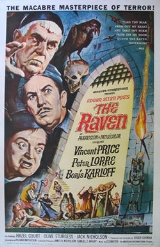
B-movie

Encyclopedia
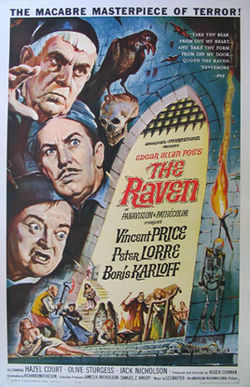
A B movie is a low-budget
Film budgeting
Film budgeting refers to the process by which a line producer, unit production manager or filmmaker prepares a budget for a film production. This document, which could be over 150 pages long, is used to secure financing for the film and lead to pre-production and production of the film. Multiple...
commercial motion picture
Film
A film, also called a movie or motion picture, is a series of still or moving images. It is produced by recording photographic images with cameras, or by creating images using animation techniques or visual effects...
that is not definitively an arthouse
Art film
An art film is the result of filmmaking which is typically a serious, independent film aimed at a niche market rather than a mass market audience...
or pornographic film. In its original usage, during the Golden Age of Hollywood, the term more precisely identified a film intended for distribution as the less-publicized, bottom half of a double feature
Double feature
The double feature, also known as a double bill, was a motion picture industry phenomenon in which theatre managers would exhibit two films for the price of one, supplanting an earlier format in which one feature film and various short subject reels would be shown.The double feature, also known as...
. Although the U.S. production of movies intended as second features largely ceased by the end of the 1950s, the term B movie continued to be used in the broader sense it maintains today. In its post–Golden Age usage, there is ambiguity on both sides of the definition: on the one hand, many B movies display a high degree of craft and aesthetic ingenuity; on the other, the primary interest of many inexpensive exploitation film
Exploitation film
Exploitation film is a type of film that is promoted by "exploiting" often lurid subject matter. The term "exploitation" is common in film marketing, used for all types of films to mean promotion or advertising. These films then need something to exploit, such as a big star, special effects, sex,...
s is prurient. In some cases, both may be true.
In either usage, most B movies represent a particular genre—the Western
Western (genre)
The Western is a genre of various visual arts, such as film, television, radio, literature, painting and others. Westerns are devoted to telling stories set primarily in the latter half of the 19th century in the American Old West, hence the name. Some Westerns are set as early as the Battle of...
was a Golden Age B movie staple, while low-budget science-fiction and horror
Horror film
Horror films seek to elicit a negative emotional reaction from viewers by playing on the audience's most primal fears. They often feature scenes that startle the viewer through the means of macabre and the supernatural, thus frequently overlapping with the fantasy and science fiction genres...
films became more popular in the 1950s. Early B movies were often part of series in which the star repeatedly played the same character. Almost always shorter than the top-billed films they were paired with, many had running times of 70 minutes or less. The term connoted a general perception that B movies were inferior to the more handsomely budgeted headliners; individual B films were often ignored by critics.
Latter-day B movies still sometimes inspire multiple sequel
Sequel
A sequel is a narrative, documental, or other work of literature, film, theatre, or music that continues the story of or expands upon issues presented in some previous work...
s, but series are less common. As the average running time of top-of-the-line films increased, so did that of B pictures. In its current usage, the term has somewhat contradictory connotations: it may signal an opinion that a certain movie is (a) a genre film with minimal artistic ambitions or (b) a lively, energetic film uninhibited by the constraints imposed on more expensive projects and unburdened by the conventions of putatively "serious" independent film
Independent film
An independent film, or indie film, is a professional film production resulting in a feature film that is produced mostly or completely outside of the major film studio system. In addition to being produced and distributed by independent entertainment companies, independent films are also produced...
. The term is also now used loosely to refer to some higher budgeted, mainstream films with exploitation-style content, usually in genres traditionally associated with the B movie.
From their beginnings to the present day, B movies have provided opportunities both for those coming up in the profession and others whose careers are waning. Celebrated filmmakers such as Anthony Mann
Anthony Mann
Anthony Mann was an American actor and film director, most notably of film noirs and Westerns. As a director, he often collaborated with the cinematographer John Alton and with James Stewart in his Westerns.-Biography:...
and Jonathan Demme
Jonathan Demme
Robert Jonathan Demme is an American filmmaker, producer and screenwriter. Best known for directing The Silence of the Lambs, which won him the Academy Award for Best Director, he has also directed the acclaimed movies Philadelphia, Rachel Getting Married, the Talking Heads concert movie Stop...
learned their craft in B movies. They are where actors such as John Wayne
John Wayne
Marion Mitchell Morrison , better known by his stage name John Wayne, was an American film actor, director and producer. He epitomized rugged masculinity and became an enduring American icon. He is famous for his distinctive calm voice, walk, and height...
and Jack Nicholson
Jack Nicholson
John Joseph "Jack" Nicholson is an American actor, film director, producer and writer. He is renowned for his often dark portrayals of neurotic characters. Nicholson has been nominated for an Academy Award twelve times, and has won the Academy Award for Best Actor twice: for One Flew Over the...
first became established, and they have provided work for former A movie actors, such as Vincent Price
Vincent Price
Vincent Leonard Price, Jr. was an American actor, well known for his distinctive voice and serio-comic attitude in a series of horror films made in the latter part of his career.-Early life and career:Price was born in St...
and Karen Black
Karen Black
Karen Black is an American actress, screenwriter, singer, and songwriter. She is noted for appearing in such films as Easy Rider, Five Easy Pieces, The Great Gatsby, Rhinoceros, The Day of the Locust, Nashville, Airport 1975, and Alfred Hitchcock's final film, Family Plot...
. Some actors, such as Béla Lugosi
Béla Lugosi
Béla Ferenc Dezső Blaskó , commonly known as Bela Lugosi, was a Hungarian actor of stage and screen. He was best known for having played Count Dracula in the Broadway play and subsequent film version, as well as having starred in several of Ed Wood's low budget films in the last years of his...
and Pam Grier
Pam Grier
Pamela Suzette "Pam" Grier is an American actress. She became famous in the early 1970s, after starring in a string of moderately successful women in prison and blaxploitation films such as 1974's Foxy Brown. Her career was revitalized in 1997 after her appearance in Quentin Tarantino's film...
, worked in B movies for most of their careers. The term B actor is sometimes used to refer to a performer who finds work primarily or exclusively in B pictures.
Roots of the B movie: 1920s
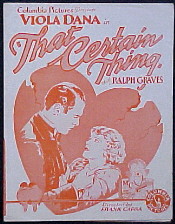
Silent film
A silent film is a film with no synchronized recorded sound, especially with no spoken dialogue. In silent films for entertainment the dialogue is transmitted through muted gestures, pantomime and title cards...
, the production cost of an average feature from a major Hollywood studio ranged from $190,000 at Fox
20th Century Fox
Twentieth Century Fox Film Corporation — also known as 20th Century Fox, or simply 20th or Fox — is one of the six major American film studios...
to $275,000 at MGM
Metro-Goldwyn-Mayer
Metro-Goldwyn-Mayer Inc. is an American media company, involved primarily in the production and distribution of films and television programs. MGM was founded in 1924 when the entertainment entrepreneur Marcus Loew gained control of Metro Pictures, Goldwyn Pictures Corporation and Louis B. Mayer...
. That average reflected both "specials" that might cost as much as and films made quickly for around $50,000. These cheaper films allowed the studios to derive maximum value from facilities and contracted staff in between a studio's more important productions, while also breaking in new personnel. Studios in the minor leagues of the industry, such as Columbia Pictures
Columbia Pictures
Columbia Pictures Industries, Inc. is an American film production and distribution company. Columbia Pictures now forms part of the Columbia TriStar Motion Picture Group, owned by Sony Pictures Entertainment, a subsidiary of the Japanese conglomerate Sony. It is one of the leading film companies...
and Film Booking Offices of America
Film Booking Offices of America
Film Booking Offices of America was an American film studio of the silent era, a producer and distributor of mostly low-budget films. The business began as Robertson-Cole , the American division of a British import–export company...
(FBO), focused on exactly those sort of cheap productions. Their movies, with relatively short running times, targeted theaters that had to economize on rental and operating costs, particularly small-town and urban neighborhood venues, or "nabes". Even smaller production houses, known as Poverty Row
Poverty Row
Poverty Row is a slang term used in Hollywood from the late silent period through the mid-fifties to refer to a variety of small and mostly short-lived B movie studios...
studios, made films whose costs might run as low as $3,000, seeking a profit through whatever bookings they could pick up in the gaps left by the larger concerns.
With the widespread arrival of sound film
Sound film
A sound film is a motion picture with synchronized sound, or sound technologically coupled to image, as opposed to a silent film. The first known public exhibition of projected sound films took place in Paris in 1900, but decades would pass before sound motion pictures were made commercially...
in American theaters in 1929, many independent exhibitors began dropping the then-dominant presentation model, which involved live acts and a broad variety of shorts
Short subject
A short film is any film not long enough to be considered a feature film. No consensus exists as to where that boundary is drawn: the Academy of Motion Picture Arts and Sciences defines a short film as "an original motion picture that has a running time of 40 minutes or less, including all...
before a single featured film. A new programming scheme developed that would soon become standard practice: a newsreel
Newsreel
A newsreel was a form of short documentary film prevalent in the first half of the 20th century, regularly released in a public presentation place and containing filmed news stories and items of topical interest. It was a source of news, current affairs and entertainment for millions of moviegoers...
, a short and/or a serial, and a cartoon
Animated cartoon
An animated cartoon is a short, hand-drawn film for the cinema, television or computer screen, featuring some kind of story or plot...
, followed by a double feature. The second feature, which actually screened before the main event, cost the exhibitor less per minute than the equivalent running time in shorts. The majors' "clearance" rules favoring their affiliated theaters prevented the independents' timely access to top-quality films; the second feature allowed them to promote quantity instead. The additional movie also gave the program "balance"—the practice of pairing different sorts of features suggested to potential customers that they could count on something of interest no matter what specifically was on the bill. The low-budget picture of the 1920s thus evolved into the second feature, the B movie, of Hollywood's Golden Age.
Bs in the Golden Age of Hollywood: 1930s
The major studiosStudio system
The studio system was a means of film production and distribution dominant in Hollywood from the early 1920s through the early 1960s. The term studio system refers to the practice of large motion picture studios producing movies primarily on their own filmmaking lots with creative personnel under...
, at first resistant to the double feature, soon adapted. All established B units to provide films for the expanding second-feature market. Block booking
Block booking
Block booking is a system of selling multiple films to a theater as a unit. Block booking was the prevailing practice among Hollywood's major studios from the turn of the 1930s until it was outlawed by the U.S. Supreme Court's decision in United States v. Paramount Pictures, Inc....
became standard practice: to get access to a studio's attractive A pictures, many theaters were obliged to rent the company's entire output for a season. With the B films rented at a flat fee (rather than the box office percentage basis of A films), rates could be set virtually guaranteeing the profitability of every B movie. The parallel practice of blind bidding
Block booking
Block booking is a system of selling multiple films to a theater as a unit. Block booking was the prevailing practice among Hollywood's major studios from the turn of the 1930s until it was outlawed by the U.S. Supreme Court's decision in United States v. Paramount Pictures, Inc....
largely freed the majors from worrying about their Bs' quality—even when booking in less than seasonal blocks, exhibitors had to buy most pictures sight unseen. The five largest studios—Metro-Goldwyn-Mayer
Metro-Goldwyn-Mayer
Metro-Goldwyn-Mayer Inc. is an American media company, involved primarily in the production and distribution of films and television programs. MGM was founded in 1924 when the entertainment entrepreneur Marcus Loew gained control of Metro Pictures, Goldwyn Pictures Corporation and Louis B. Mayer...
, Paramount Pictures
Paramount Pictures
Paramount Pictures Corporation is an American film production and distribution company, located at 5555 Melrose Avenue in Hollywood. Founded in 1912 and currently owned by media conglomerate Viacom, it is America's oldest existing film studio; it is also the last major film studio still...
, Fox Film Corporation (20th Century Fox
20th Century Fox
Twentieth Century Fox Film Corporation — also known as 20th Century Fox, or simply 20th or Fox — is one of the six major American film studios...
as of 1935), Warner Bros.
Warner Bros.
Warner Bros. Entertainment, Inc., also known as Warner Bros. Pictures or simply Warner Bros. , is an American producer of film and television entertainment.One of the major film studios, it is a subsidiary of Time Warner, with its headquarters in Burbank,...
, and RKO Radio Pictures (descendant of FBO)—also belonged to companies with sizable theater chains, further securing the bottom line.
Poverty Row studios, from modest outfits like Mascot Pictures, Tiffany Pictures, and Sono Art-World Wide Pictures
Sono Art-World Wide Pictures
Sono Art-World Wide Pictures was an American film distribution and production company that existed from 1927 to 1933. Among their feature films was The Great Gabbo starring Erich von Stroheim and directed by James Cruze for James Cruze Productions, Inc...
down to shoestring operations, made exclusively B movies, serials, and other shorts, and also distributed totally independent productions and imported films. In no position to directly block book, they mostly sold regional distribution exclusivity to "states rights" firms, which in turn peddled blocks of movies to exhibitors, typically six or more pictures featuring the same star (a relative status on Poverty Row). Two "major-minors"—Universal Studios
Universal Studios
Universal Pictures , a subsidiary of NBCUniversal, is one of the six major movie studios....
and rising Columbia Pictures—had production lines roughly similar to, though somewhat better endowed than, the top Poverty Row studios. In contrast to the Big Five majors, Universal and Columbia had few or no theaters, though they did have top-rank film distribution
Film distribution
The distribution of a film is the process through which a movie is made available to watch for an audience by a film distributor...
exchanges.
In the standard Golden Age model, the industry's top product, the A films, premiered at a small number of select first-run houses in major cities. Double features were not the rule at these prestigious venues. As described by historian Edward Jay Epstein, "During these first runs, films got their reviews, garnered publicity, and generated the word of mouth that served as the principal form of advertising." Then it was off to the subsequent-run market where the double feature prevailed. At the larger local venues controlled by the majors, movies might turn over on a weekly basis. At the thousands of smaller, independent theaters, programs often changed two or three times a week. To meet the constant demand for new B product, the low end of Poverty Row turned out a stream of micro-budget movies rarely much more than sixty minutes long; these were known as "quickies" for their tight production schedules—as short as four days. As Brian Taves describes, "Many of the poorest theaters, such as the 'grind houses' in the larger cities, screened a continuous program emphasizing action with no specific schedule, sometimes offering six quickies for a nickel in an all-night show that changed daily." Many small theaters never saw a big-studio A film, getting their movies from the states rights concerns that handled almost exclusively Poverty Row product. Millions of Americans went to their local theaters as a matter of course: for an A picture, along with the trailers
Trailer (film)
A trailer or preview is an advertisement or a commercial for a feature film that will be exhibited in the future at a cinema. The term "trailer" comes from their having originally been shown at the end of a feature film screening. That practice did not last long, because patrons tended to leave the...
, or screen previews, that presaged its arrival, "[t]he new film's title on the marquee and the listings for it in the local newspaper constituted all the advertising most movies got", writes Epstein. Aside from at the theater itself, B films might not be advertised at all.
The introduction of sound had driven costs higher: by 1930, the average U.S. feature film cost $375,000 to produce. A broad range of motion pictures occupied the B category. The leading studios made not only clear-cut A and B films, but also movies classifiable as "programmers" (also known as "in-betweeners" or "intermediates"). As Taves describes, "Depending on the prestige of the theater and the other material on the double bill, a programmer could show up at the top or bottom of the marquee." On Poverty Row, many Bs were made on budgets that would have barely covered petty cash on a major's A film, with costs at the bottom of the industry running as low as $5,000. By the mid-1930s, the double feature was the dominant U.S. exhibition model, and the majors responded. In 1935, B movie production at Warner Bros. was raised from 12 to 50 percent of studio output. The unit was headed by Bryan Foy, known as the "Keeper of the Bs." At Fox, which also shifted half of its production line into B territory, Sol M. Wurtzel
Sol M. Wurtzel
Sol M. Wurtzel was an American motion picture producer.Born in New York City, New York, Sol M. Wurtzel worked as an executive assistant to William Fox, founding owner of the Fox Film Corporation. In 1917, Fox sent him to California to oversee the studio's West Coast productions...
was similarly in charge of more than twenty movies a year during the late 1930s.
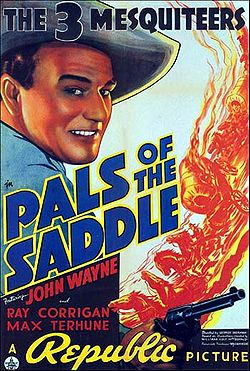
Monogram Pictures
Monogram Pictures Corporation is a Hollywood studio that produced and released films, most on low budgets, between 1931 and 1953, when the firm completed a transition to the name Allied Artists Pictures Corporation. Monogram is considered a leader among the smaller studios sometimes referred to...
early in the decade. In 1935, Monogram, Mascot, and several smaller studios merged to establish Republic Pictures
Republic Pictures
Republic Pictures was an independent film production-distribution corporation with studio facilities, operating from 1934 through 1959, and was best known for specializing in westerns, movie serials and B films emphasizing mystery and action....
. The former heads of Monogram soon sold off their Republic shares and set up a new Monogram production house. Into the 1950s, most Republic and Monogram product was roughly on par with the low end of the majors' output. Less sturdy Poverty Row concerns—with a penchant for grand sobriquets like Conquest, Empire, Imperial, and Peerless—continued to churn out dirt-cheap quickies. Joel Finler has analyzed the average length of feature releases in 1938, indicating the studios' relative emphasis on B production (United Artists
United Artists
United Artists Corporation is an American film studio. The original studio of that name was founded in 1919 by D. W. Griffith, Charles Chaplin, Mary Pickford and Douglas Fairbanks....
produced little, focusing on the distribution of prestigious films from independent outfits; Grand National
Grand National Films Inc.
Grand National Films, Inc or Grand National Pictures was an American motion picture company in operation from 1936-1939. The company has no relation to the British Grand National Pictures.-History and releases:...
, active 1936–40, occupied an analogous niche on Poverty Row, releasing mostly independent productions):
| Studio | Category | Avg. duration |
|---|---|---|
| MGM | Big Five | 87.9 minutes |
| Paramount | Big Five | 76.4 minutes |
| 20th Century-Fox | Big Five | 75.3 minutes |
| Warner Bros. | Big Five | 75.0 minutes |
| RKO | Big Five | 74.1 minutes |
| United Artists | Little Three | 87.6 minutes |
| Columbia | Little Three | 66.4 minutes |
| Universal | Little Three | 66.4 minutes |
| Grand National | Poverty Row | 63.6 minutes |
| Republic | Poverty Row | 63.1 minutes |
| Monogram | Poverty Row | 60.0 minutes |
Taves estimates that half of the films produced by the eight majors in the 1930s were B movies. Calculating in the three hundred or so films made annually by the many Poverty Row firms, approximately 75 percent of Hollywood movies from the decade, more than four thousand pictures, are classifiable as Bs.
The Western was by far the predominant B genre in both the 1930s and, to a lesser degree, the 1940s. Film historian Jon Tuska has argued that "the 'B' product of the Thirties—the Universal films with [Tom] Mix
Tom Mix
Thomas Edwin "Tom" Mix was an American film actor and the star of many early Western movies. He made a reported 336 films between 1910 and 1935, all but nine of which were silent features...
, [Ken] Maynard
Ken Maynard
Ken Maynard was an American motion picture stuntman and actor.-Biography:Born Kenneth Olin Maynard in Vevay, Indiana, he was one of five children. His younger brother, Kermit Maynard, also became a stuntman and actor....
, and [Buck] Jones
Buck Jones
Buck Jones was an American motion picture star of the 1920s, 1930s, and 1940s, best known for his work starring in many popular western movies...
, the Columbia features with Buck Jones and Tim McCoy
Tim McCoy
Col. Tim McCoy was an American actor, military officer, and expert on American Indian life and customs.-Early years:...
, the RKO George O'Brien series, the Republic Westerns with John Wayne
John Wayne
Marion Mitchell Morrison , better known by his stage name John Wayne, was an American film actor, director and producer. He epitomized rugged masculinity and became an enduring American icon. He is famous for his distinctive calm voice, walk, and height...
and the Three Mesquiteers
The Three Mesquiteers
The Three Mesquiteers is the umbrella title for a series of 51 western B-movies released between 1936 and 1943, including 8 films starring John Wayne...
... achieved a uniquely American perfection of the well-made story." At the far end of the industry, Poverty Row's Ajax put out oaters starring Harry Carey, then in his fifties. The Weiss outfit had the Range Rider series, the American Rough Rider series, and the Morton of the Mounted "northwest action thrillers." One low-budget oater of the era, made totally outside the studio system, profited from an outrageous concept: a Western with an all-midget cast, The Terror of Tiny Town
The Terror of Tiny Town
The Terror of Tiny Town is a 1938 American film produced by Jed Buell, directed by Sam Newfield, and starring Billy Curtis. It is the world's only musical Western with an all-midget cast....
(1938) was such a success in its independent bookings that Columbia picked it up for distribution.
Series of various genres, featuring recurrent, title-worthy characters or name actors in familiar roles, were particularly popular during the first decade of sound film. Fox's many B series, for instance, included Charlie Chan
Charlie Chan
Charlie Chan is a fictional Chinese-American detective created by Earl Derr Biggers in 1919. Loosely based on Honolulu detective Chang Apana, Biggers conceived of the benevolent and heroic Chan as an alternative to Yellow Peril stereotypes, such as villains like Fu Manchu...
mysteries, Ritz Brothers
Ritz Brothers
The Ritz Brothers were an American comedy team who appeared in films, and as live performers from 1925 to the late 1960s.Although there were four brothers, the sons of Austrian-born haberdasher Max Joachim and his wife Pauline, only three of them performed together. There was also a sister,...
comedies, and musicals with child star Jane Withers
Jane Withers
Jane Withers is an American actress best known for being one of the most popular child film stars of the 1930s and early 1940s, as well as for her portrayal of "Josephine the Plumber" in a series of TV commercials for Comet cleanser in the 1960s and early 1970s.-Biography:Withers began her career...
. These series films are not to be confused with the short, cliffhanger
Cliffhanger
A cliffhanger or cliffhanger ending is a plot device in fiction which features a main character in a precarious or difficult dilemma, or confronted with a shocking revelation at the end of an episode of serialized fiction...
-structured serials that sometimes appeared on the same program. As with serials, however, many series were intended to attract young people—a theater that twin-billed part-time might run a "balanced" or entirely youth-oriented double feature as a matinee and then a single film for a more mature audience at night. In the words of one industry report, afternoon moviegoers, "composed largely of housewives and children, want quantity for their money while the evening crowds want 'something good and not too much of it.'" Series films are often unquestioningly consigned to the B movie category, but even here there is ambiguity: at MGM, for example, popular series like the Andy Hardy
Andy Hardy
Andy Hardy was a fictional character played by Mickey Rooney in an MGM film series from 1937 to 1958. Spanning over 20 years, the 16 movies were based on characters in the play Skidding by Aurania Rouverol....
chronicles had leading stars and budgets that would have been A-level at some of the lesser majors. For many series, even a lesser major's standard B budget was far out of reach: Poverty Row's Consolidated Pictures featured Tarzan, the Police Dog in a series with the proud name of Melodramatic Dog Features.
Bs in the Golden Age of Hollywood: 1940s
By 1940, the average production cost of an American feature was $400,000, a negligible increase over ten years. A number of small Hollywood companies had folded around the turn of the decade, including the ambitious Grand NationalGrand National Films Inc.
Grand National Films, Inc or Grand National Pictures was an American motion picture company in operation from 1936-1939. The company has no relation to the British Grand National Pictures.-History and releases:...
, but a new firm, Producers Releasing Corporation
Producers Releasing Corporation
Producers Releasing Corporation was one of the more lower-end Hollywood film studios on Poverty Row from the late '30s to the mid-'40s. PRC, as it was commonly known, made low-budget B-movies for the lower-half of a double bill. A few of its films have gained a respectable reputation over the...
(PRC), emerged as third in the Poverty Row hierarchy behind Republic and Monogram. The double feature, never universal, was still the prevailing exhibition model: in 1941, 50 percent of theaters were double-billing exclusively, and others employed the policy part-time. In the early 1940s, legal pressure forced the studios to replace seasonal block booking with packages generally limited to five pictures. Restrictions were also placed on the majors' ability to enforce blind bidding. These were crucial factors in the progressive shift by most of the Big Five over to A-film production, making the smaller studios even more important as B movie suppliers. Genre pictures made at very low cost remained the backbone of Poverty Row, with even Republic's and Monogram's budgets rarely climbing over $200,000. Many smaller Poverty Row firms folded as the eight majors, with their proprietary distribution exchanges, now commanded about 95 percent of U.S. and Canadian box office receipts. In 1946, independent producer David O. Selznick
David O. Selznick
David O. Selznick was an American film producer. He is best known for having produced Gone with the Wind and Rebecca , both of which earned him an Oscar for Best Picture.-Early years:...
brought his bloated-budget spectacle Duel in the Sun to market with heavy nationwide promotion and wide release. The distribution strategy was a major success, despite what was widely perceived as the movie's poor quality. The Duel release anticipated practices that fueled the B movie industry in the late 1950s; when the top Hollywood studios made them standard two decades after that, the B movie would be hard hit.
Considerations beside cost made the line between A and B movies ambiguous. Films shot on B-level budgets were occasionally marketed as A pictures or emerged as sleeper hit
Sleeper hit
A sleeper hit, a.k.a. surprise hit , refers to a film, book, single, album, TV show, or video game that gains unexpected success or recognition...
s: One of 1943's biggest films was Hitler's Children
Hitler's Children (film)
Hitler's Children is a 1943 American black-and-white propaganda film made by RKO Radio Pictures. It was directed by Edward Dmytryk and Irving Reis from an adaptation by Emmet Lavery of Gregor Ziemer's book Education For Death....
, an RKO thriller made for a fraction over $200,000. It earned more than in rentals, industry language for a distributor's share of gross box office
Box office
A box office is a place where tickets are sold to the public for admission to an event. Patrons may perform the transaction at a countertop, through an unblocked hole through a wall or window, or at a wicket....
receipts. Particularly in the realm of film noir
Film noir
Film noir is a cinematic term used primarily to describe stylish Hollywood crime dramas, particularly those that emphasize cynical attitudes and sexual motivations. Hollywood's classic film noir period is generally regarded as extending from the early 1940s to the late 1950s...
, A pictures sometimes echoed visual styles generally associated with cheaper films. Programmers, with their flexible exhibition role, were ambiguous by definition. As late as 1948, the double feature remained a popular exhibition mode—it was standard policy at 25 percent of theaters and used part-time at an additional 36 percent. The leading Poverty Row firms began to broaden their scope: In 1947, Monogram established a subsidiary, Allied Artists, to develop and distribute relatively expensive films, mostly from independent producers. Around the same time, Republic launched a similar effort under the "Premiere" rubric. In 1947 as well, PRC was subsumed by Eagle-Lion
Eagle-Lion Films
Eagle-Lion Films was a British film production company owned by J. Arthur Rank intended to release British productions in the United States. In 1947 it acquired PRC Pictures, a small American production company, to produce B Pictures to accompany the British releases...
, a British company seeking entry to the American market. Warners' former Keeper of the Bs, Brian Foy, was installed as production chief.
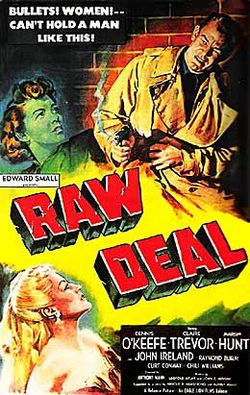
Val Lewton
Val Lewton was an American film producer and screenwriter, best known for a string of low-budget horror films he produced for RKO Pictures in the 1940s.-Early life:...
's horror unit at RKO. Lewton produced such moody, mysterious films as Cat People (1942), I Walked with a Zombie
I Walked with a Zombie
I Walked with a Zombie is a 1943 horror film directed by Jacques Tourneur. It was the second horror film from producer Val Lewton for RKO Pictures; the first was the very successful Cat People, also directed by Tourneur...
(1943), and The Body Snatcher
The Body Snatcher (film)
The Body Snatcher is a 1945 horror film directed by Robert Wise based on the short story The Body Snatcher by Robert Louis Stevenson. The film's producer Val Lewton helped adapt the story for the screen, writing under the pen name of "Carlos Keith". The film was marketed with the tagline The...
(1945), directed by Jacques Tourneur
Jacques Tourneur
Jacques Tourneur was a French-American film director.-Life:Born in Paris, France, he was the son of film director Maurice Tourneur. At age 10, Jacques moved to the United States with his father. He started a career in cinema while still attending high school as an extra and later as a script clerk...
, Robert Wise
Robert Wise
Robert Earl Wise was an American sound effects editor, film editor, film producer and director...
, and others who would become renowned only later in their careers or entirely in retrospect. The movie now widely described as the first classic film noir—Stranger on the Third Floor
Stranger on the Third Floor
Stranger on the Third Floor is a film noir thriller, featuring Peter Lorre, co-written by Nathaniel West, and released by RKO Radio Pictures. The picture was directed by Boris Ingster....
(1940), a 64-minute B—was produced at RKO, which would release many additional melodramatic thrillers in a similarly stylish vein. The other major studios also turned out a considerable number of movies now identified as noir during the 1940s. Though many of the best-known film noirs were A-level productions, most 1940s pictures in the mode were either of the ambiguous programmer type or destined straight for the bottom of the bill. In the decades since, these cheap entertainments, generally dismissed at the time, have become some of the most treasured products of Hollywood's Golden Age.
In one sample year, 1947, RKO produced along with several noir programmers and A pictures, two straight B noirs: Desperate
Desperate (film)
-Plot:Steve Randall is an independent trucker who is hired by an old friend to haul some freight. Only when Steve arrives at the warehouse, does he realize that what he has been hired to haul away is stolen goods. A cop is killed when they bust in during the delivery.Later, after kidnapping Steve,...
and The Devil Thumbs a Ride
The Devil Thumbs a Ride
The Devil Thumbs a Ride is a 1947 suspense film, considered to be film noir, starring Lawrence Tierney.-Plot:Steve Morgan , a charming but utterly sociopathic criminal who has just robbed and killed a cinema cashier, gets a ride with unsuspecting Jimmy 'Fergie' Ferguson , who does not know that...
. Ten B noirs that year came from Poverty Row's big three—Republic, Monogram, and PRC/Eagle-Lion—and one came from tiny Screen Guild. Three majors beside RKO contributed a total of five more. Along with these eighteen unambiguous B noirs, an additional dozen or so noir programmers came out of Hollywood. Still, most of the majors' low-budget production remained the sort now largely ignored. RKO's representative output included the Mexican Spitfire
Lupe Vélez
Lupe Vélez was a Mexican film actress. Vélez began her career in Mexico as a dancer, before moving to the U.S. where she worked in vaudeville. She was seen by Fanny Brice who promoted her, and Vélez soon entered films, making her first appearance in 1924. By the end of the decade she had...
and Lum and Abner
Lum and Abner
Lum and Abner was an American radio comedy network program created by Chester Lauck and Norris Goff that aired from 1931 to 1954. Modeled on life in the small town of Waters, Arkansas, near where Lauck and Goff grew up, the showed proved immensely popular...
comedy series, thrillers featuring the Saint
Simon Templar
Simon Templar is a British fictional character known as The Saint featured in a long-running series of books by Leslie Charteris published between 1928 and 1963. After that date, other authors collaborated with Charteris on books until 1983; two additional works produced without Charteris’s...
and the Falcon
The Falcon (literary character)
The character of Gay Stanhope Falcon, also known simply as The Falcon, was created in 1940 by Michael Arlen in his short story, "Gay Falcon", which was first published in 1940 in Town & Country magazine...
, Westerns starring Tim Holt
Tim Holt
Tim Holt was an American film actor perhaps best known for co-starring in the 1948 film The Treasure of the Sierra Madre.-Early life:...
, and Tarzan
Tarzan
Tarzan is a fictional character, an archetypal feral child raised in the African jungles by the Mangani "great apes"; he later experiences civilization only to largely reject it and return to the wild as a heroic adventurer...
movies with Johnny Weissmuller
Johnny Weissmuller
Johnny Weissmuller was an Austro-Hungarian-born American swimmer and actor best known for playing Tarzan in movies. Weissmuller was one of the world's best swimmers in the 1920s, winning five Olympic gold medals and one bronze medal. He won fifty-two US National Championships and set sixty-seven...
. Jean Hersholt
Jean Hersholt
Jean Pierre Hersholt was a Danish-born actor who lived in the United States, where he was a leading film and radio talent, best known for his 17 years starring on radio in Dr. Christian and for playing Shirley Temple's grandfather in Heidi...
played Dr. Christian
Dr. Christian
Dr. Christian was a long-running radio series with Jean Hersholt in the title role. It aired on CBS from 1937 to 1954.After Hersholt portrayed the character Dr. John Luke, based on Dr. Allan Roy Dafoe, the obstetrician who delivered and cared for the Dionne Quintuplets, in the 20th Century Fox...
in six films between 1939 and 1941. The Courageous Dr. Christian
The Courageous Dr. Christian
- Cast :*Jean Hersholt as Dr. Paul Christian*Dorothy Lovett as Judy Price*Robert Baldwin as Roy Davis*Tom Neal as Dave Williams*Maude Eburne as Mrs. Hastings*Vera Lewis as Mrs...
(1940) was a standard entry: "In the course of an hour or so of screen time, the saintly physician managed to cure an epidemic of spinal meningitis, demonstrate benevolence towards the disenfranchised, set an example for wayward youth, and calm the passions of an amorous old maid."
Down in Poverty Row, low budgets led to less palliative fare. Republic aspired to major-league respectability while making many cheap and modestly budgeted Westerns, but there was not much from the bigger studios that compared with Monogram "exploitation pictures
Exploitation film
Exploitation film is a type of film that is promoted by "exploiting" often lurid subject matter. The term "exploitation" is common in film marketing, used for all types of films to mean promotion or advertising. These films then need something to exploit, such as a big star, special effects, sex,...
" like juvenile delinquency
Juvenile delinquency
Juvenile delinquency is participation in illegal behavior by minors who fall under a statutory age limit. Most legal systems prescribe specific procedures for dealing with juveniles, such as juvenile detention centers. There are a multitude of different theories on the causes of crime, most if not...
exposé
Investigative journalism
Investigative journalism is a form of journalism in which reporters deeply investigate a single topic of interest, often involving crime, political corruption, or corporate wrongdoing. An investigative journalist may spend months or years researching and preparing a report. Investigative journalism...
Where Are Your Children? (1943) and the prison film Women in Bondage
Women in Bondage
Women in Bondage is a 1943 World War II film about conditions for women under Hitler's regime. The plot involves two women imprisoned for speaking out against the government...
(1943). In 1947, PRC's The Devil on Wheels brought together teenagers, hot rods, and death. The little studio had its own house auteur: with his own crew and relatively free rein, director Edgar G. Ulmer was known as "the Capra of PRC". Ulmer made films of every generic stripe: His Girls in Chains was released in May 1943, six months before Women in Bondage; by the end of the year, Ulmer had also made the teen-themed musical Jive Junction as well as Isle of Forgotten Sins, a South Seas adventure set around a brothel.
Transition I/The B movie in the television age: 1950s
In 1948, a Supreme Court ruling in a federal antitrust suit against the majorsUnited States v. Paramount Pictures, Inc.
United States v. Paramount Pictures, Inc., 334 US 131 was a landmark United States Supreme Court anti-trust case that decided the fate of movie studios owning their own theatres and holding exclusivity rights on which theatres would...
outlawed block booking and led to the Big Five divesting their theater chains. With audiences draining away to television and studios scaling back production schedules, the classic double feature vanished from many American theaters during the 1950s. The major studios promoted the benefits of recycling, offering former headlining movies as second features in the place of traditional B films. With television airing many classic Westerns as well as producing its own original Western series, the cinematic market for B oaters in particular was drying up. After barely inching forward in the 1930s, the average U.S. feature production cost had essentially doubled over the 1940s, reaching by the turn of the decade—a 93 percent rise after adjusting for inflation.
The first prominent victim of the changing market was Eagle-Lion, which released its last films in 1951. By 1953, the old Monogram brand had disappeared, the company having adopted the identity of its higher-end subsidiary, Allied Artists. The following year, Allied released Hollywood's last B series Westerns. Non-series B Westerns continued to appear for a few more years, but Republic Pictures, long associated with cheap sagebrush sagas, was out of the filmmaking business by decade's end. In other genres, Universal kept its Ma and Pa Kettle
Ma and Pa Kettle
Ma and Pa Kettle are comic film characters of the successful film series of the same name, produced by Universal Studios, in the late '40s and '50s. They are a hillbilly couple with fifteen children whose lives turn upside-down when they win a model-home-of-the-future in a slogan-writing contest...
series going through 1957, while Allied Artists stuck with the Bowery Boys until 1958. RKO, weakened by years of mismanagement, exited the movie industry in 1957. Hollywood's A product was getting longer—the top ten box-office releases of 1940 had averaged 112.5 minutes; the average length of 1955's top ten was 123.4. In their modest way, the Bs were following suit. The age of the hour-long feature film was past; 70 minutes was now roughly the minimum. While the Golden Age–style second feature was dying, B movie was still used to refer to any low-budget genre film featuring relatively unheralded performers (sometimes referred to as B actors). The term retained its earlier suggestion that such movies relied on formulaic plots, "stock" character types, and simplistic action or unsophisticated comedy. At the same time, the realm of the B movie was becoming increasingly fertile territory for experimentation, both serious and outlandish.
Ida Lupino
Ida Lupino
Ida Lupino was an English-born film actress and director, and a pioneer among women filmmakers. In her 48-year career, she appeared in 59 films and directed seven others, mostly in the United States. She appeared in serial television programmes 58 times and directed 50 other episodes...
, well known as an actress, established herself as Hollywood's sole female director of the era. In short, low-budget pictures made for her production company, The Filmakers, Lupino explored virtually taboo subjects such as rape in 1950's Outrage and 1953's self-explanatory The Bigamist. Her most famous directorial effort, The Hitch-Hiker
The Hitch-Hiker (1953 film)
The Hitch-Hiker is a film noir directed by Ida Lupino about two fishing buddies who pick up a mysterious hitchhiker during a trip to Mexico....
, a 1953 RKO release, is the only example of film noir's classic period directed by a woman. That year, RKO put out another historically notable film made at low cost: Split Second
Split Second (1953 film)
Split Second is a 1953 thriller film about escaped convicts and their hostages holed up in a ghost town, unaware of the grave danger they are in. It starred Stephen McNally, Alexis Smith, Jan Sterling, and Keith Andes.-Plot:...
, which concludes in a nuclear test range, is perhaps the first "atomic noir". The most famous such movie, the independently produced Kiss Me Deadly
Kiss Me Deadly
Kiss Me Deadly is a 1955 film noir drama produced and directed by Robert Aldrich starring Ralph Meeker. The screenplay was written by A.I. Bezzerides, based on the Mickey Spillane Mike Hammer mystery novel Kiss Me, Deadly. Kiss Me Deadly is often considered a classic of the noir genre. The film...
(1955), typifies the persistently murky middle ground between the A and B picture, as Richard Maltby describes: a "programmer capable of occupying either half of a neighbourhood theatre's double-bill, [it was] budgeted at approximately $400,000. [Its] distributor, United Artists, released around twenty-five programmers with production budgets between $100,000 and $400,000 in 1955." The film's length, 106 minutes, is A level, but its star, Ralph Meeker
Ralph Meeker
Ralph Meeker was an American stage and film actor best-known for starring in the 1953 Broadway production of Picnic, and in the 1955 film noir cult classic Kiss Me Deadly.-Career:...
, had previously appeared in only one major film. Its source is pure pulp
Pulp magazine
Pulp magazines , also collectively known as pulp fiction, refers to inexpensive fiction magazines published from 1896 through the 1950s. The typical pulp magazine was seven inches wide by ten inches high, half an inch thick, and 128 pages long...
, one of Mickey Spillane
Mickey Spillane
Frank Morrison Spillane , better known as Mickey Spillane, was an American author of crime novels, many featuring his signature detective character, Mike Hammer. More than 225 million copies of his books have sold internationally...
's Mike Hammer
Mike Hammer
Michael "Mike" Hammer is a fictional detective created by the American author Mickey Spillane in the 1947 book I, the Jury .-Description:...
novels, but Robert Aldrich
Robert Aldrich
Robert Aldrich was an American film director, writer and producer, notable for such films as Kiss Me Deadly , The Big Knife , What Ever Happened to Baby Jane? , Hush… Hush, Sweet Charlotte , The Flight of the Phoenix , The Dirty Dozen , and The Longest Yard .-Biography:Robert...
's direction is self-consciously aestheticized. The result is a brutal genre picture that also evokes contemporary anxieties about what was often spoken of simply as the Bomb.
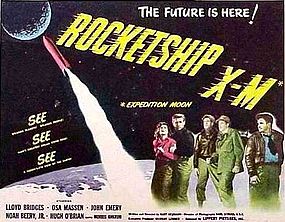
William Alland
William Alland was an American actor, producer, writer and director of science fiction and western films. He is perhaps best known for his role as reporter Jerry Thompson, who investigates the life of newspaper tycoon Charles Foster Kane in Orson Welle's Citizen Kane...
at Universal (e.g., Creature from the Black Lagoon
Creature from the Black Lagoon
Creature from the Black Lagoon is a 1954 monster horror film directed by Jack Arnold, and starring Richard Carlson, Julia Adams, Richard Denning, Antonio Moreno, and Whit Bissell. The eponymous creature was played by Ben Chapman on land and Ricou Browning in underwater scenes...
[1954]) and Sam Katzman
Sam Katzman
Sam Katzman was an American film producer and director. Born into a poor Jewish family, Katzman went to work as a stage laborer at the age of 13 in the fledgling East Coast film industry...
at Columbia (e.g., It Came from Beneath the Sea
It Came from Beneath the Sea
It Came from Beneath the Sea is an American science fiction film produced by Sam Katzman and Charles Schneer for Columbia Pictures, from a script by George Worthing Yates designed to showcase the special model-animated effects of Ray Harryhausen. It was directed by Robert Gordon and stars Kenneth...
[1955])—provided little more than thrills, though their special effects could be impressive. But these were genres whose fantastic nature could also be used as cover for mordant cultural observations often difficult to make in mainstream movies. Director Don Siegel
Don Siegel
Donald Siegel was an influential American film director and producer. His name variously appeared in the credits of his films as both Don Siegel and Donald Siegel.-Early life:...
's Invasion of the Body Snatchers
Invasion of the Body Snatchers (1956 film)
Invasion of the Body Snatchers is a 1956 US-American science fiction film directed by Don Siegel, starring Kevin McCarthy and Dana Wynter. Daniel Mainwaring adapted the screenplay from Jack Finney's novel The Body Snatchers...
(1956), released by Allied Artists, treats conformist pressures and the evil of banality in haunting, allegorical fashion. The Amazing Colossal Man
The Amazing Colossal Man
The Amazing Colossal Man is a 1957 black-and-white science fiction film, directed by Bert I. Gordon and starring Glenn Langan. The film revolves around a 60 foot mutant man produced as the result of an atomic accident....
(1957), directed by Bert I. Gordon
Bert I. Gordon
Bert I. Gordon is an American film director most famous for such science fiction and horror B-movies as The Amazing Colossal Man and Village of the Giants....
, is both a monster movie that happens to depict the horrific effects of radiation exposure and "a ferocious cold-war fable [that] spins Korea
Korean War
The Korean War was a conventional war between South Korea, supported by the United Nations, and North Korea, supported by the People's Republic of China , with military material aid from the Soviet Union...
, the army's obsessive secrecy, and America's post-war growth into one fantastic whole."
The Amazing Colossal Man was released by a new company whose name was much bigger than its budgets. American International Pictures
American International Pictures
American International Pictures was a film production company formed in April 1956 from American Releasing Corporation by James H. Nicholson, former Sales Manager of Realart Pictures, and Samuel Z. Arkoff, an entertainment lawyer...
(AIP), founded in 1956 by James H. Nicholson
James H. Nicholson
James Harvey Nicholson was an American film producer. He is best known as the co-founder, with Samuel Z. Arkoff, of American International Pictures.-Biography:...
and Samuel Z. Arkoff
Samuel Z. Arkoff
Samuel Zachary Arkoff was an American producer of B movies.-Life and career:Born in Fort Dodge, Iowa to a Russian Jewish family, Arkoff first studied to be a lawyer. Along with business partner James H. Nicholson and producer-director Roger Corman, he produced eighteen films...
in a reorganization of their American Releasing Corporation (ARC), soon became the leading U.S. studio devoted entirely to B-cost productions. American International helped keep the original-release double bill alive through paired packages of its films: these movies were low-budget, but instead of a flat rate, they were rented out on a percentage basis, like A films. The success of I Was a Teenage Werewolf
I Was a Teenage Werewolf
I Was a Teenage Werewolf is a 1957 horror film starring Michael Landon as a troubled teenager and Whit Bissell as the primary adult. It was co-written and produced by cult film producer Herman Cohen, and was one of the most successful films released by American International Pictures...
(1957) thus brought AIP a large return—made for about $100,000, it grossed more than . As the film's title suggests, the studio relied on both fantastic genre subjects and new, teen-oriented angles. When Hot Rod Gang (1958) turned a profit, hot rod horror was given a try: Ghost of Dragstrip Hollow (1959). David Cook credits AIP with leading the way "in demographic exploitation
Market segment
Market segmentation is a concept in economics and marketing. A market segment is a sub-set of a market made up of people or organizations with one or more characteristics that cause them to demand similar product and/or services based on qualities of those products such as price or function...
, target market
Target market
A target market is a group of customers that the business has decided to aim its marketing efforts and ultimately its merchandise. A well-defined target market is the first element to a marketing strategy...
ing, and saturation booking, all of which would become standard procedure for the majors in planning and releasing their mass-market 'event' films" by the late 1970s. In terms of content, the majors were already there, with "J.D.
Juvenile delinquency
Juvenile delinquency is participation in illegal behavior by minors who fall under a statutory age limit. Most legal systems prescribe specific procedures for dealing with juveniles, such as juvenile detention centers. There are a multitude of different theories on the causes of crime, most if not...
" movies such as Warner Bros.' Untamed Youth
Untamed Youth
Untamed Youth is a 1957 film starring Mamie Van Doren and released by Warner Bros. The film has been featured on an episode of Mystery Science Theater 3000.-Plot:...
(1957) and MGM's High School Confidential
High School Confidential (film)
High School Confidential is a 1958 crime drama film directed by Jack Arnold. It stars Mamie Van Doren, Russ Tamblyn, Jan Sterling, John Drew Barrymore, Jackie Coogan. The film also features a cameo by Jerry Lee Lewis who opens the movie singing a song of the same name, which Lewis co-wrote with Ron...
(1958), both starring Mamie Van Doren
Mamie Van Doren
Mamie Van Doren is an American actress and singer; who rose to popularity as Universal Pictures's version of 20th Century Fox's Marilyn Monroe....
.
In 1954, a young filmmaker named Roger Corman
Roger Corman
Roger William Corman is an American film producer, director and actor. He has mostly worked on low-budget B movies. Some of Corman's work has an established critical reputation, such as his cycle of films adapted from the tales of Edgar Allan Poe, and in 2009 he won an Honorary Academy Award for...
received his first screen credits as writer and associate producer of Allied Artists' Highway Dragnet
Highway Dragnet
Highway Dragnet is a 1954 crime drama film directed by Nathan Juran, based on story by U.S. Anderson and Roger Corman. The film stars Richard Conte, Joan Bennett and Wanda Hendrix. It tells the story of a former Korean War-era Marine, who hitches a ride with a female fashion photographer and her...
. Corman soon independently produced his first movie, Monster from the Ocean Floor
Monster from the Ocean Floor
Monster from the Ocean Floor is a science fiction film about a sea monster that terrorizes Mexico. The film was directed by Wyott Ordung and starred Anne Kimbell and Stuart Wade. Wade also starred in other low-budget films during the decade including Tarantula , and Teenage Monster . Producer...
, on a $12,000 budget and a six-day shooting schedule. Among the six films he worked on in 1955, Corman produced and directed the first official ARC release, Apache Woman
Apache Woman
-Copyright:Copyright in and to this motion picture is currently held by Susan Nicholson Hofheinz ....
, and Day the World Ended
Day the World Ended
Day the World Ended was the fourth film directed by Roger Corman. Rick is a heroic scientist who, among others, must face off against a mutant monster after an atomic war destroys human civilization...
, half of Arkoff and Nicholson's first twin-bill package. Corman would go on to direct over fifty feature films through 1990. As of 2007, he remained active as a producer, with more than 350 movies to his credit. Often referred to as the "King of the Bs", Corman has said that "to my way of thinking, I never made a 'B' movie in my life", as the traditional B movie was dying out when he began making pictures. He prefers to describe his metier as "low-budget exploitation films". In later years Corman, both with AIP and as head of his own companies, would help launch the careers of Francis Ford Coppola
Francis Ford Coppola
Francis Ford Coppola is an American film director, producer and screenwriter. He is widely acclaimed as one of Hollywood's most innovative and influential film directors...
, Jonathan Demme
Jonathan Demme
Robert Jonathan Demme is an American filmmaker, producer and screenwriter. Best known for directing The Silence of the Lambs, which won him the Academy Award for Best Director, he has also directed the acclaimed movies Philadelphia, Rachel Getting Married, the Talking Heads concert movie Stop...
, Robert Towne
Robert Towne
Robert Towne is an American screenwriter and director. His most notable work may be his Academy Award-winning original screenplay for Roman Polanski's Chinatown .-Film:...
, and Robert De Niro
Robert De Niro
Robert De Niro, Jr. is an American actor, director and producer. His first major film roles were in Bang the Drum Slowly and Mean Streets, both in 1973...
, among many others.
In the late 1950s, William Castle
William Castle
William Castle was an American film director, producer, screenwriter, and actor. Castle was known for directing films with many gimmicks which were ambitiously promoted, despite being reasonably low budget B-movies....
became known as the great innovator of the B movie publicity gimmick. Audiences of Macabre (1958), an $86,000 production distributed by Allied Artists, were invited to take out insurance policies to cover potential death from fright. The 1959 creature feature The Tingler
The Tingler
The Tingler is a 1959 horror-thriller film by American producer/director William Castle. It is the third of five collaborations with writer Robb White and stars Vincent Price, Darryl Hickman, Patricia Cutts, Pamela Lincoln, Philip Coolidge and Judith Evelyn.The film tells the story of a scientist...
featured Castle's most famous gimmick, Percepto: at the film's climax, buzzers attached to select theater seats would unexpectedly rattle a few audience members, prompting either appropriate screams or even more appropriate laughter. With such films, Castle "combine[d] the saturation advertising campaign perfected by Columbia and Universal in their Sam Katzman and William Alland packages with centralized and standardized publicity stunts and gimmicks that had previously been the purview of the local exhibitor."
The postwar drive-in theater
Drive-in theater
A drive-in theater is a form of cinema structure consisting of a large outdoor screen, a projection booth, a concession stand and a large parking area for automobiles. Within this enclosed area, customers can view movies from the privacy and comfort of their cars.The screen can be as simple as a...
boom was vital to the expanding independent B movie industry. In January 1945, there were 96 drive-ins in the United States; a decade later, there were more than 3,700. Unpretentious pictures with simple, familiar plots and reliable shock effects were ideally suited for auto-based film viewing, with all its attendant distractions. The phenomenon of the drive-in movie became one of the defining symbols of American popular culture in the 1950s. At the same time, many local television stations began showing B genre films in late-night slots, popularizing the notion of the midnight movie.
Increasingly, American-made genre films were joined by foreign movies acquired at low cost and, where necessary, dubbed for the U.S. market. In 1956, distributor Joseph E. Levine
Joseph E. Levine
Joseph E. Levine was an American film producer.He was born in Boston, Massachusetts. His Embassy Pictures Corporation was an independent studio and distributor responsible for such films as Hercules , The Carpetbaggers, Harlow, The Graduate, A Bridge Too Far and The Lion in Winter.Levine is famous...
financed the shooting of new footage with American actor Raymond Burr
Raymond Burr
Raymond William Stacey Burr was a Canadian actor, primarily known for his title roles in the television dramas Perry Mason and Ironside. His early acting career included roles on Broadway, radio, television and in film, usually as the villain...
that was edited into the Japanese sci-fi horror film Godzilla
Godzilla (1954 film)
is a 1954 Japanese science fiction film directed by Ishirō Honda and produced by Tomoyuki Tanaka. The film stars Akira Takarada, Momoko Kōchi, Akihiko Hirata and Takashi Shimura. The film tells the story of Godzilla, a giant monster mutated by nuclear radiation, who ravages Japan, bringing back the...
. The British Hammer Film Productions
Hammer Film Productions
Hammer Film Productions is a film production company based in the United Kingdom. Founded in 1934, the company is best known for a series of Gothic "Hammer Horror" films made from the mid-1950s until the 1970s. Hammer also produced science fiction, thrillers, film noir and comedies and in later...
made the successful The Curse of Frankenstein (1957) and Dracula
Dracula (1958 film)
Dracula, also known as Horror of Dracula in the United States, is a 1958 British horror film. It is the first in the series of Hammer Horror films inspired by the Bram Stoker novel Dracula. It was directed by Terence Fisher, and stars Peter Cushing, Michael Gough, Carol Marsh, Melissa Stribling and...
(1958), major influences on future horror film style. In 1959, Levine's Embassy Pictures
Embassy Pictures
Embassy Pictures Corporation was an independent studio and distributor responsible for such films as The Graduate, The Lion in Winter, This Is Spinal Tap and Escape from New York.-Founding:The company was founded in 1942 by producer Joseph E...
bought the worldwide rights to Hercules
Hercules (1958 film)
Hercules is a 1958 Italian epic fantasy feature film based upon the Hercules myths and the Quest for the Golden Fleece. The film stars Steve Reeves as the titular hero and Sylva Koscina as his love interest Princess Iole. Hercules was directed by Pietro Francisci and produced by Federico Teti...
, a cheaply made Italian movie starring American-born bodybuilder Steve Reeves
Steve Reeves
Stephen L. Reeves was an American bodybuilder and actor. At the peak of his career, he was the highest-paid actor in Europe.-Childhood:...
. On top of a $125,000 purchase price, Levine then spent on advertising and publicity, a virtually unprecedented amount. The New York Times was nonplussed, claiming that the movie would have drawn "little more than yawns in the film market ... had it not been [launched] throughout the country with a deafening barrage of publicity." Levine counted on first-weekend box office for his profits, booking the film "into as many cinemas as he could for a week's run, then withdrawing it before poor word-of-mouth withdrew it for him." Hercules opened at a remarkable 600 theaters, and the strategy was a smashing success: the film earned in domestic rentals. Just as valuable to the bottom line, it was even more successful overseas. Within a few decades, Hollywood would be dominated by both movies and an exploitation philosophy very like Levine's.
Golden age of exploitation: 1960s
Despite all the transformations in the industry, by 1961 the average production cost of an American feature film was still only —after adjusting for inflation, less than 10 percent more than it had been in 1950. The traditional twin bill of B film preceding and balancing a subsequent-run A film had largely disappeared from American theaters. The AIP-style dual genre package was the new model. In July 1960, the latest Joseph E. Levine sword-and-sandalsSword and sandal
The Peplum , also known as Sword-and-Sandal, is a genre of largely Italian-made Historical or Biblical Epics that dominated the Italian film industry from 1957 to 1965, eventually being replaced in 1965 by the "Spaghetti Western"...
import, Hercules Unchained
Hercules and the Queen of Lydia
Hercules Unchained is a 1959 Italian epic fantasy feature film starring Steve Reeves and Sylva Koscina in a story about two warring brothers and Hercules' tribulations in the court of Queen Omphale. The film is the sequel to the Reeves vehicle Hercules and marks Reeves' last appearance as Hercules...
, opened at neighborhood theaters in New York. A suspense film, Terror Is a Man
Terror Is a Man
Terror Is a Man is a 1959 Philippine / American film directed by Gerardo de Leon.The film is also known as Blood Creature .- Cast :*Francis Lederer as Dr...
, ran as a "co-feature" with a now familiar sort of exploitation gimmick: "The dénouement helpfully includes a 'warning bell' so the sensitive can 'close their eyes.'" That year, Roger Corman took AIP down a new road: "When they asked me to make two ten-day black-and-white horror films to play as a double feature, I convinced them instead to finance one horror film in color." The resulting House of Usher
House of Usher (film)
House of Usher is an American International Pictures horror film starring Vincent Price, Myrna Fahey, and Mark Damon: the story is about a New England family cursed with madness, criminal conduct, and debauchery...
typifies the continuing ambiguities of B picture classification. It was clearly an A film by the standards of both director and studio, with the longest shooting schedule and biggest budget Corman had ever enjoyed. But it is generally seen as a B movie: the schedule was still a mere fifteen days, the budget just $200,000 (one-tenth the industry average), and its 85-minute running time close to an old thumbnail definition of the B: "Any movie that runs less than 80 minutes."
With the loosening of industry censorship constraints
Production Code
The Motion Picture Production Code was the set of industry moral censorship guidelines that governed the production of the vast majority of United States motion pictures released by major studios from 1930 to 1968. It is also popularly known as the Hays Code, after Hollywood's chief censor of the...
, the 1960s saw a major expansion in the commercial viability of a variety of B movie subgenres that became known collectively as exploitation films. The combination of intensive and gimmick-laden publicity with movies featuring vulgar subject matter and often outrageous imagery dated back decades—the term had originally defined truly fringe productions, made at the lowest depths of Poverty Row or entirely outside the Hollywood system. Many graphically depicted the wages of sin in the context of promoting prudent lifestyle choices, particularly "sexual hygiene". Audiences might see explicit footage of anything from a live birth to a ritual circumcision. Such films were not generally booked as part of movie theaters' regular schedules but rather presented as special events by traveling roadshow promoters (they might also appear as fodder for "grindhouse
Grindhouse
A grindhouse is an American term for a theater that mainly shows exploitation films. It is named after the defunct burlesque theaters located on 42nd Street in New York City, where 'bump n' grind' dancing and striptease were featured.- History :...
s", which typically had no regular schedule at all). The most famous of those promoters, Kroger Babb
Kroger Babb
Howard W. "Kroger" Babb was an American film and television producer and showman. His marketing techniques were similar to a travelling salesman's, with roots in the medicine-show tradition...
, was in the vanguard of marketing low-budget, sensationalistic films with a "100% saturation campaign", inundating the target audience with ads in almost any imaginable medium. In the era of the traditional double feature, no one would have characterized these graphic exploitation films as "B movies". With the majors having exited traditional B production and exploitation-style promotion becoming standard practice at the lower end of the industry, "exploitation" became a way to refer to the entire field of low-budget genre films. The 1960s would see exploitation-style themes and imagery become increasingly central to the realm of the B.
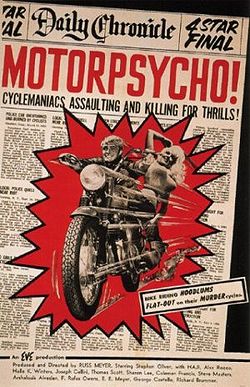
Cautionary tale
A cautionary tale is a tale told in folklore, to warn its hearer of a danger. There are three essential parts to a cautionary tale, though they can be introduced in a large variety of ways. First, a taboo or prohibition is stated: some act, location, or thing is said to be dangerous. Then, the...
about a young lady whose boyfriend's promiscuity leads to venereal disease, comes complete with enormous, grotesque closeups of VD's physical effects. At the same time, the concept of fringe exploitation was merging with a related, similarly venerable tradition: "nudie
Nudity in film
Nudity in film is any presentation in motion pictures of people while naked or wearing less clothing than contemporary norms consider modest. Many actors and actresses have appeared nude, or exposing parts of their bodies or dressed in ways considered provocative by contemporary standards at some...
" films featuring nudist-camp footage or striptease artists like Bettie Page
Bettie Page
Bettie Mae Page was an American model who became famous in the 1950s for her fetish modeling and pin-up photos. She has often been called the "Queen of Pinups"...
had simply been the softcore
Softcore
Softcore pornography is a form of filmic or photographic pornography or erotica that is less sexually explicit than hardcore pornography. It is intended to tickle and arouse men and women. Softcore pornography depicts nude and semi-nude performers engaging in casual social nudity or non-graphic...
pornography of previous decades. As far back as 1933, This Nude World was "Guaranteed the Most Educational Film Ever Produced!" In the late 1950s, as more of the old grindhouse theaters devoted themselves specifically to "adult" product, a few filmmakers began making nudies with greater attention to plot. Best known was Russ Meyer
Russ Meyer
Russell Albion "Russ" Meyer was a U.S. motion picture director, producer, screenwriter, cinematographer, editor, actor and photographer....
, who released his first successful narrative nudie, the comic Immoral Mr. Teas
The Immoral Mr. Teas
The Immoral Mr. Teas is the first commercially successful film of director Russ Meyer.-Etymology:The name "Teas" is a homophone of the word tease, and one of the meanings of "tease" includes to sexually excite another person by subtle means, usually explicitly avoiding advancement to more...
, in 1959. Five years later, Meyer came out with his breakthrough film, Lorna
Lorna (film)
Lorna is a 1964 film by Russ Meyer. Shot mainly on the small main street that runs through the town of Locke, California in September 1963, this was Meyer's first film in 35 mm. It was Meyer's first film to employ a dramatic storyline, the most expensive film he had filmed to date, and the first of...
, which combined sex, violence, and a dramatic storyline. Faster, Pussycat! Kill! Kill!
Faster, Pussycat! Kill! Kill!
Faster, Pussycat! Kill! Kill! is a 1965 exploitation film directed by Russ Meyer, who also wrote the script with Jack Moran. It stars Tura Satana, Haji, and Lori Williams....
(1965), made for about $45,000, would ultimately become the most famous of Meyer's so-called sexploitation
Sexploitation
Sexploitation, or "sex-exploitation", describes a class of independently produced, low-budget feature films generally associated with the 1960s and serving largely as a vehicle for the exhibition of non-explicit sexual situations and gratuitous nudity. The genre is a subgenre of exploitation films...
pictures. Crafted for constant titillation but containing no nudity, it was aimed at the same "passion pit" drive-in circuit that screened AIP teen movies with wink-wink titles like Beach Blanket Bingo
Beach Blanket Bingo
Beach Blanket Bingo is an American International Pictures beach party film, released in 1965 and was directed by William Asher. It is the fifth film in the beach party film series...
(1965) and How to Stuff a Wild Bikini
How to Stuff a Wild Bikini
How to Stuff a Wild Bikini is a 1965 beach party film from American International Pictures. The sixth entry in a seven-film series, the movie features Mickey Rooney, Annette Funicello, Dwayne Hickman, Brian Donlevy, and Beverly Adams...
(1966), starring Annette Funicello
Annette Funicello
Annette Joanne Funicello is an American singer and actress. She was Walt Disney's most popular cast member of the original Mickey Mouse Club, and went on to appear in a series of beach party films.-Early life and early stardom:...
and Frankie Avalon
Frankie Avalon
Frankie Avalon is an American actor, singer, playwright, and former teen idol.-Career:By the time he was 12, Avalon was on U.S. television playing his trumpet. As a teenager he played with Bobby Rydell in Rocco and the Saints...
. Roger Corman's The Trip
The Trip (1967 film)
The Trip is a cult film released by American International Pictures, directed by Roger Corman, written by Jack Nicholson, and shot on location in and around Los Angeles, including on top of Kirkwood in Laurel Canyon, Hollywood Hills, and near Big Sur, California in 1966...
(1967) for American International, written by veteran AIP/Corman actor Jack Nicholson
Jack Nicholson
John Joseph "Jack" Nicholson is an American actor, film director, producer and writer. He is renowned for his often dark portrayals of neurotic characters. Nicholson has been nominated for an Academy Award twelve times, and has won the Academy Award for Best Actor twice: for One Flew Over the...
, never shows a fully bared, unpainted breast, but flirts with nudity throughout. The Meyer and Corman lines were drawing closer.
One of the most influential films of the era, on Bs and beyond, was Paramount's Psycho. Its in earnings against a production cost of $800,000 made it the most profitable movie of 1960. Its mainstream distribution without the Production Code
Production Code
The Motion Picture Production Code was the set of industry moral censorship guidelines that governed the production of the vast majority of United States motion pictures released by major studios from 1930 to 1968. It is also popularly known as the Hays Code, after Hollywood's chief censor of the...
seal of approval helped weaken U.S. film censorship. And, as William Paul notes, this move into the horror genre by respected director Alfred Hitchcock
Alfred Hitchcock
Sir Alfred Joseph Hitchcock, KBE was a British film director and producer. He pioneered many techniques in the suspense and psychological thriller genres. After a successful career in British cinema in both silent films and early talkies, Hitchcock moved to Hollywood...
was made, "significantly, with the lowest-budgeted film of his American career and the least glamorous stars. [Its] greatest initial impact ... was on schlock horror movies (notably those from second-tier director William Castle), each of which tried to bill itself as scarier than Psycho." Castle's first film in the Psycho vein was Homicidal
Homicidal
Homicidal is a 1961 thriller film produced and directed by the self-proclaimed "King of Showmanship", William Castle. Written by Robb White, the film stars Glenn Corbett, Patricia Breslin, Eugenie Leontovich, Alan Bunce, Richard Rust, and Joan Marshall...
(1961), an early step in the development of the slasher
Slasher film
A slasher film is a type of horror film typically involving a psychopathic killer stalking and killing a sequence of victims in a graphically violent manner, often with a cutting tool such as a knife or axe...
subgenre that would take off in the late 1970s. Blood Feast
Blood Feast
Blood Feast is a 1963 American horror film directed by Herschell Gordon Lewis, often considered the first "splatter film". It was produced by David F. Friedman. The screenplay was written by Alison Louise Downe, who had previously appeared in several of Lewis' other films. Lewis also wrote the...
(1963), a movie about human dismemberment and culinary preparation made for approximately $24,000 by experienced nudie-maker Herschell Gordon Lewis
Herschell Gordon Lewis
Herschell Gordon Lewis is an American filmmaker, best known for creating the "splatter film" subgenre of horror...
, established a new, more immediately successful subgenre, the gore or splatter film
Splatter film
A splatter film or gore film is a subgenre of horror film that deliberately focuses on graphic portrayals of gore and graphic violence. These films, through the use of special effects and excessive blood and guts, tend to display an overt interest in the vulnerability of the human body and the...
. Lewis's business partner David F. Friedman
David F. Friedman
David Frank Friedman was an American filmmaker and film producer.-Life and career:Friedman first became interested in entertainment after spending part of his childhood in Birmingham and Anniston, Alabama, traveling carnival sites. He met exploitation film pioneer Kroger Babb during his stay in...
drummed up publicity by distributing vomit bags to theatergoers—the sort of gimmick Castle had mastered—and arranging for an injunction against the film in Sarasota, Florida—the sort of problem exploitation films had long run up against, except Friedman had planned it. This new breed of gross-out movie typified the emerging sense of "exploitation"—the progressive adoption of traditional exploitation and nudie elements into horror, into other classic B genres, and into the low-budget film industry as a whole. Imports of Hammer Film's increasingly explicit horror movies and Italian gialli
Giallo
Giallo is an Italian 20th century genre of literature and film, which in Italian indicates crime fiction and mystery. In the English language it refers to a genre similar to the French fantastique genre and includes elements of horror fiction and eroticism...
, highly stylized pictures mixing sexploitation and ultraviolence, would fuel this trend.
The Production Code was officially scrapped in 1968, to be replaced by the first version of the modern rating system. That year, two horror films came out that heralded directions American cinema would take in the next decade, with major consequences for the B movie. One was a high-budget Paramount production, directed by the celebrated Roman Polanski
Roman Polanski
Roman Polanski is a French-Polish film director, producer, writer and actor. Having made films in Poland, Britain, France and the USA, he is considered one of the few "truly international filmmakers."...
. Produced by B horror veteran William Castle, Rosemary's Baby
Rosemary's Baby (film)
Rosemary's Baby is a 1968 American horror film written and directed by Roman Polanski, based on the bestselling 1967 novel Rosemary's Baby by Ira Levin...
was the first upscale Hollywood picture in the genre in three decades. It was a critical success and the year's seventh-biggest hit. The other was George A. Romero
George A. Romero
George Andrew Romero is a Canadian-American film director, screenwriter and editor, best known for his gruesome and satirical horror films about a hypothetical zombie apocalypse. He is nicknamed "Godfather of all Zombies." -Life and career:...
's Night of the Living Dead
Night of the Living Dead
Night of the Living Dead is a 1968 American independent black-and-white zombie film and cult film directed by George A. Romero, starring Duane Jones, Judith O'Dea and Karl Hardman. It premiered on October 1, 1968, and was completed on a USD$114,000 budget. After decades of cinematic re-releases, it...
, produced on weekends in and around Pittsburgh for $114,000. Building on the achievement of B genre predecessors like Invasion of the Body Snatchers in its subtextual exploration of social and political issues, it doubled as a highly effective thriller and an incisive allegory for both the Vietnam War
Vietnam War
The Vietnam War was a Cold War-era military conflict that occurred in Vietnam, Laos, and Cambodia from 1 November 1955 to the fall of Saigon on 30 April 1975. This war followed the First Indochina War and was fought between North Vietnam, supported by its communist allies, and the government of...
and domestic racial conflicts. Its greatest influence, though, derived from its clever subversion of genre clichés and the connection made between its exploitation-style imagery, low-cost, truly independent means of production, and high profitability. With the Code gone and the X rating
X-rated
In some countries, X is or has been a motion picture rating reserved for the most explicit films. Films rated X are intended only for viewing by adults, usually legally defined as people over the age of 17.-United Kingdom:...
established, major studio A films like Midnight Cowboy
Midnight Cowboy
Midnight Cowboy is a 1969 American drama film based on the 1965 novel of the same name by James Leo Herlihy. It was written by Waldo Salt, directed by John Schlesinger, and stars Dustin Hoffman and newcomer Jon Voight in the title role. Notable smaller roles are filled by Sylvia Miles, John...
could now show "adult" imagery, while the market for increasingly hardcore pornography
Hardcore pornography
Hardcore pornography is a form of pornography that features explicit sexual acts. The term was coined in the second half of the 20th century to distinguish it from softcore pornography. It usually takes the form of photographs, often displayed in magazines or on the Internet, or films. It can also...
exploded. In this transformed commercial context, work like Russ Meyer's gained a new legitimacy. In 1969, for the first time a Meyer film, Finders Keepers, Lovers Weepers!
Finders Keepers, Lovers Weepers!
Finders Keepers, Lovers Weepers! is a 1968 film by Russ Meyer. The story involves the goings-on at a topless go-go bar on the Sunset Strip. Meyer himself makes an appearance in this film...
, was reviewed in The New York Times. Soon, Corman would be putting out nudity-filled sexploitation pictures such as Private Duty Nurses (1971) and Women in Cages
Women in Cages
Women in Cages is a 1971 film in the women in prison sexploitation sub-genre, co-produced by Roger Corman and directed by Gerardo de León. It was prominently featured in the Planet Terror portion of the 2007 film Grindhouse....
(1971).
In May 1969, the most important exploitation movie of the era premiered at the Cannes Film Festival
Cannes Film Festival
The Cannes International Film Festival , is an annual film festival held in Cannes, France, which previews new films of all genres including documentaries from around the world. Founded in 1946, it is among the world's most prestigious and publicized film festivals...
. Much of Easy Rider
Easy Rider
Easy Rider is a 1969 American road movie written by Peter Fonda, Dennis Hopper, and Terry Southern, produced by Fonda and directed by Hopper. It tells the story of two bikers who travel through the American Southwest and South with the aim of achieving freedom...
s significance owes to the fact that it was produced for a respectable, if still modest, budget and released by a major studio. The project was first taken by one of its cocreators, Peter Fonda
Peter Fonda
Peter Henry Fonda is an American actor. He is the son of Henry Fonda, brother of Jane Fonda, and father of Bridget and Justin Fonda...
, to American International. Fonda had become AIP's top star in the Corman-directed The Wild Angels
The Wild Angels
The Wild Angels is a 1966 Roger Corman film, made on location in Southern California. The Wild Angels was made three years before Easy Rider and was the first film to associate actor Peter Fonda with Harley-Davidson motorcycles and 1960s counterculture...
(1966), a biker movie, and The Trip, as in LSD
LSD
Lysergic acid diethylamide, abbreviated LSD or LSD-25, also known as lysergide and colloquially as acid, is a semisynthetic psychedelic drug of the ergoline family, well known for its psychological effects which can include altered thinking processes, closed and open eye visuals, synaesthesia, an...
. The idea Fonda pitched would combine those two proven themes. AIP was intrigued but balked at giving his collaborator, Dennis Hopper
Dennis Hopper
Dennis Lee Hopper was an American actor, filmmaker and artist. As a young man, Hopper became interested in acting and eventually became a student of the Actors' Studio. He made his first television appearance in 1954 and appeared in two films featuring James Dean, Rebel Without a Cause and Giant...
, also a studio alumnus, free directorial rein. Eventually they arranged a financing and distribution deal with Columbia, as two more graduates of the Corman/AIP exploitation mill joined the project: Jack Nicholson and cinematographer László Kovács
László Kovács (cinematographer)
László Kovács, A.S.C. was a Hungarian cinematographer who was influential in the development of American New Wave films. Most famous for his award-winning work on Easy Rider and Five Easy Pieces, Kovács was the recipient of numerous awards, including three Lifetime Achievement Awards...
. The film (which incorporated another favorite exploitation theme, the redneck menace, as well as a fair amount of nudity) was brought in at a cost of $501,000. It earned in rentals. In the words of historians Seth Cagin and Philip Dray
Philip Dray
Philip Dray is an American writer and independent public historian, known for his comprehensive analyses of American scientific, racial, and labor history.-Awards:...
, Easy Rider became "the seminal film that provided the bridge between all the repressed tendencies represented by schlock/kitsch/hack since the dawn of Hollywood and the mainstream cinema of the seventies."
Golden age of exploitation: 1970s
In the late 1960s and early 1970s, a new generation of low-budget film companies emerged that drew from all the different lines of exploitation as well as the sci-fi and teen themes that had been a mainstay since the 1950s. Operations such as Roger Corman's New World Pictures, Cannon Films, and New Line CinemaNew Line Cinema
New Line Cinema, often simply referred to as New Line, is an American film studio. It was founded in 1967 by Robert Shaye and Michael Lynne as a film distributor, later becoming an independent film studio. It became a subsidiary of Time Warner in 1996 and was merged with larger sister studio Warner...
brought exploitation films to mainstream theaters around the country. The major studios' top product was continuing to inflate in running time—in 1970, the ten biggest earners averaged 140.1 minutes. The Bs were keeping pace. In 1955, Corman had a producorial hand in five movies averaging 74.8 minutes. He played a similar part in five films originally released in 1970, two for AIP and three for his own New World: the average length was 89.8 minutes. These films could turn a tidy profit. The first New World release, the biker movie Angels Die Hard, cost $117,000 to produce and took in more than at the box office.
The biggest studio in the low-budget field remained a leader in exploitation's growth. In 1973, American International gave a shot to young director Brian De Palma
Brian De Palma
Brian Russell De Palma is an American film director and writer. In a career spanning over 40 years, he is probably best known for his suspense and crime thriller films, including such box office successes as the horror film Carrie, Dressed to Kill, Scarface, The Untouchables, and Mission:...
. Reviewing Sisters, Pauline Kael
Pauline Kael
Pauline Kael was an American film critic who wrote for The New Yorker magazine from 1968 to 1991. Earlier in her career, her work appeared in City Lights, McCall's and The New Republic....
observed that its "limp technique doesn't seem to matter to the people who want their gratuitous gore. ... [H]e can't get two people talking in order to make a simple expository point without its sounding like the drabbest Republic picture of 1938." Many examples of the so-called blaxploitation
Blaxploitation
Blaxploitation or blacksploitation is a film genre which emerged in the United States circa 1970. It is considered an ethnic sub-genre of the general category of exploitation films. Blaxploitation films were originally made specifically for an urban black audience, although the genre's audience...
genre, featuring stereotype-filled stories revolving around drugs, violent crime, and prostitution, were the product of AIP. One of blaxploitation's biggest stars was Pam Grier
Pam Grier
Pamela Suzette "Pam" Grier is an American actress. She became famous in the early 1970s, after starring in a string of moderately successful women in prison and blaxploitation films such as 1974's Foxy Brown. Her career was revitalized in 1997 after her appearance in Quentin Tarantino's film...
, who began her film career with a bit part in Russ Meyer's Beyond the Valley of the Dolls
Beyond the Valley of the Dolls
Beyond the Valley of the Dolls is a 1970 American schlock melodrama film starring Dolly Read, Cynthia Myers, Marcia McBroom, John LaZar, Michael Blodgett and David Gurian...
(1970). Several New World pictures followed, including The Big Doll House
The Big Doll House
The Big Doll House is a 1971 women in prison film starring Pam Grier, Judy Brown, Roberta Collins, Brooke Mills, and Pat Woodell. The film follows six female inmates throughout daily life in a gritty, unidentified supra-tropical prison...
(1971) and The Big Bird Cage
The Big Bird Cage
The Big Bird Cage is a 1972 exploitation film of the "women in prison" subgenre. It serves as a non-sequel follow-up to the 1971 film The Big Doll House...
(1972), both directed by Jack Hill
Jack Hill
Jack Hill is an U.S. film director, noted for his work in the exploitation film genre. Despite this, several of Hill's later films have been characterized as feminist works.Hill was born in Los Angeles...
. Hill also directed her best-known performances, in two AIP blaxploitation films: Coffy
Coffy
- Track listing :# "Coffy Is The Color" - 3:03Vocals – Dee Dee Bridgewater, Roy Ayers, Wayne Garfield# "Priscilla's Theme" - 3:58# "King George" - 3:00Vocals – Roy Ayers# "Aragon" - 2:55# "Coffy Sauna" - 2:16# "King's Last Ride" - 1:10# "Coffy Baby" - 2:26...
(1973) and Foxy Brown (1974).
Blaxploitation was the first exploitation genre in which the major studios were central. Indeed, the United Artists release Cotton Comes to Harlem (1970), directed by Ossie Davis
Ossie Davis
Ossie Davis was an American film actor, director, poet, playwright, writer, and social activist.-Early years:...
, is seen as the first significant film of the type. But the movie that truly ignited the blaxploitation phenomenon was completely independent: Sweet Sweetback's Baadasssss Song
Sweet Sweetback's Baadasssss Song
Sweet Sweetback's Baadasssss Song is a 1971 American independent drama film, written, produced, scored, directed by, and starring Melvin Van Peebles, father of actor Mario Van Peebles . It tells the picaresque story of a poor African American man on his flight from the white authority...
(1971) is also perhaps the most outrageous example of the form: wildly experimental, borderline pornographic, and essentially a manifesto for a black American revolution. Melvin Van Peebles
Melvin Van Peebles
Melvin "Block" Van Peebles is an American actor, director, screenwriter, playwright, novelist and composer.He is most famous for creating the acclaimed film, Sweet Sweetback's Baadasssss Song, which heralded a new era of African American focused films...
wrote, co-produced, directed, starred in, edited, and composed the music for the film, which was completed with a loan from Bill Cosby
Bill Cosby
William Henry "Bill" Cosby, Jr. is an American comedian, actor, author, television producer, educator, musician and activist. A veteran stand-up performer, he got his start at various clubs, then landed a starring role in the 1960s action show, I Spy. He later starred in his own series, the...
. Its distributor was small Cinemation Industries
Cinemation Industries
Cinemation Industries was a New York City-based film studio and distributor. Among other films, the company has distributed exploitation films such as Shanty Tramp , Teenage Mother , The Cheerleaders , The Black Six , and The Black Godfather .But the company has also distributed unexpected smash...
, then best known for releasing dubbed versions of the Italian Mondo Cane
Mondo cane
Mondo cane is a documentary written and directed by Italian filmmakers Paolo Cavara, Franco Prosperi and Gualtiero Jacopetti. The film consists of a series of travelogue vignettes that provide glimpses into cultural practices around the world with the intention to shock or surprise Western film...
"shockumentaries" and the Swedish skin flick Fanny Hill, as well as for its one in-house production, The Man from O.R.G.Y. (1970). These sorts of films played in the "grindhouses" of the day—many of them not outright porno theaters, but rather venues for all manner of exploitation cinema. The days of six quickies for a nickel were gone, but a continuity of spirit was evident.
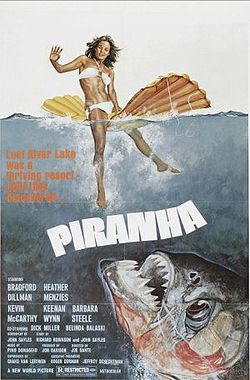
16 mm film
16 mm film refers to a popular, economical gauge of film used for motion pictures and non-theatrical film making. 16 mm refers to the width of the film...
by first-time American director Barbara Loden
Barbara Loden
Barbara Loden was an American film and stage actress and film director....
won the international critics' prize
FIPRESCI
The International Federation of Film Critics is an association of national organizations of professional film critics and film journalists from around the world for "the promotion and development of film culture and for the safeguarding of professional interests." It was founded in June 1930 in...
at the Venice Film Festival
Venice Film Festival
The Venice International Film Festival is the oldest international film festival in the world. Founded by Count Giuseppe Volpi in 1932 as the "Esposizione Internazionale d'Arte Cinematografica", the festival has since taken place every year in late August or early September on the island of the...
. Wanda
Wanda (film)
Wanda is an independent 1970 drama film that was written and directed by Barbara Loden, who also stars in the title role. It is set in the anthracite coal region of eastern Pennsylvania.-Plot:...
is both a seminal event in the independent film movement and a classic B picture. The crime-based plot and often seedy settings would have suited a straightforward exploitation film or an old-school B noir. The $115,000 production, for which Loden spent six years raising money, was praised by Vincent Canby
Vincent Canby
Vincent Canby was an American film critic who became the chief film critic for The New York Times in 1969 and reviewed more than 1000 films during his tenure there.-Life and career:...
for "the absolute accuracy of its effects, the decency of its point of view and ... purity of technique." Like Romero and Van Peebles, other filmmakers of the era made pictures that combined the gut-level entertainment of exploitation with biting social commentary. The first three features directed by Larry Cohen
Larry Cohen
Lawrence G. "Larry" Cohen is an American film producer, director, and screenwriter. He is best known as a B-Movie auteur of horror and science fiction films - often containing a police procedural element - during 1970s and 1980s...
, Bone
Bone (1972 film)
Bone, also known as Beverly Hills Nightmare, Dial Rat for Terror and Housewife, is a 1972 American film directed by Larry Cohen....
(1972), Black Caesar
Black Caesar (film)
Black Caesar is a 1973 American blaxploitation film, starring Fred Williamson and Gloria Hendry. The film was written and directed by Larry Cohen. It is a remake of the 1931 film Little Caesar. It features a notable musical score by James Brown , his first experience with writing music for film...
(1973), and Hell Up in Harlem
Hell Up in Harlem
Hell Up in Harlem is a 1973 blaxploitation film, starring Fred Williamson and Gloria Hendry. The film was written and directed by Larry Cohen...
(1973), were all nominally blaxploitation movies, but Cohen used them as vehicles for a satirical examination of race relations and the wages of dog-eat-dog capitalism. The gory horror film Deathdream
Deathdream
Deathdream is a 1972 Canadian horror film, directed by Bob Clark and written by Alan Ormsby. It was inspired by the W.W. Jacobs short story The Monkey's Paw.-Plot summary:...
(1974), directed by Bob Clark
Bob Clark
Benjamin "Bob" Clark was an American actor, director, screenwriter and producer best known for directing and writing the script with Jean Shepherd to the 1983 Christmas film A Christmas Story...
, is also an agonized protest of the war in Vietnam. Canadian filmmaker David Cronenberg
David Cronenberg
David Paul Cronenberg, OC, FRSC is a Canadian filmmaker, screenwriter and actor. He is one of the principal originators of what is commonly known as the body horror or venereal horror genre. This style of filmmaking explores people's fears of bodily transformation and infection. In his films, the...
made serious-minded low-budget horror films whose implications are not so much ideological as psychological and existential: Shivers
Shivers (film)
Shivers is a 1975 Canadian body horror film written and directed by David Cronenberg. Cronenberg won "Best Director" at the 1975 Sitges Film Festival.-Plot:Dr...
(1975), Rabid
Rabid
Rabid is a 1977 horror film written and directed by David Cronenberg. It features Marilyn Chambers in the lead role, supported by Frank Moore, Howard Ryshpan, Joe Silver and Robert A...
(1977), The Brood
The Brood
The Brood is a 1979 Canadian horror film written and directed by David Cronenberg, starring Oliver Reed, Samantha Eggar and Art Hindle.The film depicts a series of murders committed by what seems at first to be a group of children...
(1979). An Easy Rider with conceptual rigor, the movie that most clearly presaged the way in which exploitation content and artistic treatment would be combined in modestly budgeted films of later years was United Artists' biker-themed Electra Glide in Blue
Electra Glide in Blue
Electra Glide in Blue is a 1973 film starring Robert Blake as a motorcycle cop in Arizona and Billy Green Bush as his partner. The name stems from the Harley-Davidson Electra Glide motorcycle issued to traffic cops....
(1973), directed by James William Guercio. The New York Times reviewer thought little of it: "Under different intentions, it might have made a decent grade-C Roger Corman bike movie—though Corman has generally used more interesting directors than Guercio."
In the early 1970s, the growing practice of screening nonmainstream motion pictures as late shows, with the goal of building a cult film
Cult film
A cult film, also commonly referred to as a cult classic, is a film that has acquired a highly devoted but specific group of fans. Often, cult movies have failed to achieve fame outside the small fanbases; however, there have been exceptions that have managed to gain fame among mainstream audiences...
audience, brought the midnight movie concept home to the cinema, now in a countercultural setting—something like a drive-in movie for the hip
Hip (slang)
Hip is a slang term meaning fashionably current and in the know. Hip is the opposite of square or prude.Hip, like cool, does not refer to one specific quality. What is considered hip is continuously changing. The term hip is said to have originated in African American Vernacular English in the...
. One of the first films adopted by the new circuit in 1971 was the three-year-old Night of the Living Dead. The midnight movie success of low-budget pictures made entirely outside of the studio system, like John Waters
John Waters (filmmaker)
John Samuel Waters, Jr. is an American filmmaker, actor, stand-up comedian, writer, journalist, visual artist, and art collector, who rose to fame in the early 1970s for his transgressive cult films...
's Pink Flamingos
Pink Flamingos
Pink Flamingos is a 1972 transgressive black comedy film written, produced, composed, shot, edited, and directed by John Waters. When the film was initially released, it caused a huge degree of controversy and thus became one of the most notorious cult films ever made. It made an underground star...
(1972), with its campy spin on exploitation, spurred the development of the independent film movement. The Rocky Horror Picture Show
The Rocky Horror Picture Show
The Rocky Horror Picture Show is the 1975 film adaptation of the British rock musical stageplay, The Rocky Horror Show, written by Richard O'Brien. The film is a parody of B-movie, science fiction and horror films of the late 1940s through early 1970s. Director Jim Sharman collaborated on the...
(1975), an inexpensive film from 20th Century-Fox that spoofed all manner of classic B picture clichés, became an unparalleled hit when it was relaunched as a late show feature the year after its initial, unprofitable release. Even as Rocky Horror generated its own subcultural
Subculture
In sociology, anthropology and cultural studies, a subculture is a group of people with a culture which differentiates them from the larger culture to which they belong.- Definition :...
phenomenon, it contributed to the mainstreaming of the theatrical midnight movie.
Asian martial arts films began appearing as imports regularly during the 1970s. These "kung fu" films as they were often called, whatever martial art they featured, were popularized in the United States by the Hong Kong–produced movies of Bruce Lee
Bruce Lee
Bruce Lee was a Chinese American, Hong Kong actor, martial arts instructor, philosopher, film director, film producer, screenwriter, and founder of the Jeet Kune Do martial arts movement...
and marketed to the same audience targeted by AIP and New World. Horror continued to attract young, independent American directors. As Roger Ebert
Roger Ebert
Roger Joseph Ebert is an American film critic and screenwriter. He is the first film critic to win a Pulitzer Prize for Criticism.Ebert is known for his film review column and for the television programs Sneak Previews, At the Movies with Gene Siskel and Roger Ebert, and Siskel and Ebert and The...
explained in one 1974 review, "Horror and exploitation films almost always turn a profit if they're brought in at the right price. So they provide a good starting place for ambitious would-be filmmakers who can't get more conventional projects off the ground." The movie under consideration was The Texas Chain Saw Massacre
The Texas Chain Saw Massacre
The Texas Chain Saw Massacre is a 1974 American independent horror film directed and produced by Tobe Hooper, who cowrote it with Kim Henkel. It stars Marilyn Burns, Paul A. Partain, Edwin Neal, Jim Siedow, and Gunnar Hansen, who respectively portray Sally Hardesty, Franklin Hardesty, the...
. Made by Tobe Hooper
Tobe Hooper
Tobe Hooper is an American film director and screenwriter, best known for his work in the horror film genre. His works include the cult classic The Texas Chain Saw Massacre , along with its first sequel, The Texas Chainsaw Massacre 2 ; the three-time Emmy-nominated Stephen King film adaptation...
for less than $300,000, it became one of the most influential horror films of the 1970s. John Carpenter
John Carpenter
John Howard Carpenter is an American film director, screenwriter, producer, editor, composer, and occasional actor. Although Carpenter has worked in numerous film genres in his four-decade career, his name is most commonly associated with horror and science fiction.- Early life :Carpenter was born...
's Halloween
Halloween (1978 film)
Halloween is a 1978 American independent horror film directed, produced, and scored by John Carpenter, co-written with Debra Hill, and starring Donald Pleasence and Jamie Lee Curtis in her film debut and the first installment in the Halloween franchise. The film is set in the fictional midwestern...
(1978), produced on a $320,000 budget, grossed over worldwide and effectively established the slasher flick as horror's primary mode for the next decade. Just as Hooper had learned from Romero's work, Halloween, in turn, largely followed the model of Black Christmas
Black Christmas (1974 film)
Black Christmas is a 1974 Canadian slasher film directed by Bob Clark and written by A. Roy Moore, and largely based on a series of murders that took place in Quebec, Canada around Christmas time. The film's score is by Carl Zittrer. It was distributed by Ambassador Film Distributors in Canada and...
(1974), directed by Deathdreams Bob Clark.
On television, the parallels between the weekly series that became the mainstay of prime-time programming and the Hollywood series films of an earlier day had long been clear. In the 1970s, original feature-length programming increasingly began to echo the B movie as well. As production of TV movies expanded with the introduction of the ABC Movie of the Week
ABC Movie of the Week
The ABC Movie of the Week is a weekly television anthology series, featuring made-for-TV movies, that aired on the ABC network in various permutations from 1969 to 1975.-History:...
in 1969, soon followed by the dedication of other network slots to original features, time and financial factors shifted the medium progressively into B picture territory. Television films inspired by recent scandals—such as The Ordeal of Patty Hearst
Patty Hearst
Patricia Campbell Hearst , now known as Patricia Campbell Hearst Shaw, is an American newspaper heiress, socialite, actress, kidnap victim, and convicted bank robber....
, which premiered a month after her release from prison in 1979—harkened all the way back to the 1920s and such movies as Human Wreckage and When Love Grows Cold, FBO pictures made swiftly in the wake of celebrity misfortunes. Many 1970s TV films—such as The California Kid
The California Kid
The California Kid is a 1974 TV Movie starring Martin Sheen, Vic Morrow, Nick Nolte, Michelle Phillips, Gary Morgan, and Janit Baldwin.-Plot:...
(1974), starring Martin Sheen
Martin Sheen
Ramón Gerardo Antonio Estévez , better known by his stage name Martin Sheen, is an American film actor best known for his performances in the films Badlands and Apocalypse Now , and in the television series The West Wing from 1999 to 2006.He is considered one of the best actors never to be...
—were action-oriented genre pictures of a type familiar from contemporary cinematic B production. Nightmare in Badham County (1976) headed straight into the realm of road-tripping-girls-in-redneck-bondage exploitation.
The reverberations of Easy Rider could be felt in such pictures, as well as in a host of theatrical exploitation films. But its greatest influence on the fate of the B movie was less direct—by 1973, the major studios were catching on to the commercial potential of genres once largely consigned to the bargain basement. Rosemary's Baby had been a big hit, but it had little in common with the exploitation style. Warner Bros.' The Exorcist
The Exorcist (film)
The Exorcist is a 1973 American horror film directed by William Friedkin, adapted from the 1971 novel of the same name by William Peter Blatty and based on the exorcism case of Robbie Mannheim, dealing with the demonic possession of a young girl and her mother’s desperate attempts to win back her...
demonstrated that a heavily promoted horror film could be an absolute blockbuster: it was the biggest movie of the year and by far the highest-earning horror movie yet made. In William Paul's description, it is also "the film that really established gross-out as a mode of expression for mainstream cinema. ... [P]ast exploitation films managed to exploit their cruelties by virtue of their marginality. The Exorcist made cruelty respectable. By the end of the decade, the exploitation booking strategy of opening films simultaneously in hundreds to thousands of theaters became standard industry practice." Writer-director George Lucas
George Lucas
George Walton Lucas, Jr. is an American film producer, screenwriter, and director, and entrepreneur. He is the founder, chairman and chief executive of Lucasfilm. He is best known as the creator of the space opera franchise Star Wars and the archaeologist-adventurer character Indiana Jones...
's American Graffiti
American Graffiti
American Graffiti is a 1973 coming of age film co-written/directed by George Lucas starring Richard Dreyfuss, Ron Howard, Paul Le Mat, Charles Martin Smith, Cindy Williams, Candy Clark, Mackenzie Phillips and Harrison Ford...
, a Universal production, did something similar. Described by Paul as "essentially an American-International teenybopper pic with a lot more spit and polish", it was 1973's third biggest film and, likewise, by far the highest-earning teen-themed movie yet made. Even more historically significant movies with B themes and A-level financial backing would follow in their wake.
Decline of the B: 1980s
Most of the B movie production houses founded during the exploitation era collapsed or were subsumed by larger companies as the field's financial situation changed in the early 1980s. Even a comparatively cheap, efficiently made genre picture intended for theatrical release began to cost millions of dollars, as the major movie studios steadily moved into the production of expensive genre movies, raising audience expectations for spectacular action sequences and realistic special effects. Intimations of the trend were evident as early as Airport (1970) and especially in the mega-schlock of The Poseidon Adventure (1972), EarthquakeEarthquake (film)
Earthquake is a 1974 American disaster film that achieved huge box-office success, continuing the disaster film genre of the 1970s where recognizable all-star casts attempt to survive life or death situations...
(1973), and The Towering Inferno
The Towering Inferno
The Towering Inferno is a 1974 American action disaster film produced by Irwin Allen featuring an all-star cast led by Steve McQueen and Paul Newman.A co-production between Twentieth Century-Fox and Warner Bros...
(1974). Their disaster plots and dialogue were B-grade at best; from an industry perspective, however, these were pictures firmly rooted in a tradition of star-stuffed extravaganzas. The Exorcist had demonstrated the drawing power of big-budget, effects-laden horror. But the tidal shift in the majors' focus owed largely to the enormous success of three films: Steven Spielberg
Steven Spielberg
Steven Allan Spielberg KBE is an American film director, screenwriter, producer, video game designer, and studio entrepreneur. In a career of more than four decades, Spielberg's films have covered many themes and genres. Spielberg's early science-fiction and adventure films were seen as an...
's creature feature
Monster movie
Monster movie is a name commonly given to movies, which centre on the struggle between human beings and one or more monsters...
Jaws
Jaws (film)
Jaws is a 1975 American horror-thriller film directed by Steven Spielberg and based on Peter Benchley's novel of the same name. In the story, the police chief of Amity Island, a fictional summer resort town, tries to protect beachgoers from a giant man-eating great white shark by closing the beach,...
(1975) and George Lucas's space opera
Space opera
Space opera is a subgenre of science fiction that emphasizes romantic, often melodramatic adventure, set mainly or entirely in outer space, generally involving conflict between opponents possessing advanced technologies and abilities. The term has no relation to music and it is analogous to "soap...
Star Wars
Star Wars Episode IV: A New Hope
Star Wars Episode IV: A New Hope, originally released as Star Wars, is a 1977 American epic space opera film, written and directed by George Lucas. It is the first of six films released in the Star Wars saga: two subsequent films complete the original trilogy, while a prequel trilogy completes the...
(1977) had each, in turn, become the highest-grossing film in motion picture history. Superman, released in December 1978, had proved that a studio could spend on a movie about a children's comic book character and turn a big profit—it was the top box-office hit of 1979. Blockbuster fantasy spectacles like the original 1933 King Kong
King Kong (1933 film)
King Kong is a Pre-Code 1933 fantasy monster adventure film co-directed by Merian C. Cooper and Ernest B. Schoedsack, and written by Ruth Rose and James Ashmore Creelman after a story by Cooper and Edgar Wallace. The film tells of a gigantic island-dwelling apeman creature called Kong who dies in...
had once been exceptional; in the new Hollywood, increasingly under the sway of multi-industrial conglomerates, they would rule.
It had taken a decade and half, from 1961 to 1976, for the production cost of the average Hollywood feature to double from $2 million to $4 million—a decline if adjusted for inflation. In just four years it more than doubled again, hitting $8.5 million in 1980 (a constant-dollar increase of about 25 percent). Even as the U.S. inflation rate eased, the average expense of moviemaking would continue to soar. With the majors now routinely saturation booking in over a thousand theaters, it was becoming increasingly difficult for smaller outfits to secure the exhibition commitments needed to turn a profit. Double features were now literally history—almost impossible to find except at revival house
Revival house
A revival house or repertory cinema is a term for a cinema that specializes in showing classic or notable older films . Such venues may include standard repertory cinemas, multi-function theatres that alternate between old movies and live events, and some first-run theatres that show past...
s. One of the first leading casualties of the new economic regime was venerable B studio Allied Artists, which declared bankruptcy in April 1979. In the late 1970s, AIP had turned to producing relatively expensive films like the very successful Amityville Horror
The Amityville Horror (1979 film)
The Amityville Horror is a 1979 American horror film based on the bestselling 1977 novel of the same name by Jay Anson. It is the first movie in the Amityville Horror franchise....
and the disastrous Meteor
Meteor (film)
Meteor is a 1979 science fiction Technicolor disaster film in which scientists detect an asteroid on a collision course with Earth and struggle with international, cold war politics in their efforts to prevent disaster. The movie starred Sean Connery and Natalie Wood.It was directed by Ronald Neame...
in 1979. The studio was sold off and dissolved as a moviemaking concern by the end of 1980.
Despite the mounting financial pressures, distribution obstacles, and overall risk, many genre movies from small studios and independent filmmakers were still reaching theaters. Horror was the strongest low-budget genre of the time, particularly in the slasher mode as with The Slumber Party Massacre (1982), written by feminist author Rita Mae Brown
Rita Mae Brown
Rita Mae Brown is an American writer. She is best known for her first novel Rubyfruit Jungle. Published in 1973, it dealt with lesbian themes in an explicit manner unusual for the time...
. The film was produced for New World on a budget of $250,000. At the beginning of 1983, Corman sold New World; New Horizons, later Concorde–New Horizons, became his primary company. In 1984, New Horizons released a critically applauded movie set amid the punk scene
Punk subculture
The punk subculture includes a diverse array of ideologies, and forms of expression, including fashion, visual art, dance, literature, and film, which grew out of punk rock.-History:...
written and directed by Penelope Spheeris
Penelope Spheeris
Penelope Spheeris is an American director, producer and screenwriter. She is best known as a documentary film director whose works include the trilogy titled The Decline of Western Civilization...
. The New York Times review concluded: "Suburbia
Suburbia (film)
Suburbia, also known as Rebel Streets and The Wild Side, is a 1984 film written and directed by Penelope Spheeris about suburban punks who run away from home. The kids take up a minimalist, punk lifestyle by squatting in abandoned suburban tract homes...
is a good genre film."
Larry Cohen continued to twist genre conventions in pictures such as Q
Q (film)
Q is a 1982 horror film written and directed by Larry Cohen and starring Michael Moriarty, Candy Clark, David Carradine, and Richard Roundtree.-Plot:...
(aka Q: The Winged Serpent; 1982), described by critic Chris Petit as "the kind of movie that used to be indispensable to the market: an imaginative, popular, low-budget picture that makes the most of its limited resources, and in which people get on with the job instead of standing around talking about it." In 1981, New Line put out Polyester
Polyester (film)
Polyester is a 1981 comedy film directed, produced, and written by John Waters, and starring Divine, Tab Hunter, Edith Massey, and Mink Stole...
, a John Waters movie with a small budget and an old-school exploitation gimmick: Odorama. That October The Book of the Dead, a gore-filled yet stylish horror movie made for less than $400,000, debuted in Detroit. Its writer, director, and co-executive producer, Sam Raimi
Sam Raimi
Samuel Marshall "Sam" Raimi is an American film director, producer, actor and writer. He is best known for directing cult horror films like the Evil Dead series, Darkman and Drag Me to Hell, as well as the blockbuster Spider-Man films and the producer of the successful TV series Hercules: The...
, was a week shy of his twenty-second birthday; star and co-executive producer Bruce Campbell
Bruce Campbell
Bruce Lorne Campbell is an American film and television actor. As a cult movie actor, Campbell starred as Ashley J. "Ash" Williams in Sam Raimi's Evil Dead series of films and he has starred in many low-budget cult films such as Crimewave, Maniac Cop, Bubba Ho-tep, Escape From L.A. and Sundown:...
was twenty-three. It was picked up for distribution by New Line, retitled The Evil Dead
The Evil Dead
The Evil Dead is a 1981 horror film written and directed by Sam Raimi, starring Bruce Campbell, Ellen Sandweiss, and Betsy Baker. The film is a story of five college students vacationing in an isolated cabin in a wooded area...
, and became a hit. In the words of one newspaper critic, it was a "shoestring tour de force."
One of the most successful 1980s B studios was a survivor from the heyday of the exploitation era, Troma Pictures
Troma Entertainment
Troma Entertainment is an American independent film production and distribution company founded by Lloyd Kaufman and Michael Herz in 1974.The company produces low-budget independent movies that play on 1950s horror with elements of farce...
, founded in 1974. Troma's most characteristic productions, including Class of Nuke 'Em High
Class of Nuke 'Em High
Class of Nuke 'Em High, also known as Atomic High School, is a 1986 film made by cult classic B-movie production group Troma Entertainment. It was directed by Richard W. Haines and Lloyd Kaufman under the pseudonym Samuel Weil...
(1986), Redneck Zombies
Redneck Zombies
Redneck Zombies is a 1987 very low budget independent horror comedy trash film directed by Pericles Lewnes and released by Troma Entertainment.-Plot:...
(1986), and Surf Nazis Must Die
Surf Nazis Must Die
Surf Nazis Must Die is a 1987 American comedy film directed by Peter George and starring Gail Neely, Barry Brenner, and Robert Harden. It was produced by The Institute, a production company formed by Peter George, Craig A...
(1987), take exploitation for an absurdist spin. Troma's best-known production is The Toxic Avenger
The Toxic Avenger
The Toxic Avenger is a 1984 comedy horror film released by Troma Entertainment, known for producing low budget B-movies with campy concepts. Virtually ignored upon its first release, The Toxic Avenger caught on with filmgoers after a long and successful midnight movie engagement at the famed...
(1985); its hideous hero, affectionately known as Toxie, was featured in several sequels and a TV cartoon series. One of the few successful B studio startups of the decade was Rome-based Empire Pictures
Empire International Pictures
Empire Pictures was a small scale theatrical distribution company that was formed in 1983 by Charles Band.The company produced a number of low-budget horror and fantasy features including Trancers and The Dungeonmaster...
, whose first production, Ghoulies
Ghoulies
The Ghoulies films are an American horror-comedy series released throughout the 1980s and 1990s and centered on a group of demons usually summoned by Satanic worshippers.-Ghoulies:...
, reached theaters in 1985. The video rental market was becoming central to B film economics: Empire's financial model relied on seeing a profit not from theatrical rentals, but only later, at the video store. A number of Concorde–New Horizon releases went this route as well, appearing only briefly in theaters, if at all. The growth of the cable television
Cable television
Cable television is a system of providing television programs to consumers via radio frequency signals transmitted to televisions through coaxial cables or digital light pulses through fixed optical fibers located on the subscriber's property, much like the over-the-air method used in traditional...
industry also helped support the low-budget film industry, as many B movies quickly wound up as "filler" material for 24-hour cable channels or were made expressly for that purpose.
Decline of the B: 1990s
By 1990, the cost of the average U.S. film had passed . Of the nine films released that year to gross more than at the U.S. box office, two would have been strictly B movie material before the late 1970s: Teenage Mutant Ninja TurtlesTeenage Mutant Ninja Turtles (film)
Teenage Mutant Ninja Turtles is a 1990 American live-action film adaptation of the Teenage Mutant Ninja Turtles franchise directed by Steve Barron. The film was followed by three sequels: Teenage Mutant Ninja Turtles II: The Secret of the Ooze in 1991, Teenage Mutant Ninja Turtles III in 1993, and...
and Dick Tracy. Three more—the science-fiction thriller Total Recall
Total Recall
Total Recall is a 1990 American science fiction action film. The film stars Arnold Schwarzenegger, Rachel Ticotin, Sharon Stone, Michael Ironside, Ronny Cox & Mel Johnson, Jr.. It is based on the Philip K. Dick story “We Can Remember It for You Wholesale”...
, the action-filled detective thriller Die Hard 2
Die Hard 2
Die Hard 2 is a 1990 action film and the second in the Die Hard film series. The film was directed by Renny Harlin, and stars Bruce Willis as John McClane...
, and the year's biggest hit, the slapstick kiddie comedy Home Alone
Home Alone
Home Alone is a 1990 American Christmas comedy film written and produced by John Hughes and directed by Chris Columbus. The film stars Macaulay Culkin as Kevin McCallister, an eight-year-old boy, who is mistakenly left behind when his family flies to Paris for their Christmas vacation...
—were also far closer to the traditional arena of the Bs than to classic A-list subject matter. The growing popularity of home video and access to unedited movies on cable and satellite television
Satellite television
Satellite television is television programming delivered by the means of communications satellite and received by an outdoor antenna, usually a parabolic mirror generally referred to as a satellite dish, and as far as household usage is concerned, a satellite receiver either in the form of an...
along with real estate pressures were making survival more difficult for the sort of small or non-chain theaters that were the primary home of independently produced genre films. Drive-in screens were rapidly disappearing from the American landscape.
Surviving B movie operations adapted in different ways. Releases from Troma now frequently went straight to video
Direct-to-video
Direct-to-video is a term used to describe a film that has been released to the public on home video formats without being released in film theaters or broadcast on television...
. New Line, in its first decade, had been almost exclusively a distributor of low-budget independent and foreign genre pictures. With the smash success of exploitation veteran Wes Craven
Wes Craven
Wesley Earl "Wes" Craven is an American actor, film director, writer, producer, perhaps best known as the director of many horror films, particularly slasher films, including the famed A Nightmare on Elm Street and Wes Craven's New Nightmare, featuring the iconic Freddy Krueger character, the...
's original Nightmare on Elm Street (1984), whose nearly cost it had directly backed, the company began moving steadily into higher-budget genre productions. In 1994, New Line was sold to the Turner Broadcasting System
Turner Broadcasting System
Turner Broadcasting System, Inc. is the Time Warner subsidiary managing the collection of cable networks and properties started and acquired by Robert Edward "Ted" Turner starting in the mid-1970s. The company has its headquarters in the CNN Center in Atlanta, Georgia. TBS, Inc...
; it was soon being run as a midsized studio with a broad range of product alongside Warner Bros. within the Time Warner
Time Warner
Time Warner is one of the world's largest media companies, headquartered in the Time Warner Center in New York City. Formerly two separate companies, Warner Communications, Inc...
conglomerate. The following year, Showtime launched Roger Corman Presents, a series of thirteen straight-to-cable movies produced by Concorde–New Horizons. A New York Times reviewer found that the initial installment qualified as "vintage Corman ... spiked with everything from bared female breasts to a mind-blowing quote from Thomas Mann
Thomas Mann
Thomas Mann was a German novelist, short story writer, social critic, philanthropist, essayist, and 1929 Nobel Prize laureate, known for his series of highly symbolic and ironic epic novels and novellas, noted for their insight into the psychology of the artist and the intellectual...
's Death in Venice
Death in Venice
The novella Death in Venice was written by the German author Thomas Mann, and was first published in 1913 as Der Tod in Venedig. The plot of the work presents a great writer suffering writer's block who visits Venice and is liberated and uplifted, then increasingly obsessed, by the sight of a...
."
At the same time as exhibition venues for B films vanished, the independent film movement was burgeoning; among the results were various crossovers between the low-budget genre movie and the "sophisticated" arthouse picture. Director Abel Ferrara
Abel Ferrara
Abel Ferrara is an American film screenwriter and director. He is best known as an independent filmmaker of such films as The Driller Killer , Ms. 45 , King of New York , Bad Lieutenant and The Funeral .-Early life:Ferrara was born in the Bronx of Italian and Irish descent...
, who built a reputation with violent B movies such as The Driller Killer
The Driller Killer
The Driller Killer is a 1979 slasher film directed by and starring Abel Ferrara. It was on a list of banned so-called video nasties in the United Kingdom...
(1979) and Ms. 45
Ms. 45
Ms. 45, also known as Angel of Vengeance, is a 1981 American low-budget exploitation film directed by Abel Ferrara and starring Zoë Tamerlis Lund...
(1981), made two works in the early nineties that marry exploitation-worthy depictions of sex, drugs, and general sleaze to complex examinations of honor and redemption: King of New York
King of New York
King of New York is a 1990 American crime drama film, starring Christopher Walken, Laurence Fishburne, David Caruso, Wesley Snipes, Victor Argo, and Giancarlo Esposito. It was directed by independent filmmaker Abel Ferrara and written by Nicholas St...
(1990) was backed by a group of mostly small production companies and the cost of Bad Lieutenant
Bad Lieutenant
Bad Lieutenant is a 1992 crime-drama film directed by Abel Ferrara and starring Harvey Keitel as the eponymous "bad lieutenant". The screenplay was written by actress-model Zoë Lund. She also played a small role in the film. Lund had been discovered by Ferrara and had starred in his earlier film, Ms...
(1992), , was financed totally independently. Larry Fessenden
Larry Fessenden
-Life and career:He is president of Glass Eye Pix, an independent film production company based in New York City. Fessenden produced the Dark Sky film The Inkeepers which is directed by Ti West and the thriller Hypothermia, besides his work as producer he stars in the psychological thriller I Can...
's micro-budget monster movies, such as No Telling (1991) and Habit
Habit (film)
Habit is a 1997 vampire horror film written, directed, and starring Larry Fessenden. It received rave reviews at the Chicago and Los Angeles International Film Festivals. It is a remake of the 1985 film of the same name.-Plot:...
(1997), reframe classic genre subjects—Frankenstein
Frankenstein
Frankenstein; or, The Modern Prometheus is a novel about a failed experiment that produced a monster, written by Mary Shelley, with inserts of poems by Percy Bysshe Shelley. Shelley started writing the story when she was eighteen, and the novel was published when she was twenty-one. The first...
and vampirism
Vampire
Vampires are mythological or folkloric beings who subsist by feeding on the life essence of living creatures, regardless of whether they are undead or a living person...
, respectively—to explore issues of contemporary relevance. The budget of David Cronenberg's Crash
Crash (1996 film)
Crash is a 1996 Canadian/British drama thriller film written and directed by David Cronenberg based on the J. G. Ballard 1973 novel of the same name. It tells the story of a group of people who take sexual pleasure from car accidents, a notable form of paraphilia. The film generated considerable...
(1996), , was not comfortably A-grade, but it was hardly B-level either. The film's imagery was another matter: "On its scandalizing surface, David Cronenberg's Crash suggests exploitation at its most disturbingly sick", wrote critic Janet Maslin
Janet Maslin
Janet Maslin is an American journalist, best known as a film and literary critic for The New York Times. She served as the Times film critic from 1977–1999.- Biography :...
. Financed, like King of New York, by a consortium of production companies, it was picked up for U.S. distribution by Fine Line Features
Fine Line Features
Fine Line Features was the speciality films division of New Line Cinema. It produced, purchased, distributed and marketed films of a more "indie" flavor than its parent company...
. This result mirrored the film's scrambling of definitions: Fine Line was a subsidiary of New Line, recently merged into the Time Warner empire—specifically, it was the old exploitation distributor's arthouse division. Pulp Fiction
Pulp Fiction (film)
Pulp Fiction is a 1994 American crime film directed by Quentin Tarantino, who co-wrote its screenplay with Roger Avary. The film is known for its rich, eclectic dialogue, ironic mix of humor and violence, nonlinear storyline, and host of cinematic allusions and pop culture references...
(1994), directed by Quentin Tarantino
Quentin Tarantino
Quentin Jerome Tarantino is an American film director, screenwriter, producer, cinematographer and actor. In the early 1990s, he began his career as an independent filmmaker with films employing nonlinear storylines and the aestheticization of violence...
on a budget, became a hugely influential hit by crossing multiple lines, as James Mottram describes: "With its art house narrative structure, B-movie subject matter and Hollywood cast, the film is the axis for three distinct cinematic traditions to intersect."
Transition II/The B movie in the digital age: 2000s
By the turn of the millennium, the average production cost of an American feature had already spent three years above the mark. In 2005, the top ten movies at the U.S. box office included three adaptations of children's fantasy novels (including one extending and another initiating a series), a child-targeted cartoon, a comic book adaptation, a sci-fi series installment, a sci-fi remake, and a King Kong remake. It was a slow year for Corman: he produced just one movie, which had no American theatrical release, true of most of the pictures he had been involved in over the preceding decade. As big-budget Hollywood movies further usurped traditional low-rent genres, the ongoing viability of the familiar brand of B movie was in grave doubt. New York Times critic A. O. ScottA. O. Scott
Anthony Oliver Scott, known as A. O. Scott , is an American journalist and critic. He is a chief film critic for The New York Times, along with Manohla Dargis.-Background and education:...
warned of the impending "extinction" of "the cheesy, campy, guilty pleasures" of the B picture, as "the schlock of the past has evolved into star-driven, heavily publicized, expensive mediocrities".
On the other hand, recent industry trends suggest the reemergence of something like the traditional A-B split in major studio production, though with fewer "programmers" bridging the gap. According to a 2006 report by industry analyst Alfonso Marone, "The average budget for a Hollywood movie is currently around $, rising to $ when the cost of marketing for domestic launch (USA only) is factored into the equation. However, we are now witnessing a polarisation of film budgets into two tiers: large productions ($120–) and niche features ($5–20m). ... Fewer $30– releases are expected." Fox launched a new subsidiary in 2006, Fox Atomic
Fox Atomic
Fox Atomic was a production label of film studio 20th Century Fox created in 2006 to generate comedy and genre films.In 2008, Fox Atomic scaled back its production operations and shut down all marketing divisions...
, to concentrate on teen-oriented genre films. The economic model was deliberately low-rent, at least by major studio standards. According to a Variety
Variety (magazine)
Variety is an American weekly entertainment-trade magazine founded in New York City, New York, in 1905 by Sime Silverman. With the rise of the importance of the motion-picture industry, Daily Variety, a daily edition based in Los Angeles, California, was founded by Silverman in 1933. In 1998, the...
report, "Fox Atomic is staying at or below the mark for many of its movies. It's also encouraging filmmakers to shoot digitally—a cheaper process that results in a grittier, teen-friendly look. And forget about stars. Of Atomic's nine announced films, not one has a big name". The newfangled B movie division was shut down in 2009.
As the Variety report suggests, recent technological advances greatly facilitate the production of truly low-budget motion pictures. Although there have always been economical means with which to shoot movies, including Super 8
Super 8 mm film
Super 8 mm film is a motion picture film format released in 1965 by Eastman Kodak as an improvement of the older "Double" or "Regular" 8 mm home movie format....
and 16 mm film, as well as video
Video
Video is the technology of electronically capturing, recording, processing, storing, transmitting, and reconstructing a sequence of still images representing scenes in motion.- History :...
cameras recording onto analog
Analog signal
An analog or analogue signal is any continuous signal for which the time varying feature of the signal is a representation of some other time varying quantity, i.e., analogous to another time varying signal. It differs from a digital signal in terms of small fluctuations in the signal which are...
videotape
Videotape
A videotape is a recording of images and sounds on to magnetic tape as opposed to film stock or random access digital media. Videotapes are also used for storing scientific or medical data, such as the data produced by an electrocardiogram...
, these mediums could not rival the image quality of 35 mm film. The development of digital cameras
Digital video
Digital video is a type of digital recording system that works by using a digital rather than an analog video signal.The terms camera, video camera, and camcorder are used interchangeably in this article.- History :...
and postproduction methods now allow even low-budget filmmakers to produce films with excellent, and not necessarily "grittier", image quality and editing effects. As Marone observes, "the equipment budget (camera, support) required for shooting digital is approximately 1/10 that for film, significantly lowering the production budget for independent features. At the same time, [since the early 2000s], the quality of digital filmmaking has improved dramatically." Independent filmmakers, whether working in a genre or arthouse mode, continue to find it difficult to gain access to distribution channels, though so-called digital end-to-end methods of distribution offer new opportunities. In a similar way, Internet sites such as YouTube
YouTube
YouTube is a video-sharing website, created by three former PayPal employees in February 2005, on which users can upload, view and share videos....
have opened up entirely new avenues for the presentation of low-budget motion pictures.
Associated terms
The terms C movie and the more common Z movie describe progressively lower grades of the B movie category. The terms drive-in movie and midnight movie, which emerged in association with specific historical phenomena, are now often used as synonyms for B movie. A more recently coined synonym is psychotronic movie.C movie
The C movie is the grade of motion picture at the low end of the B movie, or—in some taxonomies—simply below it. In the 1980s, with the growth of cable televisionCable television
Cable television is a system of providing television programs to consumers via radio frequency signals transmitted to televisions through coaxial cables or digital light pulses through fixed optical fibers located on the subscriber's property, much like the over-the-air method used in traditional...
, the C grade began to be applied with increasing frequency to low-quality genre films used as filler programming for that market. The "C" in the term then does double duty, referring not only to quality that is lower than "B" but also to the initial c of cable. Helping to popularize the notion of the C movie was the TV series Mystery Science Theater 3000
Mystery Science Theater 3000
Mystery Science Theater 3000 is an American cult television comedy series created by Joel Hodgson and produced by Best Brains, Inc., that ran from 1988 to 1999....
(1988–99), which ran on national cable channels (first Comedy Central
Comedy Central
Comedy Central is an American cable television and satellite television channel that carries comedy programming, both original and syndicated....
, then the Sci Fi Channel
Syfy
Syfy , formerly known as the Sci-Fi Channel and SCI FI, is an American cable television channel featuring science fiction, supernatural, fantasy, reality, paranormal, wrestling, and horror programming. Launched on September 24, 1992, it is part of the entertainment conglomerate NBCUniversal, a...
) after its first year. Updating a concept introduced by TV hostess Vampira
Maila Nurmi
Maila Nurmi was a Finnish-American actress who created the campy 1950s characterVampira. She portrayed Vampira as TV's first horror host and in the Ed Wood cult film Plan 9 from Outer Space...
over three decades before, MST3K presented cheap, low-grade movies, primarily science fiction of the 1950s and 1960s, along with running voiceover commentary highlighting the films' shortcomings. Director Ed Wood has been called "the master of the 'C-movie in this sense, although Z movie (see below) is perhaps even more applicable to his work. The rapid expansion of niche cable and satellite outlets such as Sci Fi (with its Sci Fi Pictures) and HBO's genre channels in the 1990s and 2000s has meant an ongoing market for contemporary C pictures, many of them "direct to cable" movies—modestly budgeted genre films never released in theaters.
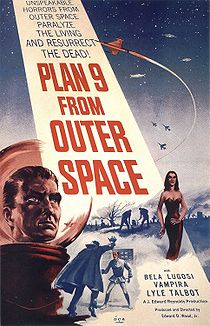
Z movie
The term Z movie (or grade-Z movie) is used by some to characterize low-budget pictures with quality standards well below those of most B and even so-called C movies. Most films referred to as Z movies are made on very small budgets by operations on the fringes of the commercial film industry. The micro-budget "quickies" of 1930s fly-by-night Poverty Row production houses may be thought of as Z movies avant la lettre. The films of director Ed Wood, such as Glen or Glenda (1953) and Plan 9 from Outer SpacePlan 9 from Outer Space
Plan 9 from Outer Space is a 1959 science fiction film written and directed by Edward D. Wood, Jr. The film features Gregory Walcott, Mona McKinnon, Tor Johnson and Maila "Vampira" Nurmi...
(1959)—frequently cited as one of the worst pictures ever made—exemplify the classic grade-Z movie. Latter-day Zs are often characterized by violent, gory, and/or sexual content and a minimum of artistic interest; much of this product is destined for the subscription TV equivalent of the grindhouse.
Psychotronic movie
Psychotronic movie is a term coined by film critic Michael J. Weldon—referred to by a fellow critic as "the historian of marginal movies"—to denote the sort of low-budget genre pictures that are generally disdained or ignored entirely by the critical establishment. Weldon's immediate source for the term was the Chicago cult film The Psychotronic ManThe Psychotronic Man
The Psychotronic Man is a low budget science fiction cult film that opened in Chicago April 23, 1980 at the Carnegie Theatre. It was directed by Jack M. Sell and written, produced and starred Peter G. Spelson. This film is considered noteworthy for three distinct reasons. The first is that the...
(1980), whose titular character is a barber who develops the ability to kill using psychic energy. According to Weldon, "My original idea with that word is that it's a two-part word. 'Psycho' stands for the horror movies, and 'tronic' stands for the science fiction movies. I very quickly expanded the meaning of the word to include any kind of exploitation or B-movie." The term, popularized beginning in the 1980s with publications of Weldon's such as The Psychotronic Encyclopedia of Film and Psychotronic Video
Psychotronic Video
Psychotronic Video was a film magazine originally started by publisher/editor Michael J. Weldon in 1980 in New York City as a hand-written and photocopied weekly fanzine entitled Psychotronic TV. It was then relaunched by Weldon under its more commonly known name as an offset quarterly in 1989...
magazine, has subsequently been adopted by other critics and fans. Use of the term tends to emphasize a focus on and affection for those B movies that lend themselves to appreciation as camp
Camp (style)
Camp is an aesthetic sensibility that regards something as appealing because of its taste and ironic value. The concept is closely related to kitsch, and things with camp appeal may also be described as being "cheesy"...
.
Sources
- Archer, Eugene (1960). "'House of Usher': Poe Story on Bill With 'Why Must I Die?'" The New York TimesThe New York TimesThe New York Times is an American daily newspaper founded and continuously published in New York City since 1851. The New York Times has won 106 Pulitzer Prizes, the most of any news organization...
, September 15 (available online). - Auty, Chris (2005). "The Amazing Colossal Man," in Pym, Time Out Film Guide, p. 34.
- Balio, Tino (1995 [1993]). Grand Design: Hollywood as a Modern Business Enterprise, 1930–1939. Berkeley, Los Angeles, and London: University of California Press. ISBN 0-520-20334-8
- Berra, John (2008). Declarations of Independence: American Cinema and the Partiality of Independent Production. Bristol, UK, and Chicago: Intellect. ISBN 1-84150-185-9
- Biskind, Peter (1998). Easy Riders, Raging Bulls: How the Sex-Drugs-and-Rock'n'Roll Generation Saved Hollywood. New York: Simon & Schuster. ISBN 0-684-80996-6
- Braucort, Guy (1970). "Interview with Don Siegel", in Focus on the Science Fiction Film (1972), ed. William Johnson, pp. 74–76. Englewood Cliffs, N.J.: Prentice-Hall. ISBN 0-13-795161-2
- Cagin, Seth, and Philip Dray (1984). Hollywood Films of the Seventies. New York: Harper & Row. ISBN 0-06-091117-4
- Canby, Vincent (1969). "By Russ Meyer," The New York TimesThe New York TimesThe New York Times is an American daily newspaper founded and continuously published in New York City since 1851. The New York Times has won 106 Pulitzer Prizes, the most of any news organization...
, September 6 (available online). - Canby, Vincent (1984). "Down-and-Out Youths in 'Suburbia'", The New York TimesThe New York TimesThe New York Times is an American daily newspaper founded and continuously published in New York City since 1851. The New York Times has won 106 Pulitzer Prizes, the most of any news organization...
, April 13 (available online). - Chapman, James (2000). Licence to Thrill: A Cultural History of the James Bond Films. New York and Chichester, West Sussex: Columbia University Press. ISBN 0-231-12049-4
- Collum, Jason Paul (2004). Assault of the Killer B's: Interviews with 20 Cult Film Actresses. Jefferson, N.C., and London: McFarland. ISBN 0-7864-1818-4
- Cook, David A. (2000). Lost Illusions: American Cinema in the Shadow of Watergate and Vietnam, 1970–1979. Berkeley, Los Angeles, and London: University of California Press. ISBN 0-520-23265-8
- Corman, Roger, with Jim Jerome (1998). How I Made a Hundred Movies in Hollywood and Never Lost a Dime, new ed. New York: Da Capo. ISBN 0-306-80874-9
- Cousins, Mark (2004). The Story of Film. New York: Thunder's Mouth. ISBN 1-56025-612-5
- Davies, Adam P., and Nicol Wistreich (2007). The Film Finance Handbook: How to Fund Your Film. London: Netribution. ISBN 0-9550143-2-8
- Denby, David (1985). "Where the Coyotes Howl", New York, January 21, pp. 51–53.
- Denisoff, R. Serge, and William D. Romanowski (1991). Risky Business: Rock in Film. New Brunswick, N.J.: Transaction. ISBN 0-88738-843-4
- Desser, David (2000). "The Kung Fu Craze: Hong Kong Cinema's First American Reception", in The Cinema of Hong Kong: History, Arts, Identity, ed. Poshek Fu and David Desser, pp. 19–43. Cambridge, UK, and New York: Cambridge University Press. ISBN 0-521-77235-4
- Di Franco, J. Philip, ed. (1979). The Movie World of Roger Corman. New York and London: Chelsea House. ISBN 0-87754-050-0
- Ebert, Roger (1974). "The Texas Chainsaw Massacre," Chicago Sun-Times, January 1 (available online).
- Epstein, Edward Jay (2005). The Big Picture: The New Logic of Money and Power in Hollywood. New York: Random House. ISBN 1-4000-6353-1
- Finler, Joel W. (2003). The Hollywood Story, 3d ed. London and New York: Wallflower. ISBN 1-903364-66-3
- Frank, Allan G. (1998). The Films of Roger Corman: "Shooting My Way out of Trouble". London: B.T. Batsford. ISBN 0-7134-8272-9
- Frasier, David K. (1997 [1990]). Russ Meyer—The Life and Films. Jefferson, N.C.: McFarland. ISBN 0-7864-0472-8
- Goodwin, Doris Kearns (1987). The Fitzgeralds and the Kennedys: An American Saga. New York: Simon & Schuster. ISBN 0-671-23108-1
- Greenspun, Roger (1973). "Guercio's 'Electra Glide in Blue' Arrives: Director Makes Debut With a Mystery," The New York TimesThe New York TimesThe New York Times is an American daily newspaper founded and continuously published in New York City since 1851. The New York Times has won 106 Pulitzer Prizes, the most of any news organization...
, August 20 (available online). - Haines, Richard W. (2003). The Moviegoing Experience, 1968–2001. Jefferson, N.C., and London: McFarland. ISBN 0-7864-1361-1
- Halperin, James L., ed. (2006). Heritage Signature Vintage Movie Poster Auction #636. Dallas: Heritage Capital. ISBN 1-59967-060-7
- Harper, Jim (2004). Legacy of Blood: A Comprehensive Guide to Slasher Movies. Manchester, UK: Headpress. ISBN 1-900486-39-3
- Heffernan, Kevin (2004). Ghouls, Gimmicks, and Gold: Horror Films and the American Movie Business, 1953–1968. Durham, N.C., and London: Duke University Press. ISBN 0-8223-3215-9
- Hirschhorn, Clive (1979). The Warner Bros. Story. New York: Crown. ISBN 0-517-53834-2
- Hirschhorn, Clive (1999). The Columbia Story. London: Hamlyn. ISBN 0-600-59836-5
- Hoberman, J., and Jonathan Rosenbaum (1983). Midnight Movies. New York: Da Capo. ISBN 0-306-80433-6
- Hollows, Joanne (2003). "The Masculinity of Cult," in Defining Cult Movies: The Cultural Politics of Oppositional Taste, ed. Mark Jancovich, pp. 35–53. Manchester, UK, and New York: Manchester University Press. ISBN 0-7190-6631-X
- Hunter, I. Q. (2009). "Exploitation as Adaptation", in Cultural Borrowings: Appropriation, Reworking, Transformation, ed. Iain Robert Smith, pp. 8–33. Nottingham: Scope. ISBN 978-0-9564641-0-1 (available online).
- Hurd, Mary G. (2007). Women Directors and Their Films. Westport, Conn.: Greenwood. ISBN 0-275-98578-4
- James, David E. (2005). The Most Typical Avant-Garde: History and Geography of Minor Cinemas in Los Angeles. Berkeley, Los Angeles, and London: University of California Press. ISBN 0-520-24257-2
- Jewell, Richard B., with Vernon Harbin (1982). The RKO Story. New York: Arlington House/Crown. ISBN 0-517-54656-6
- Kael, Pauline (1973). "Un-People," in her Reeling (1976), pp. 263–79. New York: Warner. ISBN 0-446-83420-3
- Kauffman, Linda S. (1998). Bad Girls and Sick Boys: Fantasies in Contemporary Art and Culture. Berkeley, Los Angeles, and London: University of California Press. ISBN 0-520-21032-8
- King, Geoff (2005). American Independent Cinema. London and New York: I.B. Tauris. ISBN 1-85043-937-0
- Kinnard, Roy (1988). Beasts and Behemoths: Prehistoric Creatures in the Movies. Lanham, Md.: Rowman & Littlefield. ISBN 0-8108-2062-5
- Komiya, Megumi, and Barry Litman, "The Economics of the Prerecorded Videocassette Industry," in Social and Cultural Aspects of VCR Use, ed. Julia R. Dobrow, pp. 25–44. Hillsdale, N.J.: Lawrence Erlbaum. ISBN 0-8058-0499-4
- Landis, Bill, and Michelle Clifford (2002). Sleazoid Express: A Mind-Twisting Tour through the Grindhouse Cinema of Times Square. New York: Fireside/Simon & Schuster. ISBN 0-7432-1583-4
- Langford, Barry (2005). Film Genre: Hollywood and Beyond, 2d ed. Edinburgh: Edinburgh University Press. ISBN 0-7486-1903-8
- Lasky, Betty (1989). RKO: The Biggest Little Major of Them All. Santa Monica, Calif.: Roundtable. ISBN 0-915677-41-5
- Lawrence, Novotny (2008). Blaxploitation Films of the 1970s: Blackness and Genre. New York and London: Routledge. ISBN 0-415-96097-5
- Lentz, Harris M. (2002). Obituaries in the Performing Arts, 2001. Jefferson, N.C.: McFarland. ISBN 0-7864-1278-X
- Lev, Peter (2003). Transforming the Screen: 1950–1959. New York et al.: Thomson-Gale. ISBN 0-684-80495-6
- Levine, Elena (2007). Wallowing in Sex: The New Sexual Culture of 1970s American Television. Durham, N.C.: Duke University Press. ISBN 0-8223-3919-6
- Lewis, Jon (2002). Hollywood v. Hard Core: How the Struggle over Censorship Created the Modern Film Industry. New York: New York University Press. ISBN 0-8147-5143-1
- Loy, R. Philip (2004). Westerns in a Changing America, 1955–2000. Jefferson, N.C., and London: McFarland. ISBN 0-7864-1871-0
- Lubasch, Arnold H. (1979). "Allied Artists Seeks Help Under Bankrupcty Act; Allied Artists Files Chapter XI," The New York TimesThe New York TimesThe New York Times is an American daily newspaper founded and continuously published in New York City since 1851. The New York Times has won 106 Pulitzer Prizes, the most of any news organization...
, April 5. - Lyons, Arthur (2000). Death on the Cheap: The Lost B Movies of Film Noir. New York: Da Capo. ISBN 0-306-80996-6
- Maltby, Richard (2000). "'The Problem of Interpretation...': Authorial and Institutional Intentions In and Around Kiss Me Deadly," Screening the Past (June 30, available online).
- Mank, Gregory William (2001). Hollywood Cauldron: 13 Horror Films from the Genre's Golden Age. Jefferson, N.C., and London: McFarland. ISBN 0-7864-1112-0
- Maslin, Janet (1997). "An Orgy of Bent Fenders and Bent Love," The New York TimesThe New York TimesThe New York Times is an American daily newspaper founded and continuously published in New York City since 1851. The New York Times has won 106 Pulitzer Prizes, the most of any news organization...
, March 21 (available online). - Mathijs, Ernest, and Xavier Mendik,eds. (2008). The Cult Film Reader. Maidenhead and New York: Open University Press. ISBN 0-335-21924-1
- Matthews, Melvin E. (2007). Hostile Aliens, Hollywood, and Today's News: 1950s Science Fiction Films and 9/11. New York: Algora. ISBN 0-87586-497-X
- McCarthy, Todd, and Charles Flynn, eds. (1975). Kings of the Bs: Working Within the Hollywood System—An Anthology of Film History and Criticism. New York: E.P. Dutton. ISBN 0-525-47378-5
- McGilligan, Patrick (1996). Jack's Life: A Biography of Jack Nicholson. New York: W. W. Norton. ISBN 0-393-31378-6
- Merritt, Greg (2000). Celluloid Mavericks: The History of American Independent Film. New York: Thunder's Mouth. ISBN 1-56025-232-4
- Milne, Tom (2005). "Electra Glide in Blue," in Pym, Time Out Film Guide, p. 389.
- Morrow, John (1996). "Cinekirbyesque: Examining Jack's Deal with Empire Pictures," Jack Kirby Collector 12 (July).
- Mottram, James (2006). The Sundance Kids: How the Mavericks Took Back Hollywood. New York: Macmillan. ISBN 0-571-22267-6
- Muller, Eddie (1998). Dark City: The Lost World of Film Noir. New York: St. Martin's. ISBN 0-312-18076-4
- Nachbar, Jack, ed. (1974). Focus on the Western. Englewood Cliffs, N.J.: Prentice-Hall. ISBN 0-13-950626-8
- Naremore, James (1998). More Than Night: Film Noir in Its Contexts. Berkeley, Los Angeles, and London: University of California Press. ISBN 0-520-21294-0
- Nason, Richard (1959). "Weak 'Hercules'; Italian-Made Spectacle Opens at 135 Theatres," The New York TimesThe New York TimesThe New York Times is an American daily newspaper founded and continuously published in New York City since 1851. The New York Times has won 106 Pulitzer Prizes, the most of any news organization...
, July 23 (available online). - O'Connor, John J. (1995). "Horror Hero of the 90's, Half Man, Half Bomb," The New York TimesThe New York TimesThe New York Times is an American daily newspaper founded and continuously published in New York City since 1851. The New York Times has won 106 Pulitzer Prizes, the most of any news organization...
, July 11 (available online). - Oppermann, Michael (1996). "Ed Wood" (film review), Journal of American Studies of Turkey 3 (spring, available online).
- Ottoson, Robert (1981). A Reference Guide to the American Film Noir: 1940–1958. Metuchen, N.J., and London: Scarecrow Press. ISBN 0-8108-1363-7
- Paul, William (1994). Laughing, Screaming: Modern Hollywood Horror and Comedy. New York: Columbia University Press. ISBN 0-231-08464-1
- Petit, Chris (2005). "The Winged Serpent (aka Q—The Winged Serpent)," in Pym, Time Out Film Guide, p. 1481.
- Prince, Stephen (2002). A New Pot of Gold: Hollywood Under the Electronic Rainbow, 1980–1989. Berkeley: University of California Press. ISBN 0-520-23266-6
- Pym, John, ed. (2005). Time Out Film Guide, 14th ed. London et al.: Time Out. ISBN 1-904978-87-8
- Quarles, Mike (2001 [1993]). Down and Dirty: Hollywood's Exploitation Filmmakers and Their Movies. Jefferson, N.C.: McFarland. ISBN 0-7864-1142-2
- Rabiger, Michael (2008). Directing: Film Techniques and Aesthetics, 4th ed. Burlington, Mass.: Focal Press. ISBN 0-240-80882-7
- Rausch, Andrew J., with Michael Dequina (2008). Fifty Filmmakers: Conversations with Directors from Roger Avary to Steven Zaillian. Jefferson, N.C.: McFarland. ISBN 0-7864-3149-0
- Reid, John Howard (2005a). Hollywood 'B' Movies: A Treasury of Spills, Chills & Thrills. Morrisville, N.C.: Lulu. ISBN 1-4116-5065-4
- Reid, John Howard (2005b). Movie Westerns: Hollywood Films the Wild, Wild West. Morrisville, N.C.: Lulu. ISBN 1-4116-6610-0
- Rockoff, Adam (2002). Going to Pieces: The Rise and Fall of the Slasher Film, 1978–1986. Jefferson, N.C., and London: McFarland. ISBN 0-7864-1227-5
- Reynaud, Bérénice (2006). "Wanda's Shattered Lives" (booklet accompanying Parlour Pictures DVD release of Wanda).
- Rubin, Martin (1999). Thrillers. Cambridge, UK, and New York: Cambridge University Press. ISBN 0-521-58183-4
- Russell, Carolyn R. (2001). The Films of Joel and Ethan Coen. Jefferson, N.C., and London: McFarland. ISBN 0-7864-0973-8
- Sapolsky, Barry S., and Fred Molitor (1996). "Content Trends in Contemporary Horror Films," in Horror Films: Current Research on Audience Preferences and Reactions, ed. James B. Weaver, pp. 33–48. Mahwah, N.J.: Lawrence Erlbaum. ISBN 0-8058-1174-5
- Schaefer, Eric (1992). "Of Hygiene and Hollywood: Origins of the Exploitation Film", in Hollywood: Critical Concepts in Media and Cultural Studies—Vol. 1: Historical Dimensions: The Development of the American Film Industry (2004), ed. Thomas Schatz, pp. 161–80 (originally published in The Velvet Light Trap 30). New York and London: Routledge. ISBN 0-415-28131-8
- Schaefer, Eric (1999). "Bold! Daring! Shocking! True!": A History of Exploitation Films, 1919–1959. Durham, N.C., and London: Duke University Press. ISBN 0-8223-2374-5
- Schatz, Thomas (1993). "The New Hollywood", in Film Theory Goes to the Movies: Cultural Analysis of Contemporary Film, ed. Jim Collins, Hilary Radner, and Ava Preacher Collins, pp. 8–36. New York and London: Routledge. ISBN 0-415-90575-3
- Schatz, Thomas (1998 [1989]). The Genius of the System: Hollywood Filmmaking in the Studio Era. London: Faber and Faber. ISBN 0-571-19596-2
- Schatz, Thomas (1999 [1997]). Boom and Bust: American Cinema in the 1940s. Berkeley, Los Angeles, and London: University of California Press. ISBN 0-520-22130-3
- Schneider, Steven Jay, and Tony Williams (2005). Horror International. Detroit: Wayne State University Press. ISBN 0-8143-3101-7
- Schrader, Paul (1972). "Notes on Film Noir", in Silver and Ursini, Film Noir Reader, pp. 53–63 (originally published in Film Comment 8, no. 1).
- Scott, A. O. (2005). "Where Have All the Howlers Gone?" The New York TimesThe New York TimesThe New York Times is an American daily newspaper founded and continuously published in New York City since 1851. The New York Times has won 106 Pulitzer Prizes, the most of any news organization...
, "Arts & Leisure," December 18. - Segrave, Kerry (1992). Drive-In Theaters: A History from Their Inception in 1933. Jefferson, N.C., and London: McFarland. ISBN 0-89950-752-2
- Shapiro, Jerome F. (2002). Atomic Bomb Cinema: The Apocalyptic Imagination on Film. New York and London: Routledge. ISBN 0-415-93659-4
- Silver, Alain (1995). "Kiss Me Deadly: Evidence of a Style", rev. ver., in Silver and Ursini, Film Noir Reader, pp. 209–35.
- Silver, Alain, and James Ursini, eds. (1996). Film Noir Reader. Pompton Plains, N.J.: Limelight. ISBN 0-87910-197-0
- Staiger, Janet (2000). Blockbuster TV: Must-see Sitcoms in the Network Era. New York and London: New York University Press. ISBN 0-8147-9757-1
- Stevenson, Jack (2003). Land of a Thousand Balconies: Discoveries and Confessions of a B-Movie Archaeologist. Manchester, UK: Headpress/Critical Vision. ISBN 1-900486-23-7
- Strawn, Linda May (1975 [1974]). "Samuel Z. Arkoff [interview]", in McCarthy and Flynn, Kings of the Bs, pp. 255–66.
- Syder, Andrew, and Dolores Tierney (2005). "Importation/Mexploitation, or, How a Crime-Fighting, Vampire-Slaying Mexican Wrestler Almost Found Himself in an Italian Sword-and-Sandals Epic", in Schneider and Williams, Horror International, pp. 33–55.
- Taves, Brian (1995 [1993]). "The B Film: Hollywood's Other Half", in Balio, Grand Design, pp. 313–50.
- Thompson, Howard (1960). "'Hercules Unchained' Heads Twin Bill", The New York TimesThe New York TimesThe New York Times is an American daily newspaper founded and continuously published in New York City since 1851. The New York Times has won 106 Pulitzer Prizes, the most of any news organization...
, July 14 (available online). - Tuska, Jon (1974). "The American Western Cinema: 1903–Present", in Nachbar, Focus on the Western, pp. 25–43.
- Tuska, Jon (1999). The Vanishing Legion: A History of Mascot Pictures, 1927–1935. Jefferson, N.C.: McFarland. ISBN 0-7864-0749-2
- Van Peebles, Melvin (2003). "The Real Deal: What It
Was... Is! Sweet Sweetback's Baadasssss Song" (commentary accompanying Xenon Entertainment DVD release of Sweet Sweetback's Baadasssss Song). - Warren, Bill (2001). The Evil Dead Companion. New York: St. Martin's. ISBN 0-312-27501-3
- Waterman, David (2005). Hollywood's Road to Riches. Cambridge, Mass.: Harvard University Press. ISBN 0-674-01945-8
- West, Richard (1974). "Scariest Movie Ever?", Texas Monthly, March, p. 9.
- Williams, Tony (1996). Hearths of Darkness: The Family in the American Horror Film. Cranbury, N.J., London, and Mississauga, Ontario: Associated University Presses. ISBN 0-8386-3564-4
- Willis, Sharon (1997). High Contrast: Race and Gender in Contemporary Hollywood Film. Durham, N.C.: Duke University Press. ISBN 0-8223-2041-X
- Wood, Robin (2003). Hollywood from Vietnam to Reagan—and Beyond, exp. and rev. ed. New York and Chichester, West Sussex: Columbia University Press. ISBN 0-231-12967-X
- Wyatt, Justin (1998). "The Formation of the 'Major Independent': Miramax, New Line, and the New Hollywood", in Contemporary Hollywood Cinema, ed. Stephen Neale and Murray Smith, pp. 74–90. New York and London: Routledge. ISBN 0-415-17010-9
- Zeitchik, Steven, and Nicole Laporte (2006). "Atomic Label Proves a Blast for Fox", Variety, November 19 (available online).
External links
- The Biology of B-Movie Monsters analysis by Professor Michael C. LaBarbera, University of Chicago
Interviews of B movie professionals