

Slasher film

Encyclopedia
A slasher film is a type of horror film
typically involving a psychopathic
killer stalking and killing a sequence of victims in a graphically violent manner, often with a cutting tool such as a knife
or axe
. Although the term "slasher" may be used as a generic term for any horror movie involving graphic acts of murder, the slasher as a genre has its own set of characteristics which set it apart from related genres like the splatter film
.
(1932) tells the story of an old college sorority whose former members are set against one another by a vengeful peer, seeking penance for the prejudice they bestowed on her because of her mixed race heritage. Another film important to the sub-genre is Michael Powell
's Peeping Tom
(1960). The film's plot centers around a man who kills women while using a portable movie camera to record their dying expressions. The film was immensely controversial when first released; critics called it misogynistic (as would critics condemn the slasher films during its golden age). Alfred Hitchcock
's Psycho
(1960), released three months after Peeping Tom, is described as 'the mother of all slasher films' and is the first true slasher film. Even though the villain's body count is only two, the film's "whodunit
" plot structure, knife wielding and mentally disturbed killer, twist ending, and 'stalking' camera technique anticipates the gorier films of the 1980s. However, the famous shower sequence has, in itself, become a classic of horror cinema, and the film itself hailed by contemporary critics as a modern masterpiece. Another early pioneer of the sub-genre is director Francis Ford Coppola
's controversial 1963 film Dementia 13
, which was rushed into production following Psychos success at the box office.
," invented the splatter film in 1963 with the release of Blood Feast
. Blood Feast was made quickly and cheaply but differed from its genre contemporaries in that it featured the stalking and mutilation of beautiful women. Lewis went on to use this successful formula to make movies such as 2000 Maniacs, Color Me Blood Red
and The Gruesome Twosome.
genre. This film genre was made up of films done by various Italian directors, most notably Dario Argento
and Mario Bava
. These films were known for extended, graphic murder sequences and bizarre storylines. Probably the most notable are Bava's Blood and Black Lace
(1963) and Twitch of the Death Nerve
(1971). Several critics have noted that the films had profound impact on the development of slasher film sub-genre. Writing in 2000, Tim Lucas wrote that Bava is “the acknowledged smoking gun behind the ‘body count’ movie phenomenon of the 1980s, which continues to dominate the horror genre two decades later with such films as Scream
, I Know What You Did Last Summer
, and their respective sequels.” According to Gary Johnson, “Twitch of the Death Nerve is one of the most imitated movies of the past 30 years. It helped kick start the slasher genre….[Bava’s] influence still resonates today (although somewhat dully) in movies such as I Know What You Did Last Summer, Scream, and Urban Legend
.”. Johnson also states of Blood and Black Lace that "Equipped with his colored gels and his predatory camera, Bava arguably created the slasher subgenre and kicked down the door for subsequent directors to stick in their cinematic blades as well, for better or worse. Hitchcock toyed with us, Powell showed us but kept his emotional distance, but Bava passionately reveled in the shock of it all. Camera as weapon; the masked killer as cipher upon whom the audience was almost gleefully invited to imprint their darkest animosities. " The 1992 movie Knight Moves
has been described online as a Western Giallo, with considerable elements to the genre used in this motion picture.
s, which tended to be low budget affairs and specialize in suggestive or explicit sex, sensational violence, drug use, nudity, freaks, gore, the bizarre, destruction, rebellion, and mayhem. While such films have existed since the earliest days of moviemaking, they were popularized in the 1960s with the general relaxing of cinematic taboos in the United States and Europe. Additionally, low budget filmmakers used sensational elements to attract audiences away from television.
Important to the development of the slasher sub-genre were rape and revenge films
, notably, Wes Craven
's film Last House on the Left
(1972), one of the first of its kind. The 1970s saw a number of new filmmakers such as Wes Craven
, Tobe Hooper
, John Carpenter
and others making names for themselves in the horror genre. Many of these directors were young, but would soon be considered important to the horror genre. Slasher films are often considered exploitation films because of their use of their often low budgets, nudity, gore and shock techniques.
 Black Christmas
(1974) is widely considered the first proper slasher film. Directed by Bob Clark
(later the director of A Christmas Story
) Black Christmas was noted as one of the earliest films to present some of the sub-genre's characteristics that the slasher film would come to be known for: a mysterious stalker, a set of adolescent or young adult victims, a secluded location with little or no adult supervision, point-of-view camera shots representing the "killer's perspective," and graphic depictions of violence and murder. The film was remade
in 2006 by Dimension Films
. Other films that helped to kick-start the slasher genre were Savage Weekend
, Scream Bloody Murder
, Silent Night, Bloody Night
, The Toolbox Murders
, Drive-In Massacre, The Driller Killer
, and The Texas Chain Saw Massacre
.
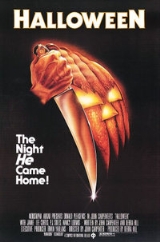
It was not until the huge box office success of John Carpenter's Halloween
(1978) and Sean S. Cunningham
's Friday the 13th (1980), both of which spawned numerous sequels and remakes and countless imitators, that the slasher genre began to gain widespread popularity.
Halloween, though not the first film of its kind, was the first to introduce the concept of the killer being a seemingly indestructible evil force, and its success is often considered the film responsible for the proliferation of the slasher trend, popularizing many of what would become key elements in the genre. A long succession of slasher films were produced, though Halloween actually has far less graphic violence than the later films that defined the slasher genre. Friday the 13th was the first to couple this type of murderer character with the sequential murder countdown, which had been seen earlier in 1945's And Then There Were None
, which was based on Agatha Christie's famous 1939 murder mystery novel of the same name
.
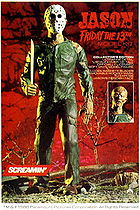 Following a trend set by Black Christmas, Halloween, and Friday the 13th (as well as To All a Good Night
, a slasher film with a Christmas setting released in January 1980 and preceding Friday the 13th by four months), many films of the era used special days or holidays as a motif. Four titles released the same year as Friday the 13th were: New Year's Evil
, Prom Night, Christmas Evil
, and Mother's Day; and 1981 saw the release of My Bloody Valentine
, Happy Birthday to Me
, and Graduation Day
. 1982's Humongous
, opened with a Labor Day weekend setting. Silent Night, Deadly Night
, released in 1984, was the fourth film of this type to use a Christmas setting, and toward the end of the cycle, a twist on the genre was seen in 1986's April Fool's Day. 1987's Blood Rage
used a Thanksgiving weekend setting.
A few films picked up Friday the 13ths "youth camp in the woods" setting, like The Burning
(1981); Madman
(1982); Sleepaway Camp
(1983); and Cheerleader Camp
(1988). Other films highlighted highschool or college settings: Terror Train
(1980), Hell Night
, Final Exam
, Night School
, the serio-comic Student Bodies
(all 1981); The Dorm That Dripped Blood
(1982); The House on Sorority Row
(1983); The Initiation, Splatter University and Girls Nite Out
(all 1984); and Slaughter High
(1986). The "hospital" setting was used at least three times in 1982 with Visiting Hours
, Alone in the Dark
, and Hospital Massacre
.
Other lesser known films during the genre's heyday include He Knows You're Alone
(1980); The Funhouse
, Just Before Dawn
, Bloody Moon, and Nightmare (all 1981); Blood Song
(1982); and Mortuary (1983). Later entries include The Mutilator
(1985); Mountaintop Motel Massacre (1986); Stage Fright (1987); and Intruder (1989). Obscure entries are Night Warning
(1982); and Curtains
and Death Screams
(both 1983).
Despite a strict formula developing within the genre, audience interest was maintained by developing new, increasingly "novel" ways for victims to be killed, as well as increasingly graphic and realistic special effect
s. Some series, such as 1984's A Nightmare on Elm Street
and later 1988's Child's Play, added supernatural twists to the slasher formula, as well as added comedic elements as the respective series progressed.
Earlier films, such as Psycho
(1960) and The Texas Chain Saw Massacre
(1974), were also revived and given a series of increasingly gory sequels in attempts to compete with other franchises. The genre arguably peaked in 1983, a year in which, according to the book Crystal Lake Memories, nearly 60% of all box-office takings were for slasher movies. Even feminists took a satirical stab at the sub-genre with Slumber Party Massacre
(1982).
, Freddy Krueger
, Ben Willis, Michael Myers
, Chucky, Ghostface
, Leprechaun, and Norman Bates
, all of whom have become some of the more recognizable 20th century American pop culture horror symbols.
, would continue to be released in theaters or direct-to-video
throughout the early to mid-1990s. However, few gained the success of the genre's earlier productions, and even entries in the established Halloween, Friday the 13th and Nightmare on Elm Street sagas became less frequent.
from Australia
, Gutterballs
from Canada
, Anatomy
from Germany
and the French
titles Haute Tension
, directed by Alexandre Aja
, who would go on to direct an American remake
of The Hills Have Eyes
, Them
and, more recently, Inside
.
Slasher films can be split into two distinct sub-types: one type in which the killer's identity is known from the outset and he is shown overtly (albeit sometimes in a mask), and one in which the killer's identity is not known and which employ a whodunnit
angle, often with a twist at the end.
There is substantial critical debate as to how to define the slasher sub-genre and what films are and are not slashers. For instance, Vera Dika rather strictly defines the sub-genre in her book Games of Terror only including films made between 1978 and 1984 where as Carol Clover in her book Men, Women, and Chainsaws
has a looser definition, including films like Texas Chainsaw Massacre and its sequels. In Peter Hutchings book The Horror Film he considers the films following the success of Halloween critically different than films prior (such as Texas Chainsaw Massacre).
Dika attempts to define the sub-genre by its often formulaic plot structure. She theorizes that the slasher films loosely adhere the following formula:
Past event
Present events
She further goes on to attempt to define the sub-genre's appeal to its audience as being threefold:
Other common characteristics include:
advocates, particularly from Christian
and Family Friendly
groups. Christian campaigner Mary Whitehouse
, had once led a crusade against video nasties
.
were warmly received because of their self-aware, parodic take on the sub-genre. Roger Ebert
coined the derogatory nickname "Dead Teenager Movies", although he did write a highly favorable review of the original Halloween. This was not the first time he had attacked the genre or coined a term for it, originally during the 80s, he and the late Gene Siskel
had a special about the term they used back then "Women in danger" films, where they said how the genre was degrading to women as it would show them at the mercy of a strong brutish man.
defined the Final Girl
in her book Men, Women and Chain Saws, Cristal Isabel Pinedo's Recreational Terror considered female spectatorship.
 In the 1990s, the horror genre was almost dead. Audiences and critics were getting very tired of the same, typical teen slasher films. With the exception of Wes Craven's New Nightmare
. The slasher genre resurfaced into the mainstream in the mid 1990s, after being deconstructed in Wes Craven's Scream
(1996), which was a parody of Halloween
which had a similar effect on the movie industry. The film was both a critical and commercial success, which attracted a new generation to the genre. A self-aware satire
of the slasher genre, whereby the characters realize they were in a horror film and did not make all the usual "mistakes" (i.e. saying "I'll be right back"). Critics lauded Scream for its fiendishly clever storyline and three-dimensional characters, with more of a focus on suspense
than gore. The script carried its own learned analysis of slasher films, and was directed by Wes Craven, a popular maestro of the genre who also created such classics as Last House on the Left
and A Nightmare on Elm Street. Followed by two equally successful sequels; both sequels starred Neve Campbell
as main character Sidney Prescott
, an attractive, intelligent and resourceful young woman whose characterization both mocks and typifies the Final Girl
stereotype. To date, it is the most commercially successful film series in the genre, earning a combined total of over $330 million in the US, and over $600 million worldwide. Scream 4
was released in April 2011.. The film received generally good reviews with Kevin Sommerfield of Slasher Studios calling it "bloody, fun, and very entertaining."
Scream kicked off a new slasher cycle that still followed the basic conventions of the 1980s films, but managed to draw in a more demographically varied audience with improved production values, reduced levels of on-screen gore, increased self-referential humor, more character development, and better-known actors and actresses (often from popular television shows). This trend continued for the duration of the 1990s with films such as a nearly shot-for-shot remake of Psycho
, I Know What You Did Last Summer
, Urban Legend
, Final Destination
, Valentine
, Cherry Falls
and Jason X
.
Chucky of the Child's Play series also returned to the screen, first in Bride of Chucky
and later with Seed of Chucky
. In 2003, two of the largest slasher series, Nightmare on Elm Street and Friday the 13th, were combined by New Line Cinema in the film Freddy vs. Jason
.
, The Pumpkin Karver
, Hellbent,Slash,Holla, MTV
's My Super Psycho Sweet 16
, Blood Night: The Legend of Mary Hatchet
, Grizzly Park
,April Fools,The Legend Of Bloody Jack, Trick 'r Treat, and many more.
with his films House of 1000 Corpses
(2003) and The Devil's Rejects
(2005). Another new director popular for paying homage is Eli Roth
, with his film Cabin Fever (2002). Adam Green
and Ryan Nicholson
, both relatively young aspiring filmmakers, are notable for directing Hatchet
and Gutterballs
respectively, billing them as throwbacks, or "love letters", to 1980s slasher films.
In 2006, Roth's second feature film, Hostel
was released following the success of Saw. Following its success at the box office, many major distributors began churning out similarly-themed gruesome horror films. This trend became known as torture porn and continues today with the release of such films as Turistas
and Captivity
.
, was conceived as a direct sequel to 1981's Halloween II
, and would lead to one further sequel, Halloween: Resurrection
.
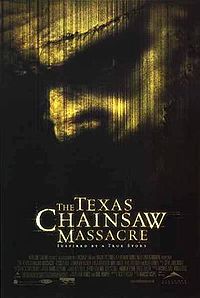
Another revival came in 2003 when a remake of The Texas Chainsaw Massacre
was released. The Texas Chainsaw Massacre: The Beginning
popularized the prequel. The success of theTCM remake would soon lead to a slew of other slasher remakes, including Toolbox Murders
, House Of Wax
, Black Christmas
, the "reimagining" of John Carpenter's Halloween
, Prom Night
, My Bloody Valentine 3D, Friday the 13th
reboot, Sorority Row
and A Nightmare on Elm Street
. A remake of Child's Play and Hellraiser
are also in development.
The Scream series
- which created the self aware characters stalked by killers
making their own horror movie
, sequel
and trilogy
- was relaunched in 2011
with Scream 4
featuring a killer recreating the Woodsboro murders, therefore remaking the original film
.
Horror film
Horror films seek to elicit a negative emotional reaction from viewers by playing on the audience's most primal fears. They often feature scenes that startle the viewer through the means of macabre and the supernatural, thus frequently overlapping with the fantasy and science fiction genres...
typically involving a psychopathic
Psychopathy
Psychopathy is a mental disorder characterized primarily by a lack of empathy and remorse, shallow emotions, egocentricity, and deceptiveness. Psychopaths are highly prone to antisocial behavior and abusive treatment of others, and are very disproportionately responsible for violent crime...
killer stalking and killing a sequence of victims in a graphically violent manner, often with a cutting tool such as a knife
Knife
A knife is a cutting tool with an exposed cutting edge or blade, hand-held or otherwise, with or without a handle. Knives were used at least two-and-a-half million years ago, as evidenced by the Oldowan tools...
or axe
Axe
The axe, or ax, is an implement that has been used for millennia to shape, split and cut wood; to harvest timber; as a weapon; and as a ceremonial or heraldic symbol...
. Although the term "slasher" may be used as a generic term for any horror movie involving graphic acts of murder, the slasher as a genre has its own set of characteristics which set it apart from related genres like the splatter film
Splatter film
A splatter film or gore film is a subgenre of horror film that deliberately focuses on graphic portrayals of gore and graphic violence. These films, through the use of special effects and excessive blood and guts, tend to display an overt interest in the vulnerability of the human body and the...
.
Forerunners
Possibly the earliest film that could be called a slasher, Thirteen WomenThirteen Women
Thirteen Women is a psychological thriller film, produced by David O. Selznick and directed by George Archainbaud. It starred Myrna Loy, Irene Dunne, Ricardo Cortez, Florence Eldridge and Jill Esmond...
(1932) tells the story of an old college sorority whose former members are set against one another by a vengeful peer, seeking penance for the prejudice they bestowed on her because of her mixed race heritage. Another film important to the sub-genre is Michael Powell
Michael Powell (director)
Michael Latham Powell was a renowned English film director, celebrated for his partnership with Emeric Pressburger...
's Peeping Tom
Peeping Tom (film)
Peeping Tom is a 1960 British psychological thriller directed by Michael Powell and written by the World War II cryptographer and polymath Leo Marks. The title derives from the slang expression 'peeping Tom' describing a voyeur...
(1960). The film's plot centers around a man who kills women while using a portable movie camera to record their dying expressions. The film was immensely controversial when first released; critics called it misogynistic (as would critics condemn the slasher films during its golden age). Alfred Hitchcock
Alfred Hitchcock
Sir Alfred Joseph Hitchcock, KBE was a British film director and producer. He pioneered many techniques in the suspense and psychological thriller genres. After a successful career in British cinema in both silent films and early talkies, Hitchcock moved to Hollywood...
's Psycho
Psycho (1960 film)
Psycho is a 1960 American suspense/psychological horror film directed by Alfred Hitchcock and starring Janet Leigh and Anthony Perkins. The film is based on the screenplay by Joseph Stefano, who adapted it from the 1959 novel of the same name by Robert Bloch...
(1960), released three months after Peeping Tom, is described as 'the mother of all slasher films' and is the first true slasher film. Even though the villain's body count is only two, the film's "whodunit
Whodunit
A whodunit or whodunnit is a complex, plot-driven variety of the detective story in which the puzzle is the main feature of interest. The reader or viewer is provided with clues from which the identity of the perpetrator of the crime may be deduced before the solution is revealed in the final...
" plot structure, knife wielding and mentally disturbed killer, twist ending, and 'stalking' camera technique anticipates the gorier films of the 1980s. However, the famous shower sequence has, in itself, become a classic of horror cinema, and the film itself hailed by contemporary critics as a modern masterpiece. Another early pioneer of the sub-genre is director Francis Ford Coppola
Francis Ford Coppola
Francis Ford Coppola is an American film director, producer and screenwriter. He is widely acclaimed as one of Hollywood's most innovative and influential film directors...
's controversial 1963 film Dementia 13
Dementia 13
Dementia 13 is a 1963 horror thriller released by American International Pictures, starring William Campbell, Patrick Magee, and Luana Anders. The film was written and directed by Francis Ford Coppola and produced by Roger Corman...
, which was rushed into production following Psychos success at the box office.
The "splatter film"
The self-proclaimed "guru of gore, Herschell Gordon LewisHerschell Gordon Lewis
Herschell Gordon Lewis is an American filmmaker, best known for creating the "splatter film" subgenre of horror...
," invented the splatter film in 1963 with the release of Blood Feast
Blood Feast
Blood Feast is a 1963 American horror film directed by Herschell Gordon Lewis, often considered the first "splatter film". It was produced by David F. Friedman. The screenplay was written by Alison Louise Downe, who had previously appeared in several of Lewis' other films. Lewis also wrote the...
. Blood Feast was made quickly and cheaply but differed from its genre contemporaries in that it featured the stalking and mutilation of beautiful women. Lewis went on to use this successful formula to make movies such as 2000 Maniacs, Color Me Blood Red
Color Me Blood Red
Color Me Blood Red is a low budget 1965 horror film directed and written by Herschell Gordon Lewis. Color Me Blood Red is the third part of what the director's fans have dubbed "The Blood Trilogy", including Blood Feast and Two Thousand Maniacs! .-Film synopsis:An eccentric artist is criticized by...
and The Gruesome Twosome.
The Italian "giallo"
Another influence for the slasher sub-genre was the Italian GialloGiallo
Giallo is an Italian 20th century genre of literature and film, which in Italian indicates crime fiction and mystery. In the English language it refers to a genre similar to the French fantastique genre and includes elements of horror fiction and eroticism...
genre. This film genre was made up of films done by various Italian directors, most notably Dario Argento
Dario Argento
Dario Argento is an Italian film director, producer and screenwriter. He is best known for his work in the horror film genre, particularly in the subgenre known as giallo, and for his influence on modern horror and slasher movies....
and Mario Bava
Mario Bava
Mario Bava was an Italian director, screenwriter, and cinematographer remembered as one of the greatest names from the "golden age" of Italian horror films.-Biography:Mario Bava was born in San Remo, Liguria, Italy...
. These films were known for extended, graphic murder sequences and bizarre storylines. Probably the most notable are Bava's Blood and Black Lace
Blood and Black Lace
Blood and Black Lace is a 1964 Italian thriller film directed by Mario Bava. Bava cowrote the screenplay with Giuseppe Barilla and Marcello Fondato. The film stars Cameron Mitchell and Eva Bartok...
(1963) and Twitch of the Death Nerve
Twitch of the Death Nerve
Twitch of the Death Nerve is a 1971 Italian horror film directed by Mario Bava. Bava cowrote the screenplay with Giuseppe Zaccariello, Filippo Ottoni and Sergio Canevari, with story credit given to Dardano Sacchetti and Franco Barberi. The film stars Claudine Auger, Luigi Pistilli, and Laura...
(1971). Several critics have noted that the films had profound impact on the development of slasher film sub-genre. Writing in 2000, Tim Lucas wrote that Bava is “the acknowledged smoking gun behind the ‘body count’ movie phenomenon of the 1980s, which continues to dominate the horror genre two decades later with such films as Scream
Scream (film)
Scream is a 1996 American slasher film written by Kevin Williamson and directed by Wes Craven. The film stars Neve Campbell, Courteney Cox, Drew Barrymore, and David Arquette...
, I Know What You Did Last Summer
I Know What You Did Last Summer
I Know What You Did Last Summer is a 1997 American horror film. The film stars Jennifer Love Hewitt, Sarah Michelle Gellar, Ryan Phillippe and Freddie Prinze Jr. The screenplay was written by Kevin Williamson, writer of Scream, and very loosely based on Lois Duncan's popular novel of the same title...
, and their respective sequels.” According to Gary Johnson, “Twitch of the Death Nerve is one of the most imitated movies of the past 30 years. It helped kick start the slasher genre….[Bava’s] influence still resonates today (although somewhat dully) in movies such as I Know What You Did Last Summer, Scream, and Urban Legend
Urban Legend (film)
Urban Legend is a 1998 horror film starring Alicia Witt, Rebecca Gayheart, Jared Leto, Michael Rosenbaum, Natasha Gregson Wagner, Loretta Devine, Robert Englund, John Neville, Joshua Jackson, Regina King, and Tara Reid...
.”. Johnson also states of Blood and Black Lace that "Equipped with his colored gels and his predatory camera, Bava arguably created the slasher subgenre and kicked down the door for subsequent directors to stick in their cinematic blades as well, for better or worse. Hitchcock toyed with us, Powell showed us but kept his emotional distance, but Bava passionately reveled in the shock of it all. Camera as weapon; the masked killer as cipher upon whom the audience was almost gleefully invited to imprint their darkest animosities. " The 1992 movie Knight Moves
Knight Moves
Knight Moves is a 1992 American thriller film, directed by Carl Schenkel and written by Brad Mirman, about a chess grandmaster who is accused of several grisly murders.-Synopsis:...
has been described online as a Western Giallo, with considerable elements to the genre used in this motion picture.
The "exploitation film"
The 1970s were arguably the Golden Age for exploitation filmExploitation film
Exploitation film is a type of film that is promoted by "exploiting" often lurid subject matter. The term "exploitation" is common in film marketing, used for all types of films to mean promotion or advertising. These films then need something to exploit, such as a big star, special effects, sex,...
s, which tended to be low budget affairs and specialize in suggestive or explicit sex, sensational violence, drug use, nudity, freaks, gore, the bizarre, destruction, rebellion, and mayhem. While such films have existed since the earliest days of moviemaking, they were popularized in the 1960s with the general relaxing of cinematic taboos in the United States and Europe. Additionally, low budget filmmakers used sensational elements to attract audiences away from television.
Important to the development of the slasher sub-genre were rape and revenge films
Rape and revenge films
Rape and revenge films are a subgenre of exploitation film that was particularly popular in the 1970s. Rape/revenge movies generally follow the same three act structure:...
, notably, Wes Craven
Wes Craven
Wesley Earl "Wes" Craven is an American actor, film director, writer, producer, perhaps best known as the director of many horror films, particularly slasher films, including the famed A Nightmare on Elm Street and Wes Craven's New Nightmare, featuring the iconic Freddy Krueger character, the...
's film Last House on the Left
The Last House on the Left (1972 film)
The Last House on the Left is a 1972 horror film written and directed by Wes Craven and produced by Sean S. Cunningham.The story is inspired by the 1960 Swedish film The Virgin Spring, directed by Ingmar Bergman, which in turn is based on the 13th century Swedish ballad "Töres döttrar i Wänge"...
(1972), one of the first of its kind. The 1970s saw a number of new filmmakers such as Wes Craven
Wes Craven
Wesley Earl "Wes" Craven is an American actor, film director, writer, producer, perhaps best known as the director of many horror films, particularly slasher films, including the famed A Nightmare on Elm Street and Wes Craven's New Nightmare, featuring the iconic Freddy Krueger character, the...
, Tobe Hooper
Tobe Hooper
Tobe Hooper is an American film director and screenwriter, best known for his work in the horror film genre. His works include the cult classic The Texas Chain Saw Massacre , along with its first sequel, The Texas Chainsaw Massacre 2 ; the three-time Emmy-nominated Stephen King film adaptation...
, John Carpenter
John Carpenter
John Howard Carpenter is an American film director, screenwriter, producer, editor, composer, and occasional actor. Although Carpenter has worked in numerous film genres in his four-decade career, his name is most commonly associated with horror and science fiction.- Early life :Carpenter was born...
and others making names for themselves in the horror genre. Many of these directors were young, but would soon be considered important to the horror genre. Slasher films are often considered exploitation films because of their use of their often low budgets, nudity, gore and shock techniques.
Early slashers
Black Christmas (1974 film)
Black Christmas is a 1974 Canadian slasher film directed by Bob Clark and written by A. Roy Moore, and largely based on a series of murders that took place in Quebec, Canada around Christmas time. The film's score is by Carl Zittrer. It was distributed by Ambassador Film Distributors in Canada and...
(1974) is widely considered the first proper slasher film. Directed by Bob Clark
Bob Clark
Benjamin "Bob" Clark was an American actor, director, screenwriter and producer best known for directing and writing the script with Jean Shepherd to the 1983 Christmas film A Christmas Story...
(later the director of A Christmas Story
A Christmas Story
A Christmas Story is a 1983 American Christmas comedy film based on the short stories and semi-fictional anecdotes of author and raconteur Jean Shepherd, including material from his books In God We Trust, All Others Pay Cash, and Wanda Hickey's Night of Golden Memories. It was directed by Bob Clark...
) Black Christmas was noted as one of the earliest films to present some of the sub-genre's characteristics that the slasher film would come to be known for: a mysterious stalker, a set of adolescent or young adult victims, a secluded location with little or no adult supervision, point-of-view camera shots representing the "killer's perspective," and graphic depictions of violence and murder. The film was remade
Black Christmas (2006 film)
Black Christmas is 2006 American Slasher film and a remake of the 1974 horror slasher film of the same name. It was written and directed by Glen Morgan and stars Katie Cassidy, Mary Elizabeth Winstead, Lacey Chabert, Crystal Lowe, Michelle Trachtenberg , Oliver Hudson, Kristen Cloke, and Andrea...
in 2006 by Dimension Films
Dimension Films
Dimension Films is a motion picture unit currently a part of The Weinstein Company. It was formerly used as Bob Weinstein's label within Miramax Films, to produce and release genre films...
. Other films that helped to kick-start the slasher genre were Savage Weekend
Savage Weekend
Savage Weekend is a 1979 slasher film written, produced and directed by David Paulsen and starring Christopher Allport, David Gale, William Sanderson and a young Yancy Butler.-Plot:...
, Scream Bloody Murder
Scream Bloody Murder
-Plot:Matthew , a deranged young man, mangles his father with a tractor. During his fun, he loses his own hand. Afterward, he is placed in a hospital for the criminally insane. During his time there, he learns from a letter that his mother has found a new husband, which angers Matthew. He also gets...
, Silent Night, Bloody Night
Silent Night, Bloody Night
Not to be confused with a more controversial and popular film called Silent Night, Deadly Night.Silent Night, Bloody Night is a low-budget 1974 psychological horror film directed by Theodore Gershuny. It stars Patrick O'Neal and cult actress Mary Woronov in leading roles, with John Carradine in a...
, The Toolbox Murders
The Toolbox Murders
The Toolbox Murders is a 1978 slasher film starring Cameron Mitchell, Tim Donnelly, Pamelyn Ferdin, and Wesley Eure. It is notorious for its reputation as a video nasty due to its violent murder scenes in the film's first act...
, Drive-In Massacre, The Driller Killer
The Driller Killer
The Driller Killer is a 1979 slasher film directed by and starring Abel Ferrara. It was on a list of banned so-called video nasties in the United Kingdom...
, and The Texas Chain Saw Massacre
The Texas Chain Saw Massacre
The Texas Chain Saw Massacre is a 1974 American independent horror film directed and produced by Tobe Hooper, who cowrote it with Kim Henkel. It stars Marilyn Burns, Paul A. Partain, Edwin Neal, Jim Siedow, and Gunnar Hansen, who respectively portray Sally Hardesty, Franklin Hardesty, the...
.
It was not until the huge box office success of John Carpenter's Halloween
Halloween (1978 film)
Halloween is a 1978 American independent horror film directed, produced, and scored by John Carpenter, co-written with Debra Hill, and starring Donald Pleasence and Jamie Lee Curtis in her film debut and the first installment in the Halloween franchise. The film is set in the fictional midwestern...
(1978) and Sean S. Cunningham
Sean S. Cunningham
Sean Sexton Cunningham is an American film director, producer, and writer. He is best known for creating the Friday the 13th series of horror films, which introduced the fictional killer Jason Voorhees...
's Friday the 13th (1980), both of which spawned numerous sequels and remakes and countless imitators, that the slasher genre began to gain widespread popularity.
Halloween, though not the first film of its kind, was the first to introduce the concept of the killer being a seemingly indestructible evil force, and its success is often considered the film responsible for the proliferation of the slasher trend, popularizing many of what would become key elements in the genre. A long succession of slasher films were produced, though Halloween actually has far less graphic violence than the later films that defined the slasher genre. Friday the 13th was the first to couple this type of murderer character with the sequential murder countdown, which had been seen earlier in 1945's And Then There Were None
And Then There Were None (1945 film)
And Then There Were None is a 1945 film adaption of Agatha Christie's best-selling mystery novel And Then There Were None directed by René Clair....
, which was based on Agatha Christie's famous 1939 murder mystery novel of the same name
And Then There Were None
And Then There Were None is a detective fiction novel by Agatha Christie, first published in the United Kingdom by the Collins Crime Club on 6 November 1939 under the title Ten Little Niggers which was changed by Dodd, Mead and Company in January 1940 because of the presence of a racial...
.
The "Slasher" film in its prime
To All a Good Night
To All a Goodnight is a slasher film created in 1980 and directed by horror film veteran David Hess, it was written by Alex Rebar and stars Jennifer Runyon and Jennifer Howard.-Plot:...
, a slasher film with a Christmas setting released in January 1980 and preceding Friday the 13th by four months), many films of the era used special days or holidays as a motif. Four titles released the same year as Friday the 13th were: New Year's Evil
New Year's Evil (film)
New Year's Evil is a 1980 American slasher film starring Roz Kelly and Kip Niven, directed by Emmett Alston. The original music score is composed by W. Michael Lewis and Laurin Rinder...
, Prom Night, Christmas Evil
Christmas Evil
Christmas Evil is a 1980 slasher film directed by Lewis Jackson. It is considered an obscure film but has gained a cult following which includes legendary film director John Waters.It was originally released as You Better Watch Out...
, and Mother's Day; and 1981 saw the release of My Bloody Valentine
My Bloody Valentine (film)
My Bloody Valentine is a 1981 Canadian slasher film released in the wake of the popularity of the slasher genre that had overtaken the 1970s...
, Happy Birthday to Me
Happy Birthday to Me
Happy Birthday to Me is a 1981 American slasher movie filmed in Canada and directed by J. Lee Thompson, written by John C.W. Saxton and starring Melissa Sue Anderson and Glenn Ford. It was released May 15, 1981...
, and Graduation Day
Graduation Day (film)
-Plot:It's just weeks before high school graduation and members of the track team are being mysteriously and gruesomely murdered, one by one. When the team's star runner, Laura Ramstead, falls dead from a heart attack at the championship meet, her U.S...
. 1982's Humongous
Humongous
Humongous is a 1982 horror film , starring Janet Julian and David Wallace. The movie is directed by Paul Lynch. There are two versions of the film, the American version which is rated R, and omits some violent scenes...
, opened with a Labor Day weekend setting. Silent Night, Deadly Night
Silent Night, Deadly Night
Silent Night, Deadly Night is a 1984 slasher film produced by Ira R Barmak, directed by Charles E. Sellier Jr. and starring Robert Brian Wilson, Lilyan Chauvin, Gilmer McCormick, Toni Nero, Linnea Quigley, Britt Leach, and Leo Geter...
, released in 1984, was the fourth film of this type to use a Christmas setting, and toward the end of the cycle, a twist on the genre was seen in 1986's April Fool's Day. 1987's Blood Rage
Blood Rage
Blood Rage is a 1983 slasher film written by Bruce Rubin and directed by John Grissmer. It was produced by Marianne Kanter and starred Louise Lasser.-Plot:...
used a Thanksgiving weekend setting.
A few films picked up Friday the 13ths "youth camp in the woods" setting, like The Burning
The Burning
The Burning is a 1981 slasher film directed by Tony Maylam, with music by Rick Wakeman. It tells the story of a cruel, alcoholic, sadistic caretaker at a summer camp who falls victim to a prank that went out of control and leaves him horribly burned and disfigured...
(1981); Madman
Madman
Madman is a fictional character, a comic book superhero created by Mike Allred and most recently published by Image Comics. He first appeared in Creatures of the Id...
(1982); Sleepaway Camp
Sleepaway Camp
Sleepaway Camp is a 1983 cult classic slasher film written and directed by Robert Hiltzik—who also served as executive producer. The film is about teen campers getting killed at a summer camp...
(1983); and Cheerleader Camp
Cheerleader Camp
Cheerleader Camp , is an American slasher film, released in 1988. The film stars Betsy Russell, Leif Garrett, Lucinda Dickey, George "Buck" Flower, Will Sasso, Teri Weigel, and Rebecca Ferratti.-Plot:...
(1988). Other films highlighted highschool or college settings: Terror Train
Terror Train
Terror Train is a 1980 Canadian horror film, directed by Roger Spottiswoode and starring Jamie Lee Curtis, Ben Johnson, and David Copperfield.- Plot :...
(1980), Hell Night
Hell Night
Hell Night is a 1981 American independent horror film . Tom DeSimone directed the film, which was written by Randy Feldman and stars Linda Blair. The film depicts a night of fraternity hazing set in an old manor, during which a deformed maniac terrorizes and murders many of the college students...
, Final Exam
Final Exam (film)
Final Exam is a low-budget 1981 slasher film shot in Shelby, North Carolina. Though the basis of the films plot sounds like pretty standard slasher setup, the film is not entirely routine. The film focuses far more on establishing its student characters and building a steady pace...
, Night School
Night School (film)
Night School is a slasher film released in 1981 directed by Ken Hughes and starring English actress Rachel Ward in her feature film debut. The plot revolves around a series of gruesome decapitation murders happening among college coeds in Boston, Massachusetts. The film was originally to be...
, the serio-comic Student Bodies
Student Bodies
Student Bodies is a 1981 comedy film written and directed by Mickey Rose, with an uncredited Michael Ritchie co-directing. The film stars Kristen Ritter, Matthew Goldsby, and Cullen Chambers....
(all 1981); The Dorm That Dripped Blood
The Dorm That Dripped Blood
The Dorm That Dripped Blood is a 1982 American horror movie, directed by Stephen Carpenter and Jeffrey Obrow, and written by Carpenter and Stacey Giachino. The movie is a slasher film that stars Laura Lapinski, Stephen Sachs, David Snow and Pamela Holland as four college students who are clearing...
(1982); The House on Sorority Row
The House on Sorority Row
The House on Sorority Row is a 1983 low budget American slasher film directed by Mark Rosman. The film has become a cult classic among fans of the genre.-Plot:...
(1983); The Initiation, Splatter University and Girls Nite Out
Girls Nite Out
Girls Nite Out is a 1984 slasher film written and produced by Anthony N. Gurvis, directed by Robert Deubel and stars Julia Montgomery, Suzanne Barnes, Rutanya Alda, and Hal Holbrook.- Plot synopsis :...
(all 1984); and Slaughter High
Slaughter High
Slaughter High is a 1986 slasher film written and directed by George Dugdale, Mark Ezra, and Peter Litten.-Plot:The day begins with a popular student, Carol Manning , jokingly asking Marty Rantzen , the school nerd, to have sex with her in the women’s locker room...
(1986). The "hospital" setting was used at least three times in 1982 with Visiting Hours
Visiting Hours
Visiting Hours is a 1982 horror film starring Michael Ironside, Lee Grant, Linda Purl, William Shatner and Lenore Zann...
, Alone in the Dark
Alone in the Dark (1982 film)
Alone in the Dark is a 1982 slasher film directed by Jack Sholder. It was the director's debut film and was the first motion picture to be released by New Line Cinema. The film's tagline is: "They're out... for blood! Don't let them find you--"-Plot:...
, and Hospital Massacre
Hospital Massacre
Hospital Massacre is an obscure 1982 American slasher film directed by Boaz Davidson. The plot pits Playboy cover girl Barbi Benton against a sociopath that has been haunting her past for 19 years.-Plot summary:...
.
Other lesser known films during the genre's heyday include He Knows You're Alone
He Knows You're Alone
He Knows You're Alone is a 1980 American horror film directed by Armand Mastroianni, written by Scott Parker and edited by George Norris. It was one of the first horror films to be influenced by the success of 1978's Halloween and shares a number of similarities with that previous hit.-Plot:A young...
(1980); The Funhouse
The Funhouse
The Funhouse is a 1981 horror film in which four teenagers are trapped in a dark ride and stalked by a deformed killer. The film was directed by Tobe Hooper, and the screenplay written by Larry Block...
, Just Before Dawn
Just Before Dawn (1981 film)
Just Before Dawn is a 1981 slasher film from director Jeff Lieberman. Though the film came and went quietly upon its theatrical release the film has now developed a devoted cult following among horror fans. It is praised for its eerie atmosphere, lush cinematography, and above-average cast...
, Bloody Moon, and Nightmare (all 1981); Blood Song
Blood Song
Blood Song is a 1982 horror film directed by Robert Angus and Alan J. Levi and starring Frankie Avalon.-Plot:...
(1982); and Mortuary (1983). Later entries include The Mutilator
The Mutilator
The Mutilator is a 1985 horror film. It was directed by Buddy Cooper, and stars Matt Mitler, Ruth Martinez, Jack Chatham, Frances Raines, Bennie Moore, and Bill Hitchcock.-Plot:...
(1985); Mountaintop Motel Massacre (1986); Stage Fright (1987); and Intruder (1989). Obscure entries are Night Warning
Night Warning
Night Warning is a 1982 exploitation horror film directed by William Asher; it was nominated for a Saturn Award for the Best Horror Movie of 1982 by the Academy of Science Fiction, Fantasy, and Horror...
(1982); and Curtains
Curtains (film)
Curtains is a 1983 Canadian horror film. Though a fairly obscure film, Curtains has gained some underground cult status among fans of the slasher film genre, many of whom cite the 'ice skating' murder scene as the film's memorable highlight...
and Death Screams
Death Screams
Death Screams is a 1983 horror film directed by David Nelson.-Synopsis:Locals are celebrating the last night of carnival, such as newly in-love couple Bob and Kathy, coach, Neil Marshall, waitresses, timid blonde Lily and comely, nubile Ramona, their boss Jackson and learning difficulties teenage...
(both 1983).
Despite a strict formula developing within the genre, audience interest was maintained by developing new, increasingly "novel" ways for victims to be killed, as well as increasingly graphic and realistic special effect
Special effect
The illusions used in the film, television, theatre, or entertainment industries to simulate the imagined events in a story are traditionally called special effects ....
s. Some series, such as 1984's A Nightmare on Elm Street
A Nightmare on Elm Street
A Nightmare on Elm Street is a 1984 American slasher film directed and written by Wes Craven, and the first film of the Nightmare on Elm Street franchise. The film features Heather Langenkamp, John Saxon, Ronee Blakley, Amanda Wyss, Jsu Garcia, Robert Englund, and Johnny Depp in his feature film...
and later 1988's Child's Play, added supernatural twists to the slasher formula, as well as added comedic elements as the respective series progressed.
Earlier films, such as Psycho
Psycho (1960 film)
Psycho is a 1960 American suspense/psychological horror film directed by Alfred Hitchcock and starring Janet Leigh and Anthony Perkins. The film is based on the screenplay by Joseph Stefano, who adapted it from the 1959 novel of the same name by Robert Bloch...
(1960) and The Texas Chain Saw Massacre
The Texas Chain Saw Massacre
The Texas Chain Saw Massacre is a 1974 American independent horror film directed and produced by Tobe Hooper, who cowrote it with Kim Henkel. It stars Marilyn Burns, Paul A. Partain, Edwin Neal, Jim Siedow, and Gunnar Hansen, who respectively portray Sally Hardesty, Franklin Hardesty, the...
(1974), were also revived and given a series of increasingly gory sequels in attempts to compete with other franchises. The genre arguably peaked in 1983, a year in which, according to the book Crystal Lake Memories, nearly 60% of all box-office takings were for slasher movies. Even feminists took a satirical stab at the sub-genre with Slumber Party Massacre
Slumber Party Massacre
The Slumber Party Massacre is a 1982 slasher film directed by Amy Holden Jones and written by Rita Mae Brown.-Plot:Trish Devereaux , an 18 year old teen decides to throw a slumber party while her parents are away and their neighbor Mr. Contant is given the job of checking in on the girls during...
(1982).
The slasher villain as anti-hero
The larger part of slasher villains are portrayed as mentally deranged and/or physically deformed individuals who were traumatized, in many instances at an early age. Long-running franchises in the genre tended to focus more and more on the returning villain than on surviving victims, effectively transforming characters once viewed as sick psychopaths into sympathetic antiheroes for some. Notables include: Jason VoorheesJason Voorhees
Jason Voorhees is a fictional character from the Friday the 13th series of slasher films. He first appeared in Friday the 13th , as the son of camp cook-turned-murderer, Mrs. Voorhees, in which he was portrayed by Ari Lehman. Created by Victor Miller, with contributions by Ron Kurz, Sean S...
, Freddy Krueger
Freddy Krueger
Frederick Charles "Freddy" Krueger is a fictional, horrifying character from the Nightmare on Elm Street series of horror films. He first appears in Wes Craven's A Nightmare on Elm Street as a disfigured dream stalker who uses a glove armed with razors to kill his victims in their dreams,...
, Ben Willis, Michael Myers
Michael Myers (Halloween)
Michael Myers is a fictional character from the Halloween series of slasher films. He first appears in John Carpenter's Halloween as a young boy who murders his older sister, then fifteen years later returns home to murder more teenagers...
, Chucky, Ghostface
Ghostface (Scream)
Ghostface is a fictional identity adopted by the main antagonists in the Scream series of slasher films. The character is voiced by Roger L. Jackson regardless of who is behind the mask...
, Leprechaun, and Norman Bates
Norman Bates
Norman Bates is a fictional character created by writer Robert Bloch as the central character in his novel Psycho, and portrayed by Anthony Perkins as the main antagonist of the 1960 film of the same name directed by Alfred Hitchcock...
, all of whom have become some of the more recognizable 20th century American pop culture horror symbols.
Decline and direct-to-video
The profitability of the slasher genre began to dwindle, and controversy over the subject matter would eventually persuade some studios to stop producing and distributing slasher films. Sequels to the most popular slasher series, as well as new series such as LeprechaunLeprechaun (film)
Leprechaun is a 1993 horror film directed by Mark Jones, starring Warwick Davis and Jennifer Aniston in her first film role. The film was shot in Saugus, California...
, would continue to be released in theaters or direct-to-video
Direct-to-video
Direct-to-video is a term used to describe a film that has been released to the public on home video formats without being released in film theaters or broadcast on television...
throughout the early to mid-1990s. However, few gained the success of the genre's earlier productions, and even entries in the established Halloween, Friday the 13th and Nightmare on Elm Street sagas became less frequent.
Influence outside The United States
Notable non-US slashers are CutCut (film)
Cut is a 2000 Australian comedy horror film, which was directed by Kimble Rendall and stars Kylie Minogue, Molly Ringwald and Tiriel Mora.-Synopsis:...
from Australia
Australia
Australia , officially the Commonwealth of Australia, is a country in the Southern Hemisphere comprising the mainland of the Australian continent, the island of Tasmania, and numerous smaller islands in the Indian and Pacific Oceans. It is the world's sixth-largest country by total area...
, Gutterballs
Gutterballs (film)
Gutterballs is a 2008 Canadian comedy horror/slasher film written and directed by Ryan Nicholson and starring Mihola Terzic and Alastair Gamble.-Plot:...
from Canada
Canada
Canada is a North American country consisting of ten provinces and three territories. Located in the northern part of the continent, it extends from the Atlantic Ocean in the east to the Pacific Ocean in the west, and northward into the Arctic Ocean...
, Anatomy
Anatomy (film)
Anatomy is a 2000 German horror film written and directed by Stefan Ruzowitzky that stars Franka Potente. A sequel, Anatomy 2 was released in 2003...
from Germany
Germany
Germany , officially the Federal Republic of Germany , is a federal parliamentary republic in Europe. The country consists of 16 states while the capital and largest city is Berlin. Germany covers an area of 357,021 km2 and has a largely temperate seasonal climate...
and the French
French language
French is a Romance language spoken as a first language in France, the Romandy region in Switzerland, Wallonia and Brussels in Belgium, Monaco, the regions of Quebec and Acadia in Canada, and by various communities elsewhere. Second-language speakers of French are distributed throughout many parts...
titles Haute Tension
Haute Tension
Haute Tension is a 2003 French horror film that was later released in 2004 in the United Kingdom and 2005 in the United States and Canada. The film, directed by Alexandre Aja, stars Cécile de France, Maïwenn and Philippe Nahon....
, directed by Alexandre Aja
Alexandre Aja
Alexandre Aja is a French film director who rose to international stardom for his 2003 horror film Haute Tension .-Personal life:...
, who would go on to direct an American remake
The Hills Have Eyes (2006 film)
The Hills Have Eyes is a 2006 horror film and remake of Wes Craven's 1977 film The Hills Have Eyes. Written by filmmaking partners Alexandre Aja and Grégory Levasseur of the French horror film Haute Tension, and directed by Aja, the film follows a family who becomes the target of a group of...
of The Hills Have Eyes
The Hills Have Eyes (1977 film)
The Hills Have Eyes is a 1977 American horror film directed by Wes Craven and starring Susan Lanier, Michael Berryman, and Dee Wallace. It is about a family on a road trip who become stranded in the Nevada desert, and are hunted by a clan of deformed cannibals in the surrounding hills...
, Them
Them (2006 film)
Them is a 2006 French horror film directed by David Moreau and Xavier Palud.Olivia Bonamy plays Clementine, a young teacher, who has recently moved from France to a remote but idyllic country house near Bucharest, Romania with her lover Lucas played by Michael Cohen.- Story :The film opens with a...
and, more recently, Inside
Inside (2007 film)
Inside is a 2007 French horror film directed by Julien Maury and Alexandre Bustillo, starring Alysson Paradis and Béatrice Dalle. It was written by co-director Alexandre Bustillo, and is the first film from either director...
.
Defining the sub-genre
The definition of a slasher film varies depending on who you ask, but in general, it contains several specific traits that feed into the genre's formula.Slasher films can be split into two distinct sub-types: one type in which the killer's identity is known from the outset and he is shown overtly (albeit sometimes in a mask), and one in which the killer's identity is not known and which employ a whodunnit
Whodunit
A whodunit or whodunnit is a complex, plot-driven variety of the detective story in which the puzzle is the main feature of interest. The reader or viewer is provided with clues from which the identity of the perpetrator of the crime may be deduced before the solution is revealed in the final...
angle, often with a twist at the end.
There is substantial critical debate as to how to define the slasher sub-genre and what films are and are not slashers. For instance, Vera Dika rather strictly defines the sub-genre in her book Games of Terror only including films made between 1978 and 1984 where as Carol Clover in her book Men, Women, and Chainsaws
Men, Women, and Chainsaws
Men, Women, and Chain Saws: Gender in the Modern Horror Film is a 1992 book by American academic Carol J. Clover. In it she investigates the appeal of horror cinema, in particular the slasher, occult, and rape-revenge genres, from a feminist perspective...
has a looser definition, including films like Texas Chainsaw Massacre and its sequels. In Peter Hutchings book The Horror Film he considers the films following the success of Halloween critically different than films prior (such as Texas Chainsaw Massacre).
Dika attempts to define the sub-genre by its often formulaic plot structure. She theorizes that the slasher films loosely adhere the following formula:
Past event
- The young community is guilty of a wrongful action.
- The killer sees an injury, fault or death.
- The killer experiences a loss.
- The killer kills the guilty members of the young community
Present events
- An event commemorates the past action.
- The killer's destructive force is reactivated.
- The killer reidentifies the guilty parties.
- A member of the old community tries to warn the young community (optional).
- The young community takes no heed.
- The killer stalks members of the young community.
- A member of some type of force like a detective etc., attempts to hunt down the killer.
- The killer kills members of the young community.
- The hero/heroine sees the extent of the murders.
- The hero/heroine sees the killer.
- The hero/heroine does battle with the killer.
- The hero/heroine kills or subdues the killer.
- The hero/heroine survives.
- But the hero/heroine is not free.
She further goes on to attempt to define the sub-genre's appeal to its audience as being threefold:
- Catharsis—Through a release of fears about bodily injury or from political or social tensions of the day.
- Recreation—An intense, thrill seeking, physical experience akin to a roller coaster ride.
- Displacement—Audiences sexual desires are displaced onto the characters in the film.
Other common characteristics include:
- The Killer—With notable exceptions, the killer in the slasher film is usually male. His identity is often, but not always, unknown and/or concealed either by a mask or by creative lighting and camera work. He is often mute and seemingly unstoppable, able to withstand stabbings, falls and shootings by his victims. He is usually very strong and sometimes very big, making it almost impossible to kill him. His background sometimes includes a childhood trauma that explains his choice of victim, weapon and location (the killer can be made out to be pitiable or understood). Slasher villains tend to prefer hand held weapons such as knives, axes, machetes, and/or chainsaws as opposed to firearms. Throughout most of the franchises, the killer is constant. Michael MyersMichael Myers (Halloween)Michael Myers is a fictional character from the Halloween series of slasher films. He first appears in John Carpenter's Halloween as a young boy who murders his older sister, then fifteen years later returns home to murder more teenagers...
, Freddy KruegerFreddy KruegerFrederick Charles "Freddy" Krueger is a fictional, horrifying character from the Nightmare on Elm Street series of horror films. He first appears in Wes Craven's A Nightmare on Elm Street as a disfigured dream stalker who uses a glove armed with razors to kill his victims in their dreams,...
and Jason VoorheesJason VoorheesJason Voorhees is a fictional character from the Friday the 13th series of slasher films. He first appeared in Friday the 13th , as the son of camp cook-turned-murderer, Mrs. Voorhees, in which he was portrayed by Ari Lehman. Created by Victor Miller, with contributions by Ron Kurz, Sean S...
are notable examples of this type. Rarely the killer is a woman. A notable example is 1980's Friday the 13th where Jason's mother, Mrs.Voorhees was the original killer.
- The Victims—The victims tend to be young, attractive, high school or college-aged adolescents. Much has been made about the choice of victims. Some theorists claim that they [young people] are punished for indulging in vices such as pre-marital sex or illegal drugs. Other theorists claim that is simply a matter of the activities making the victims unaware of their surroundings, making them easy prey for the killer.
- The Location—Many slasher films are set in isolated locations such as on islands, deep in forests, small towns, abandoned buildings and farms. The killer may have a connection to their chosen location, such as from a tragic event or just live/frequently visit. The locations are generally low in population, sometimes with very few to no inhabitants and are far away from civilization, which can present a problem for the police and other emergency services to arrive quickly if requested by the victims. However mobile phone reception may be too weak to make a phone call, and the killer can isolate his victims further by cutting the phone or electrical lines, disabling communication devices (short wave radio) and destroying their means of escape such as their vehicles which makes escape near impossible. This can allow the killer to freely kill his victims without the need to worry about interference from the outside world.
- Final Girl—Slasher films frequently only have a single survivor. She is frequently a female peer of the victims but is cinematically developed in comparison to his or her cohorts. She usually does not indulge in the illicit activities of her friends.
- The Adults-Many slasher films have adults that are unaware that the youths are being attacked by a killer. Usually after the final girl calls the police or parents, either the phone is dead or they never make it in time. In some slasher films, the adults are sometimes attacked/killed by the killer themselves and the group of friends have no help at all. In many slasher films, the parents are usually away for some vacation or work or something that involves leaving the teenagers by themselves. When somebody calls the police, they frequently thinks it's a prank until they see the killer for themselves.
- The Violence—One thing that separates slashers from thrillers and murder mysteries is the level of violence. Slashers de-emphasize plot and character development in favor of violence and terror. Plots are constructed around giving the audience the experience of watching the killer murders. The deaths are often violent and graphic, with originality being valued in the later films to hold audience interest.
Censorship advocates
The slasher genre is known for its extreme graphic violence and adult content which has frequently come under fire from censorshipCensorship
thumb|[[Book burning]] following the [[1973 Chilean coup d'état|1973 coup]] that installed the [[Military government of Chile |Pinochet regime]] in Chile...
advocates, particularly from Christian
Christian
A Christian is a person who adheres to Christianity, an Abrahamic, monotheistic religion based on the life and teachings of Jesus of Nazareth as recorded in the Canonical gospels and the letters of the New Testament...
and Family Friendly
Family-friendliness
Entertainment or information is called "family friendly" if it is considered suitable for all members of the average family. In particular it means that it is not considered inappropriate for children, which may imply restrictions on engagement in, or depiction of, nudity, sex, violence, horror,...
groups. Christian campaigner Mary Whitehouse
Mary Whitehouse
Mary Whitehouse, CBE was a British campaigner against the permissive society particularly as the media portrayed and reflected it...
, had once led a crusade against video nasties
Video nasty
"Video nasty" was a colloquial term coined in the United Kingdom by 1982 which originally applied to a number of films distributed on video cassette that were criticized for their violent content by the press, commentators such as Mary Whitehouse and various religious organizations.While violence...
.
Critics
Films such as ScreamScream (film)
Scream is a 1996 American slasher film written by Kevin Williamson and directed by Wes Craven. The film stars Neve Campbell, Courteney Cox, Drew Barrymore, and David Arquette...
were warmly received because of their self-aware, parodic take on the sub-genre. Roger Ebert
Roger Ebert
Roger Joseph Ebert is an American film critic and screenwriter. He is the first film critic to win a Pulitzer Prize for Criticism.Ebert is known for his film review column and for the television programs Sneak Previews, At the Movies with Gene Siskel and Roger Ebert, and Siskel and Ebert and The...
coined the derogatory nickname "Dead Teenager Movies", although he did write a highly favorable review of the original Halloween. This was not the first time he had attacked the genre or coined a term for it, originally during the 80s, he and the late Gene Siskel
Gene Siskel
Eugene Kal "Gene" Siskel was an American film critic and journalist for the Chicago Tribune. Along with colleague Roger Ebert, he hosted the popular review show Siskel & Ebert At the Movies from 1975 until his death....
had a special about the term they used back then "Women in danger" films, where they said how the genre was degrading to women as it would show them at the mercy of a strong brutish man.
Academia
Three often-cited content analyses were performed by Cowan and O'Brien (1990), Weaver (1991) and Molitor and Sapolsky (1993). These analyses sought to verify or refute assumptions made about the sub-genre.Feminism
Feminists have criticised the sub-genre. These include: Vera Dika's Games Of Terror tended to the genre's formula and its treatment of female victims, Carol J. CloverCarol J. Clover
Carol J. Clover is an American professor of film studies, rhetoric language and Scandinavian mythology. She has been widely published in her areas of expertise...
defined the Final Girl
Final girl
The final girl is a trope in thriller and horror films that specifically refers to the last woman or girl alive to confront the killer, ostensibly the one left to tell the story...
in her book Men, Women and Chain Saws, Cristal Isabel Pinedo's Recreational Terror considered female spectatorship.
Scream and the New Film Cycle
Wes Craven's New Nightmare
Wes Craven's New Nightmare is a 1994 horror metafilm written and directed by Wes Craven. Although it is the seventh installment of the Nightmare on Elm Street series, it is not part of the series continuity, instead portraying Freddy Krueger as a fictional movie villain who invades the real world...
. The slasher genre resurfaced into the mainstream in the mid 1990s, after being deconstructed in Wes Craven's Scream
Scream (film)
Scream is a 1996 American slasher film written by Kevin Williamson and directed by Wes Craven. The film stars Neve Campbell, Courteney Cox, Drew Barrymore, and David Arquette...
(1996), which was a parody of Halloween
Halloween (1978 film)
Halloween is a 1978 American independent horror film directed, produced, and scored by John Carpenter, co-written with Debra Hill, and starring Donald Pleasence and Jamie Lee Curtis in her film debut and the first installment in the Halloween franchise. The film is set in the fictional midwestern...
which had a similar effect on the movie industry. The film was both a critical and commercial success, which attracted a new generation to the genre. A self-aware satire
Satire
Satire is primarily a literary genre or form, although in practice it can also be found in the graphic and performing arts. In satire, vices, follies, abuses, and shortcomings are held up to ridicule, ideally with the intent of shaming individuals, and society itself, into improvement...
of the slasher genre, whereby the characters realize they were in a horror film and did not make all the usual "mistakes" (i.e. saying "I'll be right back"). Critics lauded Scream for its fiendishly clever storyline and three-dimensional characters, with more of a focus on suspense
Suspense
Suspense is a feeling of uncertainty and anxiety about the outcome of certain actions, most often referring to an audience's perceptions in a dramatic work. Suspense is not exclusive to fiction, though. Suspense may operate in any situation where there is a lead-up to a big event or dramatic...
than gore. The script carried its own learned analysis of slasher films, and was directed by Wes Craven, a popular maestro of the genre who also created such classics as Last House on the Left
The Last House on the Left (1972 film)
The Last House on the Left is a 1972 horror film written and directed by Wes Craven and produced by Sean S. Cunningham.The story is inspired by the 1960 Swedish film The Virgin Spring, directed by Ingmar Bergman, which in turn is based on the 13th century Swedish ballad "Töres döttrar i Wänge"...
and A Nightmare on Elm Street. Followed by two equally successful sequels; both sequels starred Neve Campbell
Neve Campbell
Neve Adrianne Campbell is a Canadian actress. After beginning her career on stage, and on numerous commercials, she starred on the Canadian television series Catwalk. She then rose to international fame on the Golden Globe-winning 1990s television series Party of Five, playing the role of teenager...
as main character Sidney Prescott
Sidney Prescott
Sidney Prescott is a fictional character and the main protagonist of the Scream series of slasher films. The character was created by Kevin Williamson and Wes Craven and is portrayed by Canadian actress Neve Campbell. She first appeared in Scream followed by three sequels: Scream 2 , Scream 3 ...
, an attractive, intelligent and resourceful young woman whose characterization both mocks and typifies the Final Girl
Final girl
The final girl is a trope in thriller and horror films that specifically refers to the last woman or girl alive to confront the killer, ostensibly the one left to tell the story...
stereotype. To date, it is the most commercially successful film series in the genre, earning a combined total of over $330 million in the US, and over $600 million worldwide. Scream 4
Scream 4
Scream 4 is a 2011 American slasher horror film and the fourth installment in the Scream film series. Directed by Wes Craven and written by Kevin Williamson, writer of Scream and Scream 2, the film stars an ensemble cast which includes David Arquette, Neve Campbell, Courteney Cox, Emma Roberts,...
was released in April 2011.. The film received generally good reviews with Kevin Sommerfield of Slasher Studios calling it "bloody, fun, and very entertaining."
Scream kicked off a new slasher cycle that still followed the basic conventions of the 1980s films, but managed to draw in a more demographically varied audience with improved production values, reduced levels of on-screen gore, increased self-referential humor, more character development, and better-known actors and actresses (often from popular television shows). This trend continued for the duration of the 1990s with films such as a nearly shot-for-shot remake of Psycho
Psycho (1998 film)
Psycho is a 1998 American horror film produced and directed by Gus Van Sant for Universal Pictures, a remake of the 1960 film directed by Alfred Hitchcock...
, I Know What You Did Last Summer
I Know What You Did Last Summer
I Know What You Did Last Summer is a 1997 American horror film. The film stars Jennifer Love Hewitt, Sarah Michelle Gellar, Ryan Phillippe and Freddie Prinze Jr. The screenplay was written by Kevin Williamson, writer of Scream, and very loosely based on Lois Duncan's popular novel of the same title...
, Urban Legend
Urban Legend (film)
Urban Legend is a 1998 horror film starring Alicia Witt, Rebecca Gayheart, Jared Leto, Michael Rosenbaum, Natasha Gregson Wagner, Loretta Devine, Robert Englund, John Neville, Joshua Jackson, Regina King, and Tara Reid...
, Final Destination
Final Destination
Final Destination is a 2000 supernatural slasher film written and directed by James Wong. The film was co-written by Glen Morgan and Jeffrey Reddick, both of them having previously worked with Wong in the TV series The X-Files. The film stars Devon Sawa, Ali Larter, Kerr Smith and Tony Todd...
, Valentine
Valentine (film)
Valentine is a 2001 horror film directed by Jamie Blanks, and starring Denise Richards, David Boreanaz, Marley Shelton, Jessica Capshaw, Hedy Burress, and Katherine Heigl. It is a slasher film with a Valentine's Day theme...
, Cherry Falls
Cherry Falls
Cherry Falls is a 2000 horror/thriller film written by Ken Selden and directed by Geoffrey Wright. The film stars Brittany Murphy, Jay Mohr, Michael Biehn and Jesse Bradford.-Plot:...
and Jason X
Jason X
Jason X is a 2002 science fiction horror slasher film directed by James Isaac. It is the tenth in the Friday the 13th film series and stars Kane Hodder as the undead mass murderer Jason Voorhees, the film made $16,951,798 worldwide with a budget of $14 million...
.
Chucky of the Child's Play series also returned to the screen, first in Bride of Chucky
Bride of Chucky
Bride of Chucky is a 1998 American comedy horror film directed by Chinese director Ronny Yu. It is the fourth entry in the Child's Play series. The film stars Jennifer Tilly and Brad Dourif...
and later with Seed of Chucky
Seed of Chucky
Seed of Chucky, also known as Child's Play 5: Seed of Chucky or Child's Play 5, is a 2004 horror comedy film, which is the fifth entry in the Child's Play series. The film was written and directed by Don Mancini, who created Child's Play and has written all sequels to date...
. In 2003, two of the largest slasher series, Nightmare on Elm Street and Friday the 13th, were combined by New Line Cinema in the film Freddy vs. Jason
Freddy vs. Jason
Freddy vs. Jason is a 2003 American slasher film directed by Ronny Yu. The film is a crossover between the A Nightmare on Elm Street and Friday the 13th franchises...
.
Modern day slashers
Most modern day slashers are sequels or remakes of franchised slasher films, which generally contain more blood, gore and computer generated effects. Recent slasher examples are HatchetHatchet
A hatchet is a single-handed striking tool with a sharp blade used to cut and split wood...
, The Pumpkin Karver
The Pumpkin Karver
The Pumpkin Karver is a 2006 slasher film written by Robert Mann and Sheldon Silverstein, produced by Sheldon Silverstein and directed by Robert Mann, it stars Amy Weber, Minka Kelly, Terrence Evans and Charity Shea.-Plot:...
, Hellbent,Slash,Holla, MTV
MTV
MTV, formerly an initialism of Music Television, is an American network based in New York City that launched on August 1, 1981. The original purpose of the channel was to play music videos guided by on-air hosts known as VJs....
's My Super Psycho Sweet 16
My Super Psycho Sweet 16
My Super Psycho Sweet 16 is an American teen horror slasher film, based on the popular MTV show, My Super Sweet Sixteen. Directed by Jacob Gentry, the film follows two girls: an outcast named Skye Rotter , and Madison Penrose , a girl who has been spoiled throughout her life...
, Blood Night: The Legend of Mary Hatchet
Blood Night: The Legend of Mary Hatchet
Blood Night: The Legend of Mary Hatchet is a slasher film written and directed by Frank Sabatella.-Plot:A group of teenagers celebrating the anniversary of the death of the local axe murderer Mary Hatchet suddenly find themselves face to face with the realities of this haunting urban legend.-Cast:*...
, Grizzly Park
Grizzly Park
Grizzly Park is an American horror film, released February 8, 2008. Focusing on a group of troublesome young adults led by a park ranger, the movie's main antagonist is Brody the Bear, a Kodiak bear who makes his first film appearance.-Plot:...
,April Fools,The Legend Of Bloody Jack, Trick 'r Treat, and many more.
The Splat Pack
Many new directors paying homage to their old favorites have come into the light such as Rob ZombieRob Zombie
Rob Zombie is an American musician, film director, screenwriter and film producer. He founded the heavy metal band White Zombie and has been nominated three times as a solo artist for the Grammy Award for Best Metal Performance.Zombie has also established a career as a film director, creating the...
with his films House of 1000 Corpses
House of 1000 Corpses
House of 1000 Corpses is a 2003 exploitation horror film written and directed by Rob Zombie; it is his directorial debut. It was released in the United States on April 11, 2003 by Lions Gate Entertainment.-Plot:...
(2003) and The Devil's Rejects
The Devil's Rejects
The Devil's Rejects is a 2005 American horror film written and directed by Rob Zombie, and the sequel to his 2003 film House of 1000 Corpses. The film is about the family of psychopathic killers from the previous film now on the run...
(2005). Another new director popular for paying homage is Eli Roth
Eli Roth
Eli Raphael Roth is an American film director, producer, writer and actor. He is known for his role as Donny "The Bear Jew" Donowitz in Quentin Tarantino's Inglourious Basterds for which he won both a SAG Award and a BFCA Critic's Choice Award...
, with his film Cabin Fever (2002). Adam Green
Adam Green (filmmaker)
- Background :Adam Green was raised in Holliston, Massachusetts and after finishing high school he graduated from Hofstra University in New York.Green’s very first job out of college was producing and directing local commercials for cable in the Boston area....
and Ryan Nicholson
Ryan Nicholson
Ryan Nicholson is a Canadian makeup artist and director of independent horror films.- Biography :Ryan Nicholson was born and raised in Victoria, British Columbia...
, both relatively young aspiring filmmakers, are notable for directing Hatchet
Hatchet (film)
Hatchet is a 2006 American slasher film written, produced, and directed by Adam Green.-Plot:Set in the Louisiana bayou, it is the story of the legend of Victor Crowley...
and Gutterballs
Gutterballs (film)
Gutterballs is a 2008 Canadian comedy horror/slasher film written and directed by Ryan Nicholson and starring Mihola Terzic and Alastair Gamble.-Plot:...
respectively, billing them as throwbacks, or "love letters", to 1980s slasher films.
In 2006, Roth's second feature film, Hostel
Hostel
Hostels provide budget oriented, sociable accommodation where guests can rent a bed, usually a bunk bed, in a dormitory and share a bathroom, lounge and sometimes a kitchen. Rooms can be mixed or single-sex, although private rooms may also be available...
was released following the success of Saw. Following its success at the box office, many major distributors began churning out similarly-themed gruesome horror films. This trend became known as torture porn and continues today with the release of such films as Turistas
Turistas
Turistas is a 2006 American thriller film directed and produced by John Stockwell. In some regions of the world, such as France, the Republic of Ireland, Malta and the UK, the film has been released under the alternative title Paradise Lost.-Plot:Three young American tourists, Alex , his sister...
and Captivity
Captivity (film)
Captivity is a 2007 thriller film directed by Roland Joffé, based on a screenplay by Larry Cohen and Joseph Tura, and starring Elisha Cuthbert...
.
Remake and reboot
In 1998, the Halloween series was revived, playing off the success of the Scream franchise. The new film, Halloween H20: 20 Years LaterHalloween H20: 20 Years Later
Halloween H20: Twenty Years Later is a 1998 slasher film and is the seventh installment in the Halloween film series. It is directed by Steve Miner and starring Jamie Lee Curtis, Josh Hartnett, and Michelle Williams. The screenplay, based on a story by Kevin Williamson further developed by Robert...
, was conceived as a direct sequel to 1981's Halloween II
Halloween II
Halloween II is a 1981 slasher film directed by Rick Rosenthal, and written by John Carpenter and Debra Hill. It is the second installment in the Halloween series and is a direct sequel to the Halloween set on the same night of October 31, 1978 as the seemingly unkillable Michael Myers continues to...
, and would lead to one further sequel, Halloween: Resurrection
Halloween: Resurrection
Halloween: Resurrection is a 2002 American horror film and eighth installment in the Halloween film series. Directed by Rick Rosenthal, who had also directed Halloween II, the film builds upon the continuity of Halloween H20: 20 Years Later...
.
Another revival came in 2003 when a remake of The Texas Chainsaw Massacre
The Texas Chainsaw Massacre (2003 film)
The Texas Chainsaw Massacre is a 2003 remake of the 1974 horror film of the same name. The 2003 film was directed by Marcus Nispel and produced by Michael Bay...
was released. The Texas Chainsaw Massacre: The Beginning
The Texas Chainsaw Massacre: The Beginning
The Texas Chainsaw Massacre: The Beginning, a 2006 American slasher film, functions as a prequel to the 2003 remake of the 1974 film The Texas Chain Saw Massacre. Directed by Jonathan Liebesman and co-produced by Kim Henkel and Tobe Hooper , the film went into release in North America on October 6,...
popularized the prequel. The success of theTCM remake would soon lead to a slew of other slasher remakes, including Toolbox Murders
Toolbox Murders
Toolbox Murders is a remake of the 1978 film The Toolbox Murders. In spring of 2003, The Texas Chain Saw Massacre and Poltergeist director Tobe Hooper announced he had plans to direct the remake. Hooper announced his cast as Angela Bettis from the cult hit May, and Juliet Landau, from the Buffy the...
, House Of Wax
House of Wax (2005 film)
House of Wax is a 2005 horror film directed by Jaume Collet-Serra. It shares the name of a 1953 horror film, which was a remake of the 1933 film Mystery of the Wax Museum. It was released in theaters on May 6, 2005 to negative reviews, but a financial success...
, Black Christmas
Black Christmas (2006 film)
Black Christmas is 2006 American Slasher film and a remake of the 1974 horror slasher film of the same name. It was written and directed by Glen Morgan and stars Katie Cassidy, Mary Elizabeth Winstead, Lacey Chabert, Crystal Lowe, Michelle Trachtenberg , Oliver Hudson, Kristen Cloke, and Andrea...
, the "reimagining" of John Carpenter's Halloween
Halloween (2007 film)
Halloween is a 2007 American slasher film written, directed, and produced by Rob Zombie. The film is a remake/reimagining of the 1978 horror film of the same name, the first in the rebooted Halloween film series and the ninth Halloween film in total. The film stars Tyler Mane as the adult Michael...
, Prom Night
Prom Night (2008 film)
Prom Night is a 2008 horror film from Screen Gems directed by Nelson McCormick and starring Brittany Snow. The film is a re-imagining of the 1980 Canadian horror film of the same name.-Plot:...
, My Bloody Valentine 3D, Friday the 13th
Friday the 13th (2009 film)
Friday the 13th is a 2009 American slasher film directed by Marcus Nispel and written by Damian Shannon and Mark Swift. It is a reboot of the Friday the 13th film series, which began in 1980 and the twelfth Friday the 13th film in total...
reboot, Sorority Row
Sorority Row
Sorority Row is a 2009 American slasher film, and a re-imagining of the 1983 slasher film The House on Sorority Row. It was directed by Stewart Hendler, written by Josh Stolberg and Pete Goldfinger, and stars Briana Evigan, Leah Pipes, Rumer Willis, Jamie Chung, Margo Harshman, Audrina Patridge,...
and A Nightmare on Elm Street
A Nightmare on Elm Street (2010 film)
A Nightmare on Elm Street is a 2010 American slasher film directed by Samuel Bayer, and written by Wesley Strick and Eric Heisserer. The film stars Jackie Earle Haley, Kyle Gallner, Rooney Mara, Katie Cassidy, Thomas Dekker and Kellan Lutz...
. A remake of Child's Play and Hellraiser
Hellraiser
Hellraiser is a 1987 British and American horror film based upon the novella The Hellbound Heart by Clive Barker, who also wrote the screenplay and directed the film. Hellraiser explores themes of sadomasochism and morality under duress and fear. The film spawned a series of sequels...
are also in development.
The Scream series
Scream (film series)
Scream is a series of American horror slasher films created by Kevin Williamson and Wes Craven. The films star Neve Campbell, Courteney Cox, and David Arquette. The series has grossed over $600 million in worldwide box-office receipts and consists, to date, of four motion pictures...
- which created the self aware characters stalked by killers
Ghostface (Scream)
Ghostface is a fictional identity adopted by the main antagonists in the Scream series of slasher films. The character is voiced by Roger L. Jackson regardless of who is behind the mask...
making their own horror movie
Scream (film)
Scream is a 1996 American slasher film written by Kevin Williamson and directed by Wes Craven. The film stars Neve Campbell, Courteney Cox, Drew Barrymore, and David Arquette...
, sequel
Scream 2
Scream 2 is a 1997 American slasher film created and written by Kevin Williamson and directed by Wes Craven, starring Neve Campbell, Courteney Cox, David Arquette, Jamie Kennedy and Liev Schreiber, released on December 12, 1997 as the second installment in the Scream film series...
and trilogy
Scream 3
Scream 3 is a 2000 American slasher film created by Kevin Williamson, directed by Wes Craven and written by Ehren Kruger, starring Neve Campbell, Courteney Cox Arquette and David Arquette, released on February 4, 2000 as the third, and originally, concluding installment in the Scream film series...
- was relaunched in 2011
2011 in film
The year 2011 is notable for containing the release of the most film sequels in a single year, at 27 sequels. The following tables list films that are in production or have completed production and will be released in the United States and Canada at some point in 2011.- Highest-grossing films :...
with Scream 4
Scream 4
Scream 4 is a 2011 American slasher horror film and the fourth installment in the Scream film series. Directed by Wes Craven and written by Kevin Williamson, writer of Scream and Scream 2, the film stars an ensemble cast which includes David Arquette, Neve Campbell, Courteney Cox, Emma Roberts,...
featuring a killer recreating the Woodsboro murders, therefore remaking the original film
Scream (film)
Scream is a 1996 American slasher film written by Kevin Williamson and directed by Wes Craven. The film stars Neve Campbell, Courteney Cox, Drew Barrymore, and David Arquette...
.
See also
- Final girlFinal girlThe final girl is a trope in thriller and horror films that specifically refers to the last woman or girl alive to confront the killer, ostensibly the one left to tell the story...
- German underground horrorGerman underground horrorGerman underground horror is a sub-genre of the horror film, which has achieved cult popularity since first appearing in the mid-1980s.Horror films produced by the German underground scene are usually trademarked by their intensity, taking on topics that are culturally taboo such as rape,...
- GialloGialloGiallo is an Italian 20th century genre of literature and film, which in Italian indicates crime fiction and mystery. In the English language it refers to a genre similar to the French fantastique genre and includes elements of horror fiction and eroticism...
- Horror filmHorror filmHorror films seek to elicit a negative emotional reaction from viewers by playing on the audience's most primal fears. They often feature scenes that startle the viewer through the means of macabre and the supernatural, thus frequently overlapping with the fantasy and science fiction genres...
- List of horror movie serial killers
- Splatter filmSplatter filmA splatter film or gore film is a subgenre of horror film that deliberately focuses on graphic portrayals of gore and graphic violence. These films, through the use of special effects and excessive blood and guts, tend to display an overt interest in the vulnerability of the human body and the...
- Thriller (genre)
External links
- a Slash above... Website dedicated to slasher movies and includes a full list of genre entries
- Slash Hits tribute publications to slasher cinema
- Teenage Wasteland: The dying art of stalk and slash
- Essay: Is the Final Girl in Slasher Films an Excuse?
- Spanish journalist Luisito Joaquin González examines the rarest titles that the genre has to offer
- About.com: Slasher Movies 101
- Sex and Violence in Slasher Films —Provides an academic overview and disproves some of the assumptions made about sex and violence with in the sub-genre.
- Sex and Violence in Slasher Films Reexamining the Assumptions
- When Women Look: A Sequel—Follow up to her 1984 essay, When the Woman Looks.