

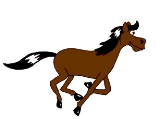
Animated cartoon

Encyclopedia
Film
A film, also called a movie or motion picture, is a series of still or moving images. It is produced by recording photographic images with cameras, or by creating images using animation techniques or visual effects...
for the cinema
Movie theater
A movie theater, cinema, movie house, picture theater, film theater is a venue, usually a building, for viewing motion pictures ....
, television
Television
Television is a telecommunication medium for transmitting and receiving moving images that can be monochrome or colored, with accompanying sound...
or computer screen, featuring some kind of story or plot (even if it is a very short one). This is distinct from the terms "animation
Animation
Animation is the rapid display of a sequence of images of 2-D or 3-D artwork or model positions in order to create an illusion of movement. The effect is an optical illusion of motion due to the phenomenon of persistence of vision, and can be created and demonstrated in several ways...
" and "animated film," as not all follow this definition.
Although cartoons can use many different types of animation, they all fall under the traditional animation
Traditional animation
Traditional animation, is an animation technique where each frame is drawn by hand...
category.
Early years
Early examples of attempts to capture the phenomenon of motionMotion (physics)
In physics, motion is a change in position of an object with respect to time. Change in action is the result of an unbalanced force. Motion is typically described in terms of velocity, acceleration, displacement and time . An object's velocity cannot change unless it is acted upon by a force, as...
into a still drawing can be found in paleolithic
Paleolithic
The Paleolithic Age, Era or Period, is a prehistoric period of human history distinguished by the development of the most primitive stone tools discovered , and covers roughly 99% of human technological prehistory...
cave painting
Cave painting
Cave paintings are paintings on cave walls and ceilings, and the term is used especially for those dating to prehistoric times. The earliest European cave paintings date to the Aurignacian, some 32,000 years ago. The purpose of the paleolithic cave paintings is not known...
s, where animals are often depicted with multiple legs in superimposed positions, clearly attempting to convey the perception of motion.
The phenakistoscope
Phenakistoscope
The phenakistoscope was an early animation device that used the persistence of vision principle to create an illusion of motion.-History:...
(1832), zoetrope
Zoetrope
A zoetrope is a device that produces an illusion of action from a rapid succession of static pictures. The term zoetrope is from the Greek words "ζωή – zoe", "life" and τρόπος – tropos, "turn". It may be taken to mean "wheel of life"....
(1834) and praxinoscope
Praxinoscope
The praxinoscope was an animation device, the successor to the zoetrope. It was invented in France in 1877 by Charles-Émile Reynaud. Like the zoetrope, it used a strip of pictures placed around the inner surface of a spinning cylinder...
(1877), as well as the common flip book
Flip book
A flip book or flick book is a book with a series of pictures that vary gradually from one page to the next, so that when the pages are turned rapidly, the pictures appear to animate by simulating motion or some other change. Flip books are often illustrated books for children, but may also be...
, were early animation devices to produce movement from sequential drawings using technological means, but animation did not develop further until the advent of motion picture film
Film
A film, also called a movie or motion picture, is a series of still or moving images. It is produced by recording photographic images with cameras, or by creating images using animation techniques or visual effects...
.
Silent era
The first animated projection (screening) was created in France, by Charles-Émile ReynaudCharles-Émile Reynaud
Charles-Émile Reynaud was a French science teacher, responsible for the first projected animated cartoon films....
, who was a French science teacher. Reynaud created the Praxinoscope
Praxinoscope
The praxinoscope was an animation device, the successor to the zoetrope. It was invented in France in 1877 by Charles-Émile Reynaud. Like the zoetrope, it used a strip of pictures placed around the inner surface of a spinning cylinder...
in 1877 and the Théâtre Optique in December 1888. On 28 October 1892, he projected the first animation in public, Pauvre Pierrot
Pauvre Pierrot
Pauvre Pierrot is an 1892 French short animated film directed by Charles-Émile Reynaud. It consists of 500 individually painted images and lasts about 15 minutes....
, at the Musée Grévin in Paris. This film is also notable as the first known instance of film perforations being used. His films were not photographed, but drawn directly onto the transparent strip. In 1900, more than 500,000 people had attended these screenings.
The first (photographed) animated projection was "Humorous Phases of Funny Faces
Humorous Phases of Funny Faces
Humorous Phases of Funny Faces is a silent cartoon by J. Stuart Blackton released in 1906. It features a cartoonist drawing faces on a chalkboard, and the faces coming to life. It is generally regarded by film historians as the first animated film. It features movements as where a dog jumps through...
" (1906) by newspaper cartoonist J. Stuart Blackton
J. Stuart Blackton
James Stuart Blackton , usually known as J. Stuart Blackton, was an Anglo-American film producer of the Silent Era, the founder of Vitagraph Studios and among the first filmmakers to use the techniques of stop-motion and drawn animation...
, one of the co-founders of the Vitagraph Company arrived. In the movie, a cartoonist's line drawings of two faces were 'animated' (or came to life) on a blackboard. The two faces smiled and winked, and the cigar-smoking man blew smoke in the lady's face; also, a circus clown led a small dog to jump through a hoop.
The first animated projection in the traditional sense (i.e., on motion picture film
Film
A film, also called a movie or motion picture, is a series of still or moving images. It is produced by recording photographic images with cameras, or by creating images using animation techniques or visual effects...
) was "Fantasmagorie
Fantasmagorie (1908 film)
Fantasmagorie is an 1908 French animated film by Émile Cohl. It is one of the earliest examples of traditional animation, and considered by film historians to be the first animated cartoon.-Description:...
" by the French director Émile Cohl
Émile Cohl
Émile Cohl , born Émile Eugène Jean Louis Courtet, was a French caricaturist of the largely forgotten Incoherent Movement, cartoonist, and animator, called "The Father of the Animated Cartoon" and "The Oldest Parisian".-Biography:Émile's father Elie was a rubber salesman, and his mother, Emilie...
in 1908. This was followed by two more films, "Le Cauchemar du fantoche" ["The Puppet's Nightmare", now lost] and "Un Drame chez les fantoches" ["A Puppet Drama", called "The Love Affair in Toyland" for American release and "Mystical Love-Making" for British release], all completed in 1908.
One of the very first successful animated cartoons was Gertie the Dinosaur
Gertie the Dinosaur
Gertie the Dinosaur is a 1914 American animated short film by Winsor McCay. Although not the first feature-length animated film, as is sometimes thought, it was the first cartoon to feature a character with an appealing personality...
(1914) by Winsor McCay
Winsor McCay
Winsor McCay was an American cartoonist and animator.A prolific artist, McCay's pioneering early animated films far outshone the work of his contemporaries, and set a standard followed by Walt Disney and others in later decades...
. It is considered the first example of true character animation
Character animation
Character animation is a specialized area of the animation process concerning the animation of one or more characters featured in an animated work. It is usually as one aspect of a larger production and often made to enhance voice acting. The primary role of a Character Animator is to be the...
. At first, animated cartoons were black-and-white
Black-and-white
Black-and-white, often abbreviated B/W or B&W, is a term referring to a number of monochrome forms in visual arts.Black-and-white as a description is also something of a misnomer, for in addition to black and white, most of these media included varying shades of gray...
and silent. Felix the Cat
Felix the Cat
Felix the Cat is a cartoon character created in the silent film era. His black body, white eyes, and giant grin, coupled with the surrealism of the situations in which his cartoons place him, combine to make Felix one of the most recognized cartoon characters in film history...
and Oswald the Lucky Rabbit
Oswald the Lucky Rabbit
Oswald the Lucky Rabbit is an anthropomorphic rabbit and animated cartoon character created by Ub Iwerks and Walt Disney for films distributed by Universal Pictures in the 1920s and 1930s...
are notable examples.
"Golden Age"
From the 1930s to 1960s, theatrical cartoons were produced in huge numbers, and usually shown before a feature filmFeature film
In the film industry, a feature film is a film production made for initial distribution in theaters and being the main attraction of the screening, rather than a short film screened before it; a full length movie...
in a movie theater
Movie theater
A movie theater, cinema, movie house, picture theater, film theater is a venue, usually a building, for viewing motion pictures ....
. MGM, Disney
Walt Disney Pictures
Walt Disney Pictures is an American film studio owned by The Walt Disney Company. Walt Disney Pictures and Television, a subsidiary of the Walt Disney Studios and the main production company for live-action feature films within the Walt Disney Motion Pictures Group, based at the Walt Disney...
, Paramount
Paramount Pictures
Paramount Pictures Corporation is an American film production and distribution company, located at 5555 Melrose Avenue in Hollywood. Founded in 1912 and currently owned by media conglomerate Viacom, it is America's oldest existing film studio; it is also the last major film studio still...
and Warner Brothers were the largest studios producing these 5 to 10-minute "shorts".
The first cartoon to use a soundtrack
Soundtrack
A soundtrack can be recorded music accompanying and synchronized to the images of a motion picture, book, television program or video game; a commercially released soundtrack album of music as featured in the soundtrack of a film or TV show; or the physical area of a film that contains the...
was in 1926 with Max Fleischer
Max Fleischer
Max Fleischer was an American animator. He was a pioneer in the development of the animated cartoon and served as the head of Fleischer Studios...
's My Old Kentucky Home. However the Fleischers used a De Forest
Lee De Forest
Lee De Forest was an American inventor with over 180 patents to his credit. De Forest invented the Audion, a vacuum tube that takes relatively weak electrical signals and amplifies them. De Forest is one of the fathers of the "electronic age", as the Audion helped to usher in the widespread use...
sound system and the sound was not completely synchronized with the film. Walt Disney
Walt Disney
Walter Elias "Walt" Disney was an American film producer, director, screenwriter, voice actor, animator, entrepreneur, entertainer, international icon, and philanthropist, well-known for his influence in the field of entertainment during the 20th century. Along with his brother Roy O...
's 1928 cartoon Steamboat Willie
Steamboat Willie
Steamboat Willie is a 1928 American animated short film directed by Walt Disney and Ub Iwerks. It was produced in black-and-white by The Walt Disney Studio and released by Celebrity Productions. The cartoon is considered the debut of Mickey Mouse, and as his girlfriend Minnie, but the characters...
starring Mickey Mouse
Mickey Mouse
Mickey Mouse is a cartoon character created in 1928 by Walt Disney and Ub Iwerks at The Walt Disney Studio. Mickey is an anthropomorphic black mouse and typically wears red shorts, large yellow shoes, and white gloves...
was the first to use a click track
Click track
A click track is a series of audio cues used to synchronize sound recordings, sometimes for synchronization to a moving image. The click track originated in early sound movies, where marks were made on the film itself to indicate exact timings for musicians to accompany the film...
during the recording session, which produced better synchronism
Synchronization
Synchronization is timekeeping which requires the coordination of events to operate a system in unison. The familiar conductor of an orchestra serves to keep the orchestra in time....
. "Mickey Mousing
Mickey Mousing
In animation and film, "Mickey Mousing" is a film technique that syncs the accompanying music with the actions on screen. The term comes from the early and mid-production Walt Disney films, where the music almost completely works to mimic the animated motions of the characters...
" became a term for any movie action (animated or live action) that was perfectly synchronized with music. The music used is original most of the time, but musical quotation
Musical quotation
Musical quotation is the practice of directly quoting another work in a new composition. The quotation may be from the same composer's work , or from a different composer's work ....
is often employed. Animated characters usually performed the action in "loops", i.e., drawings were repeated over and over.
Although other producers had made films earlier using 2 strip color, Disney produced the first cartoon in 3 strip Technicolor
Technicolor
Technicolor is a color motion picture process invented in 1916 and improved over several decades.It was the second major process, after Britain's Kinemacolor, and the most widely used color process in Hollywood from 1922 to 1952...
, "Flowers and Trees
Flowers and Trees
Flowers and Trees is a 1932 Silly Symphonies cartoon produced by Walt Disney, directed by Burt Gillett, and released to theatres by United Artists on July 30, 1932...
", in 1932. Technicians at the Fleischer studio invented rotoscoping, in which animators trace live-action in order to make animation look more realistic. However, rotoscoping made the animation look stiff and the technique was later used more for studying human and animal movement, rather than directly tracing and copying filmed movements.
Later, other movie technologies were adapted for use in animation, such as multiplane camera
Multiplane camera
The multiplane camera is a special motion picture camera used in the traditional animation process that moves a number of pieces of artwork past the camera at various speeds and at various distances from one another...
s with The Old Mill
The Old Mill
The Old Mill is a 1937 Silly Symphonies cartoon produced by Walt Disney, directed by Wilfred Jackson, scored by Leigh Harline, and released to theatres by RKO Radio Pictures on November 5, 1937...
(1937), stereophonic sound
Stereophonic sound
The term Stereophonic, commonly called stereo, sound refers to any method of sound reproduction in which an attempt is made to create an illusion of directionality and audible perspective...
in Fantasia
Fantasia (film)
Fantasia is a 1940 American animated film produced by Walt Disney and released by Walt Disney Productions. The third feature in the Walt Disney Animated Classics series, the film consists of eight animated segments set to pieces of classical music conducted by Leopold Stokowski, seven of which are...
(1940), widescreen processes with Lady and the Tramp
Lady and the Tramp
Lady and the Tramp is a 1955 American animated film produced by Walt Disney and released to theaters on June 22, 1955, by Buena Vista Distribution. The fifteenth animated feature in the Walt Disney Animated Classics series, it was the first animated feature filmed in the CinemaScope widescreen...
(1955), and even 3D
3-D film
A 3-D film or S3D film is a motion picture that enhances the illusion of depth perception...
.
Today, traditional animation
Traditional animation
Traditional animation, is an animation technique where each frame is drawn by hand...
uses traditional methods, but is aided by computer
Computer
A computer is a programmable machine designed to sequentially and automatically carry out a sequence of arithmetic or logical operations. The particular sequence of operations can be changed readily, allowing the computer to solve more than one kind of problem...
s in certain areas. This gives the animator
Animator
An animator is an artist who creates multiple images that give an illusion of movement called animation when displayed in rapid sequence; the images are called frames and key frames. Animators can work in a variety of fields including film, television, video games, and the internet. Usually, an...
new tools not available that could not be achieved using old techniques.
Feature films
In 1937, Disney created the first sound and color animated feature film Snow White and the Seven DwarfsSnow White and the Seven Dwarfs (1937 film)
Snow White and the Seven Dwarfs is a 1937 American animated film based on Snow White, a German fairy tale by the Brothers Grimm. It was the first full-length cel-animated feature in motion picture history, as well as the first animated feature film produced in America, the first produced in full...
.
The name "animated cartoon" is generally not used when referring to full-length animated productions, since the term more or less implies a "short". Huge numbers of animated feature films were, and are still produced.
Television
Competition from televisionTelevision
Television is a telecommunication medium for transmitting and receiving moving images that can be monochrome or colored, with accompanying sound...
drew audiences away from movie theaters in the late 1950s, and the theatrical cartoon began its decline. Today, animated cartoons are produced mostly for television.
American television animation of the 1950s featured quite limited animation
Limited animation
Limited animation is a process of making animated cartoons that does not redraw entire frames but variably reuses common parts between frames. One of its major trademarks is the stylized design in all forms and shapes, which in the early days was referred to as modern design...
styles, highlighted by the work of Jay Ward
Jay Ward
J Troplong "Jay" Ward was an American creator and producer of animated television cartoons. He produced animated series based on such characters as Crusader Rabbit, Rocky & Bullwinkle, Dudley Do-Right, Peabody and Sherman, Hoppity Hooper, George of the Jungle, Tom Slick, and Super Chicken...
on Crusader Rabbit
Crusader Rabbit
Crusader Rabbit is the first animated series produced specifically for television. The concept was test marketed in 1948, while the initial episode - Crusader vs. the State of Texas - aired on KNBH in Los Angeles, California on August 1, 1950....
. Chuck Jones
Chuck Jones
Charles Martin "Chuck" Jones was an American animator, cartoon artist, screenwriter, producer, and director of animated films, most memorably of Looney Tunes and Merrie Melodies shorts for the Warner Bros. Cartoons studio...
coined the term "illustrated radio" to refer to the shoddy style of most television cartoons that depended more on their soundtracks than visuals. Other notable 1950s programs include UPA
United Productions of America
United Productions of America, better known as UPA, was an American animation studio of the 1940s through present day, beginning with industrial films and World War II training films. In the late 1940s, UPA produced theatrical shorts for Columbia Pictures, most notably the Mr. Magoo series. In...
's Gerald McBoing Boing, Hanna-Barbera
Hanna-Barbera
Hanna-Barbera Productions, Inc. was an American animation studio that dominated North American television animation during the second half of the 20th century...
's Huckleberry Hound
Huckleberry Hound
The Huckleberry Hound Show is a 1958 syndicated animated series and the second from Hanna-Barbera following The Ruff & Reddy Show, sponsored by Kellogg's. Three segments were included in the program: one featuring Huckleberry Hound; another starring Yogi Bear and his sidekick Boo Boo; and a third...
and Quick Draw McGraw
Quick Draw McGraw
The Quick Draw McGraw Show is the third cartoon television production created by Hanna-Barbera starring an anthropomorphic cartoon horse named Quick Draw McGraw following their success with The Ruff & Reddy Show and The Huckleberry Hound Show. The show debuted in syndication in the fall of 1959,...
, and rebroadcast of many classic theatrical cartoons from Warner Brothers, MGM, and Disney.
Hanna-Barbera
Hanna-Barbera
Hanna-Barbera Productions, Inc. was an American animation studio that dominated North American television animation during the second half of the 20th century...
's show The Flintstones
The Flintstones
The Flintstones is an animated, prime-time American television sitcom that screened from September 30, 1960 to April 1, 1966, on ABC. Produced by Hanna-Barbera Productions, The Flintstones was about a working class Stone Age man's life with his family and his next-door neighbor and best friend. It...
was the first successful primetime animated series in the United States, running from 1960-66 (and in reruns since). While many networks followed the show's success by scheduling other primetime cartoons in the early 1960s, including Scooby-Doo, Where Are You!
Scooby-Doo, Where are You!
Scooby-Doo, Where Are You! is the first incarnation of the long-running Hanna-Barbera Saturday morning cartoon Scooby-Doo. It premiered on September 13, 1969 at 10:30 a.m. EST and ran for two seasons on CBS as a half-hour long show. Twenty-five episodes were produced...
,The Jetsons
The Jetsons
The Jetsons is a animated American sitcom that was produced by Hanna-Barbera, originally airing in prime-time from 1962–1963 and again from 1985–1987...
, Top Cat
Top Cat
Top Cat is a Hanna-Barbera prime time animated television series which ran from September 27, 1961 to April 18, 1962 for a run of 30 episodes on the ABC network. Reruns are played on Cartoon Network's classic animation network Boomerang.-History:...
, and The Alvin Show
The Alvin Show
The Alvin Show is an American animated television series. It was the first to feature the singing characters Alvin and the Chipmunks, although a series with a similar concept The Nutty Squirrels Present had aired a year earlier...
, none of these programs survived more than a year in primetime except Scooby Doo That Has Come To 11th Series since 1969. However, networks found success by running these shows as Saturday morning cartoons, reaching smaller audiences with more demographic unity among children. Television animation for children flourished on Saturday morning, on cable channels like Nickelodeon, Disney Channel
Disney Channel
Disney Channel is an American basic cable and satellite television network, owned by the Disney-ABC Television Group division of The Walt Disney Company. It is under the direction of Disney-ABC Television Group President Anne Sweeney. The channel's headquarters is located on West Alameda Ave. in...
and Cartoon Network
Cartoon Network
Cartoon Network is a name of television channels worldwide created by Turner Broadcasting which used to primarily show animated programming. The channel began broadcasting on October 1, 1992 in the United States....
, and in syndicated afternoon timeslots.
Primetime cartoons were virtually non-existent until 1990s hit The Simpsons
The Simpsons
The Simpsons is an American animated sitcom created by Matt Groening for the Fox Broadcasting Company. The series is a satirical parody of a middle class American lifestyle epitomized by its family of the same name, which consists of Homer, Marge, Bart, Lisa and Maggie...
ushered in a new era of adult animation
Adult animation
Adult animation is a term used to describe animation that is targeted at adults. Animated films and television shows may be considered adult for a number of reasons. Some productions are noted for experimental storytelling and animation techniques, or sophisticated storytelling...
. Now, "adult animation" programs, such as Aeon Flux, Beavis and Butt-head
Beavis and Butt-Head
Beavis and Butt-head is an American animated television series created by Mike Judge. The series originated from Frog Baseball, a 1992 short film by Judge. After seeing the short, MTV signed Judge to develop the concept. Beavis and Butt-head originally aired from March 8, 1993 to November 28, 1997...
, South Park
South Park
South Park is an American animated television series created by Trey Parker and Matt Stone for the Comedy Central television network. Intended for mature audiences, the show has become famous for its crude language, surreal, satirical, and dark humor that lampoons a wide range of topics...
, Family Guy
Family Guy
Family Guy is an American animated television series created by Seth MacFarlane for the Fox Broadcasting Company. The series centers on the Griffins, a dysfunctional family consisting of parents Peter and Lois; their children Meg, Chris, and Stewie; and their anthropomorphic pet dog Brian...
, The Cleveland Show
The Cleveland Show
The Cleveland Show is an American animated television series that premiered on September 27, 2009, as a part of the "Animation Domination" lineup on Fox in the United States...
, American Dad!
American Dad!
American Dad! is an American animated television series created by Seth MacFarlane and owned by Underdog Productions and Fuzzy Door Productions. It is produced in association with 20th Century Fox Television...
, Aqua Teen Hunger Force
Aqua Teen Hunger Force
Aqua Teen Hunger Force , retitled Aqua Unit Patrol Squad 1 in 2011, is an American animated television series on Cartoon Network late night programing block, Adult Swim, as well as Teletoon's Teletoon at Night block and later G4 Canada's ADd block in Canada...
(currently known as Aqua Unit Patrol Squad 1), and Futurama
Futurama
Futurama is an American animated science fiction sitcom created by Matt Groening and developed by Groening and David X. Cohen for the Fox Broadcasting Company. The series follows the adventures of a late 20th-century New York City pizza delivery boy, Philip J...
are a large part of television.
Commercial animation
Animation has been very popular in television commercials, both due to its graphic appeal, and the humor it can provide. Some animated characters in commercials have survived for decades, such as Snap, Crackle and PopSnap, Crackle and Pop
Snap, Crackle, and Pop! are the cartoon mascots of Kellogg's breakfast cereal Rice Krispies -History:The elf characters were originally designed by illustrator Vernon Grant in the early 1930s...
in advertisements for Kellogg's cereals.
The legendary animation director Tex Avery
Tex Avery
Frederick Bean "Fred/Tex" Avery was an American animator, cartoonist, voice actor and director, famous for producing animated cartoons during The Golden Age of Hollywood animation. He did his most significant work for the Warner Bros...
was the producer of the first Raid
Raid (insecticide)
Raid is the brand name of a line of insecticides produced by SC Johnson, first launched in 1956.The initial active ingredient was the first synthetic pyrethroid, allethrin...
"Kills Bugs Dead" commercials in 1966, which were very successful for the company. The concept has been used in many countries since.
See also
- AnimationAnimationAnimation is the rapid display of a sequence of images of 2-D or 3-D artwork or model positions in order to create an illusion of movement. The effect is an optical illusion of motion due to the phenomenon of persistence of vision, and can be created and demonstrated in several ways...
- AnimeAnimeis the Japanese abbreviated pronunciation of "animation". The definition sometimes changes depending on the context. In English-speaking countries, the term most commonly refers to Japanese animated cartoons....
- Computer animationComputer animationComputer animation is the process used for generating animated images by using computer graphics. The more general term computer generated imagery encompasses both static scenes and dynamic images, while computer animation only refers to moving images....
- CartoonCartoonA cartoon is a form of two-dimensional illustrated visual art. While the specific definition has changed over time, modern usage refers to a typically non-realistic or semi-realistic drawing or painting intended for satire, caricature, or humor, or to the artistic style of such works...
- Cartoon seriesCartoon seriesA cartoon series is a set of regularly presented animated television programs with a common series title, usually related to one another. These episodes typically share the same characters and a basic theme...
- List of animated short series
- List of animated television series
- List of animated feature-length films
- List of animation studios
External links
- Animated Films
- The making of an animated cartoon
- Chronology of animation
- The History of the Discovery of Cinematography
- Complete list of Soviet animated cartoons (in English, with descriptions. Also includes cartoons from all of the countries that the Soviet UnionSoviet UnionThe Soviet Union , officially the Union of Soviet Socialist Republics , was a constitutionally socialist state that existed in Eurasia between 1922 and 1991....
split up into)