


Rio Tinto Group

Encyclopedia
The Rio Tinto Group is a diversified, British-Australian, multinational mining and resources group with headquarters in London and Melbourne. The company was founded in 1873, when a multinational consortium of investors purchased a mine complex on the Rio Tinto river, in Huelva
, Spain from the Spanish government. Since then, the company has grown through a long series of mergers and acquisitions to place itself among the world leaders in the production of many commodities, including aluminium, iron ore, copper, uranium, coal, and diamonds. Although primarily focused on extraction of minerals, Rio Tinto also has significant operations in refining, particularly for refining bauxite and iron ore. The company has operations on six continents but is mainly concentrated in Australia and Canada, and owns gross assets valued at $81 billion through a complex web of wholly and partly owned subsidiaries
. In 2007, the company was valued at $147 billion. Its head office in the United Kingdom is in the City of Westminster
, London, while its Australian head office is in the City of Melbourne
.
Rio Tinto Group is a dual-listed company
traded on both the London Stock Exchange
where it is a component of the FTSE 100 Index
and the Australian Securities Exchange
where it is a component of the S&P/ASX 200
index. As of March 2009, Rio Tinto is the fourth-largest publicly listed mining company in the world with a market capitalisation of approximately $134 billion, and was listed in Fortune magazine's 2008 Global 500
ranking of largest worldwide companies by revenue at number 263. Although the company has a long record of producing profitable operating results and favourable investment returns, the company's 2007 acquisition of Canadian aluminium company Alcan for $38.1 billion burdened Rio Tinto with substantial debt.
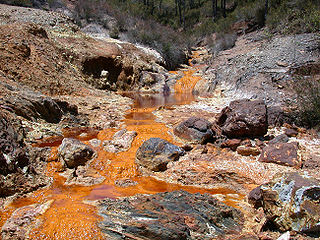
 Since antiquity, a site along the Rio Tinto, in the Andalusia
n Province of Huelva
in Spain has been mined for copper, silver, gold, and other minerals. Approximately 3000 BC, Iberians
and Tartessians
began mining the site, followed by the Phoenicia
ns, Greeks
, Romans
, Visigoths, and Moors
. After a period of abandonment, the mines were rediscovered in 1556 and the Spanish government began operating them once again in 1724.
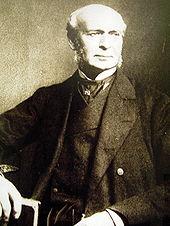
However, Spain's mining operations there were inefficient, and the government itself was otherwise distracted by political and financial crises, leading the government to sell the mines in 1873 at a price later determined to be well below actual value. The purchasers of the mine were led by Hugh Matheson
's Matheson and Company, which ultimately formed a syndicate consisting of Deutsche Bank
(56% ownership), Matheson (24%), and railway firm Clark, Punchard and Company (20%). At an auction held by the Spanish government for sale of the mine on 14 February 1873, the group won with a bid GB£
3,680,000 (ESP
92,800,000). The bid also specified that Spain permanently relinquish any right to claim royalties
on the mine's production. Following purchase of the mine, the syndicate launched the Rio Tinto Company, registering it on 29 March 1873. At the end of the 1880s, control of the firm was passed to the Rothschild family
, who greatly increased the scale of its mining operations.
From 1877 to 1891, the Rio Tinto Mine was the world's leading producer of copper.
From 1870 through 1925, the company was inwardly focused on fully exploiting the Rio Tinto Mine, with little attention paid to expansion or exploration activities outside of Spain. The company enjoyed strong financial success until 1914, cooperating with other pyrite producers
to control market prices. However, World War I and its aftermath effectively eliminated the United States as a viable market for European pyrites, leading to a decline in the firm's prominence.
The company's failure to diversify during this period led to the slow decline of the company among the ranks of international mining firms. However, this changed in 1925, when Sir Auckland Geddes
succeeded Lord Alfred Milner
as chairman. Geddes and the new management team he installed focused on diversification
of the company's investments and operations and reformation of marketing strategy. Geddes led the company into a series of joint ventures with customers in the development of new technologies, as well as exploration and development of new mines outside of Spain.
Perhaps most significant was the company's investment in copper mines in Rhodesia
, which it eventually consolidated into the Rhokana Corporation. These and later efforts at diversification eventually allowed the company to divest from the Rio Tinto mine in Spain. By the 1950s, Franco
's nationalistic government had made it increasingly difficult to exploit Spanish resources for the profit of foreigners. Rio Tinto Company, supported by its international investments, was able to divest two-thirds of its Spanish operations in 1954 and the remainder over the following years.
Rio Tinto's investment in Rhodesian copper mines did much to support the company through troubled times at its Spanish Rio Tinto operations spanning the Spanish Civil War
, World War II, and Franco's nationalistic policies. In 1950s the political situation made it increasingly difficult for mostly British and French owners to extract profits from Spanish operations, and the company decided to dispose of the mines from which it took its name. Thus, in 1954 Rio Tinto Company sold two thirds of its stake in the Rio Tinto mines, disposing of the rest over the following years. The sale of the mines financed extensive exploration activities over the following decade.
to form the Rio Tinto – Zinc Corporation (RTZ) and its main subsidiary, Conzinc Riotinto of Australia (CRA). The merger provided Rio Tinto the ability to exploit its new-found opportunities, and gave Consolidated Zinc a much larger asset base.
RTZ and CRA were separately managed and operated, with CRA focusing on opportunities within Australasia
and RTZ taking the rest of the world. However, the companies continued to trade separately, and RTZ's ownership of CRA dipped below 50% by 1986. Strategic needs of the two companies eventually led to conflicts of interest regarding new mining opportunities, and shareholders of both companies determined a merger was in their mutual best interest. In 1995, the companies merged into a dual listed company, in which management was consolidated into a single entity and share holder interests were aligned and equivalent, although maintained as shares in separately named entities. The merger also precipitated a name change; after two years as RTZ-CRA, RTZ became Rio Tinto plc and CRA became Rio Tinto Limited, referred to collectively as Rio Tinto Group or simply Rio Tinto.
, bought in 1968, Kennecott Utah Copper
and BP Australia's coal assets which were bought from British Petroleum in 1989 and a 70.7% interest in the New South Wales
operations of Coal & Allied Industries also in 1989. In 1993, the Company acquired Nerco
and also the United States coal mining businesses of Cordero Mining Company.
 In 2000, Rio Tinto acquired Northern Limited, an Australian company with iron ore and uranium
mines, for $2.8 billion. The takeover was partially motivated as a response to Northern Limited's 1999 bid to have Rio Tinto's Pilbara railway network declared open access
. The Australian Competition and Consumer Commission
regulatory body approved the acquisition in August 2000, and the purchase was completed in October of the same year. That year Rio Tinto also bought North Ltd and Ashton Mining for 4 billion USD, adding additional resources in aluminium, iron ore, diamonds, and coal. In 2001 it bought (under Coal and Allied Industries) the Australian coal businesses of the Peabody Energy Corporation.
On 14 November 2007, Rio Tinto completed its largest acquisition to date, purchasing Canadian aluminium company Alcan for $38.1 billion. Alcan's chief executive, Jacynthe Cote, leads the new division, which has been renamed Rio Tinto Alcan and its headquarters situated in Montreal
.
M&A activity in 2008 and 2009 has been focused on divestments of assets to raise cash and refocus on core business opportunities. The company sold three major assets in 2008, raising approximately $3 billion in cash. In the first quarter of 2009 Rio Tinto has reached agreements to sell its interests in the Corumba iron ore mine and the Jacobs Ranch coal mine, and completed sales of an aluminium smelter in China and the company's potash
operations, for an additional estimated $2.5 billion.
In April 2011, Rio Tinto
gained a majority stake in Riversdale Mining
.
, was "...suspected of stealing Chinese state secrets for foreign countries and was detained on criminal charges," according to a spokesman for the Chinese foreign ministry. Stern Hu has also been accused of bribery by Chinese steel mill executives for sensitive information during the iron ore contract negotiations.
These operating groups are supported by separate divisions providing exploration and function support.
, with listings on both the London Stock Exchange
(symbol: RIO) in London under the name Rio Tinto Plc. and the Australian Securities Exchange
(symbol: RIO) in Sydney under the name Rio Tinto Limited The dual-listed company structure grants shareholders of the two companies the same proportional economic interests and ownership rights in the consolidated Rio Tinto Group, in such a way as to be equivalent to all shareholders of the two companies actually being shareholders in a single, unified entity. This structure was implemented in order to avoid adverse tax consequences and regulatory burdens. In order to eliminate currency exchange
issues, the company's accounts are kept, and dividend
s paid, in United States dollars.
Rio Tinto is one of the largest companies listed on either exchange. As such, it is included in the widely-quoted indices for each market: the FTSE 100 Index
of the London Stock Exchange, and the S&P/ASX 200
index of the Australian Securities Exchange. LSE-listed shares in Rio Tinto plc can also be traded indirectly on the New York Stock Exchange
via an American Depositary Receipt
. As of 4 March 2009, Rio Tinto was the fourth-largest publicly listed mining company in the world, with a market capitalization of approximately $34 billion. As of mid-February 2009, shareholders were geographically distributed 42% in the United Kingdom, 18% in North America, 16% in Australia, 14% in Asia, and 10% in continental Europe.
announced it was seeking to purchase Rio Tinto Group in an all share deal. This offer was rejected by the board of Rio Tinto as "significantly undervalu[ing]" the company. Another attempt by BHP Billiton for a hostile takeover, valuing Rio Tinto at $147 billion, was rejected on the same grounds. Meanwhile, the Chinese Government-owned resources group Chinalco and the US aluminum producer Alcoa purchased 12% of Rio Tinto's London-listed shares in a move that would block or severely complicate BHP Billiton's plans to buy the company. BHP Billiton's bid was withdrawn on 25 November 2008, with the BHP citing market instability from the global financial crisis of 2008–2009.
. The largest barrier to completing the investment may come from Rio Tinto's shareholders: support for the deal by shareholders was never overwhelming and has reportedly declined recently as other financing options (such as a more traditional bond issuance) are beginning to appear more realistic as a viable alternative funding source. A shareholder vote on the proposed deal is expected in the third quarter of 2009.
Rio Tinto is believed to have pursued this combined asset and convertible bond sale to raise cash to satisfy its debt obligations, which require payments of $9.0 billion in October 2009 and $10.5 billion by the end of 2010. The company has also noted China's increasing appetite for commodities, and the potential for increased opportunities to exploit these market trends, as a key factor in recommending the transaction to its shareholders.
In March 2010, it was announced that Chinalco will invest $1.3 billion for a 44.65% stake in Rio Tinto's iron ore project in Simandou
, Guinea. Rio Tinto retains 50.35% ownership at Simandou.
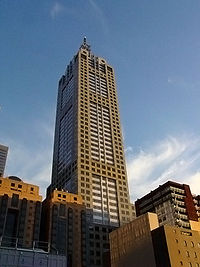 Under the company's dual-listed company structure, management powers of the Rio Tinto Group are consolidated in a single senior management group led by a board of directors
and executive committee. The board of directors has both executive and non-executive members, while the executive committee is composed of the heads of major operational groups.
, sulfuric acid, nickel, potash
, lead, and zinc
. Rio Tinto controls gross assets of $81 billion in value across the globe, with main concentrations in Australia (35%), Canada (34%), Europe (13%), and the United States (11%), and smaller holdings in Africa (3%), South America (3%), and Indonesia (1%).
Rio Tinto is a signatory participant of the Voluntary Principles on Security and Human Rights.
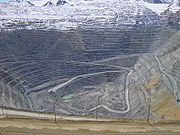 Copper was one of Rio Tinto Group's main products from its earliest days operating at the Rio Tinto complex of mines in Spain. Since that time, the company has divested itself from its original Spanish mines, and grown its copper mining capacity through acquisitions of major copper resources around the world. The copper group's main active mining interests are Minera Escondida
in Chile, the Grasberg Mine
on Papua New Guinea, Kennecott Utah Copper
in the United States, Northparkes
in Australia, and Palabora
in South Africa. Most of these mines are joint ventures with other major mining companies, with Rio Tinto's ownership ranging from 30% to 80%; only Kennecott is wholly owned. Operations typically include the mining of ore through to production of 99.99% purified copper, including extraction of economically valuable byproducts. Together, Rio Tinto's share of copper production at its mines totaled nearly 700,000 tonne
s, making the company the fourth-largest copper producer in the world.
Rio Tinto Copper continues to seek new opportunities for expansion, with major exploration activities at the Resolution Copper
project in the United States, La Granja Mine in Peru, and Oyu Tolgoi in Mongolia. In addition, the company is seeking to become a major producer of nickel, with exploration projects currently underway in the United States and Indonesia.
Although not the primary focus of Rio Tinto Copper's operations, several economically valuable byproducts are produced during the refining of copper ore into purified copper. Gold, silver, molybdenum, and sulfuric acid are all removed from copper ore during processing. Due to the scale of Rio Tinto's copper mining and processing facilities, the company is also a leading producer of these materials, which drive substantial revenues to the company.
Sales of copper generated 8% of the company's 2008 revenues, and copper and byproduct operations accounted for 16% of underlying earnings.
Rio Tinto also owns the naming rights to Rio Tinto Stadium located in nearby Sandy, Utah
and the home of the Major League Soccer
team, Real Salt Lake
.
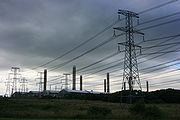
The Rio Tinto Group has consolidated its aluminium-related businesses in its Rio Tinto Alcan division. Rio Tinto Alcan was formed in late 2007, when Rio Tinto purchased the Canadian company Alcan for $38.1 billion. Combined with Rio Tinto's existing aluminium-related assets, the new Rio Tinto Alcan vaulted to the world number one producer of bauxite, alumina, and aluminium. Rio Tinto Alcan kept key leadership from Alcan, and the company's headquarters remain in Montreal.
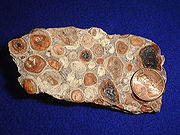 Rio Tinto Alcan divides its operations into three main business units. The Bauxite and Alumina unit mines raw bauxite from locations in Australia, Brazil, and west Africa. The unit then refines the bauxite into alumina at refineries located in Australia, Brazil, Canada, and France. The Primary Metal business unit's operations consist of smelting aluminium
from alumina, with smelters located in 11 countries around the world. The Primary Metal group also operates several power plants in order to support the energy-intensive smelting process. Finally, the Engineered Products unit processes aluminium into derivative products for specialty uses ranging from beverage containers to aerospace
applications.
Rio Tinto Alcan has interests in seven bauxite mines and deposits, six alumina refineries and six specialty alumina plants, 26 aluminium smelters, 13 power plants, and 120 facilities for the manufacture of specialty products. The acquisition of Alcan operations in 2007 substantially increased Rio Tinto's asset base, revenues and profits: in 2008, 41% of company revenues and 10% of underlying earnings were attributable to Rio Tinto Alcan.
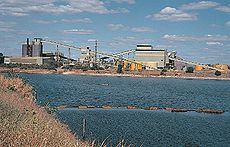
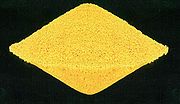 Rio Tinto Energy is a business group of Rio Tinto dedicated to the mining and sale of coal and uranium
.
The company focuses on both fuel coal for electricity generation in coal power plants, and coking coal for use in iron and steel mill
s. The company's coal operations are located in Australia and the United States, mainly operating under its subsidiaries such as Rio Tinto Coal Australia
and Rio Tinto Energy America
. In 2009, Rio Tinto was engaged in an ongoing attempt to sell off assets of Rio Tinto Energy America. In March 2009, the company agreed to sell a major asset, the Jacobs Ranch
coal mine in Wyoming, to Arch Coal
for $761 million, and is continuing to seek buyers for remaining assets in an effort to reduce corporate debt.
Rio Tinto's uranium operations are located at two mines: the Ranger Uranium Mine
of Energy Resources of Australia
and the Rössing Uranium Mine in Namibia. The company is the third-largest producer of uranium in the world. According to Rio Tinto's website, the company institutes strict controls and contractual limitations on uranium exports, limiting uses to peaceful, non-explosive uses only. Such controls are intended to limit use of the company's uranium production to use as fuel for nuclear power plant
s only, and not for use in the production of nuclear weapon
s. Rio Tinto Energy was responsible for 12% of revenues and 18% of underlying earnings in 2008.
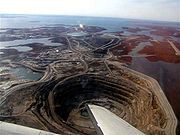 Rio Tinto Diamonds operates three diamond mines: the Argyle Diamond Mine
in Western Australia (100% ownership), the Diavik Diamond Mine
in the Northwest Territories of Canada (60% ownership), and the Murowa Diamond Mine
located in Zimbabwe (78% ownership). Together, these three mines produce 20% of the world's annual production of rough diamonds, making Rio Tinto the world's third-largest producer of mined diamonds.
The diamond business unit's most advanced exploration project is the Bunder Project
in Madhya Pradesh, India, where Rio Tinto became the first foreign group to be granted a prospecting license there. Rio Tinto Diamonds generated 1% of revenues and earnings for Rio Tinto Group in 2008.
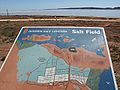 Rio Tinto Minerals is a diverse business group with mining and processing interest in borate
s, talc
, salt, and gypsum
. Rio Tinto Borax, with main operations in California and another mine in Argentina, supplies nearly half of the world's annual demand for refined borates, while the company's Luzenac Group
subsidiary supplies 25% of global talc consumption. The Luzenac Group is also the only arm of the company with continuing active mining operations on the European continent: in addition to mines in North America and Australia, the company also operates a talc mine in southern France. The Minerals group is also majority owner of Dampier Salt
, which produces over 9 million tonnes of salt and 1.5 million tonnes of gypsum annually from its three facilities in northwest Australia. Rio Tinto Minerals accounted for 6% of company revenues, and contributed 3% to earnings in 2008.
On 31 January 2010, the management of U.S. Borax locked out its hourly workforce, replacing the workers with nonunion workers and managers from other Rio Tinto operations. The 560 International Longshore and Warehouse Union
Local 30 members immediately began a fireside vigil that garnered national and international labor attention. ILWU filed seveal unfair labor practices against the company, including an illegal lockout claim.
 Rio Tinto Iron and Titanium (RTIT) groups together the company's iron and titanium production. Rio Tinto is the world's second-largest supplier of iron ore, producing over 153 million tonnes in calendar year 2008. The company's major iron ore mines and development projects are located in Australia, South America, Canada, India, and Guinea. Major subsidiaries held within RTIT include Hamersley Iron
, majority interest in the Pilbara Iron mines, and the Iron Ore Company of Canada
. The company also has smelting facilities for the production of iron and steel, limited in size in comparison to the massive amount of iron ore produced, at QIT-Fer et Titane
in Canada and HISmelt in Australia.
Titanium dioxide is mined at three locations in Canada, South Africa, and Madagascar, and refined at QIT-Fer et Titane's Canadian facilities. Major subsidiaries include Richards Bay Minerals
of South Africa and QIT Madagascar Minerals
. In 2008, Rio Tinto produced 1.524 million tonnes of titanium dioxide, or approximately 27% of the estimated global production of 5.6 million tonnes.
Rio Tinto Iron and Titanium generated a large portion of the company's revenues and earnings in 2008, accounting for 27% and 52%, respectively, of company-wide operating results.
, the region in which Rio Tinto's mines were located came under the control of Franco
's nationalists in 1936. However, Franco increasingly intervened in the company's operations, at times requisitioning pyrite supplies for use by Spain and its Axis
allies Germany and Italy, forcing price controls on the company's production, restricting exports, and threatening nationalisation of the mines. Although company management (and indirectly, the British government) managed to counteract some of these efforts by Franco, much of the mine's pyrite production was channeled to Axis powers before and during World War II. Nonetheless, Franco's meddling caused the mine's production and profitability to fall precipitously during and after the war, leading the company to ultimately exit from its Spanish operations in 1954.
, and uranium operations for environmental and nuclear technology concerns.
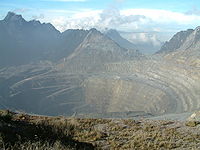 Perhaps the most significant environmental criticism to date has come from the Government of Norway, which divested itself from Rio Tinto shares and banned further investment due to environmental concerns. Claims of severe environmental damages related to Rio Tinto's engagement in the Grasberg mine
in Indonesia led the Government Pension Fund of Norway
to exclude Rio Tinto from its investment portfolio. The fund, which is said to be the world's second-largest pension fund, sold shares in the company valued at (US$ 855 million) to avoid contributing to environmental damages caused by the company.
Rio Tinto disputes the claims of environmental damage at the Grasberg mine, and states that the company has long maintained an excellent record on environmental issues.
(CFMEU). The CFMEU ran a campaign against the company after it tried to de-unionise its workforce after the introduction of the Howard Government
's Workplace Relations Act 1996
.
Activist groups have also expressed concern regarding Rio Tinto's operations in Papua New Guinea, which they allege were one catalyst of the Bougainville separatist crisis. The British anti-poverty charity War on Want
has also criticised Rio Tinto for its complicity in the serious human rights violations which have been occurred near the mines it operates in Indonesia and Papua New Guinea. The 2001 British documentary The Coconut Revolution
tells the story of the eventual success of the local indigenous peoples
in overcoming the plans of the company and the New Papuan army.
On 31 January 2010, Rio Tinto locked out nearly 600 workers from a mine in Boron, California. The workers, represented by the local International Longshore and Warehouse Union
, had rejected a contract proposal, claiming it would scrap their seniority system and allow the company to hire more nonunion employees.
Rio Tinto is not, however, universally condemned for its ethical behavior. The company has won an award for ethical behavior, the Worldaware Award for Sustainable Development in 1993. The award, although given by an independent committee, is sponsored by another multinational corporation (in this case, the sponsor was Tate and Lyle). Rio Tinto has, in turn, sponsored its own WorldAware award, the Rio Tinto Award for Long-term Commitment. The British charity Worldaware ceased to exist in March 2005. These awards, awarded to extractive industries who make some environmental commitments in order to deflect the more general criticisms of their operations, are referred to by corporate watchdog groups as "Greenwashing".
Huelva (province)
Huelva is a province of southern Spain, in the western part of the autonomous community of Andalusia. It is bordered by Portugal, the provinces of Badajoz, Seville, and Cádiz, and the Atlantic Ocean. Its capital is Huelva....
, Spain from the Spanish government. Since then, the company has grown through a long series of mergers and acquisitions to place itself among the world leaders in the production of many commodities, including aluminium, iron ore, copper, uranium, coal, and diamonds. Although primarily focused on extraction of minerals, Rio Tinto also has significant operations in refining, particularly for refining bauxite and iron ore. The company has operations on six continents but is mainly concentrated in Australia and Canada, and owns gross assets valued at $81 billion through a complex web of wholly and partly owned subsidiaries
Subsidiary
A subsidiary company, subsidiary, or daughter company is a company that is completely or partly owned and wholly controlled by another company that owns more than half of the subsidiary's stock. The subsidiary can be a company, corporation, or limited liability company. In some cases it is a...
. In 2007, the company was valued at $147 billion. Its head office in the United Kingdom is in the City of Westminster
City of Westminster
The City of Westminster is a London borough occupying much of the central area of London, England, including most of the West End. It is located to the west of and adjoining the ancient City of London, directly to the east of the Royal Borough of Kensington and Chelsea, and its southern boundary...
, London, while its Australian head office is in the City of Melbourne
City of Melbourne
The City of Melbourne is a Local Government Area in Victoria, Australia, located in the central city area of Melbourne. The city has an area of 36 square kilometres and has an estimated population of 93,105 people. The city's motto is "Vires acquirit eundo" which means "She gathers strength as she...
.
Rio Tinto Group is a dual-listed company
Dual-listed company
A dual-listed company or DLC is a corporate structure in which two corporations function as a single operating business through a legal equalization agreement, but retain separate legal identities and stock exchange listings...
traded on both the London Stock Exchange
London Stock Exchange
The London Stock Exchange is a stock exchange located in the City of London within the United Kingdom. , the Exchange had a market capitalisation of US$3.7495 trillion, making it the fourth-largest stock exchange in the world by this measurement...
where it is a component of the FTSE 100 Index
FTSE 100 Index
The FTSE 100 Index, also called FTSE 100, FTSE, or, informally, the footsie , is a share index of the 100 most highly capitalised UK companies listed on the London Stock Exchange....
and the Australian Securities Exchange
Australian Securities Exchange
The Australian Securities Exchange was created by the merger of the Australian Stock Exchange and the Sydney Futures Exchange in July 2006. It is the primary stock exchange group in Australia....
where it is a component of the S&P/ASX 200
S&P/ASX 200
The S&P/ASX 200 index is a market-capitalization weighted and float-adjusted stock market index of Australian stocks listed on the Australian Securities Exchange from Standard & Poor's...
index. As of March 2009, Rio Tinto is the fourth-largest publicly listed mining company in the world with a market capitalisation of approximately $134 billion, and was listed in Fortune magazine's 2008 Global 500
Fortune Global 500
The Fortune Global 500 is a ranking of the top 500 corporations worldwide as measured by revenue. The list is compiled and published annually by Fortune magazine....
ranking of largest worldwide companies by revenue at number 263. Although the company has a long record of producing profitable operating results and favourable investment returns, the company's 2007 acquisition of Canadian aluminium company Alcan for $38.1 billion burdened Rio Tinto with substantial debt.
Formation
Andalusia
Andalusia is the most populous and the second largest in area of the autonomous communities of Spain. The Andalusian autonomous community is officially recognised as a nationality of Spain. The territory is divided into eight provinces: Huelva, Seville, Cádiz, Córdoba, Málaga, Jaén, Granada and...
n Province of Huelva
Huelva (province)
Huelva is a province of southern Spain, in the western part of the autonomous community of Andalusia. It is bordered by Portugal, the provinces of Badajoz, Seville, and Cádiz, and the Atlantic Ocean. Its capital is Huelva....
in Spain has been mined for copper, silver, gold, and other minerals. Approximately 3000 BC, Iberians
Iberians
The Iberians were a set of peoples that Greek and Roman sources identified with that name in the eastern and southern coasts of the Iberian peninsula at least from the 6th century BC...
and Tartessians
Tartessos
Tartessos or Tartessus was a harbor city and surrounding culture on the south coast of the Iberian peninsula , at the mouth of the Guadalquivir River. It appears in sources from Greece and the Near East starting in the middle of the first millennium BC, for example Herodotus, who describes it as...
began mining the site, followed by the Phoenicia
Phoenicia
Phoenicia , was an ancient civilization in Canaan which covered most of the western, coastal part of the Fertile Crescent. Several major Phoenician cities were built on the coastline of the Mediterranean. It was an enterprising maritime trading culture that spread across the Mediterranean from 1550...
ns, Greeks
Ancient Greece
Ancient Greece is a civilization belonging to a period of Greek history that lasted from the Archaic period of the 8th to 6th centuries BC to the end of antiquity. Immediately following this period was the beginning of the Early Middle Ages and the Byzantine era. Included in Ancient Greece is the...
, Romans
Roman Empire
The Roman Empire was the post-Republican period of the ancient Roman civilization, characterised by an autocratic form of government and large territorial holdings in Europe and around the Mediterranean....
, Visigoths, and Moors
Moors
The description Moors has referred to several historic and modern populations of the Maghreb region who are predominately of Berber and Arab descent. They came to conquer and rule the Iberian Peninsula for nearly 800 years. At that time they were Muslim, although earlier the people had followed...
. After a period of abandonment, the mines were rediscovered in 1556 and the Spanish government began operating them once again in 1724.
However, Spain's mining operations there were inefficient, and the government itself was otherwise distracted by political and financial crises, leading the government to sell the mines in 1873 at a price later determined to be well below actual value. The purchasers of the mine were led by Hugh Matheson
Hugh Matheson (industrialist)
Hugh Matheson was a 19th-century Scottish industrialist. In 1873, he assembled a group of financiers to purchase the Rio Tinto mine from the government of Spain, establishing the mining company that is today the Rio Tinto Group...
's Matheson and Company, which ultimately formed a syndicate consisting of Deutsche Bank
Deutsche Bank
Deutsche Bank AG is a global financial service company with its headquarters in Frankfurt, Germany. It employs more than 100,000 people in over 70 countries, and has a large presence in Europe, the Americas, Asia Pacific and the emerging markets...
(56% ownership), Matheson (24%), and railway firm Clark, Punchard and Company (20%). At an auction held by the Spanish government for sale of the mine on 14 February 1873, the group won with a bid GB£
Pound sterling
The pound sterling , commonly called the pound, is the official currency of the United Kingdom, its Crown Dependencies and the British Overseas Territories of South Georgia and the South Sandwich Islands, British Antarctic Territory and Tristan da Cunha. It is subdivided into 100 pence...
3,680,000 (ESP
Spanish peseta
The peseta was the currency of Spain between 1869 and 2002. Along with the French franc, it was also a de facto currency used in Andorra .- Etymology :...
92,800,000). The bid also specified that Spain permanently relinquish any right to claim royalties
Royalties
Royalties are usage-based payments made by one party to another for the right to ongoing use of an asset, sometimes an intellectual property...
on the mine's production. Following purchase of the mine, the syndicate launched the Rio Tinto Company, registering it on 29 March 1873. At the end of the 1880s, control of the firm was passed to the Rothschild family
Rothschild family
The Rothschild family , known as The House of Rothschild, or more simply as the Rothschilds, is a Jewish-German family that established European banking and finance houses starting in the late 18th century...
, who greatly increased the scale of its mining operations.
Operating history
Following their purchase of the Rio Tinto Mine, the new ownership constructed a number of new processing facilities, innovated new mining techniques, and expanded mining activities.From 1877 to 1891, the Rio Tinto Mine was the world's leading producer of copper.
From 1870 through 1925, the company was inwardly focused on fully exploiting the Rio Tinto Mine, with little attention paid to expansion or exploration activities outside of Spain. The company enjoyed strong financial success until 1914, cooperating with other pyrite producers
Cartel
A cartel is a formal agreement among competing firms. It is a formal organization of producers and manufacturers that agree to fix prices, marketing, and production. Cartels usually occur in an oligopolistic industry, where there is a small number of sellers and usually involve homogeneous products...
to control market prices. However, World War I and its aftermath effectively eliminated the United States as a viable market for European pyrites, leading to a decline in the firm's prominence.
The company's failure to diversify during this period led to the slow decline of the company among the ranks of international mining firms. However, this changed in 1925, when Sir Auckland Geddes
Auckland Geddes, 1st Baron Geddes
Auckland Campbell-Geddes, 1st Baron Geddes GCMG, KCB, PC was a British academic, soldier, politician and diplomat...
succeeded Lord Alfred Milner
Alfred Milner, 1st Viscount Milner
Alfred Milner, 1st Viscount Milner KG, GCB, GCMG, PC was a British statesman and colonial administrator who played an influential leadership role in the formulation of foreign and domestic policy between the mid-1890s and early 1920s...
as chairman. Geddes and the new management team he installed focused on diversification
Diversification (marketing strategy)
Diversification is a form of corporate strategy for a company. It seeks to increase profitability through greater sales volume obtained from new products and new markets. Diversification can occur either at the business unit level or at the corporate level. At the business unit level, it is most...
of the company's investments and operations and reformation of marketing strategy. Geddes led the company into a series of joint ventures with customers in the development of new technologies, as well as exploration and development of new mines outside of Spain.
Perhaps most significant was the company's investment in copper mines in Rhodesia
Rhodesia
Rhodesia , officially the Republic of Rhodesia from 1970, was an unrecognised state located in southern Africa that existed between 1965 and 1979 following its Unilateral Declaration of Independence from the United Kingdom on 11 November 1965...
, which it eventually consolidated into the Rhokana Corporation. These and later efforts at diversification eventually allowed the company to divest from the Rio Tinto mine in Spain. By the 1950s, Franco
Francisco Franco
Francisco Franco y Bahamonde was a Spanish general, dictator and head of state of Spain from October 1936 , and de facto regent of the nominally restored Kingdom of Spain from 1947 until his death in November, 1975...
's nationalistic government had made it increasingly difficult to exploit Spanish resources for the profit of foreigners. Rio Tinto Company, supported by its international investments, was able to divest two-thirds of its Spanish operations in 1954 and the remainder over the following years.
Major mergers and acquisitions
Like many major mining companies, the Rio Tinto Group has historically grown through a series of mergers and acquisitions.Early acquisitions
The company's first major acquisition occurred in 1929, when the company issued stock for the purpose of raising 2.5 million pounds to invest in Rhodesian copper mining companies, which was fully invested by the end of 1930. The Rio Tinto company consolidated its holdings of these various firms under the Rhokana Corporation by forcing the various companies to merge.Rio Tinto's investment in Rhodesian copper mines did much to support the company through troubled times at its Spanish Rio Tinto operations spanning the Spanish Civil War
Spanish Civil War
The Spanish Civil WarAlso known as The Crusade among Nationalists, the Fourth Carlist War among Carlists, and The Rebellion or Uprising among Republicans. was a major conflict fought in Spain from 17 July 1936 to 1 April 1939...
, World War II, and Franco's nationalistic policies. In 1950s the political situation made it increasingly difficult for mostly British and French owners to extract profits from Spanish operations, and the company decided to dispose of the mines from which it took its name. Thus, in 1954 Rio Tinto Company sold two thirds of its stake in the Rio Tinto mines, disposing of the rest over the following years. The sale of the mines financed extensive exploration activities over the following decade.
Merger with Consolidated Zinc
The company's exploration activities presented the company with an abundance of opportunities; however it lacked sufficient capital and operating revenue to exploit those opportunities. This situation precipitated the next, and perhaps most significant, merger in the company's history. In 1962 Rio Tinto Company merged with the Australian firm Consolidated ZincConsolidated Zinc
Consolidated Zinc was an Australian mining company from 1905 to 1962. The company's initial operations focused on extracting zinc from mine tailings of the Broken Hill Ore Deposit at Broken Hill, New South Wales, Australia...
to form the Rio Tinto – Zinc Corporation (RTZ) and its main subsidiary, Conzinc Riotinto of Australia (CRA). The merger provided Rio Tinto the ability to exploit its new-found opportunities, and gave Consolidated Zinc a much larger asset base.
RTZ and CRA were separately managed and operated, with CRA focusing on opportunities within Australasia
Australasia
Australasia is a region of Oceania comprising Australia, New Zealand, the island of New Guinea, and neighbouring islands in the Pacific Ocean. The term was coined by Charles de Brosses in Histoire des navigations aux terres australes...
and RTZ taking the rest of the world. However, the companies continued to trade separately, and RTZ's ownership of CRA dipped below 50% by 1986. Strategic needs of the two companies eventually led to conflicts of interest regarding new mining opportunities, and shareholders of both companies determined a merger was in their mutual best interest. In 1995, the companies merged into a dual listed company, in which management was consolidated into a single entity and share holder interests were aligned and equivalent, although maintained as shares in separately named entities. The merger also precipitated a name change; after two years as RTZ-CRA, RTZ became Rio Tinto plc and CRA became Rio Tinto Limited, referred to collectively as Rio Tinto Group or simply Rio Tinto.
Mergers and acquisitions following Consolidated Zinc
Major acquisitions following the Consolidated Zinc merger included U.S. Borax, a major producer of boraxBorax
Borax, also known as sodium borate, sodium tetraborate, or disodium tetraborate, is an important boron compound, a mineral, and a salt of boric acid. It is usually a white powder consisting of soft colorless crystals that dissolve easily in water.Borax has a wide variety of uses...
, bought in 1968, Kennecott Utah Copper
Kennecott Utah Copper
Kennecott Utah Copper Corporation , a division of Rio Tinto Group, is a mining, smelting, and refining company. Its corporate headquarters are located in South Jordan, Utah, USA. Kennecott operates one of the largest open-pit copper mines in the world in Bingham Canyon, Salt Lake County, Utah. ...
and BP Australia's coal assets which were bought from British Petroleum in 1989 and a 70.7% interest in the New South Wales
New South Wales
New South Wales is a state of :Australia, located in the east of the country. It is bordered by Queensland, Victoria and South Australia to the north, south and west respectively. To the east, the state is bordered by the Tasman Sea, which forms part of the Pacific Ocean. New South Wales...
operations of Coal & Allied Industries also in 1989. In 1993, the Company acquired Nerco
NERCO
NERCO was an American mining company headquartered in Portland, Oregon with interests in coal, natural gas, and oil. The company also had significant operations in gold and silver mining, and manufacture of gallium arsenide wafers....
and also the United States coal mining businesses of Cordero Mining Company.
Uranium
Uranium is a silvery-white metallic chemical element in the actinide series of the periodic table, with atomic number 92. It is assigned the chemical symbol U. A uranium atom has 92 protons and 92 electrons, of which 6 are valence electrons...
mines, for $2.8 billion. The takeover was partially motivated as a response to Northern Limited's 1999 bid to have Rio Tinto's Pilbara railway network declared open access
Open Access (Infrastructure)
In the context of infrastructure, open access involves physical infrastructure such as railways and physical telecommunications network plant being made available to clients other than the owners, for a fee....
. The Australian Competition and Consumer Commission
Australian Competition and Consumer Commission
The Australian Competition and Consumer Commission is an independent authority of the Australia government. It was established in 1995 with the amalgamation of the Australian Trade Practices Commission and the Prices Surveillance Authority to administer the Trade Practices Act 1974...
regulatory body approved the acquisition in August 2000, and the purchase was completed in October of the same year. That year Rio Tinto also bought North Ltd and Ashton Mining for 4 billion USD, adding additional resources in aluminium, iron ore, diamonds, and coal. In 2001 it bought (under Coal and Allied Industries) the Australian coal businesses of the Peabody Energy Corporation.
On 14 November 2007, Rio Tinto completed its largest acquisition to date, purchasing Canadian aluminium company Alcan for $38.1 billion. Alcan's chief executive, Jacynthe Cote, leads the new division, which has been renamed Rio Tinto Alcan and its headquarters situated in Montreal
Montreal
Montreal is a city in Canada. It is the largest city in the province of Quebec, the second-largest city in Canada and the seventh largest in North America...
.
M&A activity in 2008 and 2009 has been focused on divestments of assets to raise cash and refocus on core business opportunities. The company sold three major assets in 2008, raising approximately $3 billion in cash. In the first quarter of 2009 Rio Tinto has reached agreements to sell its interests in the Corumba iron ore mine and the Jacobs Ranch coal mine, and completed sales of an aluminium smelter in China and the company's potash
Potash
Potash is the common name for various mined and manufactured salts that contain potassium in water-soluble form. In some rare cases, potash can be formed with traces of organic materials such as plant remains, and this was the major historical source for it before the industrial era...
operations, for an additional estimated $2.5 billion.
In April 2011, Rio Tinto
Rio Tinto Group
The Rio Tinto Group is a diversified, British-Australian, multinational mining and resources group with headquarters in London and Melbourne. The company was founded in 1873, when a multinational consortium of investors purchased a mine complex on the Rio Tinto river, in Huelva, Spain from the...
gained a majority stake in Riversdale Mining
Riversdale Mining
Riversdale Mining is an Australian mining company, listed on the S&P/ASX 200. It specialises in coal mines in Africa.Tata Steel owned a stake of approximately 24% in Riversdale; Passport Capital and Brazilian steelmaker CSN also have a stake...
.
China Arrests in 2009
On 5 July 2009, four Rio Tinto employees were arrested in Shanghai for corruption and espionage. elephant One of the arrested, Australian citizen Stern HuStern Hu
Stern Hu is an Australian businessman of Chinese origin. He was formerly an executive of Rio Tinto mining group in Shanghai, China prior to his trial. He graduated from Peking University before obtaining Australian citizenship in 1994.- Arrest in China :...
, was "...suspected of stealing Chinese state secrets for foreign countries and was detained on criminal charges," according to a spokesman for the Chinese foreign ministry. Stern Hu has also been accused of bribery by Chinese steel mill executives for sensitive information during the iron ore contract negotiations.
Organisation
Rio Tinto is primarily organised into five operational businesses, divided by product type:- Rio Tinto Copper – copper and byproducts such as gold, silver, molybdenumMolybdenumMolybdenum , is a Group 6 chemical element with the symbol Mo and atomic number 42. The name is from Neo-Latin Molybdaenum, from Ancient Greek , meaning lead, itself proposed as a loanword from Anatolian Luvian and Lydian languages, since its ores were confused with lead ores...
, and sulphuric acid; future home of nickel operations if developed - Rio Tinto Alcan – aluminium, bauxite and alumina
- Rio Tinto Energy – coal and uranium
- Rio Tinto Diamonds & Minerals – diamonds, industrial minerals such as boraxBoraxBorax, also known as sodium borate, sodium tetraborate, or disodium tetraborate, is an important boron compound, a mineral, and a salt of boric acid. It is usually a white powder consisting of soft colorless crystals that dissolve easily in water.Borax has a wide variety of uses...
, talcTalcTalc is a mineral composed of hydrated magnesium silicate with the chemical formula H2Mg34 or Mg3Si4O102. In loose form, it is the widely-used substance known as talcum powder. It occurs as foliated to fibrous masses, its crystals being so rare as to be almost unknown...
, salt and gypsumGypsumGypsum is a very soft sulfate mineral composed of calcium sulfate dihydrate, with the chemical formula CaSO4·2H2O. It is found in alabaster, a decorative stone used in Ancient Egypt. It is the second softest mineral on the Mohs Hardness Scale...
and titanium dioxideTitanium dioxideTitanium dioxide, also known as titanium oxide or titania, is the naturally occurring oxide of titanium, chemical formula . When used as a pigment, it is called titanium white, Pigment White 6, or CI 77891. Generally it comes in two different forms, rutile and anatase. It has a wide range of... - Rio Tinto Iron Ore – iron ore and iron
These operating groups are supported by separate divisions providing exploration and function support.
Subsidiaries
Rio Tinto Group has a complex structure of partly and wholly owned subsidiaries, each held within one of the five operational groups described above. Major subsidiaries include:| Subsidiary | Ownership Stake | Main Product | Location |
|---|---|---|---|
| Anglesey Aluminium Anglesey Aluminium Anglesey Aluminium Metal Ltd, shut down on 30 September 2009, was a joint venture between Rio Tinto Group and Kaiser Aluminium.Its aluminium smelter, located on the outskirts of Holyhead, was one of the largest employers in North Wales, with 540 staff members, and began to produce aluminium in 1971... |
51% | Aluminium smelting Smelting Smelting is a form of extractive metallurgy; its main use is to produce a metal from its ore. This includes iron extraction from iron ore, and copper extraction and other base metals from their ores... |
United Kingdom (Wales) |
| Argyle Diamonds Argyle diamond mine The Argyle Diamond Mine is a diamond mine located in the East Kimberley region in the remote north of Western Australia. Argyle is the largest diamond producer in the world by volume, although due to the low proportion of gem-quality diamonds, is not the leader by value. It is the only known... |
100% | Diamonds | Australia (Western Australia) |
| Bell Bay Smelter | 100% | Aluminium smelting | Australia (Tasmania) |
| Bougainville Copper Bougainville Copper Bougainville Copper Ltd is an Australian copper, gold, and silver mining company that operates the Panguna open cut mine on the island of Bougainville in Papua New Guinea . It was one of the world's largest open-pit mines. The Panguna mine dominated the economy of the island during the 1970s and... |
53.6% | Copper | Papua New Guinea |
| Rio Tinto Borax | 100% | Borates | United States (California; Colorado) |
| Coal and Allied Industries | 75% | Coal | Australia (New South Wales) |
| Corumbá (mine) Corumbá (mine) Corumbá is an iron ore mine located in the western Brazilian state of Mato Grosso do Sul, near the border with Bolivia. The mine is of open pit construction, producing approximately 2 million tonnes per year of iron ore which is partially processed on site before being moved by barge along the... |
100% | Iron ore | Brazil |
| Dampier Salt Dampier Salt Dampier Salt is an Australian salt company located in Western Australia, with operations in Dampier, Port Hedland, and Lake MacLeod, with headquarters in Perth... |
65% | Salt | Australia (Western Australia) |
| Diavik Diamond Mine Diavik Diamond Mine The Diavik Diamond Mine is a diamond mine in the North Slave Region of the Northwest Territories, Canada, about north of Yellowknife.It has become an important part of the regional economy, employing 700, grossing C$100 million in sales, and producing 8 million carats of diamonds annually... s |
60% | Diamonds | Canada |
| Energy Resources of Australia Energy Resources of Australia Energy Resources of Australia Ltd is a public company based in Australia. It is a subsidiary of the Rio Tinto Group which owns 68.4% of the company. The chairman is David Klingner and chief executive officer is Harry Kenyon-Slaney.... |
68% | Uranium | Australia (Northern Territory) |
| Minera Escondida Escondida Minera Escondida, which means 'hidden' in Spanish, is a mining company that operates two open pit copper mines in the Atacama Desert, 170 km southeast of Antofagasta in northern Chile. It is currently the highest producing copper mine in the world... |
30% | Copper | Chile |
| Grasberg Grasberg mine The Grasberg Mine is the largest gold mine and the third largest copper mine in the world. It is located in the province of Papua in Indonesia near Puncak Jaya, the highest mountain in Papua, and it has 19,500 employees... Joint Venture |
40% | Copper | Indonesia (Papua) |
| Hamersley Iron Hamersley Iron Pilbara Iron is a wholly owned subsidiary of the multinational Rio Tinto Group, that manages assets for Hamersley Iron Pty Ltd, a wholly owned subsidiary of Rio Tinto, and Robe River Iron Associates, an unincorporated joint venture between Rio and three Japanese steel companies Mitsui Iron Ore... (Pilbara Iron) |
100% | Iron ore | Australia (Western Australia) |
| HISmelt | 60% | Iron smelting | Australia (Western Australia) |
| Iron Ore Company of Canada Iron Ore Company of Canada Iron Ore Company of Canada is a Canadian-based producer of iron ore. The company was founded in 1949 from a partnership of Canadian and American M.A. Hanna Company... |
59% | Iron ore | Canada |
| Kennecott Land Kennecott Land Kennecott Land, a subsidiary of Rio Tinto Group, is an American land development company formed in 2001 and based in South Jordan, Utah. Kennecott Land owns 93,000 acres of undeveloped land in Salt Lake and Tooele counties in Utah, 75,000 acres of which are located in Salt Lake County... |
100% | Land and water rights | United States (Utah) |
| Kennecott Utah Copper Kennecott Utah Copper Kennecott Utah Copper Corporation , a division of Rio Tinto Group, is a mining, smelting, and refining company. Its corporate headquarters are located in South Jordan, Utah, USA. Kennecott operates one of the largest open-pit copper mines in the world in Bingham Canyon, Salt Lake County, Utah. ... |
100% | Copper | United States (Utah) |
| Luzenac Group Luzenac Group The Luzenac Group is a talc mining company headquartered in Toulouse, France. The company is the world's largest producer of talc, with mines and processing plants located in Europe, North America, Australia, and East Asia. The Luzenac Group has been a wholly owned subsidiary of the Rio Tinto... |
100% | Talc | France (Toulouse) |
| Murowa Murowa diamond mine The Murowa diamond mine is a diamond mine located in Mazvihwa, south central Zimbabwe, about 40 kilometres from the asbestos mining town of Zvishavane in the Midlands province. The mine is majority owned and operated by the Rio Tinto Group, which also owns the Argyle diamond mine in Australia and... |
78% | Diamonds | Zimbabwe |
| Northparkes Northparkes Northparkes is a copper and gold mine located in central New South Wales, Australia, approximately 27 kilometers north-northwest of the town of Parkes.... |
80% | Copper | Australia (New South Wales) |
| Palabora Palabora Palabora Mining Company Limited is a publicly-traded mining company headquartered in Phalaborwa, Limpopo province, South Africa. The company operates a single cluster of open-pit and underground mines producing mainly copper as well as byproducts such as anode slimes, nickel sulphate, sulphuric... |
58% | Copper | South Africa |
| QIT-Fer et Titane QIT-Fer et Titane QIT-Fer et Titane is a Canadian mining company located in Quebec. The company operates an ilmenite mine at Lac Tio in northern Quebec, and in southern Quebec operates refining facilities that produce titanium dioxide, pig iron, steel, and other metal products... Sorel |
100% | Titanium Dioxide | Canada (Quebec) |
| QIT Madagascar Minerals QIT Madagascar Minerals QIT Madagascar Minerals is a mining company located in the Fort-Dauphin region of southeastern Madagascar. After roughly 20 years of exploration, negotiations, and preliminary work, the company began production of the titanium dioxide ore, ilmenite... |
80% | Titanium Dioxide | Madagascar |
| Resolution Copper Resolution copper Resolution Copper, , is a joint venture owned by Rio Tinto and BHP, formed to develop and operate an underground copper mine on deeded, unpatented and land removed from mining by executive order at Superior, Arizona, U.S. The project targets a deep-seated porphyry copper deposit located under the... |
55% | Copper | United States (Arizona) |
| Richards Bay Minerals Richards Bay Minerals Richards Bay Minerals is a South African mining company. RBM's principal product is titanium dioxide in the form of an 85% pure titanium dioxide slag; the company also produces the higher-purity 95% titanium dioxide product rutile as well as pig iron and zircon.The company's principal operations... |
50% | Titanium Dioxide | South Africa |
| Rio Tinto Alcan | 100% | Aluminium | Canada |
| Rio Tinto Coal Australia Rio Tinto Coal Australia thumb|[[ThyssenKrupp|Krupp]] twin-boom portal [[reclaimer]] at RTCA Kestrel Mine|500pxRio Tinto Coal Australia is an Australian coal mining organisation, and is part of the worldwide Rio Tinto Group. In Queensland, RTCA operates the Blair Athol, Hail Creek, Kestrel and Clermont mines... |
100% | Coal | Australia |
| Rio Tinto Energy America Rio Tinto Energy America Rio Tinto Energy America is a wholly owned American subsidiary of the England and Australia-based mining giant, the Rio Tinto Group, headquartered in Gillette, Wyoming... |
100% | Coal | United States (Wyoming) |
| Robe River (Pilbara Iron) | 53% | Iron Ore | Australia (Western Australia) |
| Rössing Uranium Mine | 69% | Uranium | Namibia |
| Simandou Simandou Simandou is a 110 km long range of hills located in the Nzérékoré Region of southeastern Guinea, in the country's mountainous, forested Guinée Forestière region... |
50.35% | Iron Ore | Guinea (West Africa) |
| Three Springs Mine Three Springs Mine Three Springs Mine is a talc mine located outside of Three Springs, Western Australia. Owned and operated by the Luzenac Group, a French-based subsidiary of the mining giant Rio Tinto Group, the mine is the oldest and most productive talc mine in the southern hemisphere, and the second-most... |
100% | Talc | Australia (Western Australia) |
Stock structure and ownership
Rio Tinto Group is structured as a dual-listed companyDual-listed company
A dual-listed company or DLC is a corporate structure in which two corporations function as a single operating business through a legal equalization agreement, but retain separate legal identities and stock exchange listings...
, with listings on both the London Stock Exchange
London Stock Exchange
The London Stock Exchange is a stock exchange located in the City of London within the United Kingdom. , the Exchange had a market capitalisation of US$3.7495 trillion, making it the fourth-largest stock exchange in the world by this measurement...
(symbol: RIO) in London under the name Rio Tinto Plc. and the Australian Securities Exchange
Australian Securities Exchange
The Australian Securities Exchange was created by the merger of the Australian Stock Exchange and the Sydney Futures Exchange in July 2006. It is the primary stock exchange group in Australia....
(symbol: RIO) in Sydney under the name Rio Tinto Limited The dual-listed company structure grants shareholders of the two companies the same proportional economic interests and ownership rights in the consolidated Rio Tinto Group, in such a way as to be equivalent to all shareholders of the two companies actually being shareholders in a single, unified entity. This structure was implemented in order to avoid adverse tax consequences and regulatory burdens. In order to eliminate currency exchange
Currency exchange
Currency exchange can refer to:* Bureau de change* Foreign exchange market...
issues, the company's accounts are kept, and dividend
Dividend
Dividends are payments made by a corporation to its shareholder members. It is the portion of corporate profits paid out to stockholders. When a corporation earns a profit or surplus, that money can be put to two uses: it can either be re-invested in the business , or it can be distributed to...
s paid, in United States dollars.
Rio Tinto is one of the largest companies listed on either exchange. As such, it is included in the widely-quoted indices for each market: the FTSE 100 Index
FTSE 100 Index
The FTSE 100 Index, also called FTSE 100, FTSE, or, informally, the footsie , is a share index of the 100 most highly capitalised UK companies listed on the London Stock Exchange....
of the London Stock Exchange, and the S&P/ASX 200
S&P/ASX 200
The S&P/ASX 200 index is a market-capitalization weighted and float-adjusted stock market index of Australian stocks listed on the Australian Securities Exchange from Standard & Poor's...
index of the Australian Securities Exchange. LSE-listed shares in Rio Tinto plc can also be traded indirectly on the New York Stock Exchange
New York Stock Exchange
The New York Stock Exchange is a stock exchange located at 11 Wall Street in Lower Manhattan, New York City, USA. It is by far the world's largest stock exchange by market capitalization of its listed companies at 13.39 trillion as of Dec 2010...
via an American Depositary Receipt
American Depositary Receipt
An American depositary receipt is a negotiable security that represents the underlying securities of a non-U.S. company that trades in the US financial markets...
. As of 4 March 2009, Rio Tinto was the fourth-largest publicly listed mining company in the world, with a market capitalization of approximately $34 billion. As of mid-February 2009, shareholders were geographically distributed 42% in the United Kingdom, 18% in North America, 16% in Australia, 14% in Asia, and 10% in continental Europe.
BHP Billiton bid
On 8 November 2007, rival mining company BHP BillitonBHP Billiton
BHP Billiton is a global mining, oil and gas company headquartered in Melbourne, Australia and with a major management office in London, United Kingdom...
announced it was seeking to purchase Rio Tinto Group in an all share deal. This offer was rejected by the board of Rio Tinto as "significantly undervalu[ing]" the company. Another attempt by BHP Billiton for a hostile takeover, valuing Rio Tinto at $147 billion, was rejected on the same grounds. Meanwhile, the Chinese Government-owned resources group Chinalco and the US aluminum producer Alcoa purchased 12% of Rio Tinto's London-listed shares in a move that would block or severely complicate BHP Billiton's plans to buy the company. BHP Billiton's bid was withdrawn on 25 November 2008, with the BHP citing market instability from the global financial crisis of 2008–2009.
Chinalco investment
On 1 February 2009, Rio Tinto management announced that they were in talks to receive a substantial equity infusion from Chinalco, a major Chinese state-controlled mining enterprise, in exchange for ownership interest in certain assets and bonds. Chinalco is already a major shareholder, having bought up 9% of the company's ownership in a surprise move in early 2008. The proposed investment structure reportedly involves $12.3 billion for the purchase of ownership interests of Rio Tinto assets in its iron ore, copper, and aluminium operations, plus $7.2 billion for convertible bonds. The transaction would bring Chinalco's ownership of the company to approximately 18.5%. The deal is still pending approval from regulators in the United States and China, and has not yet been approved by shareholders, although regulatory approval has been received from Germany and the Australian Competition and Consumer CommissionAustralian Competition and Consumer Commission
The Australian Competition and Consumer Commission is an independent authority of the Australia government. It was established in 1995 with the amalgamation of the Australian Trade Practices Commission and the Prices Surveillance Authority to administer the Trade Practices Act 1974...
. The largest barrier to completing the investment may come from Rio Tinto's shareholders: support for the deal by shareholders was never overwhelming and has reportedly declined recently as other financing options (such as a more traditional bond issuance) are beginning to appear more realistic as a viable alternative funding source. A shareholder vote on the proposed deal is expected in the third quarter of 2009.
Rio Tinto is believed to have pursued this combined asset and convertible bond sale to raise cash to satisfy its debt obligations, which require payments of $9.0 billion in October 2009 and $10.5 billion by the end of 2010. The company has also noted China's increasing appetite for commodities, and the potential for increased opportunities to exploit these market trends, as a key factor in recommending the transaction to its shareholders.
In March 2010, it was announced that Chinalco will invest $1.3 billion for a 44.65% stake in Rio Tinto's iron ore project in Simandou
Simandou
Simandou is a 110 km long range of hills located in the Nzérékoré Region of southeastern Guinea, in the country's mountainous, forested Guinée Forestière region...
, Guinea. Rio Tinto retains 50.35% ownership at Simandou.
Management
Board of directors
A board of directors is a body of elected or appointed members who jointly oversee the activities of a company or organization. Other names include board of governors, board of managers, board of regents, board of trustees, and board of visitors...
and executive committee. The board of directors has both executive and non-executive members, while the executive committee is composed of the heads of major operational groups.
- Board of Directors
- Executive Directors
- Jan du PlessisJan du PlessisJan du Plessis is the non-executive Chairman of British American Tobacco's board of directors, and a non-executive director of the Lloyds TSB Group. Du Plessis was placed tenth in The Times 2006 Power 100, a list which rates the most powerful people in British business.-Early and personal...
, Chairman - Tom AlbaneseTom AlbaneseTom Albanese is the chief executive officer and board member of the Rio Tinto Group.-Biography:Albanese was born in New Jersey and earned both a bachelor's degree in mineral economics and a master's in mining engineering from the University of Alaska Fairbanks.-Career:According to Forbes magazine,...
, Chief executive - Guy Elliott, Chief financial officer
- Jan du Plessis
- Non-Executive Directors
- Sir David ClementiDavid ClementiSir David Cecil Clementi is a former Deputy Governor of the Bank of England. Clementi also holds positions on the boards of several large corporations, including Chairman of Prudential plc, one of Britain's largest insurance companies, and is a non-executive director on the board of governors of...
- Vivienne Cox
- Sir Rod EddingtonRod EddingtonSir Roderick Ian Eddington is an Australian businessman. He is currently chair of the government body Infrastructure Australia, a director of News Corporation, continuing his long association with that company, and has served in other senior positions including as former CEO of British...
- Michael Fitzpatrick
- Yves Fortier
- Richard GoodmansonRichard Goodmanson-Career:Goodmanson was Director of Rio Tinto plc and Rio Tinto Limited beginning in 2004. He was elected by shareholders in 2005 and stood for re-election in 2008...
- Andrew GouldAndrew GouldAndrew Gould is the chairman and former chief executive officer of Schlumberger, a global oilfield services company supplying technology, information solutions and integrated project management.-Career:...
- The Lord Kerr of KinlochardJohn Kerr, Baron Kerr of KinlochardJohn Olav Kerr, Baron Kerr of Kinlochard GCMG , a former diplomat, is Deputy Chairman of Royal Dutch Shell and an independent member of the House of Lords.-Background and education:...
- David MayhewDavid MayhewDavid R. Mayhew is a political scientist and Sterling Professor in the Political Science Department at Yale University. He is the author of several influential books on American politics....
- Paul TellierPaul TellierPaul Mathias Tellier, PC, CC is a Canadian businessman and former public servant. Born in Joliette, Quebec, Tellier was educated at Laval University and the University of Oxford.- Biography :Tellier entered Canada's civil service in the 1970s...
- Sir David Clementi
- Executive Directors
Operations
Rio Tinto's main business is the production of raw materials including copper, iron ore, coal, bauxite, diamonds, uranium, and industrial minerals including titanium dioxide, talc, salt, gypsum, and borates. Rio Tinto also performs processing on some of these materials, with plants dedicated to processing bauxite into alumina and aluminium, and smelting iron ore into iron. The company also produces other metals and minerals as byproducts from the processing of its main resources, including gold, silver, molybdenumMolybdenum
Molybdenum , is a Group 6 chemical element with the symbol Mo and atomic number 42. The name is from Neo-Latin Molybdaenum, from Ancient Greek , meaning lead, itself proposed as a loanword from Anatolian Luvian and Lydian languages, since its ores were confused with lead ores...
, sulfuric acid, nickel, potash
Potash
Potash is the common name for various mined and manufactured salts that contain potassium in water-soluble form. In some rare cases, potash can be formed with traces of organic materials such as plant remains, and this was the major historical source for it before the industrial era...
, lead, and zinc
Zinc
Zinc , or spelter , is a metallic chemical element; it has the symbol Zn and atomic number 30. It is the first element in group 12 of the periodic table. Zinc is, in some respects, chemically similar to magnesium, because its ion is of similar size and its only common oxidation state is +2...
. Rio Tinto controls gross assets of $81 billion in value across the globe, with main concentrations in Australia (35%), Canada (34%), Europe (13%), and the United States (11%), and smaller holdings in Africa (3%), South America (3%), and Indonesia (1%).
Rio Tinto is a signatory participant of the Voluntary Principles on Security and Human Rights.
| Product | Amount | World Ranking |
|---|---|---|
| Iron ore | 153,400 thousand tonne Tonne The tonne, known as the metric ton in the US , often put pleonastically as "metric tonne" to avoid confusion with ton, is a metric system unit of mass equal to 1000 kilograms. The tonne is not an International System of Units unit, but is accepted for use with the SI... s |
2nd |
| Bauxite | 34,987 thousand tonnes | 1st |
| Alumina | 9,009 thousand tonnes | 1st |
| Aluminium | 4,062 thousand tonnes | 1st |
| Copper (mined) | 698.5 thousand tonnes | 4th |
| Copper (refined) | 321.6 thousand tonnes | N/A |
| Molybdenum | 10.6 thousand tonnes | 3rd |
| Gold | 0.013 thousand tonnes (460,000 ounces) | 7th |
| Diamonds | 0.004 thousand tonnes (20,816,000 carats) | 3rd |
| Coal | 160,300 thousand tonnes | N/A |
| Uranium | 6.441 thousand tonnes (14,200,000 pounds Pound (mass) The pound or pound-mass is a unit of mass used in the Imperial, United States customary and other systems of measurement... ) |
3rd |
| Titanium Dioxide | 1,524 thousand tonnes | N/A, but at least 3rd |
| Borates | 610 thousand tonnes | 1st |
Copper and byproducts: Rio Tinto Copper
Escondida
Minera Escondida, which means 'hidden' in Spanish, is a mining company that operates two open pit copper mines in the Atacama Desert, 170 km southeast of Antofagasta in northern Chile. It is currently the highest producing copper mine in the world...
in Chile, the Grasberg Mine
Grasberg mine
The Grasberg Mine is the largest gold mine and the third largest copper mine in the world. It is located in the province of Papua in Indonesia near Puncak Jaya, the highest mountain in Papua, and it has 19,500 employees...
on Papua New Guinea, Kennecott Utah Copper
Kennecott Utah Copper
Kennecott Utah Copper Corporation , a division of Rio Tinto Group, is a mining, smelting, and refining company. Its corporate headquarters are located in South Jordan, Utah, USA. Kennecott operates one of the largest open-pit copper mines in the world in Bingham Canyon, Salt Lake County, Utah. ...
in the United States, Northparkes
Northparkes
Northparkes is a copper and gold mine located in central New South Wales, Australia, approximately 27 kilometers north-northwest of the town of Parkes....
in Australia, and Palabora
Palabora
Palabora Mining Company Limited is a publicly-traded mining company headquartered in Phalaborwa, Limpopo province, South Africa. The company operates a single cluster of open-pit and underground mines producing mainly copper as well as byproducts such as anode slimes, nickel sulphate, sulphuric...
in South Africa. Most of these mines are joint ventures with other major mining companies, with Rio Tinto's ownership ranging from 30% to 80%; only Kennecott is wholly owned. Operations typically include the mining of ore through to production of 99.99% purified copper, including extraction of economically valuable byproducts. Together, Rio Tinto's share of copper production at its mines totaled nearly 700,000 tonne
Tonne
The tonne, known as the metric ton in the US , often put pleonastically as "metric tonne" to avoid confusion with ton, is a metric system unit of mass equal to 1000 kilograms. The tonne is not an International System of Units unit, but is accepted for use with the SI...
s, making the company the fourth-largest copper producer in the world.
Rio Tinto Copper continues to seek new opportunities for expansion, with major exploration activities at the Resolution Copper
Resolution copper
Resolution Copper, , is a joint venture owned by Rio Tinto and BHP, formed to develop and operate an underground copper mine on deeded, unpatented and land removed from mining by executive order at Superior, Arizona, U.S. The project targets a deep-seated porphyry copper deposit located under the...
project in the United States, La Granja Mine in Peru, and Oyu Tolgoi in Mongolia. In addition, the company is seeking to become a major producer of nickel, with exploration projects currently underway in the United States and Indonesia.
Although not the primary focus of Rio Tinto Copper's operations, several economically valuable byproducts are produced during the refining of copper ore into purified copper. Gold, silver, molybdenum, and sulfuric acid are all removed from copper ore during processing. Due to the scale of Rio Tinto's copper mining and processing facilities, the company is also a leading producer of these materials, which drive substantial revenues to the company.
Sales of copper generated 8% of the company's 2008 revenues, and copper and byproduct operations accounted for 16% of underlying earnings.
Rio Tinto also owns the naming rights to Rio Tinto Stadium located in nearby Sandy, Utah
Sandy, Utah
Sandy is a city in Salt Lake County, Utah, United States. It is a suburb of Salt Lake City. The population was 87,461 at the 2010 census, making it the sixth-largest city in Utah....
and the home of the Major League Soccer
Major League Soccer
Major League Soccer is a professional soccer league based in the United States and sanctioned by the United States Soccer Federation . The league is composed of 19 teams — 16 in the U.S. and 3 in Canada...
team, Real Salt Lake
Real Salt Lake
Real Salt Lake is an American professional soccer club based in Sandy, Utah, a suburb of Salt Lake City. The team competes in Major League Soccer , the top professional soccer league in the United States and Canada. They currently play their home games at Rio Tinto Stadium. Real Salt Lake won...
.
Aluminium and related products: Rio Tinto Alcan
The Rio Tinto Group has consolidated its aluminium-related businesses in its Rio Tinto Alcan division. Rio Tinto Alcan was formed in late 2007, when Rio Tinto purchased the Canadian company Alcan for $38.1 billion. Combined with Rio Tinto's existing aluminium-related assets, the new Rio Tinto Alcan vaulted to the world number one producer of bauxite, alumina, and aluminium. Rio Tinto Alcan kept key leadership from Alcan, and the company's headquarters remain in Montreal.
Aluminium smelting
Aluminium smelting is the process of extracting aluminium from its oxide alumina, generally by the Hall-Héroult process. Alumina is extracted from the ore Bauxite by means of the Bayer process at an alumina refinery....
from alumina, with smelters located in 11 countries around the world. The Primary Metal group also operates several power plants in order to support the energy-intensive smelting process. Finally, the Engineered Products unit processes aluminium into derivative products for specialty uses ranging from beverage containers to aerospace
Aerospace
Aerospace comprises the atmosphere of Earth and surrounding space. Typically the term is used to refer to the industry that researches, designs, manufactures, operates, and maintains vehicles moving through air and space...
applications.
Rio Tinto Alcan has interests in seven bauxite mines and deposits, six alumina refineries and six specialty alumina plants, 26 aluminium smelters, 13 power plants, and 120 facilities for the manufacture of specialty products. The acquisition of Alcan operations in 2007 substantially increased Rio Tinto's asset base, revenues and profits: in 2008, 41% of company revenues and 10% of underlying earnings were attributable to Rio Tinto Alcan.
Coal and uranium: Rio Tinto Energy
Uranium
Uranium is a silvery-white metallic chemical element in the actinide series of the periodic table, with atomic number 92. It is assigned the chemical symbol U. A uranium atom has 92 protons and 92 electrons, of which 6 are valence electrons...
.
The company focuses on both fuel coal for electricity generation in coal power plants, and coking coal for use in iron and steel mill
Steel mill
A steel mill or steelworks is an industrial plant for the manufacture of steel.Steel is an alloy of iron and carbon. It is produced in a two-stage process. First, iron ore is reduced or smelted with coke and limestone in a blast furnace, producing molten iron which is either cast into pig iron or...
s. The company's coal operations are located in Australia and the United States, mainly operating under its subsidiaries such as Rio Tinto Coal Australia
Rio Tinto Coal Australia
thumb|[[ThyssenKrupp|Krupp]] twin-boom portal [[reclaimer]] at RTCA Kestrel Mine|500pxRio Tinto Coal Australia is an Australian coal mining organisation, and is part of the worldwide Rio Tinto Group. In Queensland, RTCA operates the Blair Athol, Hail Creek, Kestrel and Clermont mines...
and Rio Tinto Energy America
Rio Tinto Energy America
Rio Tinto Energy America is a wholly owned American subsidiary of the England and Australia-based mining giant, the Rio Tinto Group, headquartered in Gillette, Wyoming...
. In 2009, Rio Tinto was engaged in an ongoing attempt to sell off assets of Rio Tinto Energy America. In March 2009, the company agreed to sell a major asset, the Jacobs Ranch
Jacobs Ranch
Jacobs Ranch is a large open-pit coal mine located 15 miles southwest of Wright, Wyoming in the coal-rich Powder River Basin. In 2007, the mine produced 38.1 million short tons of coal, making it the fourth-largest coal mine by production in the United States....
coal mine in Wyoming, to Arch Coal
Arch Coal
Arch Coal is an American coal mining and processing company. The company mines, processes, and markets bituminous and sub-bituminous coal with low sulfur content in the United States. Arch Coal is the second largest supplier of coal in the U.S. behind Peabody Energy. The company supplies 16% of...
for $761 million, and is continuing to seek buyers for remaining assets in an effort to reduce corporate debt.
Rio Tinto's uranium operations are located at two mines: the Ranger Uranium Mine
Ranger Uranium Mine
The Ranger uranium mine is surrounded by Kakadu National Park, in the Northern Territory of Australia, 230 km east of Darwin. The orebody was discovered in 1969, and the mine commenced operation in 1980, reaching full production of uranium oxide in 1981...
of Energy Resources of Australia
Energy Resources of Australia
Energy Resources of Australia Ltd is a public company based in Australia. It is a subsidiary of the Rio Tinto Group which owns 68.4% of the company. The chairman is David Klingner and chief executive officer is Harry Kenyon-Slaney....
and the Rössing Uranium Mine in Namibia. The company is the third-largest producer of uranium in the world. According to Rio Tinto's website, the company institutes strict controls and contractual limitations on uranium exports, limiting uses to peaceful, non-explosive uses only. Such controls are intended to limit use of the company's uranium production to use as fuel for nuclear power plant
Nuclear power plant
A nuclear power plant is a thermal power station in which the heat source is one or more nuclear reactors. As in a conventional thermal power station the heat is used to generate steam which drives a steam turbine connected to a generator which produces electricity.Nuclear power plants are usually...
s only, and not for use in the production of nuclear weapon
Nuclear weapon
A nuclear weapon is an explosive device that derives its destructive force from nuclear reactions, either fission or a combination of fission and fusion. Both reactions release vast quantities of energy from relatively small amounts of matter. The first fission bomb test released the same amount...
s. Rio Tinto Energy was responsible for 12% of revenues and 18% of underlying earnings in 2008.
Diamonds: Rio Tinto Diamonds
Argyle diamond mine
The Argyle Diamond Mine is a diamond mine located in the East Kimberley region in the remote north of Western Australia. Argyle is the largest diamond producer in the world by volume, although due to the low proportion of gem-quality diamonds, is not the leader by value. It is the only known...
in Western Australia (100% ownership), the Diavik Diamond Mine
Diavik Diamond Mine
The Diavik Diamond Mine is a diamond mine in the North Slave Region of the Northwest Territories, Canada, about north of Yellowknife.It has become an important part of the regional economy, employing 700, grossing C$100 million in sales, and producing 8 million carats of diamonds annually...
in the Northwest Territories of Canada (60% ownership), and the Murowa Diamond Mine
Murowa diamond mine
The Murowa diamond mine is a diamond mine located in Mazvihwa, south central Zimbabwe, about 40 kilometres from the asbestos mining town of Zvishavane in the Midlands province. The mine is majority owned and operated by the Rio Tinto Group, which also owns the Argyle diamond mine in Australia and...
located in Zimbabwe (78% ownership). Together, these three mines produce 20% of the world's annual production of rough diamonds, making Rio Tinto the world's third-largest producer of mined diamonds.
The diamond business unit's most advanced exploration project is the Bunder Project
Bunder Project
Bunder Project is a proposed new diamond mine , located at Janpad Panchayat Buxwaha, Tehsil Buxwaha, District, Chhatarpur India. If the project is approved and proves viable, it could be the "first significant world class diamond mine in India", according to the Rio Tinto Group, who have proposed...
in Madhya Pradesh, India, where Rio Tinto became the first foreign group to be granted a prospecting license there. Rio Tinto Diamonds generated 1% of revenues and earnings for Rio Tinto Group in 2008.
Industrial minerals: Rio Tinto Minerals
Borate
Borates are chemical compounds which contain oxoanions of boron in oxidation state +3. The simplest borate ion, BO33−, has a trigonal planar structure. Other borates are made up of trigonal BO3 or tetrahedral BO4 structural units, sharing oxygen atoms...
s, talc
Talc
Talc is a mineral composed of hydrated magnesium silicate with the chemical formula H2Mg34 or Mg3Si4O102. In loose form, it is the widely-used substance known as talcum powder. It occurs as foliated to fibrous masses, its crystals being so rare as to be almost unknown...
, salt, and gypsum
Gypsum
Gypsum is a very soft sulfate mineral composed of calcium sulfate dihydrate, with the chemical formula CaSO4·2H2O. It is found in alabaster, a decorative stone used in Ancient Egypt. It is the second softest mineral on the Mohs Hardness Scale...
. Rio Tinto Borax, with main operations in California and another mine in Argentina, supplies nearly half of the world's annual demand for refined borates, while the company's Luzenac Group
Luzenac Group
The Luzenac Group is a talc mining company headquartered in Toulouse, France. The company is the world's largest producer of talc, with mines and processing plants located in Europe, North America, Australia, and East Asia. The Luzenac Group has been a wholly owned subsidiary of the Rio Tinto...
subsidiary supplies 25% of global talc consumption. The Luzenac Group is also the only arm of the company with continuing active mining operations on the European continent: in addition to mines in North America and Australia, the company also operates a talc mine in southern France. The Minerals group is also majority owner of Dampier Salt
Dampier Salt
Dampier Salt is an Australian salt company located in Western Australia, with operations in Dampier, Port Hedland, and Lake MacLeod, with headquarters in Perth...
, which produces over 9 million tonnes of salt and 1.5 million tonnes of gypsum annually from its three facilities in northwest Australia. Rio Tinto Minerals accounted for 6% of company revenues, and contributed 3% to earnings in 2008.
On 31 January 2010, the management of U.S. Borax locked out its hourly workforce, replacing the workers with nonunion workers and managers from other Rio Tinto operations. The 560 International Longshore and Warehouse Union
International Longshore and Warehouse Union
The International Longshore and Warehouse Union is a labor union which primarily represents dock workers on the West Coast of the United States, Hawaii and Alaska, and in British Columbia, Canada. It also represents hotel workers in Hawaii, cannery workers in Alaska, warehouse workers throughout...
Local 30 members immediately began a fireside vigil that garnered national and international labor attention. ILWU filed seveal unfair labor practices against the company, including an illegal lockout claim.
Iron products and titanium: Rio Tinto Iron and Titanium
Hamersley Iron
Pilbara Iron is a wholly owned subsidiary of the multinational Rio Tinto Group, that manages assets for Hamersley Iron Pty Ltd, a wholly owned subsidiary of Rio Tinto, and Robe River Iron Associates, an unincorporated joint venture between Rio and three Japanese steel companies Mitsui Iron Ore...
, majority interest in the Pilbara Iron mines, and the Iron Ore Company of Canada
Iron Ore Company of Canada
Iron Ore Company of Canada is a Canadian-based producer of iron ore. The company was founded in 1949 from a partnership of Canadian and American M.A. Hanna Company...
. The company also has smelting facilities for the production of iron and steel, limited in size in comparison to the massive amount of iron ore produced, at QIT-Fer et Titane
QIT-Fer et Titane
QIT-Fer et Titane is a Canadian mining company located in Quebec. The company operates an ilmenite mine at Lac Tio in northern Quebec, and in southern Quebec operates refining facilities that produce titanium dioxide, pig iron, steel, and other metal products...
in Canada and HISmelt in Australia.
Titanium dioxide is mined at three locations in Canada, South Africa, and Madagascar, and refined at QIT-Fer et Titane's Canadian facilities. Major subsidiaries include Richards Bay Minerals
Richards Bay Minerals
Richards Bay Minerals is a South African mining company. RBM's principal product is titanium dioxide in the form of an 85% pure titanium dioxide slag; the company also produces the higher-purity 95% titanium dioxide product rutile as well as pig iron and zircon.The company's principal operations...
of South Africa and QIT Madagascar Minerals
QIT Madagascar Minerals
QIT Madagascar Minerals is a mining company located in the Fort-Dauphin region of southeastern Madagascar. After roughly 20 years of exploration, negotiations, and preliminary work, the company began production of the titanium dioxide ore, ilmenite...
. In 2008, Rio Tinto produced 1.524 million tonnes of titanium dioxide, or approximately 27% of the estimated global production of 5.6 million tonnes.
Rio Tinto Iron and Titanium generated a large portion of the company's revenues and earnings in 2008, accounting for 27% and 52%, respectively, of company-wide operating results.
Financial results
Rio Tinto Group's revenues and earnings have grown substantially in the 2003–2010 time period, with one of the largest increase attributable to the company's 2007 acquisition of Alcan. Although operating margin is significantly impacted by the market prices of the various commodities it produces, Rio Tinto has remained profitable over its recent history and consistently generated positive cash flows from operations.| 2003 | 2004 | 2005 | 2006 | 2007 | 2008 | 2009 | 2010 | |
|---|---|---|---|---|---|---|---|---|
| Gross Sales Revenue | 9,228 | 14,530 | 20,742 | 25,440 | 33,518 | 58,065 | 44,036 | 60,323 |
| Underlying Profit Before Tax | 1,968 | 3,017 | 7,094 | 9,719 | 9,947 | 15,977 | 7,860 | 20,577 |
| Underlying Net Earnings | 1,382 | 2,272 | 4,955 | 7,338 | 7,443 | 10,303 | 6,298 | 13,987 |
| Cash Flow From Operations | 3,486 | 4,452 | 8,257 | 10,923 | 12,569 | 20,668 | 13,834 | 23,530 |
| Operating Margin | 19% | 24% | 37% | 42% | 34% | 32% | 17% | 43% |
Involvement with Axis powers in World War II
Rio Tinto's status as a mainly British-owned company, located in Spain and producing pyrites – an important material for military applications – created a complicated set of circumstances for the company's operation in the 1930s and 1940s. During the Spanish Civil WarSpanish Civil War
The Spanish Civil WarAlso known as The Crusade among Nationalists, the Fourth Carlist War among Carlists, and The Rebellion or Uprising among Republicans. was a major conflict fought in Spain from 17 July 1936 to 1 April 1939...
, the region in which Rio Tinto's mines were located came under the control of Franco
Francisco Franco
Francisco Franco y Bahamonde was a Spanish general, dictator and head of state of Spain from October 1936 , and de facto regent of the nominally restored Kingdom of Spain from 1947 until his death in November, 1975...
's nationalists in 1936. However, Franco increasingly intervened in the company's operations, at times requisitioning pyrite supplies for use by Spain and its Axis
Axis Powers
The Axis powers , also known as the Axis alliance, Axis nations, Axis countries, or just the Axis, was an alignment of great powers during the mid-20th century that fought World War II against the Allies. It began in 1936 with treaties of friendship between Germany and Italy and between Germany and...
allies Germany and Italy, forcing price controls on the company's production, restricting exports, and threatening nationalisation of the mines. Although company management (and indirectly, the British government) managed to counteract some of these efforts by Franco, much of the mine's pyrite production was channeled to Axis powers before and during World War II. Nonetheless, Franco's meddling caused the mine's production and profitability to fall precipitously during and after the war, leading the company to ultimately exit from its Spanish operations in 1954.
Environment
Rio Tinto Group, like many other companies in extractive industries, has been widely targeted by environmentalist groups for its mining activities. Opposition to the company focuses on its mining methods due to environmental degradation, the company's coal operations for their contribution to global warmingGlobal warming
Global warming refers to the rising average temperature of Earth's atmosphere and oceans and its projected continuation. In the last 100 years, Earth's average surface temperature increased by about with about two thirds of the increase occurring over just the last three decades...
, and uranium operations for environmental and nuclear technology concerns.
Grasberg mine
The Grasberg Mine is the largest gold mine and the third largest copper mine in the world. It is located in the province of Papua in Indonesia near Puncak Jaya, the highest mountain in Papua, and it has 19,500 employees...
in Indonesia led the Government Pension Fund of Norway
The Government Pension Fund of Norway
The Government Pension Fund of Norway comprises two entirely separate sovereign wealth funds owned by the Government of Norway:* The Government Pension Fund - Global...
to exclude Rio Tinto from its investment portfolio. The fund, which is said to be the world's second-largest pension fund, sold shares in the company valued at (US$ 855 million) to avoid contributing to environmental damages caused by the company.
Rio Tinto disputes the claims of environmental damage at the Grasberg mine, and states that the company has long maintained an excellent record on environmental issues.
Labour and human rights
Safety and labour rights concerns have been raised against Rio Tinto by unions and political action groups, in particular the Construction, Forestry, Mining and Energy UnionConstruction, Forestry, Mining and Energy Union
The Construction, Forestry, Mining and Energy Union is Australia's main trade union in construction, forestry and furnishing products, mining and energy production....
(CFMEU). The CFMEU ran a campaign against the company after it tried to de-unionise its workforce after the introduction of the Howard Government
John Howard
John Winston Howard AC, SSI, was the 25th Prime Minister of Australia, from 11 March 1996 to 3 December 2007. He was the second-longest serving Australian Prime Minister after Sir Robert Menzies....
's Workplace Relations Act 1996
WorkChoices
The Workplace Relations Act 1996, as amended by the Workplace Relations Amendment Act 2005, popularly known as Work Choices, was a Legislative Act of the Australian Parliament that came into effect in March 2006 which involved many controversial amendments to the Workplace Relations Act 1996, the...
.
Activist groups have also expressed concern regarding Rio Tinto's operations in Papua New Guinea, which they allege were one catalyst of the Bougainville separatist crisis. The British anti-poverty charity War on Want
War on Want
War on Want is an anti-poverty charity based in London, England. It seeks to highlight the needs of poverty-stricken areas around the world and lobbies governments and international agencies to tackle problems as well as raising public awareness of the concerns of developing nations while...
has also criticised Rio Tinto for its complicity in the serious human rights violations which have been occurred near the mines it operates in Indonesia and Papua New Guinea. The 2001 British documentary The Coconut Revolution
The Coconut Revolution
The Coconut Revolution is a 2001 multi-award winning documentary film about the struggle of the indigenous peoples in the Bougainville Island...
tells the story of the eventual success of the local indigenous peoples
Indigenous peoples
Indigenous peoples are ethnic groups that are defined as indigenous according to one of the various definitions of the term, there is no universally accepted definition but most of which carry connotations of being the "original inhabitants" of a territory....
in overcoming the plans of the company and the New Papuan army.
On 31 January 2010, Rio Tinto locked out nearly 600 workers from a mine in Boron, California. The workers, represented by the local International Longshore and Warehouse Union
International Longshore and Warehouse Union
The International Longshore and Warehouse Union is a labor union which primarily represents dock workers on the West Coast of the United States, Hawaii and Alaska, and in British Columbia, Canada. It also represents hotel workers in Hawaii, cannery workers in Alaska, warehouse workers throughout...
, had rejected a contract proposal, claiming it would scrap their seniority system and allow the company to hire more nonunion employees.
Rio Tinto is not, however, universally condemned for its ethical behavior. The company has won an award for ethical behavior, the Worldaware Award for Sustainable Development in 1993. The award, although given by an independent committee, is sponsored by another multinational corporation (in this case, the sponsor was Tate and Lyle). Rio Tinto has, in turn, sponsored its own WorldAware award, the Rio Tinto Award for Long-term Commitment. The British charity Worldaware ceased to exist in March 2005. These awards, awarded to extractive industries who make some environmental commitments in order to deflect the more general criticisms of their operations, are referred to by corporate watchdog groups as "Greenwashing".