

Oahu

Encyclopedia
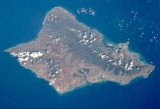
Oahu or Oahu (oˈʔɐhu in Hawaiian), known as "The Gathering Place", is the third largest of the Hawaiian Islands
and most populous of the islands in the U.S. state
of Hawaii
. The state capital Honolulu is located on the southeast coast. Including small close-in offshore islands such as Ford Island
and the islands in Kaneohe Bay and off the eastern (windward
) coast, it has a total land area of 596.7 square miles (1,545.4 km²), making it the 20th largest island in the United States. In the greatest dimension, this volcanic island is 44 miles (71 km) long and 30 miles (48 km) across. The length of the shoreline is 227 miles (365 km). The island is the result of two separate shield volcano
es: Waianae
and Koolau, with a broad "valley" or saddle (the central Oahu Plain) between them. The highest point is Mt. Ka'ala
in the Waianae Range, rising to 4003 feet (1,220 m) above sea level.
, other than that of the place itself. Ancient Hawaiian tradition attributes the name's origin in the legend of Hawaiiloa
, the Polynesia
n navigator credited with discovery of the Hawaiian Islands. The story relates that he named the island after a son.
Residents of Oahu refer to themselves as "locals" (as done throughout Hawaii), no matter their ancestry.
The city of Honolulu
—largest city, state capital, and main deepwater marine port
for the State of Hawaii—is located here. As a jurisdictional unit, the entire island of Oahu is in the City & County of Honolulu, although as a place name, Honolulu occupies only a portion of the southeast end of the island.
Well-known features found on Oahu include Waikīkī
, Pearl Harbor
, Diamond Head
, Hanauma, Kāneohe Bay, Kailua Bay, North Shore
.
Being roughly diamond-shaped, surrounded by ocean and divided by mountain ranges, directions on Oahu are not generally described with the compass directions found throughout the world. Locals instead use "ewa" to mean toward the western tip of the island, "Diamond Head" to be toward the eastern tip, "mauka" is toward the mountains and "makai" toward the sea.
Locals consider the island to be divided into various areas, which may overlap. The most commonly-accepted areas are the "City", "Town" or "Town side", which is the metropolitan area from Halawa to the area below Diamond Head (residents of the island north of the Koolau Mountains consider the Town Side to be the entire southern half); "West Oahu," which goes from Pearl Harbor to Kapolei and Ewa
and may include the Makaha and Waianae areas; the "North Shore
" (northwestern coast); the "Windward Side
" (northeastern coast); the "East Side" (the eastern portion of the island, including both the Windward Side and the area east of Diamond Head; and "The Valley" or "Central Oahu" which runs northeast from Pearl Harbor toward Haleiwa. These terms are somewhat flexible, depending on the area in which the user lives, and are used in a mostly general way.
in all of the Hawaiian Islands. The first great king of Oahu was Mailikukahi
, the law maker, who was followed by many generation of monarchs. Kualii
was the first of the warlike kings and so were his sons. In 1773, the throne fell upon Kahahana
, the son of Elani of Ewa
. In 1783 Kahekili II
, King of Maui, conquered Oahu and deposed the reigning family and then made his son Kalanikupule
king of Oahu. Kamehameha the Great
would conquer in the mountain Kalanikupule's force in the Battle of Nuuanu
. Kamehameha founded the Kingdom of Hawaii
with the conquest of Oahu in 1795. Hawaii would not be unified until the islands of Kauai
and Niihau
surrendered under King Kaumualii
in 1810. Kamehameha III
moved his capital from Lāhainā, on Maui
to Honolulu, Oahu in 1845. [[ʻIolani Palace|Iolani Palace]], built later by other members of the royal family, is still standing, and is the only royal palace on American soil.
Oahu was apparently the first of the Hawaiian Islands sighted by the crew of HMS Resolution on 18 January 1778 during Captain James Cook
's third Pacific expedition. Escorted by HMS Discovery
, the expedition was surprised to find high islands this far north in the central Pacific. Oahu was not actually visited by Europeans until 28 February 1779 when Captain Charles Clerke
aboard HMS Resolution stepped ashore at Waimea Bay
. Clerke had taken command of the ship after Capt. Cook was killed at Kealakekua Bay
(island of Hawaii
) on February 14, and was leaving the islands for the North Pacific.
The opening battle of World War II
in the Pacific for the United States was the Imperial Japanese Navy
attack on Pearl Harbor
, Oahu on the morning of December 7, 1941. The surprise attack was aimed at the Pacific Fleet
of the United States Navy
and its defending Army Air Corps
and Marine Air Forces
. The attack damaged or destroyed twelve American warships, destroyed 188 aircraft, and resulted in the deaths of 2,403 American servicemen and 68 civilians (of those, 1,177 were the result of the destruction of the USS Arizona
alone).
Today, Oahu has become a tourism and shopping haven. Over five million visitors (mainly from the American mainland
and Japan
) flock there every year to enjoy the quintessential island holiday experience.
An earthquake
, measuring 6.7 on the Richter scale, struck the Island Of Hawai'i and the surrounding islands at 07:07:49 HST on 15 October 2006, causing an island-wide power outage and over $200 million in damage.
Blue Crush
, Soul Surfer
, Lost
, Dante's Cove
, 50 First Dates
, Flight 29 Down
, Forgetting Sarah Marshall
, From Here to Eternity
(movie), From Here to Eternity
(TV series), Hawaii Five-O
, Jake and the Fatman
, the Jurassic Park
movies, The Karate Kid, Part II
, Magnum, P.I.
, Mighty Joe Young
, North Shore
, Pearl Harbor
, Tora! Tora! Tora!
, and Windtalkers
. The Disney Channel
movie Johnny Tsunami
as well as its sequel, Johnny Kapahala
, use O'ahu as the hometown of the family. The Even Stevens Movie
, also by Disney, was filmed in various locations on O'ahu. The reality TV show Dog the Bounty Hunter
is filmed in the regions of Honolulu, Oahu (as well as other regions in Oahu), and the city of Kailua-Kona
on the Big Island of Hawaii
. The children's series Flight 29 Down
was filmed on the island. The hit television series Lost
was also filmed on O'ahu, and many of the show's stars still call the island home. The island's thick rainforests and picturesque beaches are prominently featured. The ABC TV show Hawaiian Eye
, while set in Hawai'i, was filmed in Los Angeles
. The new Hawaii Five-0 is set and filmed on location on the island. Some scenes from Pirates of the Caribbean: On Stranger Tides
were also filmed on Oahu. The upcoming film, Battleship
is also set and filmed on location on Oahu, and the other Hawaiian islands.
Multiplayer online
racing game
Test Drive Unlimited
takes place on a fully modeled Oahu island with 1000 miles (1,609.3 km) of roads and highways. Oahu is featured in its sequel, Test Drive Unlimited 2
, as a second island, together with Ibiza
.
Hawaiian Islands
The Hawaiian Islands are an archipelago of eight major islands, several atolls, numerous smaller islets, and undersea seamounts in the North Pacific Ocean, extending some 1,500 miles from the island of Hawaii in the south to northernmost Kure Atoll...
and most populous of the islands in the U.S. state
U.S. state
A U.S. state is any one of the 50 federated states of the United States of America that share sovereignty with the federal government. Because of this shared sovereignty, an American is a citizen both of the federal entity and of his or her state of domicile. Four states use the official title of...
of Hawaii
Hawaii
Hawaii is the newest of the 50 U.S. states , and is the only U.S. state made up entirely of islands. It is the northernmost island group in Polynesia, occupying most of an archipelago in the central Pacific Ocean, southwest of the continental United States, southeast of Japan, and northeast of...
. The state capital Honolulu is located on the southeast coast. Including small close-in offshore islands such as Ford Island
Ford Island
Ford Island is located in the middle of Pearl Harbor, Hawaii. It is connected to the main island by the Ford Island Bridge. Before the bridge was built, Ford Island could only be reached by a ferry boat which ran at hourly intervals for cars and foot passengers. The island houses several naval...
and the islands in Kaneohe Bay and off the eastern (windward
Windward and leeward
Windward is the direction upwind from the point of reference. Leeward is the direction downwind from the point of reference. The side of a ship that is towards the leeward is its lee side. If the vessel is heeling under the pressure of the wind, this will be the "lower side"...
) coast, it has a total land area of 596.7 square miles (1,545.4 km²), making it the 20th largest island in the United States. In the greatest dimension, this volcanic island is 44 miles (71 km) long and 30 miles (48 km) across. The length of the shoreline is 227 miles (365 km). The island is the result of two separate shield volcano
Shield volcano
A shield volcano is a type of volcano usually built almost entirely of fluid lava flows. They are named for their large size and low profile, resembling a warrior's shield. This is caused by the highly fluid lava they erupt, which travels farther than lava erupted from more explosive volcanoes...
es: Waianae
Waianae Range
Waianae Range is the eroded remains of an ancient shield volcano that comprises the western half of the Hawaiian Island of Oahu...
and Koolau, with a broad "valley" or saddle (the central Oahu Plain) between them. The highest point is Mt. Ka'ala
Mt. Ka'ala
Mount Kaala or Kaala is the highest peak on the island of Oahu, at . It is a part of the Waianae Range, which is located on the west side of the island....
in the Waianae Range, rising to 4003 feet (1,220 m) above sea level.
Introduction
The island is home to about 953,207 people (approximately 75% of the resident population of the state, with approximately 75% of those living on the "city" side of the island). Oahu has for a long time been known as "The Gathering Place". However, the term Oahu has no confirmed meaning in HawaiianHawaiian language
The Hawaiian language is a Polynesian language that takes its name from Hawaii, the largest island in the tropical North Pacific archipelago where it developed. Hawaiian, along with English, is an official language of the state of Hawaii...
, other than that of the place itself. Ancient Hawaiian tradition attributes the name's origin in the legend of Hawaiiloa
Hawaiiloa
Hawaiiloa is the hero of an ancient Hawaiian legend about the settling of the Hawaiian Islands. After having accidentally stumbled upon the islands, he returned to his homeland which he called Ka āina kai melemele a Kane, "the land of the yellow sea of Kane". He then organized a colonizing...
, the Polynesia
Polynesia
Polynesia is a subregion of Oceania, made up of over 1,000 islands scattered over the central and southern Pacific Ocean. The indigenous people who inhabit the islands of Polynesia are termed Polynesians and they share many similar traits including language, culture and beliefs...
n navigator credited with discovery of the Hawaiian Islands. The story relates that he named the island after a son.
Residents of Oahu refer to themselves as "locals" (as done throughout Hawaii), no matter their ancestry.
The city of Honolulu
Honolulu, Hawaii
Honolulu is the capital and the most populous city of the U.S. state of Hawaii. Honolulu is the southernmost major U.S. city. Although the name "Honolulu" refers to the urban area on the southeastern shore of the island of Oahu, the city and county government are consolidated as the City and...
—largest city, state capital, and main deepwater marine port
Port
A port is a location on a coast or shore containing one or more harbors where ships can dock and transfer people or cargo to or from land....
for the State of Hawaii—is located here. As a jurisdictional unit, the entire island of Oahu is in the City & County of Honolulu, although as a place name, Honolulu occupies only a portion of the southeast end of the island.
Well-known features found on Oahu include Waikīkī
Waikiki
Waikiki is a neighborhood of Honolulu, in the City and County of Honolulu, on the south shore of the island of Oahu, in Hawaii. Waikiki Beach is the shoreline fronting Waikīkī....
, Pearl Harbor
Pearl Harbor
Pearl Harbor, known to Hawaiians as Puuloa, is a lagoon harbor on the island of Oahu, Hawaii, west of Honolulu. Much of the harbor and surrounding lands is a United States Navy deep-water naval base. It is also the headquarters of the U.S. Pacific Fleet...
, Diamond Head
Diamond Head, Hawaii
Diamond Head is the name of a volcanic tuff cone on the Hawaiian island of Oahu and known to Hawaiians as Lēahi, most likely from lae 'browridge, promontory' plus ahi 'tuna' because the shape of the ridgeline resembles the shape of a tuna's dorsal fin...
, Hanauma, Kāneohe Bay, Kailua Bay, North Shore
North Shore (Oahu)
The North Shore, in the context of geography of the Island of Oahu, refers to the north-facing coastal area of Oahu between Kaena Point and Kahuku Point...
.
Being roughly diamond-shaped, surrounded by ocean and divided by mountain ranges, directions on Oahu are not generally described with the compass directions found throughout the world. Locals instead use "ewa" to mean toward the western tip of the island, "Diamond Head" to be toward the eastern tip, "mauka" is toward the mountains and "makai" toward the sea.
Locals consider the island to be divided into various areas, which may overlap. The most commonly-accepted areas are the "City", "Town" or "Town side", which is the metropolitan area from Halawa to the area below Diamond Head (residents of the island north of the Koolau Mountains consider the Town Side to be the entire southern half); "West Oahu," which goes from Pearl Harbor to Kapolei and Ewa
Ewa
Ewa can refer to:In geography:* Eastern Washington* 'Ewa Beach, Hawaii, unincorporated Census-designated place * Ewa Villages, Hawaii, an unincorporated community in the U.S...
and may include the Makaha and Waianae areas; the "North Shore
North Shore (Oahu)
The North Shore, in the context of geography of the Island of Oahu, refers to the north-facing coastal area of Oahu between Kaena Point and Kahuku Point...
" (northwestern coast); the "Windward Side
Windward and leeward
Windward is the direction upwind from the point of reference. Leeward is the direction downwind from the point of reference. The side of a ship that is towards the leeward is its lee side. If the vessel is heeling under the pressure of the wind, this will be the "lower side"...
" (northeastern coast); the "East Side" (the eastern portion of the island, including both the Windward Side and the area east of Diamond Head; and "The Valley" or "Central Oahu" which runs northeast from Pearl Harbor toward Haleiwa. These terms are somewhat flexible, depending on the area in which the user lives, and are used in a mostly general way.
History
The old Kingdom of Oahu was once ruled by the most ancient AliiAli'i
Alii is a word in the Polynesian language denoting chiefly status in ancient Hawaii and the Samoa Islands. A similar word with the same concept is found in other Polynesian societies. In the Cook Islands, an ariki is a high chief and the House of Ariki is a parliamentary house...
in all of the Hawaiian Islands. The first great king of Oahu was Mailikukahi
Mailikukahi
Mailikukahi was the eighth Alii Aimoku of Oahu. He reigned as the titular chieftain or king of the island of Oahu and all its territories it may of claim at the time. He was Oahu's first true great king, and his successor, one after another were as great as the next, excepting Kuamanuia. "The...
, the law maker, who was followed by many generation of monarchs. Kualii
Kualii
Kūalii Kunuiakea Kuikealaikauaokalani, the 19th Alii Aimoku of Oahu and 20th Alii Aimoku of Kauai. He ruled as titular King or chief of Oahu and of Kauai. Kūalii is remembered for his famous kanawai, Law of Ni'aupi'o Kolowalu, which required farmers and fishermen to welcome and feed hungry strangers...
was the first of the warlike kings and so were his sons. In 1773, the throne fell upon Kahahana
Kahahana
Kahahana was the 22nd Alii Aimoku of Oahu and Alii Aimoku of Molokai. He ruled the island of Oahu and its tributary, the island of Molokai, from 1773 until his death in 1783. He was elected by the Oahu nobility to succeed Kumahana as Moi of Oahu. This was the second king to be elected to succeed...
, the son of Elani of Ewa
Elani of Ewa
Elani was a High Chief of the Ewa district on the Island of Oahu and father of the last independent Sovereign of Oahu. In an uprising to regain the autonomy of the Kingdom of Oahu, he fought Kahekili II and died...
. In 1783 Kahekili II
Kahekili II
Kahekili II, full name Kahekilinuiahumanu, was the twenty fifth King of Maui. His name was short for Kāne-Hekili after the Hawaiian god of thunder. Because Kāne-Hekili was believed to be black on one side, Kahekili tattooed one side of his body from head to foot.-Family:He was born about...
, King of Maui, conquered Oahu and deposed the reigning family and then made his son Kalanikupule
Kalanikupule
Kalanikūpule was the 27th Mōī of Maui and King of Oahu. He was the last king to physically fight with Kamehameha I over the Hawaiian Islands. Kalanikūpule was the last of the longest line of Alii Aimoku in the Hawaiian Islands.- Early life :...
king of Oahu. Kamehameha the Great
Kamehameha I
Kamehameha I , also known as Kamehameha the Great, conquered the Hawaiian Islands and formally established the Kingdom of Hawaii in 1810. By developing alliances with the major Pacific colonial powers, Kamehameha preserved Hawaii's independence under his rule...
would conquer in the mountain Kalanikupule's force in the Battle of Nuuanu
Battle of Nu'uanu
The Battle of Nuuanu , fought in May 1795 on the southern part of the island of Oahu, was a key battle in the final days of King Kamehameha I's wars to unify the Hawaiian Islands...
. Kamehameha founded the Kingdom of Hawaii
Kingdom of Hawaii
The Kingdom of Hawaii was established during the years 1795 to 1810 with the subjugation of the smaller independent chiefdoms of Oahu, Maui, Molokai, Lānai, Kauai and Niihau by the chiefdom of Hawaii into one unified government...
with the conquest of Oahu in 1795. Hawaii would not be unified until the islands of Kauai
Kauai
Kauai or Kauai, known as Tauai in the ancient Kaua'i dialect, is geologically the oldest of the main Hawaiian Islands. With an area of , it is the fourth largest of the main islands in the Hawaiian archipelago, and the 21st largest island in the United States. Known also as the "Garden Isle",...
and Niihau
Niihau
Niihau or Niihau is the seventh largest of the inhabited Hawaiian Islands in the U.S. state of Hawaii, having an area of . Niihau lies southwest of Kauai across the Kaulakahi Channel. Several intermittent playa lakes provide wetland habitats for the Hawaiian Coot, the Black-winged Stilt, and the...
surrendered under King Kaumualii
Kaumualii
Kaumualii was the last independent Alii Aimoku of Kauai and Niihau before becoming a vassal of Kamehameha I of the unified Kingdom of Hawaii in 1810...
in 1810. Kamehameha III
Kamehameha III
Kamehameha III was the King of Hawaii from 1825 to 1854. His full Hawaiian name was Keaweaweula Kiwalao Kauikeaouli Kaleiopapa and then lengthened to Keaweaweula Kiwalao Kauikeaouli Kaleiopapa Kalani Waiakua Kalanikau Iokikilo Kiwalao i ke kapu Kamehameha when he ascended the throne.Under his...
moved his capital from Lāhainā, on Maui
Maui
The island of Maui is the second-largest of the Hawaiian Islands at and is the 17th largest island in the United States. Maui is part of the state of Hawaii and is the largest of Maui County's four islands, bigger than Lānai, Kahoolawe, and Molokai. In 2010, Maui had a population of 144,444,...
to Honolulu, Oahu in 1845. [[ʻIolani Palace|Iolani Palace]], built later by other members of the royal family, is still standing, and is the only royal palace on American soil.
Oahu was apparently the first of the Hawaiian Islands sighted by the crew of HMS Resolution on 18 January 1778 during Captain James Cook
James Cook
Captain James Cook, FRS, RN was a British explorer, navigator and cartographer who ultimately rose to the rank of captain in the Royal Navy...
's third Pacific expedition. Escorted by HMS Discovery
HMS Discovery (1774)
HMS Discovery was the consort ship of James Cook's third expedition to the Pacific Ocean in 1776 - 1780. Like Cook's other ships, Discovery was a Whitby-built collier of 298 tons, originally named Diligence when she was built in 1774. Originally a brig, Cook had her changed to a full rigged ship...
, the expedition was surprised to find high islands this far north in the central Pacific. Oahu was not actually visited by Europeans until 28 February 1779 when Captain Charles Clerke
Charles Clerke
Captain Charles Clerke RN was an officer in the Royal Navy who sailed on four voyages of exploration.Clerke started studying at the Royal Naval Academy in Portsmouth when he was 13. During the Seven Years' War he served aboard HMS Dorsetshire and HMS Bellona...
aboard HMS Resolution stepped ashore at Waimea Bay
Waimea Bay, Hawaii
Waimea Bay is located in Haleiwa on the North Shore of O‘ahu in the Hawaiian Islands at the mouth of the Waimea River. Waimea Valley extends behind Waimea Bay. Waimea means "Red Water" in Hawaiian.-History:...
. Clerke had taken command of the ship after Capt. Cook was killed at Kealakekua Bay
Kealakekua Bay
Kealakekua Bay is located on the Kona coast of the island of Hawaii about south of Kailua-Kona.Settled over a thousand years ago, the surrounding area contains many archeological and historical sites such as religious temples, and was listed in the National Register of Historic Places listings on...
(island of Hawaii
Hawaii (island)
The Island of Hawaii, also called the Big Island or Hawaii Island , is a volcanic island in the North Pacific Ocean...
) on February 14, and was leaving the islands for the North Pacific.
The opening battle of World War II
World War II
World War II, or the Second World War , was a global conflict lasting from 1939 to 1945, involving most of the world's nations—including all of the great powers—eventually forming two opposing military alliances: the Allies and the Axis...
in the Pacific for the United States was the Imperial Japanese Navy
Imperial Japanese Navy
The Imperial Japanese Navy was the navy of the Empire of Japan from 1869 until 1947, when it was dissolved following Japan's constitutional renunciation of the use of force as a means of settling international disputes...
attack on Pearl Harbor
Attack on Pearl Harbor
The attack on Pearl Harbor was a surprise military strike conducted by the Imperial Japanese Navy against the United States naval base at Pearl Harbor, Hawaii, on the morning of December 7, 1941...
, Oahu on the morning of December 7, 1941. The surprise attack was aimed at the Pacific Fleet
United States Pacific Fleet
The United States Pacific Fleet is a Pacific Ocean theater-level component command of the United States Navy that provides naval resources under the operational control of the United States Pacific Command. Its home port is at Pearl Harbor Naval Base, Hawaii. It is commanded by Admiral Patrick M...
of the United States Navy
United States Navy
The United States Navy is the naval warfare service branch of the United States Armed Forces and one of the seven uniformed services of the United States. The U.S. Navy is the largest in the world; its battle fleet tonnage is greater than that of the next 13 largest navies combined. The U.S...
and its defending Army Air Corps
United States Army Air Corps
The United States Army Air Corps was a forerunner of the United States Air Force. Renamed from the Air Service on 2 July 1926, it was part of the United States Army and the predecessor of the United States Army Air Forces , established in 1941...
and Marine Air Forces
United States Marine Corps Aviation
United States Marine Corps Aviation is the air component of the United States Marine Corps. Marine aviation has a very different mission and operation than its ground counterpart, and thus, has many of its own histories, traditions, terms, and procedures....
. The attack damaged or destroyed twelve American warships, destroyed 188 aircraft, and resulted in the deaths of 2,403 American servicemen and 68 civilians (of those, 1,177 were the result of the destruction of the USS Arizona
USS Arizona (BB-39)
USS Arizona, a , was built for the United States Navy in the mid-1910s. Named in honor of the 48th state's recent admission into the union, the ship was the second and last of the Pennsylvania class of "super-dreadnought" battleships. Although commissioned in 1916, the ship remained stateside...
alone).
Today, Oahu has become a tourism and shopping haven. Over five million visitors (mainly from the American mainland
United States
The United States of America is a federal constitutional republic comprising fifty states and a federal district...
and Japan
Japan
Japan is an island nation in East Asia. Located in the Pacific Ocean, it lies to the east of the Sea of Japan, China, North Korea, South Korea and Russia, stretching from the Sea of Okhotsk in the north to the East China Sea and Taiwan in the south...
) flock there every year to enjoy the quintessential island holiday experience.
An earthquake
2006 Hawaii earthquake
The 2006 Hawaii earthquake was an offshore earthquake occurring southwest from Puakō and north of Kailua-Kona, Hawaii, just offshore of the Kona Airport, on Sunday October 15, 2006 at 7:07:49 AM local time . It measured 6.7 on the moment magnitude scale, and was located at , at a depth of...
, measuring 6.7 on the Richter scale, struck the Island Of Hawai'i and the surrounding islands at 07:07:49 HST on 15 October 2006, causing an island-wide power outage and over $200 million in damage.
Top beaches
- Ala Moana BeachAla Moana Beach ParkAla Moana Beach Park is a free public park on the island of Oahu, U.S. state of Hawaii, located between Waikiki and downtown Honolulu. This park has a wide gold-sand beach that is over a half-mile long. It's man-made and was created by the owner of the Dillingham Dredging Company, who was...
- Hanauma BayHanauma BayHanauma is a marine embayment formed within a volcanic cone and located along the southeast coast of the Island of Oahu in the Hawaiian Islands....
- Kaneohe Bay
- Ko Olina Beach ParkKo Olina Beach ParkKo Olina Beach Park is a public park on the west side of the island of Oahu, Hawaii within the Ko Olina Resort Community, part of the City and County of Honolulu. Located at the end of several high-end vacation resorts, the park is situated between the man made lagoon and the Ko Olina Marina.The...
- Kailua and Lanikai Beach
- Sandy BeachSandy BeachSandy Beach is a beach on the South Shore of Oahu in Hawaii. It is known for its excellent bodyboarding and bodysurfing opportunities due to shore break that breaks very close to the shore. Consequently, more injuries occur per year at Sandy Beach than any other beach in Hawaii, earning it the...
- Sunset BeachSunset Beach (Oahu)thumb|right|Sunset Beach on Oahu's North ShoreSunset Beach is on the North Shore of Oahu in Hawai'i and known for big wave surfing during the winter season. The original Hawaiian name for this place is Paumalū...
- Waikīkī BeachWaikikiWaikiki is a neighborhood of Honolulu, in the City and County of Honolulu, on the south shore of the island of Oahu, in Hawaii. Waikiki Beach is the shoreline fronting Waikīkī....
- Waimanalo Beach
- Waimea Bay
Attractions
- Ala MoanaAla MoanaAla Moana is the name of a commercial, retail and residential district of Honolulu, Hawaii nestled between Waikīkī to the east and Kakaako and Honolulu Harbor to the west...
- Aloha TowerAloha TowerThe Aloha Tower is a lighthouse that is considered one of the landmarks of the state of Hawaii in the United States. Opened on September 11, 1926, the Aloha Tower is located at Pier 9 of Honolulu Harbor. It has and continues to be a guiding beacon welcoming vessels to the City and County of Honolulu...
- Bernice P. Bishop Museum
- Diamond HeadDiamond Head, HawaiiDiamond Head is the name of a volcanic tuff cone on the Hawaiian island of Oahu and known to Hawaiians as Lēahi, most likely from lae 'browridge, promontory' plus ahi 'tuna' because the shape of the ridgeline resembles the shape of a tuna's dorsal fin...
- Aulani, a Disney Resort & SpaAulaniAulani, a Disney Resort & Spa is a beachside hotel, resort and vacation destination at the Ko Olina Resort & Marina in Kapolei on the Hawaiian island of Oahu. Part of the Disney Vacation Club, it is the third Disney Vacation Club Resort located outside of a Disney theme park property...
- HonoluluHonolulu, HawaiiHonolulu is the capital and the most populous city of the U.S. state of Hawaii. Honolulu is the southernmost major U.S. city. Although the name "Honolulu" refers to the urban area on the southeastern shore of the island of Oahu, the city and county government are consolidated as the City and...
- Honolulu Academy of ArtsHonolulu Academy of ArtsThe Honolulu Academy of Arts is an art museum in Honolulu in the state of Hawaii. Since its founding in 1922 by Anna Rice Cooke and opening April 8, 1927, its collections have grown to over 40,000 works of art.-Description:...
- Mauna AlaRoyal Mausoleum of HawaiiThe Royal Mausoleum of Hawaii, known as Mauna Ala in the Hawaiian language, is the final resting place of Hawaii's two prominent royal families: the Kamehameha Dynasty and the Kalākaua Dynasty.-Description:...
- Makapu'u LighthouseMakapuu Point LightThe Makapuu Point Light on the island of Oahu has the largest lens of any lighthouse in the United States. It was listed on the National Register of Historic Places in 1977.-History:...
- North ShoreNorth Shore (Oahu)The North Shore, in the context of geography of the Island of Oahu, refers to the north-facing coastal area of Oahu between Kaena Point and Kahuku Point...
- Pali Lookout
- Pearl HarborPearl HarborPearl Harbor, known to Hawaiians as Puuloa, is a lagoon harbor on the island of Oahu, Hawaii, west of Honolulu. Much of the harbor and surrounding lands is a United States Navy deep-water naval base. It is also the headquarters of the U.S. Pacific Fleet...
- Polynesian Cultural CenterPolynesian Cultural CenterThe Polynesian Cultural Center is a Polynesian-themed theme park or living museum located in Laie, on the northern shore of Oahu, Hawaii. Dedicated on October 12, 1963, the PCC occupies owned by nearby Brigham Young University–Hawaii....
- USS Arizona MemorialUSS Arizona MemorialThe USS Arizona Memorial, located at Pearl Harbor in Honolulu, Hawaii, marks the resting place of 1,102 of the 1,177 sailors killed on the USS Arizona during the Attack on Pearl Harbor on December 7, 1941 by Japanese imperial forces and commemorates the events of that day...
- USS MissouriUSS Missouri (BB-63)|USS Missouri is a United States Navy Iowa-class battleship, and was the fourth ship of the U.S. Navy to be named in honor of the U.S. state of Missouri...
- Valley of the Temples
- WaikīkīWaikikiWaikiki is a neighborhood of Honolulu, in the City and County of Honolulu, on the south shore of the island of Oahu, in Hawaii. Waikiki Beach is the shoreline fronting Waikīkī....
Oahu in media
Due to its beauty, easy access from Hollywood and incentives by the state and local governments, Oahu has been featured in many movies and television shows. There is great financial incentive on the part of the State to promote filming on location in Hawaii as the local economy benefits. The notable films and shows to shoot scenes on Oahu include, but not limited to:Blue Crush
Blue Crush
Blue Crush is a 2002 surfer film directed by John Stockwell and based on the Outside magazine article "Life's Swell" by Susan Orlean. Starring Kate Bosworth, Michelle Rodriguez, Sanoe Lake, and Mika Boorem, it tells the story of three friends who have one passion: living the ultimate dream of...
, Soul Surfer
Soul Surfer (film)
Soul Surfer is a 2011 American drama film about the life of surfer Bethany Hamilton. At the age of thirteen, Hamilton lost her arm to a shark attack. The film details the events surrounding this attack and her struggle during the aftermath...
, Lost
Lost (TV series)
Lost is an American television series that originally aired on ABC from September 22, 2004 to May 23, 2010, consisting of six seasons. Lost is a drama series that follows the survivors of the crash of a commercial passenger jet flying between Sydney and Los Angeles, on a mysterious tropical island...
, Dante's Cove
Dante's Cove
Dante's Cove is an American LGBT-oriented supernatural soap opera. The series airs on here!, an American gay-oriented network, and on Gay.com....
, 50 First Dates
50 First Dates
50 First Dates is a 2004 American romantic comedy film directed by Peter Segal and written by George Wing. The film stars Adam Sandler as a woman-chasing veterinarian and Drew Barrymore as an amnesiac, along with Rob Schneider, Sean Astin, Lusia Strus, Blake Clark, and Dan Aykroyd.Most of the film...
, Flight 29 Down
Flight 29 Down
Flight 29 Down is a television series about a group of teenagers who are stranded on an island. It was produced by Discovery Kids. The show was created by Stan Rogow and D. J. MacHale . The executive producers are Rogow, MacHale, Shauna Shapiro Jackson, and Gina & Rann Watumull...
, Forgetting Sarah Marshall
Forgetting Sarah Marshall
Forgetting Sarah Marshall is a 2008 American romantic comedy film directed by Nicholas Stoller and starring Jason Segel, Kristen Bell, Mila Kunis and Russell Brand...
, From Here to Eternity
From Here to Eternity
From Here to Eternity is a 1953 drama film directed by Fred Zinnemann and based on the novel of the same name by James Jones. It deals with the troubles of soldiers, played by Burt Lancaster, Montgomery Clift, Frank Sinatra and Ernest Borgnine stationed on Hawaii in the months leading up to the...
(movie), From Here to Eternity
From Here to Eternity
From Here to Eternity is a 1953 drama film directed by Fred Zinnemann and based on the novel of the same name by James Jones. It deals with the troubles of soldiers, played by Burt Lancaster, Montgomery Clift, Frank Sinatra and Ernest Borgnine stationed on Hawaii in the months leading up to the...
(TV series), Hawaii Five-O
Hawaii Five-O
Hawaii Five-O is an American police procedural drama series produced by CBS Productions and Leonard Freeman. Set in Hawaii, the show originally aired for twelve seasons from 1968 to 1980, and continues in reruns. The show featured a fictional state police unit run by Detective Steve McGarrett,...
, Jake and the Fatman
Jake and the Fatman
Jake and the Fatman is a television crime drama starring William Conrad as prosecutor J. L. "Fatman" McCabe and Joe Penny as investigator Jake Styles. The series ran on CBS for five seasons from 1987 to 1992. Diagnosis: Murder was a spin-off of this series...
, the Jurassic Park
Jurassic Park (film)
Jurassic Park is a 1993 American science fiction adventure film directed by Steven Spielberg. The film is based on the novel of the same name by Michael Crichton. It stars Sam Neill, Laura Dern, Jeff Goldblum, Richard Attenborough, Martin Ferrero, and Bob Peck...
movies, The Karate Kid, Part II
The Karate Kid, Part II
The Karate Kid, Part II is a 1986 American martial arts film and is a sequel to 1984's The Karate Kid. Ralph Macchio and Pat Morita reprise their roles as Daniel LaRusso and Mr. Miyagi, respectively. The original music score was composed by Bill Conti...
, Magnum, P.I.
Magnum, P.I.
Magnum, P.I. is an American television series starring Tom Selleck as Thomas Magnum, a private investigator living on Oahu, Hawaii. The series ran from 1980 to 1988 in first-run broadcast on the American CBS television network....
, Mighty Joe Young
Mighty Joe Young (1998 film)
The Music was composed and conduced by James Horner. The Soundtrack was released on December of the year 1998.- Tracklist :...
, North Shore
North Shore (TV series)
North Shore is an American prime-time soap opera that aired on Fox every Monday at 8 p.m. EST for seven months in 2004 and 2005...
, Pearl Harbor
Pearl Harbor (film)
Pearl Harbor is a 2001 American action drama war film directed by Michael Bay and produced by Jerry Bruckheimer and Randall Wallace, who wrote the screenplay...
, Tora! Tora! Tora!
Tora! Tora! Tora!
is a 1970 American-Japanese war film that dramatizes the Japanese attack on Pearl Harbor, to the extent these facts were known at the time of production. The film was directed by Richard Fleischer and stars an all-star cast, including So Yamamura, E.G...
, and Windtalkers
Windtalkers
Windtalkers is a 2002 action war film directed by John Woo. Nicolas Cage and Christian Slater star as two US Marine sergeants assigned to protect Navajo code talkers in Saipan during World War II.-Plot:World War II Sgt...
. The Disney Channel
Disney Channel
Disney Channel is an American basic cable and satellite television network, owned by the Disney-ABC Television Group division of The Walt Disney Company. It is under the direction of Disney-ABC Television Group President Anne Sweeney. The channel's headquarters is located on West Alameda Ave. in...
movie Johnny Tsunami
Johnny Tsunami
Johnny Tsunami is a 1999 Disney Channel Original Movie. It was nominated in 2000 for the Humanitas Prize as Children's Live-Action Category. Johnny Tsunami is the predecessor to Johnny Kapahala: Back on Board, released in June 2007.-Plot summary:...
as well as its sequel, Johnny Kapahala
Johnny Kapahala: Back on Board
Johnny Kapahala: Back on Board is the 70th Disney Channel Original Movie and is the sequel to the 1999 film Johnny Tsunami. The movie premiered on Disney Channel on June 8, 2007. 1.3 million viewers watched this movie in the U.L placing 3rd in its timeslot...
, use O'ahu as the hometown of the family. The Even Stevens Movie
The Even Stevens Movie
The Even Stevens Movie is a 2003 American Disney Channel Original Movie that is based on the Disney Channel Original Series Even Stevens...
, also by Disney, was filmed in various locations on O'ahu. The reality TV show Dog the Bounty Hunter
Dog the Bounty Hunter
Dog the Bounty Hunter is a reality television show on A&E which chronicles Duane "Dog" Chapman's adventures as a fugitive recovery agent, or bounty hunter...
is filmed in the regions of Honolulu, Oahu (as well as other regions in Oahu), and the city of Kailua-Kona
Kailua-Kona, Hawai'i
Kailua is a census-designated place in Hawaii County, Hawaii, United States, in the North Kona District of the Island of Hawaii. The population was 11,975 at the 2010 census. It is the center of commerce and of the tourist industry on West Hawaii...
on the Big Island of Hawaii
Hawaii (island)
The Island of Hawaii, also called the Big Island or Hawaii Island , is a volcanic island in the North Pacific Ocean...
. The children's series Flight 29 Down
Flight 29 Down
Flight 29 Down is a television series about a group of teenagers who are stranded on an island. It was produced by Discovery Kids. The show was created by Stan Rogow and D. J. MacHale . The executive producers are Rogow, MacHale, Shauna Shapiro Jackson, and Gina & Rann Watumull...
was filmed on the island. The hit television series Lost
Lost (TV series)
Lost is an American television series that originally aired on ABC from September 22, 2004 to May 23, 2010, consisting of six seasons. Lost is a drama series that follows the survivors of the crash of a commercial passenger jet flying between Sydney and Los Angeles, on a mysterious tropical island...
was also filmed on O'ahu, and many of the show's stars still call the island home. The island's thick rainforests and picturesque beaches are prominently featured. The ABC TV show Hawaiian Eye
Hawaiian Eye
Hawaiian Eye is an American television series that ran from October 1959 to September 1963 on the American Broadcasting Company television network.-Premise:...
, while set in Hawai'i, was filmed in Los Angeles
Los Ángeles
Los Ángeles is the capital of the province of Biobío, in the commune of the same name, in Region VIII , in the center-south of Chile. It is located between the Laja and Biobío rivers. The population is 123,445 inhabitants...
. The new Hawaii Five-0 is set and filmed on location on the island. Some scenes from Pirates of the Caribbean: On Stranger Tides
Pirates of the Caribbean: On Stranger Tides
Pirates of the Caribbean: On Stranger Tides is a 2011 adventure fantasy film and the fourth installment in the Pirates of the Caribbean series...
were also filmed on Oahu. The upcoming film, Battleship
Battleship (film)
Battleship is an upcoming 2012 science fiction naval war film based on the game of the same name. The film is being directed by Peter Berg and will be released by Universal Pictures...
is also set and filmed on location on Oahu, and the other Hawaiian islands.
Multiplayer online
Online game
An online game is a game played over some form of computer network. This almost always means the Internet or equivalent technology, but games have always used whatever technology was current: modems before the Internet, and hard wired terminals before modems...
racing game
Racing game
A racing video game is a genre of video games, either in the first-person or third-person perspective, in which the player partakes in a racing competition with any type of land, air, or sea vehicles. They may be based on anything from real-world racing leagues to entirely fantastical settings...
Test Drive Unlimited
Test Drive Unlimited
Test Drive Unlimited is an arcade-style racing game, the 9th game of the Test Drive series, it features over 125 licensed sports cars and motorcycles and a terrain modeled after the Hawaiian island of Oahu that features some 1000 miles of roads and highways. Test Drive Unlimited is the ninth main...
takes place on a fully modeled Oahu island with 1000 miles (1,609.3 km) of roads and highways. Oahu is featured in its sequel, Test Drive Unlimited 2
Test Drive Unlimited 2
Test Drive Unlimited 2 is a racing video game developed by Eden Games and published by Atari. It is the sequel to Test Drive Unlimited and the tenth game in the series. The game was released on 8 February 2011 in North America and on 11 February in Europe.The game suffered from many bugs during...
, as a second island, together with Ibiza
Ibiza
Ibiza or Eivissa is a Spanish island in the Mediterranean Sea 79 km off the coast of the city of Valencia in Spain. It is the third largest of the Balearic Islands, an autonomous community of Spain. With Formentera, it is one of the two Pine Islands or Pityuses. Its largest cities are Ibiza...
.