

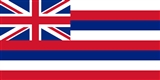
Kingdom of Hawaii

Encyclopedia
The Kingdom of Hawaii was established during the years 1795 to 1810 with the subjugation of the smaller independent chiefdom
s of Oahu
, Maui
, Molokai
, Lānai
, Kauai
and Niihau
by the chiefdom of Hawaii
(or the "Big Island") into one unified government. The Kingdom was overthrown in 1893-1894.
. The Kingdom of Hawaii was established with the help of western weapons and advisors, such as John Young
and Isaac Davis
. Although successful in attacking both Oahu
and Maui
, he failed to secure a victory in Kauai
, his effort hampered by a storm. Eventually, Kauai's chief swore allegiance to Kamehameha. The unification ended the ancient Hawaii
an society, transforming it into an independent constitutional monarchy crafted in the traditions and manner of European monarchs.
, who unified Hawaii in 1810. The army and navy used both traditional canoes and uniforms including helmets made of natural materials and loincloths (called the Malo) as well as western technology like artillery cannons, muskets, and European ships. European advisors were captured, treated well and became Hawaiian citizens. When Kamehameha died in 1819 he left his son Liholiho a large arsenal with tens of thousands of men and many warships.
This helped put down the revolt at Kuamoo later in 1819 and Humehume
's rebellion on Kauai in 1824.
During the Kamehameha Dynasty the population in Hawaii was ravaged by epidemics following the arrival of outsiders. The military shrank with the population, so by the end of the Dynasty there was no Hawaiian navy and an army consisting of several hundred troops. After a French invasion that sacked Honolulu in 1849 Kamehameha III
sought treaties with the United States and Britain to become a protectorate state
. During the outbreak of the Crimean War
, in Europe, Kamehameha III declared Hawaii a neutral state, similar to Switzerland
, ending any hope of Hawaii to benefits through war. After Hawaii became a protectorate of the United States strong pressure was put on Kamehameha IV
to make trade exclusively to the United States even annexing the islands. To counterbalance this situation Kamehameha IV and Kamehameha V
pushed for alliances with other foreign powers, especially Great Britain. Hawaii claimed uninhabited islands in the Pacific including the Northwestern Hawaiian Islands
, many of which came into conflict with American claims.
Following the Kamehameha Dynasty the small army was disbanded under Lunalilo
after a barracks revolt in September 1873 until his death leaving Hawaii solely protected by the United States who had wavering support of the monarchy. The small army was restored under King Kalakaua
but failed to stop the 1887 Rebellion by the Missionary Party. In 1891 Queen Liliuokalani came to power. Following the elections 1892 with petitions and request from her administration to change the constitution of 1887
. The US protectorate policy was that at least one U.S. cruiser
must be present in Hawaii at all times. So, on January 17, 1893, Liliuokalani, believing the U.S. military would intervene if she changed the constitution, waited for the to leave port. Once it was known that Liliuokalani was revising the constitution, the Boston was recalled and assisted the Missionary Party in her overthrow. In 1993, the U.S. Congress
passed the Apology Resolution, admitting wrongdoing and issuing an apology. Following the overthrow and the establishment of the Provisional Government of Hawaii
the Kingdom's military was disarmed and disbanded.
and the Kalākaua Dynasty
. Five members of the Kamehameha family led the government as king. Liholiho (Kamehameha II) and Kauikeaouli (Kamehameha III), were direct sons of Kamehameha the Great. For a period of Liholiho and Kauikeaouli's reigns, the primary wife of Kamehameha the Great, Queen Kaahumanu, ruled as Queen Regent and Kuhina Nui
, or Prime Minister
.
Kaahumanu II
.
In 1839 Captain Laplace of the French frigate Artémise sailed to Hawaii under orders to:
Under the threat of war, King Kamehameha III
signed the Edict of Toleration
on July 17, 1839 and paid the $20,000 in compensation for the deportation of the priests and the incarceration and torture of converts, agreeing to Laplace's demands. The kingdom proclaimed:
The Roman Catholic Diocese of Honolulu returned unpersecuted and as reparation Kamehameha III donated land for them to build a church upon.
warship , entered Honolulu Harbor and demanded that King Kamehameha III cede the islands to the British Crown. Under the guns of the frigate, Kamehameha III surrendered to Paulet on February 25, writing to his people:
Dr. Gerrit P. Judd
, a missionary who had become the Minister of Finance for the Kingdom, secretly arranged for J.F.B. Marshall to be envoy to the United States, France and Britain, to protest Paulet's actions. Marshall, a commercial agent of Ladd & Co., conveyed the Kingdom's complaint to the Vice Consul of Britain in Tepec. Rear Admiral Richard Darton Thomas
, Paulet's commanding officer, arrived at Honolulu harbor on July 26, 1843 on from Valparaíso
, Chile. Admiral Thomas apologized to Kamehameha III for Paulet's actions, and restored Hawaiian sovereignty on July 31, 1843. In his restoration speech, Kamehameha III declared that "Ua mau ke ea o ka āina i ka pono" (The life of the land is perpetuated in righteousness), the motto of the future State of Hawaii.
arrived in Honolulu Harbor
with the La Poursuivante and Gassendi. De Tromelin made ten demands to King Kamehameha III
on August 22, mainly demanding that full religious rights be given to Catholics, (a decade earlier, during the French Incident the ban on Catholicism had been lifted, but Catholics still enjoyed only partial religious rights). On August 25 the demands had not been met. After a second warning was made to the civilians, French troops overwhelmed the skeleton force
and captured Honolulu Fort, spiked the coastal guns and destroyed all other weapons they found (mainly muskets and ammunition). They raided government buildings and general property in Honolulu, causing $100,000 in damages. After the raids the invasion force withdrew to the fort. De Tromelin eventually recalled his men and left Hawaii on September 5.
and Sir George Simpson
were commissioned as joint Ministers Plenipotentiary on April 8, 1842. Sir George Simpson left for England while Haalilio and Richards to the United States on July 8, 1842. The Hawaiian delegation secured the assurance of U.S. President John Tyler
on December 19, 1842 of Hawaiian independence, and then met Simpson in Europe to secure formal recognition by the United Kingdom and France. On March 17, 1843, King Louis-Philippe of France recognized Hawaiian independence at the urging of King Leopold I of Belgium
. On April 1, 1843, Lord Aberdeen
on behalf of Queen Victoria
, assured the Hawaiian delegation that, "Her Majesty's Government was willing and had determined to recognize the independence of the Sandwich Islands under their present sovereign."
Hawaii was thus the first non-European indigenous state to be admitted into the Family of Nations. The United States declined to join with France and the United Kingdom in this statement. Even though President John Tyler
had verbally recognized Hawaiian Independence, it was not until 1849 that the United States formally recognized Hawaii as a fellow nation.
November 28 became a national holiday to celebrate the recognition of Hawaii's independence. The Hawaiian Kingdom entered into treaties with most major nations and established over ninety legations and consulates.
Dynastic rule by the Kamehameha family ended in 1872 with the death of Kamehameha V. Upon his deathbed, he summoned High Chiefess Bernice Pauahi Bishop
to declare his intentions of making her heir to the throne. She and her cousin, Princess Ruth Keelikōlani
were the last direct Kamehameha family members surviving. Bernice refused the crown and Kamehameha V died before naming an alternative heir.
, grandnephew of Kamehameha I, became Hawaiiis first of two elected monarchs, but only reigned from 1873–1874.
, widow of Kamehameha IV, was nominated along with David Kalākaua. The 1874 election was a nasty political campaign in which both candidates resorted to mudslinging and innuendo. David Kalākaua became the second elected King of Hawaii but without the ceremonial popular vote of Lunalilo. The choice of the legislature was controversial, and U.S. and British troops were called upon to suppress rioting by Queen Emma's supporters, the Emmaites.
Hoping to avoid uncertainty in the monarchy's future, Kalākaua proclaimed several heirs to the throne to define a line of succession. His sister Liliuokalani would succeed the throne upon Kalākaua's death, with Princess Victoria Kaiulani to follow. If she could not produce an heir by birth, Prince David Lamea Kawananakoa
then Prince Jonah Kūhiō Kalanianaole would rule after her.
was drafted by Lorrin A. Thurston
, Minister of Interior under King Kalākaua. The constitution was proclaimed by the king after a meeting of 3,000 residents including an armed militia demanded he sign it or be deposed. The document created a constitutional monarchy
like the United Kingdom's, stripping the King of most of his personal authority, empowering the legislature and establishing cabinet government. It has since become widely known as the "Bayonet Constitution" because of the threat of force used to gain Kalākaua's cooperation.
The 1887 constitution empowered the citizenry to elect members of the House of Nobles (who had previously been appointed by the King). It increased the value of property a citizen must own to be eligible to vote above the previous Constitution of 1864 and denied voting rights to Asians who comprised a large proportion of the population. (A few Japanese and some Chinese had previously become naturalized and now lost voting rights they had previously enjoyed.) This guaranteed a voting monopoly to wealthy native Hawaiians and Europeans. The Bayonet Constitution continued allowing the monarch to appoint cabinet ministers, but stripped him of the power to dismiss them without approval from the Legislature.
. By rescinding the Reciprocity Treaty of 1875, the new tariff eliminated the previous advantage Hawaiian exporters enjoyed in trade to U.S. markets. Many Hawaiian businesses and citizens were feeling the pressures of the loss of revenue, so Liliuokalani proposed a lottery
and opium licensing to bring in additional revenue for the government. Her ministers and closest friends tried to dissuade her from pursuing the bills, and these controversial proposals were used against her in the looming constitutional crisis.
Liliuokalani wanted to restore power to the monarch by abrogating the 1887 Constitution. The queen launched a campaign resulting in a petition to proclaim a new Constitution.
Many citizens and residents who in 1887 had forced Kalākaua to sign the "Bayonet Constitution" became alarmed when three of her recently appointed cabinet members informed them that the queen was planning to unilaterally proclaim her new Constitution. Some cabinet ministers were reported to have feared for their safety after upsetting the queen by not supporting her plans.
 Historians suggest that businessmen were in favor of overthrow and annexation to the U.S. in order to benefit from more favorable trade conditions with its main export market. The McKinley Tariff of 1890 eliminated the previously highly favorable trade terms for Hawaii's sugar exports, a main component of the economy.
In response to Liliuokalani's move, a group of European and American residents formed a "Committee of Safety" on January 14, 1893 in opposition to the Queen and her plans. After a mass meeting of supporters, the Committee committed itself to the removal of the Queen, and seeking annexation to the United States.
United States Government Minister John L. Stevens
summoned a company of uniformed U.S. Marines from the and two companies of U.S. sailors to land on the Kingdom and take up positions at the U.S. Legation, Consulate, and Arion Hall on the afternoon of January 16, 1893. This deployment was at the request of the Committee of Safety, which claimed an "imminent threat to American lives and property". Stevens was accused of ordering the landing himself on his own authority, and inappropriately using his discretion. Historian William Russ concluded that "the injunction to prevent fighting of any kind made it impossible for the monarchy to protect itself".
and his committee took control of the government and declared itself the Provisional Government of Hawaii
"to rule until annexation by the United States" and lobbied the United States for it. Dole was president of both governments. During this time, members of the former government lobbied in Washington
for the United States to restore the Hawaiian Kingdom. President Grover Cleveland
considered the overthrow to have been an illegal act of war; he refused to consider annexation of the islands and initially worked to restore the queen to her throne. Between December 14, 1893 and January 11, 1894 a standoff occurred between the United States
, Japan
, and the United Kingdom
against the Provisional Government to pressure them into returning the Queen known as the Black Week
. This incident drove home the message that president Cleveland wanted Queen Liliuokalani's return to power, so on July 4, 1894 the Republic of Hawaii
was proclaimed to wait out Cleveland's second term. Also in 1894, as lobbying continued in Washington, the exiled government was secretly amassing an army of 600 strong led by former Captain of the Guard
Samuel Nowlein. In 1895 they attempted a counter-rebellion
, and Lili'uokalani was arrested when a weapons cache was found on the palace grounds. She was tried by a military tribunal of the Republic, convicted of treason, and placed under permanent house arrest in her own home.
On January 24, 1895 while under house arrest Lili'uokalani wrote a five page declaration in which she dissolved the exiled government and formally abdicated the throne to become a citizen of the Republic in order to avoid future acts of violence designed to restore the monarchy. Following this act, the Kingdom of Hawaii was no more.
that the Republic of Hawaii succeeded in its goal when in 1898, Congress approved a joint resolution of annexation creating the U.S. Territory of Hawaii. This followed the precedent of Texas
which was also annexed by a joint resolution of Congress. Dole was appointed to be the first governor of the Territory of Hawaii.
The overthrow of the Kingdom of Hawaii and the subsequent annexation of Hawaii has recently been cited as the first major instance of American imperialism.
, Molokai
and Oahu
. It should be noted that Kamehameha I
had conquered Maui and Molokai five years prior in the Battle of Kepaniwai
, but they were abandoned when Kamehameha's Big Island possession were under threat and later reconquered by the aged King Kahekili II
of Maui. His domain comprised six of the major of the islands of the Hawaiian chain and with Kaumualii
's peaceful surrender, Kauai and Niihau were added to his territories. Kamehameha II
assumed de-facto control of Kauai and Niihau when he kidnapped Kaumualii, ending his vassal rule over the islands.
In 1822, Queen Kaahumanu
and her husband King Kaumualii
traveled with Captain William Sumner to find Nihoa, as her generation had only known the island through songs and myths
. Later, King Kamehameha IV
sailed there to officially annex the island. Kamehameha IV and Kalakaua would later add islands including Pearl and Hermes Atoll
, Necker Island
, Laysan
, Lisianski Island
, Jarvis Island
, Johnston Atoll
, Palmyra Atoll
, Samarong???, Ocean (Kure) Atoll
, Midway Atoll
, French Frigate Shoals
, Maro Reef
and Gardner Pinnacles
. The Stewart Islands or Sikaiana
were ceded to Hawaii in 1856 by its residents, but it was never formalized by the Hawaiian government.
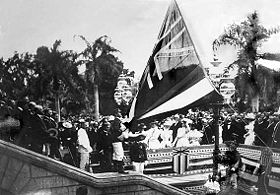 By the time Kamehameha V was king, he saw the need to build a royal palace fitting of the Kingdom of Hawaii's new found prosperity and standing with the royals of other nations. He commissioned the building of the palace at Aliiōlani Hale. He died before it was completed. Today, the palace houses the Supreme Court of the State of Hawaii.
David Kalākaua shared the dream of Kamehameha V to build a palace, and eagerly desired the trappings of European royalty. He commissioned the construction of Iolani Palace. In later years, the palace would become his sister's makeshift prison under guard by the forces of the Republic of Hawaii, the site of the official raising of the U.S. flag during annexation, and then territorial governor's and legislature's offices. It is now a museum.

Chiefdom
A chiefdom is a political economy that organizes regional populations through a hierarchy of the chief.In anthropological theory, one model of human social development rooted in ideas of cultural evolution describes a chiefdom as a form of social organization more complex than a tribe or a band...
s of Oahu
Oahu
Oahu or Oahu , known as "The Gathering Place", is the third largest of the Hawaiian Islands and most populous of the islands in the U.S. state of Hawaii. The state capital Honolulu is located on the southeast coast...
, Maui
Maui
The island of Maui is the second-largest of the Hawaiian Islands at and is the 17th largest island in the United States. Maui is part of the state of Hawaii and is the largest of Maui County's four islands, bigger than Lānai, Kahoolawe, and Molokai. In 2010, Maui had a population of 144,444,...
, Molokai
Molokai
Molokai or Molokai is an island in the Hawaiian archipelago. It is 38 by 10 miles in size with a land area of , making it the fifth largest of the main Hawaiian Islands and the 27th largest island in the United States. It lies east of Oahu across the 25-mile wide Kaiwi Channel and north of...
, Lānai
Lanai
Lānai or Lanai is the sixth-largest of the Hawaiian Islands. It is also known as the Pineapple Island because of its past as an island-wide pineapple plantation. The only town is Lānai City, a small settlement....
, Kauai
Kauai
Kauai or Kauai, known as Tauai in the ancient Kaua'i dialect, is geologically the oldest of the main Hawaiian Islands. With an area of , it is the fourth largest of the main islands in the Hawaiian archipelago, and the 21st largest island in the United States. Known also as the "Garden Isle",...
and Niihau
Niihau
Niihau or Niihau is the seventh largest of the inhabited Hawaiian Islands in the U.S. state of Hawaii, having an area of . Niihau lies southwest of Kauai across the Kaulakahi Channel. Several intermittent playa lakes provide wetland habitats for the Hawaiian Coot, the Black-winged Stilt, and the...
by the chiefdom of Hawaii
Hawaii (island)
The Island of Hawaii, also called the Big Island or Hawaii Island , is a volcanic island in the North Pacific Ocean...
(or the "Big Island") into one unified government. The Kingdom was overthrown in 1893-1894.
History
A series of violent battles, lasting 15 years, was led by the warrior chief who would become Kamehameha the GreatKamehameha I
Kamehameha I , also known as Kamehameha the Great, conquered the Hawaiian Islands and formally established the Kingdom of Hawaii in 1810. By developing alliances with the major Pacific colonial powers, Kamehameha preserved Hawaii's independence under his rule...
. The Kingdom of Hawaii was established with the help of western weapons and advisors, such as John Young
John Young (Hawaii)
John Young was a British subject who became an important military advisor to Kamehameha I during the formation of the Kingdom of Hawaii. He was left behind by Simon Metcalfe, captain of the American ship Eleanora, and along with a Welshmen Isaac Davis became a friend and advisor to Kamehameha...
and Isaac Davis
Isaac Davis (Hawaii)
Isaac Davis was a Welsh advisor to Kamehameha I and helped form the Kingdom of Hawaii. He arrived in Hawaii in 1790 as the sole survivor of the massacre of the crew of The Fair American. He along with John Young became friends and advisors to Kamehameha...
. Although successful in attacking both Oahu
Battle of Nu'uanu
The Battle of Nuuanu , fought in May 1795 on the southern part of the island of Oahu, was a key battle in the final days of King Kamehameha I's wars to unify the Hawaiian Islands...
and Maui
Maui
The island of Maui is the second-largest of the Hawaiian Islands at and is the 17th largest island in the United States. Maui is part of the state of Hawaii and is the largest of Maui County's four islands, bigger than Lānai, Kahoolawe, and Molokai. In 2010, Maui had a population of 144,444,...
, he failed to secure a victory in Kauai
Kauai
Kauai or Kauai, known as Tauai in the ancient Kaua'i dialect, is geologically the oldest of the main Hawaiian Islands. With an area of , it is the fourth largest of the main islands in the Hawaiian archipelago, and the 21st largest island in the United States. Known also as the "Garden Isle",...
, his effort hampered by a storm. Eventually, Kauai's chief swore allegiance to Kamehameha. The unification ended the ancient Hawaii
Ancient Hawaii
Ancient Hawaii refers to the period of Hawaiian human history preceding the unification of the Kingdom of Hawaii by Kamehameha the Great in 1810. After being first settled by Polynesian long-distance navigators sometime between AD 300–800, a unique culture developed. Diversified agroforestry and...
an society, transforming it into an independent constitutional monarchy crafted in the traditions and manner of European monarchs.
Military
The Hawaiian army and navy developed from the warriors of Kona under Kamehameha IKamehameha I
Kamehameha I , also known as Kamehameha the Great, conquered the Hawaiian Islands and formally established the Kingdom of Hawaii in 1810. By developing alliances with the major Pacific colonial powers, Kamehameha preserved Hawaii's independence under his rule...
, who unified Hawaii in 1810. The army and navy used both traditional canoes and uniforms including helmets made of natural materials and loincloths (called the Malo) as well as western technology like artillery cannons, muskets, and European ships. European advisors were captured, treated well and became Hawaiian citizens. When Kamehameha died in 1819 he left his son Liholiho a large arsenal with tens of thousands of men and many warships.
This helped put down the revolt at Kuamoo later in 1819 and Humehume
Humehume
Humehume , known by many different names during his time, such as George Prince, George Prince Kaumualii, Tamoree or Kumoree by American writers, was a son of the king of part of the Hawaiian Islands. He traveled widely, served in the U.S...
's rebellion on Kauai in 1824.
During the Kamehameha Dynasty the population in Hawaii was ravaged by epidemics following the arrival of outsiders. The military shrank with the population, so by the end of the Dynasty there was no Hawaiian navy and an army consisting of several hundred troops. After a French invasion that sacked Honolulu in 1849 Kamehameha III
Kamehameha III
Kamehameha III was the King of Hawaii from 1825 to 1854. His full Hawaiian name was Keaweaweula Kiwalao Kauikeaouli Kaleiopapa and then lengthened to Keaweaweula Kiwalao Kauikeaouli Kaleiopapa Kalani Waiakua Kalanikau Iokikilo Kiwalao i ke kapu Kamehameha when he ascended the throne.Under his...
sought treaties with the United States and Britain to become a protectorate state
Protectorate
In history, the term protectorate has two different meanings. In its earliest inception, which has been adopted by modern international law, it is an autonomous territory that is protected diplomatically or militarily against third parties by a stronger state or entity...
. During the outbreak of the Crimean War
Crimean War
The Crimean War was a conflict fought between the Russian Empire and an alliance of the French Empire, the British Empire, the Ottoman Empire, and the Kingdom of Sardinia. The war was part of a long-running contest between the major European powers for influence over territories of the declining...
, in Europe, Kamehameha III declared Hawaii a neutral state, similar to Switzerland
Switzerland
Switzerland name of one of the Swiss cantons. ; ; ; or ), in its full name the Swiss Confederation , is a federal republic consisting of 26 cantons, with Bern as the seat of the federal authorities. The country is situated in Western Europe,Or Central Europe depending on the definition....
, ending any hope of Hawaii to benefits through war. After Hawaii became a protectorate of the United States strong pressure was put on Kamehameha IV
Kamehameha IV
Kamehameha IV, born Alexander Iolani Liholiho Keawenui , reigned as the fourth king of the Kingdom of Hawaii from January 11, 1855 to November 30, 1863.-Early life:...
to make trade exclusively to the United States even annexing the islands. To counterbalance this situation Kamehameha IV and Kamehameha V
Kamehameha V
aloghaKamehameha V , born as Lot Kapuāiwa, reigned as monarch of the Kingdom of Hawaii from 1863 to 1872. His motto was "Onipa`a": immovable, firm, steadfast or determined; he worked diligently for his people and kingdom and was described as the last great traditional chief...
pushed for alliances with other foreign powers, especially Great Britain. Hawaii claimed uninhabited islands in the Pacific including the Northwestern Hawaiian Islands
Northwestern Hawaiian Islands
The Northwestern Hawaiian Islands or the Leeward Islands are the small islands and atolls in the Hawaiian island chain located northwest of the islands of Kauai and Niihau. They are administered by the U.S. state of Hawaii except Midway Atoll, which has temporary residential facilities and is...
, many of which came into conflict with American claims.
Following the Kamehameha Dynasty the small army was disbanded under Lunalilo
Lunalilo
Lunalilo, born William Charles Lunalilo , was king of the Kingdom of Hawaii from January 8, 1873 until February 3, 1874...
after a barracks revolt in September 1873 until his death leaving Hawaii solely protected by the United States who had wavering support of the monarchy. The small army was restored under King Kalakaua
Kalakaua
Kalākaua, born David Laamea Kamanakapuu Mahinulani Nalaiaehuokalani Lumialani Kalākaua and sometimes called The Merrie Monarch , was the last reigning king of the Kingdom of Hawaii...
but failed to stop the 1887 Rebellion by the Missionary Party. In 1891 Queen Liliuokalani came to power. Following the elections 1892 with petitions and request from her administration to change the constitution of 1887
1887 Constitution of the Kingdom of Hawaii
The 1887 Constitution of the Kingdom of Hawaii was a legal document by anti-monarchists to strip the Hawaiian monarchy of much of its authority, initiating a transfer of power to American, European and native Hawaiian elites...
. The US protectorate policy was that at least one U.S. cruiser
Cruiser
A cruiser is a type of warship. The term has been in use for several hundreds of years, and has had different meanings throughout this period...
must be present in Hawaii at all times. So, on January 17, 1893, Liliuokalani, believing the U.S. military would intervene if she changed the constitution, waited for the to leave port. Once it was known that Liliuokalani was revising the constitution, the Boston was recalled and assisted the Missionary Party in her overthrow. In 1993, the U.S. Congress
United States Congress
The United States Congress is the bicameral legislature of the federal government of the United States, consisting of the Senate and the House of Representatives. The Congress meets in the United States Capitol in Washington, D.C....
passed the Apology Resolution, admitting wrongdoing and issuing an apology. Following the overthrow and the establishment of the Provisional Government of Hawaii
Provisional Government of Hawaii
The Provisional Government of Hawaii abbreviated "P.G." was proclaimed on January 17, 1893 by the 13 member Committee of Safety under the leadership of Sanford B. Dole...
the Kingdom's military was disarmed and disbanded.
Kamehameha Dynasty
From 1810 to 1893, the Kingdom of Hawaii was ruled by two major dynastic families: the House of KamehamehaHouse of Kamehameha
The House of Kamehameha , or the Kamehameha Dynasty, was the reigning family of the Kingdom of Hawaii between the unification of the islands by Kamehameha I in 1810 and the death of Kamehameha V in 1872...
and the Kalākaua Dynasty
House of Kalakaua
The House of Kalākaua, or the Kalākaua Dynasty, was the reigning family of the Kingdom of Hawaii between the assumption of King David Kalākaua to the throne in 1874 and the overthrow of Queen Liliuokalani in 1893. Liliuokalani died in 1917, leaving only cousins as heirs...
. Five members of the Kamehameha family led the government as king. Liholiho (Kamehameha II) and Kauikeaouli (Kamehameha III), were direct sons of Kamehameha the Great. For a period of Liholiho and Kauikeaouli's reigns, the primary wife of Kamehameha the Great, Queen Kaahumanu, ruled as Queen Regent and Kuhina Nui
Kuhina Nui
Kuhina Nui was a powerful office in the Kingdom of Hawaii from 1819 to 1864. It was usually held by a relative of the king and was the rough equivalent of the 19th century European office of Prime Minister or sometimes Regent.- Origin of the office :...
, or Prime Minister
Prime minister
A prime minister is the most senior minister of cabinet in the executive branch of government in a parliamentary system. In many systems, the prime minister selects and may dismiss other members of the cabinet, and allocates posts to members within the government. In most systems, the prime...
.
The French Incident (1839)
Under the rule of Queen Kaahumanu, the powerful newly-converted Protestant widow of Kamehameha the Great, Catholicism was illegal in Hawaii, and in 1831 chiefs loyal to her forcibly deported French Catholic priests; Native Hawaiian converts were imprisoned and Protestant ministers ordered them to be tortured. The prejudice against the French Catholic missionaries remained the same under the reign of her successor, the Kuhina NuiKuhina Nui
Kuhina Nui was a powerful office in the Kingdom of Hawaii from 1819 to 1864. It was usually held by a relative of the king and was the rough equivalent of the 19th century European office of Prime Minister or sometimes Regent.- Origin of the office :...
Kaahumanu II
Kaahumanu II
Princess Kalani Ahumanu i Kaliko o Iwi Kauhipua o Kīnau, also known as Elizabeth Kīnau was Kuhina Nui of the Kingdom of Hawaii as Kaahumanu II, Queen regent and Dowager Queen.-Life:...
.
In 1839 Captain Laplace of the French frigate Artémise sailed to Hawaii under orders to:
- Destroy the malevolent impression which you find established to the detriment of the French name; to rectify the erroneous opinion which has been created as to the power of France; and to make it well understood that it would be to the advantage of the chiefs of those islands of the Ocean to conduct themselves in such a manner as not to incur the wrath of France. You will exact, if necessary with all the force that is yours to use, complete reparation for the wrongs which have been committed, and you will not quit those places until you have left in all minds a solid and lasting impression.
Under the threat of war, King Kamehameha III
Kamehameha III
Kamehameha III was the King of Hawaii from 1825 to 1854. His full Hawaiian name was Keaweaweula Kiwalao Kauikeaouli Kaleiopapa and then lengthened to Keaweaweula Kiwalao Kauikeaouli Kaleiopapa Kalani Waiakua Kalanikau Iokikilo Kiwalao i ke kapu Kamehameha when he ascended the throne.Under his...
signed the Edict of Toleration
Edict of Toleration (Hawaii)
An Edict of Toleration was issued by King Kamehameha III of Hawaii on June 17, 1839, which allowed for the establishment of the Hawaii Catholic Church. The Roman Catholic Church was suppressed in the Kingdom of Hawaii during the reigns of Kamehameha and Kamehameha II.During their administrations,...
on July 17, 1839 and paid the $20,000 in compensation for the deportation of the priests and the incarceration and torture of converts, agreeing to Laplace's demands. The kingdom proclaimed:
- That the Catholic worship be declared free, throughout all the dominions subject to the King of the Sandwich Islands; the members of this religious faith shall enjoy in them the privileges granted to Protestants.
The Roman Catholic Diocese of Honolulu returned unpersecuted and as reparation Kamehameha III donated land for them to build a church upon.
The Paulet Affair (1843)
An even more serious threat occurred on February 13, 1843. Lord George Paulet of the Royal NavyRoyal Navy
The Royal Navy is the naval warfare service branch of the British Armed Forces. Founded in the 16th century, it is the oldest service branch and is known as the Senior Service...
warship , entered Honolulu Harbor and demanded that King Kamehameha III cede the islands to the British Crown. Under the guns of the frigate, Kamehameha III surrendered to Paulet on February 25, writing to his people:
"Where are you, chiefs, people, and commons from my ancestors, and people from foreign lands?
Hear ye! I make known to you that I am in perplexity by reason of difficulties into which I have been brought without cause, therefore I have given away the life of our land. Hear ye! but my rule over you, my people, and your privileges will continue, for I have hope that the life of the land will be restored when my conduct is justified.
Done at Honolulu, Oahu, this 25th day of February, 1843.
Kamehameha III
Kekauluohi"
Dr. Gerrit P. Judd
Gerrit P. Judd
Gerrit Parmele Judd was an American physician and missionary to the Kingdom of Hawaii who later became a trusted advisor and cabinet minister to King Kamehameha III.- Life :...
, a missionary who had become the Minister of Finance for the Kingdom, secretly arranged for J.F.B. Marshall to be envoy to the United States, France and Britain, to protest Paulet's actions. Marshall, a commercial agent of Ladd & Co., conveyed the Kingdom's complaint to the Vice Consul of Britain in Tepec. Rear Admiral Richard Darton Thomas
Richard Darton Thomas
Admiral Richard Darton Thomas was a Royal Navy officer who went on to be Commander-in-Chief, Pacific Station.-Naval career:...
, Paulet's commanding officer, arrived at Honolulu harbor on July 26, 1843 on from Valparaíso
Valparaíso
Valparaíso is a city and commune of Chile, center of its third largest conurbation and one of the country's most important seaports and an increasing cultural center in the Southwest Pacific hemisphere. The city is the capital of the Valparaíso Province and the Valparaíso Region...
, Chile. Admiral Thomas apologized to Kamehameha III for Paulet's actions, and restored Hawaiian sovereignty on July 31, 1843. In his restoration speech, Kamehameha III declared that "Ua mau ke ea o ka āina i ka pono" (The life of the land is perpetuated in righteousness), the motto of the future State of Hawaii.
The French Invasion (1849)
In August 1849, French admiral Louis TromelinLouis Tromelin
Louis-François-Marie-Nicolas Le Goarant de Tromelin was a nineteenth-century French Naval captain, sent to the Pacific Ocean on political and military missions, and credited with the discovery of Phoenix Island in the Phoenix group and Fais Island in the Carolines...
arrived in Honolulu Harbor
Honolulu Harbor
Honolulu Harbor, also called Kulolia and Ke Awa O Kou, is the principal seaport of Honolulu and the State of Hawaii in the United States. It is from Honolulu Harbor, located on Mamala Bay, that the City & County of Honolulu was developed and urbanized, in an outward fashion, over the course of the...
with the La Poursuivante and Gassendi. De Tromelin made ten demands to King Kamehameha III
Kamehameha III
Kamehameha III was the King of Hawaii from 1825 to 1854. His full Hawaiian name was Keaweaweula Kiwalao Kauikeaouli Kaleiopapa and then lengthened to Keaweaweula Kiwalao Kauikeaouli Kaleiopapa Kalani Waiakua Kalanikau Iokikilo Kiwalao i ke kapu Kamehameha when he ascended the throne.Under his...
on August 22, mainly demanding that full religious rights be given to Catholics, (a decade earlier, during the French Incident the ban on Catholicism had been lifted, but Catholics still enjoyed only partial religious rights). On August 25 the demands had not been met. After a second warning was made to the civilians, French troops overwhelmed the skeleton force
Skeleton crew
A skeleton crew is the minimum number of personnel needed to operate and maintain an item at its most simple operating requirements, such as a ship or business, during an emergency and, at the same time, to keep vital functions operating.- Uses :...
and captured Honolulu Fort, spiked the coastal guns and destroyed all other weapons they found (mainly muskets and ammunition). They raided government buildings and general property in Honolulu, causing $100,000 in damages. After the raids the invasion force withdrew to the fort. De Tromelin eventually recalled his men and left Hawaii on September 5.
Foreign relations
Anticipating this foreign encroachment on Hawaiian territory, King Kamehameha III had dispatched a delegation to the United States and Europe to secure the recognition of Hawaiian Independence. Timoteo Haalilio, William RichardsWilliam Richards (Hawaii)
William Richards was a missionary and politician in the Kingdom of Hawaii.-Family life:William Richards was born in Plainfield, Massachusetts on August 22, 1793. His father was James Richards and mother was Lydia Shaw. He was schooled under Moses Hallock in Plainfield, attended Williams College...
and Sir George Simpson
George Simpson (administrator)
Sir George Simpson was a Scots-Quebecer and employee of the Hudson's Bay Company . His title was Governor-in-Chief of Rupert's Land and administrator over the Northwest Territories and Columbia Department in British North America from 1821 to 1860.-Early years:George Simpson was born in Dingwall,...
were commissioned as joint Ministers Plenipotentiary on April 8, 1842. Sir George Simpson left for England while Haalilio and Richards to the United States on July 8, 1842. The Hawaiian delegation secured the assurance of U.S. President John Tyler
John Tyler
John Tyler was the tenth President of the United States . A native of Virginia, Tyler served as a state legislator, governor, U.S. representative, and U.S. senator before being elected Vice President . He was the first to succeed to the office of President following the death of a predecessor...
on December 19, 1842 of Hawaiian independence, and then met Simpson in Europe to secure formal recognition by the United Kingdom and France. On March 17, 1843, King Louis-Philippe of France recognized Hawaiian independence at the urging of King Leopold I of Belgium
Leopold I of Belgium
Leopold I was from 21 July 1831 the first King of the Belgians, following Belgium's independence from the Netherlands. He was the founder of the Belgian line of the House of Saxe-Coburg-Gotha...
. On April 1, 1843, Lord Aberdeen
George Hamilton-Gordon, 4th Earl of Aberdeen
George Hamilton-Gordon, 4th Earl of Aberdeen KG, KT, FRS, PC , styled Lord Haddo from 1791 to 1801, was a Scottish politician, successively a Tory, Conservative and Peelite, who served as Prime Minister of the United Kingdom from 1852 until 1855.-Early life:Born in Edinburgh on 28 January 1784, he...
on behalf of Queen Victoria
Victoria of the United Kingdom
Victoria was the monarch of the United Kingdom of Great Britain and Ireland from 20 June 1837 until her death. From 1 May 1876, she used the additional title of Empress of India....
, assured the Hawaiian delegation that, "Her Majesty's Government was willing and had determined to recognize the independence of the Sandwich Islands under their present sovereign."
Anglo-Franco Proclamation
On November 28, 1843, at the Court of London, the British and French Governments formally recognized Hawaiian independence. The "Anglo-Franco Proclamation", a joint declaration by France and Britain, signed by King Louis-Phillipe and Queen Victoria, assured the Hawaiian delegation that:Her Majesty the Queen of the United Kingdom of Great Britain and Ireland, and His Majesty the King of the French, taking into consideration the existence in the Sandwich Islands (Hawaiian Islands) of a government capable of providing for the regularity of its relations with foreign nations, have thought it right to engage, reciprocally, to consider the Sandwich Islands as an Independent State, and never to take possession, neither directly or under the title of Protectorate, or under any other form, of any part of the territory of which they are composed.
The undersigned, Her Majesty's Principal Secretary of State of Foreign Affairs, and the Ambassador Extraordinary of His Majesty the King of the French, at the Court of London, being furnished with the necessary powers, hereby declare, in consequence, that their said Majesties take reciprocally that engagement.
In witness whereof the undersigned have signed the present declaration, and have affixed thereto the seal of their arms.
Done in duplicate at London, the 28th day of November, in the year of our Lord, 1843.
" 'ABERDEEN. [L.S.]
" 'ST. AULAIRE. [L.S.],
Hawaii was thus the first non-European indigenous state to be admitted into the Family of Nations. The United States declined to join with France and the United Kingdom in this statement. Even though President John Tyler
John Tyler
John Tyler was the tenth President of the United States . A native of Virginia, Tyler served as a state legislator, governor, U.S. representative, and U.S. senator before being elected Vice President . He was the first to succeed to the office of President following the death of a predecessor...
had verbally recognized Hawaiian Independence, it was not until 1849 that the United States formally recognized Hawaii as a fellow nation.
November 28 became a national holiday to celebrate the recognition of Hawaii's independence. The Hawaiian Kingdom entered into treaties with most major nations and established over ninety legations and consulates.
Dynastic rule by the Kamehameha family ended in 1872 with the death of Kamehameha V. Upon his deathbed, he summoned High Chiefess Bernice Pauahi Bishop
Bernice Pauahi Bishop
Bernice Pauahi Bishop , born Bernice Pauahi Pākī, was a Hawaiian princess, philanthropist, alii, and direct descendant of the royal House of Kamehameha. She was the great-granddaughter of King Kamehameha I and last surviving heir...
to declare his intentions of making her heir to the throne. She and her cousin, Princess Ruth Keelikōlani
Keelikolani
Princess Ruth Luka Keanolani Kauanahoahoa Keelikōlani , was a member of the Kamehameha family, the founding dynasty of the Kingdom of Hawaii. She served as Royal Governor of the Island of Hawaii. As primary heir to the Kamehameha family, Ruth became a landholder of what would become the Bernice...
were the last direct Kamehameha family members surviving. Bernice refused the crown and Kamehameha V died before naming an alternative heir.
Constitutional elections
The refusal of Bishop to take the crown forced the legislature of the Kingdom to elect a new monarch. From 1872 to 1873, several distant relatives of the Kamehameha line were nominated. In a ceremonial popular vote and a unanimous legislative vote, William C. LunaliloLunalilo
Lunalilo, born William Charles Lunalilo , was king of the Kingdom of Hawaii from January 8, 1873 until February 3, 1874...
, grandnephew of Kamehameha I, became Hawaiiis first of two elected monarchs, but only reigned from 1873–1874.
Kalākaua Dynasty
Like his predecessor, Lunalilo failed to name an heir to the throne. Once again, the legislature of the Kingdom of Hawaii needed an election to fill the royal vacancy. Queen EmmaQueen Emma of Hawaii
Queen Consort Emma Kalanikaumakaamano Kaleleonālani Naea Rooke of Hawaii was queen consort of King Kamehameha IV from 1856 to his death in 1863. She ran for ruling monarch against King David Kalākaua but was defeated....
, widow of Kamehameha IV, was nominated along with David Kalākaua. The 1874 election was a nasty political campaign in which both candidates resorted to mudslinging and innuendo. David Kalākaua became the second elected King of Hawaii but without the ceremonial popular vote of Lunalilo. The choice of the legislature was controversial, and U.S. and British troops were called upon to suppress rioting by Queen Emma's supporters, the Emmaites.
Hoping to avoid uncertainty in the monarchy's future, Kalākaua proclaimed several heirs to the throne to define a line of succession. His sister Liliuokalani would succeed the throne upon Kalākaua's death, with Princess Victoria Kaiulani to follow. If she could not produce an heir by birth, Prince David Lamea Kawananakoa
David Kawananakoa
Prince David Laamea Kahalepouli Kinoiki Kawānanakoa Piikoi , was the patriarch of the House of Kawānanakoa. He was in the line of succession to the throne of the Kingdom of Hawaii around the time of the kingdom's overthrow.-Life:...
then Prince Jonah Kūhiō Kalanianaole would rule after her.
Bayonet Constitution
In 1887, a constitution1887 Constitution of the Kingdom of Hawaii
The 1887 Constitution of the Kingdom of Hawaii was a legal document by anti-monarchists to strip the Hawaiian monarchy of much of its authority, initiating a transfer of power to American, European and native Hawaiian elites...
was drafted by Lorrin A. Thurston
Lorrin A. Thurston
Lorrin Andrews Thurston was a lawyer, politician, and businessman born and raised in the Kingdom of Hawaii. The grandson of two of the first Christian missionaries to Hawaii, Thurston played a prominent role in the overthrow of the Hawaiian Kingdom that replaced Queen Liliuokalani with the...
, Minister of Interior under King Kalākaua. The constitution was proclaimed by the king after a meeting of 3,000 residents including an armed militia demanded he sign it or be deposed. The document created a constitutional monarchy
Constitutional monarchy
Constitutional monarchy is a form of government in which a monarch acts as head of state within the parameters of a constitution, whether it be a written, uncodified or blended constitution...
like the United Kingdom's, stripping the King of most of his personal authority, empowering the legislature and establishing cabinet government. It has since become widely known as the "Bayonet Constitution" because of the threat of force used to gain Kalākaua's cooperation.
The 1887 constitution empowered the citizenry to elect members of the House of Nobles (who had previously been appointed by the King). It increased the value of property a citizen must own to be eligible to vote above the previous Constitution of 1864 and denied voting rights to Asians who comprised a large proportion of the population. (A few Japanese and some Chinese had previously become naturalized and now lost voting rights they had previously enjoyed.) This guaranteed a voting monopoly to wealthy native Hawaiians and Europeans. The Bayonet Constitution continued allowing the monarch to appoint cabinet ministers, but stripped him of the power to dismiss them without approval from the Legislature.
Liliuokalani's Constitution
In 1891, Kalākaua died and his sister Liliuokalani assumed the throne. She came to power during an economic crisis precipitated in part by the McKinley TariffMcKinley Tariff
The Tariff Act of 1890, commonly called the McKinley Tariff, was an act framed by Representative William McKinley that became law on October 1, 1890. The tariff raised the average duty on imports to almost fifty percent, an act designed to protect domestic industries from foreign competition...
. By rescinding the Reciprocity Treaty of 1875, the new tariff eliminated the previous advantage Hawaiian exporters enjoyed in trade to U.S. markets. Many Hawaiian businesses and citizens were feeling the pressures of the loss of revenue, so Liliuokalani proposed a lottery
Lottery
A lottery is a form of gambling which involves the drawing of lots for a prize.Lottery is outlawed by some governments, while others endorse it to the extent of organizing a national or state lottery. It is common to find some degree of regulation of lottery by governments...
and opium licensing to bring in additional revenue for the government. Her ministers and closest friends tried to dissuade her from pursuing the bills, and these controversial proposals were used against her in the looming constitutional crisis.
Liliuokalani wanted to restore power to the monarch by abrogating the 1887 Constitution. The queen launched a campaign resulting in a petition to proclaim a new Constitution.
Many citizens and residents who in 1887 had forced Kalākaua to sign the "Bayonet Constitution" became alarmed when three of her recently appointed cabinet members informed them that the queen was planning to unilaterally proclaim her new Constitution. Some cabinet ministers were reported to have feared for their safety after upsetting the queen by not supporting her plans.
Overthrow
In 1893, local businessmen and politicians, composed primarily of American and European residents, overthrew the queen, her cabinet and her marshal, and took over the government of the Kingdom of Hawaii.In response to Liliuokalani's move, a group of European and American residents formed a "Committee of Safety" on January 14, 1893 in opposition to the Queen and her plans. After a mass meeting of supporters, the Committee committed itself to the removal of the Queen, and seeking annexation to the United States.
United States Government Minister John L. Stevens
John L. Stevens
John Leavitt Stevens was the United States Department of State Minister to the Kingdom of Hawaii in 1893 when he was accused of conspiring to overthrow Queen Liliuokalani in association with the Committee of Safety, led by Lorrin A. Thurston and Sanford B...
summoned a company of uniformed U.S. Marines from the and two companies of U.S. sailors to land on the Kingdom and take up positions at the U.S. Legation, Consulate, and Arion Hall on the afternoon of January 16, 1893. This deployment was at the request of the Committee of Safety, which claimed an "imminent threat to American lives and property". Stevens was accused of ordering the landing himself on his own authority, and inappropriately using his discretion. Historian William Russ concluded that "the injunction to prevent fighting of any kind made it impossible for the monarchy to protect itself".
1895 Counter-Revolution in Hawaii
On July 17, 1893, Sanford B. DoleSanford B. Dole
Sanford Ballard Dole was a lawyer and jurist in the Hawaiian Islands as a kingdom, protectorate, republic and territory...
and his committee took control of the government and declared itself the Provisional Government of Hawaii
Provisional Government of Hawaii
The Provisional Government of Hawaii abbreviated "P.G." was proclaimed on January 17, 1893 by the 13 member Committee of Safety under the leadership of Sanford B. Dole...
"to rule until annexation by the United States" and lobbied the United States for it. Dole was president of both governments. During this time, members of the former government lobbied in Washington
Washington, D.C.
Washington, D.C., formally the District of Columbia and commonly referred to as Washington, "the District", or simply D.C., is the capital of the United States. On July 16, 1790, the United States Congress approved the creation of a permanent national capital as permitted by the U.S. Constitution....
for the United States to restore the Hawaiian Kingdom. President Grover Cleveland
Grover Cleveland
Stephen Grover Cleveland was the 22nd and 24th president of the United States. Cleveland is the only president to serve two non-consecutive terms and therefore is the only individual to be counted twice in the numbering of the presidents...
considered the overthrow to have been an illegal act of war; he refused to consider annexation of the islands and initially worked to restore the queen to her throne. Between December 14, 1893 and January 11, 1894 a standoff occurred between the United States
United States
The United States of America is a federal constitutional republic comprising fifty states and a federal district...
, Japan
Japan
Japan is an island nation in East Asia. Located in the Pacific Ocean, it lies to the east of the Sea of Japan, China, North Korea, South Korea and Russia, stretching from the Sea of Okhotsk in the north to the East China Sea and Taiwan in the south...
, and the United Kingdom
United Kingdom
The United Kingdom of Great Britain and Northern IrelandIn the United Kingdom and Dependencies, other languages have been officially recognised as legitimate autochthonous languages under the European Charter for Regional or Minority Languages...
against the Provisional Government to pressure them into returning the Queen known as the Black Week
Black Week (Hawaii)
The Black Week was a crisis in Honolulu, Hawaii that nearly caused a war between the Provisional Government there and United States.-Background:President Grover Cleveland of the United States denounced the Overthrow of the Hawaiian Kingdom...
. This incident drove home the message that president Cleveland wanted Queen Liliuokalani's return to power, so on July 4, 1894 the Republic of Hawaii
Republic of Hawaii
The Republic of Hawaii was the formal name of the government that controlled Hawaii from 1894 to 1898 when it was run as a republic. The republic period occurred between the administration of the Provisional Government of Hawaii which ended on July 4, 1894 and the adoption of the Newlands...
was proclaimed to wait out Cleveland's second term. Also in 1894, as lobbying continued in Washington, the exiled government was secretly amassing an army of 600 strong led by former Captain of the Guard
Captain of the Guard
The Captain of the Guard is the commanding position of a military security force. The position of Captain of the Guard is not or no longer associated with the rank of Captain. The Guard is commonly associated with bodyguard duty for royalty or head of state, but the Guard can refer to the military...
Samuel Nowlein. In 1895 they attempted a counter-rebellion
1895 Counter-Revolution in Hawaii
The 1895 Counter-revolution in Hawaii was a brief war from January 6 to January 9, 1895, that consisted of three battles on the island of Oahu, Hawaii...
, and Lili'uokalani was arrested when a weapons cache was found on the palace grounds. She was tried by a military tribunal of the Republic, convicted of treason, and placed under permanent house arrest in her own home.
On January 24, 1895 while under house arrest Lili'uokalani wrote a five page declaration in which she dissolved the exiled government and formally abdicated the throne to become a citizen of the Republic in order to avoid future acts of violence designed to restore the monarchy. Following this act, the Kingdom of Hawaii was no more.
Annexation
It was not until a change in administrations to President William McKinleyWilliam McKinley
William McKinley, Jr. was the 25th President of the United States . He is best known for winning fiercely fought elections, while supporting the gold standard and high tariffs; he succeeded in forging a Republican coalition that for the most part dominated national politics until the 1930s...
that the Republic of Hawaii succeeded in its goal when in 1898, Congress approved a joint resolution of annexation creating the U.S. Territory of Hawaii. This followed the precedent of Texas
Texas
Texas is the second largest U.S. state by both area and population, and the largest state by area in the contiguous United States.The name, based on the Caddo word "Tejas" meaning "friends" or "allies", was applied by the Spanish to the Caddo themselves and to the region of their settlement in...
which was also annexed by a joint resolution of Congress. Dole was appointed to be the first governor of the Territory of Hawaii.
The overthrow of the Kingdom of Hawaii and the subsequent annexation of Hawaii has recently been cited as the first major instance of American imperialism.
Territorial extent
The Kingdom came about in 1795 in the aftermath of the Battle of Nuuanu, with the conquest of MauiMaui
The island of Maui is the second-largest of the Hawaiian Islands at and is the 17th largest island in the United States. Maui is part of the state of Hawaii and is the largest of Maui County's four islands, bigger than Lānai, Kahoolawe, and Molokai. In 2010, Maui had a population of 144,444,...
, Molokai
Molokai
Molokai or Molokai is an island in the Hawaiian archipelago. It is 38 by 10 miles in size with a land area of , making it the fifth largest of the main Hawaiian Islands and the 27th largest island in the United States. It lies east of Oahu across the 25-mile wide Kaiwi Channel and north of...
and Oahu
Oahu
Oahu or Oahu , known as "The Gathering Place", is the third largest of the Hawaiian Islands and most populous of the islands in the U.S. state of Hawaii. The state capital Honolulu is located on the southeast coast...
. It should be noted that Kamehameha I
Kamehameha I
Kamehameha I , also known as Kamehameha the Great, conquered the Hawaiian Islands and formally established the Kingdom of Hawaii in 1810. By developing alliances with the major Pacific colonial powers, Kamehameha preserved Hawaii's independence under his rule...
had conquered Maui and Molokai five years prior in the Battle of Kepaniwai
Battle of Kepaniwai
The Battle of Kepaniwai was fought in 1790 between Hawaii Island and Maui. The forces of Hawaii were led by Kamehameha I, while the forces of Maui were led by Kalanikūpule...
, but they were abandoned when Kamehameha's Big Island possession were under threat and later reconquered by the aged King Kahekili II
Kahekili II
Kahekili II, full name Kahekilinuiahumanu, was the twenty fifth King of Maui. His name was short for Kāne-Hekili after the Hawaiian god of thunder. Because Kāne-Hekili was believed to be black on one side, Kahekili tattooed one side of his body from head to foot.-Family:He was born about...
of Maui. His domain comprised six of the major of the islands of the Hawaiian chain and with Kaumualii
Kaumualii
Kaumualii was the last independent Alii Aimoku of Kauai and Niihau before becoming a vassal of Kamehameha I of the unified Kingdom of Hawaii in 1810...
's peaceful surrender, Kauai and Niihau were added to his territories. Kamehameha II
Kamehameha II
Kamehameha II was the second king of the Kingdom of Hawaii. His birth name was Liholiho and full name was Kalaninui kua Liholiho i ke kapu Iolani...
assumed de-facto control of Kauai and Niihau when he kidnapped Kaumualii, ending his vassal rule over the islands.
In 1822, Queen Kaahumanu
Ka'ahumanu
Elizabeth Kaahumanu was queen regent of the Kingdom of Hawaii and a wife of Kamehameha I. She was the king's favorite wife and also the most politically powerful, and continued to wield considerable power in the kingdom as the kuhina nui during the reigns of his first two successors.-Early...
and her husband King Kaumualii
Kaumualii
Kaumualii was the last independent Alii Aimoku of Kauai and Niihau before becoming a vassal of Kamehameha I of the unified Kingdom of Hawaii in 1810...
traveled with Captain William Sumner to find Nihoa, as her generation had only known the island through songs and myths
Hawaiian mythology
Hawaiian mythology refers to the legends, historical tales and sayings of the ancient Hawaiian people. It is considered a variant of a more general Polynesian mythology, developing its own unique character for several centuries before about 1800. It is associated with the Hawaiian religion...
. Later, King Kamehameha IV
Kamehameha IV
Kamehameha IV, born Alexander Iolani Liholiho Keawenui , reigned as the fourth king of the Kingdom of Hawaii from January 11, 1855 to November 30, 1863.-Early life:...
sailed there to officially annex the island. Kamehameha IV and Kalakaua would later add islands including Pearl and Hermes Atoll
Pearl and Hermes Atoll
The Pearl and Hermes Atoll , is part of the Northwestern Hawaiian Islands. Named after two English whaleships, the Pearl and the Hermes, that wrecked there in 1822, a few, small, sandy islands exist, contained within a lagoon and surrounded by a coral reef. These islands are devoid of vegetation,...
, Necker Island
Necker Island
Necker Island is a small island in the Pacific Ocean, north of the Tropic of Cancer, located at . It is part of the Northwestern Hawaiian Islands, located northwest of Nihoa and northwest of Honolulu, and is part of the Hawaiian Islands National Wildlife Refuge within the Northwestern Hawaiian...
, Laysan
Laysan
Laysan , located northwest of Honolulu at N25° 42' 14" W171° 44' 04", is one of the Northwestern Hawaiian Islands. It comprises one land mass of , about 1 by 1.5 miles in size . It is an atoll of sorts, although the land completely surrounds a shallow central lake some above sea level that has...
, Lisianski Island
Lisianski Island
Lisianski Island is one of the Northwestern Hawaiian Islands, with a land area of and a maximum elevation of above sea level. Honolulu is away, to the southeast. Linked to Lisianski are the extensive Neva Shoals...
, Jarvis Island
Jarvis Island
Jarvis Island is an uninhabited 4.5 square kilometer coral island located in the South Pacific Ocean at , about halfway between Hawaii and the Cook Islands...
, Johnston Atoll
Johnston Atoll
Johnston Atoll is a atoll in the North Pacific Ocean about west of Hawaii. There are four islands located on the coral reef platform, two natural islands, Johnston Island and Sand Island, which have been expanded by coral dredging, as well as North Island and East Island , an additional two...
, Palmyra Atoll
Palmyra Atoll
Palmyra Atoll is an essentially unoccupied equatorial Northern Pacific atoll administered as an unorganized incorporated territory by the United States federal government...
, Samarong???, Ocean (Kure) Atoll
Kure Atoll
Kure Atoll or Ocean Island is an atoll in the Pacific Ocean beyond Midway Atoll in the Northwestern Hawaiian Islands at . The only land of significant size is called Green Island and is habitat for hundreds of thousands of seabirds...
, Midway Atoll
Midway Atoll
Midway Atoll is a atoll in the North Pacific Ocean, near the northwestern end of the Hawaiian archipelago, about one-third of the way between Honolulu, Hawaii, and Tokyo, Japan. Unique among the Hawaiian islands, Midway observes UTC-11 , eleven hours behind Coordinated Universal Time and one hour...
, French Frigate Shoals
French Frigate Shoals
The French Frigate Shoals is the largest atoll in the Northwestern Hawaiian Islands. Its name commemorates French explorer Jean-François de La Pérouse, who nearly lost two frigates when attempting to navigate the shoals...
, Maro Reef
Maro Reef
Maro Reef is a largely submerged coral atoll located in the Northwestern Hawaiian Islands. It was discovered in 1820 by Captain Joseph Allen of the ship Maro, after whose ship the reef was named. With a total area of , it is the largest coral reef in the Northwestern Hawaiian Islands...
and Gardner Pinnacles
Gardner Pinnacles
The Gardner Pinnacles are two barren rock outcrops surrounded by a reef and located in the Hawaiian Islands at , northwest of Honolulu and French Frigate Shoals. The total area of the two small islets—remnants of an ancient volcano—is . Its highest peak has a commanding height of 170...
. The Stewart Islands or Sikaiana
Sikaiana
Sikaiana formerly called Stewart Islands is a small atoll 212 km NE of Malaita. It is almost 14 km in length and its lagoon, known as Te Moana, is totally enclosed by the coral reef. Its total land surface is only 2 km2...
were ceded to Hawaii in 1856 by its residents, but it was never formalized by the Hawaiian government.
Royal estates
Early in its history, the Kingdom of Hawaii was governed from several locations including coastal towns on the islands of Hawaii and Maui (Lāhainā). It wasn't until the reign of Kamehameha III that a capital was established in Honolulu on the Island of Oahu.David Kalākaua shared the dream of Kamehameha V to build a palace, and eagerly desired the trappings of European royalty. He commissioned the construction of Iolani Palace. In later years, the palace would become his sister's makeshift prison under guard by the forces of the Republic of Hawaii, the site of the official raising of the U.S. flag during annexation, and then territorial governor's and legislature's offices. It is now a museum.
Notable Hawaiians
- People of the Kingdom of Hawaii
See also
- List of Missionaries to Hawaii
- Committee of Safety (Hawaii)Committee of Safety (Hawaii)The Committee of Safety, formally the Citizen's Committee of Public Safety, was a 13-member group of the Hawaiian League also known as the Annexation Club...
- Republic of HawaiiRepublic of HawaiiThe Republic of Hawaii was the formal name of the government that controlled Hawaii from 1894 to 1898 when it was run as a republic. The republic period occurred between the administration of the Provisional Government of Hawaii which ended on July 4, 1894 and the adoption of the Newlands...
- Legislature of the Hawaiian KingdomLegislature of the Hawaiian KingdomThe Legislature of the Hawaiian Kingdom was the bicameral legislature of the Kingdom of Hawaii. A royal legislature was first provided by the 1840 Constitution and the 1852 Constitution was the first to use the term "Legislature of the Hawaiian Kingdom", and the first to subject the monarch to...
- List of bilateral treaties signed by the Kingdom of Hawaii
- Kingdom of Hawaii – United States relations
- Hawaii – Tahiti relations