

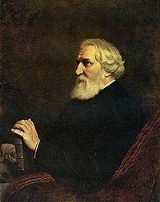
Ivan Turgenev

Encyclopedia
Ivan Sergeyevich Turgenev (September 3, 1883) was a Russia
n novelist, short story writer, and playwright. His first major publication, a short story collection entitled A Sportsman's Sketches
, is a milestone of Russian Realism
, and his novel Fathers and Sons
is regarded as one of the major works of 19th-century fiction.
, Russia
, on November 9, 1818 (October 28 OS). His father, Sergei Nikolaevich Turgenev, a colonel in the Imperial Russian cavalry, was a chronic philanderer. Ivan's mother, Varvara Petrovna Lutovinova, was a wealthy heiress, who had had an unhappy childhood and suffered in her marriage. Ivan's father died when Ivan was sixteen, leaving him and his brother Nicholas to be brought up by their abusive mother. Ivan's childhood was a lonely one, in constant fear of his mother who beat him often. After the standard schooling for a son of a gentleman, Turgenev studied for one year at the University of Moscow and then moved to the University of Saint Petersburg from 1834 to 1837, focusing on Classics
, Russian literature
, and philology
. He then studied, from 1838 until 1841, at the University of Berlin to study philosophy
, particularly Hegel, and history
. He returned to Saint Petersburg
to complete his master's exam. Turgenev was impressed with German society and returned home believing that Russia could best improve itself by incorporating ideas from the Age of Enlightenment
. Like many of his educated contemporaries, he was particularly opposed to serfdom
. In 1841, Turgenev started his career in Russian civil service and spent two years working for the Ministry of Interior (1843-1845).
When Turgenev was a child, a family serf had read to him verses from the Rossiad of Mikhail Kheraskov
, a celebrated poet of the 18th century. Turgenev's early attempts in literature, poems, and sketches gave indications of genius and were favorably spoken of by Vissarion Belinsky
, then the leading Russian literary critic. During the latter part of his life, Turgenev did not reside much in Russia: he lived either at Baden-Baden
or Paris
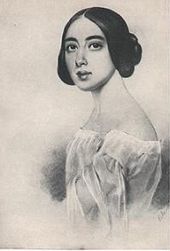
, often in proximity to the family of the celebrated opera singer Pauline Viardot, with whom he had a lifelong affair.
Turgenev never married, although he had some affairs with his family's serfs, one affair of which resulted in the birth of his illegitimate daughter, Paulinette. He was tall and broad-shouldered, but was timid, restrained, and soft-spoken. When Turgenev was 19, while traveling on a steamboat in Germany, the boat caught fire and Turgenev reacted in a cowardly manner. Rumors circulated in Russia and followed him for his entire career, providing the basis for his story A Fire at Sea. His closest literary friend was Gustave Flaubert
, with whom he shared similar social and aesthetic ideas. Both rejected extremist right and left political views, and carried a nonjudgmental, although rather pessimistic, view of the world. His relations with Leo Tolstoy
and Fyodor Dostoyevsky were often strained, as the two were, for various reasons, dismayed by Turgenev's seeming preference for Western Europe. Turgenev, unlike Tolstoy and Dostoyevsky, lacked religious motives in his writings, representing the more social aspect to the reform movement. Tolstoy, more that Dostoyevsky, at first anyway, rather despised Turgenev. While traveling together in Paris, Tolstoy wrote in his diary, "Turgenev is a bore." His rocky friendship with Tolstoy in 1861 wrought such animosity that Tolstoy challenged Turgenev to a duel, afterwards apologizing. The two did not speak for 17 years, but never broke family ties. Dostoyevsky parodies Turgenev in his novel The Devils (1872) through the character of the vain novelist Karmazinov, who is anxious to ingratiate himself with the radical youth. However, in 1880, Dostoyevsky's speech at the unveiling of the Pushkin monument brought about a reconciliation of sorts with Turgenev, who, like many in the audience, was moved to tears by his rival's eloquent tribute to the Russian spirit.
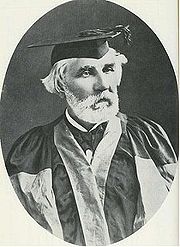 Turgenev occasionally visited England, and in 1879 the honorary degree of Doctor of Civil Law was conferred upon him by the University of Oxford
.
Turgenev died at Bougival
, near Paris, on September 3, 1883. His remains were taken to Russia and buried in Volkoff Cemetery in St. Petersburg. On his death bed he pleaded with Tolstoy
: "My friend, return to literature!" After this Tolstoy
wrote such works as The Death of Ivan Ilyich
and The Kreutzer Sonata
.
(Записки охотника), also known as Sketches from a Hunter's Album
or Notes of a Hunter
, a collection of short stories, based on his observations of peasant life and nature, while hunting in the forests around his mother's estate of Spasskoye. Most of the stories were published in a single volume in 1852, with others being added in later editions. The book is credited with having influenced public opinion in favour of the abolition of serfdom
in 1861. Turgenev himself considered the book to be his most important contribution to Russian literature; It is reported that Pravda, and Tolstoy
, among others, agreed wholeheartedly, adding that Turgenev's evocations of nature in these stories were unsurpassed.
One of the stories in A Sportsman's Sketches
, known as "Bezhin Lea" or "Byezhin Prairie", was later to become the basis for the controversial film Bezhin Meadow
(1937) – directed by Sergei Eisenstein
.
In the 1840s and early 1850s, during the rule of Tsar Nicholas I
, the political climate in Russia was stifling for many writers. This is evident in the despair and subsequent death of Gogol
, and the oppression, persecution, and arrests of artists, scientists, and writers, including Fyodor Dostoyevsky. During this time, thousands of Russian intellectuals, members of the intelligentsia, emigrated to Europe. Among them were Alexander Herzen
and Turgenev himself, although the latter's decision to settle abroad probably had more to do with his fateful love for Pauline Viardot than anything else.
In 1852, when his first major novels of Russian society were still to come, Turgenev wrote an obituary for Nikolai Gogol
, intended for publication in the Saint Petersburg Gazette. The key passage reads: "Gogol
is dead!... What Russian heart is not shaken by those three words?... He is gone, that man whom we now have the right (the bitter right, given to us by death) to call great." The censor of Saint Petersburg
did not approve of this and banned publication, but the Moscow
censor allowed it to be published in a newspaper in that city. The censor was dismissed; but Turgenev was held responsible for the incident, imprisoned for a month, and then exiled to his country estate for nearly two years. It was during this time that Turgenev wrote his short story Mumu
("Муму") in 1854. The story tells a tale of a deaf and dumb peasant who is forced to drown the only thing in the world which brings him happiness, his dog Mumu. Like his A Sportsman's Sketches
(Записки охотника), this work takes aim at the cruelties of a serf society. This work was later applauded by John Galsworthy
who claimed, "no more stirring protest against tyrannical cruelty was ever penned in terms of art."
 While he was still in Russia in the early 1850s, Turgenev wrote several novellas (povesti in Russian): "The Diary of a Superfluous Man
("Дневник лишнего человека"), Faust ("Фауст"), The Lull ("Затишье"), expressing the anxieties and hopes of Russians of his generation.
Following the thoughts of the influential critic Vissarion Belinsky, Turgenev abandoned Romantic idealism for a more realistic style. Belinsky defended sociological realism in literature; Turgenev portrayed him in Yakov Pasinkov (1855). During the period of 1853-62 Turgenev wrote some of his finest stories as well as the first four of his novels: Rudin
("Рудин") (1856), A Nest of the Gentry
("Дворянское гнездо") (1859), On the Eve
("Накануне") (1860) and Fathers and Sons
("Отцы и дети") (1862). Some themes involved in these works include: beauty of early love, failure to reach one's dreams, and frustrated love. Great influences on these works are derived from his love of Pauline and his experiences with his mother, whom of which controlled over 500 serfs with the same strict demeanor in which she raised him.
In 1854 he moved to Western Europe, and during the following years produced the novel Rudin
("Рудин"), the story of a man in his thirties, who is unable to put his talents and idealism to any use in the Russia of Nicholas I
. Rudin is also full of nostalgia for the idealistic student circles of the 1840s.
In 1858 Turgenev wrote the novel A Nest of the Gentry
("Дворянское гнездо") also full of nostalgia for the irretrievable past and of love for the Russian countryside. It contains one of his most memorable female characters, Liza, whom Dostoyevsky paid tribute to in his Pushkin speech of 1880, alongside Tatiana and Tolstoy
's Natasha Rostova
.
Alexander II
ascended the Russian throne in 1855, and the political climate became more relaxed. In 1859, inspired by reports of positive social changes, Turgenev wrote the novel On the Eve
("Накануне") (published 1860), portraying the Bulgarian revolutionary Insarov.
The following year saw the publication of one of his finest novellas, First Love
("Первая любовь"), which was based on bitter-sweet childhood memories, and the delivery of his speech ("Hamlet and Don Quixote", at a public reading in Saint Petersburg
) in aid of writers and scholars suffering hardship. The vision presented therein of man torn between the self-centered skepticism of Hamlet
and the idealistic generosity of Don Quixote is one that can be said to pervade Turgenev's own works. It is worth noting that Dostoyevsky, who had just returned from exile in Siberia
, was present at this speech, for eight years later he was to write The Idiot
, a novel whose tragic hero, Prince Myshkin
, resembles Don Quixote in many respects. Turgenev, whose knowledge of Spanish, thanks to his contact with Pauline Viardot and her family, was good enough for him to have considered translating Cervantes
's novel into Russian, played an important role in introducing this immortal figure of world literature into the Russian context.
Fathers and Sons
("Отцы и дети"), Turgenev's most famous and enduring novel, appeared in 1862. Its leading character, Eugene Bazarov, considered the 'first Bolshevik' in Russian literature, was in turn heralded and reviled as either a glorification or a parody of the 'new men' of the 1860s. The novel examined the conflict between the older generation, reluctant to accept reforms, and the nihilistic youth. In the central character, Bazarov, Turgenev drew a classical portrait of the mid-nineteenth-century nihilist
- a word invented by Turgenev. Fathers and Sons was set during the six-year period of social ferment, from Russia's defeat in the Crimean War to the Emancipation of the Serfs. Hostile reaction to Fathers and Sons
("Отцы и дети") prompted Turgenev's decision to leave Russia. As a consequence he also lost the majority of his readers. Many radical critics at the time (with the notable exception of Dimitri Pisarev
) did not take Fathers and Sons seriously; and, after the relative critical failure of his masterpiece, Turgenev was disillusioned and started to write less.
Turgenev's next novel, Smoke
("Дым"), was published in 1867 and was again received less than enthusiastically in his native country, as well as triggering a quarrel with Dostoyevsky in Baden-Baden.
His last substantial work attempting to do justice to the problems of contemporary Russian society, Virgin Soil ("Новь"), was published in 1877.
Stories of a more personal nature, such as Torrents of Spring
("Вешние воды"), King Lear of the Steppes ("Степной король Лир"), and The Song of Triumphant Love ("Песнь торжествующей любви"), were also written in these autumnal years of his life. Other last works included the Poems in Prose and "Clara Milich" ("After Death"), which appeared in the journal European Messenger.
Turgenev wrote on themes similar to those found in the works of Tolstoy
and Dostoyevsky, but he did not approve of the religious and moral preoccupations that his two great contemporaries brought to their artistic creation. Turgenev was closer in temperament to his friends Gustave Flaubert
and Theodor Storm
, the North German poet and master of the novella
form, who also often dwelt on memories of the past and evoked the beauty of nature.
and Joseph Conrad
, both of whom greatly preferred Turgenev to Tolstoy and Dostoyevsky. James, who wrote no fewer than five critical essays on Turgenev's work, claimed that "his merit of form is of the first order" (1873) and praised his "exquisite delicacy", which "makes too many of his rivals appear to hold us, in comparison, by violent means, and introduce us, in comparison, to vulgar things" (1896). The notoriously critical Vladimir Nabokov
praised Turgenev's "plastic musical flowing prose", but criticized his "labored epilogues" and "banal handling of plots". Nabokov stated that Turgenev "is not a great writer, though a pleasant one", and ranked him fourth among nineteenth-century Russian prose writers, behind Tolstoy, Gogol, and Anton Chekhov
, but ahead of Dostoyevsky. His idealistic ideas about love, specifically the devotion a wife should show her husband, were cynically referred to by characters in Chekhov's "An Anonymous Story."
----
Russia
Russia or , officially known as both Russia and the Russian Federation , is a country in northern Eurasia. It is a federal semi-presidential republic, comprising 83 federal subjects...
n novelist, short story writer, and playwright. His first major publication, a short story collection entitled A Sportsman's Sketches
A Sportsman's Sketches
A Sportsman's Sketches was an 1852 collection of short stories by Ivan Turgenev. It was the first major writing that gained him recognition...
, is a milestone of Russian Realism
Literary realism
Literary realism most often refers to the trend, beginning with certain works of nineteenth-century French literature and extending to late-nineteenth- and early-twentieth-century authors in various countries, towards depictions of contemporary life and society "as they were." In the spirit of...
, and his novel Fathers and Sons
Fathers and Sons
Fathers and Sons is an 1862 novel by Ivan Turgenev, his best known work. The title of this work in Russian is Отцы и дети , which literally means "Fathers and Children"; the work is often translated to Fathers and Sons in English for reasons of euphony.- Historical context and notes :The fathers...
is regarded as one of the major works of 19th-century fiction.
Life
Turgenev was born into a wealthy landed family of the Russian aristocracy in OryolOryol
Oryol or Orel is a city and the administrative center of Oryol Oblast, Russia, located on the Oka River, approximately south-southwest of Moscow...
, Russia
Russia
Russia or , officially known as both Russia and the Russian Federation , is a country in northern Eurasia. It is a federal semi-presidential republic, comprising 83 federal subjects...
, on November 9, 1818 (October 28 OS). His father, Sergei Nikolaevich Turgenev, a colonel in the Imperial Russian cavalry, was a chronic philanderer. Ivan's mother, Varvara Petrovna Lutovinova, was a wealthy heiress, who had had an unhappy childhood and suffered in her marriage. Ivan's father died when Ivan was sixteen, leaving him and his brother Nicholas to be brought up by their abusive mother. Ivan's childhood was a lonely one, in constant fear of his mother who beat him often. After the standard schooling for a son of a gentleman, Turgenev studied for one year at the University of Moscow and then moved to the University of Saint Petersburg from 1834 to 1837, focusing on Classics
Classics
Classics is the branch of the Humanities comprising the languages, literature, philosophy, history, art, archaeology and other culture of the ancient Mediterranean world ; especially Ancient Greece and Ancient Rome during Classical Antiquity Classics (sometimes encompassing Classical Studies or...
, Russian literature
Russian literature
Russian literature refers to the literature of Russia or its émigrés, and to the Russian-language literature of several independent nations once a part of what was historically Russia or the Soviet Union...
, and philology
Philology
Philology is the study of language in written historical sources; it is a combination of literary studies, history and linguistics.Classical philology is the philology of Greek and Classical Latin...
. He then studied, from 1838 until 1841, at the University of Berlin to study philosophy
Philosophy
Philosophy is the study of general and fundamental problems, such as those connected with existence, knowledge, values, reason, mind, and language. Philosophy is distinguished from other ways of addressing such problems by its critical, generally systematic approach and its reliance on rational...
, particularly Hegel, and history
History
History is the discovery, collection, organization, and presentation of information about past events. History can also mean the period of time after writing was invented. Scholars who write about history are called historians...
. He returned to Saint Petersburg
Saint Petersburg
Saint Petersburg is a city and a federal subject of Russia located on the Neva River at the head of the Gulf of Finland on the Baltic Sea...
to complete his master's exam. Turgenev was impressed with German society and returned home believing that Russia could best improve itself by incorporating ideas from the Age of Enlightenment
Age of Enlightenment
The Age of Enlightenment was an elite cultural movement of intellectuals in 18th century Europe that sought to mobilize the power of reason in order to reform society and advance knowledge. It promoted intellectual interchange and opposed intolerance and abuses in church and state...
. Like many of his educated contemporaries, he was particularly opposed to serfdom
Russian serfdom
The origins of serfdom in Russia are traced to Kievan Rus in the 11th century. Legal documents of the epoch, such as Russkaya Pravda, distinguished several degrees of feudal dependency of peasants, the term for an unfree peasant in the Russian Empire, krepostnoi krestyanin , is translated as serf.-...
. In 1841, Turgenev started his career in Russian civil service and spent two years working for the Ministry of Interior (1843-1845).
When Turgenev was a child, a family serf had read to him verses from the Rossiad of Mikhail Kheraskov
Mikhail Kheraskov
Mikhail Matveyevich Kheraskov was regarded as the most important Russian poet by Catherine the Great and her contemporaries.Kheraskov's father was a Romanian boyar who settled in the Ukraine...
, a celebrated poet of the 18th century. Turgenev's early attempts in literature, poems, and sketches gave indications of genius and were favorably spoken of by Vissarion Belinsky
Vissarion Belinsky
Vissarion Grigoryevich Belinsky was a Russian literary critic of Westernizing tendency. He was an associate of Alexander Herzen, Mikhail Bakunin , and other critical intellectuals...
, then the leading Russian literary critic. During the latter part of his life, Turgenev did not reside much in Russia: he lived either at Baden-Baden
Baden-Baden
Baden-Baden is a spa town in Baden-Württemberg, Germany. It is located on the western foothills of the Black Forest, on the banks of the Oos River, in the region of Karlsruhe...
or Paris
Paris
Paris is the capital and largest city in France, situated on the river Seine, in northern France, at the heart of the Île-de-France region...
, often in proximity to the family of the celebrated opera singer Pauline Viardot, with whom he had a lifelong affair.
Turgenev never married, although he had some affairs with his family's serfs, one affair of which resulted in the birth of his illegitimate daughter, Paulinette. He was tall and broad-shouldered, but was timid, restrained, and soft-spoken. When Turgenev was 19, while traveling on a steamboat in Germany, the boat caught fire and Turgenev reacted in a cowardly manner. Rumors circulated in Russia and followed him for his entire career, providing the basis for his story A Fire at Sea. His closest literary friend was Gustave Flaubert
Gustave Flaubert
Gustave Flaubert was a French writer who is counted among the greatest Western novelists. He is known especially for his first published novel, Madame Bovary , and for his scrupulous devotion to his art and style.-Early life and education:Flaubert was born on December 12, 1821, in Rouen,...
, with whom he shared similar social and aesthetic ideas. Both rejected extremist right and left political views, and carried a nonjudgmental, although rather pessimistic, view of the world. His relations with Leo Tolstoy
Leo Tolstoy
Lev Nikolayevich Tolstoy was a Russian writer who primarily wrote novels and short stories. Later in life, he also wrote plays and essays. His two most famous works, the novels War and Peace and Anna Karenina, are acknowledged as two of the greatest novels of all time and a pinnacle of realist...
and Fyodor Dostoyevsky were often strained, as the two were, for various reasons, dismayed by Turgenev's seeming preference for Western Europe. Turgenev, unlike Tolstoy and Dostoyevsky, lacked religious motives in his writings, representing the more social aspect to the reform movement. Tolstoy, more that Dostoyevsky, at first anyway, rather despised Turgenev. While traveling together in Paris, Tolstoy wrote in his diary, "Turgenev is a bore." His rocky friendship with Tolstoy in 1861 wrought such animosity that Tolstoy challenged Turgenev to a duel, afterwards apologizing. The two did not speak for 17 years, but never broke family ties. Dostoyevsky parodies Turgenev in his novel The Devils (1872) through the character of the vain novelist Karmazinov, who is anxious to ingratiate himself with the radical youth. However, in 1880, Dostoyevsky's speech at the unveiling of the Pushkin monument brought about a reconciliation of sorts with Turgenev, who, like many in the audience, was moved to tears by his rival's eloquent tribute to the Russian spirit.
University of Oxford
The University of Oxford is a university located in Oxford, United Kingdom. It is the second-oldest surviving university in the world and the oldest in the English-speaking world. Although its exact date of foundation is unclear, there is evidence of teaching as far back as 1096...
.
Turgenev died at Bougival
Bougival
Bougival is a commune in the Yvelines department in the Île-de-France region in north-central France. It is located in the western suburbs of Paris from the center....
, near Paris, on September 3, 1883. His remains were taken to Russia and buried in Volkoff Cemetery in St. Petersburg. On his death bed he pleaded with Tolstoy
Leo Tolstoy
Lev Nikolayevich Tolstoy was a Russian writer who primarily wrote novels and short stories. Later in life, he also wrote plays and essays. His two most famous works, the novels War and Peace and Anna Karenina, are acknowledged as two of the greatest novels of all time and a pinnacle of realist...
: "My friend, return to literature!" After this Tolstoy
Leo Tolstoy
Lev Nikolayevich Tolstoy was a Russian writer who primarily wrote novels and short stories. Later in life, he also wrote plays and essays. His two most famous works, the novels War and Peace and Anna Karenina, are acknowledged as two of the greatest novels of all time and a pinnacle of realist...
wrote such works as The Death of Ivan Ilyich
The Death of Ivan Ilyich
The Death of Ivan Ilyich , first published in 1886, is a novella by Leo Tolstoy, and is considered to be one of the masterpieces of his late fiction, written shortly after his religious conversion of the late 1870s.-Characters:...
and The Kreutzer Sonata
The Kreutzer Sonata
The Kreutzer Sonata is a novella by Leo Tolstoy, published in 1889 and promptly censored by the Russian authorities. The work is an argument for the ideal of sexual abstinence and an in-depth first-person description of jealous rage...
.
Career
Turgenev first made his name with A Sportsman's SketchesA Sportsman's Sketches
A Sportsman's Sketches was an 1852 collection of short stories by Ivan Turgenev. It was the first major writing that gained him recognition...
(Записки охотника), also known as Sketches from a Hunter's Album
A Sportsman's Sketches
A Sportsman's Sketches was an 1852 collection of short stories by Ivan Turgenev. It was the first major writing that gained him recognition...
or Notes of a Hunter
A Sportsman's Sketches
A Sportsman's Sketches was an 1852 collection of short stories by Ivan Turgenev. It was the first major writing that gained him recognition...
, a collection of short stories, based on his observations of peasant life and nature, while hunting in the forests around his mother's estate of Spasskoye. Most of the stories were published in a single volume in 1852, with others being added in later editions. The book is credited with having influenced public opinion in favour of the abolition of serfdom
Emancipation reform of 1861
The Emancipation Reform of 1861 in Russia was the first and most important of liberal reforms effected during the reign of Alexander II of Russia. The reform, together with a related reform in 1861, amounted to the liquidation of serf dependence previously suffered by peasants of the Russian Empire...
in 1861. Turgenev himself considered the book to be his most important contribution to Russian literature; It is reported that Pravda, and Tolstoy
Leo Tolstoy
Lev Nikolayevich Tolstoy was a Russian writer who primarily wrote novels and short stories. Later in life, he also wrote plays and essays. His two most famous works, the novels War and Peace and Anna Karenina, are acknowledged as two of the greatest novels of all time and a pinnacle of realist...
, among others, agreed wholeheartedly, adding that Turgenev's evocations of nature in these stories were unsurpassed.
One of the stories in A Sportsman's Sketches
A Sportsman's Sketches
A Sportsman's Sketches was an 1852 collection of short stories by Ivan Turgenev. It was the first major writing that gained him recognition...
, known as "Bezhin Lea" or "Byezhin Prairie", was later to become the basis for the controversial film Bezhin Meadow
Bezhin Meadow
Bezhin Meadow is a 1937 Soviet film famous for having been suppressed and believed destroyed before its completion. Directed by Sergei Eisenstein, it tells the story of a young farm boy whose father attempts to betray the government for political reasons by sabotaging the year's harvest and the...
(1937) – directed by Sergei Eisenstein
Sergei Eisenstein
Sergei Mikhailovich Eisenstein , né Eizenshtein, was a pioneering Soviet Russian film director and film theorist, often considered to be the "Father of Montage"...
.
In the 1840s and early 1850s, during the rule of Tsar Nicholas I
Nicholas I of Russia
Nicholas I , was the Emperor of Russia from 1825 until 1855, known as one of the most reactionary of the Russian monarchs. On the eve of his death, the Russian Empire reached its historical zenith spanning over 20 million square kilometers...
, the political climate in Russia was stifling for many writers. This is evident in the despair and subsequent death of Gogol
Nikolai Gogol
Nikolai Vasilievich Gogol was a Ukrainian-born Russian dramatist and novelist.Considered by his contemporaries one of the preeminent figures of the natural school of Russian literary realism, later critics have found in Gogol's work a fundamentally romantic sensibility, with strains of Surrealism...
, and the oppression, persecution, and arrests of artists, scientists, and writers, including Fyodor Dostoyevsky. During this time, thousands of Russian intellectuals, members of the intelligentsia, emigrated to Europe. Among them were Alexander Herzen
Alexander Herzen
Aleksandr Ivanovich Herzen was a Russian pro-Western writer and thinker known as the "father of Russian socialism", and one of the main fathers of agrarian populism...
and Turgenev himself, although the latter's decision to settle abroad probably had more to do with his fateful love for Pauline Viardot than anything else.
In 1852, when his first major novels of Russian society were still to come, Turgenev wrote an obituary for Nikolai Gogol
Nikolai Gogol
Nikolai Vasilievich Gogol was a Ukrainian-born Russian dramatist and novelist.Considered by his contemporaries one of the preeminent figures of the natural school of Russian literary realism, later critics have found in Gogol's work a fundamentally romantic sensibility, with strains of Surrealism...
, intended for publication in the Saint Petersburg Gazette. The key passage reads: "Gogol
Nikolai Gogol
Nikolai Vasilievich Gogol was a Ukrainian-born Russian dramatist and novelist.Considered by his contemporaries one of the preeminent figures of the natural school of Russian literary realism, later critics have found in Gogol's work a fundamentally romantic sensibility, with strains of Surrealism...
is dead!... What Russian heart is not shaken by those three words?... He is gone, that man whom we now have the right (the bitter right, given to us by death) to call great." The censor of Saint Petersburg
Saint Petersburg
Saint Petersburg is a city and a federal subject of Russia located on the Neva River at the head of the Gulf of Finland on the Baltic Sea...
did not approve of this and banned publication, but the Moscow
Moscow
Moscow is the capital, the most populous city, and the most populous federal subject of Russia. The city is a major political, economic, cultural, scientific, religious, financial, educational, and transportation centre of Russia and the continent...
censor allowed it to be published in a newspaper in that city. The censor was dismissed; but Turgenev was held responsible for the incident, imprisoned for a month, and then exiled to his country estate for nearly two years. It was during this time that Turgenev wrote his short story Mumu
Mumu
The word Mumu may refer to:* Muumuu, a Hawaiian dress* Mumu , a 2010 French film* Mumu * Mumu, a monster in Philippine folklore* Mumu, a short story by Ivan Turgenev...
("Муму") in 1854. The story tells a tale of a deaf and dumb peasant who is forced to drown the only thing in the world which brings him happiness, his dog Mumu. Like his A Sportsman's Sketches
A Sportsman's Sketches
A Sportsman's Sketches was an 1852 collection of short stories by Ivan Turgenev. It was the first major writing that gained him recognition...
(Записки охотника), this work takes aim at the cruelties of a serf society. This work was later applauded by John Galsworthy
John Galsworthy
John Galsworthy OM was an English novelist and playwright. Notable works include The Forsyte Saga and its sequels, A Modern Comedy and End of the Chapter...
who claimed, "no more stirring protest against tyrannical cruelty was ever penned in terms of art."
The Diary of a Superfluous Man
The Diary of a Superfluous Man is an 1850 novella by Russian author Ivan Turgenev. It is written in the first person in the form of a diary by a man who has a few days left to live as he recounts incidents of his life...
("Дневник лишнего человека"), Faust ("Фауст"), The Lull ("Затишье"), expressing the anxieties and hopes of Russians of his generation.
Following the thoughts of the influential critic Vissarion Belinsky, Turgenev abandoned Romantic idealism for a more realistic style. Belinsky defended sociological realism in literature; Turgenev portrayed him in Yakov Pasinkov (1855). During the period of 1853-62 Turgenev wrote some of his finest stories as well as the first four of his novels: Rudin
Rudin
Rudin is the first novel by Ivan Turgenev, a famous Russian writer best known for his short stories and the novel Fathers and Sons. Turgenev started to work on it in 1855, and it was first published in the literary magazine "Sovremennik" in 1856; several changes were made by Turgenev in subsequent...
("Рудин") (1856), A Nest of the Gentry
Home of the Gentry
Home of the Gentry is a novel by Ivan Turgenev published in the January 1859 issue of Sovremennik. It was enthusiastically received by the Russian society and remained his least controversial and most widely-read novel until the end of the 19th century...
("Дворянское гнездо") (1859), On the Eve
On the Eve
On the Eve is the third novel by famous Russian writer Ivan Turgenev, best known for his short stories and the novel Fathers and Sons. Turgenev embellishes this love story with observations on middle class life and interposes some art and philosophy....
("Накануне") (1860) and Fathers and Sons
Fathers and Sons
Fathers and Sons is an 1862 novel by Ivan Turgenev, his best known work. The title of this work in Russian is Отцы и дети , which literally means "Fathers and Children"; the work is often translated to Fathers and Sons in English for reasons of euphony.- Historical context and notes :The fathers...
("Отцы и дети") (1862). Some themes involved in these works include: beauty of early love, failure to reach one's dreams, and frustrated love. Great influences on these works are derived from his love of Pauline and his experiences with his mother, whom of which controlled over 500 serfs with the same strict demeanor in which she raised him.
In 1854 he moved to Western Europe, and during the following years produced the novel Rudin
Rudin
Rudin is the first novel by Ivan Turgenev, a famous Russian writer best known for his short stories and the novel Fathers and Sons. Turgenev started to work on it in 1855, and it was first published in the literary magazine "Sovremennik" in 1856; several changes were made by Turgenev in subsequent...
("Рудин"), the story of a man in his thirties, who is unable to put his talents and idealism to any use in the Russia of Nicholas I
Nicholas I of Russia
Nicholas I , was the Emperor of Russia from 1825 until 1855, known as one of the most reactionary of the Russian monarchs. On the eve of his death, the Russian Empire reached its historical zenith spanning over 20 million square kilometers...
. Rudin is also full of nostalgia for the idealistic student circles of the 1840s.
In 1858 Turgenev wrote the novel A Nest of the Gentry
Home of the Gentry
Home of the Gentry is a novel by Ivan Turgenev published in the January 1859 issue of Sovremennik. It was enthusiastically received by the Russian society and remained his least controversial and most widely-read novel until the end of the 19th century...
("Дворянское гнездо") also full of nostalgia for the irretrievable past and of love for the Russian countryside. It contains one of his most memorable female characters, Liza, whom Dostoyevsky paid tribute to in his Pushkin speech of 1880, alongside Tatiana and Tolstoy
Leo Tolstoy
Lev Nikolayevich Tolstoy was a Russian writer who primarily wrote novels and short stories. Later in life, he also wrote plays and essays. His two most famous works, the novels War and Peace and Anna Karenina, are acknowledged as two of the greatest novels of all time and a pinnacle of realist...
's Natasha Rostova
Natasha Rostova
Countess Natalya "Natasha" Ilyinichna Rostova is a central fictional character in Leo Tolstoy's novel War and Peace.-Biography:...
.
Alexander II
Alexander II of Russia
Alexander II , also known as Alexander the Liberator was the Emperor of the Russian Empire from 3 March 1855 until his assassination in 1881...
ascended the Russian throne in 1855, and the political climate became more relaxed. In 1859, inspired by reports of positive social changes, Turgenev wrote the novel On the Eve
On the Eve
On the Eve is the third novel by famous Russian writer Ivan Turgenev, best known for his short stories and the novel Fathers and Sons. Turgenev embellishes this love story with observations on middle class life and interposes some art and philosophy....
("Накануне") (published 1860), portraying the Bulgarian revolutionary Insarov.
The following year saw the publication of one of his finest novellas, First Love
First Love (novella)
First Love is a novella by Ivan Turgenev, first published in 1860. It is one of his most popular pieces of short fiction.Three of Turgenev's stories, Torrents of Spring, Asya, and First Love work well when read in combination; they are often found published together and deal with similar topics...
("Первая любовь"), which was based on bitter-sweet childhood memories, and the delivery of his speech ("Hamlet and Don Quixote", at a public reading in Saint Petersburg
Saint Petersburg
Saint Petersburg is a city and a federal subject of Russia located on the Neva River at the head of the Gulf of Finland on the Baltic Sea...
) in aid of writers and scholars suffering hardship. The vision presented therein of man torn between the self-centered skepticism of Hamlet
Hamlet
The Tragical History of Hamlet, Prince of Denmark, or more simply Hamlet, is a tragedy by William Shakespeare, believed to have been written between 1599 and 1601...
and the idealistic generosity of Don Quixote is one that can be said to pervade Turgenev's own works. It is worth noting that Dostoyevsky, who had just returned from exile in Siberia
Siberia
Siberia is an extensive region constituting almost all of Northern Asia. Comprising the central and eastern portion of the Russian Federation, it was part of the Soviet Union from its beginning, as its predecessor states, the Tsardom of Russia and the Russian Empire, conquered it during the 16th...
, was present at this speech, for eight years later he was to write The Idiot
The Idiot (novel)
The Idiot is a novel written by 19th century Russian author Fyodor Dostoyevsky. It was first published serially in The Russian Messenger between 1868 and 1869. The Idiot is ranked beside some of Dostoyevsky's other works as one of the most brilliant literary achievements of the "Golden Age" of...
, a novel whose tragic hero, Prince Myshkin
Prince Myshkin
Prince Lev Nikolaevich Myshkin is the protagonist of Fyodor Dostoyevsky's The Idiot.Dostoyevsky wanted to create a character that was "entirely positive... with an absolutely beautiful nature," and a good way to make such a character plausible in 19th century St Petersburg society was to make him...
, resembles Don Quixote in many respects. Turgenev, whose knowledge of Spanish, thanks to his contact with Pauline Viardot and her family, was good enough for him to have considered translating Cervantes
Miguel de Cervantes
Miguel de Cervantes Saavedra was a Spanish novelist, poet, and playwright. His magnum opus, Don Quixote, considered the first modern novel, is a classic of Western literature, and is regarded amongst the best works of fiction ever written...
's novel into Russian, played an important role in introducing this immortal figure of world literature into the Russian context.
Fathers and Sons
Fathers and Sons
Fathers and Sons is an 1862 novel by Ivan Turgenev, his best known work. The title of this work in Russian is Отцы и дети , which literally means "Fathers and Children"; the work is often translated to Fathers and Sons in English for reasons of euphony.- Historical context and notes :The fathers...
("Отцы и дети"), Turgenev's most famous and enduring novel, appeared in 1862. Its leading character, Eugene Bazarov, considered the 'first Bolshevik' in Russian literature, was in turn heralded and reviled as either a glorification or a parody of the 'new men' of the 1860s. The novel examined the conflict between the older generation, reluctant to accept reforms, and the nihilistic youth. In the central character, Bazarov, Turgenev drew a classical portrait of the mid-nineteenth-century nihilist
Nihilist movement
The Nihilist movement was a Russian movement in the 1860s which rejected all authorities. It is derived from the Latin word "nihil", which means "nothing"...
- a word invented by Turgenev. Fathers and Sons was set during the six-year period of social ferment, from Russia's defeat in the Crimean War to the Emancipation of the Serfs. Hostile reaction to Fathers and Sons
Fathers and Sons
Fathers and Sons is an 1862 novel by Ivan Turgenev, his best known work. The title of this work in Russian is Отцы и дети , which literally means "Fathers and Children"; the work is often translated to Fathers and Sons in English for reasons of euphony.- Historical context and notes :The fathers...
("Отцы и дети") prompted Turgenev's decision to leave Russia. As a consequence he also lost the majority of his readers. Many radical critics at the time (with the notable exception of Dimitri Pisarev
Dimitri Pisarev
Dimitri Ivanovich Pisarev was a radical Russian writer and social critic who, according to Georgi Plekhanov, "spent the best years of his life in a fortress"....
) did not take Fathers and Sons seriously; and, after the relative critical failure of his masterpiece, Turgenev was disillusioned and started to write less.
Turgenev's next novel, Smoke
Smoke (novel)
Smoke is an upcoming sequel to Ellen Hopkins' best selling novel, Burned. It is set to release sometime in 2013.-Plot summary:Smoke continues the story of Pattyn and Jackie Von Stratten, two girls raised in a religious and abusive family....
("Дым"), was published in 1867 and was again received less than enthusiastically in his native country, as well as triggering a quarrel with Dostoyevsky in Baden-Baden.
His last substantial work attempting to do justice to the problems of contemporary Russian society, Virgin Soil ("Новь"), was published in 1877.
Stories of a more personal nature, such as Torrents of Spring
Torrents of Spring
Torrents of Spring, also known as Spring Torrents , is a novel written by Ivan Turgenev during 1870 and 1871 when he was in his fifties. The story is about a young 22-year-old Russian landowner named Dimitry Sanin who falls deliriously in love for the first time while visiting the German city of...
("Вешние воды"), King Lear of the Steppes ("Степной король Лир"), and The Song of Triumphant Love ("Песнь торжествующей любви"), were also written in these autumnal years of his life. Other last works included the Poems in Prose and "Clara Milich" ("After Death"), which appeared in the journal European Messenger.
| "The conscious use of art for ends extraneous to itself was detestable to him... He knew that the Russian reader wanted to be told what to believe and how to live, expected to be provided with clearly contrasted values, clearly distinguishable heroes and villains... Turgenev remained cautious and skeptical; the reader is left in suspense, in a state of doubt: problems are raised, and for the most part left unanswered" – Isaiah Berlin Isaiah Berlin Sir Isaiah Berlin OM, FBA was a British social and political theorist, philosopher and historian of ideas of Russian-Jewish origin, regarded as one of the leading thinkers of the twentieth century and a dominant liberal scholar of his generation... , Lecture on Fathers and Children |
Turgenev wrote on themes similar to those found in the works of Tolstoy
Leo Tolstoy
Lev Nikolayevich Tolstoy was a Russian writer who primarily wrote novels and short stories. Later in life, he also wrote plays and essays. His two most famous works, the novels War and Peace and Anna Karenina, are acknowledged as two of the greatest novels of all time and a pinnacle of realist...
and Dostoyevsky, but he did not approve of the religious and moral preoccupations that his two great contemporaries brought to their artistic creation. Turgenev was closer in temperament to his friends Gustave Flaubert
Gustave Flaubert
Gustave Flaubert was a French writer who is counted among the greatest Western novelists. He is known especially for his first published novel, Madame Bovary , and for his scrupulous devotion to his art and style.-Early life and education:Flaubert was born on December 12, 1821, in Rouen,...
and Theodor Storm
Theodor Storm
Hans Theodor Woldsen Storm , commonly known as Theodor Storm, was a German writer.-Life:Storm was born in Husum, at the west coast of Schleswig than an independent duchy and ruled by the king of Denmark...
, the North German poet and master of the novella
Novella
A novella is a written, fictional, prose narrative usually longer than a novelette but shorter than a novel. The Science Fiction and Fantasy Writers of America Nebula Awards for science fiction define the novella as having a word count between 17,500 and 40,000...
form, who also often dwelt on memories of the past and evoked the beauty of nature.
Legacy
Turgenev's artistic purity made him a favorite of like-minded novelists of the next generation, such as Henry JamesHenry James
Henry James, OM was an American-born writer, regarded as one of the key figures of 19th-century literary realism. He was the son of Henry James, Sr., a clergyman, and the brother of philosopher and psychologist William James and diarist Alice James....
and Joseph Conrad
Joseph Conrad
Joseph Conrad was a Polish-born English novelist.Conrad is regarded as one of the great novelists in English, although he did not speak the language fluently until he was in his twenties...
, both of whom greatly preferred Turgenev to Tolstoy and Dostoyevsky. James, who wrote no fewer than five critical essays on Turgenev's work, claimed that "his merit of form is of the first order" (1873) and praised his "exquisite delicacy", which "makes too many of his rivals appear to hold us, in comparison, by violent means, and introduce us, in comparison, to vulgar things" (1896). The notoriously critical Vladimir Nabokov
Vladimir Nabokov
Vladimir Vladimirovich Nabokov was a multilingual Russian novelist and short story writer. Nabokov wrote his first nine novels in Russian, then rose to international prominence as a master English prose stylist...
praised Turgenev's "plastic musical flowing prose", but criticized his "labored epilogues" and "banal handling of plots". Nabokov stated that Turgenev "is not a great writer, though a pleasant one", and ranked him fourth among nineteenth-century Russian prose writers, behind Tolstoy, Gogol, and Anton Chekhov
Anton Chekhov
Anton Pavlovich Chekhov was a Russian physician, dramatist and author who is considered to be among the greatest writers of short stories in history. His career as a dramatist produced four classics and his best short stories are held in high esteem by writers and critics...
, but ahead of Dostoyevsky. His idealistic ideas about love, specifically the devotion a wife should show her husband, were cynically referred to by characters in Chekhov's "An Anonymous Story."
----
Selected novels
- 1857 – Rudin (Рудин), English translation: RudinRudinRudin is the first novel by Ivan Turgenev, a famous Russian writer best known for his short stories and the novel Fathers and Sons. Turgenev started to work on it in 1855, and it was first published in the literary magazine "Sovremennik" in 1856; several changes were made by Turgenev in subsequent...
- 1859 – Dvoryanskoye Gnezdo (Дворянское гнездо), English translations: A Nest of Gentlefolk (Coulson), A House of Gentlefolk (Garnett), Home of the GentryHome of the GentryHome of the Gentry is a novel by Ivan Turgenev published in the January 1859 issue of Sovremennik. It was enthusiastically received by the Russian society and remained his least controversial and most widely-read novel until the end of the 19th century...
(Freeborn) - 1860 – Nakanune (Накануне), English translation: On the EveOn the EveOn the Eve is the third novel by famous Russian writer Ivan Turgenev, best known for his short stories and the novel Fathers and Sons. Turgenev embellishes this love story with observations on middle class life and interposes some art and philosophy....
- 1862 – Otzy i Deti (Отцы и дети); English translation: Fathers and SonsFathers and SonsFathers and Sons is an 1862 novel by Ivan Turgenev, his best known work. The title of this work in Russian is Отцы и дети , which literally means "Fathers and Children"; the work is often translated to Fathers and Sons in English for reasons of euphony.- Historical context and notes :The fathers...
- 1867 – Dym (Дым); English translation: SmokeSmoke (novel)Smoke is an upcoming sequel to Ellen Hopkins' best selling novel, Burned. It is set to release sometime in 2013.-Plot summary:Smoke continues the story of Pattyn and Jackie Von Stratten, two girls raised in a religious and abusive family....
- 1877 – Nov (Новь); English translation: Virgin Soil
Selected shorter fiction
- 1850 – Dnevnik Lishnego Cheloveka (Дневник лишнего человека); novella, English translation: The Diary of a Superfluous ManThe Diary of a Superfluous ManThe Diary of a Superfluous Man is an 1850 novella by Russian author Ivan Turgenev. It is written in the first person in the form of a diary by a man who has a few days left to live as he recounts incidents of his life...
- 1852 – Zapiski Okhotnika (Записки охотника); collection of stories, English translations: A Sportsman's SketchesA Sportsman's SketchesA Sportsman's Sketches was an 1852 collection of short stories by Ivan Turgenev. It was the first major writing that gained him recognition...
, The Hunter's Sketches - 1855 – Yakov Pasynkov (Яков Пасынков); novella
- 1855 – Faust (Фауст); novella
- 1858 – Asya (Aся); novella, English translation: Asya
- 1860 – Pervaia Liubov (Первая любовь); novella, English translation: First LoveFirst Love (novella)First Love is a novella by Ivan Turgenev, first published in 1860. It is one of his most popular pieces of short fiction.Three of Turgenev's stories, Torrents of Spring, Asya, and First Love work well when read in combination; they are often found published together and deal with similar topics...
- 1870 – Stepnoy Korol' Lir (Степной король Лир); novella, English translation: King Lear of the Steppes
- 1872 – Veshnie Vody (Вешние воды); English translation: Torrents of SpringTorrents of SpringTorrents of Spring, also known as Spring Torrents , is a novel written by Ivan Turgenev during 1870 and 1871 when he was in his fifties. The story is about a young 22-year-old Russian landowner named Dimitry Sanin who falls deliriously in love for the first time while visiting the German city of...
- 1881 – Pesn' Torzhestvuyushey Lyubvi (Песнь торжествующей любви); novella, English translation: The Song of Triumphant Love
- 1883 – Klara Milich (Клара Милич); novella, English translation: The Mysterious Tales
Selected plays
- 1843 – Neostorozhnost (Неосторожность); A Rash Thing to Do
- 1847 – Gde Tonko Tam i Rvetsya (Где тонко, там и рвется); It Tears Where It is Thin
- 1849/1856 – Zavtrak u Predvoditelia (Завтрак у предводителя); Breakfast at the Chief's
- 1850/1851 – Razgovor na Bol'shoi Doroge (Разговор на большой дороге); A Conversation on the Highway
- 1846/1852 – Bezdenezh'e (Безденежье); Lack of Money
- 1851 – Provintsialka (Провинциалка); English translation: A Provincial LadyA Provincial LadyA Provincial Lady is a one-act play by Ivan Turgenev. Written in 1850, it was first produced in January 1851 at a benefit performance for the seminal 19th-century Russian actor Mikhail Shchepkin at the Maly Theatre in Moscow....
- 1857/1862 – Nakhlebnik (Нахлебник); English translation: The Hanger-On; Fortune's FoolFortune's FoolFortune's Fool is a play by Ivan Turgenev.-Plot:The setting is a vast Russian country estate where the resident aristocrats and their many servants are jolted out of their tranquility by the arrival of someone from the city, down-on-his-luck Vassily Semyonitch Kuzovkin, whose own property has been...
; The Family Charge - 1855/1872 – Mesiats v Derevne (Месяц в деревне); English translation: A Month in the CountryA Month in the Country (play)A Month in the Country is a comedy in five acts by Ivan Turgenev. It was written in France between 1848 and 1850 and was first published in 1855...
- 1882 – Vecher v Sorrento (Вечер в Сорренто); An Evening in Sorrento
See also
- Sir Frederick AshtonFrederick AshtonSir Frederick William Mallandaine Ashton OM, CH, CBE was a leading international dancer and choreographer. He is most noted as the founder choreographer of The Royal Ballet in London, but also worked as a director and choreographer of opera, film and theatre revues.-Early life:Ashton was born at...
, who created a ballet based onA Month in the Country (ballet)A Month in the Country is a narrative ballet created in 1976 with choreography by Frederick Ashton, to the music of Frédéric Chopin arranged by John Lanchbery...
A Month in the CountryA Month in the Country (play)A Month in the Country is a comedy in five acts by Ivan Turgenev. It was written in France between 1848 and 1850 and was first published in 1855...
in 1976 - Asteroid 3323 Turgenev3323 Turgenev3323 Turgenev is a small main belt asteroid. It was discovered by Nikolai Stepanovich Chernykh in 1979. It is named after Ivan Turgenev, the Russian writer....
, named after the writer - Lee HoibyLee HoibyLee Henry Hoiby was an American composer and classical pianist. Best known as a composer of operas and songs, he was a disciple of composer Gian Carlo Menotti. Like Menotti, his works championed lyricism during a time when such compositions were deemed old fashioned and irrelevant to modern society...
, an American composer and his opera based on A Month in the CountryA Month in the Country (play)A Month in the Country is a comedy in five acts by Ivan Turgenev. It was written in France between 1848 and 1850 and was first published in 1855... - Vladimir RebikovVladimir RebikovVladimir Ivanovich Rebikov was a late romantic 20th century Russian composer and pianist.-Biography:Rebikov began studying the piano with his mother. His sisters also were pianists. He graduated from the Moscow University faculty of philology. He studied at the Moscow Conservatory with N....
, who composed an opera based on Home of the GentryHome of the GentryHome of the Gentry is a novel by Ivan Turgenev published in the January 1859 issue of Sovremennik. It was enthusiastically received by the Russian society and remained his least controversial and most widely-read novel until the end of the 19th century...
in 1916 - Galina UlanovaGalina UlanovaGalina Sergeyevna Ulánova is frequently cited as being one of the greatest 20th Century ballerinas. Her flat in Moscow is designated a national museum, and there are monuments to her in Saint Petersburg and Stockholm....
, who advised her pupils to read such stories of Turgenev's as Asya or Torrents of SpringTorrents of SpringTorrents of Spring, also known as Spring Torrents , is a novel written by Ivan Turgenev during 1870 and 1871 when he was in his fifties. The story is about a young 22-year-old Russian landowner named Dimitry Sanin who falls deliriously in love for the first time while visiting the German city of...
when preparing to dance GiselleGiselleGiselle is a ballet in two acts with a libretto by Jules-Henri Vernoy de Saint-Georges and Théophile Gautier, music by Adolphe Adam, and choreography by Jean Coralli and Jules Perrot. The librettist took his inspiration from a poem by Heinrich Heine...
External links
- Works by & about Ivan Turgenev at Internet ArchiveInternet ArchiveThe Internet Archive is a non-profit digital library with the stated mission of "universal access to all knowledge". It offers permanent storage and access to collections of digitized materials, including websites, music, moving images, and nearly 3 million public domain books. The Internet Archive...
(scanned books original editions color illustrated) Gutenberg.org (plain text and HTML) Turgenev's works - Turgenev Society (mainly in Russian) Turgenev Museum in Bougival
- Ivan Turgenev Chronicle by Erik Lindgren
- Short biography
- Turgenev Bibliography 1983– by Nicholas Žekulin
- The Novels of Ivan Turgenev: Symbols and Emblems by Richard Peace
- Turgenev and Russian Music (with music samples)
- http://etext.library.adelaide.edu.au/t/turgenev/ivan/t93s/t93s.htmlText of A Sportsman's SketchesA Sportsman's SketchesA Sportsman's Sketches was an 1852 collection of short stories by Ivan Turgenev. It was the first major writing that gained him recognition...
, in English as translated from the Russian] - Turgenev works (HTML/PDF), media & interactive timeline
- English translations of 4 Poetic Miniatures