

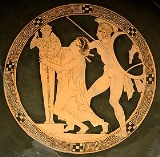
Sanctuary

Encyclopedia
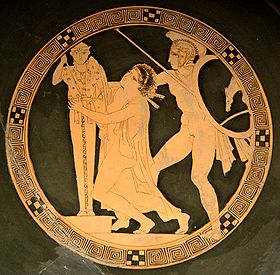
Religious sanctuary
A religious sanctuary can be a sacred place (such as such as a church, templeTemple
A temple is a structure reserved for religious or spiritual activities, such as prayer and sacrifice, or analogous rites. A templum constituted a sacred precinct as defined by a priest, or augur. It has the same root as the word "template," a plan in preparation of the building that was marked out...
, or mosque
Mosque
A mosque is a place of worship for followers of Islam. The word is likely to have entered the English language through French , from Portuguese , from Spanish , and from Berber , ultimately originating in — . The Arabic word masjid literally means a place of prostration...
), or a consecrated area of a church or temple around its tabernacle or altar
Altar
An altar is any structure upon which offerings such as sacrifices are made for religious purposes. Altars are usually found at shrines, and they can be located in temples, churches and other places of worship...
.
Sanctuary as a sacred place
- Sanctuary as a sacred place:
- In Europe, Christian churches were sometimes built on land considered as a particularly 'holy spot', perhaps where a miracle or martyrdom had allegedly taken place or where a holy person was buried. Examples are St. Peter's BasilicaSt. Peter's BasilicaThe Papal Basilica of Saint Peter , officially known in Italian as ' and commonly known as Saint Peter's Basilica, is a Late Renaissance church located within the Vatican City. Saint Peter's Basilica has the largest interior of any Christian church in the world...
in Rome and St. Albans Cathedral in England, which commemorate the martyrdom of Saint PeterSaint PeterSaint Peter or Simon Peter was an early Christian leader, who is featured prominently in the New Testament Gospels and the Acts of the Apostles. The son of John or of Jonah and from the village of Bethsaida in the province of Galilee, his brother Andrew was also an apostle...
(the first Pope) and Saint AlbanSaint AlbanSaint Alban was the first British Christian martyr. Along with his fellow saints Julius and Aaron, Alban is one of three martyrs remembered from Roman Britain. Alban is listed in the Church of England calendar for 22 June and he continues to be venerated in the Anglican, Catholic, and Orthodox...
(the first Christian martyr in Britain), respectively. The place, and therefore the church built there, was considered to have been sanctified (made holy) by what happened there. In modern times, the Roman Catholic Church has continued this practice by placing in the altar of each church, when it is consecrated for use, a box (the sepulcrum) containing relics of a saint. The relics box is removed when the church is taken out of use as a church. In the Eastern Orthodox ChurchEastern Orthodox ChurchThe Orthodox Church, officially called the Orthodox Catholic Church and commonly referred to as the Eastern Orthodox Church, is the second largest Christian denomination in the world, with an estimated 300 million adherents mainly in the countries of Belarus, Bulgaria, Cyprus, Georgia, Greece,...
, the antimensionAntimensionThe Antimins, , is one of the most important furnishings of the altar in many Eastern Christian liturgical traditions. It is a rectangular piece of cloth, either linen or silk, typically decorated with representations of the Descent of Christ from the Cross, the four Evangelists, and inscriptions...
on the altar serves a similar function. It is a cloth iconIconAn icon is a religious work of art, most commonly a painting, from Eastern Christianity and in certain Eastern Catholic churches...
of Christ's body taken down from the cross, and typically has the relics of a saint sewn into it. In addition, it is signed by the parish's bishopBishopA bishop is an ordained or consecrated member of the Christian clergy who is generally entrusted with a position of authority and oversight. Within the Catholic Church, Eastern Orthodox, Oriental Orthodox Churches, in the Assyrian Church of the East, in the Independent Catholic Churches, and in the...
, and represents his authorization and blessing for the EucharistEucharistThe Eucharist , also called Holy Communion, the Sacrament of the Altar, the Blessed Sacrament, the Lord's Supper, and other names, is a Christian sacrament or ordinance...
to be celebrated on that altar.
- In Europe, Christian churches were sometimes built on land considered as a particularly 'holy spot', perhaps where a miracle or martyrdom had allegedly taken place or where a holy person was buried. Examples are St. Peter's Basilica
- Sanctuary as an altar
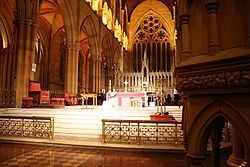
- The area around the altar is also considered holy because of the physical presence of GodGodGod is the English name given to a singular being in theistic and deistic religions who is either the sole deity in monotheism, or a single deity in polytheism....
in the EucharistEucharistThe Eucharist , also called Holy Communion, the Sacrament of the Altar, the Blessed Sacrament, the Lord's Supper, and other names, is a Christian sacrament or ordinance...
, both during the Mass and in the tabernacle on the altar the rest of the time. So that people can tell when JesusJesusJesus of Nazareth , commonly referred to as Jesus Christ or simply as Jesus or Christ, is the central figure of Christianity...
is there (in the tabernacle), the sanctuary lampSanctuary lampA sanctuary lamp, altar lamp, everlasting light or eternal flame is a light that shines before the altar of sanctuaries in many denominations of Jewish and Christian places of worship. Prescribed in ] 27:20-21] of the Hebrew Bible, this icon has taken on different meanings in each of the religions...
is lit, indicating that anyone approaching the altar should genuflectGenuflectionGenuflection , bending at least one knee to the ground, was from early times a gesture of deep respect for a superior. In 328 BC, Alexander the Great introduced into his court etiquette some form of genuflection already in use in Persia. In the Byzantine Empire even senators were required to...
(bow by bending the knee and inclining the head), to show respect for Him. In the Eastern Orthodox ChurchEastern Orthodox ChurchThe Orthodox Church, officially called the Orthodox Catholic Church and commonly referred to as the Eastern Orthodox Church, is the second largest Christian denomination in the world, with an estimated 300 million adherents mainly in the countries of Belarus, Bulgaria, Cyprus, Georgia, Greece,...
, Eastern Catholic Churches of Byzantine riteByzantine RiteThe Byzantine Rite, sometimes called the Rite of Constantinople or Constantinopolitan Rite is the liturgical rite used currently by all the Eastern Orthodox Churches, by the Greek Catholic Churches , and by the Protestant Ukrainian Lutheran Church...
and Coptic Orthodox Churches, the sanctuary is separated from the naveNaveIn Romanesque and Gothic Christian abbey, cathedral basilica and church architecture, the nave is the central approach to the high altar, the main body of the church. "Nave" was probably suggested by the keel shape of its vaulting...
(where the people pray) by an iconostasisIconostasisIn Eastern Christianity an iconostasis is a wall of icons and religious paintings, separating the nave from the sanctuary in a church. Iconostasis also refers to a portable icon stand that can be placed anywhere within a church...
, literally a wall of iconIconAn icon is a religious work of art, most commonly a painting, from Eastern Christianity and in certain Eastern Catholic churches...
s, with three doors in it. In other Oriental Orthodox traditions, a sanctuary curtain is used. In Anglican/Episcopal churches, the term "sanctuary" also describes only the area enclosed by the altar rail. In most Protestant churches, the term sanctuary denotes the entire worship area while the term chancelChancelIn church architecture, the chancel is the space around the altar in the sanctuary at the liturgical east end of a traditional Christian church building...
is used to refer to the area around the altar-tableAltarAn altar is any structure upon which offerings such as sacrifices are made for religious purposes. Altars are usually found at shrines, and they can be located in temples, churches and other places of worship...
. In many traditions, such as the Anglican ChurchAnglicanismAnglicanism is a tradition within Christianity comprising churches with historical connections to the Church of England or similar beliefs, worship and church structures. The word Anglican originates in ecclesia anglicana, a medieval Latin phrase dating to at least 1246 that means the English...
, the Lutheran ChurchLutheranismLutheranism is a major branch of Western Christianity that identifies with the theology of Martin Luther, a German reformer. Luther's efforts to reform the theology and practice of the church launched the Protestant Reformation...
, the Roman Catholic Church and the United Methodist ChurchUnited Methodist ChurchThe United Methodist Church is a Methodist Christian denomination which is both mainline Protestant and evangelical. Founded in 1968 by the union of The Methodist Church and the Evangelical United Brethren Church, the UMC traces its roots back to the revival movement of John and Charles Wesley...
, altar railsAltar railsAltar rails are a set of railings, sometimes ornate and frequently of marble or wood, delimiting the chancel in a church, the part of the sanctuary that contains the altar. A gate at the centre divides the line into two parts. The sanctuary is a figure of heaven, into which entry is not guaranteed...
sometimes mark the edge of the sanctuary or chancel. - The area around the altar came to be called the "sanctuary", and that terminology does not apply to Christian churches alone: King Solomon's temple, built in about 950 BCE, had a sanctuary ("Holy of HoliesHoly of HoliesThe Holy of Holies is a term in the Hebrew Bible which refers to the inner sanctuary of the Tabernacle and later the Temple in Jerusalem where the Ark of the Covenant was kept during the First Temple, which could be entered only by the High Priest on Yom Kippur...
") where the tabernacle ("Ark of the CovenantArk of the CovenantThe Ark of the Covenant , also known as the Ark of the Testimony, is a chest described in Book of Exodus as solely containing the Tablets of Stone on which the Ten Commandments were inscribed...
") was, and the term applies to the corresponding part of any house of worship. In most modern synagogueSynagogueA synagogue is a Jewish house of prayer. This use of the Greek term synagogue originates in the Septuagint where it sometimes translates the Hebrew word for assembly, kahal...
s, the main room for prayer is known as the sanctuary, to contrast it with smaller rooms dedicated to various other services and functions. (There is a raised bimahBimahA bimah A bimah A bimah (among Ashkenazim, derived from Hebrew בּמה , almemar (from Arabic al-minbar) or tebah (among Sephardim) is the elevated area or platform in a Jewish synagogue which is intended to serve the place where the person reading aloud from the Torah stands during the Torah reading...
in the sanctuary, from which services are conducted, which is where the arkArk (synagogue)The Torah ark or ark in a synagogue is known in Hebrew as the Aron Kodesh by the Ashkenazim and as the Hekhál amongst most Sefardim. It is generally a receptacle, or ornamental closet, which contains each synagogue's Torah scrolls...
holding the TorahTorahTorah- A scroll containing the first five books of the BibleThe Torah , is name given by Jews to the first five books of the bible—Genesis , Exodus , Leviticus , Numbers and Deuteronomy Torah- A scroll containing the first five books of the BibleThe Torah , is name given by Jews to the first five...
may reside; some synagogues, however, have a separate bimah and ark-platform.)
Legal sanctuary
When referring to prosecution of crimes, sanctuary can mean one of the following:- Church sanctuary: A sacred place, such as a church, in which fugitives formerly were immune to arrest (recognized by English law from the fourth to the seventeenth century)
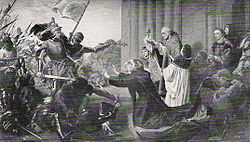
- Political sanctuary: Immunity to arrest afforded by a sovereign authority. The United Nations has expanded the definition of "political" to include race, nationality, religion, political opinions and membership and/or participation in any particular social group or social activities. People seeking political sanctuary typically do so by asking a sovereign authority for asylum.
- Right of asylum
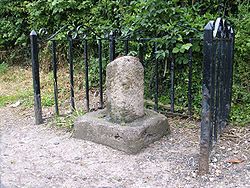
- Many ancient people recognized a religious "right of asylum", protecting criminals (or those accused of crime) from legal action and from exile to some extent. This principle was adopted by the early Christian church, and various rules developed for what the person had to do to qualify for protection and just how much protection it was.
- In England, King EthelbertEthelbert of KentÆthelberht was King of Kent from about 580 or 590 until his death. In his Ecclesiastical History of the English People, the eighth-century monk Bede lists Aethelberht as the third king to hold imperium over other Anglo-Saxon kingdoms...
made the first laws regulating sanctuary in about AD 600. By Norman times, there had come to be two kinds of sanctuary: All churches had the lower-level kind, but only the churches the king licensed had the broader version. The medieval system of asylum was finally abolished entirely in England by James IJames I of EnglandJames VI and I was King of Scots as James VI from 24 July 1567 and King of England and Ireland as James I from the union of the English and Scottish crowns on 24 March 1603...
in 1623.
- Relating to political asylum
- During the Wars of the RosesWars of the RosesThe Wars of the Roses were a series of dynastic civil wars for the throne of England fought between supporters of two rival branches of the royal House of Plantagenet: the houses of Lancaster and York...
, when the Lancastrians or Yorkists would suddenly get the upper hand by winning a battle, some adherents of the losing side might find themselves surrounded by adherents of the winning side and unable to return to their own side, so they would rush to sanctuary at the nearest church until it was safe to leave it. A prime example is Queen Elizabeth WoodvilleElizabeth WoodvilleElizabeth Woodville was Queen consort of England as the spouse of King Edward IV from 1464 until his death in 1483. Elizabeth was a key figure in the series of dynastic civil wars known as the Wars of the Roses. Her first husband, Sir John Grey of Groby was killed at the Second Battle of St Albans...
, consort of Edward IV of EnglandEdward IV of EnglandEdward IV was King of England from 4 March 1461 until 3 October 1470, and again from 11 April 1471 until his death. He was the first Yorkist King of England...
. - In 1470, when the Lancastrians briefly restored Henry VIHenry VI of EnglandHenry VI was King of England from 1422 to 1461 and again from 1470 to 1471, and disputed King of France from 1422 to 1453. Until 1437, his realm was governed by regents. Contemporaneous accounts described him as peaceful and pious, not suited for the violent dynastic civil wars, known as the Wars...
to the throne, Edward's queen was living in London with several young daughters. She moved with them into WestminsterWestminster AbbeyThe Collegiate Church of St Peter at Westminster, popularly known as Westminster Abbey, is a large, mainly Gothic church, in the City of Westminster, London, United Kingdom, located just to the west of the Palace of Westminster. It is the traditional place of coronation and burial site for English,...
for sanctuary, living there in royal comfort until Edward was restored to the throne in 1471 and giving birth to their first son EdwardEdward V of EnglandEdward V was King of England from 9 April 1483 until his deposition two months later. His reign was dominated by the influence of his uncle Richard, Duke of Gloucester, who succeeded him as Richard III...
during that time. When King Edward died in 1483, Elizabeth (who was highly unpopular with even the Yorkists and probably did need protection) took her five daughters and youngest son (Richard, Duke of York; Prince Edward had his own household by then) and again moved into sanctuary at Westminster. She had all the comforts of home; she brought so much furniture and so many chests that the workmen had to knock holes in some of the walls to get everything in fast enough to suit her.
- During the Wars of the Roses
- Right of asylum
Hardship sanctuary
When referring to a shelter from danger or hardship, sanctuary can mean one of the following:- Shelter Sanctuary: A place offering protection and safety; a shelter, typically used by displaced persons, refugees, and homeless peopleHomelessnessHomelessness describes the condition of people without a regular dwelling. People who are homeless are unable or unwilling to acquire and maintain regular, safe, and adequate housing, or lack "fixed, regular, and adequate night-time residence." The legal definition of "homeless" varies from country...
. - Humanitarian Sanctuary: A source of help, relief, or comfort in times of trouble typically used by victims of war and disaster.
- Institutional Sanctuary: An institution for the care of people, especially those with physical or mental impairments, who require organized supervision or assistance.
Sanctuary movement in modern times
Sanctuary of refugees from Central American civil wars was a movement in the 1980s. Part of a broader anti-war movement positioned against U.S. foreign policy in Central America, by 1987 440 sites in the United States had been declared "sanctuary citiesSanctuary city
Sanctuary city is a term given to a city in the United States that follows certain practices that protect illegal immigrants. These practices can be by law or they can be by habit...
" open to migrants from these civil wars in the Central America region.
These sites included university campuses and cities. From the 1980s continuing into the 2000s, there also have been instances of churches providing "sanctuary" for short periods to migrants facing deportation in Germany, France, Belgium, the Netherlands, Norway, Switzerland, Australia, the United States, and Canada, among other nations. In 2007, Iranian refugee Shahla Valadi was granted asylum in Norway after spending seven years in church sanctuary after the initial denial of asylum. Norwegian authorities will not, as a rule, enter churches to deport illegal immigrants. From 1983 to 2003 Canada experienced 36 sanctuary incidents. The "New Sanctuary Movement" organization estimates that at least 600,000 people in the United States have at least one family member in danger of deportation.
Animal sanctuary
An animal sanctuary is a facility where animals are brought to live and be protected for the rest of their lives.[1] Unlike animal shelters, sanctuaries do not seek to place animals with individuals or groups, instead maintaining each animal until his or her natural death.Plant sanctuary
Plant sanctuaries are areas set aside to maintain functioning natural ecosystems, to act as refuges for species and to maintain ecological processes that cannot survive in most intensely managed landscapes and seascapes. Protected areas act as benchmarks against which we understand human interactions with the natural world. Today they are often the only hope we have of stopping many threatened or endemic species from becoming extinct.Further reading
- J. Charles Cox (1911). The Sanctuaries and Sanctuary Seekers of Medieval England.
- John Bellamy (1973). Crime and Public Order in England in the Later Middle Ages.
- Richard Kaeuper (1982). "Right of asylum". Dictionary of the Middle Ages. v.1 pp.632-633. ISBN 0-684-16760-3