

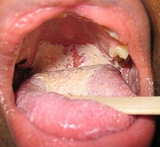
Candidiasis

Encyclopedia
Thrush redirects here. For the hoof infection see Thrush (horse)
.
Candidiasis or thrush is a fungal infection (mycosis) of any of the Candida
species (all yeast
s), of which Candida albicans
is the most common. Also commonly referred to as a yeast infection, candidiasis is also technically known as candidosis, moniliasis, and oidiomycosis.
Candidiasis encompasses infections that range from superficial
, such as oral thrush
and vaginitis
, to systemic
and potentially life-threatening diseases. Candida infections of the latter category are also referred to as candidemia and are usually confined to severely immunocompromised persons, such as cancer
, transplant
, and AIDS
patients as well as non-trauma emergency surgery patients.
Superficial infections of skin and mucosal membranes by Candida causing local inflammation
and discomfort
are common in many human populations. While clearly attributable to the presence of the opportunistic pathogens of the genus Candida, candidiasis describes a number of different disease syndromes that often differ in their causes and outcomes.
persons, candidiasis is usually a very localized infection of the skin or mucosal membranes, including the oral cavity (thrush), the pharynx
or esophagus
, the gastrointestinal tract
, the urinary bladder
, or the genitalia (vagina
, penis
).
Candidiasis is a very common cause of vaginal irritation, or vaginitis
, and can also occur on the male genitals. In immunocompromised patients, Candida infections can affect the esophagus
with the potential of becoming systemic
, causing a much more serious condition, a fungemia
called candidemia.
Thrush is commonly seen in infants. It is not considered abnormal in infants unless it lasts longer than a couple of weeks.
Children, mostly between the ages of three and nine years of age, can be affected by chronic mouth yeast infections, normally seen around the mouth as white patches. However, this is not a common condition.
Symptoms of candidiasis may vary depending on the area affected. Infection of the vagina
or vulva
may cause severe itching, burning, soreness, irritation, and a whitish or whitish-gray cottage cheese
-like discharge, often with a curd-like appearance. These symptoms are also present in the more common bacterial vaginosis
. In a 2002 study published in the Journal of Obstetrics and Gynecology, only 33 percent of women who were self-treating for a yeast infection actually had a yeast infection, while most had either bacterial vaginosis or a mixed-type infection. Symptoms of infection of the male genitalia include red patchy sores near the head of the penis or on the foreskin, severe itching, or a burning sensation. Candidiasis of the penis can also have a white discharge, although uncommon.
and by other microorganism
s, such as bacteria occupying the same locations (niche
s) in the human body.
C. albicans was isolated from the vaginas of 19% of apparently healthy women, i.e., those that experienced few or no symptoms of infection. External use of detergents or douche
s or internal disturbances (hormonal or physiological) can perturb
the normal vaginal flora
, consisting of lactic acid bacteria
, such as lactobacilli, and result in an overgrowth of Candida cells causing symptoms of infection, such as local inflammation
. Pregnancy and the use of oral contraceptives have been reported as risk factors, while the roles of engaging in vaginal sex immediately and without cleansing after anal sex
and using lubricants containing glycerin remain controversial. Diabetes mellitus
and the use of anti-bacterial antibiotics are also linked to an increased incidence of yeast infections. Diet high in simple carbohydrates has been found to affect rates of oral candidiases, and hormone replacement therapy
and infertility treatments may also be predisposing factors. Wearing wet swimwear for long periods
of time is also believed to be a risk factor.
A weakened or undeveloped immune system or metabolic illnesses such as diabetes are significant predisposing factors of candidiasis. Diseases or conditions linked to candidiasis include HIV
/AIDS
, mononucleosis, cancer
treatments, steroids, stress
, and nutrient deficiency. Almost 15% of people with weakened immune systems develop a systemic illness caused by Candida species. In extreme cases, these superficial infections of the skin or mucous membranes may enter into the bloodstream and cause systemic Candida infections.
In penile candidiasis, the causes include sexual intercourse with an infected individual, low immunity, antibiotics, and diabetes. Male genital yeast infection is less common, and incidence of infection is only a fraction of that in women; however, yeast infection on the penis from direct contact via sexual intercourse with an infected partner is not uncommon.
Candida species are frequently part of the human body's normal oral and intestinal flora. Treatment with antibiotics can lead to eliminating the yeast's natural competitors for resources, and increase the severity of the condition. Higher prevalence
of colonization of C. albicans was reported in young individuals with tongue
piercing
, in comparison to non-tongue-pierced matched individuals. In the western hemisphere approximately 75% of females are affected at some time in their life.
_pas_stain.jpg) Diagnosis of a yeast infection is done either via microscopic examination or culturing.
Diagnosis of a yeast infection is done either via microscopic examination or culturing.
For identification by light microscopy, a scraping or swab of the affected area is placed on a microscope slide
. A single drop of 10% potassium hydroxide
(KOH) solution is then added to the specimen. The KOH dissolves the skin cells but leaves the Candida cells intact, permitting visualization of pseudohyphae and budding yeast cells typical of many Candida species.
For the culturing method, a sterile swab is rubbed on the infected skin surface. The swab is then streaked on a culture medium. The culture is incubated at 37 °C for several days, to allow development of yeast or bacterial colonies. The characteristics (such as morphology and colour) of the colonies may allow initial diagnosis of the organism that is causing disease symptoms.
s commonly used to treat candidiasis are topical clotrimazole
, topical nystatin
, fluconazole
, and topical ketoconazole
.
For example, a one-time dose of fluconazole
(150-mg tablet taken orally) has been reported as being 90% effective in treating a vaginal yeast infection. This dose is only effective for vaginal yeast infections, and other types of yeast infections may require different dosing. In severe infections amphotericin B
, caspofungin
, or voriconazole
may be used. Local treatment may include vaginal suppositories
or medicated douche
s. Gentian violet can be used for breastfeeding
thrush, but when used in large quantities it can cause mouth and throat ulcerations in nursing babies, and has been linked to mouth cancer in humans and to cancer in the digestive tract of other animals.
Chlorhexidine gluconate
oral rinse is not recommended to treat candidiasis but is effective as prophylaxis; chlorine dioxide
rinse was found to have similar in vitro effectiveness against candida.
C. albicans can develop resistance to antimycotic drugs. Recurring infections may be treatable with other anti-fungal drugs, but resistance to these alternative agents may also develop.
Candida and species
C. albicans was described by botanist Christine Marie Berkhout
in her doctoral thesis at the University of Utrecht in 1923. Over the years, the classification of the genera and species has evolved. Obsolete names for this genus include Mycotorula and Torulopsis. The species has also been known in the past as Monilia albicans and Oidium albicans. The current classification is nomen conservandum, which means the name is authorized for use by the International Botanical Congress (IBC).
The genus Candida includes about 150 different species, however, only a few are known to cause human infections: C. albicans is the most significant pathogen
ic species. Other Candida species pathogenic in humans include C. tropicalis, C. glabrata, C. krusei, C. parapsilosis, C. dubliniensis, and C. lusitaniae.
proponents postulate a widespread occurrence of systemic candidiasis (or candida hypersensitivity syndrome, yeast allergy, or gastrointestinal candida overgrowth). The view was most widely promoted in a book published by Dr. William Crook, which hypothesized that a variety of common symptoms such as fatigue, PMS, sexual dysfunction
, asthma
, psoriasis
, digestive and urinary problems, multiple sclerosis
, and muscle pain
, could be caused by subclinical infection
s of Candida albicans. Crook suggested a variety of remedies to treat these symptoms, ranging from dietary modification, prescription antifungals, to colonic irrigation. With the exception of the few dietary studies in the urinary tract infection
section, conventional medicine has not used most of these alternatives, since there is limited scientific evidence to prove either their effectiveness, or that subclinical systemic candidiasis is a viable diagnosis.
Thrush (horse)
Thrush is a very common bacterial infection that occurs on the hoof of a horse, specifically in the region of the frog. The bacteria occur naturally in the animal's environment—especially in wet, muddy, or unsanitary conditions, such as an unclean stall—and grow best with low oxygen...
.
Candidiasis or thrush is a fungal infection (mycosis) of any of the Candida
Candida (genus)
Candida is a genus of yeasts. Many species are harmless commensals or endosymbionts of animal hosts including humans, but other species, or harmless species in the wrong location, can cause disease. Candida albicans can cause infections in humans and other animals, especially in immunocompromised...
species (all yeast
Yeast
Yeasts are eukaryotic micro-organisms classified in the kingdom Fungi, with 1,500 species currently described estimated to be only 1% of all fungal species. Most reproduce asexually by mitosis, and many do so by an asymmetric division process called budding...
s), of which Candida albicans
Candida albicans
Candida albicans is a diploid fungus that grows both as yeast and filamentous cells and a causal agent of opportunistic oral and genital infections in humans. Systemic fungal infections including those by C...
is the most common. Also commonly referred to as a yeast infection, candidiasis is also technically known as candidosis, moniliasis, and oidiomycosis.
Candidiasis encompasses infections that range from superficial
Superficial
Superficial may refer to:*Superficial , an album by Heidi Montag*"Superficial" *The Superficial, a website devoted to celebrity gossip...
, such as oral thrush
Oral candidiasis
Oral candidiasis is an infection of yeast fungi of the genus Candida on the mucous membranes of the mouth. It is frequently caused by Candida albicans, or less commonly by Candida glabrata or Candida tropicalis...
and vaginitis
Vaginitis
Vaginitis is an inflammation of the vagina. It can result in discharge, itching and pain, and is often associated with an irritation or infection of the vulva. It is usually due to infection. The three main kinds of vaginitis are bacterial vaginosis , vaginal candidiasis, and trichomoniasis. A...
, to systemic
Systemic disease
Life-threatening disease redirects here.A systemic disease is one that affects a number of organs and tissues, or affects the body as a whole. Although most medical conditions will eventually involve multiple organs in advanced stage Life-threatening disease redirects here.A systemic disease is one...
and potentially life-threatening diseases. Candida infections of the latter category are also referred to as candidemia and are usually confined to severely immunocompromised persons, such as cancer
Cancer
Cancer , known medically as a malignant neoplasm, is a large group of different diseases, all involving unregulated cell growth. In cancer, cells divide and grow uncontrollably, forming malignant tumors, and invade nearby parts of the body. The cancer may also spread to more distant parts of the...
, transplant
Organ transplant
Organ transplantation is the moving of an organ from one body to another or from a donor site on the patient's own body, for the purpose of replacing the recipient's damaged or absent organ. The emerging field of regenerative medicine is allowing scientists and engineers to create organs to be...
, and AIDS
AIDS
Acquired immune deficiency syndrome or acquired immunodeficiency syndrome is a disease of the human immune system caused by the human immunodeficiency virus...
patients as well as non-trauma emergency surgery patients.
Superficial infections of skin and mucosal membranes by Candida causing local inflammation
Inflammation
Inflammation is part of the complex biological response of vascular tissues to harmful stimuli, such as pathogens, damaged cells, or irritants. Inflammation is a protective attempt by the organism to remove the injurious stimuli and to initiate the healing process...
and discomfort
Stress (medicine)
Stress is a term in psychology and biology, borrowed from physics and engineering and first used in the biological context in the 1930s, which has in more recent decades become commonly used in popular parlance...
are common in many human populations. While clearly attributable to the presence of the opportunistic pathogens of the genus Candida, candidiasis describes a number of different disease syndromes that often differ in their causes and outcomes.
Signs and symptoms
Most candidial infections are treatable and result in minimal complications such as redness, itching and discomfort, though complication may be severe or fatal if left untreated in certain populations. In immunocompetentImmunocompetence
Immunocompetence is the ability of the body to produce a normal immune response following exposure to an antigen. Immunocompetence is the opposite of immunodeficiency or immuno-incompetent or immuno-compromised...
persons, candidiasis is usually a very localized infection of the skin or mucosal membranes, including the oral cavity (thrush), the pharynx
Pharynx
The human pharynx is the part of the throat situated immediately posterior to the mouth and nasal cavity, and anterior to the esophagus and larynx. The human pharynx is conventionally divided into three sections: the nasopharynx , the oropharynx , and the laryngopharynx...
or esophagus
Esophagus
The esophagus is an organ in vertebrates which consists of a muscular tube through which food passes from the pharynx to the stomach. During swallowing, food passes from the mouth through the pharynx into the esophagus and travels via peristalsis to the stomach...
, the gastrointestinal tract
Gastrointestinal tract
The human gastrointestinal tract refers to the stomach and intestine, and sometimes to all the structures from the mouth to the anus. ....
, the urinary bladder
Urinary bladder
The urinary bladder is the organ that collects urine excreted by the kidneys before disposal by urination. A hollow muscular, and distensible organ, the bladder sits on the pelvic floor...
, or the genitalia (vagina
Vagina
The vagina is a fibromuscular tubular tract leading from the uterus to the exterior of the body in female placental mammals and marsupials, or to the cloaca in female birds, monotremes, and some reptiles. Female insects and other invertebrates also have a vagina, which is the terminal part of the...
, penis
Penis
The penis is a biological feature of male animals including both vertebrates and invertebrates...
).
Candidiasis is a very common cause of vaginal irritation, or vaginitis
Vaginitis
Vaginitis is an inflammation of the vagina. It can result in discharge, itching and pain, and is often associated with an irritation or infection of the vulva. It is usually due to infection. The three main kinds of vaginitis are bacterial vaginosis , vaginal candidiasis, and trichomoniasis. A...
, and can also occur on the male genitals. In immunocompromised patients, Candida infections can affect the esophagus
Esophageal candidiasis
Esophageal candidiasis is an opportunistic infection of the esophagus by Candida albicans. The disease occurs in patients in immunocompromised states, including post-chemotherapy and in AIDS. It is also known as candidal esophagitis or monilial esophagitis.-Clinical presentation:Patients with...
with the potential of becoming systemic
Systemic disease
Life-threatening disease redirects here.A systemic disease is one that affects a number of organs and tissues, or affects the body as a whole. Although most medical conditions will eventually involve multiple organs in advanced stage Life-threatening disease redirects here.A systemic disease is one...
, causing a much more serious condition, a fungemia
Fungemia
-Pathogens:The most commonly known pathogen is Candida albicans, causing roughly 70% of fungemias, followed by Candida glabrata with 10%, Aspergillus with 1% and Saccharomyces as the fourth most common. However, the frequency of infection by C. glabrata, Saccharomyces boulardii, Candida tropicalis,...
called candidemia.
Thrush is commonly seen in infants. It is not considered abnormal in infants unless it lasts longer than a couple of weeks.
Children, mostly between the ages of three and nine years of age, can be affected by chronic mouth yeast infections, normally seen around the mouth as white patches. However, this is not a common condition.
Symptoms of candidiasis may vary depending on the area affected. Infection of the vagina
Vagina
The vagina is a fibromuscular tubular tract leading from the uterus to the exterior of the body in female placental mammals and marsupials, or to the cloaca in female birds, monotremes, and some reptiles. Female insects and other invertebrates also have a vagina, which is the terminal part of the...
or vulva
Vulva
The vulva consists of the external genital organs of the female mammal. This article deals with the vulva of the human being, although the structures are similar for other mammals....
may cause severe itching, burning, soreness, irritation, and a whitish or whitish-gray cottage cheese
Cottage cheese
Cottage cheese is a cheese curd product with a mild flavor. It is drained, but not pressed, so some whey remains and the individual curds remain loose. The curd is usually washed to remove acidity, giving sweet curd cheese. It is not aged or colored. Different styles of cottage cheese are made from...
-like discharge, often with a curd-like appearance. These symptoms are also present in the more common bacterial vaginosis
Bacterial vaginosis
Bacterial vaginosis or less commonly vaginal bacteriosis is a disease of the vagina caused by bacteria. The U.S. Centers for Disease Control and Prevention states it is not clear what role sexual activity plays in the development. However, it is known that BV is associated with having a new sex...
. In a 2002 study published in the Journal of Obstetrics and Gynecology, only 33 percent of women who were self-treating for a yeast infection actually had a yeast infection, while most had either bacterial vaginosis or a mixed-type infection. Symptoms of infection of the male genitalia include red patchy sores near the head of the penis or on the foreskin, severe itching, or a burning sensation. Candidiasis of the penis can also have a white discharge, although uncommon.
Causes
Candida yeasts are commonly present in humans, and their growth is normally limited by the human immune systemImmune system
An immune system is a system of biological structures and processes within an organism that protects against disease by identifying and killing pathogens and tumor cells. It detects a wide variety of agents, from viruses to parasitic worms, and needs to distinguish them from the organism's own...
and by other microorganism
Microorganism
A microorganism or microbe is a microscopic organism that comprises either a single cell , cell clusters, or no cell at all...
s, such as bacteria occupying the same locations (niche
Niche
Niche may refer to:*Niche , an exedra or an apse that has been reduced in size;*Niche , Colombian/Spanish football player, full name Víctor Manuel Micolta Armero*Niche , a British Thoroughbred racehorse...
s) in the human body.
C. albicans was isolated from the vaginas of 19% of apparently healthy women, i.e., those that experienced few or no symptoms of infection. External use of detergents or douche
Douche
A douche is a device used to introduce a stream of water into the body for medical or hygienic reasons, or the stream of water itself.Douche usually refers to vaginal irrigation, the rinsing of the vagina, but it can also refer to the rinsing of any body cavity. A douche bag is a piece of...
s or internal disturbances (hormonal or physiological) can perturb
Perturbation (biology)
A perturbation of a biological system is an alteration of function, induced by external or internal mechanisms. Biological systems can be perturbed through a number of means...
the normal vaginal flora
Vaginal flora
The bacteria that colonize the vagina, collectively referred to as the vaginal microbiome, were discovered by the German gynecologist Albert Döderlein in 1892. The amount and type of bacteria present have significant implications for a woman's overall health...
, consisting of lactic acid bacteria
Lactic acid bacteria
The lactic acid bacteria comprise a clade of Gram-positive, low-GC, acid-tolerant, generally non-sporulating, non-respiring rod or cocci that are associated by their common metabolic and physiological characteristics. These bacteria, usually found in decomposing plants and lactic products, produce...
, such as lactobacilli, and result in an overgrowth of Candida cells causing symptoms of infection, such as local inflammation
Inflammation
Inflammation is part of the complex biological response of vascular tissues to harmful stimuli, such as pathogens, damaged cells, or irritants. Inflammation is a protective attempt by the organism to remove the injurious stimuli and to initiate the healing process...
. Pregnancy and the use of oral contraceptives have been reported as risk factors, while the roles of engaging in vaginal sex immediately and without cleansing after anal sex
Anal sex
Anal sex is the sex act in which the penis is inserted into the anus of a sexual partner. The term can also include other sexual acts involving the anus, including pegging, anilingus , fingering, and object insertion.Common misconception describes anal sex as practiced almost exclusively by gay men...
and using lubricants containing glycerin remain controversial. Diabetes mellitus
Diabetes mellitus
Diabetes mellitus, often simply referred to as diabetes, is a group of metabolic diseases in which a person has high blood sugar, either because the body does not produce enough insulin, or because cells do not respond to the insulin that is produced...
and the use of anti-bacterial antibiotics are also linked to an increased incidence of yeast infections. Diet high in simple carbohydrates has been found to affect rates of oral candidiases, and hormone replacement therapy
Hormone replacement therapy (menopause)
Hormone replacement therapy is a system of medical treatment for surgically menopausal, perimenopausal and to a lesser extent postmenopausal women...
and infertility treatments may also be predisposing factors. Wearing wet swimwear for long periods
of time is also believed to be a risk factor.
A weakened or undeveloped immune system or metabolic illnesses such as diabetes are significant predisposing factors of candidiasis. Diseases or conditions linked to candidiasis include HIV
HIV
Human immunodeficiency virus is a lentivirus that causes acquired immunodeficiency syndrome , a condition in humans in which progressive failure of the immune system allows life-threatening opportunistic infections and cancers to thrive...
/AIDS
AIDS
Acquired immune deficiency syndrome or acquired immunodeficiency syndrome is a disease of the human immune system caused by the human immunodeficiency virus...
, mononucleosis, cancer
Cancer
Cancer , known medically as a malignant neoplasm, is a large group of different diseases, all involving unregulated cell growth. In cancer, cells divide and grow uncontrollably, forming malignant tumors, and invade nearby parts of the body. The cancer may also spread to more distant parts of the...
treatments, steroids, stress
Stress (medicine)
Stress is a term in psychology and biology, borrowed from physics and engineering and first used in the biological context in the 1930s, which has in more recent decades become commonly used in popular parlance...
, and nutrient deficiency. Almost 15% of people with weakened immune systems develop a systemic illness caused by Candida species. In extreme cases, these superficial infections of the skin or mucous membranes may enter into the bloodstream and cause systemic Candida infections.
In penile candidiasis, the causes include sexual intercourse with an infected individual, low immunity, antibiotics, and diabetes. Male genital yeast infection is less common, and incidence of infection is only a fraction of that in women; however, yeast infection on the penis from direct contact via sexual intercourse with an infected partner is not uncommon.
Candida species are frequently part of the human body's normal oral and intestinal flora. Treatment with antibiotics can lead to eliminating the yeast's natural competitors for resources, and increase the severity of the condition. Higher prevalence
Prevalence
In epidemiology, the prevalence of a health-related state in a statistical population is defined as the total number of cases of the risk factor in the population at a given time, or the total number of cases in the population, divided by the number of individuals in the population...
of colonization of C. albicans was reported in young individuals with tongue
Tongue
The tongue is a muscular hydrostat on the floors of the mouths of most vertebrates which manipulates food for mastication. It is the primary organ of taste , as much of the upper surface of the tongue is covered in papillae and taste buds. It is sensitive and kept moist by saliva, and is richly...
piercing
Tongue piercing
A tongue piercing is a body piercing usually done directly through the center of the tongue, and is the most popular piercing site in the western world after the ear and nostril.-History and culture:...
, in comparison to non-tongue-pierced matched individuals. In the western hemisphere approximately 75% of females are affected at some time in their life.
Diagnosis
For identification by light microscopy, a scraping or swab of the affected area is placed on a microscope slide
Microscope slide
A microscope slide is a thin flat piece of glass, typically 75 by 25 mm and about 1 mm thick, used to hold objects for examination under a microscope. Typically the object is placed or secured on the slide, and then both are inserted together in the microscope for viewing...
. A single drop of 10% potassium hydroxide
Potassium hydroxide
Potassium hydroxide is an inorganic compound with the formula KOH, commonly called caustic potash.Along with sodium hydroxide , this colorless solid is a prototypical strong base. It has many industrial and niche applications. Most applications exploit its reactivity toward acids and its corrosive...
(KOH) solution is then added to the specimen. The KOH dissolves the skin cells but leaves the Candida cells intact, permitting visualization of pseudohyphae and budding yeast cells typical of many Candida species.
For the culturing method, a sterile swab is rubbed on the infected skin surface. The swab is then streaked on a culture medium. The culture is incubated at 37 °C for several days, to allow development of yeast or bacterial colonies. The characteristics (such as morphology and colour) of the colonies may allow initial diagnosis of the organism that is causing disease symptoms.
Treatment
In clinical settings, candidiasis is commonly treated with antimycotics—the antifungal drugAntifungal drug
An antifungal medication is a medication used to treat fungal infections such as athlete's foot, ringworm, candidiasis , serious systemic infections such as cryptococcal meningitis, and others...
s commonly used to treat candidiasis are topical clotrimazole
Clotrimazole
Clotrimazole is an antifungal medication commonly used in the treatment of fungal infections such as vaginal yeast infections, oral thrush, and ringworm...
, topical nystatin
Nystatin
Nystatin is a polyene antifungal medication to which many molds and yeast infections are sensitive, including Candida. Due to its toxicity profile, there are currently no injectable formulations of this drug on the US market...
, fluconazole
Fluconazole
Fluconazole is a triazole antifungal drug used in the treatment and prevention of superficial and systemic fungal infections. In a bulk powder form, it appears as a white crystalline powder, and it is very slightly soluble in water and soluble in alcohol. It is commonly marketed under the trade...
, and topical ketoconazole
Ketoconazole
Ketoconazole is a synthetic antifungal drug used to prevent and treat fungal skin infections, especially in immunocompromised patients such as those with AIDS or those on chemotherapy. Ketoconazole is sold commercially as an anti-dandruff shampoo, topical cream, and oral tablet.Ketoconazole is...
.
For example, a one-time dose of fluconazole
Fluconazole
Fluconazole is a triazole antifungal drug used in the treatment and prevention of superficial and systemic fungal infections. In a bulk powder form, it appears as a white crystalline powder, and it is very slightly soluble in water and soluble in alcohol. It is commonly marketed under the trade...
(150-mg tablet taken orally) has been reported as being 90% effective in treating a vaginal yeast infection. This dose is only effective for vaginal yeast infections, and other types of yeast infections may require different dosing. In severe infections amphotericin B
Amphotericin B
Amphotericin B is a polyene antifungal drug, often used intravenously for systemic fungal infections...
, caspofungin
Caspofungin
Caspofungin is an antifungal drug, the first of a new class termed the echinocandins from Merck & Co., Inc. It shows activity against infections with Aspergillus and Candida, and works by inhibiting the enzyme β-D-Glucan synthase and thereby disturbing the integrity of the fungal cell wall...
, or voriconazole
Voriconazole
Voriconazole is a triazole antifungal medication that is generally used to treat serious, invasive fungal infections. These are generally seen in patients who are immunocompromised, and include invasive candidiasis, invasive aspergillosis, and certain emerging fungal infections.-Invasive...
may be used. Local treatment may include vaginal suppositories
Suppository
A suppository is a drug delivery system that is inserted into the rectum , vagina or urethra , where it dissolves.They are used to deliver both systemically-acting and locally-acting medications....
or medicated douche
Douche
A douche is a device used to introduce a stream of water into the body for medical or hygienic reasons, or the stream of water itself.Douche usually refers to vaginal irrigation, the rinsing of the vagina, but it can also refer to the rinsing of any body cavity. A douche bag is a piece of...
s. Gentian violet can be used for breastfeeding
Breastfeeding
Breastfeeding is the feeding of an infant or young child with breast milk directly from female human breasts rather than from a baby bottle or other container. Babies have a sucking reflex that enables them to suck and swallow milk. It is recommended that mothers breastfeed for six months or...
thrush, but when used in large quantities it can cause mouth and throat ulcerations in nursing babies, and has been linked to mouth cancer in humans and to cancer in the digestive tract of other animals.
Chlorhexidine gluconate
Chlorhexidine gluconate
Chlorhexidine is a chemical antiseptic. It is effective on both Gram-positive and Gram-negative bacteria, although it is less effective with some Gram-negative bacteria. It has both bactericidal and bacteriostatic mechanisms of action, the mechanism of action being membrane disruption, not ATPase...
oral rinse is not recommended to treat candidiasis but is effective as prophylaxis; chlorine dioxide
Chlorine dioxide
Chlorine dioxide is a chemical compound with the formula ClO2. This yellowish-green gas crystallizes as bright orange crystals at −59 °C. As one of several oxides of chlorine, it is a potent and useful oxidizing agent used in water treatment and in bleaching....
rinse was found to have similar in vitro effectiveness against candida.
C. albicans can develop resistance to antimycotic drugs. Recurring infections may be treatable with other anti-fungal drugs, but resistance to these alternative agents may also develop.
History
The genusGenus
In biology, a genus is a low-level taxonomic rank used in the biological classification of living and fossil organisms, which is an example of definition by genus and differentia...
Candida and species
Species
In biology, a species is one of the basic units of biological classification and a taxonomic rank. A species is often defined as a group of organisms capable of interbreeding and producing fertile offspring. While in many cases this definition is adequate, more precise or differing measures are...
C. albicans was described by botanist Christine Marie Berkhout
Christine Marie Berkhout
Christine Marie Berkhout was a mycologist. She described the genus Candida in her doctoral thesis for the University of Utrecht in the Netherlands in 1923. This event was later described as marking "the beginning of the rational systematics of the anascosporogenous yeasts" .-References:...
in her doctoral thesis at the University of Utrecht in 1923. Over the years, the classification of the genera and species has evolved. Obsolete names for this genus include Mycotorula and Torulopsis. The species has also been known in the past as Monilia albicans and Oidium albicans. The current classification is nomen conservandum, which means the name is authorized for use by the International Botanical Congress (IBC).
The genus Candida includes about 150 different species, however, only a few are known to cause human infections: C. albicans is the most significant pathogen
Pathogen
A pathogen gignomai "I give birth to") or infectious agent — colloquially, a germ — is a microbe or microorganism such as a virus, bacterium, prion, or fungus that causes disease in its animal or plant host...
ic species. Other Candida species pathogenic in humans include C. tropicalis, C. glabrata, C. krusei, C. parapsilosis, C. dubliniensis, and C. lusitaniae.
Society and culture
Some alternative medicineAlternative medicine
Alternative medicine is any healing practice, "that does not fall within the realm of conventional medicine." It is based on historical or cultural traditions, rather than on scientific evidence....
proponents postulate a widespread occurrence of systemic candidiasis (or candida hypersensitivity syndrome, yeast allergy, or gastrointestinal candida overgrowth). The view was most widely promoted in a book published by Dr. William Crook, which hypothesized that a variety of common symptoms such as fatigue, PMS, sexual dysfunction
Sexual dysfunction
Sexual dysfunction or sexual malfunction refers to a difficulty experienced by an individual or a couple during any stage of a normal sexual activity, including desire, arousal or orgasm....
, asthma
Asthma
Asthma is the common chronic inflammatory disease of the airways characterized by variable and recurring symptoms, reversible airflow obstruction, and bronchospasm. Symptoms include wheezing, coughing, chest tightness, and shortness of breath...
, psoriasis
Psoriasis
Psoriasis is an autoimmune disease that appears on the skin. It occurs when the immune system mistakes the skin cells as a pathogen, and sends out faulty signals that speed up the growth cycle of skin cells. Psoriasis is not contagious. However, psoriasis has been linked to an increased risk of...
, digestive and urinary problems, multiple sclerosis
Multiple sclerosis
Multiple sclerosis is an inflammatory disease in which the fatty myelin sheaths around the axons of the brain and spinal cord are damaged, leading to demyelination and scarring as well as a broad spectrum of signs and symptoms...
, and muscle pain
Myalgia
Myalgia means "muscle pain" and is a symptom of many diseases and disorders. The most common causes are the overuse or over-stretching of a muscle or group of muscles. Myalgia without a traumatic history is often due to viral infections...
, could be caused by subclinical infection
Subclinical infection
A subclinical infection is the asymptomatic carrying of an by an individual of an agent that usually is a pathogen causing illness, at least in some individuals. Many pathogens spread by being silently carried in this way by some of their host population...
s of Candida albicans. Crook suggested a variety of remedies to treat these symptoms, ranging from dietary modification, prescription antifungals, to colonic irrigation. With the exception of the few dietary studies in the urinary tract infection
Urinary tract infection
A urinary tract infection is a bacterial infection that affects any part of the urinary tract. Symptoms include frequent feeling and/or need to urinate, pain during urination, and cloudy urine. The main causal agent is Escherichia coli...
section, conventional medicine has not used most of these alternatives, since there is limited scientific evidence to prove either their effectiveness, or that subclinical systemic candidiasis is a viable diagnosis.