

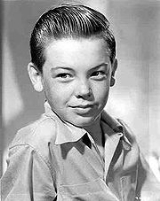
Bobby Driscoll

Encyclopedia
Robert Cletus "Bobby" Driscoll (March 3, 1937 – c.
March 1968) was an American child actor
known for a large body of cinema and TV performances from 1943 to 1960. He starred in some of The Walt Disney Company
's most popular live-action pictures of that period, such as Song of the South
(1946), So Dear to My Heart
(1948), and Treasure Island
(1950). He served as animation model and provided the voice for the title role in Peter Pan
(1953). In 1950, he received an Academy Juvenile Award
for outstanding performance in feature films.
In the mid-1950s, Driscoll's career began to decline, turning primarily to guest appearances on anthology TV series. He became addicted to narcotics and was sentenced to prison for drug use. After his release he focused his attention on the avant-garde
art scene. In ill health from his drug use, and his funds completely depleted, he died in March 1968.
, Driscoll was the only child of Cletus Driscoll, an insulation salesman, and Isabelle Kratz Driscoll, a former schoolteacher. Shortly after his birth, the family moved to Des Moines, where they stayed until early 1943. When a doctor advised the father to relocate to balmy California
due to pulmonary ailments he was suffering from his work-related handling of asbestos
, the family moved to Los Angeles
. Driscoll's barber urged his parents to try to get the cute child into the movies, and the man's son, an occasional actor, got him an audition at MGM for a bit role in the 1943 family drama Lost Angel
, which starred up-and-coming Margaret O'Brien
. While on a tour across the studio lot, five-year-old Driscoll noticed a mock-up ship and asked where the water was. The director was impressed by the boy's curiosity and intelligence, and chose him out of forty applicants.
, in the 20th Century Fox
's 1944 World War II
drama
The Fighting Sullivans
, opposite Thomas Mitchell
and Anne Baxter
. With his natural acting and talent for memorizing lines at that young age, he was soon considered a new "Wonder Child". One major studio would recommend him to another, leading to screen portrayals as the boy who could blow his whistle while standing on his head in Sunday Dinner for a Soldier
(1944), the "child brother" of Richard Arlen
in The Big Bonanza (1944), and young Percy Maxim in So Goes My Love
(1946), with Don Ameche
and Myrna Loy
. In addition, he had a number of smaller roles in movies such as Identity Unknown in 1945, and Mrs Susie Slagel's, From This Day Forward, and O.S.S.
with Alan Ladd
, all three of which were released in 1946.
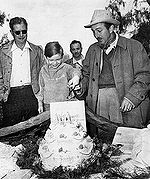 Driscoll was the first actor Walt Disney
put under contract, to play the lead character in 1946's Song of the South
, which introduced live action into the producer's films, in addition to extensive animated footage. The film turned Driscoll and his co-star Luana Patten
into child stars, and they were discussed for a special Academy Award as the best child actors of the year, but in 1947 it was decided not to present any juvenile awards at all.
Now nicknamed by the American press as Walt Disney's "Sweetheart Team", Driscoll and Patten starred together in So Dear to My Heart
, opposite acting balladeer Burl Ives
and veteran character actress Beulah Bondi
. It was planned as Disney's first all live-action movie, with production beginning immediately after Song of the South, but its release was delayed until late 1948 to meet the demands of Disney's co-producer and long-time distributor RKO Radio Pictures for some animated content in the film.
Driscoll played Eddie Cantor
's screen son in the 1948 RKO Studios musical
comedy
If You Knew Susie, in which he teamed up with former Our Gang
member Margaret Kerry
. He and Patten appeared with Roy Rogers
and the Sons of the Pioneers
in the live-action teaser for the Pecos Bill
segment of Disney's cartoon compilation Melody Time
, which was released in 1948.
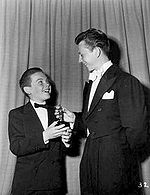 Driscoll was "loaned" to RKO to star in The Window
, based on Cornell Woolrich
's The Boy Who Cried Murder. However Howard Hughes
, who had bought RKO the previous year, considered the film unworthy of release and Driscoll not much of an actor, and delayed its release. When it was released in May 1949, it became a surprise hit and recouped a multiple of its production costs. The New York Times credited Driscoll with the film's success:
So Dear to My Heart and The Window earned Driscoll a special Juvenile Academy Award
in March 1950 as the outstanding juvenile actor of 1949.
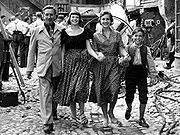 Driscoll was cast to play Jim Hawkins
in Walt Disney's version of Robert Louis Stevenson
's Treasure Island
, with British actor Robert Newton
as Long John Silver
, the studio's first all-live-action picture. The feature was filmed in the United Kingdom, and during production it was discovered that Driscoll did not have a valid British work permit, so his family and Disney were fined and ordered to leave the country. They were allowed to remain for six weeks to prepare an appeal, during which director Byron Haskin
hastily shot all of Driscoll's close-ups, using his British stand-in
to film missing location scenes after he and his parents had returned to California. Driscoll's work in this film earned him a star at 1560 Vine Street
on the Hollywood Walk Of Fame
.
Treasure Island was an international box office
hit, and there were several other film projects involving Driscoll under discussion, but none materialized. For example, Haskin recalled in his memoirs that Disney, although interested in Robert Louis Stevenson's pirate story as a full length cartoon, always planned to cast Driscoll as Mark Twain
's Tom Sawyer
. At that point in time, he was at the perfect age for the role, but because of a story rights ownership dispute with Hollywood producer David O. Selznick
, who had previously produced the property in 1938, Disney ultimately had to cancel the entire project. Driscoll was also scheduled to portray a youthful follower of Robin Hood
following Treasure Island, again with Robert Newton, who would play Friar Tuck, but Driscoll's run-in with British immigration made this impossible.
Driscoll's second long-run Disney contract allowed him to be loaned to independent Horizon Pictures
for the double role of Danny/Josh Reed in When I Grow Up (1951). His casting was suggested by Oscar-winning screenplay writer Michael Kanin
.
In addition to his brief guest appearance in Walt Disney's first TV Christmas show in 1950, One Hour in Wonderland, Driscoll lent his voice to Goofy, Jr.
in the Disney cartoon
shorts, Fathers are People and Father's Lion, which were released in 1951 and 1952, respectively.
Driscoll portrayed Robert "Bibi" Bonnard in Richard Fleischer
's comedy The Happy Time
(1952), which was based on a Broadway
play
of the same name by Samuel A. Taylor
. Cast with acting veterans Charles Boyer
, Marsha Hunt
, Louis Jourdan, and Kurt Kasznar
, he played the juvenile offspring of a patriarch in Quebec
of the 1920s, the character upon whom the plot centered.
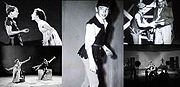 Driscoll's last major success, Peter Pan
, was produced largely between May 1949 and mid-1951. Driscoll was cast opposite Disney's "Little British Lady" Kathryn Beaumont
, in the role of Wendy Darling
; he was used as the reference model for the close-ups and provided Peter Pan's voice, while dancer and choreographer Roland Dupree
was the model for the character's motion. Scenes were played on an almost empty sound stage with only the most essential props, and filmed for use by the illustrators.
In his biography on Disney Marc Elliot described Driscoll as the producer's favorite "live action" child star: "Walt often referred to Driscoll with great affection as the living embodiment of his own youth [...]" However, during a project meeting following the completion of Peter Pan, Disney stated that he now saw Driscoll as best suited for roles as a young bully rather than a likeable protagonist. Driscoll's salary at Disney had been raised to $1750 per week and compared to his salary, Driscoll had little work from 1952 on. In March 1953, the additional two-year option Driscoll had been extended (which would have kept him at Disney into 1956) was canceled, just weeks after Peter Pan was released theatrically. A severe case of acne
accompanying the onset of puberty and explaining why it was necessary for Driscoll to use heavy makeup for his performances on dozens of TV shows, was officially provided as the final reason for the termination of his connection with the Disney Studios.
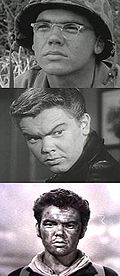 Driscoll encountered increasing indifference from the other Hollywood studios. Still perceived as "Disney’s kid actor" he was unable to get movie roles as a serious character actor. Beginning in 1953 and for most of the next three years, the bulk of his work was on television, on such anthology
and drama
series as Fireside Theatre, Schlitz Playhouse of Stars
, Front Row Center
, Navy Log
, TV Reader's Digest, Climax!, Ford Theatre
, Studio One, Dragnet
, Medic
, and Dick Powell's Zane Grey Theater
. In some special star-focusing series, he appeared with Loretta Young
, Gloria Swanson
, and Jane Wyman
.
Between 1948 and 1957, he performed on a number of radio productions, which included a special broadcast version of Treasure Island in January 1951 and of Peter Pan in December 1953. And as it was common practice in this business, Driscoll and Luana Patten did promotional radio gigs (starting in late 1946 for Song of the South) and toured the country on various parades and charity events through the years.
In 1947 he recorded a special version of "So Dear to My Heart" at Capitol Records
. In 1954 he was awarded a Milky Way Gold Star Award, chosen in a nationwide poll for his work on television
and radio
.
which served child movie actors, and sent him to the public Westwood University High School instead. There his grades dropped substantially, he was the target of ridicule for his previous film roles, and he began to experiment with drugs
. He said later, "The other kids didn't accept me. They treated me as one apart. I tried desperately to be one of the gang. When they rejected me, I fought back, became belligerent and cocky — and was afraid all the time." At his request, Driscoll's parents returned him the next year to Hollywood Professional School, where in May 1955 he graduated.
However, his drug use increased. In an interview years later, he stated, "I was 17 when I first experimented with the stuff. In no time I was using whatever was available, ... mostly heroin, because I had the money to pay for it." In 1956, he was arrested for the first time for possession of marijuana, but the charge was dismissed. On July 24, 1956, Hedda Hopper
wrote in the Los Angeles Times: "This could cost this fine lad and good actor his career." In 1957, he had only one television part, that of the loyal brother of a criminal immigrant in M Squad
, a long-running crime series starring Lee Marvin
.
In December 1956, Driscoll and his girlfriend Marilyn Jean Rush (occasionally misspelled as "Brush") eloped to Mexico
to get married, to avoid their parents' objections. The couple was later re-wed in a Los Angeles
ceremony that took place in March 1957. They had three children, but the relationship didn't last. They separated, then divorced in 1960.
, and performing opposite Mark Damon
, Connie Stevens
and Frances Farmer
in The Party Crashers (1958).
He was charged with "disturbing the peace" and "assault with a deadly weapon" after hitting one of two hecklers with a pistol, who made insulting remarks while he was washing a girlfriend's car; the charges were dropped. Late in 1961 he was sentenced as a drug addict and imprisoned at the Narcotic Rehabilitation Center
of the California Institution for Men
in Chino
, California
. His last known appearances on TV were small roles in two, single-season series: The Best of the Post, a syndicated anthology series adapted from stories published in The Saturday Evening Post
magazine, and The Brothers Brannagan
, an unsuccessful crime series starring Stephen Dunne and Mark Roberts
. Both were originally aired on November 5, 1960.
When Driscoll left Chino in early 1962, he was unable to find acting work. Embittered by this, he said, "I have found that memories are not very useful. I was carried on a silver platter ... and then dumped into the garbage."
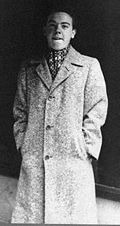 In 1965, a year after his parole
expired, he relocated to New York, hoping to revive his career on the Broadway
stage
, but was unsuccessful. He became part of Andy Warhol
's Greenwich Village
art
community
known as The Factory
, where he began focusing on his artistic talents. He had previously been encouraged to do so by famed artist and poet Wallace Berman
, whom he had befriended after joining Berman's art circle (now also known as Semina Culture) in Los Angeles in 1956. Some of his works were considered outstanding,
and a few of his surviving collages and cardboard mailers were temporarily exhibited in Los Angeles at the Santa Monica Museum of Art
. In 1965, early in his tenure at The Factory, Driscoll gave his last known film performance, in experimental filmmaker Piero Heliczer's Underground movie Dirt.
's underground. On March 30, 1968, about three weeks after his 31st birthday, two boys playing in a deserted East Village
tenement at 371 East 10th St found his dead body. The medical examination determined that he had died from heart failure
caused by an advanced hardening of the arteries
due to longtime drug abuse
. There was no ID on the body, and photos taken of it and shown around the neighborhood yielded no positive identification. When Driscoll's body went unclaimed, he was buried in an unmarked pauper's
grave in New York City's Potter's Field
on Hart Island.
Late in 1969, about nineteen months after his death, Driscoll's mother sought the help of officials at the Disney studios to contact him for a hoped-for reunion with his father, who was near death. This resulted in a fingerprint match at NYPD
, which located his burial on Hart Island. Although his name appears on his father's gravestone at Eternal Hills Memorial Park in Oceanside, it is merely a cenotaph
since his remains still rest on Hart Island. Driscoll's death was not reported until the re-release of his first Disney film, Song of the South, in 1971/72, when reporters researched the whereabouts of the film's major cast members, and his mother revealed what had happened.
released Come Back to the Five and Dime Bobby Dee Bobby Dee - a concept album based in part on Driscoll's life.
In September 2011, the american singer-songwriter Tom Russell
released the song "Farewell Never Neverland" on the album "Mesabi", an elegy for Bobby Driscoll as Peter Pan.
Circa
Circa , usually abbreviated c. or ca. , means "approximately" in the English language, usually referring to a date...
March 1968) was an American child actor
Child actor
The term child actor or child actress is generally applied to a child acting in motion pictures or television, but also to an adult who began his or her acting career as a child; to avoid confusion, the latter is also called a former child actor...
known for a large body of cinema and TV performances from 1943 to 1960. He starred in some of The Walt Disney Company
The Walt Disney Company
The Walt Disney Company is the largest media conglomerate in the world in terms of revenue. Founded on October 16, 1923, by Walt and Roy Disney as the Disney Brothers Cartoon Studio, Walt Disney Productions established itself as a leader in the American animation industry before diversifying into...
's most popular live-action pictures of that period, such as Song of the South
Song of the South
Song of the South is a 1946 American musical film produced by Walt Disney and released by RKO Radio Pictures. The film is based on the Uncle Remus cycle of stories by Joel Chandler Harris. The live actors provide a sentimental frame story, in which Uncle Remus relates the folk tales of the...
(1946), So Dear to My Heart
So Dear to My Heart
So Dear to My Heart is a 1948 feature film produced by Walt Disney, released in Chicago on November 29, 1948 and nationwide on January 19, 1949 by RKO Radio Pictures and Buena Vista Distribution. Like 1946's Song of the South, the film combines animation and live action...
(1948), and Treasure Island
Treasure Island (1950 film)
Treasure Island is a 1950 Disney adventure film, adapted from the Robert Louis Stevenson's novel Treasure Island. It starred Bobby Driscoll as Jim Hawkins, and Robert Newton as Long John Silver...
(1950). He served as animation model and provided the voice for the title role in Peter Pan
Peter Pan (1953 film)
Peter Pan is a 1953 American animated film produced by Walt Disney and based on the play Peter Pan, or The Boy Who Wouldn't Grow Up by J. M. Barrie. It is the fourteenth film in the Walt Disney Animated Classics series and was originally released on February 5, 1953 by RKO Pictures...
(1953). In 1950, he received an Academy Juvenile Award
Academy Juvenile Award
The Academy Juvenile Award, also known as the Juvenile Oscar, was a Special Honorary Academy Award bestowed at the discretion of the Board of Governors of the Academy of Motion Picture Arts and Sciences to specifically recognize juvenile performers under the age of eighteen for their "outstanding...
for outstanding performance in feature films.
In the mid-1950s, Driscoll's career began to decline, turning primarily to guest appearances on anthology TV series. He became addicted to narcotics and was sentenced to prison for drug use. After his release he focused his attention on the avant-garde
Avant-garde
Avant-garde means "advance guard" or "vanguard". The adjective form is used in English to refer to people or works that are experimental or innovative, particularly with respect to art, culture, and politics....
art scene. In ill health from his drug use, and his funds completely depleted, he died in March 1968.
Early life
Born Robert Cletus Driscoll in Cedar Rapids, IowaIowa
Iowa is a state located in the Midwestern United States, an area often referred to as the "American Heartland". It derives its name from the Ioway people, one of the many American Indian tribes that occupied the state at the time of European exploration. Iowa was a part of the French colony of New...
, Driscoll was the only child of Cletus Driscoll, an insulation salesman, and Isabelle Kratz Driscoll, a former schoolteacher. Shortly after his birth, the family moved to Des Moines, where they stayed until early 1943. When a doctor advised the father to relocate to balmy California
California
California is a state located on the West Coast of the United States. It is by far the most populous U.S. state, and the third-largest by land area...
due to pulmonary ailments he was suffering from his work-related handling of asbestos
Asbestos
Asbestos is a set of six naturally occurring silicate minerals used commercially for their desirable physical properties. They all have in common their eponymous, asbestiform habit: long, thin fibrous crystals...
, the family moved to Los Angeles
Los Ángeles
Los Ángeles is the capital of the province of Biobío, in the commune of the same name, in Region VIII , in the center-south of Chile. It is located between the Laja and Biobío rivers. The population is 123,445 inhabitants...
. Driscoll's barber urged his parents to try to get the cute child into the movies, and the man's son, an occasional actor, got him an audition at MGM for a bit role in the 1943 family drama Lost Angel
Lost Angel (film)
Lost Angel is a 1943 film starring Margaret O'Brien as a little orphan girl raised to be a genius. James Craig plays a reporter who shows her the world outside the Institute of Child Psychology.-Plot:...
, which starred up-and-coming Margaret O'Brien
Margaret O'Brien
Margaret O'Brien is an American film and stage actress. Although her film career as a leading character was brief, she was one of the most popular child actors in cinema history...
. While on a tour across the studio lot, five-year-old Driscoll noticed a mock-up ship and asked where the water was. The director was impressed by the boy's curiosity and intelligence, and chose him out of forty applicants.
"Wonder Child"
Driscoll's brief, two-minute debut helped him win the role of young Al Sullivan, the youngest of the five Sullivan brothersSullivan brothers
The Sullivan brothers were five siblings who were all killed in action during or shortly after the sinking of the light cruiser USS Juneau , the vessel on which they all served, on November 13, 1942, in World War II....
, in the 20th Century Fox
20th Century Fox
Twentieth Century Fox Film Corporation — also known as 20th Century Fox, or simply 20th or Fox — is one of the six major American film studios...
's 1944 World War II
World War II
World War II, or the Second World War , was a global conflict lasting from 1939 to 1945, involving most of the world's nations—including all of the great powers—eventually forming two opposing military alliances: the Allies and the Axis...
drama
Drama
Drama is the specific mode of fiction represented in performance. The term comes from a Greek word meaning "action" , which is derived from "to do","to act" . The enactment of drama in theatre, performed by actors on a stage before an audience, presupposes collaborative modes of production and a...
The Fighting Sullivans
The Fighting Sullivans
The Fighting Sullivans, originally released as The Sullivans, is a 1944 American biographical war film directed by Lloyd Bacon and written by Edward Doherty, Mary C. McCall Jr. and Jules Schermer...
, opposite Thomas Mitchell
Thomas Mitchell (actor)
Thomas Mitchell was an American actor, playwright and screenwriter. Among his most famous roles in a long career are those of Gerald O'Hara, the father of Scarlett O'Hara in Gone with the Wind, the drunken Doc Boone in John Ford's Stagecoach, and Uncle Billy in It's a Wonderful Life...
and Anne Baxter
Anne Baxter
Anne Baxter was an American actress known for her performances in films such as The Magnificent Ambersons , The Razor's Edge , All About Eve and The Ten Commandments .-Early life:...
. With his natural acting and talent for memorizing lines at that young age, he was soon considered a new "Wonder Child". One major studio would recommend him to another, leading to screen portrayals as the boy who could blow his whistle while standing on his head in Sunday Dinner for a Soldier
Sunday Dinner for a Soldier
Sunday Dinner for a Soldier is a 1944 motion picture directed by Lloyd Bacon andbased on a novelette by Martha Cheavens.The film tells the story of a poor family in Florida who wants to host a meal for a serviceman from the Army airbase nearby....
(1944), the "child brother" of Richard Arlen
Richard Arlen
-Biography:Born Sylvanus Richard Van Mattimore in St. Paul, Minnesota, he attended the University of Pennsylvania. He served as a pilot in the Royal Flying Corps during World War I. His first job after the war was with St. Paul's Athletic Club...
in The Big Bonanza (1944), and young Percy Maxim in So Goes My Love
So Goes My Love
So Goes My Love is an American 1946 comedy film, produced by Universal Pictures. It is based on A Genius in the Family, the memoir of Hiram Percy Maxim, and focusing on the relationship between Maxim and his father, Sir Hiram Stevens Maxim.- Cast :*Don Ameche as Hiram Stephens Maxim*Bobby...
(1946), with Don Ameche
Don Ameche
Don Ameche was an Academy Award winning American actor with a career spanning almost sixty years.-Personal life:...
and Myrna Loy
Myrna Loy
Myrna Loy was an American actress. Trained as a dancer, she devoted herself fully to an acting career following a few minor roles in silent films. Originally typecast in exotic roles, often as a vamp or a woman of Asian descent, her career prospects improved following her portrayal of Nora Charles...
. In addition, he had a number of smaller roles in movies such as Identity Unknown in 1945, and Mrs Susie Slagel's, From This Day Forward, and O.S.S.
O.S.S. (film)
O.S.S. is a 1946 war film starring Alan Ladd, Colton Winters and Geraldine Fitzgerald about the Office of Strategic Services....
with Alan Ladd
Alan Ladd
-Early life:Ladd was born in Hot Springs, Arkansas. He was the only child of Ina Raleigh Ladd and Alan Ladd, Sr. He was of English ancestry. His father died when he was four, and his mother relocated to Oklahoma City where she married Jim Beavers, a housepainter...
, all three of which were released in 1946.
Disney
Walt Disney
Walter Elias "Walt" Disney was an American film producer, director, screenwriter, voice actor, animator, entrepreneur, entertainer, international icon, and philanthropist, well-known for his influence in the field of entertainment during the 20th century. Along with his brother Roy O...
put under contract, to play the lead character in 1946's Song of the South
Song of the South
Song of the South is a 1946 American musical film produced by Walt Disney and released by RKO Radio Pictures. The film is based on the Uncle Remus cycle of stories by Joel Chandler Harris. The live actors provide a sentimental frame story, in which Uncle Remus relates the folk tales of the...
, which introduced live action into the producer's films, in addition to extensive animated footage. The film turned Driscoll and his co-star Luana Patten
Luana Patten
-Career:Patten made her first film appearance in Joel Chandler Harris's Song of the South with Bobby Driscoll, and they both appeared in Song of the Souths sister film So Dear to My Heart. She appeared again with Bobby Driscoll in the Pecos Bill segment of Disney's Melody Time...
into child stars, and they were discussed for a special Academy Award as the best child actors of the year, but in 1947 it was decided not to present any juvenile awards at all.
Now nicknamed by the American press as Walt Disney's "Sweetheart Team", Driscoll and Patten starred together in So Dear to My Heart
So Dear to My Heart
So Dear to My Heart is a 1948 feature film produced by Walt Disney, released in Chicago on November 29, 1948 and nationwide on January 19, 1949 by RKO Radio Pictures and Buena Vista Distribution. Like 1946's Song of the South, the film combines animation and live action...
, opposite acting balladeer Burl Ives
Burl Ives
Burl Icle Ivanhoe Ives was an American actor, writer and folk music singer. As an actor, Ives's work included comedies, dramas, and voice work in theater, television, and motion pictures. Music critic John Rockwell said, "Ives's voice .....
and veteran character actress Beulah Bondi
Beulah Bondi
Beulah Bondi was an American actress.Bondi began her acting career as a young child in theater, and after establishing herself as a stage actress, she reprised her role in Street Scene for the 1931 film version...
. It was planned as Disney's first all live-action movie, with production beginning immediately after Song of the South, but its release was delayed until late 1948 to meet the demands of Disney's co-producer and long-time distributor RKO Radio Pictures for some animated content in the film.
Driscoll played Eddie Cantor
Eddie Cantor
Eddie Cantor was an American "illustrated song" performer, comedian, dancer, singer, actor and songwriter...
's screen son in the 1948 RKO Studios musical
Musical film
The musical film is a film genre in which songs sung by the characters are interwoven into the narrative, sometimes accompanied by dancing. The songs usually advance the plot or develop the film's characters, though in some cases they serve merely as breaks in the storyline, often as elaborate...
comedy
Comedy
Comedy , as a popular meaning, is any humorous discourse or work generally intended to amuse by creating laughter, especially in television, film, and stand-up comedy. This must be carefully distinguished from its academic definition, namely the comic theatre, whose Western origins are found in...
If You Knew Susie, in which he teamed up with former Our Gang
Our Gang
Our Gang, also known as The Little Rascals or Hal Roach's Rascals, was a series of American comedy short films about a group of poor neighborhood children and the adventures they had together. Created by comedy producer Hal Roach, the series is noted for showing children behaving in a relatively...
member Margaret Kerry
Margaret Kerry
Margaret Kerry is an American actress, motivational speaker and radio host best known for her 1953 work as the model for Tinker Bell in the Walt Disney Pictures animated feature, Peter Pan.-Career:...
. He and Patten appeared with Roy Rogers
Roy Rogers
Roy Rogers, born Leonard Franklin Slye , was an American singer and cowboy actor, one of the most heavily marketed and merchandised stars of his era, as well as being the namesake of the Roy Rogers Restaurants franchised chain...
and the Sons of the Pioneers
Sons of the Pioneers
The Sons of the Pioneers are one of America's earliest Western singing groups whose classic recordings set a new standard for performers of Western music. Known for the high quality of their vocal performances, musicianship, and songwriting, they produced finely-crafted and innovative recordings...
in the live-action teaser for the Pecos Bill
Pecos Bill
Pecos Bill is an American cowboy, apocryphally immortalized in numerous tall tales of the Old West during American westward expansion into the Southwest of Texas, New Mexico, Southern California, and Arizona. Their stories were probably invented into short stories and book by Edward O'Reilly in the...
segment of Disney's cartoon compilation Melody Time
Melody Time
Melody Time is a 1948 animated feature produced by Walt Disney and released to theatres by RKO Radio Pictures on May 27, 1948. Made up of several sequences set to popular music and folk music, the film is, like Make Mine Music before it, the popular music version of Fantasia Melody Time is a 1948...
, which was released in 1948.
The Window
The Window is a 1949 American black-and-white suspense film noir, based on the short story "The Boy Cried Murder" by Cornell Woolrich. The film, which was a critical success, was produced by Frederic Ullman, Jr. for $210,000 but earned much more, making it a box office hit for RKO Pictures...
, based on Cornell Woolrich
Cornell Woolrich
Cornell George Hopley-Woolrich was an American novelist and short story writer who sometimes wrote under the pseudonyms William Irish and George Hopley....
's The Boy Who Cried Murder. However Howard Hughes
Howard Hughes
Howard Robard Hughes, Jr. was an American business magnate, investor, aviator, engineer, film producer, director, and philanthropist. He was one of the wealthiest people in the world...
, who had bought RKO the previous year, considered the film unworthy of release and Driscoll not much of an actor, and delayed its release. When it was released in May 1949, it became a surprise hit and recouped a multiple of its production costs. The New York Times credited Driscoll with the film's success:
- "[...]The striking force and terrifying impact of this RKO melodrama is chiefly due to Bobby's brilliant acting, for the whole effect would have been lost were there any suspicion of doubt about the credibility of this pivotal character.[...] "The Window" is Bobby Driscoll's picture, make no mistake about it.[...]
So Dear to My Heart and The Window earned Driscoll a special Juvenile Academy Award
Academy Juvenile Award
The Academy Juvenile Award, also known as the Juvenile Oscar, was a Special Honorary Academy Award bestowed at the discretion of the Board of Governors of the Academy of Motion Picture Arts and Sciences to specifically recognize juvenile performers under the age of eighteen for their "outstanding...
in March 1950 as the outstanding juvenile actor of 1949.
Jim Hawkins (character)
James "Jim" Hawkins is a fictional character in Robert Louis Stevenson's novel Treasure Island. He is both the protagonist and narrator of the story.-Appearances:...
in Walt Disney's version of Robert Louis Stevenson
Robert Louis Stevenson
Robert Louis Balfour Stevenson was a Scottish novelist, poet, essayist and travel writer. His best-known books include Treasure Island, Kidnapped, and Strange Case of Dr Jekyll and Mr Hyde....
's Treasure Island
Treasure Island (1950 film)
Treasure Island is a 1950 Disney adventure film, adapted from the Robert Louis Stevenson's novel Treasure Island. It starred Bobby Driscoll as Jim Hawkins, and Robert Newton as Long John Silver...
, with British actor Robert Newton
Robert Newton
Robert Newton was an English stage and film actor. Along with Errol Flynn, Newton was one of the most popular actors among the male juvenile audience of the 1940s and early 1950s, especially with British boys...
as Long John Silver
Long John Silver
Long John Silver is a fictional character and the primary antagonist of the novel Treasure Island, by Robert Louis Stevenson. Silver is also known by the nicknames "Barbecue" and the "Sea-Cook".- Profile :...
, the studio's first all-live-action picture. The feature was filmed in the United Kingdom, and during production it was discovered that Driscoll did not have a valid British work permit, so his family and Disney were fined and ordered to leave the country. They were allowed to remain for six weeks to prepare an appeal, during which director Byron Haskin
Byron Haskin
Byron Conrad Haskin was an American film and television director. He was born in Portland, Oregon.He is remembered today for directing 1953's The War of the Worlds, one of many films where he teamed with producer George Pal. In his early career, he was a special effects artist, with a number of...
hastily shot all of Driscoll's close-ups, using his British stand-in
Stand-in
A stand-in for film and television is a person who substitutes for the actor before filming, for technical purposes such as lighting.Stand-ins are helpful in the initial processes of production. Lighting setup can be a slow and tedious process; during this time the actor will often be somewhere else...
to film missing location scenes after he and his parents had returned to California. Driscoll's work in this film earned him a star at 1560 Vine Street
Vine Street
Vine is a street in Hollywood, Los Angeles, California that runs north-south from Melrose Avenue up past Hollywood Boulevard. The intersection of Hollywood and Vine was once a symbol of Hollywood itself...
on the Hollywood Walk Of Fame
Hollywood Walk of Fame
The Hollywood Walk of Fame consists of more than 2,400 five-pointed terrazzo and brass stars embedded in the sidewalks along fifteen blocks of Hollywood Boulevard and three blocks of Vine Street in Hollywood, California...
.
Treasure Island was an international box office
Box office
A box office is a place where tickets are sold to the public for admission to an event. Patrons may perform the transaction at a countertop, through an unblocked hole through a wall or window, or at a wicket....
hit, and there were several other film projects involving Driscoll under discussion, but none materialized. For example, Haskin recalled in his memoirs that Disney, although interested in Robert Louis Stevenson's pirate story as a full length cartoon, always planned to cast Driscoll as Mark Twain
Mark Twain
Samuel Langhorne Clemens , better known by his pen name Mark Twain, was an American author and humorist...
's Tom Sawyer
Tom Sawyer
Thomas "Tom" Sawyer is the title character of the Mark Twain novel The Adventures of Tom Sawyer . He appears in three other novels by Twain: Adventures of Huckleberry Finn , Tom Sawyer Abroad , and Tom Sawyer, Detective .Sawyer also appears in at least three unfinished Twain works, Huck and Tom...
. At that point in time, he was at the perfect age for the role, but because of a story rights ownership dispute with Hollywood producer David O. Selznick
David O. Selznick
David O. Selznick was an American film producer. He is best known for having produced Gone with the Wind and Rebecca , both of which earned him an Oscar for Best Picture.-Early years:...
, who had previously produced the property in 1938, Disney ultimately had to cancel the entire project. Driscoll was also scheduled to portray a youthful follower of Robin Hood
Robin Hood
Robin Hood was a heroic outlaw in English folklore. A highly skilled archer and swordsman, he is known for "robbing from the rich and giving to the poor", assisted by a group of fellow outlaws known as his "Merry Men". Traditionally, Robin Hood and his men are depicted wearing Lincoln green clothes....
following Treasure Island, again with Robert Newton, who would play Friar Tuck, but Driscoll's run-in with British immigration made this impossible.
Driscoll's second long-run Disney contract allowed him to be loaned to independent Horizon Pictures
Horizon Pictures
Horizon Pictures Ltd was a film production company founded in Britain by the Austrian-born film producer Sam Spiegel. The company's first production was the Academy Award-winning The African Queen, starring Humphrey Bogart and Katharine Hepburn, in 1951.It later produced the David Lean films The...
for the double role of Danny/Josh Reed in When I Grow Up (1951). His casting was suggested by Oscar-winning screenplay writer Michael Kanin
Michael Kanin
Michael Kanin was an American director, producer, playwright and screenwriter who shared an Academy Award with Ring Lardner Jr. in 1942 for writing the Katharine Hepburn-Spencer Tracy film comedy Woman of the Year....
.
In addition to his brief guest appearance in Walt Disney's first TV Christmas show in 1950, One Hour in Wonderland, Driscoll lent his voice to Goofy, Jr.
Max Goof
Max Goof is a fictional character who is the teenage son of the popular Disney character Goofy. He first appeared in the 1992 television series Goof Troop...
in the Disney cartoon
Cartoon
A cartoon is a form of two-dimensional illustrated visual art. While the specific definition has changed over time, modern usage refers to a typically non-realistic or semi-realistic drawing or painting intended for satire, caricature, or humor, or to the artistic style of such works...
shorts, Fathers are People and Father's Lion, which were released in 1951 and 1952, respectively.
Driscoll portrayed Robert "Bibi" Bonnard in Richard Fleischer
Richard Fleischer
-Early life:Fleischer was born in Brooklyn, the son of Essie and animator/producer Max Fleischer. He started in motion pictures as director of animated shorts produced by his father including entries in the Betty Boop, Popeye and Superman series.His live-action film career began in 1942 at the RKO...
's comedy The Happy Time
The Happy Time
The Happy Time is a 1952 movie directed by the award-winning director Richard Fleischer, based on the 1945 novel of the same name by Robert Fontaine, which Samuel A. Taylor turned it into a hit play. A boy, played by Bobby Driscoll, comes of age in a close-knit French-Canadian family. The film...
(1952), which was based on a Broadway
Broadway theatre
Broadway theatre, commonly called simply Broadway, refers to theatrical performances presented in one of the 40 professional theatres with 500 or more seats located in the Theatre District centered along Broadway, and in Lincoln Center, in Manhattan in New York City...
play
Play (theatre)
A play is a form of literature written by a playwright, usually consisting of scripted dialogue between characters, intended for theatrical performance rather than just reading. There are rare dramatists, notably George Bernard Shaw, who have had little preference whether their plays were performed...
of the same name by Samuel A. Taylor
Samuel A. Taylor
Samuel A. Taylor was an American playwright and screenwriter.Born Samuel Albert Tanenbaum, in a Jewish family, in Chicago, Illinois, Taylor made his Broadway debut as author of the play The Happy Time in 1950. He wrote the play Sabrina Fair in 1953 and co-wrote its film adaptation the following year...
. Cast with acting veterans Charles Boyer
Charles Boyer
Charles Boyer was a French actor who appeared in more than 80 films between 1920 and 1976. After receiving an education in drama, Boyer started on the stage, but he found success in movies during the 1930s. His memorable performances were among the era's most highly praised romantic dramas,...
, Marsha Hunt
Marsha Hunt (actress)
Marsha Hunt is an American film, theater, and television actress who was blacklisted by Hollywood movie studio executives in the 1950s.-Career:...
, Louis Jourdan, and Kurt Kasznar
Kurt Kasznar
-Early life:Kasznar was born in Vienna, Austria as Kurt Servischer. His father left when Kurt was very young, his mother married a Hungarian restaurateur named Ferdinand Kasznar, and Kurt assumed his surname. He emigrated to the United States in the mid-1930s for The Eternal Road in which he...
, he played the juvenile offspring of a patriarch in Quebec
Quebec
Quebec or is a province in east-central Canada. It is the only Canadian province with a predominantly French-speaking population and the only one whose sole official language is French at the provincial level....
of the 1920s, the character upon whom the plot centered.
Peter Pan (1953 film)
Peter Pan is a 1953 American animated film produced by Walt Disney and based on the play Peter Pan, or The Boy Who Wouldn't Grow Up by J. M. Barrie. It is the fourteenth film in the Walt Disney Animated Classics series and was originally released on February 5, 1953 by RKO Pictures...
, was produced largely between May 1949 and mid-1951. Driscoll was cast opposite Disney's "Little British Lady" Kathryn Beaumont
Kathryn Beaumont
Kathryn Beaumont is an English actress, singer, school teacher, and a Disney Legend who was born in London. She is best known for playing the voice of both Alice, in Disney's Alice in Wonderland and Wendy in Disney's Peter Pan...
, in the role of Wendy Darling
Wendy Darling
Wendy Moira Angela Darling is a fictional character, the female protagonist of Peter and Wendy by J. M. Barrie, and in most adaptations in other media. Her exact age is not specified in the original play or novel by Barrie, though she is implied to be 12 or 13 years old or younger, as she is "just...
; he was used as the reference model for the close-ups and provided Peter Pan's voice, while dancer and choreographer Roland Dupree
Roland DuPree Dance Academy
Roland Dupree Dance Academy was a major dance centre founded by Roland Dupree in Hollywood located on third Street just west of Crescent Heights on the North Side of the Street....
was the model for the character's motion. Scenes were played on an almost empty sound stage with only the most essential props, and filmed for use by the illustrators.
In his biography on Disney Marc Elliot described Driscoll as the producer's favorite "live action" child star: "Walt often referred to Driscoll with great affection as the living embodiment of his own youth [...]" However, during a project meeting following the completion of Peter Pan, Disney stated that he now saw Driscoll as best suited for roles as a young bully rather than a likeable protagonist. Driscoll's salary at Disney had been raised to $1750 per week and compared to his salary, Driscoll had little work from 1952 on. In March 1953, the additional two-year option Driscoll had been extended (which would have kept him at Disney into 1956) was canceled, just weeks after Peter Pan was released theatrically. A severe case of acne
Acne
Acne is a general term used for acneiform eruptions. It is usually used as a synonym for acne vulgaris, but may also refer to:*Acne aestivalis*Acne conglobata*Acne cosmetica*Acne fulminans*Acne keloidalis nuchae*Acne mechanica...
accompanying the onset of puberty and explaining why it was necessary for Driscoll to use heavy makeup for his performances on dozens of TV shows, was officially provided as the final reason for the termination of his connection with the Disney Studios.
TV and radio
Anthology
An anthology is a collection of literary works chosen by the compiler. It may be a collection of poems, short stories, plays, songs, or excerpts...
and drama
Drama
Drama is the specific mode of fiction represented in performance. The term comes from a Greek word meaning "action" , which is derived from "to do","to act" . The enactment of drama in theatre, performed by actors on a stage before an audience, presupposes collaborative modes of production and a...
series as Fireside Theatre, Schlitz Playhouse of Stars
Schlitz Playhouse of Stars
Schlitz Playhouse of Stars, is a weekly CBS anthology television series, was telecast on Friday nights from 1951 until 1959. Offering both comedies and drama, the series was sponsored by Schlitz beer...
, Front Row Center
Front Row Center
Front Row Center is an American variety show that aired on the DuMont Television Network from March 25, 1949 to April 2, 1950. The show was originally 30 minutes then expanded to 60 minutes. It was one of several DuMont network programs to originally start as a local show on one of its affiliates...
, Navy Log
Navy Log
Navy Log is an American anthology series that initially aired on CBS. The series featured over 70 regular guests and told about the greatest survival war stories in the history of the United States Navy. This series premiered on September 20, 1955. The following year, it was moved to ABC, where it...
, TV Reader's Digest, Climax!, Ford Theatre
Ford Theatre
Ford Theatre was a radio and television anthology series broadcast in the United States in the 1940s and 1950s. At various times the television series appeared on all three major television networks, while the radio version was broadcast on two separate networks and on two separate coasts...
, Studio One, Dragnet
Dragnet (series)
Dragnet is a radio and television crime drama about the cases of a dedicated Los Angeles police detective, Sergeant Joe Friday, and his partners...
, Medic
Medic (TV series)
Medic is an American medical drama that aired on NBC beginning in 1954. Medic was television's first doctor drama to focus attention on medical procedures, establishing the style for later medical series.Created by its principal writer James E...
, and Dick Powell's Zane Grey Theater
Dick Powell's Zane Grey Theater
Dick Powell's Zane Grey Theatre, sometimes simply called Zane Grey Theatre, is an American Western anthology series which ran on CBS from 1956 to 1961.-Overview:Zane Grey Theatre was created by Luke Short and Charles A. Wallace...
. In some special star-focusing series, he appeared with Loretta Young
Loretta Young
Loretta Young was an American actress. Starting as a child actress, she had a long and varied career in film from 1917 to 1953...
, Gloria Swanson
Gloria Swanson
Gloria Swanson was an American actress, singer and producer. She was one of the most prominent stars during the silent film era as both an actress and a fashion icon, especially under the direction of Cecil B. DeMille, made dozens of silents and was nominated for the first Academy Award in the...
, and Jane Wyman
Jane Wyman
Jane Wyman was an American singer, dancer, and character actress of film and television. She began her film career in the 1930s, and was a prolific performer for two decades...
.
Between 1948 and 1957, he performed on a number of radio productions, which included a special broadcast version of Treasure Island in January 1951 and of Peter Pan in December 1953. And as it was common practice in this business, Driscoll and Luana Patten did promotional radio gigs (starting in late 1946 for Song of the South) and toured the country on various parades and charity events through the years.
In 1947 he recorded a special version of "So Dear to My Heart" at Capitol Records
Capitol Records
Capitol Records is a major United States based record label, formerly located in Los Angeles, but operating in New York City as part of Capitol Music Group. Its former headquarters building, the Capitol Tower, is a major landmark near the corner of Hollywood and Vine...
. In 1954 he was awarded a Milky Way Gold Star Award, chosen in a nationwide poll for his work on television
Television
Television is a telecommunication medium for transmitting and receiving moving images that can be monochrome or colored, with accompanying sound...
and radio
Radio
Radio is the transmission of signals through free space by modulation of electromagnetic waves with frequencies below those of visible light. Electromagnetic radiation travels by means of oscillating electromagnetic fields that pass through the air and the vacuum of space...
.
Post-Disney
After leaving the Disney studios, Driscoll's parents withdrew him from the Hollywood Professional SchoolHollywood Professional School
Hollywood Professional School was a private school in Hollywood, California, United States, for children working in show business, operating mornings only so that the children could work in the afternoon...
which served child movie actors, and sent him to the public Westwood University High School instead. There his grades dropped substantially, he was the target of ridicule for his previous film roles, and he began to experiment with drugs
Recreational drug use
Recreational drug use is the use of a drug, usually psychoactive, with the intention of creating or enhancing recreational experience. Such use is controversial, however, often being considered to be also drug abuse, and it is often illegal...
. He said later, "The other kids didn't accept me. They treated me as one apart. I tried desperately to be one of the gang. When they rejected me, I fought back, became belligerent and cocky — and was afraid all the time." At his request, Driscoll's parents returned him the next year to Hollywood Professional School, where in May 1955 he graduated.
However, his drug use increased. In an interview years later, he stated, "I was 17 when I first experimented with the stuff. In no time I was using whatever was available, ... mostly heroin, because I had the money to pay for it." In 1956, he was arrested for the first time for possession of marijuana, but the charge was dismissed. On July 24, 1956, Hedda Hopper
Hedda Hopper
Hedda Hopper was an American actress and gossip columnist, whose long-running feud with friend turned arch-rival Louella Parsons became at least as notorious as many of Hopper's columns.-Early life:...
wrote in the Los Angeles Times: "This could cost this fine lad and good actor his career." In 1957, he had only one television part, that of the loyal brother of a criminal immigrant in M Squad
M Squad
M Squad is an American police drama television series that ran from 1957 to 1960 on NBC. Its format would later inspire the creation of spoof TV show Police Squad! Its sponsor was the Pall Mall cigarette brand; Lee Marvin, the program's star, appeared in its commercials during the...
, a long-running crime series starring Lee Marvin
Lee Marvin
Lee Marvin was an American film actor. Known for his gravelly voice, white hair and 6' 2" stature, Marvin at first did supporting roles, mostly villains, soldiers and other hardboiled characters, but after winning an Academy Award for Best Actor for his dual roles in Cat Ballou , he landed more...
.
In December 1956, Driscoll and his girlfriend Marilyn Jean Rush (occasionally misspelled as "Brush") eloped to Mexico
Mexico
The United Mexican States , commonly known as Mexico , is a federal constitutional republic in North America. It is bordered on the north by the United States; on the south and west by the Pacific Ocean; on the southeast by Guatemala, Belize, and the Caribbean Sea; and on the east by the Gulf of...
to get married, to avoid their parents' objections. The couple was later re-wed in a Los Angeles
Los Ángeles
Los Ángeles is the capital of the province of Biobío, in the commune of the same name, in Region VIII , in the center-south of Chile. It is located between the Laja and Biobío rivers. The population is 123,445 inhabitants...
ceremony that took place in March 1957. They had three children, but the relationship didn't last. They separated, then divorced in 1960.
Later roles
Driscoll began using the name "Robert Driscoll" to distance himself from his youthful roles as "Bobby". (Since 1951, he had been known to friends and family as "Bob", and in Schlitz Playhouse of Stars - Early Space Conquerors, 1952, was credited as "Bob Driscoll".) He landed two final screen roles: with Cornell Wilde in the 1955 release The Scarlet CoatThe Scarlet Coat
The Scarlet Coat is an Eastmancolor 1955 American historical drama and swashbuckler directed by John Sturges, based upon the events in the American Revolution in which Benedict Arnold offered to surrender the fort at West Point to the British in exchange for money.The film purports to tell the...
, and performing opposite Mark Damon
Mark Damon
Mark Damon is an American film actor and producer. He started his career in his native country, appearing in such films as Young and Dangerous and Roger Corman's House of Usher...
, Connie Stevens
Connie Stevens
Connie Stevens is an American actress and singer, best known for her roles in the television series Hawaiian Eye and other TV and film work.-Early life:...
and Frances Farmer
Frances Farmer
Frances Elena Farmer was an American actress of stage and screen. She is perhaps better known for sensationalized and fictional accounts of her life, and especially her involuntary commitment to a mental hospital...
in The Party Crashers (1958).
He was charged with "disturbing the peace" and "assault with a deadly weapon" after hitting one of two hecklers with a pistol, who made insulting remarks while he was washing a girlfriend's car; the charges were dropped. Late in 1961 he was sentenced as a drug addict and imprisoned at the Narcotic Rehabilitation Center
Drug rehabilitation
Drug rehabilitation is a term for the processes of medical or psychotherapeutic treatment, for dependency on psychoactive substances such as alcohol, prescription drugs, and so-called street drugs such as cocaine, heroin or amphetamines...
of the California Institution for Men
California Institution for Men
California Institution for Men is a male-only state prison located in the city of Chino, San Bernardino County, California. It is often colloquially referenced as "Chino." In turn, locals call the prison "Chino Men's" or just "Men's" to avoid confusion with the city itself...
in Chino
Chino, California
Chino is a city in San Bernardino County, California, United States. It is located in the western end of the Riverside-San Bernardino Area and it is easily accessible via the Chino Valley and Pomona freeways....
, California
California
California is a state located on the West Coast of the United States. It is by far the most populous U.S. state, and the third-largest by land area...
. His last known appearances on TV were small roles in two, single-season series: The Best of the Post, a syndicated anthology series adapted from stories published in The Saturday Evening Post
The Saturday Evening Post
The Saturday Evening Post is a bimonthly American magazine. It was published weekly under this title from 1897 until 1969, and quarterly and then bimonthly from 1971.-History:...
magazine, and The Brothers Brannagan
The Brothers Brannagan
The Brothers Brannagan is an American crime drama television series that aired in syndication from September 24, 1960, and July 15, 1961.-Synopsis:...
, an unsuccessful crime series starring Stephen Dunne and Mark Roberts
Mark Roberts (actor)
Mark Roberts was an American stage, film and television support actor who appeared in over 100 films between 1938 and 1994, according to the Internet Movie Database. Sometimes he was credited as Bob Scott, Robert E. Scott, or Robert Scott...
. Both were originally aired on November 5, 1960.
When Driscoll left Chino in early 1962, he was unable to find acting work. Embittered by this, he said, "I have found that memories are not very useful. I was carried on a silver platter ... and then dumped into the garbage."
New York City
Parole
Parole may have different meanings depending on the field and judiciary system. All of the meanings originated from the French parole . Following its use in late-resurrected Anglo-French chivalric practice, the term became associated with the release of prisoners based on prisoners giving their...
expired, he relocated to New York, hoping to revive his career on the Broadway
Broadway theatre
Broadway theatre, commonly called simply Broadway, refers to theatrical performances presented in one of the 40 professional theatres with 500 or more seats located in the Theatre District centered along Broadway, and in Lincoln Center, in Manhattan in New York City...
stage
Stage (theatre)
In theatre or performance arts, the stage is a designated space for the performance productions. The stage serves as a space for actors or performers and a focal point for the members of the audience...
, but was unsuccessful. He became part of Andy Warhol
Andy Warhol
Andrew Warhola , known as Andy Warhol, was an American painter, printmaker, and filmmaker who was a leading figure in the visual art movement known as pop art...
's Greenwich Village
Greenwich Village
Greenwich Village, , , , .in New York often simply called "the Village", is a largely residential neighborhood on the west side of Lower Manhattan in New York City. A large majority of the district is home to upper middle class families...
art
Art
Art is the product or process of deliberately arranging items in a way that influences and affects one or more of the senses, emotions, and intellect....
community
Community
The term community has two distinct meanings:*a group of interacting people, possibly living in close proximity, and often refers to a group that shares some common values, and is attributed with social cohesion within a shared geographical location, generally in social units larger than a household...
known as The Factory
The Factory
The Factory was Andy Warhol's original New York City studio from 1962 to 1968, although his later studios were known as The Factory as well. The Factory was located on the fifth floor at 231 East 47th Street, in Midtown Manhattan. The rent was "only about one hundred dollars a year"...
, where he began focusing on his artistic talents. He had previously been encouraged to do so by famed artist and poet Wallace Berman
Wallace Berman
Wallace Berman was an American visual and assemblage artist. He has been called the "father" of assemblage art and a "crucial figure in the history of postwar California art".-Personal life and education:...
, whom he had befriended after joining Berman's art circle (now also known as Semina Culture) in Los Angeles in 1956. Some of his works were considered outstanding,
and a few of his surviving collages and cardboard mailers were temporarily exhibited in Los Angeles at the Santa Monica Museum of Art
Santa Monica Museum of Art
The Santa Monica Museum of Art is an independent non-collecting art museum located in Santa Monica, California. It exhibits the work of local, national, and international contemporary artists....
. In 1965, early in his tenure at The Factory, Driscoll gave his last known film performance, in experimental filmmaker Piero Heliczer's Underground movie Dirt.
Death
He left The Factory in late 1967 or very early 1968 and, penniless, disappeared into ManhattanManhattan
Manhattan is the oldest and the most densely populated of the five boroughs of New York City. Located primarily on the island of Manhattan at the mouth of the Hudson River, the boundaries of the borough are identical to those of New York County, an original county of the state of New York...
's underground. On March 30, 1968, about three weeks after his 31st birthday, two boys playing in a deserted East Village
East Village, Manhattan
The East Village is a neighborhood in the borough of Manhattan in New York City, lying east of Greenwich Village, south of Gramercy and Stuyvesant Town, and north of the Lower East Side...
tenement at 371 East 10th St found his dead body. The medical examination determined that he had died from heart failure
Myocardial infarction
Myocardial infarction or acute myocardial infarction , commonly known as a heart attack, results from the interruption of blood supply to a part of the heart, causing heart cells to die...
caused by an advanced hardening of the arteries
Atherosclerosis
Atherosclerosis is a condition in which an artery wall thickens as a result of the accumulation of fatty materials such as cholesterol...
due to longtime drug abuse
Drug abuse
Substance abuse, also known as drug abuse, refers to a maladaptive pattern of use of a substance that is not considered dependent. The term "drug abuse" does not exclude dependency, but is otherwise used in a similar manner in nonmedical contexts...
. There was no ID on the body, and photos taken of it and shown around the neighborhood yielded no positive identification. When Driscoll's body went unclaimed, he was buried in an unmarked pauper's
Poverty
Poverty is the lack of a certain amount of material possessions or money. Absolute poverty or destitution is inability to afford basic human needs, which commonly includes clean and fresh water, nutrition, health care, education, clothing and shelter. About 1.7 billion people are estimated to live...
grave in New York City's Potter's Field
Potter's field
A potter's field was an American term for a place for the burial of unknown or indigent people. The expression derives from the Bible, referring to a field used for the extraction of potter's clay, which was useless for agriculture but could be used as a burial site.-Origin:The term comes from...
on Hart Island.
Late in 1969, about nineteen months after his death, Driscoll's mother sought the help of officials at the Disney studios to contact him for a hoped-for reunion with his father, who was near death. This resulted in a fingerprint match at NYPD
New York City Police Department
The New York City Police Department , established in 1845, is currently the largest municipal police force in the United States, with primary responsibilities in law enforcement and investigation within the five boroughs of New York City...
, which located his burial on Hart Island. Although his name appears on his father's gravestone at Eternal Hills Memorial Park in Oceanside, it is merely a cenotaph
Cenotaph
A cenotaph is an "empty tomb" or a monument erected in honour of a person or group of people whose remains are elsewhere. It can also be the initial tomb for a person who has since been interred elsewhere. The word derives from the Greek κενοτάφιον = kenotaphion...
since his remains still rest on Hart Island. Driscoll's death was not reported until the re-release of his first Disney film, Song of the South, in 1971/72, when reporters researched the whereabouts of the film's major cast members, and his mother revealed what had happened.
Tributes
In February 2009 singer and songwriter Benjy FerreeBenjy Ferree
Benjy Ferree is a singer/songwriter from Prince George's County, Maryland. He currently resides in Washington, DC.Following "Leaving the Nest," an EP of six songs released jointly by Box Theory and Planaria Records in October 2005,...
released Come Back to the Five and Dime Bobby Dee Bobby Dee - a concept album based in part on Driscoll's life.
In September 2011, the american singer-songwriter Tom Russell
Tom Russell
Thomas George "Tom" Russell is an American singer-songwriter. Although most strongly identified with the Texas Country music tradition, his music also incorporates elements of folk, Tex-Mex, and the cowboy music of the American West. Many of his songs have been recorded by other artists, including...
released the song "Farewell Never Neverland" on the album "Mesabi", an elegy for Bobby Driscoll as Peter Pan.
Film
| Year | Title | Role | Notes |
|---|---|---|---|
| 1944 | The Fighting Sullivans The Fighting Sullivans The Fighting Sullivans, originally released as The Sullivans, is a 1944 American biographical war film directed by Lloyd Bacon and written by Edward Doherty, Mary C. McCall Jr. and Jules Schermer... |
Al Sullivan as a child | Uncredited |
| 1945 | Identity Unknown Identity Unknown Identity Unknown is a 1945 American film directed by Walter Colmes.-Plot:During World War II a four American soldiers defend a farmhouse against a German assault... |
Toddy Loring | |
| 1946 | So Goes My Love So Goes My Love So Goes My Love is an American 1946 comedy film, produced by Universal Pictures. It is based on A Genius in the Family, the memoir of Hiram Percy Maxim, and focusing on the relationship between Maxim and his father, Sir Hiram Stevens Maxim.- Cast :*Don Ameche as Hiram Stephens Maxim*Bobby... |
Percy Maxim | Alternative title: A Genius in the Family |
| 1946 | O.S.S. O.S.S. (film) O.S.S. is a 1946 war film starring Alan Ladd, Colton Winters and Geraldine Fitzgerald about the Office of Strategic Services.... |
Gerard | |
| 1946 | Song of the South Song of the South Song of the South is a 1946 American musical film produced by Walt Disney and released by RKO Radio Pictures. The film is based on the Uncle Remus cycle of stories by Joel Chandler Harris. The live actors provide a sentimental frame story, in which Uncle Remus relates the folk tales of the... |
Johnny | |
| 1948 | So Dear to My Heart So Dear to My Heart So Dear to My Heart is a 1948 feature film produced by Walt Disney, released in Chicago on November 29, 1948 and nationwide on January 19, 1949 by RKO Radio Pictures and Buena Vista Distribution. Like 1946's Song of the South, the film combines animation and live action... |
Jeremiah Kincaid | |
| 1949 | The Window The Window The Window is a 1949 American black-and-white suspense film noir, based on the short story "The Boy Cried Murder" by Cornell Woolrich. The film, which was a critical success, was produced by Frederic Ullman, Jr. for $210,000 but earned much more, making it a box office hit for RKO Pictures... |
Tommy Woodry | Won Academy Juvenile Award Academy Juvenile Award The Academy Juvenile Award, also known as the Juvenile Oscar, was a Special Honorary Academy Award bestowed at the discretion of the Board of Governors of the Academy of Motion Picture Arts and Sciences to specifically recognize juvenile performers under the age of eighteen for their "outstanding... |
| 1950 | Treasure Island Treasure Island (1950 film) Treasure Island is a 1950 Disney adventure film, adapted from the Robert Louis Stevenson's novel Treasure Island. It starred Bobby Driscoll as Jim Hawkins, and Robert Newton as Long John Silver... |
Jim Hawkins Jim Hawkins (character) James "Jim" Hawkins is a fictional character in Robert Louis Stevenson's novel Treasure Island. He is both the protagonist and narrator of the story.-Appearances:... |
|
| 1951 | The Lux Video Theatre | Billy Crandall | Episode: "Tin Badge" |
| 1952 | The Happy Time The Happy Time The Happy Time is a 1952 movie directed by the award-winning director Richard Fleischer, based on the 1945 novel of the same name by Robert Fontaine, which Samuel A. Taylor turned it into a hit play. A boy, played by Bobby Driscoll, comes of age in a close-knit French-Canadian family. The film... |
Robert "Bibi" Bonnard | |
| 1953 | Peter Pan Peter Pan (1953 film) Peter Pan is a 1953 American animated film produced by Walt Disney and based on the play Peter Pan, or The Boy Who Wouldn't Grow Up by J. M. Barrie. It is the fourteenth film in the Walt Disney Animated Classics series and was originally released on February 5, 1953 by RKO Pictures... |
Peter Pan | Voice and close-up model |
| 1955 | The Scarlet Coat The Scarlet Coat The Scarlet Coat is an Eastmancolor 1955 American historical drama and swashbuckler directed by John Sturges, based upon the events in the American Revolution in which Benedict Arnold offered to surrender the fort at West Point to the British in exchange for money.The film purports to tell the... |
Ben Potter | |
| 1956 | Crusader Crusader (TV series) Crusader is a half-hour black-and-white American adventure/drama series that aired on CBS for two seasons from October 7, 1955 to December 28, 1956.-Synopsis:... |
Josef | Episode: "Fear" |
| 1956 | Climax! | Gary | Episode: "The Secret of River Lane" |
| 1957 | M Squad M Squad M Squad is an American police drama television series that ran from 1957 to 1960 on NBC. Its format would later inspire the creation of spoof TV show Police Squad! Its sponsor was the Pall Mall cigarette brand; Lee Marvin, the program's star, appeared in its commercials during the... |
Stephen/Steve Wikowski | Episode: "Pete Loves Mary" |
| 1958 | Frontier Justice Frontier Justice (TV series) For the NBC western anthology, see Frontier .Frontier Justice is a CBS television Western anthology series which had thirty-one telecasts over the summers of 1958, 1959, and 1961. It was a repackaging of episodes from CBS's Dick Powell's Zane Grey Theater, and was hosted by Lew Ayres, Melvyn... |
Trumpeter Jones | Episode: "Death Watch" |
| 1958 | The Millionaire | Lew Conover | Episode: "The Norman Conover Story" |
| 1959 | Trackdown Trackdown Trackdown is an American Western television series starring Robert Culp that aired on CBS between 1957 and 1959. The series offered more than seventy episodes and was produced by Dick Powell's Four Star Television and filmed at the Desilu-Culver Studio... |
Mike Hardesty | Episode: "Blind Alley" |
| 1960 | The Brothers Brannagan The Brothers Brannagan The Brothers Brannagan is an American crime drama television series that aired in syndication from September 24, 1960, and July 15, 1961.-Synopsis:... |
Johnny | Episode: "The Twisted Root" |
| 1965 | Dirt | Unknown | Produced by Andy Warhol Andy Warhol Andrew Warhola , known as Andy Warhol, was an American painter, printmaker, and filmmaker who was a leading figure in the visual art movement known as pop art... |
Stage
| Year | Performance | Role | Dates |
|---|---|---|---|
| 1954 | The Boy With a Cart | The boy | February 1954 |
| 1954 | Ah, Wilderness! Ah, Wilderness! Ah, Wilderness! is a comedy by American playwright Eugene O'Neill that premiered on Broadway at the Guild Theatre on 2 October 1933.-Plot summary:... |
Richard Miller | August 1954 (Pasadena Playhouse Pasadena Playhouse The Pasadena Playhouse is a historic performing arts venue located 39 S El Molino Avenue in Pasadena, California. The 686-seat auditorium produces a variety of cultural and artistic events, professional shows, and community engagements each year.-History:... ) |
| 1957 | Girls of Summer | unknown | May 1957 (Players Ring Theatre) |
Radio shows
(This is not necessarily a complete list, it only displays all of those radio-shows, which could be located and verified until now).| Year | Show | Role | Dates/Notes |
|---|---|---|---|
| 1946 | Song of the South - Promo-Interview | Bobby Driscoll and Luana Patten, hosted by Johnny Mercer | Aired in late 1946 |
| 1946 | Song of the South - Promo-Interview | Bobby Driscoll, Luana Patten, Walt Disney and James Baskett, hosted by Johnny Mercer | Aired in late 1946 |
| 1946 | The Dennis Day Show (aka A Day in the Life of Dennis Day) - "The Boy Who Sang For A King" | Cecil (a little carol-boy) | Aired on December 25 |
| 1948 | Family Theater Family Theater Family Theater was a dramatic anthology radio show which aired on the Mutual Broadcasting System in the United States from February 13, 1947 to September 11, 1957.-Production background:... - "As the Twig is Bent" |
Aired in February 1948 | |
| 1948 | Family Theatre - "The Future is Yours" | Aired on February 19 | |
| 1948 | Family Theatre - "Jamie and the Promise" | Aired on August 19 | |
| 1948 | Family Theater - "A Daddy for Christmas" | Aired on December 15 | |
| 1950 | Family Theater - "Mahoney's Lucky Day" | Aired on April 19 - hosted by himself | |
| 1950 | Hallmark Playhouse - "Knee Pants" | Aired on June 25 | |
| 1950 | Movietown Radio Theater - "The Throwback" | Aired on July 6 | |
| 1951 | Lux Radio Theater Lux Radio Theater Lux Radio Theater, a long-run classic radio anthology series, was broadcast on the NBC Blue Network ; CBS and NBC . Initially, the series adapted Broadway plays during its first two seasons before it began adapting films. These hour-long radio programs were performed live before studio audiences... - "Treasure Island" |
Jim Hawkins | Aired on January 29 |
| 1951 | Cavalcade of America Cavalcade of America Cavalcade of America is an anthology drama series that was sponsored by the DuPont Company, although it occasionally presented a musical, such as an adaptation of Show Boat, and condensed biographies of popular composers. It was initially broadcast on radio from 1935 to 1953, and later on... - "The Day They Gave Babies Away" |
Aired on December 25 | |
| 1953 | Family Theater - "The Courtship of John Dennis" | Aired on April 8 | |
| 1953 | Lux Radio Theater - "Peter Pan" | Peter Pan | Aired on December 10 |
| 1955 | Family Theater - "The Penalty" | Aired on October 12 | |
| 1956 | Family Theatre - "Fair Exchange" | Aired on September 19 | |
| 1957 | Family Theatre - "A Shot in the Dark" | Aired on August 7 |
Recordings
| Year | Performance | Role | Other notes |
|---|---|---|---|
| 1946/47 | "So Dear to My Heart" | Jeremiah Kincaid | Capitol Records (CDF 3000) - narrated by John Beal |
| 1950 | "Treasure Island" | Jim Hawkins | RCA Victor RCA Records RCA Records is one of the flagship labels of Sony Music Entertainment. The RCA initials stand for Radio Corporation of America , which was the parent corporation from 1929 to 1985 and a partner from 1985 to 1986.RCA's Canadian unit is Sony's oldest label... (Y-416) - narrated by Bobby Driscoll |
| 1964 | "Treasure Island" | Jim Hawkins | Disneyland Records Disneyland Records Disneyland Records is the original name of the Walt Disney Company's record company.After long associations with primarily RCA Victor Records, with a few select titles on Capitol, Disneyland Records was established by the Disney studio in 1956 with its first release entitled A Child's Garden of... (DQ-1251) - condensed version of the original motion picture soundtrack - narrated by Del McKennon |
Literature (selected)
- Byron Haskin - interviwed by Joe Adamson, copyright by The Director's Guild Of America and The Scarecrow Press, Inc. Metuchen, N.Y. and London, 1984 ISBN 0-8108-1740-3 - pages 166-186
- Natasha Fraser-Cavassoni, Sam Spiegel - The incredible lifes and times of Hollywood's most iconoclastic producer [...], copyright by Natasha Fraser-Cavassoni, 2003 Simon & Schuster, New York, London, Toronto, Sydney, Singapore, ISBN 0-684-83619-X - pages 119-20, 134, 143, 267, 361
- Richard Fleischer, Just Tell Me When To Cry - a Memoir, copyright by Richard Fleischer, 1993 Carroll & Graf Publishers, Inc., New York ISBN 0-881-84944-8 - pages 79-83, 103
- Michael Duncan and Christine McKenna, SEMINA CULTURE - Wallace Berman & His Chircle, Santa Monica Museum Of Art, 2005, ISBN unknown
- Marc Elliot, Walt Disney - Hollywood's Dark Prince - A Biography, copyright by Marc Elliot, 1993, 1994, Andre Deutsch (publisher) Ltd., First (UK) Paperback edition, London, 1995, ISBN 0-233-98961-7
- Rudy Behlmer, MEMO from David O. Selznick - selected and edited by Rudy Behlmer, The Viking Press, New York and Macmillan Company of Canada Ltd., copyright by Selznick Properties, Ltd., 1972, ISBN unknown - pages 43n, 310, 431
- Maltin, Leonard Maltin. The Disney Films. Crown Publishers Inc., New York, 1973. LOC No. 72-84292. ISBN unknown - pages 74, 76, 78, 83-85, 87-88, 97-100, 107
- Mosley, Leonard. The Real Walt Disney. Grafton Books, 1986. ISBN 0-246-12439-3.
- Zanuck, Darryl F. and Rudy BehlmerRudy BehlmerRudy Behlmer is an American film historian and writer. Born and raised in San Francisco, California, he is an expert in the history and evolution of the motion picture industry....
, editor. Memo from Darryl F. Zanuck: The Golden Years at Twentieth Century-Fox. (1995) ISBN 0-802-13332-0.