

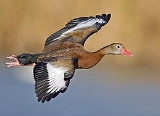
Anatidae

Encyclopedia
Anatidae is the biological family
of birds that includes duck
s, geese
and swan
s. The family has a cosmopolitan distribution
, occurring on all the world's continents except Antarctica and on most of the world's islands and island groups. These are bird
s that are adapted through evolution
for swimming, floating on the water surface, and in some cases diving in at least shallow water. (The Magpie Goose is no longer considered to be part of the Anatidae, but is placed in its own family Anseranatidae.) The family contains around 146 species in 40 genera
. They are generally herbivorous, and are monogamous
breeders. A number of species undertake annual migrations
. A few species have been domesticated for agriculture, and many others are hunted for food and recreation. Five species have become extinct since 1600, and many more are threatened with extinction
.
, at as little as 26.5 cm (10.5 inches) and 164 grams (5.8 oz), to the Trumpeter Swan
, at as much as 183 cm (6 ft) and 17.2 kg (38 lb). The wings are short and pointed, and supported by strong wing muscles that generate rapid beats in flight
. They typically have long necks, although this varies in degree between species. The legs are short, strong, are set far to the back of the body (more so in the more aquatic species), and have a leathery feel with a scaly texture. Combined with their body shape this can make some species awkward on land, but they are stronger walkers than other marine and water birds such as grebe
s or petrel
s. They have webbed feet. The bills are made of soft keratin with a thin and sensitive layer of skin on top (which has a leathery feel when touched). For most species, the shape of the bill tends to be more flattened to a greater or lesser extent. These contain serrated lamellae which are particularly well defined in the filter-feeding species.
Their feathers are excellent at shedding water due to special oils. Many of the ducks display sexual dimorphism
, with the males being more brightly coloured than the females (although the situation is reversed in species like the Paradise Shelduck
). The swans, geese and whistling-ducks lack sexually dimorphic plumage. Anatids are vocal birds, producing a range of quacks, honks, squeaks, and trumpeting sounds, depending on species; the female often has a deeper voice than the male.
Anatids are generally herbivorous
as adults, feeding on various water-plants, although some species also eat fish, molluscs, or aquatic arthropods. One group, the mergansers, are primarily piscivorous
, and have a serrated bill to help them catch fish. In a number of species, the young include a high proportion of invertebrates in their diet, but become purely herbivorous as adults.
breeders. The level of monogamy varies within the family, many of the smaller ducks only maintain the bond for a single season and find a new partner the following year, whereas the larger swans, geese and some of the more territorial ducks maintain pair bonds over a number of years.
Anatidae are remarkable for being one of the few families of birds that possess a penis
; most species are adapted for copulation on the water only. They construct simple nests from whatever material is close to hand, often lining them with a layer of down plucked from the mother's breast. In most species, only the female incubates
the eggs. The young are precocial
, and are able to feed themselves from birth. One aberrant species, the Black-headed Duck
, is an obligate brood parasite
, laying its eggs in the nests of gull
s and coot
s. While this species never raises its own young, a number of other ducks will occasionally lay eggs in the nests of conspecifics (members of the same species) in addition to raising their own broods.
Humans have had a long relationship with ducks, geese and swans; they are important economically and culturally to humans, and several duck species have benefited from an association with people. On the other hand some anatids are damaging agricultural
pests, and have acted as vectors for zoonoses
such as avian influenza.
Since 1600, five species of duck have become extinct due to the activities of humans, and subfossil remains have shown that humans caused numerous extinctions in prehistory. Today many more are considered threatened. Most of the historic and prehistoric extinctions were insular species, these species were vulnerable due to small populations (often endemic to a single island), and island tameness
. Evolving on islands that lacked predators these species lost anti-predator behaviours as well as the ability to fly
, and were vulnerable to human hunting pressure and introduced species
. Other extinctions and declines are attributable to overhunting, habitat loss and modification, as well as hybridisation with introduced ducks (for example the introduced Ruddy Duck
swamping the White-headed Duck
in Europe
). Numerous governments, conservation and hunting organisations have made considerable progress in protecting ducks and duck populations through habitat protection and creation, laws and protection, and captive breeding programmes.
The systematics of the Anatinae is in a state of flux. Previously divided into six subfamilies, a study of anatomical characters by Livezey suggest that the Anatidae are better treated in nine subfamilies. This classification was popular in the late 1980s to 1990s. But mtDNA sequence
analyses indicate that for example the dabbling and diving ducks do not belong in the same subfamily. While there are certainly shortcomings in Livezey's analysis, mtDNA is an unreliable source for phylogenetic information in many waterfowl (especially dabbling ducks) due to their ability to produce fertile hybrids, in rare cases possibly even beyond the level of genus
(see for example the "Barbary Duck"). Because the sample size
of many molecular studies available to date is small, mtDNA results must be considered with caution.
But while a comprehensive review of the Anatidae which unites all evidence into a robust phylogeny is still lacking, the reasons for the confusing data are at least clear: As demonstrated by the Late Cretaceous
fossil
Vegavis iaai — an early modern waterbird which belonged to an extinct lineage—the Anatidae are an ancient group among the modern birds. Their earliest direct ancestors, though not documented by fossils yet, likewise can be assumed to have been contemporaries with the dinosaur
s. The long period of evolution
and shifts from one kind of waterbird lifestyle to another have obscured many plesiomorphies, while apomorphies apparently are quite often the result of parallel evolution
, for example the "non-diving duck" type displayed by such unrelated genera as Dendrocygna, Amazonetta, and Cairina
. For the fossil record, see below.
Alternatively, the Anatidae may be considered to consist of 3 subfamilies (ducks, geese, and swans, essentially) which contain the groups as presented here as tribe
s, with the swans separated as subfamily Cygninae, the goose subfamily Anserinae also containing the whistling ducks, and the Anatinae containing all other clades.
bones found on Kauai
(Hawaiian Islands
), two enigmatic waterfowl are known. The living and assignable prehistoric avifauna of the archipelago
contains as Anseriformes Branta geese and their descendants, and the moa-nalo
s as mentioned above. The following taxa, although certainly new species, cannot be assigned even to subfamily; that Kauai is the oldest of the large Hawaiian Islands, meaning the species may have been evolving in isolation for nearly up to 10 mya (since the Late Miocene
), does not help in determining their affinities:
Similarly, Geochen rhuax from the Big Island of Hawaii
, and a gigantic goose-like anatid from Oahu
are known only from very incomplete and in the former case much damaged bone fragments. The former has been alleged to be a shelduck, but this was generally dismissed because of the damage to the material and biogeographic
considerations. The long-legged Kauai bird, however, hints at the possibility of a former tadornine presence on the archipelago.
Dendrocheninae – a more advanced relative of the whistling-ducks or an ancestral relative of stifftail ducks paralleling whistling-ducks; if not extinct possibly belong in Oxyurinae (including Malacorhynchus)
Anserinae
Tadorninae
Anatinae
Oxyurinae
Incertae sedis
Putative or disputed prehistoric anatids are:
The Middle Oligocene Limicorallus (from Chelkar-Teniz (Kazakhstan
) was sometimes considered an anserine. It is, however, a primitive cormorant
. The middle Eocene Eonessa
wa formerly thought to belong to Anatidae, however reexamination of the holotype in 1978 resulted in the genus being placed as Aves incertae sedis
.
Family (biology)
In biological classification, family is* a taxonomic rank. Other well-known ranks are life, domain, kingdom, phylum, class, order, genus, and species, with family fitting between order and genus. As for the other well-known ranks, there is the option of an immediately lower rank, indicated by the...
of birds that includes duck
Duck
Duck is the common name for a large number of species in the Anatidae family of birds, which also includes swans and geese. The ducks are divided among several subfamilies in the Anatidae family; they do not represent a monophyletic group but a form taxon, since swans and geese are not considered...
s, geese
Goose
The word goose is the English name for a group of waterfowl, belonging to the family Anatidae. This family also includes swans, most of which are larger than true geese, and ducks, which are smaller....
and swan
Swan
Swans, genus Cygnus, are birds of the family Anatidae, which also includes geese and ducks. Swans are grouped with the closely related geese in the subfamily Anserinae where they form the tribe Cygnini. Sometimes, they are considered a distinct subfamily, Cygninae...
s. The family has a cosmopolitan distribution
Cosmopolitan distribution
In biogeography, a taxon is said to have a cosmopolitan distribution if its range extends across all or most of the world in appropriate habitats. For instance, the killer whale has a cosmopolitan distribution, extending over most of the world's oceans. Other examples include humans, the lichen...
, occurring on all the world's continents except Antarctica and on most of the world's islands and island groups. These are bird
Bird
Birds are feathered, winged, bipedal, endothermic , egg-laying, vertebrate animals. Around 10,000 living species and 188 families makes them the most speciose class of tetrapod vertebrates. They inhabit ecosystems across the globe, from the Arctic to the Antarctic. Extant birds range in size from...
s that are adapted through evolution
Evolution
Evolution is any change across successive generations in the heritable characteristics of biological populations. Evolutionary processes give rise to diversity at every level of biological organisation, including species, individual organisms and molecules such as DNA and proteins.Life on Earth...
for swimming, floating on the water surface, and in some cases diving in at least shallow water. (The Magpie Goose is no longer considered to be part of the Anatidae, but is placed in its own family Anseranatidae.) The family contains around 146 species in 40 genera
Genus
In biology, a genus is a low-level taxonomic rank used in the biological classification of living and fossil organisms, which is an example of definition by genus and differentia...
. They are generally herbivorous, and are monogamous
Monogamy
Monogamy /Gr. μονός+γάμος - one+marriage/ a form of marriage in which an individual has only one spouse at any one time. In current usage monogamy often refers to having one sexual partner irrespective of marriage or reproduction...
breeders. A number of species undertake annual migrations
Bird migration
Bird migration is the regular seasonal journey undertaken by many species of birds. Bird movements include those made in response to changes in food availability, habitat or weather. Sometimes, journeys are not termed "true migration" because they are irregular or in only one direction...
. A few species have been domesticated for agriculture, and many others are hunted for food and recreation. Five species have become extinct since 1600, and many more are threatened with extinction
Extinction
In biology and ecology, extinction is the end of an organism or of a group of organisms , normally a species. The moment of extinction is generally considered to be the death of the last individual of the species, although the capacity to breed and recover may have been lost before this point...
.
Description and ecology
The ducks, geese and swans are small to large sized birds that have a general body plan that is broad and elongated. Diving species vary from this in being rounder. Extant species range in size from the Cotton Pygmy GooseCotton Pygmy Goose
The Cotton Pygmy Goose or the Cotton Teal, Nettapus coromandelianus is a small perching duck which breeds in Pakistan, India, Bangladesh, southeast Asia and south to northern Australia.-Description:...
, at as little as 26.5 cm (10.5 inches) and 164 grams (5.8 oz), to the Trumpeter Swan
Trumpeter Swan
The Trumpeter Swan, Cygnus buccinator, is the largest native North American bird, if measured in terms of weight and length, and is the largest living waterfowl species on earth. It is the North American counterpart of the European Whooper Swan.-Description:Males typically measure from and weigh...
, at as much as 183 cm (6 ft) and 17.2 kg (38 lb). The wings are short and pointed, and supported by strong wing muscles that generate rapid beats in flight
Bird flight
Flight is the main mode of locomotion used by most of the world's bird species. Flight assists birds while feeding, breeding and avoiding predators....
. They typically have long necks, although this varies in degree between species. The legs are short, strong, are set far to the back of the body (more so in the more aquatic species), and have a leathery feel with a scaly texture. Combined with their body shape this can make some species awkward on land, but they are stronger walkers than other marine and water birds such as grebe
Grebe
A grebe is a member of the Podicipediformes order, a widely distributed order of freshwater diving birds, some of which visit the sea when migrating and in winter...
s or petrel
Petrel
Petrels are tube-nosed seabirds in the bird order Procellariiformes. The common name does not indicate relationship beyond that point, as "petrels" occur in three of the four families within that group...
s. They have webbed feet. The bills are made of soft keratin with a thin and sensitive layer of skin on top (which has a leathery feel when touched). For most species, the shape of the bill tends to be more flattened to a greater or lesser extent. These contain serrated lamellae which are particularly well defined in the filter-feeding species.
Their feathers are excellent at shedding water due to special oils. Many of the ducks display sexual dimorphism
Sexual dimorphism
Sexual dimorphism is a phenotypic difference between males and females of the same species. Examples of such differences include differences in morphology, ornamentation, and behavior.-Examples:-Ornamentation / coloration:...
, with the males being more brightly coloured than the females (although the situation is reversed in species like the Paradise Shelduck
Paradise Shelduck
The Paradise Shelduck is a large goose-like duck endemic to New Zealand. They are known to the Māori as Pūtangitangi but now commonly referred to as the "Paradise duck", and are prized game birds...
). The swans, geese and whistling-ducks lack sexually dimorphic plumage. Anatids are vocal birds, producing a range of quacks, honks, squeaks, and trumpeting sounds, depending on species; the female often has a deeper voice than the male.
Anatids are generally herbivorous
Herbivore
Herbivores are organisms that are anatomically and physiologically adapted to eat plant-based foods. Herbivory is a form of consumption in which an organism principally eats autotrophs such as plants, algae and photosynthesizing bacteria. More generally, organisms that feed on autotrophs in...
as adults, feeding on various water-plants, although some species also eat fish, molluscs, or aquatic arthropods. One group, the mergansers, are primarily piscivorous
Piscivore
A piscivore is a carnivorous animal which eats primarily fish. Piscivory was the diet of early tetrapods , insectivory came next, then in time reptiles added herbivory....
, and have a serrated bill to help them catch fish. In a number of species, the young include a high proportion of invertebrates in their diet, but become purely herbivorous as adults.
Breeding
The anatids are generally seasonal and monogamousMonogamy
Monogamy /Gr. μονός+γάμος - one+marriage/ a form of marriage in which an individual has only one spouse at any one time. In current usage monogamy often refers to having one sexual partner irrespective of marriage or reproduction...
breeders. The level of monogamy varies within the family, many of the smaller ducks only maintain the bond for a single season and find a new partner the following year, whereas the larger swans, geese and some of the more territorial ducks maintain pair bonds over a number of years.
Anatidae are remarkable for being one of the few families of birds that possess a penis
Penis
The penis is a biological feature of male animals including both vertebrates and invertebrates...
; most species are adapted for copulation on the water only. They construct simple nests from whatever material is close to hand, often lining them with a layer of down plucked from the mother's breast. In most species, only the female incubates
Avian incubation
Incubation refers to the process by which certain oviparous animals hatch their eggs, and to the development of the embryo within the egg. The most vital factor of incubation is the constant temperature required for its development over a specific period. Especially in domestic fowl, the act of...
the eggs. The young are precocial
Precocial
In biology, the term precocial refers to species in which the young are relatively mature and mobile from the moment of birth or hatching. The opposite developmental strategy is called "altricial," where the young are born or hatched helpless. Extremely precocial species may be called...
, and are able to feed themselves from birth. One aberrant species, the Black-headed Duck
Black-headed Duck
The Black-headed Duck is a South American duck allied to the stiff-tailed ducks in the subfamily Oxyurinae of the family Anatidae. It is the only member of the genus Heteronetta....
, is an obligate brood parasite
Brood parasite
Brood parasites are organisms that use the strategy of brood parasitism, a kind of kleptoparasitism found among birds, fish or insects, involving the manipulation and use of host individuals either of the same or different species to raise the young of the brood-parasite...
, laying its eggs in the nests of gull
Gull
Gulls are birds in the family Laridae. They are most closely related to the terns and only distantly related to auks, skimmers, and more distantly to the waders...
s and coot
Coot
Coots are medium-sized water birds that are members of the rail family Rallidae. They constitute the genus Fulica. Coots have predominantly black plumage, and, unlike many of the rails, they are usually easy to see, often swimming in open water...
s. While this species never raises its own young, a number of other ducks will occasionally lay eggs in the nests of conspecifics (members of the same species) in addition to raising their own broods.
Relationship with humans
Duck, eider, and goose feathers and down have long been popular for bedspreads, pillows, sleeping bags and coats. The members of this family also have long been used for food.Humans have had a long relationship with ducks, geese and swans; they are important economically and culturally to humans, and several duck species have benefited from an association with people. On the other hand some anatids are damaging agricultural
Agriculture
Agriculture is the cultivation of animals, plants, fungi and other life forms for food, fiber, and other products used to sustain life. Agriculture was the key implement in the rise of sedentary human civilization, whereby farming of domesticated species created food surpluses that nurtured the...
pests, and have acted as vectors for zoonoses
Zoonosis
A zoonosis or zoonoseis any infectious disease that can be transmitted from non-human animals to humans or from humans to non-human animals . In a study of 1415 pathogens known to affect humans, 61% were zoonotic...
such as avian influenza.
Since 1600, five species of duck have become extinct due to the activities of humans, and subfossil remains have shown that humans caused numerous extinctions in prehistory. Today many more are considered threatened. Most of the historic and prehistoric extinctions were insular species, these species were vulnerable due to small populations (often endemic to a single island), and island tameness
Island tameness
Island tameness is the tendency of many populations and species of animals living on isolated islands to lose their wariness of potential predators, particularly of large animals. The term is partly synonymous with ecological naïvete, which also has a wider meaning referring to the loss of...
. Evolving on islands that lacked predators these species lost anti-predator behaviours as well as the ability to fly
Bird flight
Flight is the main mode of locomotion used by most of the world's bird species. Flight assists birds while feeding, breeding and avoiding predators....
, and were vulnerable to human hunting pressure and introduced species
Introduced species
An introduced species — or neozoon, alien, exotic, non-indigenous, or non-native species, or simply an introduction, is a species living outside its indigenous or native distributional range, and has arrived in an ecosystem or plant community by human activity, either deliberate or accidental...
. Other extinctions and declines are attributable to overhunting, habitat loss and modification, as well as hybridisation with introduced ducks (for example the introduced Ruddy Duck
Ruddy Duck
The Ruddy Duck is a small stiff-tailed duck.Their breeding habitat is marshy lakes and ponds throughout much of North America, and in South America in the Andes. They nest in dense marsh vegetation near water. The female builds her nest out of grass, locating it in tall vegetation to hide it from...
swamping the White-headed Duck
White-headed Duck
The White-headed Duck is a small stiff-tailed duck.Adult males have a grey and reddish body, a blue bill and a largely white head with a black cap and neck. Adult females have a grey-brown body with a white face and a darker bill, cap and a cheek stripe.This duck breeds in Spain and North Africa,...
in Europe
Europe
Europe is, by convention, one of the world's seven continents. Comprising the westernmost peninsula of Eurasia, Europe is generally 'divided' from Asia to its east by the watershed divides of the Ural and Caucasus Mountains, the Ural River, the Caspian and Black Seas, and the waterways connecting...
). Numerous governments, conservation and hunting organisations have made considerable progress in protecting ducks and duck populations through habitat protection and creation, laws and protection, and captive breeding programmes.
Systematics
While the status of the Anatidae as a family is straightforward, and there is little debate about which species properly belong to it, the relationships of the different tribes and subfamilies within it are poorly understood. The listing in the box at right should be regarded as simply one of several possible ways of organising the many species within the Anatidae; see discussion in the next section.The systematics of the Anatinae is in a state of flux. Previously divided into six subfamilies, a study of anatomical characters by Livezey suggest that the Anatidae are better treated in nine subfamilies. This classification was popular in the late 1980s to 1990s. But mtDNA sequence
DNA sequence
The sequence or primary structure of a nucleic acid is the composition of atoms that make up the nucleic acid and the chemical bonds that bond those atoms. Because nucleic acids, such as DNA and RNA, are unbranched polymers, this specification is equivalent to specifying the sequence of...
analyses indicate that for example the dabbling and diving ducks do not belong in the same subfamily. While there are certainly shortcomings in Livezey's analysis, mtDNA is an unreliable source for phylogenetic information in many waterfowl (especially dabbling ducks) due to their ability to produce fertile hybrids, in rare cases possibly even beyond the level of genus
Genus
In biology, a genus is a low-level taxonomic rank used in the biological classification of living and fossil organisms, which is an example of definition by genus and differentia...
(see for example the "Barbary Duck"). Because the sample size
Sample size
Sample size determination is the act of choosing the number of observations to include in a statistical sample. The sample size is an important feature of any empirical study in which the goal is to make inferences about a population from a sample...
of many molecular studies available to date is small, mtDNA results must be considered with caution.
But while a comprehensive review of the Anatidae which unites all evidence into a robust phylogeny is still lacking, the reasons for the confusing data are at least clear: As demonstrated by the Late Cretaceous
Late Cretaceous
The Late Cretaceous is the younger of two epochs into which the Cretaceous period is divided in the geologic timescale. Rock strata from this epoch form the Upper Cretaceous series...
fossil
Fossil
Fossils are the preserved remains or traces of animals , plants, and other organisms from the remote past...
Vegavis iaai — an early modern waterbird which belonged to an extinct lineage—the Anatidae are an ancient group among the modern birds. Their earliest direct ancestors, though not documented by fossils yet, likewise can be assumed to have been contemporaries with the dinosaur
Dinosaur
Dinosaurs are a diverse group of animals of the clade and superorder Dinosauria. They were the dominant terrestrial vertebrates for over 160 million years, from the late Triassic period until the end of the Cretaceous , when the Cretaceous–Paleogene extinction event led to the extinction of...
s. The long period of evolution
Evolution
Evolution is any change across successive generations in the heritable characteristics of biological populations. Evolutionary processes give rise to diversity at every level of biological organisation, including species, individual organisms and molecules such as DNA and proteins.Life on Earth...
and shifts from one kind of waterbird lifestyle to another have obscured many plesiomorphies, while apomorphies apparently are quite often the result of parallel evolution
Parallel evolution
Parallel evolution is the development of a similar trait in related, but distinct, species descending from the same ancestor, but from different clades.-Parallel vs...
, for example the "non-diving duck" type displayed by such unrelated genera as Dendrocygna, Amazonetta, and Cairina
Cairina
Cairina is a genus of ducks in the bird family Anatidae.It has two species, which are similar anatomically but quite distinct in external morphology:* Muscovy Duck, Cairina moschata...
. For the fossil record, see below.
Alternatively, the Anatidae may be considered to consist of 3 subfamilies (ducks, geese, and swans, essentially) which contain the groups as presented here as tribe
Tribe (biology)
In biology, a tribe is a taxonomic rank between family and genus. It is sometimes subdivided into subtribes.Some examples include the tribes: Canini, Acalypheae, Hominini, Bombini, and Antidesmeae.-See also:* Biological classification* Rank...
s, with the swans separated as subfamily Cygninae, the goose subfamily Anserinae also containing the whistling ducks, and the Anatinae containing all other clades.
Genera
- Subfamily: Dendrocygninae (One pantropical genus, of distinctive long-legged goose-like birds)
- Dendrocygna, whistling ducks (9 living species)
- Subfamily: Thalassorninae (One genus in Africa, most closely related to the subfamily Dendrocygninae, though also showing convergent similarities to the subfamily Oxyurinae)
- Thalassornis, White-backed DuckWhite-backed DuckThe White-backed Duck is a waterbird of the family Anatidae. It is distinct from all other ducks, but most closely related to the whistling ducks in the subfamily Dendrocygninae, though also showing some similarities to the stiff-tailed ducks in the subfamily Oxyurinae...

- Thalassornis, White-backed Duck
- Subfamily: AnserinaeAnserinaeThe Anserinae is a subfamily in the waterfowl family Anatidae. It includes the swans and true geese. Under alternative systematical concepts , it is split into two subfamilies, the Anserinae containing the geese , while the Cygninae contain the swans.A number of other waterbirds, mainly related to...
, swans and geese (Three to seven extant genera with 25–30 living species, mainly cool temperate Northern Hemisphere but also some Southern Hemisphere species, with the swanSwanSwans, genus Cygnus, are birds of the family Anatidae, which also includes geese and ducks. Swans are grouped with the closely related geese in the subfamily Anserinae where they form the tribe Cygnini. Sometimes, they are considered a distinct subfamily, Cygninae...
s in one genus [two genera in some treatments], and the geeseGooseThe word goose is the English name for a group of waterfowl, belonging to the family Anatidae. This family also includes swans, most of which are larger than true geese, and ducks, which are smaller....
in three genera [two genera in some treatments]. Some other species are sometimes placed herein, but seem somewhat more distinct [see below])- Cygnus, true swans (7 species, 4 sometimes separated in Olor)
- AnserAnser (genus)The waterfowl genus Anser includes all grey geese and sometimes the white geese. It belongs to the true geese and swan subfamily . The genus has a Holarctic distribution, with at least one species breeding in any open, wet habitats in the subarctic and cool temperate regions of the Northern...
, grey geese (7 species) - ChenChen (genus)The white geese are a small group of waterfowl which are united in the genus or subgenus Chen, in the true geese and swan subfamily Anserinae. They breed on subarctic areas of North America and around the Bering Strait, migrating south in winter....
, white geese (3 species, sometimes included in Anser) - BrantaBrantaThe black geese of the genus Branta are waterfowl belonging to the true geese and swans subfamily Anserinae. They occur in the northern coastal regions of the Palearctic and all over North America, migrating to more southernly coasts in winter, and as resident birds in the Hawaiian Islands...
, black geese (8 living species)
- Subfamily: Stictonettinae (One genus in Australia, formerly included in the Oxyurinae, but with anatomy suggesting a distinct ancient lineage perhaps closest to the Anserinae, especially the Cape Barren GooseCape Barren GooseThe Cape Barren Goose is a large goose resident in southern Australia. The species is named for Cape Barren Island, where specimens were first sighted by European explorers.-Taxonomy:...
)- Stictonetta, Freckled DuckFreckled DuckThe Freckled Duck is a moderately large, broad-bodied duck native to southern Australia. The duck is protected by law...
- Stictonetta, Freckled Duck
- Subfamily: Plectropterinae (One genus in Africa, formerly included in the "perching ducks", but closer to the Tadorninae)
- Plectropterus, Spur-winged GooseSpur-winged GooseThe Spur-winged Goose is a large bird in the family Anatidae, related to the geese and the shelducks, but distinct from both of these in a number of anatomical features, and therefore treated in its own subfamily, the Plectropterinae...
- Plectropterus, Spur-winged Goose
- Subfamily: TadorninaeTadorninaeThe Tadorninae is the shelduck-sheldgoose subfamily of the Anatidae, the biological family that includes the ducks and most duck-like waterfowl such as the geese and swans....
– shelducks and sheldgeese(This group of larger, often semi-terrestrial waterfowl can be seen as intermediate between Anserinae and Anatinae. The 1986 revision has resulted in the inclusion of 10 extant genera with about two dozen living species [one probably extinct] in this subfamily, mostly from the Southern Hemisphere but a few in the Northern Hemisphere, but the affiliations of several presumed tadornine genera has later been questioned and the group in the traditional lineup is likely to be paraphyletic)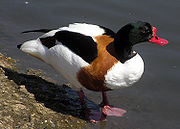
- Pachyanas, Chatham Island Duck (prehistoricLate Quaternary prehistoric birdsPrehistoric birds are various taxa of birds that became extinct before recorded history, or more precisely, before they could be studied alive by bird scientists...
) - Tadorna, shelducks (7 species, one probably extinct) – possibly paraphletic
- Salvadorina, Salvadori's Teal
- Centrornis, Madagascar Sheldgoose (prehistoricLate Quaternary prehistoric birdsPrehistoric birds are various taxa of birds that became extinct before recorded history, or more precisely, before they could be studied alive by bird scientists...
, tentatively placed here) - Alopochen, Egyptian Goose and Mascarene Shelducks (1 living species, 2 extinct)
- Neochen, Orinoco Goose
- Chloephaga, sheldgeese (5 species)
- Hymenolaimus, Blue Duck
- Merganetta, Torrent Duck
- Pachyanas, Chatham Island Duck (prehistoric
- Subfamily: AnatinaeAnatinaeThe Anatinae is a subfamily of the family Anatidae . Its surviving members are the dabbling ducks, which feed mainly at the surface rather than by diving...
, dabbling ducks and moa-nalos (The dabbling duck group, of worldwide distribution, were previously restricted to just one or two genera, but had been extended to include 8 extant genera and about 55 living species, including several genera formerly known as the "perching ducks"; mtDNA on the other hand confirms that the genus Anas is over-lumped and casts doubt on the diving duck affiliations of several genera [see below]. The moa-naloMoa-naloThe moa-nalo are a group of extinct aberrant, goose-like ducks that lived on the larger Hawaiian Islands, except Hawaii itself, in the Pacific...
s, of which 4 species in 3 genera are known to date, are a peculiar group of flightless, extinct Anatidae from the Hawaiian IslandsHawaiian IslandsThe Hawaiian Islands are an archipelago of eight major islands, several atolls, numerous smaller islets, and undersea seamounts in the North Pacific Ocean, extending some 1,500 miles from the island of Hawaii in the south to northernmost Kure Atoll...
. Gigantic in size and with massive bills, they were believed to be geese, but have been shown to be actually very closely related to mallardMallardThe Mallard , or Wild Duck , is a dabbling duck which breeds throughout the temperate and subtropical Americas, Europe, Asia, and North Africa, and has been introduced to New Zealand and Australia....
. They evolved filling the ecological nicheEcological nicheIn ecology, a niche is a term describing the relational position of a species or population in its ecosystem to each other; e.g. a dolphin could potentially be in another ecological niche from one that travels in a different pod if the members of these pods utilize significantly different food...
of turtles, ungulates and other megaherbivores.)- AnasAnasAnas is a genus of dabbling ducks. It includes mallards, wigeons, teals, pintails and shovelers in a number of subgenera. Some authorities prefer to elevate the subgenera to genus rank...
: wigeons, gadwalls, teals, pintails, mallards, shovelers, etc. (40–50 living species, 3 extinct) – paraphyletic - Lophonetta, Crested Duck
- Speculanas, Bronze-winged Duck
- Amazonetta, Brazilian Teal
- Chelychelynechen, Turtle-jawed Moa-nalo (prehistoricLate Quaternary prehistoric birdsPrehistoric birds are various taxa of birds that became extinct before recorded history, or more precisely, before they could be studied alive by bird scientists...
) - Thambetochen, Large-billed Moa-nalos (2 species, prehistoricLate Quaternary prehistoric birdsPrehistoric birds are various taxa of birds that became extinct before recorded history, or more precisely, before they could be studied alive by bird scientists...
) - Ptaiochen, Small-billed Moa-nalo (prehistoricLate Quaternary prehistoric birdsPrehistoric birds are various taxa of birds that became extinct before recorded history, or more precisely, before they could be studied alive by bird scientists...
)
- Anas
- Subfamily: Aythyinae, diving ducks (Some 15 species of diving duckDiving duckThe diving ducks, commonly called pochards or scaups, are a category of duck which feed by diving beneath the surface of the water. They are part of the diverse and very large Anatidae family that includes ducks, geese, and swans....
s, of worldwide distribution, in 2–4 genera; The 1986 morphological analysis suggested that the probably extinct Pink-headed DuckPink-headed DuckThe Pink-headed Duck is a large diving duck that was once found in parts of the Gangetic plains of India, Bangladesh and in the riverine swamps of Myanmar but feared extinct since the 1950s. Numerous searches have failed to provide any proof of continued existence...
of India, previously treated separately in Rhodonessa, should be placed in Netta, but this has been questioned. Furthermore, while morphologically close to dabbling ducks, the mtDNA data indicates that a treatment as distinct subfamily is indeed correct, with the Tadorninae being actually closer to dabbling ducks than the diving ducks are)- NettaNettaNetta is a genus of diving ducks. Unlike other diving ducks, the Netta species are reluctant to dive, and feed more like dabbling ducks.These are gregarious ducks, mainly found on fresh water...
, Red-crested Pochard and allies (4 species, one probably extinct) - AythyaAythyaAythya is a genus of diving ducks. It has twelve described species.Aythya shihuibas was described from the Late Miocene of China. An undescribed prehistoric species is known only from Early Pleistocene fossil remains found at Dursunlu, Turkey; it might however be referrable to a paleosubspecies of...
, pochards, scaups, etc. (12 species)
- Netta
- Subfamily: MerginaeMerginaeThe seaducks, Merginae, form a subfamily of the duck, goose and swan family of birds, Anatidae.As the name implies, most but not all, are essentially marine outside the breeding season. Many species have developed specialized salt glands to allow them to tolerate salt water, but these have not yet...
, eiders, scoters, sawbills and other sea-ducks(There are 9 extant genera and some 20 living species; most of this group occur in the Northern Hemisphere, but a few [mostly extinct] mergansers in the Southern Hemisphere)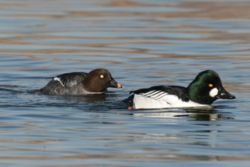
- Chendytes, Diving-geese (prehistoricLate Quaternary prehistoric birdsPrehistoric birds are various taxa of birds that became extinct before recorded history, or more precisely, before they could be studied alive by bird scientists...
) - Polysticta, Steller's Eider
- Somateria, eiders (3 species)
- Histrionicus, Harlequin Duck (includes Ocyplonessa)
- Camptorhynchus, Labrador Duck (extinct)
- Melanitta, scoters (3 species)
- Clangula, Long-tailed Duck (1 species)
- BucephalaGoldeneye (duck)Goldeneye are small tree-hole nesting northern hemisphere seaducks belonging to the genus Bucephala. Their plumage is black and white, and they eat fish, crustaceans and other marine life....
, goldeneyes (3 species) - Mergellus, Smew
- Lophodytes, Hooded Merganser
- MergusMergusMergus is the genus of the typical mergansers, fish-eating ducks in the seaduck subfamily . The Hooded Merganser, often termed Mergus cucullatus, is not of this genus but closely related...
, mergansers (5 living species, one extinct).
- Chendytes, Diving-geese (prehistoric
- Subfamily: OxyurinaeOxyurinaeOxyurinae is a subfamily of the duck, goose and swan family of birds, Anatidae. It has been subject of considerable debate about its validity and circumscription. Most of its members have long stiff tail feathers which are erected when the bird is at rest, and relatively large swollen bills...
, stiff-tail ducks (A small group of 3–4 genera, 2–3 of them monotypic, with 7–8 living species)- Oxyura, stiff-tailed ducks (5 living species)
- Nomonyx, Masked Duck
- BiziuraBiziuraBiziura is a genus of stiff-tailed ducks endemic to Australasia and containing one living and one fossil species.-Species:* B. lobata Stephens, 1824 – Musk Duck – Widely distributed through south-eastern Australia, south-west Western Australia and the Murray-Darling Basin.* B...
, Musk Ducks (1 living species, provisionally placed here) - Heteronetta, Black-headed Duck
- Unresolved
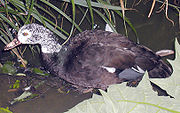 The largest degree of uncertainty concerns whether a number of genera are closer to the shelducks or to the dabbling ducks. See also the monotypic
 MonotypicIn biology, a monotypic taxon is a taxonomic group with only one biological type. The term's usage differs slightly between botany and zoology. The term monotypic has a separate use in conservation biology, monotypic habitat, regarding species habitat conversion eliminating biodiversity and...
subfamilies above, and the "perching duckPerching duckThe perching ducks were previously treated as a small group of ducks in the duck, goose and swan family Anatidae, grouped together on the basis of their readiness to perch high in trees...
s"- Coscoroba, Coscoroba Swan – Anserinae or same subfamily as Cereopsis?
- Cereopsis, Cape Barren Goose – Anserinae, Tadorninae, or own subfamily?
- CnemiornisCnemiornisThe New Zealand Geese formed the extinct genus Cnemiornis of the family Anatidae, subfamily Anserinae.The genus, endemic to New Zealand, consisted of two species: the North Island Goose, C. gracilis and the South Island Goose C. calcitrans...
, New Zealand geese (prehistoricLate Quaternary prehistoric birdsPrehistoric birds are various taxa of birds that became extinct before recorded history, or more precisely, before they could be studied alive by bird scientists...
) – as Cereopsis - Malacorhynchus, Pink-eared ducks (1 living species) – Tadorninae, Oxyurinae or Dendrocheninae?
- Sarkidiornis, Comb Duck – Tadorninae or closer to dabbling ducks?
- TachyeresTachyeresThe steamer ducks are a genus of ducks in the family Anatidae. All of the four species occur in South America, and all except the Flying Steamer Duck are flightless; even this one species capable of flight rarely takes to the air. The genus name Tachyeres, "having fast oars" or "fast rower", comes...
, steamer ducks (4 species) – Tadorninae or closer to dabbling ducks? - Cyanochen, Blue-winged Goose – Tadorninae or more distant clade?
- Nettapus, pygmy geese (3 species) – Anatinae or part of Southern Hemisphere radiation?
- Pteronetta, Hartlaub's Duck – traditionally dabbling ducks, but may be closer to Cyanochen
- CairinaCairinaCairina is a genus of ducks in the bird family Anatidae.It has two species, which are similar anatomically but quite distinct in external morphology:* Muscovy Duck, Cairina moschata...
, Muscovy Duck and White-winged Duck (2 species) – traditionally dabbling ducks, but may be paraphyletic, with one species in Tadorninae and the other closer to diving ducks - AixAix (genus)Aix is a genus that contains two species of ducks: the Wood Duck , and the Mandarin Duck .The genus belongs to the family Anatidae in the waterfowl order Anseriformes...
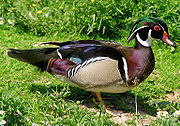
, Mandarin Duck and Wood Duck (2 species) – dabbling ducks or Tadorninae? - Callonetta, Ringed Teal – dabbling ducks or Tadorninae?
- Chenonetta, Maned Duck (1 living species) – dabbling ducks or Tadorninae? Includes Euryanas.
- Marmaronetta, Marbled Duck – Formerly dabbling ducks; actually a diving duck or a distinct subfamily
Prehistoric species
From subfossilSubfossil
Subfossil refers to remains whose fossilization process is not complete, either for lack of time or because the conditions in which they were buried were not optimal for fossilization....
bones found on Kauai
Kauai
Kauai or Kauai, known as Tauai in the ancient Kaua'i dialect, is geologically the oldest of the main Hawaiian Islands. With an area of , it is the fourth largest of the main islands in the Hawaiian archipelago, and the 21st largest island in the United States. Known also as the "Garden Isle",...
(Hawaiian Islands
Hawaiian Islands
The Hawaiian Islands are an archipelago of eight major islands, several atolls, numerous smaller islets, and undersea seamounts in the North Pacific Ocean, extending some 1,500 miles from the island of Hawaii in the south to northernmost Kure Atoll...
), two enigmatic waterfowl are known. The living and assignable prehistoric avifauna of the archipelago
Archipelago
An archipelago , sometimes called an island group, is a chain or cluster of islands. The word archipelago is derived from the Greek ἄρχι- – arkhi- and πέλαγος – pélagos through the Italian arcipelago...
contains as Anseriformes Branta geese and their descendants, and the moa-nalo
Moa-nalo
The moa-nalo are a group of extinct aberrant, goose-like ducks that lived on the larger Hawaiian Islands, except Hawaii itself, in the Pacific...
s as mentioned above. The following taxa, although certainly new species, cannot be assigned even to subfamily; that Kauai is the oldest of the large Hawaiian Islands, meaning the species may have been evolving in isolation for nearly up to 10 mya (since the Late Miocene
Miocene
The Miocene is a geological epoch of the Neogene Period and extends from about . The Miocene was named by Sir Charles Lyell. Its name comes from the Greek words and and means "less recent" because it has 18% fewer modern sea invertebrates than the Pliocene. The Miocene follows the Oligocene...
), does not help in determining their affinities:
- Long-legged "Shelduck", Anatidae sp. et gen. indet.
- TalpanasTalpanasTalpanas is an extinct genus of duck containing only the species Talpanas lippa. It was first described by Andrew L. Iwaniuk, Storrs L. Olson, and Helen F. James in the journal Zootaxa in November 2009. It was endemic to the Hawaiian island of Kauai where the fossil remains were unearthed in the...
Similarly, Geochen rhuax from the Big Island of Hawaii
Hawaii (island)
The Island of Hawaii, also called the Big Island or Hawaii Island , is a volcanic island in the North Pacific Ocean...
, and a gigantic goose-like anatid from Oahu
Oahu
Oahu or Oahu , known as "The Gathering Place", is the third largest of the Hawaiian Islands and most populous of the islands in the U.S. state of Hawaii. The state capital Honolulu is located on the southeast coast...
are known only from very incomplete and in the former case much damaged bone fragments. The former has been alleged to be a shelduck, but this was generally dismissed because of the damage to the material and biogeographic
Biogeography
Biogeography is the study of the distribution of species , organisms, and ecosystems in space and through geological time. Organisms and biological communities vary in a highly regular fashion along geographic gradients of latitude, elevation, isolation and habitat area...
considerations. The long-legged Kauai bird, however, hints at the possibility of a former tadornine presence on the archipelago.
Fossil Anatidae
The fossil record of anatids is extensive, but many prehistoric genera cannot be unequivocally assigned to present-day subfamilies for the reasons given above. For prehistoric species of extant genera, see the respective genus accounts.Dendrocheninae – a more advanced relative of the whistling-ducks or an ancestral relative of stifftail ducks paralleling whistling-ducks; if not extinct possibly belong in Oxyurinae (including Malacorhynchus)
- Mionetta (Late Oligocene – Middle Miocene of C Europe) – includes "Anas" blanchardi, "A." consobrina, "A." natator, "Aythya" arvernensis
- Manuherikia (Bathans Early/Middle Miocene of Otago, New Zealand)
- Dendrochen (Early – Late? Miocene) – includes "Anas" integra, "A." oligocaena
- Dendrocheninae gen. et sp. indet. (Late Miocene of Argentina)
Anserinae
Anserinae
The Anserinae is a subfamily in the waterfowl family Anatidae. It includes the swans and true geese. Under alternative systematical concepts , it is split into two subfamilies, the Anserinae containing the geese , while the Cygninae contain the swans.A number of other waterbirds, mainly related to...
- Cygnavus (Early Oligocene of Kazakhstan – Early Miocene of Germany)
- Cygnopterus (Middle Oligocene of Belgium – Early Miocene of France) – sometimes included in Cygnavus
- Megalodytes (Middle Miocene of California, USA)
- "cf. Megalodytes" (Haraichi Middle Miocene of Annaka, Japan)
- Anserobranta (Late Miocene of C Europe) – includes "Anas" robusta, validity doubtful
- Presbychen (Temblor Late Miocene of Sharktooth Hill, USA)
- Afrocygnus (Late Miocene – Early Pliocene of EC Africa)
- Paracygnus (Kimball Late Pliocene of Nebraska, USA)
- Eremochen (Pliocene)
Tadorninae
Tadorninae
The Tadorninae is the shelduck-sheldgoose subfamily of the Anatidae, the biological family that includes the ducks and most duck-like waterfowl such as the geese and swans....
- Australotadorna (Late Oligocene – Early Miocene of Australia)
- Miotadorna (Bathans Early/Middle Miocene of Otago, New Zealand)
- Tadorninae gen. et sp. indet. (Calvert Middle Miocene of Maryland, USA)
- Balcanas (Early Pliocene of Dorkovo, Bulgaria) – may be synonym of Tadorna or even Common ShelduckCommon ShelduckThe Common Shelduck is a waterfowl species shelduck genus Tadorna. It is widespread and common in Eurasia, mainly breeding in temperate and wintering in subtropical regions; in winter, it can also be found in the Maghreb...
- Anabernicula (Late Pliocene ?– Late Pleistocene of SW and W North America)
- Brantadorna (Middle Pleistocene of Vallecito Creek, USA)
- Nannonetta (Late Pleistocene of Peru)
Anatinae
Anatinae
The Anatinae is a subfamily of the family Anatidae . Its surviving members are the dabbling ducks, which feed mainly at the surface rather than by diving...
- Sinanas (Middle Miocene)
- Wasonaka (Middle Pliocene)
Oxyurinae
Oxyurinae
Oxyurinae is a subfamily of the duck, goose and swan family of birds, Anatidae. It has been subject of considerable debate about its validity and circumscription. Most of its members have long stiff tail feathers which are erected when the bird is at rest, and relatively large swollen bills...
- Pinpanetta (Late Oligocene – Early Miocene of Australia)
- Dunstanetta (Bathans Early/Middle Miocene of Otago, New Zealand) – tentatively placed here
- Tirarinetta (Pliocene of Australia)
Incertae sedis
Incertae sedis
, is a term used to define a taxonomic group where its broader relationships are unknown or undefined. Uncertainty at specific taxonomic levels is attributed by , , and similar terms.-Examples:*The fossil plant Paradinandra suecica could not be assigned to any...
- "Anas" luederitzensis (Kalahari Early Miocene of Lüderitzbucht, Namibia) – anatine?
- Matanas (Bathans Early/Middle Miocene of Otago, New Zealand)
- Anatidae gen. et sp. indet. MNZ S42797 (Bathans Early/Middle Miocene of Otago, New Zealand)
- "Oxura" doksana (Early Miocene of Dolnice, Czechia)
- "Aythya" chauvirae (Middle Miocene of Sansan, France and Credinţa, Romania) – 2 species
- Anatidae gen. et sp. indet. (Middle Miocene of Nördlinger Ries, Germany) – tadornine?
- Anatidae gen. et sp. indet. (Sajóvölgyi Middle Miocene of Mátraszõlõs, Hungary)
- "Anas" meyerii (Middle Miocene of Öhningen, Germany) Described from a single badly crushed tarsometatarsus and phalanges. This species was named in 1867 by Milne-EdwardsMilne-EdwardsMilne-Edwards may refer to:* Alphonse Milne-Edwards , French ornithologist and carcinologist. A son of Henri Milne-Edwards.* Henri Milne-Edwards , French zoologist....
and then recombined in 1964 by Brodkorb to the genus AythyaAythyaAythya is a genus of diving ducks. It has twelve described species.Aythya shihuibas was described from the Late Miocene of China. An undescribed prehistoric species is known only from Early Pleistocene fossil remains found at Dursunlu, Turkey; it might however be referrable to a paleosubspecies of...
. This species is currently regarded as Aves incertae sedis. - "Anas" velox (Middle - Late? Miocene of C Europe) – anatine? May include "A." meyerii
- "Anas" albae (Late Miocene of Polgárdi, Hungary) – mergine? Formerly in Mergus
- "Anas" isarensis (Late Miocene of Aumeister, Germany) – anatine?
- "Anser" scaldii (Late Miocene of Antwerp, Belgium) – anserine or tadornine
- Anatidae gen. et sp. indet. (Waite Late Miocene of Alcoota, Australia) – anatine, oxyurine?
- Anatidae gen. et sp. indet. (Waite Late Miocene of Alcoota, Australia) – tadornine?
- "Anas" eppelsheimensis (Early Pliocene of Eppelsheim, Germany) – anatine?
- Aldabranas (Late Pleistocene of Aldabra, Indian Ocean) – anatine or tadornine
- "Chenopis" nanus (Pleistocene of Australia) – at least 2 taxa, may be living species
Putative or disputed prehistoric anatids are:
- Romainvillia (Late Eocene/Early Oligocene) – anseranatid or anatid (own subfamily)
- Loxornis (Deseado Early Oligocene of Argentina)
- Paracygnopterus (Early Oligocene of Belgium and England)
- Teleornis (Deseado Early Oligocene of Argentina)
- Guguschia (Late Oligocene of Pirəkəşkül, Azerbaijan) – anserine or PelagornithidaePelagornithidaeThe Pelagornithidae, commonly called pelagornithids, pseudodontorns, bony-toothed birds, false-toothed birds or pseudotooth birds, are a prehistoric family of large seabirds...
(same as CaspiodontornisCaspiodontornisCaspiodontornis is a doubtfully valid genus of the prehistoric pseudotooth birds of somewhat doubtful validity. These were probably rather close relatives of either pelicans and storks, or of waterfowl, and are here placed in the order Odontopterygiformes to account for this uncertainty.Only a...
?) - Chenornis (Early Miocene) – anserine or Phalacrocoracidae
- Paranyroca (Rosebud Early Miocene of Bennett County, USA) – anatid (own subfamily) or distinct family?
- Eoneornis (Miocene of Argentina) – anatine? A nomen dubiumNomen dubiumIn zoological nomenclature, a nomen dubium is a scientific name that is of unknown or doubtful application...
- Eutelornis (Miocene of Argentina) – anatine?
The Middle Oligocene Limicorallus (from Chelkar-Teniz (Kazakhstan
Kazakhstan
Kazakhstan , officially the Republic of Kazakhstan, is a transcontinental country in Central Asia and Eastern Europe. Ranked as the ninth largest country in the world, it is also the world's largest landlocked country; its territory of is greater than Western Europe...
) was sometimes considered an anserine. It is, however, a primitive cormorant
Cormorant
The bird family Phalacrocoracidae is represented by some 40 species of cormorants and shags. Several different classifications of the family have been proposed recently, and the number of genera is disputed.- Names :...
. The middle Eocene Eonessa
Eonessa
Eonessa is an enigmatic genus of bird possibly belonging to bird order Gruiformes and which consists of the single species Eonessa anaticula.It was first described by Alexander Wetmore in the Journal of Paleontology in May 1938...
wa formerly thought to belong to Anatidae, however reexamination of the holotype in 1978 resulted in the genus being placed as Aves incertae sedis
Incertae sedis
, is a term used to define a taxonomic group where its broader relationships are unknown or undefined. Uncertainty at specific taxonomic levels is attributed by , , and similar terms.-Examples:*The fossil plant Paradinandra suecica could not be assigned to any...
.
External links
- Anatidae videos on the Internet Bird Collection
- Anatidae sounds on the xeno-canto collection
- Anatidae stamps – Stamps on ducks, swans and geese