

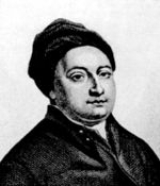
William Cheselden

Encyclopedia
William Cheselden was an English
surgeon
and teacher of anatomy
and surgery
, who was influential in establishing surgery as a scientific medical profession.
. He studied anatomy
in London
under William Cowper
(1666–1709), and began lecturing anatomy in 1710. That same year, he was admitted to the London Company of Barber-Surgeons, passing the final examination on January 29, 1711.
He was elected as a Fellow of the Royal Society
in 1712 and the following year saw the publishing of his Anatomy of the Human Body, which achieved great popularity becoming an essential study source for students, lasting through thirteen editions, mainly because it was written in English
instead of Latin
as was customary.
In 1718 he was appointed an assistant surgeon at St Thomas' Hospital
in London, becoming full surgeon in 1720 where his specialisation of the removal of bladder stones resulted in the increase in survival rates. Afterwards, he was appointed surgeon for the stone at Westminster
Infirmary and surgeon to Queen Caroline
. He also improved eye surgery, developing new techniques, particularly in the removal of cataract
s. Cheselden selected as a surgeon at St George's Hospital upon its foundation in 1733.
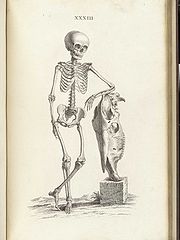 In 1733 he published Osteographia or the Anatomy of Bones, the first full and accurate description of the anatomy of the human skeletal system.
Cheselden retired from St Thomas' in 1738 and moved to the Chelsea Hospital. His abode is listed as "Chelsea College" on the 1739 Royal Charter
for the Foundling Hospital
, a charity for which he was a founding governor.
In 1744 he was elected to the position of Warden of the Company of Barber-Surgeons, and had a role in the separation of the surgeons from the barbers and to the creation of the independent Company of Surgeons in 1745, an organisation that would become later the famous Royal College of Surgeons of England
.
He died at Bath in 1752.
Despite his youth, the boy encountered profound difficulties with the simplest visual perceptions.
Described by Cheselden:
approach to removing bladder
stones, which he first performed in 1727. The procedure had a short duration (minutes instead of hours) and a low mortality
rate (approximately 50%). Cheselden had already developed in 1723 the suprapubic approach, which he published in A Treatise on the High Operation for the Stone.
He also effected a great advance in ophthalmic surgery
by his operation, iridectomy
, described in 1728, to treat certain forms of blindness
by producing an artificial pupil
. Cheselden also described the role of saliva
in digestion
. He attended Sir Isaac Newton
in his last illness and was an intimate friend of Alexander Pope
and of Sir Hans Sloane
.
England
England is a country that is part of the United Kingdom. It shares land borders with Scotland to the north and Wales to the west; the Irish Sea is to the north west, the Celtic Sea to the south west, with the North Sea to the east and the English Channel to the south separating it from continental...
surgeon
Surgery
Surgery is an ancient medical specialty that uses operative manual and instrumental techniques on a patient to investigate and/or treat a pathological condition such as disease or injury, or to help improve bodily function or appearance.An act of performing surgery may be called a surgical...
and teacher of anatomy
Anatomy
Anatomy is a branch of biology and medicine that is the consideration of the structure of living things. It is a general term that includes human anatomy, animal anatomy , and plant anatomy...
and surgery
Surgery
Surgery is an ancient medical specialty that uses operative manual and instrumental techniques on a patient to investigate and/or treat a pathological condition such as disease or injury, or to help improve bodily function or appearance.An act of performing surgery may be called a surgical...
, who was influential in establishing surgery as a scientific medical profession.
Life
Cheselden was born at Somerby, LeicestershireSomerby, Leicestershire
Somerby is a small village and civil parish south of Melton Mowbray, Leicestershire.Somerby is a small country village containing a parish church , a primary school, a Doctor's surgery,a pub, a small shop/post office, and a large Equestrian Centre...
. He studied anatomy
Anatomy
Anatomy is a branch of biology and medicine that is the consideration of the structure of living things. It is a general term that includes human anatomy, animal anatomy , and plant anatomy...
in London
London
London is the capital city of :England and the :United Kingdom, the largest metropolitan area in the United Kingdom, and the largest urban zone in the European Union by most measures. Located on the River Thames, London has been a major settlement for two millennia, its history going back to its...
under William Cowper
William Cowper (anatomist)
William Cowper FRS was an English surgeon and anatomist, famous for his early description of what is now known as the Cowper's gland....
(1666–1709), and began lecturing anatomy in 1710. That same year, he was admitted to the London Company of Barber-Surgeons, passing the final examination on January 29, 1711.
He was elected as a Fellow of the Royal Society
Royal Society
The Royal Society of London for Improving Natural Knowledge, known simply as the Royal Society, is a learned society for science, and is possibly the oldest such society in existence. Founded in November 1660, it was granted a Royal Charter by King Charles II as the "Royal Society of London"...
in 1712 and the following year saw the publishing of his Anatomy of the Human Body, which achieved great popularity becoming an essential study source for students, lasting through thirteen editions, mainly because it was written in English
English language
English is a West Germanic language that arose in the Anglo-Saxon kingdoms of England and spread into what was to become south-east Scotland under the influence of the Anglian medieval kingdom of Northumbria...
instead of Latin
Latin
Latin is an Italic language originally spoken in Latium and Ancient Rome. It, along with most European languages, is a descendant of the ancient Proto-Indo-European language. Although it is considered a dead language, a number of scholars and members of the Christian clergy speak it fluently, and...
as was customary.
In 1718 he was appointed an assistant surgeon at St Thomas' Hospital
St Thomas' Hospital
St Thomas' Hospital is a large NHS hospital in London, England. It is administratively a part of Guy's & St Thomas' NHS Foundation Trust. It has provided health care freely or under charitable auspices since the 12th century and was originally located in Southwark.St Thomas' Hospital is accessible...
in London, becoming full surgeon in 1720 where his specialisation of the removal of bladder stones resulted in the increase in survival rates. Afterwards, he was appointed surgeon for the stone at Westminster
Westminster
Westminster is an area of central London, within the City of Westminster, England. It lies on the north bank of the River Thames, southwest of the City of London and southwest of Charing Cross...
Infirmary and surgeon to Queen Caroline
Caroline of Ansbach
Caroline of Brandenburg-Ansbach was the queen consort of King George II of Great Britain.Her father, John Frederick, Margrave of Brandenburg-Ansbach, was the ruler of a small German state...
. He also improved eye surgery, developing new techniques, particularly in the removal of cataract
Cataract
A cataract is a clouding that develops in the crystalline lens of the eye or in its envelope, varying in degree from slight to complete opacity and obstructing the passage of light...
s. Cheselden selected as a surgeon at St George's Hospital upon its foundation in 1733.
Cheselden retired from St Thomas' in 1738 and moved to the Chelsea Hospital. His abode is listed as "Chelsea College" on the 1739 Royal Charter
Royal Charter
A royal charter is a formal document issued by a monarch as letters patent, granting a right or power to an individual or a body corporate. They were, and are still, used to establish significant organizations such as cities or universities. Charters should be distinguished from warrants and...
for the Foundling Hospital
Foundling Hospital
The Foundling Hospital in London, England was founded in 1741 by the philanthropic sea captain Thomas Coram. It was a children's home established for the "education and maintenance of exposed and deserted young children." The word "hospital" was used in a more general sense than it is today, simply...
, a charity for which he was a founding governor.
In 1744 he was elected to the position of Warden of the Company of Barber-Surgeons, and had a role in the separation of the surgeons from the barbers and to the creation of the independent Company of Surgeons in 1745, an organisation that would become later the famous Royal College of Surgeons of England
Royal College of Surgeons of England
The Royal College of Surgeons of England is an independent professional body and registered charity committed to promoting and advancing the highest standards of surgical care for patients, regulating surgery, including dentistry, in England and Wales...
.
He died at Bath in 1752.
First Surgical recovery from blindness
Cheselden is credited with performing the first known case of full recovery from blindness in 1728, of a blind 13 year old boy. Cheselden presented the celebrated case of a the boy of thirteen who gained his sight after removal of the lenses rendered opaque by cataract from birth.Despite his youth, the boy encountered profound difficulties with the simplest visual perceptions.
Described by Cheselden:
When he first saw, he was so far from making any judgment of distances, that he thought all object whatever touched his eyes (as he expressed it) as what he felt did his skin, and thought no object so agreeable as those which were smooth and regular, though he could form no judgment of their shape, or guess what it was in any object that was pleasing to him: he knew not the shape of anything, nor any one thing from another, however different in shape or magnitude; but upon being told what things were, whose form he knew before from feeling, he would carefully observe, that he might know them again;
Works
Cheselden is famous for the invention of the lateral lithotomyLithotomy
Lithotomy from Greek for "lithos" and "tomos" , is a surgical method for removal of calculi, stones formed inside certain hollow organs, such as the kidneys , bladder , and gallbladder , that cannot exit naturally through the urinary system or biliary tract...
approach to removing bladder
Urinary bladder
The urinary bladder is the organ that collects urine excreted by the kidneys before disposal by urination. A hollow muscular, and distensible organ, the bladder sits on the pelvic floor...
stones, which he first performed in 1727. The procedure had a short duration (minutes instead of hours) and a low mortality
Death
Death is the permanent termination of the biological functions that sustain a living organism. Phenomena which commonly bring about death include old age, predation, malnutrition, disease, and accidents or trauma resulting in terminal injury....
rate (approximately 50%). Cheselden had already developed in 1723 the suprapubic approach, which he published in A Treatise on the High Operation for the Stone.
He also effected a great advance in ophthalmic surgery
Ophthalmology
Ophthalmology is the branch of medicine that deals with the anatomy, physiology and diseases of the eye. An ophthalmologist is a specialist in medical and surgical eye problems...
by his operation, iridectomy
Iridectomy
An iridectomy, also known as a surgical iridectomy or corectomy, is the surgical removal of part of the iris. These procedures are most frequently performed in the treatment of closed-angle glaucoma and iris melanoma....
, described in 1728, to treat certain forms of blindness
Blindness
Blindness is the condition of lacking visual perception due to physiological or neurological factors.Various scales have been developed to describe the extent of vision loss and define blindness...
by producing an artificial pupil
Pupil
The pupil is a hole located in the center of the iris of the eye that allows light to enter the retina. It appears black because most of the light entering the pupil is absorbed by the tissues inside the eye. In humans the pupil is round, but other species, such as some cats, have slit pupils. In...
. Cheselden also described the role of saliva
Saliva
Saliva , referred to in various contexts as spit, spittle, drivel, drool, or slobber, is the watery substance produced in the mouths of humans and most other animals. Saliva is a component of oral fluid. In mammals, saliva is produced in and secreted from the three pairs of major salivary glands,...
in digestion
Digestion
Digestion is the mechanical and chemical breakdown of food into smaller components that are more easily absorbed into a blood stream, for instance. Digestion is a form of catabolism: a breakdown of large food molecules to smaller ones....
. He attended Sir Isaac Newton
Isaac Newton
Sir Isaac Newton PRS was an English physicist, mathematician, astronomer, natural philosopher, alchemist, and theologian, who has been "considered by many to be the greatest and most influential scientist who ever lived."...
in his last illness and was an intimate friend of Alexander Pope
Alexander Pope
Alexander Pope was an 18th-century English poet, best known for his satirical verse and for his translation of Homer. He is the third-most frequently quoted writer in The Oxford Dictionary of Quotations, after Shakespeare and Tennyson...
and of Sir Hans Sloane
Hans Sloane
Sir Hans Sloane, 1st Baronet, PRS was an Ulster-Scot physician and collector, notable for bequeathing his collection to the British nation which became the foundation of the British Museum...
.
External links
- William Cheselden (1666-1709). Surgical Tutor.
- Cheselden, Wm: Osteographia or the Anatomy of the Bones. Scanned pages of the original work. Historical Anatomies in the Web. US National Library of Medicine.
- William Cheselden Article from the 1911 Encyclopædia Britannica.
- Complete scanned copy of the Ostepgraphia in the public domain at Biu Sante.
- The Anatomy of the Human Body (1750) at the Internet Archive.
- Accuracy and Elegance in Cheselden's Osteographia (1733) article by Monique Kornell, including gallery and comprehensive links to public domain online copies.