

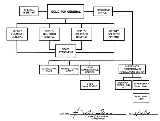
United States Solicitor General

Encyclopedia

Federal government of the United States
The federal government of the United States is the national government of the constitutional republic of fifty states that is the United States of America. The federal government comprises three distinct branches of government: a legislative, an executive and a judiciary. These branches and...
before the Supreme Court of the United States
Supreme Court of the United States
The Supreme Court of the United States is the highest court in the United States. It has ultimate appellate jurisdiction over all state and federal courts, and original jurisdiction over a small range of cases...
. The current Solicitor General, Donald B. Verrilli, Jr. was confirmed by the United States Senate on June 6, 2011 and sworn in on June 9, 2011. Verrilli's predecessor on a permanent basis, Elena Kagan
Elena Kagan
Elena Kagan is an Associate Justice of the Supreme Court of the United States, serving since August 7, 2010. Kagan is the Court's 112th justice and fourth female justice....
, was nominated to the Supreme Court and confirmed by the Senate
United States Senate
The United States Senate is the upper house of the bicameral legislature of the United States, and together with the United States House of Representatives comprises the United States Congress. The composition and powers of the Senate are established in Article One of the U.S. Constitution. Each...
in August 2010. Between Kagan and Verrilli's tenures, the Principal Deputy, Neal Katyal
Neal Katyal
Neal Kumar Katyal is an American lawyer and chaired professor of law. He served as Acting Solicitor General of the United States from May 2010 until June 2011. As Acting Solicitor General, Katyal succeeded Elena Kagan, who was President Barack Obama's choice to replace the retiring Associate...
, had served as Acting Solicitor General.
The Solicitor General determines the legal position that the United States will take in the Supreme Court. In addition to supervising and conducting cases in which the government is a party, the office of the Solicitor General also files amicus curiae
Amicus curiae
An amicus curiae is someone, not a party to a case, who volunteers to offer information to assist a court in deciding a matter before it...
briefs in cases in which the federal government has a significant interest in the legal issue. The office of the Solicitor General argues on behalf of the government in virtually every case in which the United States is a party, and also argues in most of the cases in which the government has filed an amicus brief. In the federal courts of appeal, the Office of the Solicitor General reviews cases decided against the United States and determines whether the government will seek review in the Supreme Court. The office of the Solicitor General also reviews cases decided against the United States in the federal district courts and approves every case in which the government files an appeal.
Composition of the Office of the Solicitor General
The Solicitor General is assisted by four Deputy Solicitors General and seventeen Assistants to the Solicitor General. Three of the deputies are career attorneys in the Department of JusticeUnited States Department of Justice
The United States Department of Justice , is the United States federal executive department responsible for the enforcement of the law and administration of justice, equivalent to the justice or interior ministries of other countries.The Department is led by the Attorney General, who is nominated...
. The remaining deputy is known as the "Principal Deputy," sometimes called the "political deputy" and, like the Solicitor General, typically leaves at the end of an administration. The Principal Deputy currently is Sri Srinivasan. The other deputies currently are Michael Dreeben, Edwin Kneedler
Edwin Kneedler
- Early life and education :Kneedler attended North Penn High School; he graduated in 1963. Kneedler earned a bachelor's degree in economics in 1967 from Lehigh University. He then earned a law degree from the University of Virginia School of Law in 1974. From 1974 until 1975, he clerked for...
, and Malcolm Stewart.
The Solicitor General or one of the deputies typically argues the most important cases in the Supreme Court. Cases not argued by the Solicitor General may be argued by one of the assistants or another government attorney. Often, assistants mass more total cases than the Solicitor General.
Significance
The Solicitor General, who has offices in the Supreme Court BuildingUnited States Supreme Court building
The Supreme Court Building is the seat of the Supreme Court of the United States. It is situated in Washington, D.C. at 1 First Street, NE, on the block immediately east of the United States Capitol. The building is under the jurisdiction of the Architect of the Capitol. On May 4, 1987, the Supreme...
as well as the Department of Justice Headquarters
Robert F. Kennedy Department of Justice Building
Robert F. Kennedy Department of Justice Building is the Washington, D.C. headquarters of the United States Department of Justice.The building is located at 950 Pennsylvania Avenue NW, on a trapezoidal lot on the block bounded by Pennsylvania Avenue to the north, Constitution Avenue to the south,...
, has been called the "tenth justice" as a result of the relationship of mutual respect that inevitably develops between the justices and the Solicitor General (and their respective staffs of clerks and deputies). As the most frequent advocate before the Court, the Office of the Solicitor General generally argues dozens of times each term. As a result, the Solicitor General tends to remain particularly comfortable during oral arguments that other advocates would find intimidating. Furthermore, when the office of the Solicitor General endorses a petition for certiorari
Certiorari
Certiorari is a type of writ seeking judicial review, recognized in U.S., Roman, English, Philippine, and other law. Certiorari is the present passive infinitive of the Latin certiorare...
, review is frequently granted, which is remarkable given that only 75–125 of the over 7,500 petitions submitted each term are granted review by the Court.
Other than the justices themselves, the Solicitor General is among the most influential and knowledgeable members of the legal community with regard to Supreme Court litigation. Five Solicitors General have later served on the Supreme Court: William Howard Taft
William Howard Taft
William Howard Taft was the 27th President of the United States and later the tenth Chief Justice of the United States...
(who was Chief Justice of the United States
Chief Justice of the United States
The Chief Justice of the United States is the head of the United States federal court system and the chief judge of the Supreme Court of the United States. The Chief Justice is one of nine Supreme Court justices; the other eight are the Associate Justices of the Supreme Court of the United States...
), Stanley Forman Reed
Stanley Forman Reed
Stanley Forman Reed was a noted American attorney who served as United States Solicitor General from 1935 to 1938 and as an Associate Justice of the U.S. Supreme Court from 1938 to 1957. He was the last Supreme Court Justice who did not graduate from law school Stanley Forman Reed (December 31,...
, Robert H. Jackson
Robert H. Jackson
Robert Houghwout Jackson was United States Attorney General and an Associate Justice of the United States Supreme Court . He was also the chief United States prosecutor at the Nuremberg Trials...
, Thurgood Marshall
Thurgood Marshall
Thurgood Marshall was an Associate Justice of the United States Supreme Court, serving from October 1967 until October 1991...
, and Elena Kagan
Elena Kagan
Elena Kagan is an Associate Justice of the Supreme Court of the United States, serving since August 7, 2010. Kagan is the Court's 112th justice and fourth female justice....
. Some who have had other positions in the office of the Solicitor General have also later been appointed to the Supreme Court. For example, Chief Justice John G. Roberts, Jr. was the Principal Deputy Solicitor General (and Acting SG for one case) during the George H. W. Bush administration and Associate Justice Samuel Alito
Samuel Alito
Samuel Anthony Alito, Jr. is an Associate Justice of the U.S. Supreme Court. He was nominated by President George W. Bush and has served on the court since January 31, 2006....
was an Assistant to the Solicitor General. Only one former Solicitor General has been nominated to the Supreme Court unsuccessfully, that being Robert Bork
Robert Bork
Robert Heron Bork is an American legal scholar who has advocated the judicial philosophy of originalism. Bork formerly served as Solicitor General, Acting Attorney General, and judge for the United States Court of Appeals for the District of Columbia Circuit...
; however, no sitting Solicitor General has ever been denied such an appointment. Eight other Solicitors General have served on the United States Courts of Appeals.
Within the Justice Department, the Solicitor General exerts significant influence on all appeals brought by the department. The Solicitor General is the only U.S. officer that is statutorily required to be "learned in law." Whenever the DOJ wins at the trial stage and the losing party appeals, the concerned division of the DOJ responds automatically and proceeds to defend the ruling in the appellate process. However, if the DOJ is the losing party at the trial stage, an appeal can only be brought with the permission of the Solicitor General. For example, should the tort division lose a jury trial in federal district court, that ruling cannot be appealed by the Appellate Office without the approval of the Solicitor General.
Traditions
Several traditions have developed since the Office of Solicitor General was established in 1870. Most obviously to spectators at oral argument before the Court, the Solicitor General and his or her deputies traditionally appear in formal morning coats, although Elena Kagan, the first woman to hold the office, elected to forgo the practice. On at least one occasion, there was concern that the manner in which advocates before the Court dress might have an effect on the decision. For example, when Leon JaworskiLeon Jaworski
Leonidas "Leon" Jaworski was the second Special Prosecutor during the Watergate Scandal...
argued for the disclosure of Richard Nixon
Richard Nixon
Richard Milhous Nixon was the 37th President of the United States, serving from 1969 to 1974. The only president to resign the office, Nixon had previously served as a US representative and senator from California and as the 36th Vice President of the United States from 1953 to 1961 under...
's tapes during the Watergate crisis, he wished to convey the impression that he was acting on behalf of the Government, and thus, by tradition, should have worn a morning coat. At the same time, Jaworski believed that such attire made him look like a penguin and slightly ridiculous. After discreet inquiries, he learned that it would be permissible for him to appear in a business suit. During oral argument, the members of the Court often use the formal address "General". More significantly, the Solicitor General is permitted to "lodge" in the appellate record new evidence that would ordinarily not be considered by the justices.
Another tradition, possibly unique to the United States, is the practice of confession of error
Confession of error
Confession of error is a legal practice whereby the United States Solicitor General in his or her role representing the federal government before the Supreme Court of the United States admits a lower court incorrectly decided a case and it is thereby sent back for reconsideration...
. If the government prevailed in the lower court but the Solicitor General disagrees with the result, he or she may confess error, after which the Supreme Court will vacate the lower court's ruling and send the case back for reconsideration.
List of Solicitors General
| Picture | Solicitor General | Date of Service | Appointing President |
|---|---|---|---|
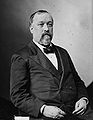 |
Benjamin H. Bristow | October 1870–November 1872 | Ulysses Grant |
| Samuel F. Phillips Samuel F. Phillips Samuel Field Phillips was a civil rights pioneer, lawyer, politician, and U.S. Solicitor General . He took part in the landmark civil rights case, Plessy v. Ferguson.- Early life :... |
November 1872–May 1885 | ||
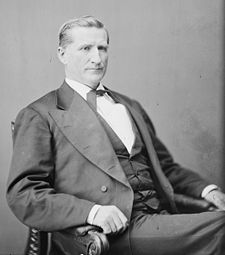 |
John Goode John Goode John Goode, Jr. was a prominent Virginia Democratic politician who served in the Confederate Congress during the American Civil War and then was a three-term postbellum United States Congressman, as well as the acting Solicitor General of the United States.-Biography:Goode was born in Bedford... |
May 1885–August 1886 | Grover Cleveland Grover Cleveland Stephen Grover Cleveland was the 22nd and 24th president of the United States. Cleveland is the only president to serve two non-consecutive terms and therefore is the only individual to be counted twice in the numbering of the presidents... |
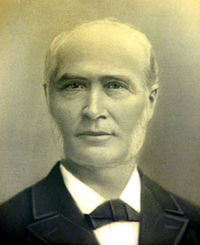 |
George A. Jenks George A. Jenks George A. Jenks was a politician from Pennsylvania and Solicitor General.Jenks was born in Punxsutawney, Pennsylvania on March 25, 1836. He proceeded to graduate from Jefferson College in Canonsburg, Pennsylvania in Canonsburg, Pennsylvania, in 1858. He was a member of Phi Kappa Psi... |
July 1886–May 1889 | |
| Orlow W. Chapman Orlow W. Chapman Orlow W. Chapman was born in 1832, in Ellington, Connecticut, though he made his life’s work and home in New York. While in Ellington, Chapman received his primary education in a local academy. He then proceeded to graduate from Union College of Schenectady, New York, in 1854... |
May 1889–January 1890 | Benjamin Harrison Benjamin Harrison Benjamin Harrison was the 23rd President of the United States . Harrison, a grandson of President William Henry Harrison, was born in North Bend, Ohio, and moved to Indianapolis, Indiana at age 21, eventually becoming a prominent politician there... |
|
 |
William Howard Taft William Howard Taft William Howard Taft was the 27th President of the United States and later the tenth Chief Justice of the United States... |
February 1890–March 1892 | |
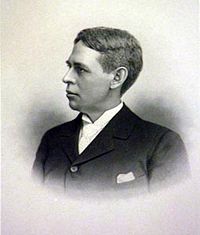 |
Charles H. Aldrich Charles H. Aldrich Charles H. Aldrich was a Solicitor General of the United States of America.... |
March 1892–May 1893 | |
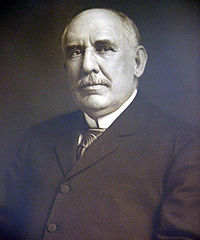 |
Lawrence Maxwell, Jr. Lawrence Maxwell, Jr. Lawrence Maxwell Jr. was born to parents Lawrence and Alison on May 4, 1853 in Glasgow, Scotland.After immigrating to America, Maxwell graduated from the University of Michigan in 1874. In addition, he received an honorary masters and law degree from the university, in 1893 and 1904, respectively... |
April 1893–January 1895 | Grover Cleveland Grover Cleveland Stephen Grover Cleveland was the 22nd and 24th president of the United States. Cleveland is the only president to serve two non-consecutive terms and therefore is the only individual to be counted twice in the numbering of the presidents... |
 |
Holmes Conrad Holmes Conrad Holmes Conrad was an American politician, lawyer and military officer.-Early life:Conrad was born in Winchester, Virginia. He was the son of Robert Young Conrad, a prominent lawyer of Winchester, and state attorney general from 1857 to 1862; his mother was Elizabeth Whiting, daughter of Burr Powell... |
February 1895–July 1897 | |
| John K. Richards John K. Richards John Kelvey Richards was an Attorney General of Ohio, the ninth Solicitor General of the United States, and later a United States federal judge.-Early life, education, and career:... |
July 1897–March 1903 | William McKinley William McKinley William McKinley, Jr. was the 25th President of the United States . He is best known for winning fiercely fought elections, while supporting the gold standard and high tariffs; he succeeded in forging a Republican coalition that for the most part dominated national politics until the 1930s... |
|
| Henry M. Hoyt Henry M. Hoyt (Solicitor general) Henry Martyn Hoyt, Jr. served as Solicitor General of the United States from 1903 to 1909. His father, also named Henry Martyn Hoyt, served as governor of Pennsylvania from 1879 to 1883.-Biography:... |
February 1903–March 1909 | Theodore Roosevelt Theodore Roosevelt Theodore "Teddy" Roosevelt was the 26th President of the United States . He is noted for his exuberant personality, range of interests and achievements, and his leadership of the Progressive Movement, as well as his "cowboy" persona and robust masculinity... |
|
| Lloyd Wheaton Bowers Lloyd Wheaton Bowers Lloyd Wheaton Bowers was an American lawyer.Bowers was born in Springfield, Massachusetts, the son of Samuel Dwight and Martha Wheaton Bowers... |
April 1909–September 1910 | William Taft | |
 |
Frederick W. Lehmann | December 1910–July 1912 | |
| William Marshall Bullitt | July 1912–March 1913 | ||
 |
John W. Davis John W. Davis John William Davis was an American politician, diplomat and lawyer. He served as a United States Representative from West Virginia , then as Solicitor General of the United States and US Ambassador to the UK under President Woodrow Wilson... |
August 1913–November 1918 | Woodrow Wilson Woodrow Wilson Thomas Woodrow Wilson was the 28th President of the United States, from 1913 to 1921. A leader of the Progressive Movement, he served as President of Princeton University from 1902 to 1910, and then as the Governor of New Jersey from 1911 to 1913... |
| Alexander C. King Alexander C. King Alexander Campbell King was Solicitor General of the United States and later a United States federal judge.-Biography:... |
November 1918–May 1920 | ||
| William L. Frierson William L. Frierson William Little Frierson was an American lawyer, judge, and politician. During his career he served as the United States Solicitor General , United States Assistant Attorney General , and mayor of Chattanooga, Tennessee .Frierson was born on September 3, 1868, in Shelbyville, Tennessee to Robert... |
June 1920–June 1921 | ||
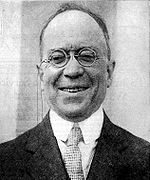 |
James M. Beck James M. Beck James Montgomery Beck was an American lawyer and politician from Philadelphia, Pennsylvania. He was a member of the Republican Party, who served as U.S. Solicitor General and U.S. Representative from Pennsylvania.... |
June 1921–June 1925 | Warren Harding |
 |
William D. Mitchell William D. Mitchell William DeWitt Mitchell was appointed to the position of U.S. Solicitor General by Calvin Coolidge on June 4, 1925, which he held until he was appointed to the position of U.S. Attorney General for the entirety of Herbert Hoover's Presidency.Born in Winona, Minnesota to William B... |
June 1925–March 1929 | Calvin Coolidge Calvin Coolidge John Calvin Coolidge, Jr. was the 30th President of the United States . A Republican lawyer from Vermont, Coolidge worked his way up the ladder of Massachusetts state politics, eventually becoming governor of that state... |
| Charles Evans Hughes, Jr | May 1929–April 1930 | Herbert Hoover Herbert Hoover Herbert Clark Hoover was the 31st President of the United States . Hoover was originally a professional mining engineer and author. As the United States Secretary of Commerce in the 1920s under Presidents Warren Harding and Calvin Coolidge, he promoted partnerships between government and business... |
|
| Thomas D. Thacher Thomas D. Thacher Thomas Day Thacher was a lawyer and judge in New York City.Thacher was born in Tenafly, New Jersey and was the oldest of four children of Thomas Thacher, a prominent New York lawyer, and Sarah McCulloh Thacher... |
March 1930–May 1933 | ||
| James Crawford Biggs James Crawford Biggs James Crawford Biggs was born in Oxford, North Carolina, on August 29, 1872, to William and Elizabeth Arlington Biggs. Biggs was a student at the Horner Military School in Oxford from 1883-1887 before attending the University of North Carolina at Chapel Hill. He graduated Summa Cum Laude from the... |
May 1933–March 1935 | Franklin Roosevelt | |
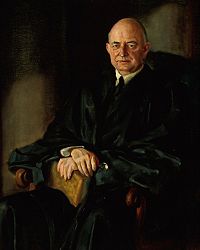 |
Stanley Reed Stanley Forman Reed Stanley Forman Reed was a noted American attorney who served as United States Solicitor General from 1935 to 1938 and as an Associate Justice of the U.S. Supreme Court from 1938 to 1957. He was the last Supreme Court Justice who did not graduate from law school Stanley Forman Reed (December 31,... |
March 1935–January 1938 | |
 |
Robert H. Jackson Robert H. Jackson Robert Houghwout Jackson was United States Attorney General and an Associate Justice of the United States Supreme Court . He was also the chief United States prosecutor at the Nuremberg Trials... |
March 1938–January 1940 | |
 |
Francis Biddle Francis Biddle Francis Beverley Biddle was an American lawyer and judge who was Attorney General of the United States during World War II and who served as the primary American judge during the postwar Nuremberg trials.... |
January 1940–September 1941 | |
 |
Charles H. Fahy Charles H. Fahy Charles Fahy served as Solicitor General of the United States and later as a United States federal judge on the United States Court of Appeals for the District of Columbia Circuit.... |
November 1941–September 1945 | |
 |
J. Howard McGrath J. Howard McGrath James Howard McGrath was an American politician and attorney from the U.S. state of Rhode Island.McGrath, a Democrat, served as U.S. Attorney for Rhode Island before becoming Governor, U.S. Solicitor General, U.S... |
October 1945–October 1946 | Harry Truman |
 |
Philip B. Perlman | July 1947–August 1952 | |
| Walter J. Cummings, Jr. Walter J. Cummings, Jr. Walter Joseph Cummings Jr. was a United States Solicitor General and a federal judge.Cummings was born in Chicago, Illinois to Lillian Garvy Cummings and Walter J. Cummings, Sr... |
December 1952–March 1953 | ||
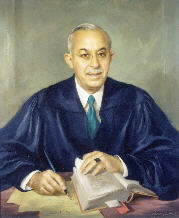 |
Simon Sobeloff Simon Sobeloff Simon E. Sobeloff was an American attorney and jurist, who served as Solicitor General of the United States, as Chief Judge of the Court of Appeals of Maryland, and as Chief Judge of the United States Court of Appeals for the Fourth Circuit.Sobeloff was born in Baltimore, Maryland to Jacob and... |
February 1954–July 1956 | Dwight Eisenhower |
 |
J. Lee Rankin J. Lee Rankin J. Lee Rankin was the 31st United States Solicitor General, from 1956 to 1961. In 1952, Rankin managed the Dwight Eisenhower for President campaign in Nebraska and in 1953, Eisenhower selected Rankin to serve as United States Assistant Attorney General.Known for his straightforward, quiet, and... |
August 1956–January 1961 | |
 |
Archibald Cox Archibald Cox Archibald Cox, Jr., was an American lawyer and law professor who served as U.S. Solicitor General under President John F. Kennedy. He became known as the first special prosecutor for the Watergate scandal. During his career, he was a pioneering expert on labor law and also an authority on... |
January 1961–July 1965 | John F. Kennedy John F. Kennedy John Fitzgerald "Jack" Kennedy , often referred to by his initials JFK, was the 35th President of the United States, serving from 1961 until his assassination in 1963.... |
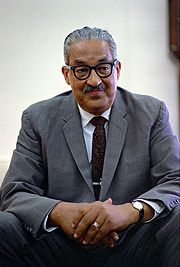 |
Thurgood Marshall Thurgood Marshall Thurgood Marshall was an Associate Justice of the United States Supreme Court, serving from October 1967 until October 1991... |
August 1965–August 1967 | Lyndon Johnson |
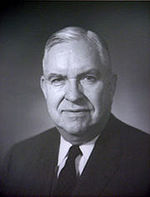 |
Erwin N. Griswold | October 1967–June 1973 | |
 |
Robert H. Bork | June 1973–January 1977 | Richard Nixon Richard Nixon Richard Milhous Nixon was the 37th President of the United States, serving from 1969 to 1974. The only president to resign the office, Nixon had previously served as a US representative and senator from California and as the 36th Vice President of the United States from 1953 to 1961 under... |
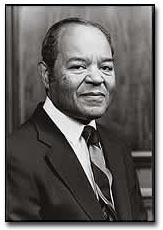 |
Wade H. McCree Wade H. McCree Wade Hampton McCree, Jr. was an American attorney, judge, public official and law professor. He was the first African American appointed to the U.S. Court of Appeals for the Sixth Circuit and the second African American Solicitor General in the history of the United States... |
March 1977–August 1981 | Jimmy Carter Jimmy Carter James Earl "Jimmy" Carter, Jr. is an American politician who served as the 39th President of the United States and was the recipient of the 2002 Nobel Peace Prize, the only U.S. President to have received the Prize after leaving office... |
| Rex E. Lee Rex E. Lee Rex Edwin Lee from St. Johns, Arizona was a Constitutional lawyer, a law clerk for former U.S. Supreme Court Justice Byron White, and the United States Solicitor General under the Reagan administration. He argued 59 cases before the U.S. Supreme Court... |
August 1981–June 1985 | Ronald Reagan Ronald Reagan Ronald Wilson Reagan was the 40th President of the United States , the 33rd Governor of California and, prior to that, a radio, film and television actor.... |
|
 |
Charles Fried Charles Fried Charles Fried is a prominent American jurist and lawyer. He served as United States Solicitor General from 1985 to 1989. He is currently a professor at Harvard Law School.-Early life and education:... |
October 1985–January 1989 | |
 |
Kenneth W. Starr | May 1989–January 1993 | George H. W. Bush George H. W. Bush George Herbert Walker Bush is an American politician who served as the 41st President of the United States . He had previously served as the 43rd Vice President of the United States , a congressman, an ambassador, and Director of Central Intelligence.Bush was born in Milton, Massachusetts, to... |
 |
John Roberts John Roberts John Glover Roberts, Jr. is the 17th and current Chief Justice of the United States. He has served since 2005, having been nominated by President George W. Bush after the death of Chief Justice William Rehnquist... (acting) |
1990 for the purposes of one case when Ken Starr had a conflict | George H. W. Bush George H. W. Bush George Herbert Walker Bush is an American politician who served as the 41st President of the United States . He had previously served as the 43rd Vice President of the United States , a congressman, an ambassador, and Director of Central Intelligence.Bush was born in Milton, Massachusetts, to... |
 |
Drew S. Days, III Drew S. Days, III Drew Saunders Days III an American lawyer, served as United States Solicitor General from 1993 to 1996 under President Bill Clinton. He also served as the first African American Assistant Attorney General for the Civil Rights Division in the Carter Administration from 1977 to 1980.He is the Alfred M... |
May 1993–July 1996 | Bill Clinton Bill Clinton William Jefferson "Bill" Clinton is an American politician who served as the 42nd President of the United States from 1993 to 2001. Inaugurated at age 46, he was the third-youngest president. He took office at the end of the Cold War, and was the first president of the baby boomer generation... |
 |
Walter E. Dellinger III Walter E. Dellinger III Walter Estes Dellinger III is the Douglas B. Maggs Professor of Law at Duke University and head of the appellate practice at O’Melveny & Myers in Washington, D.C. He also currently leads Harvard Law School's . He served as the acting United States Solicitor General for the 1996-1997 Term of the... (acting) |
August 1996–October 1997 | |
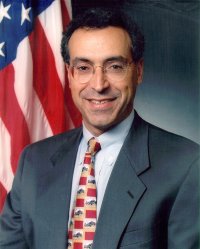 |
Seth P. Waxman Seth P. Waxman Seth Paul Waxman was the 41st Solicitor General of the United States. He was nominated by President Clinton on September 19, 1997, and confirmed by the United States Senate on November 9, 1997... |
November 1997–January 2001 | |
| Barbara D. Underwood Barbara D. Underwood Barbara D. Underwood is New York Solicitor General. She was initially appointed to her position by New York Attorney General Andrew Cuomo in January 2007, and reappointed in 2011 by New York Attorney General Eric Schneiderman.... (acting) |
January 2001–June 2001 | George W. Bush George W. Bush George Walker Bush is an American politician who served as the 43rd President of the United States, from 2001 to 2009. Before that, he was the 46th Governor of Texas, having served from 1995 to 2000.... |
|
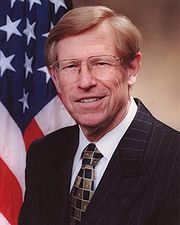 |
Theodore B. Olson Theodore Olson Theodore Bevry Olson is a former United States Solicitor General, serving from June 2001 to July 2004 under President George W. Bush.- Early life :... |
June 2001–July 2004 | |
 |
Paul D. Clement | June 2004–June 2005 (acting) June 2005–June 2008 |
|
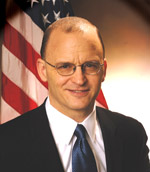 |
Gregory G. Garre Gregory G. Garre Gregory G. Garre is a former United States Solicitor General serving between June 19, 2008 to January 20, 2009. He spent his early life in his hometown of Barrington, Illinois. He received his undergraduate degree from Dartmouth College in 1987 and his law degree from George Washington University... |
June 2008–October 2008 (acting) October 2008–January 2009 |
|
| Edwin Kneedler Edwin Kneedler - Early life and education :Kneedler attended North Penn High School; he graduated in 1963. Kneedler earned a bachelor's degree in economics in 1967 from Lehigh University. He then earned a law degree from the University of Virginia School of Law in 1974. From 1974 until 1975, he clerked for... |
January 2009–March 2009 (acting) | Barack Obama Barack Obama Barack Hussein Obama II is the 44th and current President of the United States. He is the first African American to hold the office. Obama previously served as a United States Senator from Illinois, from January 2005 until he resigned following his victory in the 2008 presidential election.Born in... |
|
| Elena Kagan Elena Kagan Elena Kagan is an Associate Justice of the Supreme Court of the United States, serving since August 7, 2010. Kagan is the Court's 112th justice and fourth female justice.... |
March 2009–May 2010 | ||
| Neal Katyal Neal Katyal Neal Kumar Katyal is an American lawyer and chaired professor of law. He served as Acting Solicitor General of the United States from May 2010 until June 2011. As Acting Solicitor General, Katyal succeeded Elena Kagan, who was President Barack Obama's choice to replace the retiring Associate... |
May 2010–June 2011 (acting) | ||
| Donald Verrilli Jr. Donald Verrilli Jr. Donald Beaton Verrilli Jr. is Solicitor General of the United States. He was sworn in to the post on June 9, 2011. On June 6, 2011, the United States Senate confirmed Verrilli in a 72–16 vote. President Barack Obama had nominated Verrilli to the post on January 26, 2011... |
June 2011 – present |