


Taifa

Encyclopedia
Iberian Peninsula
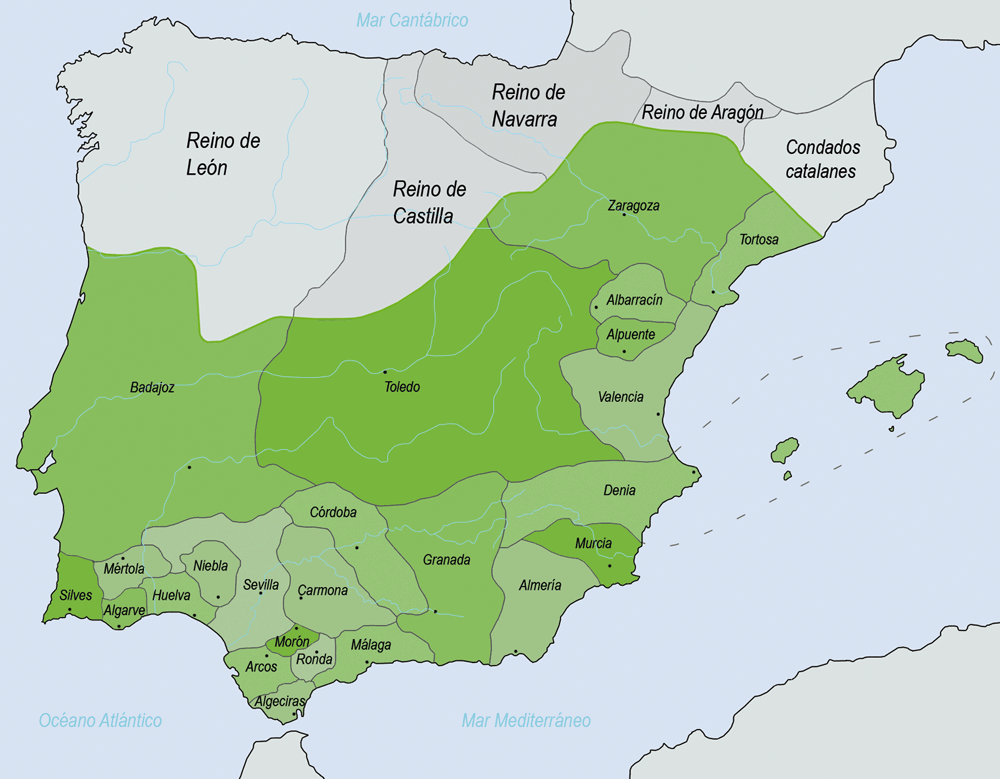
The Iberian Peninsula , sometimes called Iberia, is located in the extreme southwest of Europe and includes the modern-day sovereign states of Spain, Portugal and Andorra, as well as the British Overseas Territory of Gibraltar...
, a taifa (from ṭā'ifa, plural طوائف ṭawā'if) was an independent Muslim
Muslim
A Muslim, also spelled Moslem, is an adherent of Islam, a monotheistic, Abrahamic religion based on the Quran, which Muslims consider the verbatim word of God as revealed to prophet Muhammad. "Muslim" is the Arabic term for "submitter" .Muslims believe that God is one and incomparable...
-ruled principality, usually an emirate
Emirate
An emirate is a political territory that is ruled by a dynastic Muslim monarch styled emir.-Etymology:Etymologically emirate or amirate is the quality, dignity, office or territorial competence of any emir ....
or petty kingdom
Petty kingdom
A petty kingdom is one of a number of small kingdoms, described as minor or "petty" by contrast to an empire or unified kingdom that either preceded or succeeded it...
, though there was one oligarchy
Oligarchy
Oligarchy is a form of power structure in which power effectively rests with an elite class distinguished by royalty, wealth, family ties, commercial, and/or military legitimacy...
, of which a number formed in the Al-Andalus
Al-Andalus
Al-Andalus was the Arabic name given to a nation and territorial region also commonly referred to as Moorish Iberia. The name describes parts of the Iberian Peninsula and Septimania governed by Muslims , at various times in the period between 711 and 1492, although the territorial boundaries...
(Moorish
Moors
The description Moors has referred to several historic and modern populations of the Maghreb region who are predominately of Berber and Arab descent. They came to conquer and rule the Iberian Peninsula for nearly 800 years. At that time they were Muslim, although earlier the people had followed...
Iberia) after the final collapse of the Umayyad
Umayyad
The Umayyad Caliphate was the second of the four major Arab caliphates established after the death of Muhammad. It was ruled by the Umayyad dynasty, whose name derives from Umayya ibn Abd Shams, the great-grandfather of the first Umayyad caliph. Although the Umayyad family originally came from the...
Caliphate of Córdoba in 1031.
Rise
The origins of the taifas must be sought in the administrative division of the Umayyad Caliphate of Córdoba, as well in the ethnic division of the elite of this state, divided among Arabs, BerbersBerber people
Berbers are the indigenous peoples of North Africa west of the Nile Valley. They are continuously distributed from the Atlantic to the Siwa oasis, in Egypt, and from the Mediterranean to the Niger River. Historically they spoke the Berber language or varieties of it, which together form a branch...
, Iberian
Iberian Peninsula
The Iberian Peninsula , sometimes called Iberia, is located in the extreme southwest of Europe and includes the modern-day sovereign states of Spain, Portugal and Andorra, as well as the British Overseas Territory of Gibraltar...
Muslims (known as Muladíes
Muladi
The Muladi were Muslims of ethnic Iberian descent or of mixed Arab, Berber and European origin, who lived in Al-Andalus during the Middle Ages. They were also called "Musalima" .-Etymology:...
- the overwhelming majority) and the Eastern European former slaves
Saqaliba
Saqaliba refers to the Slavs, particularly Slavic slaves and mercenaries in the medieval Arab world, in the Middle East, North Africa, Sicily and Al-Andalus. It is generally thought that the Arabic term is a Byzantine loanword: saqlab, siklab, saqlabi etc. is a corruption of Greek Sklavinoi for...
.
There was a second period when taifas arose, toward the middle of the 12th century, when the Almoravid rulers were in decline.
During the heyday of the taifas, in the 11th century and again in the mid 12th century, their emir
Emir
Emir , meaning "commander", "general", or "prince"; also transliterated as Amir, Aamir or Ameer) is a title of high office, used throughout the Muslim world...
s (rulers) competed among themselves, not only militarily but also for cultural prestige. They tried to recruit the most famous poets and artisans.
Decline
Reversing the trend of the Umayyad period, when the Christian kingdoms of the north often had to pay tribute to the Caliph, the disintegration of the Caliphate left the rival Muslim kingdoms much weaker than their Christian counterparts, particularly the Castilian-Leonese monarchy, and had to submit to them, paying tributes known as pariasParias
In medieval Spain, parias were a form of tribute paid by the taifas of al-Andalus to the Christian kingdoms of the north...
.
Due to their military weakness, taifa princes appealed for North African warriors to come fight Christian kings on two occasions. The Almoravids were invited after the fall of Toledo (1085), and the Almohad
Almohad
The Almohad Dynasty , was a Moroccan Berber-Muslim dynasty founded in the 12th century that established a Berber state in Tinmel in the Atlas Mountains in roughly 1120.The movement was started by Ibn Tumart in the Masmuda tribe, followed by Abd al-Mu'min al-Gumi between 1130 and his...
s after the fall of Lisbon
Lisbon
Lisbon is the capital city and largest city of Portugal with a population of 545,245 within its administrative limits on a land area of . The urban area of Lisbon extends beyond the administrative city limits with a population of 3 million on an area of , making it the 9th most populous urban...
(1147). These warriors did not in fact help the taifa emirs but rather annexed their lands to their own North African empires.
Taifas often hired Christian mercenaries
Mercenary
A mercenary, is a person who takes part in an armed conflict based on the promise of material compensation rather than having a direct interest in, or a legal obligation to, the conflict itself. A non-conscript professional member of a regular army is not considered to be a mercenary although he...
to fight neighbouring realms (both Christian and Muslim). The most dynamic taifa, which conquered most of its neighbours before the Almoravid invasion, was Seville
Taifa of Seville
The Taifa of Seville was a short lived medieval kingdom, in what is now southern Spain and Portugal. It originated in 1023 and lasted until 1091, and was under the rule of the Arab Abbadid family.-History:...
. Zaragoza
Zaragoza
Zaragoza , also called Saragossa in English, is the capital city of the Zaragoza Province and of the autonomous community of Aragon, Spain...
was also very powerful and expansive, but inhibited by the neighbour Christian states of the Pyrenees
Pyrenees
The Pyrenees is a range of mountains in southwest Europe that forms a natural border between France and Spain...
. Zaragoza, Toledo
Toledo, Spain
Toledo's Alcázar became renowned in the 19th and 20th centuries as a military academy. At the outbreak of the Spanish Civil War in 1936 its garrison was famously besieged by Republican forces.-Economy:...
, and Badajoz
Badajoz
Badajoz is the capital of the Province of Badajoz in the autonomous community of Extremadura, Spain, situated close to the Portuguese border, on the left bank of the river Guadiana, and the Madrid–Lisbon railway. The population in 2007 was 145,257....
had previously been the border military districts of the Caliphate.
First period (11th century)
- AlbarracínTaifa of AlbarracínThe Taifa of Albarracín was a medieval taifa kingdom that existed from 1012 to 1104.-List of Emirs:*Hudayl Djalaf 'Izz ad-Dawla: 1012-1045*Abu Marwan 'Abd al-Malik: 1045-1103*Yahya Husam ad-Dawla: 1103-1104-See also:* List of Sunni Muslim dynasties...
: 1011–1104 (to AlmoravidsAlmoravidsThe Almoravids were a Berber dynasty of Morocco, who formed an empire in the 11th-century that stretched over the western Maghreb and Al-Andalus. Their capital was Marrakesh, a city which they founded in 1062 C.E...
) - AlgecirasTaifa of AlgecirasThe Taifa of Algeciras was a medieval taifa kingdom in what is now southern Spain, that existed from 1035 to 1058.-History:The taifa was created in 1013, in the wake of the disintegration of the caliphate of Córdoba begun after 1009...
: 1035–1058 (to SevilleTaifa of SevilleThe Taifa of Seville was a short lived medieval kingdom, in what is now southern Spain and Portugal. It originated in 1023 and lasted until 1091, and was under the rule of the Arab Abbadid family.-History:...
) - AlmeríaTaifa of AlmeriaThe Taifa of Almería was a Muslim medieval kingdom in what is now the province of Almería in Spain...
: 1011–1091 (to Almoravids) - AlpuenteTaifa of AlpuenteThe Taifa of Alpuente was a medieval taifa kingdom that existed from around 1009 to 1106.-Qasimid dynasty:*'Abd Allah I: c. 1009-1030*Muhammad I Yumn ad-Dawla: 1030-1042*Ahmad: 1042-1043*Muhammad II: 1043*'Abd Allah II: 1043-c. 1106-Sources:...
: 1009–1106 (to Almoravids) - ArcosTaifa of ArcosThe Taifa of Arcos was a medieval taifa kingdom that existed in two periods; first from 1011 to 1068 when it was conquered by the Taifa of Seville, and secondly from 1143 to 1145 when it was finally conquered by the Almohads.-Jizrunid dynasty:...
: 1011–1068 (to Seville) - BadajozTaifa of BadajozThe Taifa of Badajoz was a medieval Muslim kingdom in what is now parts of Portugal and Spain and centred on the city of Badajoz which exists today as the first city of Extremadura, in Spain....
: 1009–1094 (to Almoravids) - CarmonaTaifa of CarmonaThe Taifa of Carmona was a medieval taifa kingdom that existed for two distinct periods; first from 1013 to 1066 when it was conquered by the Taifa of Seville, and secondly from around 1143 to 1150 when it was finally conquered by the Almohads...
: 1013–1091 (to Almoravids) - CeutaTaifa of CeutaThe taifa of Ceuta was one of the taifa states formed after the breakup of the Caliphate of Córdoba in the early 11th century. The cities of Ceuta and Tangiers were a part of the Ḥammūdid taifa of Málaga from 1026. From 1036 it was governed on behalf of the Arab Ḥammūdids by the Barghawāṭa, a...
: 1061–1084 (to GranadaTaifa of GranadaThe Taifa of Granada was a Moorish kingdom in Al-Andalus, within the present day Granada Province in southern Spain...
) - Córdoba: 1031–1091 (to Seville)
- DeniaTaifa of DéniaThe taifa of Dénia was a Muslim kingdom in medieval Spain, ruling over part of the Valencian coast and Ibiza. With Dénia as its capital, the taifa included the Balearic Islands and parts of the Spanish mainland.- History :...
: 1010/1012–1076 (to ZaragozaTaifa of ZaragozaThe taifa of Zaragoza was an independent Muslim state in Moorish Al-Andalus, present day eastern Spain, which was established in 1018 as one of the taifa kingdoms, which emerged in the 11th century following the destruction of the Caliphate of Córdoba in the Moorish Iberian Peninsula.During the...
) - GranadaTaifa of GranadaThe Taifa of Granada was a Moorish kingdom in Al-Andalus, within the present day Granada Province in southern Spain...
: 1013–1090 (to Almoravids) - Jérica: 11th century (to Toledo)
- LisbonTaifa of LisbonThe Taifa of Lisbon was a medieval taifa kingdom that existed in what is now Portugal from around 1022 to 1093.-Banu Sabur dynasty:*Abd al-Aziz bin Sabur: 1022– ?*Abd al-Malik bin Sabur: ? –c. 1065 ?**Seized briefly by León: 1093–5...
: 1022–? (to BadajozTaifa of BadajozThe Taifa of Badajoz was a medieval Muslim kingdom in what is now parts of Portugal and Spain and centred on the city of Badajoz which exists today as the first city of Extremadura, in Spain....
) - LorcaTaifa of LorcaThe Taifa of Lorca was a Muslim medieval taifa kingdom in what is now southern Spain.The taifa was first created in 1042, when Lorca declared its independence from the emirate of Valencia. Its first governor was Ma'n Ibn Sumadih, its power exending from the city to Jaén and Baza.The taifa was...
: 1051–1091 (to Almoravids) - MálagaTaifa of MálagaThe Taifa of Málaga was a Muslim taifa kingdom in what is now southern Spain, which existed for four distinct time-periods: from 1026 to 1057, from 1073 to 1090, from 1145 to 1153 and from 1229 to 1239 when it was finally conquered by Granada.-First taifa:...
: 1026–1057/1058 (to GranadaTaifa of GranadaThe Taifa of Granada was a Moorish kingdom in Al-Andalus, within the present day Granada Province in southern Spain...
); 1073–1090 (to Almoravids) - MajorcaTaifa of MajorcaThe Taifa of Majorca was a medieval Moorish taifa kingdom which existed from 1018 to 1203 in Majorca.-Mujahid dynasty:* Mujahid : 1018-1041* 'Ali Iqbal ud-Dawlah: 1041-1075-Aglabid dynasty:* Ibn Aglab al-Murtada: 1076-1093...
: 1018–1203 (to Almohads) - MértolaTaifa of MértolaThe Taifa of Mértola was a medieval taifa kingdom that existed in what is now southeastern Portugal for three distinct periods: from 1033 to 1044, from 1144 to 1145 and from 1146 to 1151 when it was finally conquered by the Almohads.-Tayfurid dynasty:...
: 1033–1091 (to Almoravids) - MolinaTaifa of MolinaThe Taifa of Molina was a medieval taifa kingdom that existed from around the 1080s to 1100.-Sources:* http://web.raex.com/~obsidian/taifa.html...
: ?–1100 (to AragonKingdom of AragonThe Kingdom of Aragon was a medieval and early modern kingdom in the Iberian Peninsula, corresponding to the modern-day autonomous community of Aragon, in Spain...
) - MorónTaifa of Morón-Dammarid dynasty:*Abu Tuziri al-Dammari: ? -1013/4*Nuh: 1013/4-1041/2*Muhammad: 1041/2-1057*Manad: 1057-1066-Sources:* http://web.raex.com/~obsidian/taifa.html...
: 1013–1066 (to Seville) - MurciaTaifa of MurciaThe Taifa of Murcia was one of the Taifas of medieval Al-Andalus, in what is now southern Spain. It became independent as a taifa centered on the Moorish city of Murcia after the fall of the Omayyad Caliphate of Córdoba...
: 1011/1012–1065 (to ValenciaTaifa of ValenciaThe Taifa of Valencia was a medieval taifa kingdom which existed, in and around Valencia, Spain during four distinct periods: from 1010 to 1065, from 1075 to 1099, from 1145 to 1147 and last from 1229 to 1238 when it was finally conquered by Aragon....
) - Murviedro and SaguntoTaifa of Murviedro and SaguntoThe Taifa of Murviedro and Sagunto was a medieval taifa kingdom that existed in a short period from 1086 to 1092.-Sources:* http://web.raex.com/~obsidian/taifa.html...
: 1086–1092 (to Almoravids) - NieblaTaifa of NieblaThe Taifa of Niebla was a taifa kingdom that existed for three distinct times: from 1023 to 1053, from 1145 to 1150 and from 1234 to 1262 when it was finally conquered by Castile.-Yahsubid dynasty:*Abu'l-Abbas Ahmad: 1023/4-1041/2...
: 1023/1024–1091 (to Seville) - RondaTaifa of RondaThe Taifa of Ronda was a medieval taifa kingdom that existed in Moorish al-Andalus from 1039 to 1065, when it was conquered by the taifa of Seville...
: 1039/1040–1065 (to Seville) - Rueda: 1118–30 (to Aragon)
- Saltés and HuelvaTaifa of Saltés and HuelvaThe Taifa of Saltés and Huelva was a medieval taifa kingdom that existed in southern Iberia from around 1012 to 1051.-Sources:* http://web.raex.com/~obsidian/taifa.html...
: 1012/1013–1051/1053 (to Seville) - Santa María de AlgarveTaifa of Santa María de AlgarveThe Taifa of Santa Maria do Algarve was a medieval taifa kingdom, in what is now southern Portugal, that existed from 1018 to 1051.-Harunid dynasty:*Sa'id: c. 1018-1041/2*Muhammad al-Mu'tasim: 1041/2-1051**To Seville: 1051-1091-Sources:...
: 1018–1051 (to Seville) - Segorbe: 1065–1075 (to Almoravids)
- SevilleTaifa of SevilleThe Taifa of Seville was a short lived medieval kingdom, in what is now southern Spain and Portugal. It originated in 1023 and lasted until 1091, and was under the rule of the Arab Abbadid family.-History:...
: 1023–1091 (to Almoravids) - SilvesTaifa of SilvesThe Taifa of Silves was a Muslim taifa kingdom that existed in what is now southern Portugal for two distinct periods: from 1040 to 1063, and again from 1144 to 1151 when it was finally conquered by the Almohads....
: 1040–1063 (to Seville) - ToledoTaifa of ToledoThe taifa of Toledo was a Muslim medieval kingdom located in what is now central Spain. It existed from the fracturing of the long-eminent Muslim Caliphate of Córdoba in 1035 until the Christian conquest in 1085.-History:...
: 1010/1031–1085 (to CastileKingdom of CastileKingdom of Castile was one of the medieval kingdoms of the Iberian Peninsula. It emerged as a political autonomous entity in the 9th century. It was called County of Castile and was held in vassalage from the Kingdom of León. Its name comes from the host of castles constructed in the region...
) - TortosaTaifa of TortosaThe Taifa of Tortosa was a medieval taifa kingdom which existed for two separate periods: from 1010 to 1060 and from 1081 to 1099.-Saqlabi dynasty:* Lab'ib : c. 1009-bfr. 1039/40* Muqatil Sayf al-Milla: bfr...
: 1039–1060 (to Zaragoza); 1081/1082–1092 (to DeniaTaifa of DéniaThe taifa of Dénia was a Muslim kingdom in medieval Spain, ruling over part of the Valencian coast and Ibiza. With Dénia as its capital, the taifa included the Balearic Islands and parts of the Spanish mainland.- History :...
) - ValenciaTaifa of ValenciaThe Taifa of Valencia was a medieval taifa kingdom which existed, in and around Valencia, Spain during four distinct periods: from 1010 to 1065, from 1075 to 1099, from 1145 to 1147 and last from 1229 to 1238 when it was finally conquered by Aragon....
: 1010/1011–1094 (to El CidEl CidRodrigo Díaz de Vivar , known as El Cid Campeador , was a Castilian nobleman, military leader, and diplomat...
, nominally vassal of Castile) - ZaragozaTaifa of ZaragozaThe taifa of Zaragoza was an independent Muslim state in Moorish Al-Andalus, present day eastern Spain, which was established in 1018 as one of the taifa kingdoms, which emerged in the 11th century following the destruction of the Caliphate of Córdoba in the Moorish Iberian Peninsula.During the...
: 1018–1046 (to Banu Tujib; then to Banu HudBanu HudThe Banu Hud were an Arab dynasty that ruled the taifa of Zaragoza from 1039-1110. In 1039, under the leadership of Al-Mustain I, Sulayman ibn Hud al-Judhami, the Bani Hud seized control of Zaragoza from a rival clan, the Banu Tujibi...
); 1046–1110 (to Almoravids; in 1118 to AragonAragonAragon is a modern autonomous community in Spain, coextensive with the medieval Kingdom of Aragon. Located in northeastern Spain, the Aragonese autonomous community comprises three provinces : Huesca, Zaragoza, and Teruel. Its capital is Zaragoza...
)
Second period (12th century)
- AlmeríaTaifa of AlmeriaThe Taifa of Almería was a Muslim medieval kingdom in what is now the province of Almería in Spain...
: 1145–1147 (briefly to Castile and then to Almohads) - ArcosTaifa of ArcosThe Taifa of Arcos was a medieval taifa kingdom that existed in two periods; first from 1011 to 1068 when it was conquered by the Taifa of Seville, and secondly from 1143 to 1145 when it was finally conquered by the Almohads.-Jizrunid dynasty:...
: 1143 (to Almohads) - BadajozTaifa of BadajozThe Taifa of Badajoz was a medieval Muslim kingdom in what is now parts of Portugal and Spain and centred on the city of Badajoz which exists today as the first city of Extremadura, in Spain....
: 1145–1150 (to Almohads) - Beja and Évora: 1114–1150 (to Almohads)
- CarmonaTaifa of CarmonaThe Taifa of Carmona was a medieval taifa kingdom that existed for two distinct periods; first from 1013 to 1066 when it was conquered by the Taifa of Seville, and secondly from around 1143 to 1150 when it was finally conquered by the Almohads...
: dates and destiny uncertain or unknown - Constantina and HornachuelosTaifa of Constantina and HornachuelosThe Taifa of Constantina and Hornachuelos was a medieval taifa kingdom that existed, in what is now southern Spain, from around 1143 to 1150 when it was conquered by the Almohads.-Sources:* http://web.raex.com/~obsidian/taifa.html...
: dates and destiny uncertain or unknown - GranadaTaifa of GranadaThe Taifa of Granada was a Moorish kingdom in Al-Andalus, within the present day Granada Province in southern Spain...
: 1145 (to Almohads?) - Guadix and BazaTaifa of Guadix and BazaThe Taifa of Guadix and Baza was a medieval taifa kingdom that existed from only 1145 to 1151 when it was conquered by the Taifa of Murcia.-Sources:* http://web.raex.com/~obsidian/taifa.html...
: 1145–1151 (to MurciaTaifa of MurciaThe Taifa of Murcia was one of the Taifas of medieval Al-Andalus, in what is now southern Spain. It became independent as a taifa centered on the Moorish city of Murcia after the fall of the Omayyad Caliphate of Córdoba...
) - JaénTaifa of JaénThe Taifa of Jaén was a medieval taifa kingdom that existed for only two very short periods, first in 1145 and secondly in 1168.-Huddid dynasty:*Abu Dja'far Ahmad Zafadola : 1145**To Morocco: 1145-1159**To Murcia: 1159-1168...
: 1145–1159 (Murcia); 1168 (to Almohads) - JerezTaifa of JerezThe Taifa of Jerez was a medieval taifa kingdom that existed in what is now southern Spain in 1145, until it was conquered by the Almohads.-List of Emirs:* Abu'l-Qaim Ahyal: 1145* Abu'l-Gammar: 1145* 'Ali: 1145** To the Almohads-Sources:...
: 1145 (to Almohads) - MálagaTaifa of MálagaThe Taifa of Málaga was a Muslim taifa kingdom in what is now southern Spain, which existed for four distinct time-periods: from 1026 to 1057, from 1073 to 1090, from 1145 to 1153 and from 1229 to 1239 when it was finally conquered by Granada.-First taifa:...
: 1145–1153 (to Almohads) - MértolaTaifa of MértolaThe Taifa of Mértola was a medieval taifa kingdom that existed in what is now southeastern Portugal for three distinct periods: from 1033 to 1044, from 1144 to 1145 and from 1146 to 1151 when it was finally conquered by the Almohads.-Tayfurid dynasty:...
: 1144–1145 (to BadajozTaifa of BadajozThe Taifa of Badajoz was a medieval Muslim kingdom in what is now parts of Portugal and Spain and centred on the city of Badajoz which exists today as the first city of Extremadura, in Spain....
) - MurciaTaifa of MurciaThe Taifa of Murcia was one of the Taifas of medieval Al-Andalus, in what is now southern Spain. It became independent as a taifa centered on the Moorish city of Murcia after the fall of the Omayyad Caliphate of Córdoba...
: 1145 (to ValenciaTaifa of ValenciaThe Taifa of Valencia was a medieval taifa kingdom which existed, in and around Valencia, Spain during four distinct periods: from 1010 to 1065, from 1075 to 1099, from 1145 to 1147 and last from 1229 to 1238 when it was finally conquered by Aragon....
); 1147–1172 (to Almohads) - NieblaTaifa of NieblaThe Taifa of Niebla was a taifa kingdom that existed for three distinct times: from 1023 to 1053, from 1145 to 1150 and from 1234 to 1262 when it was finally conquered by Castile.-Yahsubid dynasty:*Abu'l-Abbas Ahmad: 1023/4-1041/2...
: 1145–1150? (to Almohads) - PurchenaTaifa of Purchena-Miqdamid dynasty:* Ibn Miqdam: fl. mid 12th cent. ** To Murcia: c. 1150-1172-Sources:* http://web.raex.com/~obsidian/taifa.html...
: dates and destiny uncertain or unknown - RondaTaifa of RondaThe Taifa of Ronda was a medieval taifa kingdom that existed in Moorish al-Andalus from 1039 to 1065, when it was conquered by the taifa of Seville...
: 1145 (to Almoravids) - SantarémTaifa of SantarémThe Taifa of Santarém was a medieval taifa kingdom in what is now Portugal which only existed from 1144 to 1145.-Labidid dynasty:* Labid: 1144-1145** To Badajoz: c. 1145-1147-Sources:* http://web.raex.com/~obsidian/taifa.html...
: ?–1147 (to PortugalKingdom of PortugalThe Kingdom of Portugal was Portugal's general designation under the monarchy. The kingdom was located in the west of the Iberian Peninsula, Europe and existed from 1139 to 1910...
) - SeguraTaifa of SeguraThe Taifa of Segura was a medieval taifa kingdom which existed from 1147 to probably around 1150.-Hamuskid dynasty:*Ibrahim: 1147- ?** To Murcia: c. 1150-1172-Sources:* http://web.raex.com/~obsidian/taifa.html...
: 1147–? (destiny unknown) - SilvesTaifa of SilvesThe Taifa of Silves was a Muslim taifa kingdom that existed in what is now southern Portugal for two distinct periods: from 1040 to 1063, and again from 1144 to 1151 when it was finally conquered by the Almohads....
: 1144–1155 (to Almohads) - TaviraTaifa of TaviraThe Taifa of Tavira was a medieval taifa kingdom in what is now southern Portugal which existed only from around 1146 to 1150.-'Umarid dynasty:* 'Umar: fl. mid 12th cent. ** To Morocco: c. 1150-1250-Sources:...
: dates and destiny uncertain or unknown - TejadaTaifa of TejadaThe Taifa of Tejada was a medieval taifa kingdom that existed only from 1146 to 1150 when it was conquered by the Almohads.-Sources:* http://web.raex.com/~obsidian/taifa.html...
: 1145–1150 (to Almohads) - ValenciaTaifa of ValenciaThe Taifa of Valencia was a medieval taifa kingdom which existed, in and around Valencia, Spain during four distinct periods: from 1010 to 1065, from 1075 to 1099, from 1145 to 1147 and last from 1229 to 1238 when it was finally conquered by Aragon....
: 1145–1172 (to Almohads)
Third period (13th century)
- ArjonaTaifa of ArjonaThe Taifa of Arjona was a medieval taifa kingdom that existed from 1232 to 1244 when it fell to the Christian Kingdom of Castile.-Sources:* http://web.raex.com/~obsidian/taifa.html...
: 1232–1244 (to Castile) - BaezaTaifa of BaezaThe Taifa of Baeza was a medieval taifa kingdom that existed only from 1224 to 1226 when it fell to the Christian Kingdom of Castile.-Sources:* http://web.raex.com/~obsidian/taifa.html...
: 1224–1226 (to Castile) - CeutaTaifa of CeutaThe taifa of Ceuta was one of the taifa states formed after the breakup of the Caliphate of Córdoba in the early 11th century. The cities of Ceuta and Tangiers were a part of the Ḥammūdid taifa of Málaga from 1026. From 1036 it was governed on behalf of the Arab Ḥammūdids by the Barghawāṭa, a...
: 1233–1236 (to Almohads), 1249–1305 (to Marinids) - DeniaTaifa of DéniaThe taifa of Dénia was a Muslim kingdom in medieval Spain, ruling over part of the Valencian coast and Ibiza. With Dénia as its capital, the taifa included the Balearic Islands and parts of the Spanish mainland.- History :...
: 1224–1227 (to Almohads?) - LorcaTaifa of LorcaThe Taifa of Lorca was a Muslim medieval taifa kingdom in what is now southern Spain.The taifa was first created in 1042, when Lorca declared its independence from the emirate of Valencia. Its first governor was Ma'n Ibn Sumadih, its power exending from the city to Jaén and Baza.The taifa was...
: 1240–1265 (to Castile) - MenorcaTaifa of MenorcaThe Taifa of Menorca was a medieval taifa kingdom, which existed from 1228 until 1287, when the Kingdom of Aragon conquered it.-Sources:* http://web.raex.com/~obsidian/taifa.html...
: 1228–1287 (to Aragon) - MurciaTaifa of MurciaThe Taifa of Murcia was one of the Taifas of medieval Al-Andalus, in what is now southern Spain. It became independent as a taifa centered on the Moorish city of Murcia after the fall of the Omayyad Caliphate of Córdoba...
: 1228–1266 (to Castile) - NieblaTaifa of NieblaThe Taifa of Niebla was a taifa kingdom that existed for three distinct times: from 1023 to 1053, from 1145 to 1150 and from 1234 to 1262 when it was finally conquered by Castile.-Yahsubid dynasty:*Abu'l-Abbas Ahmad: 1023/4-1041/2...
: 1234–1262 (to Castile) - OrihuelaTaifa of OrihuelaThe Taifa of Orihuela was a medieval taifa kingdom which existed probably from around 1239 to 1249.-Sources:* http://web.raex.com/~obsidian/taifa.html...
: 1239/1240–1249/1250 (to Murcia or Castile) - ValenciaTaifa of ValenciaThe Taifa of Valencia was a medieval taifa kingdom which existed, in and around Valencia, Spain during four distinct periods: from 1010 to 1065, from 1075 to 1099, from 1145 to 1147 and last from 1229 to 1238 when it was finally conquered by Aragon....
: 1228/1229–1238 (to Aragon)
Additionally, but not usually considered taifas, are:
- Granada: 1237–1492 (to CastileCrown of CastileThe Crown of Castile was a medieval and modern state in the Iberian Peninsula that formed in 1230 as a result of the third and definitive union of the crowns and parliaments of the kingdoms of Castile and León upon the accession of the then King Ferdinand III of Castile to the vacant Leonese throne...
) - Las Alpujarras: 1568–1571 (to SpainSpainSpain , officially the Kingdom of Spain languages]] under the European Charter for Regional or Minority Languages. In each of these, Spain's official name is as follows:;;;;;;), is a country and member state of the European Union located in southwestern Europe on the Iberian Peninsula...
)