

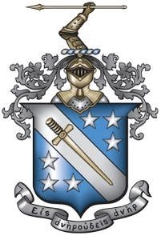
Phi Delta Theta

Encyclopedia
EWLINE
|
|
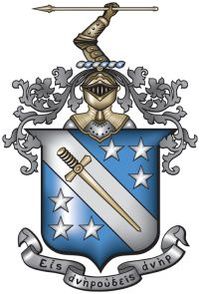




Phi Delta Theta (ΦΔΘ), also known as Phi Delt, is an international fraternity
Fraternities and sororities
Fraternities and sororities are fraternal social organizations for undergraduate students. In Latin, the term refers mainly to such organizations at colleges and universities in the United States, although it is also applied to analogous European groups also known as corporations...
founded at Miami University
Miami University
Miami University is a coeducational public research university located in Oxford, Ohio, United States. Founded in 1809, it is the 10th oldest public university in the United States and the second oldest university in Ohio, founded four years after Ohio University. In its 2012 edition, U.S...
in 1848 and headquartered in Oxford, Ohio
Oxford, Ohio
Oxford is a city in northwestern Butler County, Ohio, United States, in the southwestern portion of the state. It lies in Oxford Township, originally called the College Township. The population was 21,943 at the 2000 census. This college town was founded as a home for Miami University. Oxford...
. Phi Delta Theta, Beta Theta Pi
Beta Theta Pi
Beta Theta Pi , often just called Beta, is a social collegiate fraternity that was founded in 1839 at Miami University in Oxford, Ohio, USA, where it is part of the Miami Triad which includes Phi Delta Theta and Sigma Chi. It has over 138 active chapters and colonies in the United States and Canada...
, and Sigma Chi
Sigma Chi
Sigma Chi is the largest and one of the oldest college Greek-letter secret and social fraternities in North America with 244 active chapters and more than . Sigma Chi was founded on June 28, 1855 at Miami University in Oxford, Ohio when members split from Delta Kappa Epsilon...
form the Miami Triad. The fraternity has about 169 active chapters and colonies in over 43 U.S. states and five Canadian provinces and has initiated more than 228,000 men between 1848 and 2007. There are over 142,000 living alumni. Chartered house corporations own more than 120 houses valued at $50 million. There are nearly 100 recognized alumni clubs across the U.S. and Canada.
The fraternity was founded by six undergraduate students: Robert Morrison, John McMillan Wilson, Robert Thompson Drake, John Wolfe Lindley, Ardivan Walker Rodgers, and Andrew Watts Rogers, who are collectively known as The Immortal Six.
Phi Delta Theta was created under three principal objectives: "the cultivation of friendship among its members, the acquirement individually of a high degree of mental culture, and the attainment personally of a high standard of morality". These cardinal principles are contained in The Bond of Phi Delta Theta, the document to which each member, known as Phis or Phi Delts, pledges on his initiation into the fraternity.
Among the most well-known members of the fraternity are Benjamin Harrison
Benjamin Harrison
Benjamin Harrison was the 23rd President of the United States . Harrison, a grandson of President William Henry Harrison, was born in North Bend, Ohio, and moved to Indianapolis, Indiana at age 21, eventually becoming a prominent politician there...
, the 23rd President of the United States
President of the United States
The President of the United States of America is the head of state and head of government of the United States. The president leads the executive branch of the federal government and is the commander-in-chief of the United States Armed Forces....
, Baseball Hall of Fame member Lou Gehrig
Lou Gehrig
Henry Louis "Lou" Gehrig , nicknamed "The Iron Horse" for his durability, was an American Major League Baseball first baseman. He played his entire 17-year baseball career for the New York Yankees . Gehrig set several major league records. He holds the record for most career grand slams...
, actor
Actor
An actor is a person who acts in a dramatic production and who works in film, television, theatre, or radio in that capacity...
Burt Reynolds
Burt Reynolds
Burton Leon "Burt" Reynolds, Jr. is an American actor. Some of his memorable roles include Bo 'Bandit' Darville in Smokey and the Bandit, Lewis Medlock in Deliverance, Bobby "Gator" McCluskey in White Lightning and sequel Gator, Paul Crewe and Coach Nate Scarborough in The Longest Yard and its...
, architect
Architect
An architect is a person trained in the planning, design and oversight of the construction of buildings. To practice architecture means to offer or render services in connection with the design and construction of a building, or group of buildings and the space within the site surrounding the...
Frank Lloyd Wright
Frank Lloyd Wright
Frank Lloyd Wright was an American architect, interior designer, writer and educator, who designed more than 1,000 structures and completed 500 works. Wright believed in designing structures which were in harmony with humanity and its environment, a philosophy he called organic architecture...
, Chief Justice of the United States
Chief Justice of the United States
The Chief Justice of the United States is the head of the United States federal court system and the chief judge of the Supreme Court of the United States. The Chief Justice is one of nine Supreme Court justices; the other eight are the Associate Justices of the Supreme Court of the United States...
Frederick M. Vinson, and Neil Armstrong
Neil Armstrong
Neil Alden Armstrong is an American former astronaut, test pilot, aerospace engineer, university professor, United States Naval Aviator, and the first person to set foot upon the Moon....
, the first man to walk on the moon.
Founding
Phi Beta Kappa was the first Greek letter organization founded in the United States when it was created on December 5, 1776, at the College of William and MaryCollege of William and Mary
The College of William & Mary in Virginia is a public research university located in Williamsburg, Virginia, United States...
in Williamsburg, Virginia
Williamsburg, Virginia
Williamsburg is an independent city located on the Virginia Peninsula in the Hampton Roads metropolitan area of Virginia, USA. As of the 2010 Census, the city had an estimated population of 14,068. It is bordered by James City County and York County, and is an independent city...
. In 1839, Beta Theta Pi
Beta Theta Pi
Beta Theta Pi , often just called Beta, is a social collegiate fraternity that was founded in 1839 at Miami University in Oxford, Ohio, USA, where it is part of the Miami Triad which includes Phi Delta Theta and Sigma Chi. It has over 138 active chapters and colonies in the United States and Canada...
was founded at Miami University in Ohio. In protest against the president of the university, members of Beta Theta Pi and another fraternity, Alpha Delta Phi
Alpha Delta Phi
Alpha Delta Phi is a Greek-letter social college fraternity and the fourth-oldest continuous Greek-letter fraternity in the United States and Canada. Alpha Delta Phi was founded on October 29, 1832 by Samuel Eells at Hamilton College and includes former U.S. Presidents, Chief Justices of the U.S....
, blocked the entrances of the main educational and administrative building in what became known as the Great Snowball Rebellion of 1847.
The "Immortal Six" of Phi Delta Theta:
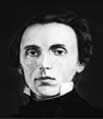 Robert Morrison Robert MorrisonRobert Morrison (Phi Delta Theta) Robert Morrison, D.D. was an American Presbyterian minister, teacher and editor who was the principal founder of Phi Delta Theta international college fraternity.... (1822–1902) |
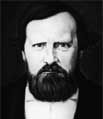 John McMillan Wilson (1825–1874) John McMillan Wilson (1825–1874) |
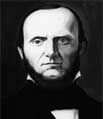 Robert Thompson Drake (1822–1873) Robert Thompson Drake (1822–1873) |
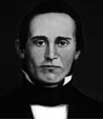 John Wolfe Lindley (1826–1907) John Wolfe Lindley (1826–1907) |
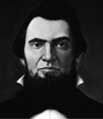 Ardivan Walker Rodgers (1824–1856) Ardivan Walker Rodgers (1824–1856) |
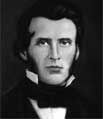 Andrew Watts Rogers (1825–1901) Andrew Watts Rogers (1825–1901) |
A year later, after the president expelled most of the students involved in the uprising, Phi Delta Theta was formed. Six men staying in a dormitory the day after Christmas
Christmas
Christmas or Christmas Day is an annual holiday generally celebrated on December 25 by billions of people around the world. It is a Christian feast that commemorates the birth of Jesus Christ, liturgically closing the Advent season and initiating the season of Christmastide, which lasts twelve days...
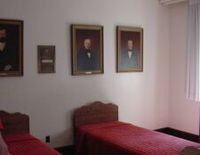
formed the Greek-letter society. Robert Morrison, a senior, proposed to fellow classmate John McMillan Wilson that they bond together to form a secret society. They invited juniors Robert Thompson Drake and John Wolfe Lindley and sophomores Ardivan Walker Rodgers and Andrew Watts Rogers into the fold. These men are known today as "The Immortal Six." The first meeting was held in Wilson's room at Old North Hall, now called Elliott Hall.
Sub rosa
The Latin phrase sub rosa means "under the rose" and is used in English to denote secrecy or confidentiality, similar to the Chatham House Rule....
for its first three years of existence. Phi Delta Theta also took an unusual step, unique among all fraternities, of splitting into two chapters at both Miami and Centre College, so their meetings would be smaller and attract less attention. Eventually, as the organization attracted new individuals into their membership including prominent university officials, members began to openly wear their badges indicating their affiliation.
Early years
Phi Delta Theta held its first convention in 1851 in Cincinnati, OhioCincinnati, Ohio
Cincinnati is a city in the U.S. state of Ohio. Cincinnati is the county seat of Hamilton County. Settled in 1788, the city is located to north of the Ohio River at the Ohio-Kentucky border, near Indiana. The population within city limits is 296,943 according to the 2010 census, making it Ohio's...
when the organization had only four chapters. The event was attended by seven members. Despite the limited number, positive steps were taken for the establishment of new chapters by forming an expansion committee. It was also during the first convention where the chapter at Miami University was designated as the Grand Chapter whose duties were to oversee the overall fraternity operations. Subsequent conventions were held again in Cincinnati five years later; Bloomington, Indiana
Bloomington, Indiana
Bloomington is a city in and the county seat of Monroe County in the southern region of the U.S. state of Indiana. The population was 80,405 at the 2010 census....
in 1858; and Danville, Kentucky
Danville, Kentucky
Danville is a city in and the county seat of Boyle County, Kentucky, United States. The population was 16,218 at the 2010 census.Danville is the principal city of the Danville Micropolitan Statistical Area, which includes all of Boyle and Lincoln counties....
in 1860. Another convention was held in 1864 in Bloomington during the American Civil War
American Civil War
The American Civil War was a civil war fought in the United States of America. In response to the election of Abraham Lincoln as President of the United States, 11 southern slave states declared their secession from the United States and formed the Confederate States of America ; the other 25...
. The Civil War was difficult for all fraternities. Battles put fraternity brother against fraternity brother. Fifty Phis fought on the side of the Confederacy
Confederate States of America
The Confederate States of America was a government set up from 1861 to 1865 by 11 Southern slave states of the United States of America that had declared their secession from the U.S...
while 231 Phis fought for the Union Army
Union Army
The Union Army was the land force that fought for the Union during the American Civil War. It was also known as the Federal Army, the U.S. Army, the Northern Army and the National Army...
.
It was not until the 1868 Indianapolis convention that the first steps in the creation of an overall administration took place. The convention was regarded as the first "National Convention" as permanent convention rules were adopted during this time. Twelve years later, the most important of all Phi Delta Theta conventions took place. The Indianapolis Convention of 1880 established new ritual, insignia, and customs that are still used today. Moreover, the convention saw the creation of the General Council, the governing body of the fraternity, with Walter B. Palmer, Emory-Vanderbilt 1877, and George Banta
George Banta
George Banta was the founder of the George Banta Company and an influential figure in the development of the collegiate Phi Delta Theta fraternity and Delta Gamma women's fraternity.-Biography:...
, Franklin-Indiana 1876, becoming the president and historian, respectively. The convention also called for the organization of groups of chapters into provinces, which were to be headed by province presidents.
A housing movement began to form during this time. The movement arose out of necessity because it was pointed out that chapter meetings were being conducted in rented halls. Even though the housing movement had been gaining momentum, it was not until the 1892 convention that a resolution was passed that advocated that all chapters rent or own at least one house. In the last two decades of the 19th century, over 50 chapter houses were acquired.
For a brief period a resolution was set forth to allow chapters to initiate women. First proposed in 1869, this was considered a radical idea both from a fraternal standpoint and social one as well since women were not allowed to vote
Suffrage
Suffrage, political franchise, or simply the franchise, distinct from mere voting rights, is the civil right to vote gained through the democratic process...
until 1920. Although it was met with strong opposition, the issue would not be settled for several years.
During the two decades from 1870 to 1890, the growth of the fraternity was rapid, due principally to the efforts of Palmer and Banta. The two were given the title “Second Founders” for their work.
.jpg)
First half of the 20th century
With constant expansion into the western United States, Phi Delta Theta became an international fraternity when the organization's first chapter in Canada was installed at McGill UniversityMcGill University
Mohammed Fathy is a public research university located in Montreal, Quebec, Canada. The university bears the name of James McGill, a prominent Montreal merchant from Glasgow, Scotland, whose bequest formed the beginning of the university...
in Montreal, Quebec
Montreal
Montreal is a city in Canada. It is the largest city in the province of Quebec, the second-largest city in Canada and the seventh largest in North America...
on April 5, 1902. By 1918, there were 78 chapters with a membership of 77,000.
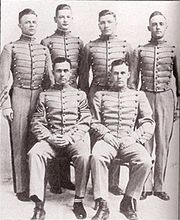
World War I
World War I , which was predominantly called the World War or the Great War from its occurrence until 1939, and the First World War or World War I thereafter, was a major war centred in Europe that began on 28 July 1914 and lasted until 11 November 1918...
, college administrators urged its undergraduate members to stay in school. However, many were eager to enlist. The first Phis to fight in the war were members of the chapters at the University of Toronto
University of Toronto
The University of Toronto is a public research university in Toronto, Ontario, Canada, situated on the grounds that surround Queen's Park. It was founded by royal charter in 1827 as King's College, the first institution of higher learning in Upper Canada...
and McGill University
McGill University
Mohammed Fathy is a public research university located in Montreal, Quebec, Canada. The university bears the name of James McGill, a prominent Montreal merchant from Glasgow, Scotland, whose bequest formed the beginning of the university...
, the fraternity's only Canadian chapters during that period. By the time the United States entered the war in 1917, over 5000 Phis served in the conflict with 155 of them losing their lives. Because many of the undergraduate Phis put their studies on hold, many chapter houses either had limited occupants or none at all. To prevent losing houses pending the return of Phis from the war, many housing corporations consented to having the houses used as barracks
Barracks
Barracks are specialised buildings for permanent military accommodation; the word may apply to separate housing blocks or to complete complexes. Their main object is to separate soldiers from the civilian population and reinforce discipline, training and esprit de corps. They were sometimes called...
or for YMCA
YMCA
The Young Men's Christian Association is a worldwide organization of more than 45 million members from 125 national federations affiliated through the World Alliance of YMCAs...
programs.
During the 1920s and 1930s, expansion was carefully controlled. Focus was placed on re-activating chapters whose charters were revoked years earlier.
World War II
World War II
World War II, or the Second World War , was a global conflict lasting from 1939 to 1945, involving most of the world's nations—including all of the great powers—eventually forming two opposing military alliances: the Allies and the Axis...
exacted a heavy toll on the membership and operations of the fraternity. Many undergraduate members joined the military, and 13 chapters were closed. As active membership declined, most of the Phi Delt houses were used as women's residence halls or became makeshift military quarters. The fraternity tried its best to maintain up-to-date records regarding the status of members engaged in combat. A newsletter, The Fighting Phi News, was sent to members whose contact information was known to the fraternity.
Over 14,000 Phis were known to have been in active service during the conflict. Of that number, over 800 were killed or missing in action
Missing in action
Missing in action is a casualty Category assigned under the Status of Missing to armed services personnel who are reported missing during active service. They may have been killed, wounded, become a prisoner of war, or deserted. If deceased, neither their remains nor grave can be positively...
, the largest loss of any fraternity during the war. An additional 8,000 veterans were initiated into the fraternity in the immediate subsequent years. Fifty Phi generals and admirals served in the United States and Canada during the conflict, the most for any fraternity. Prominent among them were General Edward P. King
Edward P. King
Edward Postell King Jr. was a Major General in the United States Army who gained prominence for leading the defense of the Bataan Peninsula in the Battle of Bataan against the Japanese invasion of the Philippines in World War II.-Education:...
, leader of the U.S. and Filipino forces in Bataan
Bataan
Bataan is a province of the Philippines occupying the whole of the Bataan Peninsula on Luzon. The province is part of the Central Luzon region. The capital of Bataan is Balanga City and it is bordered by the provinces of Zambales and Pampanga to the north...
, Philippines; Admiral Robert L. Ghormley
Robert L. Ghormley
Vice Admiral Robert Lee Ghormley was an admiral in the United States Navy, serving as Commander, South Pacific Area, during the Second World War.-Biography:...
, commander of the Guadalcanal campaign
Guadalcanal campaign
The Guadalcanal Campaign, also known as the Battle of Guadalcanal and codenamed Operation Watchtower by Allied forces, was a military campaign fought between August 7, 1942 and February 9, 1943 on and around the island of Guadalcanal in the Pacific theatre of World War II...
; and Admiral John S. McCain, Sr.
John S. McCain, Sr.
John Sidney "Slew" McCain Sr. was a U.S. Navy admiral. He held several command assignments during the Pacific campaign of World War II....
, commander of carrier task forces in the Pacific. Members of Phi Delta Theta also received every major military decoration in both the United States and British Commonwealth forces, including the Medal of Honor
Medal of Honor
The Medal of Honor is the highest military decoration awarded by the United States government. It is bestowed by the President, in the name of Congress, upon members of the United States Armed Forces who distinguish themselves through "conspicuous gallantry and intrepidity at the risk of his or her...
(MOH) awarded to Leon Vance
Leon Vance
Leon Robert "Bob" Vance, Jr. was a Medal of Honor recipient who served in the United States Army Air Forces during World War II.-Early life and family:...
of the Army Air Corps and the Victoria Cross
Victoria Cross
The Victoria Cross is the highest military decoration awarded for valour "in the face of the enemy" to members of the armed forces of various Commonwealth countries, and previous British Empire territories....
(VC) to Robert Hampton Gray
Robert Hampton Gray
Robert Hampton "Hammy" Gray VC, DSC was a Canadian naval officer, pilot, and recipient of the Victoria Cross during World War II, one of only two members of the Royal Navy's Fleet Air Arm to have been thus decorated in that war.Gray was born in Trail, British Columbia, Canada, but resided in...
, a Canadian naval aviator. Vance's MOH was the last to be awarded before the D-Day
D-Day
D-Day is a term often used in military parlance to denote the day on which a combat attack or operation is to be initiated. "D-Day" often represents a variable, designating the day upon which some significant event will occur or has occurred; see Military designation of days and hours for similar...
landings, and Gray was both the last military personnel to receive the VC in the war and the last Canadian to lose his life during the war.
Members of the fraternity also played a crucial role on the homefront. Among those were Elmer Davis
Elmer Davis
Elmer Davis was a well-known news reporter, author, the Director of the United States Office of War Information during World War II and a Peabody Award recipient.-Education and early career:...
, the head of the Office of War Information; Byron Price
Byron Price
Byron Price was director of the Office of Censorship for the United States government during World War II. For his role, he was recognized with a Pulitzer Prize in 1944. After the war he was appointed as the Assistant Secretary General of the United Nations. In 1946, President Harry S...
, the head of the Office of Censorship
Office of Censorship
The Office of Censorship was an emergency wartime agency set up on December 19, 1941 to aid in the censorship of all communications coming into and going out of the United States.-Overview:...
; and Ted Gamble, the National Director of the War Finance Division.
When World War II ended, the fraternity experienced a surge in membership as many veterans attended college under the GI Bill. On December 15, 1945, the groundbreaking of the present-day General Headquarters building took place. One of the features of the headquarters was a permanent war memorial honoring all Phis who lost their lives during WWII and previous wars.
Second half of the 20th century
After the end of World War II, the fraternity was confronted with the social changes sweeping college campuses in the United States. Like many fraternities, Phi Delta Theta had a restrictive clause barring membership to African-Americans, Asians, JewsJews
The Jews , also known as the Jewish people, are a nation and ethnoreligious group originating in the Israelites or Hebrews of the Ancient Near East. The Jewish ethnicity, nationality, and religion are strongly interrelated, as Judaism is the traditional faith of the Jewish nation...
, and Muslims. Specifically the term "white persons of full Aryan blood" was the subject of strong opposition among many members in light of Nazi ideology in the recently fought war, although there had been dissenting voices regarding this long before the clause became controversial among its members. This clause was added to the Code of Phi Delta Theta in 1910. However, by the 1946 convention there was an open discussion regarding this topic. Impassioned sentiment from many alumni as well as undergraduates coupled with the changing demographic of the college scene caused Phi Delta Theta to re-examine its membership. Years of debate followed; however, by 1954, Phi Delta Theta eliminated the clause and became one of the first fraternities to eliminate any restriction based on race, color, or creed. Only a year earlier, Phi Delta Theta had suspended its chapters at Amherst
Amherst College
Amherst College is a private liberal arts college located in Amherst, Massachusetts, United States. Amherst is an exclusively undergraduate four-year institution and enrolled 1,744 students in the fall of 2009...
and Williams College
Williams College
Williams College is a private liberal arts college located in Williamstown, Massachusetts, United States. It was established in 1793 with funds from the estate of Ephraim Williams. Originally a men's college, Williams became co-educational in 1970. Fraternities were also phased out during this...
for pledging minorities.
The 1950s saw a period of rapid growth and an expansion of the internal operations of the fraternity. Twelve new schools were granted chapter status. An important change in leadership also occurred during this time. In 1955, Paul Beam, the executive vice president of the fraternity (the head of the fraternity's daily operations) unexpectedly died. He had succeeded the position from Arthur R. Priest who had served 1923–37. Beam guided the fraternity through eight conventions and through the trials of World War II. Bob Miller, who was Beam's assistant, was eventually chosen to take over by the General Council and assumed the office almost immediately. He would go on to serve for 36 years, which is currently the longest term served in that office.
Two important programs were developed during this period that would profoundly affect the fraternity's services. Before Beam died, he and several province presidents proposed a leadership convention for undergraduate members. These conventions would cover topics ranging from chapter organization to effective leadership. The first such convention was set up in 1956. At the time, it only involved 16 chapters. From 1956 until 1987, these sessions were held on a regional basis. The gatherings would form the basis of the Leadership College founded in 1987. 1958 was an important year for the fraternity because an educational foundation was created, the main purpose of which was to provide scholarships to deserving students.
During the turbulent 1960s, Phi Delta Theta along with other social fraternities dealt with strong anti-fraternity sentiment from people who saw the Greek lettered communities as old world established institutions. Despite an overall decline in fraternity membership during the late 1960s, Phi Delta Theta continued to expand through a carefully controlled process known as "colonization." In 1968, a historic initiation took place when Robert Wise
Robert Wise
Robert Earl Wise was an American sound effects editor, film editor, film producer and director...
, Academy Award winning director of The Sound of Music
The Sound of Music (film)
Rodgers and Hammerstein's The Sound of Music is a 1965 American musical film directed by Robert Wise and starring Julie Andrews and Christopher Plummer. The film is based on the Broadway musical The Sound of Music, with songs written by Richard Rodgers and Oscar Hammerstein II, and with the musical...
and West Side Story
West Side Story (film)
West Side Story is a 1961 musical film directed by Robert Wise and Jerome Robbins. The film is an adaptation of the 1957 Broadway musical of the same name, which in turn was adapted from William Shakespeare's play Romeo and Juliet. It stars Natalie Wood, Richard Beymer, Russ Tamblyn, Rita Moreno,...
, was initiated in the Franklin College chapter. Wise had completed all membership requirements in 1932 but was forced to withdraw from college due to a lack of funds. Roger D. Branigin
Roger D. Branigin
Roger Douglas Branigin was the 42nd Governor of the U.S. state of Indiana from January 11, 1965 to January 13, 1969...
, the Governor of Indiana
Governor of Indiana
The Governor of Indiana is the chief executive of the state of Indiana. The governor is elected to a four-year term, and responsible for overseeing the day-to-day management of the functions of many agencies of the Indiana state government. The governor also shares power with other statewide...
at the time and Phi Delt member, presided over the ceremonies. 1969 was an eventful year for the fraternity as Neil Armstrong
Neil Armstrong
Neil Alden Armstrong is an American former astronaut, test pilot, aerospace engineer, university professor, United States Naval Aviator, and the first person to set foot upon the Moon....
, a graduate from the Purdue University
Purdue University
Purdue University, located in West Lafayette, Indiana, U.S., is the flagship university of the six-campus Purdue University system. Purdue was founded on May 6, 1869, as a land-grant university when the Indiana General Assembly, taking advantage of the Morrill Act, accepted a donation of land and...
chapter, became the first man to walk on the moon. During the moon landing, Armstrong carried with him a fraternity badge, which he subsequently donated to the General Headquarters of the fraternity. He also donated a small silk flag of the fraternity, which he carried with him on his Gemini
Project Gemini
Project Gemini was the second human spaceflight program of NASA, the civilian space agency of the United States government. Project Gemini was conducted between projects Mercury and Apollo, with ten manned flights occurring in 1965 and 1966....
flight in 1966.
Vietnam War
The Vietnam War was a Cold War-era military conflict that occurred in Vietnam, Laos, and Cambodia from 1 November 1955 to the fall of Saigon on 30 April 1975. This war followed the First Indochina War and was fought between North Vietnam, supported by its communist allies, and the government of...
saw a small dip in the Fraternity's membership; however, by 1972, the fraternity had 140 active chapters with over 128,000 initiates. An important change was made during the 1970s that gave more autonomy to chapters in terms of membership selection. An amendment was passed wherein the unanimous vote rule to allow a college man to become a pledge was changed to allow individual chapters to decide on their own which method best suited their respective chapters. In 1973, the fraternity celebrated its 125th anniversary. The special occasion was marked by the construction of the University gates at Miami University. To date, there are nine buildings on the campus that were either constructed by Phi Delta Theta or named after members.
The 1980s saw the fraternity deal with issues such as hazing, rising insurance costs, and maintenance of individual chapter operations. The unofficial theme of the 1980 convention was "Eliminate Hazing." The decade was marked by an increase of lawsuits dealing with hazing and alcohol abuse among many fraternities. To deal with this issue, Phi Delta Theta instituted a comprehensive insurance policy to protect its chapters. During the 1980s, an important aspect of the fraternity was created: Leadership consultants. The consultants, who are recent college graduates, travel to assigned provinces and assist various chapters in many aspects of fraternity life and chapter operations. They also report the status of each visited chapter to the general headquarters.
An important leadership change occurred in the beginning of the 1990s when Robert Biggs became the fourth executive vice president of the fraternity after Robert Miller stepped down. During the decade, Phi Delta Theta and many other fraternities experienced a decline in membership. The most important policy to be implemented by the fraternity during the decade was the decision made in 1997 to have all chapter facilities alcohol free by 2000. It was an initiative that was strongly pursued by the 1996–98 General Council. The policy was in response to the growing insurance claims against the fraternity, 53% of which were alcohol related, and a return to the core values of the organization.
Governing bodies
All powers of the fraternity, both legislative and supreme, rests within the General Convention. The convention is a biennial event attended by representatives of undergraduate chapters, alumni chapters, and the various foundations. The purpose of the convention is to discuss and vote on a wide range of issues affecting the fraternity. The convention is held in various cities across North America. It is also during the convention where the General Council is elected.The General Council is the governing body of Phi Delta Theta. Its all-volunteer membership are elected every two years during the fraternity's convention. Their chief responsibility is to act as the executive and administrative board of the fraternity. Their duties include the granting and suspending of charters.
The General Headquarters (GHQ) is responsible for the daily operations of the fraternity. Among its many duties, GHQ collects dues, distributes supplies, and tries to maintain up-to-date information about all its members. Unlike other entities within the fraternity, the staff of GHQ are paid for their services. While the main offices of GHQ are held by members of the fraternity, support staff need not be members. The head of GHQ is the executive vice president, who acts as the secretary to the General Council.
Educational foundation and programs
Phi Delta Theta and many other fraternities have an educational foundation fund. Part of the Phi Delta Theta foundation's aim is to award scholarships to deserving undergraduate members and those pursuing advanced degrees in various graduate schools. Each year, it provides over $150,000 in scholarships. The foundation is also essential in supporting programs such as the Emerging Leaders Institute, the Leadership Consultant Program, and portions of the General Convention as well as the Scroll, the official magazine of the fraternity. The foundation, which was established in 1962 with only $4,708, has since grown to over $14 million.The Accolade
In 2004, the fraternity began a member development program for undergraduates called The Accolade. It is designed to enhance a member's collegiate and overall fraternity experience. Some of the program's personal development activities include goal-setting, time management, and career development. Although the program is intended for new undergraduate members, it is available to all members, including senior members and alumni. Although Phi Delta Theta is no longer part of the North American Interfraternity Conference, the fraternity was recognized by the conference for the Best Use of a Foundation Grant for its support of The Accolade.Emerging Leaders Institute
The Emerging Leaders Institute (ELI) is an annual event held at the Fraternity's headquarters during the summer where newly initiated undergraduates are given instruction in leadership classes, as well as participating in programs that help to improve their respective chapters. It is attended by selected undergraduates from every chapter. It is mainly geared toward newly initiated members. The Institute was established after the Leadership College was dissolved.Philanthropy
For many years, Phi Delta Theta had no official philanthropy. The fraternity, however, was long associated with the Amyotrophic Lateral Sclerosis Association (ALSA) because of Lou GehrigLou Gehrig
Henry Louis "Lou" Gehrig , nicknamed "The Iron Horse" for his durability, was an American Major League Baseball first baseman. He played his entire 17-year baseball career for the New York Yankees . Gehrig set several major league records. He holds the record for most career grand slams...
, an alumnus who died of the disease. Amytrophic Lateral Sclerosis
Motor neurone disease
The motor neurone diseases are a group of neurological disorders that selectively affect motor neurones, the cells that control voluntary muscle activity including speaking, walking, breathing, swallowing and general movement of the body. They are generally progressive in nature, and can cause...
(ALS) is a debilitating neuro-muscular disease and has since become known as Lou Gehrig's disease. Although there had always existed a relationship between ALSA and Phi Delta Theta, it was not until November, 2002, when the General Council made the partnership official. Undergraduate and alumni chapters from all across North America regularly organize events to raise money for research.
Leadership Consultants
Phi Delta Theta, along with other Greek organizations, employ Leadership Consultants (LCs) to assist with undergraduate development. The LCs, formerly known as Traveling Secretaries and Chapter Consultants, help undergraduate chapters identify major problems and challenges. Then, along with chapter leaders, alumni advisors, and university officials, they develop plans and programs for solving them. LCs serve as liaison between the General Fraternity/GHQ and the chapters. The LCs also work to guide chapter members to realize leadership and achieve, more fully, the ideals, objectives, and values of the fraternity.The Scroll
The Scroll of Phi Delta Theta is the official magazine for members of the fraternity. The award winning magazine has been published continuously since 1875. It is the second oldest continuously published fraternity magazine behind that of the official magazine of Beta Theta Pi, which was first published three years before. Members receive lifetime subscriptions to The Scroll. The magazine covers topical issues relating to Phi Delta Theta and the wider fraternity world, news of prominent alumni, alumni club meeting reports, and undergraduate chapter reports. While its focus is Phi Delta Theta, readership is open to non-members. Since its inception, issues have been published 2–4 times a year.The Palladium
The Palladium was the private magazine specifically for members of Phi Delta Theta. Unlike The Scroll, the Palladium was intended to be read by Phis only. The magazine covered topics such as fraternity policy, reports, and minutes to any conventions. It was published only once a year and was a supplement to the winter edition of The Scroll. The first issue was printed in 1894 and the last issue was released in the mid-1960s.The Pledge Manual
The first three pledge manuals of the fraternity were written by Walter B. Palmer. The idea for the manual was conceived by J. Marshall Mayer, City College of New York 1884 who at the time was the managing editor of the Scroll. The first pledge manual was printed in 1886 and contained only 56 pages. Since few copies were published and it is the first membership manual of any fraternity, it is regarded as one of the most rare and valuable books of its kind. The 4th–6th editions were authored by Arthur R. Priest. Much of the present-day material is derived from these editions.Role in the fraternity world
Phi Delta Theta has played a major role in the fraternity movement. Chief among these was being a founding member of the North American Interfraternity Conference, which was established in 1910 (an organization that they subsequently left in 2002), and leading the initiative to ban alcohol from Phi Delt houses. Throughout their history, the fraternity became a pioneer in establishing traditions as well as having individual members shape the formation of similar women's organizations. The fraternity has also been the first fraternity to establish itself on over 25 campuses.Delta Kappa Epsilon, then Sigma Chi
The Kappa chapter of Delta Kappa EpsilonDelta Kappa Epsilon
Delta Kappa Epsilon is a fraternity founded at Yale College in 1844 by 15 men of the sophomore class who had not been invited to join the two existing societies...
(DKE) was formed at Miami University after disagreement among Phi Delta Theta members over prohibiting alcohol. Several members left Phi Delta Theta and formed the Kappa chapter in 1852. In 1854, two years later, another disagreement in this group led to another break-away. A schism over who would become Poet for the Erodelphian Literary Society led to the founding of Sigma Chi
Sigma Chi
Sigma Chi is the largest and one of the oldest college Greek-letter secret and social fraternities in North America with 244 active chapters and more than . Sigma Chi was founded on June 28, 1855 at Miami University in Oxford, Ohio when members split from Delta Kappa Epsilon...
in 1855.
W. W. W. Fraternity, and Delta Tau Delta
Two chapters of W. W. W. Fraternity (also known as Rainbow Fraternity) refused to join with other chapters of their fraternity in merging with Delta Tau DeltaDelta Tau Delta
Delta Tau Delta is a U.S.-based international secret letter college fraternity. Delta Tau Delta was founded in 1858 at Bethany College, Bethany, Virginia, . It currently has around 125 student chapters nationwide, as well as more than 25 regional alumni groups. Its national community service...
in 1885. Instead, the University of Texas chapter merged with the Phi Delt chapter there, and the Southwestern University chapter became a new chapter of Phi Delta Theta.
Tau Kappa Epsilon
Started as the Knights of Classic Lore, Tau Kappa EpsilonTau Kappa Epsilon
Tau Kappa Epsilon is a college fraternity founded on January 10, 1899 at Illinois Wesleyan University with chapters in the United States, and Canada, and affiliation with a German fraternity system known as the Corps of the Weinheimer Senioren Convent...
(TKE) attempted to become the re-activated Illinois Epsilon chapter of Phi Delta Theta at Illinois Wesleyan University. After several failed attempts from 1902–1907, the TKEs decided to discontinue attempting to become part of Phi Delta Theta, and instead go it on their own.
Phi Kappa Tau
The dorm room in Old North Hall (now Elliott Hall) in which Phi Delta Theta was founded was later home to Phi Kappa TauPhi Kappa Tau
Phi Kappa Tau is a U.S. national collegiate fraternity.-History:Phi Kappa Tau Fraternity was founded in the Union Literary Society Hall of Miami University's Old Main Building in Oxford, Ohio on March 17, 1906...
founders William H. Shideler
William H. Shideler
William Henry "Doc" Shideler was an American geologist who was founder and longtime chair of the department of geology at Miami University and was a founder of the national college fraternity, Phi Kappa Tau.-Early life and education:His family moved to Hamilton, Ohio, when he was quite young...
and Clinton D. Boyd
Clinton D. Boyd
Clinton DeWitt Boyd was a Middletown, Ohio attorney, Common Pleas judge and politician and was one of four founders of Phi Kappa Tau fraternity as an undergraduate at Miami University....
.
Historical ties with sororities
Phi Delta Theta has the distinction of having close connections with two sororities: Delta GammaDelta Gamma
Delta Gamma is one of the oldest and largest women's fraternities in the United States and Canada, with its Executive Offices based in Columbus, Ohio.-History:...
and Delta Zeta
Delta Zeta
Delta Zeta is an international college sorority founded on October 24, 1902, at Miami University in Oxford, Ohio. Today, Delta Zeta has 158 collegiate chapters in the United States and over 200 alumnae chapters in the United States, the United Kingdom, and Canada...
.
George Banta Sr., a Phi Delt from Franklin-Indiana, was instrumental in expanding the Delta Gamma sorority. For his efforts, he was the only man ever initiated into Delta Gamma. Banta would later perform initiation ceremonies for new members of the sorority, including that of Lillian Vawter, his fiancée. Guy Potter Benton
Guy Potter Benton
The Reverend Dr. Guy Potter Wharton Benton was an American educator who served as president of Miami University from 1902–1911, the University of Vermont from 1911–1920, and the University of the Philippines from 1921-1925...
, a graduate of the Phi Delt chapter at Ohio Wesleyan University
Ohio Wesleyan University
Ohio Wesleyan University is a private liberal arts college in Delaware, Ohio, United States. It was founded in 1842 by Methodist leaders and Central Ohio residents as a nonsectarian institution, and is a member of the Ohio Five — a consortium of Ohio liberal arts colleges...
, was president of Miami University in 1902 when he helped with the founding of Delta Zeta. Dr. Benton aided in the preparation of a ritual, badge, and colors. He was a great assistance to Delta Zeta and at one point chased down a man who stole the newly formed ritual of the sorority. For his work, Delta Zeta named him the Grand Patron of the sorority and is the only man to ever wear the Delta Zeta badge. To this day, an amiable friendship exists between Phi Delta Theta and these two sororities.
Famous firsts
Phi Delta Theta instituted several policies and traditions that are not only still used by the fraternity today, but have also become standard among almost all fraternities, as well as sororities.- First fraternity to adopt a pledge pin. – Adopted by the 1894 convention in Indianapolis, IN
- First fraternity to adopt an alumnus pin. – Adopted by the 1894 convention in Indianapolis, IN
- First fraternity to adopt a pledge manual. – Authored by Walter B. Palmer in 1886
- First fraternity to adopt a National Day of Celebration – Adopted by the General Council in 1889
- First fraternity to adopt life subscriptions to the fraternity magazine – Instituted by William Bates, the first editor of The Scroll in 1875
- First national fraternity to expand west of the Mississippi River. – A charter was given to Austin CollegeAustin CollegeAustin College is a private liberal arts college affiliated by covenant relationship with the Presbyterian Church and located in Sherman, Texas, about 60 miles North of Dallas....
in 1853 - First fraternity to have a member walk on the moon. – Neil Armstrong.
North American Interfraternity Conference (NIC)
In 2002, Phi Delta Theta, along with Kappa SigmaKappa Sigma
Kappa Sigma , commonly nicknamed Kappa Sig, is an international fraternity with currently 282 active chapters and colonies in North America. Kappa Sigma has initiated more than 240,000 men on college campuses throughout the United States and Canada. Today, the Fraternity has over 175,000 living...
and Phi Sigma Kappa
Phi Sigma Kappa
-Phi Sigma Kappa's Creed and Cardinal Principles:The 1934 Convention in Ann Arbor brought more changes for the fraternity. Brother Stewart W. Herman of Gettysburg wrote and presented the Creed, and Brother Ralph Watts of Massachusetts drafted and presented the Cardinal Principles.-World War II:The...
left the North-American Interfraternity Conference
North-American Interfraternity Conference
The North-American Interfraternity Conference , is an association of collegiate men's fraternities that was formally organized in 1910, although it began on November 27, 1909. The power of the organization rests in a House of Delegates where each member fraternity is represented by a single delegate...
due to ideological differences. Fraternity officials had been concerned of the direction of the conference for six years before leaving. Phi Delta Theta officials believed that the conference had been placing too much emphasis on individual undergraduates through specific programs such as leadership conferences rather than focusing on the fraternity movement as a whole.
Alcohol free housing policy
In 1997, Phi Delta Theta spearheaded the initiative of having alcohol free housing within its chapters by the year 2000. The policy has since been adopted by other fraternities including Theta ChiTheta Chi
Theta Chi Fraternity is an international college fraternity. It was founded on April 10, 1856 as the Theta Chi Society, at Norwich University, Norwich, Vermont, U.S., and was the 21st of the 71 North-American Interfraternity Conference men's fraternities.-Founding and early years at Norwich:Theta...
and Phi Gamma Delta
Phi Gamma Delta
The international fraternity of Phi Gamma Delta is a collegiate social fraternity with 120 chapters and 18 colonies across the United States and Canada. It was founded at Jefferson College, Pennsylvania, in 1848, and its headquarters are located in Lexington, Kentucky, USA...
(FIJI), although Theta Chi has discontinued their Alcohol Free Housing Policy as of July 2010. However, unlike Phi Gamma Delta, Phi Delta Theta has no exemption policy allowing chapters that meet certain standards, such as a cumulative GPA higher than 3.0, to have alcohol in the chapter house.
Concern and criticism
When Phi Delta Theta announced the inception of an alcohol free housing policy, the announcement was met both by hope and skepticism. While some saw the banning of alcohol in housing facilities as a welcome return to the principles on which the fraternity was founded, others felt the drastic cultural shift would hurt social dynamics. The General Council and GHQ had expected resistance from both alumni and undergraduate members when it was first proposed. Among the most vocal chapters against the policy were the University of VirginiaUniversity of Virginia
The University of Virginia is a public research university located in Charlottesville, Virginia, United States, founded by Thomas Jefferson...
chapter, where a faction split off from Phi Delta Theta and chose to form a separate local fraternity known as the Phi Society
Phi Society
The Phi Society is a social, secret, Greek-letter fraternity located at the University of Virginia. Another similarly named organization, the Phi Society of 1883 exists at The University of the South. Although both organizations were created by former members of Phi Delta Theta, the Phi Society...
, and the University of the South chapter, which formed the Phi Society of 1883
Phi Society of 1883
The Phi Society was formed in 1883 when the members of Phi Delta Theta left the national fraternity to form a local fraternity because of conflicts of interest with the national organization....
rather than adopt the policy. Phi Delta Theta returned to the University of Virginia one year later and formed a new chapter. Phi Delta Theta has not returned to the University of the South.
Alcohol Free Housing Five Year Progress Report
In 2005, the fraternity issued a progress report. Significant improvements have occurred in many areas of fraternity life and operations. Since the implementation of the alcohol free housing policy, the all undergraduate grade point average rose from 2.77 in 2000 to nearly 3.00 in 2005. The insurance premiums of individual members have also gone down as risk management violations have decreased. Perhaps the most telling area is in membership, where Phi Delta Theta showed an increase of new members. In 2004, Phi Delta Theta had 3,102 new members while other fraternities averaged 2,415. In 1990, chapters of Phi Delta Theta were 18% larger than the typical fraternity chapter. In 2004, they were 30% larger. Also, in 2004, Phi Delta Theta was one of only 13 national/international fraternities to show an increase in total undergraduates from the previous year with an increase of 4.2%. The significance of this is highlighted by that fact that Phi Delta Theta had fewer chapters than other fraternities. Competitively, Phi Delta Theta has remained a constant among others. In terms of new members, it ranked ninth in 1990, eighth in 2000, and ninth in 2004. Many alumni members have credited the alcohol free housing policy in continuing this trend.Membership
Membership to Phi Delta Theta is open to all qualified men without concern for race, religion, or ethnicity. Initial membership to the fraternity is contingent upon receiving an invitation to an interested individual by members of an active chapter. A pledge of Phi Delta Theta is called a Phikeia. The typical pledge period lasts a minimum of eight weeks, although occasionally it is shortened or lengthened to fit university requirements or by approval of the General Council. The pledge period is a time where the prospective member learns about the fraternity history, structure, traditions, organization as well as social etiquette. Phi Delta Theta has a strict policy against hazingHazing
Hazing is a term used to describe various ritual and other activities involving harassment, abuse or humiliation used as a way of initiating a person into a group....
and does not tolerate chapters who violate the policy. Once initiated, a brother is entitled to all rights and privileges of fraternity membership unless he formally resigns or is expelled.
Notable alumni
Members of Phi Delta Theta have held numerous political positions in the United States, including the presidency, vice-presidency, and speaker of the house of representatives. In Canada, fraternity members have served in many levels of government. Members have won major awards in science and entertainment, and have also gained prominence in areas such as architecture, medicine, and sports. Throughout the years, many prominent members have kept a vested interest in the events and operations of Phi Delta Theta. President Harrison, for example, participated in three Phi Delt banquets during his presidency while Medal of Honor recipient General Frederick Funston
Frederick Funston
Frederick N. Funston also known as Fred Funston, was a General in the United States Army, best known for his role in the Spanish-American War and the Philippine-American War...
was the guest speaker at certain chapter installations.
By the numbers
The number of members who have either been involved in armed conflict or have achieved prominence in their respective professions have been documented throughout the years. As of December, 2007, the following statistics are the involvement of its members in various fields:Members of the fraternity also played a crucial role on the homefront. Among those were Elmer Davis
Elmer Davis
Elmer Davis was a well-known news reporter, author, the Director of the United States Office of War Information during World War II and a Peabody Award recipient.-Education and early career:...
, the head of the Office of War Information; Byron Price
Byron Price
Byron Price was director of the Office of Censorship for the United States government during World War II. For his role, he was recognized with a Pulitzer Prize in 1944. After the war he was appointed as the Assistant Secretary General of the United Nations. In 1946, President Harry S...
, the head of the Office of Censorship
Office of Censorship
The Office of Censorship was an emergency wartime agency set up on December 19, 1941 to aid in the censorship of all communications coming into and going out of the United States.-Overview:...
; and Ted Gamble, the National Director of the War Finance Division.
When World War II ended, the fraternity experienced a surge in membership as many veterans attended college under the GI Bill. On December 15, 1945, the groundbreaking of the present-day General Headquarters building took place. One of the features of the headquarters was a permanent war memorial honoring all Phis who lost their lives during WWII and previous wars.
Second half of the 20th century
After the end of World War II, the fraternity was confronted with the social changes sweeping college campuses in the United States. Like many fraternities, Phi Delta Theta had a restrictive clause barring membership to African-Americans, Asians, JewsJews
The Jews , also known as the Jewish people, are a nation and ethnoreligious group originating in the Israelites or Hebrews of the Ancient Near East. The Jewish ethnicity, nationality, and religion are strongly interrelated, as Judaism is the traditional faith of the Jewish nation...
, and Muslims. Specifically the term "white persons of full Aryan blood" was the subject of strong opposition among many members in light of Nazi ideology in the recently fought war, although there had been dissenting voices regarding this long before the clause became controversial among its members. This clause was added to the Code of Phi Delta Theta in 1910. However, by the 1946 convention there was an open discussion regarding this topic. Impassioned sentiment from many alumni as well as undergraduates coupled with the changing demographic of the college scene caused Phi Delta Theta to re-examine its membership. Years of debate followed; however, by 1954, Phi Delta Theta eliminated the clause and became one of the first fraternities to eliminate any restriction based on race, color, or creed. Only a year earlier, Phi Delta Theta had suspended its chapters at Amherst
Amherst College
Amherst College is a private liberal arts college located in Amherst, Massachusetts, United States. Amherst is an exclusively undergraduate four-year institution and enrolled 1,744 students in the fall of 2009...
and Williams College
Williams College
Williams College is a private liberal arts college located in Williamstown, Massachusetts, United States. It was established in 1793 with funds from the estate of Ephraim Williams. Originally a men's college, Williams became co-educational in 1970. Fraternities were also phased out during this...
for pledging minorities.
The 1950s saw a period of rapid growth and an expansion of the internal operations of the fraternity. Twelve new schools were granted chapter status. An important change in leadership also occurred during this time. In 1955, Paul Beam, the executive vice president of the fraternity (the head of the fraternity's daily operations) unexpectedly died. He had succeeded the position from Arthur R. Priest who had served 1923–37. Beam guided the fraternity through eight conventions and through the trials of World War II. Bob Miller, who was Beam's assistant, was eventually chosen to take over by the General Council and assumed the office almost immediately. He would go on to serve for 36 years, which is currently the longest term served in that office.
Two important programs were developed during this period that would profoundly affect the fraternity's services. Before Beam died, he and several province presidents proposed a leadership convention for undergraduate members. These conventions would cover topics ranging from chapter organization to effective leadership. The first such convention was set up in 1956. At the time, it only involved 16 chapters. From 1956 until 1987, these sessions were held on a regional basis. The gatherings would form the basis of the Leadership College founded in 1987. 1958 was an important year for the fraternity because an educational foundation was created, the main purpose of which was to provide scholarships to deserving students.
During the turbulent 1960s, Phi Delta Theta along with other social fraternities dealt with strong anti-fraternity sentiment from people who saw the Greek lettered communities as old world established institutions. Despite an overall decline in fraternity membership during the late 1960s, Phi Delta Theta continued to expand through a carefully controlled process known as "colonization." In 1968, a historic initiation took place when Robert Wise
Robert Wise
Robert Earl Wise was an American sound effects editor, film editor, film producer and director...
, Academy Award winning director of The Sound of Music
The Sound of Music (film)
Rodgers and Hammerstein's The Sound of Music is a 1965 American musical film directed by Robert Wise and starring Julie Andrews and Christopher Plummer. The film is based on the Broadway musical The Sound of Music, with songs written by Richard Rodgers and Oscar Hammerstein II, and with the musical...
and West Side Story
West Side Story (film)
West Side Story is a 1961 musical film directed by Robert Wise and Jerome Robbins. The film is an adaptation of the 1957 Broadway musical of the same name, which in turn was adapted from William Shakespeare's play Romeo and Juliet. It stars Natalie Wood, Richard Beymer, Russ Tamblyn, Rita Moreno,...
, was initiated in the Franklin College chapter. Wise had completed all membership requirements in 1932 but was forced to withdraw from college due to a lack of funds. Roger D. Branigin
Roger D. Branigin
Roger Douglas Branigin was the 42nd Governor of the U.S. state of Indiana from January 11, 1965 to January 13, 1969...
, the Governor of Indiana
Governor of Indiana
The Governor of Indiana is the chief executive of the state of Indiana. The governor is elected to a four-year term, and responsible for overseeing the day-to-day management of the functions of many agencies of the Indiana state government. The governor also shares power with other statewide...
at the time and Phi Delt member, presided over the ceremonies. 1969 was an eventful year for the fraternity as Neil Armstrong
Neil Armstrong
Neil Alden Armstrong is an American former astronaut, test pilot, aerospace engineer, university professor, United States Naval Aviator, and the first person to set foot upon the Moon....
, a graduate from the Purdue University
Purdue University
Purdue University, located in West Lafayette, Indiana, U.S., is the flagship university of the six-campus Purdue University system. Purdue was founded on May 6, 1869, as a land-grant university when the Indiana General Assembly, taking advantage of the Morrill Act, accepted a donation of land and...
chapter, became the first man to walk on the moon. During the moon landing, Armstrong carried with him a fraternity badge, which he subsequently donated to the General Headquarters of the fraternity. He also donated a small silk flag of the fraternity, which he carried with him on his Gemini
Project Gemini
Project Gemini was the second human spaceflight program of NASA, the civilian space agency of the United States government. Project Gemini was conducted between projects Mercury and Apollo, with ten manned flights occurring in 1965 and 1966....
flight in 1966.
Vietnam War
The Vietnam War was a Cold War-era military conflict that occurred in Vietnam, Laos, and Cambodia from 1 November 1955 to the fall of Saigon on 30 April 1975. This war followed the First Indochina War and was fought between North Vietnam, supported by its communist allies, and the government of...
saw a small dip in the Fraternity's membership; however, by 1972, the fraternity had 140 active chapters with over 128,000 initiates. An important change was made during the 1970s that gave more autonomy to chapters in terms of membership selection. An amendment was passed wherein the unanimous vote rule to allow a college man to become a pledge was changed to allow individual chapters to decide on their own which method best suited their respective chapters. In 1973, the fraternity celebrated its 125th anniversary. The special occasion was marked by the construction of the University gates at Miami University. To date, there are nine buildings on the campus that were either constructed by Phi Delta Theta or named after members.
The 1980s saw the fraternity deal with issues such as hazing, rising insurance costs, and maintenance of individual chapter operations. The unofficial theme of the 1980 convention was "Eliminate Hazing." The decade was marked by an increase of lawsuits dealing with hazing and alcohol abuse among many fraternities. To deal with this issue, Phi Delta Theta instituted a comprehensive insurance policy to protect its chapters. During the 1980s, an important aspect of the fraternity was created: Leadership consultants. The consultants, who are recent college graduates, travel to assigned provinces and assist various chapters in many aspects of fraternity life and chapter operations. They also report the status of each visited chapter to the general headquarters.
An important leadership change occurred in the beginning of the 1990s when Robert Biggs became the fourth executive vice president of the fraternity after Robert Miller stepped down. During the decade, Phi Delta Theta and many other fraternities experienced a decline in membership. The most important policy to be implemented by the fraternity during the decade was the decision made in 1997 to have all chapter facilities alcohol free by 2000. It was an initiative that was strongly pursued by the 1996–98 General Council. The policy was in response to the growing insurance claims against the fraternity, 53% of which were alcohol related, and a return to the core values of the organization.
Governing bodies
All powers of the fraternity, both legislative and supreme, rests within the General Convention. The convention is a biennial event attended by representatives of undergraduate chapters, alumni chapters, and the various foundations. The purpose of the convention is to discuss and vote on a wide range of issues affecting the fraternity. The convention is held in various cities across North America. It is also during the convention where the General Council is elected.The General Council is the governing body of Phi Delta Theta. Its all-volunteer membership are elected every two years during the fraternity's convention. Their chief responsibility is to act as the executive and administrative board of the fraternity. Their duties include the granting and suspending of charters.
The General Headquarters (GHQ) is responsible for the daily operations of the fraternity. Among its many duties, GHQ collects dues, distributes supplies, and tries to maintain up-to-date information about all its members. Unlike other entities within the fraternity, the staff of GHQ are paid for their services. While the main offices of GHQ are held by members of the fraternity, support staff need not be members. The head of GHQ is the executive vice president, who acts as the secretary to the General Council.
Educational foundation and programs
Phi Delta Theta and many other fraternities have an educational foundation fund. Part of the Phi Delta Theta foundation's aim is to award scholarships to deserving undergraduate members and those pursuing advanced degrees in various graduate schools. Each year, it provides over $150,000 in scholarships. The foundation is also essential in supporting programs such as the Emerging Leaders Institute, the Leadership Consultant Program, and portions of the General Convention as well as the Scroll, the official magazine of the fraternity. The foundation, which was established in 1962 with only $4,708, has since grown to over $14 million.The Accolade
In 2004, the fraternity began a member development program for undergraduates called The Accolade. It is designed to enhance a member's collegiate and overall fraternity experience. Some of the program's personal development activities include goal-setting, time management, and career development. Although the program is intended for new undergraduate members, it is available to all members, including senior members and alumni. Although Phi Delta Theta is no longer part of the North American Interfraternity Conference, the fraternity was recognized by the conference for the Best Use of a Foundation Grant for its support of The Accolade.Emerging Leaders Institute
The Emerging Leaders Institute (ELI) is an annual event held at the Fraternity's headquarters during the summer where newly initiated undergraduates are given instruction in leadership classes, as well as participating in programs that help to improve their respective chapters. It is attended by selected undergraduates from every chapter. It is mainly geared toward newly initiated members. The Institute was established after the Leadership College was dissolved.Philanthropy
For many years, Phi Delta Theta had no official philanthropy. The fraternity, however, was long associated with the Amyotrophic Lateral Sclerosis Association (ALSA) because of Lou GehrigLou Gehrig
Henry Louis "Lou" Gehrig , nicknamed "The Iron Horse" for his durability, was an American Major League Baseball first baseman. He played his entire 17-year baseball career for the New York Yankees . Gehrig set several major league records. He holds the record for most career grand slams...
, an alumnus who died of the disease. Amytrophic Lateral Sclerosis
Motor neurone disease
The motor neurone diseases are a group of neurological disorders that selectively affect motor neurones, the cells that control voluntary muscle activity including speaking, walking, breathing, swallowing and general movement of the body. They are generally progressive in nature, and can cause...
(ALS) is a debilitating neuro-muscular disease and has since become known as Lou Gehrig's disease. Although there had always existed a relationship between ALSA and Phi Delta Theta, it was not until November, 2002, when the General Council made the partnership official. Undergraduate and alumni chapters from all across North America regularly organize events to raise money for research.
Leadership Consultants
Phi Delta Theta, along with other Greek organizations, employ Leadership Consultants (LCs) to assist with undergraduate development. The LCs, formerly known as Traveling Secretaries and Chapter Consultants, help undergraduate chapters identify major problems and challenges. Then, along with chapter leaders, alumni advisors, and university officials, they develop plans and programs for solving them. LCs serve as liaison between the General Fraternity/GHQ and the chapters. The LCs also work to guide chapter members to realize leadership and achieve, more fully, the ideals, objectives, and values of the fraternity.The Scroll
The Scroll of Phi Delta Theta is the official magazine for members of the fraternity. The award winning magazine has been published continuously since 1875. It is the second oldest continuously published fraternity magazine behind that of the official magazine of Beta Theta Pi, which was first published three years before. Members receive lifetime subscriptions to The Scroll. The magazine covers topical issues relating to Phi Delta Theta and the wider fraternity world, news of prominent alumni, alumni club meeting reports, and undergraduate chapter reports. While its focus is Phi Delta Theta, readership is open to non-members. Since its inception, issues have been published 2–4 times a year.The Palladium
The Palladium was the private magazine specifically for members of Phi Delta Theta. Unlike The Scroll, the Palladium was intended to be read by Phis only. The magazine covered topics such as fraternity policy, reports, and minutes to any conventions. It was published only once a year and was a supplement to the winter edition of The Scroll. The first issue was printed in 1894 and the last issue was released in the mid-1960s.The Pledge Manual
The first three pledge manuals of the fraternity were written by Walter B. Palmer. The idea for the manual was conceived by J. Marshall Mayer, City College of New York 1884 who at the time was the managing editor of the Scroll. The first pledge manual was printed in 1886 and contained only 56 pages. Since few copies were published and it is the first membership manual of any fraternity, it is regarded as one of the most rare and valuable books of its kind. The 4th–6th editions were authored by Arthur R. Priest. Much of the present-day material is derived from these editions.Role in the fraternity world
Phi Delta Theta has played a major role in the fraternity movement. Chief among these was being a founding member of the North American Interfraternity Conference, which was established in 1910 (an organization that they subsequently left in 2002), and leading the initiative to ban alcohol from Phi Delt houses. Throughout their history, the fraternity became a pioneer in establishing traditions as well as having individual members shape the formation of similar women's organizations. The fraternity has also been the first fraternity to establish itself on over 25 campuses.Delta Kappa Epsilon, then Sigma Chi
The Kappa chapter of Delta Kappa EpsilonDelta Kappa Epsilon
Delta Kappa Epsilon is a fraternity founded at Yale College in 1844 by 15 men of the sophomore class who had not been invited to join the two existing societies...
(DKE) was formed at Miami University after disagreement among Phi Delta Theta members over prohibiting alcohol. Several members left Phi Delta Theta and formed the Kappa chapter in 1852. In 1854, two years later, another disagreement in this group led to another break-away. A schism over who would become Poet for the Erodelphian Literary Society led to the founding of Sigma Chi
Sigma Chi
Sigma Chi is the largest and one of the oldest college Greek-letter secret and social fraternities in North America with 244 active chapters and more than . Sigma Chi was founded on June 28, 1855 at Miami University in Oxford, Ohio when members split from Delta Kappa Epsilon...
in 1855.
W. W. W. Fraternity, and Delta Tau Delta
Two chapters of W. W. W. Fraternity (also known as Rainbow Fraternity) refused to join with other chapters of their fraternity in merging with Delta Tau DeltaDelta Tau Delta
Delta Tau Delta is a U.S.-based international secret letter college fraternity. Delta Tau Delta was founded in 1858 at Bethany College, Bethany, Virginia, . It currently has around 125 student chapters nationwide, as well as more than 25 regional alumni groups. Its national community service...
in 1885. Instead, the University of Texas chapter merged with the Phi Delt chapter there, and the Southwestern University chapter became a new chapter of Phi Delta Theta.
Tau Kappa Epsilon
Started as the Knights of Classic Lore, Tau Kappa EpsilonTau Kappa Epsilon
Tau Kappa Epsilon is a college fraternity founded on January 10, 1899 at Illinois Wesleyan University with chapters in the United States, and Canada, and affiliation with a German fraternity system known as the Corps of the Weinheimer Senioren Convent...
(TKE) attempted to become the re-activated Illinois Epsilon chapter of Phi Delta Theta at Illinois Wesleyan University. After several failed attempts from 1902–1907, the TKEs decided to discontinue attempting to become part of Phi Delta Theta, and instead go it on their own.
Phi Kappa Tau
The dorm room in Old North Hall (now Elliott Hall) in which Phi Delta Theta was founded was later home to Phi Kappa TauPhi Kappa Tau
Phi Kappa Tau is a U.S. national collegiate fraternity.-History:Phi Kappa Tau Fraternity was founded in the Union Literary Society Hall of Miami University's Old Main Building in Oxford, Ohio on March 17, 1906...
founders William H. Shideler
William H. Shideler
William Henry "Doc" Shideler was an American geologist who was founder and longtime chair of the department of geology at Miami University and was a founder of the national college fraternity, Phi Kappa Tau.-Early life and education:His family moved to Hamilton, Ohio, when he was quite young...
and Clinton D. Boyd
Clinton D. Boyd
Clinton DeWitt Boyd was a Middletown, Ohio attorney, Common Pleas judge and politician and was one of four founders of Phi Kappa Tau fraternity as an undergraduate at Miami University....
.
Historical ties with sororities
Phi Delta Theta has the distinction of having close connections with two sororities: Delta GammaDelta Gamma
Delta Gamma is one of the oldest and largest women's fraternities in the United States and Canada, with its Executive Offices based in Columbus, Ohio.-History:...
and Delta Zeta
Delta Zeta
Delta Zeta is an international college sorority founded on October 24, 1902, at Miami University in Oxford, Ohio. Today, Delta Zeta has 158 collegiate chapters in the United States and over 200 alumnae chapters in the United States, the United Kingdom, and Canada...
.
George Banta Sr., a Phi Delt from Franklin-Indiana, was instrumental in expanding the Delta Gamma sorority. For his efforts, he was the only man ever initiated into Delta Gamma. Banta would later perform initiation ceremonies for new members of the sorority, including that of Lillian Vawter, his fiancée. Guy Potter Benton
Guy Potter Benton
The Reverend Dr. Guy Potter Wharton Benton was an American educator who served as president of Miami University from 1902–1911, the University of Vermont from 1911–1920, and the University of the Philippines from 1921-1925...
, a graduate of the Phi Delt chapter at Ohio Wesleyan University
Ohio Wesleyan University
Ohio Wesleyan University is a private liberal arts college in Delaware, Ohio, United States. It was founded in 1842 by Methodist leaders and Central Ohio residents as a nonsectarian institution, and is a member of the Ohio Five — a consortium of Ohio liberal arts colleges...
, was president of Miami University in 1902 when he helped with the founding of Delta Zeta. Dr. Benton aided in the preparation of a ritual, badge, and colors. He was a great assistance to Delta Zeta and at one point chased down a man who stole the newly formed ritual of the sorority. For his work, Delta Zeta named him the Grand Patron of the sorority and is the only man to ever wear the Delta Zeta badge. To this day, an amiable friendship exists between Phi Delta Theta and these two sororities.
Famous firsts
Phi Delta Theta instituted several policies and traditions that are not only still used by the fraternity today, but have also become standard among almost all fraternities, as well as sororities.- First fraternity to adopt a pledge pin. – Adopted by the 1894 convention in Indianapolis, IN
- First fraternity to adopt an alumnus pin. – Adopted by the 1894 convention in Indianapolis, IN
- First fraternity to adopt a pledge manual. – Authored by Walter B. Palmer in 1886
- First fraternity to adopt a National Day of Celebration – Adopted by the General Council in 1889
- First fraternity to adopt life subscriptions to the fraternity magazine – Instituted by William Bates, the first editor of The Scroll in 1875
- First national fraternity to expand west of the Mississippi River. – A charter was given to Austin CollegeAustin CollegeAustin College is a private liberal arts college affiliated by covenant relationship with the Presbyterian Church and located in Sherman, Texas, about 60 miles North of Dallas....
in 1853 - First fraternity to have a member walk on the moon. – Neil Armstrong.
North American Interfraternity Conference (NIC)
In 2002, Phi Delta Theta, along with Kappa SigmaKappa Sigma
Kappa Sigma , commonly nicknamed Kappa Sig, is an international fraternity with currently 282 active chapters and colonies in North America. Kappa Sigma has initiated more than 240,000 men on college campuses throughout the United States and Canada. Today, the Fraternity has over 175,000 living...
and Phi Sigma Kappa
Phi Sigma Kappa
-Phi Sigma Kappa's Creed and Cardinal Principles:The 1934 Convention in Ann Arbor brought more changes for the fraternity. Brother Stewart W. Herman of Gettysburg wrote and presented the Creed, and Brother Ralph Watts of Massachusetts drafted and presented the Cardinal Principles.-World War II:The...
left the North-American Interfraternity Conference
North-American Interfraternity Conference
The North-American Interfraternity Conference , is an association of collegiate men's fraternities that was formally organized in 1910, although it began on November 27, 1909. The power of the organization rests in a House of Delegates where each member fraternity is represented by a single delegate...
due to ideological differences. Fraternity officials had been concerned of the direction of the conference for six years before leaving. Phi Delta Theta officials believed that the conference had been placing too much emphasis on individual undergraduates through specific programs such as leadership conferences rather than focusing on the fraternity movement as a whole.
Alcohol free housing policy
In 1997, Phi Delta Theta spearheaded the initiative of having alcohol free housing within its chapters by the year 2000. The policy has since been adopted by other fraternities including Theta ChiTheta Chi
Theta Chi Fraternity is an international college fraternity. It was founded on April 10, 1856 as the Theta Chi Society, at Norwich University, Norwich, Vermont, U.S., and was the 21st of the 71 North-American Interfraternity Conference men's fraternities.-Founding and early years at Norwich:Theta...
and Phi Gamma Delta
Phi Gamma Delta
The international fraternity of Phi Gamma Delta is a collegiate social fraternity with 120 chapters and 18 colonies across the United States and Canada. It was founded at Jefferson College, Pennsylvania, in 1848, and its headquarters are located in Lexington, Kentucky, USA...
(FIJI), although Theta Chi has discontinued their Alcohol Free Housing Policy as of July 2010. However, unlike Phi Gamma Delta, Phi Delta Theta has no exemption policy allowing chapters that meet certain standards, such as a cumulative GPA higher than 3.0, to have alcohol in the chapter house.
Concern and criticism
When Phi Delta Theta announced the inception of an alcohol free housing policy, the announcement was met both by hope and skepticism. While some saw the banning of alcohol in housing facilities as a welcome return to the principles on which the fraternity was founded, others felt the drastic cultural shift would hurt social dynamics. The General Council and GHQ had expected resistance from both alumni and undergraduate members when it was first proposed. Among the most vocal chapters against the policy were the University of VirginiaUniversity of Virginia
The University of Virginia is a public research university located in Charlottesville, Virginia, United States, founded by Thomas Jefferson...
chapter, where a faction split off from Phi Delta Theta and chose to form a separate local fraternity known as the Phi Society
Phi Society
The Phi Society is a social, secret, Greek-letter fraternity located at the University of Virginia. Another similarly named organization, the Phi Society of 1883 exists at The University of the South. Although both organizations were created by former members of Phi Delta Theta, the Phi Society...
, and the University of the South chapter, which formed the Phi Society of 1883
Phi Society of 1883
The Phi Society was formed in 1883 when the members of Phi Delta Theta left the national fraternity to form a local fraternity because of conflicts of interest with the national organization....
rather than adopt the policy. Phi Delta Theta returned to the University of Virginia one year later and formed a new chapter. Phi Delta Theta has not returned to the University of the South.
Alcohol Free Housing Five Year Progress Report
In 2005, the fraternity issued a progress report. Significant improvements have occurred in many areas of fraternity life and operations. Since the implementation of the alcohol free housing policy, the all undergraduate grade point average rose from 2.77 in 2000 to nearly 3.00 in 2005. The insurance premiums of individual members have also gone down as risk management violations have decreased. Perhaps the most telling area is in membership, where Phi Delta Theta showed an increase of new members. In 2004, Phi Delta Theta had 3,102 new members while other fraternities averaged 2,415. In 1990, chapters of Phi Delta Theta were 18% larger than the typical fraternity chapter. In 2004, they were 30% larger. Also, in 2004, Phi Delta Theta was one of only 13 national/international fraternities to show an increase in total undergraduates from the previous year with an increase of 4.2%. The significance of this is highlighted by that fact that Phi Delta Theta had fewer chapters than other fraternities. Competitively, Phi Delta Theta has remained a constant among others. In terms of new members, it ranked ninth in 1990, eighth in 2000, and ninth in 2004. Many alumni members have credited the alcohol free housing policy in continuing this trend.Membership
Membership to Phi Delta Theta is open to all qualified men without concern for race, religion, or ethnicity. Initial membership to the fraternity is contingent upon receiving an invitation to an interested individual by members of an active chapter. A pledge of Phi Delta Theta is called a Phikeia. The typical pledge period lasts a minimum of eight weeks, although occasionally it is shortened or lengthened to fit university requirements or by approval of the General Council. The pledge period is a time where the prospective member learns about the fraternity history, structure, traditions, organization as well as social etiquette. Phi Delta Theta has a strict policy against hazingHazing
Hazing is a term used to describe various ritual and other activities involving harassment, abuse or humiliation used as a way of initiating a person into a group....
and does not tolerate chapters who violate the policy. Once initiated, a brother is entitled to all rights and privileges of fraternity membership unless he formally resigns or is expelled.
Notable alumni
Members of Phi Delta Theta have held numerous political positions in the United States, including the presidency, vice-presidency, and speaker of the house of representatives. In Canada, fraternity members have served in many levels of government. Members have won major awards in science and entertainment, and have also gained prominence in areas such as architecture, medicine, and sports. Throughout the years, many prominent members have kept a vested interest in the events and operations of Phi Delta Theta. President Harrison, for example, participated in three Phi Delt banquets during his presidency while Medal of Honor recipient General Frederick Funston
Frederick Funston
Frederick N. Funston also known as Fred Funston, was a General in the United States Army, best known for his role in the Spanish-American War and the Philippine-American War...
was the guest speaker at certain chapter installations.
By the numbers
The number of members who have either been involved in armed conflict or have achieved prominence in their respective professions have been documented throughout the years. As of December, 2007, the following statistics are the involvement of its members in various fields:Members of the fraternity also played a crucial role on the homefront. Among those were Elmer Davis
Elmer Davis
Elmer Davis was a well-known news reporter, author, the Director of the United States Office of War Information during World War II and a Peabody Award recipient.-Education and early career:...
, the head of the Office of War Information; Byron Price
Byron Price
Byron Price was director of the Office of Censorship for the United States government during World War II. For his role, he was recognized with a Pulitzer Prize in 1944. After the war he was appointed as the Assistant Secretary General of the United Nations. In 1946, President Harry S...
, the head of the Office of Censorship
Office of Censorship
The Office of Censorship was an emergency wartime agency set up on December 19, 1941 to aid in the censorship of all communications coming into and going out of the United States.-Overview:...
; and Ted Gamble, the National Director of the War Finance Division.
When World War II ended, the fraternity experienced a surge in membership as many veterans attended college under the GI Bill. On December 15, 1945, the groundbreaking of the present-day General Headquarters building took place. One of the features of the headquarters was a permanent war memorial honoring all Phis who lost their lives during WWII and previous wars.
Second half of the 20th century
After the end of World War II, the fraternity was confronted with the social changes sweeping college campuses in the United States. Like many fraternities, Phi Delta Theta had a restrictive clause barring membership to African-Americans, Asians, JewsJews
The Jews , also known as the Jewish people, are a nation and ethnoreligious group originating in the Israelites or Hebrews of the Ancient Near East. The Jewish ethnicity, nationality, and religion are strongly interrelated, as Judaism is the traditional faith of the Jewish nation...
, and Muslims. Specifically the term "white persons of full Aryan blood" was the subject of strong opposition among many members in light of Nazi ideology in the recently fought war, although there had been dissenting voices regarding this long before the clause became controversial among its members. This clause was added to the Code of Phi Delta Theta in 1910. However, by the 1946 convention there was an open discussion regarding this topic. Impassioned sentiment from many alumni as well as undergraduates coupled with the changing demographic of the college scene caused Phi Delta Theta to re-examine its membership. Years of debate followed; however, by 1954, Phi Delta Theta eliminated the clause and became one of the first fraternities to eliminate any restriction based on race, color, or creed. Only a year earlier, Phi Delta Theta had suspended its chapters at Amherst
Amherst College
Amherst College is a private liberal arts college located in Amherst, Massachusetts, United States. Amherst is an exclusively undergraduate four-year institution and enrolled 1,744 students in the fall of 2009...
and Williams College
Williams College
Williams College is a private liberal arts college located in Williamstown, Massachusetts, United States. It was established in 1793 with funds from the estate of Ephraim Williams. Originally a men's college, Williams became co-educational in 1970. Fraternities were also phased out during this...
for pledging minorities.
The 1950s saw a period of rapid growth and an expansion of the internal operations of the fraternity. Twelve new schools were granted chapter status. An important change in leadership also occurred during this time. In 1955, Paul Beam, the executive vice president of the fraternity (the head of the fraternity's daily operations) unexpectedly died. He had succeeded the position from Arthur R. Priest who had served 1923–37. Beam guided the fraternity through eight conventions and through the trials of World War II. Bob Miller, who was Beam's assistant, was eventually chosen to take over by the General Council and assumed the office almost immediately. He would go on to serve for 36 years, which is currently the longest term served in that office.
Two important programs were developed during this period that would profoundly affect the fraternity's services. Before Beam died, he and several province presidents proposed a leadership convention for undergraduate members. These conventions would cover topics ranging from chapter organization to effective leadership. The first such convention was set up in 1956. At the time, it only involved 16 chapters. From 1956 until 1987, these sessions were held on a regional basis. The gatherings would form the basis of the Leadership College founded in 1987. 1958 was an important year for the fraternity because an educational foundation was created, the main purpose of which was to provide scholarships to deserving students.
During the turbulent 1960s, Phi Delta Theta along with other social fraternities dealt with strong anti-fraternity sentiment from people who saw the Greek lettered communities as old world established institutions. Despite an overall decline in fraternity membership during the late 1960s, Phi Delta Theta continued to expand through a carefully controlled process known as "colonization." In 1968, a historic initiation took place when Robert Wise
Robert Wise
Robert Earl Wise was an American sound effects editor, film editor, film producer and director...
, Academy Award winning director of The Sound of Music
The Sound of Music (film)
Rodgers and Hammerstein's The Sound of Music is a 1965 American musical film directed by Robert Wise and starring Julie Andrews and Christopher Plummer. The film is based on the Broadway musical The Sound of Music, with songs written by Richard Rodgers and Oscar Hammerstein II, and with the musical...
and West Side Story
West Side Story (film)
West Side Story is a 1961 musical film directed by Robert Wise and Jerome Robbins. The film is an adaptation of the 1957 Broadway musical of the same name, which in turn was adapted from William Shakespeare's play Romeo and Juliet. It stars Natalie Wood, Richard Beymer, Russ Tamblyn, Rita Moreno,...
, was initiated in the Franklin College chapter. Wise had completed all membership requirements in 1932 but was forced to withdraw from college due to a lack of funds. Roger D. Branigin
Roger D. Branigin
Roger Douglas Branigin was the 42nd Governor of the U.S. state of Indiana from January 11, 1965 to January 13, 1969...
, the Governor of Indiana
Governor of Indiana
The Governor of Indiana is the chief executive of the state of Indiana. The governor is elected to a four-year term, and responsible for overseeing the day-to-day management of the functions of many agencies of the Indiana state government. The governor also shares power with other statewide...
at the time and Phi Delt member, presided over the ceremonies. 1969 was an eventful year for the fraternity as Neil Armstrong
Neil Armstrong
Neil Alden Armstrong is an American former astronaut, test pilot, aerospace engineer, university professor, United States Naval Aviator, and the first person to set foot upon the Moon....
, a graduate from the Purdue University
Purdue University
Purdue University, located in West Lafayette, Indiana, U.S., is the flagship university of the six-campus Purdue University system. Purdue was founded on May 6, 1869, as a land-grant university when the Indiana General Assembly, taking advantage of the Morrill Act, accepted a donation of land and...
chapter, became the first man to walk on the moon. During the moon landing, Armstrong carried with him a fraternity badge, which he subsequently donated to the General Headquarters of the fraternity. He also donated a small silk flag of the fraternity, which he carried with him on his Gemini
Project Gemini
Project Gemini was the second human spaceflight program of NASA, the civilian space agency of the United States government. Project Gemini was conducted between projects Mercury and Apollo, with ten manned flights occurring in 1965 and 1966....
flight in 1966.
Vietnam War
The Vietnam War was a Cold War-era military conflict that occurred in Vietnam, Laos, and Cambodia from 1 November 1955 to the fall of Saigon on 30 April 1975. This war followed the First Indochina War and was fought between North Vietnam, supported by its communist allies, and the government of...
saw a small dip in the Fraternity's membership; however, by 1972, the fraternity had 140 active chapters with over 128,000 initiates. An important change was made during the 1970s that gave more autonomy to chapters in terms of membership selection. An amendment was passed wherein the unanimous vote rule to allow a college man to become a pledge was changed to allow individual chapters to decide on their own which method best suited their respective chapters. In 1973, the fraternity celebrated its 125th anniversary. The special occasion was marked by the construction of the University gates at Miami University. To date, there are nine buildings on the campus that were either constructed by Phi Delta Theta or named after members.
The 1980s saw the fraternity deal with issues such as hazing, rising insurance costs, and maintenance of individual chapter operations. The unofficial theme of the 1980 convention was "Eliminate Hazing." The decade was marked by an increase of lawsuits dealing with hazing and alcohol abuse among many fraternities. To deal with this issue, Phi Delta Theta instituted a comprehensive insurance policy to protect its chapters. During the 1980s, an important aspect of the fraternity was created: Leadership consultants. The consultants, who are recent college graduates, travel to assigned provinces and assist various chapters in many aspects of fraternity life and chapter operations. They also report the status of each visited chapter to the general headquarters.
An important leadership change occurred in the beginning of the 1990s when Robert Biggs became the fourth executive vice president of the fraternity after Robert Miller stepped down. During the decade, Phi Delta Theta and many other fraternities experienced a decline in membership. The most important policy to be implemented by the fraternity during the decade was the decision made in 1997 to have all chapter facilities alcohol free by 2000. It was an initiative that was strongly pursued by the 1996–98 General Council. The policy was in response to the growing insurance claims against the fraternity, 53% of which were alcohol related, and a return to the core values of the organization.
Governing bodies
All powers of the fraternity, both legislative and supreme, rests within the General Convention. The convention is a biennial event attended by representatives of undergraduate chapters, alumni chapters, and the various foundations. The purpose of the convention is to discuss and vote on a wide range of issues affecting the fraternity. The convention is held in various cities across North America. It is also during the convention where the General Council is elected.The General Council is the governing body of Phi Delta Theta. Its all-volunteer membership are elected every two years during the fraternity's convention. Their chief responsibility is to act as the executive and administrative board of the fraternity. Their duties include the granting and suspending of charters.
The General Headquarters (GHQ) is responsible for the daily operations of the fraternity. Among its many duties, GHQ collects dues, distributes supplies, and tries to maintain up-to-date information about all its members. Unlike other entities within the fraternity, the staff of GHQ are paid for their services. While the main offices of GHQ are held by members of the fraternity, support staff need not be members. The head of GHQ is the executive vice president, who acts as the secretary to the General Council.
Educational foundation and programs
Phi Delta Theta and many other fraternities have an educational foundation fund. Part of the Phi Delta Theta foundation's aim is to award scholarships to deserving undergraduate members and those pursuing advanced degrees in various graduate schools. Each year, it provides over $150,000 in scholarships. The foundation is also essential in supporting programs such as the Emerging Leaders Institute, the Leadership Consultant Program, and portions of the General Convention as well as the Scroll, the official magazine of the fraternity. The foundation, which was established in 1962 with only $4,708, has since grown to over $14 million.The Accolade
In 2004, the fraternity began a member development program for undergraduates called The Accolade. It is designed to enhance a member's collegiate and overall fraternity experience. Some of the program's personal development activities include goal-setting, time management, and career development. Although the program is intended for new undergraduate members, it is available to all members, including senior members and alumni. Although Phi Delta Theta is no longer part of the North American Interfraternity Conference, the fraternity was recognized by the conference for the Best Use of a Foundation Grant for its support of The Accolade.Emerging Leaders Institute
The Emerging Leaders Institute (ELI) is an annual event held at the Fraternity's headquarters during the summer where newly initiated undergraduates are given instruction in leadership classes, as well as participating in programs that help to improve their respective chapters. It is attended by selected undergraduates from every chapter. It is mainly geared toward newly initiated members. The Institute was established after the Leadership College was dissolved.Philanthropy
For many years, Phi Delta Theta had no official philanthropy. The fraternity, however, was long associated with the Amyotrophic Lateral Sclerosis Association (ALSA) because of Lou GehrigLou Gehrig
Henry Louis "Lou" Gehrig , nicknamed "The Iron Horse" for his durability, was an American Major League Baseball first baseman. He played his entire 17-year baseball career for the New York Yankees . Gehrig set several major league records. He holds the record for most career grand slams...
, an alumnus who died of the disease. Amytrophic Lateral Sclerosis
Motor neurone disease
The motor neurone diseases are a group of neurological disorders that selectively affect motor neurones, the cells that control voluntary muscle activity including speaking, walking, breathing, swallowing and general movement of the body. They are generally progressive in nature, and can cause...
(ALS) is a debilitating neuro-muscular disease and has since become known as Lou Gehrig's disease. Although there had always existed a relationship between ALSA and Phi Delta Theta, it was not until November, 2002, when the General Council made the partnership official. Undergraduate and alumni chapters from all across North America regularly organize events to raise money for research.
Leadership Consultants
Phi Delta Theta, along with other Greek organizations, employ Leadership Consultants (LCs) to assist with undergraduate development. The LCs, formerly known as Traveling Secretaries and Chapter Consultants, help undergraduate chapters identify major problems and challenges. Then, along with chapter leaders, alumni advisors, and university officials, they develop plans and programs for solving them. LCs serve as liaison between the General Fraternity/GHQ and the chapters. The LCs also work to guide chapter members to realize leadership and achieve, more fully, the ideals, objectives, and values of the fraternity.The Scroll
The Scroll of Phi Delta Theta is the official magazine for members of the fraternity. The award winning magazine has been published continuously since 1875. It is the second oldest continuously published fraternity magazine behind that of the official magazine of Beta Theta Pi, which was first published three years before. Members receive lifetime subscriptions to The Scroll. The magazine covers topical issues relating to Phi Delta Theta and the wider fraternity world, news of prominent alumni, alumni club meeting reports, and undergraduate chapter reports. While its focus is Phi Delta Theta, readership is open to non-members. Since its inception, issues have been published 2–4 times a year.The Palladium
The Palladium was the private magazine specifically for members of Phi Delta Theta. Unlike The Scroll, the Palladium was intended to be read by Phis only. The magazine covered topics such as fraternity policy, reports, and minutes to any conventions. It was published only once a year and was a supplement to the winter edition of The Scroll. The first issue was printed in 1894 and the last issue was released in the mid-1960s.The Pledge Manual
The first three pledge manuals of the fraternity were written by Walter B. Palmer. The idea for the manual was conceived by J. Marshall Mayer, City College of New York 1884 who at the time was the managing editor of the Scroll. The first pledge manual was printed in 1886 and contained only 56 pages. Since few copies were published and it is the first membership manual of any fraternity, it is regarded as one of the most rare and valuable books of its kind. The 4th–6th editions were authored by Arthur R. Priest. Much of the present-day material is derived from these editions.Role in the fraternity world
Phi Delta Theta has played a major role in the fraternity movement. Chief among these was being a founding member of the North American Interfraternity Conference, which was established in 1910 (an organization that they subsequently left in 2002), and leading the initiative to ban alcohol from Phi Delt houses. Throughout their history, the fraternity became a pioneer in establishing traditions as well as having individual members shape the formation of similar women's organizations. The fraternity has also been the first fraternity to establish itself on over 25 campuses.Delta Kappa Epsilon, then Sigma Chi
The Kappa chapter of Delta Kappa EpsilonDelta Kappa Epsilon
Delta Kappa Epsilon is a fraternity founded at Yale College in 1844 by 15 men of the sophomore class who had not been invited to join the two existing societies...
(DKE) was formed at Miami University after disagreement among Phi Delta Theta members over prohibiting alcohol. Several members left Phi Delta Theta and formed the Kappa chapter in 1852. In 1854, two years later, another disagreement in this group led to another break-away. A schism over who would become Poet for the Erodelphian Literary Society led to the founding of Sigma Chi
Sigma Chi
Sigma Chi is the largest and one of the oldest college Greek-letter secret and social fraternities in North America with 244 active chapters and more than . Sigma Chi was founded on June 28, 1855 at Miami University in Oxford, Ohio when members split from Delta Kappa Epsilon...
in 1855.
W. W. W. Fraternity, and Delta Tau Delta
Two chapters of W. W. W. Fraternity (also known as Rainbow Fraternity) refused to join with other chapters of their fraternity in merging with Delta Tau DeltaDelta Tau Delta
Delta Tau Delta is a U.S.-based international secret letter college fraternity. Delta Tau Delta was founded in 1858 at Bethany College, Bethany, Virginia, . It currently has around 125 student chapters nationwide, as well as more than 25 regional alumni groups. Its national community service...
in 1885. Instead, the University of Texas chapter merged with the Phi Delt chapter there, and the Southwestern University chapter became a new chapter of Phi Delta Theta.
Tau Kappa Epsilon
Started as the Knights of Classic Lore, Tau Kappa EpsilonTau Kappa Epsilon
Tau Kappa Epsilon is a college fraternity founded on January 10, 1899 at Illinois Wesleyan University with chapters in the United States, and Canada, and affiliation with a German fraternity system known as the Corps of the Weinheimer Senioren Convent...
(TKE) attempted to become the re-activated Illinois Epsilon chapter of Phi Delta Theta at Illinois Wesleyan University. After several failed attempts from 1902–1907, the TKEs decided to discontinue attempting to become part of Phi Delta Theta, and instead go it on their own.
Phi Kappa Tau
The dorm room in Old North Hall (now Elliott Hall) in which Phi Delta Theta was founded was later home to Phi Kappa TauPhi Kappa Tau
Phi Kappa Tau is a U.S. national collegiate fraternity.-History:Phi Kappa Tau Fraternity was founded in the Union Literary Society Hall of Miami University's Old Main Building in Oxford, Ohio on March 17, 1906...
founders William H. Shideler
William H. Shideler
William Henry "Doc" Shideler was an American geologist who was founder and longtime chair of the department of geology at Miami University and was a founder of the national college fraternity, Phi Kappa Tau.-Early life and education:His family moved to Hamilton, Ohio, when he was quite young...
and Clinton D. Boyd
Clinton D. Boyd
Clinton DeWitt Boyd was a Middletown, Ohio attorney, Common Pleas judge and politician and was one of four founders of Phi Kappa Tau fraternity as an undergraduate at Miami University....
.
Historical ties with sororities
Phi Delta Theta has the distinction of having close connections with two sororities: Delta GammaDelta Gamma
Delta Gamma is one of the oldest and largest women's fraternities in the United States and Canada, with its Executive Offices based in Columbus, Ohio.-History:...
and Delta Zeta
Delta Zeta
Delta Zeta is an international college sorority founded on October 24, 1902, at Miami University in Oxford, Ohio. Today, Delta Zeta has 158 collegiate chapters in the United States and over 200 alumnae chapters in the United States, the United Kingdom, and Canada...
.
George Banta Sr., a Phi Delt from Franklin-Indiana, was instrumental in expanding the Delta Gamma sorority. For his efforts, he was the only man ever initiated into Delta Gamma. Banta would later perform initiation ceremonies for new members of the sorority, including that of Lillian Vawter, his fiancée. Guy Potter Benton
Guy Potter Benton
The Reverend Dr. Guy Potter Wharton Benton was an American educator who served as president of Miami University from 1902–1911, the University of Vermont from 1911–1920, and the University of the Philippines from 1921-1925...
, a graduate of the Phi Delt chapter at Ohio Wesleyan University
Ohio Wesleyan University
Ohio Wesleyan University is a private liberal arts college in Delaware, Ohio, United States. It was founded in 1842 by Methodist leaders and Central Ohio residents as a nonsectarian institution, and is a member of the Ohio Five — a consortium of Ohio liberal arts colleges...
, was president of Miami University in 1902 when he helped with the founding of Delta Zeta. Dr. Benton aided in the preparation of a ritual, badge, and colors. He was a great assistance to Delta Zeta and at one point chased down a man who stole the newly formed ritual of the sorority. For his work, Delta Zeta named him the Grand Patron of the sorority and is the only man to ever wear the Delta Zeta badge. To this day, an amiable friendship exists between Phi Delta Theta and these two sororities.
Famous firsts
Phi Delta Theta instituted several policies and traditions that are not only still used by the fraternity today, but have also become standard among almost all fraternities, as well as sororities.- First fraternity to adopt a pledge pin. – Adopted by the 1894 convention in Indianapolis, IN
- First fraternity to adopt an alumnus pin. – Adopted by the 1894 convention in Indianapolis, IN
- First fraternity to adopt a pledge manual. – Authored by Walter B. Palmer in 1886
- First fraternity to adopt a National Day of Celebration – Adopted by the General Council in 1889
- First fraternity to adopt life subscriptions to the fraternity magazine – Instituted by William Bates, the first editor of The Scroll in 1875
- First national fraternity to expand west of the Mississippi River. – A charter was given to Austin CollegeAustin CollegeAustin College is a private liberal arts college affiliated by covenant relationship with the Presbyterian Church and located in Sherman, Texas, about 60 miles North of Dallas....
in 1853 - First fraternity to have a member walk on the moon. – Neil Armstrong.
North American Interfraternity Conference (NIC)
In 2002, Phi Delta Theta, along with Kappa SigmaKappa Sigma
Kappa Sigma , commonly nicknamed Kappa Sig, is an international fraternity with currently 282 active chapters and colonies in North America. Kappa Sigma has initiated more than 240,000 men on college campuses throughout the United States and Canada. Today, the Fraternity has over 175,000 living...
and Phi Sigma Kappa
Phi Sigma Kappa
-Phi Sigma Kappa's Creed and Cardinal Principles:The 1934 Convention in Ann Arbor brought more changes for the fraternity. Brother Stewart W. Herman of Gettysburg wrote and presented the Creed, and Brother Ralph Watts of Massachusetts drafted and presented the Cardinal Principles.-World War II:The...
left the North-American Interfraternity Conference
North-American Interfraternity Conference
The North-American Interfraternity Conference , is an association of collegiate men's fraternities that was formally organized in 1910, although it began on November 27, 1909. The power of the organization rests in a House of Delegates where each member fraternity is represented by a single delegate...
due to ideological differences. Fraternity officials had been concerned of the direction of the conference for six years before leaving. Phi Delta Theta officials believed that the conference had been placing too much emphasis on individual undergraduates through specific programs such as leadership conferences rather than focusing on the fraternity movement as a whole.
Alcohol free housing policy
In 1997, Phi Delta Theta spearheaded the initiative of having alcohol free housing within its chapters by the year 2000. The policy has since been adopted by other fraternities including Theta ChiTheta Chi
Theta Chi Fraternity is an international college fraternity. It was founded on April 10, 1856 as the Theta Chi Society, at Norwich University, Norwich, Vermont, U.S., and was the 21st of the 71 North-American Interfraternity Conference men's fraternities.-Founding and early years at Norwich:Theta...
and Phi Gamma Delta
Phi Gamma Delta
The international fraternity of Phi Gamma Delta is a collegiate social fraternity with 120 chapters and 18 colonies across the United States and Canada. It was founded at Jefferson College, Pennsylvania, in 1848, and its headquarters are located in Lexington, Kentucky, USA...
(FIJI), although Theta Chi has discontinued their Alcohol Free Housing Policy as of July 2010. However, unlike Phi Gamma Delta, Phi Delta Theta has no exemption policy allowing chapters that meet certain standards, such as a cumulative GPA higher than 3.0, to have alcohol in the chapter house.
Concern and criticism
When Phi Delta Theta announced the inception of an alcohol free housing policy, the announcement was met both by hope and skepticism. While some saw the banning of alcohol in housing facilities as a welcome return to the principles on which the fraternity was founded, others felt the drastic cultural shift would hurt social dynamics. The General Council and GHQ had expected resistance from both alumni and undergraduate members when it was first proposed. Among the most vocal chapters against the policy were the University of VirginiaUniversity of Virginia
The University of Virginia is a public research university located in Charlottesville, Virginia, United States, founded by Thomas Jefferson...
chapter, where a faction split off from Phi Delta Theta and chose to form a separate local fraternity known as the Phi Society
Phi Society
The Phi Society is a social, secret, Greek-letter fraternity located at the University of Virginia. Another similarly named organization, the Phi Society of 1883 exists at The University of the South. Although both organizations were created by former members of Phi Delta Theta, the Phi Society...
, and the University of the South chapter, which formed the Phi Society of 1883
Phi Society of 1883
The Phi Society was formed in 1883 when the members of Phi Delta Theta left the national fraternity to form a local fraternity because of conflicts of interest with the national organization....
rather than adopt the policy. Phi Delta Theta returned to the University of Virginia one year later and formed a new chapter. Phi Delta Theta has not returned to the University of the South.
Alcohol Free Housing Five Year Progress Report
In 2005, the fraternity issued a progress report. Significant improvements have occurred in many areas of fraternity life and operations. Since the implementation of the alcohol free housing policy, the all undergraduate grade point average rose from 2.77 in 2000 to nearly 3.00 in 2005. The insurance premiums of individual members have also gone down as risk management violations have decreased. Perhaps the most telling area is in membership, where Phi Delta Theta showed an increase of new members. In 2004, Phi Delta Theta had 3,102 new members while other fraternities averaged 2,415. In 1990, chapters of Phi Delta Theta were 18% larger than the typical fraternity chapter. In 2004, they were 30% larger. Also, in 2004, Phi Delta Theta was one of only 13 national/international fraternities to show an increase in total undergraduates from the previous year with an increase of 4.2%. The significance of this is highlighted by that fact that Phi Delta Theta had fewer chapters than other fraternities. Competitively, Phi Delta Theta has remained a constant among others. In terms of new members, it ranked ninth in 1990, eighth in 2000, and ninth in 2004. Many alumni members have credited the alcohol free housing policy in continuing this trend.Membership
Membership to Phi Delta Theta is open to all qualified men without concern for race, religion, or ethnicity. Initial membership to the fraternity is contingent upon receiving an invitation to an interested individual by members of an active chapter. A pledge of Phi Delta Theta is called a Phikeia. The typical pledge period lasts a minimum of eight weeks, although occasionally it is shortened or lengthened to fit university requirements or by approval of the General Council. The pledge period is a time where the prospective member learns about the fraternity history, structure, traditions, organization as well as social etiquette. Phi Delta Theta has a strict policy against hazingHazing
Hazing is a term used to describe various ritual and other activities involving harassment, abuse or humiliation used as a way of initiating a person into a group....
and does not tolerate chapters who violate the policy. Once initiated, a brother is entitled to all rights and privileges of fraternity membership unless he formally resigns or is expelled.
Notable alumni
Members of Phi Delta Theta have held numerous political positions in the United States, including the presidency, vice-presidency, and speaker of the house of representatives. In Canada, fraternity members have served in many levels of government. Members have won major awards in science and entertainment, and have also gained prominence in areas such as architecture, medicine, and sports. Throughout the years, many prominent members have kept a vested interest in the events and operations of Phi Delta Theta. President Harrison, for example, participated in three Phi Delt banquets during his presidency while Medal of Honor recipient General Frederick Funston
Frederick Funston
Frederick N. Funston also known as Fred Funston, was a General in the United States Army, best known for his role in the Spanish-American War and the Philippine-American War...
was the guest speaker at certain chapter installations.
By the numbers
The number of members who have either been involved in armed conflict or have achieved prominence in their respective professions have been documented throughout the years. As of December, 2007, the following statistics are the involvement of its members in various fields:| div style="font-size: small"> 14,000+ (Initiated) Members served in World War II World War II World War II, or the Second World War , was a global conflict lasting from 1939 to 1945, involving most of the world's nations—including all of the great powers—eventually forming two opposing military alliances: the Allies and the Axis... |
div style="font-size: small"> 8 Members have won the Pulitzer Prize Pulitzer Prize The Pulitzer Prize is a U.S. award for achievements in newspaper and online journalism, literature and musical composition. It was established by American publisher Joseph Pulitzer and is administered by Columbia University in New York City... |
| 5000+ Members served in World War I World War I World War I , which was predominantly called the World War or the Great War from its occurrence until 1939, and the First World War or World War I thereafter, was a major war centred in Europe that began on 28 July 1914 and lasted until 11 November 1918... |
9 Members have won the Emmy Award Emmy Award An Emmy Award, often referred to simply as the Emmy, is a television production award, similar in nature to the Peabody Awards but more focused on entertainment, and is considered the television equivalent to the Academy Awards and the Grammy Awards .A majority of Emmys are presented in various... |
| 400+ Members have played Professional Football | 6 Members are enshrined in the MLB Hall of Fame |
| 286 Members served in the Spanish–American War | 5 Members are enshrined in the NFL Hall of Fame Pro Football Hall of Fame The Pro Football Hall of Fame is the hall of fame of professional football in the United States with an emphasis on the National Football League . It opened in Canton, Ohio, on September 7, 1963, with 17 charter inductees... |
| 281 Members served in the American Civil War American Civil War The American Civil War was a civil war fought in the United States of America. In response to the election of Abraham Lincoln as President of the United States, 11 southern slave states declared their secession from the United States and formed the Confederate States of America ; the other 25... |
3 Members have been NASA NASA The National Aeronautics and Space Administration is the agency of the United States government that is responsible for the nation's civilian space program and for aeronautics and aerospace research... astronauts |
| 200+ Members have obtained the rank of General or Admiral | 3 Members have won the Academy Award Academy Awards An Academy Award, also known as an Oscar, is an accolade bestowed by the American Academy of Motion Picture Arts and Sciences to recognize excellence of professionals in the film industry, including directors, actors, and writers... |
| 108 Members have been United States Congressmen | 3 Members have won the Heisman Trophy Heisman Trophy The Heisman Memorial Trophy Award , is awarded annually to the player deemed the most outstanding player in collegiate football. It was created in 1935 as the Downtown Athletic Club trophy and renamed in 1936 following the death of the Club's athletic director, John Heisman The Heisman Memorial... |
| 32 Members have been state governors Governor (United States) In the United States, the title governor refers to the chief executive of each state or insular territory, not directly subordinate to the federal authorities, but the political and ceremonial head of the state.-Role and powers:... |
3 Members have served as justices of the Supreme Court of the United States Supreme Court of the United States The Supreme Court of the United States is the highest court in the United States. It has ultimate appellate jurisdiction over all state and federal courts, and original jurisdiction over a small range of cases... |
| 31 Members have been United States Senators | 2 Members have been Canadian Premiers Premier (Canada) In Canada, a premier is the head of government of a province or territory. There are currently ten provincial premiers and three territorial premiers in Canada.... |
| 15 Members have Stars on the Hollywood Walk of Fame Hollywood Walk of Fame The Hollywood Walk of Fame consists of more than 2,400 five-pointed terrazzo and brass stars embedded in the sidewalks along fifteen blocks of Hollywood Boulevard and three blocks of Vine Street in Hollywood, California... |
1 Member served as President of the United States President of the United States The President of the United States of America is the head of state and head of government of the United States. The president leads the executive branch of the federal government and is the commander-in-chief of the United States Armed Forces.... |
| 9 Members have received the Medal of Honor Medal of Honor The Medal of Honor is the highest military decoration awarded by the United States government. It is bestowed by the President, in the name of Congress, upon members of the United States Armed Forces who distinguish themselves through "conspicuous gallantry and intrepidity at the risk of his or her... or Victoria Cross Victoria Cross The Victoria Cross is the highest military decoration awarded for valour "in the face of the enemy" to members of the armed forces of various Commonwealth countries, and previous British Empire territories.... |
1 Member served as Vice President of the United States Vice President of the United States The Vice President of the United States is the holder of a public office created by the United States Constitution. The Vice President, together with the President of the United States, is indirectly elected by the people, through the Electoral College, to a four-year term... |
| 1 Member has won the Nobel Prize Nobel Prize The Nobel Prizes are annual international awards bestowed by Scandinavian committees in recognition of cultural and scientific advances. The will of the Swedish chemist Alfred Nobel, the inventor of dynamite, established the prizes in 1895... |
Sports awards named after members
- Grantland Rice TrophyGrantland RiceGrantland Rice was an early 20th century American sportswriter known for his elegant prose. His writing was published in newspapers around the country and broadcast on the radio.-Biography:...
– Presented by the Football Writers Association of AmericaFootball Writers Association of AmericaThe Football Writers Association of America is one of the organizations whose College Football All-America Team is recognized by the NCAA...
to the National Champions of college football. - Doak Walker TrophyDoak Walker AwardThe Doak Walker Award, first awarded in 1990, honors the United States's top college football running back. It is named after the Southern Methodist and Detroit Lions football player Doak Walker...
– Presented to College Football's top Running Back by The Southern Methodist UniversitySouthern Methodist UniversitySouthern Methodist University is a private university in Dallas, Texas, United States. Founded in 1911 by the Methodist Episcopal Church, South, SMU operates campuses in Dallas, Plano, and Taos, New Mexico. SMU is owned by the South Central Jurisdiction of the United Methodist Church...
Forum. - John Outland TrophyOutland TrophyThe Outland Trophy is awarded to the best United States college football interior lineman by the Football Writers Association of America. It is named after John H. Outland. One of only a few players ever to be named All-America at two positions, Outland garnered consensus All-America honors in...
– First presented in 1946 by the Football Writers Association of AmericaFootball Writers Association of AmericaThe Football Writers Association of America is one of the organizations whose College Football All-America Team is recognized by the NCAA...
, honoring the nation's outstanding interior lineman. - Lou Gehrig Memorial AwardLou Gehrig Memorial AwardThe Lou Gehrig Memorial Award was created by the Phi Delta Theta Fraternity in honor of the former Major League Baseball player Lou Gehrig, who was a member of the fraternity at Columbia University. It is given to players who best exemplify his character and integrity both on and off the field...
– Presented to the Major League BaseballMajor League BaseballMajor League Baseball is the highest level of professional baseball in the United States and Canada, consisting of teams that play in the National League and the American League...
player best exemplifying the giving characteristic of Lou Gehrig both on and off the field. - The Davis CupDavis CupThe Davis Cup is the premier international team event in men's tennis. It is run by the International Tennis Federation and is contested between teams of players from competing countries in a knock-out format. The competition began in 1900 as a challenge between Britain and the United States. By...
– The Davis Cup, named after Dwight F. DavisDwight F. DavisDwight Filley Davis was an American tennis player and politician. He is best remembered as the founder of the Davis Cup international tennis competition.-Biography:...
, is the largest annual international team competition in tennis. One of the cornerstones of the tennis year, this prestigious event gives players the chance to represent their country in an otherwise individual sport.
Undergraduate chapters
- See Phi Delta Theta chaptersPhi Delta Theta chaptersThe following is a complete list of active Phi Delta Theta Fraternity chapters. They are listed by state/province and contain both the university/college name and chapter designation. Chapter designation is determined by the order in which each chapter was awarded its charter in the state or...
Since 1848, Phi Delta Theta has granted nearly 260 charters across the United States and Canada. Today, there are over 167 chapters and colonies. To be granted a charter, a colony must complete certain requirements set forth by the General Council. Chief among these are recruiting a certain number of members and achieving a respectable cumulative grade point average among its members. Phi Delta Theta also has the longest continuous chapter of any fraternity in the United States, that Chapter being the Kentucky Alpha-Delta Chapter at Centre College which was established in 1850 and is still active today. In 2011, Phi Delta Theta awarded the Outstanding Chapter House of the Year award to the California Delta chapter at the University of Southern California.