


Leflunomide

Encyclopedia
Leflunomide is a medication of the DMARD type, used in active moderate to severe rheumatoid arthritis
and psoriatic arthritis
. It is a pyrimidine synthesis inhibitor.
synthesis inhibitor belonging to the DMARD (disease-modifying antirheumatic drug) class of drugs, which are chemically and pharmacologically very heterogeneous.
The substance is sold under the brand name Arava
by Sanofi-Aventis
. It is available for oral administration as tablets containing 10, 20, or 100 mg of active drug. Arava also contains some inactive ingredients, which could cause allergies or intolerances. Arava was approved by the U.S. Food and Drug Administration (FDA) and in many other countries (e.g., Canada, Europe) in 1998.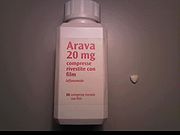
y drug inhibiting dihydroorotate dehydrogenase
(an enzyme involved in de novo pyrimidine synthesis) (abbreviation DHODH). Genuine antiproliferative activity has been proven. In addition, several experimental models (both in vivo
and in vitro
) have demonstrated an anti-inflammatory effect. This double action is supposed to slow progression of the disease and to cause remission/relief of symptoms of rheumatoid arthritis
and psoriatic arthritis
such as joint tenderness and decreased joint and general mobility in human patients.
. Following oral administration, leflunomide is metabolized to teriflunomide, which is responsible for all of the drug's activity in vivo. Studies of the pharmacokinetics of leflunomide have primarily examined the plasma concentrations of teriflunomide. Plasma levels of unchanged leflunomide are occasionally detected, but at very low levels. Some minor metabolites have been noticed to occur in human plasma, which do not account for the beneficial drug effects. Teriflunomide is metabolized in the liver at cytosolic and microsomal sites and further excreted as well renally and billary.
or the use of activated charcoal is indicated and will soon decrease plasma levels below the critical limit of 0.02 mg/l. Limited experience shows that teriflunomide is not dialysable.
The onset of clinical improvement can be expected after 4 to 6 weeks of continued therapy.
Aspirin, or other nonsteroidal anti-inflammatory agents (NSAR), and/or low-dose corticosteroids may be continued during treatment with leflunomide. The combined use of leflunomide with antimalarials, intramuscular or oral gold
, D-penicillamine, azathioprine
, or methotrexate
has not been adequately studied and is, therefore, contraindicated.
Especially the concomitant use of methotrexate may lead to severe or even fatal liver- or hepatotoxicity. Seventy-five percent of all cases of severe liver damage reported until early 2001 were seen under combined drug therapy Arava plus methotrexate. However, some studies have shown that the combination of methotrexate and leflunomide in patients with rheumatoid arthritis gave better results than either drug alone.
Prescribers are reminded that Arava should be prescribed only by specialists experienced in the treatment of rheumatic diseases.
status for the prevention of
solid-organ rejection after allograft transplantations when co-administered with commonly used first-line agents (USA only). Most experience exists with liver and renal transplantations. The efficacy and safety of leflunomide has not been completely assessed so far in well-controlled and adequate studies.
Teriflunomide
shows, in addition to the expected profound immunosuppressive potency, limited antiviral activity against CMV (cytomegalovirus
). CMV infections endanger eyesight (retinitis) or even the lives of transplant patients (systemic infections) under conventional immunosuppressive therapy regimes.
One study has been made in pediatric patients with juvenile rheumatoid arthritis (JRA). In these, patient group clinical efficacy, side-effect profile, and pharmacokinetic data have been comparable to adult patients with rheumatoid arthritis on Arava alone. The results, however, have been somewhat inferior to the active control group, possibly reflecting a relative underdosing in the lower age of patients group.
Leflunomide has also been utilized for the treatment of Relapsing Polychondritis
, but only case reports exist in the literature regarding this usage.
have been noticed, the absolute number of cases and the case/patient ratio is unknown. In rheumatoid arthritis patients a several-fold increase of lymphoma is already found in those patients not treated with any DMARD.
If severe side-effects are encountered, teriflunomide can be readily removed from the body with oral cholestyramine or activated charcoal (see above) to slow or reverse the noted side-effects.
Patients taking Arava should have platelet
count, white blood cell
count, and hemoglobin
or hematocrit
monitored before initiation of treatment (baseline values), monthly for six months following initiation of therapy, and every 6 to 8 weeks thereafter.
If used concomitantly with immunosuppressants such as methotrexate, chronic monitoring should be monthly.
ALT
(SGPT) values must be obtained at baseline and monitored at monthly intervals during the first six months then, if stable, every 6 to 8 weeks thereafter. In addition, if leflunomide and methotrexate are given concomitantly, ACR guidelines for monitoring methotrexate liver toxicity must be followed with ALT, AST
, and serum albumin
testing every month.
-inhibitors (infliximab
, etanercept
, and adalimumab
), the latter drugs also in combination with methotrexate) reach values from 20% only up to approximately 50%. Arava was withdrawn in clinical studies in 36% of patients due to different reasons (intolerable side-effects, lack of efficacy, unspecified reasons); the incidence was not higher than observed in the methotrexate control group. However, postmarketing data regarding the high incidence of severe liver damage, serious myelosuppression, profound immunosuppression leading to serious or even fatal infections, the possibility that Arava is a human carcinogen
, and the occurrence of interstitial lung disease has led to the forming of patient groups in the USA and Europe, for example, supported by safety aware physicians. These groups call for the local or worldwide ban or discontinuation of Arava.
Rheumatoid arthritis
Rheumatoid arthritis is a chronic, systemic inflammatory disorder that may affect many tissues and organs, but principally attacks synovial joints. The process produces an inflammatory response of the synovium secondary to hyperplasia of synovial cells, excess synovial fluid, and the development...
and psoriatic arthritis
Psoriatic arthritis
Psoriatic arthritis is a type of inflammatory arthritis that, according to the National Psoriasis Foundation, will develop in up to 30 percent of people who have the chronic skin condition psoriasis...
. It is a pyrimidine synthesis inhibitor.
Basic chemical, pharmacological, and marketing data
Leflunomide is a pyrimidinePyrimidine
Pyrimidine is a heterocyclic aromatic organic compound similar to benzene and pyridine, containing two nitrogen atoms at positions 1 and 3 of the six-member ring...
synthesis inhibitor belonging to the DMARD (disease-modifying antirheumatic drug) class of drugs, which are chemically and pharmacologically very heterogeneous.
The substance is sold under the brand name Arava
Arava
Arava can refer to:*Arava, Estonia, a village in Anija Commune, Harju County, Estonia.*Arabah, a section of the Great Rift Valley between the Dead Sea and the Gulf of Aqaba in Israel and Jordan....
by Sanofi-Aventis
Sanofi-Aventis
Sanofi S.A. is a multinational pharmaceutical company headquartered in Paris, France, the world's fourth-largest by prescription sales. Sanofi engages in the research and development, manufacturing and marketing of pharmaceutical products for sale principally in the prescription market, but the...
. It is available for oral administration as tablets containing 10, 20, or 100 mg of active drug. Arava also contains some inactive ingredients, which could cause allergies or intolerances. Arava was approved by the U.S. Food and Drug Administration (FDA) and in many other countries (e.g., Canada, Europe) in 1998.
Mechanism of action
Leflunomide is an immunomodulatorImmunomodulator
An immunomodulator, also known as an immunotherapy is a substance which has an effect on the immune system.- Immunosuppressants :Inhibits immune response in organ transplantation and autoimmune diseases.- Immunostimulants :...
y drug inhibiting dihydroorotate dehydrogenase
Dihydroorotate dehydrogenase
Dihydroorotate dehydrogenase is an enzyme that catalyzes the fourth step in the de novo biosynthesis of pyrimidine. It converts dihydroorotate to orotate:...
(an enzyme involved in de novo pyrimidine synthesis) (abbreviation DHODH). Genuine antiproliferative activity has been proven. In addition, several experimental models (both in vivo
In vivo
In vivo is experimentation using a whole, living organism as opposed to a partial or dead organism, or an in vitro controlled environment. Animal testing and clinical trials are two forms of in vivo research...
and in vitro
In vitro
In vitro refers to studies in experimental biology that are conducted using components of an organism that have been isolated from their usual biological context in order to permit a more detailed or more convenient analysis than can be done with whole organisms. Colloquially, these experiments...
) have demonstrated an anti-inflammatory effect. This double action is supposed to slow progression of the disease and to cause remission/relief of symptoms of rheumatoid arthritis
Rheumatoid arthritis
Rheumatoid arthritis is a chronic, systemic inflammatory disorder that may affect many tissues and organs, but principally attacks synovial joints. The process produces an inflammatory response of the synovium secondary to hyperplasia of synovial cells, excess synovial fluid, and the development...
and psoriatic arthritis
Psoriatic arthritis
Psoriatic arthritis is a type of inflammatory arthritis that, according to the National Psoriasis Foundation, will develop in up to 30 percent of people who have the chronic skin condition psoriasis...
such as joint tenderness and decreased joint and general mobility in human patients.
Pharmacokinetics
Arava tablets are 80% bioavailable. Co-administration with a high-fat meal did not have a significant impact on plasma levels of the active metabolite teriflunomideTeriflunomide
Teriflunomide is the active metabolite of leflunomide. Teriflunomide was investigated in the Phase III clinical trial TEMSO as a medication for multiple sclerosis . The study was completed in July 2010...
. Following oral administration, leflunomide is metabolized to teriflunomide, which is responsible for all of the drug's activity in vivo. Studies of the pharmacokinetics of leflunomide have primarily examined the plasma concentrations of teriflunomide. Plasma levels of unchanged leflunomide are occasionally detected, but at very low levels. Some minor metabolites have been noticed to occur in human plasma, which do not account for the beneficial drug effects. Teriflunomide is metabolized in the liver at cytosolic and microsomal sites and further excreted as well renally and billary.
Absorption and need for loading dose
After oral administration, peak plasma levels of teriflunomide occurred between 6 and 12 hours after dosing. Due to its very long half-life (approximately 2 weeks), a loading dose of 100 mg for 3 days was used in clinical studies to reach steady-state levels quickly. Without a loading dose, it is estimated that steady-state plasma concentrations would require nearly two months of dosing to be reached (nevertheless, one study showed fewer adverse effects and good efficacy if no loading dose is used at the beginning of treatment with leflunomide of patients with rheumatoid arthritis). The resulting plasma levels following both loading doses and continued clinical dosing indicate that plasma levels are dose proportional. Teriflunomide can be found as late as 2 years after termination of therapy in human plasma in sufficient levels to cause severe harm to pregnant women or to cause significant interactions. If quick removal from the body is necessary, an eleven-day scheme with cholestyramineCholestyramine
Cholestyramine or colestyramine is a bile acid sequestrant, which binds bile in the gastrointestinal tract to prevent its reabsorption. It is a strong ion exchange resin, which means that it can exchange its chloride anions with anionic bile acids in the gastrointestinal tract and bind them...
or the use of activated charcoal is indicated and will soon decrease plasma levels below the critical limit of 0.02 mg/l. Limited experience shows that teriflunomide is not dialysable.
Regular indications
In the US Arava is indicated in adults for the treatment of active moderate to severe rheumatoid arthritis and psoriatic arthritis- to reduce signs and symptoms
- to inhibit structural damage as evidenced by X-ray erosions and joint space narrowing
- to improve physical function.
The onset of clinical improvement can be expected after 4 to 6 weeks of continued therapy.
Aspirin, or other nonsteroidal anti-inflammatory agents (NSAR), and/or low-dose corticosteroids may be continued during treatment with leflunomide. The combined use of leflunomide with antimalarials, intramuscular or oral gold
Gold
Gold is a chemical element with the symbol Au and an atomic number of 79. Gold is a dense, soft, shiny, malleable and ductile metal. Pure gold has a bright yellow color and luster traditionally considered attractive, which it maintains without oxidizing in air or water. Chemically, gold is a...
, D-penicillamine, azathioprine
Azathioprine
Azathioprine is a purine analogue immunosuppressive drug. It is used to prevent organ rejection following organ transplantation and to treat a vast array of autoimmune diseases, including rheumatoid arthritis, pemphigus, inflammatory bowel disease , multiple sclerosis, autoimmune hepatitis, atopic...
, or methotrexate
Methotrexate
Methotrexate , abbreviated MTX and formerly known as amethopterin, is an antimetabolite and antifolate drug. It is used in treatment of cancer, autoimmune diseases, ectopic pregnancy, and for the induction of medical abortions. It acts by inhibiting the metabolism of folic acid. Methotrexate...
has not been adequately studied and is, therefore, contraindicated.
Especially the concomitant use of methotrexate may lead to severe or even fatal liver- or hepatotoxicity. Seventy-five percent of all cases of severe liver damage reported until early 2001 were seen under combined drug therapy Arava plus methotrexate. However, some studies have shown that the combination of methotrexate and leflunomide in patients with rheumatoid arthritis gave better results than either drug alone.
Prescribers are reminded that Arava should be prescribed only by specialists experienced in the treatment of rheumatic diseases.
Orphan drug status
Leflunomide has recently been assigned orphan drugOrphan drug
An orphan drug is a pharmaceutical agent that has been developed specifically to treat a rare medical condition, the condition itself being referred to as an orphan disease...
status for the prevention of
solid-organ rejection after allograft transplantations when co-administered with commonly used first-line agents (USA only). Most experience exists with liver and renal transplantations. The efficacy and safety of leflunomide has not been completely assessed so far in well-controlled and adequate studies.
Teriflunomide
Teriflunomide
Teriflunomide is the active metabolite of leflunomide. Teriflunomide was investigated in the Phase III clinical trial TEMSO as a medication for multiple sclerosis . The study was completed in July 2010...
shows, in addition to the expected profound immunosuppressive potency, limited antiviral activity against CMV (cytomegalovirus
Cytomegalovirus
Cytomegalovirus is a viral genus of the viral group known as Herpesviridae or herpesviruses. It is typically abbreviated as CMV: The species that infects humans is commonly known as human CMV or human herpesvirus-5 , and is the most studied of all cytomegaloviruses...
). CMV infections endanger eyesight (retinitis) or even the lives of transplant patients (systemic infections) under conventional immunosuppressive therapy regimes.
Other potential indications
Clinical studies regarding the following diseases have been conducted:- Polyoma BK Virus NephropathyDiabetic nephropathyDiabetic nephropathy , also known as Kimmelstiel-Wilson syndrome, or nodular diabetic glomerulosclerosis and intercapillary glomerulonephritis, is a progressive kidney disease caused by angiopathy of capillaries in the kidney glomeruli. It is characterized by nephrotic syndrome and diffuse...
- Systemic lupus erythematosusSystemic lupus erythematosusSystemic lupus erythematosus , often abbreviated to SLE or lupus, is a systemic autoimmune disease that can affect any part of the body. As occurs in other autoimmune diseases, the immune system attacks the body's cells and tissue, resulting in inflammation and tissue damage...
- Felty's syndromeFelty's syndromeFelty's syndrome, also called Felty syndrome, is characterized by the combination of rheumatoid arthritis, splenomegaly and neutropenia.-Symptoms:The symptoms of Felty's syndrome are similar to those of rheumatoid arthritis....
- Takayasu arteritis
- Wegener's granulomatosisWegener's granulomatosisWegener's granulomatosis , more recently granulomatosis with polyangiitis , is an incurable form of vasculitis that affects the nose, lungs, kidneys and other organs. Due to its end-organ damage, it is life-threatening and requires long-term immunosuppression...
- Ankylosing spondylitisAnkylosing spondylitisAnkylosing spondylitis , previously known as Bekhterev's disease, Bekhterev syndrome, and Marie-Strümpell disease is a chronic inflammatory disease of the axial skeleton with variable involvement of peripheral joints and nonarticular structures...
- Crohn's diseaseCrohn's diseaseCrohn's disease, also known as regional enteritis, is a type of inflammatory bowel disease that may affect any part of the gastrointestinal tract from mouth to anus, causing a wide variety of symptoms...
- SarcoidosisSarcoidosisSarcoidosis , also called sarcoid, Besnier-Boeck disease or Besnier-Boeck-Schaumann disease, is a disease in which abnormal collections of chronic inflammatory cells form as nodules in multiple organs. The cause of sarcoidosis is unknown...
- UveitisUveitisUveitis specifically refers to inflammation of the middle layer of the eye, termed the "uvea" but in common usage may refer to any inflammatory process involving the interior of the eye....
- Still's diseaseStill's diseaseStill's disease can refer to:* Juvenile idiopathic arthritis* Adult-onset Still's disease...
- Prostate cancerProstate cancerProstate cancer is a form of cancer that develops in the prostate, a gland in the male reproductive system. Most prostate cancers are slow growing; however, there are cases of aggressive prostate cancers. The cancer cells may metastasize from the prostate to other parts of the body, particularly...
- PemphigoidPemphigoidPemphigoid is a group of uncommon and rare autoimmune blistering skin diseases. As its name indicates, pemphigoid is similar to pemphigus, but, unlike pemphigus, pemphigoid does not feature acantholysis....
.
One study has been made in pediatric patients with juvenile rheumatoid arthritis (JRA). In these, patient group clinical efficacy, side-effect profile, and pharmacokinetic data have been comparable to adult patients with rheumatoid arthritis on Arava alone. The results, however, have been somewhat inferior to the active control group, possibly reflecting a relative underdosing in the lower age of patients group.
Leflunomide has also been utilized for the treatment of Relapsing Polychondritis
Polychondritis
Relapsing polychondritis is a condition characterized by deterioration of cartilage....
, but only case reports exist in the literature regarding this usage.
Contraindications and precautions
Leflunomide has a great number of absolute and relative contraindications, in part associated with its mode of action:- HypersensitivityHypersensitivityHypersensitivity refers to undesirable reactions produced by the normal immune system, including allergies and autoimmunity. These reactions may be damaging, uncomfortable, or occasionally fatal. Hypersensitivity reactions require a pre-sensitized state of the host. The four-group classification...
to the drug or to inactive ingredients (e.g., lactose).
- Important contraindications are "preexisting pregnancy", or women of childbearing potential not using reliable anticonceptive methods. Women should not become pregnant before 2 years after termination of therapy have elapsed or undergo a rapid wash-out procedure as stated above. Men wishing to father a child should discontinue leflunomide after consultation with their prescribing physician and also undergo the wash-out procedure.
- Preexisting significant liver or renal disease and moderate to severe diseases of the bone marrow or immune system preclude the use of Leflunomide.
- Moderate to severe bacterial, fungal or viral infections (e.g., AIDSAIDSAcquired immune deficiency syndrome or acquired immunodeficiency syndrome is a disease of the human immune system caused by the human immunodeficiency virus...
, latent HIVHIVHuman immunodeficiency virus is a lentivirus that causes acquired immunodeficiency syndrome , a condition in humans in which progressive failure of the immune system allows life-threatening opportunistic infections and cancers to thrive...
-Infection, pneumoniaPneumoniaPneumonia is an inflammatory condition of the lung—especially affecting the microscopic air sacs —associated with fever, chest symptoms, and a lack of air space on a chest X-ray. Pneumonia is typically caused by an infection but there are a number of other causes...
, active tuberculosisTuberculosisTuberculosis, MTB, or TB is a common, and in many cases lethal, infectious disease caused by various strains of mycobacteria, usually Mycobacterium tuberculosis. Tuberculosis usually attacks the lungs but can also affect other parts of the body...
).
Malignancies
Due to its potent immunosuppression, leflunomide has the potential to promote myeloid/lymphatic malignancies or solid cancers. In postmarketing reports some cases of lymphomaLymphoma
Lymphoma is a cancer in the lymphatic cells of the immune system. Typically, lymphomas present as a solid tumor of lymphoid cells. Treatment might involve chemotherapy and in some cases radiotherapy and/or bone marrow transplantation, and can be curable depending on the histology, type, and stage...
have been noticed, the absolute number of cases and the case/patient ratio is unknown. In rheumatoid arthritis patients a several-fold increase of lymphoma is already found in those patients not treated with any DMARD.
Side-effects
The side-effects of Arava affect quite a number of organ systems, are frequent and at times severe or even fatal.- Most serious is symptomatic liver damage ranging from jaundice to hepatitis, which can be fulminant, severe liver necrosis, and liver cirrhosis. Fatalities are known. Liver function studies may or may not precede the outbreak of clinical disease. The total incidence of severe liver damage is estimated to be as high as 0.5%, according to an internal report of the FDA. The EMEAEMEAEMEA may stand for:* the previous acronym of the European Medicines Agency, an EU regulatory agency for the evaluation of medicinal products* Europe, the Middle East and Africa...
, the European pendant to FDA, has in 2001 reported 296 cases of hepatotoxicity in 104,000 patient years, with 129 considered as serious, 2 cases of liver cirrhosis, and 15 cases of liver failure. Nine of the patients died. EMEA findings are that liver damage is typically seen within the first 6 months of therapy and is partially depending on cofactors, because of the serious cases 101 (78%) were concomitantly treated with other hepatotoxic drugs; 58% of those with asymptomatic elevations of liver function studies were cotreated with certain NSARs and/or methotrexate (see contraindications). In addition, 33% (=27 patients) of the patients with serious damage had other risk factors (history of alcohol abuse, liver function disturbance, acute heart failure, severe pulmonary disease or pancreatic carcinoma). Analysis of the data suggested that monitoring of liver function studies and wash-out periods may have not been fully adhered to. In case of any question, please refer to the procedures suggested in the EMEA statement as listed in section external links and references.
- Also very important is a relatively high incidence of myelosuppression with leukopeniaLeukopeniaLeukopenia is a decrease in the number of white blood cells found in the blood, which places individuals at increased risk of infection....
, and/or hypoplastic anemiaAnemiaAnemia is a decrease in number of red blood cells or less than the normal quantity of hemoglobin in the blood. However, it can include decreased oxygen-binding ability of each hemoglobin molecule due to deformity or lack in numerical development as in some other types of hemoglobin...
, and/or thrombocytopeniaThrombocytopeniaThrombocytopenia is a relative decrease of platelets in blood.A normal human platelet count ranges from 150,000 to 450,000 platelets per microliter of blood. These limits are determined by the 2.5th lower and upper percentile, so values outside this range do not necessarily indicate disease...
. Infections, sometimes as severe as development of active tuberculosisTuberculosisTuberculosis, MTB, or TB is a common, and in many cases lethal, infectious disease caused by various strains of mycobacteria, usually Mycobacterium tuberculosis. Tuberculosis usually attacks the lungs but can also affect other parts of the body...
, pneumoniaPneumoniaPneumonia is an inflammatory condition of the lung—especially affecting the microscopic air sacs —associated with fever, chest symptoms, and a lack of air space on a chest X-ray. Pneumonia is typically caused by an infection but there are a number of other causes...
, PCPPneumocystis pneumoniaPneumocystis pneumonia or pneumocystosis is a form of pneumonia, caused by the yeast-like fungus Pneumocystis jirovecii...
, and severe viral or mycotical infections, possibly leading to sepsis, death or permanent damage have been seen. Anemia or bleeding episodes may also lead to serious complications.
- Interstitial lung disease may occasionally be noticed and is recognized by progressive dyspneaDyspneaDyspnea , shortness of breath , or air hunger, is the subjective symptom of breathlessness.It is a normal symptom of heavy exertion but becomes pathological if it occurs in unexpected situations...
and typical X-ray findings. This disease may or may not be reversible upon treatment and may lead to permanent disability or death.
- Other sites are: GITGastrointestinal tractThe human gastrointestinal tract refers to the stomach and intestine, and sometimes to all the structures from the mouth to the anus. ....
, skinSkin-Dermis:The dermis is the layer of skin beneath the epidermis that consists of connective tissue and cushions the body from stress and strain. The dermis is tightly connected to the epidermis by a basement membrane. It also harbors many Mechanoreceptors that provide the sense of touch and heat...
reactions up to life-threatening forms (Stevens–Johnson syndrome and toxic epidermal necrolysisToxic epidermal necrolysisToxic epidermal necrolysis is a rare, life-threatening dermatological condition that is usually induced by a reaction to medications...
), heart problems, alopecia (17%), CNS troubles etc.
If severe side-effects are encountered, teriflunomide can be readily removed from the body with oral cholestyramine or activated charcoal (see above) to slow or reverse the noted side-effects.
Interactions
- Alcohol, other DMARDs including chloroquineChloroquineChloroquine is a 4-aminoquinoline drug used in the treatment or prevention of malaria.-History:Chloroquine , N'--N,N-diethyl-pentane-1,4-diamine, was discovered in 1934 by Hans Andersag and co-workers at the Bayer laboratories who named it "Resochin". It was ignored for a decade because it was...
/hydroxychloroquineHydroxychloroquineHydroxychloroquine is an antimalarial drug, sold under the trade names Plaquenil,Axemal, Dolquine, and Quensyl, also used to reduce inflammation in the treatment of rheumatoid arthritis and lupus...
, live virus vaccines, tegafurTegafurTegafur is a chemotherapeutic fluorouracil prodrug used in the treatment of cancers. It is a component of the combination drug tegafur-uracil. When metabolized, it becomes 5-fluorouracil....
, some tuberculostatics (rifampin and/or isoniazidIsoniazidIsoniazid , also known as isonicotinylhydrazine , is an organic compound that is the first-line antituberculosis medication in prevention and treatment. It was first discovered in 1912, and later in 1951 it was found to be effective against tuberculosis by inhibiting its mycolic acid...
), tolbutamideTolbutamideTolbutamide is a first generation potassium channel blocker, sulfonylurea oral hypoglycemic drug sold under the brand name Orinase. This drug may be used in the management of type II diabetes if diet alone is not effective. Tolbutamide stimulates the secretion of insulin by the pancreas...
and warfarinWarfarinWarfarin is an anticoagulant. It is most likely to be the drug popularly referred to as a "blood thinner," yet this is a misnomer, since it does not affect the thickness or viscosity of blood...
should not be given concomitantly.
Dosage regimen
Usually, an oral loading dose of 100 mg is followed by a once-a-day administration of 10 to 20 mg as determined by a specialized clinician. He/she will also determine the total duration of treatment. Experience regarding the duration of treatment has been gained in 2 studies, in one study treatment has been continued for 1 year, in the other for 2 years. After termination of treatment, beneficial effects may last for some years.Necessary laboratory examinations
- Hematologic Monitoring
Patients taking Arava should have platelet
Platelet
Platelets, or thrombocytes , are small,irregularly shaped clear cell fragments , 2–3 µm in diameter, which are derived from fragmentation of precursor megakaryocytes. The average lifespan of a platelet is normally just 5 to 9 days...
count, white blood cell
White blood cell
White blood cells, or leukocytes , are cells of the immune system involved in defending the body against both infectious disease and foreign materials. Five different and diverse types of leukocytes exist, but they are all produced and derived from a multipotent cell in the bone marrow known as a...
count, and hemoglobin
Hemoglobin
Hemoglobin is the iron-containing oxygen-transport metalloprotein in the red blood cells of all vertebrates, with the exception of the fish family Channichthyidae, as well as the tissues of some invertebrates...
or hematocrit
Hematocrit
The hematocrit or packed cell volume or erythrocyte volume fraction is the percentage of the concentration of red blood cells in blood. It is normally about 45% for men and 40% for women...
monitored before initiation of treatment (baseline values), monthly for six months following initiation of therapy, and every 6 to 8 weeks thereafter.
- Bone Marrow Suppression Monitoring for Combination Therapy with Immunosuppressants
If used concomitantly with immunosuppressants such as methotrexate, chronic monitoring should be monthly.
- Liver Enzyme Monitoring
ALT
Alanine transaminase
Alanine transaminase or ALT is a transaminase enzyme . It is also called serum glutamic pyruvic transaminase or alanine aminotransferase ....
(SGPT) values must be obtained at baseline and monitored at monthly intervals during the first six months then, if stable, every 6 to 8 weeks thereafter. In addition, if leflunomide and methotrexate are given concomitantly, ACR guidelines for monitoring methotrexate liver toxicity must be followed with ALT, AST
Alanine transaminase
Alanine transaminase or ALT is a transaminase enzyme . It is also called serum glutamic pyruvic transaminase or alanine aminotransferase ....
, and serum albumin
Human serum albumin
Human serum albumin is the most abundant protein in human blood plasma. It is produced in the liver. Albumin constitutes about half of the blood serum protein...
testing every month.
Patient counselling
Patients should be carefully informed as to report immediately any subjective early signs of liver damage, bone marrow damage, serious infection, life-threatening skin reactions, and interstitial lung disease to their physician. This is particular important for the interval between laboratory examinations.Summary and safety controversy
Arava is a potent drug comparing favourably with other DMARDs regarding the efficacy as measured by improvements on the ACR scale. Leflunomide met the ACR20 criteria in up to 56% of patients; most other drugs (e.g., methotrexate alone, sulfasalazine, TNFTumor necrosis factors
Tumor necrosis factors refers to a group of cytokines family that can cause cell death . The first two members of the family to be identified were:...
-inhibitors (infliximab
Infliximab
Infliximab is a monoclonal antibody against tumour necrosis factor alpha . It is used to treat autoimmune diseases. Remicade is marketed by Janssen Biotech, Inc...
, etanercept
Etanercept
Etanercept is a drug that treats autoimmune diseases by interfering with the tumor necrosis factor by acting as a TNF inhibitor. Pfizer describes in a SEC filing that the drug is used to treat rheumatoid, juvenile rheumatoid and psoriatic arthritis, plaque psoriasis and ankylosing spondylitis...
, and adalimumab
Adalimumab
Adalimumab is the third TNF inhibitor, after infliximab and etanercept, to be approved in the United States. Like infliximab and etanercept, adalimumab binds to TNFα, preventing it from activating TNF receptors; adalimumab was constructed from a fully human monoclonal antibody, while infliximab...
), the latter drugs also in combination with methotrexate) reach values from 20% only up to approximately 50%. Arava was withdrawn in clinical studies in 36% of patients due to different reasons (intolerable side-effects, lack of efficacy, unspecified reasons); the incidence was not higher than observed in the methotrexate control group. However, postmarketing data regarding the high incidence of severe liver damage, serious myelosuppression, profound immunosuppression leading to serious or even fatal infections, the possibility that Arava is a human carcinogen
Carcinogen
A carcinogen is any substance, radionuclide, or radiation that is an agent directly involved in causing cancer. This may be due to the ability to damage the genome or to the disruption of cellular metabolic processes...
, and the occurrence of interstitial lung disease has led to the forming of patient groups in the USA and Europe, for example, supported by safety aware physicians. These groups call for the local or worldwide ban or discontinuation of Arava.
External links
- National Rheumatoid Arthritis Society (NRAS) Information about Disease Modifying drugs such as Leflunomide
- http://www.arava.com/professional/home.do (full prescribing information)
- http://www.rheuma-online.de/medikamente/leflunomid-arava/studien-zu-leflunomid-arava/gibt-es-untersuchungen-zu-leflunomid-in-weiteren-einsatzgebieten.html (in German, regarding potential indications)
- http://www.arznei-telegramm.de/register/0204507.pdf (in German, regarding discontinuation of the drug)
- http://www.emea.europa.eu/pdfs/human/press/pus/561101en.pdf (warning as of 2001 regarding hepatotoxicity) (URL DEAD 16 Oct 2010)