

Diaper

Encyclopedia
- "Nappy" redirects here. For other uses, see Nappy (disambiguation) and Diaper (disambiguation)Diaper (disambiguation)Diaper can mean:* Diaper, an absorbent garment .* Diaper or Diapering, a term in heraldry and in decorative art and architecture for a repeating pattern of squares or lozenges made in contrasting colours or textures, in brick, stone or flint flushwork.* "Diaper", a song by Meat Puppets from You...
. - For the geological term, see diapirDiapirA diapir is a type of intrusion in which a more mobile and ductily-deformable material is forced into brittle overlying rocks. Depending on the tectonic environment, diapirs can range from idealized mushroom-shaped Rayleigh-Taylor instability-type structures in regions with low tectonic stress...
.
United Kingdom
The United Kingdom of Great Britain and Northern IrelandIn the United Kingdom and Dependencies, other languages have been officially recognised as legitimate autochthonous languages under the European Charter for Regional or Minority Languages...
, Ireland
Ireland
Ireland is an island to the northwest of continental Europe. It is the third-largest island in Europe and the twentieth-largest island on Earth...
, Australia
Australia
Australia , officially the Commonwealth of Australia, is a country in the Southern Hemisphere comprising the mainland of the Australian continent, the island of Tasmania, and numerous smaller islands in the Indian and Pacific Oceans. It is the world's sixth-largest country by total area...
, New Zealand
New Zealand
New Zealand is an island country in the south-western Pacific Ocean comprising two main landmasses and numerous smaller islands. The country is situated some east of Australia across the Tasman Sea, and roughly south of the Pacific island nations of New Caledonia, Fiji, and Tonga...
and many other Commonwealth countries
Commonwealth of Nations
The Commonwealth of Nations, normally referred to as the Commonwealth and formerly known as the British Commonwealth, is an intergovernmental organisation of fifty-four independent member states...
) or a diaper (in North America
North America
North America is a continent wholly within the Northern Hemisphere and almost wholly within the Western Hemisphere. It is also considered a northern subcontinent of the Americas...
) is a kind of pant that allows one to defecate or urinate on oneself discreetly. When diapers become soiled, they require changing; this process is often performed by a second person such as a parent or caregiver. Failure to change a diaper on a regular enough basis can result in diaper rash
Diaper rash
Irritant diaper dermatitis is a generic term applied to skin rashes in the diaper area that are caused by various skin disorders and/or irritants.Generic rash or irritant diaper dermatitis is characterized by joined patches of erythema and...
.
Diapers have been worn throughout human history. They are made of cloth or disposable
Disposable
A disposable is a product designed for cheapness and short-term convenience rather than medium to long-term durability, with most products only intended for single use. The term is also sometimes used for products that may last several months to distinguish from similar products that last...
materials. Cloth diapers are composed of layers of fabric such as cotton, hemp, bamboo or microfiber and can be washed and reused multiple times. Disposable diapers contain absorbent chemicals and are thrown away after use. The decision to use cloth or disposable diapers is a controversial one, owing to issues ranging from convenience, health, cost, and their effect on the environment. Plastic pants
Plastic pants
Plastic pants are devices worn over a diaper for the purpose of containing liquid or solid waste that may otherwise leak through the fabric. Today, "plastic pants" are usually made out of polyvinyl chloride or polyurethane though, in some instances, the traditional latex rubber is still used...
can be worn over diapers to avoid leaks, but with modern cloth diapers, this is no longer necessary.
Diapers are primarily worn by child
Child
Biologically, a child is generally a human between the stages of birth and puberty. Some vernacular definitions of a child include the fetus, as being an unborn child. The legal definition of "child" generally refers to a minor, otherwise known as a person younger than the age of majority...
ren who are not yet potty trained
Toilet training
Toilet training, or potty training, is the process of training a young child to use the toilet for urination and defecation, though training may start with a smaller toilet bowl-shaped device...
or experience bedwetting
Bedwetting
Nocturnal enuresis, commonly called bedwetting, is involuntary urination while asleep after the age at which bladder control usually occurs. Nocturnal enuresis is considered primary when a child has not yet had a prolonged period of being dry...
. However, they can also be used by adults
Adult diaper
An adult diaper is a diaper made to be worn by a person with a body larger than that of an infant or toddler. Diapers become necessary for adults with various conditions, such as incontinence, mobility impairment, or dementia...
with incontinence
Urinary incontinence
Urinary incontinence is any involuntary leakage of urine. It is a common and distressing problem, which may have a profound impact on quality of life. Urinary incontinence almost always results from an underlying treatable medical condition but is under-reported to medical practitioners...
or in certain circumstances where access to a toilet is unavailable. These can include the elderly, those with a physical or mental
Mental illness
A mental disorder or mental illness is a psychological or behavioral pattern generally associated with subjective distress or disability that occurs in an individual, and which is not a part of normal development or culture. Such a disorder may consist of a combination of affective, behavioural,...
disability
Disability
A disability may be physical, cognitive, mental, sensory, emotional, developmental or some combination of these.Many people would rather be referred to as a person with a disability instead of handicapped...
, and people working in extreme conditions such as astronaut
Astronaut
An astronaut or cosmonaut is a person trained by a human spaceflight program to command, pilot, or serve as a crew member of a spacecraft....
s. It is not uncommon for people to wear diapers under dry suits. Diapers are usually worn out of necessity rather than choice, although there are exceptions; people such as infantilists and diaper fetishists
Diaper fetishism
Diaper fetishism, nappy fetishism or diaperism, is a sexual fetish in which a person feels a desire to wear or use diapers. This is normally not due to a medical need.Diaper fetishism is independent from pedophilia...
wear diapers recreationally for comfort, emotional fulfillment, or sexual gratification. Terms such as "incontinence pad
Incontinence pad
An incontinence pad is a small impermeable multi-layered sheet with high absorbency that is used in the health-care industry. The term can also used to refer to what are more correctly known as Incontinence Diapers. Actual incontinence pads are usually placed on a bed or chair under a patient as a...
s" can be used to refer to adult diapers.
An alternative to infant diapers is the infant potty training method or elimination communication
Elimination communication
Elimination communication is a toilet training practice in which a caregiver uses timing, signals, cues, and intuition to address an infant's need to eliminate waste. Caregivers try to recognize and respond to babies' bodily needs and enable them to urinate and defecate in an appropriate place...
, a technique that involves sound association, learning an infant’s body language, and reacting quickly enough to reach a suitable spot for elimination. This method is more commonly used in third-world countries whose citizens do not possess the financial means to purchase baby diapers.
Etymology
The Middle EnglishMiddle English
Middle English is the stage in the history of the English language during the High and Late Middle Ages, or roughly during the four centuries between the late 11th and the late 15th century....
word diaper originally referred to the type of cloth rather than its use; "diaper" was the term for a pattern of small repeated geometric shapes, and later came to describe a white cotton or linen fabric with this pattern. The first cloth diapers consisted of a special type of soft tissue sheet, cut into geometric shapes. This type of pattern was called diapering
Diapering
Diaper is any of a wide range of decorative patterns used in a variety of works of art, such as stained glass, heraldic shields, architecture, silverwork etc. Its chief use is in the enlivening of plain surfaces.-Etymology:...
and eventually gave its name to the cloth used to make diapers and then to the diaper itself, traced back to 1590s England. This usage stuck in the United States
United States
The United States of America is a federal constitutional republic comprising fifty states and a federal district...
and Canada
Canada
Canada is a North American country consisting of ten provinces and three territories. Located in the northern part of the continent, it extends from the Atlantic Ocean in the east to the Pacific Ocean in the west, and northward into the Arctic Ocean...
following the British colonization of North America
British colonization of the Americas
British colonization of the Americas began in 1607 in Jamestown, Virginia and reached its peak when colonies had been established throughout the Americas...
, but in Britain
United Kingdom
The United Kingdom of Great Britain and Northern IrelandIn the United Kingdom and Dependencies, other languages have been officially recognised as legitimate autochthonous languages under the European Charter for Regional or Minority Languages...
the word "nappy" took its place. Most sources believe nappy is a diminutive form of the word napkin
Napkin
A napkin, or face towel is a rectangle of cloth used at the table for wiping the mouth while eating. It is usually small and folded...
.
Development
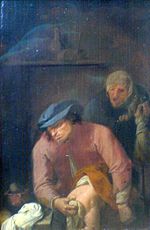
In the 19th century, the modern diaper/ nappy began to take shape and mothers in many parts of the world used cotton material, held in place with a fastening—eventually the safety pin. Cloth diapers in the United States were first mass produced in 1887 by Maria Allen. In the UK nappies were made out of terry towelling, often with an inner lining made out of soft muslin
Muslin
Muslin |sewing patterns]], such as for clothing, curtains, or upholstery. Because air moves easily through muslin, muslin clothing is suitable for hot, dry climates.- Etymology and history :...
.
Here is an extract from 'The Modern Home Doctor' written by doctors in the UK in 1935.
-
- "Nice old, soft bits of good Turkish towelling, properly washed, will make the softest of diaper coverings, inside which specially absorbent napkins (diapers), see below at 1A, soft, light, and easily washed, are contained. These should rarely be soiled once regular habits have been inculcated, especially during the night period in which it is most important to prevent habit formation
- 1A -(squares of butter muslin or Harrinton’s packed rolls of “mutton cloth” in packets, sold for polishing motor-cars, would do equally well and are very cheap and soft")
Once available rubber pants
Rubber pants
Rubber pants or rubber panties were the predecessor to plastic pants and served the purpose of a diaper cover, replacing the woolen garment. However, "rubber pants" is still a generic term for any pull-on or snap-on incontinence protective garment....
would sometimes be used over the cloth diaper/ nappy to prevent leakage. Doctors were antagonistic to this because they believed that the rubber would act as a poultice and damage the baby's skin.
The constant problem to be overcome was nappy /diaper rash and infection. The concern was that lack of air circulation would make this worse. It was later found that poor hygiene - inefficiently washed and bleached nappies and infrequent changes of nappy, allowing the baby to lie for some time with faecal matter in contact with the skin, were the two main causes of serious problems.
In the 20th century, the disposable diaper/ nappy gradually evolved through the inventions of several different people. In the 1930s Robinsons of Chesterfield had 'Destroyable Babies Napkins' listed in their catalogue for the wholesale market. In 1944, Hugo Drangel of the Swedish paper company Pauliström suggested an idea of placing sheets of paper tissue (cellulose wadding) inside the cloth diaper/ nappy and rubber pants. However cellulose wadding was rough against the skin and when wet, crumbled into balls.
In 1946, Marion Donovan
Marion Donovan
Marion O'Brien Donovan was an American inventor and entrepreneur. She developed the first waterproof disposable diaper.-Biography:...
used a shower curtain from her bathroom to create the "Boater", a plastic cover to go outside a diaper. First sold in 1949 at Saks Fifth Avenue's flagship store in New York City, patents were later issued in 1951 to Donovan who later sold the rights to the waterproof diaper for $1 million.
In 1947, a housewife in the UK - Valerie Hunter Gordon, started developing and making Paddi, a 2-part system of a disposable pad (cellulose wadding covered with cotton wool) and an outer plastic, adjustable garment with press-studs/ snaps. Initially she used old parachutes for the garment). She applied for the patent in April 1948, it was granted for the UK in October 1949 and in November 1949 she signed a contract with Robinsons of Chesterfield who then went into full production. In 1950 Boots the Chemist agreed to sell Paddi in all their UK branches. In 1951 the Paddi patent was granted for the USA and The whole of the World. Shortly after that, Playtex and several other large international companies tried unsuccessfully to buy out Paddi from Robinsons, realising the enormous potential of the product. Paddi was extremely successful for many years until the advent of 'all in one' diapers.
Initially the big manufacturers were unable to see the huge commercial possibilities of disposable nappies. In the UK in 1948, Valerie Hunter Gordon made over 400 Paddis herself using her sewing machine at the kitchen table. Her husband had unsuccessfully approached several companies for help and it was only a chance meeting with Sir Robert Robinson at a business dinner that got things going. In America, Marion Donovan could not find a manufacturer. In Sweden, Hugo Drangel's daughter Lil Karhola Wettergren, in 1956 elaborated her father's original idea, by adding a garment (again making a 2-part system like Paddi). However she met the same problem, with the purchasing managers, who were male, declaring they would never allow their wives to "put paper on their children."
After the Second World War, mothers increasingly wanted freedom from washing nappies so that they could work and travel causing an increasing demand for disposable diapers.
During the 1950s, companies such as Johnson and Johnson, Kendall, Parke-Davis, Playtex, and Molnlycke entered the disposable diaper market.
In 1956, Procter & Gamble began researching disposable diapers. Victor Mills, along with his project group including William Dehaas (both men who worked for the company) invented what would be trademarked "Pampers". Presented to Fred Wells as 'project p-57' (this was the plane Wells had taught American pilots to fly during WWII), Mills stated, "This one will fly." Although Pampers were conceptualized in 1959, the diapers themselves were not launched into the market until 1961.
Over the next few decades, the disposable diaper industry boomed and the competition between Procter & Gamble's Pampers and Kimberly Clark's Huggies resulted in lower prices and drastic changes to diaper design. Several improvements were made, such as the use of double gussets to improve diaper fit and containment. As stated in Procter & Gamble's initial 1973 patent for the use of double gussets in a diaper, “The double gusset folded areas tend to readily conform to the thigh portions of the leg of the infant. This allows quick and easy fitting and provides a snug and comfortable diaper fit that will neither bind nor wad on the infant…as a result of this snugger fit obtained because of this fold configuration, the diaper is less likely to leak or, in other words, its containment characteristics are greatly enhanced.” Further developments in diaper design were made, such as the introduction of refastenable tapes, the "hourglass shape" so as to reduce bulk at the crotch area, and the 1984 introduction of super-absorbent material from polymers known as sodium polyacrylate
Sodium polyacrylate
Sodium polyacrylate, also known as waterlock, is a polymer with the chemical formula [-CH2-CH-]n widely used in consumer products. It has the ability to absorb as much as 200 to 300 times its mass in water. Acrylate polymers generally are considered to possess an anionic charge...
that were originally developed in 1966.
Disposable
The first disposable diaper was invented by Valerie Hunter-Gordon (nee de Ferranti), granddaughter of inventor Sebastian Ziani de FerrantiSebastian Ziani de Ferranti
Sebastian Pietro Innocenzo Adhemar Ziani de Ferranti was an electrical engineer and inventor.-Personal life:...
.
Ever since their introduction several decades ago, product innovations include the use of superabsorbent polymer
Superabsorbent polymer
Superabsorbent polymers are polymers that can absorb and retain extremely large amounts of a liquid relative to their own mass....
s, resealable tapes, and elasticised
Elastomer
An elastomer is a polymer with the property of viscoelasticity , generally having notably low Young's modulus and high yield strain compared with other materials. The term, which is derived from elastic polymer, is often used interchangeably with the term rubber, although the latter is preferred...
waist bands. They are now much thinner and much more absorbent. The product range has more recently been extended into children's toilet training phase with the introduction of training pants and pant diapers, which are now undergarments.
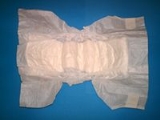
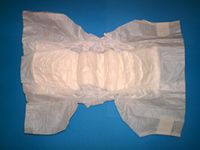
Modern disposable baby diapers and incontinence products have a layered construction, which allows the transfer and distribution of urine to an absorbent core structure where it is locked in. Basic layers are an outer shell of breathable polyethylene
Polyethylene
Polyethylene or polythene is the most widely used plastic, with an annual production of approximately 80 million metric tons...
film or a nonwoven and film composite which prevents wetness and soil transfer, an inner absorbent layer of a mixture of air-laid paper
Air-laid paper
Air-laid paper is a textile-like material categorized as a nonwoven fabric made from fluff pulp.-Properties:Compared with normal wet-laid paper and tissue, air-laid paper is very bulky, porous and soft...
and superabsorbent polymer
Superabsorbent polymer
Superabsorbent polymers are polymers that can absorb and retain extremely large amounts of a liquid relative to their own mass....
s for wetness, and a layer nearest the skin of nonwoven material with a distribution layer directly beneath which transfers wetness to the absorbent layer.
Other common features of disposable diapers include one or more pairs of either adhesive or velcro
Velcro
Velcro is the brand name of the first commercially marketed fabric hook-and-loop fastener, invented in 1948 by the Swiss electrical engineer George de Mestral...
tapes to keep the diaper securely fastened. Some diapers have tapes which are refastenable to allow adjusting of fit or reapplication after inspection. Elasticized fabric single and double gusset
Gusset
In sewing, a gusset is a triangular or rhomboid piece of fabric inserted into a seam to add breadth or reduce stress from tight-fitting clothing...
s around the leg and waist areas aid in fitting and in containing urine or stool which has not been absorbed. In fact, the first patent for the use of double gussets in a diaper was in 1973 by the Proctor and Gamble Company Some diapers lines now commonly include wetness indicators, in which a chemical included in the fabric of the diaper changes color in the presence of moisture to alert the carer or user that the diaper is wet.
A disposable diaper may also include an inner fabric designed to hold moisture against the skin for a brief period before absorption to alert a toilet training or bedwetting user that they have urinated. Most materials in the diaper are held together with the use of a hot melt adhesive which is applied in spray form or multi lines, an elastic hot melt is also used to help with pad integrity when the diaper is wet.
Some disposable diapers include fragrances, lotions or essential oils in order to help mask the scent of a soiled diaper or to protect the skin. Care of disposable diapers is minimal, and primarily consists of keeping them in a dry place before use, with proper disposal in a garbage receptacle upon soiling. Stool is supposed to be deposited in the toilet, but is generally put in the garbage with the rest of the diaper.
Cloth Diaper
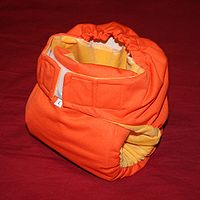
Cotton
Cotton is a soft, fluffy staple fiber that grows in a boll, or protective capsule, around the seeds of cotton plants of the genus Gossypium. The fiber is almost pure cellulose. The botanical purpose of cotton fiber is to aid in seed dispersal....
which may be bleach
Bleach
Bleach refers to a number of chemicals that remove color, whiten, or disinfect, often via oxidation. Common chemical bleaches include household chlorine bleach , lye, oxygen bleach , and bleaching powder...
ed white or left the fiber’s natural color. Other natural fiber cloth materials include wool
Wool
Wool is the textile fiber obtained from sheep and certain other animals, including cashmere from goats, mohair from goats, qiviut from muskoxen, vicuña, alpaca, camel from animals in the camel family, and angora from rabbits....
, bamboo
Bamboo
Bamboo is a group of perennial evergreens in the true grass family Poaceae, subfamily Bambusoideae, tribe Bambuseae. Giant bamboos are the largest members of the grass family....
, and unbleached hemp
Hemp
Hemp is mostly used as a name for low tetrahydrocannabinol strains of the plant Cannabis sativa, of fiber and/or oilseed varieties. In modern times, hemp has been used for industrial purposes including paper, textiles, biodegradable plastics, construction, health food and fuel with modest...
. Manmade materials such as an internal absorbent layer of microfiber
Microfiber
Microfiber or microfibre refers to synthetic fibers that measure less than one denier. The most common types of microfibers are made from polyesters, polyamides , and or a conjugation of polyester and polyamide.Microfiber is used to make non-woven, woven and knitted textiles...
toweling or an external waterproof layer of polyurethane laminate
Polyurethane laminate
Polyurethane laminate is a compound fabric made by laminating a cloth fabric to a thin film of polyurethane. Polyurethane laminated fabrics have a wide range of applications in medical, automotive and garment uses, PUL generally refers to a specific type used makers of resuable incontinence...
(PUL) may be used. Polyester
Polyester
Polyester is a category of polymers which contain the ester functional group in their main chain. Although there are many polyesters, the term "polyester" as a specific material most commonly refers to polyethylene terephthalate...
fleece and faux suedecloth are often used inside cloth diapers as a "stay-dry" wicking liner because of the non-absorbent properties of those synthetic fibers.
Traditionally, cloth diapers consisted of a folded square or rectangle of cloth, fastened with safety pin
Safety pin
A safety pin is a simple fastening device, a variation of the regular pin which includes a simple spring mechanism and a clasp. The clasp serves two purposes: to form a closed loop thereby properly fastening the pin to whatever it is applied to, and to cover the end of the pin to protect the user...
s. The "Safe Diaper Clip," an alternative to traditional safety pins, was invented and patented in 1961 by Edward Moonan of Boonville, NY. The "Safe Diaper Clip" never took off, due to simultaneous development in the disposable diaper industry. Today, most cloth diapers are fastened with hook and loop tape (velcro) or snaps.
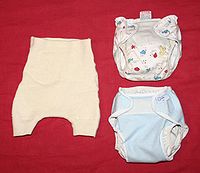
Modern cloth diapers come in a host of shapes, including preformed cloth diapers, all-in-one diapers with waterproof exteriors, fitted diaper with covers and pocket or "stuffable" diapers, which consist of a water-resistant outer shell sewn with an opening for insertion of absorbent material inserts. Many design features of modern cloth diapers have followed directly from innovations initially developed in disposable diapers, such as the use of the hour glass shape, materials to separate moisture from skin and the use of double gussets, or an inner elastic band for better fit and containment of waste material. Several cloth diaper brands use variations of Procter & Gamble
Procter & Gamble
Procter & Gamble is a Fortune 500 American multinational corporation headquartered in downtown Cincinnati, Ohio and manufactures a wide range of consumer goods....
's original 1973 patent use of a double gusset in Pampers
Pampers
Pampers is a brand of baby products marketed by Procter & Gamble. Pampers was at one time only used as a name for a disposable diaper.-Products:...
.
Types of Modern Cloth Diapers
Prefolds – Prefold diapers are a rectangle of layered cloth, sewn together in the center third to create a thicker layer. They come in several sizes to correspond with a baby’s weight range. Prefolds are fastened with pins or a Snappi, or folded in thirds and laid inside a cover. They require a cover to be waterproof. Prefolds must be washed after each diaper change but the cover can be reused several times if it is not soiled with feces.
Flats – Flat diapers are a single large layer of cloth that must be folded into the correct size to fit a baby. Flats must be pinned or Snappi’d to stay on the baby. Flats require a cover to be waterproof. Flat diapers must be washed after each diaper change but the cover can be reused several times if it is not soiled with feces.
Fitteds – Fitted diapers look similar to a disposable diaper and are made of a few layers of absorbent cloth material. Fitteds are fastened shut in three ways: pins, snaps, or hook and loop tape (velcro). Fitted diapers come in several sizes to fit a baby’s weight range. They require a separate cover to be waterproof. Fitted diapers must be washed after each diaper change but the cover can be reused several times if it is not soiled with feces.
Pocket diapers – Pocket diapers consist of a waterproof outer layer and a moisture-wicking inner layer that are sewn together on three sides to create a stuffable pocket or sleeve. Pocket diapers look similar to disposable diapers and some are virtually as slim as disposable nappies. The pocket is stuffed with absorbent material to customize an absorbency level for each baby. Typically suede cloth or microfleece fibre is used to wick the moisture away from the babies skin to prevent diaper rash
Diaper rash
Irritant diaper dermatitis is a generic term applied to skin rashes in the diaper area that are caused by various skin disorders and/or irritants.Generic rash or irritant diaper dermatitis is characterized by joined patches of erythema and...
. Pocket diapers dry more quickly than all-in-one diapers because they have less material in them, and those with a sleeve open at both ends mean that the insert will agitate its own way out during the wash, so you dont need to manually remove it before washing. A pocket diaper must be washed after each diaper change. Pocket diapers often come in one size that can be adjusted with snaps and hook and loop tape (velcro) to fit a baby over a wide variety of weight ranges. Modern Pocket diapers use "green" materials, such as bamboo textiles and biodegradable liners which significantly improves the resource savings of the modern pocket diaper.
All-in-one diaper – An all in one (AIO) diaper consists of a waterproof outer layer, sewn together with a moisture wicking inner layer and an attached absorbent flap. AIO diapers are the most convenient diapers to use since there is only one item to put on the baby; however, they take longer to dry since they are thicker than other options. AIOs can be sized for a particular weight range or one-sized to adjust to a wider weight range. AIOs must be washed after each diaper change.
All-in-two diaper – An all-in-two- diaper (AI2) is a diaper that can function as an all-in-one diaper or as a diaper cover, thus the name all-in-two. An all-in-two diaper has a snap in, or lay in insert that can be removed and replaced with a clean insert after it has been wet. The cover of an all-in-two only needs to be laundered if the diaper is soiled and the cover needs cleaning. With the insert removed the diaper can be used as a cover over a prefold or fitted cloth diaper.
Cloth diapers require dry storage as well, and equipment and supplies for cleaning. Cloth diapers place less stress on landfills as compared to single-use disposable diapers, but also require washing in water with detergent
Detergent
A detergent is a surfactant or a mixture of surfactants with "cleaning properties in dilute solutions." In common usage, "detergent" refers to alkylbenzenesulfonates, a family of compounds that are similar to soap but are less affected by hard water...
to be properly cleaned. The method of "dry-pailing" after removal of solid waste and washing on a cold or warm wash removes most bacteria. Sun exposure will kill any remainder and usually resolves any staining issues. As an alternative to at-home cleaning, some locations have a fee-based cloth diapering service that delivers clean diapers and picks up soiled ones, while parents in more rural areas often find that they must clean diapers using their own cleaning facilities.
Some brands seek to combine cloth and disposable diapers. Generally, these hybrids are cloth diapers with a disposable inner layer.
Debate
An average child will go through several thousand diapers in his/her life. Since disposable diapers are discarded after a single use, usage of disposable diapers increases the burden on landfill sites, and increased environmental awareness has led to a growth in campaigns for parents to use reusable alternatives such as cloth or hybrid diapers. An estimated 27.4 billion disposable diapers are used each year in the US, resulting in a possible 3.4 million tons of used diapers adding to landfills each year. It is possible, however, to buy disposable diapers with a low environmental impact.The environmental impact of cloth as compared to disposable diapers has been studied several times. In one cradle-to-grave study sponsored by the National Association of Diaper Services (NADS) and conducted by Carl Lehrburger and colleagues, results found that disposable diapers produce seven times more solid waste when discarded and three times more waste in the manufacturing process. In addition, effluents from the plastic, pulp, and paper industries are far more hazardous than those from the cotton-growing and -manufacturing processes. Single-use diapers consume less water than reusables laundered at home, but more than those sent to a commercial diaper service. Washing cloth diapers at home uses 50 to 70 gallons of water every three days, which is roughly equivalent to flushing the toilet 15 times a day, unless the user has a high-efficiency washing machine. An average diaper service puts its diapers through an average of 13 water changes, but uses less water and energy per diaper than one laundry load at home.
In October 2008, "An updated lifecycle assessment study for disposable and reusable nappies" by the UK Environment Agency and Department for Environment, Food and Rural Affairs
Department for Environment, Food and Rural Affairs
The Department for Environment, Food and Rural Affairs is the government department responsible for environmental protection, food production and standards, agriculture, fisheries and rural communities in the United Kingdom...
stated that reusable diapers can cause significantly less (up to 40 per cent) or significantly more damage to the environment than disposable ones, depending mostly on how parents wash and dry them. The "baseline scenario" showed that the difference in green-house emissions was insignificant (in fact, disposables even scored slightly better). However, much better results (emission cuts of up to 40 per cent) could be achieved by using reusable diapers more rationally. "The report shows that, in contrast to the use of disposable nappies, it is consumers’ behaviour after purchase that determines most of the impacts from reusable nappies. Cloth nappy users can reduce their environmental impacts by:
- Line drying outside whenever possible
- Tumble drying as little as possible
- When replacing appliances, choosing more energy efficient appliances (A+ rated machines [according to the EU environmental rating] are preferred)
- Not washing above 60 °C (140 °F)
- Washing fuller loads
- Reusing nappies on other children.
There are variations in the care of cloth diapers that can account for different measures of environmental impact. For example, using a cloth diaper laundering service involves additional pollution from the vehicle that picks up and drops off deliveries. Yet such a service uses less water per diaper in the laundering process. Some people who launder cloth diapers at home wash each load twice, considering the first wash a "prewash", and thus doubling the energy and water usage from laundering. Cloth diapers are most commonly made of cotton, which is generally considered an environmentally wasteful crop to grow. "Conventional cotton is one of the most chemically-dependent crops, sucking up 10% of all agricultural chemicals and 25% of insecticides on 3% of our arable land; that's more than any other crop per unit." This effect can be mitigated by using other materials, such as bamboo and hemp.
Another aspect to consider when choosing between disposable diapers and cloth diapers is cost. It is estimated that an average baby will use from $1,500 to $2,000 or more in disposable diapers before being potty-trained. In contrast, cloth diapers, while initially more expensive than disposables, cost as low as $300 for a basic set of cloth diapers, although costs can rise with more expensive options. The cost of washing and drying diapers must also be considered. The basic set, if one-sized, can last from birth to potty-training.
Another factor in reusable cloth diaper impact is the ability to re-use the diapers for subsequent children, sale of used diapers through diaperswappers.com http://www.diaperswappers.com, craigslist http://www.craigslist.org or other online communities, donation of used diapers through recycling groups such as freecycle http://www.freecycle.org or to charities such as miraclediapers.org http://www.miraclediapers.org. Many reusable diaper users take advantage of these resources and may even join communities like livejournal's clothdiapering http://community.livejournal.com/clothdiapering in order to find ways to make their diaper-washing routine more efficient or get feedback about different types of reusable diapers. These factors can alleviate the environmental and financial impact from manufacture, sale and use of brand-new reusable diapers.
Children
Babies may need to have their diapers changed five or more times a day. Diapering can also serve as a good bonding experience for parent and child. To avoid skin irritation, commonly referred to as diaper rashDiaper rash
Irritant diaper dermatitis is a generic term applied to skin rashes in the diaper area that are caused by various skin disorders and/or irritants.Generic rash or irritant diaper dermatitis is characterized by joined patches of erythema and...
, the diaper of those prone to it should be changed as soon as possible after it is soiled (especially by fecal matter), as feces contain urease
Urease
Urease is an enzyme that catalyzes the hydrolysis of urea into carbon dioxide and ammonia. The reaction occurs as follows:In 1926, James Sumner showed that urease is a protein. Urease is found in bacteria, yeast, and several higher plants. The structure of urease was first solved by P.A...
which catalyzes the conversion of the urea in urine to ammonia
Ammonia
Ammonia is a compound of nitrogen and hydrogen with the formula . It is a colourless gas with a characteristic pungent odour. Ammonia contributes significantly to the nutritional needs of terrestrial organisms by serving as a precursor to food and fertilizers. Ammonia, either directly or...
which irritates the skin and can cause painful redness.
The age at which toilet training
Toilet training
Toilet training, or potty training, is the process of training a young child to use the toilet for urination and defecation, though training may start with a smaller toilet bowl-shaped device...
should begin is a subject of debate and keeping children in diapers beyond infancy can be controversial, with family psychologist John Rosemond
John Rosemond
John Rosemond has authored 14 parenting books, pamphlets and writes a nationally syndicated column on parenting.Rosemond grew up in Charleston, SC, and the suburbs of Chicago. He attended Western Illinois University, graduating in 1971 with a Masters Degree in Community Psychology...
claiming it is a "slap to the intelligence of a human being that one would allow baby to continue soiling and wetting himself past age two." Pediatrician T. Berry Brazelton
T. Berry Brazelton
Thomas Berry Brazelton is a noted pediatrician and author in the United States. Major hospitals throughout the world use the Brazelton Neonatal Behavioral Assessment Scale . Many parents know him as the host of a cable television program What Every Baby Knows, and as author of a syndicated...
, however, believes that toilet training is the child's choice and has encouraged this view in various commercials for Pampers Size 6, a diaper for older children. Brazelton warns that enforced toilet training can cause serious longterm problems, and that it is the child's decision when to stop wearing diapers, not the parents'.
Children may have problems with daytime or more often nocturnal bladder control, until eight years or older, and need to wear diapers at nighttime to control bedwetting
Bedwetting
Nocturnal enuresis, commonly called bedwetting, is involuntary urination while asleep after the age at which bladder control usually occurs. Nocturnal enuresis is considered primary when a child has not yet had a prolonged period of being dry...
. While awake, most children no longer need diapers when past two to four years of age, depending on culture, diaper type, parental habits, and the child's personality. However, it is becoming increasingly common for children as old as five to still be wearing diapers because of their parents' neglect or the child's opposition to toilet training. This can pose a number of problems if the child is sent to school wearing diapers, including teasing from classmates and health issues resulting from dirty diapers. Teachers' groups—who are attributing the epidemic to an increase in full-time day care use—are requesting that diapered children be banned from the classroom. The disposable diaper industry has been accused of encouraging this trend by manufacturing diapers in increasingly larger sizes. "[S]uper-comfortable nappies" have also been criticized; the advanced technology in modern diapers wick wetness away from skin, leaving the child oblivious to their accident and when they need to go to the toilet. Paediatric nurse June Rogers claims that the attitude of parents plays a major role in the problem, and that toilet training is simply not a priority for many of them.
Parents and other primary child care givers often carry spare diapers and necessities for diaper changing in a diaper bag
Diaper bag
A diaper bag or nappy bag is a storage bag with many pocket-like spaces that is big enough to carry everything needed by someone taking care of a baby while taking a typical short outing....
.
Training pants / pull-ups
Manufacturers have designed "training pants" which bridge the gap between baby diapers and normal underwear during the toilet training process. These training pants are similar to infant diapers other than they require no fastening as they 'pull-up' like normal underwear. Larger versions are available for older children and teenagers who have already been toilet trained but continue to experience bedwetting. Available in both cloth and disposable versions, they are constructed like a diaper with an absorbent core and a waterproof shell. Whereas most diapers are unisexUnisex
Unisex stands for the meaning that either gender or sex will be able to, but can also be another term for gender-blindness.The term was coined in the 1962 and was used fairly informally...
, training pants often come in sex-specific versions because children become more aware of gender role
Gender role
Gender roles refer to the set of social and behavioral norms that are considered to be socially appropriate for individuals of a specific sex in the context of a specific culture, which differ widely between cultures and over time...
s as they grow older.
With the development of training pants and pediatricians such as Brazelton claiming that forced toilet training can cause lasting psychological and health problems, children are wearing diapers at a much older age than they did historically. The Children's Health and Wellness website claims that diapering a child can prolong bedwetting, as it sends a "message of permission" to urinate in their sleep. Dr Anthony Page of the Creative Child Online Magazine claims that children can get used to their diapers and begin to view them as a comfort, and that of the children surveyed, most would rather wear diapers than worry about getting up at night to go to the toilet. In a series of online surveys, Robert A Pretlow, MD, of eHealth International, Inc., cites an identical figure. He argues that if Internet users are representative of society as a whole, these surveys imply that a fetishistic or emotional attraction to diapers may be responsible for these "comfort" cases, and that "these behaviors are a significant cause of enuresis and incontinence." He called for further studies to be done on the topic.
Adults
Although most commonly worn by and associated with babies and children, diapers are also worn by adults for a variety of reasons. In the medical community, they are usually referred to as "adult absorbent briefs" rather than diapers, which are associated with children and may have a negative connotation. The usage of adult diapers can be a source of embarrassment, and products are often marketed under euphemisms such as incontinence pads. The most common adult users of diapers are those with medical conditions which cause them to experience urinaryUrinary incontinence
Urinary incontinence is any involuntary leakage of urine. It is a common and distressing problem, which may have a profound impact on quality of life. Urinary incontinence almost always results from an underlying treatable medical condition but is under-reported to medical practitioners...
or fecal incontinence
Fecal incontinence
Fecal incontinence is the loss of regular control of the bowels. Involuntary excretion and leaking are common occurrences for those affected. Subjects relating to defecation are often socially unacceptable, thus those affected may be beset by feelings of shame and humiliation...
, or those who are bedridden or otherwise limited in their mobility.
Animals
Diapers and diaperlike products are sometimes used on pets, laboratory animals, or working animalWorking animal
A working animal is an animal, usually domesticated, that is kept by humans and trained to perform tasks. They may be close members of the family, such as guide or service dogs, or they may be animals trained strictly to perform a job, such as logging elephants. They may also be used for milk, a...
s. This is often due to the animal not being housebroken, or for older, sick, or injured pets who have become incontinent. In some cases, these are simply baby diapers with holes cut for the tails to fit through. In other cases, they are diaperlike waste collection devices.
The diapers used on primates, canines, etc. are much like the diapers used by humans. The diapers used on equines are intended to catch excretions, as opposed to absorbing them.
In 2002, the Vienna
Vienna
Vienna is the capital and largest city of the Republic of Austria and one of the nine states of Austria. Vienna is Austria's primary city, with a population of about 1.723 million , and is by far the largest city in Austria, as well as its cultural, economic, and political centre...
city council proposed that horses be made to wear diapers to prevent them from defecating in the street. This caused controversy amongst animal rights groups, who claimed that wearing diapers would be uncomfortable for the animals. The campaigners protested by lining the streets wearing diapers themselves, which spelled out the message "Stop pooh bags". In the Kenya
Kenya
Kenya , officially known as the Republic of Kenya, is a country in East Africa that lies on the equator, with the Indian Ocean to its south-east...
n town of Limuru
Limuru
Limuru is a town in central Kenya. It is also the name of a parliamentary constituency and an administrative division. Current 2004 population is about 4800....
, donkeys were also diapered at the council's behest. A similar scheme in Blackpool
Blackpool
Blackpool is a borough, seaside town, and unitary authority area of Lancashire, in North West England. It is situated along England's west coast by the Irish Sea, between the Ribble and Wyre estuaries, northwest of Preston, north of Liverpool, and northwest of Manchester...
ordered that horses be fitted with rubber and plastic diapers to stop them littering the promenade with dung. The council consulted the RSPCA
Royal Society for the Prevention of Cruelty to Animals
The Royal Society for the Prevention of Cruelty to Animals is a charity in England and Wales that promotes animal welfare. In 2009 the RSPCA investigated 141,280 cruelty complaints and collected and rescued 135,293 animals...
to ensure that the diapers were not harmful to the horses' welfare.
Other animals that are sometimes diapered include female cats and dogs when ovulating
Ovulation
Ovulation is the process in a female's menstrual cycle by which a mature ovarian follicle ruptures and discharges an ovum . Ovulation also occurs in the estrous cycle of other female mammals, which differs in many fundamental ways from the menstrual cycle...
and thus bleeding, and monkeys and apes; most are physically unable to control their excretions, which is not a convenient situation for tree-dwelling animals. Diapers are often seen on trained animals who appear on TV shows, in movies, or for live entertainment or educational appearances.
See also
- Changing tableChanging tableA changing table is a small raised platform designed to allow a person to change a baby's diaper.Typically made of wood , it is often part of a nursery set...
- Diaper bagDiaper bagA diaper bag or nappy bag is a storage bag with many pocket-like spaces that is big enough to carry everything needed by someone taking care of a baby while taking a typical short outing....
- Swim diaperSwim diaperA swim diaper or pool diaper is a diaper that is made for infants and toddlers to be worn underneath a bathing suit. Swim diapers serve the purpose of protecting both the bathing suit and the pool water from the child's excrement....