

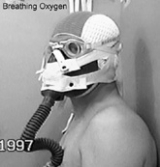
Breathing gas

Encyclopedia
Breathing gas is a mixture of gas
eous chemical elements and compounds used for respiration
.
Air is the most common and only natural breathing gas. Other artificial gases, either pure gases or mixtures of gases, are used in breathing equipment and enclosed habitats such as SCUBA equipment
, surface supplied diving
equipment, recompression chambers, submarine
s, space suit
s, spacecraft
, medical life support and first aid equipment, and anaesthetic machine
s.
Most breathing gases are a mixture of oxygen and one or more inert gases. Other breathing gases have been developed to improve on the performance of air by reducing the risk of decompression sickness
, reducing the duration of decompression stops, reducing nitrogen narcosis
or allowing safer deep diving
.
A safe breathing gas has three essential features:
The techniques used to fill diving cylinder
s with gases other than air are called gas blending
.
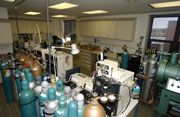
(O2) must be present in every breathing gas. This is because it is essential to the human body
's metabolic process
, which sustains life. The human body cannot store oxygen for later use as it does with food. If the body is deprived of oxygen for more than a few minutes, unconsciousness and death result. The tissues
and organ
s within the body (notably the heart and brain) are damaged if deprived of oxygen for much longer than four minutes.
Filling a diving cylinder with pure oxygen costs around five times more than filling it with compressed air. As oxygen supports combustion and causes rust in diving cylinder
s, it should be handled with caution when gas blending
.
Oxygen has historically been obtained by fractional distillation
of liquid air
, but is increasingly obtained by non cryogenic technologies such as pressure swing adsorption
(PSA) and vacuum-pressure swing adsorption (VPSA) technologies.
The fraction of the oxygen determines the deepest the mixture gas can safely be used to avoid oxygen toxicity
. This depth is called the maximum operating depth
.
of oxygen (ppO2).
The partial pressure of any component gas in a mixture is calculated as:
For the oxygen component:
The minimum safe partial pressure of oxygen in a breathing gas is commonly held to be 16 kPa (0.16 bar). Below this partial pressure the diver may be at risk of unconsciousness and death due to hypoxia
, depending on factors including individual physiology and level of exertion. When a hypoxic mix is breathed in shallow water it may not have a high enough ppO2 to keep the diver conscious. For this reason normoxic or hyperoxic "travel gases" are used at medium depth between the "bottom" and "decompression" phases of the dive.
The maximum safe ppO2 in a breathing gas depends on exposure time, the level of exercise and the security of the breathing equipment being used. It is typically between 100 kPa (1 bar) and 160 kPa (1.6 bar) but for dives of less than three hours is commonly considered to be 140 kPa (1.4 bar), although the U.S. Navy has been known to authorize dives with a ppO2 of as much as 180 kPa (1.8 bar). At high ppO2 or longer exposures, the diver risks oxygen toxicity including a seizure
. Each breathing gas has a maximum operating depth
that is determined by its oxygen content.
Oxygen analysers
measure the ppO2 in the gas mix.
. In the Netherlands
, pure oxygen for breathing purposes is regarded as medicinal as opposed to industrial oxygen, such as that used in welding
, and is only available on medical prescription
. The diving industry "created" Divox and registered it as a trademark
to circumvent the strict rules concerning medicinal oxygen thus making it easier for (recreational) scuba divers
to obtain oxygen for blending their breathing gas.
In most countries, there is no difference in purity in medical oxygen and industrial oxygen, as they are produced by exactly the same methods and manufacturers, but labeled and tanked differently. The chief difference between them is that the paper record-keeping trail is much more extensive for medical oxygen, in order to more easily identify the exact manufacturing trail of a "lot" of oxygen, in case problems are later found with its purity.
(N2) is a diatomic
gas and the main component of air, the cheapest and most common breathing gas used for diving. It causes nitrogen narcosis
in the diver, so its use is limited to shallower dives. Nitrogen can cause decompression sickness
.
Equivalent air depth
is used to estimate the decompression requirements of a nitrox (oxygen/nitrogen) mixture. Equivalent narcotic depth
is used to estimate the narcotic potency of trimix (oxygen/helium/nitrogen mixture). Many divers find that the level of narcosis caused by a 30 m (98.4 ft) dive, whilst breathing air, is a comfortable maximum.
Nitrogen in a gas mix is almost always obtained by adding air to the mix.
(He) is an inert gas that is less narcotic than nitrogen at equivalent pressure (in fact there is no evidence for any narcosis from helium at all), so it is more suitable for deeper dives than nitrogen. Helium is equally able to cause decompression sickness
. At high pressures, helium also causes High Pressure Nervous Syndrome
, which is a CNS irritation syndrome which is in some ways opposite to narcosis.
Helium fills typically cost ten times more than an equivalent air fill.
Helium is not very suitable for dry suit
inflation due to its poor thermal insulation
properties — helium is a very good conductor of heat (compared to air which is a rather poor, making it more of an insulator). Helium's low molecular weight (monatomic MW=4, compared with diatomic nitrogen MW=28) increases the timbre of the breather's voice, which may impede communication. This is because the speed of sound is faster in a lower molecular weight gas, which increases the resonance frequency of the vocal cords. Helium leaks from damaged or faulty valve
s more readily than other gases because atoms of helium are smaller allowing them to pass through smaller gaps in seals
.
Helium is found in significant amounts only in natural gas
, from which it is extracted at low temperatures by fractional distillation.
(Ne) is an inert gas sometimes used in deep commercial diving
but is very expensive. Like helium, it is less narcotic than nitrogen, but unlike helium, it does not distort the diver's voice.
(H2) has been used in deep diving gas mixes but is very explosive when mixed with more than about 4 to 5% oxygen (such as the oxygen found in breathing gas). This limits use of hydrogen to deep dives and imposes complicated protocols to ensure that oxygen is cleared from the lungs, the blood stream and the breathing equipment before breathing hydrogen starts. Like helium, it increases the timbre of the diver's voice. The hydrogen-oxygen mix when used as a diving gas is sometimes referred to as Hydrox
.
(Ar) is an inert gas that is more narcotic than nitrogen, so is not generally suitable as a diving breathing gas. Argox is used for decompression research. It is sometimes used for dry suit
inflation by divers whose primary breathing gas is helium-based, because of argon's good thermal insulation properties. Argon is more expensive than air or oxygen, but considerably less expensive than helium.
(CO2) is produced by the metabolism
in the human body
and can cause carbon dioxide poisoning.
(CO) is produced by incomplete combustion
. See carbon monoxide poisoning
. Four common sources are:
s (CxHy) are present in compressor lubricants and fuel
s. They can enter diving cylinders as a result of contamination, leaks, or due to incomplete combustion near the air intake.
into a diving cylinder removes moisture from the gas. This is good for corrosion
prevention in the cylinder but means that the diver inhales very dry gas. The dry gas extracts moisture from the diver's lungs while underwater contributing to dehydration
, which is also thought to be a predisposing risk factor of decompression sickness
. It is also uncomfortable, causing a dry mouth and throat and making the diver thirsty. This problem is reduced in rebreather
s because the soda lime
reaction to remove carbon dioxide puts moisture back into the breathing gas. In hot climates, open circuit diving can accelerate heat exhaustion because of dehydration. Another concern with regard to moisture content is the tendency of moisture to condense as the gas is decompressed while passing through the regulator; this coupled with the extreme reduction in temperature, also due to the decompression can cause the moisture to solidify as ice. This icing up in a regulator can cause moving parts to seize and the regulator to fail or free flow.
It is for this reason that SCUBA regulators are generally constructed from brass, and chrome plated (for protection). Brass, with its good thermal conductive properties, quickly conducts heat from the surrounding water to the cold, newly decompressed air, helping to prevent icing up.
s and carbon dioxide
detectors. Oxygen analysers are commonly found underwater in rebreather
s. Oxygen and helium analysers are often used on the surface during gas blending
to determine the percentage of oxygen or helium in a breathing gas mix. Chemical and other types of gas detection methods are not often used in recreational diving.
Gas
Gas is one of the three classical states of matter . Near absolute zero, a substance exists as a solid. As heat is added to this substance it melts into a liquid at its melting point , boils into a gas at its boiling point, and if heated high enough would enter a plasma state in which the electrons...
eous chemical elements and compounds used for respiration
Respiration (physiology)
'In physiology, respiration is defined as the transport of oxygen from the outside air to the cells within tissues, and the transport of carbon dioxide in the opposite direction...
.
Air is the most common and only natural breathing gas. Other artificial gases, either pure gases or mixtures of gases, are used in breathing equipment and enclosed habitats such as SCUBA equipment
Scuba set
A scuba set is an independent breathing set that provides a scuba diver with the breathing gas necessary to breathe underwater during scuba diving. It is much used for sport diving and some sorts of work diving....
, surface supplied diving
Surface supplied diving
Surface supplied diving refers to divers using equipment supplied with breathing gas using a diver's umbilical from the surface, either from the shore or from a diving support vessel sometimes indirectly via a diving bell...
equipment, recompression chambers, submarine
Submarine
A submarine is a watercraft capable of independent operation below the surface of the water. It differs from a submersible, which has more limited underwater capability...
s, space suit
Space suit
A space suit is a garment worn to keep an astronaut alive in the harsh environment of outer space. Space suits are often worn inside spacecraft as a safety precaution in case of loss of cabin pressure, and are necessary for extra-vehicular activity , work done outside spacecraft...
s, spacecraft
Spacecraft
A spacecraft or spaceship is a craft or machine designed for spaceflight. Spacecraft are used for a variety of purposes, including communications, earth observation, meteorology, navigation, planetary exploration and transportation of humans and cargo....
, medical life support and first aid equipment, and anaesthetic machine
Anaesthetic machine
The anaesthetic machine is used by anaesthesiologists and nurse anaesthetists to support the administration of anaesthesia...
s.
Most breathing gases are a mixture of oxygen and one or more inert gases. Other breathing gases have been developed to improve on the performance of air by reducing the risk of decompression sickness
Decompression sickness
Decompression sickness describes a condition arising from dissolved gases coming out of solution into bubbles inside the body on depressurization...
, reducing the duration of decompression stops, reducing nitrogen narcosis
Nitrogen narcosis
Narcosis while diving , is a reversible alteration in consciousness that occurs while scuba diving at depth. The Greek word ναρκωσις is derived from narke, "temporary decline or loss of senses and movement, numbness", a term used by Homer and Hippocrates...
or allowing safer deep diving
Deep diving
The meaning of the term deep diving is a form of technical diving. It is defined by the level of the diver's diver training, diving equipment, breathing gas, and surface support:...
.
A safe breathing gas has three essential features:
- it must contain sufficient oxygenOxygenOxygen is the element with atomic number 8 and represented by the symbol O. Its name derives from the Greek roots ὀξύς and -γενής , because at the time of naming, it was mistakenly thought that all acids required oxygen in their composition...
to support the life, consciousness and work rate of the breather. - it must not contain harmful gases. Carbon monoxide and carbon dioxide are common poisons in breathing gases. There are many others.
- it must not become toxic when being breathed at high pressurePressurePressure is the force per unit area applied in a direction perpendicular to the surface of an object. Gauge pressure is the pressure relative to the local atmospheric or ambient pressure.- Definition :...
such as when underwaterUnderwaterUnderwater is a term describing the realm below the surface of water where the water exists in a natural feature such as an ocean, sea, lake, pond, or river. Three quarters of the planet Earth is covered by water...
. OxygenOxygenOxygen is the element with atomic number 8 and represented by the symbol O. Its name derives from the Greek roots ὀξύς and -γενής , because at the time of naming, it was mistakenly thought that all acids required oxygen in their composition...
and nitrogenNitrogenNitrogen is a chemical element that has the symbol N, atomic number of 7 and atomic mass 14.00674 u. Elemental nitrogen is a colorless, odorless, tasteless, and mostly inert diatomic gas at standard conditions, constituting 78.08% by volume of Earth's atmosphere...
are examples of gases that become toxic under pressure.
The techniques used to fill diving cylinder
Diving cylinder
A diving cylinder, scuba tank or diving tank is a gas cylinder used to store and transport high pressure breathing gas as a component of a scuba set. It provides gas to the scuba diver through the demand valve of a diving regulator....
s with gases other than air are called gas blending
Gas blending
Gas blending or gas mixing is the filling of diving cylinders with non-air breathing gases such as nitrox, trimix and heliox.Filling cylinders with a mixture of gases has dangers for both the filler and the diver. During filling there is a risk of fire due to use of oxygen and a risk of explosion...
.
Common diving breathing gases
Common diving breathing gases are:- Air is a mixture of 21% oxygenOxygenOxygen is the element with atomic number 8 and represented by the symbol O. Its name derives from the Greek roots ὀξύς and -γενής , because at the time of naming, it was mistakenly thought that all acids required oxygen in their composition...
, 78% nitrogenNitrogenNitrogen is a chemical element that has the symbol N, atomic number of 7 and atomic mass 14.00674 u. Elemental nitrogen is a colorless, odorless, tasteless, and mostly inert diatomic gas at standard conditions, constituting 78.08% by volume of Earth's atmosphere...
, and approximately 1% other trace gases; to simplify calculations this last 1% is usually treated as if it were nitrogen. Being cheap and simple to use, it is the most common diving gas. As its nitrogen component causes nitrogen narcosisNitrogen narcosisNarcosis while diving , is a reversible alteration in consciousness that occurs while scuba diving at depth. The Greek word ναρκωσις is derived from narke, "temporary decline or loss of senses and movement, numbness", a term used by Homer and Hippocrates...
it is considered to have a safe depth limit of about 40 metres (130 feet) for most divers, although the maximum operating depthMaximum operating depthIn technical diving and nitrox diving, the maximum operating depth of a breathing gas is the depth at which the partial pressure of oxygen of the gas mix exceeds a safe limit...
of air is 66.2 metres (218 feet). - Pure oxygen is mainly used to speed the shallow decompression stops at the end of a military, commercial or technical diveTechnical divingTechnical diving is a form of scuba diving that exceeds the scope of recreational diving...
and is only safe down to a depth of 6 meters (maximum operating depth) before oxygen toxicityOxygen toxicityOxygen toxicity is a condition resulting from the harmful effects of breathing molecular oxygen at elevated partial pressures. It is also known as oxygen toxicity syndrome, oxygen intoxication, and oxygen poisoning...
steps in. It was much used in frogmen'sFrogmanA frogman is someone who is trained to scuba diving or swim underwater in a military capacity which can include combat. Such personnel are also known by the more formal names of combat diver or combatant diver or combat swimmer....
rebreatherRebreatherA rebreather is a type of breathing set that provides a breathing gas containing oxygen and recycled exhaled gas. This recycling reduces the volume of breathing gas used, making a rebreather lighter and more compact than an open-circuit breathing set for the same duration in environments where...
s. - Nitrox is a mixture of oxygen and air, and generally refers to mixtures which are more than 21% oxygen. It can be used as a tool to accelerate in-water decompression stops or to decrease the risk of decompression sicknessDecompression sicknessDecompression sickness describes a condition arising from dissolved gases coming out of solution into bubbles inside the body on depressurization...
and thus prolong a dive (a common misconception is that the diver can go deeper, this is not true owing to a shallower maximum operating depth than on conventional air). - Trimix is a mixture of oxygen, nitrogen and heliumHeliumHelium is the chemical element with atomic number 2 and an atomic weight of 4.002602, which is represented by the symbol He. It is a colorless, odorless, tasteless, non-toxic, inert, monatomic gas that heads the noble gas group in the periodic table...
and is often used at depth in technical divingTechnical divingTechnical diving is a form of scuba diving that exceeds the scope of recreational diving...
and commercial divingCommercial DivingProfessional diving is a type of diving where the divers are paid for their work. There are several branches of professional diving, the most well known of which is probably commercial diving...
instead of air to reduce nitrogen narcosis and to avoid the dangers of oxygen toxicity. - HelioxHelioxHeliox is a breathing gas composed of a mixture of helium and oxygen .Heliox has been used medically since the 1930s, and although the medical community adopted it initially to alleviate symptoms of upper airway obstruction, its range of medical uses has since expanded greatly, mostly because of...
is a mixture of oxygen and helium and is often used in the deep phase of a commercial deep dive to eliminate nitrogen narcosis. - HeliairHeliairHeliair is a breathing gas consisting of mixture of oxygen, nitrogen and helium and is often used during the deep phase of dives carried out using technical diving techniques...
is a form of trimix that is easily blended from helium and air without using pure oxygen. It always has a 21:79 ratio of oxygen to nitrogen; the balance of the mix is helium. - HydrelioxHydrelioxHydreliox is an exotic breathing gas mixture of helium, oxygen and hydrogen.It is used primarily for research and scientific deep diving, usually below . Below this depth, extended breathing of heliox gas mixtures may cause high pressure nervous syndrome . Two gas mixtures exist that attempt to...
is a mixture of oxygen, helium, and hydrogenHydrogenHydrogen is the chemical element with atomic number 1. It is represented by the symbol H. With an average atomic weight of , hydrogen is the lightest and most abundant chemical element, constituting roughly 75% of the Universe's chemical elemental mass. Stars in the main sequence are mainly...
and is used for dives below 130 metres in commercial diving. - HydroxHydrox (breathing gas)Hydrox, a gas mixture of hydrogen and oxygen, is used as a breathing gas in very deep diving. It allows divers to descend several hundred metres....
, a gas mixture of hydrogenHydrogenHydrogen is the chemical element with atomic number 1. It is represented by the symbol H. With an average atomic weight of , hydrogen is the lightest and most abundant chemical element, constituting roughly 75% of the Universe's chemical elemental mass. Stars in the main sequence are mainly...
and oxygenOxygenOxygen is the element with atomic number 8 and represented by the symbol O. Its name derives from the Greek roots ὀξύς and -γενής , because at the time of naming, it was mistakenly thought that all acids required oxygen in their composition...
is used as a breathing gas in very deep divingDeep divingThe meaning of the term deep diving is a form of technical diving. It is defined by the level of the diver's diver training, diving equipment, breathing gas, and surface support:...
. - Neox (also called neonox) is a mixture of oxygen and neonNeonNeon is the chemical element that has the symbol Ne and an atomic number of 10. Although a very common element in the universe, it is rare on Earth. A colorless, inert noble gas under standard conditions, neon gives a distinct reddish-orange glow when used in either low-voltage neon glow lamps or...
sometimes employed for in deep commercial diving. It is rarely used due to its cost. Also, DCS symptoms produced by neon ("neox bends") have a poor reputation, being widely reported to be more severe than those produced by an exactly equivalent dive-table and mix with helium.
Individual component gases
Oxygen
OxygenOxygen
Oxygen is the element with atomic number 8 and represented by the symbol O. Its name derives from the Greek roots ὀξύς and -γενής , because at the time of naming, it was mistakenly thought that all acids required oxygen in their composition...
(O2) must be present in every breathing gas. This is because it is essential to the human body
Human body
The human body is the entire structure of a human organism, and consists of a head, neck, torso, two arms and two legs.By the time the human reaches adulthood, the body consists of close to 100 trillion cells, the basic unit of life...
's metabolic process
Metabolism
Metabolism is the set of chemical reactions that happen in the cells of living organisms to sustain life. These processes allow organisms to grow and reproduce, maintain their structures, and respond to their environments. Metabolism is usually divided into two categories...
, which sustains life. The human body cannot store oxygen for later use as it does with food. If the body is deprived of oxygen for more than a few minutes, unconsciousness and death result. The tissues
Biological tissue
Tissue is a cellular organizational level intermediate between cells and a complete organism. A tissue is an ensemble of cells, not necessarily identical, but from the same origin, that together carry out a specific function. These are called tissues because of their identical functioning...
and organ
Organ (anatomy)
In biology, an organ is a collection of tissues joined in structural unit to serve a common function. Usually there is a main tissue and sporadic tissues . The main tissue is the one that is unique for the specific organ. For example, main tissue in the heart is the myocardium, while sporadic are...
s within the body (notably the heart and brain) are damaged if deprived of oxygen for much longer than four minutes.
Filling a diving cylinder with pure oxygen costs around five times more than filling it with compressed air. As oxygen supports combustion and causes rust in diving cylinder
Diving cylinder
A diving cylinder, scuba tank or diving tank is a gas cylinder used to store and transport high pressure breathing gas as a component of a scuba set. It provides gas to the scuba diver through the demand valve of a diving regulator....
s, it should be handled with caution when gas blending
Gas blending
Gas blending or gas mixing is the filling of diving cylinders with non-air breathing gases such as nitrox, trimix and heliox.Filling cylinders with a mixture of gases has dangers for both the filler and the diver. During filling there is a risk of fire due to use of oxygen and a risk of explosion...
.
Oxygen has historically been obtained by fractional distillation
Fractional distillation
Fractional distillation is the separation of a mixture into its component parts, or fractions, such as in separating chemical compounds by their boiling point by heating them to a temperature at which several fractions of the compound will evaporate. It is a special type of distillation...
of liquid air
Liquid air
Liquid air is air that has been cooled to very low temperatures so that it has condensed to a pale blue mobile liquid. To protect it from room temperature, it must be kept in a vacuum flask. Liquid air can absorb heat rapidly and revert to its gaseous state...
, but is increasingly obtained by non cryogenic technologies such as pressure swing adsorption
Pressure swing adsorption
Pressure swing adsorption is a technology used to separate some gas species from a mixture of gases under pressure according to the species' molecular characteristics and affinity for an adsorbent material. It operates at near-ambient temperatures and so differs from cryogenic distillation...
(PSA) and vacuum-pressure swing adsorption (VPSA) technologies.
Fraction of oxygen
The fraction of the oxygen component of a breathing gas mixture is sometimes used when naming the mix:- hypoxic mixes, strictly, contain less than 21% oxygen, although often a boundary of 16% is used, and are designed only to be breathed at depth as a "bottom gas" where the higher pressure increases the partial pressurePartial pressureIn a mixture of ideal gases, each gas has a partial pressure which is the pressure which the gas would have if it alone occupied the volume. The total pressure of a gas mixture is the sum of the partial pressures of each individual gas in the mixture....
of oxygen to a safe level. Trimix, HelioxHelioxHeliox is a breathing gas composed of a mixture of helium and oxygen .Heliox has been used medically since the 1930s, and although the medical community adopted it initially to alleviate symptoms of upper airway obstruction, its range of medical uses has since expanded greatly, mostly because of...
and HeliairHeliairHeliair is a breathing gas consisting of mixture of oxygen, nitrogen and helium and is often used during the deep phase of dives carried out using technical diving techniques...
create typical hypoxic mixes and are used in technical divingTechnical divingTechnical diving is a form of scuba diving that exceeds the scope of recreational diving...
as deep breathing gases. - normoxic mixes have the same proportion of oxygen as air, 21%. The maximum operating depth of a normoxic mix could be as shallow as 47 metres (155 feet). Trimix with between 17% and 21% oxygen is often described as normoxic because it contains a high enough proportion of oxygen to be safe to breathe at the surface.
- hyperoxic mixes have more than 21% oxygen. Enriched Air Nitrox (EANx) is a typical hyperoxic breathing gas. Hyperoxic mixtures, when compared to air, cause oxygen toxicityOxygen toxicityOxygen toxicity is a condition resulting from the harmful effects of breathing molecular oxygen at elevated partial pressures. It is also known as oxygen toxicity syndrome, oxygen intoxication, and oxygen poisoning...
at shallower depths but can be used to shorten decompression stops by drawing dissolved inert gases out of the body more quickly.
The fraction of the oxygen determines the deepest the mixture gas can safely be used to avoid oxygen toxicity
Oxygen toxicity
Oxygen toxicity is a condition resulting from the harmful effects of breathing molecular oxygen at elevated partial pressures. It is also known as oxygen toxicity syndrome, oxygen intoxication, and oxygen poisoning...
. This depth is called the maximum operating depth
Maximum operating depth
In technical diving and nitrox diving, the maximum operating depth of a breathing gas is the depth at which the partial pressure of oxygen of the gas mix exceeds a safe limit...
.
Partial pressure of oxygen
The concentration of oxygen in a gas mix depends on both the fraction and the pressure of the mixture. It is expressed by the partial pressurePartial pressure
In a mixture of ideal gases, each gas has a partial pressure which is the pressure which the gas would have if it alone occupied the volume. The total pressure of a gas mixture is the sum of the partial pressures of each individual gas in the mixture....
of oxygen (ppO2).
The partial pressure of any component gas in a mixture is calculated as:
- partial pressure = total absolute pressure x volume fraction of gas component
For the oxygen component:
- ppO2 = P x FO2
| where: | |
| ppO2 | = partial pressure of oxygen |
|---|---|
| P | = total pressure |
| FO2 | = volume fraction of oxygen |
The minimum safe partial pressure of oxygen in a breathing gas is commonly held to be 16 kPa (0.16 bar). Below this partial pressure the diver may be at risk of unconsciousness and death due to hypoxia
Hypoxia (medical)
Hypoxia, or hypoxiation, is a pathological condition in which the body as a whole or a region of the body is deprived of adequate oxygen supply. Variations in arterial oxygen concentrations can be part of the normal physiology, for example, during strenuous physical exercise...
, depending on factors including individual physiology and level of exertion. When a hypoxic mix is breathed in shallow water it may not have a high enough ppO2 to keep the diver conscious. For this reason normoxic or hyperoxic "travel gases" are used at medium depth between the "bottom" and "decompression" phases of the dive.
The maximum safe ppO2 in a breathing gas depends on exposure time, the level of exercise and the security of the breathing equipment being used. It is typically between 100 kPa (1 bar) and 160 kPa (1.6 bar) but for dives of less than three hours is commonly considered to be 140 kPa (1.4 bar), although the U.S. Navy has been known to authorize dives with a ppO2 of as much as 180 kPa (1.8 bar). At high ppO2 or longer exposures, the diver risks oxygen toxicity including a seizure
Seizure
An epileptic seizure, occasionally referred to as a fit, is defined as a transient symptom of "abnormal excessive or synchronous neuronal activity in the brain". The outward effect can be as dramatic as a wild thrashing movement or as mild as a brief loss of awareness...
. Each breathing gas has a maximum operating depth
Maximum operating depth
In technical diving and nitrox diving, the maximum operating depth of a breathing gas is the depth at which the partial pressure of oxygen of the gas mix exceeds a safe limit...
that is determined by its oxygen content.
Oxygen analysers
Electro-galvanic fuel cell
An electro-galvanic fuel cell is an electrical device, one form of which is commonly used to measure the concentration of oxygen gas in scuba diving and medical equipment....
measure the ppO2 in the gas mix.
Divox
"Divox" is oxygenOxygen
Oxygen is the element with atomic number 8 and represented by the symbol O. Its name derives from the Greek roots ὀξύς and -γενής , because at the time of naming, it was mistakenly thought that all acids required oxygen in their composition...
. In the Netherlands
Netherlands
The Netherlands is a constituent country of the Kingdom of the Netherlands, located mainly in North-West Europe and with several islands in the Caribbean. Mainland Netherlands borders the North Sea to the north and west, Belgium to the south, and Germany to the east, and shares maritime borders...
, pure oxygen for breathing purposes is regarded as medicinal as opposed to industrial oxygen, such as that used in welding
Welding
Welding is a fabrication or sculptural process that joins materials, usually metals or thermoplastics, by causing coalescence. This is often done by melting the workpieces and adding a filler material to form a pool of molten material that cools to become a strong joint, with pressure sometimes...
, and is only available on medical prescription
Medical prescription
A prescription is a health-care program implemented by a physician or other medical practitioner in the form of instructions that govern the plan of care for an individual patient. Prescriptions may include orders to be performed by a patient, caretaker, nurse, pharmacist or other therapist....
. The diving industry "created" Divox and registered it as a trademark
Trademark
A trademark, trade mark, or trade-mark is a distinctive sign or indicator used by an individual, business organization, or other legal entity to identify that the products or services to consumers with which the trademark appears originate from a unique source, and to distinguish its products or...
to circumvent the strict rules concerning medicinal oxygen thus making it easier for (recreational) scuba divers
Scuba diving
Scuba diving is a form of underwater diving in which a diver uses a scuba set to breathe underwater....
to obtain oxygen for blending their breathing gas.
In most countries, there is no difference in purity in medical oxygen and industrial oxygen, as they are produced by exactly the same methods and manufacturers, but labeled and tanked differently. The chief difference between them is that the paper record-keeping trail is much more extensive for medical oxygen, in order to more easily identify the exact manufacturing trail of a "lot" of oxygen, in case problems are later found with its purity.
Nitrogen
NitrogenNitrogen
Nitrogen is a chemical element that has the symbol N, atomic number of 7 and atomic mass 14.00674 u. Elemental nitrogen is a colorless, odorless, tasteless, and mostly inert diatomic gas at standard conditions, constituting 78.08% by volume of Earth's atmosphere...
(N2) is a diatomic
Diatomic
Diatomic molecules are molecules composed only of two atoms, of either the same or different chemical elements. The prefix di- means two in Greek. Common diatomic molecules are hydrogen , nitrogen , oxygen , and carbon monoxide . Seven elements exist in the diatomic state in the liquid and solid...
gas and the main component of air, the cheapest and most common breathing gas used for diving. It causes nitrogen narcosis
Nitrogen narcosis
Narcosis while diving , is a reversible alteration in consciousness that occurs while scuba diving at depth. The Greek word ναρκωσις is derived from narke, "temporary decline or loss of senses and movement, numbness", a term used by Homer and Hippocrates...
in the diver, so its use is limited to shallower dives. Nitrogen can cause decompression sickness
Decompression sickness
Decompression sickness describes a condition arising from dissolved gases coming out of solution into bubbles inside the body on depressurization...
.
Equivalent air depth
Equivalent air depth
The equivalent air depth is a way of approximating the decompression requirements of breathing gas mixtures that contain nitrogen and oxygen in different proportions to those in air, known as nitrox....
is used to estimate the decompression requirements of a nitrox (oxygen/nitrogen) mixture. Equivalent narcotic depth
Equivalent narcotic depth
Equivalent narcotic depth is used in technical diving as a way of estimating the narcotic effect of a breathing gas mixture, such as heliox and trimix...
is used to estimate the narcotic potency of trimix (oxygen/helium/nitrogen mixture). Many divers find that the level of narcosis caused by a 30 m (98.4 ft) dive, whilst breathing air, is a comfortable maximum.
Nitrogen in a gas mix is almost always obtained by adding air to the mix.
Helium
HeliumHelium
Helium is the chemical element with atomic number 2 and an atomic weight of 4.002602, which is represented by the symbol He. It is a colorless, odorless, tasteless, non-toxic, inert, monatomic gas that heads the noble gas group in the periodic table...
(He) is an inert gas that is less narcotic than nitrogen at equivalent pressure (in fact there is no evidence for any narcosis from helium at all), so it is more suitable for deeper dives than nitrogen. Helium is equally able to cause decompression sickness
Decompression sickness
Decompression sickness describes a condition arising from dissolved gases coming out of solution into bubbles inside the body on depressurization...
. At high pressures, helium also causes High Pressure Nervous Syndrome
High pressure nervous syndrome
High-pressure nervous syndrome is a neurological and physiological diving disorder that results when a commercial diver or scuba diver descends below about while breathing a helium–oxygen mixture. The effects depend on the rate of descent and the depth...
, which is a CNS irritation syndrome which is in some ways opposite to narcosis.
Helium fills typically cost ten times more than an equivalent air fill.
Helium is not very suitable for dry suit
Dry suit
A dry suit or drysuit provides thermal insulation or passive thermal protection to the wearer while immersed in water, and is worn by divers, boaters, water sports enthusiasts, and others who work or play in or near cold water. A dry suit normally protects the whole body except the head, hands, and...
inflation due to its poor thermal insulation
Thermal insulation
Thermal insulation is the reduction of the effects of the various processes of heat transfer between objects in thermal contact or in range of radiative influence. Heat transfer is the transfer of thermal energy between objects of differing temperature...
properties — helium is a very good conductor of heat (compared to air which is a rather poor, making it more of an insulator). Helium's low molecular weight (monatomic MW=4, compared with diatomic nitrogen MW=28) increases the timbre of the breather's voice, which may impede communication. This is because the speed of sound is faster in a lower molecular weight gas, which increases the resonance frequency of the vocal cords. Helium leaks from damaged or faulty valve
Valve
A valve is a device that regulates, directs or controls the flow of a fluid by opening, closing, or partially obstructing various passageways. Valves are technically pipe fittings, but are usually discussed as a separate category...
s more readily than other gases because atoms of helium are smaller allowing them to pass through smaller gaps in seals
Seal (mechanical)
A mechanical seal is a device which helps join systems or mechanisms together by preventing leakage , containing pressure, or excluding contamination...
.
Helium is found in significant amounts only in natural gas
Natural gas
Natural gas is a naturally occurring gas mixture consisting primarily of methane, typically with 0–20% higher hydrocarbons . It is found associated with other hydrocarbon fuel, in coal beds, as methane clathrates, and is an important fuel source and a major feedstock for fertilizers.Most natural...
, from which it is extracted at low temperatures by fractional distillation.
Neon
NeonNeon
Neon is the chemical element that has the symbol Ne and an atomic number of 10. Although a very common element in the universe, it is rare on Earth. A colorless, inert noble gas under standard conditions, neon gives a distinct reddish-orange glow when used in either low-voltage neon glow lamps or...
(Ne) is an inert gas sometimes used in deep commercial diving
Commercial Diving
Professional diving is a type of diving where the divers are paid for their work. There are several branches of professional diving, the most well known of which is probably commercial diving...
but is very expensive. Like helium, it is less narcotic than nitrogen, but unlike helium, it does not distort the diver's voice.
Hydrogen
HydrogenHydrogen
Hydrogen is the chemical element with atomic number 1. It is represented by the symbol H. With an average atomic weight of , hydrogen is the lightest and most abundant chemical element, constituting roughly 75% of the Universe's chemical elemental mass. Stars in the main sequence are mainly...
(H2) has been used in deep diving gas mixes but is very explosive when mixed with more than about 4 to 5% oxygen (such as the oxygen found in breathing gas). This limits use of hydrogen to deep dives and imposes complicated protocols to ensure that oxygen is cleared from the lungs, the blood stream and the breathing equipment before breathing hydrogen starts. Like helium, it increases the timbre of the diver's voice. The hydrogen-oxygen mix when used as a diving gas is sometimes referred to as Hydrox
Hydrox (breathing gas)
Hydrox, a gas mixture of hydrogen and oxygen, is used as a breathing gas in very deep diving. It allows divers to descend several hundred metres....
.
Unwelcome components of breathing gases
Many gases are not suitable for use in diving breathing gases. Here is an incomplete list of gases commonly present in a diving environment:Argon
ArgonArgon
Argon is a chemical element represented by the symbol Ar. Argon has atomic number 18 and is the third element in group 18 of the periodic table . Argon is the third most common gas in the Earth's atmosphere, at 0.93%, making it more common than carbon dioxide...
(Ar) is an inert gas that is more narcotic than nitrogen, so is not generally suitable as a diving breathing gas. Argox is used for decompression research. It is sometimes used for dry suit
Diving suit
A diving suit is a garment or device designed to protect a diver from the underwater environment. A diving suit typically also incorporates an air-supply .-History:...
inflation by divers whose primary breathing gas is helium-based, because of argon's good thermal insulation properties. Argon is more expensive than air or oxygen, but considerably less expensive than helium.
Carbon dioxide
Carbon dioxideCarbon dioxide
Carbon dioxide is a naturally occurring chemical compound composed of two oxygen atoms covalently bonded to a single carbon atom...
(CO2) is produced by the metabolism
Metabolism
Metabolism is the set of chemical reactions that happen in the cells of living organisms to sustain life. These processes allow organisms to grow and reproduce, maintain their structures, and respond to their environments. Metabolism is usually divided into two categories...
in the human body
Human body
The human body is the entire structure of a human organism, and consists of a head, neck, torso, two arms and two legs.By the time the human reaches adulthood, the body consists of close to 100 trillion cells, the basic unit of life...
and can cause carbon dioxide poisoning.
Carbon monoxide
Carbon monoxideCarbon monoxide
Carbon monoxide , also called carbonous oxide, is a colorless, odorless, and tasteless gas that is slightly lighter than air. It is highly toxic to humans and animals in higher quantities, although it is also produced in normal animal metabolism in low quantities, and is thought to have some normal...
(CO) is produced by incomplete combustion
Combustion
Combustion or burning is the sequence of exothermic chemical reactions between a fuel and an oxidant accompanied by the production of heat and conversion of chemical species. The release of heat can result in the production of light in the form of either glowing or a flame...
. See carbon monoxide poisoning
Carbon monoxide poisoning
Carbon monoxide poisoning occurs after enough inhalation of carbon monoxide . Carbon monoxide is a toxic gas, but, being colorless, odorless, tasteless, and initially non-irritating, it is very difficult for people to detect...
. Four common sources are:
- Internal combustion engineInternal combustion engineThe internal combustion engine is an engine in which the combustion of a fuel occurs with an oxidizer in a combustion chamber. In an internal combustion engine, the expansion of the high-temperature and high -pressure gases produced by combustion apply direct force to some component of the engine...
exhaust gasExhaust gasExhaust gas or flue gas is emitted as a result of the combustion of fuels such as natural gas, gasoline/petrol, diesel fuel, fuel oil or coal. According to the type of engine, it is discharged into the atmosphere through an exhaust pipe, flue gas stack or propelling nozzle.It often disperses...
containing CO in the air being drawn into a diving air compressorDiving air compressorA Diving Air Compressor is a gas compressor that can provide breathing air directly to a surface-supplied diver, or fill diving cylinders with high-pressure air pure enough to be used as a breathing gas.thumb|right|Filling a cylinder from the panel...
. CO in the intake air cannot be stopped by any filter. The exhausts of all internal combustion engines running on petroleum fuels contain some CO, and this is a particular problem on boats, where the intake of the compressor cannot be arbitrarily moved as far as desired from the engine and compressor exhausts. - Heating of lubricantLubricantA lubricant is a substance introduced to reduce friction between moving surfaces. It may also have the function of transporting foreign particles and of distributing heat...
s inside the compressor may vaporize them sufficiently to be available to a compressor intake or intake system line. - In some cases hydrocarbon lubricating oil may be drawn into the compressor's cylinder directly through damaged or worn seals, and the oil may (and usually will) then undergo combustion, being ignited by the immense compression ratio and subsequent temperature rise. Since heavy oils don't burn well - especially when not atomized properly - incomplete combustion will result in carbon monoxide production.
- A similar process is thought to potentially happen to any particulate material, which contains "organic" (carbon-containing) matter, especially in cylinders which are used for hyperoxic gas mixtures. If the compressor air filter(s) fail, ordinary dustDustDust consists of particles in the atmosphere that arise from various sources such as soil dust lifted up by wind , volcanic eruptions, and pollution...
will be introduced to the cylinder, which contains organic matter (since it usually contains humus). A more severe danger is that air particulates on boats and industrial areas, where cylinders are filled, often contain carbon-particulate combustion products (these are what makes a dirt rag black), and these represent a more severe CO danger when introduced into a cylinder.
Hydrocarbons
HydrocarbonHydrocarbon
In organic chemistry, a hydrocarbon is an organic compound consisting entirely of hydrogen and carbon. Hydrocarbons from which one hydrogen atom has been removed are functional groups, called hydrocarbyls....
s (CxHy) are present in compressor lubricants and fuel
Fuel
Fuel is any material that stores energy that can later be extracted to perform mechanical work in a controlled manner. Most fuels used by humans undergo combustion, a redox reaction in which a combustible substance releases energy after it ignites and reacts with the oxygen in the air...
s. They can enter diving cylinders as a result of contamination, leaks, or due to incomplete combustion near the air intake.
- They can act as a fuelFuelFuel is any material that stores energy that can later be extracted to perform mechanical work in a controlled manner. Most fuels used by humans undergo combustion, a redox reaction in which a combustible substance releases energy after it ignites and reacts with the oxygen in the air...
in combustion increasing the risk of explosionExplosionAn explosion is a rapid increase in volume and release of energy in an extreme manner, usually with the generation of high temperatures and the release of gases. An explosion creates a shock wave. If the shock wave is a supersonic detonation, then the source of the blast is called a "high explosive"...
, especially in high-oxygen gas mixtures. - Inhaling oil mist can damage the lungHuman lungThe human lungs are the organs of respiration in humans. Humans have two lungs, with the left being divided into two lobes and the right into three lobes. Together, the lungs contain approximately of airways and 300 to 500 million alveoli, having a total surface area of about in...
s and ultimately cause the lungs to degenerate with severe lipid pneumoniaLipid pneumoniaLipid pneumonia or lipoid pneumonia is a specific form of lung inflammation that develops when lipids enter the bronchial tree. The disorder is sometimes called Cholesterol pneumonia in cases where the lipid is a factor.-Causes:...
or emphysemaEmphysemaEmphysema is a long-term, progressive disease of the lungs that primarily causes shortness of breath. In people with emphysema, the tissues necessary to support the physical shape and function of the lungs are destroyed. It is included in a group of diseases called chronic obstructive pulmonary...
.
Moisture content
The process of compressing gasDiving air compressor
A Diving Air Compressor is a gas compressor that can provide breathing air directly to a surface-supplied diver, or fill diving cylinders with high-pressure air pure enough to be used as a breathing gas.thumb|right|Filling a cylinder from the panel...
into a diving cylinder removes moisture from the gas. This is good for corrosion
Corrosion
Corrosion is the disintegration of an engineered material into its constituent atoms due to chemical reactions with its surroundings. In the most common use of the word, this means electrochemical oxidation of metals in reaction with an oxidant such as oxygen...
prevention in the cylinder but means that the diver inhales very dry gas. The dry gas extracts moisture from the diver's lungs while underwater contributing to dehydration
Dehydration
In physiology and medicine, dehydration is defined as the excessive loss of body fluid. It is literally the removal of water from an object; however, in physiological terms, it entails a deficiency of fluid within an organism...
, which is also thought to be a predisposing risk factor of decompression sickness
Decompression sickness
Decompression sickness describes a condition arising from dissolved gases coming out of solution into bubbles inside the body on depressurization...
. It is also uncomfortable, causing a dry mouth and throat and making the diver thirsty. This problem is reduced in rebreather
Rebreather
A rebreather is a type of breathing set that provides a breathing gas containing oxygen and recycled exhaled gas. This recycling reduces the volume of breathing gas used, making a rebreather lighter and more compact than an open-circuit breathing set for the same duration in environments where...
s because the soda lime
Soda lime
Soda lime is a mixture of chemicals, used in granular form in closed breathing environments, such as general anaesthesia, submarines, rebreathers and recompression chambers, to remove carbon dioxide from breathing gases to prevent CO2 retention and carbon dioxide poisoning.It is made by treating...
reaction to remove carbon dioxide puts moisture back into the breathing gas. In hot climates, open circuit diving can accelerate heat exhaustion because of dehydration. Another concern with regard to moisture content is the tendency of moisture to condense as the gas is decompressed while passing through the regulator; this coupled with the extreme reduction in temperature, also due to the decompression can cause the moisture to solidify as ice. This icing up in a regulator can cause moving parts to seize and the regulator to fail or free flow.
It is for this reason that SCUBA regulators are generally constructed from brass, and chrome plated (for protection). Brass, with its good thermal conductive properties, quickly conducts heat from the surrounding water to the cold, newly decompressed air, helping to prevent icing up.
Gas detection and measurement
Divers find it difficult to detect most gases that are likely to be present in diving cylinders because they are colourless, odourless and tasteless. Electronic sensors exist for some gases, such as oxygen analysers, helium analyser, carbon monoxide detectorCarbon monoxide detector
A carbon monoxide detector or CO detector is a device that detects the presence of the carbon monoxide gas in order to prevent carbon monoxide poisoning. CO is a colorless and odorless compound produced by incomplete combustion. It is often referred to as the "silent killer" because it is...
s and carbon dioxide
Carbon dioxide
Carbon dioxide is a naturally occurring chemical compound composed of two oxygen atoms covalently bonded to a single carbon atom...
detectors. Oxygen analysers are commonly found underwater in rebreather
Rebreather
A rebreather is a type of breathing set that provides a breathing gas containing oxygen and recycled exhaled gas. This recycling reduces the volume of breathing gas used, making a rebreather lighter and more compact than an open-circuit breathing set for the same duration in environments where...
s. Oxygen and helium analysers are often used on the surface during gas blending
Gas blending
Gas blending or gas mixing is the filling of diving cylinders with non-air breathing gases such as nitrox, trimix and heliox.Filling cylinders with a mixture of gases has dangers for both the filler and the diver. During filling there is a risk of fire due to use of oxygen and a risk of explosion...
to determine the percentage of oxygen or helium in a breathing gas mix. Chemical and other types of gas detection methods are not often used in recreational diving.