
All Topics  
Carbon monoxide poisoning


   Email Print
   Bookmark   Link


Carbon monoxide poisoning


Carbon monoxide poisoning occurs after the inhalation of carbon monoxide
Carbon monoxide

Carbon monoxide, with the chemical formula CO, is a colorless and odorless, tasteless, yet highly toxic gas. Its molecules consist of one carbon atom covalent bond to one oxygen atom....
 gas. Carbon monoxide (CO) is a product of combustion of organic matter under conditions of restricted oxygen supply, which prevents complete oxidation to carbon dioxide
Carbon dioxide

Carbon dioxide is a chemical compound composed of two oxygen atoms covalent bond to a single carbon atom. It is a gas at standard temperature and pressure and exists in Earth's atmosphere in this state....
 (CO2). Carbon monoxide is colorless, odorless, tasteless, and non-irritating, making it difficult for people to detect.

Carbon monoxide is a significantly toxic gas, and CO poisoning is the most common type of fatal poisoning in many countries.


Discussion
Ask a question about 'Carbon monoxide poisoning'
Start a new discussion about 'Carbon monoxide poisoning'
Answer questions from other users
Full Discussion Forum


Encyclopedia


Carbon monoxide poisoning occurs after the inhalation of carbon monoxide
Carbon monoxide

Carbon monoxide, with the chemical formula CO, is a colorless and odorless, tasteless, yet highly toxic gas. Its molecules consist of one carbon atom covalent bond to one oxygen atom....
 gas. Carbon monoxide (CO) is a product of combustion of organic matter under conditions of restricted oxygen supply, which prevents complete oxidation to carbon dioxide
Carbon dioxide

Carbon dioxide is a chemical compound composed of two oxygen atoms covalent bond to a single carbon atom. It is a gas at standard temperature and pressure and exists in Earth's atmosphere in this state....
 (CO2). Carbon monoxide is colorless, odorless, tasteless, and non-irritating, making it difficult for people to detect.

Carbon monoxide is a significantly toxic gas, and CO poisoning is the most common type of fatal poisoning in many countries. Symptoms of mild poisoning include headaches, vertigo, and flu-like effects; larger exposures can lead to significant toxicity of the central nervous system
Central nervous system

The central nervous system is the part of the nervous system that functions to coordinate the activity of all parts of the bodies of multicellular organisms....
, heart
Heart

The heart is a muscle organ in all vertebrates responsible for pumping blood through the blood vessels by repeated, rhythmic contractions, or a similar structure in annelids, mollusks, and arthropods....
 and even death. Following poisoning, long-term sequela
Sequela

A sequela, is a pathological condition resulting from a disease, injury, or other Psychological trauma.Chronic kidney disease, for example, is sometimes a sequela of a food-borne illness, and Temporomandibular joint disorder is a common sequela of whiplash or other trauma to the cervical vertebrae....
e often occur. Carbon monoxide can also have severe effects on the fetus
Fetus

A fetus is a developing mammal or other viviparous vertebrate, after the embryonic stage and before childbirth. The plural is fetuses, or sometimes feti....
 of a pregnant woman.

The mechanisms by which carbon monoxide produces toxic effects are not yet fully understood, but hemoglobin
Hemoglobin

Hemoglobin is the iron-containing oxygen-transport metalloprotein in the red blood cells of vertebrates, and the tissues of some invertebrates....
, myoglobin
Myoglobin

Myoglobin is a Tertiary structure globular protein of 153 amino acids, containing a heme prosthetic group in the center around which the remaining apoprotein folds....
, and mitochondrial cytochrome oxidase are thought to be compromised. Treatment largely consists of administering 100% oxygen
Oxygen

Oxygen no O2 produced; 2) O2 produced, but absorbed in oceans & seabed rock; 3) O2 starts to gas out of the oceans, but is absorbed by land surfaces and formation of ozone layer; 4-5) O2 sinks filled and the gas accumulates]]...
 or hyperbaric oxygen therapy, although the optimum treatment remains controversial. Domestic carbon monoxide poisoning can be prevented by early detection with the use of household carbon monoxide detector
Carbon monoxide detector

A carbon monoxide detector or CO detector is a device that detects the presence of the carbon monoxide in order to prevent carbon monoxide poisoning....
s.

Sources


Common sources of CO that may lead to poisoning include house fires, furnaces or heaters, wood-burning stoves, motor vehicle exhaust, propane-fueled equipment such as portable camping stoves, ice resurfacers, forklifts, and gasoline-powered tools such as high-pressure washers, concrete cutting saws, power trowels, floor buffers, and welders used in buildings or semi-enclosed spaces. CO poisoning can also occur in scuba diving
Scuba diving

SCUBA diving is Underwater diving, or taking part in another activity, while using a scuba set. By carrying a source of breathing gas , the scuba diver is able to stay underwater longer than with the simple breath-holding techniques used in snorkeling and free-diving, and is not hindered by air lines to a remote air source....
 due to faulty or badly sited diving air compressor
Diving air compressor

A Diving Air Compressor is a gas compressor that can fill diving cylinders with high-pressure air pure enough to be used as a breathing gas....
s. Generators and propulsion engines on boats, especially houseboats, have resulted in fatal carbon monoxide exposures. Another source is exposure to the organic solvent methylene chloride, which is metabolized to CO by the body.

ConcentrationSource
0.1 ppmNatural background atmosphere level (MOPITT
MOPITT

MOPITT is a Payload scientific instrument launched into Earth orbit by NASA on board the Terra satellite in 1999. It is designed to monitor changes in pollution patterns and its effect in the lower earth's atmosphere of the Earth....
)
0.5 to 5 ppmAverage background level in homes
5 to 15 ppmLevels near properly adjusted gas stoves in homes
100 to 200 ppmMexico City central area from automobiles
5,000 ppmChimney of a home wood fire
7,000 ppmUndiluted warm car exhaust
30,000 ppmUndiluted cigarette smoke


Symptoms

Early symptoms of carbon monoxide poisoning such as headaches, nausea, and fatigue, are often mistaken for the flu because the deadly gas goes undetected in a home. Prolonged exposure can lead to brain damage and even death.

Acute


The main manifestations of poisoning develop in the organ systems most dependent on oxygen use: the central nervous system and the heart. The clinical manifestations include tachycardia
Tachycardia

The word tachycardia comes from the Greek words tachys and kardia .Tachycardia typically refers to a heartrate that exceeds the range of the normal resting heartrate, based upon age:...
 and hypertension
Hypertension

Hypertension, also referred to as high blood pressure, HTN or HPN, is a medical condition in which the blood pressure is chronically elevated....
, and central nervous system symptoms such as headache
Headache

In medicine a headache or wiktionary:cephalalgia is a symptom of a number of different conditions of the head and sometimes neck. Some of the causes are benign while others are medical emergencies....
, dizziness
Dizziness

Dizziness describes a number of subjective symptoms, which the patient may describe as feelings of lightheadedness, floating, wooziness, giddiness, confusion, disorientation or loss of balance....
, confusion
ConFusion

ConFusion is an annual science fiction convention organized by the Stilyagi Air Corps and its parent organization, the Ann Arbor Science Fiction Association....
, convulsions, and unconsciousness. Poisoning may also produce myocardial ischemia
Ischemia

In medicine, ischemia is a restriction in blood supply, generally due to factors in the blood vessels, with resultant damage or dysfunction of tissue....
, atrial fibrillation
Atrial fibrillation

Atrial fibrillation is a cardiac arrhythmia that involves the two upper chambers of the heart. It can often be identified by taking a pulse and observing that the heartbeats don't occur at regular intervals, but a conclusive indication of AF is the absence of P waves on an electrocardiogram ....
, pneumonia
Pneumonia

Pneumonia is an Inflammation illness of the lung. Frequently, it is described as lung parenchyma/alveolus inflammation and abnormal alveolar filling with fluid ....
, pulmonary edema
Pulmonary edema

Pulmonary edema , or oedema , is swelling and/or fluid accumulation in the lungs. It leads to impaired gas exchange and may cause respiratory failure....
, hyperglycemia
Hyperglycemia

Hyperglycemia, hyperglycaemia, or high blood sugar is a condition in which an excessive amount of glucose circulates in the blood plasma....
, muscle necrosis
Rhabdomyolysis

Rhabdomyolysis is the rapid breakdown of skeletal muscle tissue due to injury to muscle tissue. The muscle damage may be caused by physical , chemical, or biological factors....
, acute renal failure
Acute renal failure

Acute renal failure , also known as acute kidney failure or acute kidney injury, is a rapid loss of renal function due to damage to the kidneys, resulting in retention of nitrogenous and non-nitrogenous waste products that are normally excreted by the kidney....
, skin lesions, visual and auditory problems, and respiratory arrest
Respiratory arrest

Respiratory arrest is the cessation of breathing. It is a medical emergency and it usually is related to or coincides with a cardiac arrest. Causes include opiate, head injury, anaesthesia or drowning....
.

One of the major concerns following CO poisoning is the severe neurological manifestations that may occur days or even weeks after an acute poisoning. Common problems encountered are difficulty with higher intellectual functions and short-term memory, dementia
Dementia

Dementia is the progressive decline in cognition due to damage or disease in the body beyond what might be expected from normal aging. Although dementia is far more common in the geriatric population, it may occur in any stage of adulthood....
, irritability, gait disturbance, speech disturbances, parkinson-like syndromes
Parkinson's disease

Parkinson's disease is a degenerative disorder of the central nervous system that often impairs the sufferer's motor skills and speech, as well as other functions....
, cortical blindness
Cortical blindness

Cortical blindness is the total or partial loss of vision in a normal-appearing eye caused by damage to the visual area in the brain's occipital cortex....
, and depression
Depression (mood)

In the fields of psychology and psychiatry, the terms depression or depressed refer to sadness and other related emotions and behaviours. It can be thought of as either a disease or a syndrome....
, which can even occur in those accidentally exposed who do not have pre-existing depression. These delayed sequelae occur in approximately 15 percent of severely poisoned patients after an interval of 2 to 28 days. It is difficult to predict who may develop delayed sequelae; however, advancing age, loss of consciousness while poisoned, and initial neurological abnormalities may indicate a greater chance of developing delayed symptoms. According to the Philadelphia poison control hotline, sequelae are generally not anticipated when exposure is not severe enough to result in loss of consciousness.

Chronic

Long term, repeated exposures present a greater risk to persons with coronary heart disease
Coronary heart disease

Coronary artery disease is the end result of the accumulation of atheroma within the walls of the Coronary circulation that supply the myocardium with oxygen and nutrients....
 and in pregnant patients. Chronic exposure may increase the incidence of cardiovascular symptoms in some workers, such as motor vehicle examiners, firefighters, and welders. Patients often complain of persistent headaches, lightheadedness, depression, confusion, and nausea/vomiting. Upon removal from exposure, the symptoms usually resolve themselves.

Toxicity


Carbon monoxide is a significantly toxic gas, although patients may demonstrate varied clinical manifestations with different outcomes, even under similar exposure conditions. Toxicity is also increased by several factors, including: increased activity and rate of ventilation
Ventilation (physiology)

In respiratory physiology, ventilation is the rate at which gas enters or leaves the lung. It is categorised under the following definitions:...
, pre-existing cerebral or cardiovascular disease
Cardiovascular disease

Cardiovascular disease or cardiovascular diseases refers to the class of diseases that involve the heart or blood vessels . While the term technically refers to any disease that affects the Circulatory system , it is usually used to refer to those related to atherosclerosis ....
, reduced cardiac output
Cardiac output

Cardiac output is the volume of blood being pumped by the heart, in particular by a ventricle in a minute. This is measured in dm3 min-1 ....
, anemia
Anemia

Anemia or an?mia/anaemia is defined as a qualitative or quantitative deficiency of hemoglobin, a protein found inside red blood cells ....
 or other hematological disorders, decreased barometric pressure, and high metabolic rate.

Carbon monoxide is life-threatening to human
Human

A human being, also human or man, is a member of a species of bipedalism primates in the family Hominidae . Mitochondrial DNA evidence indicates that modern humans originated in east Africa about 200,000 years ago....
s and other aerobic forms of life
Life

Life is a characteristic of organisms that exhibit certain biological processes such as chemical reactions or other events that results in a transformation....
, as inhaling even relatively small amounts of it can lead to hypoxic injury, neurological damage, and possibly death. A concentration of as little as 0.04% (400 parts per million) carbon monoxide in the air can be fatal. The gas is especially dangerous because it is not easily detected by human senses. One report concluded that carbon monoxide exposure can lead to significant loss of lifespan after exposure due to damage to the heart muscle.

The effects produced by carbon monoxide in relation to ambient concentration in parts per million are listed below:

ConcentrationSymptoms
35 ppm (0.0035%)Headache and dizziness within six to eight hours of constant exposure
100 ppm (0.01%)Slight headache in two to three hours
200 ppm (0.02%)Slight headache within two to three hours
400 ppm (0.04%)Frontal headache within one to two hours
1,600 ppm (0.16%)Dizziness, nausea, and convulsions within 45 minutes. Insensible within two hours.
3,200 ppm (0.32%)Headache, dizziness and nausea in five to ten minutes. Death within 30 minutes.
6,400 ppm (0.64%)Headache and dizziness in one to two minutes. Death in less than 20 minutes.
12,800 ppm (1.28%)Unconsciousness after 2-3 breaths. Death in less than three minutes.


Pathophysiology


The precise mechanisms by which toxic effects are induced by CO are not fully understood. Known mechanisms include carbon monoxide binding to hemoglobin
Hemoglobin

Hemoglobin is the iron-containing oxygen-transport metalloprotein in the red blood cells of vertebrates, and the tissues of some invertebrates....
 reducing oxygen transportation, binding to myoglobin
Myoglobin

Myoglobin is a Tertiary structure globular protein of 153 amino acids, containing a heme prosthetic group in the center around which the remaining apoprotein folds....
 decreasing its oxygen storage capacity, and binding to mitochondrial cytochrome oxidase inhibiting cellular respiration.

Hemoglobin


Carbon monoxide has a significant affinity to the iron sites in hemoglobin, the principal oxygen-carrying compound in blood. The affinity between hemoglobin and carbon monoxide is about 230 times stronger than the affinity between hemoglobin and oxygen. CO binds to hemoglobin, producing carboxyhemoglobin
Carboxyhemoglobin

Carboxyhemoglobin is a stable complex of carbon monoxide and hemoglobin that forms in red blood cells when carbon monoxide is inhaled, and hinders delivery of oxygen to the body....
 (COHb); the traditional belief is that carbon monoxide toxicity arises from the formation of carboxyhemoglobin, which decreases the oxygen-carrying capacity of the blood. This inhibits the transport, delivery, and utilization of oxygen.

Because hemoglobin is a tetramer
Tetramer

A tetramer is a protein with four subunits . There are homo-tetramers such as glutathione S-transferase or single-strand binding protein, dimers of hetero-dimers such as haemoglobin , and hetero-tetramers, where each subunit is different....
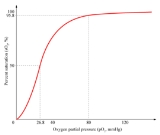
 with four oxygen binding sites, binding of CO at one of these sites also increases the oxygen affinity of the remaining 3 sites, which interferes with normal release of oxygen. This causes hemoglobin to retain oxygen that would otherwise be delivered to the tissue. Levels of oxygen available for tissue use are decreased. This situation is described as CO shifting the oxygen dissociation curve to the left. Blood oxygen content is actually increased in the case of carbon monoxide poisoning; because all the oxygen is in the blood, none is being given to the tissues, and this causes tissue hypoxic injury. However, despite CO affecting oxygen availability, other mechanisms may contribute to the crucial effects of CO poisoning.

A sufficient exposure to carbon monoxide can reduce the amount of oxygen taken up by the brain to the point that the victim becomes unconscious, and can suffer brain damage or even death from hypoxia
Hypoxia (medical)

Hypoxia is a Pathology condition in which the body as a whole or a region of the body is deprived of adequate oxygen supply. Variations in arterial oxygen concentrations can be part of the normal physiology, for example, during strenuous physical exercise....
. The brain regulates breathing based upon carbon dioxide
Carbon dioxide

Carbon dioxide is a chemical compound composed of two oxygen atoms covalent bond to a single carbon atom. It is a gas at standard temperature and pressure and exists in Earth's atmosphere in this state....
 levels in the blood, rather than oxygen levels, so a victim can succumb to hypoxia without ever noticing anything up to the point of collapse. Hallmark pathological change following CO poisoning is bilateral necrosis of the pallidum.

Hemoglobin acquires a bright red color when converted to carboxyhemoglobin, so a casualty of CO poisoning is described in textbooks as looking pink-cheeked and healthy. However, this "classic" cherry-red appearance is not always seen in living patients. Care should be taken not to overlook the diagnosis even if this color is not present.

Myoglobin


Carbon monoxide also has a high affinity for myoglobin
Myoglobin

Myoglobin is a Tertiary structure globular protein of 153 amino acids, containing a heme prosthetic group in the center around which the remaining apoprotein folds....
. CO bound to myoglobin may impair cardiac output and result in cerebral ischemia. A delayed return of symptoms has been reported and appears to result following a recurrence of increased carboxyhemoglobin levels; this effect may be due to late release of CO from myoglobin, which subsequently binds to hemoglobin.

Cytochrome oxidase


A second mechanism involves co-effects on the mitochondrial respiratory enzyme chain that is responsible for effective tissue utilization of oxygen. CO does not bind to cytochrome oxidase with the same affinity as oxygen, so it likely requires significant intracellular hypoxia before binding. This binding interferes with aerobic metabolism and efficient adenosine triphosphate
Adenosine triphosphate

This article is about the chemical used by cells as an energy carrier. For other uses, see ATP .Adenosine-5'-triphosphate is a multifunctional nucleotide, and plays an important role in cell biology as a coenzyme that is the "molecule unit of currency" of intracellular energy transfer....
 (ATP) synthesis. Cells respond by switching to anaerobic metabolism, causing anoxia, lactic acidosis, and eventual cell death.

Other mechanisms


Another mechanism that is thought to have a significant influence on delayed effects involves formed blood cells and chemical mediators, which cause brain lipid peroxidation. CO causes endothelial cell and platelet release of nitric oxide
Nitric oxide

Nitric oxide or nitrogen monoxide is a chemical compound with chemical formula NitrogenOxygen. This gas is an important signaling molecule in the body of mammals, including humans, and is an extremely important intermediate in the chemical industry....
, and the formation of oxygen free radicals including peroxynitrite. In the brain, this causes further mitochondrial dysfunction, capillary
Capillary

Capillaries are the smallest of a body's blood vessels, measuring 5-10 micrometre in diameter, which connect arterioles and venules, and enable the interchange of water, oxygen, carbon dioxide, and many other nutrient and waste chemical substances between blood and surrounding tissue s....
 leakage, leukocyte sequestration, and apoptosis
Apoptosis

Apoptosis is the process of programmed cell death that may occur in multicellular organisms. Programmed Cell death involves a series of biochemical events leading to a characteristic cell Morphology and death, in more specific terms, a series of biochemical events that lead to a variety of morphological changes, including Bleb , changes...
. The end result is lipid peroxidation (degradation of unsaturated fatty acids), which causes delayed reversible demyelinization of white matter
White matter

White matter is one of the three main solid components of the central nervous system. White matter tissue of the freshly cut brain appears white to the naked eye because of being composed largely of lipid....
 in the central nervous system, and can lead to edema
Edema

File:Oedema.jpgEdema or Oedema , formerly known as dropsy or hydropsy, is an abnormal accumulation of fluid beneath the skin, or in one or more cavities of the body....
 and focal areas of necrosis
Necrosis

Necrosis is the name given to premature death of cell s and living biological tissue. Necrosis is caused by external factors, such as infection, toxins, or trauma....
 within the brain.

This brain damage occurs mainly during the recovery period and results in cognitive defects (especially affecting memory and learning) and movement disorders. The movement disorders are related to a predilection of CO to damage the basal ganglia
Basal ganglia

The basal ganglia are a group of Nucleus in the brain interconnected with the cerebral cortex, thalamus and brainstem. Mammalian basal ganglia are associated with a variety of functions: motor control, cognition, emotions, and learning....
. These delayed neurological effects may develop over days following the initial acute poisoning.

Pregnancy


Carbon monoxide poisoning can have significant fetal
Fetus

A fetus is a developing mammal or other viviparous vertebrate, after the embryonic stage and before childbirth. The plural is fetuses, or sometimes feti....
 effects. CO causes fetal tissue hypoxia
Hypoxia (medical)

Hypoxia is a Pathology condition in which the body as a whole or a region of the body is deprived of adequate oxygen supply. Variations in arterial oxygen concentrations can be part of the normal physiology, for example, during strenuous physical exercise....
 by decreasing the release of maternal oxygen to the fetus, and by carbon monoxide crossing the placenta
Placenta

The placenta or afterbirth is a highly vascularized ephemeral organ present in Placentalia vertebrates that connects the developing fetal tissues to the uterine wall....
 and combining with fetal hemoglobin
Fetal hemoglobin

Fetal hemoglobin, or Foetal haemoglobin in British English, is the main oxygen transport protein in the fetus during the last seven months of development in the uterus and in the newborn until roughly 6 months old....
, which has a 10 to 15% higher affinity for CO than adult hemoglobin. Elimination of carbon monoxide is also slower in the fetus, leading to an accumulation of CO. The level of fetal morbidity and mortality in acute carbon monoxide poisoning is significant, so despite maternal wellbeing, severe fetal poisoning can still occur. Due to these effects, pregnant patients are treated with normal or hyperbaric oxygen for longer periods of time than non-pregnant patients.

Diagnosis


Diagnosis is usually performed by measuring levels of carbon monoxide found in the blood. This can be determined by measuring carboxyhemoglobin
Carboxyhemoglobin

Carboxyhemoglobin is a stable complex of carbon monoxide and hemoglobin that forms in red blood cells when carbon monoxide is inhaled, and hinders delivery of oxygen to the body....
, which is a stable complex of carbon monoxide and hemoglobin
Hemoglobin

Hemoglobin is the iron-containing oxygen-transport metalloprotein in the red blood cells of vertebrates, and the tissues of some invertebrates....
 that forms in red blood cells. Carbon monoxide is produced normally in the body, establishing a low background carboxyhemoglobin saturation. Carbon monoxide also functions as a neurotransmitter
Neurotransmitter

Neurotransmitters are chemistry which relay, amplify and modulate signals between a neuron and another cell . Neurotransmitters are packaged into vesicles that cluster beneath the membrane on the presynaptic side of a synapse, and are released into the synaptic cleft, where they bind to receptors in the membrane on the postsynaptic side of...
. Normal carboxyhemoglobin levels in an average person are less than 5%, whereas cigarette smokers (two packs/day) may have levels up to 9%.

Serious toxicity is often associated with carboxyhemoglobin levels above 25%, and the risk of fatality is high with levels over 70%. Still, no consistent dose response relationship has been found between carboxyhemoglobin levels and clinical effects. Therefore, carboxyhemoglobin levels are more guides to exposure levels than effects as they do not reliably predict clinical course or short- or long-term outcome.

The use of a pulse oximeter is not effective in the diagnosis of carbon monoxide poisoning. A patient who is suffering from carbon monoxide poison will most likely have a normal SpO2 reading.

Differential diagnosis

The earliest symptoms, especially from low level exposures, are often non-specific and readily confused with other illnesses, typically flu-like viral syndromes, depression
Clinical depression

Major depressive disorder is a mental disorder characterized by a pervasive depression , low self-esteem, and anhedonia in normally enjoyable activities....
, chronic fatigue syndrome
Chronic fatigue syndrome

Chronic fatigue syndrome is the most common name given to a poorly understood, variably debilitating disorder or disorders of uncertain etiology....
, chest pain
Chest pain

In medicine, chest pain is a symptom of a number of serious conditions and is generally considered a medical emergency. Even though it may be determined that the chest pain is non-cardiac in origin this is often a diagnosis of exclusion made after ruling out more serious causes of pain....
, and migraine
Migraine

Migraine is a neurology syndrome characterized by altered bodily perceptions, headaches, and nausea. Physiologically, the migraine headache is a neurological condition more common to women than to men....
 or other headaches. This often makes the diagnosis of carbon monoxide poisoning difficult.

Prevention


Prevention remains a vital public health issue, requiring public education on the safe operation of appliances, heaters, fireplaces, and internal-combustion engines, as well as increased emphasis on the installation of carbon monoxide detector
Carbon monoxide detector

A carbon monoxide detector or CO detector is a device that detects the presence of the carbon monoxide in order to prevent carbon monoxide poisoning....
s. Carbon monoxide alarms are usually installed in homes around heaters and other equipment. If a high level of CO is detected, the device sounds an alarm, giving people in the area a chance to ventilate the area or safely leave the building. Unlike smoke detector
Smoke detector

A smoke detector is a device that detects smoke and issues a signal to a fire alarm system, or issues a local audible and/or visual alarm from the detector itself....
s, they do not need to be placed near ceiling level. The Consumer Product Safety Commission
Consumer Product Safety Commission

The United States Consumer Product Safety Commission is an Independent agencies of the United States government created in 1972 through the Consumer Product Safety Act to protect "against unreasonable risks of injuries associated with consumer products." its acting chairman is Nancy Nord, a Republican....
 says that "carbon monoxide detectors are as important to home safety as smoke detectors are," and recommends that each home should have at least one carbon monoxide detector.

The 2009 edition of NFPA 720, the carbon monoxide detector guidelines published by the National Fire Protection Association
National Fire Protection Association

The National Fire Protection Association is a United States organization charged with creating and maintaining minimum standards and requirements for fire prevention and suppression activities, training, and equipment, as well as other life-safety codes and standards....
 (NFPA), mandates the placement of carbon monoxide detectors/alarms on every level of the residence, including the basement, in addition to outside sleeping areas. In new homes, electrically powered CO detectors must have battery backup and be interconnected to assure early warning of occupants at all levels.

NFPA 720-2009 is also the first national carbon monoxide standard to address CO devices in non-residential buildings. These guidelines, which now pertain to schools, healthcare centers, nursing homes and more, include three main points: 1) A secondary power supply must operate all carbon monoxide notification appliances for at least 12 hours, 2) CO detectors must be on the ceiling in the same room as permanently installed fuel-burning appliances, 3) CO detectors must be located on every habitable level and in every HVAC zone of the building.

CO devices, which retail for USD
United States dollar

The United States dollar is the unit of currency of the United States and was defined by the Coinage Act of 1792 to be between 371 and 416 grains of silver ....
$20-$60 and are widely available, can either be battery-operated or AC powered (with or without a battery backup). Since CO is colorless and odorless (unlike smoke from a fire), detection in a home environment is impossible without such a warning device. Some state and municipal governments, including those of Ontario, Canada, and New York City
New York City

The City of New York is the List of United States cities by population in the United States, while the New York metropolitan area ranks among the List of urban areas by population....
, require installation of CO detectors in new units. Massachusetts
Massachusetts

The Commonwealth of Massachusetts is a U.S. state located in the New England region of the Northeastern United States United States. It borders Rhode Island and Connecticut to the south, New York to the west, and Vermont and New Hampshire to the north....
 and Illinois
Illinois

The State of Illinois is a U.S. state of the United States, the 21st to be admitted to the United States. Illinois is the most populous and demographically diverse Midwestern United States state and the fifth most populous state in the nation....
 began to require a detector in all residences on January 1, 2007.

As of October 2008, more than a dozen U.S. states had passed state legislation regarding CO, and bills were pending in other states . CO legislation on the county and municipal level does exist in some states that do not yet have state-wide legislation. State and local laws regarding detector installation and the types of occupancies (such as private homes, schools, medical centers, etc.) that must install these devices vary greatly.

Treatment


First aid
First aid

First aid is the provision of initial care for an illness or injury. It is usually performed by a layman to a sick or injured Casualty until definitive medical treatment can be accessed....
 for carbon monoxide poisoning is to immediately remove the victim from the exposure without endangering oneself and obtaining medical treatment. Patients who are unconscious may require CPR
Cardiopulmonary resuscitation

Cardiopulmonary resuscitation is an emergency medical procedure for a victim of cardiac arrest or, in some circumstances, respiratory arrest. CPR is performed in hospitals, or in the community by layman or by emergency response professionals....
 on site.

The main medical treatment for carbon monoxide poisoning is administering 100% oxygen
Oxygen

Oxygen no O2 produced; 2) O2 produced, but absorbed in oceans & seabed rock; 3) O2 starts to gas out of the oceans, but is absorbed by land surfaces and formation of ozone layer; 4-5) O2 sinks filled and the gas accumulates]]...
 by a tight fitting oxygen mask
Oxygen mask

An oxygen mask provides a method to transfer breathing oxygen gas from a storage tank to the lungs. Oxygen masks may cover the nose and mouth or the entire face ....
. Oxygen hastens the dissociation of carbon monoxide from hemoglobin
Hemoglobin

Hemoglobin is the iron-containing oxygen-transport metalloprotein in the red blood cells of vertebrates, and the tissues of some invertebrates....
, improving tissue oxygenation by reducing its biological half-life. Hyperbaric oxygen is also used in the treatment of CO poisoning; hyperbaric oxygen also increases carboxyhemoglobin dissociation and does so to a greater extent than normal oxygen. Hyperbaric oxygen may also facilitate the dissociation of CO from cytochrome oxidase.

A significant controversy in the medical literature is whether or not hyperbaric oxygen actually offers any extra benefits over normal high flow oxygen in terms of increased survival or improved long term outcomes. There have been clinical trials in which the two treatment options have been compared; of the six performed, four found hyperbaric oxygen improved outcome and two found no benefit for hyperbaric oxygen. Some of these trials have been criticized for apparent flaws in their implementation. A recent robust review of all the literature on carbon monoxide treatment concluded that the role of hyperbaric oxygen is unclear and the available evidence neither confirms nor denies a clinically meaningful benefit. The authors suggested a large, well designed, externally audited, multicentre trial to compare normal oxygen with hyperbaric oxygen.

Further specific treatment for other complications such as seizure
Seizure

An epileptic seizure is a transient symptom of abnormal, excessive or synchronous neuronal activity in the brain. It can manifest as an alteration in mental state, tonic or clonic movements, convulsions, and various other psychic symptoms ....
, cardiac abnormalities, pulmonary edema
Pulmonary edema

Pulmonary edema , or oedema , is swelling and/or fluid accumulation in the lungs. It leads to impaired gas exchange and may cause respiratory failure....
, and acidosis
Acidosis

Acidosis is an increased acidity . If not further qualified, it usually refers to acidity of the blood plasma.Acidosis is said to occur when arterial pH falls below 7.35, while its counterpart occurs at a pH over 7.45....
 may be required. The delayed development of neuropsychiatric impairment is one of the most serious complications of poisoning, with extensive follow up and treatment often being required.

Epidemiology


Carbon monoxide poisoning is the most common type of fatal poisoning in France and the United States. It has been estimated that more than 40,000 people per year seek medical attention for carbon monoxide poisoning in the United States. In many industrialized countries, carbon monoxide may be the cause of greater than 50% of fatal poisonings. In the U.S., about 200 people die each year from carbon monoxide poisoning associated with home fuel-burning heating equipment. The CDC
Centers for Disease Control and Prevention

The Centers for Disease Control and Prevention is an agency of the United States United States Department of Health and Human Services based in Atlanta, Georgia, United States adjacent to the campus of Emory University and northeast of downtown Atlanta....
 reports, "Each year, more than 500 Americans die from unintentional CO poisoning, and more than 2,000 commit suicide by intentionally poisoning themselves."

Suicide

As other poisons such as cyanide
Cyanide

A cyanide is any chemical compound that contains the nitrile , which consists of a carbon atom chemical bond to a nitrogen atom. Inorganic cyanides are hydrogen cyanide salts in which cyanide is generally the anion CN-....
 and arsenic
Arsenic

Arsenic is a well-known chemical element that has the symbol As and atomic number 33. Arsenic was first documented by Albertus Magnus in 1250....
 were placed under increasingly stringent legal restrictions, town gas
Coal gas

Coal gas is a flammable gaseous fuel made from coal and supplied to the user via a piped distribution system. Town gas is a more general term referring to manufactured gaseous fuels produced for sale to consumers and municipalities....
, with its high levels of carbon monoxide, became a common method of suicide by poisoning. Suicide
Suicide

Suicide is the intentional taking of one's own life. Many dictionaries also note the metaphorical sense of "willful destruction of one's self-interest"....
 has often been committed by inhaling the exhaust fumes of a running car engine, particularly in an enclosed space such as a garage. In the past, motor car exhaust
Exhaust gas

Exhaust gas or flue gas is emitted as a result of the combustion of fuels such as natural gas, gasoline/petrol, diesel, fuel oil or coal....
 may have contained up to 25% carbon monoxide; but newer cars have catalytic converter
Catalytic converter

A catalytic converter is a device used to reduce the toxicity of emissions from an internal combustion engine. First widely introduced on Mass production automobiles in the United States market for the 1975 model year to comply with tightening United States Environmental Protection Agency regulations on auto exhaust, catalytic converters a...
s, which can eliminate over 99% of carbon monoxide produced. However, even cars with catalytic converters can produce substantial carbon monoxide if an idling car is left in an enclosed space.

As carbon monoxide poisoning via car exhaust has become less of a suicide option, there has been an increase in new methods of carbon monoxide poisoning such as burning charcoal
Charcoal-burning suicide

Charcoal-burning suicide is committing suicide by burning charcoal in a closed room....
 or other fossil fuels within a confined space, such as a small room, tent, or car. Such incidents have occurred mostly in connection with group suicide pact
Suicide pact

A suicide pact describes the suicides of two or more individuals in an agreed-upon plan. The plan may be to die together, or separately and closely timed....
s in both Japan and Hong Kong, but are starting to occur in Western countries as well, such as the 2007 suicide of Boston
Boston (band)

Boston is an United States Rock music band from Boston, Massachusetts that achieved its most notable successes during the 1970s and 1980s. Centered on guitarist, keyboardist, songwriter, and record producer Tom Scholz, the band is a staple of classic rock radio playlists....
 lead singer Brad Delp
Brad Delp

Bradley E. Delp was an United States musician. He is best known as the lead singer of the rock music band Boston . Delp is also known for his extremely high range, and is often cited as a key influence in the rock music vocal scene....
.

Carbon monoxide poisoning and "haunted houses"

Symptoms of carbon monoxide poisoning include listlessness, depression, dementia, emotional disturbances, and hallucinations. Many of the phenomena generally associated with haunted house
Haunted house

A haunted house is defined as a house that is believed to be a center for supernatural occurrences or paranormal phenomena. A haunted house may allegedly contain ghosts, poltergeists, or even malevolent entities such as demons....
s, including strange visions and sounds, feelings of dread, illness, and the sudden, apparently inexplicable death of all the occupants, can be readily attributed to carbon monoxide poisoning.

In one famous case, carbon monoxide poisoning was clearly identified as the cause of an alleged haunting. Dr. William Wilmer, an ophthalmologist, described the experiences of one of his patients in a 1921 article published in the American Journal of Ophthalmology. "Mr. and Mrs. H." moved into a new home, but soon began to complain of headaches and fatigue. They began to hear bells and footsteps during the night, accompanied by strange physical sensations and sightings of mysterious figures. When they began to investigate the symptoms, they discovered the previous residents of the house had similar experiences. An examination of their furnace found it to be severely damaged, resulting in incomplete combustion
Combustion

Combustion or burning is a complex sequence of exothermic chemical reactions between a fuel and an oxidant accompanied by the production of heat or both heat and light in the form of either a glow or flames, appearance of light flickering....
 and forcing most of the fumes, including carbon monoxide, into the house rather than up the chimney.

A report published in 2005 described a 23-year old female victim of carbon monoxide poisoning, found delirious and hyperventilating, who saw a "ghost" while in the shower. A new gas water heater had just been installed in her home, apparently improperly, which flooded the house with carbon monoxide when the victim closed all the exterior windows and doors and took a shower.

See also

  • Undersea and Hyperbaric Medical Society
    Undersea and Hyperbaric Medical Society

    The Undersea and Hyperbaric Medical Society is the primary source of information for Diving medicine and hyperbaric medicine medicine physiology worldwide....
  • Deaths from carbon monoxide poisoning


External links

  • Radiology and Pathology Images from MedPix