

Black light

Encyclopedia
Ultraviolet
Ultraviolet light is electromagnetic radiation with a wavelength shorter than that of visible light, but longer than X-rays, in the range 10 nm to 400 nm, and energies from 3 eV to 124 eV...
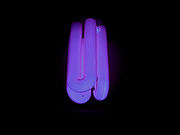
, UVA) range, and little visible light. Other types of ultraviolet lamp emit large amounts of visible light along with the ultraviolet; but a "black light" usually refers to a lamp that has a dark blue optical filtering material in the glass envelope of the bulb (or the lamp housing) which blocks most of the visible light, so the lamp emits mostly ultraviolet. Ultraviolet radiation is invisible, but a small fraction of visible light passes through the filtering material, with wavelength
Wavelength
In physics, the wavelength of a sinusoidal wave is the spatial period of the wave—the distance over which the wave's shape repeats.It is usually determined by considering the distance between consecutive corresponding points of the same phase, such as crests, troughs, or zero crossings, and is a...
s no longer than 400-410 nm, and as a result, when operating the lamp has a dim purple or violet glow. Wood's glass
Wood's glass
Wood's glass is an optical filter glass invented by American physicist Robert Williams Wood which allows ultraviolet and infrared light to pass through while blocking most visible light. It was developed as a light filter used in communications during World War I...
is one type of filtering material which is used in black lights.
Black light sources may be made from specially designed fluorescent lamp
Fluorescent lamp
A fluorescent lamp or fluorescent tube is a gas-discharge lamp that uses electricity to excite mercury vapor. The excited mercury atoms produce short-wave ultraviolet light that then causes a phosphor to fluoresce, producing visible light. A fluorescent lamp converts electrical power into useful...
s, mercury vapor lamps, light-emitting diodes, or incandescent lamps. In most black lights the blue optical filter material to block visible light is in the glass envelope of the light bulb, but in some types there is a separate filter glass in the lamp housing. In medicine, forensics, and some other scientific fields, such a light source is referred to as a Wood's lamp (named after Robert Williams Wood).
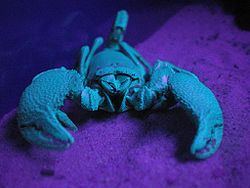
Ultraviolet lights have many uses, but black lights are essential when UV light without visible light is needed, such as in observing fluorescence
Fluorescence
Fluorescence is the emission of light by a substance that has absorbed light or other electromagnetic radiation of a different wavelength. It is a form of luminescence. In most cases, emitted light has a longer wavelength, and therefore lower energy, than the absorbed radiation...
, the colored glow that many substances emit when exposed to UV. Black lights are employed for decorative and artistic lighting effects, for diagnostic and therapeutic uses in medicine, for the detection of substances tagged with fluorescent dyes, rock-hunting, for the curing of plastic resins and for attracting insects. Strong sources of long-wave ultraviolet light are used in tanning beds. Black light lamps are also used for the detection of counterfeit money
Counterfeit money
Counterfeit money is currency that is produced without the legal sanction of the state or government to resemble some official form of currency closely enough that it may be confused for genuine currency. Producing or using counterfeit money is a form of fraud or forgery. Counterfeiting is probably...
. Most artificial ultraviolet sources are low power. Powerful ultraviolet sources present a hazard to eyes and skin; apparatus using these sources requires personal protective equipment.
Fluorescent
Fluorescent black light tubes are typically made in the same fashion as normal fluorescent tubes except that a phosphorPhosphor
A phosphor, most generally, is a substance that exhibits the phenomenon of luminescence. Somewhat confusingly, this includes both phosphorescent materials, which show a slow decay in brightness , and fluorescent materials, where the emission decay takes place over tens of nanoseconds...
that emits UV light instead of visible white light is used, and the clear glass envelope of the bulb has a deep-bluish-purple optical filter coating which blocks almost all visible light. The first black light tubes used Wood's glass
Wood's glass
Wood's glass is an optical filter glass invented by American physicist Robert Williams Wood which allows ultraviolet and infrared light to pass through while blocking most visible light. It was developed as a light filter used in communications during World War I...
, a nickel-oxide–doped glass, which blocks almost all visible light between 400 and 700 nanometers, but this is not used in modern tubes, partly due to cost but mainly because Wood's glass does not make a satisfactory material for lamp manufacturing. The color of such lamps is often referred to in the lighting industry as "blacklight blue" or "BLB." This is to distinguish these lamps from lamps made for "bug zapper
Bug zapper
A bug zapper, or more formally an electrical discharge insect control system is a device that attracts and kills flying insects that are attracted by light. A light source attracts insects to an electrical grid, where they are electrocuted by touching two wires with a high voltage between them...
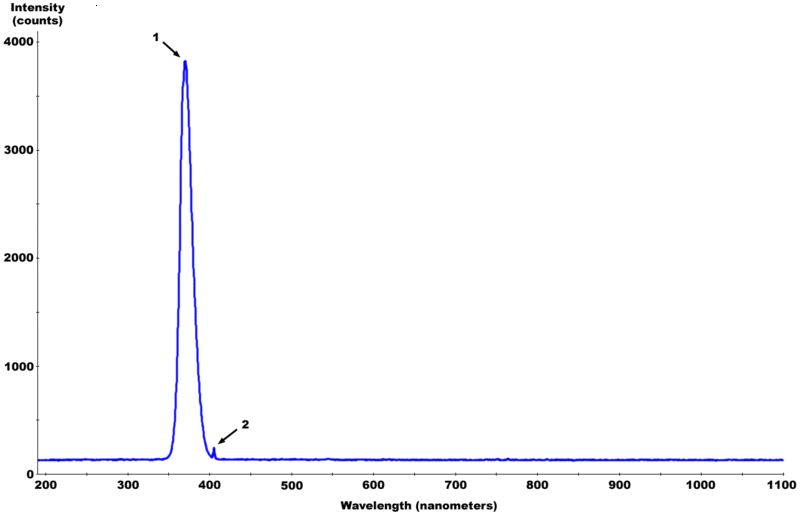
" insect traps that do not have the blue filtering material, which are labelled with the designation "blacklight" or "BL". The phosphor typically used for a near 368 to 371 nanometre emission peak is either europium
Europium
Europium is a chemical element with the symbol Eu and atomic number 63. It is named after the continent of Europe. It is a moderately hard silvery metal which readily oxidizes in air and water...
-doped strontium fluoroborate (SrB4O7F:Eu2+) or europium-doped strontium borate (SrB4O7:Eu2+) while the phosphor used to produce a peak around 350 to 353 nanometres is lead-doped barium silicate (BaSi2O5:Pb+). "Blacklight Blue" lamps peak at 365 nm.
Manufacturers use different numbering systems for black light, UVA, UVB and Actinic tubes. Philips uses one system which is becoming outdated (2010), while the (German) Osram
Osram
Osram, founded 1919, is part of the industry sector of Siemens AG and one of the two leading lighting manufacturers in the world. The name is derived from osmium and Wolfram , as both these elements were commonly used for lighting filaments at the time the company was founded...
system is becoming dominant outside North America. The following table lists the tubes generating blue, UVA and UVB, in order of decreasing wavelength of the most intense peak. Approximate phosphor compositions, major manufacturer's type numbers and some uses are given as an overview of the types available. "Peak" position is approximated to the nearest 10 nm. "Width" is the measure between points on the shoulders of the peak that represent 50% intensity.
| Phosphor | Peak, nm | Width, nm | Philips Suffix. | Osram Suffix. | U.S. Type | Uses |
|---|---|---|---|---|---|---|
| Mixture | 450 | 50 | - | /71 | - | hyperbilirubinaemia, polymerization |
| , Eu | 420 | 30 | /03 | /72 | - | polymerization |
| , Eu | 370 | 20 | /08 | /73 | ("BLB") | forensics, night clubs |
| , Eu | 370 | 20 | - | /78 | ("BL") | insect attraction, polymerization, psoriasis, suntanning |
| , Pb | 350 | 40 | /09 | /79 | "BL" | insect attraction, suntanning lounges |
| , Pb | 350 | 40 | /08 | - | "BLB" | dermatology, forensics, night clubs |
| , Ce | 340 | 30 | - | - | - | photochemical uses |
| , Ce | 310 | 40 | - | - | - | medical applications, polymerization |
Wood's glass tubes manufactured by Osram use a fairly narrow-band emitting phosphor, europium activated strontium pyroborate with a peak at about 370 nm, whereas North American and Philips Wood's glass tubes use lead-activated calcium metasilicate that emits a wider band with a shorter wavelength peak at about 350 nm. These two types seem to be the most commonly used. Different manufacturers offer either one or the other and sometimes both.
"Bug zapper" tubes
Another class of UV fluorescent bulb is designed for use in "bug zapperBug zapper
A bug zapper, or more formally an electrical discharge insect control system is a device that attracts and kills flying insects that are attracted by light. A light source attracts insects to an electrical grid, where they are electrocuted by touching two wires with a high voltage between them...
" flying insect traps. Insects are attracted to the UV light, which they are able to see, and are then electrocuted by the device. These bulbs use the same UV-A emitting phosphor as normal black lights, but since they don't need to suppress visible light output, they use plain glass instead of the more expensive Wood's glass or filter-coated glass. Plain glass blocks out less of the visible mercury emission spectrum, making them appear light blue-violet to the naked eye. These lamps are referred to as "blacklight" or "BL" in most North American lighting catalogs.
Incandescent
A black light may also be formed by simply using Wood's glassWood's glass
Wood's glass is an optical filter glass invented by American physicist Robert Williams Wood which allows ultraviolet and infrared light to pass through while blocking most visible light. It was developed as a light filter used in communications during World War I...
as the envelope for a common incandescent bulb. This was the method that was used to create the very first black light sources. Although incandescent black light bulbs are a cheaper alternative to fluorescent tubes, they are exceptionally inefficient at producing UV light since most of the light emitted by the filament is visible light which must be blocked. Due to its black body
Black body
A black body is an idealized physical body that absorbs all incident electromagnetic radiation. Because of this perfect absorptivity at all wavelengths, a black body is also the best possible emitter of thermal radiation, which it radiates incandescently in a characteristic, continuous spectrum...
spectrum, an incandescent light radiates less than 0.1% of its energy as UV light. Incandescent UV bulbs, due to the necessary absorption of the visible light, become very hot during use. This heat is, in fact, encouraged in such bulbs, since a hotter filament increases the proportion of UVA in the black-body radiation emitted. This high running-temperature drastically reduces the life of the lamp, however, from a typical 1000 hours to around 100 hours.
Mercury vapor
High power mercury vapor black light lamps are made in power ratings of 100 to 1000 watts. These do not use phosphors, but rely on the intensified and slightly broadened 350–375 nm spectral line of mercury from high pressure discharge at between 5 standard atmosphere, depending upon the specific type. These lamps use envelopes of Wood's glass or similar optical filter coatings to block out all the visible light and also the short wavelength (UVC) lines of mercury at 184.4 and 253.7 nm, which are harmful to the eyes and skin. A few other spectral lines, falling within the pass band of the Wood's glass between 300 and 400 nm, contribute to the output.These lamps are used mainly for theatrical purposes and concert displays. They are more efficient UVA producers per unit of power consumption than fluorescent tubes.
LED
Ultraviolet light can be generated by some light-emitting diodeLight-emitting diode
A light-emitting diode is a semiconductor light source. LEDs are used as indicator lamps in many devices and are increasingly used for other lighting...
s, but wavelengths below 380 nm are uncommon and the emission peaks are broad, so only the very lowest energy UV photons are emitted, within predominantly visible light.
Clinical use
Dermatology
Dermatology is the branch of medicine dealing with the skin and its diseases, a unique specialty with both medical and surgical aspects. A dermatologist takes care of diseases, in the widest sense, and some cosmetic problems of the skin, scalp, hair, and nails....
by which ultraviolet light is shone (at a wavelength of approximately 365 nanometers) onto the skin of the patient; a technician then observes any subsequent fluorescence
Fluorescence
Fluorescence is the emission of light by a substance that has absorbed light or other electromagnetic radiation of a different wavelength. It is a form of luminescence. In most cases, emitted light has a longer wavelength, and therefore lower energy, than the absorbed radiation...
. For example, porphyrins—associated with some skin diseases—will fluoresce pink. Though the technique for producing a source of ultraviolet light was devised by Robert Williams Wood in 1903 using "Wood's glass
Wood's glass
Wood's glass is an optical filter glass invented by American physicist Robert Williams Wood which allows ultraviolet and infrared light to pass through while blocking most visible light. It was developed as a light filter used in communications during World War I...
", it wasn't until 1925 that the technique was used in dermatology
Dermatology
Dermatology is the branch of medicine dealing with the skin and its diseases, a unique specialty with both medical and surgical aspects. A dermatologist takes care of diseases, in the widest sense, and some cosmetic problems of the skin, scalp, hair, and nails....
by Margarot and Deveze for the detection of fungal infection of hair. It has many uses, both in distinguishing fluorescent conditions from other conditions and in locating the precise boundaries of the condition.
Fungal and bacterial infections
It is also helpful in diagnosing:- fungal infections (Microsporum audouini). Some forms of tineaTineaTinea is a general term used to describe skin mycoses. The term ringworm is even less precise, but is usually considered a synonym.It is sometimes equated with dermatophytosis, and it is true that most conditions identified as "tinea" are members of the imperfect fungi that make up the dermatophytes...
, such as Trichophyton tonsuransTrichophyton tonsuransTrichophyton tonsurans is a species of fungus in the Arthrodermataceae family. It is a common cause of tinea capitis in the United Kingdom....
, do not fluoresce.
- bacterial infections (Corynebacteriium minutissimum is coral red, PseudomonasPseudomonasPseudomonas is a genus of gammaproteobacteria, belonging to the family Pseudomonadaceae containing 191 validly described species.Recently, 16S rRNA sequence analysis has redefined the taxonomy of many bacterial species. As a result, the genus Pseudomonas includes strains formerly classified in the...
is yellowish-green)
- Propionibacterium acnesPropionibacterium acnesPropionibacterium acnes is a relatively slow growing, typically aerotolerant anaerobic gram positive bacterium that is linked to the skin condition acne; it can also cause chronic blepharitis and endophthalmitis, the latter particularly following intraocular surgery...
, a bacterium implicated in acneAcneAcne is a general term used for acneiform eruptions. It is usually used as a synonym for acne vulgaris, but may also refer to:*Acne aestivalis*Acne conglobata*Acne cosmetica*Acne fulminans*Acne keloidalis nuchae*Acne mechanica...
causation, exhibits an orange glow under a Wood's lamp.
Ethylene glycol poisoning
A Wood's lamp may be used to rapidly assess whether a subject is suffering from ethylene glycol poisoningEthylene glycol poisoning
Ethylene glycol poisoning is caused by the ingestion of ethylene glycol . It is a toxic, colorless, odorless, almost nonvolatile liquid with a sweet taste and is occasionally consumed by children and dogs for its sweetness...
as a consequence of antifreeze
Antifreeze
Antifreeze is a freeze preventive used in internal combustion engines and other heat transfer applications, such as HVAC chillers and solar water heaters....
ingestion. Manufacturers of ethylene glycol-containing antifreezes commonly add fluorescein
Fluorescein
Fluorescein is a synthetic organic compound available as a dark orange/red powder soluble in water and alcohol. It is widely used as a fluorescent tracer for many applications....
, which causes the patient's urine to fluoresce
Fluorescence
Fluorescence is the emission of light by a substance that has absorbed light or other electromagnetic radiation of a different wavelength. It is a form of luminescence. In most cases, emitted light has a longer wavelength, and therefore lower energy, than the absorbed radiation...
under Wood's Lamp.
Other
Wood's light is useful in diagnosing conditions such as tuberous sclerosisTuberous sclerosis
Tuberous sclerosis or tuberous sclerosis complex is a rare multi-system genetic disease that causes non-malignant tumors to grow in the brain and on other vital organs such as the kidneys, heart, eyes, lungs, and skin. A combination of symptoms may include seizures, developmental delay, behavioral...
and erythrasma
Erythrasma
Erythrasma is a skin disease that causes brown, scaly skin patches. It is caused by the gram positive bacterium Corynebacterium minutissimum.It is prevalent among diabetics, the obese, and in warm climates and is worsened by wearing occlusive clothing....
. Additionally, detection of Porphyria cutanea tarda
Porphyria cutanea tarda
Porphyria cutanea tarda is the most common subtype of porphyria. The disorder results from low levels of the enzyme responsible for the fifth step in heme production. Heme is a vital molecule for all of the body's organs...
can sometimes be made when urine turns pink upon illumination with Wood's lamp. Woods lamps have also been used to differentiate hypopigmentation from depigmentation such as with Vitiligo
Vitiligo
Vitiligo is a condition that causes depigmentation of sections of skin. It occurs when melanocytes, the cells responsible for skin pigmentation, die or are unable to function. The cause of vitiligo is unknown, but research suggests that it may arise from autoimmune, genetic, oxidative stress,...
. Skin from a Vitiligo patient will appear yellow-green or blue under the woods lamp.
Its use in detecting melanoma
Melanoma
Melanoma is a malignant tumor of melanocytes. Melanocytes are cells that produce the dark pigment, melanin, which is responsible for the color of skin. They predominantly occur in skin, but are also found in other parts of the body, including the bowel and the eye...
has been reported.
Safety
Although black lights produce light in the UV range, their spectrum is mostly confined to the longwave UVA region, that is, UV radiation nearest in wavelength to visible light, with low frequency and therefore relatively low energy. While low, there is still some power of a conventional black light in the UVB range. UVA is the safest of the three spectra of UV light, although high exposure to UVA has been linked to the development of skin cancerSkin cancer
Skin neoplasms are skin growths with differing causes and varying degrees of malignancy. The three most common malignant skin cancers are basal cell cancer, squamous cell cancer, and melanoma, each of which is named after the type of skin cell from which it arises...
in humans. The relatively low energy of UVA light does not cause sunburn
Sunburn
A sunburn is a burn to living tissue, such as skin, which is produced by overexposure to ultraviolet radiation, commonly from the sun's rays. Usual mild symptoms in humans and other animals include red or reddish skin that is hot to the touch, general fatigue, and mild dizziness. An excess of UV...
. UVA is capable of causing damage to collagen
Collagen
Collagen is a group of naturally occurring proteins found in animals, especially in the flesh and connective tissues of mammals. It is the main component of connective tissue, and is the most abundant protein in mammals, making up about 25% to 35% of the whole-body protein content...
fibers, however, so it does have the potential to accelerate skin
Skin
-Dermis:The dermis is the layer of skin beneath the epidermis that consists of connective tissue and cushions the body from stress and strain. The dermis is tightly connected to the epidermis by a basement membrane. It also harbors many Mechanoreceptors that provide the sense of touch and heat...
aging and cause wrinkle
Wrinkle
A wrinkle is a fold, ridge or crease in the skin. Skin wrinkles typically appear as a result of aging processes such as glycation or, temporarily, as the result of prolonged immersion in water. Wrinkling in the skin is caused by habitual facial expressions, aging, sun damage, smoking, poor...
s. UVA can also destroy vitamin A
Vitamin A
Vitamin A is a vitamin that is needed by the retina of the eye in the form of a specific metabolite, the light-absorbing molecule retinal, that is necessary for both low-light and color vision...
in the skin.
UVA light has been shown to cause DNA damage, but not directly, like UVB and UVC. Due to its longer wavelength
Wavelength
In physics, the wavelength of a sinusoidal wave is the spatial period of the wave—the distance over which the wave's shape repeats.It is usually determined by considering the distance between consecutive corresponding points of the same phase, such as crests, troughs, or zero crossings, and is a...
, it is absorbed less and reaches deeper into skin layers, where it produces reactive chemical intermediates such as hydroxyl
Hydroxyl radical
The hydroxyl radical, •OH, is the neutral form of the hydroxide ion . Hydroxyl radicals are highly reactive and consequently short-lived; however, they form an important part of radical chemistry. Most notably hydroxyl radicals are produced from the decomposition of hydroperoxides or, in...
and oxygen radical
Radical (chemistry)
Radicals are atoms, molecules, or ions with unpaired electrons on an open shell configuration. Free radicals may have positive, negative, or zero charge...
s, which in turn can damage DNA and result in a risk of melanoma
Melanoma
Melanoma is a malignant tumor of melanocytes. Melanocytes are cells that produce the dark pigment, melanin, which is responsible for the color of skin. They predominantly occur in skin, but are also found in other parts of the body, including the bowel and the eye...
. The weak output of black lights, however, is not considered sufficient to cause DNA damage or cellular mutation
Mutation
In molecular biology and genetics, mutations are changes in a genomic sequence: the DNA sequence of a cell's genome or the DNA or RNA sequence of a virus. They can be defined as sudden and spontaneous changes in the cell. Mutations are caused by radiation, viruses, transposons and mutagenic...
s in the way that direct summer sunlight can, although there are reports that overexposure to the type of UV radiation used for creating artificial suntans on sunbeds can cause DNA damage, photoaging (damage to the skin from prolonged exposure to sunlight), toughening of the skin, suppression of the immune system, cataract formation and skin cancer.
Uses
Fluorescence
Fluorescence is the emission of light by a substance that has absorbed light or other electromagnetic radiation of a different wavelength. It is a form of luminescence. In most cases, emitted light has a longer wavelength, and therefore lower energy, than the absorbed radiation...
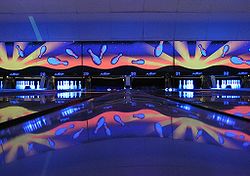
, and has many practical uses. Black lights are required to observe fluorescence, since other types of ultraviolet lamps emit visible light which drowns out the dim flourescent glow.
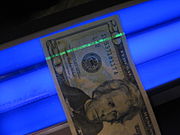
Black light is commonly used to authenticate oil paintings, antiques and banknote
Banknote
A banknote is a kind of negotiable instrument, a promissory note made by a bank payable to the bearer on demand, used as money, and in many jurisdictions is legal tender. In addition to coins, banknotes make up the cash or bearer forms of all modern fiat money...
s. Black lights can be used to differentiate real currency from counterfeit
Counterfeit
To counterfeit means to illegally imitate something. Counterfeit products are often produced with the intent to take advantage of the superior value of the imitated product...
notes because, in many countries, legal banknotes have fluorescent symbols on them that only show under a black light. In addition, the paper used for printing money does not contain any of the brightening agents which cause commercially available papers to fluoresce under black light. Both of these features make illegal notes easier to detect and more difficult to successfully counterfeit. The same security features can be applied to identification cards.
Other security applications include the use of pens containing a fluorescent ink, generally with a soft tip, than can be used to "invisibly" mark items. If the objects that are so marked are subsequently stolen, a black light can be used to search for these security markings. At some theme parks and at other, day-long (or night-long) events, a fluorescent mark is rubber stamp
Rubber stamp
Rubber stamping, also called stamping, is a craft in which some type of ink made of dye or pigment is applied to an image or pattern that has been carved, molded, laser engraved or vulcanized, onto a sheet of rubber. The rubber is often mounted onto a more stable object such as a wood, brick or an...
ed onto the wrist of a guest who can then exercise the option of leaving and being able to return again without paying another admission fee.
In medicine, the Wood's lamp is used to check for the characteristic fluorescence of certain dermatophytic
Dermatophyte
Dermatophytes are a common label for a group of three types of fungus that commonly causes skin disease in animals and humans. These anamorphic genera are: Microsporum, Epidermophyton and Trichophyton. There are about 40 species in these three genera...
fungi such as species of Microsporan which emit a yellow glow, or corynebacterium
Corynebacterium
Corynebacterium is a genus of Gram-positive rod-shaped bacteria. They are widely distributed in nature and are mostly innocuous. Some are useful in industrial settings such as C. glutamicum. Others can cause human disease. C...
which have a red to orange color when viewed under a Wood's lamp. Such light is also used to detect the presence and extent of disorders that cause a loss of pigmentation, such as vitiligo
Vitiligo
Vitiligo is a condition that causes depigmentation of sections of skin. It occurs when melanocytes, the cells responsible for skin pigmentation, die or are unable to function. The cause of vitiligo is unknown, but research suggests that it may arise from autoimmune, genetic, oxidative stress,...
. It can also be used to diagnose ringworm, fungal infections, corneal scratches, foreign bodies in the eye, blocked tear ducts, acne
Acne
Acne is a general term used for acneiform eruptions. It is usually used as a synonym for acne vulgaris, but may also refer to:*Acne aestivalis*Acne conglobata*Acne cosmetica*Acne fulminans*Acne keloidalis nuchae*Acne mechanica...
, erythrasma
Erythrasma
Erythrasma is a skin disease that causes brown, scaly skin patches. It is caused by the gram positive bacterium Corynebacterium minutissimum.It is prevalent among diabetics, the obese, and in warm climates and is worsened by wearing occlusive clothing....
, tinea versicolor
Tinea versicolor
Tinea versicolor is a condition characterized by a rash on the trunk and proximal extremities. Recent research has shown that the majority of Tinea versicolor is caused by the Malassezia globosa fungus, although Malassezia furfur is responsible for a small number of cases...
, microsporum canis
Microsporum canis
Microsporum canis is an organism that can cause tinea capitis in humans, and simple ringworm in pets. Despite its name, its major reservoir in companion animals is the domestic cat and dog.It is closely related to other dermatophytes....
, scabies
Scabies
Scabies , known colloquially as the seven-year itch, is a contagious skin infection that occurs among humans and other animals. It is caused by a tiny and usually not directly visible parasite, the mite Sarcoptes scabiei, which burrows under the host's skin, causing intense allergic itching...
, alopecia
Alopecia
Alopecia means loss of hair from the head or body. Alopecia can mean baldness, a term generally reserved for pattern alopecia or androgenic alopecia. Compulsive pulling of hair can also produce hair loss. Hairstyling routines such as tight ponytails or braids may induce Traction alopecia. Both...
, porphyria
Porphyria
Porphyrias are a group of inherited or acquired disorders of certain enzymes in the heme bio-synthetic pathway . They are broadly classified as acute porphyrias and cutaneous porphyrias, based on the site of the overproduction and accumulation of the porphyrins...
, bacterial infections, and many other skin conditions. Fluorescent materials are also very widely used in numerous applications in molecular biology, often as "tags" which bind themselves to a substance of interest (for example, DNA), so allowing their visualization. Black light can also be used to see animal excreta such as urine and vomit that is not always visible to the naked eye.
Black light is used extensively in non-destructive testing. Fluorescing fluids are applied to metal
Metal
A metal , is an element, compound, or alloy that is a good conductor of both electricity and heat. Metals are usually malleable and shiny, that is they reflect most of incident light...
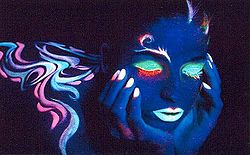
structures and illuminated with a black light which allows cracks and other weaknesses in the material to be easily detected. It is also used to illuminate pictures painted with fluorescent colors, particularly on black velvet
Velvet
Velvet is a type of woven tufted fabric in which the cut threads are evenly distributed,with a short dense pile, giving it a distinctive feel.The word 'velvety' is used as an adjective to mean -"smooth like velvet".-Composition:...
, which intensifies the illusion of self-illumination. The use of such materials, often in the form of tiles viewed in a sensory room
Sensory room
A sensory room is a special room designed to develop people's sense, usually through special lighting, music, and objects....
under UV light, is common in the United Kingdom for the education of students with profound and multiple learning difficulties. Such fluorescence from certain textile fibers, especially those bearing optical brightener
Optical brightener
Optical brighteners, optical brightening agents , fluorescent brightening agents or fluorescent whitening agents are dyes that absorb light in the ultraviolet and violet region of the electromagnetic spectrum, and re-emit light in the blue region...
residues, can also be used for recreational effect, as seen, for example, in the opening credits of the James Bond
James Bond
James Bond, code name 007, is a fictional character created in 1953 by writer Ian Fleming, who featured him in twelve novels and two short story collections. There have been a six other authors who wrote authorised Bond novels or novelizations after Fleming's death in 1964: Kingsley Amis,...
film A View to a Kill
A View to a Kill
A View to a Kill is the fourteenth spy film of the James Bond series, and the seventh and last to star Roger Moore as the fictional MI6 agent James Bond. Although the title is adapted from Ian Fleming's short story "From a View to a Kill", the film is the fourth Bond film after The Spy Who Loved...
. Black light puppetry is also performed in a black light theater.
One of the innovations for night and all-weather flying used by the US, UK, Japan and Germany
Germany
Germany , officially the Federal Republic of Germany , is a federal parliamentary republic in Europe. The country consists of 16 states while the capital and largest city is Berlin. Germany covers an area of 357,021 km2 and has a largely temperate seasonal climate...
during World War II
World War II
World War II, or the Second World War , was a global conflict lasting from 1939 to 1945, involving most of the world's nations—including all of the great powers—eventually forming two opposing military alliances: the Allies and the Axis...
was the use of UV interior lighting to illuminate the instrument panel, giving a safer alternative to the radium
Radium
Radium is a chemical element with atomic number 88, represented by the symbol Ra. Radium is an almost pure-white alkaline earth metal, but it readily oxidizes on exposure to air, becoming black in color. All isotopes of radium are highly radioactive, with the most stable isotope being radium-226,...
-painted instrument faces and pointers, and an intensity that could be varied easily and without visible illumination that would give away an aircraft's position. This went so far as to include the printing of charts that were marked in UV-fluorescent inks, and the provision of UV-visible pencils and slide rules such as the E6B
E6B
The E6B Flight Computer, or simply the "whiz wheel", is a form of circular slide rule used in aviation. They are mostly used in flight training, but many professional and even airline pilots still carry and use these flight computers...
.
External links
- Skin Care Guide
- Wood's lamp
- U.V.C to U.V.A conversion Phosphors for Black Light sources
- Black Light Theatre World Web
- Black Light Photography with fluorescent materials
- About.com - "What Materials Glow Under a Black or Ultraviolet Light?"
- - "Medical Uses for a Wood's Lamp"
- Black Light Theatre Theodor Hoidekr
- Black Light Puppets
- Examples of Black Light Painting