

Bisphosphonate

Encyclopedia
Bisphosphonates are a class of drugs that prevent the loss of bone mass, used to treat osteoporosis
and similar diseases. They are called bisphosphonates because they have two phosphonate
(PO3) groups and are similar in structure to pyrophosphate
.
Evidence shows that they reduce the risk of osteoporotic fracture in those who have had previous fractures however do not reduce fracture risk in those with osteoporosis who have not previously had a fracture.
Bone undergoes constant turnover and is kept in balance (homeostasis
) by osteoblasts creating bone and osteoclasts destroying bone. Bisphosphonates inhibit the digestion of bone by encouraging osteoclasts to undergo apoptosis
, or cell death, thereby slowing bone loss.
The uses of bisphosphonates include the prevention and treatment of osteoporosis
, osteitis deformans ("Paget's disease
of bone"), bone metastasis (with or without hypercalcaemia
), multiple myeloma
, primary hyperparathyroidism
, osteogenesis imperfecta
, and other conditions that feature bone fragility.
, osteitis deformans (Paget's disease of the bone), bone metastasis
(with or without hypercalcaemia
), multiple myeloma
, and other conditions involving fragile, breakable bone. In osteoporosis and Paget's, the most popular first-line bisphosphonate drugs are alendronate
(Merck
) and risedronate
. If these are ineffective or if the patient develops digestive tract problems, intravenous pamidronate (Novartis
) may be used. Strontium ranelate
or teriparatide
(Eli Lilly
) are used for refractory disease; and in postmenopausal women, the SERM raloxifene
(Eli Lilly) is occasionally administered instead of bisphosphonates.
High-potency intravenous bisphosphonates have been shown to modify progression of skeletal metastasis in several forms of cancer, especially breast cancer
. In one randomized control trial, women with breast cancer who received zoledronic acid had a 36% reduction in risk for a recurrence of breast cancer in the same breast, a new cancer in the other breast, or metastasis to bone compared to women who did not receive zoledronic acid.
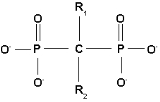
Other bisphosphonates, including medronate (R1, R2 = H) and oxidronate (R1 = H, R2 = OH), are mixed with radioactive technetium and injected, as a way to image bone and detect bone disease. Bisphosphonates have been used to reduce fracture rates in children with the disease osteogenesis imperfecta
, to treat otosclerosis
., and by crew members on long-duration missions on the International Space Station to minimize bone loss.
and inflammation
and erosions of the esophagus
, which is the main problem of oral N-containing preparations. This can be prevented by remaining seated upright for 30 to 60 minutes after taking the medication. Intravenous bisphosphonates can give fever and flu-like symptoms after the first infusion, which is thought to occur because of their potential to activate human γδ T cells. These symptoms do not recur with subsequent infusions.
Bisphosphonates have been associated with osteonecrosis of the jaw (ONJ), with the mandible twice as frequently affected as the maxilla and most cases occurring following high-dose intravenous administration used for some cancer patients. Some 60% of cases are preceded by a dental surgical procedure (that involve the bone), and it has been suggested that bisphosphonate treatment should be postponed until after any dental work to eliminate potential sites of infection (the use of antibiotics may otherwise be indicated prior to any surgery).
A number of cases of severe bone, joint, or musculoskeletal pain have been reported, prompting labeling changes Matrix metalloproteinase
2 may be a candidate gene for bisphosphonate-associated osteonecrosis of the jaw, since it is the only gene known to be associated with bone abnormalities and atrial fibrillation, both of which are side-effects of bisphosphonates.
Recent studies have reported bisphosphonate use (to be specific, zoledronate
and alendronate
) as a risk factor for atrial fibrillation
in women. The inflammatory response to bisphosphonates or fluctuations in calcium
blood levels have been suggested as possible mechanisms. One study estimated that 3% of atrial fibrillation cases might have been due to alendronate use. Until now, however, the benefits of bisphosphonates, in general, outweigh this possible risk, although care must be taken in certain populations at high risk of serious adverse effects from atrial fibrillation (such as patients with heart failure, coronary artery disease, or diabetes). FDA has not yet confirmed a causal relationship between bisphosphonates and atrial fibrillation.
as a secondary procedure. This complication is not common, and the benefit of overall fracture reduction still holds.
A 2010 study suggests that the risk of oesophageal cancer increased with 10 or more prescriptions for oral bisphosphonates and with prescriptions over about a five year period. In Europe and North America, the incidence of oesophageal cancer at age 60-79 is typically 1 per 1000 population over five years, and this is estimated to increase to about 2 per 1000 with five years’ use of oral bisphosphonates.There have been conflicting findings from studies evaluating the risk of esophageal cancer
. Esophagitis
and other esophageal events have been reported, particularly in patients who do not follow the specific directions for use of oral bisphosphonates.
The two PO3 (phosphonate
) groups covalently linked to carbon
determine both the name "bisphosphonate" and the function of the drugs.
The long side-chain (R2 in the diagram) determines the chemical properties, the mode of action and the strength of bisphosphonate drugs. The short side-chain (R1), often called the 'hook', mainly influences chemical properties and pharmacokinetics
.
(see figure above). A bisphosphonate group mimics pyrophosphate's structure, thereby inhibiting activation of enzymes that utilize pyrophosphate.
Bisphosphonate-based drugs' specificity comes from the two phosphonate groups (and possibly a hydroxyl at R1) that work together to coordinate calcium ions. Bisphosphonate molecules preferentially "stick" to calcium and bind to it. The largest store of calcium in the human body is in bones, so bisphosphonates accumulate to a high concentration only in bones.
Bisphosphonates, when attached to bone tissue, are "ingested" by osteoclast
s, the bone cells that break down bone tissue.
There are two classes of bisphosphonate: the N
-containing and non-N-containing bisphosphonates. The two types of bisphosphonates work differently in killing osteoclast cells.

The non-nitrogenous bisphosphonates(disphosphonates) are metabolised
in the cell
to compounds that replace the terminal pyrophosphate moiety of ATP, forming a nonfunctional molecule that competes with adenosine triphosphate
(ATP) in the cellular energy metabolism. The osteoclast initiates apoptosis
and dies, leading to an overall decrease in the breakdown of bone.
Nitrogenous bisphosphonates act on bone metabolism by binding and blocking the enzyme farnesyl diphosphate synthase (FPPS) in the HMG-CoA reductase pathway
(also known as the mevalonate pathway).
 Disruption of the HMG CoA-reductase pathway at the level of FPPS prevents the formation of two metabolites (farnesol
and geranylgeraniol
) that are essential for connecting some small proteins to the cell membrane
. This phenomenon is known as prenylation, and is important for proper sub-cellular protein trafficking (see "lipid-anchored protein" for the principles of this phenomenon).
While inhibition of protein prenylation may affect many proteins found in an osteoclast
, disruption to the lipid modification of Ras
, Rho
, Rac
proteins has been speculated to underlie the effects of bisphosphonates. These proteins can affect both osteoclastogenesis, cell survival, and cytoskeletal dynamics. In particular, the cytoskeleton is vital for maintaining the "ruffled border" that is required for contact between a resorbing osteoclast and a bone surface.
Statin
s are another class of drugs that inhibit the HMG-CoA reductase pathway. Unlike bisphosphonates, statins do not bind to bone surfaces with high affinity, and are, thus, not specific for bone. Nevertheless, some studies have reported a decreased rate of fracture (an indicator of osteoporosis
) and/or an increased bone mineral density in statin users. The overall efficacy of statins in the treatment osteoporosis remains controversial.
, the principal bone mineral, thus arresting bone loss. Only in the 1990s was their actual mechanism of action demonstrated with the initial launch of Fosamax (alendronate) by Merck
.
Osteoporosis
Osteoporosis is a disease of bones that leads to an increased risk of fracture. In osteoporosis the bone mineral density is reduced, bone microarchitecture is deteriorating, and the amount and variety of proteins in bone is altered...
and similar diseases. They are called bisphosphonates because they have two phosphonate
Phosphonate
Phosphonates or phosphonic acids are organic compounds containing C-PO2 or C-PO2 groups . Bisphosphonates were first synthesized in 1897 by Von Baeyer and Hofmann. An example of such a bisphosphonate is HEDP . Since the work of Schwarzenbach in 1949, phosphonic acids are known as effective...
(PO3) groups and are similar in structure to pyrophosphate
Pyrophosphate
In chemistry, the anion, the salts, and the esters of pyrophosphoric acid are called pyrophosphates. Any salt or ester containing two phosphate groups is called a diphosphate. As a food additive, diphosphates are known as E450.- Chemistry :...
.
Evidence shows that they reduce the risk of osteoporotic fracture in those who have had previous fractures however do not reduce fracture risk in those with osteoporosis who have not previously had a fracture.
Bone undergoes constant turnover and is kept in balance (homeostasis
Homeostasis
Homeostasis is the property of a system that regulates its internal environment and tends to maintain a stable, constant condition of properties like temperature or pH...
) by osteoblasts creating bone and osteoclasts destroying bone. Bisphosphonates inhibit the digestion of bone by encouraging osteoclasts to undergo apoptosis
Apoptosis
Apoptosis is the process of programmed cell death that may occur in multicellular organisms. Biochemical events lead to characteristic cell changes and death. These changes include blebbing, cell shrinkage, nuclear fragmentation, chromatin condensation, and chromosomal DNA fragmentation...
, or cell death, thereby slowing bone loss.
The uses of bisphosphonates include the prevention and treatment of osteoporosis
Osteoporosis
Osteoporosis is a disease of bones that leads to an increased risk of fracture. In osteoporosis the bone mineral density is reduced, bone microarchitecture is deteriorating, and the amount and variety of proteins in bone is altered...
, osteitis deformans ("Paget's disease
Paget's disease
Sir James Paget, a surgeon and pathologist, described several diseases, including:* Paget's disease of bone * Paget's disease of the breast* Paget-Schroetter disease* Extramammary Paget's disease...
of bone"), bone metastasis (with or without hypercalcaemia
Hypercalcaemia
Hypercalcaemia is an elevated calcium level in the blood. . It can be an asymptomatic laboratory finding, but because an elevated calcium level is often indicative of other diseases, a workup should be undertaken if it persists...
), multiple myeloma
Multiple myeloma
Multiple myeloma , also known as plasma cell myeloma or Kahler's disease , is a cancer of plasma cells, a type of white blood cell normally responsible for the production of antibodies...
, primary hyperparathyroidism
Primary hyperparathyroidism
Primary hyperparathyroidism causes hypercalcemia through the excessive secretion of parathyroid hormone , usually by an adenoma of the parathyroid glands.-Epidemiology:...
, osteogenesis imperfecta
Osteogenesis imperfecta
Osteogenesis imperfecta is a genetic bone disorder. People with OI are born with defective connective tissue, or without the ability to make it, usually because of a deficiency of Type-I collagen...
, and other conditions that feature bone fragility.
Medical uses
Doctors use bisphosphonates to treat osteoporosisOsteoporosis
Osteoporosis is a disease of bones that leads to an increased risk of fracture. In osteoporosis the bone mineral density is reduced, bone microarchitecture is deteriorating, and the amount and variety of proteins in bone is altered...
, osteitis deformans (Paget's disease of the bone), bone metastasis
Metastasis
Metastasis, or metastatic disease , is the spread of a disease from one organ or part to another non-adjacent organ or part. It was previously thought that only malignant tumor cells and infections have the capacity to metastasize; however, this is being reconsidered due to new research...
(with or without hypercalcaemia
Hypercalcaemia
Hypercalcaemia is an elevated calcium level in the blood. . It can be an asymptomatic laboratory finding, but because an elevated calcium level is often indicative of other diseases, a workup should be undertaken if it persists...
), multiple myeloma
Multiple myeloma
Multiple myeloma , also known as plasma cell myeloma or Kahler's disease , is a cancer of plasma cells, a type of white blood cell normally responsible for the production of antibodies...
, and other conditions involving fragile, breakable bone. In osteoporosis and Paget's, the most popular first-line bisphosphonate drugs are alendronate
Alendronate
Alendronic acid or alendronate sodium — sold as Fosamax by Merck — is a bisphosphonate drug used for osteoporosis and several other bone diseases. It is marketed alone as well as in combination with vitamin D . Merck's U.S...
(Merck
Merck & Co.
Merck & Co., Inc. , also known as Merck Sharp & Dohme or MSD outside the United States and Canada, is one of the largest pharmaceutical companies in the world. The Merck headquarters is located in Whitehouse Station, New Jersey, an unincorporated area in Readington Township...
) and risedronate
Risedronate
Risedronic acid or risedronate sodium is a bisphosphonate used to strengthen bone, treat or prevent osteoporosis, and treat Paget's disease of bone. It is produced and marketed by Warner Chilcott, Sanofi-Aventis, and in Japan by Takeda under the trade names Actonel, Atelvia, and Benet...
. If these are ineffective or if the patient develops digestive tract problems, intravenous pamidronate (Novartis
Novartis
Novartis International AG is a multinational pharmaceutical company based in Basel, Switzerland, ranking number three in sales among the world-wide industry...
) may be used. Strontium ranelate
Strontium ranelate
Strontium ranelate, a strontium salt of ranelic acid, is a medication for osteoporosis marketed as Protelos or Protos by Servier. It is unusual in the sense that it both increases deposition of new bone osteoblasts and reduces the resorption of bone by osteoclasts...
or teriparatide
Teriparatide
Teriparatide is a recombinant form of parathyroid hormone, used in the treatment of some forms of osteoporosis. It is manufactured and marketed by Eli Lilly and Company.-Administration:...
(Eli Lilly
Eli Lilly
Eli Lilly was the founder of Eli Lilly and Company.Eli Lilly may also refer to:* Eli Lilly and Company, a global pharmaceutical company...
) are used for refractory disease; and in postmenopausal women, the SERM raloxifene
Raloxifene
Raloxifene is an oral selective estrogen receptor modulator that has estrogenic actions on bone and anti-estrogenic actions on the uterus and breast...
(Eli Lilly) is occasionally administered instead of bisphosphonates.
High-potency intravenous bisphosphonates have been shown to modify progression of skeletal metastasis in several forms of cancer, especially breast cancer
Breast cancer
Breast cancer is cancer originating from breast tissue, most commonly from the inner lining of milk ducts or the lobules that supply the ducts with milk. Cancers originating from ducts are known as ductal carcinomas; those originating from lobules are known as lobular carcinomas...
. In one randomized control trial, women with breast cancer who received zoledronic acid had a 36% reduction in risk for a recurrence of breast cancer in the same breast, a new cancer in the other breast, or metastasis to bone compared to women who did not receive zoledronic acid.
Other bisphosphonates, including medronate (R1, R2 = H) and oxidronate (R1 = H, R2 = OH), are mixed with radioactive technetium and injected, as a way to image bone and detect bone disease. Bisphosphonates have been used to reduce fracture rates in children with the disease osteogenesis imperfecta
Osteogenesis imperfecta
Osteogenesis imperfecta is a genetic bone disorder. People with OI are born with defective connective tissue, or without the ability to make it, usually because of a deficiency of Type-I collagen...
, to treat otosclerosis
Otosclerosis
Otosclerosis is an abnormal growth of bone near the middle ear. It can result in hearing loss.-Clinical description:Otosclerosis can result in conductive and/or sensorineural hearing loss...
., and by crew members on long-duration missions on the International Space Station to minimize bone loss.
Common
Oral bisphosphonates can cause upset stomachStomach
The stomach is a muscular, hollow, dilated part of the alimentary canal which functions as an important organ of the digestive tract in some animals, including vertebrates, echinoderms, insects , and molluscs. It is involved in the second phase of digestion, following mastication .The stomach is...
and inflammation
Esophagitis
Esophagitis is inflammation of the esophagus. It may be acute or chronic. The acute esophagitis can be catarrhal or phlegmonous, whereas the chronic esophagitis may be hypertrophic or atrophic.-Infectious:...
and erosions of the esophagus
Esophagus
The esophagus is an organ in vertebrates which consists of a muscular tube through which food passes from the pharynx to the stomach. During swallowing, food passes from the mouth through the pharynx into the esophagus and travels via peristalsis to the stomach...
, which is the main problem of oral N-containing preparations. This can be prevented by remaining seated upright for 30 to 60 minutes after taking the medication. Intravenous bisphosphonates can give fever and flu-like symptoms after the first infusion, which is thought to occur because of their potential to activate human γδ T cells. These symptoms do not recur with subsequent infusions.
Bisphosphonates have been associated with osteonecrosis of the jaw (ONJ), with the mandible twice as frequently affected as the maxilla and most cases occurring following high-dose intravenous administration used for some cancer patients. Some 60% of cases are preceded by a dental surgical procedure (that involve the bone), and it has been suggested that bisphosphonate treatment should be postponed until after any dental work to eliminate potential sites of infection (the use of antibiotics may otherwise be indicated prior to any surgery).
A number of cases of severe bone, joint, or musculoskeletal pain have been reported, prompting labeling changes Matrix metalloproteinase
Matrix metalloproteinase
Matrix metalloproteinases are zinc-dependent endopeptidases; other family members are adamalysins, serralysins, and astacins. The MMPs belong to a larger family of proteases known as the metzincin superfamily....
2 may be a candidate gene for bisphosphonate-associated osteonecrosis of the jaw, since it is the only gene known to be associated with bone abnormalities and atrial fibrillation, both of which are side-effects of bisphosphonates.
Recent studies have reported bisphosphonate use (to be specific, zoledronate
Zoledronate
Zoledronic acid or zoledronate is a bisphosphonate. Zometa is used to prevent skeletal fractures in patients with cancers such as multiple myeloma and prostate cancer, as well as for treating osteoporosis...
and alendronate
Alendronate
Alendronic acid or alendronate sodium — sold as Fosamax by Merck — is a bisphosphonate drug used for osteoporosis and several other bone diseases. It is marketed alone as well as in combination with vitamin D . Merck's U.S...
) as a risk factor for atrial fibrillation
Atrial fibrillation
Atrial fibrillation is the most common cardiac arrhythmia . It is a common cause of irregular heart beat, identified clinically by taking a pulse. Chaotic electrical activity in the two upper chambers of the heart result in the muscle fibrillating , instead of achieving coordinated contraction...
in women. The inflammatory response to bisphosphonates or fluctuations in calcium
Calcium
Calcium is the chemical element with the symbol Ca and atomic number 20. It has an atomic mass of 40.078 amu. Calcium is a soft gray alkaline earth metal, and is the fifth-most-abundant element by mass in the Earth's crust...
blood levels have been suggested as possible mechanisms. One study estimated that 3% of atrial fibrillation cases might have been due to alendronate use. Until now, however, the benefits of bisphosphonates, in general, outweigh this possible risk, although care must be taken in certain populations at high risk of serious adverse effects from atrial fibrillation (such as patients with heart failure, coronary artery disease, or diabetes). FDA has not yet confirmed a causal relationship between bisphosphonates and atrial fibrillation.
Long-term risks
In large studies, women taking bisphosphonates for osteoporosis have had unusual fractures in the femur (thigh bone) in the shaft (diaphysis or sub-trochanteric region) of the bone, rather than at the head of the bone, which is the most common site of fracture. However, these unusual fractures are extremely rare (12 in 14,195 women) compared to the common hip fractures (272 in 14,195 women), and the overall reduction in hip fractures caused by bisphosphonate far outweighed the unusual shaft fractures. There were concerns that long-term bisphosphonate use can result in over-suppression of bone turnover. It is hypothesized that micro-cracks in the bone are unable to heal and eventually unite and propagate, resulting in atypical fractures. Such fractures tend to heal poorly and often require some form of bone stimulation, for example bone graftingBone grafting
Bone grafting is a surgical procedure that replaces missing bone in order to repair bone fractures that are extremely complex, pose a significant health risk to the patient, or fail to heal properly....
as a secondary procedure. This complication is not common, and the benefit of overall fracture reduction still holds.
A 2010 study suggests that the risk of oesophageal cancer increased with 10 or more prescriptions for oral bisphosphonates and with prescriptions over about a five year period. In Europe and North America, the incidence of oesophageal cancer at age 60-79 is typically 1 per 1000 population over five years, and this is estimated to increase to about 2 per 1000 with five years’ use of oral bisphosphonates.There have been conflicting findings from studies evaluating the risk of esophageal cancer
Esophageal cancer
Esophageal cancer is malignancy of the esophagus. There are various subtypes, primarily squamous cell cancer and adenocarcinoma . Squamous cell cancer arises from the cells that line the upper part of the esophagus...
. Esophagitis
Esophagitis
Esophagitis is inflammation of the esophagus. It may be acute or chronic. The acute esophagitis can be catarrhal or phlegmonous, whereas the chronic esophagitis may be hypertrophic or atrophic.-Infectious:...
and other esophageal events have been reported, particularly in patients who do not follow the specific directions for use of oral bisphosphonates.
Chemistry and classes
All bisphosphonate drugs share a common P-C-P "backbone":The two PO3 (phosphonate
Phosphonate
Phosphonates or phosphonic acids are organic compounds containing C-PO2 or C-PO2 groups . Bisphosphonates were first synthesized in 1897 by Von Baeyer and Hofmann. An example of such a bisphosphonate is HEDP . Since the work of Schwarzenbach in 1949, phosphonic acids are known as effective...
) groups covalently linked to carbon
Carbon
Carbon is the chemical element with symbol C and atomic number 6. As a member of group 14 on the periodic table, it is nonmetallic and tetravalent—making four electrons available to form covalent chemical bonds...
determine both the name "bisphosphonate" and the function of the drugs.
The long side-chain (R2 in the diagram) determines the chemical properties, the mode of action and the strength of bisphosphonate drugs. The short side-chain (R1), often called the 'hook', mainly influences chemical properties and pharmacokinetics
Pharmacokinetics
Pharmacokinetics, sometimes abbreviated as PK, is a branch of pharmacology dedicated to the determination of the fate of substances administered externally to a living organism...
.
Pharmacokinetics
Of the bisphosphonate that is resorbed (from oral preparation) or infused (for intravenous drugs), about 50% is excreted unchanged by the kidney. The remainder has a very high affinity for bone tissue, and is rapidly adsorbed onto the bone surface.Mechanism of action
Bisphosphonates' mechanisms of action all stem from their structures' similarity to pyrophosphatePyrophosphate
In chemistry, the anion, the salts, and the esters of pyrophosphoric acid are called pyrophosphates. Any salt or ester containing two phosphate groups is called a diphosphate. As a food additive, diphosphates are known as E450.- Chemistry :...
(see figure above). A bisphosphonate group mimics pyrophosphate's structure, thereby inhibiting activation of enzymes that utilize pyrophosphate.
Bisphosphonate-based drugs' specificity comes from the two phosphonate groups (and possibly a hydroxyl at R1) that work together to coordinate calcium ions. Bisphosphonate molecules preferentially "stick" to calcium and bind to it. The largest store of calcium in the human body is in bones, so bisphosphonates accumulate to a high concentration only in bones.
Bisphosphonates, when attached to bone tissue, are "ingested" by osteoclast
Osteoclast
An osteoclast is a type of bone cell that removes bone tissue by removing its mineralized matrix and breaking up the organic bone . This process is known as bone resorption. Osteoclasts were discovered by Kolliker in 1873...
s, the bone cells that break down bone tissue.
There are two classes of bisphosphonate: the N
Nitrogen
Nitrogen is a chemical element that has the symbol N, atomic number of 7 and atomic mass 14.00674 u. Elemental nitrogen is a colorless, odorless, tasteless, and mostly inert diatomic gas at standard conditions, constituting 78.08% by volume of Earth's atmosphere...
-containing and non-N-containing bisphosphonates. The two types of bisphosphonates work differently in killing osteoclast cells.
Non-nitrogenous
Non-N-containing bisphosphonates:- EtidronateEtidronic acidEtidronic acid or 1-hydroxyethane 1,1-diphosphonic acid is a bisphosphonate used in detergents, water treatment, cosmetics and pharmaceutical treatment....
(Didronel) - 1 (potency relative to that of etidronate) - Clodronate (Bonefos, Loron) - 10
- Tiludronate (Skelid) - 10
The non-nitrogenous bisphosphonates(disphosphonates) are metabolised
Metabolism
Metabolism is the set of chemical reactions that happen in the cells of living organisms to sustain life. These processes allow organisms to grow and reproduce, maintain their structures, and respond to their environments. Metabolism is usually divided into two categories...
in the cell
Cell (biology)
The cell is the basic structural and functional unit of all known living organisms. It is the smallest unit of life that is classified as a living thing, and is often called the building block of life. The Alberts text discusses how the "cellular building blocks" move to shape developing embryos....
to compounds that replace the terminal pyrophosphate moiety of ATP, forming a nonfunctional molecule that competes with adenosine triphosphate
Adenosine triphosphate
Adenosine-5'-triphosphate is a multifunctional nucleoside triphosphate used in cells as a coenzyme. It is often called the "molecular unit of currency" of intracellular energy transfer. ATP transports chemical energy within cells for metabolism...
(ATP) in the cellular energy metabolism. The osteoclast initiates apoptosis
Apoptosis
Apoptosis is the process of programmed cell death that may occur in multicellular organisms. Biochemical events lead to characteristic cell changes and death. These changes include blebbing, cell shrinkage, nuclear fragmentation, chromatin condensation, and chromosomal DNA fragmentation...
and dies, leading to an overall decrease in the breakdown of bone.
Nitrogenous
N-containing bisphosphonates:- Pamidronate (APD, Aredia) - 100
- Neridronate - 100
- Olpadronate - 500
- AlendronateAlendronateAlendronic acid or alendronate sodium — sold as Fosamax by Merck — is a bisphosphonate drug used for osteoporosis and several other bone diseases. It is marketed alone as well as in combination with vitamin D . Merck's U.S...
(Fosamax) - 500 - Ibandronate (Boniva) - 1000
- RisedronateRisedronateRisedronic acid or risedronate sodium is a bisphosphonate used to strengthen bone, treat or prevent osteoporosis, and treat Paget's disease of bone. It is produced and marketed by Warner Chilcott, Sanofi-Aventis, and in Japan by Takeda under the trade names Actonel, Atelvia, and Benet...
(Actonel) - 2000 - ZoledronateZoledronateZoledronic acid or zoledronate is a bisphosphonate. Zometa is used to prevent skeletal fractures in patients with cancers such as multiple myeloma and prostate cancer, as well as for treating osteoporosis...
(Zometa, Aclasta) - 10000
Nitrogenous bisphosphonates act on bone metabolism by binding and blocking the enzyme farnesyl diphosphate synthase (FPPS) in the HMG-CoA reductase pathway
HMG-CoA reductase pathway
The mevalonate pathway or HMG-CoA reductase pathway or mevalonate-dependent route or isoprenoid pathway, is an important cellular metabolic pathway present in all higher eukaryotes and many bacteria...
(also known as the mevalonate pathway).
Farnesol
Farnesol is a natural organic compound which is an acyclic sesquiterpene alcohol found as a colorless liquid. It is insoluble in water, but miscible with oils...
and geranylgeraniol
Geranylgeraniol
Geranylgeraniol is a diterpene alcohol which plays a role a several important biological processes. It is an intermediate in the biosynthesis of other diterpenes and of vitamins E and K. It also used in the post-translational modification known as geranylgeranylation...
) that are essential for connecting some small proteins to the cell membrane
Cell membrane
The cell membrane or plasma membrane is a biological membrane that separates the interior of all cells from the outside environment. The cell membrane is selectively permeable to ions and organic molecules and controls the movement of substances in and out of cells. It basically protects the cell...
. This phenomenon is known as prenylation, and is important for proper sub-cellular protein trafficking (see "lipid-anchored protein" for the principles of this phenomenon).
While inhibition of protein prenylation may affect many proteins found in an osteoclast
Osteoclast
An osteoclast is a type of bone cell that removes bone tissue by removing its mineralized matrix and breaking up the organic bone . This process is known as bone resorption. Osteoclasts were discovered by Kolliker in 1873...
, disruption to the lipid modification of Ras
Ras
Ras is the name given to a family of related proteins found inside cells, including human cells. All Ras protein family members belong to a class of protein called small GTPase, and are involved in transmitting signals within cells...
, Rho
Rho
Rho is the 17th letter of the Greek alphabet. In the system of Greek numerals, it has a value of 100. It is derived from Semitic resh "head"...
, Rac
RAC
-Companies:* Rent-A-Center, an American public furniture and electronics rent to own company* Royal Automobile Club, a private club in Pall Mall, London* RAC plc, a breakdown company in the United Kingdom...
proteins has been speculated to underlie the effects of bisphosphonates. These proteins can affect both osteoclastogenesis, cell survival, and cytoskeletal dynamics. In particular, the cytoskeleton is vital for maintaining the "ruffled border" that is required for contact between a resorbing osteoclast and a bone surface.
Statin
Statin
Statins are a class of drugs used to lower cholesterol levels by inhibiting the enzyme HMG-CoA reductase, which plays a central role in the production of cholesterol in the liver. Increased cholesterol levels have been associated with cardiovascular diseases, and statins are therefore used in the...
s are another class of drugs that inhibit the HMG-CoA reductase pathway. Unlike bisphosphonates, statins do not bind to bone surfaces with high affinity, and are, thus, not specific for bone. Nevertheless, some studies have reported a decreased rate of fracture (an indicator of osteoporosis
Osteoporosis
Osteoporosis is a disease of bones that leads to an increased risk of fracture. In osteoporosis the bone mineral density is reduced, bone microarchitecture is deteriorating, and the amount and variety of proteins in bone is altered...
) and/or an increased bone mineral density in statin users. The overall efficacy of statins in the treatment osteoporosis remains controversial.
History
Bisphosphonates were developed in the 19th century but were first investigated in the 1960s for use in disorders of bone metabolism. Their non-medical use was to soften water in irrigation systems used in orange groves. The initial rationale for their use in humans was their potential in preventing the dissolution of hydroxylapatiteHydroxylapatite
Hydroxylapatite, also called hydroxyapatite , is a naturally occurring mineral form of calcium apatite with the formula Ca53, but is usually written Ca1062 to denote that the crystal unit cell comprises two entities. Hydroxylapatite is the hydroxyl endmember of the complex apatite group...
, the principal bone mineral, thus arresting bone loss. Only in the 1990s was their actual mechanism of action demonstrated with the initial launch of Fosamax (alendronate) by Merck
Merck & Co.
Merck & Co., Inc. , also known as Merck Sharp & Dohme or MSD outside the United States and Canada, is one of the largest pharmaceutical companies in the world. The Merck headquarters is located in Whitehouse Station, New Jersey, an unincorporated area in Readington Township...
.