

Val Camonica

Encyclopedia
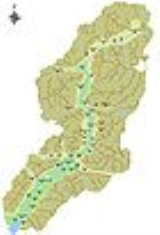
Val Camonica is one of the largest valleys of the central Alps
Mountain
Image:Himalaya_annotated.jpg|thumb|right|The Himalayan mountain range with Mount Everestrect 58 14 160 49 Chomo Lonzorect 200 28 335 52 Makalurect 378 24 566 45 Mount Everestrect 188 581 920 656 Tibetan Plateaurect 250 406 340 427 Rong River...
, in eastern Lombardy
Lombardy
Lombardy is one of the 20 regions of Italy. The capital is Milan. One-sixth of Italy's population lives in Lombardy and about one fifth of Italy's GDP is produced in this region, making it the most populous and richest region in the country and one of the richest in the whole of Europe...
, about 90 km long. It starts from the Tonale Pass
Tonale Pass
Tonale Pass is a high mountain pass in northern Italy across the Rhaetian Alps, between Lombardy and Trentino.It connects Valcamonica and Val di Sole...
, at 1883 metres above sea level and ends at Corna Trentapassi, in the comune
Comune
In Italy, the comune is the basic administrative division, and may be properly approximated in casual speech by the English word township or municipality.-Importance and function:...
of Pisogne
Pisogne
Pisogne is a comune of 8046 inhabitants in Val Camonica, province of Brescia, in Lombardy.-Geography:Pisogne is situated at the northern-east tip of Lake Iseo....
, near Lake Iseo
Lake Iseo
Lake Iseo or Lago d'Iseo or Sebino is the fourth largest lake in Lombardy, Italy, fed by the Oglio river.It is in the north of the country in the Val Camonica area, near the cities of Brescia and Bergamo. The lake is almost equally divided between the Provinces of Bergamo and Brescia...
. It has an area of about 1,335 km2 and 118,323 inhabitants .
It is traversed throughout its full length from the river Oglio
Oglio
The Oglio is a left-side tributary of the Po River in Lombardy, Italy. It is 280 km long....
, which begins in Ponte di Legno
Ponte di Legno
Ponte di Legno is an Italian comune of 1816 inhabitants in Val Camonica, province of Brescia, in Lombardy.-History:...
and terminates in lake Sebino between Pisogne
Pisogne
Pisogne is a comune of 8046 inhabitants in Val Camonica, province of Brescia, in Lombardy.-Geography:Pisogne is situated at the northern-east tip of Lake Iseo....
and Costa Volpino
Costa Volpino
Costa Volpino is a comune in the province of Bergamo, in Lombardy, Italy. Situated at the end of Valle Camonica, where the Oglio river enters the Lake Iseo, it is bounded by other communes of Lovere and Rogno.-References:...
.
Valle Camonica derives its name from the Latin Vallis Camunnorum, that means "the Valley of the Camunni
Camunni
The Camuni or Camunni were an ancient population located in Val Camonica during the Iron Age ; the Latin name Camunni was attributed to them by the authors of the 1st century. They are also called ancient Camuni, to distinguish them from the current inhabitants of the valley...
", the name by which the Romans called the inhabitants (today are called Camuni).
Almost all of the valley is included in the administrative territory of the province of Brescia
Province of Brescia
The Province of Brescia is a Province in Lombardy, Italy. It borders with the province of Sondrio in the N and NW, the province of Bergamo in the W, province of Cremona in the SW and S, the province of Mantova to the S, and to the east, the province of Verona and Trentino .Source for statistical...
, excluding Lovere
Lovere
Lovere is a town and comune in the province of Bergamo, in Lombardy, Italy, at the north-west end of Lake Iseo.The houses in the city have overhanging wooden roofs, typical of Switzerland, united with the heavy stone arcades of Italy; it faces a lake and has a semicircle of mountains behind...
, Rogno
Rogno
Rogno is a comune in the Province of Bergamo in the Italian region of Lombardy, located about 90 km northeast of Milan and about 40 km northeast of Bergamo, in the Val Camonica....
, Costa Volpino
Costa Volpino
Costa Volpino is a comune in the province of Bergamo, in Lombardy, Italy. Situated at the end of Valle Camonica, where the Oglio river enters the Lake Iseo, it is bounded by other communes of Lovere and Rogno.-References:...
and the Val di Scalve,which are parts of the province of Bergamo
Province of Bergamo
The Province of Bergamo is a province in the Lombardy region of Italy. It has a population of 1,098,740 , an area of 2,722.86 square km, and contains 244 comuni...
.
Territory
Valle Camonica can be divided into three main areas:- Low Val Camonica: is a flat area full of meadows and fields, which starts from the shores of Lake IseoLake IseoLake Iseo or Lago d'Iseo or Sebino is the fourth largest lake in Lombardy, Italy, fed by the Oglio river.It is in the north of the country in the Val Camonica area, near the cities of Brescia and Bergamo. The lake is almost equally divided between the Provinces of Bergamo and Brescia...
and reaches up to the crest of cross BiennoBiennoBienno is an Italian comune of 3.609 abitanti in Val Camonica, province of Brescia, in Lombardy.-Geography:The village is located in Val Grigna, on the northern side of the river Grigna....
, sometimes referred to as the threshold BrenoBrenoBreno is an Italian comune of 5.014 inhabitants in Val Camonica, province of Brescia, in Lombardy.-Geography:It is bounded by other communes of Bagolino, Bienno, Braone, Ceto, Cividate Camuno, Condino , Daone , Losine, Malegno, Niardo, Prestine.The village of Breno stands in a ravine by the...
; - Middle Val Camonica: from threshold BrenoBrenoBreno is an Italian comune of 5.014 inhabitants in Val Camonica, province of Brescia, in Lombardy.-Geography:It is bounded by other communes of Bagolino, Bienno, Braone, Ceto, Cividate Camuno, Condino , Daone , Losine, Malegno, Niardo, Prestine.The village of Breno stands in a ravine by the...
comes up to common of SonicoSonicoSonico is a comune in the province of Brescia, in Lombardy. It is bounded by other communes of Berzo Demo, Cevo, Edolo, Malonno, Saviore dell'Adamello...
- EdoloEdoloEdolo is a town and comune in the province of Brescia, in Lombardy, located in the High Camonica valley.The comune is bounded by other communes of Corteno Golgi, Incudine, Lovero , Malonno, Monno, Ponte di Legno, Saviore dell'Adamello, Sernio , Sonico, Temù, Tovo di Sant'Agata , Vezza d'Oglio,...
. The lower middle valley extending from BrenoBrenoBreno is an Italian comune of 5.014 inhabitants in Val Camonica, province of Brescia, in Lombardy.-Geography:It is bounded by other communes of Bagolino, Bienno, Braone, Ceto, Cividate Camuno, Condino , Daone , Losine, Malegno, Niardo, Prestine.The village of Breno stands in a ravine by the...
to SelleroSelleroSellero is a comune of 1,503 people in the province of Brescia in the middle Val Camonica....
, then starts the upper middle valley from the narrow gorge CedegoloCedegoloCedegolo is an Italian comune of 1.264 inhabitants in Val Camonica, province of Brescia, in Lombardy.-Geography:The village of Cedegolo located in a narrow gorge formed by Oglio river, on its eastern side...
until SonicoSonicoSonico is a comune in the province of Brescia, in Lombardy. It is bounded by other communes of Berzo Demo, Cevo, Edolo, Malonno, Saviore dell'Adamello...
- EdoloEdoloEdolo is a town and comune in the province of Brescia, in Lombardy, located in the High Camonica valley.The comune is bounded by other communes of Corteno Golgi, Incudine, Lovero , Malonno, Monno, Ponte di Legno, Saviore dell'Adamello, Sernio , Sonico, Temù, Tovo di Sant'Agata , Vezza d'Oglio,...
; - High Val Camonica: This area of the valley below the Periadriatic SeamPeriadriatic SeamThe Periadriatic Seam is a distinct geologic fault in Southern Europe, running S-shaped about 1000 km from the Tyrrhenian Sea through the whole Southern Alps as far as Hungary. It forms the division between the Adriatic plate and the European plate...
, and has an east-west orientation. Starts in the Val di Corteno and continues until the town of Ponte di LegnoPonte di LegnoPonte di Legno is an Italian comune of 1816 inhabitants in Val Camonica, province of Brescia, in Lombardy.-History:...
, tested in place. The climate is similar to the average Valtellina.
It is bounded by these borders:
| North | East | South | West |
|
Province of Brescia The Province of Brescia is a Province in Lombardy, Italy. It borders with the province of Sondrio in the N and NW, the province of Bergamo in the W, province of Cremona in the SW and S, the province of Mantova to the S, and to the east, the province of Verona and Trentino .Source for statistical...
|
Lake Iseo Lake Iseo or Lago d'Iseo or Sebino is the fourth largest lake in Lombardy, Italy, fed by the Oglio river.It is in the north of the country in the Val Camonica area, near the cities of Brescia and Bergamo. The lake is almost equally divided between the Provinces of Bergamo and Brescia... Province of Bergamo The Province of Bergamo is a province in the Lombardy region of Italy. It has a population of 1,098,740 , an area of 2,722.86 square km, and contains 244 comuni...
|
Province of Bergamo The Province of Bergamo is a province in the Lombardy region of Italy. It has a population of 1,098,740 , an area of 2,722.86 square km, and contains 244 comuni...
|
- The Val di Scalve is a side valley of Val Camonica, but was always been both historically and administratively a separate entity.
Hydrography
The Valle Camonica is crossed by the River Oglio, the fifth longest river of ItalyItaly
Italy , officially the Italian Republic languages]] under the European Charter for Regional or Minority Languages. In each of these, Italy's official name is as follows:;;;;;;;;), is a unitary parliamentary republic in South-Central Europe. To the north it borders France, Switzerland, Austria and...
, which was born in Ponte di Legno
Ponte di Legno
Ponte di Legno is an Italian comune of 1816 inhabitants in Val Camonica, province of Brescia, in Lombardy.-History:...
from the confluence of rivers Frigidolfo and Narcanello. It flows into Lake Iseo
Lake Iseo
Lake Iseo or Lago d'Iseo or Sebino is the fourth largest lake in Lombardy, Italy, fed by the Oglio river.It is in the north of the country in the Val Camonica area, near the cities of Brescia and Bergamo. The lake is almost equally divided between the Provinces of Bergamo and Brescia...
between the municipalities of Pisogne
Pisogne
Pisogne is a comune of 8046 inhabitants in Val Camonica, province of Brescia, in Lombardy.-Geography:Pisogne is situated at the northern-east tip of Lake Iseo....
and Costa Volpino
Costa Volpino
Costa Volpino is a comune in the province of Bergamo, in Lombardy, Italy. Situated at the end of Valle Camonica, where the Oglio river enters the Lake Iseo, it is bounded by other communes of Lovere and Rogno.-References:...
.
At the town of Rogno
Rogno
Rogno is a comune in the Province of Bergamo in the Italian region of Lombardy, located about 90 km northeast of Milan and about 40 km northeast of Bergamo, in the Val Camonica....
its western shore falls under the administration of the province of Bergamo
Province of Bergamo
The Province of Bergamo is a province in the Lombardy region of Italy. It has a population of 1,098,740 , an area of 2,722.86 square km, and contains 244 comuni...
.
Abundant are the streams that descend from the sides of mountains to join to the Oglio (Oi in camunian dialect) of which some are seasonal, and during the summer are dry.
At high altitude there are many alpine lakes, including Lake d'Arno, Lake Moro, as well as many water catchment constructed in the first half of the twentieth century, in order to channel water to power hydroelectric plants in the area.
History
The ancient history of Valle Camonica begins with the end of last ice age, around 15,000 years ago when the glacier, melting, creates the valley.The inhabitants, who had begun to visit the valley already in epipaleolithic
Epipaleolithic
The Epipaleolithic Age was a period in the development of human technology marked by more advanced stone blades and other tools than the earlier Paleolithic age, although still before the development of agriculture in the Neolithic age...
, settled from the Neolithic
Neolithic
The Neolithic Age, Era, or Period, or New Stone Age, was a period in the development of human technology, beginning about 9500 BC in some parts of the Middle East, and later in other parts of the world. It is traditionally considered as the last part of the Stone Age...
. They were called by Romans
Ancient Rome
Ancient Rome was a thriving civilization that grew on the Italian Peninsula as early as the 8th century BC. Located along the Mediterranean Sea and centered on the city of Rome, it expanded to one of the largest empires in the ancient world....
the Camunni
Camunni
The Camuni or Camunni were an ancient population located in Val Camonica during the Iron Age ; the Latin name Camunni was attributed to them by the authors of the 1st century. They are also called ancient Camuni, to distinguish them from the current inhabitants of the valley...
, people of uncertain origin, famous for stone carvings
Rock Drawings in Valcamonica
The stone carvings of Val Camonica constitute one of the largest collections of prehistoric petroglyphs in the world. The collection was recognized by Unesco in 1979 and was Italy's first recognized World Heritage Site...
: in Val Camonica they left about 300,000 petroglyphs, which made the area one of the largest centers of rock art in Europe.
Towards the end of the first century BCE Valle Camonica is attached to Roman Empire
Roman Empire
The Roman Empire was the post-Republican period of the ancient Roman civilization, characterised by an autocratic form of government and large territorial holdings in Europe and around the Mediterranean....
and founded the city of Cividate Camuno
Cividate Camuno
Cividate Camuno is an Italian comune of 2,732 inhabitants in Val Camonica, province of Brescia, in Lombardy.-Geography:...
, with spas, theater and amphitheater and a sanctuary of Minerva
Minerva
Minerva was the Roman goddess whom Romans from the 2nd century BC onwards equated with the Greek goddess Athena. She was the virgin goddess of poetry, medicine, wisdom, commerce, weaving, crafts, magic...
, among the largest in the Alps.
During the Middle Ages there were in the area numerous clashes between the Guelph and Ghibelline parties, the first who supported the power of the Bishop of Brescia and the papacy, the second the Emperor of the Holy Roman Empire. In 1287 the Camonica Valley rebelled to the interference of Brescia
Brescia
Brescia is a city and comune in the region of Lombardy in northern Italy. It is situated at the foot of the Alps, between the Mella and the Naviglio, with a population of around 197,000. It is the second largest city in Lombardy, after the capital, Milan...
and the Visconti
House of Visconti
Visconti is the family name of two important Italian noble dynasties of the Middle Ages. There are two distinct Visconti families: The first one in the Republic of Pisa in the mid twelfth century who achieved prominence first in Pisa, then in Sardinia where they became rulers of Gallura...
of Milan
Milan
Milan is the second-largest city in Italy and the capital city of the region of Lombardy and of the province of Milan. The city proper has a population of about 1.3 million, while its urban area, roughly coinciding with its administrative province and the bordering Province of Monza and Brianza ,...
, called by both sides as arbitrators, extended their control over the area during all the 14° century.
From 1427 to 1454 there were numerous battles between the Republic of Venice
Republic of Venice
The Republic of Venice or Venetian Republic was a state originating from the city of Venice in Northeastern Italy. It existed for over a millennium, from the late 7th century until 1797. It was formally known as the Most Serene Republic of Venice and is often referred to as La Serenissima, in...
and Milan
Milan
Milan is the second-largest city in Italy and the capital city of the region of Lombardy and of the province of Milan. The city proper has a population of about 1.3 million, while its urban area, roughly coinciding with its administrative province and the bordering Province of Monza and Brianza ,...
for the control of the valley. Venice won and the area passed under the control of the Serenissima
Republic of Venice
The Republic of Venice or Venetian Republic was a state originating from the city of Venice in Northeastern Italy. It existed for over a millennium, from the late 7th century until 1797. It was formally known as the Most Serene Republic of Venice and is often referred to as La Serenissima, in...
until 1797. In this long period, known as the Pax Veneta, the civilian population is devoted to trade, especially of iron.
The starting of nineteenth century was very complex: the area passed from the control of Napoleon to that of the Austro-Hungarian kingdom. Only in 1859 Val Camonica was annexed to the Kingdom of Italy
Kingdom of Italy (1861–1946)
The Kingdom of Italy was a state forged in 1861 by the unification of Italy under the influence of the Kingdom of Sardinia, which was its legal predecessor state...
.
In 1914 there was the outbreak of World War I
World War I
World War I , which was predominantly called the World War or the Great War from its occurrence until 1939, and the First World War or World War I thereafter, was a major war centred in Europe that began on 28 July 1914 and lasted until 11 November 1918...
. The line of war was along the est border of Val Camonica, across the Adamello Group. The battles fought in this area are known as White war in Adamello.
In 1955, the National Park of Naquane stone carvings in Capo di Ponte
Capo di Ponte
Capo di Ponte is an Italian comune of 2.483 abitanti in Val Camonica, province of Brescia, in Lombardy.-Geography:...
was founded by the Archaeological Superintendence of Lombardy
Lombardy
Lombardy is one of the 20 regions of Italy. The capital is Milan. One-sixth of Italy's population lives in Lombardy and about one fifth of Italy's GDP is produced in this region, making it the most populous and richest region in the country and one of the richest in the whole of Europe...
.
UNESCOUNESCOThe United Nations Educational, Scientific and Cultural Organization is a specialized agency of the United Nations...
Site
It is home to the greatest complex of rock drawings in EuropeEurope
Europe is, by convention, one of the world's seven continents. Comprising the westernmost peninsula of Eurasia, Europe is generally 'divided' from Asia to its east by the watershed divides of the Ural and Caucasus Mountains, the Ural River, the Caspian and Black Seas, and the waterways connecting...
, with approximately 300,000 petroglyphs, dated from epipaleolithic
Epipaleolithic
The Epipaleolithic Age was a period in the development of human technology marked by more advanced stone blades and other tools than the earlier Paleolithic age, although still before the development of agriculture in the Neolithic age...
to the middle ages
Middle Ages
The Middle Ages is a periodization of European history from the 5th century to the 15th century. The Middle Ages follows the fall of the Western Roman Empire in 476 and precedes the Early Modern Era. It is the middle period of a three-period division of Western history: Classic, Medieval and Modern...
.
- Parco nazionale delle incisioni rupestri di Naquane in Capo di PonteCapo di PonteCapo di Ponte is an Italian comune of 2.483 abitanti in Val Camonica, province of Brescia, in Lombardy.-Geography:...
- Parco archeologico nazionale dei massi di Cemmo
- Parco archeologico comunale di Seradina-Bedolina in Capo di PonteCapo di PonteCapo di Ponte is an Italian comune of 2.483 abitanti in Val Camonica, province of Brescia, in Lombardy.-Geography:...
- Parco archeologico di Asinino-Anvòia in OssimoOssimoOssimo is a town and comune in the province of Brescia, in Lombardy. It is part of Valle Camonica, and is divided into two centers: Ossimo Superiore and Ossimo Inferiore....
- Parco archeologico comunale di Luine in Darfo Boario TermeDarfo Boario TermeDarfo Boario Terme is a comune in the province of Brescia, in Lombardy, northern Italy. The name combines Darfo, the capoluogo, with Boario Terme, the largest frazione. It is bounded by other communes of Angolo Terme, Artogne, Esine, Gianico, Piancogno, Rogno....
- Parco archeologico comunale di Sellero
- Parco archeologico comunale di Sonico
- Riserva naturale Incisioni rupestri di Ceto, Cimbergo e Paspardo in NadroNadroNadro is an Italian hamlet of the comune of Ceto , Lombardy. It has 655 inhabitants.It lies 75 km from Brescia, along the strada Statale 42 del Tonale e della Mendola and is situated in Val Camonica....
Medieval villages
- BiennoBiennoBienno is an Italian comune of 3.609 abitanti in Val Camonica, province of Brescia, in Lombardy.-Geography:The village is located in Val Grigna, on the northern side of the river Grigna....
, has the recognition of being among the Most Beautiful Villages of Italy - LovereLovereLovere is a town and comune in the province of Bergamo, in Lombardy, Italy, at the north-west end of Lake Iseo.The houses in the city have overhanging wooden roofs, typical of Switzerland, united with the heavy stone arcades of Italy; it faces a lake and has a semicircle of mountains behind...
, has the recognition of being among the Most Beautiful Villages of Italy - Pescarzo (Capo di Ponte), typical small town
Castles
- Castle of Breno, Largest Castle Val Camonica
- Castle of Gorzone, home of FedericiFedericiFederici may mean:*Camillo Federici , Italian actor and playwright*Daniele Federici, , Italian footballer*Danny Federici, musician*Italia Federici, President of the Council of Republicans for Environmental Advocacy...
, stands on a hill next to the DezzoDezzoDezzois a river of Lombardy and is the main river of Val di Scalve. Dezzo starts its course in the mountain of Schilpario at 1800m then continues to the river Oglio. Dezzo's mouth is close to the village of Boario Terme....
sheer - Castle of Cimbergo, located on the downstream of the Re, dominates the middle Valley
- Castle of Lozio, the fortress where was consumed the slaughter of LozioLozioLozio is a town and comune in the province of Brescia, in Lombardy.The comune is bounded by other communes of Cerveno, Malegno, Ossimo, Schilpario...
- Castle of Mù, the bastion of FedericiFedericiFederici may mean:*Camillo Federici , Italian actor and playwright*Daniele Federici, , Italian footballer*Danny Federici, musician*Italia Federici, President of the Council of Republicans for Environmental Advocacy...
high valley, they remain the foundation
Roman city
- Theatre and Anphiteatre park in Cividate CamunoCividate CamunoCividate Camuno is an Italian comune of 2,732 inhabitants in Val Camonica, province of Brescia, in Lombardy.-Geography:...
- Sanctuary of Minerva in BrenoBrenoBreno is an Italian comune of 5.014 inhabitants in Val Camonica, province of Brescia, in Lombardy.-Geography:It is bounded by other communes of Bagolino, Bienno, Braone, Ceto, Cividate Camuno, Condino , Daone , Losine, Malegno, Niardo, Prestine.The village of Breno stands in a ravine by the...
Mountain excursion
- Paths of CAIClub Alpino ItalianoThe Club Alpino Italiano is the senior Italian alpine club which stages climbing competitions, operates alpine huts, marks and maintains paths, and is active in protecting the Alpine environment...
in the Parco dell'Adamello - Trench of First World WarWorld War IWorld War I , which was predominantly called the World War or the Great War from its occurrence until 1939, and the First World War or World War I thereafter, was a major war centred in Europe that began on 28 July 1914 and lasted until 11 November 1918...
(so called Guerra Bianca in Adamello) in Vezza d'OglioVezza d'OglioVezza d'Oglio is a comune in the province of Brescia, in Lombardy. It is located within the high Camonica Valley.-Important Events:...
Museums and tematic parks
- Parco tematico Archeopark, Darfo Boario TermeDarfo Boario TermeDarfo Boario Terme is a comune in the province of Brescia, in Lombardy, northern Italy. The name combines Darfo, the capoluogo, with Boario Terme, the largest frazione. It is bounded by other communes of Angolo Terme, Artogne, Esine, Gianico, Piancogno, Rogno....
- Museo etnografico del ferro, delle arti e tradizioni popolari, BiennoBiennoBienno is an Italian comune of 3.609 abitanti in Val Camonica, province of Brescia, in Lombardy.-Geography:The village is located in Val Grigna, on the northern side of the river Grigna....
- Museo Civico Camuno, BrenoBrenoBreno is an Italian comune of 5.014 inhabitants in Val Camonica, province of Brescia, in Lombardy.-Geography:It is bounded by other communes of Bagolino, Bienno, Braone, Ceto, Cividate Camuno, Condino , Daone , Losine, Malegno, Niardo, Prestine.The village of Breno stands in a ravine by the...
- Museo didattico di arte e vita preistorica, Capo di PonteCapo di PonteCapo di Ponte is an Italian comune of 2.483 abitanti in Val Camonica, province of Brescia, in Lombardy.-Geography:...
- Museo didattico della riserva, NadroNadroNadro is an Italian hamlet of the comune of Ceto , Lombardy. It has 655 inhabitants.It lies 75 km from Brescia, along the strada Statale 42 del Tonale e della Mendola and is situated in Val Camonica....
- Museo archeologico di Valle Camonica, Cividate CamunoCividate CamunoCividate Camuno is an Italian comune of 2,732 inhabitants in Val Camonica, province of Brescia, in Lombardy.-Geography:...
- Mostra museo Camillo Golgi, Corteno GolgiCórteno GolgiCorteno Golgi is an Italian village and comune in the central Alps, in the province of Brescia, High Camonica Valley, the famous valley of Prehistory.The area has forests and mountain rivers....
- Museo etnografico, OssimoOssimoOssimo is a town and comune in the province of Brescia, in Lombardy. It is part of Valle Camonica, and is divided into two centers: Ossimo Superiore and Ossimo Inferiore....
- Museo parrocchiale d'arte sacra, Ponte di LegnoPonte di LegnoPonte di Legno is an Italian comune of 1816 inhabitants in Val Camonica, province of Brescia, in Lombardy.-History:...
- Museo della Guerra Bianca in Adamello, TemùTemùTemù is a comune in the province of Brescia, in Lombardy, Italy....
Notable sanctuaries and churches
- Chiesa di Santa Maria della Neve in PisognePisognePisogne is a comune of 8046 inhabitants in Val Camonica, province of Brescia, in Lombardy.-Geography:Pisogne is situated at the northern-east tip of Lake Iseo....
- Chiesa di Sant'Antonio in BrenoBrenoBreno is an Italian comune of 5.014 inhabitants in Val Camonica, province of Brescia, in Lombardy.-Geography:It is bounded by other communes of Bagolino, Bienno, Braone, Ceto, Cividate Camuno, Condino , Daone , Losine, Malegno, Niardo, Prestine.The village of Breno stands in a ravine by the...
- Chiesa di Santa Maria Annunziata in BiennoBiennoBienno is an Italian comune of 3.609 abitanti in Val Camonica, province of Brescia, in Lombardy.-Geography:The village is located in Val Grigna, on the northern side of the river Grigna....
- Santuario del Cristo Re in BiennoBiennoBienno is an Italian comune of 3.609 abitanti in Val Camonica, province of Brescia, in Lombardy.-Geography:The village is located in Val Grigna, on the northern side of the river Grigna....
- Chiesa di Santa Maria Assunta in EsineEsineEsine is a comune in the province of Brescia, in the Italian region Lombardy, in the middle of the Camonica valley, located about 63 km north of Brescia....
- Monastero di San Salvatore in Capo di PonteCapo di PonteCapo di Ponte is an Italian comune of 2.483 abitanti in Val Camonica, province of Brescia, in Lombardy.-Geography:...
- Oratorio dei Disciplini in MontecchioDarfo Boario TermeDarfo Boario Terme is a comune in the province of Brescia, in Lombardy, northern Italy. The name combines Darfo, the capoluogo, with Boario Terme, the largest frazione. It is bounded by other communes of Angolo Terme, Artogne, Esine, Gianico, Piancogno, Rogno....
- Pieve di San Siro in Cemmo
- Santuario della Via Crucis in CervenoCervenoCerveno is an Italian comune of 667 inhabitants in Val Camonica, province of Brescia, in Lombardy.-Geography:...
(Sacri Monti)
Winter sports
Sports tak place in Ponte di LegnoPonte di Legno
Ponte di Legno is an Italian comune of 1816 inhabitants in Val Camonica, province of Brescia, in Lombardy.-History:...
, Borno, Montecampione
Montecampione
Montecampione is a ski resort in Valcamonica, Lombardy, northern Italy. It is located 55 km from Bergamo and 95 km from Milan, near Lake Iseo...
and Aprica
Aprica
Aprica is a town and comune in the province of Sondrio, Lombardy, northern Italy. It is located on the eponymous pass, the most favourable one connecting Valtellina to Val Camonica.Its main activity is winter tourism.-External links:* * *...