


Silly Putty

Encyclopedia
Crayola
Crayola is a brand of artists' supplies manufactured by Crayola LLC, which was founded in 1885 as Binney & Smith. It is best known for its crayons...
-owned trademark name for a class of silicone
Silicone
Silicones are inert, synthetic compounds with a variety of forms and uses. Typically heat-resistant and rubber-like, they are used in sealants, adhesives, lubricants, medical applications , cookware, and insulation....
polymer
Polymer
A polymer is a large molecule composed of repeating structural units. These subunits are typically connected by covalent chemical bonds...
s. It is marketed today as a toy
Toy
A toy is any object that can be used for play. Toys are associated commonly with children and pets. Playing with toys is often thought to be an enjoyable means of training the young for life in human society. Different materials are used to make toys enjoyable and cuddly to both young and old...
for children, but was originally created by accident during research into potential rubber substitutes for use by the United States
United States
The United States of America is a federal constitutional republic comprising fifty states and a federal district...
in World War II
World War II
World War II, or the Second World War , was a global conflict lasting from 1939 to 1945, involving most of the world's nations—including all of the great powers—eventually forming two opposing military alliances: the Allies and the Axis...
. The company's manufacturer is based in Easton, Pennsylvania
Easton, Pennsylvania
Easton is a city in Northampton County, Pennsylvania, United States. The population was 26,800 as of the 2010 census. It is the county seat of Northampton County....
.
Description
As a bouncing puttyPutty
Putty is a generic term for a plastic material similar in texture to clay or dough typically used in domestic construction and repair as a sealant or filler. Painter's Putty is typically a linseed oil based product used for filling holes, minor cracks and defacements in wood only...
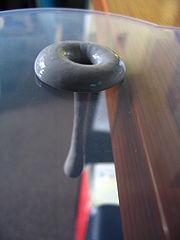
, Silly Putty is noted for its unusual characteristics: it bounces, but breaks when given a sharp blow; it can also flow like a liquid and will form a puddle given enough time. Silly Putty and most other retail putty products have thixotropic
Thixotropy
Thixotropy is the property of certain gels or fluids that are thick under normal conditions, but flow over time when shaken, agitated, or otherwise stressed...
agents added to reduce the flow and enable the putty to hold its shape.
The original coral-colored Silly Putty is composed of 65% dimethyl siloxane
Siloxane
A siloxane is any chemical compound composed of units of the form R2SiO, where R is a hydrogen atom or a hydrocarbon group. They belong to the wider class of organosilicon compounds....
(hydroxy
Hydroxyl
A hydroxyl is a chemical group containing an oxygen atom covalently bonded with a hydrogen atom. In inorganic chemistry, the hydroxyl group is known as the hydroxide ion, and scientists and reference works generally use these different terms though they refer to the same chemical structure in...
-terminated polymers with boric acid
Boric acid
Boric acid, also called hydrogen borate or boracic acid or orthoboric acid or acidum boricum, is a weak acid of boron often used as an antiseptic, insecticide, flame retardant, as a neutron absorber, and as a precursor of other chemical compounds. It exists in the form of colorless crystals or a...
), 17% silica
Silicon dioxide
The chemical compound silicon dioxide, also known as silica , is an oxide of silicon with the chemical formula '. It has been known for its hardness since antiquity...
(crystalline quartz), 9% Thixatrol ST (castor oil
Castor oil
Castor oil is a vegetable oil obtained from the castor bean . Castor oil is a colorless to very pale yellow liquid with mild or no odor or taste. Its boiling point is and its density is 961 kg/m3...
derivative), 4% polydimethylsiloxane
Polydimethylsiloxane
Polydimethylsiloxane belongs to a group of polymeric organosilicon compounds that are commonly referred to as silicones. PDMS is the most widely used silicon-based organic polymer, and is particularly known for its unusual rheological properties. PDMS is optically clear, and, in general, is...
, 1% decamethyl cyclopentasiloxane
Cyclopentasiloxane
Decamethylcyclopentasiloxane is a silicone fluid commonly used in cosmetics such as deodorants, sunblocks, hair sprays and skin care products. It is becoming more common in hair conditioners, as it makes the hair easier to brush without breakage. It is also used as part of silicone based personal...
, 1% glycerine
Glycerol
Glycerol is a simple polyol compound. It is a colorless, odorless, viscous liquid that is widely used in pharmaceutical formulations. Glycerol has three hydroxyl groups that are responsible for its solubility in water and its hygroscopic nature. The glycerol backbone is central to all lipids...
, and 1% titanium dioxide
Titanium dioxide
Titanium dioxide, also known as titanium oxide or titania, is the naturally occurring oxide of titanium, chemical formula . When used as a pigment, it is called titanium white, Pigment White 6, or CI 77891. Generally it comes in two different forms, rutile and anatase. It has a wide range of...
.
Silly Putty's unusual flow characteristics are due to the ingredient polydimethylsiloxane
Polydimethylsiloxane
Polydimethylsiloxane belongs to a group of polymeric organosilicon compounds that are commonly referred to as silicones. PDMS is the most widely used silicon-based organic polymer, and is particularly known for its unusual rheological properties. PDMS is optically clear, and, in general, is...
(PDMS), a viscoelastic
Viscoelasticity
Viscoelasticity is the property of materials that exhibit both viscous and elastic characteristics when undergoing deformation. Viscous materials, like honey, resist shear flow and strain linearly with time when a stress is applied. Elastic materials strain instantaneously when stretched and just...
liquid. Viscoelasticity is a type of non-Newtonian flow
Non-Newtonian fluid
A non-Newtonian fluid is a fluid whose flow properties differ in any way from those of Newtonian fluids. Most commonly the viscosity of non-Newtonian fluids is not independent of shear rate or shear rate history...
, characterizing material that acts as a viscous
Viscosity
Viscosity is a measure of the resistance of a fluid which is being deformed by either shear or tensile stress. In everyday terms , viscosity is "thickness" or "internal friction". Thus, water is "thin", having a lower viscosity, while honey is "thick", having a higher viscosity...
liquid
Liquid
Liquid is one of the three classical states of matter . Like a gas, a liquid is able to flow and take the shape of a container. Some liquids resist compression, while others can be compressed. Unlike a gas, a liquid does not disperse to fill every space of a container, and maintains a fairly...
over a long time period but as an elastic
Elasticity (physics)
In physics, elasticity is the physical property of a material that returns to its original shape after the stress that made it deform or distort is removed. The relative amount of deformation is called the strain....
solid
Solid
Solid is one of the three classical states of matter . It is characterized by structural rigidity and resistance to changes of shape or volume. Unlike a liquid, a solid object does not flow to take on the shape of its container, nor does it expand to fill the entire volume available to it like a...
over a short time period. Because its apparent viscosity increases directly with respect to the amount of force applied, Silly Putty can be characterized as a dilatant
Dilatant
A dilatant material is one in which viscosity increases with the rate of shear strain. Such a shear thickening fluid, also known by the acronym STF, is an example of a non-Newtonian fluid....
fluid.
Silly Putty is also a fairly good adhesive
Adhesive
An adhesive, or glue, is a mixture in a liquid or semi-liquid state that adheres or bonds items together. Adhesives may come from either natural or synthetic sources. The types of materials that can be bonded are vast but they are especially useful for bonding thin materials...
. When newspaper
Newspaper
A newspaper is a scheduled publication containing news of current events, informative articles, diverse features and advertising. It usually is printed on relatively inexpensive, low-grade paper such as newsprint. By 2007, there were 6580 daily newspapers in the world selling 395 million copies a...
ink was petroleum based, Silly Putty could be used to transfer newspaper images to other surfaces, possibly after introducing distortion. Newer papers with soy-based inks are more resistant to this activity.
Silly Putty will dissolve when in contact with an alcohol; after the alcohol evaporates, the material will not exhibit its original properties.
Generally, Silly Putty is difficult to remove from textured items such as hair and clothing. An alcohol like hand sanitizer can often be used successfully to facilitate the process. Crayola (the maker) suggests WD-40
WD-40
WD-40 is the trademark name of a United States-made water-displacing spray. It was developed in 1953 by Norm Larsen, founder of the Rocket Chemical Company, San Diego, California. It was originally designed to repel water and prevent corrosion, and later was found to have numerous household...
.
Silly Putty is flammable. When lit, the flame is a very bright white but burns slowly. The leftover ash crumbles very easily. When Silly Putty is microwaved for about 3 minutes, it becomes very sticky. However, when cooled, the putty returns to its original state. When Silly Putty is baked in an oven at 450 °F (232.2 °C) for 15 minutes, it gives off noxious fumes. The cookie sheet on which the Silly Putty was baked will have a combination of dried putty and very hot, sticky putty.
If Silly Putty is submerged in warm or hot water, it will become softer and thus "melt" much faster. It also becomes harder to remove small amounts of it from surfaces. After a long period of time, it will return to its original viscosity.
Silly Putty is sold as a 13 g (0.458561507366456 oz) piece of plastic clay inside an egg-shaped plastic container. It is available in various colors, including glow-in-the-dark
Phosphorescence
Phosphorescence is a specific type of photoluminescence related to fluorescence. Unlike fluorescence, a phosphorescent material does not immediately re-emit the radiation it absorbs. The slower time scales of the re-emission are associated with "forbidden" energy state transitions in quantum...
and metallic. The brand is owned by Crayola LLC (formerly the Binney & Smith company), which also owns Crayola
Crayola
Crayola is a brand of artists' supplies manufactured by Crayola LLC, which was founded in 1885 as Binney & Smith. It is best known for its crayons...
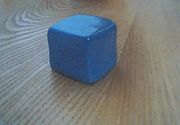
crayons. Today, twenty thousand eggs of Silly Putty are sold daily. Since 1950, more than 300 million eggs of Silly Putty (approximately 4500 short tons (4,082.3 t)) have been sold. Other brands offer the material in larger size containers and in a wide variety of colors, such as pink, blue, and yellow.
History of Silly Putty
During World War II, JapanJapan
Japan is an island nation in East Asia. Located in the Pacific Ocean, it lies to the east of the Sea of Japan, China, North Korea, South Korea and Russia, stretching from the Sea of Okhotsk in the north to the East China Sea and Taiwan in the south...
invaded rubber-producing countries as they expanded their sphere of influence in the Pacific Rim. Rubber was vital for the production of raft
Raft
A raft is any flat structure for support or transportation over water. It is the most basic of boat design, characterized by the absence of a hull...
s, tire
Tire
A tire or tyre is a ring-shaped covering that fits around a wheel rim to protect it and enable better vehicle performance by providing a flexible cushion that absorbs shock while keeping the wheel in close contact with the ground...
s, vehicle
Automobile
An automobile, autocar, motor car or car is a wheeled motor vehicle used for transporting passengers, which also carries its own engine or motor...
and aircraft
Aircraft
An aircraft is a vehicle that is able to fly by gaining support from the air, or, in general, the atmosphere of a planet. An aircraft counters the force of gravity by using either static lift or by using the dynamic lift of an airfoil, or in a few cases the downward thrust from jet engines.Although...
parts, gas mask
Gas mask
A gas mask is a mask put on over the face to protect the wearer from inhaling airborne pollutants and toxic gases. The mask forms a sealed cover over the nose and mouth, but may also cover the eyes and other vulnerable soft tissues of the face. Some gas masks are also respirators, though the word...
s, and boot
Boot
A boot is a type of footwear but they are not shoes. Most boots mainly cover the foot and the ankle and extend up the leg, sometimes as far as the knee or even the hip. Most boots have a heel that is clearly distinguishable from the rest of the sole, even if the two are made of one piece....
s. In the U.S., all rubber products were rationed; citizens were encouraged to make their rubber products last until the end of the war and to donate spare tires, boots, and coats. Meanwhile, the government funded research into synthetic rubber compounds to attempt to solve this shortage.
Credit for the invention of Silly Putty is disputed and has been attributed variously to Earl Warrick, of the then newly-formed Dow Corning
Dow Corning
Dow Corning is a multinational corporation headquartered in Midland, Michigan, USA. Dow Corning specializes in silicon and silicone-based technology, offering more than 7,000 products and services...
; Harvey Chin; and James Wright
James Wright (inventor)
James Wright' was an engineer at General Electric who invented Silly Putty in 1943.The invention of Bouncy Putty later renamed Silly Putty happened accidentally. During World War II, the United States couldn't obtain natural rubber from Asian suppliers, who gathered it from rubber trees. General...
, a Scottish
Scottish people
The Scottish people , or Scots, are a nation and ethnic group native to Scotland. Historically they emerged from an amalgamation of the Picts and Gaels, incorporating neighbouring Britons to the south as well as invading Germanic peoples such as the Anglo-Saxons and the Norse.In modern use,...
inventor working for General Electric
General Electric
General Electric Company , or GE, is an American multinational conglomerate corporation incorporated in Schenectady, New York and headquartered in Fairfield, Connecticut, United States...
in New Haven, Connecticut
New Haven, Connecticut
New Haven is the second-largest city in Connecticut and the sixth-largest in New England. According to the 2010 Census, New Haven's population increased by 5.0% between 2000 and 2010, a rate higher than that of the State of Connecticut, and higher than that of the state's five largest cities, and...
. Throughout his life, Warrick insisted that he and his colleague, Rob Roy McGregor, received the patent for Silly Putty before Wright did; but Crayola's history of Silly Putty states that Wright first invented it in 1943. Both researchers independently discovered that reacting boric acid
Boric acid
Boric acid, also called hydrogen borate or boracic acid or orthoboric acid or acidum boricum, is a weak acid of boron often used as an antiseptic, insecticide, flame retardant, as a neutron absorber, and as a precursor of other chemical compounds. It exists in the form of colorless crystals or a...
with silicone oil
Silicone oil
A silicone oil is any polymerized siloxanes with organic side chains. They are formed of alternating silicon-oxygen atoms or siloxane, rather than carbon atoms . Other species attach to the tetravalent silicon atoms, not to the divalent oxygen atoms which are fully committed to forming the...
would produce a gooey, bouncy material with several unique properties. The non-toxic putty would bounce when dropped, could stretch farther than regular rubber, would not go moldy, and had a very high melting temperature.
Wright found that the substance did not have all the properties needed to replace rubber, so it was not used for any purpose. In 1945 Wright sent samples to scientists all around the world, but no practical use was ever found.
Finally, in 1949, the putty reached the owner of a toy store, Ruth Fallgatter. She contacted Peter Hodgson, a marketing consultant, to produce her catalog and discuss selling bouncing putty. The two decided to market the product by selling it in a clear case for US$2. The putty proceeded to outsell every item in the catalogue except for 50 cent Crayola crayons. Despite the fortune it made, Fallgatter did not pursue it further; but Hodgson saw its potential.
Already $12,000 in debt, Hodgson borrowed $147 to buy a batch of the putty to pack 1 oz (28.3 g) portions into plastic eggs for $1, calling it Silly Putty. After selling over 250,000 eggs of silly putty in three days, Hodgson was almost put out of business in 1951 by the Korean War
Korean War
The Korean War was a conventional war between South Korea, supported by the United Nations, and North Korea, supported by the People's Republic of China , with military material aid from the Soviet Union...
. Silicone, a main ingredient in silly putty, was put on ration, harming his business. A year later the restriction on silicone was lifted and the production of Silly Putty resumed. Initially, it was primarily targeted towards adults. However, by 1955 the majority of its consumers were aged 6 through 12. In 1957, Hodgson produced the first televised commercial for Silly Putty, which aired during the Howdy Doody Show
Howdy Doody
Howdy Doody is an American children's television program that was created and produced by E. Roger Muir and telecast on NBC in the United States from 1947 until 1960. It was a pioneer in children's television programming and set the pattern for many similar shows...
.
In 1961 Silly Putty went worldwide, becoming a hit in the Soviet Union, Germany, Italy, Netherlands, and Switzerland. In 1968 it was taken into lunar orbit
Lunar orbit
In astronomy, lunar orbit refers to the orbit of an object around the Moon.As used in the space program, this refers not to the orbit of the Moon about the Earth, but to orbits by various manned or unmanned spacecraft around the Moon...
by the Apollo 8
Apollo 8
Apollo 8, the second manned mission in the American Apollo space program, was the first human spaceflight to leave Earth orbit; the first to be captured by and escape from the gravitational field of another celestial body; and the first crewed voyage to return to Earth from another celestial...
astronauts.
Peter Hodgson died in 1976. A year later, Binney and Smith, the makers of Crayola products, acquired the rights to Silly Putty. By 1987, annual Silly Putty sales exceeded two million eggs.
Carol Haynes indicates that Ruth Fallgater owned a toy shop in New Haven named the "Block Shop". From personal knowledge, (her father was the Vice President of Silly Putty from shortly after its inception until his death in June 1976) she knows that when Peter Hodgson decided to market the toy to Yale students, he initially worked at the Block Shop with a few Yale students. Very soon thereafter, he asked William Henry Haynes, whose family members worked at the Block Shop, to join him in selling and marketing the toy. At some point in the very early years, a recent Yale law school graduate, Mac Kilpatrick, also joined the team. From the beginning until 1976 it was this trio who ran the company. Peter Hodgson was the President of the company; William "Bill" Haynes was the General Manager & Vice President of Silly Putty and also the VP of Arnold Clark, Inc. (an advertising and marketing company)); and Mac Kilpatrick was a V.P and the lawyer for the companies. Since sales were mostly seasonal, there were not many full-time employees; temporary workers were brought in during the peak periods of Easter and Christmas. Haynes indicates that she never knew of Silly Putty being more than $1.00 per egg from its inception to the time that her father died, one month before Peter Hodgson. It was, however, sold at one store in the early years in a silver egg.
Silly Putty was inducted into the National Toy Hall of Fame
National Toy Hall of Fame
The National Toy Hall of Fame is an American hall of fame that recognizes the contributions of toys and games that have sustained their popularity for many years...
at The Strong
The Strong
The Strong is an interactive, collections-based educational institution in Rochester, New York, USA, devoted to the study and exploration of play...
in Rochester, New York
Rochester, New York
Rochester is a city in Monroe County, New York, south of Lake Ontario in the United States. Known as The World's Image Centre, it was also once known as The Flour City, and more recently as The Flower City...
, in 2001.
Other uses
After its success as a toy, other uses were found. In the home, it can be used to pick up substances such as dirt, lint, and pet hair. The material's unique properties have found niche use in medical and scientific applications. Physical therapists use it for rehabilitative therapy of hand injuries. A number of other brands (such as Power Putty and TheraPutty) alter the material's properties, offering different levels of resistance. It is already being sold as a drumhead resonance dampener. The material is also used therapeutically for stress reduction. Because of its adhesiveAdhesive
An adhesive, or glue, is a mixture in a liquid or semi-liquid state that adheres or bonds items together. Adhesives may come from either natural or synthetic sources. The types of materials that can be bonded are vast but they are especially useful for bonding thin materials...
characteristics, it was used by Apollo astronaut
Astronaut
An astronaut or cosmonaut is a person trained by a human spaceflight program to command, pilot, or serve as a crew member of a spacecraft....
s to secure their tools in zero-gravity.
Scale model building hobbyists use the putty as a masking medium when spray painting model assemblies.
External links
- How to prepare Silly Putty - Treating dimethyl silicon polymer with boric acid - Process for making puttylike elastic plastic, siloxane derivative composition containing zinc hydroxide
- Official Website of Silly Putty
- Silly Putty Press Release - History
- Full story at MIT's Invention Dimension: Silly Putty page
- Various scientific experiments done with Silicone Putty
- American Chemical Society "What's that stuff?" page about Silly Putty
- Cambridge Polymer Group's rheological experiments on Silly Putty
- Jennifer Rosenberg. “Silly Putty.” About.com
- Ian Souter. "Silly Putty Viscoelasticity Time-lapse." Metacafe.com
- Video of 50lb dropped from building, and explanation on ScienceBlogs