

Reactive arthritis

Encyclopedia
Reactive arthritis is classified as an autoimmune condition that develops in response to an infection in another part of the body. Coming into contact with bacteria and developing an infection can trigger the disease. Reiter's syndrome has symptoms similar to various other conditions collectively known as "arthritis
". By the time the patient presents with symptoms, often time the "trigger" infection has been cured or is in remission in chronic cases, thus making determination of the initial cause difficult.
Commonly known as Reiter's syndrome, recent political pressure has seen certain institutions utilize "reactive arthritis" but the condition is also known as arthritis urethritica, venereal arthritis and polyarteritis enterica. It is a type of seronegative spondyloarthropathy. The original name "Reiter’s syndrome", named after the German physician Hans Conrad Julius Reiter for his contributions to identification and description of the disease, has become unpopular in the past decade as Reiter's history of Nazi party membership, forced human experimentation in the Buchenwald concentration camp
, and subsequent prosecution in Nuremburg
as a war criminal, have come to light.
The manifestations of Reactive arthritis include the following triad of symptoms: an inflammatory arthritis of large joints including commonly the knee and the back (due to involvement of the sacroiliac joint
), inflammation of the eyes in the form of conjunctivitis
or uveitis
, and urethritis
in men or cervicitis
in women. Patients can also present with mucocutaneous lesions, as well as psoriasis
-like skin lesions such as circinate balanitis, and keratoderma blennorrhagica
. Enthesitis
can involve the Achilles tendon resulting in heel pain. Not all affected persons have all the manifestations, and the formal definition of the disease is the occurrence of otherwise unexplained non-infectious inflammatory arthritis combined with urethritis in men, or cervicitis in women.
Reiter's syndrome is an RF-seronegative
, HLA-B27
-linked spondyloarthropathy
(autoimmune damage to the cartilage
s of joint
s) often precipitated by genitourinary or gastrointestinal infection
s. The most common triggers are sexually transmitted Chlamydial infections and perhaps, less commonly, Neisseria gonorrhea; and Salmonella, Shigella, or Campylobacter intestinal infections.
There is evidence to suggest that BCG vaccine used for bladder instillation in treating bladder CIS tumour can trigger Reactive Arthritis. Symptoms can start from a week to six weeks after the last instillation and further instillations can exacerbate the condition.
Reactive arthritis most commonly strikes individuals aged 20–40 years of age, and is more common in men than in women, and more common in whites than in blacks. This is owing to the high frequency the of HLA-B27 gene in the white population. Patients with HIV
have an increased risk of developing reactive arthritis as well.
The classical presentation is that the first symptom experienced is a urinary symptom such as burning pain on urination (dysuria
) or an increased frequency
of urination. Other urogenital problems may arise such as prostatitis
in men and cervicitis
, salpingitis
and/or vulvovaginitis in women.
The arthritis
that follows usually affects the large joints such as the knee
s causing pain
and swelling
with relative sparing of small joints such as the wrist and hand.
Eye involvement occurs in about 50% of men with urogenital reactive arthritis and about 75% of men with enteric reactive arthritis. Conjunctivitis
and uveitis
can include redness of the eyes, eye pain and irritation, or blurred vision. Eye involvement typically occurs early in the course of reactive arthritis, and symptoms may come and go.
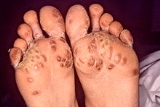
Roughly 20 to 40 percent of the men with the disease develop penile lesions called balanitis circinata
(circinate balanitis). A small percentage of men and women develop small hard nodule
s called keratoderma blennorrhagica
on the soles of the feet and, less commonly, on the palms of the hands or elsewhere. In addition, some individuals with reactive arthritis develop mouth ulcers that come and go. In some cases, these ulcers are painless and go unnoticed. Some patients suffer serious gastrointestinal problems similar to those of the Crohn's disease
.
About 10 percent of the people with reactive arthritis, especially those with a prolonged course of the disease, will develop cardiac manifestations, including aortic regurgitation and pericarditis
. Reiter's Syndrome has been described as a pre-cursor to other seronegative spondylarthropathies, including ankylosing spondylitis
.
A common mnemonic for the syndrome is "Can't see, can't pee, can't climb a tree."
Although useful, critics of the mnemonic have pointed out that sufferers can in fact urinate, although it is painful.
In the oral cavity, the patients may suffer from recurrent aphthous stomatitis, geographic tongue
and migratory stomatitis
in higher prevalence than the general population.
, the most common of which would be a genital infection with Chlamydia trachomatis
in the US. Other bacteria known to cause reactive arthritis which are more common worldwide are Ureaplasma urealyticum
, Salmonella
spp., Shigella
spp., Yersinia
spp., and Campylobacter
spp. A bout of food poisoning or a gastrointestinal infection may also precede the disease (those last four genera
of bacteria mentioned are enteric bacteria). There is some circumstantial evidence for other organisms causing the disease, but the details are unclear. Reactive arthritis usually manifests about 1–3 weeks after a known infection. The mechanism of interaction between the infecting organism and the host is unknown. Synovial fluid cultures are negative, suggesting that reactive arthritis is caused either by an over-stimulated autoimmune response or by bacterial antigens which have somehow become deposited in the joints.
. There is pain
, swelling, redness, and heat in the joint
s affected. MRI is effective in diagnosis.
The urethra
, cervix
and the throat
may be swabbed in an attempt to culture
the causative organisms. Cultures may be carried out on urine
and stool
samples. Arthrocentesis
can be done in order to study the synovial fluid
from an affected joint for further cell count, and for culture.
Also, an blood test for the genetic marker HLA-B27
may be given to determine if the patient has the gene. About 75 percent of all the patients with Reiter's arthritis have the gene. C-Reactive Protein (CRP), and Erythrocyte Sedimentation Rate (ESR) are non-specific tests that can be done to corroborate the diagnosis of the syndrome.
has published sensitivity and specificity
guidelines.
s if still present. Otherwise, treatment is symptomatic for each problem. Analgesics particularly NSAIDs, steroid
s and immunosuppressant
s may be needed for patients with severe reactive symptoms that do not respond to any other treatment.
, heart disease
, amyloid
deposits, Ankylosing Spondylitis, immunoglobulin A
nephropathy
, cardiac conduction abnormalities, or aortitis
with aortic regurgitation. However, most people with reactive arthritis can expect to live normal life spans
and maintain a near-normal lifestyle with modest adaptations to protect the involved organs.
between 1988 and 1990, incidence was 4.6 cases per 100,000 for Chlamydia-induced reactive arthritis and 5 cases per 100,000 for that induced by enteric bacteria. In 1978 in Finland
, the annual incidence was found to be 43.6 per 100,000.
Arthritis
Arthritis is a form of joint disorder that involves inflammation of one or more joints....
". By the time the patient presents with symptoms, often time the "trigger" infection has been cured or is in remission in chronic cases, thus making determination of the initial cause difficult.
Commonly known as Reiter's syndrome, recent political pressure has seen certain institutions utilize "reactive arthritis" but the condition is also known as arthritis urethritica, venereal arthritis and polyarteritis enterica. It is a type of seronegative spondyloarthropathy. The original name "Reiter’s syndrome", named after the German physician Hans Conrad Julius Reiter for his contributions to identification and description of the disease, has become unpopular in the past decade as Reiter's history of Nazi party membership, forced human experimentation in the Buchenwald concentration camp
Buchenwald concentration camp
Buchenwald concentration camp was a German Nazi concentration camp established on the Ettersberg near Weimar, Germany, in July 1937, one of the first and the largest of the concentration camps on German soil.Camp prisoners from all over Europe and Russia—Jews, non-Jewish Poles and Slovenes,...
, and subsequent prosecution in Nuremburg
Nuremberg Trials
The Nuremberg Trials were a series of military tribunals, held by the victorious Allied forces of World War II, most notable for the prosecution of prominent members of the political, military, and economic leadership of the defeated Nazi Germany....
as a war criminal, have come to light.
The manifestations of Reactive arthritis include the following triad of symptoms: an inflammatory arthritis of large joints including commonly the knee and the back (due to involvement of the sacroiliac joint
Sacroiliac joint
The sacroiliac joint or SI joint is the joint in the bony pelvis between the sacrum and the ilium of the pelvis, which are joined together by strong ligaments. In humans, the sacrum supports the spine and is supported in turn by an ilium on each side...
), inflammation of the eyes in the form of conjunctivitis
Conjunctivitis
Conjunctivitis refers to inflammation of the conjunctiva...
or uveitis
Uveitis
Uveitis specifically refers to inflammation of the middle layer of the eye, termed the "uvea" but in common usage may refer to any inflammatory process involving the interior of the eye....
, and urethritis
Urethritis
Urethritis is inflammation of the urethra. The most common symptom is painful or difficult urination.-Causes:The disease is classified as either gonococcal urethritis, caused by Neisseria gonorrhoeae, or non-gonococcal urethritis , most commonly caused by Chlamydia trachomatis...
in men or cervicitis
Cervicitis
Cervicitis is inflammation of the uterine cervix. Cervicitis in women has many features in common with urethritis in men and many cases are caused by sexually transmitted infections...
in women. Patients can also present with mucocutaneous lesions, as well as psoriasis
Psoriasis
Psoriasis is an autoimmune disease that appears on the skin. It occurs when the immune system mistakes the skin cells as a pathogen, and sends out faulty signals that speed up the growth cycle of skin cells. Psoriasis is not contagious. However, psoriasis has been linked to an increased risk of...
-like skin lesions such as circinate balanitis, and keratoderma blennorrhagica
Keratoderma blennorrhagica
Keratoderma blennorrhagica are skin lesions commonly found on the palms and soles but which may spread to the scrotum, scalp and trunk also, and which resemble psoriasis....
. Enthesitis
Enthesitis
Enthesitis is inflammation of the entheses, the sites where tendons or ligaments insert into the bone. It is also called enthesopathy, or any pathologic condition involving the entheses. The entheses are any point of attachment of skeletal muscles to the bone, where recurring stress or...
can involve the Achilles tendon resulting in heel pain. Not all affected persons have all the manifestations, and the formal definition of the disease is the occurrence of otherwise unexplained non-infectious inflammatory arthritis combined with urethritis in men, or cervicitis in women.
Reiter's syndrome is an RF-seronegative
Seronegative arthritis
A seronegative arthritis is an arthritis that is distinguished from rheumatoid arthritis due the absence of rheumatoid factor .-Contrasting with rheumatoid arthritis:...
, HLA-B27
HLA-B27
Human Leukocyte Antigen B27 is a class I surface antigen encoded by the B locus in the major histocompatibility complex on chromosome 6 and presents antigenic peptides to T cells...
-linked spondyloarthropathy
Spondyloarthropathy
Spondyloarthropathy is any joint disease of the vertebral column. Spondyloarthropathy with inflammation is called spondylarthritis. In contrast, spondylopathy is a disease of the vertebra itself, but many conditions involve both spondylopathy and spondyloarthropathy...
(autoimmune damage to the cartilage
Cartilage
Cartilage is a flexible connective tissue found in many areas in the bodies of humans and other animals, including the joints between bones, the rib cage, the ear, the nose, the elbow, the knee, the ankle, the bronchial tubes and the intervertebral discs...
s of joint
Joint
A joint is the location at which two or more bones make contact. They are constructed to allow movement and provide mechanical support, and are classified structurally and functionally.-Classification:...
s) often precipitated by genitourinary or gastrointestinal infection
Infection
An infection is the colonization of a host organism by parasite species. Infecting parasites seek to use the host's resources to reproduce, often resulting in disease...
s. The most common triggers are sexually transmitted Chlamydial infections and perhaps, less commonly, Neisseria gonorrhea; and Salmonella, Shigella, or Campylobacter intestinal infections.
There is evidence to suggest that BCG vaccine used for bladder instillation in treating bladder CIS tumour can trigger Reactive Arthritis. Symptoms can start from a week to six weeks after the last instillation and further instillations can exacerbate the condition.
Reactive arthritis most commonly strikes individuals aged 20–40 years of age, and is more common in men than in women, and more common in whites than in blacks. This is owing to the high frequency the of HLA-B27 gene in the white population. Patients with HIV
HIV
Human immunodeficiency virus is a lentivirus that causes acquired immunodeficiency syndrome , a condition in humans in which progressive failure of the immune system allows life-threatening opportunistic infections and cancers to thrive...
have an increased risk of developing reactive arthritis as well.
Signs and symptoms
Symptoms generally appear within 1–3 weeks but can range from 4 to 35 days from the onset of the inciting episode of the disease.The classical presentation is that the first symptom experienced is a urinary symptom such as burning pain on urination (dysuria
Dysuria
In medicine, specifically urology, dysuria refers to painful urination.Difficult urination is also sometimes described as dysuria.It is one of a constellation of irritative bladder symptoms, which includes urinary frequency and haematuria....
) or an increased frequency
Frequency
Frequency is the number of occurrences of a repeating event per unit time. It is also referred to as temporal frequency.The period is the duration of one cycle in a repeating event, so the period is the reciprocal of the frequency...
of urination. Other urogenital problems may arise such as prostatitis
Prostatitis
Prostatitis is an inflammation of the prostate gland, in men. A prostatitis diagnosis is assigned at 8% of all urologist and 1% of all primary care physician visits in the United States.-Classification:...
in men and cervicitis
Cervicitis
Cervicitis is inflammation of the uterine cervix. Cervicitis in women has many features in common with urethritis in men and many cases are caused by sexually transmitted infections...
, salpingitis
Salpingitis
Salpingitis is an infection and inflammation in the fallopian tubes. It is often used synonymously with Pelvic inflammatory disease , although PID lacks an accurate definition and can refer to several diseases of the female upper genital tract, such as endometritis, oophoritis, myometritis,...
and/or vulvovaginitis in women.
The arthritis
Arthritis
Arthritis is a form of joint disorder that involves inflammation of one or more joints....
that follows usually affects the large joints such as the knee
Knee
The knee joint joins the thigh with the leg and consists of two articulations: one between the fibula and tibia, and one between the femur and patella. It is the largest joint in the human body and is very complicated. The knee is a mobile trocho-ginglymus , which permits flexion and extension as...
s causing pain
Pain
Pain is an unpleasant sensation often caused by intense or damaging stimuli such as stubbing a toe, burning a finger, putting iodine on a cut, and bumping the "funny bone."...
and swelling
Swelling (medical)
In medical parlance, swelling is the transient enlargement or protuberance in the body and may include tumors. According to cause, it may be congenital, traumatic, inflammatory, neoplastic or miscellaneous....
with relative sparing of small joints such as the wrist and hand.
Eye involvement occurs in about 50% of men with urogenital reactive arthritis and about 75% of men with enteric reactive arthritis. Conjunctivitis
Conjunctivitis
Conjunctivitis refers to inflammation of the conjunctiva...
and uveitis
Uveitis
Uveitis specifically refers to inflammation of the middle layer of the eye, termed the "uvea" but in common usage may refer to any inflammatory process involving the interior of the eye....
can include redness of the eyes, eye pain and irritation, or blurred vision. Eye involvement typically occurs early in the course of reactive arthritis, and symptoms may come and go.
Roughly 20 to 40 percent of the men with the disease develop penile lesions called balanitis circinata
Balanitis circinata
Balanitis circinata is a dermatologic manifestation of Reiter's Syndrome comprising a serpiginous annular dermatitis of the glans penis. Reiter's syndrome is characterized by nongonococcal urethritis, conjunctivitis and arthritis....
(circinate balanitis). A small percentage of men and women develop small hard nodule
Nodule (medicine)
For use of the term nodule in dermatology, see Nodule In medicine, a nodule refers to a relatively hard, roughly spherical abnormal structure....
s called keratoderma blennorrhagica
Keratoderma blennorrhagica
Keratoderma blennorrhagica are skin lesions commonly found on the palms and soles but which may spread to the scrotum, scalp and trunk also, and which resemble psoriasis....
on the soles of the feet and, less commonly, on the palms of the hands or elsewhere. In addition, some individuals with reactive arthritis develop mouth ulcers that come and go. In some cases, these ulcers are painless and go unnoticed. Some patients suffer serious gastrointestinal problems similar to those of the Crohn's disease
Crohn's disease
Crohn's disease, also known as regional enteritis, is a type of inflammatory bowel disease that may affect any part of the gastrointestinal tract from mouth to anus, causing a wide variety of symptoms...
.
About 10 percent of the people with reactive arthritis, especially those with a prolonged course of the disease, will develop cardiac manifestations, including aortic regurgitation and pericarditis
Pericarditis
Pericarditis is an inflammation of the pericardium . A characteristic chest pain is often present.The causes of pericarditis are varied, including viral infections of the pericardium, idiopathic causes, uremic pericarditis, bacterial infections of the precardium Pericarditis is an inflammation of...
. Reiter's Syndrome has been described as a pre-cursor to other seronegative spondylarthropathies, including ankylosing spondylitis
Ankylosing spondylitis
Ankylosing spondylitis , previously known as Bekhterev's disease, Bekhterev syndrome, and Marie-Strümpell disease is a chronic inflammatory disease of the axial skeleton with variable involvement of peripheral joints and nonarticular structures...
.
A common mnemonic for the syndrome is "Can't see, can't pee, can't climb a tree."
Although useful, critics of the mnemonic have pointed out that sufferers can in fact urinate, although it is painful.
In the oral cavity, the patients may suffer from recurrent aphthous stomatitis, geographic tongue
Geographic tongue
Geographic tongue, an inflammatory condition of the tongue affecting approximately 2% of the population, is characterized by discolored regions of taste buds or sometimes even cracks in the tongue...
and migratory stomatitis
Migratory stomatitis
Migratory stomatitis is a benign condition on the oral soft tissue. This condition has two forms: the common form, which is consisted from red lesions with white borders on the tongue only. This form is called geographic tongue...
in higher prevalence than the general population.
Causes
It is set off by a preceding infectionInfection
An infection is the colonization of a host organism by parasite species. Infecting parasites seek to use the host's resources to reproduce, often resulting in disease...
, the most common of which would be a genital infection with Chlamydia trachomatis
Chlamydia trachomatis
Chlamydia trachomatis, an obligate intracellular human pathogen, is one of three bacterial species in the genus Chlamydia. C. trachomatis is a Gram-negative bacteria, therefore its cell wall components retain the counter-stain safranin and appear pink under a light microscope.The inclusion bodies...
in the US. Other bacteria known to cause reactive arthritis which are more common worldwide are Ureaplasma urealyticum
Ureaplasma urealyticum
Ureaplasma urealyticum is a bacterium belonging to the family Mycoplasmataceae. Its type strain is T960.-Clinical significance:U. urealyticum is part of the normal genital flora of both men and women...
, Salmonella
Salmonella
Salmonella is a genus of rod-shaped, Gram-negative, non-spore-forming, predominantly motile enterobacteria with diameters around 0.7 to 1.5 µm, lengths from 2 to 5 µm, and flagella which grade in all directions . They are chemoorganotrophs, obtaining their energy from oxidation and reduction...
spp., Shigella
Shigella
Shigella is a genus of Gram-negative, nonspore forming, non-motile, rod-shaped bacteria closely related to Escherichia coli and Salmonella. The causative agent of human shigellosis, Shigella causes disease in primates, but not in other mammals. It is only naturally found in humans and apes. During...
spp., Yersinia
Yersinia
Yersinia is a genus of bacteria in the family Enterobacteriaceae. Yersinia are Gram-negative rod shaped bacteria, a few micrometers long and fractions of a micrometer in diameter, and are facultative anaerobes. Some members of Yersinia are pathogenic in humans; in particular, Y. pestis is the...
spp., and Campylobacter
Campylobacter
Campylobacter is a genus of bacteria that are Gram-negative, spiral, and microaerophilic. Motile, with either unipolar or bipolar flagella, the organisms have a characteristic spiral/corkscrew appearance and are oxidase-positive. Campylobacter jejuni is now recognized as one of the main causes...
spp. A bout of food poisoning or a gastrointestinal infection may also precede the disease (those last four genera
Genus
In biology, a genus is a low-level taxonomic rank used in the biological classification of living and fossil organisms, which is an example of definition by genus and differentia...
of bacteria mentioned are enteric bacteria). There is some circumstantial evidence for other organisms causing the disease, but the details are unclear. Reactive arthritis usually manifests about 1–3 weeks after a known infection. The mechanism of interaction between the infecting organism and the host is unknown. Synovial fluid cultures are negative, suggesting that reactive arthritis is caused either by an over-stimulated autoimmune response or by bacterial antigens which have somehow become deposited in the joints.
Diagnosis
There are few clinical symptoms, but the clinical picture is dominated by polyarthritisPolyarthritis
Polyarthritis is any type of arthritis which involves 5 or more joints simultaneously. It is usually associated with autoimmune conditions.Polyarthritis may be experienced at any age and is not gender specific.-Causes:...
. There is pain
Pain
Pain is an unpleasant sensation often caused by intense or damaging stimuli such as stubbing a toe, burning a finger, putting iodine on a cut, and bumping the "funny bone."...
, swelling, redness, and heat in the joint
Joint
A joint is the location at which two or more bones make contact. They are constructed to allow movement and provide mechanical support, and are classified structurally and functionally.-Classification:...
s affected. MRI is effective in diagnosis.
The urethra
Urethra
In anatomy, the urethra is a tube that connects the urinary bladder to the genitals for the removal of fluids out of the body. In males, the urethra travels through the penis, and carries semen as well as urine...
, cervix
Cervix
The cervix is the lower, narrow portion of the uterus where it joins with the top end of the vagina. It is cylindrical or conical in shape and protrudes through the upper anterior vaginal wall...
and the throat
Throat
In vertebrate anatomy, the throat is the anterior part of the neck, in front of the vertebral column. It consists of the pharynx and larynx...
may be swabbed in an attempt to culture
Culture
Culture is a term that has many different inter-related meanings. For example, in 1952, Alfred Kroeber and Clyde Kluckhohn compiled a list of 164 definitions of "culture" in Culture: A Critical Review of Concepts and Definitions...
the causative organisms. Cultures may be carried out on urine
Urine
Urine is a typically sterile liquid by-product of the body that is secreted by the kidneys through a process called urination and excreted through the urethra. Cellular metabolism generates numerous by-products, many rich in nitrogen, that require elimination from the bloodstream...
and stool
Human feces
Human feces , also known as a stool, is the waste product of the human digestive system including bacteria. It varies significantly in appearance, according to the state of the digestive system, diet and general health....
samples. Arthrocentesis
Arthrocentesis
Arthrocentesis is the clinical procedure of using a syringe to collect synovial fluid from a joint capsule. It is also known as joint aspiration. Arthrocentesis is used in the diagnosis of gout, arthritis, and synovial infections....
can be done in order to study the synovial fluid
Synovial fluid
Synovial fluid is a viscous, non-Newtonian fluid found in the cavities of synovial joints. With its yolk-like consistency , the principal role of synovial fluid is to reduce friction between the articular cartilage of synovial joints during movement.-Overview:The inner membrane of synovial joints...
from an affected joint for further cell count, and for culture.
Also, an blood test for the genetic marker HLA-B27
HLA-B27
Human Leukocyte Antigen B27 is a class I surface antigen encoded by the B locus in the major histocompatibility complex on chromosome 6 and presents antigenic peptides to T cells...
may be given to determine if the patient has the gene. About 75 percent of all the patients with Reiter's arthritis have the gene. C-Reactive Protein (CRP), and Erythrocyte Sedimentation Rate (ESR) are non-specific tests that can be done to corroborate the diagnosis of the syndrome.
Diagnostic Criteria
Although there are no definitive criteria to diagnose the existence of Reiter's arthritis, the American College of RheumatologyAmerican College of Rheumatology
The American College of Rheumatology is an organization of and for physicians, health professionals, and scientists that advances rheumatology through programs of education, research, advocacy and practice support that foster excellence in the care of people with arthritis and rheumatic and...
has published sensitivity and specificity
Sensitivity and specificity
Sensitivity and specificity are statistical measures of the performance of a binary classification test, also known in statistics as classification function. Sensitivity measures the proportion of actual positives which are correctly identified as such Sensitivity and specificity are statistical...
guidelines.
| Percent Sensitivity and Specificity of Various Criteria for Typical Reiter's Syndrome | ||
| Method of diagnosis | Sensitivity | Specificity |
| 1. Episode of arthritis of more than 1 month with urethritis and/or cervicitis | 84.3% | 98.2% |
| 2. Episode of arthritis of more than 1 month and either urethritis or cervicitis, or bilateral conjunctivitis | 85.5% | 96.4% |
| 3. Episode of arthritis, conjunctivitis, and urethritis | 50.6% | 98.8% |
| 4. Episode of arthritis of more than 1 month, conjunctivitis, and urethritis | 48.2% | 98.8% |
Treatment
The main goal of treatment is to identify and eradicate the underlying infectious source with the appropriate antibioticAntibiotic
An antibacterial is a compound or substance that kills or slows down the growth of bacteria.The term is often used synonymously with the term antibiotic; today, however, with increased knowledge of the causative agents of various infectious diseases, antibiotic has come to denote a broader range of...
s if still present. Otherwise, treatment is symptomatic for each problem. Analgesics particularly NSAIDs, steroid
Steroid
A steroid is a type of organic compound that contains a characteristic arrangement of four cycloalkane rings that are joined to each other. Examples of steroids include the dietary fat cholesterol, the sex hormones estradiol and testosterone, and the anti-inflammatory drug dexamethasone.The core...
s and immunosuppressant
Immunosuppressant
An immunosuppressant is any substance that performs immunosuppression of the immune system. They may be either exogenous, as immunosuppressive drugs, or endogenous, as ,e. g., testosterone...
s may be needed for patients with severe reactive symptoms that do not respond to any other treatment.
Prognosis
Reactive arthritis may be self-limiting, frequently recurring, chronic or progressive. Most patients have severe symptoms lasting a few weeks to six months. Fifteen to 50 percent of cases have recurrent bouts of arthritis. Chronic arthritis or sacroiliitis occurs in 15-30 percent of cases. Repeated attacks over many years are common, and patients sometimes end up with chronic and disabling arthritisArthritis
Arthritis is a form of joint disorder that involves inflammation of one or more joints....
, heart disease
Heart disease
Heart disease, cardiac disease or cardiopathy is an umbrella term for a variety of diseases affecting the heart. , it is the leading cause of death in the United States, England, Canada and Wales, accounting for 25.4% of the total deaths in the United States.-Types:-Coronary heart disease:Coronary...
, amyloid
Amyloid
Amyloids are insoluble fibrous protein aggregates sharing specific structural traits. Abnormal accumulation of amyloid in organs may lead to amyloidosis, and may play a role in various neurodegenerative diseases.-Definition:...
deposits, Ankylosing Spondylitis, immunoglobulin A
Immunoglobulin A
Immunoglobulin A is an antibody that plays a critical role in mucosal immunity. More IgA is produced in mucosal linings than all other types of antibody combined; between three and five grams are secreted into the intestinal lumen each day....
nephropathy
Nephropathy
Nephropathy refers to damage to or disease of the kidney. An older term for this is nephrosis.-Causes:Causes of nephropathy include administration of analgesics, xanthine oxidase deficiency, and long-term exposure to lead or its salts...
, cardiac conduction abnormalities, or aortitis
Aortitis
-Causes:This inflammation has a number of possible causes, to include: trauma, viral infection, certain immune disorders, and bacterial infection .-Treatment:...
with aortic regurgitation. However, most people with reactive arthritis can expect to live normal life spans
Life expectancy
Life expectancy is the expected number of years of life remaining at a given age. It is denoted by ex, which means the average number of subsequent years of life for someone now aged x, according to a particular mortality experience...
and maintain a near-normal lifestyle with modest adaptations to protect the involved organs.
Epidemiology
Because women may be underdiagnosed, the exact incidence of reactive arthritis is difficult to estimate. A few studies have been completed, though. In NorwayNorway
Norway , officially the Kingdom of Norway, is a Nordic unitary constitutional monarchy whose territory comprises the western portion of the Scandinavian Peninsula, Jan Mayen, and the Arctic archipelago of Svalbard and Bouvet Island. Norway has a total area of and a population of about 4.9 million...
between 1988 and 1990, incidence was 4.6 cases per 100,000 for Chlamydia-induced reactive arthritis and 5 cases per 100,000 for that induced by enteric bacteria. In 1978 in Finland
Finland
Finland , officially the Republic of Finland, is a Nordic country situated in the Fennoscandian region of Northern Europe. It is bordered by Sweden in the west, Norway in the north and Russia in the east, while Estonia lies to its south across the Gulf of Finland.Around 5.4 million people reside...
, the annual incidence was found to be 43.6 per 100,000.
History
Stoll originally described this triad in 1776. In 1818, Brodie reported the triad in 5 patients. In 1916, 2 separate reports were published during World War I: Fiessinger and Leroy detailed the findings in 4 patients (in France), and Reiter documented the case of a single patient with this triad of symptoms (in Germany). In 1942, an article by Bauer and Engelman described the first known American patient with reactive arthritis; they called this disorder, a "syndrome of unknown etiology characterized by urethritis, conjunctivitis, and arthritis (so-called Reiter's disease)." Their work contained only one reference, Reiter's article, and stated erroneously, "First described by Reiter, it has been most commonly referred to as Reiter's disease." Thus, this eponym remains in use despite its historical inappropriateness and Hans Reiter's later activities as a National Socialist (Nazi) war criminal.Famous individuals
- Spanish conquerorConquistadorConquistadors were Spanish soldiers, explorers, and adventurers who brought much of the Americas under the control of Spain in the 15th to 16th centuries, following Europe's discovery of the New World by Christopher Columbus in 1492...
Christopher ColumbusChristopher ColumbusChristopher Columbus was an explorer, colonizer, and navigator, born in the Republic of Genoa, in northwestern Italy. Under the auspices of the Catholic Monarchs of Spain, he completed four voyages across the Atlantic Ocean that led to general European awareness of the American continents in the...
suffered from Reiter's arthritis, dying from a heart attack caused by the condition. - ScottishScottish peopleThe Scottish people , or Scots, are a nation and ethnic group native to Scotland. Historically they emerged from an amalgamation of the Picts and Gaels, incorporating neighbouring Britons to the south as well as invading Germanic peoples such as the Anglo-Saxons and the Norse.In modern use,...
association football player Ian Murray has suffered from Reiter's arthritis. - Former KissKISS (band)Kiss is an American rock band formed in New York City in January 1973. Well-known for its members' face paint and flamboyant stage outfits, the group rose to prominence in the mid to late 1970s on the basis of their elaborate live performances, which featured fire breathing, blood spitting,...
guitarist Mark St. JohnMark St. JohnMark Leslie Norton , better known as Mark St. John, was a guitarist known for his brief work with the rock band Kiss.-Prior to Kiss:...
also suffered from Reiter's arthritis. - SilverchairSilverchairSilverchair were an Australian rock band, which formed in 1992 as Innocent Criminals in Merewether, Newcastle with the line-up of Ben Gillies on drums, Chris Joannou on bass guitar and Daniel Johns on vocals and guitars. The group got their big break in mid-1994 when they won a national demo...
frontman Daniel JohnsDaniel JohnsDaniel Paul Johns is an Australian musician, vocalist, composer, guitarist, and pianist, best known as the frontman of the rock band Silverchair. He is also part of The Dissociatives...
has suffered from reactive arthritis.
External links
- eMedicine
- Reactive arthritis topic list - Merck Manual
- Reiter's Syndrome - WrongDiagnosis.com
- MorbusReiter.de one patient of the rare reactive arthritis is offering to other patients a platform with information, guestbook and forum.