

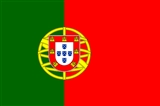
Portuguese Timor

Encyclopedia
Portuguese Timor was the name of East Timor
when it was under Portuguese
control. During this period, Portugal shared the island of Timor
with the Netherlands East Indies, and later with Indonesia
.
The first Europeans to arrive in the region were Portuguese in 1515. Dominican friars established a presence on the island in 1556, and the territory was declared a Portuguese colony in 1702. Following a Lisbon-instigated decolonisation process in 1974, Indonesia invaded the territory in 1975 ending Portuguese rule. The invasion was never accepted by other countries so Portuguese Timor existed officially until independence of Timor-Leste in 2002.
was part of the trading networks that stretched between India and China and incorporating Maritime Southeast Asia
. The island's large stands of fragrant sandalwood
were its main commodity. The first European powers to arrive in the area were the Portuguese
in the early sixteenth century followed by the Dutch in the late sixteenth century. Both came in search of the fabled Spice Islands
of Maluku
. Portuguese first landed near modern Pante Macassar
, and in 1556 a group of Dominican
friars established the village of Lifau
.
Over the following three centuries, the Dutch would come to dominate the Indonesian archipelago
with the exception of the eastern half of Timor, which would become Portuguese Timor. The Portuguese introduced maize
as a food crop and coffee as an export crop. Timorese systems of tax and labour control were preserved, through which taxes were paid through their labour and a portion of the coffee and sandalwood crop. The Portuguese introduced mercenaries into Timor communities and Timor chiefs hired Portuguese soldiers for wars against neighbouring tribes. With the use of the Portuguese musket, Timorese men became deer hunters and suppliers of deer horn and hide for export.
The Portuguese introduced Roman Catholicism
to East Timor, the Latin writing system
, the printing press
, and formal schooling. Two groups of people were introduced to East Timor: Portuguese men, and Topasses
. Portuguese language
was introduced into church and state business, and Portuguese Asians used Malay
in addition to Portuguese. Under colonial policy, Portuguese citizenship was available to men who assimilated Portuguese language, literacy, and religion; by 1970, 1,200 East Timorese, largely drawn from the aristocracy, Dili residents, or larger towns, had obtained Portuguese citizenship. By the end of the colonial administration in 1974, 30 percent of Timorese were practicing Roman Catholics while the majority continued to worship spirits of the land and sky.
sent its first governor successfully, António Coelho Guerreiro, to Lifau
, which became capital of all Portuguese dependencies on Lesser Sunda Islands. Former capitals were Solor
and Larantuka
. Portuguese control over the territory was tenuous particularly in the mountainous interior. Dominican
friars, the occasional Dutch raid, and the Timorese themselves competed with Portuguese merchants. The control of colonial administrators was largely restricted to the Dili
area, and they had to rely on traditional tribal chieftains for control and influence.
The capital was moved to Dili
in 1769, due to attacks from the Topasses, who became rulers of several local kingdoms (Liurai
). At the same time, the Dutch were colonising the west of the island and the surrounding archipelago that is now Indonesia
. The border between Portuguese Timor and the Dutch East Indies was formally decided in 1859 with the Treaty of Lisbon. In 1913, the Portuguese and Dutch formally agreed to split the island between them. The definitive border was drawn by the Hague
in 1916, and it remains the international boundary between the modern states of East Timor and Indonesia.
For the Portuguese, East Timor remained little more than a neglected trading post until the late nineteenth century. Investment in infrastructure, health, and education was minimal. Sandalwood remained the main export crop with coffee exports becoming significant in the mid-nineteenth century. In places where Portuguese rule was asserted, it tended to be brutal and exploitative.
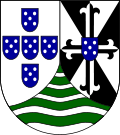 At the beginning of the twentieth century, a faltering home economy prompted the Portuguese to extract greater wealth from its colonies, resulting in increased resistance to Portuguese rule in East Timor. In 1910-12, a Timorese rebellion was quashed after Portugal brought in troops from its colonies in Mozambique and Macau, resulting in the deaths of 3,000 East Timorese.
Although Portugal was neutral during World War II
, in December 1941, Portuguese Timor was occupied by Australia
n and Dutch forces, which were expecting a Japanese
invasion. Thousands of Japanese occupied Timor, in February 1942, and the borders of the Dutch and Portuguese were overlooked with Timor island being made a single Japanese army administration zone. 400 Australian and Dutch commandos trapped on the island by the Japanese invasion waged a guerrilla
campaign, which tied up Japanese troops and inflicted over 1,000 casualties. Timorese helped the guerillas but following the Allies' eventual evacuation, Japanese retribution from their soldiers and Timorese militia raised in West Timor was severe. By the end of the War, an estimated 40-60,000 Timorese had died, the economy was in ruins, and famine widespread. (see Battle of Timor).
Following World War II, the Portuguese promptly returned to reclaim their colony, while West Timor became part of Indonesia, which secured its independence
in 1949. To rebuild the economy, colonial administrators forced local chiefs to supply labourers which further damaged the agricultural sector. The role of the Catholic Church in East Timor grew following the Portuguese government handing over the education of the Timorese to the Church in 1941. In post-war Portuguese Timor, primary and secondary school education levels significantly increased, albeit on a very low base. Although illiteracy in 1973 was estimated at 93 per cent of the population, the small educated elite of East Timorese produced by the Church in the 1960s and 70s, became the independence leaders during the Indonesian occupation
.
"), the new government favoured a gradual decolonisation process for Portuguese territories in Asia and Africa. When East Timorese political parties were first legalised in April 1974, three major players emerged. The Timorese Democratic Union
(UDT), was dedicated to preserving East Timor as a protectorate of Portugal and in September announced its support for independence. Fretilin endorsed "the universal doctrines of socialism
", as well as "the right to independence", and later declared itself "the only legitimate representative of the people". A third party, Apodeti emerged advocating East Timor's integration with Indonesia expressing concerns that an independent East Timor would be economically weak and vulnerable.
On 28 November 1975, East Timorese declared the territory's independence.
Nine days later, Indonesia invaded the territory declaring it Indonesia's 27th province
Timor Timur
in 1976. The United Nations, however, did not recognise the annexation. The last governor of Portuguese Timor was Mário Lemos Pires
from 1974-75. Following the end of Indonesian occupation in 1999, and a United Nations administered transition period
, East Timor became formally independent in 2002.
The first Timorese currency was the Portuguese Timor pataca (introduced 1894), and after 1959 the Portuguese Timor escudo, linked to the Portuguese escudo
, was used. In 1975 the currency ceased to exist as East Timor was annexed by Indonesia and began using the Indonesian rupiah
.
East Timor
The Democratic Republic of Timor-Leste, commonly known as East Timor , is a state in Southeast Asia. It comprises the eastern half of the island of Timor, the nearby islands of Atauro and Jaco, and Oecusse, an exclave on the northwestern side of the island, within Indonesian West Timor...
when it was under Portuguese
Portugal
Portugal , officially the Portuguese Republic is a country situated in southwestern Europe on the Iberian Peninsula. Portugal is the westernmost country of Europe, and is bordered by the Atlantic Ocean to the West and South and by Spain to the North and East. The Atlantic archipelagos of the...
control. During this period, Portugal shared the island of Timor
Timor
Timor is an island at the southern end of Maritime Southeast Asia, north of the Timor Sea. It is divided between the independent state of East Timor, and West Timor, belonging to the Indonesian province of East Nusa Tenggara. The island's surface is 30,777 square kilometres...
with the Netherlands East Indies, and later with Indonesia
Indonesia
Indonesia , officially the Republic of Indonesia , is a country in Southeast Asia and Oceania. Indonesia is an archipelago comprising approximately 13,000 islands. It has 33 provinces with over 238 million people, and is the world's fourth most populous country. Indonesia is a republic, with an...
.
The first Europeans to arrive in the region were Portuguese in 1515. Dominican friars established a presence on the island in 1556, and the territory was declared a Portuguese colony in 1702. Following a Lisbon-instigated decolonisation process in 1974, Indonesia invaded the territory in 1975 ending Portuguese rule. The invasion was never accepted by other countries so Portuguese Timor existed officially until independence of Timor-Leste in 2002.
Early colonialists
Prior to the arrival of European colonial powers, the island of TimorTimor
Timor is an island at the southern end of Maritime Southeast Asia, north of the Timor Sea. It is divided between the independent state of East Timor, and West Timor, belonging to the Indonesian province of East Nusa Tenggara. The island's surface is 30,777 square kilometres...
was part of the trading networks that stretched between India and China and incorporating Maritime Southeast Asia
Maritime Southeast Asia
Maritime Southeast Asia refers to the maritime region of Southeast Asia as opposed to mainland Southeast Asia and includes the modern countries of Indonesia, Malaysia, the Philippines, Brunei, East Timor and Singapore....
. The island's large stands of fragrant sandalwood
Sandalwood
Sandalwood is the name of a class of fragrant woods from trees in the genus Santalum. The woods are heavy, yellow, and fine-grained, and unlike many other aromatic woods they retain their fragrance for decades. As well as using the harvested and cut wood in-situ, essential oils are also extracted...
were its main commodity. The first European powers to arrive in the area were the Portuguese
Portugal
Portugal , officially the Portuguese Republic is a country situated in southwestern Europe on the Iberian Peninsula. Portugal is the westernmost country of Europe, and is bordered by the Atlantic Ocean to the West and South and by Spain to the North and East. The Atlantic archipelagos of the...
in the early sixteenth century followed by the Dutch in the late sixteenth century. Both came in search of the fabled Spice Islands
Maluku Islands
The Maluku Islands are an archipelago that is part of Indonesia, and part of the larger Maritime Southeast Asia region. Tectonically they are located on the Halmahera Plate within the Molucca Sea Collision Zone...
of Maluku
Maluku Islands
The Maluku Islands are an archipelago that is part of Indonesia, and part of the larger Maritime Southeast Asia region. Tectonically they are located on the Halmahera Plate within the Molucca Sea Collision Zone...
. Portuguese first landed near modern Pante Macassar
Pante Macassar
Pante Macassar is a city and subdistrict on the north coast of East Timor, 281 km to the west of Dili, the nation's capital. It has a population of 4,730 . It is the capital of the Oecusse exclave .The name literally means "beach of Makasar," alluding to the erstwhile trade with Makasar in Sulawesi...
, and in 1556 a group of Dominican
Dominican Order
The Order of Preachers , after the 15th century more commonly known as the Dominican Order or Dominicans, is a Catholic religious order founded by Saint Dominic and approved by Pope Honorius III on 22 December 1216 in France...
friars established the village of Lifau
Lifau
Lifau is a town and suco in the East Timor exclave of Oecusse District. The city is located west of the mouth of the Tono River. 1,938 people are living in the suco.- History :...
.
Over the following three centuries, the Dutch would come to dominate the Indonesian archipelago
Indonesia
Indonesia , officially the Republic of Indonesia , is a country in Southeast Asia and Oceania. Indonesia is an archipelago comprising approximately 13,000 islands. It has 33 provinces with over 238 million people, and is the world's fourth most populous country. Indonesia is a republic, with an...
with the exception of the eastern half of Timor, which would become Portuguese Timor. The Portuguese introduced maize
Maize
Maize known in many English-speaking countries as corn or mielie/mealie, is a grain domesticated by indigenous peoples in Mesoamerica in prehistoric times. The leafy stalk produces ears which contain seeds called kernels. Though technically a grain, maize kernels are used in cooking as a vegetable...
as a food crop and coffee as an export crop. Timorese systems of tax and labour control were preserved, through which taxes were paid through their labour and a portion of the coffee and sandalwood crop. The Portuguese introduced mercenaries into Timor communities and Timor chiefs hired Portuguese soldiers for wars against neighbouring tribes. With the use of the Portuguese musket, Timorese men became deer hunters and suppliers of deer horn and hide for export.
The Portuguese introduced Roman Catholicism
Catholicism
Catholicism is a broad term for the body of the Catholic faith, its theologies and doctrines, its liturgical, ethical, spiritual, and behavioral characteristics, as well as a religious people as a whole....
to East Timor, the Latin writing system
Latin alphabet
The Latin alphabet, also called the Roman alphabet, is the most recognized alphabet used in the world today. It evolved from a western variety of the Greek alphabet called the Cumaean alphabet, which was adopted and modified by the Etruscans who ruled early Rome...
, the printing press
Printing press
A printing press is a device for applying pressure to an inked surface resting upon a print medium , thereby transferring the ink...
, and formal schooling. Two groups of people were introduced to East Timor: Portuguese men, and Topasses
Topasses
Topasses were a group of people in maritime Asia in the early modern period, who claimed Portuguese ancestry or had taken up Portuguese culture and language. Topasses were found in the various places of South Asia and Southeast Asia which were frequented by the Portuguese, such as Goa, Malacca and...
. Portuguese language
Portuguese language
Portuguese is a Romance language that arose in the medieval Kingdom of Galicia, nowadays Galicia and Northern Portugal. The southern part of the Kingdom of Galicia became independent as the County of Portugal in 1095...
was introduced into church and state business, and Portuguese Asians used Malay
Malay language
Malay is a major language of the Austronesian family. It is the official language of Malaysia , Indonesia , Brunei and Singapore...
in addition to Portuguese. Under colonial policy, Portuguese citizenship was available to men who assimilated Portuguese language, literacy, and religion; by 1970, 1,200 East Timorese, largely drawn from the aristocracy, Dili residents, or larger towns, had obtained Portuguese citizenship. By the end of the colonial administration in 1974, 30 percent of Timorese were practicing Roman Catholics while the majority continued to worship spirits of the land and sky.
Establishment of the colonial state
In 1702, LisbonLisbon
Lisbon is the capital city and largest city of Portugal with a population of 545,245 within its administrative limits on a land area of . The urban area of Lisbon extends beyond the administrative city limits with a population of 3 million on an area of , making it the 9th most populous urban...
sent its first governor successfully, António Coelho Guerreiro, to Lifau
Lifau
Lifau is a town and suco in the East Timor exclave of Oecusse District. The city is located west of the mouth of the Tono River. 1,938 people are living in the suco.- History :...
, which became capital of all Portuguese dependencies on Lesser Sunda Islands. Former capitals were Solor
Solor
Solor is a volcanic island located off the eastern tip of Flores island in the Lesser Sunda Islands of Indonesia, in the Solor Archipelago. The island supports a small population that has been whaling for hundreds of years. They speak the languages of Adonara and Lamaholot. There are at least five...
and Larantuka
Larantuka
Larantuka is a subdistrict of East Flores Regency, on the eastern end of Flores Island, East Nusa Tenggara, Indonesia. Like much of the region, Larantuka has a strong a colonial Portuguese influence...
. Portuguese control over the territory was tenuous particularly in the mountainous interior. Dominican
Dominican Order
The Order of Preachers , after the 15th century more commonly known as the Dominican Order or Dominicans, is a Catholic religious order founded by Saint Dominic and approved by Pope Honorius III on 22 December 1216 in France...
friars, the occasional Dutch raid, and the Timorese themselves competed with Portuguese merchants. The control of colonial administrators was largely restricted to the Dili
Dili
Dili, spelled Díli in Portuguese, is the capital, largest city, chief port and commercial centre of East Timor.-Geography and Administration:Dili lies on the northern coast of Timor island, the easternmost of the Lesser Sunda Islands....
area, and they had to rely on traditional tribal chieftains for control and influence.
The capital was moved to Dili
Dili
Dili, spelled Díli in Portuguese, is the capital, largest city, chief port and commercial centre of East Timor.-Geography and Administration:Dili lies on the northern coast of Timor island, the easternmost of the Lesser Sunda Islands....
in 1769, due to attacks from the Topasses, who became rulers of several local kingdoms (Liurai
Liurai
Liurai is a ruler's title on Timor. The word is Tetun and literally means "surpassing the earth". It is originally associated with Wehali, a ritually central kingdom situated at the south coast of Central Timor . The sacral lord of Wehali, the Maromak Oan enjoyed a ritually passive role, and he...
). At the same time, the Dutch were colonising the west of the island and the surrounding archipelago that is now Indonesia
Indonesia
Indonesia , officially the Republic of Indonesia , is a country in Southeast Asia and Oceania. Indonesia is an archipelago comprising approximately 13,000 islands. It has 33 provinces with over 238 million people, and is the world's fourth most populous country. Indonesia is a republic, with an...
. The border between Portuguese Timor and the Dutch East Indies was formally decided in 1859 with the Treaty of Lisbon. In 1913, the Portuguese and Dutch formally agreed to split the island between them. The definitive border was drawn by the Hague
The Hague
The Hague is the capital city of the province of South Holland in the Netherlands. With a population of 500,000 inhabitants , it is the third largest city of the Netherlands, after Amsterdam and Rotterdam...
in 1916, and it remains the international boundary between the modern states of East Timor and Indonesia.
For the Portuguese, East Timor remained little more than a neglected trading post until the late nineteenth century. Investment in infrastructure, health, and education was minimal. Sandalwood remained the main export crop with coffee exports becoming significant in the mid-nineteenth century. In places where Portuguese rule was asserted, it tended to be brutal and exploitative.
Twentieth century
Although Portugal was neutral during World War II
World War II
World War II, or the Second World War , was a global conflict lasting from 1939 to 1945, involving most of the world's nations—including all of the great powers—eventually forming two opposing military alliances: the Allies and the Axis...
, in December 1941, Portuguese Timor was occupied by Australia
Australia
Australia , officially the Commonwealth of Australia, is a country in the Southern Hemisphere comprising the mainland of the Australian continent, the island of Tasmania, and numerous smaller islands in the Indian and Pacific Oceans. It is the world's sixth-largest country by total area...
n and Dutch forces, which were expecting a Japanese
Empire of Japan
The Empire of Japan is the name of the state of Japan that existed from the Meiji Restoration on 3 January 1868 to the enactment of the post-World War II Constitution of...
invasion. Thousands of Japanese occupied Timor, in February 1942, and the borders of the Dutch and Portuguese were overlooked with Timor island being made a single Japanese army administration zone. 400 Australian and Dutch commandos trapped on the island by the Japanese invasion waged a guerrilla
Guerrilla warfare
Guerrilla warfare is a form of irregular warfare and refers to conflicts in which a small group of combatants including, but not limited to, armed civilians use military tactics, such as ambushes, sabotage, raids, the element of surprise, and extraordinary mobility to harass a larger and...
campaign, which tied up Japanese troops and inflicted over 1,000 casualties. Timorese helped the guerillas but following the Allies' eventual evacuation, Japanese retribution from their soldiers and Timorese militia raised in West Timor was severe. By the end of the War, an estimated 40-60,000 Timorese had died, the economy was in ruins, and famine widespread. (see Battle of Timor).
Following World War II, the Portuguese promptly returned to reclaim their colony, while West Timor became part of Indonesia, which secured its independence
Indonesian National Revolution
The Indonesian National Revolution or Indonesian War of Independence was an armed conflict and diplomatic struggle between Indonesia and the Dutch Empire, and an internal social revolution...
in 1949. To rebuild the economy, colonial administrators forced local chiefs to supply labourers which further damaged the agricultural sector. The role of the Catholic Church in East Timor grew following the Portuguese government handing over the education of the Timorese to the Church in 1941. In post-war Portuguese Timor, primary and secondary school education levels significantly increased, albeit on a very low base. Although illiteracy in 1973 was estimated at 93 per cent of the population, the small educated elite of East Timorese produced by the Church in the 1960s and 70s, became the independence leaders during the Indonesian occupation
Indonesian occupation of East Timor
Indonesia occupied East Timor from December 1975 to October 1999. After centuries of Portuguese colonial rule in East Timor, a 1974 coup in Portugal led to decolonization among its former colonies, creating instability in East Timor and leaving its future uncertain...
.
End of Portuguese rule
Following a 1974 coup (the "Carnation RevolutionCarnation Revolution
The Carnation Revolution , also referred to as the 25 de Abril , was a military coup started on 25 April 1974, in Lisbon, Portugal, coupled with an unanticipated and extensive campaign of civil resistance...
"), the new government favoured a gradual decolonisation process for Portuguese territories in Asia and Africa. When East Timorese political parties were first legalised in April 1974, three major players emerged. The Timorese Democratic Union
Timorese Democratic Union
The Timorese Democratic Union is a conservative political party in East Timor. It was the first party to be established in the country in 1974, following the Carnation Revolution in Portugal....
(UDT), was dedicated to preserving East Timor as a protectorate of Portugal and in September announced its support for independence. Fretilin endorsed "the universal doctrines of socialism
Socialism
Socialism is an economic system characterized by social ownership of the means of production and cooperative management of the economy; or a political philosophy advocating such a system. "Social ownership" may refer to any one of, or a combination of, the following: cooperative enterprises,...
", as well as "the right to independence", and later declared itself "the only legitimate representative of the people". A third party, Apodeti emerged advocating East Timor's integration with Indonesia expressing concerns that an independent East Timor would be economically weak and vulnerable.
On 28 November 1975, East Timorese declared the territory's independence.
Nine days later, Indonesia invaded the territory declaring it Indonesia's 27th province
Indonesian occupation of East Timor
Indonesia occupied East Timor from December 1975 to October 1999. After centuries of Portuguese colonial rule in East Timor, a 1974 coup in Portugal led to decolonization among its former colonies, creating instability in East Timor and leaving its future uncertain...
Timor Timur
Timor Timur
Timor Timur was the official Indonesian name of present-day East Timor, during its occupation between 1975 and 1999. The occupation was international not accepted.- Background :...
in 1976. The United Nations, however, did not recognise the annexation. The last governor of Portuguese Timor was Mário Lemos Pires
Mário Lemos Pires
Mário Lemos Pires was the last Portuguese governor of Portuguese Timor.-Historical background to governorship:Pires served from November 18, 1974 to November 27, 1975, but the administration was forced onto Atauro Island for the last three months of Portuguese rule following the UDT coup in...
from 1974-75. Following the end of Indonesian occupation in 1999, and a United Nations administered transition period
United Nations Transitional Administration in East Timor
The United Nations Transitional Administration in East Timor provided an interim civil administration and a peacekeeping mission in the territory of East Timor, from its establishment on October 25, 1999 until its independence on May 20, 2002 following the outcome of the East Timor Special...
, East Timor became formally independent in 2002.
The first Timorese currency was the Portuguese Timor pataca (introduced 1894), and after 1959 the Portuguese Timor escudo, linked to the Portuguese escudo
Portuguese escudo
The escudo was the currency of Portugal prior to the introduction of the Euro on 1 January 1999 and its removal from circulation on 28 February 2002. The escudo was subdivided into 100 centavos....
, was used. In 1975 the currency ceased to exist as East Timor was annexed by Indonesia and began using the Indonesian rupiah
Indonesian rupiah
The rupiah is the official currency of Indonesia. Issued and controlled by the Bank of Indonesia, the ISO 4217 currency code for the Indonesian rupiah is IDR. Informally, Indonesians also use the word "perak" in referring to rupiah...
.
External links
- History of Timor – Technical University of Lisbon
- Kenichi Goto, Japan and Portuguese Timor in the 1930s and early 1940s