
Home      Discussion      Topics      Dictionary      Almanac
Signup       Login
Ash tree

Ash tree

Overview


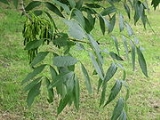
Fraxinus , common name Ash, is a genus
Genus
In biology, a genus is a taxonomic unit used in the classification of living and fossil organisms. The term comes from Latin genus "descent, family, type, gender" , cognate with – genos, "race, stock, kin" ..In addition, genus is a taxonomic rank in the hierarchy In biology, a genus (plural:...

 of usually medium to large tree
Tree
A tree is a perennial woody plant. It is most often defined as a woody plant that has many secondary branches supported clear of the ground on a single main stem or trunk with clear apical dominance. A minimum height specification at maturity is cited by some authors, varying from 3 m to...

s, mostly deciduous
Deciduous
Deciduous means falling off at maturity or tending to fall off and is typically used in reference to trees or shrubs that lose their leaves seasonally and to the shedding of other plant structures such as petals after flowering or fruit when ripe...

 though a few subtropical species are evergreen
Evergreen
In botany, an evergreen plant is a plant having leaves all year round. This contrasts with deciduous plants, which completely lose their foliage for part of the year....

. Genus Fraxinus are the true ashes, and are in Oleaceae
Oleaceae
The Oleaceae, or olive family, is a plant family containing 24 extant genera and around 600 species of mesophytic shrubs, trees and occasionally vines. As shrubs, members of this family may be twine climbers, or scramblers.-Leaves:...

, the olive family, along with olives and lilacs. The leaves
Leaf
In botany, a leaf is an above-ground plant organ specialized for photosynthesis. For this purpose, a leaf is typically flat and thin. There is continued debate about whether the flatness of leaves evolved to expose the chloroplasts to more light or to increase the absorption of carbon dioxide. In...

 are opposite (rarely in whorls of three), and mostly pinnately-compound, simple in a few species
Species
In biology, a species is:* a taxonomic rank or* a unit at that rank ....

. The seed
Seed
A seed , referred to as a kernel in some plants, is a small embryonic plant enclosed in a covering called the seed coat, usually with some stored food. It is the product of the ripened ovule of gymnosperm and angiosperm plants which occurs after fertilization and some growth within the mother plant...

s, popularly known as keys or helicopter seeds, are a type of fruit
Fruit
The term fruit has different meanings dependent on context, and the term is not synonymous in food preparation and biology. Fruits are the means by which flowering plants disseminate seeds, and the presence of seeds indicates that a structure is most likely a fruit, though not all seeds come from...

 known as a samara
Samara (fruit)
A samara is a type of fruit in which a flattened wing of fibrous, papery tissue develops from the ovary wall. A samara is a simple dry fruit and indehiscent . They are winged achenes...

.
Discussion
Ask a question about 'Ash tree'
Start a new discussion about 'Ash tree'
Answer questions from other users
Full Discussion Forum
 
Unanswered Questions
Encyclopedia


Fraxinus , common name Ash, is a genus
Genus
In biology, a genus is a taxonomic unit used in the classification of living and fossil organisms. The term comes from Latin genus "descent, family, type, gender" , cognate with – genos, "race, stock, kin" ..In addition, genus is a taxonomic rank in the hierarchy In biology, a genus (plural:...

 of usually medium to large tree
Tree
A tree is a perennial woody plant. It is most often defined as a woody plant that has many secondary branches supported clear of the ground on a single main stem or trunk with clear apical dominance. A minimum height specification at maturity is cited by some authors, varying from 3 m to...

s, mostly deciduous
Deciduous
Deciduous means falling off at maturity or tending to fall off and is typically used in reference to trees or shrubs that lose their leaves seasonally and to the shedding of other plant structures such as petals after flowering or fruit when ripe...

 though a few subtropical species are evergreen
Evergreen
In botany, an evergreen plant is a plant having leaves all year round. This contrasts with deciduous plants, which completely lose their foliage for part of the year....

. Genus Fraxinus are the true ashes, and are in Oleaceae
Oleaceae
The Oleaceae, or olive family, is a plant family containing 24 extant genera and around 600 species of mesophytic shrubs, trees and occasionally vines. As shrubs, members of this family may be twine climbers, or scramblers.-Leaves:...

, the olive family, along with olives and lilacs. The leaves
Leaf
In botany, a leaf is an above-ground plant organ specialized for photosynthesis. For this purpose, a leaf is typically flat and thin. There is continued debate about whether the flatness of leaves evolved to expose the chloroplasts to more light or to increase the absorption of carbon dioxide. In...

 are opposite (rarely in whorls of three), and mostly pinnately-compound, simple in a few species
Species
In biology, a species is:* a taxonomic rank or* a unit at that rank ....

. The seed
Seed
A seed , referred to as a kernel in some plants, is a small embryonic plant enclosed in a covering called the seed coat, usually with some stored food. It is the product of the ripened ovule of gymnosperm and angiosperm plants which occurs after fertilization and some growth within the mother plant...

s, popularly known as keys or helicopter seeds, are a type of fruit
Fruit
The term fruit has different meanings dependent on context, and the term is not synonymous in food preparation and biology. Fruits are the means by which flowering plants disseminate seeds, and the presence of seeds indicates that a structure is most likely a fruit, though not all seeds come from...

 known as a samara
Samara (fruit)
A samara is a type of fruit in which a flattened wing of fibrous, papery tissue develops from the ovary wall. A samara is a simple dry fruit and indehiscent . They are winged achenes...

. The genus Fraxinus contains 45-65 species. The tree's common English name goes back to the Old English æsc, a word also routinely used in Old English documents to refer to spears made of ash wood.

Selected species


Ashes of eastern North America
North America
North America is the northern continent of the Americas, situated in the Earth's northern hemisphere and in the western hemisphere. It is bordered on the north by the Arctic Ocean, on the east by the North Atlantic Ocean, on the southeast by the Caribbean Sea, and on the west by the North Pacific...

  • Fraxinus americana White Ash (also called cane ash, Biltmore ash or Biltmore white ash)
  • Fraxinus caroliniana
    Fraxinus caroliniana
    Fraxinus caroliniana, commonly known as the Pop ash, Florida ash, Swamp ash, or Water ash, is a species of ash tree native to the southeastern United States. It was originally described by the botanist Philip Miller. It is a small tree about 40 ft...

    Water Ash
  • Fraxinus nigra
    Fraxinus nigra
    Fraxinus nigra is a species of Fraxinus native to much of eastern Canada and the northeastern United States, from western Newfoundland west to southeastern Manitoba, and south to Illinois and northern Virginia....

    Black Ash (also called swamp ash, basket ash, brown ash, hoop ash, or water ash)
  • Fraxinus pennsylvanica Green Ash (also called red ash, swamp ash or water ash)
  • Fraxinus profunda
    Fraxinus profunda
    Fraxinus profunda is a species of Fraxinus native to eastern North America, primarily in the United States, with a scattered distribution on the Atlantic coastal plain and interior lowland river valleys from southern Maryland northwest to Indiana, southeast to northern Florida, and southwest to...

    (syn. F. tomentosa) Pumpkin Ash (also called red ash)
  • Fraxinus quadrangulata Blue Ash
  • Fraxinus tremillium Indigo Ash


Ashes of western and southwestern North America
North America
North America is the northern continent of the Americas, situated in the Earth's northern hemisphere and in the western hemisphere. It is bordered on the north by the Arctic Ocean, on the east by the North Atlantic Ocean, on the southeast by the Caribbean Sea, and on the west by the North Pacific...

  • Fraxinus anomala
    Fraxinus anomala
    Fraxinus anomala is a species of ash tree known by the common name single-leaf ash. It is native to the southwestern United States and northern Mexico, where it grows in a number of habitats including desert scrub and chaparral. This is a deciduous shrub or small tree approaching maximum heights of...

    Single-leaf Ash
  • Fraxinus berlandieriana Rio Grande Ash
  • Fraxinus cuspidata Fragrant Ash
  • Fraxinus dipetala
    Fraxinus dipetala
    Fraxinus dipetala is a species of ash native to southwestern North America in the United States in northwestern Arizona, California, southern Nevada, and Utah, and in Mexico in northern Baja California. It grows at altitudes of 100–1,300 m.It is a deciduous shrub or small tree growing to 7 m tall,...

    California Ash or Two-petal Ash
  • Fraxinus dubia
  • Fraxinus gooddingii Goodding's Ash
  • Fraxinus greggii Gregg's Ash
  • Fraxinus latifolia Oregon Ash
  • Fraxinus lowellii Lowell Ash
  • Fraxinus papillosa Chihuahua Ash
  • Fraxinus purpusii
  • Fraxinus rufescens
  • Fraxinus texensis Mountain Ash or Texas Ash
  • Fraxinus uhdei Shamel Ash or Tropical Ash
  • Fraxinus velutina
    Fraxinus velutina
    Fraxinus velutina is a species of Fraxinus native to southwestern North America, in the United States from southern California east to Texas, and in Mexico from northern Baja California east to Coahuila and Nuevo León.It is a small deciduous tree growing to 10 m tall, with a trunk up to 30 cm...

    Velvet Ash


Ashes of the Western Palearctic
Palearctic
The Palearctic or Palaearctic is one of the eight ecozones dividing the Earth surface.Physically, the Palearctic is the largest ecozone. It includes the terrestrial ecoregions of Europe, Asia north of the Himalaya foothills, northern Africa, and the northern and central parts of the Arabian...

 (Europe
Europe
Europe is, by convention, one of the world's seven continents. Comprising the westernmost peninsula of Eurasia, Europe is generally divided from Asia to its east by the water divide of the Ural Mountains, the Ural River, the Caspian Sea, the Caucasus Mountains , and the Black Sea to the southeast...

, north Africa
Africa
Africa is the world's second-largest and second most-populous continent, after Asia. At about 30.2 million km² including adjacent islands, it covers 6% of the Earth's total surface area and 20.4% of the total land area. With a billion people in 61 territories, it accounts for about 14.8% of the...

 and southwest Asia
Asia
Asia is the world's largest and most populous continent, located in the eastern and northern hemispheres. It covers 8.6% of the earth's total surface area and with approximately 4 billion people, it hosts 60% of the world's current human population.Asia is traditionally defined as part of the...

)
  • Fraxinus angustifolia Narrow-leafed Ash or Caucasian Ash
    • Fraxinus angustifolia subsp. oxycarpa Claret Ash
      Claret Ash
      The Claret Ash or Raywood Ash is a cultivar of ash tree, a seedling variant of the Caucasian Ash . The original seedling was discovered near a group of assorted ash trees in Sewell's nursery in the Mount Lofty Ranges in South Australia about 1910, and later grown at the nearby property Raywood...

       or Raywood Ash
  • Fraxinus dimorpha
    Fraxinus dimorpha
    Fraxinus dimorpha is a species of ash tree native to Morocco and Algeria in Northern Africa. An example occurrence of F. dimorpha is the Ourika River Valley, which is also the sole location within the High Atlas Range where the endangered primate Barbary Macaque, Macaca sylvanus is known to...

  • Fraxinus excelsior European Ash
  • Fraxinus holotricha
  • Fraxinus ornus
    Fraxinus ornus
    Fraxinus ornus is a species of Fraxinus native to southern Europe and southwestern Asia, from Spain and Italy north to Austria and the Czech Republic, and east through the Balkans, Turkey, and western Syria to the Lebanon.It is a medium-sized deciduous tree growing to 15–25 m tall with a trunk up...

    Manna Ash or Flowering Ash
  • Fraxinus syriaca
  • Fraxinus pallisiae Pallis' Ash


Ashes of the Eastern Palearctic
Palearctic
The Palearctic or Palaearctic is one of the eight ecozones dividing the Earth surface.Physically, the Palearctic is the largest ecozone. It includes the terrestrial ecoregions of Europe, Asia north of the Himalaya foothills, northern Africa, and the northern and central parts of the Arabian...

 (central & eastern Asia
Asia
Asia is the world's largest and most populous continent, located in the eastern and northern hemispheres. It covers 8.6% of the earth's total surface area and with approximately 4 billion people, it hosts 60% of the world's current human population.Asia is traditionally defined as part of the...

)
  • Fraxinus apertisquamifera
  • Fraxinus baroniana
  • Fraxinus bungeana Bunge's Ash
  • Fraxinus chinensis Chinese Ash or Korean Ash
  • Fraxinus chiisanensis
  • Fraxinus floribunda Himalayan Manna Ash
  • Fraxinus griffithii Griffith's Ash
  • Fraxinus hubeiensis
  • Fraxinus japonica Japanese Ash
  • Fraxinus lanuginosa
    Fraxinus lanuginosa
    Fraxinus lanuginosa is a species of ash native to Japan.It is a medium-sized deciduous tree growing to 10–15 m tall with a trunk up to 50 cm diameter. The bark is smooth, dark grey. The buds are pale pinkish-brown to grey-brown, with a dense covering of short grey hairs...

  • Fraxinus longicuspis
  • Fraxinus malacophylla
  • Fraxinus mandschurica
    Fraxinus mandschurica
    Fraxinus mandschurica is a species of Fraxinus native to northeastern Asia in northern China, Korea, Japan and southeastern Russia.Also Known as 'Chinese Oak'....

    Manchurian Ash
  • Fraxinus mariesii Chinese Flowering Ash
  • Fraxinus micrantha 
  • Fraxinus paxiana 
  • Fraxinus platypoda
  • Fraxinus raibocarpa
  • Fraxinus sieboldiana Japanese Flowering Ash
  • Fraxinus spaethiana Späth's Ash
  • Fraxinus trifoliata
  • Fraxinus xanthoxyloides Afghan Ash

Threats


The emerald ash borer
Emerald ash borer
The emerald ash borer is a green beetle native to Asia.In North America the borer is an invasive species, highly destructive to ash trees in its introduced range. The damage of this insect rivals that of Chestnut blight and Dutch Elm Disease...

 Agrilus planipennis, a wood-boring beetle
Beetle
Beetles are the group of insects with the largest number of known species. They are classified in the order Coleoptera , which contains more described species than in any other order in the animal kingdom, constituting about 25% of all known life-forms...

 accidentally introduced to North America from eastern Asia with ash wood products circa 1998, has killed millions of trees in the Midwestern US and adjacent Ontario
Ontario
Ontario is a province located in east-central Canada, the largest by population and second largest, after Quebec, in total area. Ontario is bordered by the Canadian provinces of Manitoba to the west and Quebec to the east, and 5 U.S...

, and some isolated smaller areas on eastern North America. It threatens some 7 billion ash trees in North America. The public is being cautioned not to transport unfinished wood products, such as firewood, to slow the spread of this insect pest.

Ash is also used as a food plant by the larva
Larva
A larva is a young form of animal with indirect development, going through or undergoing metamorphosis ....

e of some Lepidoptera
Lepidoptera
Lepidoptera is an order of insects that includes moths and butterflies. It is one of the most speciose orders in the class Insecta, encompassing moths and the three superfamilies of butterflies, skipper butterflies, and moth-butterflies...

 species (butterflies and moth
Moth
A moth is an insect closely related to the butterfly, both being of the order Lepidoptera. The differences between butterflies and moths are more than just taxonomy. Sometimes the names "Rhopalocera" and "Heterocera" are used to formalize the popular distinction...

s) -- see list of Lepidoptera that feed on ashes.

Uses


The wood
Wood
Wood is an organic material; in the strict sense wood is produced as secondary xylem in the stems of trees . In a living tree it transfers water and nutrients to the leaves and other growing tissues, and has a support function, enabling woody plants to reach large sizes or to stand up for themselves...

 is hard (a hardwood
Hardwood
The term 'hardwood' is used to describe wood from angiosperm trees . It may also be used for those trees themselves: these are usually broad-leaved; in temperate and boreal latitudes they are mostly deciduous, but in tropics and subtropics mostly evergreen.Hardwood contrasts with softwood which...

), dense (within 20% of 670kg/m3 for Fraxinus americana, and higher at 710kg/m3 for Fraxinus excelsior), tough and very strong but elastic, extensively used for making bows
Bow (weapon)
A bow is a weapon that projects arrows powered by the elasticity of the bow. Essentially, it is a form of spring. As the bow is drawn, energy is stored in the limbs of the bow and transformed into rapid motion when the string is released, with the string transferring this force to the arrow...

, tool
Tool
A broad definition of a tool is an entity used to interface between two or more domains that facilitates more effective action of one domain upon the other. The most basic tools are simple machines. For example, a crowbar simply functions as a lever. The further out from the pivot point, the more...

 handles, quality wooden baseball bat
Baseball bat
A baseball bat is a smooth wooden or metal club used in the game of baseball to hit the ball after the ball is thrown by the pitcher. It is no more than 2.75 inches in diameter at the thickest part and no more than 42 inches in length. It typically weighs no more than 33 ounces...

s, hurleys
Hurley (stick)
A hurley, also known as a camán , and lesser known as hurl, a hurling stick, shtick , is a wooden stick measuring between 70 and 100 cm long with a flattened, curved end , used to hit a sliotar in the Irish sport of hurling...

 and other uses demanding high strength and resilience.

It is also often used as material for electric guitar bodies and, less commonly, for acoustic guitar bodies, known for its bright, cutting tone and sustaining quality. They are also used for making drum shells. Interior joinery
Joinery
Joinery may refer to:* Woodworking joints or other types of mechanical joints * The work of the joiner, the fabrication and installation of fittings in buildings with materials such as wood and aluminium * In Australia and New Zealand, a joinery is also the generic term for a business which...

 is another common user of both European Ash and White Ash. Ash veneers are extensively used in office furniture. Ash is not used extensively outdoors due to the heartwood having a low durability to ground contact, meaning it will typically perish within five years.

Woodworkers generally like the timber for its great finishing qualities. It also has good machining qualities, and is quite easy to use with nails, screws and glue.

It also makes excellent firewood. The two most economically important species for wood production are White Ash in eastern North America, and European Ash in Europe. The Green Ash is widely planted as a street tree in the United States. The inner bark of the Blue Ash has been used as a source for a blue dye
Dye
A dye can generally be described as a colored substance that has an affinity to the substrate to which it is being applied. The dye is generally applied in an aqueous solution, and may require a mordant to improve the fastness of the dye on the fiber....

.

The cortex (bark) of Fraxinus rhynchophylla HANCE , Fraxinus chinensis ROXB. , Fraxinus szaboana English and Fraxinus stylosa English are used in Traditional Chinese Medicine
Traditional Chinese medicine
Traditional Chinese Medicine, also known as TCM , includes a range of traditional medical practices originating in China. Although well accepted in the mainstream of medical care throughout East Asia, it is considered an alternative medical system in much of the western world.TCM practices include...

 (TCM) for diarrhea
Diarrhea
In medicine, diarrhea , also spelled diarrhoea , is the condition of having frequent loose or liquid bowel movements. Acute diarrhea is a common cause of death in developing countries and the second most common cause of infant deaths worldwide...

, dysenteric disorder, and vaginal discharge
Mucopurulent discharge
Mucopurulent discharge is the emission or secretion of fluid containing mucus and pus from the eye, nose, cervix, vagina, or other part of the body due to infection and inflammation....

. It is also good for the eyes where there is symptoms of redness, swelling, and pain. The dosage is 6-12 grams.

Cultural aspects


In Norse mythology
Norse mythology
Norse, North Germanic, or Scandinavian mythology comprises the myths of North Germanic pre-Christian religion.Most of the written sources for Norse mythology were assembled in medieval Iceland in Old Norse, notably as the Edda....

, the World Tree Yggdrasil
Yggdrasil
In Norse mythology, Yggdrasil is the world tree. Yggdrasil is central in Norse cosmology, and around it exists Nine Worlds....

 is commonly held to be an ash tree, and the first man, Ask
Ask and Embla
Ask and Embla , according to Norse mythology, were the first two humans created by the gods. The pair are attested in both the Poetic Edda, compiled in the 13th century from earlier traditional sources, and the Prose Edda, written in the 13th century by Snorri Sturluson...

, was formed from an ash tree. Elsewhere in Europe, snake
Snake
Snakes are elongate legless carnivorous reptiles of the suborder Serpentes that can be distinguished from legless lizards by their lack of eyelids and external ears. Like all squamates, snakes are ectothermic amniote vertebrates covered in overlapping scales...

s were said to be repelled by ash leaves or a circle drawn by an ash branch. Irish folklore claims that shadows from an ash tree would damage crops. In Cheshire
Cheshire
Cheshire ; also known, archaically, as the County of Chester) is a ceremonial county in North West England. The traditional county town is the city of Chester, although Cheshire's largest town is Warrington. Other major towns include Congleton, Crewe, Ellesmere Port, Widnes, Runcorn, Macclesfield,...

, it was said that ash could be used to cure warts or rickets. See also the letter ash
Æ
Æ is a grapheme formed from the letters a and e. Originally a ligature representing a Latin diphthong, it has been promoted to the full status of a letter in the alphabets of many languages, including, among others, Danish and Norwegian...

. In Sussex the ash and elm
Elm
Elm leaves are alternate, with simple, single- or, most commonly, doubly-serrate margins, usually asymmetric at the base and acuminate at the apex. The genus is hermaphroditic, having perfect flowers which, being wind-pollinated, are apetalous. The fruit is a round wind-dispersed samara...

 tree were known as the Widow Maker because the large boughs would often drop without warning.

In Greek mythology
Greek mythology
Greek mythology is the body of myths and legends belonging to the ancient Greeks concerning their gods and heroes, the nature of the world, and the origins and significance of their own cult and ritual practices. They were a part of religion in ancient Greece...

, the Meliai were nymphs of the ash, perhaps specifically of the Manna Ash (Fraxinus ornus), as dryad
Dryad
Dryads are tree spirits in Greek mythology. In Greek drys signifies 'oak,' from an Indo-European root *derew- 'tree' or 'wood'. Thus dryads are specifically the nymphs of oak trees, though the term has come to be used for all tree nymphs in general...

s were nymphs of the oak
Oak
An oak is a tree or shrub in the genus Quercus , of which about 400 species exist. "Oak" may also appear in the names of species in related genera, notably Lithocarpus...

. Many echoes of archaic Hellene rites and myth involve ash trees.

The ash exudes a sugary substance that, it has been suggested, was fermented to create the Norse "Mead of Inspiration."http://www.musaios.com/ash.htm