


Phytopathology

Encyclopedia
Plant pathology is the scientific study of plant
diseases caused by pathogens (infectious diseases) and environmental conditions (physiological factors). Organisms that cause infectious disease include fungi, oomycetes, bacteria
, viruses, viroids, virus-like organisms, phytoplasmas, protozoa
, nematodes and parasitic plants. Not included are ectoparasites like insects, mites
, vertebrate
, or other pests that affect plant health by consumption of plant tissues. Plant pathology also involves the study of pathogen identification, disease etiology, disease cycles, economic impact, plant disease epidemiology
, plant disease resistance
, how plant diseases affect humans and animals, pathosystem genetics, and management of plant diseases.
The fungi reproduce both sexually
and asexually
via the production of spores and other structures. Spores may be spread long distances by air or water, or they may be soil borne. Many soil inhabiting fungi are capable of living saprotrophically, carrying out the part of their lifecycle in the soil
. These are known as facultative saprotrophs.
Fungal diseases may be controlled through the use of fungicides and other agriculture practices, however new races
of fungi often evolve
that are resistant to various fungicides.
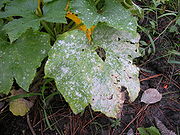
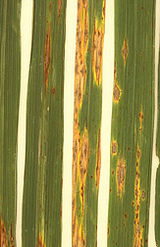 Biotrophic fungal pathogens colonize living plant tissue and obtain nutrients from living host cells. Necrotrophic fungal pathogens infect and kill host tissue and extract nutrients from the dead host cells. See Powdery Mildew and Rice Blast images below.
Significant fungal plant pathogens include:
Phytophthora
, which includes the causal agents of potato late blight
and sudden oak death
.
Despite not being closely related to the fungi, the oomycetes have developed very similar infection strategies and so many plant pathologists group them with fungal pathogens.
Significant oomycete plant pathogens
 Most bacteria
that are associated with plants are actually saprotrophic, and do no harm to the plant itself. However, a small number, around 100 known species, are able to cause disease. Bacterial diseases are much more prevalent in sub-tropical and tropical regions of the world.
Most plant pathogenic bacteria are rod-shaped (bacilli). In order to be able to colonize the plant they have specific pathogenicity factors. Five main types of bacterial pathogenicity factors are known:
1. Cell wall-degrading enzymes: These are used to break down the plant cell wall
in order to release the nutrients inside. Used by pathogens such as Erwinia
to cause soft rot.
2. Toxins: These can be non-host-specific, which damage all plants, or host-specific, which cause damage only on a host plant.
3. Effector proteins: These can be secreted into the extracellular environment or directly into the host cell, often via the Type three secretion system
. Some effectors are known to suppress host defense processes.
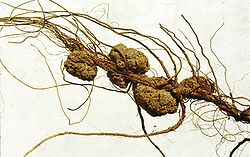
4. Phytohormones: For example, Agrobacterium
changes the level of auxin
s to cause tumours.
5. Exopolysaccharide
s: These are produced by bacteria and block xylem
vessels, often leading to the death of the plant.
Bacteria control the production of pathogenicity factors via quorum sensing
.
Significant bacterial plant pathogens
 Phytoplasma
and Spiroplasma
are a genre of bacteria that lack cell walls, and are related to the mycoplasmas, which are human pathogens. Together they are referred to as the mollicutes
. They also tend to have smaller genomes than true bacteria. They are normally transmitted by sap-sucking insects, being transferred into the plants phloem
where it reproduces.
, and some are even asymptomatic
. Under normal circumstances, plant viruses cause only a loss of crop yield
. Therefore, it is not economically viable to try to control them, the exception being when they infect perennial
species, such as fruit trees.
Most plant viruses have small, single-stranded RNA
genome
s. These genomes may encode only three or four proteins: a replicase, a coat protein, a movement protein, in order to allow cell to cell movement though plasmodesmata
, and sometimes a protein that allows transmission by a vector.
Plant viruses must be transmitted from plant to plant by a vector. This is often by an insect
(for example, aphid
s), but some fungi, nematodes, and protozoa
have been shown to be viral vectors.
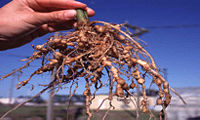 Nematodes are small, multicellular wormlike creatures. Many live freely in the soil, but there are some species that parasitize plant root
s. They are a problem in tropical and subtropical regions of the world, where they may infect crops. Potato cyst nematodes (Globodera pallida and G. rostochiensis) are widely distributed in Europe and North and South America and cause worth of damage in Europe every year. Root knot nematodes have quite a large host range, whereas cyst nematodes tend to be able to infect only a few species. Nematodes are able to cause radical changes in root cells in order to facilitate their lifestyle.
. They are transmitted as zoospores that are very durable, and may be able to survive in a resting state in the soil for many years. They have also been shown to transmit plant viruses.
When the motile zoospores come into contact with a root hair
they produce a plasmodium and invade the root
s.
and dodder
are included in the study of phytopathology. Dodder, for example, is used as a conduit either for the transmission of viruses or virus-like agents from a host plant to a plant that is not typically a host or for an agent that is not graft-transmissible.
Cultural: Farming in some societies is kept on a small scale, tended by peoples whose culture includes farming traditions going back to ancient times. (An example of such traditions would be lifelong training in techniques of plot terracing, weather anticipation and response, fertilization, grafting, seed care, and dedicated gardening.) Plants that are intently monitored often benefit from not only active external protection but also a greater overall vigor. While primitive in the sense of being the most labor-intensive solution by far, where practical or necessary it is more than adequate.
Plant resistance: Sophisticated agricultural developments now allow growers to choose from among systematically cross-bred species to ensure the greatest hardiness in their crops, as suited for a particular region's pathological profile. Breeding practices have been perfected over centuries, but with the advent of genetic manipulation even finer control of a crop's immunity traits is possible. The engineering of foodplants may be less rewarding, however, as higher output is frequently offset by popular suspicion and negative opinion about this "tampering" with nature.
Chemical: (See: pesticide application
) Many natural and synthetic compounds that could be employed to combat the above threats exist. This method works by directly eliminating disease-causing organisms or curbing their spread; however, it has been shown to have too broad an effect, typically, to be good for the local ecosystem. From an economic standpoint, all but the simplest natural additives may disqualify a product from "organic" status, potentially reducing the value of the yield.
Biological: Crop rotation
may be an effective means to prevent a parasitic population from becoming well-established, as an organism affecting leaves would be starved when the leafy crop is replaced by a tuberous type, etc. Other means to undermine parasites without attacking them directly may exist.
Integrated: The use of two or more of these methods in combination offers a higher chance of effectiveness.
Plant
Plants are living organisms belonging to the kingdom Plantae. Precise definitions of the kingdom vary, but as the term is used here, plants include familiar organisms such as trees, flowers, herbs, bushes, grasses, vines, ferns, mosses, and green algae. The group is also called green plants or...
diseases caused by pathogens (infectious diseases) and environmental conditions (physiological factors). Organisms that cause infectious disease include fungi, oomycetes, bacteria
Bacteria
Bacteria are a large domain of prokaryotic microorganisms. Typically a few micrometres in length, bacteria have a wide range of shapes, ranging from spheres to rods and spirals...
, viruses, viroids, virus-like organisms, phytoplasmas, protozoa
Protozoa
Protozoa are a diverse group of single-cells eukaryotic organisms, many of which are motile. Throughout history, protozoa have been defined as single-cell protists with animal-like behavior, e.g., movement...
, nematodes and parasitic plants. Not included are ectoparasites like insects, mites
MITES
MITES, or Minority Introduction to Engineering and Science, is a highly selective six-week summer program for rising high school seniors held at the Massachusetts Institute of Technology. Its purpose is to expose students from minority, or otherwise disadvantaged backgrounds, to the fields of...
, vertebrate
Vertebrate
Vertebrates are animals that are members of the subphylum Vertebrata . Vertebrates are the largest group of chordates, with currently about 58,000 species described. Vertebrates include the jawless fishes, bony fishes, sharks and rays, amphibians, reptiles, mammals, and birds...
, or other pests that affect plant health by consumption of plant tissues. Plant pathology also involves the study of pathogen identification, disease etiology, disease cycles, economic impact, plant disease epidemiology
Plant disease epidemiology
Plant Disease epidemiology is the study of disease in plant populations. Much like diseases of humans and animals, plant diseases occur due to pathogens such as bacteria, viruses, fungi, oomycetes, nematodes, phytoplasmas, protozoa, and parasitic plants...
, plant disease resistance
Plant disease resistance
Plant disease resistance is crucial to the reliable production of food, and it provides significant reductions in agricultural use of fuel, land, water and other inputs. There are numerous examples of devastating plant disease impacts , as well as recurrent severe plant disease issues...
, how plant diseases affect humans and animals, pathosystem genetics, and management of plant diseases.
Fungi
The majority of phytopathogenic fungi belong to the Ascomycetes and the Basidiomycetes.The fungi reproduce both sexually
Sexual reproduction
Sexual reproduction is the creation of a new organism by combining the genetic material of two organisms. There are two main processes during sexual reproduction; they are: meiosis, involving the halving of the number of chromosomes; and fertilization, involving the fusion of two gametes and the...
and asexually
Asexual reproduction
Asexual reproduction is a mode of reproduction by which offspring arise from a single parent, and inherit the genes of that parent only, it is reproduction which does not involve meiosis, ploidy reduction, or fertilization. A more stringent definition is agamogenesis which is reproduction without...
via the production of spores and other structures. Spores may be spread long distances by air or water, or they may be soil borne. Many soil inhabiting fungi are capable of living saprotrophically, carrying out the part of their lifecycle in the soil
Soil
Soil is a natural body consisting of layers of mineral constituents of variable thicknesses, which differ from the parent materials in their morphological, physical, chemical, and mineralogical characteristics...
. These are known as facultative saprotrophs.
Fungal diseases may be controlled through the use of fungicides and other agriculture practices, however new races
Race (biology)
In biology, races are distinct genetically divergent populations within the same species with relatively small morphological and genetic differences. The populations can be described as ecological races if they arise from adaptation to different local habitats or geographic races when they are...
of fungi often evolve
Evolution
Evolution is any change across successive generations in the heritable characteristics of biological populations. Evolutionary processes give rise to diversity at every level of biological organisation, including species, individual organisms and molecules such as DNA and proteins.Life on Earth...
that are resistant to various fungicides.
Significant fungal plant pathogens include:
Ascomycetes
- FusariumFusariumFusarium is a large genus of filamentous fungi widely distributed in soil and in association with plants. Most species are harmless saprobes, and are relatively abundant members of the soil microbial community. Some species produce mycotoxins in cereal crops that can affect human and animal health...
spp. (causal agents of Fusarium wilt disease) - ThielaviopsisThielaviopsisThielaviopsis is a small genus of fungi in the order Microascales. The genus includes several important agricultural pathogens. The most widespread is T. basicola, the causal agent in several root rot diseases of economically important crop species including cotton and a variety of vegetables...
spp. (causal agents of: canker rot, black root rot, Thielaviopsis root rot) - VerticilliumVerticilliumVerticillium is a genus of fungi in the division Ascomycota, and are an anamorphic form of the Plectosphaerellaceae family. The genus used to include diverse groups comprising saprobes and parasites of higher plants, insects, nematodes, mollusc eggs and other fungi thus it can be seen that the...
spp. - Magnaporthe griseaMagnaporthe griseaMagnaporthe grisea, also known as rice blast fungus, rice rotten neck, rice seedling blight, blast of rice, oval leaf spot of graminea, pitting disease, ryegrass blast, and Johnson spot, is a plant-pathogenic fungus that causes an important disease affecting rice. It is now known that M...
(causal agent of blast of rice and gray leaf spot in turfgrasses)
Basidiomycetes
- RhizoctoniaRhizoctoniaRhizoctonia is a genus of anamorphic fungi in the order Cantharellales. Species do not produce spores, but are composed of hyphae and sclerotia and are asexual states of fungi in the genus Thanatephorus. Rhizoctonia species are saprotrophic, but are also facultative plant pathogens, causing...
spp. - Phakospora pachyrhiziSoybean rustSoybean rust, also known as Asian soybean rust, is a disease that affects soybeans and other legumes. It is caused by two types of fungi, Phakopsora pachyrhizi and Phakopsora meibomiae. P. meibomiae is the weaker pathogen of the two and generally does not cause widespread problems...
(causal agent of soybean rust) - PucciniaPucciniaPuccinia is a genus of fungi. All species in this genus are obligate plant pathogens and are known as rusts .Examples of Puccinia rusts and the diseases they cause:* Puccinia asparagi - Asparagus rust...
spp. (causal agents of severe rusts of virtually all cereal grains and cultivated grasses)
Oomycetes
The oomycetes are not true fungi but are fungus-like organisms. They include some of the most destructive plant pathogens including the genusGenus
In biology, a genus is a low-level taxonomic rank used in the biological classification of living and fossil organisms, which is an example of definition by genus and differentia...
Phytophthora
Phytophthora
Phytophthora is a genus of plant-damaging Oomycetes , whose member species are capable of causing enormous economic losses on crops worldwide, as well as environmental damage in natural ecosystems. The genus was first described by Heinrich Anton de Bary in 1875...
, which includes the causal agents of potato late blight
Phytophthora infestans
Phytophthora infestans is an oomycete that causes the serious potato disease known as late blight or potato blight. . Late blight was a major culprit in the 1840s European, the 1845 Irish and 1846 Highland potato famines...
and sudden oak death
Sudden oak death
Sudden Oak Death is the common name of a disease caused by the oomycete plant pathogen Phytophthora ramorum. The disease kills oak and other species of tree and has had devastating effects on the oak populations in California and Oregon as well as also being present in Europe...
.
Despite not being closely related to the fungi, the oomycetes have developed very similar infection strategies and so many plant pathologists group them with fungal pathogens.
Significant oomycete plant pathogens
- PythiumPythiumPythium is a genus of parasitic oomycete. Most species are plant parasites, but Pythium insidiosum is an important pathogen of animals...
spp. - PhytophthoraPhytophthoraPhytophthora is a genus of plant-damaging Oomycetes , whose member species are capable of causing enormous economic losses on crops worldwide, as well as environmental damage in natural ecosystems. The genus was first described by Heinrich Anton de Bary in 1875...
spp.; including the causal agent of the Great Irish Famine (1845–1849)
Bacteria
Bacteria
Bacteria are a large domain of prokaryotic microorganisms. Typically a few micrometres in length, bacteria have a wide range of shapes, ranging from spheres to rods and spirals...
that are associated with plants are actually saprotrophic, and do no harm to the plant itself. However, a small number, around 100 known species, are able to cause disease. Bacterial diseases are much more prevalent in sub-tropical and tropical regions of the world.
Most plant pathogenic bacteria are rod-shaped (bacilli). In order to be able to colonize the plant they have specific pathogenicity factors. Five main types of bacterial pathogenicity factors are known:
1. Cell wall-degrading enzymes: These are used to break down the plant cell wall
Cell wall
The cell wall is the tough, usually flexible but sometimes fairly rigid layer that surrounds some types of cells. It is located outside the cell membrane and provides these cells with structural support and protection, and also acts as a filtering mechanism. A major function of the cell wall is to...
in order to release the nutrients inside. Used by pathogens such as Erwinia
Erwinia
Erwinia is a genus of Enterobacteriaceae bacteria containing mostly plant pathogenic species which was named for the first phytobacteriologist, Erwin Smith. It is a gram negative bacterium related to E. coli, Shigella, Salmonella and Yersinia. It is primarily a rod-shaped bacteria. A well-known...
to cause soft rot.
2. Toxins: These can be non-host-specific, which damage all plants, or host-specific, which cause damage only on a host plant.
3. Effector proteins: These can be secreted into the extracellular environment or directly into the host cell, often via the Type three secretion system
Type three secretion system
Type three secretion system is a protein appendage found in several Gram-negative bacteria....
. Some effectors are known to suppress host defense processes.
4. Phytohormones: For example, Agrobacterium
Agrobacterium
Agrobacterium is a genus of Gram-negative bacteria established by H. J. Conn that uses horizontal gene transfer to cause tumors in plants. Agrobacterium tumefaciens is the most commonly studied species in this genus...
changes the level of auxin
Auxin
Auxins are a class of plant hormones with some morphogen-like characteristics. Auxins have a cardinal role in coordination of many growth and behavioral processes in the plant's life cycle and are essential for plant body development. Auxins and their role in plant growth were first described by...
s to cause tumours.
5. Exopolysaccharide
Exopolysaccharide
Exopolysaccharides are high-molecular-weight polymers that are composed of sugar residues and are secreted by a microorganism into the surrounding environment. Microorganisms synthesize a wide spectrum of multifunctional polysaccharides including intracellular polysaccharides, structural...
s: These are produced by bacteria and block xylem
Xylem
Xylem is one of the two types of transport tissue in vascular plants. . The word xylem is derived from the Classical Greek word ξυλον , meaning "wood"; the best-known xylem tissue is wood, though it is found throughout the plant...
vessels, often leading to the death of the plant.
Bacteria control the production of pathogenicity factors via quorum sensing
Quorum sensing
Quorum sensing is a system of stimulus and response correlated to population density. Many species of bacteria use quorum sensing to coordinate gene expression according to the density of their local population. In similar fashion, some social insects use quorum sensing to determine where to nest...
.
Significant bacterial plant pathogens
- BurkholderiaBurkholderiaBurkholderia is a genus of proteobacteria probably best known for its pathogenic members:Burkholderia mallei, responsible for glanders, a disease that occurs mostly in horses and related animals;...
- ProteobacteriaProteobacteriaThe Proteobacteria are a major group of bacteria. They include a wide variety of pathogens, such as Escherichia, Salmonella, Vibrio, Helicobacter, and many other notable genera....
- XanthomonasXanthomonasXanthomonas is a genus of Proteobacteria, many of which cause plant diseases. Most varieties of Xanthomonas are available from the National Collection of Plant Pathogenic Bacteria in the United Kingdom and other international culture collections such as ICMP in New Zealand, CFBP in France, and...
spp. - PseudomonasPseudomonasPseudomonas is a genus of gammaproteobacteria, belonging to the family Pseudomonadaceae containing 191 validly described species.Recently, 16S rRNA sequence analysis has redefined the taxonomy of many bacterial species. As a result, the genus Pseudomonas includes strains formerly classified in the...
spp.
- Xanthomonas
Phytoplasmas ('Mycoplasma-like organisms') and spiroplasmas
Phytoplasma
Phytoplasma are specialised bacteria that are obligate parasites of plant phloem tissue and transmitting insects . They were first discovered by scientists in 1967 and were named mycoplasma-like organisms or MLOs. They cannot be cultured in vitro in cell-free media...
and Spiroplasma
Spiroplasma
Spiroplasma is a genus of Mollicutes, a group of small bacteria without cell walls. Spiroplasma shares the simple metabolism, parasitic lifestyle, fried-egg colony morphology and small genome of other Mollicutes, but has a distinctive helical morphology, unlike Mycoplasma. It has a spiral shape...
are a genre of bacteria that lack cell walls, and are related to the mycoplasmas, which are human pathogens. Together they are referred to as the mollicutes
Mollicutes
The Mollicutes are a class of bacteria distinguished by the absence of a cell wall. The word "Mollicutes" is derived from the Latin mollis , and cutis . They are parasites of various animals and plants, living on or in the host's cells. Individuals are very small, typically only 0.2–0.3 μm in size...
. They also tend to have smaller genomes than true bacteria. They are normally transmitted by sap-sucking insects, being transferred into the plants phloem
Phloem
In vascular plants, phloem is the living tissue that carries organic nutrients , in particular, glucose, a sugar, to all parts of the plant where needed. In trees, the phloem is the innermost layer of the bark, hence the name, derived from the Greek word "bark"...
where it reproduces.
Viruses, viroids and virus-like organisms
There are many types of plant virusPlant virus
Plant viruses are viruses that affect plants. Like all other viruses, plant viruses are obligate intracellular parasites that do not have the molecular machinery to replicate without a host. Plant viruses are pathogenic to higher plants...
, and some are even asymptomatic
Asymptomatic
In medicine, a disease is considered asymptomatic if a patient is a carrier for a disease or infection but experiences no symptoms. A condition might be asymptomatic if it fails to show the noticeable symptoms with which it is usually associated. Asymptomatic infections are also called subclinical...
. Under normal circumstances, plant viruses cause only a loss of crop yield
Crop yield
In agriculture, crop yield is not only a measure of the yield of cereal per unit area of land under cultivation, yield is also the seed generation of the plant itself...
. Therefore, it is not economically viable to try to control them, the exception being when they infect perennial
Perennial plant
A perennial plant or simply perennial is a plant that lives for more than two years. The term is often used to differentiate a plant from shorter lived annuals and biennials. The term is sometimes misused by commercial gardeners or horticulturalists to describe only herbaceous perennials...
species, such as fruit trees.
Most plant viruses have small, single-stranded RNA
RNA
Ribonucleic acid , or RNA, is one of the three major macromolecules that are essential for all known forms of life....
genome
Genome
In modern molecular biology and genetics, the genome is the entirety of an organism's hereditary information. It is encoded either in DNA or, for many types of virus, in RNA. The genome includes both the genes and the non-coding sequences of the DNA/RNA....
s. These genomes may encode only three or four proteins: a replicase, a coat protein, a movement protein, in order to allow cell to cell movement though plasmodesmata
Plasmodesmata
Plasmodesmata are microscopic channels which traverse the cell walls of plant cells and some algal cells, enabling transport and communication between them. Species that have plasmodesmata include members of the Charophyceae, Charales and Coleochaetales , as well as all embryophytes, better known...
, and sometimes a protein that allows transmission by a vector.
Plant viruses must be transmitted from plant to plant by a vector. This is often by an insect
Insect
Insects are a class of living creatures within the arthropods that have a chitinous exoskeleton, a three-part body , three pairs of jointed legs, compound eyes, and two antennae...
(for example, aphid
Aphid
Aphids, also known as plant lice and in Britain and the Commonwealth as greenflies, blackflies or whiteflies, are small sap sucking insects, and members of the superfamily Aphidoidea. Aphids are among the most destructive insect pests on cultivated plants in temperate regions...
s), but some fungi, nematodes, and protozoa
Protozoa
Protozoa are a diverse group of single-cells eukaryotic organisms, many of which are motile. Throughout history, protozoa have been defined as single-cell protists with animal-like behavior, e.g., movement...
have been shown to be viral vectors.
Nematodes
Root
In vascular plants, the root is the organ of a plant that typically lies below the surface of the soil. This is not always the case, however, since a root can also be aerial or aerating . Furthermore, a stem normally occurring below ground is not exceptional either...
s. They are a problem in tropical and subtropical regions of the world, where they may infect crops. Potato cyst nematodes (Globodera pallida and G. rostochiensis) are widely distributed in Europe and North and South America and cause worth of damage in Europe every year. Root knot nematodes have quite a large host range, whereas cyst nematodes tend to be able to infect only a few species. Nematodes are able to cause radical changes in root cells in order to facilitate their lifestyle.
Protozoa
There are a few examples of plant diseases caused by protozoaProtozoa
Protozoa are a diverse group of single-cells eukaryotic organisms, many of which are motile. Throughout history, protozoa have been defined as single-cell protists with animal-like behavior, e.g., movement...
. They are transmitted as zoospores that are very durable, and may be able to survive in a resting state in the soil for many years. They have also been shown to transmit plant viruses.
When the motile zoospores come into contact with a root hair
Root hair
A root hair, the rhizoid of a vascular plant, is a tubular outgrowth of a trichoblast, a hair-forming cell on the epidermis of a plant root. That is, root hairs are lateral extensions of a single cell and only rarely branched, thus invisible to the naked eye. They are found only in the region of...
they produce a plasmodium and invade the root
Root
In vascular plants, the root is the organ of a plant that typically lies below the surface of the soil. This is not always the case, however, since a root can also be aerial or aerating . Furthermore, a stem normally occurring below ground is not exceptional either...
s.
Parasitic plants
Parasitic plants such as mistletoeMistletoe
Mistletoe is the common name for obligate hemi-parasitic plants in several families in the order Santalales. The plants in question grow attached to and within the branches of a tree or shrub.-Mistletoe in the genus Viscum:...
and dodder
Cuscuta
Cuscuta is a genus of about 100-170 species of yellow, orange or red parasitic plants. Formerly treated as the only genus in the family Cuscutaceae, recent genetic research by the Angiosperm Phylogeny Group has shown that it is correctly placed in the morning glory family, Convolvulaceae...
are included in the study of phytopathology. Dodder, for example, is used as a conduit either for the transmission of viruses or virus-like agents from a host plant to a plant that is not typically a host or for an agent that is not graft-transmissible.
Physiological plant disorders
Significant abiotic disorders can be caused by:- Natural
- DroughtDroughtA drought is an extended period of months or years when a region notes a deficiency in its water supply. Generally, this occurs when a region receives consistently below average precipitation. It can have a substantial impact on the ecosystem and agriculture of the affected region...
- FrostFrostFrost is the solid deposition of water vapor from saturated air. It is formed when solid surfaces are cooled to below the dew point of the adjacent air as well as below the freezing point of water. Frost crystals' size differ depending on time and water vapour available. Frost is also usually...
damage, and breakage by snowSnowSnow is a form of precipitation within the Earth's atmosphere in the form of crystalline water ice, consisting of a multitude of snowflakes that fall from clouds. Since snow is composed of small ice particles, it is a granular material. It has an open and therefore soft structure, unless packed by...
and hailHailHail is a form of solid precipitation. It consists of balls or irregular lumps of ice, each of which is referred to as a hail stone. Hail stones on Earth consist mostly of water ice and measure between and in diameter, with the larger stones coming from severe thunderstorms... - FloodFloodA flood is an overflow of an expanse of water that submerges land. The EU Floods directive defines a flood as a temporary covering by water of land not normally covered by water...
ing and poor drainage - NutrientNutrientA nutrient is a chemical that an organism needs to live and grow or a substance used in an organism's metabolism which must be taken in from its environment. They are used to build and repair tissues, regulate body processes and are converted to and used as energy...
deficiency - SaltSodium chlorideSodium chloride, also known as salt, common salt, table salt or halite, is an inorganic compound with the formula NaCl. Sodium chloride is the salt most responsible for the salinity of the ocean and of the extracellular fluid of many multicellular organisms...
deposition and other soluble mineral excesses (e.g., gypsumGypsumGypsum is a very soft sulfate mineral composed of calcium sulfate dihydrate, with the chemical formula CaSO4·2H2O. It is found in alabaster, a decorative stone used in Ancient Egypt. It is the second softest mineral on the Mohs Hardness Scale...
) - WindWindWind is the flow of gases on a large scale. On Earth, wind consists of the bulk movement of air. In outer space, solar wind is the movement of gases or charged particles from the sun through space, while planetary wind is the outgassing of light chemical elements from a planet's atmosphere into space...
(windburn, and breakage by hurricanes and tornadoTornadoA tornado is a violent, dangerous, rotating column of air that is in contact with both the surface of the earth and a cumulonimbus cloud or, in rare cases, the base of a cumulus cloud. They are often referred to as a twister or a cyclone, although the word cyclone is used in meteorology in a wider...
es) - LightningLightningLightning is an atmospheric electrostatic discharge accompanied by thunder, which typically occurs during thunderstorms, and sometimes during volcanic eruptions or dust storms...
and wildfireWildfireA wildfire is any uncontrolled fire in combustible vegetation that occurs in the countryside or a wilderness area. Other names such as brush fire, bushfire, forest fire, desert fire, grass fire, hill fire, squirrel fire, vegetation fire, veldfire, and wilkjjofire may be used to describe the same...
(also often man-made)
- Drought
- Man-made (arguably not abiotic, but usually regarded as such)
- SoilSoilSoil is a natural body consisting of layers of mineral constituents of variable thicknesses, which differ from the parent materials in their morphological, physical, chemical, and mineralogical characteristics...
compaction - PollutionPollutionPollution is the introduction of contaminants into a natural environment that causes instability, disorder, harm or discomfort to the ecosystem i.e. physical systems or living organisms. Pollution can take the form of chemical substances or energy, such as noise, heat or light...
of air, soil, or both - SaltSodium chlorideSodium chloride, also known as salt, common salt, table salt or halite, is an inorganic compound with the formula NaCl. Sodium chloride is the salt most responsible for the salinity of the ocean and of the extracellular fluid of many multicellular organisms...
from winter road salt application or irrigation - HerbicideHerbicideHerbicides, also commonly known as weedkillers, are pesticides used to kill unwanted plants. Selective herbicides kill specific targets while leaving the desired crop relatively unharmed. Some of these act by interfering with the growth of the weed and are often synthetic "imitations" of plant...
over-application - Poor education and training of people working with plants (e.g. lawnmower damage to trees)
- VandalismVandalismVandalism is the behaviour attributed originally to the Vandals, by the Romans, in respect of culture: ruthless destruction or spoiling of anything beautiful or venerable...
- Soil
Management
Quarantine: Wherein a diseased patch of vegetation or individual plants are isolated from other, healthy growth. Specimens may be destroyed or relocated into a greenhouse for treatment/study. Another option is to avoid introduction of harmful non-native organisms by controlling all human traffic and activity (e.g., AQIS) although legislation and enforcement are key in order to ensure lasting effectiveness.Cultural: Farming in some societies is kept on a small scale, tended by peoples whose culture includes farming traditions going back to ancient times. (An example of such traditions would be lifelong training in techniques of plot terracing, weather anticipation and response, fertilization, grafting, seed care, and dedicated gardening.) Plants that are intently monitored often benefit from not only active external protection but also a greater overall vigor. While primitive in the sense of being the most labor-intensive solution by far, where practical or necessary it is more than adequate.
Plant resistance: Sophisticated agricultural developments now allow growers to choose from among systematically cross-bred species to ensure the greatest hardiness in their crops, as suited for a particular region's pathological profile. Breeding practices have been perfected over centuries, but with the advent of genetic manipulation even finer control of a crop's immunity traits is possible. The engineering of foodplants may be less rewarding, however, as higher output is frequently offset by popular suspicion and negative opinion about this "tampering" with nature.
Chemical: (See: pesticide application
Pesticide application
Pesticide application refers to the practical way in which pesticides, are delivered to their biological targets...
) Many natural and synthetic compounds that could be employed to combat the above threats exist. This method works by directly eliminating disease-causing organisms or curbing their spread; however, it has been shown to have too broad an effect, typically, to be good for the local ecosystem. From an economic standpoint, all but the simplest natural additives may disqualify a product from "organic" status, potentially reducing the value of the yield.
Biological: Crop rotation
Crop rotation
Crop rotation is the practice of growing a series of dissimilar types of crops in the same area in sequential seasons.Crop rotation confers various benefits to the soil. A traditional element of crop rotation is the replenishment of nitrogen through the use of green manure in sequence with cereals...
may be an effective means to prevent a parasitic population from becoming well-established, as an organism affecting leaves would be starved when the leafy crop is replaced by a tuberous type, etc. Other means to undermine parasites without attacking them directly may exist.
Integrated: The use of two or more of these methods in combination offers a higher chance of effectiveness.
See also
- Australasian Plant Pathology SocietyAustralasian Plant Pathology SocietyThe Australasian Plant Pathology Society is a scientific association whose members study plant diseases. Its members are located in Australia, New Zealand and Papua New Guinea, and also the Indian, Pacific and Asian regions...
- American Phytopathological SocietyAmerican Phytopathological SocietyThe American Phytopathological Society is an international scientific organization devoted to the study of plant diseases. APS promotes the advancement of modern concepts in the science of plant pathology and in plant health management in agricultural, urban and forest settings...
- Biological pest controlBiological pest controlBiological control of pests in agriculture is a method of controlling pests that relies on predation, parasitism, herbivory, or other natural mechanisms...
- British Society for Plant PathologyBritish Society for Plant PathologyThe British Society for Plant Pathology, or BSPP, is a UK based organisation of British plant pathologists but accepts members from all countries. It was founded in 1981 and publishes three scientific journals: Plant Pathology, Molecular Plant Pathology and New Disease Reports.The organisation...
- BurlBurlA burl or bur or burr is a tree growth in which the grain has grown in a deformed manner. It is commonly found in the form of a rounded outgrowth on a tree trunk or branch that is filled with small knots from dormant buds.A burl results from a tree undergoing some form of stress. It may be caused...
- Common names of plant diseases
- Forest pathologyForest pathologyForest pathology is the research of both biotic and abiotic maladies affecting the health of the forest or tree, primarily fungal pathogens and their insect vectors. It is a subfield of forestry and plant pathology.-Publications:...
- FungicideFungicideFungicides are chemical compounds or biological organisms used to kill or inhibit fungi or fungal spores. Fungi can cause serious damage in agriculture, resulting in critical losses of yield, quality and profit. Fungicides are used both in agriculture and to fight fungal infections in animals...
s - Gene-for-gene relationshipGene-for-gene relationshipThe gene-for-gene relationship was discovered by Harold Henry Flor who was working with rust of flax . Flor was the first scientist to study the genetics of both the host and parasite and to integrate them into one genetic system...
- Global Plant ClinicGlobal Plant ClinicThe Global Plant Clinic is managed by CABI in alliance with Rothamsted Research and the Central Science Laboratory. The GPC provides plant health services and supports over 80 plant health clinics in Africa, Asia and Latin America. The clinic has a diagnostic service, which covers all plants and...
- Glossary of phytopathologyGlossary of phytopathologyThis is a glossary of some of the terms used in phytopathology.Phytopathology is the study of plant diseases. It is a multi-disciplinary since prerequisites for disease development are the presence of a susceptible host species, a pathogen and the appropriate environmental conditions. This is...
- Herbivory
- International Society for Plant Pathology
- List of phytopathology journals
- MycologyMycologyMycology is the branch of biology concerned with the study of fungi, including their genetic and biochemical properties, their taxonomy and their use to humans as a source for tinder, medicinals , food and entheogens, as well as their dangers, such as poisoning or...
- PesticidePesticidePesticides are substances or mixture of substances intended for preventing, destroying, repelling or mitigating any pest.A pesticide may be a chemical unicycle, biological agent , antimicrobial, disinfectant or device used against any pest...
- Plant disease forecastingPlant disease forecastingPlant disease forecasting is a management system used to predict the occurrence or change in severity of plant diseases. At the field scale, these systems are used by growers to make economic decisions about disease treatments for control...
- QoIQoIQo inhibitors , or Quinone outside inhibitors are a group of fungicides used in agriculture. They represent the most important development made in fungicides by the chemicals industry...
- PhytoplasmaPhytoplasmaPhytoplasma are specialised bacteria that are obligate parasites of plant phloem tissue and transmitting insects . They were first discovered by scientists in 1967 and were named mycoplasma-like organisms or MLOs. They cannot be cultured in vitro in cell-free media...
- Plant virusPlant virusPlant viruses are viruses that affect plants. Like all other viruses, plant viruses are obligate intracellular parasites that do not have the molecular machinery to replicate without a host. Plant viruses are pathogenic to higher plants...
- StrobilurinStrobilurinStrobilurins are a group of chemical compounds used in agriculture as fungicides. They are part of the larger group of QoI inhibitors, which act to inhibit the respiratory chain at the level of Complex III....
s - StuntStunt (botany)In botany and agriculture, stunting describes a plant disease that results in dwarfing and loss of vigor. It may be caused by infectious or noninfectious means.-Infectious:A stunt caused by infectious means usually is too late to cure.* Nematodes...
External links
- International Society for Plant Pathology
- Australasian Plant Pathology Society
- American Phytopathological Society
- British Society for Plant Pathology
- Food Security Journal
- Contributions toward a bibliography of peach yellows, 1887–1888 Digital copy of scientist Erwin Frink Smith's manuscript on peach yellows disease.
- Erwin Frink Smith Papers Index to papers of Smith (1854–1927) who was considered the "father of bacterial plant pathology" and worked for the United States Department of Agriculture for over 40 years.
- Plant Health Progress, Online journal of applied plant pathology
- Pacific Northwest Fungi, online mycology journal with papers on fungal plant pathogens
- Rothamsted Plant Pathology and Microbiology Department
- Pathogen Host Interactions Database (PHI-base)
- Grape Virology
- Opportunity in Plant Pathology