

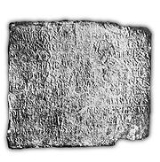
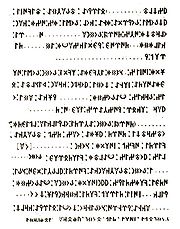
Orkhon script

Encyclopedia

Alphabet
An alphabet is a standard set of letters—basic written symbols or graphemes—each of which represents a phoneme in a spoken language, either as it exists now or as it was in the past. There are other systems, such as logographies, in which each character represents a word, morpheme, or semantic...
used by the Göktürk and other early Turkic Khanates from at least the 7th century to record the Old Turkic language
Old Turkic language
Old Turkic is the earliest attested form of Turkic, found in Göktürk and Uyghur inscriptions dating from about the 7th century to the 13th century....
. It was later used by the Uyghur Empire
Uyghur Empire
The Uyghur Khaganate, or, Uyghur Empire or Uighur Khaganate or Toquz Oghuz Country was a Turkic empire that existed for about a century between the mid 8th and 9th centuries...
. Additionally, a Yenisei variant is known from 9th-century Kyrgyz
Yenisei Kirghiz
The Yenisei Kirghiz, also known as the Khyagas or Khakas, were an ancient people that dwelled along the upper Yenisei River in the southern portion of the Minusinsk Depression from the 3rd century BCE to the 13th century CE...
inscriptions, and it has likely cousins in the Talas Valley of Turkestan
Turkestan
Turkestan, spelled also as Turkistan, literally means "Land of the Turks".The term Turkestan is of Persian origin and has never been in use to denote a single nation. It was first used by Persian geographers to describe the place of Turkish peoples...
and the Old Hungarian script
Old Hungarian script
The Old Hungarian script is an alphabetic writing system used by the Hungarians before the Middle Ages...
of the 10th century. The alphabet was usually written from right to left.
The script is named after the Orkhon Valley
Orkhon Valley
Orkhon Valley Cultural Landscape sprawls along the banks of the Orkhon River in Central Mongolia, some 360 km west from the capital Ulaanbaatar. It was inscribed by UNESCO in the World Heritage List as representing evolution of nomadic pastoral traditions spanning more than two millennia...
in Mongolia
Mongolia
Mongolia is a landlocked country in East and Central Asia. It is bordered by Russia to the north and China to the south, east and west. Although Mongolia does not share a border with Kazakhstan, its western-most point is only from Kazakhstan's eastern tip. Ulan Bator, the capital and largest...
, where late 7th century inscriptions were discovered in an 1889 expedition by Nikolay Yadrintsev. These Orkhon inscriptions were published by Vasily Radlov
Vasily Radlov
Vasily Vasilievich Radlov or Friedrich Wilhelm Radloff was a German-born Russian founder of Turkology, a scientific study of Turkic peoples....
and deciphered by the Danish
Denmark
Denmark is a Scandinavian country in Northern Europe. The countries of Denmark and Greenland, as well as the Faroe Islands, constitute the Kingdom of Denmark . It is the southernmost of the Nordic countries, southwest of Sweden and south of Norway, and bordered to the south by Germany. Denmark...
philologist Vilhelm Thomsen
Vilhelm Thomsen
Vilhelm Ludwig Peter Thomsen was a Danish linguist. In 1893, he deciphered the Turkish Orkhon inscriptions in advance of his rival, Wilhelm Radloff...
in 1893.
Examples of the Orhon-Yenisei alphabet are depicted on the reverse
Obverse and reverse
Obverse and its opposite, reverse, refer to the two flat faces of coins and some other two-sided objects, including paper money, flags , seals, medals, drawings, old master prints and other works of art, and printed fabrics. In this usage, obverse means the front face of the object and reverse...
of the Azerbaijani 5 manat
Azerbaijani manat
The Manat is the currency of Azerbaijan. It is subdivided into 100 qəpik. The word manat is borrowed from "moneta" which is pronounced as "maneta"...
banknote issued since 2006.
Origins
Mainstream opinion derives the Orkhon script from variants of the Aramaic alphabetAramaic alphabet
The Aramaic alphabet is adapted from the Phoenician alphabet and became distinctive from it by the 8th century BC. The letters all represent consonants, some of which are matres lectionis, which also indicate long vowels....
, in particular via the Pahlavi and Sogdian alphabet
Sogdian alphabet
The Sogdian alphabet was originally used for the Sogdian language, a language in the Iranian family used by the people of Sogdiana. The alphabet is derived from Syriac, the descendant script of the Aramaic alphabet. The Sogdian alphabet is one of three scripts used to write the Sogdian language,...
s, as suggested by V.Thomsen
Vilhelm Thomsen
Vilhelm Ludwig Peter Thomsen was a Danish linguist. In 1893, he deciphered the Turkish Orkhon inscriptions in advance of his rival, Wilhelm Radloff...
, or possibly via Karosthi (cf., Issyk inscription).
Alternative possibilities include derivation from tamgas, suggested by W. Thomsen in 1893, from the Chinese script. Turkish inscriptions dated earlier than the Orkhon inscriptions used about 150 symbols, which may suggest tamgas at first imitating the Chinese script and then gradually refined into an alphabet.
The Danish hypothesis connects the script to the reports of Chinese account, from a 2nd century BC Chinese Yan renegade and dignitary named Zhonghang Yue who
- "taught the Shanyu (rulers of the XiongnuXiongnuThe Xiongnu were ancient nomadic-based people that formed a state or confederation north of the agriculture-based empire of the Han Dynasty. Most of the information on the Xiongnu comes from Chinese sources...
) to write official letters to the Chinese court on a wooden tablet 31 cm long, and to use a seal and large-sized folder".
The same sources tell that when the Xiongnu noted down something or transmitted a message, they made cuts on a piece of wood (ko-mu), and they also mention a "Hu script". At Noin-Ula and other Hun burial sites in Mongolia and region north of Lake Baikal, the artifacts displayed over twenty carved characters. Most of these characters are either identical or very similar to the letters of the Turkic Orkhon script.
The Old Turkic script contains some symbols of the Turkic ideograms, which is part of the Turkic cultural heritage.
Corpus
The inscription corpus consists of two monuments which were erected in the Orkhon ValleyOrkhon Valley
Orkhon Valley Cultural Landscape sprawls along the banks of the Orkhon River in Central Mongolia, some 360 km west from the capital Ulaanbaatar. It was inscribed by UNESCO in the World Heritage List as representing evolution of nomadic pastoral traditions spanning more than two millennia...
between 732 and 735 in honour of the two Kokturk prince Kul Tigin
Kul Tigin
Kul Tigin Kul Tigin Kul Tigin (Old Turkic:, Kultegin, (闕特勒/阙特勤, Pinyin: quètèqín, Wade-Giles: chüeh-t'e-ch'in, ? - 575 AD) was a general of the Second Turkic Kaganate. He was a second son of Ilterish Shad and the younger brother of Bilge Kagan....
and his brother the emperor Bilge Kağan, as well as inscriptions on slabs scattered in the wider area.
The Orkhon monuments are one of the oldest known examples of Turkic
Turkic languages
The Turkic languages constitute a language family of at least thirty five languages, spoken by Turkic peoples across a vast area from Eastern Europe and the Mediterranean to Siberia and Western China, and are considered to be part of the proposed Altaic language family.Turkic languages are spoken...
writings; they are inscribed on obelisk
Obelisk
An obelisk is a tall, four-sided, narrow tapering monument which ends in a pyramid-like shape at the top, and is said to resemble a petrified ray of the sun-disk. A pair of obelisks usually stood in front of a pylon...
s and have been dated to 720 (for the obelisk relating to Tonyukuk
Tonyukuk
Tonyukuk Tonyukuk Tonyukuk (Old Turkic: , Bilge Tuňuquq, died c. 724 AD, (暾欲穀/暾欲谷, Pinyin: tūnyùgǔ, personal name: Ashide Yuanzhen 阿史德元珍, āshǐdé yuánzhēn, a-shih-te yüan-chen) was the yabgu and commander-in-chief of four Göktürk khagans, the best known of whom is Bilge Khan. He played a major role...
), to 732 (for that relating to Kültigin
Kul Tigin
Kul Tigin Kul Tigin Kul Tigin (Old Turkic:, Kultegin, (闕特勒/阙特勤, Pinyin: quètèqín, Wade-Giles: chüeh-t'e-ch'in, ? - 575 AD) was a general of the Second Turkic Kaganate. He was a second son of Ilterish Shad and the younger brother of Bilge Kagan....
), and to 735 (for that relating to Bilge Kağan ( In Turkish Meaning : Scholar Khan)). They are carved in a script used also for inscriptions found in Mongolia
Mongolia
Mongolia is a landlocked country in East and Central Asia. It is bordered by Russia to the north and China to the south, east and west. Although Mongolia does not share a border with Kazakhstan, its western-most point is only from Kazakhstan's eastern tip. Ulan Bator, the capital and largest...
, Siberia
Siberia
Siberia is an extensive region constituting almost all of Northern Asia. Comprising the central and eastern portion of the Russian Federation, it was part of the Soviet Union from its beginning, as its predecessor states, the Tsardom of Russia and the Russian Empire, conquered it during the 16th...
, and Xinjiang
Xinjiang
Xinjiang is an autonomous region of the People's Republic of China. It is the largest Chinese administrative division and spans over 1.6 million km2...
and called by Thomsen "Turkish runes". They relate in epic language the legendary origins of the Turks, the golden age of their history, their subjugation by the Chinese
China
Chinese civilization may refer to:* China for more general discussion of the country.* Chinese culture* Greater China, the transnational community of ethnic Chinese.* History of China* Sinosphere, the area historically affected by Chinese culture...
, and their liberation by Bilge. The polished style of the writings suggests considerable earlier development of the Turkish language.
Table of characters
| Using | Symbols | Transliteration and transcription | ||||||
|---|---|---|---|---|---|---|---|---|
| vowels |  |
A | /a/, /e/ | |||||
 |
I | /ɯ/, /i/, /j/ | ||||||
 |
O | /o/, /ø/ | ||||||
 |
U | /u/, /y/, /w/ | ||||||
| consonants | harmonized | with: (¹) — back, (²) — front vowels |
 |
 |
B¹ | /b/ | B² | /b/ |
 |
 |
D¹ | /d/ | D² | /d/ | |||
 |
 |
G¹ | /ɡ/ | G² | /ɡ/ | |||
 |
 |
L¹ | /l/ | L² | /l/ | |||
 |
 |
N¹ | /n/ | N² | /n/ | |||
 |
 |
R¹ | /r/ | R² | /r/ | |||
 |
 |
S¹ | /s/ | S² | /s/ | |||
 |
 |
T¹ | /t/ | T² | /t/ | |||
 |
 |
Y¹ | /j/ | Y² | /j/ | |||
| only (¹) — Q only (²) — K |
 |
 |
Q | /q/ | K | /k/ | ||
| with all vowels |
 |
-CH | /tʃ/ | |||||
 |
-M | /m/ | ||||||
 |
-P | /p/ | ||||||
 |
-SH | /ʃ/ | ||||||
 |
-Z | /z/ | ||||||
 |
-NG | /ŋ/ | ||||||
| clusters | + vowel |  |
ICH, CHI, CH | /itʃ/, /tʃi/, /tʃ/ | ||||
 |
IQ, QI, Q | /ɯq/, /qɯ/, /q/ | ||||||
 |
 |
OQ, UQ, QO, QU, Q |
/oq/, /uq/, /qo/, /qu/, /q/ |
ÖK, ÜK, KÖ, KÜ, K |
/øk/, /yk/, /kø/, /ky/, /k/ |
|||
| + consonant |  |
-NCH | /ntʃ/ | |||||
 |
-NY | /ɲ/ | ||||||
 |
-LT | /lt/, /ld/ | ||||||
 |
-NT | /nt/, /nd/ | ||||||
| word-divide symbol |  |
none | ||||||
| (-) — word endings only | ||||||||
A reading example:
— inscription (Right To Left)- T²NGR²I — transliteration
- /teŋri/ — transcription
- teñri / tanrı — record with modern Turkic alphabet
- the skygod or the eternal blue sky indicating the highest god — ancient meaning
- God — modern meaning
Variants

Xinjiang
Xinjiang is an autonomous region of the People's Republic of China. It is the largest Chinese administrative division and spans over 1.6 million km2...
in the east to Balkans in the west. The preserved inscriptions were dated to between 7th and 13th centuries AD.
These alphabets are divided into four groups by Kyzlasov (1994)
- AsiaticLanguages of AsiaThere is a wide variety of languages spoken throughout Asia, comprising a number of families and some unrelated isolates. Many languages have a long tradition of writing.-Central and North Asian languages:*Turkic**Azeri**Kazak**Kyrgyz**Tatar**Turkish...
group (includes Orkhon proper) - EurasiaEurasiaEurasia is a continent or supercontinent comprising the traditional continents of Europe and Asia ; covering about 52,990,000 km2 or about 10.6% of the Earth's surface located primarily in the eastern and northern hemispheres...
tic group - Southern EuropeSouthern EuropeThe term Southern Europe, at its most general definition, is used to mean "all countries in the south of Europe". However, the concept, at different times, has had different meanings, providing additional political, linguistic and cultural context to the definition in addition to the typical...
group
The Asiatic
Languages of Asia
There is a wide variety of languages spoken throughout Asia, comprising a number of families and some unrelated isolates. Many languages have a long tradition of writing.-Central and North Asian languages:*Turkic**Azeri**Kazak**Kyrgyz**Tatar**Turkish...
group is further divided into three related alphabets:
- Orkhon alphabet, Göktürk, 7-10th centuries AD
- Yenisei alphabet,
- Talas alphabet, a derivative of the Yenisei alphabet, KanglyKangjuKangju was the name of an ancient people and kingdom in Central Asia. It was a nomadic federation of unknown ethnic and linguistic origin which became for a couple of centuries the second greatest power in Transoxiana after the Yuezhi....
or Karluks 8-10th centuries AD. Talas inscriptions include Terek-Say rock inscriptions found in the 1897, Koysary text, Bakaiyr gorge inscriptions, Kalbak-Tash 6 and 12 inscriptions, Talas alphabet has 29 identified letters.
- Talas alphabet, a derivative of the Yenisei alphabet, Kangly
The Eurasia
Eurasia
Eurasia is a continent or supercontinent comprising the traditional continents of Europe and Asia ; covering about 52,990,000 km2 or about 10.6% of the Earth's surface located primarily in the eastern and northern hemispheres...
tic group is further divided into five related alphabets:
- Achiktash, used in SogdianaSogdianaSogdiana or Sogdia was the ancient civilization of an Iranian people and a province of the Achaemenid Empire, eighteenth in the list on the Behistun Inscription of Darius the Great . Sogdiana is "listed" as the second of the "good lands and countries" that Ahura Mazda created...
7-10th centuries AD - South-Yenisei, used by the Göktürk 8-10th centuries AD
- two especially similar alphabets: the DonDon River (Russia)The Don River is one of the major rivers of Russia. It rises in the town of Novomoskovsk 60 kilometres southeast from Tula, southeast of Moscow, and flows for a distance of about 1,950 kilometres to the Sea of Azov....
alphabet, used by the Khazar Khaganate, 8-10th centuries AD; and the Kuban alphabet, used by the BulgarsBulgarsThe Bulgars were a semi-nomadic who flourished in the Pontic Steppe and the Volga basin in the 7th century.The Bulgars emerge after the collapse of the Hunnic Empire in the 5th century....
, 8th-13th centuries AD. Inscriptions in both alphabets are found in the Pontic steppe and on the banks of the KamaKamaKāma is often translated from Sanskrit as sexual desire, sexual pleasure, sensual gratification, sexual fulfillment, or eros54654564+more broadly mean desire, wish, passion, longing, pleasure of the senses, the aesthetic enjoyment of life, affection, or love, without sexual connotations.-Kama in...
river - TiszaTiszaThe Tisza or Tisa is one of the main rivers of Central Europe. It rises in Ukraine, and is formed near Rakhiv by the junction of headwaters White Tisa, whose source is in the Chornohora mountains and Black Tisa, which springs in the Gorgany range...
, used by the Badjanaks (Pechenegs) 8-10th centuries AD
A number of alphabets are incompletely collected due to the limitations of the extant inscriptions. Evidence in the study of the Turkic scripts includes Turkic-Chinese bilingual inscriptions, contemporaneous Turkic inscriptions in the Greek alphabet, literal translations into Slavic language, and paper fragments with Türkic cursive writing from religion, Manichaeism, Buddhist, and legal subjects of the 8-10th centuries AD found in Xinjiang.
Unicode
Old Turkic was added to the UnicodeUnicode
Unicode is a computing industry standard for the consistent encoding, representation and handling of text expressed in most of the world's writing systems...
Standard in October, 2009 with the release of version 5.2.
The Unicode block for Old Turkic is U+10C00–U+10C4F and it includes national and historical varieties:
See also
- Banpo symbolsBanpo SymbolsThe Banpo Symbols is a name sometimes given to the 27 markings on prehistoric artifacts found in Banpo in Shaanxi, related to the Yangshao culture...
- GöktürksGöktürksThe Göktürks or Kök Türks, were a nomadic confederation of peoples in medieval Inner Asia. Known in Chinese sources as 突厥 , the Göktürks under the leadership of Bumin Qaghan The Göktürks or Kök Türks, (Old Turkic: Türük or Kök Türük or Türük; Celestial Turks) were a nomadic confederation of...
- Khazar languageKhazar languageKhazar was the language spoken by the Khazars, a semi-nomadic Turkic people from Central Asia. It is also referred to as Khazarian, Khazaric, or Khazari. The language is extinct and written records are almost non-existent....
- Old Hungarian scriptOld Hungarian scriptThe Old Hungarian script is an alphabetic writing system used by the Hungarians before the Middle Ages...
- Khöshöö Tsaidam Monuments
External links
- Türk bitig - Old Turkic inscriptions, Texts, Translations
- Orkhon Alphabet page from Omniglot
- Gokturkish Keyboard by Isa SARI
- glyph table (kyrgyz.ru)
- list of inscriptions (tonyukuk.net)
- Bilgitay Orhun Writer (An online converter for Latin alphabet based texts to Orhun Abece.)
- Michael EversonMichael EversonMichael Everson is a linguist, script encoder, typesetter, and font designer. His central area of expertise is with writing systems of the world, specifically in the representation of these systems in formats for computer and digital media...
's Proposal for encoding the Old Turkic script in Unicode - Хөх Түрүгийн Бичиг (in Mongolian)