
Home      Discussion      Topics      Dictionary      Almanac
Signup       Login
Marquis de Sade

Marquis de Sade

Overview
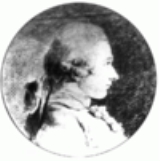
Donatien Alphonse François, Marquis de Sade (2 June 1740 – 2 December 1814) (maʁki də sad Audio) was a French aristocrat
Aristocracy (class)
The aristocracy are people considered to be in the highest social class in a society which has or once had a political system of Aristocracy. Aristocrats possess hereditary titles granted by a monarch, which once granted them feudal or legal privileges, or deriving, as in Ancient Greece and India,...

, revolutionary
Revolutionary
A revolutionary is a person who either actively participates in, or advocates revolution. Also, when used as an adjective, the term revolutionary refers to something that has a major, sudden impact on society or on some aspect of human endeavor.-Definition:...

 politician, philosopher, and writer famous for his libertine
Libertine
A libertine is one devoid of most moral restraints, which are seen as unnecessary or undesirable, especially one who ignores or even spurns accepted morals and forms of behavior sanctified by the larger society. Libertines, also known as rakes, placed value on physical pleasures, meaning those...

 sexuality
Human sexuality
Human sexuality is the awareness of gender differences, and the capacity to have erotic experiences and responses. Human sexuality can also be described as the way someone is sexually attracted to another person whether it is to opposite sexes , to the same sex , to either sexes , or not being...

 and lifestyle. His works include novels, short stories, plays, dialogues, and political tracts; in his lifetime some were published under his own name, while others appeared anonymously and Sade denied being their author. He is best known for his erotic
Erotic literature
Erotic literature comprises fictional and factual stories and accounts of human sexual relationships which have the power to or are intended to arouse the reader sexually. Such erotica takes the form of novels, short stories, poetry, true-life memoirs, and sex manuals...

 works, which combined philosophical discourse with pornography, depicting sexual fantasies with an emphasis on violence
Violence
Violence is the use of physical force to apply a state to others contrary to their wishes. violence, while often a stand-alone issue, is often the culmination of other kinds of conflict, e.g...

, criminality, and blasphemy
Blasphemy
Blasphemy is irreverence towards religious or holy persons or things. Some countries have laws to punish blasphemy, while others have laws to give recourse to those who are offended by blasphemy...

 against the Catholic Church. He was a proponent of extreme freedom, unrestrained by morality
Morality
Morality is the differentiation among intentions, decisions, and actions between those that are good and bad . A moral code is a system of morality and a moral is any one practice or teaching within a moral code...

, religion, or law.
Discussion
Ask a question about 'Marquis de Sade'
Start a new discussion about 'Marquis de Sade'
Answer questions from other users
Full Discussion Forum
 
Quotations

Le duc imita bientôt avec Bande-au-ciel la petite infamie de son ancien ami et il paria, quoique le vit fût énorme, d'avaler trois bouteilles de vin de sens froid pendant qu'on l'enculerait.

Translation: The Duc soon imitated his old friend's little infamy and wagered that, enormous as Invictus' prick might be, he could calmly down three bottles of wine while lying embuggered upon it.

Le duc, le vit en l'air, serrait Augustine de bien près; il braillait, il jurait, il déraisonnait, et la pauvre petite, toute tremblante, se reculait toujours, comme la colombe devant l'oiseau de proie qui la guette et qui est près d'en faire sa capture.

Translation: The Duc, pike aloft, closed in upon Augustine; he brayed, he swore, he waxed unreasonable, and the poor little thing, all atremble, retreated like a dove before the bird of prey ready to pounce upon it.

...there is a sum of evil equal to the sum of good, the continuing equilibrium of the world requires that there be as many good people as wicked people...

Why do you complain of your fate when you could so easily change it?

Nothing we can do outrages Nature directly. Our acts of destruction give her new vigour and feed her energy, but none of our wreckings can weaken her power.

I think that if there were a God, there would be less evil on this earth. I believe that if evil exists here below, then either it was willed by God or it was beyond His powers to prevent it. Now I cannot bring myself to fear a God who is either spiteful or weak. I defy Him without fear and care not a fig for his thunderbolts.

Encyclopedia
Donatien Alphonse François, Marquis de Sade (2 June 1740 – 2 December 1814) (maʁki də sad Audio) was a French aristocrat
Aristocracy (class)
The aristocracy are people considered to be in the highest social class in a society which has or once had a political system of Aristocracy. Aristocrats possess hereditary titles granted by a monarch, which once granted them feudal or legal privileges, or deriving, as in Ancient Greece and India,...

, revolutionary
Revolutionary
A revolutionary is a person who either actively participates in, or advocates revolution. Also, when used as an adjective, the term revolutionary refers to something that has a major, sudden impact on society or on some aspect of human endeavor.-Definition:...

 politician, philosopher, and writer famous for his libertine
Libertine
A libertine is one devoid of most moral restraints, which are seen as unnecessary or undesirable, especially one who ignores or even spurns accepted morals and forms of behavior sanctified by the larger society. Libertines, also known as rakes, placed value on physical pleasures, meaning those...

 sexuality
Human sexuality
Human sexuality is the awareness of gender differences, and the capacity to have erotic experiences and responses. Human sexuality can also be described as the way someone is sexually attracted to another person whether it is to opposite sexes , to the same sex , to either sexes , or not being...

 and lifestyle. His works include novels, short stories, plays, dialogues, and political tracts; in his lifetime some were published under his own name, while others appeared anonymously and Sade denied being their author. He is best known for his erotic
Erotic literature
Erotic literature comprises fictional and factual stories and accounts of human sexual relationships which have the power to or are intended to arouse the reader sexually. Such erotica takes the form of novels, short stories, poetry, true-life memoirs, and sex manuals...

 works, which combined philosophical discourse with pornography, depicting sexual fantasies with an emphasis on violence
Violence
Violence is the use of physical force to apply a state to others contrary to their wishes. violence, while often a stand-alone issue, is often the culmination of other kinds of conflict, e.g...

, criminality, and blasphemy
Blasphemy
Blasphemy is irreverence towards religious or holy persons or things. Some countries have laws to punish blasphemy, while others have laws to give recourse to those who are offended by blasphemy...

 against the Catholic Church. He was a proponent of extreme freedom, unrestrained by morality
Morality
Morality is the differentiation among intentions, decisions, and actions between those that are good and bad . A moral code is a system of morality and a moral is any one practice or teaching within a moral code...

, religion, or law.

Sade was incarcerated in various prisons and in an insane asylum
Psychiatric hospital
Psychiatric hospitals, also known as mental hospitals, are hospitals specializing in the treatment of serious mental disorders. Psychiatric hospitals vary widely in their size and grading. Some hospitals may specialise only in short-term or outpatient therapy for low-risk patients...

 for about 32 years of his life; 11 years in Paris (10 of which were spent in the Bastille
Bastille
The Bastille was a fortress in Paris, known formally as the Bastille Saint-Antoine. It played an important role in the internal conflicts of France and for most of its history was used as a state prison by the kings of France. The Bastille was built in response to the English threat to the city of...

) a month in the Conciergerie
Conciergerie
La Conciergerie is a former royal palace and prison in Paris, France, located on the west of the Île de la Cité, near the Cathedral of Notre-Dame. It is part of the larger complex known as the Palais de Justice, which is still used for judicial purposes...

, two years in a fortress, a year in Madelonnettes, three years in Bicêtre, a year in Sainte-Pélagie
Sainte-Pélagie
Sainte-Pélagie was a prison in Paris from 1790 to 1895. It saw many famous prisoners during the French revolution, with Madame Roland and Grace Dalrymple Elliott being the only female prisoners. After the revolution, the Marquis de Sade was imprisoned here, as was the young mathematician Évariste...

, and 13 years in the Charenton asylum
Charenton (asylum)
Charenton was a lunatic asylum, founded in 1645 by the Frères de la Charité in Charenton-Saint-Maurice, now Saint-Maurice, Val-de-Marne, France....

. During the French Revolution
French Revolution
The French Revolution , sometimes distinguished as the 'Great French Revolution' , was a period of radical social and political upheaval in France and Europe. The absolute monarchy that had ruled France for centuries collapsed in three years...

 he was an elected delegate to the National Convention
National Convention
During the French Revolution, the National Convention or Convention, in France, comprised the constitutional and legislative assembly which sat from 20 September 1792 to 26 October 1795 . It held executive power in France during the first years of the French First Republic...

. Many of his works were written in prison.

Early life and education


The Marquis de Sade was born in the Condé palace, Paris, to Comte
Comte
Comte is a title of Catalan, Occitan and French nobility. In the English language, the title is equivalent to count, a rank in several European nobilities. The corresponding rank in England is earl...

Jean-Baptiste François Joseph de Sade and Marie-Eléonore de Maillé de Carman, cousin and Lady-in-waiting
Lady-in-waiting
A lady-in-waiting is a female personal assistant at a royal court, attending on a queen, a princess, or a high-ranking noblewoman. Historically, in Europe a lady-in-waiting was often a noblewoman from a family highly thought of in good society, but was of lower rank than the woman on whom she...

 to the Princess of Condé
Landgravine Caroline of Hesse-Rotenburg
Princess Caroline of Hesse-Rheinfels-Rotenburg was the consort of Louis Henri, Duke of Bourbon.-Biography:Born at Rotenburg an der Fulda in Hesse, Germany, she was the daughter of Ernest Leopold, Landgrave of Hesse-Rotenburg, head of the Roman Catholic branch of the House of Hesse, by his wife...

. He was educated by an uncle, the Abbé
Abbot
The word abbot, meaning father, is a title given to the head of a monastery in various traditions, including Christianity. The office may also be given as an honorary title to a clergyman who is not actually the head of a monastery...

 de Sade. Later, he attended Jesuit lycée, then pursued a military career, becoming Colonel of a Dragoon regiment, and fighting in the Seven Years' War
Seven Years' War
The Seven Years' War was a global military war between 1756 and 1763, involving most of the great powers of the time and affecting Europe, North America, Central America, the West African coast, India, and the Philippines...

. In 1763, on returning from war, he courted a rich magistrate's daughter, but her father rejected his suit, and, instead, arranged a marriage between him and his elder daughter, Renée-Pélagie de Montreuil; that marriage produced two sons and a daughter. In 1766, he had a private theatre built in his castle at Lacoste
Lacoste, Vaucluse
Lacoste is a commune in the Vaucluse department in the Provence-Alpes-Côte d'Azur region in southeastern France.Its population doubles in size during the height of the summer tourist season.-Geography:...

 in Provence. In January 1767, his father died.

Title and heirs


The Sade men alternated using the marquis
Marquis
Marquis is a French and Scottish title of nobility. The English equivalent is Marquess, while in German, it is Markgraf.It may also refer to:Persons:...

and comte
Comte
Comte is a title of Catalan, Occitan and French nobility. In the English language, the title is equivalent to count, a rank in several European nobilities. The corresponding rank in England is earl...

(count) titles. His grandfather, Gaspard François de Sade, was the first to use marquis; occasionally, he was the Marquis de Sade, but is documentarily identified as the Marquis de Mazan
Mazan
Mazan is a commune in the Vaucluse department in the Provence-Alpes-Côte d'Azur region in southeastern France.Mazan is one of the chateaus of the de Sade family. Today this chateau is a luxury hotel.[1]-References:**...

. The Sade family were Noblesse d'épée, claiming at the time the oldest, Frank-descended
Franks
The Franks were a confederation of Germanic tribes first attested in the third century AD as living north and east of the Lower Rhine River. From the third to fifth centuries some Franks raided Roman territory while other Franks joined the Roman troops in Gaul. Only the Salian Franks formed a...

 nobility, so, assuming a noble title without a King's grant, was customarily de rigueur. Alternating title usage indicates that titular hierarchy (below duc et pair) was notional; theoretically, the marquis title was granted to noblemen owning several countships, but its use by men of dubious lineage caused its disrepute. At Court, precedence was by seniority and royal favour, not title. There is father-and-son correspondence, wherein father addresses son as marquis.

For many years Sade's descendants regarded his life and work as a scandal to be suppressed. This did not change until the mid-twentieth century, when the Comte Xavier de Sade reclaimed the marquis title, long fallen into disuse, on his visiting cards, and took an interest in his ancestor's writings. At that time, the "Divin Marquis" was so taboo in the family that Xavier de Sade only learned of him in the late 1940s when approached by a journalist. He subsequently discovered a store of Sade's papers in the family château at Condé-en-Brie, and worked with scholars for decades to enable their publication. His youngest son, the Marquis Thibault de Sade, has continued such collaboration. The family have also claimed copyright of the name. The Château de Condé
Château de Condé
The Château de Condé is a private estate in Condé-en-Brie, Aisne, France, set in its park with three-hundred-year-old trees, on the Champagne route and 100 km from Paris....

 was sold by the family in 1983. As well as the manuscripts they retain, others are held in universities and libraries. Many, however, were lost in the eighteenth and nineteenth centuries. A substantial amount were destroyed after Sade's death at the instigation of his son, Donatien-Claude-Armand.

Scandals and imprisonment


Sade lived a scandalous libertine
Libertine
A libertine is one devoid of most moral restraints, which are seen as unnecessary or undesirable, especially one who ignores or even spurns accepted morals and forms of behavior sanctified by the larger society. Libertines, also known as rakes, placed value on physical pleasures, meaning those...

 existence and repeatedly procured young prostitutes as well as employees of both sexes in his castle in Lacoste
Lacoste, Vaucluse
Lacoste is a commune in the Vaucluse department in the Provence-Alpes-Côte d'Azur region in southeastern France.Its population doubles in size during the height of the summer tourist season.-Geography:...

. He was also accused of blasphemy
Blasphemy
Blasphemy is irreverence towards religious or holy persons or things. Some countries have laws to punish blasphemy, while others have laws to give recourse to those who are offended by blasphemy...

, a serious offense at that time. His behavior included an affair with his wife's sister, Anne-Prospère, who had come to live at the castle.

Beginning in 1763, Sade lived mainly in or near Paris. Several prostitutes there complained about mistreatment by him and he was put under surveillance by the police who made detailed reports of his escapades. After several short imprisonments, which included a brief incarceration in the Château de Saumur
Château de Saumur
Located in the French town of Saumur, in the Maine-et-Loire département, the Château de Saumur was originally constructed in the 10th century by Theobald I, Count of Blois, as a fortified stronghold against Norman predations. It overlooks the confluence of the Loire and the Thouet. In 1026 it came...

 (then a prison), he was exiled to his chateau at Lacoste in 1768.

The first major scandal occurred on Easter Sunday in 1768, in which Sade procured the sexual services of a woman, Rose Keller; whether she was a prostitute or not is widely disputed. He was accused of taking her to his chateau at Arcueil, imprisoning her there and sexually and physically abusing her. She escaped by climbing out of a second-floor window and running away. At this time, la Présidente, Sade's mother-in-law, obtained a lettre de cachet
Lettre de cachet
Lettres de cachet were letters signed by the king of France, countersigned by one of his ministers, and closed with the royal seal, or cachet...

from the king, excluding Sade from the jurisdiction of the courts. The lettre de cachet (a royal order of arrest and imprisonment, without stated cause or access to the courts) would later prove disastrous for the marquis.

An episode in Marseille
Marseille
Marseille , known in antiquity as Massalia , is the second largest city in France, after Paris, with a population of 852,395 within its administrative limits on a land area of . The urban area of Marseille extends beyond the city limits with a population of over 1,420,000 on an area of...

, in 1772, involved the non-lethal poisoning of prostitutes with the supposed aphrodisiac
Aphrodisiac
An aphrodisiac is a substance that increases sexual desire. The name comes from Aphrodite, the Greek goddess of sexuality and love. Throughout history, many foods, drinks, and behaviors have had a reputation for making sex more attainable and/or pleasurable...

 Spanish fly
Cantharidin
Cantharidin, a type of terpenoid, is a poisonous chemical compound secreted by many species of blister beetle, and most notably by the Spanish fly, Lytta vesicatoria. The false blister beetles and cardinal beetles also have cantharidin.-History:...

 and sodomy
Sodomy
Sodomy is an anal or other copulation-like act, especially between male persons or between a man and animal, and one who practices sodomy is a "sodomite"...

 with his manservant Latour. That year the two men were sentenced to death in absentia
In absentia
In absentia is Latin for "in the absence". In legal use, it usually means a trial at which the defendant is not physically present. The phrase is not ordinarily a mere observation, but suggests recognition of violation to a defendant's right to be present in court proceedings in a criminal trial.In...

 for sodomy and said poisoning. They fled to Italy, and Sade took his wife's sister with him.

Sade and Latour were caught and imprisoned at the Fortress of Miolans
Fortress of Miolans
The Fortress of Miolans is a former fortress prison located in a remote area of Savoy between Italy and France. The site, which has been occupied since the fourth century AD, strategically controlled the route across the junction of the Isere and Arc rivers. The fortress was converted into a...

 in late 1772, but escaped four months later.

Sade later hid at Lacoste where he rejoined his wife who became an accomplice in his subsequent endeavors. He kept a group of young employees at Lacoste, most of whom complained about sexual mistreatment and quickly left his service. Sade was forced to flee to Italy once again. It was during this time he wrote Voyage d'Italie, which, along with his earlier travel writings, has never been translated into English. In 1776 he returned to Lacoste, again hired several servant girls, most of whom fled. In 1777, the father of one of those employees came to Lacoste, to claim his daughter, and attempted to shoot the Marquis at point-blank range but the gun misfired.

Later that year, Sade was tricked into visiting his supposedly ill mother, who in fact had recently died, in Paris. He was arrested there and imprisoned in the Château de Vincennes
Château de Vincennes
The Château de Vincennes is a massive 14th and 17th century French royal castle in the town of Vincennes, to the east of Paris, now a suburb of the metropolis.-History:...

. He successfully appealed his death sentence in 1778 but remained imprisoned under the lettre de cachet. He escaped but was soon recaptured. He resumed writing and met fellow prisoner Comte de Mirabeau who also wrote erotic works. Despite this common interest, the two came to dislike each other immensely.

In 1784, Vincennes was closed and Sade was transferred to the Bastille
Bastille
The Bastille was a fortress in Paris, known formally as the Bastille Saint-Antoine. It played an important role in the internal conflicts of France and for most of its history was used as a state prison by the kings of France. The Bastille was built in response to the English threat to the city of...

. On 2 July 1789, he reportedly shouted out from his cell, to the crowd outside, "They are killing the prisoners here!" causing something of a riot. Two days later, he was transferred to the insane asylum at Charenton
Charenton (asylum)
Charenton was a lunatic asylum, founded in 1645 by the Frères de la Charité in Charenton-Saint-Maurice, now Saint-Maurice, Val-de-Marne, France....

 near Paris (the storming of the Bastille
Storming of the Bastille
The storming of the Bastille occurred in Paris on the morning of 14 July 1789. The medieval fortress and prison in Paris known as the Bastille represented royal authority in the centre of Paris. While the prison only contained seven inmates at the time of its storming, its fall was the flashpoint...

, a major event of the French Revolution
French Revolution
The French Revolution , sometimes distinguished as the 'Great French Revolution' , was a period of radical social and political upheaval in France and Europe. The absolute monarchy that had ruled France for centuries collapsed in three years...

, occurred on 14 July).

He had been working on his magnum opus
Masterpiece
Masterpiece in modern usage refers to a creation that has been given much critical praise, especially one that is considered the greatest work of a person's career or to a work of outstanding creativity, skill or workmanship....

 Les 120 Journées de Sodome (The 120 Days of Sodom). To his despair, he believed that the manuscript was lost during his transfer; but he continued to write.

He was released from Charenton in 1790, after the new Constituent Assembly
National Constituent Assembly
The National Constituent Assembly was formed from the National Assembly on 9 July 1789, during the first stages of the French Revolution. It dissolved on 30 September 1791 and was succeeded by the Legislative Assembly.-Background:...

 abolished the instrument of lettre de cachet. His wife obtained a divorce soon after.

Return to freedom, delegate to the National Convention and imprisonment


During Sade's time of freedom, beginning in 1790, he published several of his books anonymously. He met Marie-Constance Quesnet, a former actress, and mother of a six-year-old son, who had been abandoned by her husband. Constance and Sade would stay together for the rest of his life.

He initially ingratiated himself with the new political situation after the revolution, supported the Republic, called himself "Citizen Sade" and managed to obtain several official positions despite his aristocratic background.

Due to the damage done to his estate in Lacoste which was sacked in 1789 by an angry mob, he moved to Paris. In 1790 he was elected to the National Convention
National Convention
During the French Revolution, the National Convention or Convention, in France, comprised the constitutional and legislative assembly which sat from 20 September 1792 to 26 October 1795 . It held executive power in France during the first years of the French First Republic...

 where he represented the far left. He was a member of the Piques section, a section notorious for its radical views. He wrote several political pamphlets, in which he called for the implementation of direct vote. However there is much to suggest that he suffered abuse from his fellow revolutionaries due to his aristocratic background. Matters were not helped by the desertion of his son, a second lieutenant and the aide-de-camp
Aide-de-camp
An aide-de-camp is a personal assistant, secretary, or adjutant to a person of high rank, usually a senior military officer or a head of state...

to an important colonel, the Marquis de Toulengeon
Marquis de Toulengeon
The Marquis de Toulengeon was an important officer of the French Republic during the French Revolution....

, in May 1792. De Sade was forced to disavow his son's desertion in order to save his neck. Later that year his name was entered – whether by error or willful malice – on the list of émigrés of the Bouches-du-Rhône
Bouches-du-Rhône
Bouches-du-Rhône is a department in the south of France named after the mouth of the Rhône River. It is the most populous department of the Provence-Alpes-Côte d'Azur region. Its INSEE and postal code is 13.-History of the department:...

 department.

Despite being appalled by the Reign of Terror
Reign of Terror
The Reign of Terror , also known simply as The Terror , was a period of violence that occurred after the onset of the French Revolution, incited by conflict between rival political factions, the Girondins and the Jacobins, and marked by mass executions of "enemies of...

 in 1793, he wrote an admiring eulogy
Eulogy
A eulogy is a speech or writing in praise of a person or thing, especially one recently deceased or retired. Eulogies may be given as part of funeral services. However, some denominations either discourage or do not permit eulogies at services to maintain respect for traditions...

 for Jean-Paul Marat
Jean-Paul Marat
Jean-Paul Marat , born in the Principality of Neuchâtel, was a physician, political theorist, and scientist best known for his career in France as a radical journalist and politician during the French Revolution...

. At this stage he was becoming publicly critical of Maximilien Robespierre
Maximilien Robespierre
Maximilien François Marie Isidore de Robespierre is one of the best-known and most influential figures of the French Revolution. He largely dominated the Committee of Public Safety and was instrumental in the period of the Revolution commonly known as the Reign of Terror, which ended with his...

 and on 5 December, he was removed from his posts. He was accused of "moderatism" and imprisoned for over a year. This experience presumably confirmed his life-long detestation of state tyranny and especially of the death penalty. He was released in 1794, after the overthrow and execution of Robespierre had effectively ended the Reign of Terror.

In 1796, now all but destitute, he had to sell his ruined castle in Lacoste.

Imprisonment for his writings and death


In 1801 Napoleon Bonaparte
Napoleon I of France
Napoleon Bonaparte was a French military and political leader during the latter stages of the French Revolution.As Napoleon I, he was Emperor of the French from 1804 to 1815...

 ordered the arrest of the anonymous author of Justine and Juliette. Sade was arrested at his publisher's office and imprisoned without trial; first in the Sainte-Pélagie
Sainte-Pélagie
Sainte-Pélagie was a prison in Paris from 1790 to 1895. It saw many famous prisoners during the French revolution, with Madame Roland and Grace Dalrymple Elliott being the only female prisoners. After the revolution, the Marquis de Sade was imprisoned here, as was the young mathematician Évariste...

 prison and, following allegations that he had tried to seduce young fellow prisoners there, in the harsh fortress of Bicêtre
Bicêtre Hospital
The Bicêtre Hospital is located in Le Kremlin-Bicêtre, which is a commune in the southern suburbs of Paris, France. It lies 4.5 km from the center of Paris. The Bicêtre Hospital was originally planned as a military hospital, with construction begun in 1634. With the help of Vincent de Paul, it was...

.

After intervention by his family, he was declared insane in 1803 and transferred once more to the asylum at Charenton
Charenton (asylum)
Charenton was a lunatic asylum, founded in 1645 by the Frères de la Charité in Charenton-Saint-Maurice, now Saint-Maurice, Val-de-Marne, France....

. His ex-wife and children had agreed to pay his pension there. Constance was allowed to live with him at Charenton. The benign director of the institution, Abbé de Coulmier
Abbé de Coulmier
François Simonet de Coulmier was a French Catholic priest and abbot, and the director of the Charenton insane asylum in France in the early 19th century...

, allowed and encouraged him to stage several of his plays, with the inmates as actors, to be viewed by the Parisian public. Coulmier's novel approaches to psychotherapy attracted much opposition. In 1809 new police orders put Sade into solitary confinement and deprived him of pens and paper, though Coulmier succeeded in ameliorating this harsh treatment. In 1813, the government ordered Coulmier to suspend all theatrical performances.

Sade began a sexual relationship with 13-year-old Madeleine Leclerc, daughter of an employee at Charenton. This affair lasted some 4 years, until Sade's death in 1814.

He had left instructions in his will
Living will
An advance health care directive, also known as living will, personal directive, advance directive, or advance decision, are instructions given by individuals specifying what actions should be taken for their health in the event that they are no longer able to make decisions due to illness or...

 forbidding that his body be opened upon any pretext whatsoever, and that it remain untouched for 48 hours in the chamber in which he died, and then placed in a coffin and buried on his property located in Malmaison near Épernon
Épernon
Épernon is a commune in the Eure-et-Loir department in the Centre region in northern France. It lies some 27 km northeast of Chartres, at the confluence of the Drouette and the Guesle.-History:...

. His skull was later removed from the grave for phrenological
Phrenology
Phrenology is a pseudoscience primarily focused on measurements of the human skull, based on the concept that the brain is the organ of the mind, and that certain brain areas have localized, specific functions or modules...

 examination. His son had all his remaining unpublished manuscripts burned, including the immense multi-volume work Les Journées de Florbelle.

Appraisal and criticism


Numerous writers and artists, especially those concerned with sexuality, have been both repelled and fascinated by Sade.

The contemporary rival pornographer Rétif de la Bretonne published an Anti-Justine
Anti-Justine
Anti-Justine is a French pornographic novel by Nicolas-Edme Rétif published in 1798. It was written to oppose the political philosophy of the Marquis de Sade as expressed in Justine....

in 1798.

Geoffrey Gorer
Geoffrey Gorer
Geoffrey Gorer, English anthropologist and author , noted for his application of psychoanalytic techniques to anthropology.He was educated at Charterhouse and at Jesus College, Cambridge. During the 1930s he wrote unpublished fiction and drama. His first book was The Revolutionary Ideas of the...

, an English anthropologist and author (1905–1985), wrote one of the earliest books on Sade entitled The Revolutionary Ideas of the Marquis de Sade in 1935. He pointed out that Sade was in complete opposition to contemporary philosophers for both his "complete and continual denial of the right to property," (particularly evident in his advocacy of a utopian socialist society in Aline and Valcour
Aline and Valcour
Aline et Valcour; ou, Le Roman philosophique is an epistolary novel by the Marquis de Sade. It contrasts a brutal African kingdom with a utopian socialist South Pacific island paradise known as Tamoé and led by the philosopher-king Zamé....

and Yet Another Effort, Frenchmen, If You Would Become Republicans), and for viewing the struggle in late 18th century French society as being not between "the Crown, the bourgeoisie, the aristocracy or the clergy, or sectional interests of any of these against one another," but rather all of these "more or less united against the proletariat." By holding these views he cut himself off entirely from the revolutionary thinkers of his time to join those of the mid-nineteenth century. Thus, Gorer argued, "he can with some justice be called the first reasoned socialist."

Simone de Beauvoir
Simone de Beauvoir
Simone-Ernestine-Lucie-Marie Bertrand de Beauvoir, often shortened to Simone de Beauvoir , was a French existentialist philosopher, public intellectual, and social theorist. She wrote novels, essays, biographies, an autobiography in several volumes, and monographs on philosophy, politics, and...

 (in her essay Must we burn Sade?, published in Les Temps modernes
Les Temps modernes
The first issue of Les Temps modernes , the most important cultural review of the period after World War II, appeared in October 1945. It was known as the review of Jean-Paul Sartre. It was named for a film by Charlie Chaplin...

, December 1951 and January 1952) and other writers have attempted to locate traces of a radical philosophy of freedom in Sade's writings, preceding modern existentialism
Existentialism
Existentialism is a term applied to a school of 19th- and 20th-century philosophers who, despite profound doctrinal differences, shared the belief that philosophical thinking begins with the human subject—not merely the thinking subject, but the acting, feeling, living human individual...

 by some 150 years. He has also been seen as a precursor of Sigmund Freud
Sigmund Freud
Sigmund Freud , born Sigismund Schlomo Freud , was an Austrian neurologist who founded the discipline of psychoanalysis...

's psychoanalysis
Psychoanalysis
Psychoanalysis is a psychological theory developed in the late 19th and early 20th centuries by Austrian neurologist Sigmund Freud. Psychoanalysis has expanded, been criticized and developed in different directions, mostly by some of Freud's former students, such as Alfred Adler and Carl Gustav...

 in his focus on sexuality as a motive force. The surrealists
Surrealism
Surrealism is a cultural movement that began in the early 1920s, and is best known for the visual artworks and writings of the group members....

 admired him as one of their forerunners, and Guillaume Apollinaire
Guillaume Apollinaire
Wilhelm Albert Włodzimierz Apolinary Kostrowicki, known as Guillaume Apollinaire was a French poet, playwright, short story writer, novelist, and art critic born in Italy to a Polish mother....

 famously called him "the freest spirit that has yet existed".

Pierre Klossowski
Pierre Klossowski
Pierre Klossowski was a French writer, translator and artist. He was the eldest son of the artists Erich Klossowski and Baladine Klossowska, and his younger brother was the painter Balthus.-Life:...

, in his 1947 book Sade Mon Prochain ("Sade My Neighbour"), analyzes Sade's philosophy as a precursor of nihilism
Nihilism
Nihilism is the philosophical doctrine suggesting the negation of one or more putatively meaningful aspects of life. Most commonly, nihilism is presented in the form of existential nihilism which argues that life is without objective meaning, purpose, or intrinsic value...

, negating Christian values and the materialism
French materialism
French materialism is the name given to a handful of French 18th century philosophers during the Age of Enlightenment, many of them clustered around the salon of Baron d'Holbach...

 of the Enlightenment
Age of Enlightenment
The Age of Enlightenment was an elite cultural movement of intellectuals in 18th century Europe that sought to mobilize the power of reason in order to reform society and advance knowledge. It promoted intellectual interchange and opposed intolerance and abuses in church and state...

.

One of the essays in Max Horkheimer
Max Horkheimer
Max Horkheimer was a German-Jewish philosopher-sociologist, famous for his work in critical theory as a member of the 'Frankfurt School' of social research. His most important works include The Eclipse of Reason and, in collaboration with Theodor Adorno, The Dialectic of Enlightenment...

 and Theodor Adorno's Dialectic of Enlightenment
Dialectic of Enlightenment
Dialectic of Enlightenment , is one of the core texts of Critical Theory explaining the socio-psychological status quo that had been responsible for what the Frankfurt School considered the failure of the Enlightenment...

(1947) is titled "Juliette or Enlightenment and Morality" and interprets the ruthless and calculating behavior of Juliette
L'Histoire de Juliette
Juliette is a novel written by the Marquis de Sade and published 1797–1801, accompanying Sade's Nouvelle Justine. While Justine, Juliette's sister, was a virtuous woman who consequently encountered nothing but despair and abuse, Juliette is an amoral nymphomaniac who ends up successful and...

as the embodiment of the philosophy of enlightenment. Similarly, psychoanalyst Jacques Lacan
Jacques Lacan
Jacques Marie Émile Lacan was a French psychoanalyst and psychiatrist who made prominent contributions to psychoanalysis and philosophy, and has been called "the most controversial psycho-analyst since Freud". Giving yearly seminars in Paris from 1953 to 1981, Lacan influenced France's...

 posited in his 1966 essay "Kant avec Sade" that de Sade's ethics was the complementary completion of the categorical imperative
Categorical imperative
The Categorical Imperative is the central philosophical concept in the moral philosophy of Immanuel Kant, as well as modern deontological ethics...

 originally formulated by Immanuel Kant
Immanuel Kant
Immanuel Kant was a German philosopher from Königsberg , researching, lecturing and writing on philosophy and anthropology at the end of the 18th Century Enlightenment....

. However at least one philosopher has rejected Adorno and Horkheimer’s claim that Sade’s moral skepticism is actually coherent, or that it reflects Enlightenment thought.

In his 1988 Political Theory and Modernity, William E. Connolly
William E. Connolly
William E. Connolly is a political theorist known for his work on democracy and pluralism. He is the Krieger-Eisenhower Professor of Political Science at Johns Hopkins University. His 1974 work The Terms of Political Discourse won the 1999 Benjamin Lippincott Award.-Biography:Connolly was raised in...

 analyzes Sade's Philosophy in the Bedroom
Philosophy in the Bedroom
Philosophy in the Bedroom is a 1795 erotic book by the Marquis de Sade written in the form of a dramatic dialogue. Though initially considered a work of pornography, the book has come to be considered a socio-political drama...

as an argument against earlier political philosophers, notably Rousseau and Hobbes, and their attempts to reconcile nature, reason and virtue as basis of ordered society. Similarly, Camille Paglia
Camille Paglia
Camille Anna Paglia , is an American author, teacher, and social critic. Paglia, a self-described dissident feminist, has been a Professor at The University of the Arts in Philadelphia, Pennsylvania since 1984...

 argued that Sade can be best understood as a satirist, responding "point by point" to Rousseau's claims that society inhibits and corrupts mankind's innate goodness: Sade wrote in the aftermath of the French Revolution, when Rousseauist Jacobin
Jacobin Club
The Jacobin Club was the most famous and influential political club in the development of the French Revolution, so-named because of the Dominican convent where they met, located in the Rue St. Jacques , Paris. The club originated as the Club Benthorn, formed at Versailles from a group of Breton...

s instituted the bloody Reign of Terror
Reign of Terror
The Reign of Terror , also known simply as The Terror , was a period of violence that occurred after the onset of the French Revolution, incited by conflict between rival political factions, the Girondins and the Jacobins, and marked by mass executions of "enemies of...

.

In The Sadeian Woman: And the Ideology of Pornography (1979), Angela Carter
Angela Carter
Angela Carter was an English novelist and journalist, known for her feminist, magical realism, and picaresque works...

 provides a feminist reading of Sade, seeing him as a "moral pornographer" who creates spaces for women. Similarly, Susan Sontag
Susan Sontag
Susan Sontag was an American author, literary theorist, feminist and political activist whose works include On Photography and Against Interpretation.-Life:...

 defended both Sade and Georges Bataille
Georges Bataille
Georges Bataille was a French writer. His multifaceted work is linked to the domains of literature, anthropology, philosophy, economy, sociology and history of art...

's Histoire de l'oeil
Histoire de l'oeil
Story of the Eye is a novella written by Georges Bataille and published in 1928 that details the increasingly bizarre sexual perversions of a pair of teenage lovers...

(Story of the Eye) in her essay, "The Pornographic Imagination" (1967) on the basis their works were transgressive
Transgressional fiction
Transgressive fiction is a genre of literature that focuses on characters who feel confined by the norms and expectations of society and who break free of those confines in unusual and/or illicit ways. Because they are rebelling against the basic norms of society, protagonists of transgressional...

 texts, and argued that neither should be censored. By contrast, Andrea Dworkin
Andrea Dworkin
Andrea Rita Dworkin was an American radical feminist and writer best known for her criticism of pornography, which she argued was linked to rape and other forms of violence against women....

 saw Sade as the exemplary woman-hating pornographer, supporting her theory that pornography inevitably leads to violence against women. One chapter of her book Pornography: Men Possessing Women (1979) is devoted to an analysis of Sade. Susie Bright
Susie Bright
Susannah "Susie" Bright is an American writer, speaker, teacher, audio-show host, and performer, all on the subject of sexuality....

 claims that Dworkin's first novel Ice and Fire, which is rife with violence and abuse, can be seen as a modern retelling of Sade's Juliette.

Moors Murders


Ian Brady, who with Myra Hindley carried out torture and murder of children known as the Moors murders
Moors murders
The Moors murders were carried out by Ian Brady and Myra Hindley between July 1963 and October 1965, in and around what is now Greater Manchester, England. The victims were five children aged between 10 and 17—Pauline Reade, John Kilbride, Keith Bennett, Lesley Ann Downey and Edward Evans—at least...

 in England during the 1960s, was fascinated by Sade, and the suggestion was made at their trial and appeals that the tortures (some of which they tape-recorded) were influenced by Sade's ideas and fantasies. Brady and Hindley had, however, read very little of Sade's actual work; the only book of his they possessed was an anthology of excerpts that included none of his most extreme writings.

Cultural depictions


There have been many and varied references to the Marquis de Sade in popular culture
Popular culture
Popular culture is the totality of ideas, perspectives, attitudes, memes, images and other phenomena that are deemed preferred per an informal consensus within the mainstream of a given culture, especially Western culture of the early to mid 20th century and the emerging global mainstream of the...

, including fictional works and biographies. The eponym of the psychological
Psychology
Psychology is the study of the mind and behavior. Its immediate goal is to understand individuals and groups by both establishing general principles and researching specific cases. For many, the ultimate goal of psychology is to benefit society...

 and subcultural
Subculture
In sociology, anthropology and cultural studies, a subculture is a group of people with a culture which differentiates them from the larger culture to which they belong.- Definition :...

 term sadism, his name is used variously to evoke sexual violence
Sexual assault
Sexual assault is an assault of a sexual nature on another person, or any sexual act committed without consent. Although sexual assaults most frequently are by a man on a woman, it may involve any combination of two or more men, women and children....

, licentiousness and freedom of speech
Freedom of speech
Freedom of speech is the freedom to speak freely without censorship. The term freedom of expression is sometimes used synonymously, but includes any act of seeking, receiving and imparting information or ideas, regardless of the medium used...

. In modern culture his works are simultaneously viewed as masterful analyses of how power and economics work, and as erotica. Sade's sexually explicit works were a medium for the articulation of the corrupt and hypocritical values of the elite in his society, which caused him to become imprisoned. He thus became a symbol of the artist's struggle with the censor. Sade's use of pornographic devices to create provocative works that subvert the prevailing moral values of his time inspired many other artists in a variety of media. The cruelties depicted in his works gave rise to the concept of sadism. Sade's works have to this day been kept alive by artists and intellectuals because they espouse a philosophy of extreme individualism that became reality in the economic liberalism of the following centuries.

In the late 20th century, there was a resurgence of interest in Sade; leading French intellectuals like Roland Barthes
Roland Barthes
Roland Gérard Barthes was a French literary theorist, philosopher, critic, and semiotician. Barthes' ideas explored a diverse range of fields and he influenced the development of schools of theory including structuralism, semiotics, existentialism, social theory, Marxism, anthropology and...

, Jacques Derrida
Jacques Derrida
Jacques Derrida was a French philosopher, born in French Algeria. He developed the critical theory known as deconstruction and his work has been labeled as post-structuralism and associated with postmodern philosophy...

 and Michel Foucault
Michel Foucault
Michel Foucault , born Paul-Michel Foucault , was a French philosopher, social theorist and historian of ideas...

 published studies of the philosopher, and interest in Sade among scholars and artists continued. In the realm of visual arts, many surrealist
Surrealism
Surrealism is a cultural movement that began in the early 1920s, and is best known for the visual artworks and writings of the group members....

 artists had interest in the Marquis. Sade was celebrated in surrealist periodicals, and feted by figures such as Guillaume Apollinaire
Guillaume Apollinaire
Wilhelm Albert Włodzimierz Apolinary Kostrowicki, known as Guillaume Apollinaire was a French poet, playwright, short story writer, novelist, and art critic born in Italy to a Polish mother....

, Paul Éluard
Paul Éluard
Paul Éluard, born Eugène Émile Paul Grindel , was a French poet who was one of the founders of the surrealist movement.-Biography:...

 and Maurice Heine; Man Ray
Man Ray
Man Ray , born Emmanuel Radnitzky, was an American artist who spent most of his career in Paris, France. Perhaps best described simply as a modernist, he was a significant contributor to both the Dada and Surrealist movements, although his ties to each were informal...

 admired Sade because he and other surrealists viewed him as an ideal of freedom. The first Manifesto of Surrealism
Surrealist Manifesto
Two Surrealist Manifestos were issued by the Surrealist movement, in 1924 and 1929. The first was written by André Breton, the second was supervised by him. Breton drafted a third Surrealist manifesto which was never issued.-First manifesto:...

(1924) announced that "Sade is surrealist in sadism", and extracts of the original draft of Justine
Justine
-People:* Saint Justine of Padua , a Christian martyr* Justine Frischmann, Britpop musician, lead singer of Elastica* Justine Henin , a Belgian tennis player* Justine Ezarik , an American lifecaster and graphic/web designer...

were published in Le Surréalisme au service de la révolution. In literature, Sade is referenced in several stories by horror and science fiction writer (and author of Psycho) Robert Bloch
Robert Bloch
Robert Albert Bloch was a prolific American writer, primarily of crime, horror and science fiction. He is best known as the writer of Psycho, the basis for the film of the same name by Alfred Hitchcock...

, while Polish science fiction author Stanisław Lem wrote an essay analyzing the game theory
Game theory
Game theory is a mathematical method for analyzing calculated circumstances, such as in games, where a person’s success is based upon the choices of others...

 arguments appearing in Sade's Justine
The Misfortunes of Virtue
Justine is a classic novel by Donatien Alphonse François de Sade, better known as the Marquis de Sade. There is no standard edition of this text in hardcover, having passed into the public domain...

. The writer Georges Bataille
Georges Bataille
Georges Bataille was a French writer. His multifaceted work is linked to the domains of literature, anthropology, philosophy, economy, sociology and history of art...

 applied Sade's methods of writing about sexual transgression to shock and provoke readers.

Sade's life and works have been the subject of numerous fictional plays, films, pornographic or erotic drawings, etchings and more. These include Peter Weiss
Peter Weiss
Peter Ulrich Weiss was a German writer, painter, and artist of adopted Swedish nationality. He is particularly known for his plays Marat/Sade and The Investigation and his novel The Aesthetics of Resistance....

's play Marat/Sade
Marat/Sade
The Persecution and Assassination of Jean-Paul Marat as Performed by the Inmates of the Asylum of Charenton Under the Direction of the Marquis de Sade , almost invariably shortened to Marat/Sade, is a 1963 play by Peter Weiss...

, a fantasia extrapolating from the fact that Sade directed plays performed by his fellow inmates at the Charenton asylum. Yukio Mishima
Yukio Mishima
was the pen name of , a Japanese author, poet, playwright, actor and film director, also remembered for his ritual suicide by seppuku after a failed coup d'état...

, Barry Yzereef, and Doug Wright
Doug Wright
Doug Wright is an American playwright, librettist, and screenwriter. He received the Pulitzer Prize for Drama in 2004 for his play, I Am My Own Wife.-Early years:Wright was born in Dallas, Texas...

 also wrote plays about Sade; Weiss's and Wright's plays have been made into films. His work is referenced on film at least as early as Luis Buñuel
Luis Buñuel
Luis Buñuel Portolés was a Spanish-born filmmaker — later a naturalized citizen of Mexico — who worked in Spain, Mexico, France and the US..-Early years:...

's L'Âge d'Or
L'Âge d'Or
L'Âge d'or is a 1930 surrealist film directed by Spanish filmmaker Luis Buñuel and written by him and Salvador Dalí.The film began as a second collaboration with Dalí, but, by the time the film went into production, Buñuel and Dalí had had a falling-out, and so Dalí actually had nothing to do with...

(1930), the final segment of which provides a coda to Sade's 120 Days of Sodom, with the four debauched noblemen emerging from their mountain retreat. Pier Paolo Pasolini
Pier Paolo Pasolini
Pier Paolo Pasolini was an Italian film director, poet, writer, and intellectual. Pasolini distinguished himself as a poet, journalist, philosopher, linguist, novelist, playwright, filmmaker, newspaper and magazine columnist, actor, painter and political figure...

 filmed Salò, or the 120 Days of Sodom (1975), updating Sade's novel to the brief Salo Republic
Italian Social Republic
The Italian Social Republic was a puppet state of Nazi Germany led by the "Duce of the Nation" and "Minister of Foreign Affairs" Benito Mussolini and his Republican Fascist Party. The RSI exercised nominal sovereignty in northern Italy but was largely dependent on the Wehrmacht to maintain control...

; Benoît Jacquot
Benoît Jacquot
Benoît Jacquot is a French film director who has had a varied career in European cinema.Born in Paris, he began his career as assistant director of Marguerite Duras films including Nathalie Granger, India Song and also actor in the 1973 short film La Sœur du cadre.He turned to writing and...

's Sade
Sade (film)
Sade is a 2000 French film directed by Benoît Jacquot, adapted by Jacques Fieschi and Bernard Minoret from the novel La terreur dans le boudoir by Serge Bramly.- Plot :...

and Philip Kaufman
Philip Kaufman
Philip Kaufman is an American film director and screenwriter. His movies have adapted novels of widely different types – from Milan Kundera’s The Unbearable Lightness of Being to Michael Crichton’s Rising Sun; from Tom Wolfe’s heroic epic The Right Stuff to the erotic writings of Anaïs Nin’s...

's Quills
Quills
Quills is a 2000 period film directed by Philip Kaufman and adapted from the Obie award-winning play by Doug Wright, who also wrote the original screenplay. Inspired by the life and work of the Marquis de Sade, Quills re-imagines the last years of the Marquis' incarceration in the insane asylum at...

(from the play of the same name by Doug Wright) both hit cinemas in 2000. Quills, inspired by Sade's imprisonment and battles with the censorship in his society, portrays Sade as a literary freedom fighter who is a martyr to the cause of free expression.

Literary criticism


The Marquis de Sade viewed Gothic fiction
Gothic fiction
Gothic fiction, sometimes referred to as Gothic horror, is a genre or mode of literature that combines elements of both horror and romance. Gothicism's origin is attributed to English author Horace Walpole, with his 1764 novel The Castle of Otranto, subtitled "A Gothic Story"...

 as a genre that relied heavily on magic and phantasmagoria
Phantasmagoria
Phantasmagoria can refer to:* Phantasmagoria, a type of show using an optical device to display moving images* Phantasmagoria, a video game* Phantasmagoria: A Puzzle of Flesh, a video game sequel to Phantasmagoria...

. In his literary criticism Sade sought to prevent his fiction from being labeled ‘Gothic’ by emphasizing its supernatural aspects as the fundamental difference from themes in his own work. But while he sought this separation he believed the Gothic played a necessary role in society and discussed its roots and its uses. He wrote that the Gothic novel was a perfectly natural, predictable consequence of the revolutionary sentiments in Europe. He theorized that the adversity of the period had rightfully caused Gothic writers to "look to hell for help in composing their alluring novels." Sade held the work of writers Matthew Lewis and Ann Radcliffe
Ann Radcliffe
Anne Radcliffe was an English author, and considered the pioneer of the gothic novel . Her style is romantic in its vivid descriptions of landscapes, and long travel scenes, yet the Gothic element is obvious through her use of the supernatural...

 high above other Gothic authors, praising the brilliant imagination of Radcliffe and pointing to Lewis' The Monk
The Monk
The Monk: A Romance is a Gothic novel by Matthew Gregory Lewis, published in 1796. It was written before the author turned 20, in the space of 10 weeks.-Characters:...

as without question the genre’s best achievement. Sade nevertheless believed that the genre was at odds with itself, arguing that the supernatural elements within Gothic fiction created an inescapable dilemma for both its author and its readers. He argued that an author in this genre was forced to choose between elaborate explanations of the supernatural or no explanations at all and that in either case the reader was unavoidably rendered incredulous. Despite his celebration of The Monk
The Monk
The Monk: A Romance is a Gothic novel by Matthew Gregory Lewis, published in 1796. It was written before the author turned 20, in the space of 10 weeks.-Characters:...

Sade believed that there was not a single Gothic novel that had been able to overcome these problems. He theorized that if these problems were successfully avoided within the genre that the resulting work would be universally regarded for its excellence in fiction.

Many assume that Sade's criticism of the Gothic novel is a reflection of his frustration with sweeping interpretations of works like Justine. Within his objections to the lack of verisimilitude in the Gothic may have been an attempt to present his own work as the better representation of the whole nature of man. Since Sade professed that the ultimate goal of an author should be to deliver an accurate portrayal of man, it is believed that Sade's attempts to separate himself from the Gothic novel highlights this conviction. For Sade, that his work was best suited for the accomplishment of this goal was in part because he was not chained down by the supernatural silliness that dominated late 18th-century fiction. Moreover, it is believed that Sade praised The Monk (which displays Ambrosio’s sacrifice of his humanity to his unrelenting sexual appetite) as the best Gothic novel chiefly because its themes were the closest to those within his own work.

Libertine novels


Sade's fiction has been tagged under many different titles, including pornography, Gothic, and baroque
Baroque
The Baroque is a period and the style that used exaggerated motion and clear, easily interpreted detail to produce drama, tension, exuberance, and grandeur in sculpture, painting, literature, dance, and music...

. Sade’s most famous books are often classified not as Gothic but as a libertine novel
Libertine novel
The libertine novel was an 18th century literary genre of which the roots lay in the European but mainly French libertine tradition. The genre effectively ended with the French Revolution...

, and include the novels Justine, or the Misfortunes of Virtue; Juliette; The 120 Days of Sodom; and Philosophy in the Bedroom
Philosophy in the Bedroom
Philosophy in the Bedroom is a 1795 erotic book by the Marquis de Sade written in the form of a dramatic dialogue. Though initially considered a work of pornography, the book has come to be considered a socio-political drama...

. These works challenge perceptions of sexuality, religion, law, age, and gender in ways that Sade would argue are incompatible with the supernatural. The issues of sexual violence, sadomasochism, and pedophilia stunned even those contemporaries of Sade who were quite familiar with the dark themes of the Gothic novel during its popularity in the late 18th century. Suffering is the primary rule, as in these novels one must often decide between sympathizing with the torturer or the victim. While these works focus on the dark side of human nature, the magic and phantasmagoria that dominates the Gothic is noticeably absent and is the primary reason these works are not considered to fit the genre.

It is largely assumed that no writer in history has presented audiences with more disturbing vices than Sade. Libertines who possess manic desires and will go to any length necessary for the gratification of their senses pushed the boundaries of moral imagination. Through the unreleased passions of his libertines Sade wished to shake the world at its core. With 120 Days, for example, Sade wished to present "the most impure tale that has ever been written since the world exists."

Gothic tales


Though much of the fiction written by the Marquis de Sade has been classified as libertine, his tales in The Crimes of Love utilize Gothic conventions
Gothic fiction
Gothic fiction, sometimes referred to as Gothic horror, is a genre or mode of literature that combines elements of both horror and romance. Gothicism's origin is attributed to English author Horace Walpole, with his 1764 novel The Castle of Otranto, subtitled "A Gothic Story"...

. Subtitled “Heroic and Tragic Tales”, Sade combines romance
Romance novel
The romance novel is a literary genre developed in Western culture, mainly in English-speaking countries. Novels in this genre place their primary focus on the relationship and romantic love between two people, and must have an "emotionally satisfying and optimistic ending." Through the late...

 and horror, employing several Gothic tropes for dramatic purposes. There is blood, banditi, corpses, and, of course, insatiable lust. Compared to works like Justine, here Sade is relatively tame, as overt eroticism and torture is subtracted for a more psychological approach. It is the impact of sadism instead of acts of sadism itself that emerge in this work, unlike the aggressive and rapacious approach in his libertine works.

An example is “Eugenie de Franval”, a tale of incest and retribution. In its portrayal of conventional moralities it is somewhat of a departure from the erotic cruelties and moral ironies that dominate his libertine works. It opens with a domesticated approach:

“To enlighten mankind and improve its morals is the only lesson which we offer in this story. In reading it, may the world discover how great is the peril which follows the footsteps of those who will stop at nothing to satisfy their desires.”


Descriptions in Justine seem to anticipate Radcliffe’s scenery in Mysteries of Udolpho and the vaults in The Italian
The Italian
The Italian may refer to:*The Italian , a silent film by Reginald Barker*The Italian , a Russian film by Andrei Kravchuk*The Italian , a novel by Ann Radcliffe*The Italian , an album by Patrizio Buanne...

but unlike these stories, there is no escape for Sade’s virtuous heroine, Sophie. Unlike the milder Gothic fiction of Radcliffe, Sade’s horror ends in sodomy, rape, or torture. To have a character like Sophie, who is stripped without ceremony and bound to a wheel for fondling and thrashing, would be unthinkable in the domestic Gothic fiction written for the bourgeoisie
Bourgeoisie
In sociology and political science, bourgeoisie describes a range of groups across history. In the Western world, between the late 18th century and the present day, the bourgeoisie is a social class "characterized by their ownership of capital and their related culture." A member of the...

. Sade even contrives a kind of affection between Sophie and her tormentors, suggesting shades of masochism in his heroine.

Sadism in the Gothic novel


Despite the strong adverse reaction to Sade’s work and Sade’s own disassociation from the Gothic novel, the similarities between the fiction of sadism and the Gothic novel were much closer than many of its readers or providers even realized. After the controversy surrounding Matthew Lewis' The Monk
The Monk
The Monk: A Romance is a Gothic novel by Matthew Gregory Lewis, published in 1796. It was written before the author turned 20, in the space of 10 weeks.-Characters:...

Minerva Press
Minerva Press
Minerva Press was a publishing house, noted for creating a lucrative market in sentimental and Gothic fiction in the late 18th century and early 19th century...

 released The New Monk as a supposed indictment of a wholly immoral book. It features the sadistic Mrs. Rod whose boarding school for young women becomes a torture chamber equipped with its own "flogging-room." Ironically, The New Monk wound up increasing the level of cruelty but as a parody of the genre it illuminates the link between sadism and the Gothic novel.

See also

  • BDSM
    BDSM
    BDSM is an erotic preference and a form of sexual expression involving the consensual use of restraint, intense sensory stimulation, and fantasy power role-play. The compound acronym BDSM is derived from the terms bondage and discipline , dominance and submission , and sadism and masochism...

  • Fetish fashion
    Fetish fashion
    Fetish fashion is any style or appearance in the form of atype of clothing or accessory, created to be extreme or provocative. These styles are not usually worn by the majority of people on any regular basis. They are usually made of materials such as leather, latex or synthetic rubber or plastic,...

  • Leopold von Sacher-Masoch
    Leopold von Sacher-Masoch
    Leopold Ritter von Sacher-Masoch was an Austrian writer and journalist, who gained renown for his romantic stories of Galician life. The term masochism is derived from his name....

  • Quills
    Quills
    Quills is a 2000 period film directed by Philip Kaufman and adapted from the Obie award-winning play by Doug Wright, who also wrote the original screenplay. Inspired by the life and work of the Marquis de Sade, Quills re-imagines the last years of the Marquis' incarceration in the insane asylum at...

  • Sexual fetishism
    Sexual fetishism
    Sexual fetishism, or erotic fetishism, is the sexual arousal a person receives from a physical object, or from a specific situation. The object or situation of interest is called the fetish, the person a fetishist who has a fetish for that object/situation. Sexual fetishism may be regarded, e.g...


Further reading


  • Forbidden Knowledge: From Prometheus to Pornography. (1994) by Roger Shattuck
    Roger Shattuck
    Roger Whitney Shattuck was an American writer best known for his books on French literature, art, and music of the twentieth century.-Background and education:...

     (Provides a sound philosophical introduction to Sade and his writings.)
  • Pour Sade. (2006) by Norbert Sclippa
  • Marquis de Sade: his life and works. (1899) by Iwan Bloch
    Iwan Bloch
    Iwan Bloch was a Berlin dermatologist.Born in Delmenhorst, Germany, he is often called the first sexologist. He discovered the Marquis de Sade's manuscript of The 120 Days of Sodom, which had been believed to be lost, and published it under the pseudonym Eugène Dühren in 1904...

  • Sade Mon Prochain. (1947) by Pierre Klossowski
    Pierre Klossowski
    Pierre Klossowski was a French writer, translator and artist. He was the eldest son of the artists Erich Klossowski and Baladine Klossowska, and his younger brother was the painter Balthus.-Life:...

  • Lautréamont and Sade. (1949) by Maurice Blanchot
    Maurice Blanchot
    Maurice Blanchot was a French writer, philosopher, and literary theorist. His work had a strong influence on post-structuralist philosophers such as Jacques Derrida.-Works:...

  • The Marquis de Sade, a biography. (1961) by Gilbert Lély
  • Philosopher of Evil: The Life and Works of the Marquis de Sade. (1962) by Walter Drummond
  • The life and ideas of the Marquis de Sade. (1963) by Geoffrey Gorer
  • Sade, Fourier, Loyola. (1971) by Roland Barthes
    Roland Barthes
    Roland Gérard Barthes was a French literary theorist, philosopher, critic, and semiotician. Barthes' ideas explored a diverse range of fields and he influenced the development of schools of theory including structuralism, semiotics, existentialism, social theory, Marxism, anthropology and...

  • De Sade: A Critical Biography. (1978) by Ronald Hayman
    Ronald Hayman
    Ronald Hayman is a British critic, dramatist, and writer best known for his biographies.-Early life:Ronald Hayman was born on May 4, 1932 in Bournemouth, England to John and Sadie Hayman. He was educated at St Paul's School in London and at Trinity Hall, Cambridge University, where he earned a...

  • The Sadeian Woman: An Exercise in Cultural History. (1979) by Angela Carter
    Angela Carter
    Angela Carter was an English novelist and journalist, known for her feminist, magical realism, and picaresque works...

  • The Marquis de Sade: the man, his works, and his critics: an annotated bibliography. (1986) by Colette Verger Michael
  • Sade, his ethics and rhetoric. (1989) collection of essays, edited by Colette Verger Michael
  • Marquis de Sade: A Biography. (1991) by Maurice Lever
  • The philosophy of the Marquis de Sade. (1995) by Timo Airaksinen
  • Dark Eros: The Imagination of Sadism. (1996) by Thomas Moore (spiritual writer)
    Thomas Moore (spiritual writer)
    Thomas Moore is an American writer of popular spiritual books including the New York Times best seller, Care of the Soul . He is a psychotherapist influenced by the writings of Carl Jung and James Hillman....

  • Sade contre l'Être suprême. (1996) by Philippe Sollers
    Philippe Sollers
    Philippe Sollers is a French writer and critic. In 1960 he founded the avant garde journal Tel Quel , published by Seuil, which ran until 1982...

  • A Fall from Grace (1998) by Chris Barron
  • Sade: A Biographical Essay (1998) by Laurence Louis Bongie
  • An Erotic Beyond: Sade. (1998) by Octavio Paz
    Octavio Paz
    Octavio Paz Lozano was a Mexican writer, poet, and diplomat, and the winner of the 1990 Nobel Prize for Literature.-Early life and writings:...

  • The Marquis de Sade: a life. (1999) by Neil Schaeffer
  • At Home With the Marquis de Sade: A Life. (1999) by Francine du Plessix Gray
    Francine du Plessix Gray
    -Biography:She was born September 25, 1930 in Warsaw, Poland where her father, Vicomte Bertrand Jochaud du Plessix, was a French diplomat - the commercial attaché. She spent her early years in Paris, where a milieu of mixed cultures and a multilingual family influenced her...

  • Sade: A Sudden Abyss. (2001) by Annie Le Brun
  • Sade: from materialism to pornography. (2002) by Caroline Warman
  • Marquis de Sade: the genius of passion. (2003) by Ronald Hayman
  • Marquis de Sade: A Very Short Introduction (2005) by John Phillips
  • The Dangerous Memoir of Citizen Sade (2000) by A. C. H. Smith
    A. C. H. Smith
    A C.H. Smith is a British novelist and playwright from Kew. He was educated at Hampton Grammar School and Cambridge , where he read Modern Languages. Since 1960 his home has been in Bristol...

     (A biographical novel
    Biographical novel
    The biographical novel is a genre of novel which provides a fictional and usually entertaining account of a person's life. This kind of novel concentrates on the experiences a person had during his lifetime, the people he met and the incidents which occurred are detailed and sometimes...

    )


External links