
All Topics  
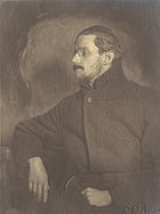
James Joyce

 
James Joyce

   Email Print
   Bookmark   Link


James Joyce


James Augustine Aloysius Joyce (2 February 1882 – 13 January 1941) was an Irish
Ireland

Ireland is the List of islands by area in Europe, and the twentieth-largest island in the world. It lies to the north-west of continental Europe and is surrounded by hundreds of islands and islet....
 expatriate author of the 20th century. He is best known for his landmark novel Ulysses
Ulysses (novel)

Ulysses is a novel by James Joyce, first serialized in parts in the American journal The Little Review from March 1918 to December 1920, then published in its entirety by Sylvia Beach on February 2, 1922, in Paris....
 (1922) and its controversial successor Finnegans Wake
Finnegans Wake

Finnegans Wake is a work of Comic novel by Irish literature James Joyce, which is recognised for its difficulty for the reader and its experimental style....
 (1939), as well as the short story
Short story

The short story refers to a work of fiction that is usually written in prose, usually in narrative format. This format or medium tends to be more pointed than longer works of fiction, such as novellas and novels or books....
 collection Dubliners
Dubliners

Dubliners is a collection of 15 short stories by James Joyce, first published in 1914. The fifteen stories were meant to be a naturalistic depiction of the Ireland middle class life in and around Dublin in the early years of the 20th century....
 (1914) and the semi-autobiographical novel A Portrait of the Artist as a Young Man
A Portrait of the Artist as a Young Man

A Portrait of the Artist as a Young Man is a autobiography novel by James Joyce, first serialized in The Egoist from 1914 to 1915 and published in book form in 1916 in literature....
 (1916).

Although he spent most of his adult life outside Ireland, Joyce's psychological and fictional universe is firmly rooted in his native Dublin
Dublin

Dublin is both the largest city and capital of Republic of Ireland. It is located near the midpoint of Ireland's east coast, at the mouth of the River Liffey and at the centre of the Dublin Region....
, the city which provides the settings and much of the subject matter for all his fiction.


Discussion
Ask a question about 'James Joyce'
Start a new discussion about 'James Joyce'
Answer questions from other users
Full Discussion Forum


Recent Posts


Quotations


Tis as human a little story as paper could well carry (115.36)

But all they are all there scraping along to sneeze out a likelihood that will solve and salve life's robulous rebus (12.32-33)

But my body was like a harp and her words and gestures were like fingers running upon the wires.

"Araby"

came at this timecoloured place where we live in our paroqial fermament one tide on another (29.30)

Gazing up into the darkness I saw myself as a creature driven and derided by vanity; and my eyes burned with anguish and anger.

"Araby"

I am a worker, a tombstone mason, anxious to pleace averyburies and jully glad when Christmas comes his once ayear.

Page 113.


Encyclopedia


James Augustine Aloysius Joyce (2 February 1882 – 13 January 1941) was an Irish
Ireland

Ireland is the List of islands by area in Europe, and the twentieth-largest island in the world. It lies to the north-west of continental Europe and is surrounded by hundreds of islands and islet....
 expatriate author of the 20th century. He is best known for his landmark novel Ulysses
Ulysses (novel)

Ulysses is a novel by James Joyce, first serialized in parts in the American journal The Little Review from March 1918 to December 1920, then published in its entirety by Sylvia Beach on February 2, 1922, in Paris....
 (1922) and its controversial successor Finnegans Wake
Finnegans Wake

Finnegans Wake is a work of Comic novel by Irish literature James Joyce, which is recognised for its difficulty for the reader and its experimental style....
 (1939), as well as the short story
Short story

The short story refers to a work of fiction that is usually written in prose, usually in narrative format. This format or medium tends to be more pointed than longer works of fiction, such as novellas and novels or books....
 collection Dubliners
Dubliners

Dubliners is a collection of 15 short stories by James Joyce, first published in 1914. The fifteen stories were meant to be a naturalistic depiction of the Ireland middle class life in and around Dublin in the early years of the 20th century....
 (1914) and the semi-autobiographical novel A Portrait of the Artist as a Young Man
A Portrait of the Artist as a Young Man

A Portrait of the Artist as a Young Man is a autobiography novel by James Joyce, first serialized in The Egoist from 1914 to 1915 and published in book form in 1916 in literature....
 (1916).

Although he spent most of his adult life outside Ireland, Joyce's psychological and fictional universe is firmly rooted in his native Dublin
Dublin

Dublin is both the largest city and capital of Republic of Ireland. It is located near the midpoint of Ireland's east coast, at the mouth of the River Liffey and at the centre of the Dublin Region....
, the city which provides the settings and much of the subject matter for all his fiction. In particular, his tempestuous early relationship with the Irish Roman Catholic Church
Roman Catholic Church

The Roman Catholic Church, officially known as the Catholic Church is the world's largest Christianity Ecclesia , representing over half of all Christians and one-sixth of the world population....
 is reflected through a similar inner conflict in his recurrent alter ego Stephen Dedalus
Stephen Dedalus

Stephen Dedalus is James Joyce's literary alter ego, as well as the protagonist and antihero of his first, semi-autobiographical novel of artistic existence A Portrait of the Artist as a Young Man and an important character in Joyce's monumental Ulysses ....
. As the result of his minute attentiveness to a personal locale and his self-imposed exile and influence throughout Europe
Europe

Europe is, conventionally, one of the world's seven continents. Comprising the westernmost peninsula of Eurasia, Europe is generally divided from Asia to its east by the water divide of the Ural Mountains, the Ural , the Caspian Sea, and by the Caucasus Mountains to the southeast....
, notably in Paris
Paris

Paris is the Capital of France and the country's largest city. It is situated on the river Seine, in northern France, at the heart of the ?le-de-France Regions of France ....
, Joyce became paradoxically one of the most cosmopolitan
Cosmopolitanism

Cosmopolitanism is the idea that all of human race belongs to a single community, possibly based on a shared morality. This is contrasted with Communitarianism theories, in particular the ideologies of patriotism and nationalism....
 yet one of the most regionally-focused of all the English language
English language

English is a West Germanic language that originated in Anglo-Saxon England and has lingua franca status in many parts of the world as a result of the military, economic, scientific, political and cultural influence of the British Empire in the 18th, 19th and early 20th centuries and that of the United States from the mid 20th century onwa...
 writers of his time.

Life


Dublin: 1882-1904

James Augustine Aloysius Joyce was born on February 2, 1882 to John Stanislaus Joyce
John Joyce

John Stanislaus Joyce was the father of writer James Joyce, and a well known Dublin man about town. The son of James and Ellen Joyce, John Joyce grew up in Cork , where his mother's family, which claimed kinship to "Liberator" Daniel O'Connell, was quite prominent....
 and Mary Jane Murray in the Dublin
Dublin

Dublin is both the largest city and capital of Republic of Ireland. It is located near the midpoint of Ireland's east coast, at the mouth of the River Liffey and at the centre of the Dublin Region....
 suburb
Suburb

Suburbs are commonly defined as the residential areas which surround the central area of the urban area of a town or city. In the United States, suburbs have a prevalence of usually detached single-family homes.....
 of Rathgar
Rathgar

Rathgar is a suburb of Dublin, Republic of Ireland, lying about 3 kilometres south of the city centre....
. He was the oldest of 10 surviving children; two of his siblings died of typhoid. His father's family, originally from Fermoy
Fermoy

Fermoy in County Cork, Republic of Ireland is a town of some 5,800 inhabitants, environs included , situated on the Munster Blackwater in the south of Ireland....
 in Cork
County Cork

County Cork is the most southerly and the largest of the modern counties of Republic of Ireland. Cork is nicknamed "The Rebel County", as a result of the support of the townsmen of Cork in 1491 for Perkin Warbeck, a pretender to the throne of England during the Wars of the Roses....
, had once owned a small salt and lime works. Joyce's father and paternal grandfather both married into wealthy families. In 1887, his father was appointed rate (i.e., a local property tax) collector by Dublin Corporation
Dublin Corporation

Dublin Corporation , known by generations of Dubliners simply as The Corpo, is the former name given to the city government and its administrative organisation in Dublin between 1661 and 1 January 2002....
; the family subsequently moved to the fashionable adjacent small town of Bray
Bray

Bray is a town in north County Wicklow, Republic of Ireland. It is a busy urban centre and seaside town of approximately 32,000 people, making it the fourth largest town in Ireland ....
  from Dublin. Around this time Joyce was attacked by a dog; this resulted in a lifelong canine phobia
Phobia

A phobia , or morbid fear is an irrational, intense, persistent fear of certain situations, activities, things, or people. The main symptom of this Disorder is the excessive, unreasonable desire to avoid the feared subject....
. He also suffered from a fear of thunderstorms, which his deeply religious aunt had described to him as being a sign of God's wrath.

In 1891, Joyce wrote a poem, "Et Tu Healy," on the death of Charles Stewart Parnell
Charles Stewart Parnell

Charles Stewart Parnell was an Irish people Church of Ireland landowner, Irish Nationalism politician, Irish Land League agitator, Irish Home Rule bills Member of Parliament in the Palace of Westminster of the United Kingdom of Great Britain and Ireland and founder and leader of the Irish Parliamentary Party....
. His father was angry at the treatment of Parnell by the Catholic church and at the resulting failure to secure Home Rule for Ireland. The elder Joyce had the poem printed and even sent a copy to the Vatican Library
Vatican Library

The Vatican Library , is the library of the Holy See, currently located in Vatican City. It is one of the oldest libraries in the world and contains one of the most significant collections of historical texts....
. In November of that same year, John Joyce was entered in Stubbs Gazette (an official register of bankruptcies) and suspended from work. In 1893 John Joyce was dismissed with a pension
Pension

In general, a pension is an arrangement to provide people with an income when they are no longer earning a regular income from employment.The terms retirement plan or superannuation refer to a pension granted upon retirement ....
. This was the beginning of a slide into poverty
Poverty

Poverty is the shortage of common things such as food, clothing, shelter and safe drinking water, all of which determine our quality of life. It may also include the lack of access to opportunities such as education and employment which aid the escape from poverty and/or allow one to enjoy the respect of fellow citizens....
 for the family, mainly due to John's drinking and general financial mismanagement.

James Joyce was initially educated by the Jesuit order at Clongowes Wood College
Clongowes Wood College

Clongowes Wood College is a private secondary boarding school for boys, located near Clane in County Kildare, Republic of Ireland. Founded by the Society of Jesus in 1814, it is one of Ireland's oldest Catholic schools, and featured prominently in James Joyce's semi-autobiographical novel A Portrait of the Artist as a Young Man....
, a boarding school
Boarding school

A boarding school is a school where some or all pupils not only study, but also live during term time, with their fellow students and possibly teachers....
 near Clane
Clane

Clane is a village on the River Liffey and in the barony of Clane in County Kildare, Republic of Ireland. It is situated 32 km from Dublin, at the crossroads of the R403 road and R407 road regional roads, halfway between Maynooth and Naas in north Kildare....
 in County Kildare
County Kildare

County Kildare is an Republic of Ireland county located to the southwest of Dublin in the province of Leinster. The name comes from the Irish, meaning church of the oaks ....
, which he entered in 1888 but had to leave in 1892 when his father could no longer pay the fees. Joyce then studied at home and briefly at the Christian Brothers
Congregation of Christian Brothers

The Congregation of Christian Brothers is a world-wide community of religious brothers within the Roman Catholic Church, founded by Beatification Edmund Ignatius Rice....
 school
O'Connell School

The O?Connell School is a secondary school for boys, located on North Richmond Street in Dublin, Republic of Ireland. The school, named in honour of the leader of Catholic Emancipation, Daniel O?Connell, has the distinction of being the oldest surviving Congregation of Christian Brothers school in Dublin, having been first established in 1829...
 on North Richmond Street, Dublin, before he was offered a place in the Jesuits' Dublin school, Belvedere College
Belvedere College

Belvedere College SJ is a private secondary school for boys located on Great Denmark Street, Dublin, Ireland. It is also known as St. Francis Xavier's College...
, in 1893. The offer was made at least partly in the hope that he would prove to have a vocation and join the Order. Joyce, however, was to reject Catholicism by the age of 16, although the philosophy
Philosophy

Philosophy is the study of general problems concerning matters such as existence, knowledge, truth, beauty, justice, validity, mind, and language....
 of Thomas Aquinas
Thomas Aquinas

Saint Thomas Aquinas, Dominican Order was a priest of the Roman Catholic Church in the Dominican Order from Italy, and an immensely influential philosopher and theologian in the tradition of scholasticism, known as Doctor Angelicus and Doctor Communis....
 would remain a strong influence on him throughout his life.

He enrolled at the recently established University College Dublin (UCD) in 1898. He studied modern languages, specifically English
English language

English is a West Germanic language that originated in Anglo-Saxon England and has lingua franca status in many parts of the world as a result of the military, economic, scientific, political and cultural influence of the British Empire in the 18th, 19th and early 20th centuries and that of the United States from the mid 20th century onwa...
, French
French language

French is a Romance language spoken around the world by around 80 million people as first language, by 190 million as second language, and by about another 200 million people as an acquired tongue, with significant speakers in 54 countries....
 and Italian
Italian language

Italian is a Romance languages spoken by about 63 million people as a first language, primarily in Italy. In Switzerland, Italian is one of four Linguistic geography of Switzerlands....
. He also became active in theatrical and literary circles in the city. The article Ibsen's New Drama, his first published work, was published in 1900 and resulted in a letter of thanks from the Norwegian
Norway

Norway , officially the Kingdom of Norway, is a constitutional monarchy in Northern Europe that occupies the western portion of the Scandinavian Peninsula....
 dramatist himself. Joyce wrote a number of other articles and at least two plays (since lost) during this period. Many of the friends he made at University College Dublin would appear as characters in Joyce's written works. He was an active member of the Literary and Historical Society, University College Dublin
Literary and Historical Society, University College Dublin

The Literary and Historical Society is University College Dublins oldest Debate and the official College Debating Union. Founded in 1855 by John Henry Cardinal Newman, it is one of the most prestigious and well-known student societies in Ireland....
, and presented his paper "Drama and Life" to the L&H in 1900.

After graduating from UCD in 1903, Joyce left for Paris
Paris

Paris is the Capital of France and the country's largest city. It is situated on the river Seine, in northern France, at the heart of the ?le-de-France Regions of France ....
 to "study medicine", but in reality he squandered money his family could ill afford. He returned to Ireland after a few months, when his mother was diagnosed with cancer
Cancer

Cancer is a class of diseases in which a group of cell display uncontrolled growth , invasion , and sometimes metastasis . These three malignant properties of cancers differentiate them from benign tumors, which are self-limited, do not invade or metastasize....
. Fearing for her son's "impiety", his mother tried unsuccessfully to get Joyce to make his confession and to take communion. She finally passed into a coma and died on August 13, Joyce having refused to kneel with other members of the family praying at her bedside. After her death he continued to drink heavily, and conditions at home grew quite appalling. He scraped a living reviewing books, teaching and singing — he was an accomplished tenor
Tenor

The tenor is a type of male voice type and is the highest male voice within the modal register. The typical tenor voice lies between the C one octave below middle C to the A above in choral music, and up to high C in solo work....
, and won the bronze medal in the 1904 Feis Ceoil
Feis Ceoil

Feis Ceoil is an annual Ireland cultural festival of music and dance. It was first organized in 1897 by Dr. Annie Patterson and consisted of competitions for performance and composition and was supported by all musicians of the day, both national and classical....
.

On 7 January 1904, he attempted to publish A Portrait of the Artist as a Young Man, an essay-story dealing with aesthetics
Aesthetics

Aesthetics or esthetics is commonly known as the study of senses or sensori-emotional values, sometimes called judgments of sentiment and taste ....
, only to have it rejected by the free-thinking magazine Dana. He decided, on his twenty-second birthday, to revise the story and turn it into a novel he planned to call Stephen Hero. However, he never published this novel in this original name. This was the same year he met Nora Barnacle
Nora Barnacle

Nora Barnacle was the lover, companion, inspiration, and — eventually — wife of author James Joyce....
, a young woman from Galway
Galway

Galway is the fourth largest city in the Republic of Ireland and the only city in the province of Connacht in Republic of Ireland. The city is located on the west coast of Ireland....
 city who was working as a chambermaid at Finn's Hotel in Dublin
Dublin

Dublin is both the largest city and capital of Republic of Ireland. It is located near the midpoint of Ireland's east coast, at the mouth of the River Liffey and at the centre of the Dublin Region....
. On 16 June 1904, they went on their first date, an event which would be commemorated by providing the date for the action of Ulysses.

Joyce remained in Dublin for some time longer, drinking heavily. After one of his alcoholic binges, he got into a fight over a misunderstanding with a man in St. Stephen's Green
St. Stephen's Green

St Stephen's Green }} is an inner-city public park in Dublin, Ireland. The park is within the city centre, adjoining the nearby shopping area of the same name, which is located on Grafton Street, Dublin....
; he was picked up and dusted off by a minor acquaintance of his father, Alfred H. Hunter, who brought him into his home to tend to his injuries. Hunter was rumored to be Jew
Jew

A Jew is a member of the Jewish people, an ethnoreligious group that traces its ancestry to the Israelites or Hebrews of the Ancient Near East....
ish and to have an unfaithful wife, and would serve as one of the models for Leopold Bloom
Leopold Bloom

Leopold Bloom is the fictional protagonist and antihero of James Joyce's novel Ulysses , assuming the role of the 'Odysseus' character. Like the Greek hero in The Odyssey, he is absent at the beginning of the story, and does not feature until episode four of the novel ....
, the main protagonist
Protagonist

A protagonist is the main Character of a drama or Narrative. The word "protagonist" derives from the Greek language p??ta????st?? , "one who plays the first part, chief actor." In the theatre of Ancient Greece, three actors played all of the main dramatic roles in a tragedy; the leading role was played by the protagonist, while the othe...
 of Ulysses. He took up with medical student Oliver St John Gogarty, who formed the basis for the character Buck Mulligan
Buck Mulligan

Malachi "Buck" Mulligan is a fictional character in James Joyce's novel Ulysses . At once callous and complex, Mulligan is a Falstaff student of medicine who has offended Stephen Dedalus by calling his mother "beastly dead." Yet later, Mulligan is portrayed as a hero for having saved a man from drowning....
 in Ulysses. After staying in Gogarty's Martello Tower
Martello tower

Martello towers are small defensive Fortification built in several countries of the British Empire during the 19th century, from the time of the Napoleonic Wars onwards....
 for 6 nights he left in the middle of the night following an altercation which involved Gogarty shooting a pistol at some pans hanging directly over Joyce's bed. He walked all the way back to Dublin to stay with relatives for the night, and sent a friend to the tower the next day to pack his possessions into his trunk. Shortly thereafter he eloped to the continent with Nora.

Trieste and Zürich: 1904-1920

Joyce and Nora went into self-imposed exile
Exile

Exile means to be away from one's home while either being explicitly refused permission to return and/or being threatened by prison or death upon return....
, moving first to Zürich
Zürich

Z?rich is the largest city in Switzerland and the capital of the canton of Z?rich. The city is Switzerland's main commercial and cultural centre and sometimes called the Cultural Capital of Switzerland, the political capital of Switzerland being Berne....
, where he had supposedly acquired a post teaching English at the Berlitz Language School
Berlitz Language Schools

Berlitz International, Inc, derives from an institution founded by Maximilian Berlitz in 1878, in Providence, Rhode Island, USA.It is headquartered in Princeton, New Jersey, USA....
 through an agent in England. It turned out that the English agent had been swindled, but the director of the school sent him on to Trieste
Trieste

Trieste is a city and port in northeastern Italy very near to the Slovenian border, to the North, East, and South. Trieste is located at the head of the Gulf of Trieste on the Adriatic Sea....
, which was part of Austria-Hungary
Austria-Hungary

Austria-Hungary, also known as the Austro-Hungarian Empire, the Dual Monarchy or the Kaiserlich und k?niglich Monarchy was a state in Central Europe ruled by the House of Habsburg, constitutionally a personal union between the crowns of the Austrian Empire and the Kingdom of Hungary....
 until World War I
World War I

World War I, or the First World War , was a global military conflict which involved the Great powers, organized into two opposing military alliances: the Allies of World War I and the Central Powers....
 (today part of Italy
Italy

Italy , officially the Italian Republic , is a country located on the Italian Peninsula in Southern Europe and on the two largest islands in the Mediterranean Sea, Sicily and Sardinia....
). Once again, he found there was no position for him, but with the help of Almidano Artifoni, director of the Trieste Berlitz school, he finally secured a teaching position in Pula
Pula

Pula is the largest city in Istria County, Croatia, situated at the southern tip of the Istria peninsula, with a population of 62,080 .Like the rest of the region, it is known for its mild climate, tame sea, and unspoiled nature....
, then also part of Austria-Hungary (today part of Croatia
Croatia

Croatia , officially the Republic of Croatia , is a Central European country at the crossroads of Pannonian Plain, Balkans, and the Mediterranean Sea....
). He stayed there, teaching English mainly to Austro-Hungarian naval officers stationed at the Pula base, from October 1904 until March 1905, when the Austrians — having discovered an espionage
Espionage

Espionage or spying involves an individual obtaining information that is considered secrecy or confidential without the permission of the holder of the information....
 ring in the city — expelled all aliens
Alien (law)

In U.S. law, an alien is "any person not a United States citizen or United States national of the United States." The U.S. Government's use of alien dates back to 1798, when it was used in the Alien and Sedition Acts....
. With Artifoni's help, he moved back to the city of Trieste and began teaching English there. He would remain in Trieste for most of the next 10 years.

Later that year Nora gave birth to their first child, Giorgio. Joyce then managed to talk his brother, Stanislaus
Stanislaus Joyce

Stanislaus Joyce was an Republic of Ireland teacher, scholar, and writer who lived for many years in Italy. He was the brother of James Joyce....
, into joining him in Trieste, and secured him a position teaching at the school. Ostensibly his reasons were for his company and offering his brother a much more interesting life than the simple clerking job he had back in Dublin, but in truth, he hoped to augment his family's meagre income with his brother's earnings. Stanislaus and James had strained relations the entire time they lived together in Trieste, with most arguments centering on James' frivolity with money and drinking habits.

With chronic wanderlust much of his early life, Joyce became frustrated with life in Trieste and moved to Rome
Rome

Rome is the capital city of Italy and Lazio, and is Italy's largest and most populous city, with 2,724,347 residents in an urban area of some ....
 in late 1906, having secured employment in a bank. He intensely disliked Rome, and moved back to Trieste in early 1907. His daughter Lucia
Lucia Joyce

Lucia Anna Joyce , daughter of Irish writer James Joyce and Nora Barnacle, was born in Trieste. Italian language was her first language and the language in which she corresponded with her father....
 was born in the summer of the same year.

Joyce returned to Dublin in the summer of 1909 with Giorgio, to visit his father and work on getting Dubliners published. He visited Nora's family in Galway
Galway

Galway is the fourth largest city in the Republic of Ireland and the only city in the province of Connacht in Republic of Ireland. The city is located on the west coast of Ireland....
, meeting them for the first time (a successful visit, to his relief). When preparing to return to Trieste he decided to bring one of his sisters, Eva, back to Trieste with him to help Nora run the home. He would spend only a month in Trieste before returning to Dublin, this time as a representative of some cinema owners to set up a regular cinema in Dublin. The venture was successful (but quickly fell apart in his absence), and he returned to Trieste in January 1910 with another sister in tow, Eileen. While Eva became very homesick for Dublin and returned a few years later, Eileen spent the rest of her life on the continent, eventually marrying Czech
Czech people

Czechs are a West Slavs people of Central Europe, living predominantly in the Czech Republic. Small populations of Czechs also live in Slovakia, Austria, United States, Brazil, Argentina, Canada, Germany, Russia and other countries....
 bank cashier František Schaurek.

Joyce returned to Dublin briefly in the summer of 1912 during his years-long fight with his Dublin publisher, George Roberts, over the publication of Dubliners. His trip was once again fruitless, and on his return he wrote the poem "Gas from a Burner" as a thinly veiled invective against Roberts. It was his last trip to Ireland, and he never again came closer to Dublin than London, despite the many pleas of his father and invitations from fellow Irish writer William Butler Yeats
William Butler Yeats

File:William Butler Yeat by George Charles Beresford.jpgWilliam Butler Yeats was an Irish people poet and dramatist and one of the foremost figures of 20th century in literature....
.

Joyce concocted many money-making schemes during this period, such as his attempt to become a cinema magnate
Business magnate

A business magnate, sometimes referred to as a mogul, tycoon, baron, or industrialist, is a partially informal term used to refer to a person who has reached a prominent place in a particular industry and whose wealth has been derived primarily therefrom....
 in Dublin, as well as a frequently discussed but ultimately abandoned plan to import Irish tweeds into Trieste. His expert borrowing skills saved him from indigence. His income was partially from his position at the Berlitz school and from teaching private students. Many of his acquaintances through meeting these private students proved invaluable allies when he faced problems getting out of Austria-Hungary and into Switzerland
Switzerland

Switzerland is a landlocked Swiss Alps country of roughly 7.7 million people in Western Europe with an area of 41,285 km?. Switzerland is a federal republic consisting of 26 states called Cantons of Switzerland....
 in 1915.

One of his students in Trieste was Ettore Schmitz
Italo Svevo

Aron Ettore Schmitz , better known by the pseudonym Italo Svevo, was an Italy businessman and author of novels, plays, and short stories....
, better known by the pseudonym
Pseudonym

A pseudonym, , is a fictitious alternative to a person's legal name. In some cases, pseudonyms are adopted because it is part of a cultural or organizational tradition, as in the case of Religious names used by members of some religious orders and "cadre names" used by Communist party leaders such as Leon Trotsky and Joseph Stalin....
 Italo Svevo
Italo Svevo

Aron Ettore Schmitz , better known by the pseudonym Italo Svevo, was an Italy businessman and author of novels, plays, and short stories....
; they met in 1907 and became lasting friends and mutual critics. Schmitz was a Catholic of Jewish origin, and became the primary model for Leopold Bloom; most of the details about the Jewish faith
Judaism

Judaism is a set of beliefs and practices originating in the Hebrew Bible , as later further explored and explained in the Talmud and other texts....
 included in Ulysses came from Schmitz in response to Joyce's queries. Joyce would spend most of the rest of his life on the Continent. It was in Trieste that he was first beset with eye problems, ultimately requiring over a dozen surgeries.

In 1915, when Joyce moved to Zürich to avoid the complexities (as a British subject) of living in Austria-Hungary during World War I
World War I

World War I, or the First World War , was a global military conflict which involved the Great powers, organized into two opposing military alliances: the Allies of World War I and the Central Powers....
, he met one of his most enduring and important friends, Frank Budgen
Frank Budgen

Frank Budgen was a British people Painting acquainted with the author James Joyce. Born in Surrey, Budgen spent six years at sea before working in London as a postal worker....
, whose opinion Joyce constantly sought through the writing of Ulysses and Finnegans Wake. It was also here where Ezra Pound
Ezra Pound

Ezra Weston Loomis Pound was an United States expatriate poetry, critic and intellectual who was a major figure of the Modernist poetry movement in the first half of the 20th century....
 brought him to the attention of English feminist and publisher Harriet Shaw Weaver
Harriet Shaw Weaver

Harriet Shaw Weaver was a Activism and a journal Editing. She also became the patronage of James Joyce.Harriet Shaw Weaver was born in Frodsham, Cheshire, the daughter of Frederic Poynton Weaver, a Physician, and Mary Wright, who had inherited a fortune from her father....
, who would become Joyce's patron, providing him thousands of pounds over the next 25 years and relieving him of the burden of teaching to focus on his writing. After the war he returned to Trieste briefly, but found the city had changed, and his relations with his brother (who had been interned in an Austrian prison camp for most of the war due to his pro-Italian politics) were more strained than ever. Joyce headed to Paris in 1920 at an invitation from Ezra Pound, supposedly for a week, but he ended up living there for the next twenty years.

Paris and Zürich: 1920-1941

During this era, Joyce traveled frequently to Switzerland for eye surgeries and treatments for Lucia, who, according to the Joyce estate, suffered from schizophrenia
Schizophrenia

Schizophrenia , from the Ancient Greek Root schizein and phren, phren- is a psychiatry diagnosis that describes a mental disorder characterized by abnormalities in the perception or expression of reality....
. Lucia was even analyzed by Carl Jung
Carl Jung

Carl Gustav Jung was a Swiss psychiatrist, an influential thinker and the founder of Analytical psychology. Jung's approach to psychology has been influential in the field of depth psychology and in counterculture movements across the globe....
 at the time, who was of the opinion that her father had schizophrenia after reading Ulysses. Jung noted that she and her father were two people heading to the bottom of a river, except that he was diving and she was falling. In-depth knowledge of Joyce's relationship with his schizophrenic daughter is scant, because the current heir of the Joyce estate, Stephen Joyce, burned thousands of letters between Lucia and her father that he received upon Lucia's death in 1982. Stephen Joyce stated in a letter to the editor of the New York Times that "Regarding the destroyed correspondence, these were all personal letters from Lucia to us. They were written many years after both Nonno and Nonna [i.e. Joyce and Nora Barnacle..] died and did not refer to them. Also destroyed were some postcards and one telegram from Samuel Beckett
Samuel Beckett

Samuel Barclay Beckett was an Irish people writer, dramatist and poet. Beckett's work offers a bleak outlook on human culture and both formally and philosophically became increasingly minimalism....
 to Lucia. This was done at Sam's written request."

In Paris, Maria
Maria Jolas

Maria Jolas , born Maria McDonald, was one of the founding members of Transition in Paris, France with her husband Eugene Jolas.Jolas also translated many works including Gaston Bachelard's The Poetics of Space....
 and Eugene Jolas
Eugene Jolas

Eugene Jolas was a writer, translator and literary critic....
 nursed Joyce during his long years of writing Finnegans Wake. Were it not for their unwavering support (along with Harriet Shaw Weaver's constant financial support), there is a good possibility that his books might never have been finished or published. In their now legendary literary magazine "transition," the Jolases published serially various sections of Joyce's novel under the title Work in Progress. He returned to Zürich in late 1940, fleeing the Nazi occupation of France. On 11 January 1941, he underwent surgery for a perforated ulcer. While at first improved, he relapsed the following day, and despite several transfusions, fell into a coma. He awoke at 2 a.m. on 13 January 1941, and asked for a nurse to call his wife and son before losing consciousness again. They were still en route when he died 15 minutes later. He is buried in the Fluntern Cemetery
Fluntern Cemetery

Also known as Friedhof Fluntern, Fluntern Cemetery is located in the Z?richberg district of Z?rich. It contains the graves of James Joyce, Therese Giehse and Elias Canetti....
 within earshot of the lions in the Zürich zoo. Although two senior Irish diplomats were in Switzerland at the time, neither attended Joyce's funeral, and the Irish government subsequently declined Nora's offer to permit the repatriation of Joyce's remains. Nora, whom Joyce had finally married in London in 1931, survived him by 10 years. She is buried now by his side, as is their son Giorgio, who died in 1976. Ellmann reports that when the arrangements for Joyce's burial were being made, a Catholic priest tried to convince Nora that there should be a funeral Mass. Ever loyal, she replied, 'I couldn't do that to him'. Swiss tenor Max Meili
Max Meili

Max Meili, a Swiss tenor, was born December 11, 1899 in Winterthur and died March 17, 1970 in Z?rich, Switzerland. He first trained as a painter then turned to singing, leading to lessons with Felix von Kraus....
 sang Addio terra, addio cielo from Monteverdi's L'Orfeo at the funeral service.

Major works


Dubliners

Joyce's Irish experiences constitute an essential element of his writings, and provide all of the settings for his fiction and much of their subject matter. His early volume of short stories, Dubliners, is a penetrating analysis of the stagnation and paralysis of Dublin society. The final and most famous story in the collection, "The Dead
The Dead (short story)

"The Dead" is the final short story in the 1914 collection Dubliners by James Joyce. It is the longest story in the collection and widely considered to be one of the greatest short stories in the English language....
," was made into a feature film in 1987, directed by John Huston
John Huston

John Marcellus Huston was an United States film director and actor. He was known for directing the films, The Maltese Falcon , The Asphalt Jungle , The Treasure of the Sierra Madre , Key Largo , The African Queen , The Misfits , and The Man Who Would Be King ....
 (it was Huston's last major work).

A Portrait of the Artist as a Young Man

A Portrait of the Artist as a Young Man is a nearly complete rewrite of the abandoned novel Stephen Hero
Stephen Hero

Stephen Hero is a posthumously-published autobiographical novel by Irish author James Joyce. Only a portion survives; the rest was burned by the author after a domestic dispute....
, the original manuscript of which Joyce partially destroyed in a fit of rage during an argument with Nora, who asserted that it would never be published. A Künstlerroman
Künstlerroman

A K?nstlerroman is a specific sub-genre of Bildungsroman; it is a novel about an artist's growth to maturity. Such novels often depict the struggles of a sensitive youth against the values of a bourgeois society of his or her time....
, or story of the personal development of an artist, it is a biographical coming-of-age novel
Bildungsroman

A bildungsroman is a novelistic genre that arose during the German Enlightenment, in which the author presents the psychological, moral and social shaping of the personality of a protagonist....
 in which Joyce depicts a gifted young man's gradual attainment of maturity and self-consciousness; the main character, Stephen Dedalus
Stephen Dedalus

Stephen Dedalus is James Joyce's literary alter ego, as well as the protagonist and antihero of his first, semi-autobiographical novel of artistic existence A Portrait of the Artist as a Young Man and an important character in Joyce's monumental Ulysses ....
, is in many ways based upon Joyce himself. Some hints of the techniques Joyce was to employ frequently in later works — such as the use of interior monologue and references to a character's psychic reality rather than his external surroundings — are evident in this novel. Joseph Strick
Joseph Strick

Joseph Strick is an United States Film director, producer and screenwriter. He learned film making when serving as a cameraman in the US Air Force in World War II....
 directed a film of the book in 1977 starring Luke Johnston, Bosco Hogan
Bosco Hogan

Bosco Hogan is an Irish actor of stage, screen and television.He is best-known as Dr. Michael Ryan on Ballykissangel. He appeared in a minor role in John Boorman's film Zardoz ....
, T.P. McKenna and John Gielgud
John Gielgud

Sir Arthur John Gielgud, Order of Merit , Companion of Honour was an England actor and singer, particularly known for his warm and expressive voice, which his colleague Alec Guinness likened to "a silver trumpet muffled in silk"....
.

Exiles and poetry


Despite early interest in the theatre, Joyce published only one play, Exiles
Exiles (play)

Exiles is a play by James Joyce, who is principally remembered for his novels. It draws on the story of "The Dead ", the final short story in Joyce's first major work, Dubliners, and was rejected by W....
, begun shortly after the outbreak of World War I
World War I

World War I, or the First World War , was a global military conflict which involved the Great powers, organized into two opposing military alliances: the Allies of World War I and the Central Powers....
 in 1914 and published in 1918. A study of a husband and wife relationship, the play looks back to The Dead (the final story in Dubliners) and forward to Ulysses, which was begun around the time of the play's composition.

Joyce also published a number of books of poetry. His first mature published work was the satirical broadside "The Holy Office" (1904), in which he proclaimed himself to be the superior of many prominent members of the Celtic revival
Celtic Revival

Celtic Revival covers a variety of movements and trends, mostly in the 19th and 20th centuries, which drew on Celtic art and traditions. Although the revival was complex and multifaceted, occurring across many fields and in variety of North Western Countries, its best known incarnation is probably the Irish Literary Revival also called...
. His first full-length poetry collection Chamber Music (referring, Joyce explained, to the sound of urine hitting the side of a chamber pot) consisted of 36 short lyrics. This publication led to his inclusion in the Imagist Anthology
Imagism

Imagism was a movement in early 20th-century Anglo-American poetry that favored precision of , and clear, sharp language. The Imagists rejected the sentiment and discursiveness typical of much Romantic poetry and Victorian literature#Poetry....
, edited by Ezra Pound
Ezra Pound

Ezra Weston Loomis Pound was an United States expatriate poetry, critic and intellectual who was a major figure of the Modernist poetry movement in the first half of the 20th century....
, who was a champion of Joyce's work. Other poetry Joyce published in his lifetime includes "Gas From A Burner" (1912), Pomes Penyeach (1927) and "Ecce Puer" (written in 1932 to mark the birth of his grandson and the recent death of his father). It was published in Collected Poems (1936).

Ulysses

As he was completing work on Dubliners in 1906, Joyce considered adding another story featuring a Jewish advertising canvasser called Leopold Bloom
Leopold Bloom

Leopold Bloom is the fictional protagonist and antihero of James Joyce's novel Ulysses , assuming the role of the 'Odysseus' character. Like the Greek hero in The Odyssey, he is absent at the beginning of the story, and does not feature until episode four of the novel ....
 under the title Ulysses. Although he did not pursue the idea further at the time, he eventually commenced work on a novel using both the title and basic premise in 1914. The writing was completed in October, 1921. Three more months were devoted to working on the proofs
Proofreading

Proof-reading traditionally means reading a proof copy of a writing in order to detect and correct any errors. Modern proofreading often requires reading Copy at earlier stages as well....
 of the book before Joyce halted work shortly before his self-imposed deadline, his 40th birthday (2 February 1922).

Thanks to Ezra Pound
Ezra Pound

Ezra Weston Loomis Pound was an United States expatriate poetry, critic and intellectual who was a major figure of the Modernist poetry movement in the first half of the 20th century....
, serial publication of the novel in the magazine The Little Review
The Little Review

The Little Review, A Quarterly Journal of Arts and Letters, was an American art magazine and literary magazine founded by Margaret Caroline Anderson which published Modernist literature English-language writers between 1914 and 1929, most notably James Joyce's Ulysses ....
 began in 1918. This magazine was edited by Margaret Anderson and Jane Heap
Jane Heap

Jane Heap was an American publisher and a significant figure in the development and promotion of literary modernism. Together with Margaret Anderson, her friend and business partner , she edited the celebrated literary magazine The Little Review, which published an extraordinary collection of modern American, English people and Irish peo...
, with the backing of John Quinn
John Quinn (collector)

File:John Quinn 2b5b7ecba0 o.jpgJohn Quinn was an Irish-American corporate lawyer in New York, who for a time was an important patron of major figures of post-impressionism and literary modernism, and collector in particular of original manuscripts....
, a New York
New York

The State of New York is a U.S. state in the Mid-Atlantic States and Northeastern United States regions of the United States and is the nation's List of U.S....
 attorney at law
Attorney at law

An attorney at law in the United States is a practitioner in a court who is legally qualified to Prosecutor and defend actions in such court on the Retainer agreement of clients....
 with an interest in contemporary experimental art and literature. Unfortunately, this publication encountered censorship problems in the United States
United States

The United States of America is a Federal government constitutional republic comprising U.S. state and a federal district. The country is situated mostly in central North America, where its Contiguous United States and Washington, D.C., the Capital districts and territories, lie between the Pacific Ocean and Atlantic Oceans, Borders of the U...
; serialization was halted in 1920 when the editors were convicted of publishing obscenity. The novel remained proscribed in the United States until Judge John M. Woolsey lifted the ban in 1933.

At least partly because of this controversy, Joyce found it difficult to get a publisher to accept the book, but it was published in 1922 by Sylvia Beach
Sylvia Beach

Sylvia Beach , born Nancy Woodbridge Beach in her father's parsonage in Baltimore, Maryland, was one of the leading expatriate figures in Paris between World War I and World War II....
 from her well-known Rive Gauche
Rive Gauche

La Rive Gauche is the southern bank of the river Seine in Paris. Here, the river flows roughly westwards, cutting the city into two: the Rive Droite , to the north and the Rive Gauche , to the south....
 bookshop, Shakespeare and Company
Shakespeare and Company (bookshop)

Shakespeare and Company is an independent bookstore located in the Ve arrondissement, in Paris's Rive Gauche. Shakespeare and Company serves as both a bookstore and a reading library, specializing in English-language literature....
 at 12 Rue l'Odéon, Paris. A commemorative plaque placed in 1989 by JJSSF (James Joyce Society of Sweden and Finland) is to be found on the wall. An English edition published the same year by Joyce's patron, Harriet Shaw Weaver
Harriet Shaw Weaver

Harriet Shaw Weaver was a Activism and a journal Editing. She also became the patronage of James Joyce.Harriet Shaw Weaver was born in Frodsham, Cheshire, the daughter of Frederic Poynton Weaver, a Physician, and Mary Wright, who had inherited a fortune from her father....
, ran into further difficulties with the United States authorities, and 500 copies that were shipped to the States were seized and possibly destroyed. The following year, John Rodker
John Rodker

John Rodker was a British writer, modernist poet, and publisher of some of the major modernist figures. He was born in Manchester into a Jewish immigrant family, who moved to London while he was still young....
 produced a print run of 500 more intended to replace the missing copies, but these were burned by English customs at Folkestone
Folkestone

Folkestone is the principal town in the Shepway District of Kent, England. Its original site lay in a stream valley in the cliffs here; and its subsequent development was through fishing and its proximity to the Europe as a landing place and trading port....
. A further consequence of the novel's ambiguous legal status as a banned book was that a number of 'bootleg' versions appeared, most notably a number of pirate versions from the publisher Samuel Roth
Samuel Roth

Samuel Roth was an United States publisher and writer. He was the plaintiff in Roth v. United States , which was a key Supreme Court of the United States ruling on freedom of sexual expression....
. In 1928, a court injunction against Roth was obtained and he ceased publication.

The year 1922 was a key year in the history of English-language literary modernism, with the appearance of both Ulysses and T. S. Eliot
T. S. Eliot

'Thomas Stearns Eliot', Order of Merit , was a poet, dramatist, and literary critic. He received the Nobel Prize in Literature in 1948. Among his most famous writings are the poems The Love Song of J....
's poem, The Waste Land
The Waste Land

The Waste Land is a revolutionary, highly influential 434-line Modernist poetry in English by T. S. Eliot. Despite the alleged obscurity of the poem ? its shifts between satire and prophecy, its abrupt and unannounced changes of Narrator, Setting , its elegiac but intimidating summoning up of a vast and dissonant range of cultures and li...
. In Ulysses, Joyce employs stream of consciousness, parody, jokes, and virtually every other literary technique to present his characters. The action of the novel, which takes place in a single day, 16 June 1904, sets the characters and incidents of the Odyssey
Odyssey

The Odyssey is one of two major ancient Hellenic civilization epic poetrys attributed to Homer. It is, in part, a sequel to the Iliad, the other work traditionally ascribed to Homer....
 of Homer
Homer

Homer is traditionally held to be the author of the ancient Greek language epic poems the Iliad and the Odyssey, as well as of the Homeric Hymns....
 in modern Dublin and represents Odysseus
Odysseus

Odysseus or Ulysses , in Greek mythology , was a legendary Greeks king of Ithaca and the hero of Homer's Epic poetry, the Odyssey. Odysseus also plays a key role in Homer's Iliad and other works in the Epic Cycle....
 (Ulysses), Penelope
Penelope

In Homer's Odyssey, Penel?pe is the faithful wife of Odysseus, who keeps Suitors of Penelope at bay in his long absence and so is eventually rejoined with him....
 and Telemachus
Telemachus

Telemachus is a figure in Greek mythology, the son of Odysseus and Penelope, and a central character in Homer's Odyssey. The first four books in particular focus on Telemachus's journeys in search of news about his father; they are, therefore, traditionally accorded the collective title Telemachy....
 in the characters of Leopold Bloom, his wife Molly Bloom
Molly Bloom

Molly Bloom is a fictional character in the novel Ulysses by James Joyce. The wife of main character Leopold Bloom, she roughly corresponds to Penelope in the Odyssey....
 and Stephen Dedalus
Stephen Dedalus

Stephen Dedalus is James Joyce's literary alter ego, as well as the protagonist and antihero of his first, semi-autobiographical novel of artistic existence A Portrait of the Artist as a Young Man and an important character in Joyce's monumental Ulysses ....
, contrasted with their lofty models. The book explores various areas of Dublin life, dwelling on its squalor and monotony. Nevertheless, the book is also an affectionately detailed study of the city, and Joyce said that "I want to give a picture of Dublin so complete that if the city one day suddenly disappeared from the earth it could be reconstructed out of my book". In order to achieve this level of accuracy, Joyce used the 1904 edition of Thom's Directory — a work that listed the owners and/or tenants of every residential and commercial property in the city. He also bombarded friends still living there with requests for information and clarification.

The book consists of 18 chapters, each covering roughly one hour of the day, beginning around about 8 a.m. and ending sometime after 2 a.m. the following morning. Each of the 18 chapters of the novel employs its own literary style. Each chapter also refers to a specific episode in Homer's Odyssey and has a specific colour, art or science and bodily organ associated with it. This combination of kaleidoscopic writing with an extreme formal, schematic structure represents one of the book's major contributions to the development of 20th century modernist literature. Others include the use of classical mythology
Greek mythology

Greek mythology is the body of myths and legends belonging to the Ancient Greece concerning their List of Greek mythological figures#Immortals and Greek hero cult, Cosmology#Metaphysical cosmology, and the origins and significance of their own cult and ritual practices....
 as a framework for his book and the near-obsessive focus on external detail in a book in which much of the significant action is happening inside the minds of the characters. Nevertheless, Joyce complained that, "I may have oversystematised Ulysses," and played down the mythic correspondences by eliminating the chapter titles that had been taken from Homer.

Joseph Strick directed a film
Ulysses (film)

Ulysses is a film shot in 1967 in film and based on James Joyce's novel Ulysses .Starring Milo O'Shea as Leopold Bloom, Barbara Jefford as Molly Bloom, Maurice Ro?ves as Stephen Dedalus, T....
 of the book in 1967 starring Milo O'Shea
Milo O'Shea

Milo O'Shea is an Irish people character actor, recognisable for his bushy eyebrows, resounding voice and impish smile.He was raised in Dublin and educated by the Congregation of Christian Brothers at Synge Street CBS, along with his friend Donal Donnelly....
, Barbara Jefford
Barbara Jefford

Barbara Jefford, Order of the British Empire is a United Kingdom Shakespearean actress best known for her theatrical performances with the Royal Shakespeare Company, the Old Vic and the Royal National Theatre, and her role as Molly Bloom in the 1967 film of James Joyce's Ulysses ....
 and Maurice Roëves
Maurice Roëves

'Maurice Ro?ves' is an England born actor raised in Glasgow, Scotland.Some of his many television roles include Danger UXB , The Nightmare Man , the 1984 Doctor Who serial The Caves of Androzani, Days of our Lives , Tutti Frutti , Rab C....
. Sean Walsh
Sean Walsh

Sean Patrick Walsh was a TV producer on A Current Affair from August 2002 until December 2007.He was responsible for securing numerous exclusive interviews for the program, including James Hewitt, Hugh Hefner, Schapelle Corby, Pauline Hanson, Lindy Chamberlain, Deborra-Lee Furness, Rosa Monckton, Terri Irwin and her husband Steve Irwin...
 directed another version released in 2004 starring Stephen Rea
Stephen Rea

Stephen Rea is an Irish People actor, who was nominated for an Academy Award for Best Actor for his lead performance as Fergus in the 1992 in film film The Crying Game....
, Angeline Ball
Angeline Ball

Angeline Ball is an award-winning Irish people actress who currently resides in London. Her breakthrough role came in 1991 when she starred alongside Maria Doyle Kennedy and Bronagh Gallagher as back-up singer Imelda Quirke in Alan Parker's The Commitments ....
 and Hugh O'Conor
Hugh O'Conor

Hugh Charles O'Conor is a film and television actor. His father is the Irish pianist John O'Conor. His mother's maiden name is Murphy. Sometimes confused with the American actor of a similar name....
.

Finnegans Wake

Cbi   Series C   Ten Pound Note
Having completed work on Ulysses, Joyce was so exhausted that he did not write a line of prose for a year. On 10 March 1923 he informed a patron, Harriet Weaver: "Yesterday I wrote two pages — the first I have since the final Yes of Ulysses. Having found a pen, with some difficulty I copied them out in a large handwriting on a double sheet of foolscap so that I could read them. Il lupo perde il pelo ma non il vizio, the Italians say. The wolf may lose his skin but not his vice or the leopard cannot change his spots". Thus was born a text that became known, first, as Work in Progress and later Finnegans Wake.

By 1926 Joyce had completed the first two parts of the book. In that year, he met Eugene and Maria Jolas who offered to serialise the book in their magazine transition
Transition (literary journal)

The journal transition was founded in 1927 by poet Eugene Jolas and his wife Maria Jolas, along with editors Elliot Paul, Robert Sage, and Stuart Gilbert....
. For the next few years, Joyce worked rapidly on the new book, but in the 1930s, progress slowed considerably. This was due to a number of factors, including the death of his father in 1931, concern over the mental health of his daughter Lucia
Lucia Joyce

Lucia Anna Joyce , daughter of Irish writer James Joyce and Nora Barnacle, was born in Trieste. Italian language was her first language and the language in which she corresponded with her father....
 and his own health problems, including failing eyesight. Much of the work was done with the assistance of younger admirers, including Samuel Beckett
Samuel Beckett

Samuel Barclay Beckett was an Irish people writer, dramatist and poet. Beckett's work offers a bleak outlook on human culture and both formally and philosophically became increasingly minimalism....
. For some years, Joyce nursed the eccentric plan of turning over the book to his friend James Stephens
James Stephens (author)

James Stephens was an Irish novelist and poet.James Stephens wrote many retellings of Irish myths and fairy tales. His retellings are marked by a rare combination of humor and lyricism ....
 to complete, on the grounds that Stephens was born in the same hospital as Joyce exactly one week later, and shared the first name of both Joyce and of Joyce's fictional alter-ego (this is one example of Joyce's numerous superstitions).

Reaction to the work was mixed, including negative comment from early supporters of Joyce's work, such as Pound
Ezra Pound

Ezra Weston Loomis Pound was an United States expatriate poetry, critic and intellectual who was a major figure of the Modernist poetry movement in the first half of the 20th century....
 and the author's brother Stanislaus Joyce
Stanislaus Joyce

Stanislaus Joyce was an Republic of Ireland teacher, scholar, and writer who lived for many years in Italy. He was the brother of James Joyce....
. In order to counteract this hostile reception, a book of essays by supporters of the new work, including Beckett, William Carlos Williams
William Carlos Williams

William Carlos Williams was an list of American poets closely associated with Modernist poetry and Imagism. He was also a pediatrician and general practitioner of medicine....
 and others was organised and published in 1929 under the title Our Exagmination Round His Factification for Incamination of Work in Progress
Our Exagmination Round His Factification for Incamination of Work in Progress

Our Exagmination Round His Factification for Incamination of Work in Progress is a 1929 collection of literary criticism essays on the subject of James Joyce's book Finnegans Wake, then being published in discrete sections under the title Work in Progress....
. At his 47th birthday party at the Jolases' home, Joyce revealed the final title of the work and Finnegans Wake was published in book form on 4 May 1939.

Joyce's method of stream of consciousness, literary allusions and free dream associations was pushed to the limit in Finnegans Wake
Finnegans Wake

Finnegans Wake is a work of Comic novel by Irish literature James Joyce, which is recognised for its difficulty for the reader and its experimental style....
, which abandoned all conventions of plot and character construction and is written in a peculiar and obscure language, based mainly on complex multi-level puns. This approach is similar to, but far more extensive than that used by Lewis Carroll
Lewis Carroll

Charles Lutwidge Dodgson , better known by the pen name Lewis Carroll , was an England author, mathematics, logician, Anglican deacon and photographer....
 in Jabberwocky
Jabberwocky

"Jabberwocky" is a poem of nonsense verse written by Lewis Carroll, originally featured as a part of his novel Through the Looking-Glass . It is considered by many to be one of the greatest literary nonsense poems written in the English language....
. If Ulysses is a day in the life of a city, then Wake is a night and partakes of the logic of dreams. This has led many readers and critics to apply Joyce's oft-quoted description in the Wake of Ulysses as his "usylessly unreadable Blue Book of Eccles" to the Wake itself. However, readers have been able to reach a consensus about the central cast of characters and general plot.

Much of the wordplay in the book stems from the use of multilingual puns which draw on a wide range of languages. The role played by Beckett and other assistants included collating words from these languages on cards for Joyce to use and, as Joyce's eyesight worsened, of writing the text from the author's dictation.

The view of history propounded in this text is very strongly influenced by Giambattista Vico
Giambattista Vico

'Giovanni Battista Vico' or 'Vigo' was an Italy philosopher, rhetorician, historian, and jurist.A critic of modern rationalism and apologist of classical antiquity, Vico's magnum opus is titled "Principles/Origins of [re]New[ed] Science about the Common Nature of Nations" ....
, and the metaphysics of Giordano Bruno
Giordano Bruno

Giordano Bruno, born Filippo Bruno , was an Italy philosopher best-known as a proponent of heliocentrism and the infinity of the universe. In addition to his cosmological writings, he also wrote extensive works on the art of memory, a loosely-organized group of mnemonic techniques and principles....
 of Nola
Nola

Nola is a city of Campania, Italy, in the province of Naples, situated in the plain between Mount Vesuvius and the Apennine Mountains. It is served by the Circumvesuviana railway from Naples....
 are important to the interplay of the "characters". Vico propounded a cyclical view of history, in which civilisation rose from chaos
Chaos

Chaos typically refers to unpredictability, and is the antithesis of cosmos.The word did not mean "disorder" in classical-period ancient Greece....
, passed through theocratic, aristocratic, and democratic phases, and then lapsed back into chaos. The most obvious example of the influence of Vico's cyclical theory
Cyclical theory

The cyclical theory refers to a model used by historian Arthur Schlesinger to attempt to explicate the fluctuations in politics throughout American History....
 of history is to be found in the opening and closing words of the book. Finnegans Wake opens with the words 'riverrun, past Eve and Adam's, from swerve of shore to bend of bay, brings us by a commodius vicus of recirculation back to Howth Castle and Environs.' ('vicus' is a pun on Vico) and ends 'A way a lone a last a loved a long the'. In other words, the book ends with the beginning of a sentence and begins with the end of the same sentence, turning the book into one great cycle. Indeed, Joyce said that the ideal reader of the Wake would suffer from "ideal insomnia" and, on completing the book, would turn to page one and start again, and so on in an endless cycle of reading.

Legacy

Joyce Oconnell Dublin
Ireland   Dublin   St Stephen's Green   James Joyce
Joyce's work has been subject to intense scrutiny by scholars of all types. He has also been an important influence on writers and scholars as diverse as Hugh MacDiarmid
Hugh MacDiarmid

Hugh MacDiarmid is the pen name of Christopher Murray Grieve , a significant Scotland poet of the 20th century. He was instrumental in creating a Scottish version of modernism and was a leading light in the Scottish Renaissance of the 20th century....
, Samuel Beckett
Samuel Beckett

Samuel Barclay Beckett was an Irish people writer, dramatist and poet. Beckett's work offers a bleak outlook on human culture and both formally and philosophically became increasingly minimalism....
, Jorge Luis Borges
Jorge Luis Borges

Jorge Francisco Isidoro Luis Borges was an Argentina writer born in Buenos Aires. He was brought up bilingual in Spanish and English. In 1914, his family moved to Switzerland where he attended school, then traveled around Spain....
, Flann O'Brien
Flann O'Brien

Brian O'Nolan was an Irish novelist and satirist, best known for his novels An B?al Bocht, At Swim-Two-Birds and The Third Policeman written under the pen name Flann O'Brien....
, Máirtín Ó Cadhain
Máirtín Ó Cadhain

M?irt?n ? Cadhain was one of the most prominent Irish language writers of the twentieth century....
, Salman Rushdie
Salman Rushdie

Sir Ahmed Salman Rushdie is a British Indian novelist and essayist. He first achieved fame with his second novel, Midnight's Children , which won the Booker Prize in 1981....
, Robert Anton Wilson
Robert Anton Wilson

Robert Anton Wilson or RAW was an United States novelist, essayist, philosopher, psychonaut, futurologist and libertarian.Wilson described his writing as an "attempt to break down conditioned associations?to look at the world in a new way, with many models recognized as models or maps and no one model elevated to the Truth." ... ...
, and Joseph Campbell
Joseph Campbell

Joseph John Campbell was an United States mythologist, writer, and lecturer best known for his work in the fields of comparative mythology and comparative religion....
.

Some scholars, most notably Vladimir Nabokov
Vladimir Nabokov

Vladimir Vladimirovich Nabokov was a Multilingualism Russian-American novelist and short story writer.Nabokov wrote his first nine novels in Russian language, then rose to international prominence as a master English prose stylist....
, have mixed feelings on his work, often championing some of his fiction while condemning other works. In Nabokov's opinion, Ulysses was brilliant; Finnegans Wake, horrible (see Strong Opinions, The Annotated Lolita
LOLITA

LOLITA is a natural language processing system developed by Durham University between 1986 and 2000. The name is an acronym for "Large-scale, Object-based, Linguistics Interactor, Machine translation and Analyzer"....
 or Pale Fire
Pale Fire

Pale Fire is a novel by Vladimir Nabokov. The novel is presented as a poem titled "Pale Fire" by John Shade, a fictional author, with an introduction and commentary by a fictional friend of his....
), an attitude Jorge Luis Borges
Jorge Luis Borges

Jorge Francisco Isidoro Luis Borges was an Argentina writer born in Buenos Aires. He was brought up bilingual in Spanish and English. In 1914, his family moved to Switzerland where he attended school, then traveled around Spain....
 shared. In recent years, literary theory
Literary theory

Literary theory in a strict sense is the systematic study of the nature of literature and of the methods for analyzing literature. However, literary scholarship since the 19th century often includes?in addition to, or even instead of literary theory in the strict sense?considerations of intellectual history, moral philosophy, social prophecy,...
 has embraced Joyce's innovation and ambition.

Joyce's influence is also evident in fields other than literature. The phrase "Three Quarks for Muster Mark" in Joyce's Finnegans Wake is often called the source of the physicists' word "quark
Quark

Quarks are a type of elementary particle and major constituents of matter. They are the only particles in the Standard Model to experience all four fundamental interaction, which are also known as fundamental interactions....
", the name of one of the main kinds of elementary particle
Elementary particle

In particle physics, an elementary particle or fundamental particle is a wiktionary:particle not known to have substructure; that is, it is not known to be made up of smaller particles....
s, proposed by the physicist Murray Gell-Mann
Murray Gell-Mann

Murray Gell-Mann is an United States physicist who received the 1969 Nobel Prize in physics for his work on the theory of particle physicss.Among his many accomplishments, he formulated the quark model of hadronic resonances, and identified the SU flavor symmetry of the light quarks, extending isospin to include strange quark, which he als...
. American philosopher Donald Davidson
Donald Davidson (philosopher)

Donald Herbert Davidson was an United States philosopher, who served as Slusser Professor of Philosophy at the University of California, Berkeley, from 1981 to 2003, after having also held substantive teaching appointments at Stanford University, Rockefeller University, Princeton University and the University of Chicago....
 has written on Finnegans Wake in comparison with Lewis Carroll
Lewis Carroll

Charles Lutwidge Dodgson , better known by the pen name Lewis Carroll , was an England author, mathematics, logician, Anglican deacon and photographer....
. Psychoanalyst Jacques Lacan
Jacques Lacan

Jacques-Marie-?mile Lacan was a France psychoanalyst and psychiatrist who made prominent contributions to psychoanalysis, philosophy, and literary theory....
 used Joyce's writings to explain his concept of the sinthome
Sinthome

The sinthome is a concept introduced by Jacques Lacan in his seminar Le sinthome . According to Lacan, sinthome is an archaic way of spelling the French word sympt?me, meaning symptom....
. According to Lacan, Joyce's writing is the supplementary cord which kept Joyce from psychosis
Psychosis

Psychosis , with adjective psychotic, literally means abnormal condition of the mind, and is a generic psychiatry term for a mental state often described as involving a "loss of contact with reality"....
.

The life of Joyce is celebrated annually on 16 June, Bloomsday
Bloomsday

Bloomsday is a commemoration observed annually on 16 June in Dublin, Ireland and elsewhere to celebrate the life of Ireland writer James Joyce and relive the events in his novel Ulysses , all of which took place on the same day in Dublin in 1904....
, in Dublin
Dublin

Dublin is both the largest city and capital of Republic of Ireland. It is located near the midpoint of Ireland's east coast, at the mouth of the River Liffey and at the centre of the Dublin Region....
 and in an increasing number of cities worldwide.

The James Joyce Society was founded in February 1947 at the Gotham Book Mart
Gotham Book Mart

The Gotham Book Mart, in operation from 1920 to 2007, was a famous Manhattan bookstore and cultural landmark. The business was located first in a small basement space on West 45th Street near the Theatre District, New York, it then moved to 51 West 47th Street, then spent many years at 41 West 47th Street within the Diamond District in Manha...
 in Manhattan. Its first member was T. S. Eliot
T. S. Eliot

'Thomas Stearns Eliot', Order of Merit , was a poet, dramatist, and literary critic. He received the Nobel Prize in Literature in 1948. Among his most famous writings are the poems The Love Song of J....
. The Joyce bibliographer, John Slocum, was the society's first president and Frances Steloff, founder and owner of the Gotham, served as its first treasurer.

Each year in Dedham, Massachusetts, USA
Dedham, Massachusetts

Dedham /'d?d?m/ is a town in and the county seat of Norfolk County, Massachusetts, Massachusetts, United States. The population was 23,464 at the 2000 census....
 literary-minded runners hold the James Joyce Ramble, a 10K Road Race with each mile dedicated to a different work by Joyce. With professional actors in period garb lining the streets and reading from his books as the athletes run by, it is billed as the only theatrical performance where the performers stand still and the audience does the moving.

Much of Joyce's legacy is protected by the Harry Ransom Center at the University of Texas, which houses thousands of manuscripts, pieces of correspondence, drafts, proofs, notes, novel fragments, poems, song lyrics, musical scores, limericks, and translations by Joyce.

Not everyone is eager to expand upon academic study of Joyce, however; Stephen Joyce
Stephen Joyce

Stephen James Joyce is the grandson of James Joyce and the controversial executor of Joyce's estate. Though the trustee of the Estate of James Joyce is Se?n Sweeney, Stephen Joyce has taken an active role in all legal matters relating to Joyce's works....
, James' grandson and sole beneficiary owner of the estate, has been alleged to have destroyed some of the writer's correspondence, threatened to sue if public readings were held during Bloomsday
Bloomsday

Bloomsday is a commemoration observed annually on 16 June in Dublin, Ireland and elsewhere to celebrate the life of Ireland writer James Joyce and relive the events in his novel Ulysses , all of which took place on the same day in Dublin in 1904....
, and blocked adaptations he felt were 'inappropriate'. On 12 June 2006, Carol Schloss, a Stanford University
Stanford University

Leland Stanford Junior University, commonly referred to as Stanford University or Stanford, is a private university research university located in Stanford, California, California, United States....
 professor, sued the estate for refusing to give permission to use material about Joyce and his daughter on the professor's website.

The main libraries at Joyce's Alma mater
Alma mater

File:Alma_Mater,_Lorado_Taft.jpgAlma mater is Latin for "nourishing mother". It was used in ancient Rome as a title for the mother goddess, and in Middle Ages Christianity for the Virgin Mary....
, University College Dublin and Clongowes Wood College
Clongowes Wood College

Clongowes Wood College is a private secondary boarding school for boys, located near Clane in County Kildare, Republic of Ireland. Founded by the Society of Jesus in 1814, it is one of Ireland's oldest Catholic schools, and featured prominently in James Joyce's semi-autobiographical novel A Portrait of the Artist as a Young Man....
, are now named in his honour.

Works

  • Stephen Hero
    Stephen Hero

    Stephen Hero is a posthumously-published autobiographical novel by Irish author James Joyce. Only a portion survives; the rest was burned by the author after a domestic dispute....
     (written 1904–6, published 1944)
  • Chamber Music
    Chamber Music (book)

    Chamber Music is a collection of poems by James Joyce, published by Elkin Matthews in May, 1907. The collection originally comprised thirty-four love poems, but two further poems were added before publication ....
     (1907 poems)
  • Giacomo Joyce
    Giacomo Joyce

    Giacomo Joyce is a posthumously-published work by Irish author James Joyce. It was published by Faber and Faber from sixteen handwritten pages by Joyce....
     (written 1907, published 1968)
  • Dubliners
    Dubliners

    Dubliners is a collection of 15 short stories by James Joyce, first published in 1914. The fifteen stories were meant to be a naturalistic depiction of the Ireland middle class life in and around Dublin in the early years of the 20th century....
     (1914)
  • A Portrait of the Artist as a Young Man
    A Portrait of the Artist as a Young Man

    A Portrait of the Artist as a Young Man is a autobiography novel by James Joyce, first serialized in The Egoist from 1914 to 1915 and published in book form in 1916 in literature....
     (1916)
  • Exiles
    Exiles (play)

    Exiles is a play by James Joyce, who is principally remembered for his novels. It draws on the story of "The Dead ", the final short story in Joyce's first major work, Dubliners, and was rejected by W....
     (1918 play)
  • Ulysses
    Ulysses (novel)

    Ulysses is a novel by James Joyce, first serialized in parts in the American journal The Little Review from March 1918 to December 1920, then published in its entirety by Sylvia Beach on February 2, 1922, in Paris....
     (1922)
  • Pomes Penyeach
    Pomes Penyeach

    Pomes Penyeach is a collection of thirteen short poems.It was written over a twenty-year period from 1904 to 1924 by the novelist James Joyce and originally published on 7 July 1927 by Shakespeare and Company ....
     (1927 poems)
  • Collected Poems(1936 poems)
  • Finnegans Wake
    Finnegans Wake

    Finnegans Wake is a work of Comic novel by Irish literature James Joyce, which is recognised for its difficulty for the reader and its experimental style....
     (1939)
  • James Joyce’s Letters to Sylvia Beach, 1921-1940 (1987)


Further reading


General

  • Attridge, Derek. The Cambridge Companion to James Joyce. 2nd ed. Cambridge and New York: Cambridge UP, 2004. ISBN 978-0-5218-3710-1.
  • Benstock, Bernard, ed. Critical Essays on James Joyce. Boston: G. K. Hall, 1985. ISBN 0-81618-751-7.
  • Bloom, Harold. James Joyce. New York: Chelsea House, 1986. ISBN 0-87754-625-8.
  • Brannon, Julie Sloan. Who Reads Ulysses?: The Rhetoric of the Joyce Wars and the Common Reader. New York: Routledge, 2003. ISBN 978-0-4159-4206-5.
  • Brooker, Joseph. Joyce's Critics: Transitions in Reading and Culture. Madison: University of Wisconsin Press, 2004. ISBN 0-2991-9604-6.
  • Brown, Richard, ed. A Companion to James Joyce. Malden, MA: Blackwell, 2008. ISBN 978-1-4051-1044-0.
  • Bulson, Eric. The Cambridge Introduction to James Joyce. Cambridge and New York: Cambridge UP, 2006. ISBN 978-0-5218-4037-8.
  • Connolly, Thomas Edmund. James Joyce's Books, Portraits, Manuscripts, Notebooks, Typescripts, Page Proofs: Together With Critical Essays About Some of His Works. Lewiston, NY: Edwin Mellen, 1997. ISBN 0-77348-645-3.
  • Epstein, Edmund L., ed. Mythic Worlds, Modern Words: On the Art of James Joyce/Joseph Campbell. Novato, CA: Josephe Campbell Foundation, New World Library, 2003. ISBN 978-1-5773-1406-6.
  • Fargnoli, A. Nicholas and Michael Patrick Gillespie. Critical Companion to James Joyce: A Literary Reference to His Life and Work. Rev. ed. New York: Checkmark Books, 2006. ISBN 978-0-8160-6689-6.
  • Hodgart, Matthew. James Joyce: A Student's Guide. London and Boston: Routledge, 1978. ISBN 0-71008-817-5.
  • Jones, Ellen Carol and Beja Morris, eds. Twenty-First Joyce. Gainesville: University Press of Florida, 2004. ISBN 978-0-8130-2760-9.
  • Knowles, Sebastian D. G., et al., eds. Joyce in Trieste: An Album of Risky Readings. Gainesville: University Press of Florida, 2007. ISBN 978-0-8130-3033-3.
  • Manista, Frank C. Voice, Boundary, and Identity in the Works of James Joyce. Lewiston, NY: Edwin Mellen, 2006. ISBN 978-0-7734-5522-1.
  • Milesi, Laurent, ed. James Joyce and the Difference of Language. Cambridge and New York: Cambridge UP, 2003. ISBN 0-52162-337-5.
  • Nash, John. James Joyce and the Act of Reception: Reading, Ireland, Modernism. Cambridge and New York: Cambridge UP, 2006. ISBN 978-0-5218-6576-0.
  • O'Neill, Patrick. Polyglot Joyce: Fictions of Translation. Toronto and Buffalo: University of Toronto Press, 2005. ISBN 978-0-8020-3897-5.
  • Pierce, David. Reading Joyce. Harlow, England and New York: Pearson Longman, 2008. ISBN 978-1-4058-4061-3.
  • Rabate, Jean-Michel. Palgrave Advances in James Joyce Studies. New York: Palgrave Macmillan, 2004. ISBN 978-1-4039-1210-7.
  • Scholes, Robert. In Search of James Joyce. Urbana: University of Illinois Press, 1992. ISBN 0-25206-245-0.
  • Seidel, Michael. James Joyce: A Short Introduction. Malden, MA: Blackwell, 2002. ISBN 0-63122-702-4.
  • Stewart, Bruce. James Joyce. Very Interesting People series, no. 11. Oxford: Oxford UP, 2007. ISBN 978-0-1992-1752-6.
  • Tindall, William York. A Reader's Guide to James Joyce. London: Thames & Hudson, 1959, 1960, and 1963.


Dubliners

  • Benstock, Bernard. Narrative Con/Texts in Dubliners. Urbana: University of Illinois Press, 1994. ISBN 978-0-2520-2059-9.
  • Bloom, Harold. James Joyce's Dubliners. New York: Chelsea House, 1988. ISBN 978-1-5554-6019-8.
  • Bosinelli Bollettieri, Rosa Maria and Harold Frederick Mosher, eds. ReJoycing: New Readings of Dubliners. Lexington: University Press of Kentucky, 1998. ISBN 978-0-8131-2057-7.
  • Frawley, Oona. A New & Complex Sensation: Essays on Joyce's Dubliners. Dublin: Lilliput, 2004. ISBN 978-1-8435-1051-2.
  • Hart, Clive. James Joyce's Dubliners: Critical Essays. London: Faber, 1969. ISBN 978-0-5710-8801-0.
  • Ingersoll, Earl G. Engendered Trope in Joyce's Dubliners. Carbondale: Southern Illinois UP, 1996. ISBN 978-0-8093-2016-5.
  • Norris, Margot, ed. Dubliners: Authoritative Text, Contexts, Criticism. New York: Norton, 2006. ISBN 0-393-97851-6.
  • Thacker, Andrew, ed. Dubliners: James Joyce. New Casebook Series. New York: Palgrave Macmillan, 2006. ISBN 978-0-3337-7770-1.


A Portrait of the Artist as a Young Man

  • Bloom, Harold. James Joyce's A Portrait of the Artist as a Young Man. New York: Chelsea House, 1988. ISBN 1-55546-020-8.
  • Brady, Philip and James F. Carens, eds. Critical Essays on James Joyce's A Portrait of the Artist as a Young Man. New York: G. K. Hall, 1998. ISBN 978-0-7838-0035-6.
  • Doherty, Gerald. Pathologies of Desire: The Vicissitudes of the Self in James Joyce's A Portrait of the Artist as a Young Man. New York: Peter Lang, 2008. ISBN 978-0-8204-9735-8.
  • Empric, Julienne H. The Woman in the Portrait: The Transforming Female in James Joyce's A Portrait of the Artist as a Young Man. San Bernardino, CA: Borgo Press, 1997. ISBN 978-0-8937-0193-2.
  • Epstein, Edmund L. The Ordeal of Stephen Dedalus: The Conflict of Generations in James Joyce's A Portrait of the Artist as a Young Man. Carbondale: Southern Illinois UP, 1971. ISBN 978-0-8093-0485-1 .
  • Harkness, Marguerite. Portrait of the Artist as a Young Man: Voices of the Text. Boston: Twayne, 1989. ISBN 978-0-8057-8125-0.
  • Morris, William E. and Clifford A. Nault, eds. Portraits of an Artist: A Casebook on James Joyce's Portrait. New York: Odyssey, 1962.
  • Seed, David. James Joyce's A Portrait of the Artist as a Young Man. New York: St. Martin's Press, 1992. ISBN 978-0-3120-8426-4.
  • Thornton, Weldon. The Antimodernism of Joyce's A Portrait of the Artist as a Young Man. Syracuse, NY: Syracuse UP, 1994. ISBN 978-0-8156-2587-2.
  • Wollaeger, Mark A., ed. James Joyce's A Portrait of the Artist as a Young Man: A Casebook. Oxford and New York: Oxford UP, 2003. ISBN 978-0-1951-5075-9.
  • Yoshida, Hiromi. Joyce & Jung: The "Four Stages of Eroticism" in A Portrait of the Artist as a Young Man. New York: Peter Lang, 2007. ISBN 978-0-8204-6913-3.


Exiles

  • Bauerle, Ruth and Connie Jo Coker. A Word List to James Joyce's Exiles. New York: Garland, 1981. ISBN 978-0-8240-9500-0.
  • MacNicholas, John. James Joyce's Exiles: A Textual Companion. New York: Garland, 1979. ISBN 978-0-8240-9781-3.


Ulysses

  • Arnold, Bruce. The Scandal of Ulysses: The Life and Afterlife of a Twentieth Century Masterpiece. Rev. ed. Dublin: Liffey Press, 2004. ISBN 190-4148-45X.
  • Attridge, Derek, ed. James Joyce's Ulysses: A Casebook. Oxford and New York: Oxford UP, 2004. ISBN 978-0-1951-5830-4.
  • Benstock, Bernard. Critical Essays on James Joyce's Ulysses. Boston: G. K. Hall, 1989. ISBN 978-0-8161-8766-9.
  • Ellmann, Richard. Ulysses on the Liffey. New York: Oxford UP, 1972. ISBN 978-0-1951-9665-8.
  • French, Marilyn. The Book as World: James Joyce's Ulysses. Cambridge, MA: Harvard UP, 1976. ISBN 978-0-6740-7853-6.
  • Gillespie, Michael Patrick and A. Nicholas Fargnoli, eds. Ulysses in Critical Perspective. Gainesville: University Press of Florida, 2006 . ISBN 978-0-8130-2932-0.
  • Goldberg, Samuel Louis. The Classical Temper: A Study of James Joyce's Ulysses. New York: Barnes and Noble, 1961 and 1969.
  • Henke, Suzette. Joyce's Moraculous Sindbook: A Study of Ulysses. Columbus: Ohio State UP, 1978. ISBN 978-0-8142-0275-3.
  • Killeen, Terence. Ulysses Unbound: A Reader's Companion to James Joyce's Ulysses. Bray, County Wicklow, Ireland: Wordwell, 2004. ISBN 978-1-8698-5772-1.
  • MacBride, Margaret. Ulysses and the Metamorphosis of Stephen Dedalus. Lewisburg, PA: Bucknell UP, 2001. ISBN 0-8387-5446-5.
  • McKenna, Bernard. James Joyce's Ulysses: A Reference Guide. Westport, CT: Greenwood Press, 2002. ISBN 978-0-3133-1625-8.
  • Mood, John. Joyce's Ulysses for Everyone: Or How to Skip Reading It the First Time. Bloomington, IN: AuthorHouse, 2004. ISBN 978-1-4184-5105-9.
  • Murphy, Niall. A Bloomsday Postcard. Dublin: Lilliput Press, 2004. ISBN 978-1-8435-1050-5.
  • Norris, Margot. A Companion to James Joyce's Ulysses: Biographical and Historical Contexts, Critical History, and Essays From Five Contemporary Critical Perspectives. Boston: Bedford Books, 1998. ISBN 978-0-3122-1067-0.
  • Schutte, William M. James Index of Recurrent Elements in James Joyce's Ulysses. Carbondale: Southern Illinois UP, 1982. ISBN 978-0-8093-1067-8.
  • Segall, Jeffrey. Joyce in America: Cultural Politics and the Trials of Ulysses. Berkeley: University of California, 1993. ISBN 978-0-5200-7746-1.
  • Vanderham, Paul. James Joyce and Censorship: The Trials of Ulysses. New York: New York UP, 1997. ISBN 978-0-8147-8790-8.
  • Weldon, Thornton. Allusions in Ulysses: An Annotated List. Chapel Hill: University of North Carolina Press, 1968 and 1973. ISBN 978-0-8078-4089-4.


Finnegans Wake

  • Beckman, Richard. Joyce's Rare View: The Nature of Things in Finnegans Wake. Gainesville: University Press of Florida, 2007. ISBN 978-0-8130-3059-3.
  • Brivic, Sheldon. Joyce's Waking Women: An Introduction to Finnegans Wake. Madison: University of Wisconsin Press, 1995. ISBN 978-0-2991-4800-3.
  • Crispi, Luca and Sam Slote, eds. How Joyce Wrote Finnegans Wake: A Chapter-By-Chaper Genetic Guide. Madison: University of Wisconsin Press, 2007. ISBN 978-0-2992-1860-7.
  • McHugh, Roland. Annotations to Finnegans Wake. 3rd ed. Baltimore: Johns Hopkins UP, 2006. ISBN 978-0-8018-8381-1.
  • Platt, Len. Joyce, Race and Finnegans Wake. Cambridge and New York: Cambridge UP, 2007. ISBN 978-0-5218-6884-6.


External links


General
  • from the collections of Cornell University
    Cornell University

    Cornell University located in Ithaca, New York, USA, is a private university with four Statutory college. Its two medical campuses are in New York City and Education City, Qatar....
  • , a seminar by Derek Attridge for Cambridge University Press
    Cambridge University Press

    Cambridge University Press is a printer and publisher granted a Royal Letters Patent by Henry VIII of England in 1534. It is the world's oldest continually operating book publisher....
    .
  • from the .
  • from
  • Patrick Healy, in Lacanian Ink 11, on


Dubliners
  • , a digitized copy of the first edition from Internet Archive
    Internet Archive

    The Internet Archive is a nonprofit organization dedicated to building and maintaining a free and openly accessible online digital library, including an archive site of the World Wide Web....
    .


A Portrait of the Artist as a Young Man
  • Digitized copy of the first edition, first printing from Internet Archive
    Internet Archive

    The Internet Archive is a nonprofit organization dedicated to building and maintaining a free and openly accessible online digital library, including an archive site of the World Wide Web....
    .


Ulysses
  • at litscholar.net "James Joyce and D.H. Lawrence as Affirmers of Life"


Finnegans Wake
  • A searchable database with notes on Finnegans Wake gathered from numerous written sources. There are over 79,000 entries and counting.


Poems and Exiles
  • , a digitized copy at Internet Archive
    Internet Archive

    The Internet Archive is a nonprofit organization dedicated to building and maintaining a free and openly accessible online digital library, including an archive site of the World Wide Web....
    .