


Howard Staunton

Encyclopedia
Howard Staunton was an English chess master
who is generally regarded as having been the world's strongest player from 1843 to 1851, largely as a result of his 1843 victory over Saint-Amant. He promoted a chess
set of clearly distinguishable pieces
of standardised shape—the Staunton pattern
—that is still the style required for competitions. He was the principal organiser of the first international chess tournament
in 1851, which made England
the world's leading chess centre and caused Anderssen
to be recognised as the world's strongest player
.
From 1840 onwards he became a leading chess commentator, and won matches against top players of the 1840s. In 1847 he entered a parallel career as a Shakespearean scholar. Ill health and his two writing careers led him to give up competitive chess after 1851. In 1858 attempts were made to organise a match between Staunton and Morphy
, but they failed. It is often alleged that Staunton deliberately misled Morphy while trying to avoid the match, but it is also possible Staunton over-estimated his chances of getting physically fit and of making time available for a match.
Modern commentators consider Staunton's understanding of positional play to have been far ahead of his contemporaries. Although not an all-out attacking player, he was known for accurate attacks when his preparations were complete. His chess articles and books were widely read and encouraged the development of chess in the United Kingdom, and his Chess-Player's Handbook (1847) was a reference for decades. The chess opening
s the English Opening
and Staunton Gambit
were named for his advocacy of them. Staunton has been a controversial figure since his own time, and his chess writings could be spiteful. On the other hand he maintained good working relationships with several strong players and influential chess enthusiasts, and demonstrated excellent management skills.
 Most information about Staunton's early life is ultimately based on claims he made. Record of his birth or baptism has never been found. The chess historian H.J.R. Murray
summarized the information that he "gleaned" from various sources: Staunton was born in 1810, reputedly the natural son
of Frederick Howard, fifth Earl of Carlisle
; he was neglected in youth, receiving little or no education; although he spent some time in Oxford, he was never a member of the University; when he came of age he inherited a few thousand pounds, which he soon squandered; in later life Staunton often used to tell how he had once played Lorenzo in the Merchant of Venice, with the famous English actor Edmund Kean
playing Shylock.
, where he took out a subscription for William Greenwood Walker's Games at Chess, actually played in London, by the late Alexander McDonnell
Esq. Staunton was apparently twenty-six when he took a serious interest in chess. He said that at that time the strongest players he saw in London, Saint-Amant and George Walker
, could easily have given him rook odds
. In 1838 he played many games with Captain Evans
, inventor of the Evans Gambit
, and also lost a match against the German chess writer Aaron Alexandre
. He had improved sufficiently by 1840 to win a match against the German master H.W. Popert, a slow, cautious player with great defensive skill.
From May to December 1840 Staunton edited a chess column for the New Court Gazette. He then became chess editor of the magazine British Miscellany, and his chess column developed into a separate magazine, the Chess Player's Chronicle
, which Staunton owned and edited until the early 1850s.
treats these games incorrectly as one match when it was in fact a series of matches, and lists it as Staunton's best performance.
A little later that year he lost a short match (2½-3½) in London against the visiting French player Saint-Amant, who was generally regarded as the world's strongest active player.
Staunton challenged Saint-Amant to a longer match to be played in Paris for a stake of £100, equivalent to about £73,000 in 2006's money. Then he prepared new opening
lines, especially those beginning 1.c4, which became known as the English Opening
after this match. He also took Thomas Worrall and Harry Wilson to Paris as his assistants; this is the first known case where seconds were used in a match. Staunton gained a seven-game lead but then struggled to keep it before winning the match 13-8 (eleven wins, four draws, and six losses) in December 1843.
Saint-Amant wanted a third match, but Staunton was initially unwilling as he had developed heart trouble during the second match. Von der Lasa
later suggested this was why Staunton faded in the second match. However after a long, difficult negotiation, which he reported in the Chess Player's Chronicle, Staunton went to Paris intending to start their third match in October 1844, but he caught pneumonia
while traveling and almost died; the match was postponed and never took place.
Several modern commentators regard Staunton as de facto World Champion after his match victory over Saint-Amant, although that title did not yet formally exist. After Saint-Amant's defeat, no other Frenchmen arose to continue the French supremacy in chess established by Philidor
, Deschapelles
, La Bourdonnais
and Saint-Amant. Some contemporary English commentators, mainly in Staunton's Chess Player's Chronicle, and some later writers hailed Staunton as the world champion
.
The response was less enthusiastic elsewhere in Europe. Even in England some writers suggested other players, notably Buckle
or von der Lasa, were stronger.
, which became the most influential chess column in the world and which he continued for the rest of his life. Although his articles mostly focused on over-the-board play, a significant number featured correspondence chess
. Some followed with enthusiasm the progress of promising youngsters, including Paul Morphy
. Staunton produced over 1,400 weekly articles for the Illustrated London News.
 The first chess match by electric telegraph
took place in 1844, between Washington and Baltimore. In April 1845 Staunton and Captain Kennedy
traveled to Gosport
to play two games by telegraph against a group in London. Staunton took a long-term interest in this solution to the difficulties of travel, and reported telegraph games in the Illustrated London News. In 1871 his report of a telegraphic match between Sydney
and Adelaide
calculated that the 74 moves of the longest game had traveled a total of 220,000 miles (not much less than the distance between Earth
and Moon
).
In 1847 Staunton published his most famous work, The Chess-Player's Handbook, which is still in print. It contained over 300 pages of opening
analysis, and almost 100 pages of endgame analysis. Staunton's Handbook was based on Bilguer and von der Lasa's
Handbuch des Schachspiels
(first published in 1843), but enhanced by many variations and analyses of Staunton's own. His book The Chess-Player's Companion followed in 1849.
He still found time for two matches in 1846, comfortably beating the professionals Bernhard Horwitz
(fourteen wins, three draws, and seven losses) and Daniel Harrwitz
. The match against Harrwitz was set up in a very unusual way: seven games in which Staunton gave Harrwitz odds
of pawn and two moves (Staunton won four and lost three), seven games where he gave pawn and move (Staunton lost six and won one), and seven at no odds (Staunton won all seven).
 On 23 July 1849 Staunton married Frances Carpenter Nethersole, who had had eight children by a previous marriage.
In 1849 Nathaniel Cook
registered a chess set design, and Jaques of London
obtained the manufacturing rights. Staunton advertised the new set in his Illustrated London News chess column, pointing out that the pieces were easily identifiable, very stable, and good-looking. Each box was signed by Staunton, and Staunton received a royalty on each set sold. The design became popular, and has been the standard for both professional and amateur chess players ever since. Anthony Saidy
and Norman Lessing
wrote that, "if a vote was taken among chess-players as to which pieces they most enjoyed playing with, ... the Staunton chessmen would win by an overwhelming margin."
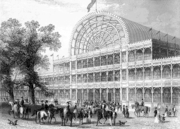
had proposed to organise an international tournament in Germany, whose winner was to be recognised as the world champion. Staunton and his colleagues had ambitious objectives for this tournament, including convening a "Chess Parliament" to complete the standardisation of various rules and procedures for competitive chess and for writing about chess. Staunton also proposed the production of a compendium
showing what was known about chess opening
s, preferably as a table. Before the tournament started Captain Kennedy
and the Liberty Weekly Tribune in Missouri
wrote that the winner should be regarded as "the World’s Chess Champion".
The organisers obtained financial contributions from Europe, the US and Asia, enabling the committee to set up a prize fund of £500, equivalent to about £359,000 in 2006's money.
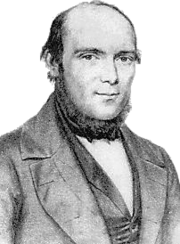 Despite the generally enthusiastic response, several major players were unable to participate, including von der Lasa
, Saint-Amant and Cochrane. Adolf Anderssen
was at first deterred by the travel costs, but accepted his invitation when Staunton offered to pay Anderssen's travel expenses out of his own pocket if necessary. The committee had also organised a "London Provincial Tournament" for other British players, and "promoted" some of the entrants to play in the International Tournament in order to obtain the right number of players for a knock-out tournament
.
The tournament was a success, but disappointing for Staunton personally; in the second round he was knocked out
by Anderssen, who won the tournament convincingly; and in the play-off for third place Staunton was narrowly beaten by Elijah Williams
. Staunton's defeat by Williams suggests that Staunton had over-stretched himself by acting as both a competitor and the Secretary of the organising committee.
The London Chess Club, which had fallen out with Staunton and his colleagues, organised a tournament that was played a month later and had a multi-national set of players (many of whom had competed in Staunton's tournament), and the result was the same - Anderssen won.
In 1852 Staunton published his book The Chess Tournament, which recounted in detail the efforts required to make the London International Tournament happen and presented all the games with his comments on the play. Unfortunately some of Staunton's comments in the book and in the Illustrated London News were intemperate, because he was disappointed with the placing he achieved.
to a match of twenty-one games, for £100. Anderssen accepted the challenge but the match could not be arranged: Staunton was physically unfit for an immediate contest, and Anderssen had to return to work.
Carl Jaenisch
had arrived too late for the tournament; Staunton convincingly won a match with him soon after (seven wins, one draw, and two losses). Later in 1851 Staunton played a match against Elijah Williams
, who had won their play-off for third place in the London International tournament. Staunton won more games (six wins, three draws, and four losses) but lost the match because he had given Williams a three-game start.
In 1853, while trying to arrange a match against Anderssen, Staunton met von der Lasa
in Brussels. The two began a match, but had to abandon it in the middle of the thirteenth game, with von der Lasa leading (five wins, four losses, and three draws). Staunton was unfit to continue because of heart palpitations, which had affected him in the second match against Saint-Amant in 1843. In von der Lasa's opinion there was no chance that Staunton's health would be good enough for a serious contest from 1853 onwards.
Note: some writers say Staunton and von der Lasa played a match in Berlin in 1844; but Staunton wrote in the Chess Player's Chronicle that he had the pleasure of making the personal acquaintance of von der Lasa in their 1853 encounter – see
In the mid-1850s Staunton obtained a contract with the publishers Routledge
to edit the text of Shakespeare. This edition appeared in parts from 1857 to 1860, and Staunton's work was praised by experts.
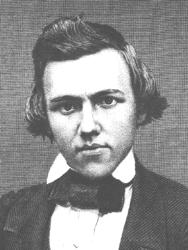 While Staunton was busy with the Shakespeare edition, he received a courteous letter from the New Orleans Chess Club, inviting him to that city to play Paul Morphy
, who had won the recent First American Chess Congress. Staunton replied, thanking the New Orleans Chess Club and Morphy "for the honor implied in your selection of me as the opponent of such a champion" and pointing out that he had not competed for several years and was working six days a week (on editing Shakespeare), and that he could not possibly travel across the Atlantic for a match. He also wrote in the Illustrated London News
that he had "been compelled, by laborious literary occupation, to abandon the practice of chess, beyond the indulgence of an occasional game... If Mr. Morphy — for whose skill we entertain the liveliest admiration — be desirous to win his spurs among the chess chivalry of Europe, he must take advantage of his purposed visit next year; he will then meet in this country, in France, in Germany and in Russia, many champions ... ready to test and do honor to his prowess." Chess historian H.J.R. Murray
wrote that Staunton's letter and article should have been interpreted as a courteous refusal of the offer, but that Morphy interpreted them differently, and one of the main reasons for his visit to Europe in 1858 was the hope of playing a match with Staunton. Some other chess historians disagree with Murray's interpretation of Staunton's response. Staunton did offer to play Morphy by electric telegraph, a technology whose progress and uses for chess he reported enthusiastically. However this offer arrived after Morphy had left for Europe — which perhaps was fortunate, as the newly-laid cable broke down after a month and was not replaced until 1866.
Upon arriving in England in June 1858, Morphy promptly challenged Staunton to a match. At first, Staunton declined Morphy's offer saying that the challenge came too late. Morphy did not give up negotiations and urging Staunton to play. In early July Staunton agreed provided he was given time to get back into practice on openings
and endgames, and provided that he could manage all this without breaking the publication contract for his Shakespearean work. In early August, Morphy wrote asking Staunton when the match could occur, and Staunton asked again for a delay of some weeks. Staunton competed in a tournament that started in on 22 August in Birmingham
, but this was a knock-out tournament
and he was eliminated in the second round by Johann Löwenthal
, after playing a total of four games. This was to be Staunton's last public chess competition. H.J.R. Murray wrote that Staunton had overexerted himself and damaged his health by trying both to get ahead of schedule on the Shakespeare project and to play some competitive chess. Just before Staunton left London for Birmingham, his old enemy George Walker
published an article accusing him of trying to delay the match indefinitely, and Staunton received another letter from Morphy pressing him to name a date for the match. Staunton and Morphy met socially in Birmingham and, after a tense discussion, Staunton agreed to play in early November. Just after the tournament a letter signed by "Anti-book" appeared in Staunton's column in the Illustrated London News, alleging that Morphy did not actually have the money for his share of the stakes. This letter is widely thought to have been written by Staunton himself; if so, he must have written it immediately after reading Walker's article and Morphy's letter and immediately before leaving for Birmingham. Around this time Morphy wrote to friends in the US asking them to obtain the stake money for the Staunton match. Morphy's family refused to contribute as they "should not allow him to play a money match either with his own money or anyone else's", but the New Orleans Chess Club sent £500. Meanwhile Morphy went to Paris to play against continental masters. In September the Illustrated London News printed both a complimentary full-page article about Morphy and a complimentary mention of him in its chess column. On 6 October 1858, while in Paris Morphy wrote Staunton an open letter
which was also circulated to several publications, in which Morphy complained about Staunton's conduct. Staunton replied on 9 October, re-stating the difficulties he faced, but now giving them as reasons to cancel the match. On 23 October, Staunton published his entire reply along with a partial copy of Morphy's open letter, omitting the reference to the "Anti-book" letter. Various chess columns then printed anonymous and acrimonious letters. Morphy took no part in any of this, but wrote to Lord Lyttelton
, the president of the British Chess Association, explaining his own efforts to bring about the match, accusing Staunton of avoiding the match by all means short of admitting he did not wish to play, complaining about Staunton's representation of the facts in the Illustrated London News, and demanding "that you shall declare to the world it is through no fault of mine that this match has not taken place." Lyttelton replied that it was reasonable for Staunton to decline the match, but that in his opinion Staunton should have done so plainly in his first letter to America, but had instead often given the impression that he would soon be ready to start the match.
but which also presented some progressive ideas: learning can only take place successfully if the active interest of the student is engaged; corporal punishment
is to be avoided and fagging
should be abolished. But most of his later life was occupied in writing about Shakespeare, including: a photolithographic reproduction of the 1600 Quarto of Much Ado about Nothing
in 1864 and of the First Folio
of Shakespeare in 1866; and papers on Unsuspected Corruptions of Shakespeare's Text, published from 1872 to his death. All these works were highly regarded at the time. When he died suddenly of heart disease, on 22 June 1874, he was at his desk writing one of these papers. At the same time he was also working on his last chess book, Chess: Theory and Practice, which was published posthumously in 1876.
A memorial plaque now hangs at his old residence of 117 Lansdowne Road, London W11. In 1997 a memorial stone bearing an engraving of a chess knight
was raised over his grave at Kensal Green Cemetery in London, which had previously been unmarked and neglected.
writes, "The issue of national bias does, unfortunately, require consideration in the Staunton–Morphy affair." Chess historian Dale Brandreth makes a similar point, from an American perspective:"the fact is that the British have always had their 'thing' about Morphy. They just can't seem to accept that Staunton was an unmitigated bastard in his treatment of Morphy because he knew damned well he could never have made any decent showing against him in a match." However, Frederick Edge (1830–82) and Philip W. Sergeant (1872–1952), two of Staunton's harshest critics, were British, while former world champion Bobby Fischer
(1943–2008), one of the biggest fans of both Staunton and Morphy, was American.
Edge's letters to Fiske show that Edge regarded Morphy as lazy and rather helpless, and himself as the one who would make Morphy's name immortal, and that Morphy wanted to keep the negotiations with Staunton discreet while Edge insisted on making them as public as possible.
H.J.R. Murray wrote that Staunton's response to Morphy's initial challenge and his article about the same in the Illustrated London News should have been interpreted as a courteous refusal of the offer, but that Morphy interpreted them differently, and one of the main reasons for his visit to Europe in 1858 was the hope of playing a match with Staunton. Murray also commented on the whole affair, "In all this there is but little in which we can reproach Staunton, beyond the fact that he kept open the possibility of a match for so long, and even here there is a good deal that could be urged in justification of the course followed by Staunton" but also noted that both sides were playing tactical games with each other in front of the public, and that comments made by both players or their respective supporters were acrimonious. In response to Morphy's complaints Lord Lyttelton, then president of the British Chess Association, said that it was reasonable for Staunton to decline the match, but that in his opinion Staunton should have done so plainly in his first letter to America, but had instead often given the impression that he would soon be ready to start the match. von der Lasa later wrote, although not specifically about this affair, that he thought there was no chance of Staunton's health being good enough for a serious contest from 1853 onwards. William Norwood Potter wrote in his obituary of Staunton in the City of London Chess Magazine, "... nor were his innuendoes concerning Morphy otherwise than an utterly unworthy means of getting out of an engagement, which he could have either declined with a good grace at first, or afterwards have honourably asked to be released from. Nevertheless, all said and done, Staunton was, as we have often heard a distinguished enemy of his say, emphatically a MAN. There was nothing weak about him, and he had a backbone that never curved with fear of any one."
Some 20th-century commentators have been more critical of Staunton. However some well-known chess writers, including Fred Reinfeld
, Israel "Al" Horowitz and Reuben Fine
, have been criticized by chess historians for their lack of accuracy, both in general and specifically where Staunton is concerned. Edward Winter writes, "It is unwise for the 'non-playing' historian to publish his own analysis, although he may be a useful compiler. Similarly, players who are unversed in, and indifferent to, chess history should not touch it." William Hartston
wrote of Staunton's non-match with Morphy, "Sadly, this blemish on Staunton the man also did considerable harm to the reputation among later generations of Staunton the chess player." G.H. Diggle wrote in the British Chess Magazine
, "That [Staunton] excused himself ... from playing a match against the greatest player of the century, then at the zenith of his youth and fame, was no tragedy for chess. The contest would have been a fiasco. But it would have been happier, both for the young champion and the old, had the latter never said he would play at all."
described Staunton as the author of "some devilish bad games". Chess historian Edward Winter
traced this back to a book published in 1902, whose author said he had seen a copy of Staunton's The Chess Tournament in which Morphy had written "some devilish bad games" on the title page; Winter was unable to trace the copy. Around the time of Staunton's death Morphy is said to have commented that Staunton may have been the strongest player of his time, had great analytical ability and judgement of positions but lacked the imagination required to deliberately create opportunities for combinations
.
Twentieth-century opinions of Staunton's play varied enormously. Fred Reinfeld
, Al Horowitz and Reuben Fine
all condemned it. On the other hand, Savielly Tartakower
wrote, "A remarkable feature of Staunton's play is the number of ultra-modern ideas with which he was familiar, e.g. the restricted centre, the fianchetto
development, bilateral work, the theory of the local engagement, etc., and, last but not least, the English Opening
(sometimes called the Staunton Opening)." Garry Kasparov
considered Staunton "by the early 1840s ... superior to all his rivals". Bobby Fischer
opined that "Staunton was the most profound opening analyst of all time. He was more theorist than player, but nonetheless he was the strongest player of his day... In addition, he understood all of the positional concepts which modern players hold dear, and thus – with Steinitz – must be considered the first modern player."
The website Chessmetrics
ranks Staunton as world number one from May 1843 to August 1849, in the top ten from July 1851 to May 1853, and in the top five from June 1853 to January 1856.
From the early 1840s to 1851 Staunton could successfully give odds
to almost any UK
-based player, including eventually John Cochrane; the exceptions were Henry Thomas Buckle
, to whom Staunton gave pawn and move in 1843 and lost their match (six losses, no draws, one win), and Elijah Williams
in 1851, against whom Staunton won more games but lost the match because he had given Williams a three-game start. According to match records collected by Jeremy P. Spinrad, the only players who were successful against Staunton without receiving odds from 1840 to 1852 were: Saint-Amant, who won their first match in London in 1843 and lost their second, longer match in Paris the same year; Adolf Anderssen
, who eliminated Staunton from the 1851 London International tournament
; and Elijah Williams
, who beat Staunton in the play-off for third place in the same tournament. Before 1840 Staunton was still a relative beginner, and after 1851 his health was too fragile for serious competition. In the late 1840s some UK commentators wrote that Buckle was stronger, and von der Lasa
was regarded by some as the world's best. Staunton did not play von der Lasa until 1853, and was forced by ill-health to abandon the match.
In his own time Staunton was regarded as belonging to the "closed" category of chess players (along with for example Philidor
and József Szén
) rather than to the "heroic" category (which included La Bourdonnais
, Morphy and Anderssen) – instead of seeking immediate combat, Staunton deferred it until he was ready. The closed English Opening
got its name from Staunton's frequent use of it, especially against Saint-Amant in 1843. However he was noted for the accuracy and incisiveness of his combinations
.
commented that Staunton "founded and edited the magazine Chess Player's Chronicle ... wrote a chess column (1845–1874), studied opening theory ... published four remarkable books ... endorsed the famous 'Staunton pieces
' ... organized the first international chess tournament in history ..." However British International Master William Hartston
wrote that Staunton's many achievements were done "with the full weight of an arrogant and pompous nature which has scarcely been matched in the history of the game." Even contemporaries sympathetic to Staunton admitted that he could be spiteful in response to unexpected defeats, and to proposals or arguments that he considered ill-founded or malicious. Staunton had a highly volatile relationship with George Walker
, the founder of the London Chess Club, a dedicated popularizer of chess and one of Staunton's earliest supporters.
Staunton's enemies gave as good as they got. Chess journalism could be a bruising business in those days, even when Staunton was not involved. However it does seem that Staunton was involved in more than his fair share of chess disputes. H.J.R. Murray suggested that these frequent wars of words may have originated from leading players' and commentators' jealousy over Staunton's unexpected rise to the top in the early 1840s, and from snobbish disdain about his humble and possibly illegitimate birth. Saidy and Lessing wrote that, "He can hardly be blamed if the struggles and privations of his youth warped his character so that he became a jealous, suspicious, and vitriolic man."
On the other hand Staunton's often-criticized description of Anderssen as Germany's second best player, after Anderssen had won the 1851 London International tournament, may have been reasonable on the basis of what is now known about von der Lasa's
skill. Staunton was sometimes an objective chess commentator: a large percentage of his 1860 book Chess Praxis was devoted to Morphy's games, which he praised highly; and in The Chess-Player's Companion (1849) Staunton sometimes criticized his own play, and presented a few of his losses.
Staunton showed excellent management skills in building the team to organize the London International tournament of 1851, and determination and resourcefulness in overcoming the difficulties of getting enough competitors. He also maintained good working relationships with important players and enthusiasts, for example: Popert and Cochrane helped him to prepare for his second match against Saint-Amant; Captain Evans
agreed to be one of his seconds in that match and later helped Staunton to organize the 1845 telegraphic match; the Calcutta Chess Club contributed £100 to help finance the London International Tournament in 1851, and in addition its principal officers Cochrane and T.C. Morton made two of the four largest personal contributions; Staunton corresponded with von der Lasa for over 30 years, although they only met once; Staunton's last letter to von der Lasa, November 1873, expressed his sorrow at the deaths of various masters and enthusiasts, including Saint-Amant. In conversation Staunton was charming and witty.The attack on Walker is from
The account of Staunton's conversational skills is from
Despite the disappointing way in which his playing career ended, Staunton continued to write with enthusiasm about the progress of new technologies, players and developments in chess theory. At the time of his death his last book, Chess: Theory and Practice, was sufficiently complete to be published posthumously in 1876, and it was described as up-to-date fourteen years after his death.
, which proved that such events were possible, and which produced a clear consensus on who was the world's strongest player – Adolf Anderssen
. All subsequent international tournaments took place in Great Britain
until Paris 1867.
Contemporaries, including Steinitz
and Morphy
, regarded Staunton's writings on chess opening
s as among the best of their time. His Chess-Player's Handbook (1847) immediately became the leading English-language chess text-book. It went through twenty-one reprints by 1935, spawned several imitators, and remained in print (in a revised edition) until the 1940s. Around 1888 Staunton's Chess: Theory and Practice, published posthumously in 1876, was regarded as modern in most respects, but there was a growing need for more up-to-date analysis of openings. His obituary
in The City of London Chess Magazine said, "... his literary labours are the basis upon which English Chess Society ... stands".
His play, however, had little influence on other players of the day. William Hartston
explains that, "... his chess understanding was so far ahead of his time. A deep strategist living in an era when shallow tactics were still the rule, Staunton's conceptions could not be assimilated by his contemporaries." Staunton's style and the openings that accompanied it were eclipsed by the more directly aggressive styles of Anderssen
and Morphy, which dominated chess from 1851 until Steinitz unveiled his positional approach in 1873.
There is little evidence that Staunton had much direct influence on modern chess. Although he introduced the English Opening
, it has been called "really a twentieth century invention" that only became fully respectable after future World Champion Mikhail Botvinnik
began playing it in the 1930s. Similarly, although he was an early champion of the Sicilian Defense, which is today the most popular opening, and the most successful response to 1.e4, he seems to have had little influence on how the Sicilian is played today: he regarded it as a safe defensive line, while it is now treated as a vigorous but slightly risky counter-attack. On the other hand, Raymond Keene
wrote that "Taimanov
revived some old, forgotten ideas of Staunton ..." in the Sicilian.
Staunton introduced the Staunton Gambit
against the Dutch Defense (1.d4 f5 2.e4!?). Although it was once a feared attacking line, it has been out of favor since the mid-1920s, and is thought to "offer White equality at best”. Staunton also analyzed a different gambit
approach to the Dutch, 2.h3 followed by g4. In 1979 Viktor Korchnoi
, one of the world's leading players, successfully introduced this line into top-class competition, but later authorities concluded, as Staunton had, that Black gets a good game with 2...Nf6 3.g4 d5!
Staunton also advocated the Ponziani Opening
1.e4 e5 2.Nf3 Nc6 3.c3, which was often called "Staunton's Opening". It is rarely played today because it allows Black to choose between a sharp counter-attack and a safe line that usually leads to a draw.
has been held at Simpson's-in-the-Strand
, London
, a restaurant which Staunton regularly visited in the 19th century to play and discuss chess (it was then a coffee house
known as "The Divan" or "Simpson's Divan"). The 2008 tournament was the strongest to be held in London since 1986.
a piece for a counterattack that leads to a decisive material advantage. Staunton develops faster, weakens his opponent's K-side, creates threats on the queenside and then launches a mating
attack. Staunton develops his pieces more effectively in a closed position. When Saint Amant mistakenly opens the position, Staunton produces a sacrificial
combination
that gives him an easily won endgame. Staunton uses a modern-looking formation in the English Opening
, with both Bishops fianchetto
ed; gains superior space and mobility; weakens his opponent's queenside and then kingside; and wins by a brisk attack. Staunton adopts a Hippopotamus
formation, opens the center to start a queenside attack, and uses a couple of small sacrificial combinations to halt Anderssen's kingside attack and gain a decisive material advantage.
Notes:
Chess master
A chess master is a chess player of such skill that he/she can usually beat chess experts, who themselves typically prevail against most amateurs. Among chess players, the term is often abbreviated to master, the meaning being clear from context....
who is generally regarded as having been the world's strongest player from 1843 to 1851, largely as a result of his 1843 victory over Saint-Amant. He promoted a chess
Chess
Chess is a two-player board game played on a chessboard, a square-checkered board with 64 squares arranged in an eight-by-eight grid. It is one of the world's most popular games, played by millions of people worldwide at home, in clubs, online, by correspondence, and in tournaments.Each player...
set of clearly distinguishable pieces
Chess piece
Chess pieces or chessmen are the pieces deployed on a chessboard to play the game of chess. The pieces vary in abilities, giving them different values in the game...
of standardised shape—the Staunton pattern
Staunton chess set
The Staunton chess set is composed of a particular type of chess pieces used to play the game of chess. According to the rules of chess, this style is to be used for competitions. Nathaniel Cook is credited with the design, and they are named after Howard Staunton. The first 500 sets were hand...
—that is still the style required for competitions. He was the principal organiser of the first international chess tournament
London 1851 chess tournament
right|thumb|[[Adolf Anderssen]] won both the London International Tournament and the rival London Club Tournament.London 1851 was the first international chess tournament. The tournament was conceived and organised by English player Howard Staunton, and marked the first time that the best chess...
in 1851, which made England
England
England is a country that is part of the United Kingdom. It shares land borders with Scotland to the north and Wales to the west; the Irish Sea is to the north west, the Celtic Sea to the south west, with the North Sea to the east and the English Channel to the south separating it from continental...
the world's leading chess centre and caused Anderssen
Adolf Anderssen
Karl Ernst Adolf Anderssen was a German chess master. He is considered to have been the world's leading chess player in the 1850s and 1860s...
to be recognised as the world's strongest player
World Chess Championship
The World Chess Championship is played to determine the World Champion in the board game chess. Men and women of any age are eligible to contest this title....
.
From 1840 onwards he became a leading chess commentator, and won matches against top players of the 1840s. In 1847 he entered a parallel career as a Shakespearean scholar. Ill health and his two writing careers led him to give up competitive chess after 1851. In 1858 attempts were made to organise a match between Staunton and Morphy
Paul Morphy
Paul Charles Morphy was an American chess player. He is considered to have been the greatest chess master of his era and an unofficial World Chess Champion. He was a chess prodigy...
, but they failed. It is often alleged that Staunton deliberately misled Morphy while trying to avoid the match, but it is also possible Staunton over-estimated his chances of getting physically fit and of making time available for a match.
Modern commentators consider Staunton's understanding of positional play to have been far ahead of his contemporaries. Although not an all-out attacking player, he was known for accurate attacks when his preparations were complete. His chess articles and books were widely read and encouraged the development of chess in the United Kingdom, and his Chess-Player's Handbook (1847) was a reference for decades. The chess opening
Chess opening
A chess opening is the group of initial moves of a chess game. Recognized sequences of opening moves are referred to as openings as initiated by White or defenses, as created in reply by Black. There are many dozens of different openings, and hundreds of named variants. The Oxford Companion to...
s the English Opening
English Opening
In chess, the English Opening is the opening where White begins:A flank opening, it is the fourth most popular and, according to various databases, anywhere from one of the two most successful to the fourth most successful of White's twenty possible first moves. White begins the fight for the...
and Staunton Gambit
Staunton Gambit
The Staunton Gambit is a chess opening characterized by the moves:Black can decline the gambit with 2...d6, transposing to the Balogh Defence; or 2...e6, transposing to the Kingston Defence...
were named for his advocacy of them. Staunton has been a controversial figure since his own time, and his chess writings could be spiteful. On the other hand he maintained good working relationships with several strong players and influential chess enthusiasts, and demonstrated excellent management skills.
Life
Harold James Ruthven Murray
Harold James Ruthven Murray , was an English educationalist, inspector of schools, and prominent chess historian. He was the first to publish the theory that chess originated in India...
summarized the information that he "gleaned" from various sources: Staunton was born in 1810, reputedly the natural son
Legitimacy (law)
At common law, legitimacy is the status of a child who is born to parents who are legally married to one another; and of a child who is born shortly after the parents' divorce. In canon and in civil law, the offspring of putative marriages have been considered legitimate children...
of Frederick Howard, fifth Earl of Carlisle
Frederick Howard, 5th Earl of Carlisle
Frederick Howard, 5th Earl of Carlisle, KG, KT, PC was a British diplomat and the son of Henry Howard, 4th Earl of Carlisle and his second wife Isabella Byron....
; he was neglected in youth, receiving little or no education; although he spent some time in Oxford, he was never a member of the University; when he came of age he inherited a few thousand pounds, which he soon squandered; in later life Staunton often used to tell how he had once played Lorenzo in the Merchant of Venice, with the famous English actor Edmund Kean
Edmund Kean
Edmund Kean was an English actor, regarded in his time as the greatest ever.-Early life:Kean was born in London. His father was probably Edmund Kean, an architect’s clerk, and his mother was an actress, Anne Carey, daughter of the 18th century composer and playwright Henry Carey...
playing Shylock.
1836–42, First steps in chess
In 1836 Staunton came to LondonLondon
London is the capital city of :England and the :United Kingdom, the largest metropolitan area in the United Kingdom, and the largest urban zone in the European Union by most measures. Located on the River Thames, London has been a major settlement for two millennia, its history going back to its...
, where he took out a subscription for William Greenwood Walker's Games at Chess, actually played in London, by the late Alexander McDonnell
Alexander McDonnell
Alexander McDonnell was an Irish chess master, who contested a series of six matches with the world’s leading player Louis-Charles Mahé de La Bourdonnais in the summer of 1834.- Early life :...
Esq. Staunton was apparently twenty-six when he took a serious interest in chess. He said that at that time the strongest players he saw in London, Saint-Amant and George Walker
George Walker (chess player)
George Walker was an English chess player and author of The Celebrated Analysis of A D Philidor , The Art of Chess-Play: A New Treatise on the Game of Chess , A Selection of Games at Chess played by Philidor , Chess Made Easy , and Chess Studies .In 1839 visited...
, could easily have given him rook odds
Chess handicap
A handicap in chess is a way to enable a weaker player to have a chance of winning against a stronger one. There are many kinds of such handicaps, such as material odds, extra moves A handicap (or "odds") in chess is a way to enable a weaker player to have a chance of winning against a stronger...
. In 1838 he played many games with Captain Evans
William Davies Evans
Captain William Davies Evans was a seafearer and inventor, though he is best known today as a chess player. He is buried at the Belgian port of Ostend.- Early life :...
, inventor of the Evans Gambit
Evans Gambit
The Evans Gambit is a chess opening characterised by the moves:The gambit is named after the Welsh sea Captain William Davies Evans, the first player known to have employed it. The first game with the opening is considered to be Evans - McDonnell, London 1827, although in that game a slightly...
, and also lost a match against the German chess writer Aaron Alexandre
Aaron Alexandre
Aaron Alexandre was a Jewish German–French–English chess player and writer.Aaron Alexandre, a Bavarian trained as a rabbi, arrived in France in 1793. Encouraged by the French Republic's policy of religious toleration, he became a French citizen. At first, he worked as a German teacher and as...
. He had improved sufficiently by 1840 to win a match against the German master H.W. Popert, a slow, cautious player with great defensive skill.
From May to December 1840 Staunton edited a chess column for the New Court Gazette. He then became chess editor of the magazine British Miscellany, and his chess column developed into a separate magazine, the Chess Player's Chronicle
Chess Player's Chronicle
The Chess Player's Chronicle, founded by Howard Staunton and extant from 1841–56 and 1859–62, was the world's first successful English-language magazine devoted exclusively to chess. Various unrelated but identically or similarly named publications were published until 1902.The earliest chess...
, which Staunton owned and edited until the early 1850s.
1843, Competitive peak
Early in 1843 Staunton prevailed in a long series of games against John Cochrane, a strong player and chess theoretician. ChessmetricsChessmetrics
Chessmetrics is a system for rating chess players devised by Jeff Sonas. It is intended as an improvement over the Elo rating system.-Implementation:...
treats these games incorrectly as one match when it was in fact a series of matches, and lists it as Staunton's best performance.
A little later that year he lost a short match (2½-3½) in London against the visiting French player Saint-Amant, who was generally regarded as the world's strongest active player.
Staunton challenged Saint-Amant to a longer match to be played in Paris for a stake of £100, equivalent to about £73,000 in 2006's money. Then he prepared new opening
Chess opening
A chess opening is the group of initial moves of a chess game. Recognized sequences of opening moves are referred to as openings as initiated by White or defenses, as created in reply by Black. There are many dozens of different openings, and hundreds of named variants. The Oxford Companion to...
lines, especially those beginning 1.c4, which became known as the English Opening
English Opening
In chess, the English Opening is the opening where White begins:A flank opening, it is the fourth most popular and, according to various databases, anywhere from one of the two most successful to the fourth most successful of White's twenty possible first moves. White begins the fight for the...
after this match. He also took Thomas Worrall and Harry Wilson to Paris as his assistants; this is the first known case where seconds were used in a match. Staunton gained a seven-game lead but then struggled to keep it before winning the match 13-8 (eleven wins, four draws, and six losses) in December 1843.
Saint-Amant wanted a third match, but Staunton was initially unwilling as he had developed heart trouble during the second match. Von der Lasa
Tassilo von Heydebrand und der Lasa
Tassilo, Baron von Heydebrand und der Lasa was an important German chess master, chess historian and theoretician of the nineteenth century, a member of the Berlin Chess Club and a founder of the Berlin Chess School .His...
later suggested this was why Staunton faded in the second match. However after a long, difficult negotiation, which he reported in the Chess Player's Chronicle, Staunton went to Paris intending to start their third match in October 1844, but he caught pneumonia
Pneumonia
Pneumonia is an inflammatory condition of the lung—especially affecting the microscopic air sacs —associated with fever, chest symptoms, and a lack of air space on a chest X-ray. Pneumonia is typically caused by an infection but there are a number of other causes...
while traveling and almost died; the match was postponed and never took place.
Several modern commentators regard Staunton as de facto World Champion after his match victory over Saint-Amant, although that title did not yet formally exist. After Saint-Amant's defeat, no other Frenchmen arose to continue the French supremacy in chess established by Philidor
François-André Danican Philidor
François-André Danican Philidor , often referred to as André Danican Philidor during his lifetime, was a French composer and chess player. He contributed to the early development of the opéra comique...
, Deschapelles
Alexandre Deschapelles
Alexandre Deschapelles was a French chess player who, between the death of Philidor and the arrival of Louis de la Bourdonnais, was probably the strongest player in the world...
, La Bourdonnais
Louis-Charles Mahé de La Bourdonnais
Louis-Charles Mahé de La Bourdonnais was a French chess master, possibly the strongest player in the early 19th century.- Early life :...
and Saint-Amant. Some contemporary English commentators, mainly in Staunton's Chess Player's Chronicle, and some later writers hailed Staunton as the world champion
World Chess Championship
The World Chess Championship is played to determine the World Champion in the board game chess. Men and women of any age are eligible to contest this title....
.
The response was less enthusiastic elsewhere in Europe. Even in England some writers suggested other players, notably Buckle
Henry Thomas Buckle
Henry Thomas Buckle was an English historian, author of an unfinished History of Civilization.- Biography :...
or von der Lasa, were stronger.
1845–48, Chess writer and promoter
In 1845 Staunton began a chess column for the Illustrated London NewsIllustrated London News
The Illustrated London News was the world's first illustrated weekly newspaper; the first issue appeared on Saturday 14 May 1842. It was published weekly until 1971 and then increasingly less frequently until publication ceased in 2003.-History:...
, which became the most influential chess column in the world and which he continued for the rest of his life. Although his articles mostly focused on over-the-board play, a significant number featured correspondence chess
Correspondence chess
Correspondence chess is chess played by various forms of long-distance correspondence, usually through a correspondence chess server, through email or by the postal system; less common methods which have been employed include fax and homing pigeon...
. Some followed with enthusiasm the progress of promising youngsters, including Paul Morphy
Paul Morphy
Paul Charles Morphy was an American chess player. He is considered to have been the greatest chess master of his era and an unofficial World Chess Champion. He was a chess prodigy...
. Staunton produced over 1,400 weekly articles for the Illustrated London News.
Electrical telegraph
An electrical telegraph is a telegraph that uses electrical signals, usually conveyed via telecommunication lines or radio. The electromagnetic telegraph is a device for human-to-human transmission of coded text messages....
took place in 1844, between Washington and Baltimore. In April 1845 Staunton and Captain Kennedy
Hugh Alexander Kennedy
Hugh Alexander Kennedy was a British chess master.He was a former British army captain and leading London chess player. In 1844, he lost a match to Howard Staunton...
traveled to Gosport
Gosport
Gosport is a town, district and borough situated on the south coast of England, within the county of Hampshire. It has approximately 80,000 permanent residents with a further 5,000-10,000 during the summer months...
to play two games by telegraph against a group in London. Staunton took a long-term interest in this solution to the difficulties of travel, and reported telegraph games in the Illustrated London News. In 1871 his report of a telegraphic match between Sydney
Sydney
Sydney is the most populous city in Australia and the state capital of New South Wales. Sydney is located on Australia's south-east coast of the Tasman Sea. As of June 2010, the greater metropolitan area had an approximate population of 4.6 million people...
and Adelaide
Adelaide
Adelaide is the capital city of South Australia and the fifth-largest city in Australia. Adelaide has an estimated population of more than 1.2 million...
calculated that the 74 moves of the longest game had traveled a total of 220,000 miles (not much less than the distance between Earth
Earth
Earth is the third planet from the Sun, and the densest and fifth-largest of the eight planets in the Solar System. It is also the largest of the Solar System's four terrestrial planets...
and Moon
Moon
The Moon is Earth's only known natural satellite,There are a number of near-Earth asteroids including 3753 Cruithne that are co-orbital with Earth: their orbits bring them close to Earth for periods of time but then alter in the long term . These are quasi-satellites and not true moons. For more...
).
In 1847 Staunton published his most famous work, The Chess-Player's Handbook, which is still in print. It contained over 300 pages of opening
Chess opening
A chess opening is the group of initial moves of a chess game. Recognized sequences of opening moves are referred to as openings as initiated by White or defenses, as created in reply by Black. There are many dozens of different openings, and hundreds of named variants. The Oxford Companion to...
analysis, and almost 100 pages of endgame analysis. Staunton's Handbook was based on Bilguer and von der Lasa's
Tassilo von Heydebrand und der Lasa
Tassilo, Baron von Heydebrand und der Lasa was an important German chess master, chess historian and theoretician of the nineteenth century, a member of the Berlin Chess Club and a founder of the Berlin Chess School .His...
Handbuch des Schachspiels
Handbuch des Schachspiels
Handbuch des Schachspiels is a chess book, first published in 1843 by Tassilo von Heydebrand und der Lasa. It was one of the most important opening references for many decades...
(first published in 1843), but enhanced by many variations and analyses of Staunton's own. His book The Chess-Player's Companion followed in 1849.
He still found time for two matches in 1846, comfortably beating the professionals Bernhard Horwitz
Bernhard Horwitz
Bernhard Horwitz was a German English chess master and chess writer.Horwitz was born in Neustrelitz, and went to school in Berlin, where he studied art. From 1837 to 1843, he was part of a group of German chess players known as "The Pleiades".He moved to London in 1845...
(fourteen wins, three draws, and seven losses) and Daniel Harrwitz
Daniel Harrwitz
Daniel Harrwitz was a Jewish German chess master.Harrwitz was born in Breslau in the Prussian Province of Silesia. He established his reputation in Paris, particularly as a player of blindfold games...
. The match against Harrwitz was set up in a very unusual way: seven games in which Staunton gave Harrwitz odds
Chess handicap
A handicap in chess is a way to enable a weaker player to have a chance of winning against a stronger one. There are many kinds of such handicaps, such as material odds, extra moves A handicap (or "odds") in chess is a way to enable a weaker player to have a chance of winning against a stronger...
of pawn and two moves (Staunton won four and lost three), seven games where he gave pawn and move (Staunton lost six and won one), and seven at no odds (Staunton won all seven).
1849, Marriage and design of a chess set
In 1849 Nathaniel Cook
Nathaniel Cook
Nathaniel Cook was the designer of a set of chess figures, which is now the standard set.He registered his design at the United Kingdom Patent Office on 1 March 1849 under the Ornamental Designs Act of 1842. As he was the editor of The Illustrated London News, the newspaper where Howard Staunton...
registered a chess set design, and Jaques of London
Jaques of London
Jaques of London, formerly known as John Jaques of London and Jaques and Son of London is a long-established family company that manufactures sports and game equipment...
obtained the manufacturing rights. Staunton advertised the new set in his Illustrated London News chess column, pointing out that the pieces were easily identifiable, very stable, and good-looking. Each box was signed by Staunton, and Staunton received a royalty on each set sold. The design became popular, and has been the standard for both professional and amateur chess players ever since. Anthony Saidy
Anthony Saidy
Anthony Saidy is an International Master of chess. He has played many times in the U.S. Chess Championship. He won the 1960 Canadian Open Chess Championship. He is the author of several chess books, including The Battle of Chess Ideas, and The World of Chess...
and Norman Lessing
Norman Lessing
Norman Lessing was an American television screenwriter and producer, playwright, chess master, and chess writer.-Biography:...
wrote that, "if a vote was taken among chess-players as to which pieces they most enjoyed playing with, ... the Staunton chessmen would win by an overwhelming margin."
1851, London International Tournament
Staunton proposed and then took the lead in organising the first ever international tournament, as he thought the Great Exhibition of 1851 presented a unique opportunity, because the difficulties that obstructed international participation would be greatly reduced. He may also have been motivated by reports that a few years earlier Ludwig BledowLudwig Bledow
Dr Ludwig Erdmann Bledow was a German chess master and chess organizer ....
had proposed to organise an international tournament in Germany, whose winner was to be recognised as the world champion. Staunton and his colleagues had ambitious objectives for this tournament, including convening a "Chess Parliament" to complete the standardisation of various rules and procedures for competitive chess and for writing about chess. Staunton also proposed the production of a compendium
Compendium
A compendium is a concise, yet comprehensive compilation of a body of knowledge. A compendium may summarize a larger work. In most cases the body of knowledge will concern some delimited field of human interest or endeavour , while a "universal" encyclopedia can be referred to as a compendium of...
showing what was known about chess opening
Chess opening
A chess opening is the group of initial moves of a chess game. Recognized sequences of opening moves are referred to as openings as initiated by White or defenses, as created in reply by Black. There are many dozens of different openings, and hundreds of named variants. The Oxford Companion to...
s, preferably as a table. Before the tournament started Captain Kennedy
Hugh Alexander Kennedy
Hugh Alexander Kennedy was a British chess master.He was a former British army captain and leading London chess player. In 1844, he lost a match to Howard Staunton...
and the Liberty Weekly Tribune in Missouri
Missouri
Missouri is a US state located in the Midwestern United States, bordered by Iowa, Illinois, Kentucky, Tennessee, Arkansas, Oklahoma, Kansas and Nebraska. With a 2010 population of 5,988,927, Missouri is the 18th most populous state in the nation and the fifth most populous in the Midwest. It...
wrote that the winner should be regarded as "the World’s Chess Champion".
The organisers obtained financial contributions from Europe, the US and Asia, enabling the committee to set up a prize fund of £500, equivalent to about £359,000 in 2006's money.
Tassilo von Heydebrand und der Lasa
Tassilo, Baron von Heydebrand und der Lasa was an important German chess master, chess historian and theoretician of the nineteenth century, a member of the Berlin Chess Club and a founder of the Berlin Chess School .His...
, Saint-Amant and Cochrane. Adolf Anderssen
Adolf Anderssen
Karl Ernst Adolf Anderssen was a German chess master. He is considered to have been the world's leading chess player in the 1850s and 1860s...
was at first deterred by the travel costs, but accepted his invitation when Staunton offered to pay Anderssen's travel expenses out of his own pocket if necessary. The committee had also organised a "London Provincial Tournament" for other British players, and "promoted" some of the entrants to play in the International Tournament in order to obtain the right number of players for a knock-out tournament
Single-elimination tournament
A single-elimination tournament, also called a knockout, cup or sudden death tournament, is a type of elimination tournament where the loser of each match or bracket is immediately eliminated from winning the championship or first prize in the event...
.
The tournament was a success, but disappointing for Staunton personally; in the second round he was knocked out
Single-elimination tournament
A single-elimination tournament, also called a knockout, cup or sudden death tournament, is a type of elimination tournament where the loser of each match or bracket is immediately eliminated from winning the championship or first prize in the event...
by Anderssen, who won the tournament convincingly; and in the play-off for third place Staunton was narrowly beaten by Elijah Williams
Elijah Williams
Elijah Williams was an eminent British chess player of the mid-19th century. The first president of the Clifton Chess Club, and publisher of a book of games from the Divan Club....
. Staunton's defeat by Williams suggests that Staunton had over-stretched himself by acting as both a competitor and the Secretary of the organising committee.
The London Chess Club, which had fallen out with Staunton and his colleagues, organised a tournament that was played a month later and had a multi-national set of players (many of whom had competed in Staunton's tournament), and the result was the same - Anderssen won.
In 1852 Staunton published his book The Chess Tournament, which recounted in detail the efforts required to make the London International Tournament happen and presented all the games with his comments on the play. Unfortunately some of Staunton's comments in the book and in the Illustrated London News were intemperate, because he was disappointed with the placing he achieved.
1852–60, Final stages of playing career and Shakespeare publication
Immediately after the London International tournament Staunton challenged AnderssenAdolf Anderssen
Karl Ernst Adolf Anderssen was a German chess master. He is considered to have been the world's leading chess player in the 1850s and 1860s...
to a match of twenty-one games, for £100. Anderssen accepted the challenge but the match could not be arranged: Staunton was physically unfit for an immediate contest, and Anderssen had to return to work.
Carl Jaenisch
Carl Jaenisch
Carl Friedrich Andreyevich von Jaenisch was a Finnish and Russian chess player and theorist. In the 1840s, he was among the top players in the world.-Life and career:...
had arrived too late for the tournament; Staunton convincingly won a match with him soon after (seven wins, one draw, and two losses). Later in 1851 Staunton played a match against Elijah Williams
Elijah Williams
Elijah Williams was an eminent British chess player of the mid-19th century. The first president of the Clifton Chess Club, and publisher of a book of games from the Divan Club....
, who had won their play-off for third place in the London International tournament. Staunton won more games (six wins, three draws, and four losses) but lost the match because he had given Williams a three-game start.
In 1853, while trying to arrange a match against Anderssen, Staunton met von der Lasa
Tassilo von Heydebrand und der Lasa
Tassilo, Baron von Heydebrand und der Lasa was an important German chess master, chess historian and theoretician of the nineteenth century, a member of the Berlin Chess Club and a founder of the Berlin Chess School .His...
in Brussels. The two began a match, but had to abandon it in the middle of the thirteenth game, with von der Lasa leading (five wins, four losses, and three draws). Staunton was unfit to continue because of heart palpitations, which had affected him in the second match against Saint-Amant in 1843. In von der Lasa's opinion there was no chance that Staunton's health would be good enough for a serious contest from 1853 onwards.
Note: some writers say Staunton and von der Lasa played a match in Berlin in 1844; but Staunton wrote in the Chess Player's Chronicle that he had the pleasure of making the personal acquaintance of von der Lasa in their 1853 encounter – see
In the mid-1850s Staunton obtained a contract with the publishers Routledge
Routledge
Routledge is a British publishing house which has operated under a succession of company names and latterly as an academic imprint. Its origins may be traced back to the 19th-century London bookseller George Routledge...
to edit the text of Shakespeare. This edition appeared in parts from 1857 to 1860, and Staunton's work was praised by experts.
Paul Morphy
Paul Charles Morphy was an American chess player. He is considered to have been the greatest chess master of his era and an unofficial World Chess Champion. He was a chess prodigy...
, who had won the recent First American Chess Congress. Staunton replied, thanking the New Orleans Chess Club and Morphy "for the honor implied in your selection of me as the opponent of such a champion" and pointing out that he had not competed for several years and was working six days a week (on editing Shakespeare), and that he could not possibly travel across the Atlantic for a match. He also wrote in the Illustrated London News
Illustrated London News
The Illustrated London News was the world's first illustrated weekly newspaper; the first issue appeared on Saturday 14 May 1842. It was published weekly until 1971 and then increasingly less frequently until publication ceased in 2003.-History:...
that he had "been compelled, by laborious literary occupation, to abandon the practice of chess, beyond the indulgence of an occasional game... If Mr. Morphy — for whose skill we entertain the liveliest admiration — be desirous to win his spurs among the chess chivalry of Europe, he must take advantage of his purposed visit next year; he will then meet in this country, in France, in Germany and in Russia, many champions ... ready to test and do honor to his prowess." Chess historian H.J.R. Murray
Harold James Ruthven Murray
Harold James Ruthven Murray , was an English educationalist, inspector of schools, and prominent chess historian. He was the first to publish the theory that chess originated in India...
wrote that Staunton's letter and article should have been interpreted as a courteous refusal of the offer, but that Morphy interpreted them differently, and one of the main reasons for his visit to Europe in 1858 was the hope of playing a match with Staunton. Some other chess historians disagree with Murray's interpretation of Staunton's response. Staunton did offer to play Morphy by electric telegraph, a technology whose progress and uses for chess he reported enthusiastically. However this offer arrived after Morphy had left for Europe — which perhaps was fortunate, as the newly-laid cable broke down after a month and was not replaced until 1866.
Upon arriving in England in June 1858, Morphy promptly challenged Staunton to a match. At first, Staunton declined Morphy's offer saying that the challenge came too late. Morphy did not give up negotiations and urging Staunton to play. In early July Staunton agreed provided he was given time to get back into practice on openings
Chess opening
A chess opening is the group of initial moves of a chess game. Recognized sequences of opening moves are referred to as openings as initiated by White or defenses, as created in reply by Black. There are many dozens of different openings, and hundreds of named variants. The Oxford Companion to...
and endgames, and provided that he could manage all this without breaking the publication contract for his Shakespearean work. In early August, Morphy wrote asking Staunton when the match could occur, and Staunton asked again for a delay of some weeks. Staunton competed in a tournament that started in on 22 August in Birmingham
Birmingham
Birmingham is a city and metropolitan borough in the West Midlands of England. It is the most populous British city outside the capital London, with a population of 1,036,900 , and lies at the heart of the West Midlands conurbation, the second most populous urban area in the United Kingdom with a...
, but this was a knock-out tournament
Single-elimination tournament
A single-elimination tournament, also called a knockout, cup or sudden death tournament, is a type of elimination tournament where the loser of each match or bracket is immediately eliminated from winning the championship or first prize in the event...
and he was eliminated in the second round by Johann Löwenthal
Johann Löwenthal
Johann Jacob Löwenthal was a professional chess master.Löwenthal was born in Budapest, the son of a Jewish merchant. He was educated at the gymnasium of his native city. In 1846, he won a match against Carl Hamppe in Vienna...
, after playing a total of four games. This was to be Staunton's last public chess competition. H.J.R. Murray wrote that Staunton had overexerted himself and damaged his health by trying both to get ahead of schedule on the Shakespeare project and to play some competitive chess. Just before Staunton left London for Birmingham, his old enemy George Walker
George Walker (chess player)
George Walker was an English chess player and author of The Celebrated Analysis of A D Philidor , The Art of Chess-Play: A New Treatise on the Game of Chess , A Selection of Games at Chess played by Philidor , Chess Made Easy , and Chess Studies .In 1839 visited...
published an article accusing him of trying to delay the match indefinitely, and Staunton received another letter from Morphy pressing him to name a date for the match. Staunton and Morphy met socially in Birmingham and, after a tense discussion, Staunton agreed to play in early November. Just after the tournament a letter signed by "Anti-book" appeared in Staunton's column in the Illustrated London News, alleging that Morphy did not actually have the money for his share of the stakes. This letter is widely thought to have been written by Staunton himself; if so, he must have written it immediately after reading Walker's article and Morphy's letter and immediately before leaving for Birmingham. Around this time Morphy wrote to friends in the US asking them to obtain the stake money for the Staunton match. Morphy's family refused to contribute as they "should not allow him to play a money match either with his own money or anyone else's", but the New Orleans Chess Club sent £500. Meanwhile Morphy went to Paris to play against continental masters. In September the Illustrated London News printed both a complimentary full-page article about Morphy and a complimentary mention of him in its chess column. On 6 October 1858, while in Paris Morphy wrote Staunton an open letter
Open letter
An open letter is a letter that is intended to be read by a wide audience, or a letter intended for an individual, but that is nonetheless widely distributed intentionally....
which was also circulated to several publications, in which Morphy complained about Staunton's conduct. Staunton replied on 9 October, re-stating the difficulties he faced, but now giving them as reasons to cancel the match. On 23 October, Staunton published his entire reply along with a partial copy of Morphy's open letter, omitting the reference to the "Anti-book" letter. Various chess columns then printed anonymous and acrimonious letters. Morphy took no part in any of this, but wrote to Lord Lyttelton
George Lyttelton, 4th Baron Lyttelton
George William Lyttelton, 4th Baron Lyttelton , was a British aristocrat and Conservative politician.-Early life:...
, the president of the British Chess Association, explaining his own efforts to bring about the match, accusing Staunton of avoiding the match by all means short of admitting he did not wish to play, complaining about Staunton's representation of the facts in the Illustrated London News, and demanding "that you shall declare to the world it is through no fault of mine that this match has not taken place." Lyttelton replied that it was reasonable for Staunton to decline the match, but that in his opinion Staunton should have done so plainly in his first letter to America, but had instead often given the impression that he would soon be ready to start the match.
Later life
Staunton continued writing the chess column in Illustrated London News until his death in 1874, greeting new developments with enthusiasm. In 1860 he published Chess Praxis, a supplement to his 1847 work The Chess Player's Handbook. The new book devoted 168 pages to presenting many of Morphy's games and praised the American's play. Five years later Staunton published Great Schools of England (1865), whose main subject was the history of major English public schoolsPublic School (UK)
A public school, in common British usage, is a school that is neither administered nor financed by the state or from taxpayer contributions, and is instead funded by a combination of endowments, tuition fees and charitable contributions, usually existing as a non profit-making charitable trust...
but which also presented some progressive ideas: learning can only take place successfully if the active interest of the student is engaged; corporal punishment
Corporal punishment
Corporal punishment is a form of physical punishment that involves the deliberate infliction of pain as retribution for an offence, or for the purpose of disciplining or reforming a wrongdoer, or to deter attitudes or behaviour deemed unacceptable...
is to be avoided and fagging
Fagging
Fagging was a traditional educational practice in British boarding private schools and also many other boarding schools, whereby younger pupils were required to act as personal servants to the most senior boys...
should be abolished. But most of his later life was occupied in writing about Shakespeare, including: a photolithographic reproduction of the 1600 Quarto of Much Ado about Nothing
Much Ado About Nothing
Much Ado About Nothing is a comedy written by William Shakespeare about two pairs of lovers, Benedick and Beatrice, and Claudio and Hero....
in 1864 and of the First Folio
First Folio
Mr. William Shakespeares Comedies, Histories, & Tragedies. is the 1623 published collection of William Shakespeare's plays. Modern scholars commonly refer to it as the First Folio....
of Shakespeare in 1866; and papers on Unsuspected Corruptions of Shakespeare's Text, published from 1872 to his death. All these works were highly regarded at the time. When he died suddenly of heart disease, on 22 June 1874, he was at his desk writing one of these papers. At the same time he was also working on his last chess book, Chess: Theory and Practice, which was published posthumously in 1876.
A memorial plaque now hangs at his old residence of 117 Lansdowne Road, London W11. In 1997 a memorial stone bearing an engraving of a chess knight
Knight (chess)
The knight is a piece in the game of chess, representing a knight . It is normally represented by a horse's head and neck. Each player starts with two knights, which begin on the row closest to the player, one square from the corner...
was raised over his grave at Kensal Green Cemetery in London, which had previously been unmarked and neglected.
Assessment
Staunton has been a controversial figure ever since his own time. In the words of chess journalist Mark Weeks, "Staunton represents a unique challenge to chess history. Many players immediately associate his name with Paul Morphy, as in 'Staunton ducked a match with Morphy'. ... This is extremely unfair, as it concentrates the focus on Staunton to a relatively minor, factually controversial incident, while it ignores his significant achievements." As chess historian Edward WinterEdward Winter (chess historian)
Edward Winter is an English journalist, archivist, historian, collector and author about the game of chess. He writes a regular column on that subject, Chess Notes, and is also a regular columnist for ChessBase.-Chess Notes:...
writes, "The issue of national bias does, unfortunately, require consideration in the Staunton–Morphy affair." Chess historian Dale Brandreth makes a similar point, from an American perspective:"the fact is that the British have always had their 'thing' about Morphy. They just can't seem to accept that Staunton was an unmitigated bastard in his treatment of Morphy because he knew damned well he could never have made any decent showing against him in a match." However, Frederick Edge (1830–82) and Philip W. Sergeant (1872–1952), two of Staunton's harshest critics, were British, while former world champion Bobby Fischer
Bobby Fischer
Robert James "Bobby" Fischer was an American chess Grandmaster and the 11th World Chess Champion. He is widely considered one of the greatest chess players of all time. Fischer was also a best-selling chess author...
(1943–2008), one of the biggest fans of both Staunton and Morphy, was American.
The Staunton–Morphy controversy
Chess historians trace much of the 20th-century animosity against Staunton to books by Sergeant about Morphy. Sergeant in turn made use of a book by Edge, who accompanied Morphy to Europe in 1858 as his secretary and personal assistant, but returned to the US in January 1859, a few months before Morphy. Opinions of Edge's value as a historical source vary widely:- American chess journalist Daniel Willard Fiske, reviewing Edge's book, commented, "Mr. Morphy expressly disclaims any connection with it in any way or manner. ... will afford the reader a half-hour's entertainment".
- Sergeant's books and David Lawson's Paul Morphy The Pride and Sorrow of Chess (New York, 1976) make extensive use of Edge's book, but note Edge's strong anti-Staunton bias. Lawson also suggests that Morphy had seen the manuscriptManuscriptA manuscript or handwrite is written information that has been manually created by someone or some people, such as a hand-written letter, as opposed to being printed or reproduced some other way...
of Edge's book, disliked its treatment of the Staunton affair so much that he disavowed it, and objected to Edge's treatment of other matters. - Chess historians H.J.R. Murray, David HooperDavid Vincent HooperDavid Vincent Hooper , born in Reigate, was a British chess player and writer. As an amateur, he tied for fifth place in the 1949 British Championship at Felixstowe. He was the British correspondence chess champion in 1944 and the London Chess Champion in 1948...
and Ken WhyldKen WhyldKenneth Whyld was a British chess author and researcher, best known as the co-author of The Oxford Companion to Chess, the standard single-volume chess reference work in English....
described Edge as unreliable and having an extreme bias against Staunton. - Edward Winter wrote "The word 'liar' has been applied to [Edge] by a small number of (English, notably) authors, but what is the precise basis? That he was anti-Staunton is incontestable, but was being anti-Staunton a sign of mendacity, prejudice or, for that matter, clear-sightedness?"
Edge's letters to Fiske show that Edge regarded Morphy as lazy and rather helpless, and himself as the one who would make Morphy's name immortal, and that Morphy wanted to keep the negotiations with Staunton discreet while Edge insisted on making them as public as possible.
H.J.R. Murray wrote that Staunton's response to Morphy's initial challenge and his article about the same in the Illustrated London News should have been interpreted as a courteous refusal of the offer, but that Morphy interpreted them differently, and one of the main reasons for his visit to Europe in 1858 was the hope of playing a match with Staunton. Murray also commented on the whole affair, "In all this there is but little in which we can reproach Staunton, beyond the fact that he kept open the possibility of a match for so long, and even here there is a good deal that could be urged in justification of the course followed by Staunton" but also noted that both sides were playing tactical games with each other in front of the public, and that comments made by both players or their respective supporters were acrimonious. In response to Morphy's complaints Lord Lyttelton, then president of the British Chess Association, said that it was reasonable for Staunton to decline the match, but that in his opinion Staunton should have done so plainly in his first letter to America, but had instead often given the impression that he would soon be ready to start the match. von der Lasa later wrote, although not specifically about this affair, that he thought there was no chance of Staunton's health being good enough for a serious contest from 1853 onwards. William Norwood Potter wrote in his obituary of Staunton in the City of London Chess Magazine, "... nor were his innuendoes concerning Morphy otherwise than an utterly unworthy means of getting out of an engagement, which he could have either declined with a good grace at first, or afterwards have honourably asked to be released from. Nevertheless, all said and done, Staunton was, as we have often heard a distinguished enemy of his say, emphatically a MAN. There was nothing weak about him, and he had a backbone that never curved with fear of any one."
Some 20th-century commentators have been more critical of Staunton. However some well-known chess writers, including Fred Reinfeld
Fred Reinfeld
Fred Reinfeld was an American chess master and a prolific writer on chess and many other subjects, whose books are still read today.-Biography:...
, Israel "Al" Horowitz and Reuben Fine
Reuben Fine
Reuben Fine was one of the strongest chess players in the world from the early 1930s through the 1940s, an International Grandmaster, psychologist, university professor, and author of many books on both chess and psychology.Fine won five medals in three chess Olympiads. Fine won the U.S...
, have been criticized by chess historians for their lack of accuracy, both in general and specifically where Staunton is concerned. Edward Winter writes, "It is unwise for the 'non-playing' historian to publish his own analysis, although he may be a useful compiler. Similarly, players who are unversed in, and indifferent to, chess history should not touch it." William Hartston
William Hartston
William Roland Hartston is an English chess player who played competitively from 1962 to 1987 with a highest Elo rating of 2515...
wrote of Staunton's non-match with Morphy, "Sadly, this blemish on Staunton the man also did considerable harm to the reputation among later generations of Staunton the chess player." G.H. Diggle wrote in the British Chess Magazine
British Chess Magazine
British Chess Magazine is the world's oldest chess magazine in continuous publication. First published in January 1881, it has appeared at monthly intervals ever since. It is frequently known in the chess world as BCM....
, "That [Staunton] excused himself ... from playing a match against the greatest player of the century, then at the zenith of his youth and fame, was no tragedy for chess. The contest would have been a fiasco. But it would have been happier, both for the young champion and the old, had the latter never said he would play at all."
Playing strength and style
There is a famous story that Paul MorphyPaul Morphy
Paul Charles Morphy was an American chess player. He is considered to have been the greatest chess master of his era and an unofficial World Chess Champion. He was a chess prodigy...
described Staunton as the author of "some devilish bad games". Chess historian Edward Winter
Edward Winter (chess historian)
Edward Winter is an English journalist, archivist, historian, collector and author about the game of chess. He writes a regular column on that subject, Chess Notes, and is also a regular columnist for ChessBase.-Chess Notes:...
traced this back to a book published in 1902, whose author said he had seen a copy of Staunton's The Chess Tournament in which Morphy had written "some devilish bad games" on the title page; Winter was unable to trace the copy. Around the time of Staunton's death Morphy is said to have commented that Staunton may have been the strongest player of his time, had great analytical ability and judgement of positions but lacked the imagination required to deliberately create opportunities for combinations
Combination (chess)
In chess, a combination is a sequence of moves, often initiated by a sacrifice, which leaves the opponent few options and results in tangible gain. At most points in a chess game, each player has several reasonable options from which to choose, which makes it difficult to plan ahead except in...
.
Twentieth-century opinions of Staunton's play varied enormously. Fred Reinfeld
Fred Reinfeld
Fred Reinfeld was an American chess master and a prolific writer on chess and many other subjects, whose books are still read today.-Biography:...
, Al Horowitz and Reuben Fine
Reuben Fine
Reuben Fine was one of the strongest chess players in the world from the early 1930s through the 1940s, an International Grandmaster, psychologist, university professor, and author of many books on both chess and psychology.Fine won five medals in three chess Olympiads. Fine won the U.S...
all condemned it. On the other hand, Savielly Tartakower
Savielly Tartakower
Ksawery Tartakower was a leading Polish and French chess Grandmaster. He was also a leading chess journalist of the 1920s and 30s...
wrote, "A remarkable feature of Staunton's play is the number of ultra-modern ideas with which he was familiar, e.g. the restricted centre, the fianchetto
Fianchetto
In chess the fianchetto is a pattern of development wherein a bishop is developed to the second rank of the adjacent knight file, the knight pawn having been moved one or two squares forward....
development, bilateral work, the theory of the local engagement, etc., and, last but not least, the English Opening
English Opening
In chess, the English Opening is the opening where White begins:A flank opening, it is the fourth most popular and, according to various databases, anywhere from one of the two most successful to the fourth most successful of White's twenty possible first moves. White begins the fight for the...
(sometimes called the Staunton Opening)." Garry Kasparov
Garry Kasparov
Garry Kimovich Kasparov is a Russian chess grandmaster, a former World Chess Champion, writer, political activist, and one of the greatest chess players of all time....
considered Staunton "by the early 1840s ... superior to all his rivals". Bobby Fischer
Bobby Fischer
Robert James "Bobby" Fischer was an American chess Grandmaster and the 11th World Chess Champion. He is widely considered one of the greatest chess players of all time. Fischer was also a best-selling chess author...
opined that "Staunton was the most profound opening analyst of all time. He was more theorist than player, but nonetheless he was the strongest player of his day... In addition, he understood all of the positional concepts which modern players hold dear, and thus – with Steinitz – must be considered the first modern player."
The website Chessmetrics
Chessmetrics
Chessmetrics is a system for rating chess players devised by Jeff Sonas. It is intended as an improvement over the Elo rating system.-Implementation:...
ranks Staunton as world number one from May 1843 to August 1849, in the top ten from July 1851 to May 1853, and in the top five from June 1853 to January 1856.
From the early 1840s to 1851 Staunton could successfully give odds
Chess handicap
A handicap in chess is a way to enable a weaker player to have a chance of winning against a stronger one. There are many kinds of such handicaps, such as material odds, extra moves A handicap (or "odds") in chess is a way to enable a weaker player to have a chance of winning against a stronger...
to almost any UK
United Kingdom
The United Kingdom of Great Britain and Northern IrelandIn the United Kingdom and Dependencies, other languages have been officially recognised as legitimate autochthonous languages under the European Charter for Regional or Minority Languages...
-based player, including eventually John Cochrane; the exceptions were Henry Thomas Buckle
Henry Thomas Buckle
Henry Thomas Buckle was an English historian, author of an unfinished History of Civilization.- Biography :...
, to whom Staunton gave pawn and move in 1843 and lost their match (six losses, no draws, one win), and Elijah Williams
Elijah Williams
Elijah Williams was an eminent British chess player of the mid-19th century. The first president of the Clifton Chess Club, and publisher of a book of games from the Divan Club....
in 1851, against whom Staunton won more games but lost the match because he had given Williams a three-game start. According to match records collected by Jeremy P. Spinrad, the only players who were successful against Staunton without receiving odds from 1840 to 1852 were: Saint-Amant, who won their first match in London in 1843 and lost their second, longer match in Paris the same year; Adolf Anderssen
Adolf Anderssen
Karl Ernst Adolf Anderssen was a German chess master. He is considered to have been the world's leading chess player in the 1850s and 1860s...
, who eliminated Staunton from the 1851 London International tournament
London 1851 chess tournament
right|thumb|[[Adolf Anderssen]] won both the London International Tournament and the rival London Club Tournament.London 1851 was the first international chess tournament. The tournament was conceived and organised by English player Howard Staunton, and marked the first time that the best chess...
; and Elijah Williams
Elijah Williams
Elijah Williams was an eminent British chess player of the mid-19th century. The first president of the Clifton Chess Club, and publisher of a book of games from the Divan Club....
, who beat Staunton in the play-off for third place in the same tournament. Before 1840 Staunton was still a relative beginner, and after 1851 his health was too fragile for serious competition. In the late 1840s some UK commentators wrote that Buckle was stronger, and von der Lasa
Tassilo von Heydebrand und der Lasa
Tassilo, Baron von Heydebrand und der Lasa was an important German chess master, chess historian and theoretician of the nineteenth century, a member of the Berlin Chess Club and a founder of the Berlin Chess School .His...
was regarded by some as the world's best. Staunton did not play von der Lasa until 1853, and was forced by ill-health to abandon the match.
In his own time Staunton was regarded as belonging to the "closed" category of chess players (along with for example Philidor
François-André Danican Philidor
François-André Danican Philidor , often referred to as André Danican Philidor during his lifetime, was a French composer and chess player. He contributed to the early development of the opéra comique...
and József Szén
József Szén
József Szén was a Hungarian chess master.He obtained a law degree and later became the municipal archivist for the city of Pest. He often played in the café Worm of Pest, playing with any opponent for a stake of 20 Kreuzers. Very strong in the endgame, he was given the nickname of the Hungarian...
) rather than to the "heroic" category (which included La Bourdonnais
Louis-Charles Mahé de La Bourdonnais
Louis-Charles Mahé de La Bourdonnais was a French chess master, possibly the strongest player in the early 19th century.- Early life :...
, Morphy and Anderssen) – instead of seeking immediate combat, Staunton deferred it until he was ready. The closed English Opening
English Opening
In chess, the English Opening is the opening where White begins:A flank opening, it is the fourth most popular and, according to various databases, anywhere from one of the two most successful to the fourth most successful of White's twenty possible first moves. White begins the fight for the...
got its name from Staunton's frequent use of it, especially against Saint-Amant in 1843. However he was noted for the accuracy and incisiveness of his combinations
Combination (chess)
In chess, a combination is a sequence of moves, often initiated by a sacrifice, which leaves the opponent few options and results in tangible gain. At most points in a chess game, each player has several reasonable options from which to choose, which makes it difficult to plan ahead except in...
.
Personality
Staunton's virtues and defects were both on a large scale. Former World Champion KasparovGarry Kasparov
Garry Kimovich Kasparov is a Russian chess grandmaster, a former World Chess Champion, writer, political activist, and one of the greatest chess players of all time....
commented that Staunton "founded and edited the magazine Chess Player's Chronicle ... wrote a chess column (1845–1874), studied opening theory ... published four remarkable books ... endorsed the famous 'Staunton pieces
Staunton chess set
The Staunton chess set is composed of a particular type of chess pieces used to play the game of chess. According to the rules of chess, this style is to be used for competitions. Nathaniel Cook is credited with the design, and they are named after Howard Staunton. The first 500 sets were hand...
' ... organized the first international chess tournament in history ..." However British International Master William Hartston
William Hartston
William Roland Hartston is an English chess player who played competitively from 1962 to 1987 with a highest Elo rating of 2515...
wrote that Staunton's many achievements were done "with the full weight of an arrogant and pompous nature which has scarcely been matched in the history of the game." Even contemporaries sympathetic to Staunton admitted that he could be spiteful in response to unexpected defeats, and to proposals or arguments that he considered ill-founded or malicious. Staunton had a highly volatile relationship with George Walker
George Walker (chess player)
George Walker was an English chess player and author of The Celebrated Analysis of A D Philidor , The Art of Chess-Play: A New Treatise on the Game of Chess , A Selection of Games at Chess played by Philidor , Chess Made Easy , and Chess Studies .In 1839 visited...
, the founder of the London Chess Club, a dedicated popularizer of chess and one of Staunton's earliest supporters.
Staunton's enemies gave as good as they got. Chess journalism could be a bruising business in those days, even when Staunton was not involved. However it does seem that Staunton was involved in more than his fair share of chess disputes. H.J.R. Murray suggested that these frequent wars of words may have originated from leading players' and commentators' jealousy over Staunton's unexpected rise to the top in the early 1840s, and from snobbish disdain about his humble and possibly illegitimate birth. Saidy and Lessing wrote that, "He can hardly be blamed if the struggles and privations of his youth warped his character so that he became a jealous, suspicious, and vitriolic man."
On the other hand Staunton's often-criticized description of Anderssen as Germany's second best player, after Anderssen had won the 1851 London International tournament, may have been reasonable on the basis of what is now known about von der Lasa's
Tassilo von Heydebrand und der Lasa
Tassilo, Baron von Heydebrand und der Lasa was an important German chess master, chess historian and theoretician of the nineteenth century, a member of the Berlin Chess Club and a founder of the Berlin Chess School .His...
skill. Staunton was sometimes an objective chess commentator: a large percentage of his 1860 book Chess Praxis was devoted to Morphy's games, which he praised highly; and in The Chess-Player's Companion (1849) Staunton sometimes criticized his own play, and presented a few of his losses.
Staunton showed excellent management skills in building the team to organize the London International tournament of 1851, and determination and resourcefulness in overcoming the difficulties of getting enough competitors. He also maintained good working relationships with important players and enthusiasts, for example: Popert and Cochrane helped him to prepare for his second match against Saint-Amant; Captain Evans
William Davies Evans
Captain William Davies Evans was a seafearer and inventor, though he is best known today as a chess player. He is buried at the Belgian port of Ostend.- Early life :...
agreed to be one of his seconds in that match and later helped Staunton to organize the 1845 telegraphic match; the Calcutta Chess Club contributed £100 to help finance the London International Tournament in 1851, and in addition its principal officers Cochrane and T.C. Morton made two of the four largest personal contributions; Staunton corresponded with von der Lasa for over 30 years, although they only met once; Staunton's last letter to von der Lasa, November 1873, expressed his sorrow at the deaths of various masters and enthusiasts, including Saint-Amant. In conversation Staunton was charming and witty.The attack on Walker is from
The account of Staunton's conversational skills is from
Despite the disappointing way in which his playing career ended, Staunton continued to write with enthusiasm about the progress of new technologies, players and developments in chess theory. At the time of his death his last book, Chess: Theory and Practice, was sufficiently complete to be published posthumously in 1876, and it was described as up-to-date fourteen years after his death.
Influence on chess
Staunton proposed and was the principal organizer of the first international chess tournamentLondon 1851 chess tournament
right|thumb|[[Adolf Anderssen]] won both the London International Tournament and the rival London Club Tournament.London 1851 was the first international chess tournament. The tournament was conceived and organised by English player Howard Staunton, and marked the first time that the best chess...
, which proved that such events were possible, and which produced a clear consensus on who was the world's strongest player – Adolf Anderssen
Adolf Anderssen
Karl Ernst Adolf Anderssen was a German chess master. He is considered to have been the world's leading chess player in the 1850s and 1860s...
. All subsequent international tournaments took place in Great Britain
Great Britain
Great Britain or Britain is an island situated to the northwest of Continental Europe. It is the ninth largest island in the world, and the largest European island, as well as the largest of the British Isles...
until Paris 1867.
Contemporaries, including Steinitz
Wilhelm Steinitz
Wilhelm Steinitz was an Austrian and then American chess player and the first undisputed world chess champion from 1886 to 1894. From the 1870s onwards, commentators have debated whether Steinitz was effectively the champion earlier...
and Morphy
Paul Morphy
Paul Charles Morphy was an American chess player. He is considered to have been the greatest chess master of his era and an unofficial World Chess Champion. He was a chess prodigy...
, regarded Staunton's writings on chess opening
Chess opening
A chess opening is the group of initial moves of a chess game. Recognized sequences of opening moves are referred to as openings as initiated by White or defenses, as created in reply by Black. There are many dozens of different openings, and hundreds of named variants. The Oxford Companion to...
s as among the best of their time. His Chess-Player's Handbook (1847) immediately became the leading English-language chess text-book. It went through twenty-one reprints by 1935, spawned several imitators, and remained in print (in a revised edition) until the 1940s. Around 1888 Staunton's Chess: Theory and Practice, published posthumously in 1876, was regarded as modern in most respects, but there was a growing need for more up-to-date analysis of openings. His obituary
Obituary
An obituary is a news article that reports the recent death of a person, typically along with an account of the person's life and information about the upcoming funeral. In large cities and larger newspapers, obituaries are written only for people considered significant...
in The City of London Chess Magazine said, "... his literary labours are the basis upon which English Chess Society ... stands".
His play, however, had little influence on other players of the day. William Hartston
William Hartston
William Roland Hartston is an English chess player who played competitively from 1962 to 1987 with a highest Elo rating of 2515...
explains that, "... his chess understanding was so far ahead of his time. A deep strategist living in an era when shallow tactics were still the rule, Staunton's conceptions could not be assimilated by his contemporaries." Staunton's style and the openings that accompanied it were eclipsed by the more directly aggressive styles of Anderssen
Adolf Anderssen
Karl Ernst Adolf Anderssen was a German chess master. He is considered to have been the world's leading chess player in the 1850s and 1860s...
and Morphy, which dominated chess from 1851 until Steinitz unveiled his positional approach in 1873.
There is little evidence that Staunton had much direct influence on modern chess. Although he introduced the English Opening
English Opening
In chess, the English Opening is the opening where White begins:A flank opening, it is the fourth most popular and, according to various databases, anywhere from one of the two most successful to the fourth most successful of White's twenty possible first moves. White begins the fight for the...
, it has been called "really a twentieth century invention" that only became fully respectable after future World Champion Mikhail Botvinnik
Mikhail Botvinnik
Mikhail Moiseyevich Botvinnik, Ph.D. was a Soviet and Russian International Grandmaster and three-time World Chess Champion. Working as an electrical engineer and computer scientist at the same time, he was one of the very few famous chess players who achieved distinction in another career while...
began playing it in the 1930s. Similarly, although he was an early champion of the Sicilian Defense, which is today the most popular opening, and the most successful response to 1.e4, he seems to have had little influence on how the Sicilian is played today: he regarded it as a safe defensive line, while it is now treated as a vigorous but slightly risky counter-attack. On the other hand, Raymond Keene
Raymond Keene
Raymond Dennis Keene OBE is an English chess Grandmaster, a FIDE International Arbiter, a chess organiser, and a journalist and author.p196 He won the British Chess Championship in 1971, and was the first player from England to earn a Grandmaster norm, in 1974. In 1976 he became the second...
wrote that "Taimanov
Mark Taimanov
Mark Evgenievich Taimanov is a leading Soviet and Russian chess player and concert pianist.-Chess:He was awarded the International Grandmaster title in 1952 and played in the Candidates Tournament in Zurich in 1953, where he tied for eighth place. From 1946 to 1956, he was among the world's top...
revived some old, forgotten ideas of Staunton ..." in the Sicilian.
Staunton introduced the Staunton Gambit
Staunton Gambit
The Staunton Gambit is a chess opening characterized by the moves:Black can decline the gambit with 2...d6, transposing to the Balogh Defence; or 2...e6, transposing to the Kingston Defence...
against the Dutch Defense (1.d4 f5 2.e4!?). Although it was once a feared attacking line, it has been out of favor since the mid-1920s, and is thought to "offer White equality at best”. Staunton also analyzed a different gambit
Gambit
A gambit is a chess opening in which a player, most often White, sacrifices material, usually a pawn, with the hope of achieving a resulting advantageous position. Some well-known examples are the King's Gambit , Queen's Gambit , and Evans Gambit...
approach to the Dutch, 2.h3 followed by g4. In 1979 Viktor Korchnoi
Viktor Korchnoi
Viktor Lvovich Korchnoi ; pronounced in the original Russian as "karch NOY"; Ви́ктор Льво́вич Корчно́й, born March 23, 1931 is a professional chess player, author and currently the oldest active grandmaster on the tournament circuit...
, one of the world's leading players, successfully introduced this line into top-class competition, but later authorities concluded, as Staunton had, that Black gets a good game with 2...Nf6 3.g4 d5!
Staunton also advocated the Ponziani Opening
Ponziani Opening
The Ponziani Opening is a chess opening that begins with the moves:The opening is now considered inferior to 3.Bb5, the Ruy Lopez, and 3.Bc4, the Italian Game, and is accordingly rarely seen today at any level of play. Black's main responses are 3...Nf6, leading to quiet play, and 3...d5, leading...
1.e4 e5 2.Nf3 Nc6 3.c3, which was often called "Staunton's Opening". It is rarely played today because it allows Black to choose between a sharp counter-attack and a safe line that usually leads to a draw.
Staunton Memorial Tournament
Every year since 2003 a Howard Staunton Memorial TournamentHoward Staunton Memorial Tournament
The Howard Staunton Memorial Tournament is an annual chess tournament held in honour of the English chess player Howard Staunton .The first edition was played in 2003 in Simpson's-in-the-Strand, London, England to mark its 175th birthday; subsequent editions have also been held there...
has been held at Simpson's-in-the-Strand
Simpson's-in-the-Strand
Simpson's-in-the-Strand is one of London's oldest traditional English restaurants. Situated in the Strand, it is part of the Savoy Buildings, which also contain one of the world's most famous hotels, the Savoy....
, London
London
London is the capital city of :England and the :United Kingdom, the largest metropolitan area in the United Kingdom, and the largest urban zone in the European Union by most measures. Located on the River Thames, London has been a major settlement for two millennia, its history going back to its...
, a restaurant which Staunton regularly visited in the 19th century to play and discuss chess (it was then a coffee house
Coffeehouse
A coffeehouse or coffee shop is an establishment which primarily serves prepared coffee or other hot beverages. It shares some of the characteristics of a bar, and some of the characteristics of a restaurant, but it is different from a cafeteria. As the name suggests, coffeehouses focus on...
known as "The Divan" or "Simpson's Divan"). The 2008 tournament was the strongest to be held in London since 1986.
Notable games
Staunton calmly focuses on his queenside attack and then shows that his opponent's kingside attack simply exposed the white king. Cochrane starts an apparently threatening attack while behind in development; Staunton sacrificesSacrifice (chess)
In chess, a sacrifice is a move giving up a piece in the hopes of gaining tactical or positional compensation in other forms. A sacrifice could also be a deliberate exchange of a chess piece of higher value for an opponent's piece of lower value....
a piece for a counterattack that leads to a decisive material advantage. Staunton develops faster, weakens his opponent's K-side, creates threats on the queenside and then launches a mating
Checkmate
Checkmate is a situation in chess in which one player's king is threatened with capture and there is no way to meet that threat. Or, simply put, the king is under direct attack and cannot avoid being captured...
attack. Staunton develops his pieces more effectively in a closed position. When Saint Amant mistakenly opens the position, Staunton produces a sacrificial
Sacrifice (chess)
In chess, a sacrifice is a move giving up a piece in the hopes of gaining tactical or positional compensation in other forms. A sacrifice could also be a deliberate exchange of a chess piece of higher value for an opponent's piece of lower value....
combination
Combination (chess)
In chess, a combination is a sequence of moves, often initiated by a sacrifice, which leaves the opponent few options and results in tangible gain. At most points in a chess game, each player has several reasonable options from which to choose, which makes it difficult to plan ahead except in...
that gives him an easily won endgame. Staunton uses a modern-looking formation in the English Opening
English Opening
In chess, the English Opening is the opening where White begins:A flank opening, it is the fourth most popular and, according to various databases, anywhere from one of the two most successful to the fourth most successful of White's twenty possible first moves. White begins the fight for the...
, with both Bishops fianchetto
Fianchetto
In chess the fianchetto is a pattern of development wherein a bishop is developed to the second rank of the adjacent knight file, the knight pawn having been moved one or two squares forward....
ed; gains superior space and mobility; weakens his opponent's queenside and then kingside; and wins by a brisk attack. Staunton adopts a Hippopotamus
Hippopotamus Defence
The Hippopotamus Defence is a name for various irregular chess opening systems in which Black moves a number of his pawns to the third rank, often developing his pieces to the second rank, and does not move any of his pawns to the fourth rank in the opening...
formation, opens the center to start a queenside attack, and uses a couple of small sacrificial combinations to halt Anderssen's kingside attack and gain a decisive material advantage.
Tournament results
Sources:| Date | Location | |Score | London International Tournament London 1851 chess tournament right|thumb|[[Adolf Anderssen]] won both the London International Tournament and the rival London Club Tournament.London 1851 was the first international chess tournament. The tournament was conceived and organised by English player Howard Staunton, and marked the first time that the best chess... | 4 | --- | A knockout tournament in which the contestants played mini-matches in each round, increasing from best-of-three in the first round to best-of-eight in the final. Staunton was eliminated in the semi-final (-4=0+1) by Adolf Anderssen Adolf Anderssen Karl Ernst Adolf Anderssen was a German chess master. He is considered to have been the world's leading chess player in the 1850s and 1860s... , who won the tournament. Staunton was then beaten by Elijah Williams Elijah Williams Elijah Williams was an eminent British chess player of the mid-19th century. The first president of the Clifton Chess Club, and publisher of a book of games from the Divan Club.... in the play-off for third place. |
|---|---|---|---|---|
| 1858 | Birmingham Birmingham Birmingham is a city and metropolitan borough in the West Midlands of England. It is the most populous British city outside the capital London, with a population of 1,036,900 , and lies at the heart of the West Midlands conurbation, the second most populous urban area in the United Kingdom with a... |
--- | --- | A knockout tournament in which the contestants played three-game mini-matches in each round. Staunton was eliminated in the second round (-2=0+0) by the eventual runner-up, Johann Jacob Löwenthal. |
Match results
Sources:Notes:
- In some cases it is known who won but not by what score.
- Books and articles about most players often omit games at odds. But Staunton gave odds, usually successfully, in his matches against most UKUnited KingdomThe United Kingdom of Great Britain and Northern IrelandIn the United Kingdom and Dependencies, other languages have been officially recognised as legitimate autochthonous languages under the European Charter for Regional or Minority Languages...
-based players and most of his matches were played this way. - "P + 1" means "Pawn and move", "P + 2" means "Pawn and two moves".
- In the second column of scores, "+" shows games Staunton won, "–" shows his losses, "=" shows draws.
Date Opponent |Odds Chess handicapA handicap in chess is a way to enable a weaker player to have a chance of winning against a stronger one. There are many kinds of such handicaps, such as material odds, extra moves A handicap (or "odds") in chess is a way to enable a weaker player to have a chance of winning against a stronger...
|Notes 1838 Alexandre Aaron AlexandreAaron Alexandre was a Jewish German–French–English chess player and writer.Aaron Alexandre, a Bavarian trained as a rabbi, arrived in France in 1793. Encouraged by the French Republic's policy of religious toleration, he became a French citizen. At first, he worked as a German teacher and as...
Lost none London N/A N/A 1840 Popert Won none London 13/21 +8 =2 –3 1841 Stanley Lost P + 2 London 2½/6 +2 =1 –3 1841 Zytogorski Lost P + 2 N/A ½/7 +0 =1 –6 1843 Cochrane Won none London 14/18 +14 =0 –4 Sources disagree about how many games should be counted and whether there was more than one match. 1843 Taverner Won P + 2 N/A 5/6 ??? 1843 Saint-Amant Lost none London 2½/6 +2 =1 –3 1843 Brooke-Greville Lost P + 1 N/A 0/3 +0 =0 –3 1843 Brooke-Greville Won P + 2 N/A 5/6 +5 =0 –1 1843 Buckle Henry Thomas BuckleHenry Thomas Buckle was an English historian, author of an unfinished History of Civilization.- Biography :...
Lost P + 1 London 1/3 +1 =0 –6 1843 Saint-Amant Won none Paris 13/21 +11 =4 –6 1844 Tuckett Won P + 2 N/A 7½/9 +7 =1 –1 1845 Tuckett Won P + 2 N/A 7½/9 +7 =1 –1 1845 Mongredien Augustus MongredienAugustus Mongredien was a leading English chess master. Political economist and miscellaneous writer; born in London of French parents; gradually withdrew from business and devoted himself to literary pursuits; joined National Political Union, 1831; member of the Cobden Club, 1872; received a...
Won P + 2 N/A 3½/5 +2 =3 –0 1845 Spreckley Won P + 2 N/A 3½/5 +3 =1 –1 1845 Williams Won P + 2 N/A 3½/4 +3 =1 –0 1845 Kennedy Won P + 2 N/A 8½/11 +7 =2 –2 1846 Horwitz Bernhard HorwitzBernhard Horwitz was a German English chess master and chess writer.Horwitz was born in Neustrelitz, and went to school in Berlin, where he studied art. From 1837 to 1843, he was part of a group of German chess players known as "The Pleiades".He moved to London in 1845...
Won none London 15½/24 +14 =3 –7 1846 Hannah Won Q Knight N/A 5½/8 +5 =1 –2 1846 Daniel Harrwitz Daniel HarrwitzDaniel Harrwitz was a Jewish German chess master.Harrwitz was born in Breslau in the Prussian Province of Silesia. He established his reputation in Paris, particularly as a player of blindfold games...
Won none London 7/7 +7 =0 –1 The three Harrwitz matches may have been one complicated contest. 1846 Daniel Harrwitz Daniel HarrwitzDaniel Harrwitz was a Jewish German chess master.Harrwitz was born in Breslau in the Prussian Province of Silesia. He established his reputation in Paris, particularly as a player of blindfold games...
Won P + 1 London 1½/8 +1 =1 –6 The three Harrwitz matches may have been one complicated contest. 1846 Daniel Harrwitz Daniel HarrwitzDaniel Harrwitz was a Jewish German chess master.Harrwitz was born in Breslau in the Prussian Province of Silesia. He established his reputation in Paris, particularly as a player of blindfold games...
Lost P + 2 London 4/7 +4 =0 –3 The three Harrwitz matches may have been one complicated contest. 1847 Kenny Drawn Q Rook N/A 2/4 +2 =0 –2 1847 Loewe Lost P + 2 N/A 2/7 +1 =2 –4 1847 Medley Won P + 2 N/A 7½/10 +6 =3 –1 1851 Carl Jaenisch Carl JaenischCarl Friedrich Andreyevich von Jaenisch was a Finnish and Russian chess player and theorist. In the 1840s, he was among the top players in the world.-Life and career:...
Won none London 7½/10 +7 =1 –2 1851 Elijah Williams Elijah WilliamsElijah Williams was an eminent British chess player of the mid-19th century. The first president of the Clifton Chess Club, and publisher of a book of games from the Divan Club....
Lost none London 7½/13 +6 =3 –4 Although Staunton won more games, he lost the match because he had given Williams a three-game start. 1853 von der Lasa Tassilo von Heydebrand und der LasaTassilo, Baron von Heydebrand und der Lasa was an important German chess master, chess historian and theoretician of the nineteenth century, a member of the Berlin Chess Club and a founder of the Berlin Chess School .His...
Lost none Brussels 5½/12 +4 =4 –5 von der Lasa's account presents this as just a long series of games while the players were in the same place. Abandoned due to Staunton's illness. 1854 Brien N/A P + 2 N/A N/A N/A 1859 Worrall Won Q Knight N/A 7½/10 +6 =3 –1
External links
- The Howard Staunton Society
- Edward WinterEdward Winter (chess historian)Edward Winter is an English journalist, archivist, historian, collector and author about the game of chess. He writes a regular column on that subject, Chess Notes, and is also a regular columnist for ChessBase.-Chess Notes:...
, Pictures of Howard Staunton - Find a Grave
- The Staunton Story